

Running News Daily
Running News Daily is edited by Bob Anderson and team. Send your news items to bob@mybestruns.com Advertising opportunities available.
Index to Daily Posts · Sign Up For Updates · Run The World Feed
Articles tagged #400m
Today's Running News
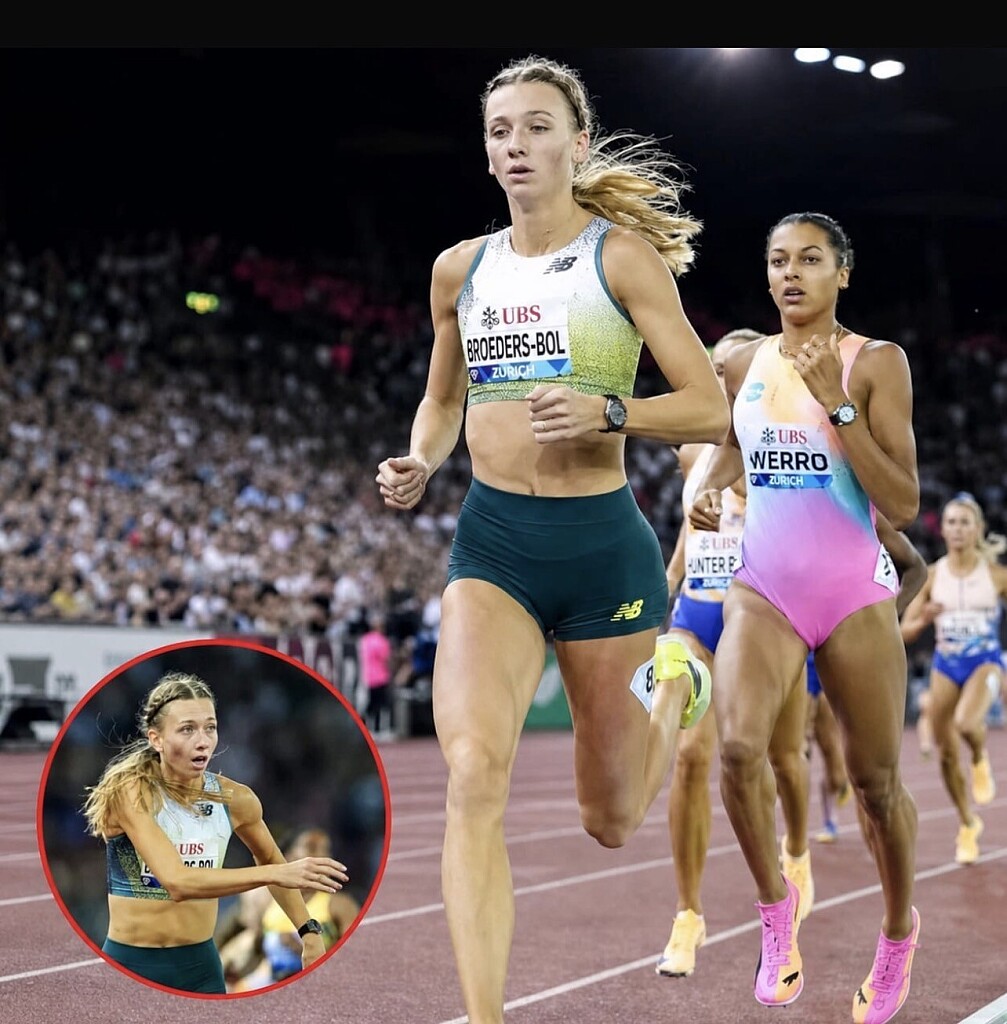


Femke Broeders-Bol’s Stunning 800m Transformation: From Hurdles Star to Dutch Record Breaker
Femke Broeders-Bol has spent much of her career dominating the 400m hurdles, but in 2026 the Dutch star has opened an entirely new chapter — and her transformation into a world-class 800m runner is becoming one of the most fascinating stories in athletics.
What initially looked like an intriguing experiment has rapidly developed into something far more serious.
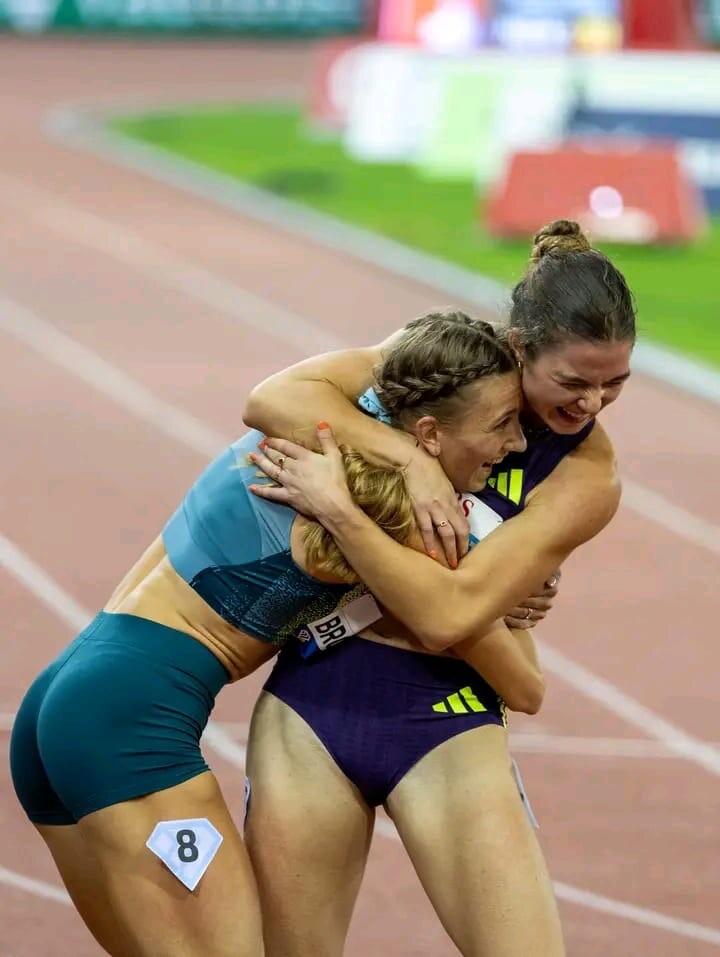
Broeders-Bol is now running times that place her firmly among the elite of the women’s 800m.
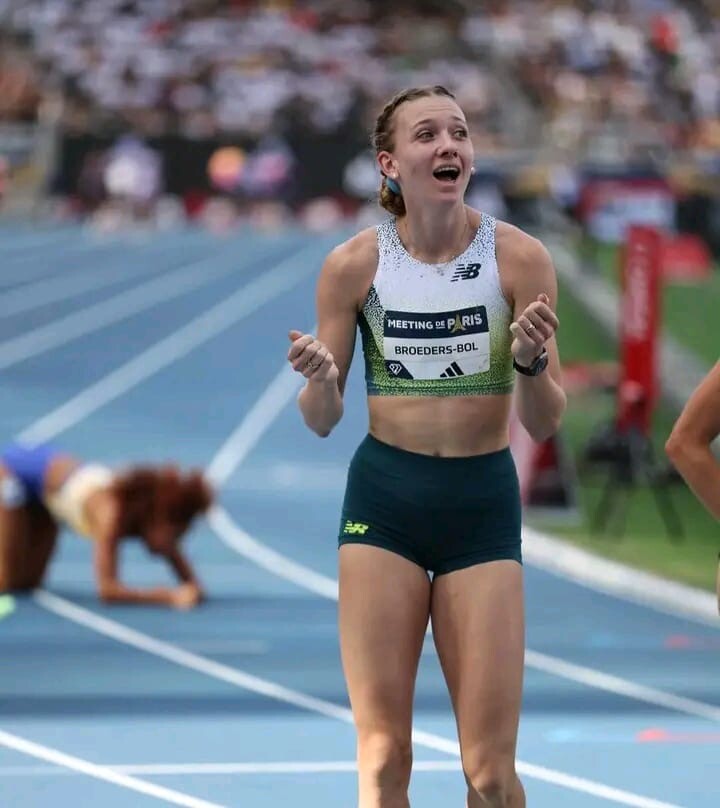
Her breakthrough has been remarkable in both its speed and scale. After making the transition to the two-lap event, she quickly demonstrated that the qualities that made her one of the world’s best 400m hurdlers could be transferred to the longer distance.
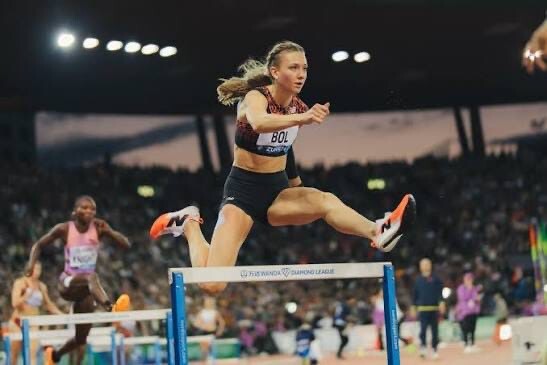
Her 2026 progression tells the story.
She clocked 1:55.60 in Paris on June 28, followed by 1:57.13 in Ostrava, before producing 1:55.54 at the European Championships in Birmingham. That performance equalled Ellen van Langen’s long-standing Dutch record of 1:55.54, a mark that had stood since the 1992 Olympic Games.
Just days later, Broeders-Bol went even faster.
At the Lausanne Diamond League on August 21, she ran 1:55.41, lowering the Dutch record outright and finishing second behind Switzerland’s Audrey Werro.
Then came Zürich.
On August 27, Broeders-Bol produced another extraordinary performance, stopping the clock at 1:54.71 to break her own national record by 0.70 seconds in less than a week. She finished second to Werro, who ran a spectacular 1:53.70 — the third-fastest time ever recorded in the women’s 800m.
For Broeders-Bol, however, the biggest headline was her own transformation.
Her 400m hurdles background has provided an exceptional foundation for the 800m. Years of racing over barriers have developed her speed, strength, rhythm, speed endurance and ability to maintain efficient mechanics when fatigue sets in. Those qualities are particularly valuable over two laps, where the ability to combine raw pace with endurance can separate the very best from the rest.
The challenge has been converting that 400m speed into sustained 800m pace.
And she is doing exactly that.
A 1:54.71 performance is no longer the result of an athlete simply testing herself in another event. It is the mark of a genuine 800m contender.
What makes the development even more intriguing is that Broeders-Bol herself has appeared surprised by just how quickly she has adapted to the distance.
In Zürich, she showed once again that her ceiling over 800m may be considerably higher than anyone initially expected.
At just 26, the Dutch star now finds herself at the beginning of a potentially extraordinary second chapter in her career. Her established reputation as a 400m hurdles powerhouse has already been transformed by a new national record over 800m — and she is continuing to improve at a breathtaking rate. World Athletics lists her 1:54.71 as her current personal best and ranks her among the leading women over the distance.
The question now is no longer whether Broeders-Bol can run the 800m.
It is how fast she can ultimately go.
If this remarkable progression continues, the road towards the Los Angeles 2028 Olympics could become one of the most intriguing storylines in women’s middle-distance running.
Femke Broeders-Bol has already proven that she can conquer the hurdles.
Now, she is showing that two laps of the track may belong to her too.
by Erick Cheruiyot for My Best Runs
Login to leave a comment
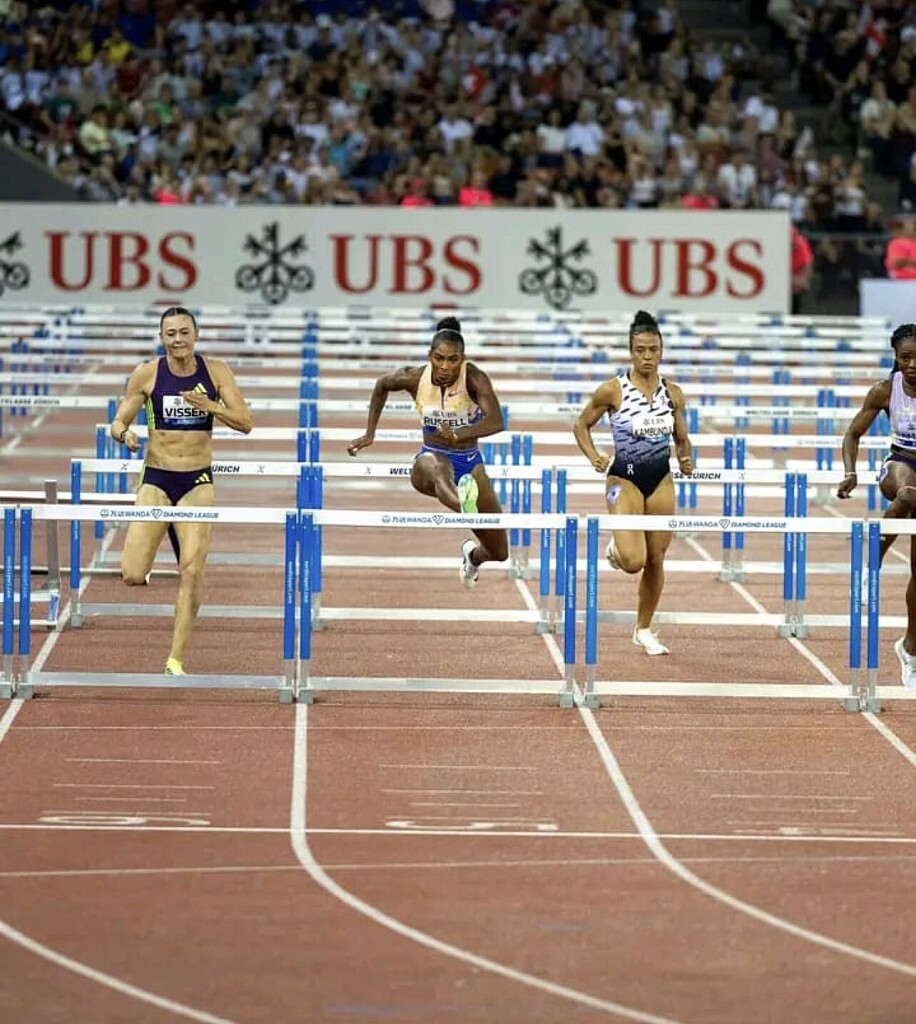
Masai Russell Makes History with Stunning 12.09 World Record in Zurich
Masai Russell delivered a performance for the ages at the Zurich Diamond League, storming to a stunning 12.09 seconds in the women’s 100m hurdles to break Tobi Amusan’s world record.
Running in completely still conditions with a legal 0.0 m/s wind, the American Olympic champion became the first woman in history to break the 12.10-second barrier.
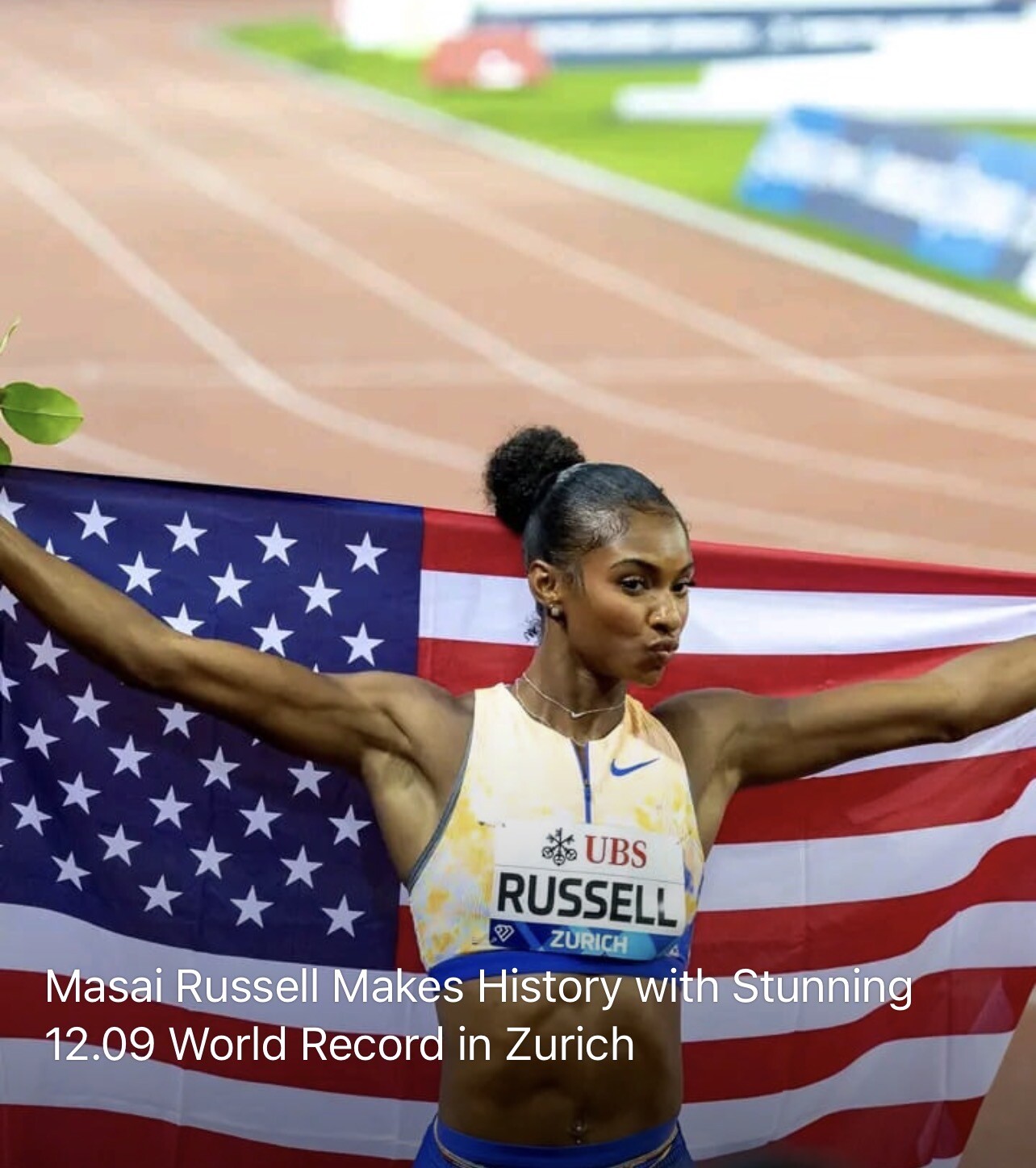
Russell improved upon Amusan’s previous world record of 12.12, set at the 2022 World Championships in Eugene. The mark is subject to the usual ratification process.
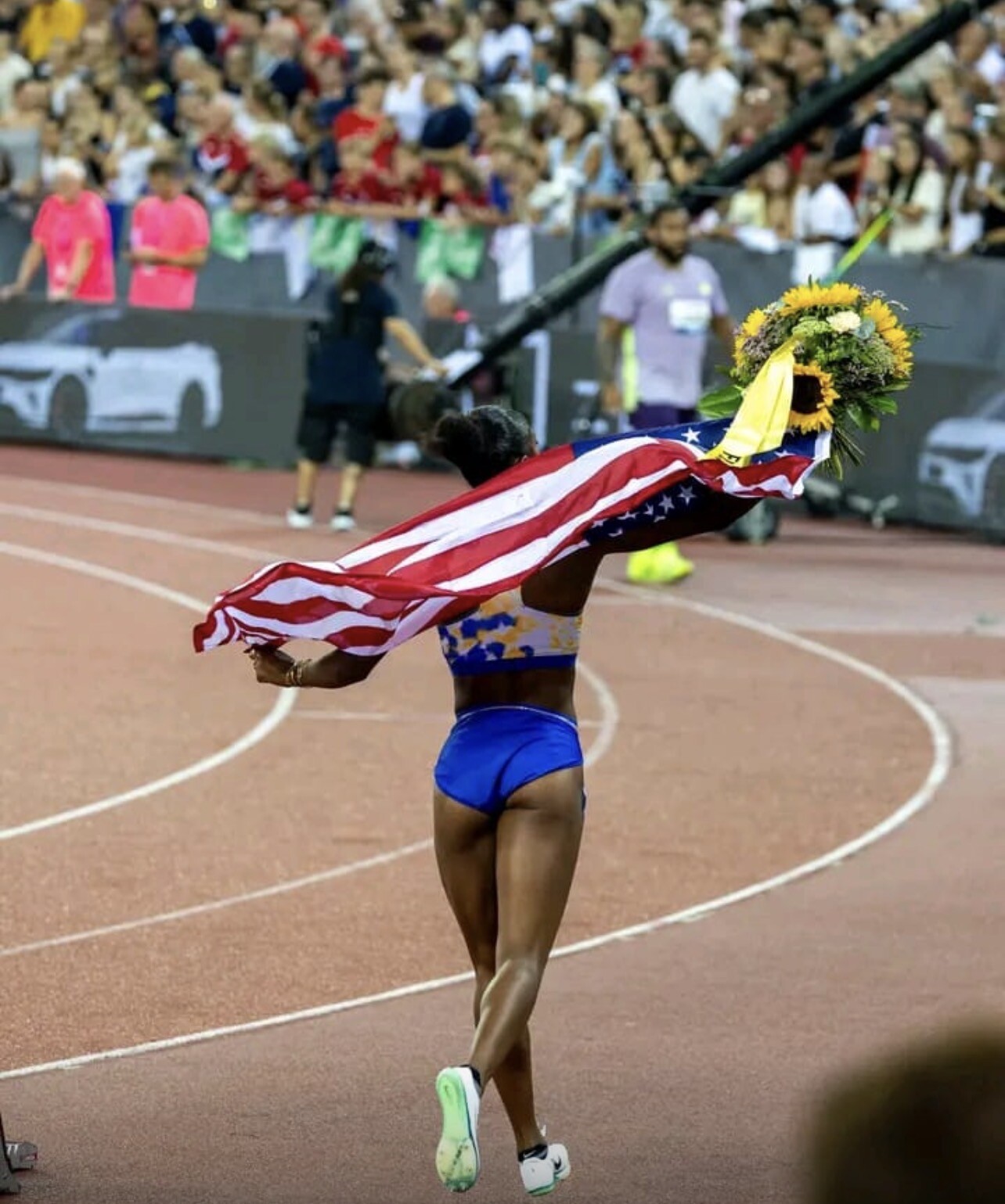
After repeatedly demonstrating her dominance throughout the season, Russell arrived in Zurich as the woman to beat. She attacked the race with extraordinary speed and precision, maintaining her rhythm over the hurdles before pulling away in the closing stages.
When the clock flashed 12.09, the significance of the performance was immediately clear. A barrier that had never been broken was gone.
Even more remarkably, the woman whose record she broke was racing beside her. Amusan, the Nigerian star who had held the world record for four years, finished second in 12.23.
The Netherlands’ Nadine Visser completed the podium in 12.34.
The performance adds another extraordinary chapter to Russell’s career. After establishing herself among the world’s elite and producing a season of remarkable consistency, she has reached the summit of the event as its fastest athlete in history.
Russell’s 12.09 was more than a victory. It rewrote the record books and provided the ultimate confirmation of her dominance.
Zurich had already witnessed a world record from Alison dos Santos in the men’s 400m hurdles. Less than 40 minutes later, Russell ensured the evening would become one of the most memorable in Diamond League history.
Masai Russell is now the world-record holder—and the first woman to run under 12.10 seconds for the 100m hurdles.
by Erick Cheruiyot for My Best Runs
Login to leave a comment
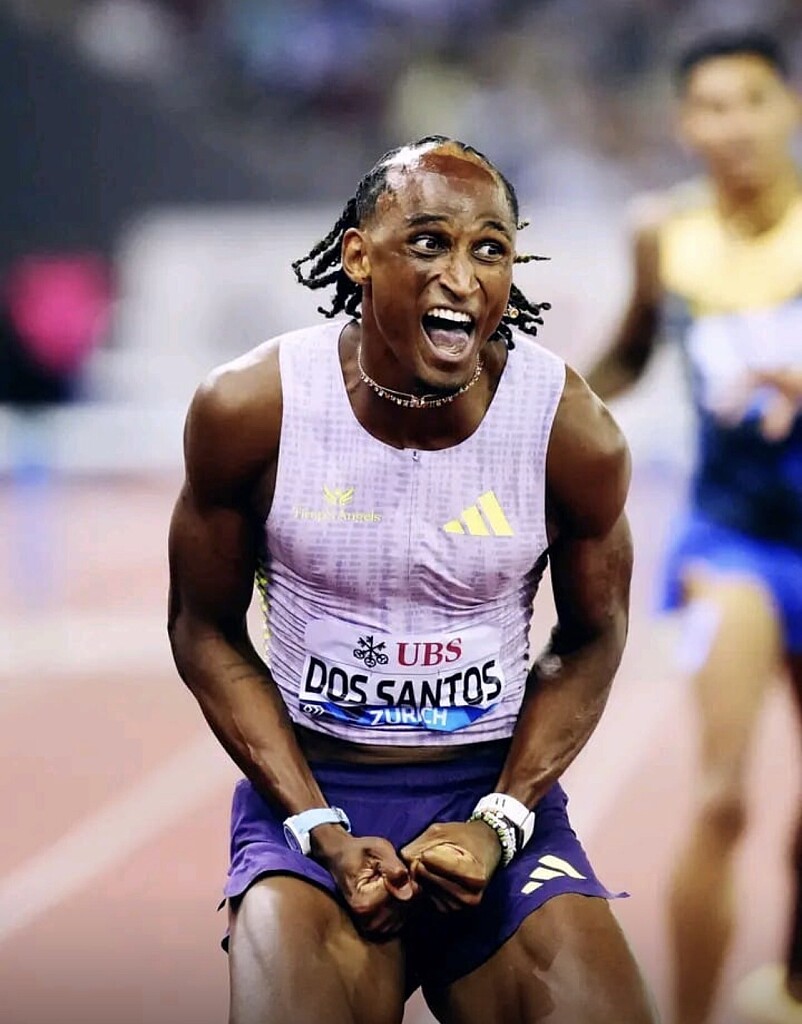
Alison dos Santos Makes History in Zurich, Smashing Warholm’s 400m Hurdles World Record
45.80 seconds. A new world record. A new chapter in the history of the 400m hurdles.
Brazilian star Alison dos Santos produced a breathtaking performance at the Zurich Diamond League on Thursday, storming to 45.80 seconds to shatter the men’s 400m hurdles world record and dethrone one of the greatest records in modern athletics.
Dos Santos delivered a sensational run at Weltklasse Zürich, becoming the first athlete to break the barrier set by Norway’s Karsten Warholm, whose legendary 45.94-second world record had stood since his spectacular victory at the Tokyo 2020 Olympic Games in 2021.
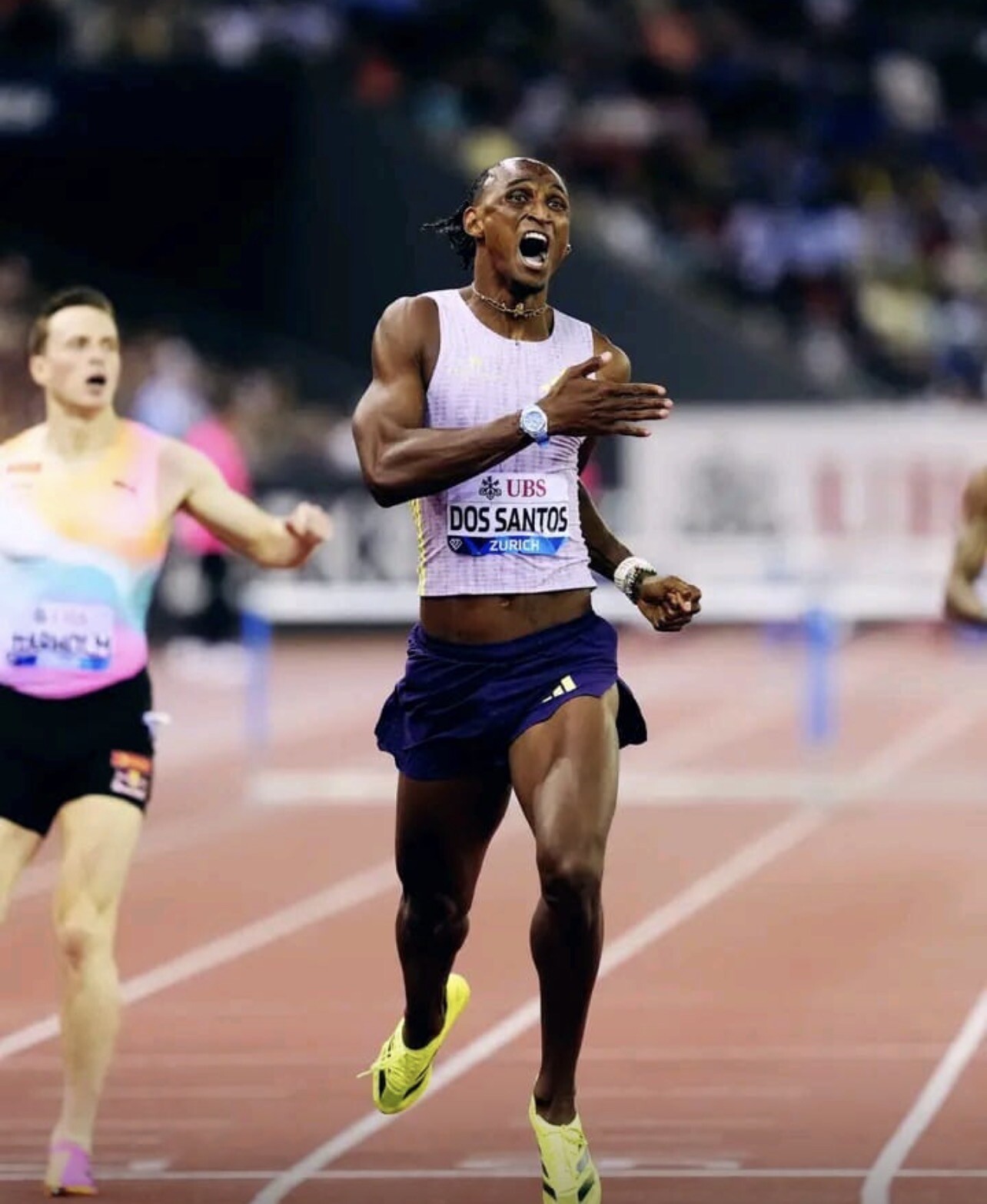
The Brazilian was in complete control from the opening stages, attacking the hurdles with remarkable speed and precision before powering down the final straight. The clock stopped at 45.80, sending shockwaves through the stadium and rewriting the record books.
Warholm, the former world-record holder and one of the sport’s most dominant figures, had to settle for second place in 46.69 seconds. Nigeria’s Ezekiel Nathaniel completed the podium in 47.50.

The result adds another extraordinary chapter to the rivalry between Dos Santos and Warholm. The pair have repeatedly pushed each other to new levels, but this time Dos Santos delivered the defining blow, taking down a record that had become synonymous with Warholm’s name.
The 26-year-old Brazilian has now cemented himself among the greatest 400m hurdlers in history. A world champion in 2022 and a two-time Olympic bronze medallist, Dos Santos has spent years chasing the sport’s very best — and in Zurich, he finally claimed its most coveted record.
His breakthrough is even more remarkable given that he entered the Zurich meeting with a personal best of 46.29 seconds in the 400m hurdles. His previous 2026 best had been 46.43, set just days earlier in Silesia, where he also defeated Warholm.
Now, the record belongs to Brazil.
Alison dos Santos — 45.80 seconds.
A new world record, a historic victory and a performance that will be remembered as one of the defining moments of the 2026 athletics season.
by Erick Cheruiyot for My Best Runs.
Login to leave a comment
Femke Broeders-Bol’s Stunning Rise Continues with Dutch 800m Record in Lausanne
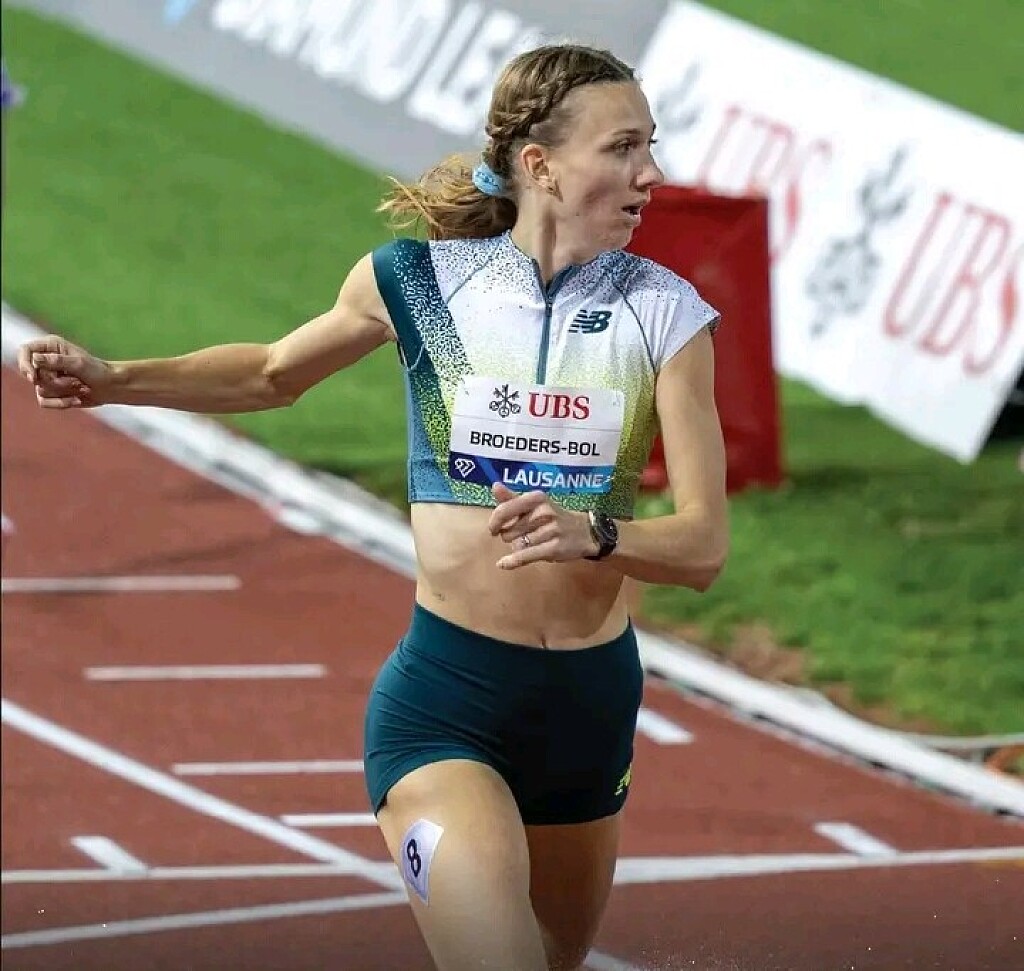
Femke Broeders-Bol’s remarkable transformation into a genuine 800m force continued in spectacular fashion at the Lausanne Diamond League, where the Dutch star smashed the national record with a breathtaking 1:55.41 and came within a fraction of victory.
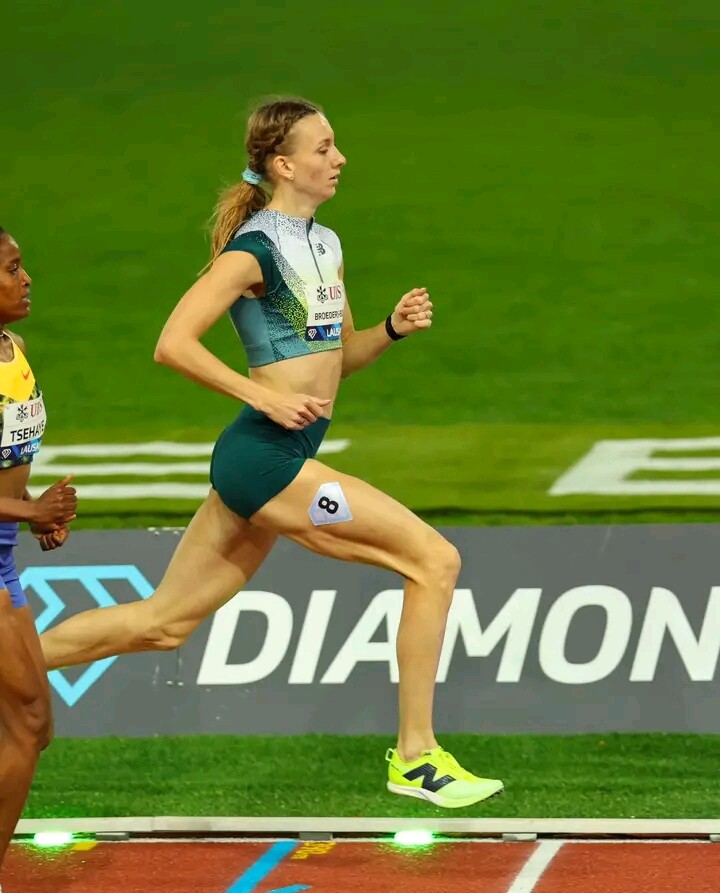
In one of the most thrilling races of the evening, Bol pushed Switzerland’s European champion Audrey Werro all the way to the finish line, with just 0.08 seconds separating the two athletes. Werro claimed victory in a meeting record of 1:55.33, while Bol crossed the line second in 1:55.41, rewriting the Dutch record books with the fastest 800m performance of her career.
Audrey Werro of Switzerland — 1:55.33, Meeting Record
Femke Broeders-Bol of the Netherlands — 1:55.41, National Record
For Bol, the performance marked another extraordinary step in what has become a sensational 2026 campaign. Her progression over two laps has been nothing short of remarkable. After running 1:59.07 in February, she improved to 1:57.13 in June, then 1:57.41 just days later, before breaking through with 1:55.60 in June. She continued her rapid rise with 1:55.54 in August before lowering the Dutch national record even further to 1:55.41 in Lausanne.
The latest breakthrough is especially significant because it came against one of the world's fastest 800m runners. Werro entered the race as the European champion and delivered a sensational performance of her own, but Bol refused to let her escape and stayed within striking distance all the way to the line.
Long recognised as one of the world's outstanding talents in the 400m hurdles, Bol is now showing just how formidable she can be over the flat 800m. Her ability to move from hurdles dominance into elite middle-distance competition has added another fascinating dimension to her career, and her rapid improvement suggests there could still be more to come.
From 1:59.07 to 1:55.41 in a single season, Bol has made one of the most dramatic improvements in women's middle-distance running this year. More importantly, she is no longer simply experimenting with the event—she is proving that she can challenge the very best.
The Dutch star may have narrowly missed victory in Lausanne, but her national-record performance sent a powerful message.
Femke Broeders-Bol is getting faster, the margins are getting smaller, and the women's 800m is becoming even more fascinating.
by Erick Cheruiyot for My Best Runs.
Login to leave a comment

Can Keely Answer Back? Hodgkinson And Werro Set For Explosive Zurich Rematch
The rivalry between Keely Hodgkinson and Audrey Werro is developing into one of the most compelling stories in the women’s 800m — and it gets another chapter next week.

Just days after their dramatic European Championship final in Birmingham, the Olympic champion and the newly crowned European champion will meet again at Weltklasse Zürich on August 27, with the sold-out Letzigrund Stadium ready for another spectacular showdown.
In Birmingham, it was Werro who produced the decisive moment. The Swiss star delivered a sensational front-running performance to win European gold in a championship-record 1:54.81, holding off Hodgkinson, who finished second in 1:55.01. Femke Broeders-Bol completed the podium in 1:55.54, setting a Dutch national record in the process.
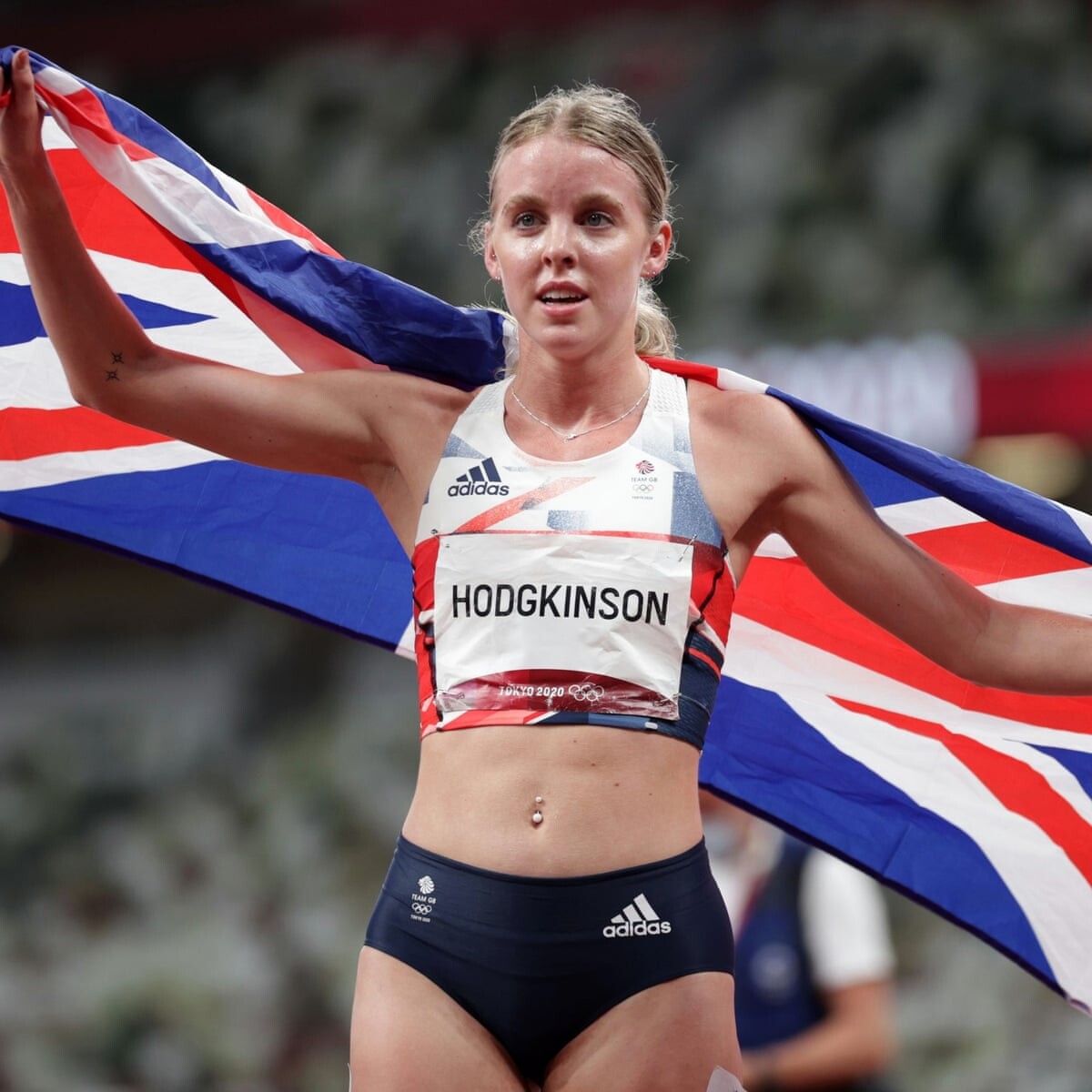
For Hodgkinson, the defeat was a rare setback in an event she has dominated at the highest level. But Zurich offers the perfect opportunity to respond.
And this time, the stage belongs to Werro.
The 22-year-old Swiss star will race in front of her home crowd at the Letzigrund Stadium, where she will arrive with enormous confidence after an extraordinary 2026 campaign. Earlier this season, Werro stormed to 1:53.98 in Stockholm, becoming only the third woman in history to break 1:54 at the time, while Hodgkinson followed her home in a British record 1:54.33.
Werro then went even faster in Paris, producing 1:53.80 — the third-fastest performance in history — further establishing herself as a genuine threat to the event’s all-time hierarchy.
But Hodgkinson knows exactly what it takes to win on the biggest stages. The reigning Olympic champion and former world champion has repeatedly demonstrated her ability to respond when challenged, and Zurich could provide another opportunity to remind the world why she remains one of the most formidable 800m runners of her generation.
Yet this will be far more than a two-woman battle.
Kenya’s Lilian Odira, the reigning world champion, adds another layer of danger to an already stacked field. Odira, Hodgkinson and Georgia Hunter Bell were the gold, silver and bronze medallists in the 800m at the 2025 World Championships in Tokyo, and their rivalry has continued into 2026.
Then there is Georgia Hunter Bell, who arrives in Zurich as the newly crowned European 1500m champion and one of the most versatile middle-distance athletes in the world. Her presence over 800m gives the race another serious contender capable of changing the complexion of the contest.
Femke Broeders-Bol will also be looking to build on her breakthrough European Championship bronze. The Dutch star has made an impressive transition from the 400m hurdles to the 800m this season, and her 1:55.54 national record in Birmingham showed that she is now capable of challenging the very best over two laps.
With Werro’s extraordinary speed, Hodgkinson’s championship pedigree, Odira’s world title credentials, Hunter Bell’s tactical intelligence and Broeders-Bol’s rapidly improving 800m form, Zurich could produce one of the deepest and most anticipated women’s 800m races of the season.
The question is simple:
Can Keely answer back?
Or will Audrey Werro once again prove too strong — this time with the roar of the Swiss crowd behind her?
The answer comes on August 27 at the sold-out Letzigrund Stadium in Zurich.
by Erick Cheruiyot for My Best Runs.
Login to leave a comment
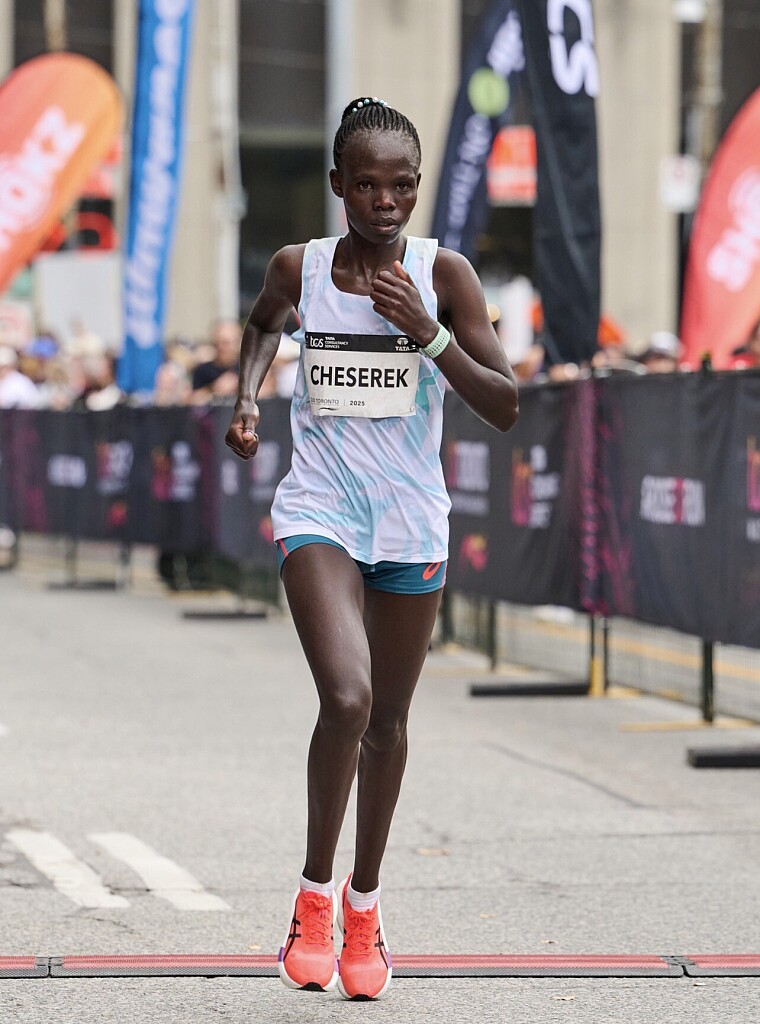
Kenya’s Beatrice Cheserek Returns to TCS Toronto Waterfront Marathon
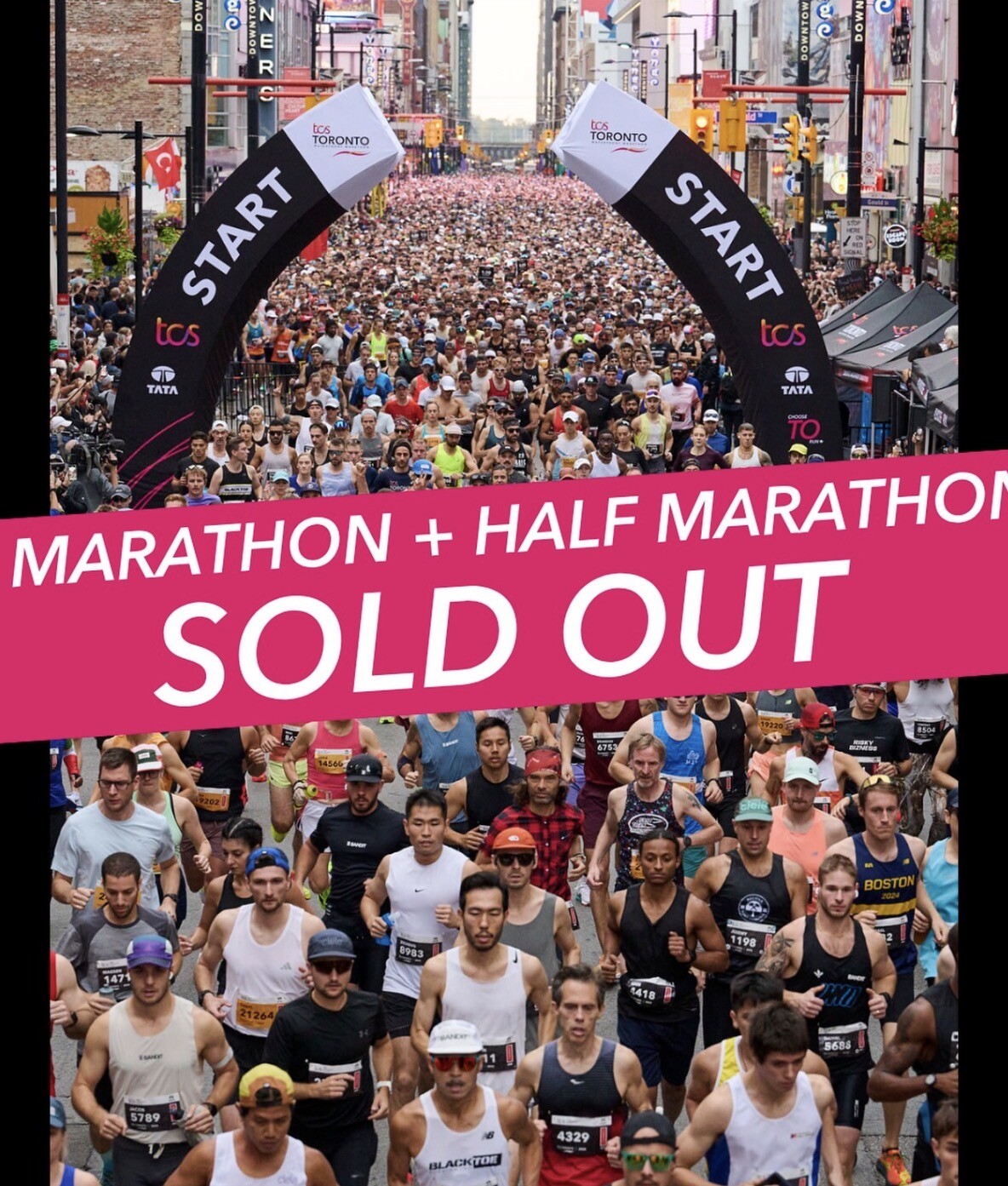
A year after choosing the TCS Toronto Waterfront Marathon to make her debut at the 42.2km distance Kenya’s Beatrice Cheserek will return to the 2026 edition of the race October 18 with great ambition.
The now 27-year-old could manage just 5th place in 2:30:25 last year. Four months later she finished second in the Seville Marathon (February 15) with a time of 2:21:56. There is a simple explanation for such a dramatic improvement.
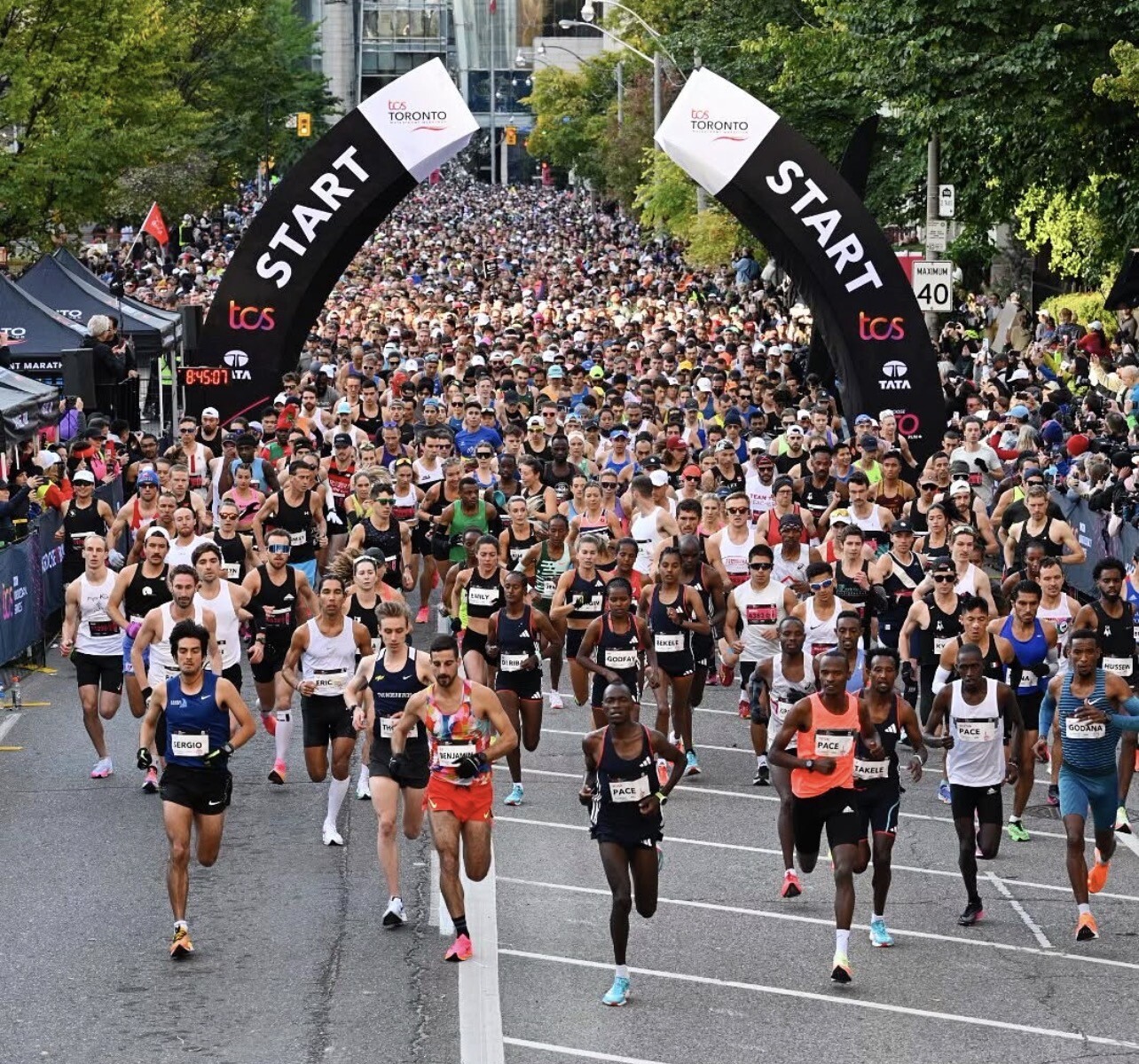
“This year my training is stronger than last year because then (2025) I was coming from maternity,” she explains from her hotel room in Bogota, Colombia where she had finished 4th in the Bogota Half Marathon a few days earlier.
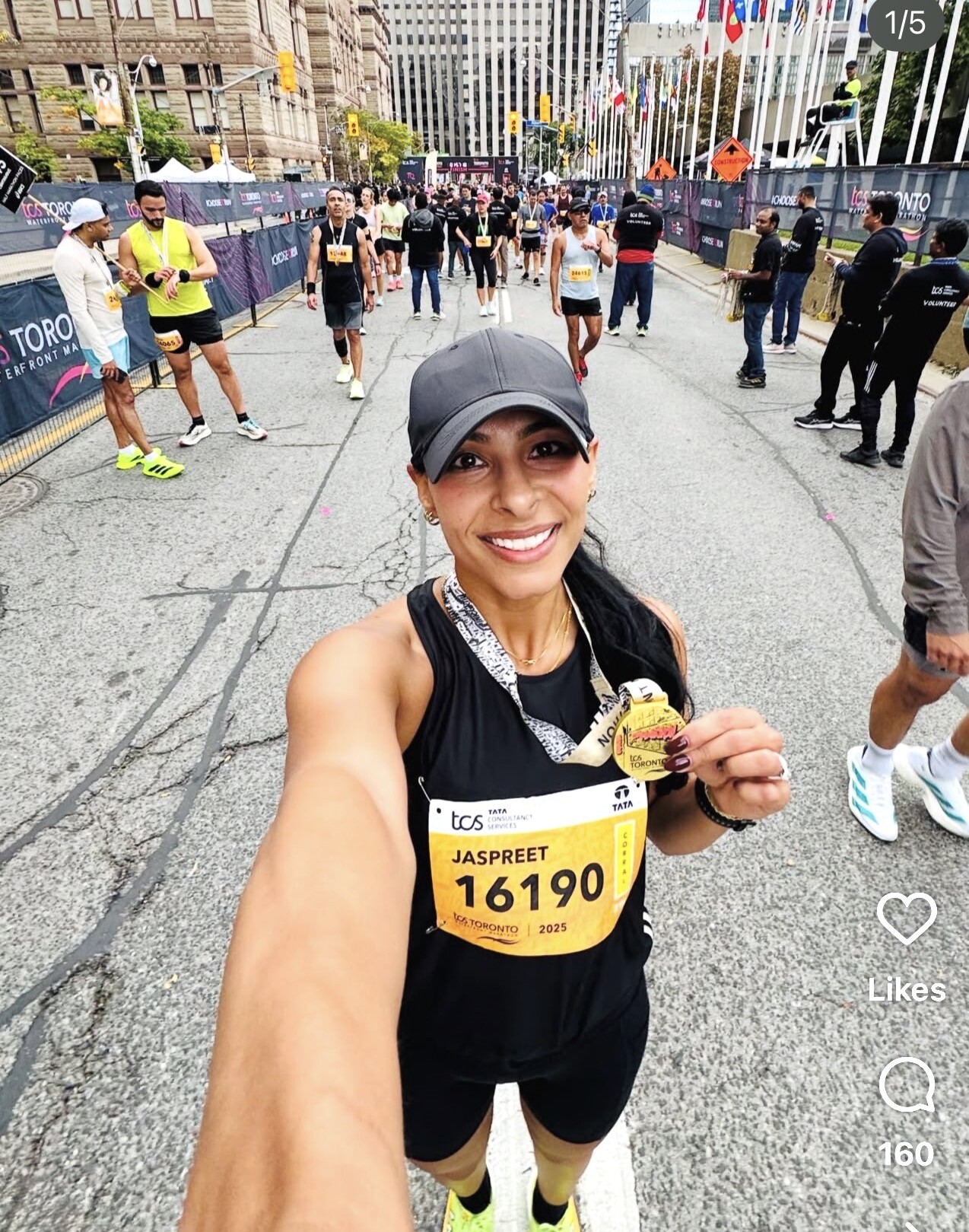
“So it’s more training than last year. I have done a lot of mileage. This time around a lot of mileage, speed work and strength so now I can run better.”
Cheserek’s husband Cyrus Kiplagat is her main training partnerand she is now running up to 150 kilometres a week in preparation for TCS Toronto Waterfront Marathon, which is a World Athletics Elite Label race.
In 2024 the couple welcomed a son into the world. They named him Fabian and she proudly announces: “He is doing good. He is almost three years old now.” While she is away training and competing her sister-in-law serves as a nanny.
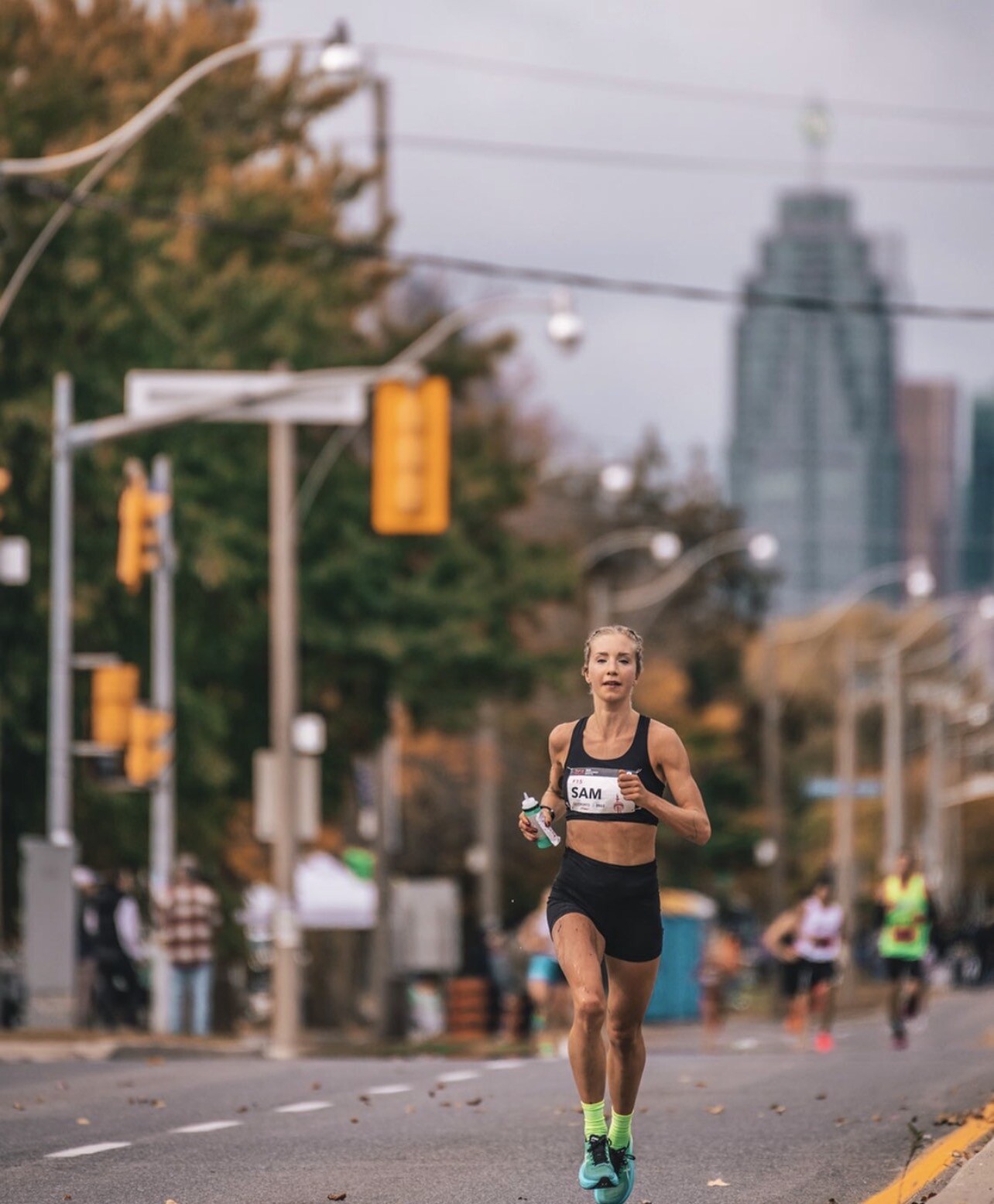
"Toronto last year, it’s a good place but it was my first time running a marathon,” she recalls. “I was doubting myself because it was my debut. I was doubting whether I could finish or if I would drop out. Then afterwards I raced Seville and I was happy there. I am thinking I will do something there in Toronto.”
‘Something' refers to a new personal best and, if conditions are suitable there could be an assault on the Toronto WaterfrontMarathon course record which was set in 2024 by Ethiopia’s Waganesh Mekasha (2:20:44). And she will not be alone in her quest. While the team at Canada Running Series always hires pacemakers for the elite athletes this time Cyrus will accompany her to Toronto to be one of the two pacers for the lead women’s group.
Cheserek has an excellent personal best of 1:06:48 for the half marathon which led to speculation among running experts that her step up to the full marathon distance would be noteworthy. And her talent led to her being selected as the designated pacemaker for fellow Kenyan Rosemary Wanjiru when she won the 2023 Tokyo Marathon. She performed similar duties for the 2025 London Marathon elite women’s field. Having Cyrus in Toronto she expects will help tremendously.
“Even before I went to Seville I was with him training and he was the one pushing me,” Cheserek adds. “It is good for me (that Cyrus will be in Toronto) to try to lower the course record. All the marathon races before I was pacing so he never came with me. It was just me and the other people. And, he was not in Seville.”
Beatrice and her family live in Iten, ‘The Home of Champions’ as it is known in Kenya at around 2,400m above sea level. Bogota sits at a slightly higher elevation. So the two weeks away from her home training ground has not interrupted her preparation for Toronto Waterfront Marathon in any way.
“I am spending two weeks in Colombia; this is my first time to be here,” she offers. “Colombia is a very good place for training. It is (also) a good place to race in hot conditions. I have my fellow colleagues from Kenya here.”
Cheserek finished 4th in the Bogota Half Marathon on July 26 in 1:12:42 just 13 seconds behind the winner. As expected, the field was dominated by athletes from high altitude countries including Ethiopia and Kenya who are best suited to Bogota’s 2,600m elevation.
Then, on August 9th, she finished 4th in the Cali 10k (32:57) the day before an earthquake measuring 7.4 on the Richter scale, struck. She and her compatriots were at the Cali airport checking in when panic ensued. They returned to their hotel as the airport was temporarily closed.
The TCS Toronto Waterfront Marathon organizers (Canada Running Series) will be wishing for ideal conditions to allow athletes such as Beatrice Cheserek to challenge the course records. Clearly, all her preparation is focused on the race.
by Paul Gains
Login to leave a comment

TCS Toronto Waterfront Marathon
The Scotiabank Toronto Waterfront Marathon, Half-Marathon & 5k Run / Walk is organized by Canada Running Series Inc., organizers of the Canada Running Series, "A selection of Canada's best runs!" Canada Running Series annually organizes eight events in Montreal, Toronto and Vancouver that vary in distance from the 5k to the marathon. The Scotiabank Toronto Waterfront Marathon and Half-Marathon are...
more...
Hodgkinson and Broeders-Bol Set for a Mouthwatering Birmingham 800m Showdown
The women’s 800m at the 2026 European Athletics Championships is reaching a thrilling stage, with Keely Hodgkinson of Great Britain and Femke Broeders-Bol of the Netherlands set to meet in the second semi-final in Birmingham today. With a place in Friday’s final at stake, the pressure is rising—and the quality of the field promises a fascinating two-lap battle.
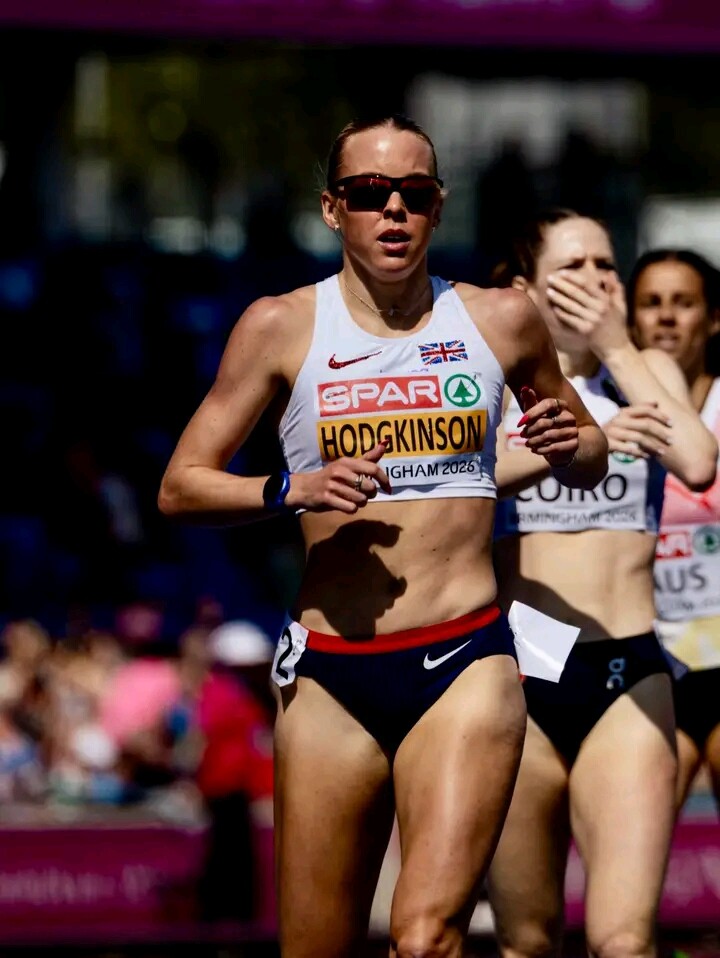
Hodgkinson laid down an early marker in the heats, producing a commanding 1:57.28 to become the fastest qualifier. The British Olympic champion looked comfortable throughout her race, underlining both her sharpness and confidence as she continues her bid for another European 800m title on home soil.
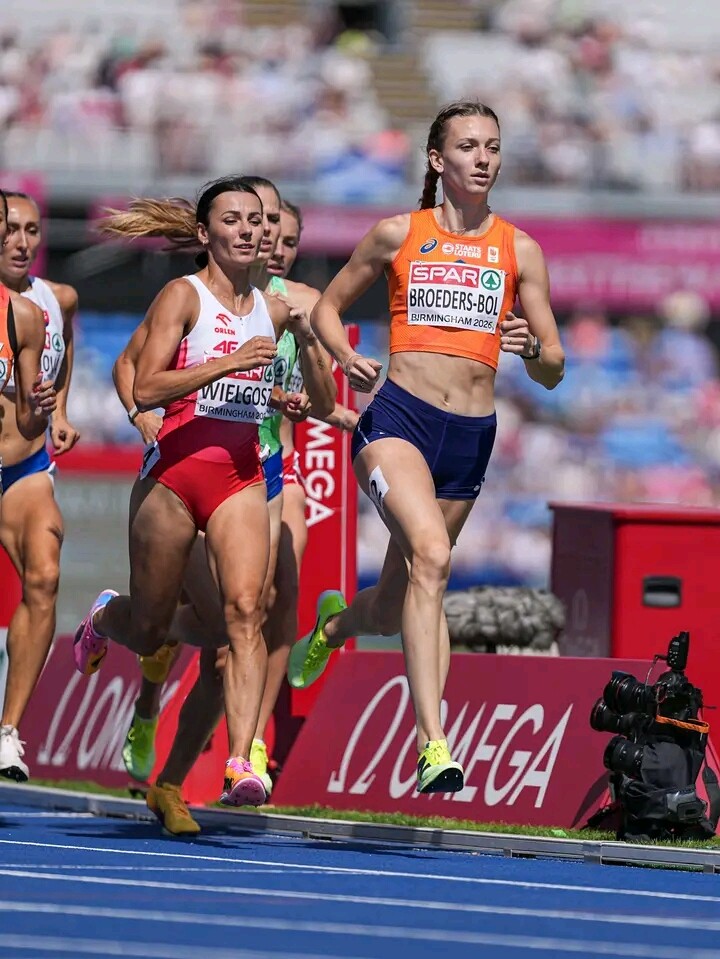
Broeders-Bol also progressed with little difficulty, stopping the clock at 1:59.96. Best known for her achievements over the 400m hurdles, the Dutch star has developed into an increasingly intriguing presence over 800m, bringing speed and versatility to a race packed with established middle-distance talent.
The semi-final will also feature Audrey Werro of Switzerland, whose presence adds another layer of danger to an already compelling contest. The Swiss star has enjoyed a remarkable season and recently produced 1:53.98, the third-fastest time in history, before also progressing safely through the Birmingham heats in 1:57.83.
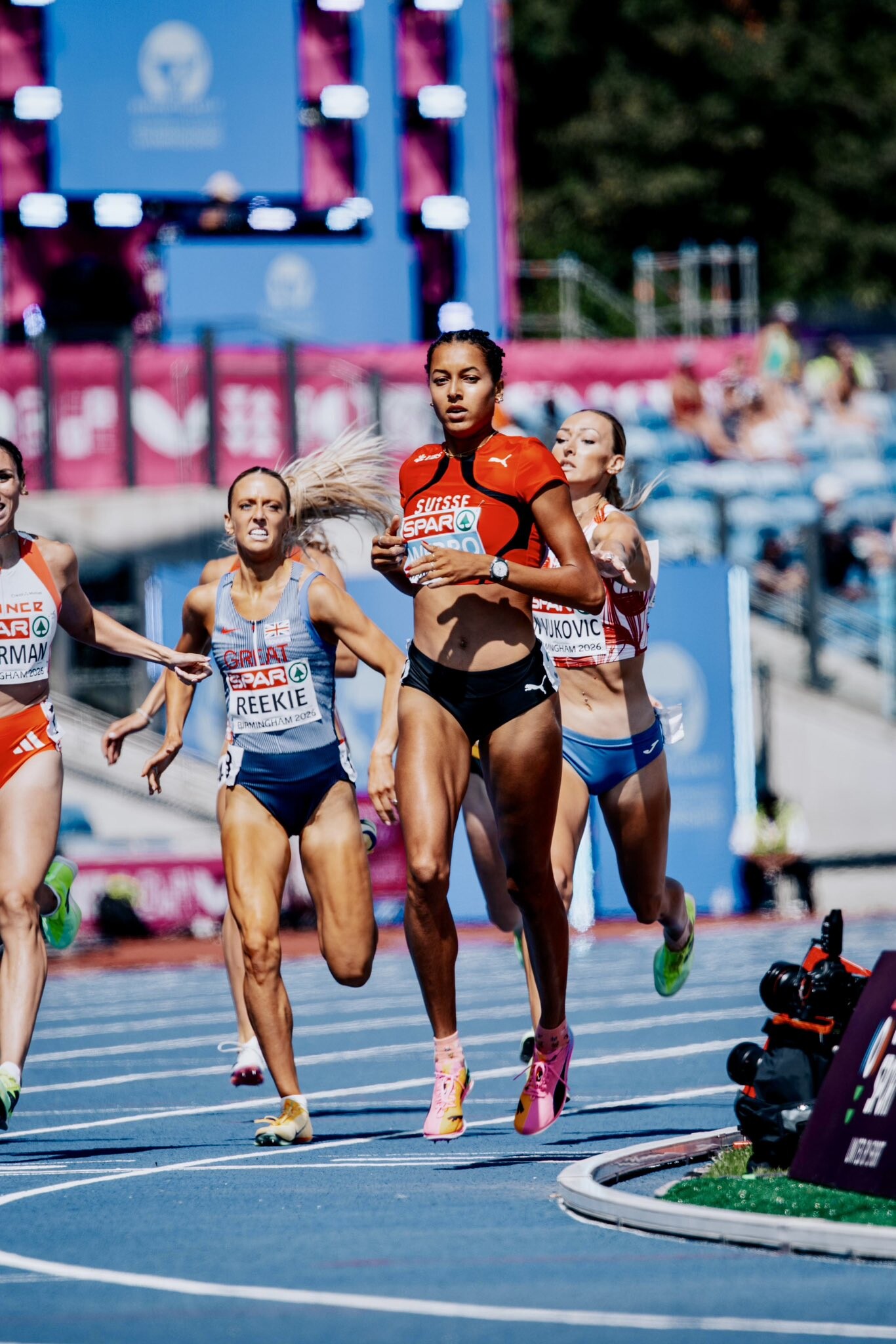
What makes this showdown particularly fascinating is the contrasting strengths of the leading contenders. Hodgkinson possesses immense championship experience and has repeatedly shown that she thrives when the pressure is at its highest. Werro brings extraordinary speed and the confidence of having recently defeated Hodgkinson in Stockholm, while Broeders-Bol’s transition from the 400m hurdles to the two-lap event gives her a distinctive blend of speed, strength and tactical versatility.
With the final only one day away, there is little room for error. The opening lap, positioning and the ability to unleash a decisive surge in the closing metres could determine who advances. Every stride will matter as the contenders fight not only for qualification, but also for momentum heading into the championship showdown.
For Hodgkinson, the Birmingham stage offers another opportunity to turn home support into a memorable performance. For Broeders-Bol and Werro, it is a chance to challenge one of the event’s most decorated figures and prove that the European 800m crown is anything but predictable.
The ingredients are perfect: speed, experience, ambition and a place in the final on the line. Birmingham is ready for another spectacular 800m battle.
by Erick Cheruiyot for My Best Runs.
Login to leave a comment

European Athletics Champioships
The27thEuropean Athletics Championshipswill be held from 10 to 16 August 2026 at theAlexander StadiuminBirmingham, United Kingdom.[1] This is the first time that a British city will have staged the European Athletics Championships although Birmingham has hosted many high-profile events, including the2007 European Athletics Indoor Championships, the2003and2018 IAAF World Indoor Championshipsand the2022 Commonwealth Games. Alexander Stadium was renovated between 2019 and...
more...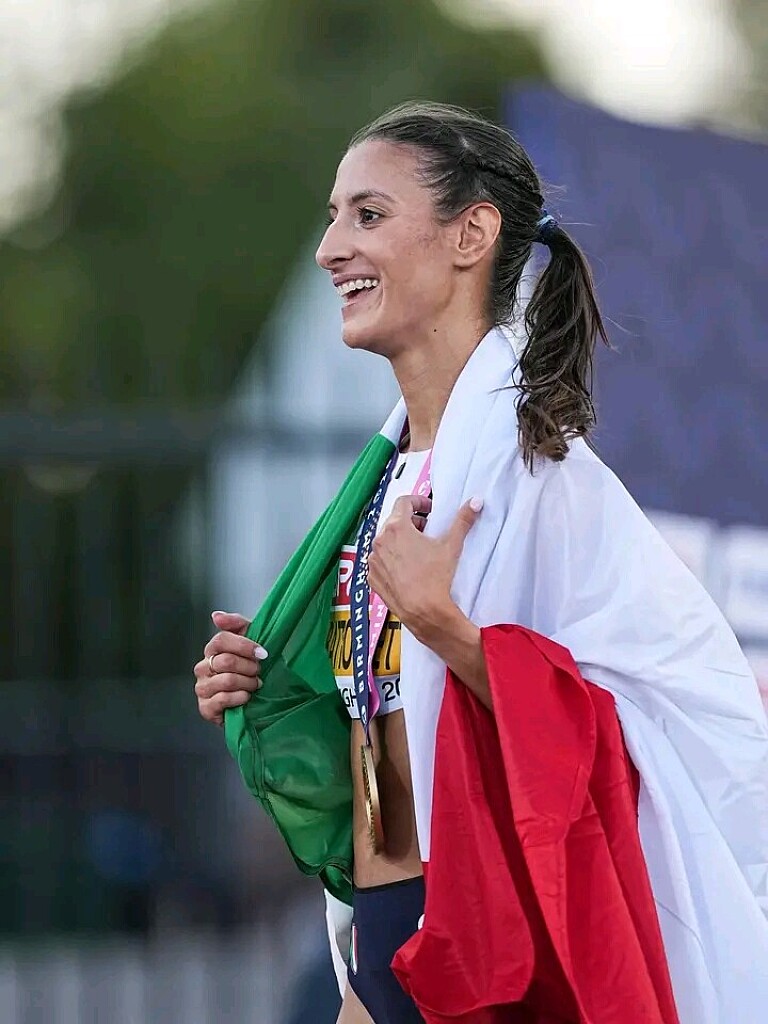
Battocletti’s Blistering Finish Delivers Back-to-Back European 5000m Gold in Birmingham
Nadia Battocletti produced a superb championship performance in Birmingham to retain her European 5000m title for the second consecutive time, powering to gold in 15:37.84 after unleashing a devastating late kick that left her rivals scrambling for the remaining medals.
The Italian distance-running star remained composed through the race before turning on the speed when it mattered most. With the field tightly packed heading into the closing stages, Battocletti launched a breathtaking attack over the final 200 metres, producing a surge of exceptional quality that ultimately decided the championship.
The decisive moment came in the final 200 metres, when Battocletti unleashed a ferocious finishing kick that dramatically changed the complexion of the race. With the medals still within reach for several athletes, the Italian surged through the final bend with tremendous purpose, her acceleration proving simply too tough to match. She drove relentlessly down the home straight, opening the crucial gap and powering away from her closest challengers to seal a richly deserved European title.
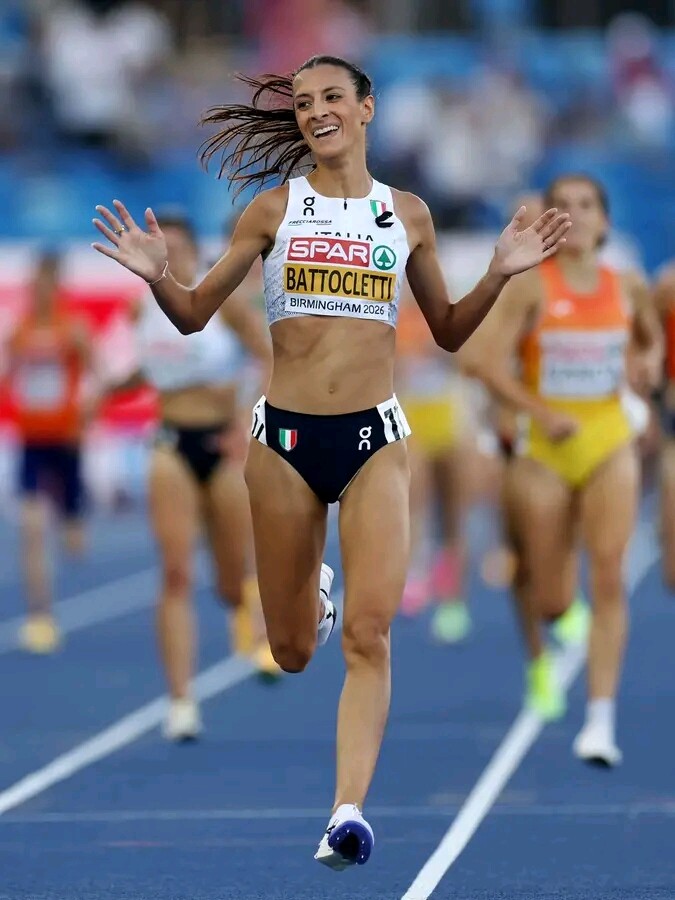
Her closing speed was extraordinary. Battocletti covered the final 400m in 59.2 seconds, including a remarkable 28.2-second final 200m, as she accelerated away from her challengers and powered down the home straight. It was a superb display of strength, speed and championship composure, earning her another European crown in emphatic fashion.
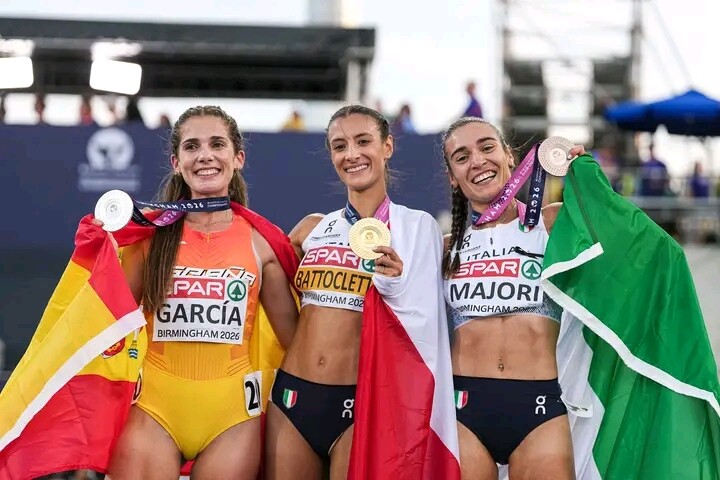
Behind her, Spain’s Marta García fought brilliantly to claim silver in a season’s best of 15:39.98, while Italy’s Micol Majori completed an Italian 1-3 with bronze in 15:40.65.
For Majori, the bronze medal represented a particularly special milestone as she celebrated her first international senior medal on a major championship stage. Her breakthrough performance added another layer to an unforgettable night for Italy.
Ireland’s Sarah Healy narrowly missed the podium, finishing fourth in 15:40.95, just 0.30 seconds behind Majori. Great Britain’s Hannah Nuttall was fifth in 15:41.27, followed by the Netherlands’ Maureen Koster in 15:41.51.
Amina Maatoug of the Netherlands finished seventh in 15:44.03, while Spain’s María Forero completed the top eight in 15:44.25.
Battocletti’s Birmingham triumph now sets up another title defence. The Italian will return to the track on Friday for the women’s 10,000m, where she will once again look to extend her European dominance.
For now, though, the spotlight belongs to Battocletti and that extraordinary finish — a 28.2-second final 200m that transformed a tightly contested 5000m final into another golden chapter in her championship career.
by Erick Cheruiyot for My Best Runs.
Login to leave a comment
European Athletics Champioships
The27thEuropean Athletics Championshipswill be held from 10 to 16 August 2026 at theAlexander StadiuminBirmingham, United Kingdom.[1] This is the first time that a British city will have staged the European Athletics Championships although Birmingham has hosted many high-profile events, including the2007 European Athletics Indoor Championships, the2003and2018 IAAF World Indoor Championshipsand the2022 Commonwealth Games. Alexander Stadium was renovated between 2019 and...
more...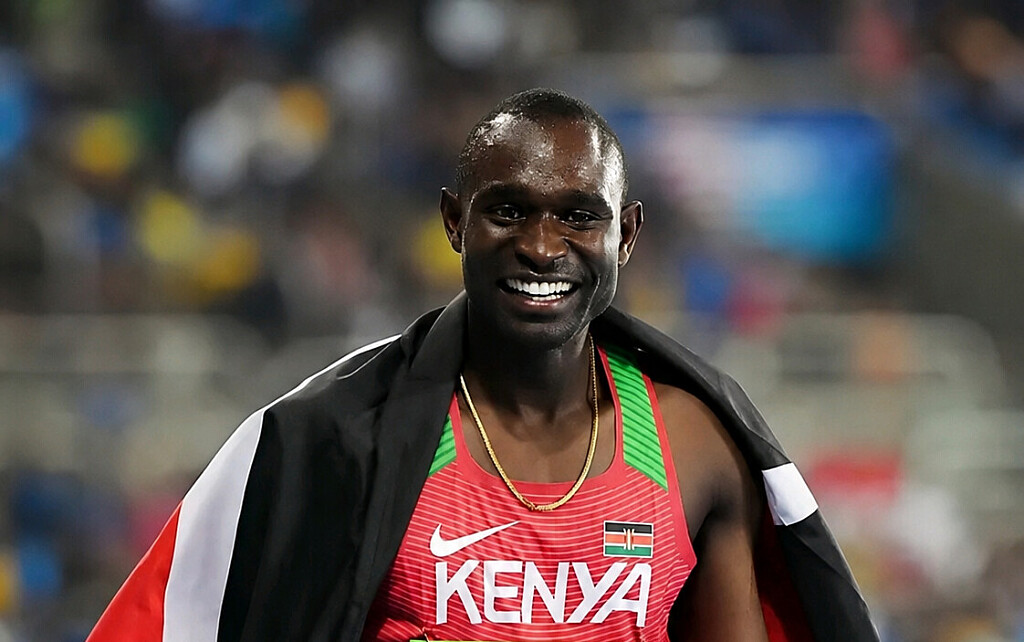
David Rudisha’s 1:40.91: Fourteen Years Later, The 800m Still Has A Mountain To Climb
Fourteen years ago this weekend, David Rudisha delivered one of the most extraordinary performances ever witnessed on an athletics track — and remarkably, his world record still stands.
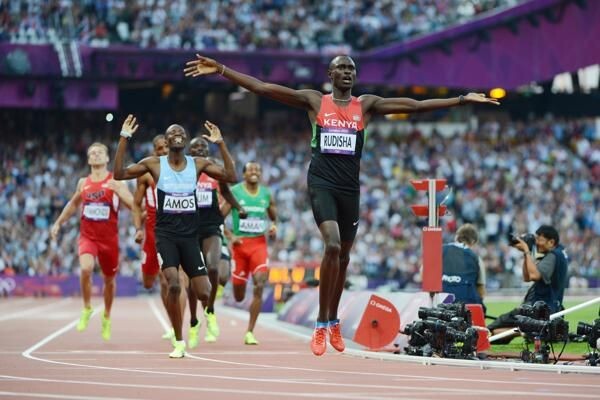
On August 9, 2012, the Kenyan lined up for the Olympic 800m final at London’s Olympic Stadium alongside seven of the world’s finest half-milers. What followed was a race that would forever redefine the limits of the event.
Rudisha did not wait for the final straight. From the gun, he went straight to the front and imposed a relentless pace on the field. He reached the 400m mark in a blistering 49.28 seconds, but instead of paying the price for such an aggressive opening lap, he continued to drive forward.
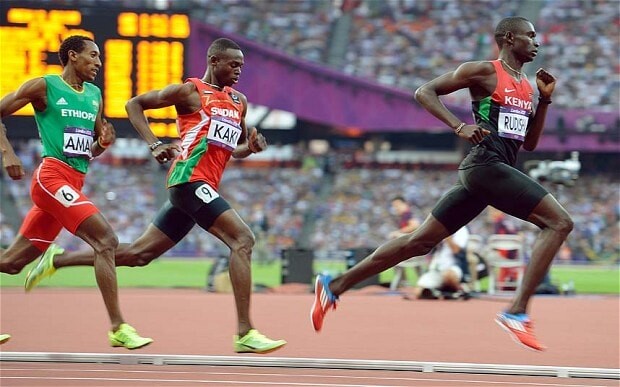
He passed 600m in 1:14.30 before producing a remarkable final 200 metres to cross the finish line in 1:40.91.
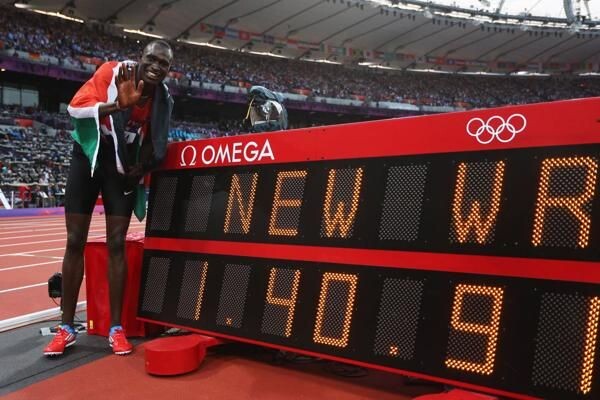
The stadium erupted.
Rudisha had broken his own world record and, for the first time in history, an athlete had broken the 1:41 barrier in the 800 metres. Even more remarkably, he had done it in an Olympic final, without a pacemaker and under the immense pressure of competing for the sport’s ultimate prize.
The runners behind him were dragged into history by his pace.
Botswana’s Nijel Amos finished second in 1:41.73, a world junior record at the time. Kenya’s 17-year-old Timothy Kitum produced a stunning 1:42.53 to take bronze, while American Duane Solomon ran 1:42.82 and Nick Symmonds clocked 1:42.95, both personal bests.
Ethiopia’s Mohammed Aman ran 1:43.20 for a national record, Abubaker Kaki finished in 1:43.32, and Great Britain’s Andrew Osagie completed the field in 1:43.77, also a personal best.
It was an extraordinary final in which all eight athletes finished inside 1:44, a testament to the astonishing pace set by the Kenyan.
Yet Rudisha was operating on another level.
His London performance was not a sudden flash of brilliance. It was the culmination of an era in which he had transformed the 800m through his fearless front-running style. Two years earlier, he had lowered the world record to 1:41.01 in Rieti, Italy. In London, he found another tenth of a second when the pressure was at its greatest.
That is what has made the record so difficult to approach.
For fourteen years, some of the greatest 800m runners of their generations have come and gone, but none has managed to take the final steps toward Rudisha’s mark. Nijel Amos remains the closest, his 1:41.73 from that same Olympic final leaving him 0.82 seconds short.
Then came Emmanuel Wanyonyi.
The young Kenyan has emerged as one of the most exciting 800m runners of his generation. In Lausanne in 2024, Wanyonyi produced a stunning 1:41.11, moving level with Wilson Kipketer as the second-fastest man in history and coming within just 0.20 seconds of Rudisha’s world record.
Twenty hundredths of a second may look insignificant on paper, but at the very top of the 800m, they represent a formidable barrier.
Wanyonyi has shown that Rudisha’s record is not beyond imagination. But reaching it requires something extraordinary — the perfect combination of speed, endurance, courage and execution over two unforgiving laps.
And perhaps that is what makes Rudisha’s achievement so enduring.
There was no pacemaker guiding him through the race. There was no carefully constructed invitational designed solely around producing a fast time. There was simply an Olympic final, eight athletes, two laps and a Kenyan determined to run faster than anyone had ever run before.
Rudisha went from the gun, controlled the race from the front and somehow maintained the speed required to produce a time that has remained beyond the reach of every challenger for fourteen years.
The next generation is getting closer, and Wanyonyi has shown that the record can at least be approached.
But 1:40.91 remains David Rudisha’s masterpiece — a world record forged under the brightest lights and on the biggest stage, and one that continues to define greatness in the 800 metres.
Fourteen years later, the challengers are getting closer, but Rudisha’s 1:40.91 remains the mountain every 800m runner dreams of climbing.
by Erick Cheruiyot for My Best Runs.
Login to leave a comment
Audrey Werro Heads to Birmingham With History in Her Sights as Europe’s 800m Elite Prepare for a Blockbuster Showdown
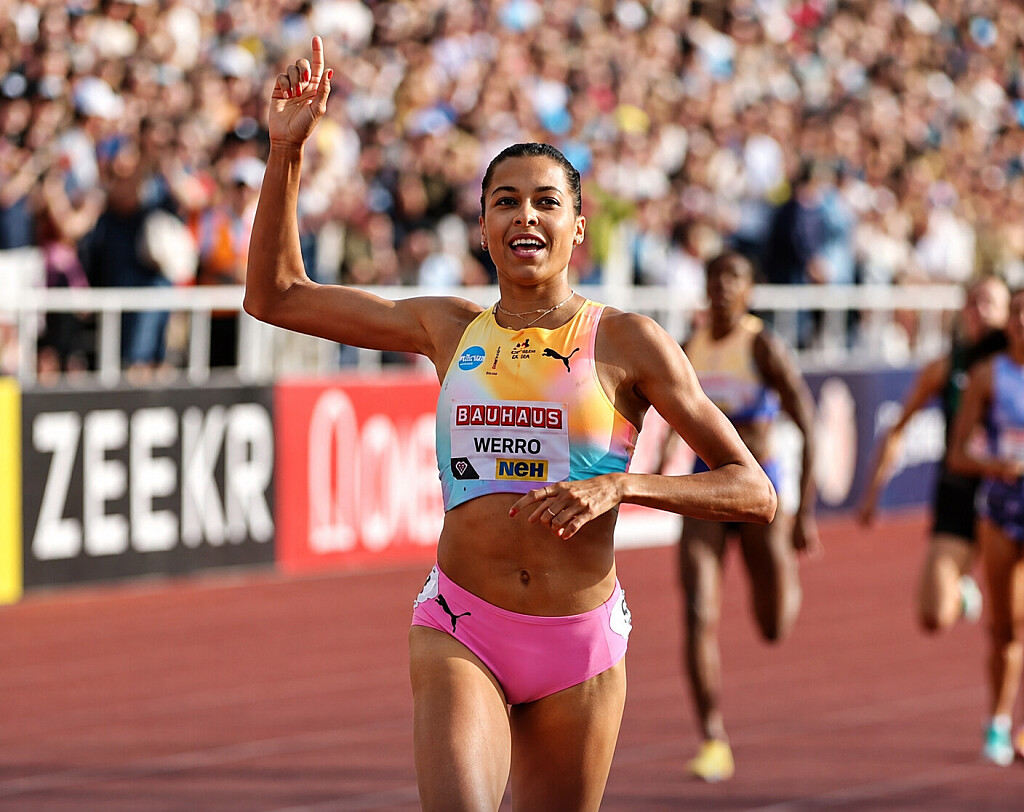
Audrey Werro will arrive at the 2026 European Athletics Championships in Birmingham carrying more than just the hopes of Switzerland. The 22-year-old middle-distance star has established herself as the woman to beat in the women’s 800m, and she will enter Alexander Stadium with a world-leading time, extraordinary momentum and a realistic opportunity to chase one of athletics’ longest-standing records.
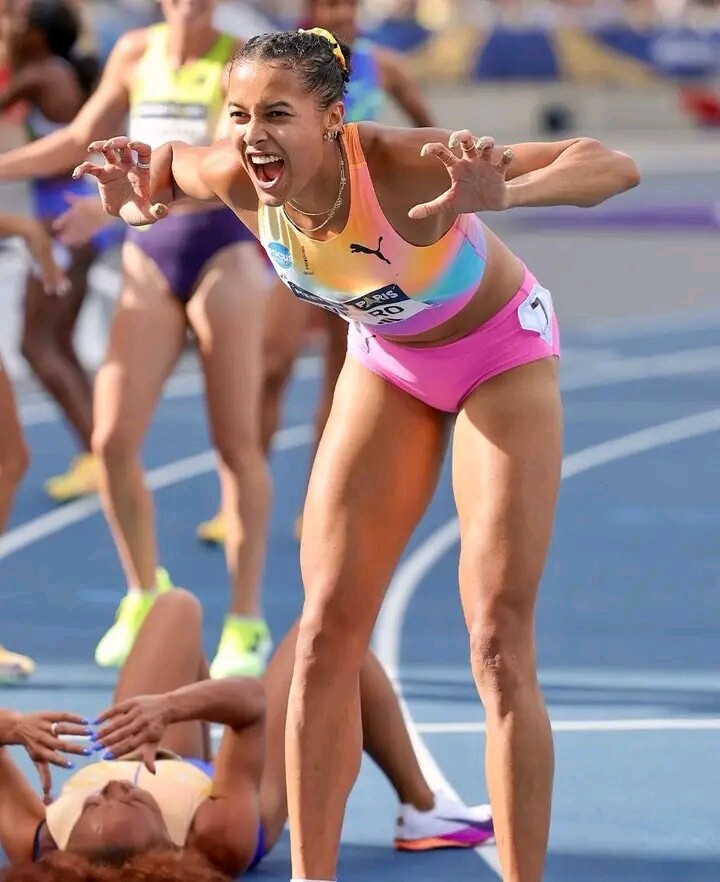
The European Championships will be held in Birmingham from August 10 to 16, with the women’s 800m among the events expected to command enormous attention.
Werro has already produced one of the defining performances of the 2026 season. At the Paris Diamond League on June 28, she stormed to 1:53.80, becoming only the third-fastest woman in history over 800m and moving within 0.52 seconds of Jarmila Kratochvílová’s world record of 1:53.28, which has stood since 1983.
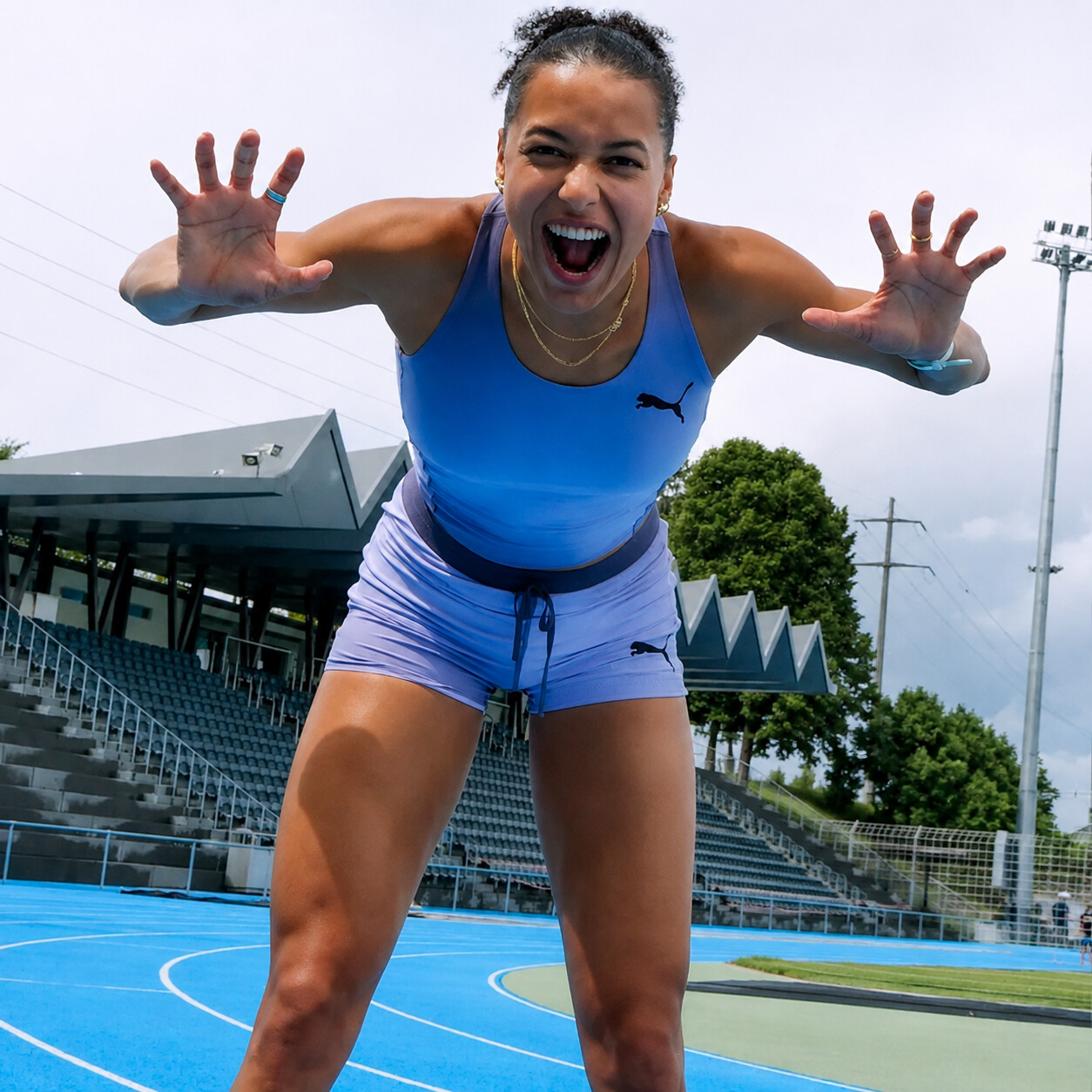
Even more remarkable is that Paris was not an isolated performance.
Earlier in June, Werro stunned Olympic champion Keely Hodgkinson in Stockholm, producing 1:53.98 to claim another Diamond League victory. Hodgkinson followed in a personal best of 1:54.33, setting the stage for what could become one of the defining rivalries of the championship.
The numbers underline just how extraordinary the 2026 women’s 800m season has become.
Werro leads the world with 1:53.80, followed by Hodgkinson at 1:54.33. Femke Broeders-Bol has made a spectacular transition to the two-lap event, running 1:55.60 in Paris, while France’s Anaïs Bourgoin followed with a national record of 1:55.65. Britain’s Georgia Hunter Bell has also broken 1:56, clocking 1:55.93 in Birmingham earlier in the season.
That depth makes Birmingham particularly intriguing. Werro may be the fastest woman in the world this year, but she will not be racing in isolation. Hodgkinson brings Olympic and European championship pedigree, Broeders-Bol possesses exceptional finishing speed after moving across from the 400m hurdles, while Bourgoin and Hunter Bell have demonstrated that they are capable of staying in the conversation when the pace becomes ferocious.
Werro’s remarkable form has extended beyond the 800m. On June 23 in Biel, she ran 1:22.85 for 600m, the fastest mark on the 2026 world list for the event.
Her development has been equally impressive over the longer sprint distance. Werro owns a 400m personal best of 51.03, highlighting the speed reserve behind her increasingly dominant 800m performances.
The Swiss star has therefore arrived at a fascinating point in her career. She is no longer simply a promising young athlete. After being named European Athletics’ 2025 Women’s Rising Star and winning the European U23 title, Werro has now moved firmly into the senior elite.
And Birmingham could provide the biggest stage yet for her growing reputation.
The question is no longer whether Werro can run under 1:54. She has already done it twice this season. The question now is whether she can find the fractions required to move from an extraordinary performance to something historic.
The world record of 1:53.28 is only 0.52 seconds away.
With the European title on the line, Hodgkinson seeking another major championship triumph and a rapidly improving field ready to challenge for the podium, the women’s 800m could become one of the races of the entire Birmingham championships.
For Werro, however, the objective is simple: arrive ready, execute the perfect two laps and see just how close she can get to history.
Birmingham awaits. And Audrey Werro has already shown that she is ready.
by Erick Cheruiyot for My Best Runs.
Login to leave a comment
European Athletics Champioships
The27thEuropean Athletics Championshipswill be held from 10 to 16 August 2026 at theAlexander StadiuminBirmingham, United Kingdom.[1] This is the first time that a British city will have staged the European Athletics Championships although Birmingham has hosted many high-profile events, including the2007 European Athletics Indoor Championships, the2003and2018 IAAF World Indoor Championshipsand the2022 Commonwealth Games. Alexander Stadium was renovated between 2019 and...
more...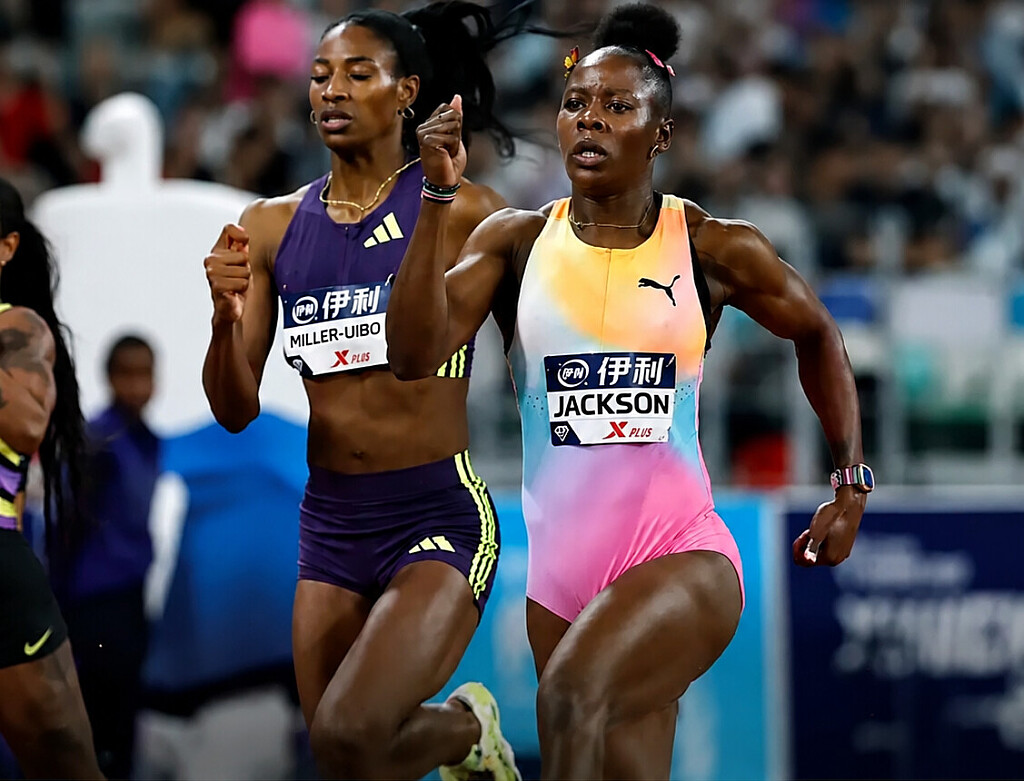
Lausanne Diamond League Set For Sprint Fireworks As Shericka Jackson And Shaunae Miller-Uibo Headline Star-Studded Showdown
The countdown is on for one of the most anticipated meetings of the 2026 Wanda Diamond League season, with the Athletissima Lausanne Diamond League set to deliver another spectacular night of world-class athletics on August 21.
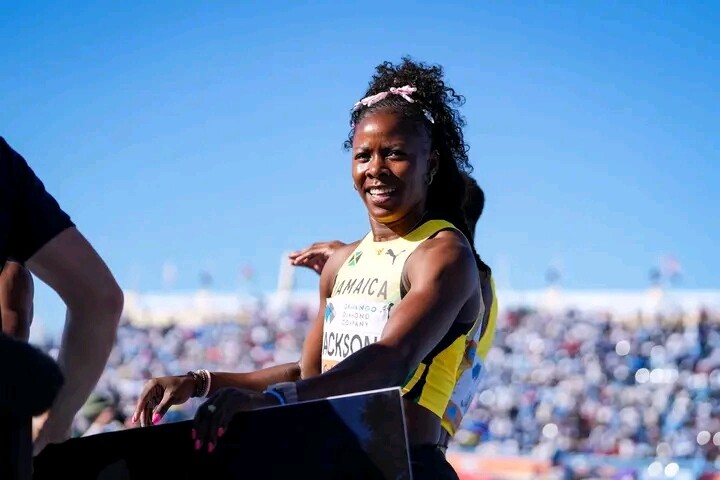
A loaded women's sprint programme will take centre stage, highlighted by an electrifying 200m showdown featuring some of the biggest names in global athletics. The event promises speed, drama and championship-quality competition as the world's elite battle for Diamond League glory.
Leading the field is Shericka Jackson, the Jamaican sprint sensation and the second-fastest woman in history over 200 metres. Jackson arrives in Lausanne chasing another Diamond League victory and, given her exceptional pedigree, the meeting record could be under serious threat if conditions are favourable. Widely regarded as one of the greatest 200m runners of all time, she will be aiming to continue her impressive form as the season reaches its decisive stages.
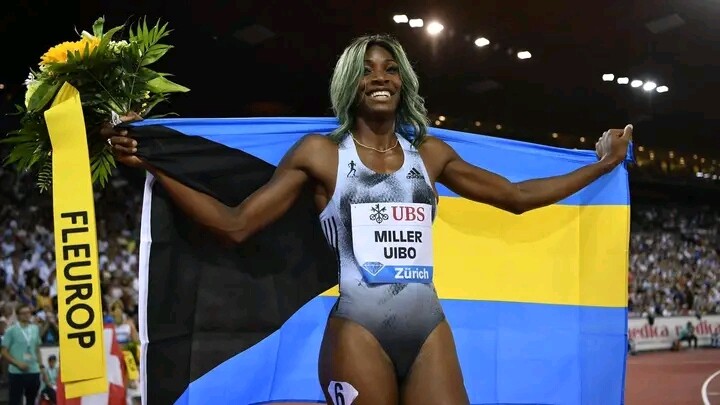
Joining the star-studded line-up is Shaunae Miller-Uibo, the Bahamian superstar whose résumé includes two Olympic 400m gold medals and a world title. Renowned for her powerful finishing speed and championship experience, Miller-Uibo adds another layer of excitement to what is already shaping up to be one of the highlights of the meeting.
The field also features Amy Hunt, the reigning world 400m silver medallist, who continues to establish herself among the world's elite. Her presence ensures the competition will be fierce as she tests herself against some of the most accomplished athletes of this generation.
With such an exceptional line-up confirmed, Lausanne is expected to produce one of the fastest women's sprint races of the season. The Swiss meeting has earned a reputation for delivering unforgettable performances, and fans will be hoping another chapter of athletics history is written on August 21.
As the race for Diamond League points intensifies ahead of the season finale, every result carries extra significance. For Jackson, Miller-Uibo and their rivals, Lausanne represents another opportunity to make a statement, sharpen their form and build momentum before the year's major championships.
With Olympic champions, world champions and record-breaking sprinters all set to take the track, the Athletissima Lausanne Diamond League promises an evening of elite competition that athletics fans around the world will not want to miss.
by Erick Cheruiyot for My Best Runs.
Login to leave a comment

Eugene Welcomes the Future of Athletics as the 2026 World U20 Championships Get Underway
The global spotlight turns to Eugene, Oregon, today as the 2026 World Athletics U20 Championships officially get underway at the iconic Hayward Field, launching five days of elite competition that will showcase the sport's brightest young talents.
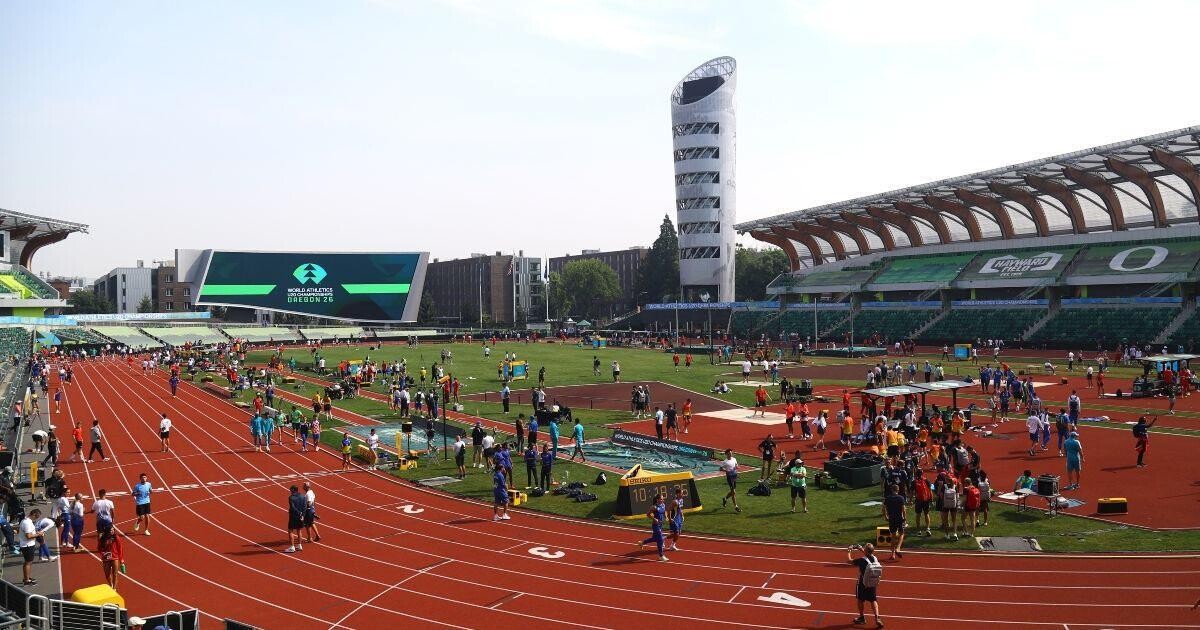
Running from August 5 to August 9, the 40th edition of the championships is the biggest in the event's history, bringing together more than 1,800 athletes representing 147 nations. For many of these rising stars, the championships mark the first major step toward future Olympic, World Championship, and Diamond League success.
The opening day immediately promises world-class action with three gold medals on the line. The women's 5,000m and men's 5,000m finals will test the endurance of the world's finest young distance runners, while the mixed 4×400m relay is expected to provide a thrilling conclusion to the day's competition as teams battle for the first relay title of the championships.
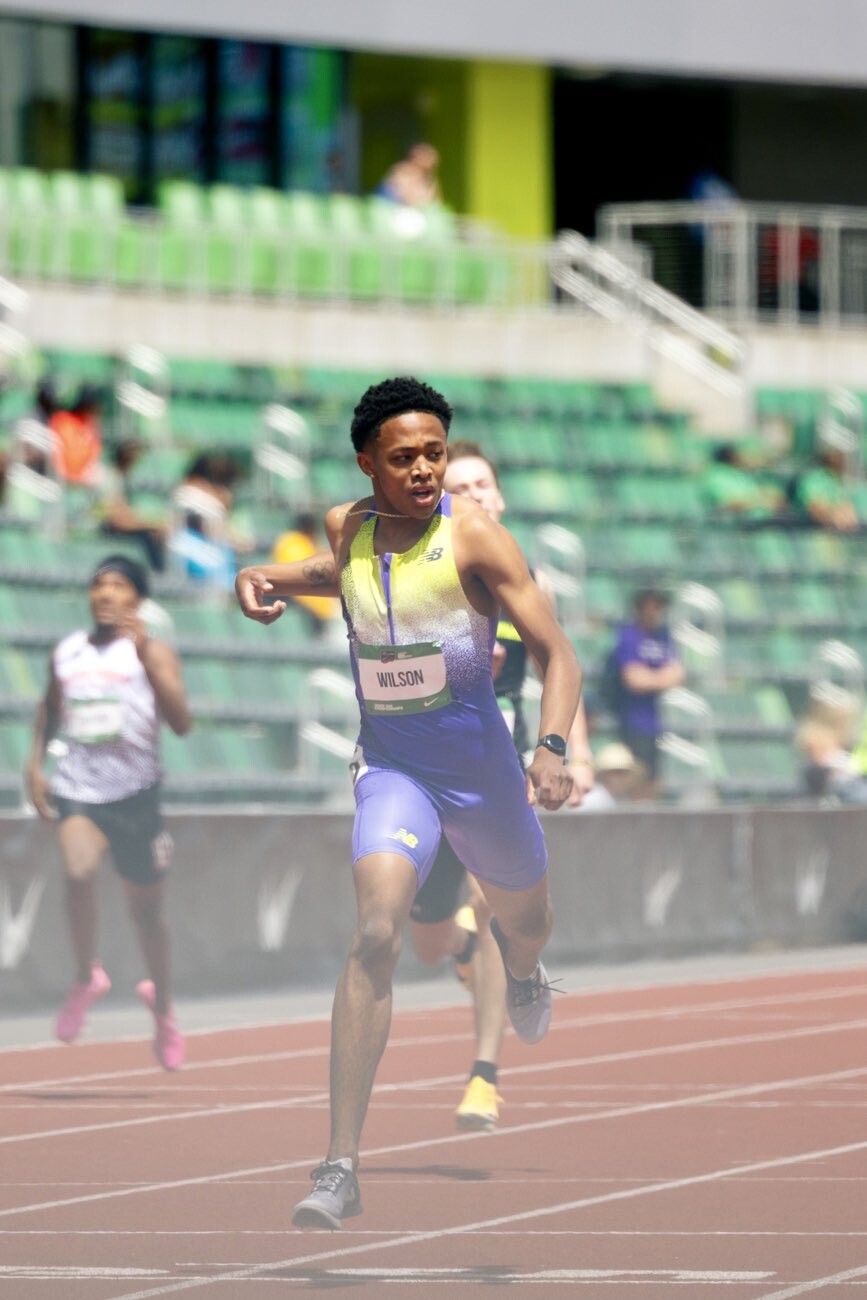
Several exciting athletes arrive in Eugene carrying high expectations. American sprint sensation Quincy Wilson will be one of the biggest attractions on home soil after establishing himself as one of the fastest young quarter-milers in the world. Fellow American Tate Taylor, the high school national record holder, will also be aiming to translate his remarkable speed into championship gold.
Jamaica's emerging sprint talent Shanoya Douglas enters the competition determined to challenge for the women's 200m title, while Kenya's Frankline Kibet will spearhead his country's pursuit of more distance-running success, continuing a tradition that has produced some of the greatest champions in athletics history.
Beyond the medals, the World U20 Championships have long served as the launching pad for future legends of the sport. Numerous Olympic and world champions first announced themselves on this very stage, making Eugene the perfect setting for another generation of athletes eager to leave their mark on the global scene.
Fans around the world will be able to follow every moment of the action through a range of broadcast partners, including Peacock in the United States, SuperSport across Sub-Saharan Africa, Eurovision Sport throughout Europe, CBC Gem in Canada, Seven Network in Australia, and World Athletics+ in eligible territories.
With national pride, championship titles, and the chance to announce themselves to the world at stake, the stage is set for five unforgettable days of athletics. As competition begins at the historic Hayward Field, the next generation of global stars is ready to write the opening chapter of what could become remarkable careers.
by Erick Cheruiyot for My Best Runs.
Login to leave a comment

Australian Athletics Mourns Rising Middle-Distance Talent Natasha Ward, Dead at 21
Australian athletics is mourning the heartbreaking loss of promising middle-distance runner Natasha Ward, who has died at the age of 21, bringing an abrupt end to a career that had shown remarkable promise on both the track and in academia.

The news was confirmed on Thursday in a joint statement released by NSW Athletics and the Sutherland District Athletics Club in Sydney. No cause of death was disclosed.
Ward had established herself as one of the emerging talents in Australian middle-distance running, competing primarily in the 400m, 800m and 1,500m. Her journey began with impressive performances as a junior athlete, including a medal-winning run in the 1,500m at the New South Wales All Schools Championships.
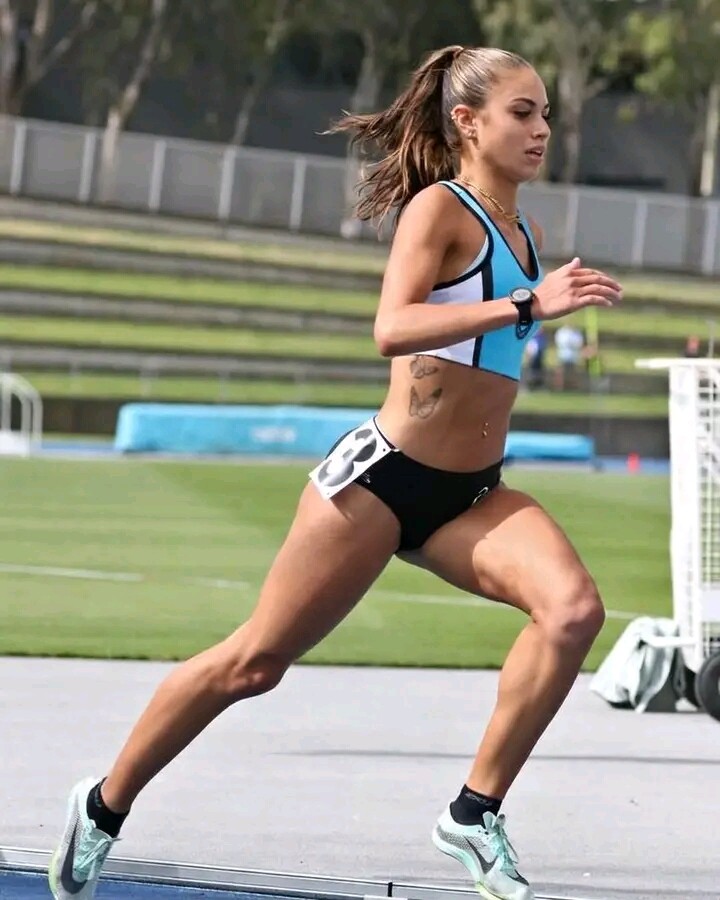
She continued to build on that success at university level, claiming a medal in the 1,500m at the 2023 UniSport Nationals before returning this year to earn bronze in the 800m. Her steady progression also saw her compete at the 2024 Australian Athletics Championships, lining up against some of the nation's leading middle-distance stars, including Morgan Mitchell and Claudia Hollingsworth.
Away from competition, Ward was equally dedicated to her future beyond athletics. She was studying Exercise and Sports Science at Macquarie University in Sydney, combining her academic ambitions with an unwavering commitment to the sport she loved.
Her club remembered her not only as a gifted athlete but also as a teammate who always put others first. Whether representing the club in its summer and winter relay competitions or volunteering to fill in when teams were short of runners, Ward earned admiration for her generosity, reliability and infectious enthusiasm.
In a heartfelt tribute, NSW Athletics and the Sutherland District Athletics Club described her as a cherished member of the athletics community.
"Beyond her achievements on the track, Natasha was a greatly loved member of our community. Her kindness and joy touched everyone fortunate enough to know her, and her magnetic smile and warm personality have left a permanent mark on Australian athletics. Our thoughts are with Natasha's family, friends, and everyone who had the privilege of knowing her."
Ward's passing comes only weeks after Australian sprint athlete Jemma Stapleton, 25, died in a road accident while on holiday in Thailand. Authorities have indicated there is no connection between the two tragedies.
As tributes continue to pour in from across Australia's athletics community, Natasha Ward will be remembered not only for the medals she won and the races she ran, but also for the warmth, humility and positivity she brought to everyone around her. Her loss leaves a profound void in Australian athletics, with many believing she had only begun to reveal the full extent of her potential.
by Erick Cheruiyot for My Best Runs.
Login to leave a comment
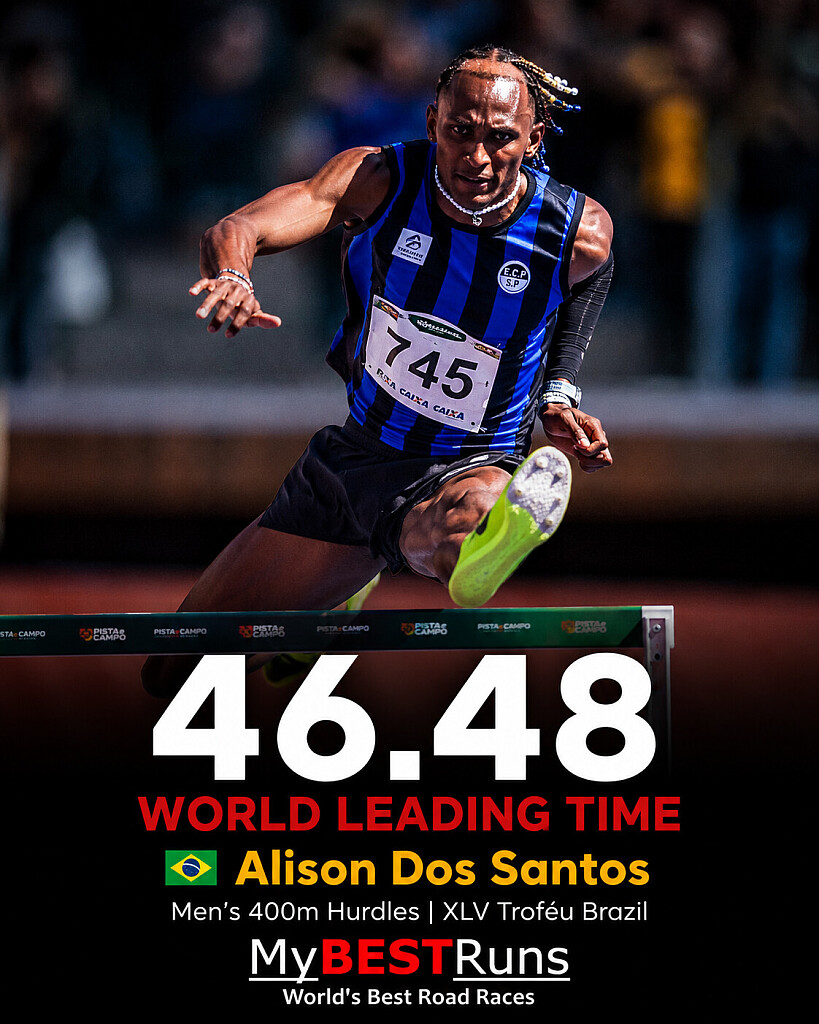
Alison Dos Santos Roars Back to the Top with World-Leading 46.48 at Troféu Brasil
Brazilian 400m hurdles star Alison Dos Santos has delivered a powerful statement ahead of the major championships, producing a sensational world-leading 46.48 seconds to win at the XLV Troféu Brasil in front of an ecstatic home crowd.
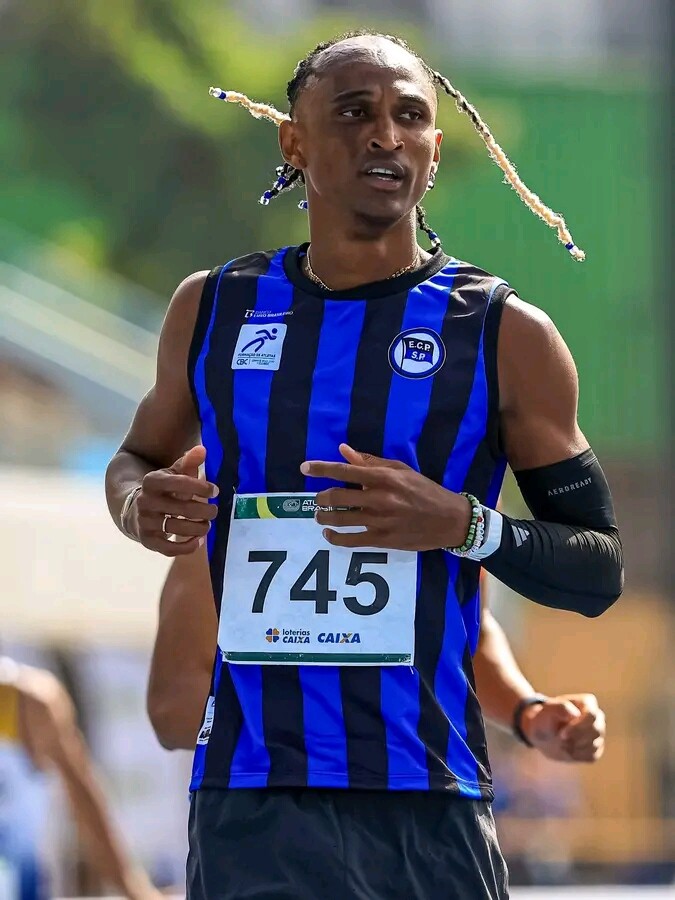
The breathtaking performance marked Dos Santos' fastest race since his unforgettable triumph at the 2022 World Athletics Championships, where he claimed global gold in dominant fashion. After battling injuries and setbacks over the past few seasons, the Brazilian has once again reminded the athletics world why he remains one of the event's greatest talents.
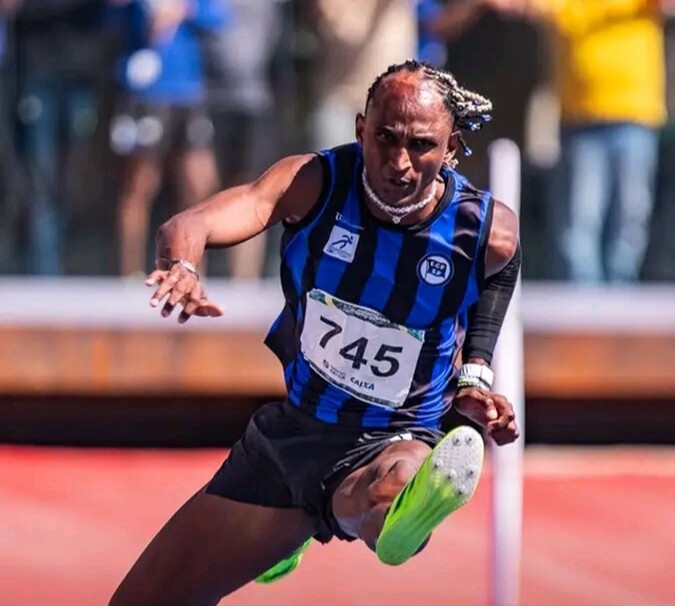
Clocking 46.48, Dos Santos surged to the top of the 2026 world rankings with a display of speed, rhythm, and flawless hurdling that left no doubt about his return to peak form. Every stride reflected the confidence and explosiveness that made him a world champion, sending a clear warning to his rivals that he is ready to challenge for more international titles.
The performance is more than just a fast time—it is a powerful comeback story. Returning to his very best after years of determination and resilience, Dos Santos has reignited excitement in one of track and field's most competitive events. His run not only thrilled the home fans but also reshaped the global picture in the men's 400m hurdles.
With the championship season gathering momentum, Alison Dos Santos has placed himself firmly back among the favourites. If this remarkable run is any indication, the Brazilian superstar is once again ready to chase gold on the world's biggest stages, proving that champions always find a way back to the top.
by Erick Cheruiyot for My Best Runs.
Login to leave a comment

Audrey Werro Fine-Tunes for European Glory with Ambitious Swiss Championships Double
Switzerland's rising middle-distance sensation Audrey Werro is set for one final competitive tune-up before turning her attention to the biggest championship of her season. The 21-year-old will take on an ambitious double at this weekend's Swiss Championships in Zurich, racing both the 400m and her favored 800m as she sharpens her form ahead of the European Athletics Championships.
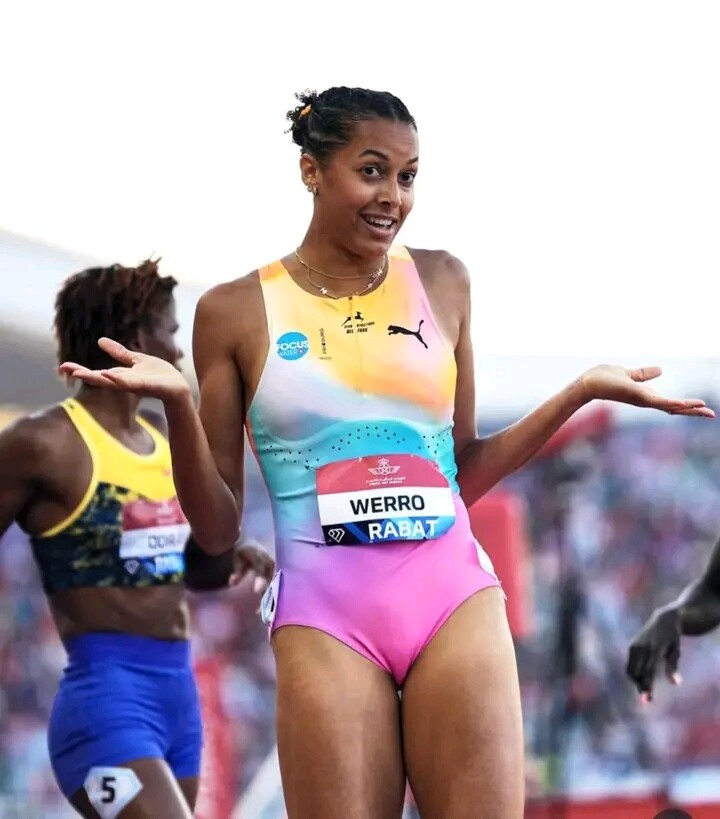
Werro's schedule will begin with the 400m heats on Saturday, a race designed to sharpen her speed and race rhythm before she shifts focus to the two-lap event that has transformed her into one of the world's most exciting middle-distance athletes.
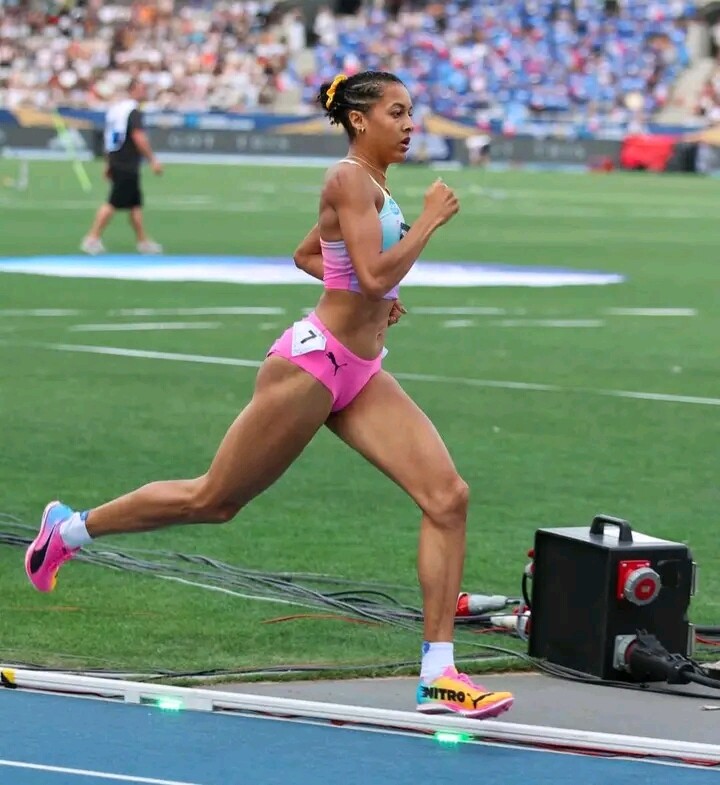
The Swiss star arrives in Zurich carrying exceptional momentum after producing the finest season of her career. Earlier this year, she stormed to a personal best of 51.33 seconds over 400m in Fribourg, making her the fastest Swiss woman at the distance in 2026. The performance highlighted not only her raw speed but also the strength that has elevated her 800m running to another level.
Her last appearance over 800m came on June 30, capping off a remarkable month that rewrote Swiss athletics history. Werro became the first woman ever to run multiple sub-1:54 performances, a breakthrough that firmly established her among the world's elite and confirmed that her rise is no longer a promise—it is a reality.
Now, with the national championships serving as her final dress rehearsal, every stride will be aimed at arriving in peak condition for the European Athletics Championships. Confidence is high, but so are the expectations surrounding the Swiss star, whose blend of speed, tactical awareness, and finishing power has made her one of the standout performers of the season.
The European stage could deliver one of the year's most captivating middle-distance battles. Werro is widely expected to challenge reigning Olympic champion Keely Hodgkinson of Great Britain and Dutch superstar Femke Bol, whose versatility and championship pedigree make her a formidable rival if she contests the event.
For Werro, the Swiss Championships are about far more than national titles. They represent the final opportunity to perfect her race sharpness, build confidence, and send a statement before Europe's best assemble for championship glory.
With history already made, confidence soaring, and her career reaching new heights, Audrey Werro now stands on the brink of another defining chapter. If her recent performances are any indication, the battle for the European 800m crown could become one of the highlights of the championship, and the Swiss star appears ready to seize the moment.
by Erick Cheruiyot for My Best Runs.
Login to leave a comment
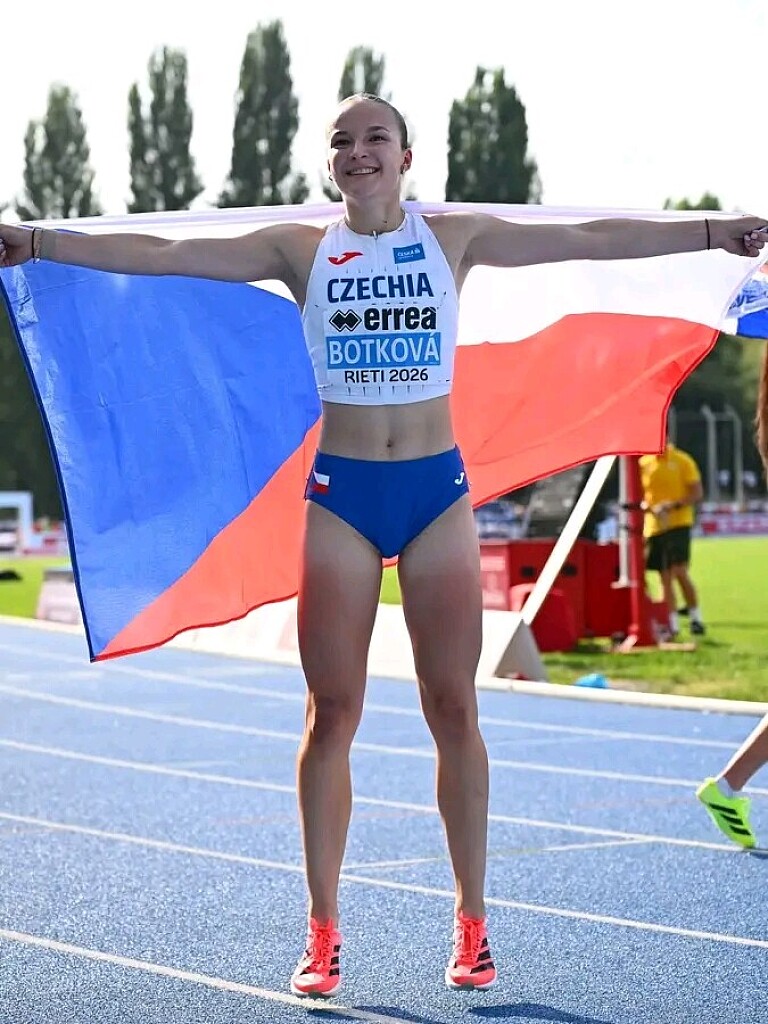
Linda Botková Rewrites History: The 16-Year-Old Who Produced One Of The Greatest Junior Hurdle Performances Ever
Track and field has witnessed the emergence of another extraordinary teenage phenomenon.
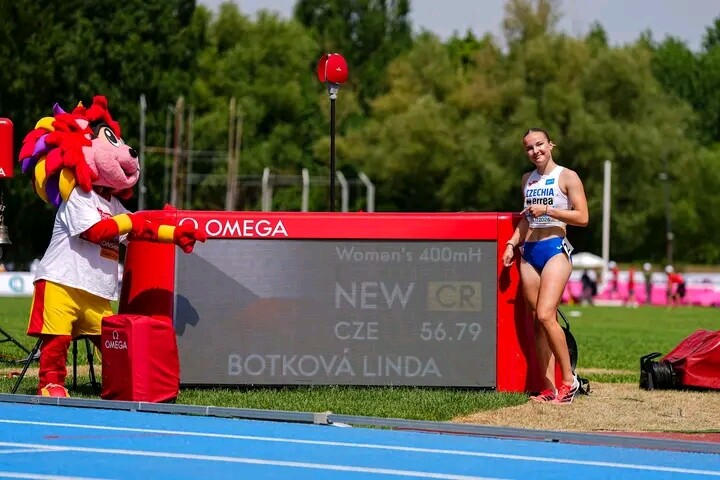
At just 16 years old, Czech sensation Linda Botková produced one of the greatest under-18 performances in the history of the women's 400m hurdles, storming to the European Athletics U18 Championship title in Rieti, Italy, with a breathtaking 55.19 seconds. It was far more than a gold-medal-winning run—it was a performance that rewrote the record books and firmly established her as one of the brightest young stars in global athletics.
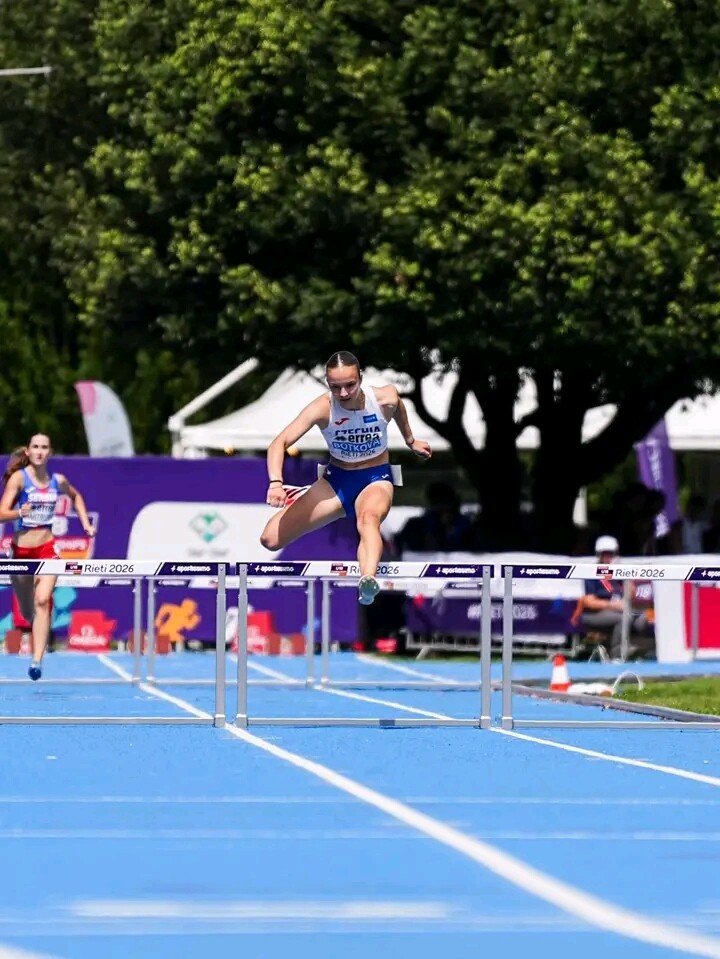
From the gun, Botková displayed remarkable maturity, attacking each hurdle with confidence, precision, and outstanding rhythm. She controlled the race from start to finish before unleashing a powerful sprint over the closing metres to cross the line in a stunning new personal best.
The significance of her performance extends well beyond the championship. Her sensational 55.19 not only earned her the European U18 crown but also produced an astonishing collection of milestones. She shattered the European Under-20 record, set a new European Under-18 best, established a new championship record, and remarkably lowered that championship record in all three rounds of the competition. The time also became the world Under-18 leading performance of the season, a new Czech Under-18 national record, and the second-fastest performance ever recorded by an Under-18 athlete.
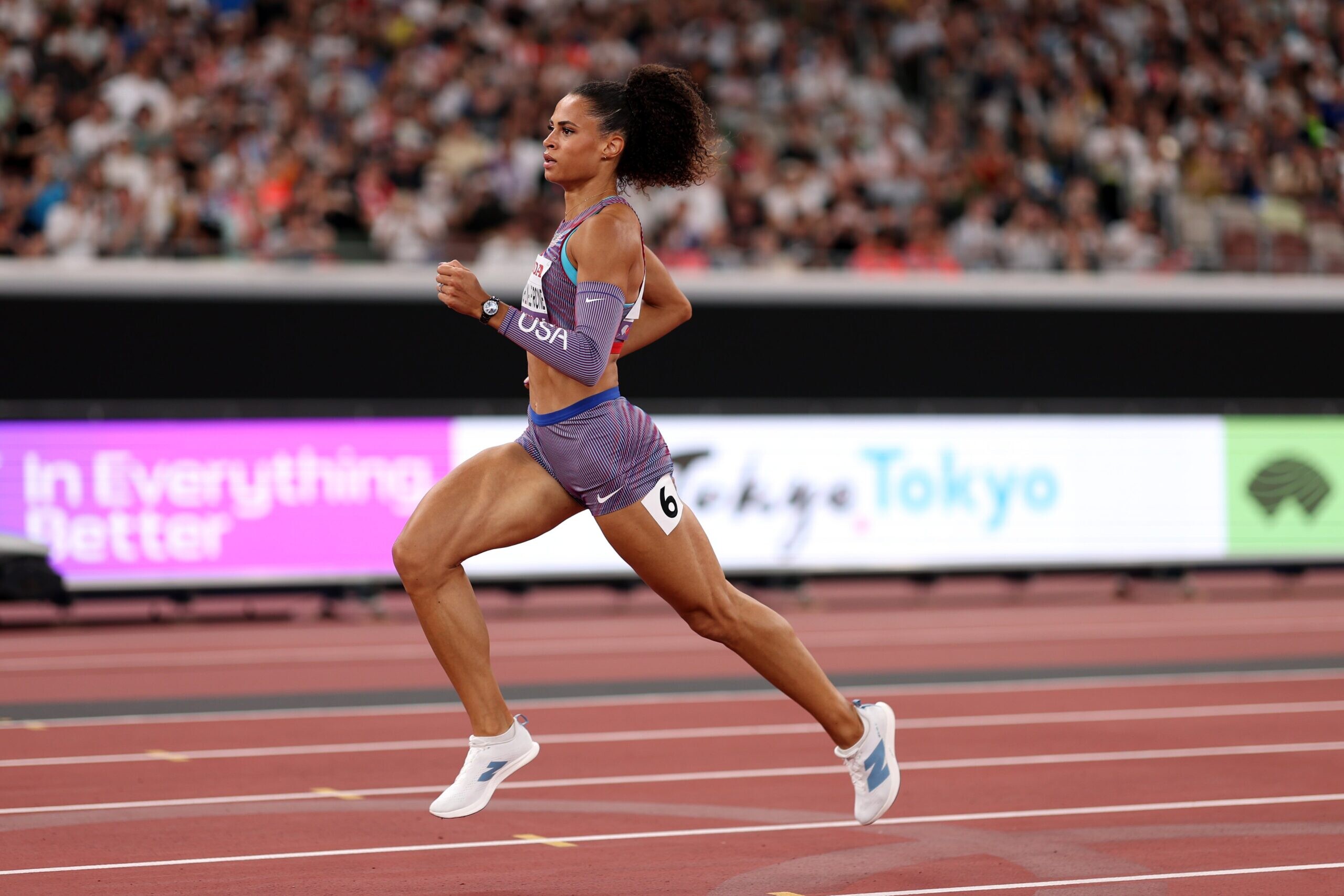
Only world record holder and Olympic champion Sydney McLaughlin-Levrone has ever run faster at the same age—a remarkable statistic that underscores just how exceptional Botková's achievement truly is.
Producing such a performance at only 16 years old, while still developing physically and technically, speaks volumes about her immense talent, discipline, and competitive maturity. It is a race that has instantly elevated her from a promising prospect to one of the most exciting young athletes in world track and field.
For Czech athletics, Botková's triumph represents the arrival of a potential global superstar. For the rest of the athletics world, it is a powerful reminder that a new generation is already pushing the boundaries of what seemed possible.
Winning European Under-18 gold was a remarkable achievement. Doing so in 55.19 seconds, while rewriting multiple records and becoming the second-fastest Under-18 400m hurdler in history, transformed the race into one of the greatest junior performances the event has ever witnessed.
by Erick Cheruiyot for My Best Runs.
Login to leave a comment
Josh Kerr Restores Britain's Mile Crown With a Historic World Record on Home Soil
Forty-one years after Great Britain last celebrated a men's mile world record, Josh Kerr has written a magnificent new chapter in the sport's rich history.
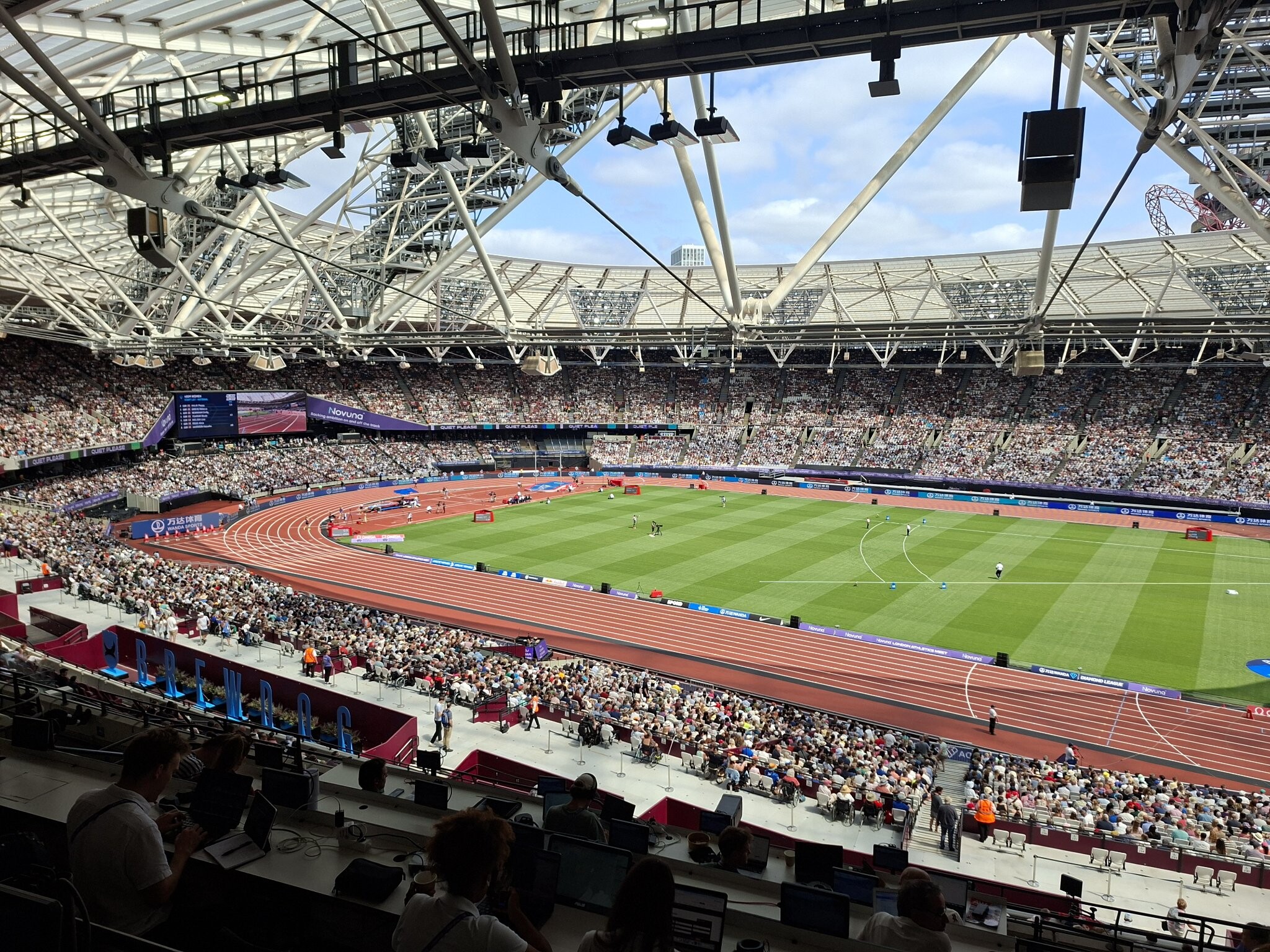
Competing before a passionate home crowd in London, Kerr delivered the performance of a lifetime, storming to a sensational 3:42.66 to erase one of athletics' longest-standing records. It was more than just a personal triumph—it marked the return of the mile world record to the nation that has shaped some of the greatest middle-distance runners the sport has ever known.
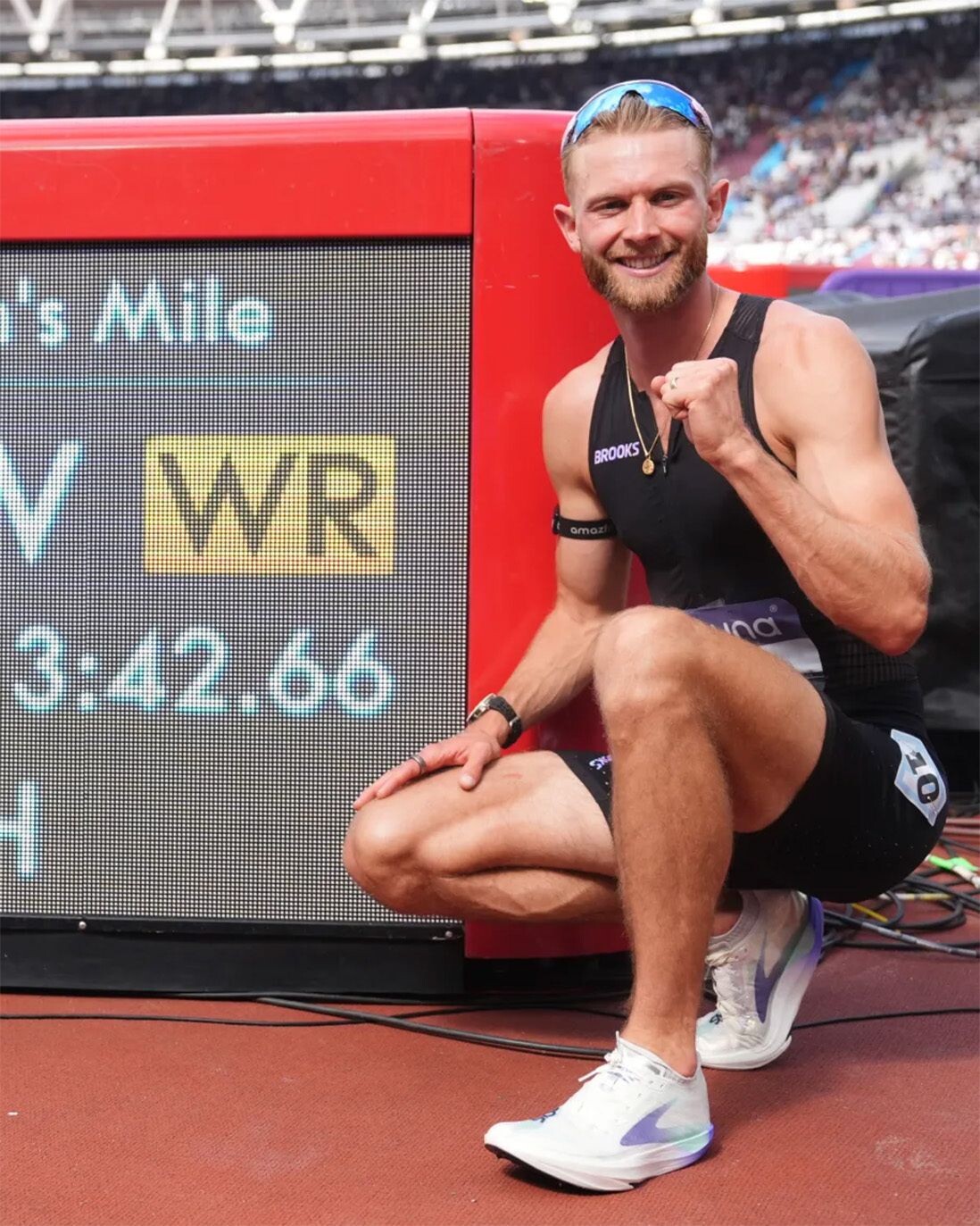
With that unforgettable run, Kerr became the seventh British man to hold the men's mile world record, joining a legendary lineage that stretches back nearly nine decades. His achievement places him alongside icons such as Sydney Wooderson, Roger Bannister, Derek Ibbotson, Sebastian Coe, Steve Ovett and Steve Cram—names forever woven into the history of British athletics.
For generations, Great Britain stood at the forefront of mile running. Wooderson first established the country's dominance in 1937 before Bannister forever changed athletics by becoming the first man to break the four-minute barrier in 1954. The baton was then carried by Ibbotson, Coe, Ovett and Cram, whose fierce rivalry elevated the event to extraordinary heights during the late 20th century.
Since Steve Cram's world record of 3:46.32 in 1985, Britain had waited more than four decades for another athlete capable of reclaiming the crown. Many exceptional runners emerged during that period, but none managed to rewrite the record books—until Josh Kerr.
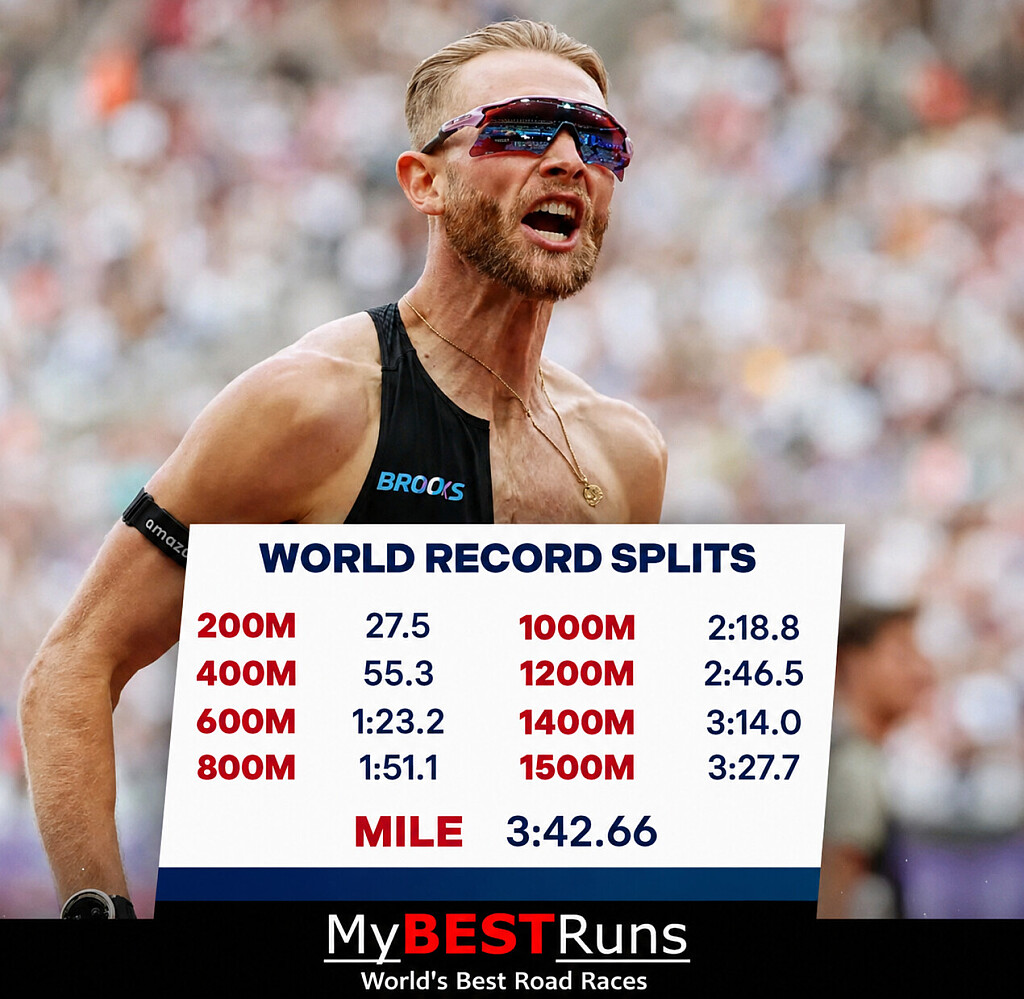
The Scottish star embraced the enormous expectations surrounding his ambitious Project 222 with remarkable composure. Every split demonstrated the precision required to chase history. He opened with 27.5 seconds at 200m, reached 400m in 55.3, passed 600m in 1:23.2, and hit 800m in 1:51.1, perfectly positioning himself for a relentless second half.
Rather than fading, Kerr accelerated. He covered 1000m in 2:18.8, reached 1200m in 2:46.5, passed 1400m in 3:14.0, and crossed 1500m in a blistering 3:27.7 before producing one final surge over the closing 109 metres to stop the clock at an astonishing 3:42.66. It was a masterclass in pacing, endurance and finishing speed—proof that every stride had been meticulously planned.
Roared on by thousands of supporters inside London's packed stadium, Kerr transformed years of sacrifice, discipline and unwavering belief into one of the greatest performances ever witnessed in middle-distance running. He didn't simply attack the record—he dismantled it with authority.
Kerr's achievement is about far more than breaking a world record. It reconnects Great Britain with one of its proudest athletics traditions and signals the beginning of a new era for the iconic mile. His unforgettable run reminds the world that even the longest-standing records can fall when extraordinary talent meets fearless ambition.
On a magical evening in London, Josh Kerr didn't just rewrite the record books—he brought the mile world record back home and secured his place among the greatest middle-distance runners in history.
by Erick Cheruiyot for My Best Runs.
Login to leave a comment
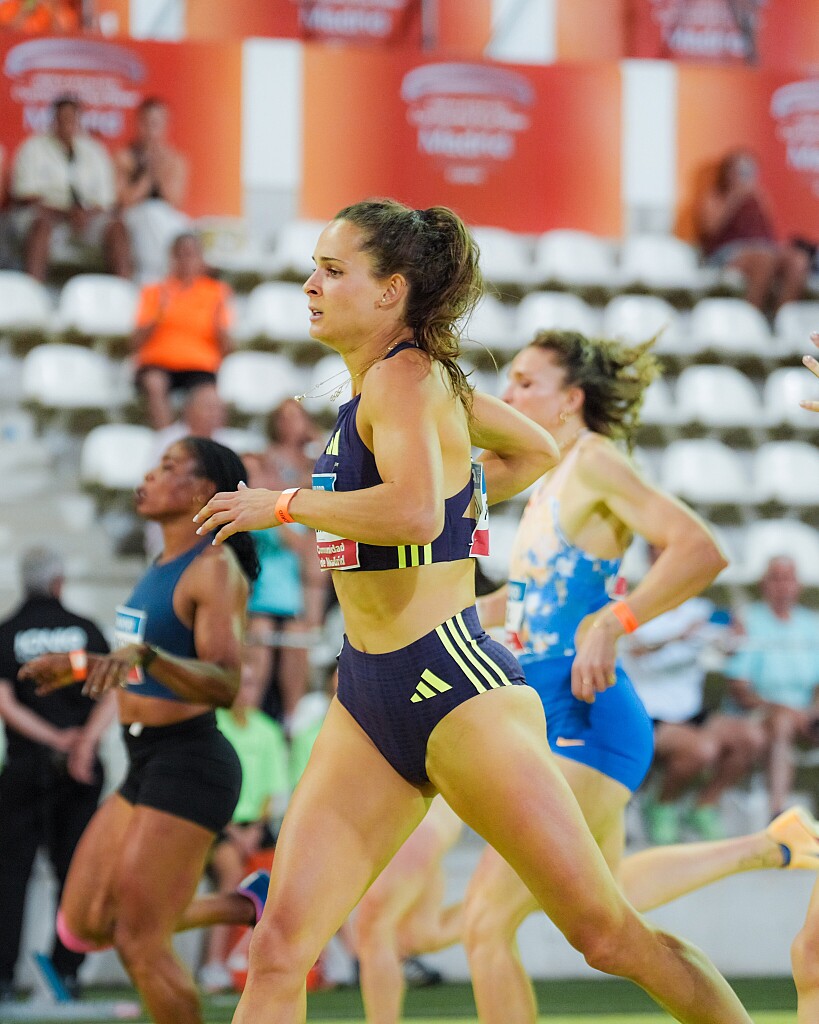
Anna Polinari Delivers Italy's Fastest Women's 400m Performance in 17 Years
Anna Polinari produced the race of her career at the Meeting Madrid, storming to a sensational personal best of 50.36 seconds to claim victory in a thrilling women's 400m contest and register the fastest time by an Italian woman in 17 years.
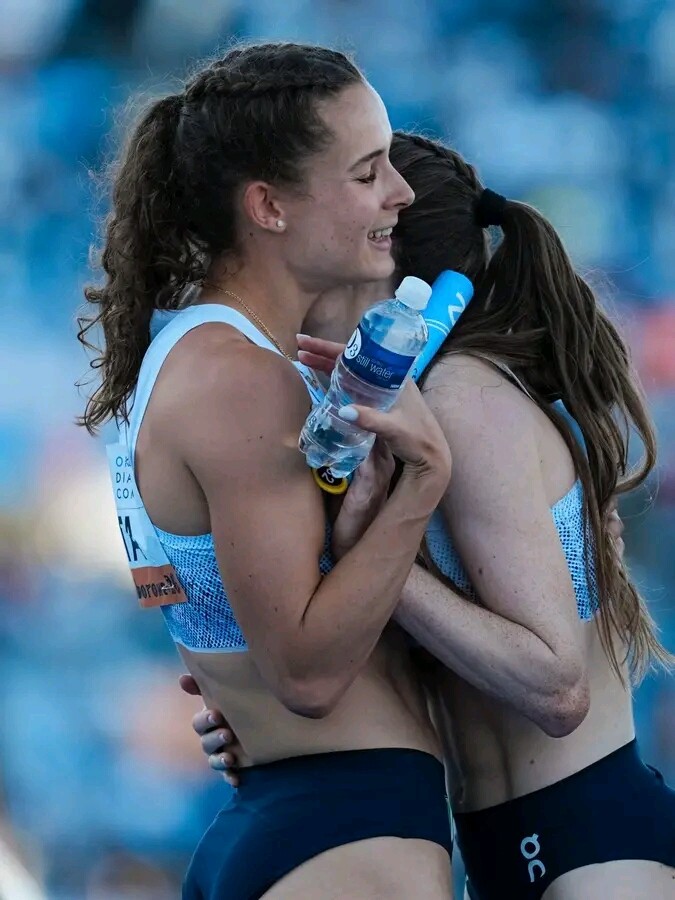
The Italian star held her composure under immense pressure, edging Bahrain's Kemi Adekoya by the slimmest of margins. Adekoya crossed the line just 0.01 seconds behind in 50.37, capping off one of the closest one-lap battles of the season.
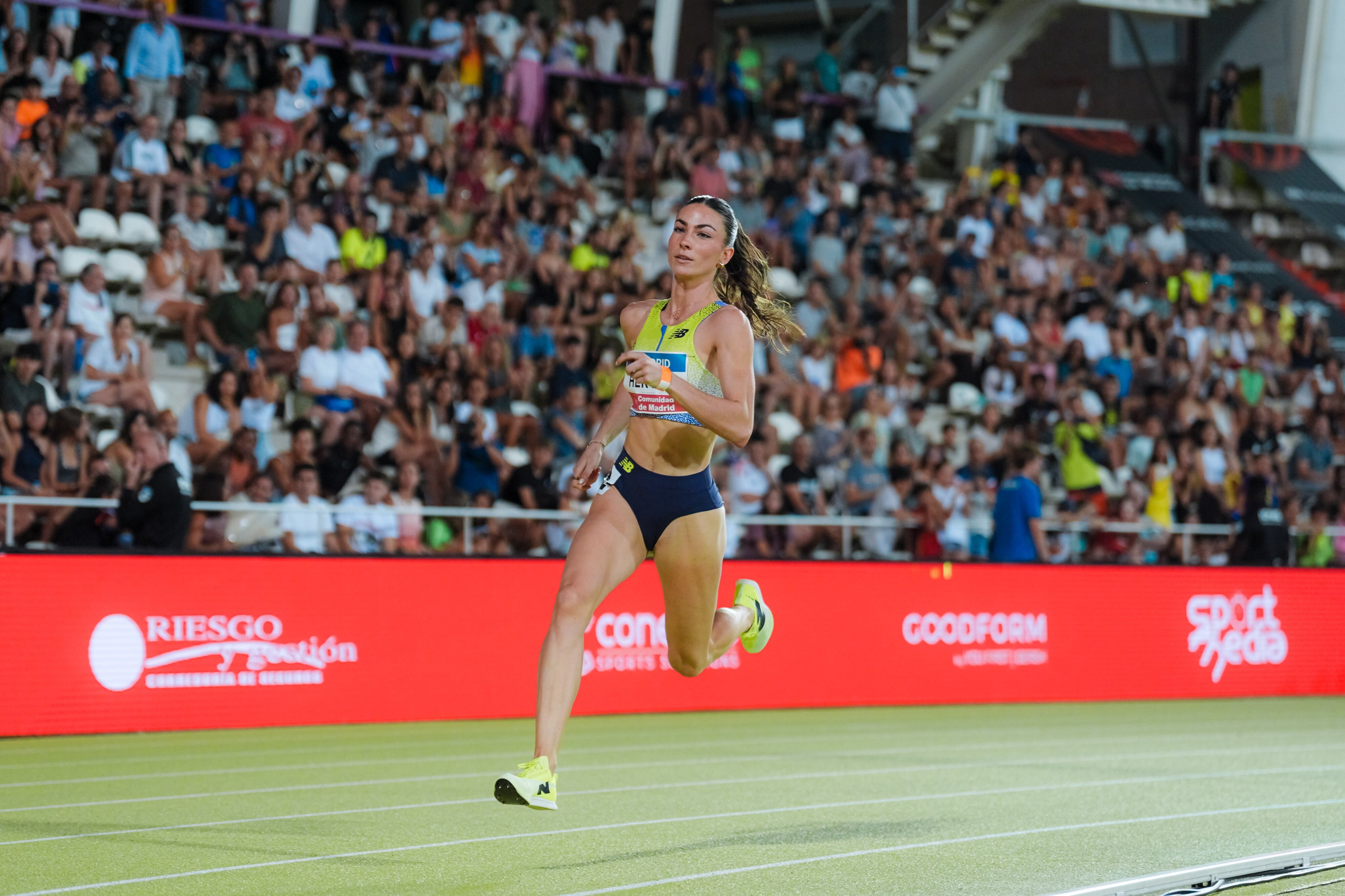
Polinari's breakthrough performance places her among the finest Italian quarter-milers in history. Her 50.36 is the quickest time by an Italian woman since Libania Grenot set the national record of 50.30 in 2009, underlining the significance of the milestone and marking a new chapter for Italian women's sprinting.
The race remained fiercely competitive from start to finish. Chile's Martina Weil secured third place in 50.43, while Ireland's Sharlene Mawdsley finished fourth in the identical time, separated only by the photo finish.
Beyond the victory, Polinari's performance sends a powerful message ahead of the major championships. Producing a personal best in such a high-quality field demonstrates not only her growing confidence but also her ability to thrive under pressure against world-class opposition. With her form peaking at the right time, she has emerged as a serious contender on the international stage.
For Italian athletics, the result is a landmark moment. Breaking a 17-year barrier is no small feat, and Polinari's remarkable run highlights the resurgence of Italy's women's sprint program. If she continues on this trajectory, the national record of 50.30 now appears well within reach, setting the stage for an exciting remainder of the season.
by Erick Cheruiyot for My Best Runs.
Login to leave a comment

A Titanic Women's 800m Showdown Awaits As Budapest Prepares For A Race To Remember
The countdown to the inaugural World Athletics Ultimate Championship has already ignited excitement across the athletics world, but few events promise as much drama as the women's 800 metres. With a field packed full of world-class talent, Budapest is set to host what could become one of the most memorable two-lap races of the 2026 season.
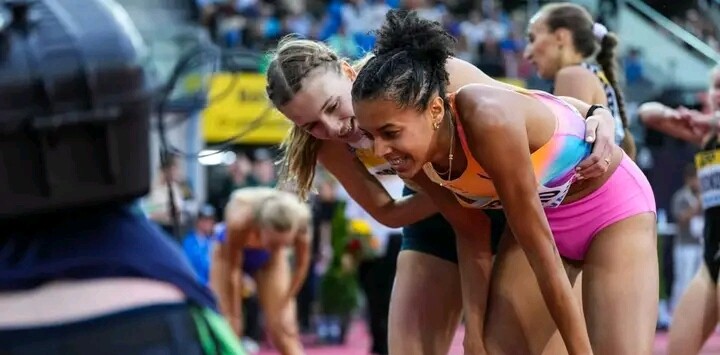
Scheduled for September 11–13 at the National Athletics Centre in Budapest, Hungary, the championship will bring together the sport's finest athletes while offering a record-breaking prize fund of US$10 million. Among the headline attractions is an extraordinary women's 800m lineup that blends raw speed, championship experience, fearless racing and tactical brilliance.
Leading the conversation is Switzerland's Audrey Werro, whose remarkable rise has established her among the world's elite. Producing sensational performances throughout the season, Werro has continued to rewrite expectations with her aggressive racing style and exceptional finishing strength, making her one of the favourites heading into Budapest.
Standing in her way is Great Britain's Olympic champion Keely Hodgkinson, one of the most accomplished 800m runners of her generation. Renowned for her flawless race management, devastating finishing kick and ability to thrive under pressure, Hodgkinson remains a formidable championship competitor capable of delivering when the stakes are highest.
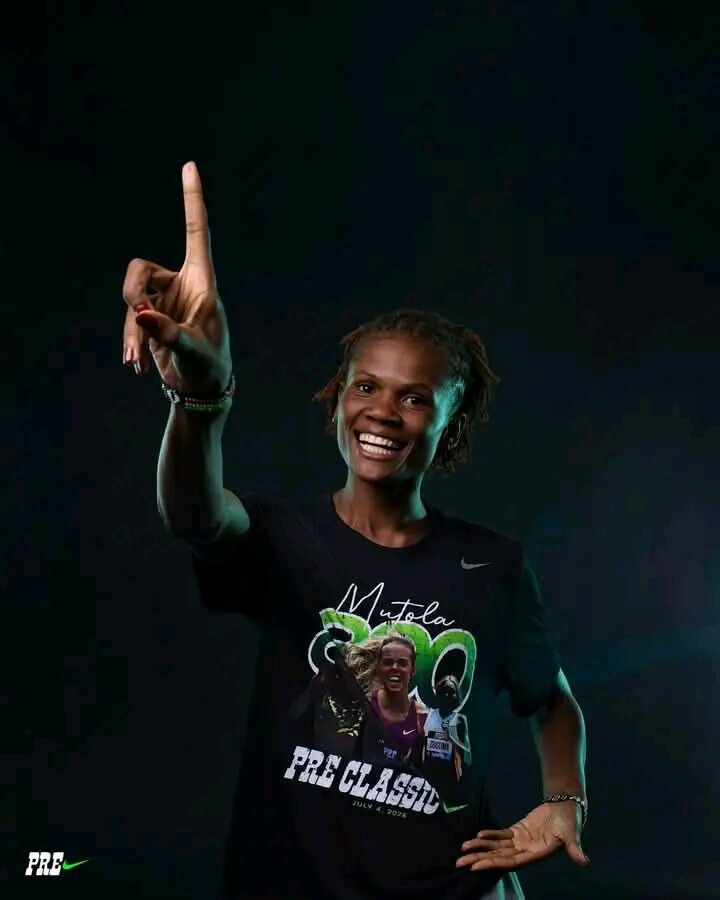
Kenya's Lilian Odira also enters the championship carrying enormous confidence as the reigning world champion. Having already demonstrated her ability to conquer major finals against elite opposition, Odira possesses the composure and resilience needed to challenge for another global title on one of athletics' biggest stages.
Adding even greater intrigue is Dutch superstar Femke Bol, whose transition from the 400m hurdles to the 800m has captured global attention. Already one of the sport's biggest names, Bol has shown remarkable adaptability and endurance, emerging as a genuine contender capable of upsetting the established specialists.
Completing this exceptional lineup is Great Britain's Georgia Bell Hunter, whose consistency throughout the season has firmly established her among the world's best. Her string of impressive sub-1:55 performances has demonstrated both speed and maturity, ensuring she will be a serious threat in any tactical or fast-paced final.
With every major contender arriving in outstanding form, the women's 800 metres promises far more than a battle for gold. It represents a clash of contrasting racing philosophies—fearless front-running, calculated tactics, explosive finishing speed and championship experience—all converging in one unforgettable contest.
As the inaugural World Athletics Ultimate Championship approaches, anticipation continues to build for what could become one of the defining races of the year. When the athletes take their places on the start line in Budapest, only one will leave wearing the crown, but the journey to that finish line promises a spectacle worthy of the global stage.
by Erick Cheruiyot for My Best Runs.
Login to leave a comment
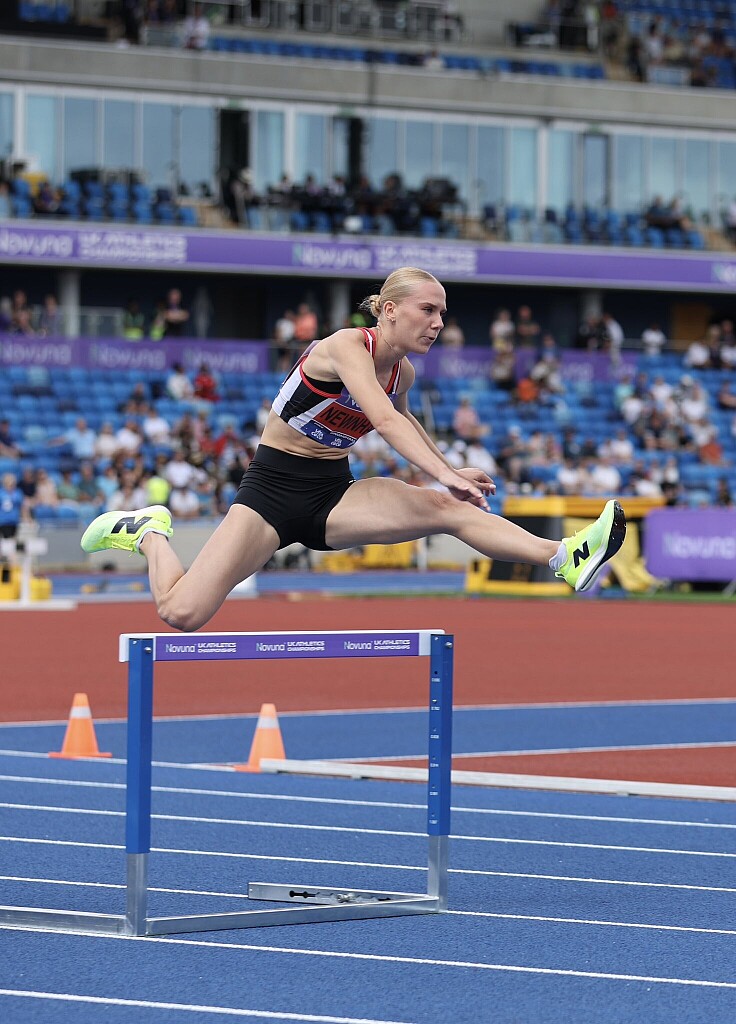
Emily Newnham breaks through: Britain has a new sub-54 star in the 400m hurdles
British athletics has a new name to celebrate after Emily Newnham produced the performance of her career, smashing through the coveted 54-second barrier in the women's 400m hurdles for the very first time.
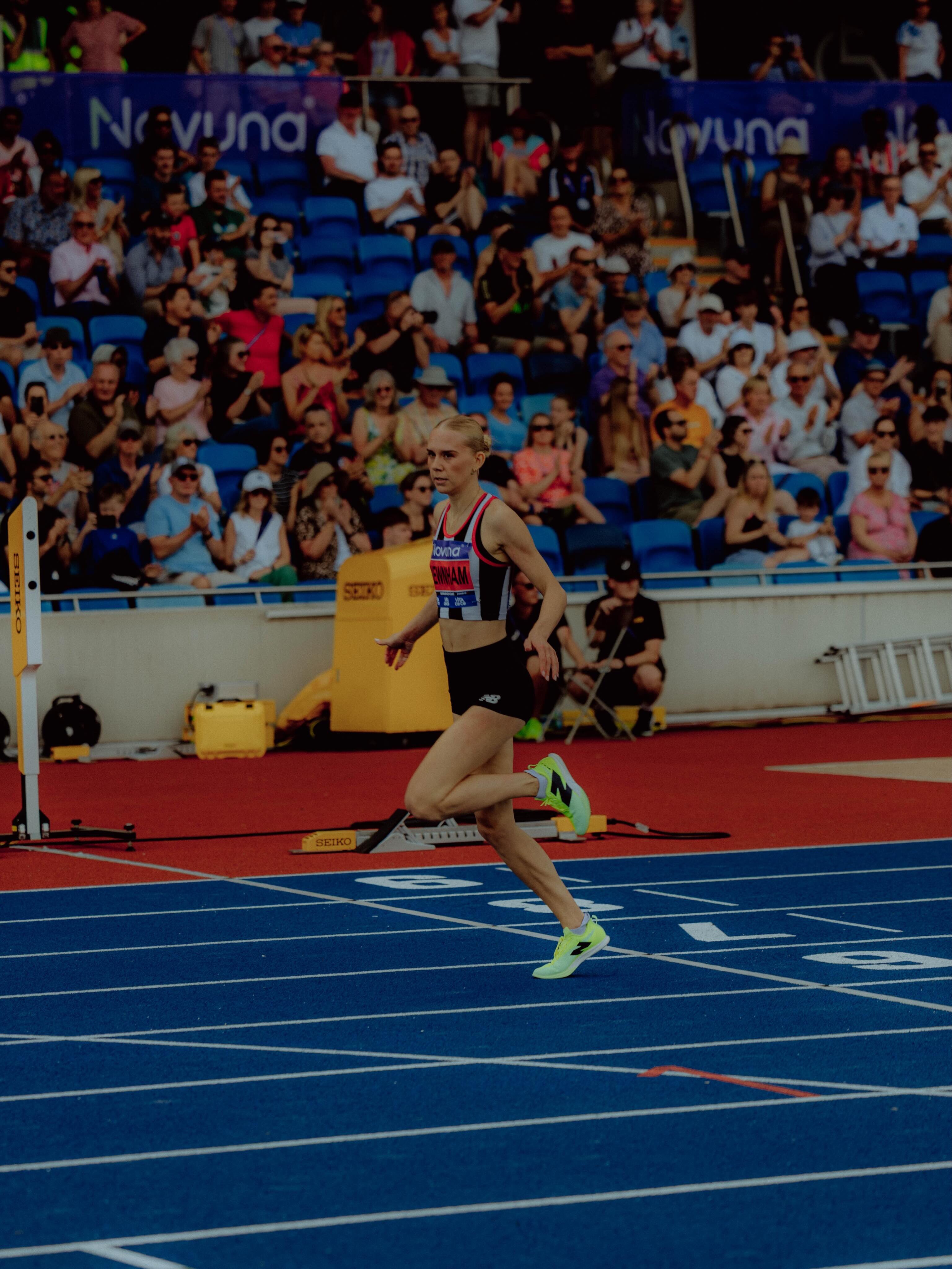
The 22-year-old delivered a superb run in Tampere, stopping the clock at 53.97 seconds to reach a milestone that had long appeared within her grasp. More than just a personal breakthrough, the performance places her among an elite group of British athletes who have achieved one of the event's most respected benchmarks.
By dipping under 54 seconds, Newnham becomes the first British woman in 13 years to accomplish the feat, ending a wait that stretches back to Perri Shakes-Drayton's sub-54 performance in 2013. The achievement marks the arrival of another exciting talent in Britain's rich tradition of one-lap hurdlers.
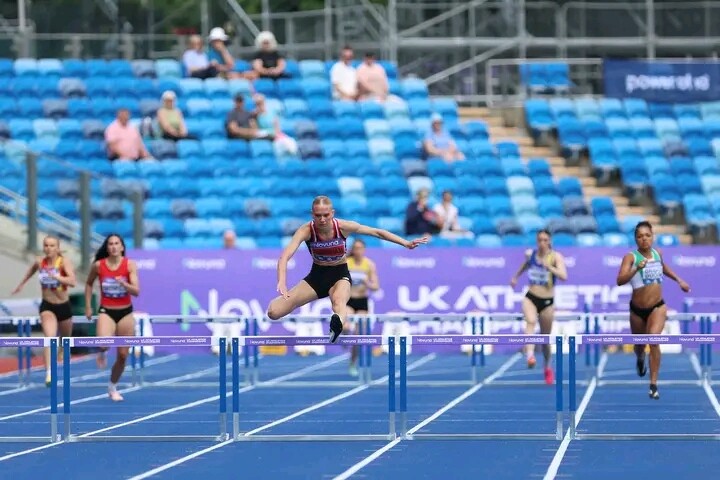
For any 400m hurdler, breaking the 54-second barrier is more than a statistical milestone. It is a statement of world-class potential, demanding a rare blend of speed, rhythm, endurance, and flawless hurdle technique. Newnham displayed all of those qualities in Tampere, attacking the race with confidence and maintaining her composure over the closing metres to secure the fastest time of her career.
The performance also reflects the steady progression she has shown over recent seasons. At just 22 years old, Newnham continues to develop both physically and technically, suggesting that her best performances may still lie ahead. Her latest breakthrough is not simply the reward for one outstanding race—it is the result of years of disciplined training, patience, and continual improvement.
With this landmark run, Newnham has announced herself as one of Britain's brightest emerging stars in the 400m hurdles. As the international championships approach, her confidence will undoubtedly soar, and so will expectations. Crossing the finish line in 53.97 was more than a personal best—it was the beginning of a promising new chapter in a career that now appears destined for even greater achievements.
by Erick Cheruiyot for My Best Runs.
Login to leave a comment

Olympic Champion Sydney McLaughlin-Levrone Welcomes First Child, Beginning a Beautiful New Journey
Sprint and hurdles superstar Sydney McLaughlin-Levrone has entered an exciting new chapter in her remarkable life, welcoming her first child with husband Andre Levrone. The four-time Olympic champion and women's 400m hurdles world record holder announced the birth of their daughter, Savannah Michelle Levrone, who was born on Sunday, July 12, 2026.

The couple shared the joyful news with an emotional message celebrating the arrival of their daughter and expressing gratitude to everyone who supported them throughout the pregnancy. Sydney described Savannah as "our blessing and our joy," while expressing excitement and faith for the future that lies ahead for their growing family.

The announcement marks a deeply personal milestone for one of the most accomplished athletes of her generation. Renowned for redefining the women's 400m hurdles through a succession of record-breaking performances, McLaughlin-Levrone now embraces a new role beyond the track as a mother.
The timing of the announcement adds another layer of significance. Just days earlier, Sydney reflected on the 10th anniversary of qualifying for her first Olympic Games at only 16 years old—a breakthrough that launched one of the most decorated careers in modern athletics. Ten years later, her journey has come full circle with another life-changing milestone, underscoring that her greatest moments continue to extend beyond sporting success.
The arrival of Savannah Michelle Levrone has been met with an outpouring of congratulations from athletes, fans, and the wider sporting community, who have celebrated the couple as they begin this new chapter together. As Sydney McLaughlin-Levrone steps into motherhood, the athletics world will undoubtedly continue to follow her inspiring journey—both on and off the track.
by Erick Cheruiyot for My Best Runs.
Login to leave a comment
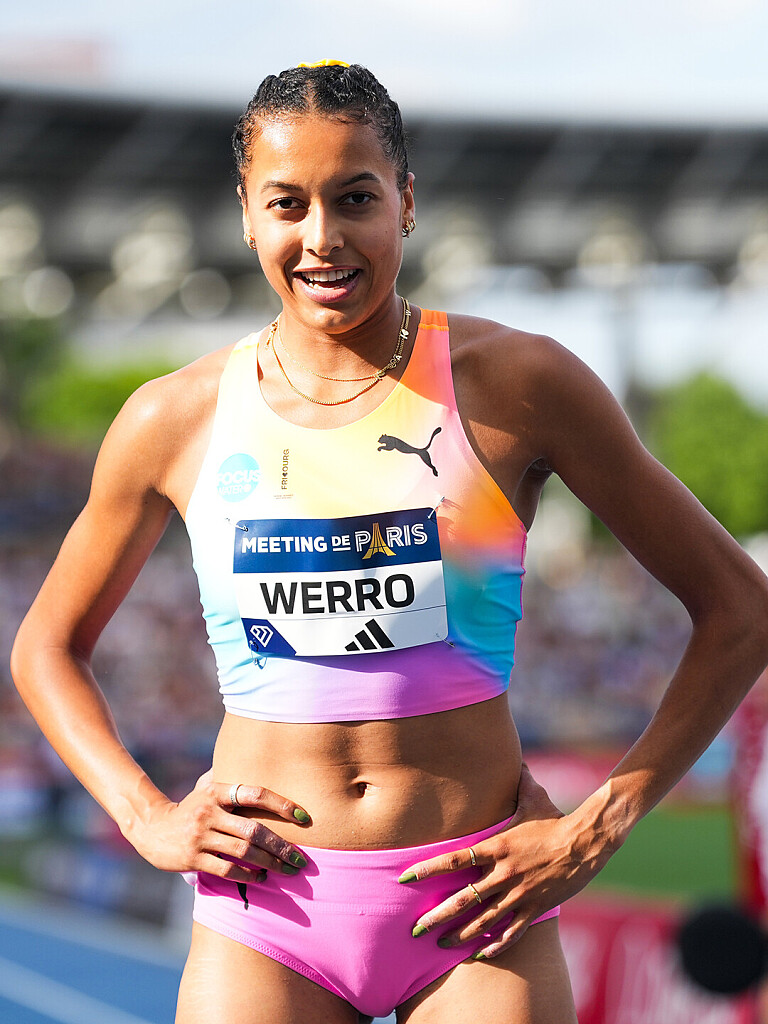
Audrey Werro Shifts Focus to 400m Ahead of European Championships
Swiss middle-distance sensation Audrey Werro is set for an intriguing change of pace as she lines up in the women's 400 metres tomorrow evening at the Fribourg meeting in Switzerland, using the race as the final step in her preparations for the upcoming European Athletics Championships.
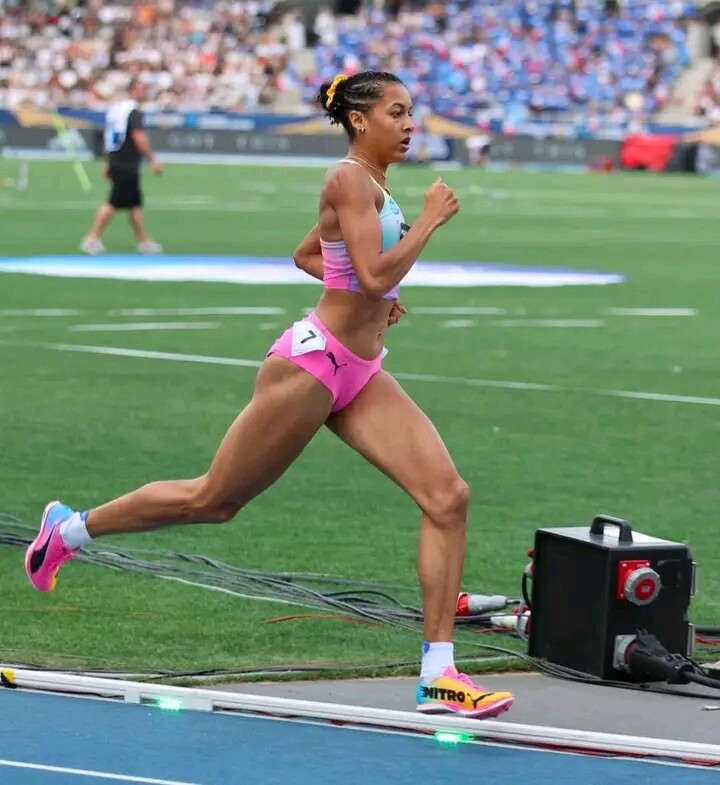
The appearance comes just days after Werro produced one of the finest performances of her career at the Paris Diamond League, where she stormed to a remarkable 1:53.80 in the 800 metres. Following that breakthrough run, the Swiss star confirmed that the Fribourg meeting would be her final competitive outing before turning her full attention to the continental championships.
Although best known for her exploits over 800 metres, Werro has also demonstrated impressive speed over one lap. She owns a personal best of 51.03 seconds in the 400 metres, a mark she achieved at this very meeting last year, making her return to Fribourg particularly significant.
The race offers more than just another opportunity to compete. It provides Werro with a valuable chance to sharpen her raw speed, improve race rhythm, and fine-tune her form before one of the biggest championships of the season.
With confidence soaring after her career-defining performance in Paris and a return to a venue where she has previously excelled, all eyes will be on Audrey Werro as she takes on the 400 metres in what promises to be an important final test before she begins her quest for European glory.
by Erick Cheruiyot for My Best Runs.
Login to leave a comment
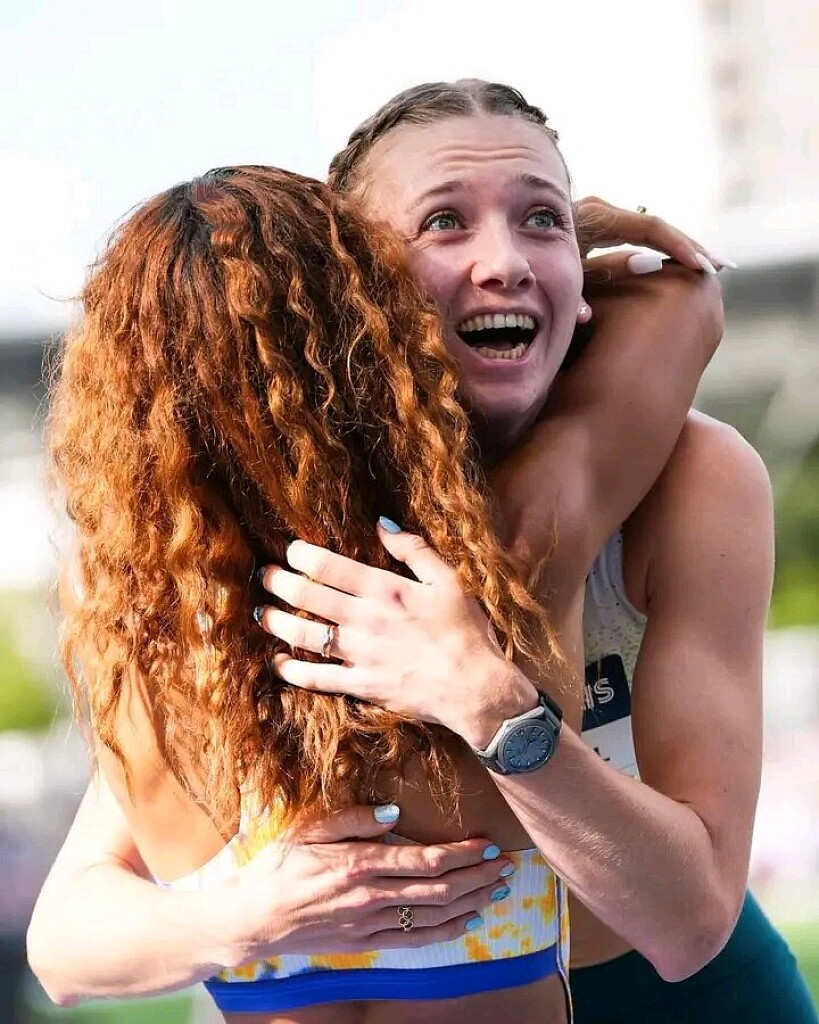
A New Era of Women's 800m Running: Why 2026 Is Producing Extraordinary Performances
Women's 800m running is experiencing one of its most remarkable seasons in recent memory, with elite athletes consistently delivering performances once considered almost unimaginable. As the 2026 campaign unfolds, a growing question echoes across the athletics world: what has changed to produce such exceptional times?
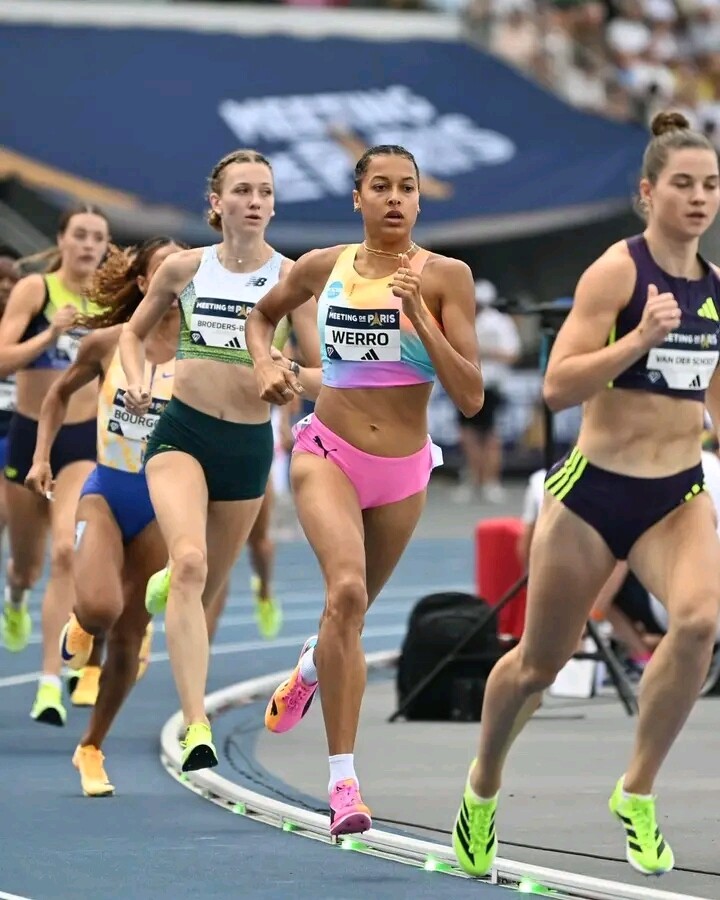
Leading this extraordinary surge is Audrey Werro, whose breathtaking consistency has rewritten expectations. The Swiss star has already clocked 1:53 on two separate occasions this season, becoming the first woman in history to break the 1:54 barrier more than once. Her repeated brilliance has transformed what was once regarded as a once-in-a-career performance into a new benchmark for excellence.
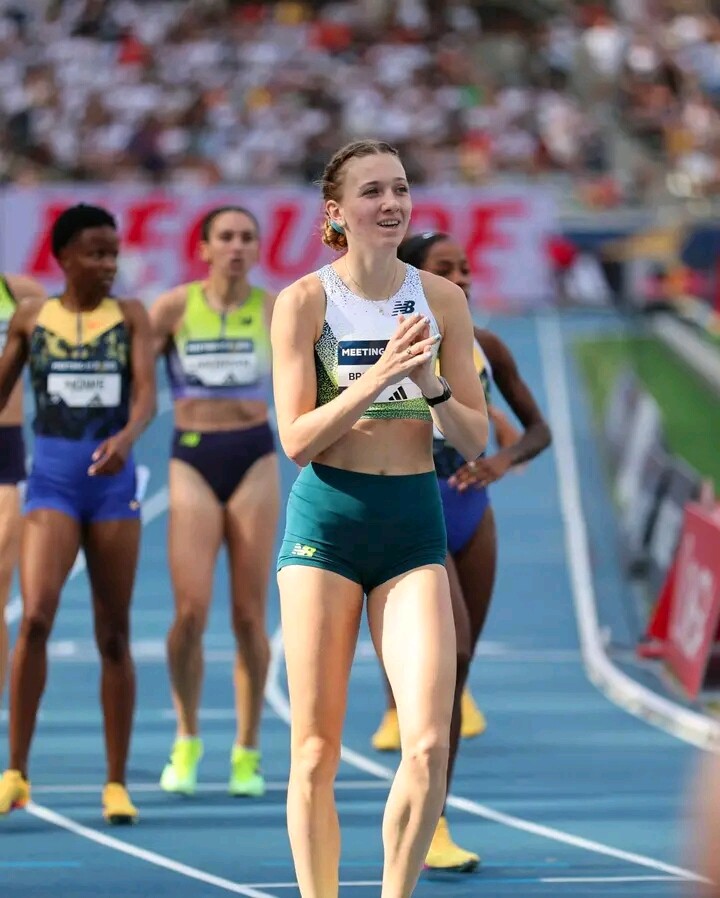
The momentum extends far beyond Werro. Dutch sensation Femke Bol, renowned globally for her dominance in the 400m hurdles, launched her Diamond League campaign with an outstanding 1:55 over two laps. Her impressive transition highlights not only her remarkable versatility but also the increasingly competitive standard now defining the women's 800m.

Meanwhile, France's Anaïs Bourgoin delivered one of the season's most inspiring breakthroughs. At the age of 29, Bourgoin produced the performance of her career by breaking the 1:56 barrier for the first time, proving that significant improvement remains possible even after years at the highest level of the sport.
The wave of fast times has prompted widespread discussion throughout the athletics community. Improved training methodologies, advances in sports science, enhanced race pacing, deeper international competition and growing confidence among athletes appear to be combining to elevate the event to unprecedented heights. With multiple women now capable of challenging world-class marks in the same race, the competitive landscape has become stronger than ever.
What once seemed extraordinary is rapidly becoming the new standard. Every major meeting now carries the possibility of another historic performance, and the women's 800m has emerged as one of the most captivating disciplines in global athletics.
If the first half of the season is any indication, the biggest performances may still lie ahead. As the world's finest middle-distance runners continue to push each other beyond previous limits, 2026 is shaping up as a defining year that could permanently reshape the history of the women's 800 metres.
by Erick Cheruiyot for My Best Runs.
Login to leave a comment
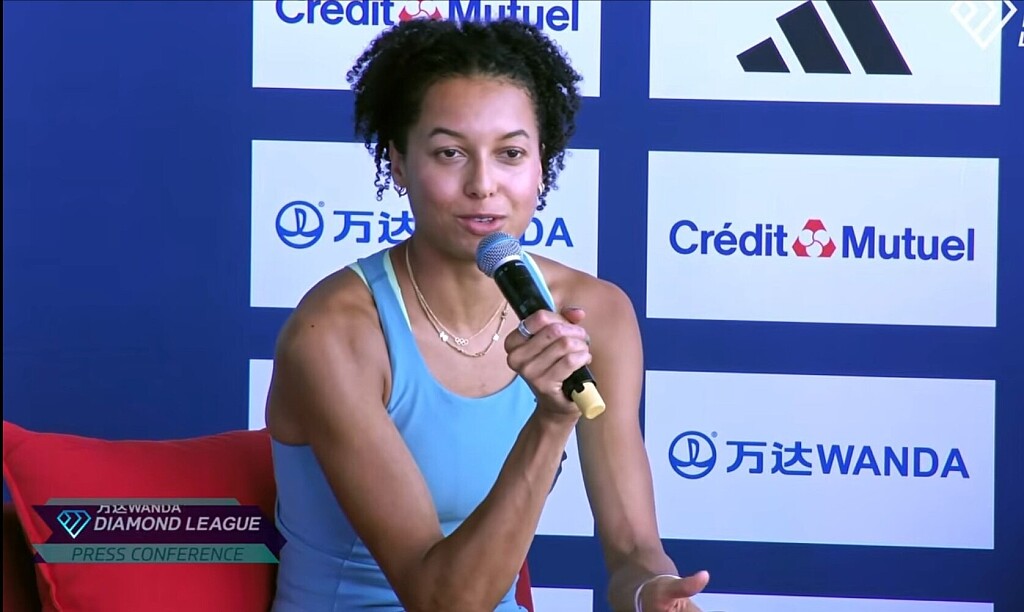
Audrey Werro Targets History with Bold World 800m Record Attempt in Paris
The stage is set for what could become one of the most memorable nights in women's middle-distance running.
Swiss sensation Audrey Werro will head to the Paris Diamond League on 28 June 2026 with one objective—an all-out assault on the women's 800m world record. Fresh off her stunning 1:53.98 performance in Stockholm, Werro has made her ambitions unmistakably clear by requesting the stadium's green wavelights to be set at 1:53.28 pace, matching the current global mark.
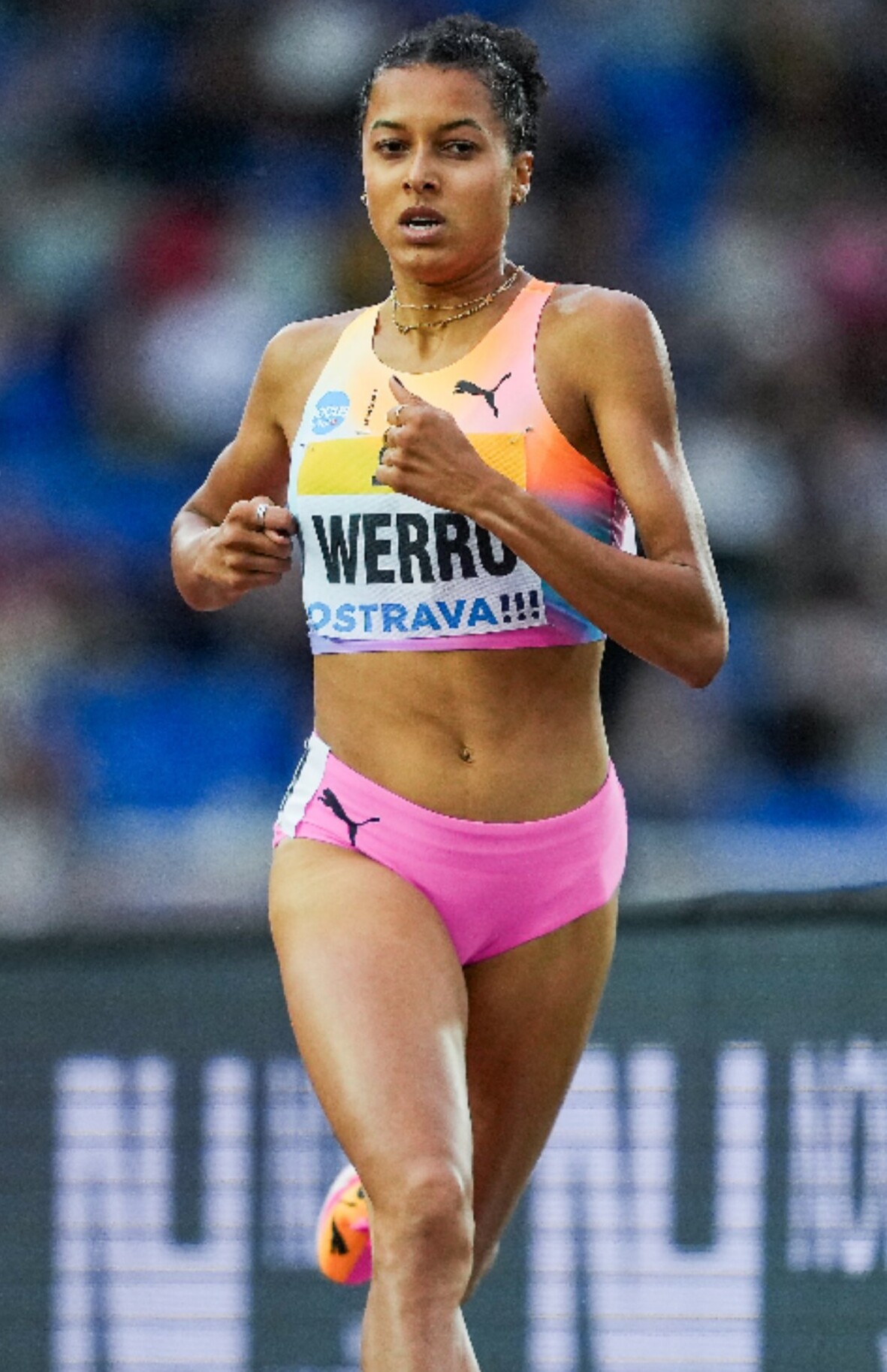
To keep that record attempt on schedule, the designated pacemaker is expected to lead the field through 400 metres in a blistering 55.50 seconds. Werro's preferred pacing strategy also calls for 27.0 seconds at 200m, 55.50 at 400m, and 1:24.50 at 600m, leaving just one final lap of sustained brilliance between her and athletics history.
The challenge is immense. The 1:53.28 world record has stood untouched for more than four decades, having been set by Jarmila Kratochvílová of former Czechoslovakia on 26 July 1983. It remains one of the longest-standing world records in track and field, making Werro's pursuit all the more captivating.
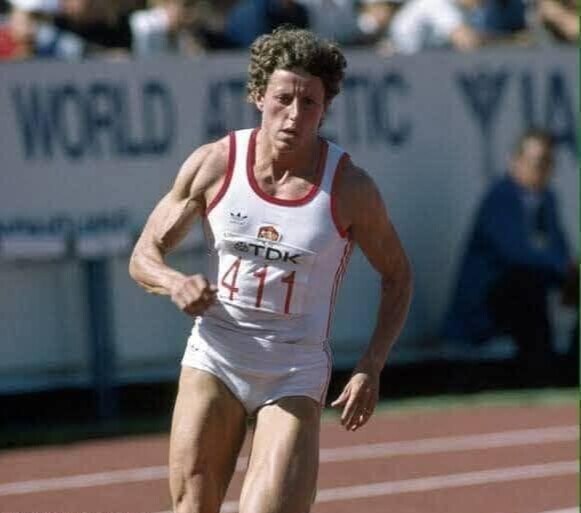
The 22-year-old has every reason to believe she can threaten the mark. Her breakthrough 1:53.98 in Stockholm made her only the third woman in history to break the 1:54 barrier, while her European-best 1:22.85 over 600m confirmed she is enjoying the finest form of her career.
With Paris renowned for producing fast middle-distance races, ideal pacing, elite competition, and world-class conditions, the ingredients are in place for a genuine world record attempt. Every split will matter, every stride will count, and the athletics world will be watching as Werro tests the limits of one of the sport's most enduring records.
Whether the record finally falls or survives another challenge, Audrey Werro's fearless pursuit of greatness promises to be one of the defining moments of the 2026 Diamond League season.
by Erick Cheruiyot for My Best Runs.
Login to leave a comment
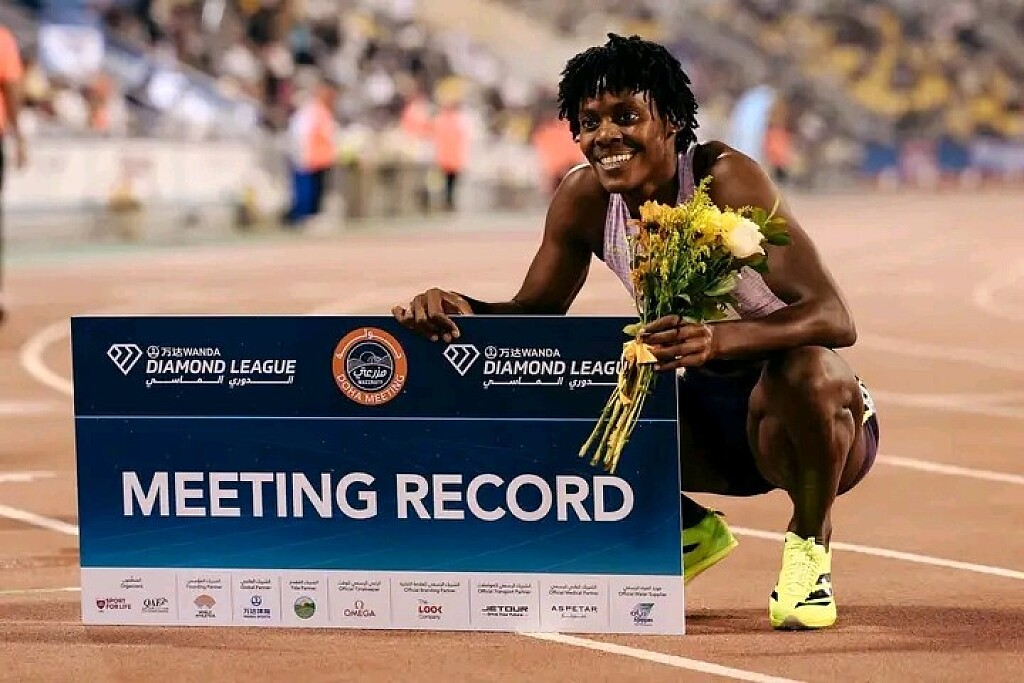
Paulino Rewrites Doha History with Commanding 400m Masterclass
Marileidy Paulino delivered a performance of pure authority in Doha on Friday night, turning one lap of the track into a statement that echoed far beyond the finish line.
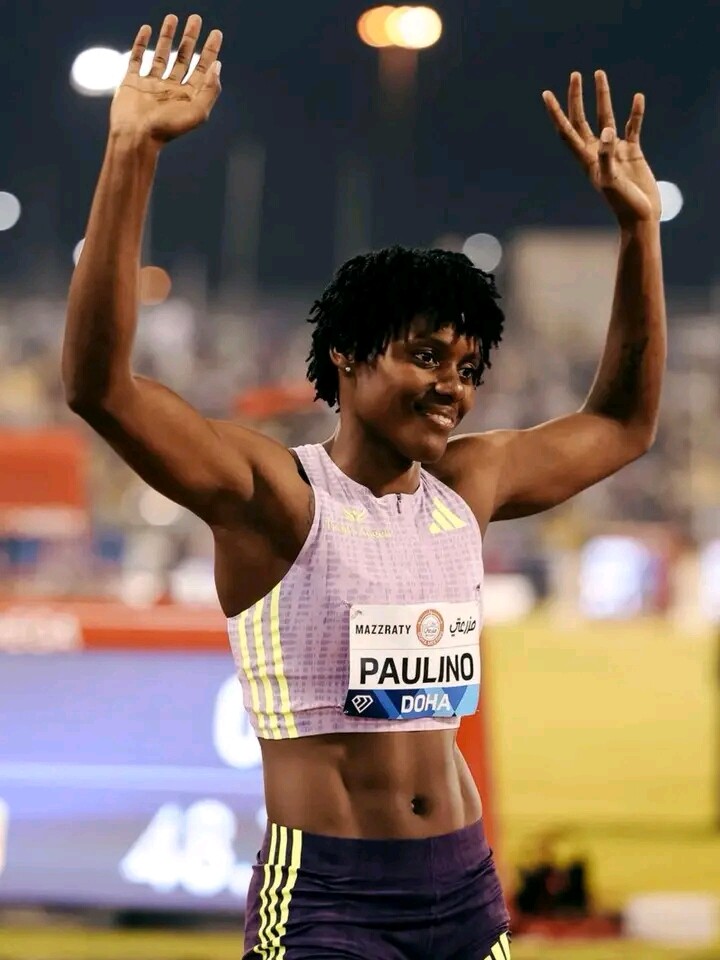
The Dominican Olympic champion produced a breathtaking display in the women's 400m, storming to victory in 48.91 seconds and erasing a Diamond League meeting record that had stood untouched since 2008. A mark that survived for 17 years was dismantled in less than 49 seconds by an athlete operating at the peak of her powers.
From the moment the race settled into rhythm, Paulino looked untouchable. Her stride remained smooth, controlled and effortless as she gradually separated herself from the field. By the time she entered the home straight, the contest was no longer about who would win—it was about how fast she would run.
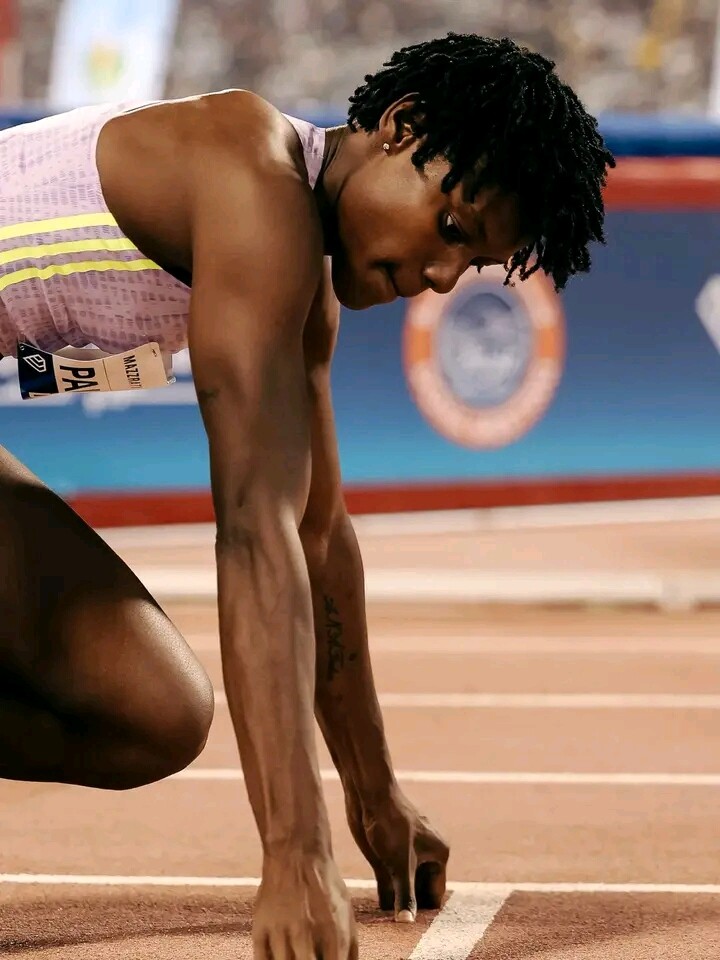
She crossed the line more than a second ahead of her nearest rival, underlining a level of dominance rarely seen in one of track and field's most demanding events. There was no dramatic sprint finish, no late challenge and no moment of uncertainty. There was only Paulino, running in a class of her own.
The victory was another reminder of why she remains the benchmark in the women's 400m. Over the past few years, Paulino has built a résumé that includes Olympic glory, world titles and a remarkable consistency that continues to separate her from the rest of the field. While rivals search for answers, she keeps raising the standard.
What makes the performance even more impressive is the timing. With the Diamond League season still gathering momentum, Paulino has already sent a powerful message to the rest of the world. Records are falling, winning margins are growing and her form appears to be trending in the right direction at exactly the right moment.
In a sport where history often takes years to rewrite, Paulino needed just one lap.
Doha witnessed more than a victory—it witnessed a champion reminding the world that she remains the woman to beat in the 400 metres. The season is still young, but the message could not have been clearer: Marileidy Paulino is already setting the pace for everyone else to follow.
by Erick Cheruiyot for My Best Runs.
Login to leave a comment

Taiju Goto Rewrites History Twice in 24 Hours as Teenage Sensation Shatters U18 World Record
The future of the 400m hurdles may have arrived sooner than anyone expected.
At just 17 years old, Japan's Taiju Goto delivered one of the most remarkable performances ever seen from a high school athlete, breaking the U18 world record not once, but twice in the space of two days at the Japanese Athletics Championships in Aichi.
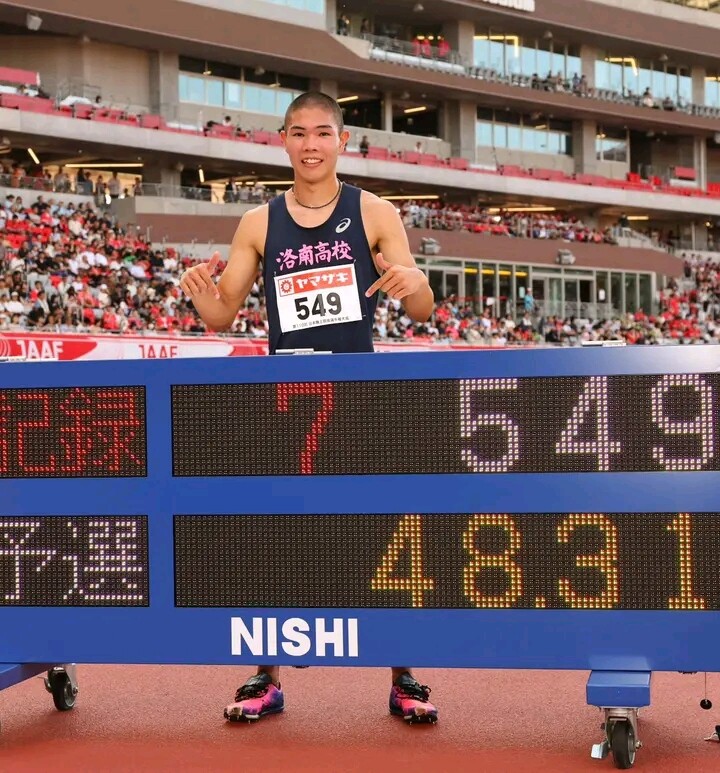
Goto first announced himself to the world during the heats, producing a stunning 48.31 seconds to erase a global age-group mark that had stood untouched for nearly a decade. It was the kind of performance that would have been enough to dominate headlines on its own.
But the teenager was not finished.
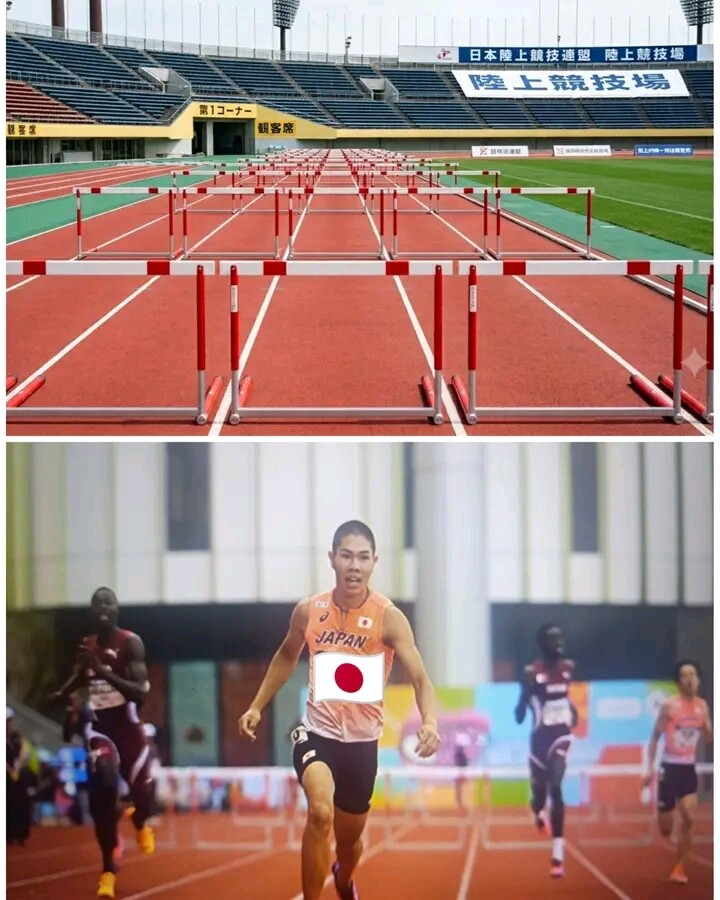
Returning for the final less than 24 hours later, Goto lined up in lane seven with the pressure of expectation suddenly resting on his shoulders. Rather than feeling the weight of history, he embraced it. Powering over the barriers with remarkable composure and rhythm, he crossed the finish line in an astonishing 48.09 seconds, slicing another 0.22 seconds off the record he had set the previous day.
Pending official ratification, the performance will stand as the new U18 world record.
What makes the achievement even more extraordinary is the level of the time itself. A 48.09 is not merely exceptional for a teenager—it is a performance capable of competing on the senior international stage. In several recent Olympic cycles, that mark would have been fast enough to reach the Olympic semifinals.
And Goto is still balancing elite athletics with life as a high school student.
The previous U18 world best of 48.84 had remained on the books throughout the 2010s and was widely considered one of the toughest age-group marks in the event. In just two races, Goto lowered it by an incredible 0.75 seconds—a massive margin in an event where records are often broken by hundredths of a second.
The men's 400m hurdles is currently enjoying a golden era led by world-class stars such as Karsten Warholm, Rai Benjamin, and Alison dos Santos. After this historic weekend, another name deserves a place on every athletics watchlist: Taiju Goto.
The timing could not be more intriguing. With the 2028 Olympic Games in Los Angeles approaching, Goto will still be only 19 years old when the world's biggest sporting stage arrives.
Many teenage prodigies generate excitement. Few produce performances that force the athletics world to rethink what is possible.
In Aichi, Taiju Goto did exactly that—twice. One record-breaking run announced his arrival. The second confirmed that a new star may already be on the rise.
by Erick Cheruiyot for My Best Runs.
Login to leave a comment
Paris Showdown: Broeders-Bol and Werro Set to Ignite the Women's 800m
Something special is brewing in Paris, and athletics fans around the world should take notice.
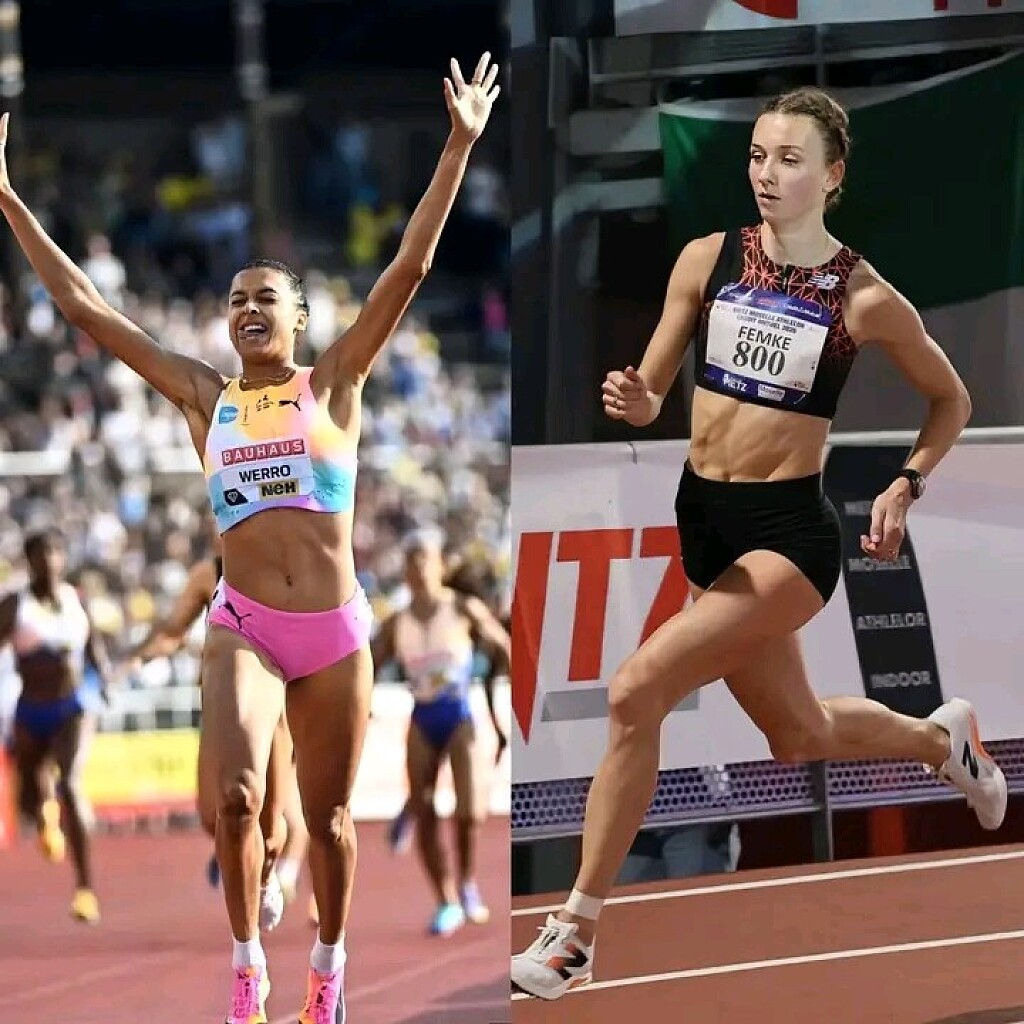
The women's 800m at the Paris Diamond League on June 28 is shaping up to be one of the most intriguing middle-distance clashes of the season, as Dutch star Femke Broeders-Bol steps back onto the start line to face Swiss sensation Audrey Werro in what promises to be a fascinating battle of speed, strength, and ambition.
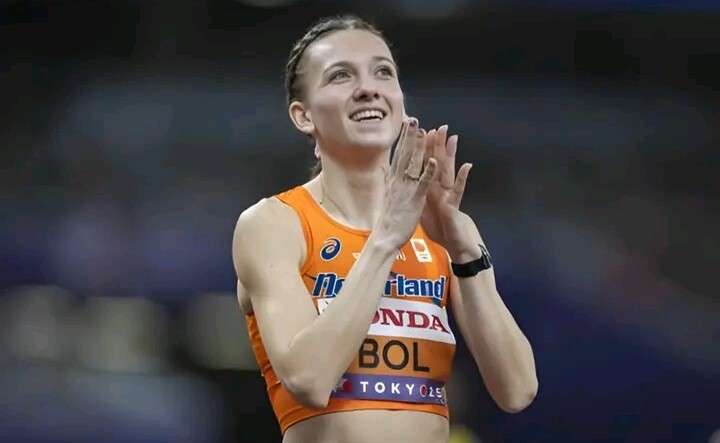
Broeders-Bol, already established as one of the sport's premier athletes and a two-time world champion in the 400m hurdles, continues to explore new territory in the 800m. Her debut over the distance at the Ostrava Golden Spike turned plenty of heads, as she powered to an impressive 1:57.13, immediately signaling that she could become a serious force beyond the hurdles.
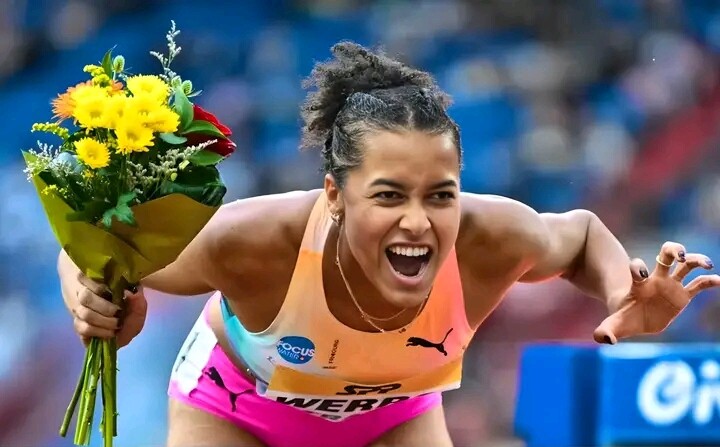
Awaiting her in Paris is a woman who has been rewriting expectations all season. Werro arrives with tremendous momentum after producing a stunning 1:53.98, the third-fastest women's 800m performance in history. The Swiss star has emerged as one of the hottest names in global athletics, combining fearless front-running with exceptional finishing speed.
While the race brings together athletes from different disciplines and backgrounds, the storyline is impossible to ignore. One competitor is testing the limits of her versatility and attempting to prove she belongs among the world's best middle-distance runners. The other is riding a wave of historic form and looking to further cement her status as the woman to beat in 2026.
The atmosphere at Charléty Stadium is expected to be electric, with fans eager to witness whether Broeders-Bol can continue her remarkable transition into elite 800m racing or whether Werro's record-breaking form will once again steal the spotlight.
Whatever the outcome, this is far more than just another Diamond League race. It is a meeting of two athletes at pivotal moments in their careers, bringing together proven championship pedigree and emerging historical greatness on one of athletics' biggest stages.
June 28. Paris. Broeders-Bol versus Werro.
The women's 800m just became one of the must-watch races of the year.
by Erick Cheruiyot for My Best Runs.
Login to leave a comment
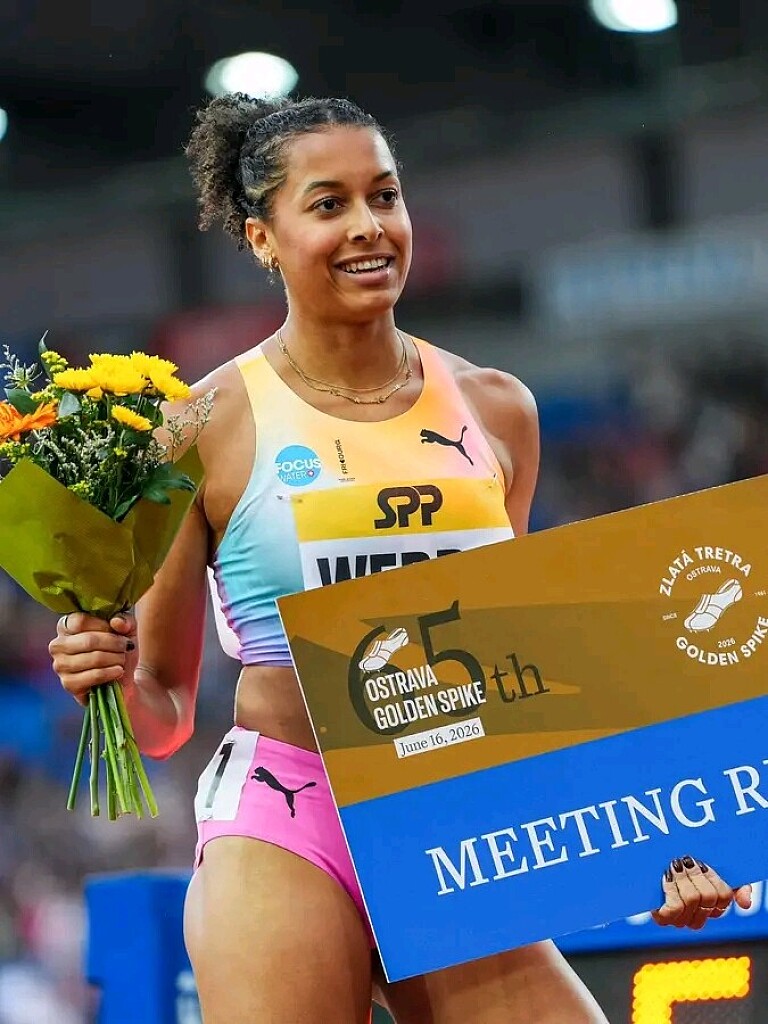
Audrey Werro Delivers Another Statement Run as 800m World Record Watch Intensifies
Audrey Werro continues to announce herself as one of the most exciting talents in global middle-distance running after producing another breathtaking 800m performance in Ostrava.
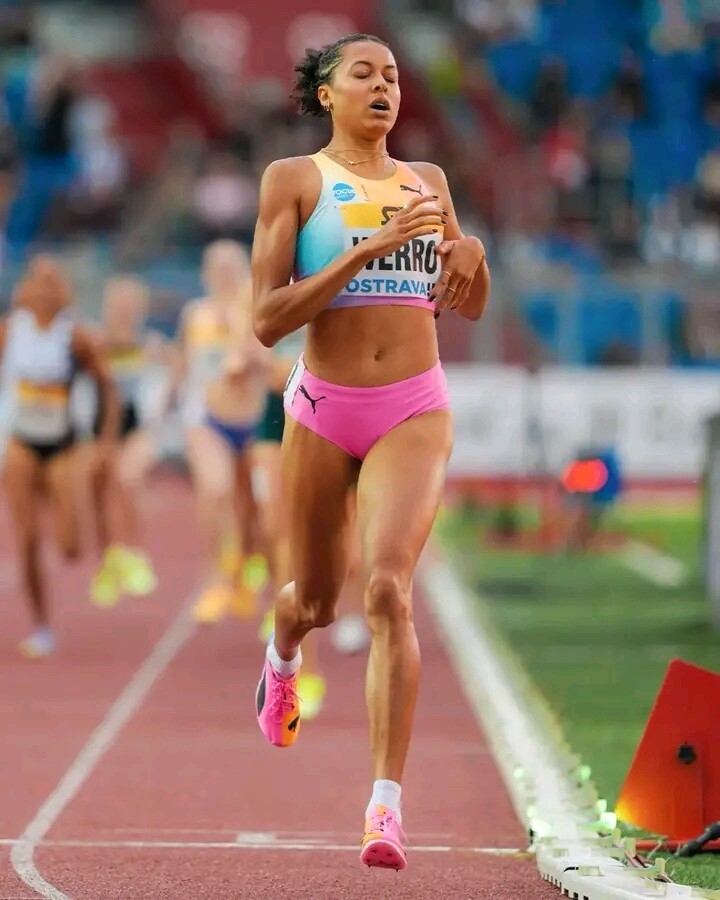
The Swiss star stormed to victory in 1:54.45, delivering a commanding display that once again placed her among the fastest women ever over the distance. Werro stayed composed through the early stages before making her decisive move in the final 200 metres, creating separation from a world-class field and powering home for a dominant win.
The race was set up at a furious pace, with the pacemaker taking the athletes through 400m in 55.8 seconds. Femke Bol’s sister, Femke Broeders-Bol, who has stepped up from the 400m hurdles this season, showed her growing strength by staying in contention alongside Werro deep into the race.
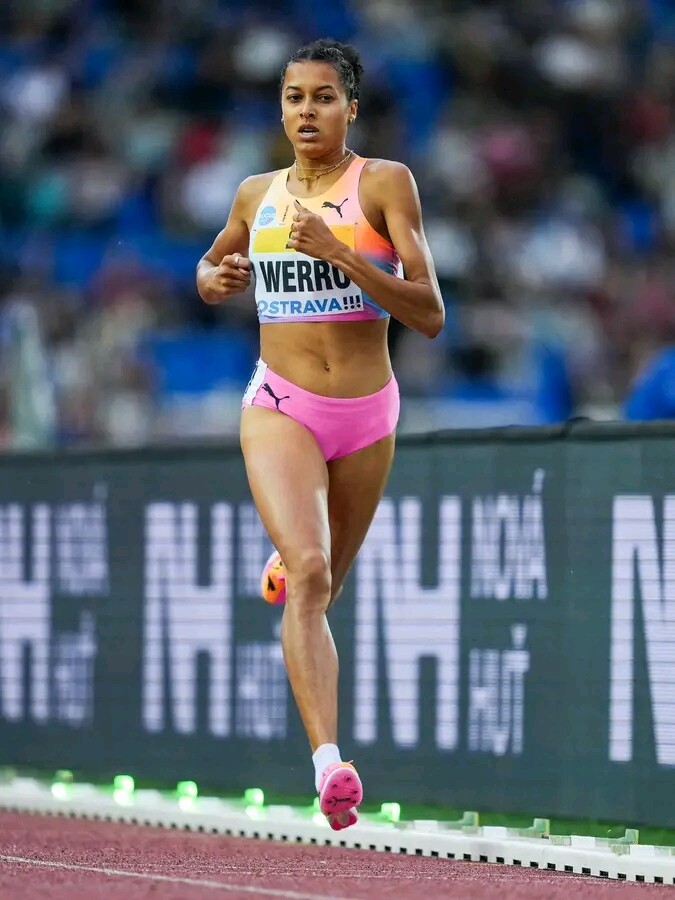
Broeders-Bol held on impressively until the final 200m before Werro shifted gears and pulled away. The Dutch athlete crossed the line second in a remarkable 1:57.13, moving to No.3 on the Dutch all-time 800m rankings with one of the best performances of her career.
The quality of the race was further highlighted by the depth of the field, as all eight finalists broke the two-minute barrier in a remarkable display of women’s 800m strength.
Werro’s performance has once again raised the question of whether the legendary world record could finally be under threat. Jarmila Kratochvílová’s long-standing mark of 1:53.28 from 1983 remains untouched, but with the current generation producing performances of this level, the historic record appears more vulnerable than it has in years.
Ostrava delivered a moment that showcased the incredible evolution of the women’s 800m, with Werro leading the charge and proving that history may soon be within reach.
by Erick Cheruiyot for My Best Runs.
Login to leave a comment
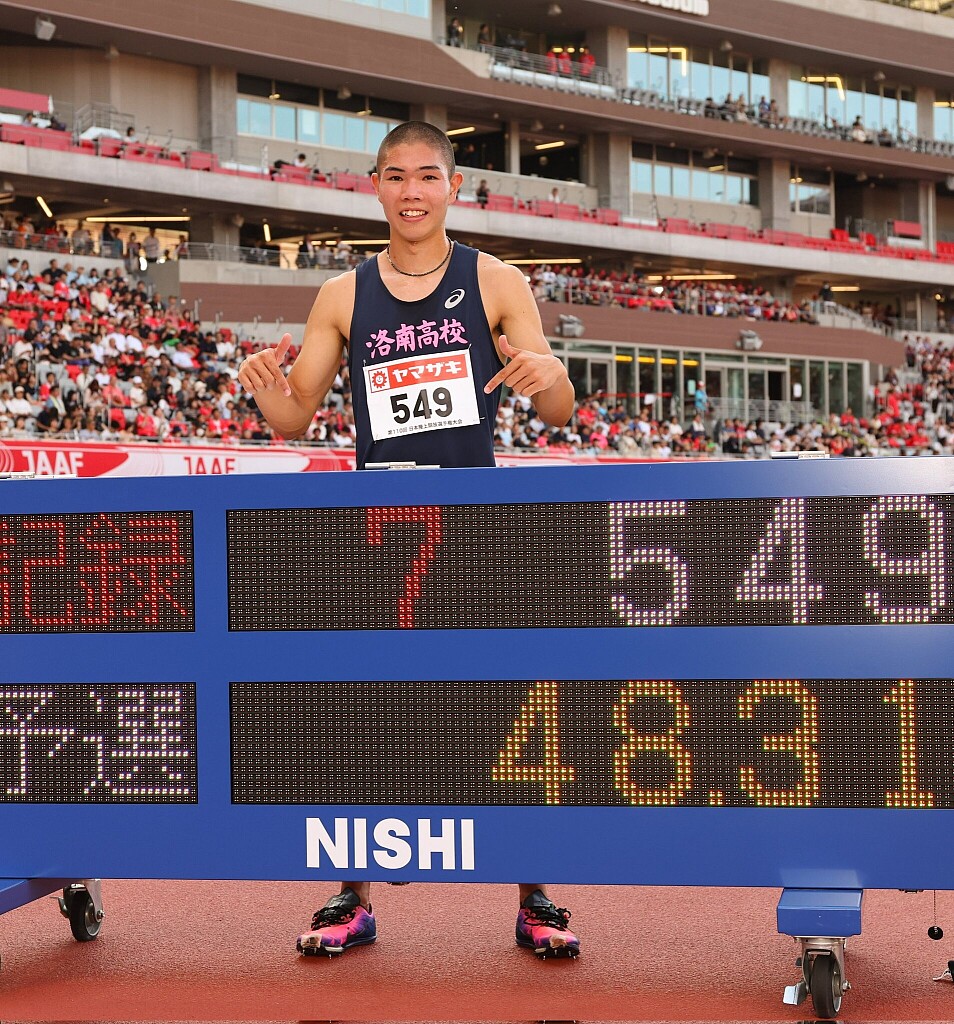
History Rewritten in Aichi: 17-Year-Old Taiju Goto Runs 48.31 to Shatter U18 World Best
Japanese sprint hurdling has witnessed a seismic moment of brilliance as 17-year-old Taiju Goto delivered a performance for the ages at the Japanese Athletics Championships in Aichi Prefecture, rewriting the global U18 record books in spectacular fashion.
In a race that defied expectations and dissolved the boundaries of age-group performance, Goto stormed to a personal best of 48.31 seconds in the 400m hurdles, a time that not only secured him victory in his heat but also sent shockwaves through the senior ranks he was competing against.
Against a field stacked with experienced national-level hurdlers, the teenager displayed remarkable composure, rhythm, and power between barriers, executing a race far beyond his years. His explosive finish down the home straight sealed a statement win and a place in the final, but it was the clock that told the real story.
With this run, Goto has obliterated the U18 world best, becoming the first athlete under 18 years old in history to break the 48.50-second barrier in the event. It is a landmark achievement that elevates him into entirely uncharted territory for junior sprint hurdling.
Beyond age-group dominance, the performance carries even greater statistical weight. His 48.31s now places him 6th on the all-time U20 global list, a staggering feat that underscores just how exceptional this breakthrough truly is when measured against older and more physically developed athletes.
What makes the run even more compelling is the context: Goto did not simply win against his peers—he outperformed senior competitors on one of Japan’s biggest national stages, announcing himself as a generational talent in the making.
As the championships continue, all eyes will now turn to the final, where anticipation builds around whether the teenage sensation can once again rise to the occasion. One thing is already certain—Taiju Goto has stepped into the global spotlight, and he has done so with record-breaking authority.
by Erick Cheruiyot for My Best Runs.
Login to leave a comment
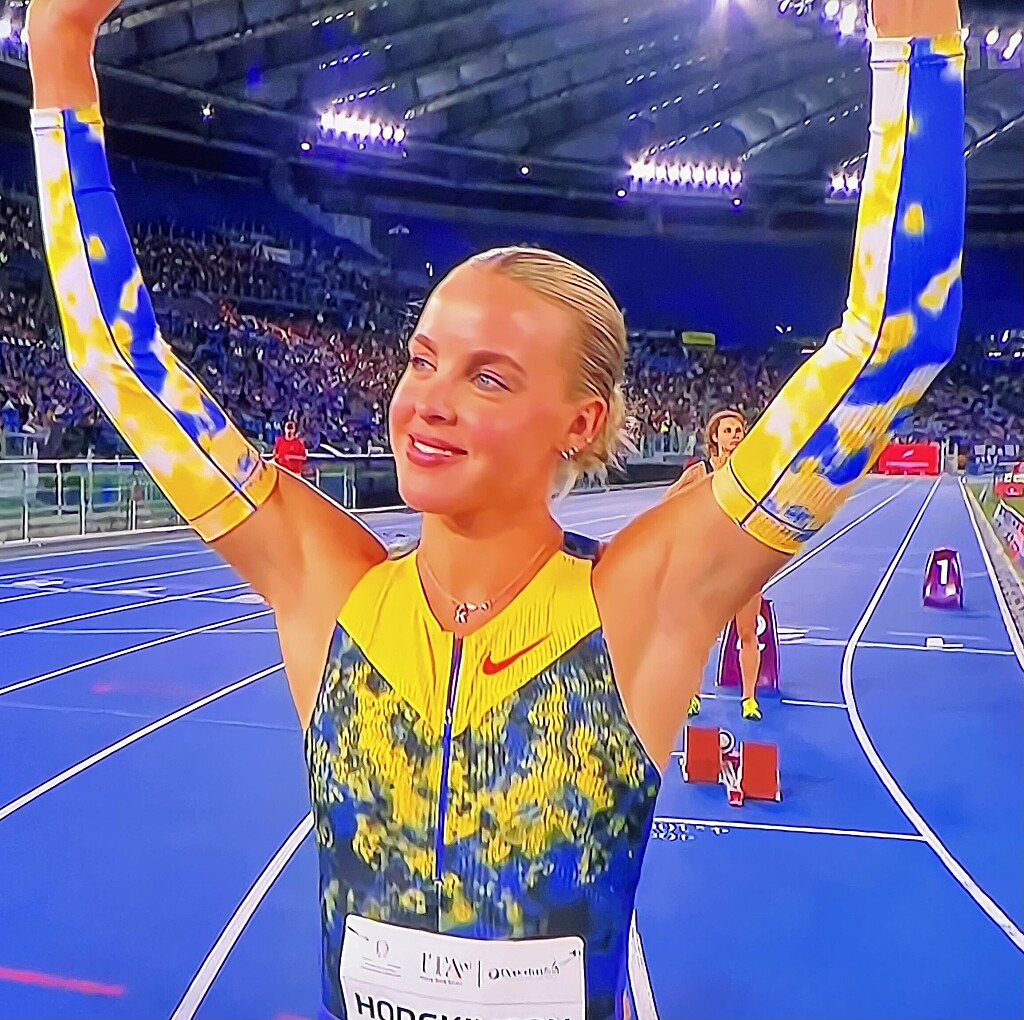
Keely Hodgkinson Set for Surprise 400m Challenge at UK Athletics Championships
Olympic 800m champion Keely Hodgkinson is preparing to step outside her comfort zone as she lines up in the women's 400m at the UK Athletics Championships in Birmingham on June 20–21, adding an intriguing new dimension to her 2026 campaign.
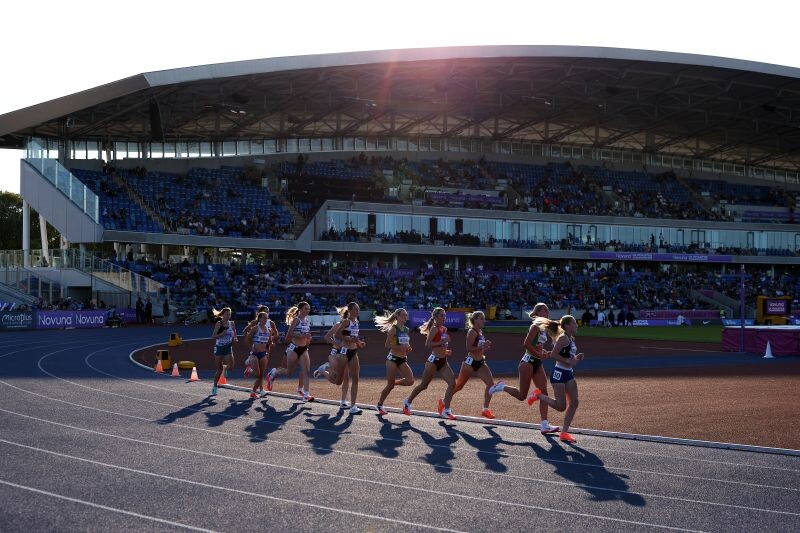
Widely regarded as one of the world's premier middle-distance athletes, Hodgkinson has built her reputation on tactical brilliance and devastating finishing speed over two laps. However, her decision to contest the one-lap event signals a deliberate move to sharpen the raw speed that has become a crucial ingredient in modern championship 800m racing.
The British star heads into the championships carrying fresh momentum after producing a personal best of 51.14 seconds in the 400m at the Rome Diamond League. The performance not only demonstrated her growing strength over the shorter distance but also highlighted the progress she has made in developing the speed reserve needed to remain at the summit of global middle-distance running.
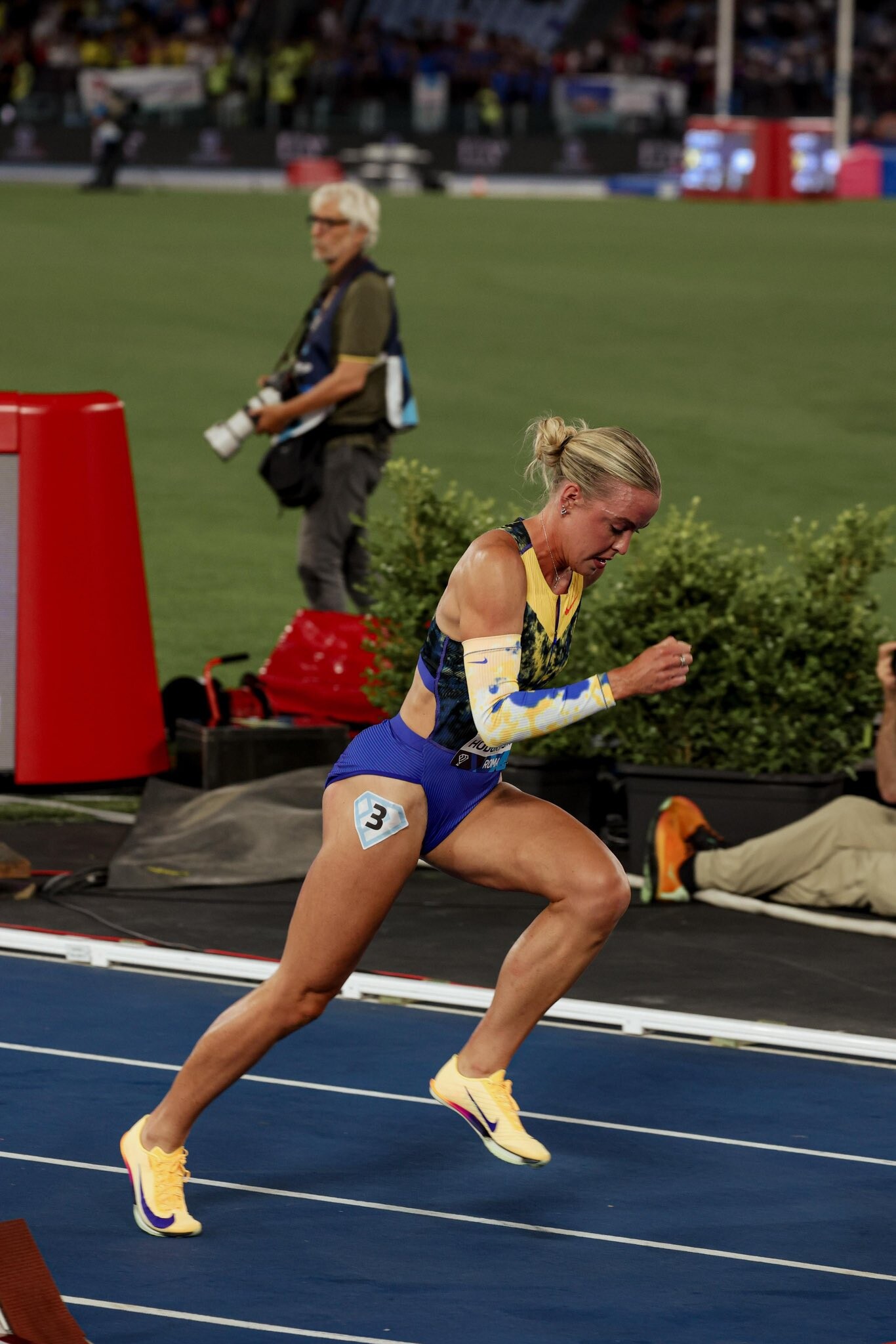
For Hodgkinson, the Birmingham appearance is about more than chasing another fast time. Competing in the 400m offers a valuable opportunity to test her speed, race execution and competitive sharpness against specialist quarter-milers while continuing to build towards the major international targets later in the season.
The Olympic champion has consistently shown a willingness to explore different approaches in pursuit of improvement, and her latest challenge reflects the evolving demands of elite 800m racing. With the margins between victory and defeat often measured in fractions of a second, every gain in speed can prove decisive when championships are on the line.
The UK Athletics Championships will therefore provide fans with a rare opportunity to see Hodgkinson in a different setting. While her long-term focus remains firmly on the 800m, her venture into the 400m promises to be one of the most compelling storylines of the Birmingham meeting.
After a breakthrough run in Rome, all eyes will be on Hodgkinson to see whether she can translate that newfound speed into another standout performance. Whatever the outcome, her decision to embrace a fresh challenge underlines the mindset that has helped establish her as one of Britain's brightest athletics stars and one of the leading figures in world track and field.
by Erick Cheruiyot for My Best Runs.
Login to leave a comment
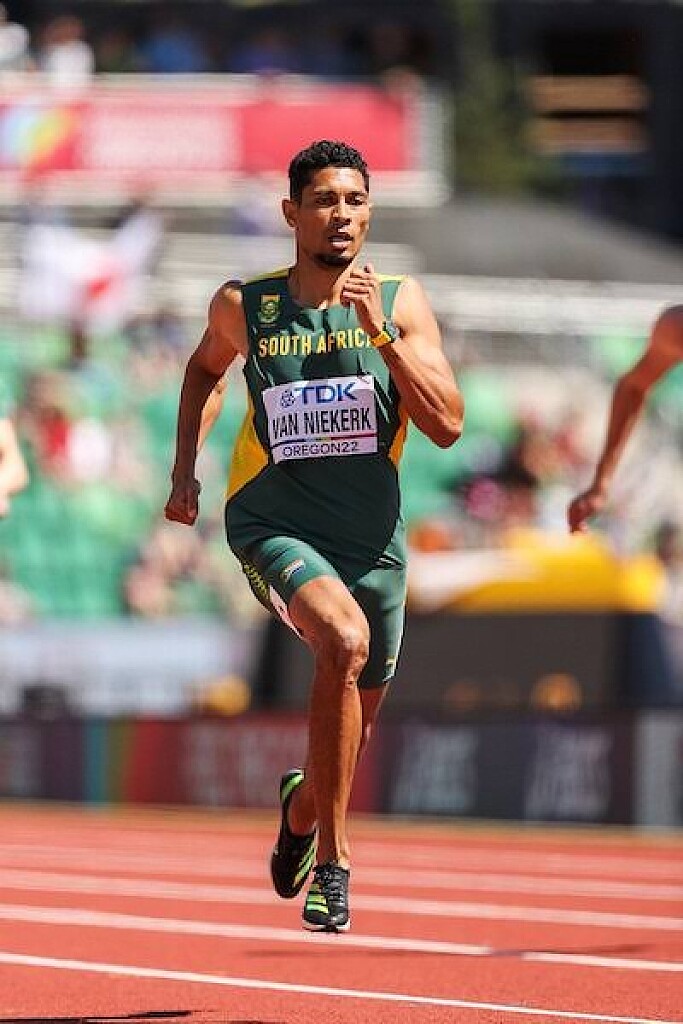
Wayde van Niekerk Withdraws from Rabat Diamond League Due to Ongoing Quad Injury
South African sprint star Wayde van Niekerk has officially withdrawn from the upcoming Rabat Diamond League meeting as he continues to battle a persistent quad injury, raising fresh concerns over the fitness of one of track and field’s most iconic athletes.
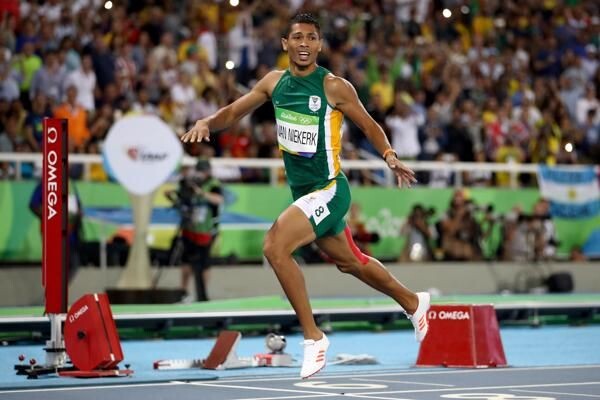
The 33-year-old had been expected to line up in the men’s 400m in Rabat, but the lingering injury has forced him to step away from competition in a bid to avoid further setbacks during the outdoor season.
Van Niekerk remains one of the greatest quarter-milers in athletics history. The South African stunned the world at the 2016 Rio Olympic Games when he stormed to a historic 43.03 seconds, a performance that still stands as the current men’s 400m world record. In addition to his Olympic title, he is also a two-time world champion and a World Championships silver medallist.
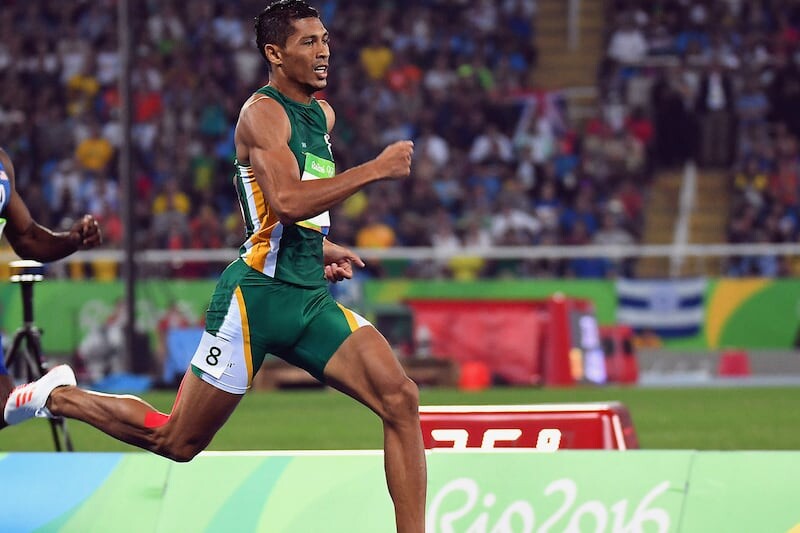
The former global champion has endured a difficult spell with injuries in recent years, preventing him from consistently returning to the dominant form that once made him virtually untouchable over one lap of the track. Although he has shown encouraging signs in recent appearances, fitness issues continue to interrupt his comeback efforts.
His withdrawal is a major disappointment for the Rabat Diamond League, where fans had hoped to see the South African legend test himself against a high-quality international field as the build-up toward the season’s major championships intensifies.
Despite the setback, the decision to pull out appears to be a cautious one focused on protecting his long-term health rather than risking a more serious injury at this stage of the campaign.
The athletics world will now wait for further updates on Van Niekerk’s recovery, with supporters across the globe hoping the Olympic champion can return fully fit and competitive in the coming weeks.
For now, the focus shifts from racing to rehabilitation as one of sprinting’s greatest talents works toward another comeback.
by Erick Cheruiyot for My Best Runs.
Login to leave a comment
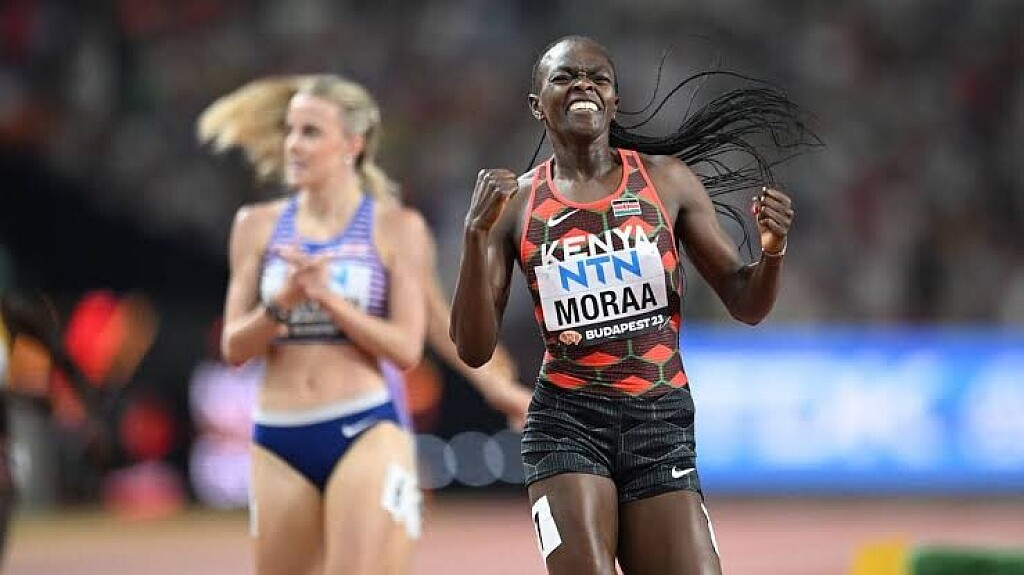
Mary Moraa Signals Her Return With Eyes Firmly Set on Glasgow 2026
Kenyan middle-distance star Mary Moraa has officially stepped back onto the track, marking her long-awaited return to competitive action after months away from racing. The former world champion’s comeback has reignited excitement within athletics circles, with the 800m sensation now targeting an ambitious place in Kenya’s 400m squad for the upcoming Commonwealth Games in Glasgow, Scotland.
Moraa revealed that she intends to fight for qualification in the one-lap event ahead of the Games scheduled for July 23 to August 2, a bold move that highlights her versatility and determination to explore a new challenge at the elite level.
But behind the comeback lies a deeply emotional story of struggle, resilience, and recovery.
“It’s by the grace of God that I am competing again,” Moraa revealed. “I almost threw in the towel a while ago owing to a medical condition, but I am glad that it has been fully addressed.”
Her candid remarks shed light on the difficult period she endured away from the spotlight, a phase that nearly forced her to walk away from athletics altogether. Instead, the Kenyan star has emerged stronger, carrying renewed motivation and gratitude as she rebuilds her competitive rhythm.
Known globally for her fearless front-running style and explosive finishing speed in the 800m, Moraa’s shift toward the 400m could become one of the most intriguing storylines in athletics this season. Her natural speed has long suggested she possesses the qualities required to thrive over the shorter distance, and her return could significantly boost Kenya’s relay and individual medal prospects ahead of Glasgow.
Despite her immense pedigree, the road to qualification will be anything but easy. Kenya’s women’s 400m ranks continue to grow stronger, meaning Moraa must prove herself against seasoned specialists fighting for the same coveted spots. However, her championship experience, tactical intelligence, and proven ability to deliver under pressure make her a serious contender.
For fans of Kenyan athletics, Moraa’s return represents far more than a simple comeback. It is the revival of one of the sport’s most captivating competitors — an athlete whose resilience now matches the brilliance she displays on the track.
As preparations for Glasgow 2026 intensify, the athletics world will be watching closely to see whether Mary Moraa can successfully reinvent herself once again and script another remarkable chapter in her career.
by Erick Cheruiyot for My Best Runs.
Login to leave a comment
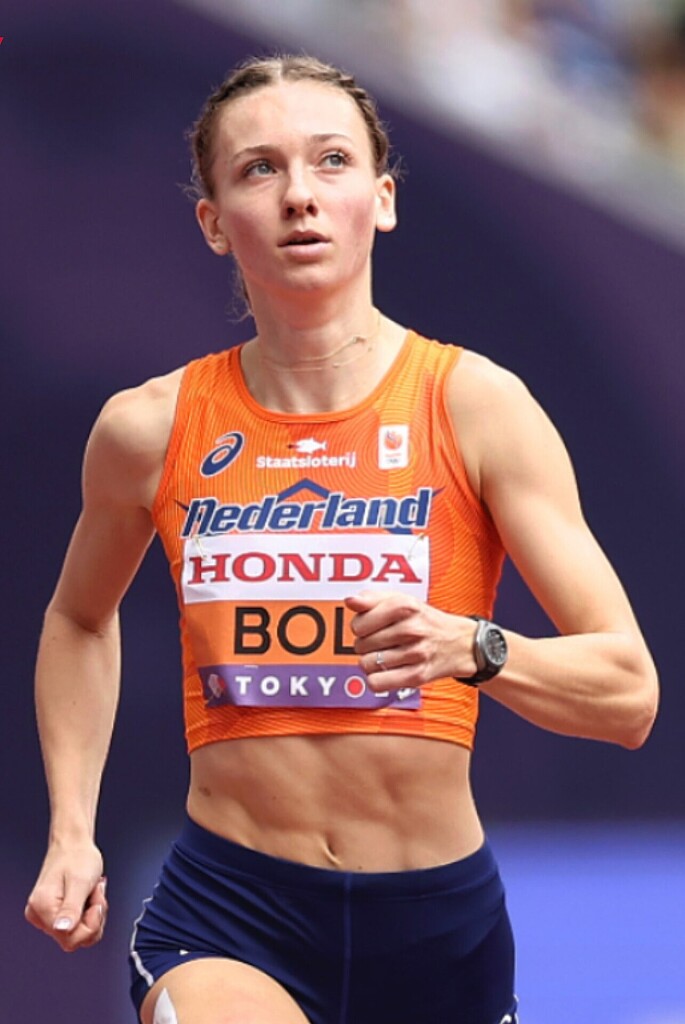
Femke Bol Set for Exciting 800m Outdoor Return at Ostrava Golden Spike
Dutch athletics superstar Femke Bol is preparing to launch her outdoor campaign in thrilling fashion after confirming that she will compete in the 800m at the prestigious Golden Spike Ostrava on June 16.
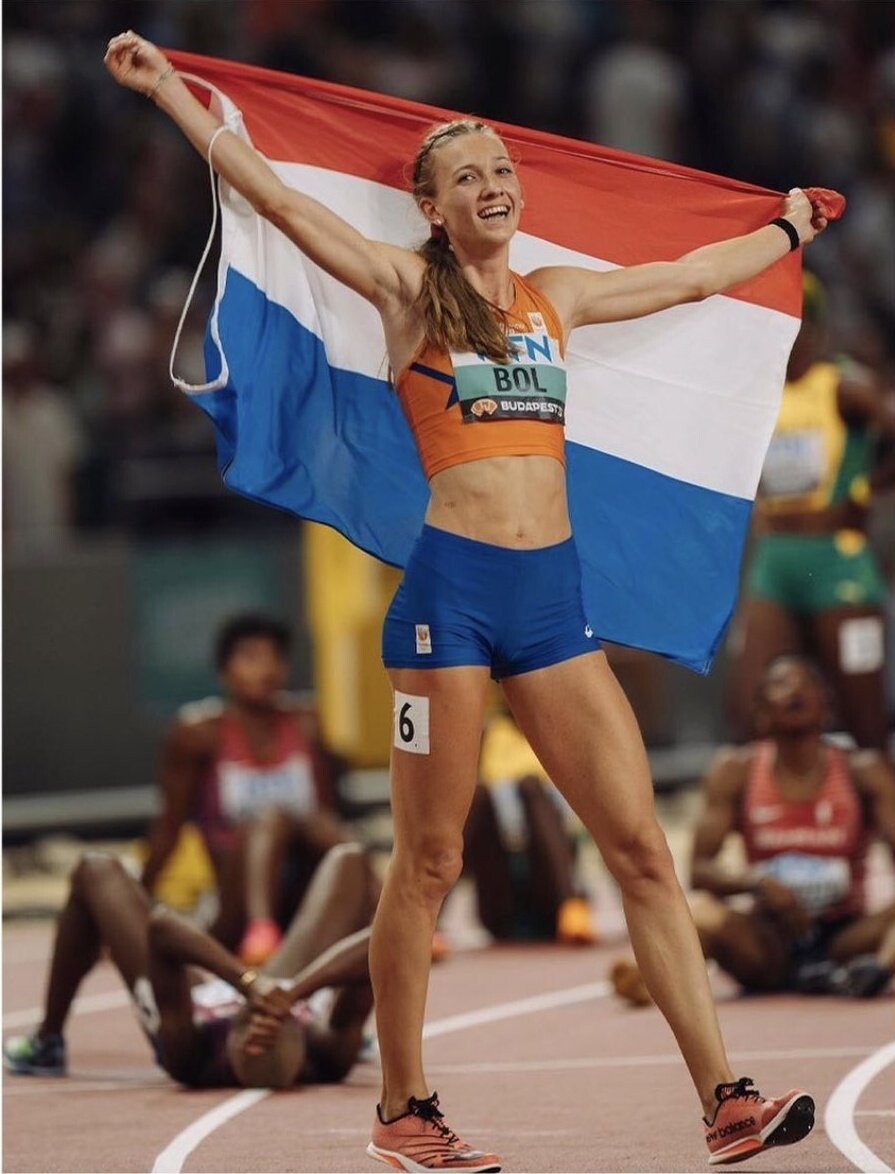
The announcement has immediately generated excitement across the athletics world, with fans eager to see how the reigning global 400m hurdles queen performs over the longer distance outdoors after her sensational indoor breakthrough earlier this year.
Bol, already regarded as one of the most versatile athletes in world athletics, stunned the track community during her indoor 800m debut in Metz back in February. Competing outside her specialist discipline, the Dutch star produced a remarkable 1:59.07 performance, becoming one of the very few elite 400m hurdlers capable of breaking the two-minute barrier in the event.
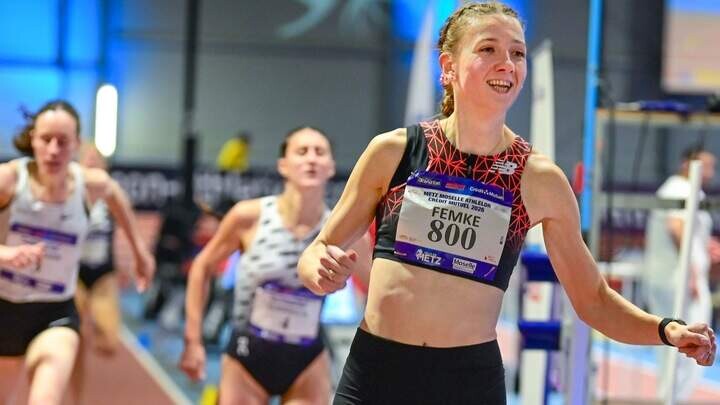
That performance was not only impressive for a debut — it was historic. Bol shattered the long-standing Dutch indoor 800m record of 2:00.01 previously held by Ester Goossens since 2001, underlining her extraordinary endurance, speed, and tactical maturity.
The decision to open her outdoor season in the two-lap event instead of the 400m hurdles adds another fascinating dimension to her already glittering career. It also signals her continued ambition to expand her range and sharpen her endurance ahead of the major championships later in the season.
Ostrava has long been known for producing fast times and unforgettable performances, and Bol’s presence instantly elevates the anticipation surrounding this year’s meeting. With her confidence soaring and her fitness clearly at an exceptional level, many will now wonder whether the Dutch sensation can push even deeper into world-class territory in the 800m outdoors.
Already a double world champion in the 400m hurdles and one of the most dominant figures in modern athletics, Bol continues to prove that her talent stretches far beyond one event. Her upcoming appearance in Ostrava is no longer just a season opener — it has become one of the most intriguing storylines of the early outdoor campaign.
by Erick Cheruiyot for My Best Runs.
Login to leave a comment
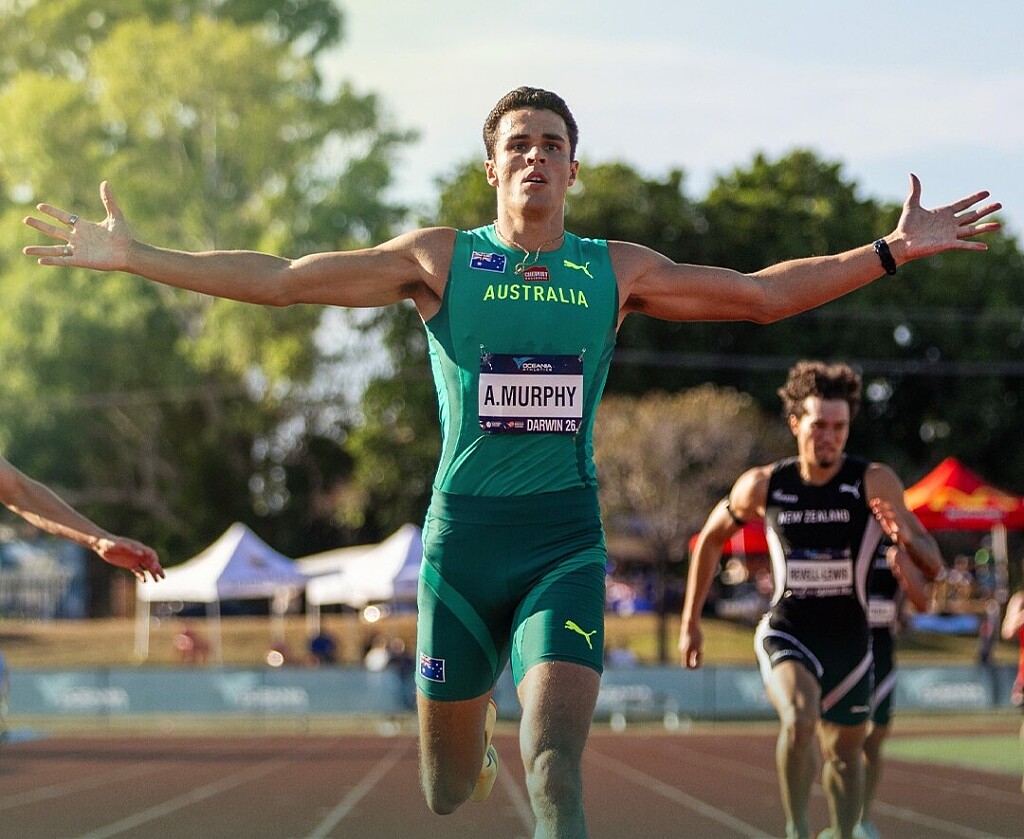
A Star is Born: Aidan Murphy Delivers Career-Defining 44.44 in Oceania Triumph
Australian sprinting may have found its next great quarter-mile star.
At the 2026 Oceania Athletics Championships in Darwin, Aidan Murphy delivered the performance of his life, producing a breathtaking 44.44-second run to lead an Australian clean sweep in the men’s 400m and catapult himself into the history books.
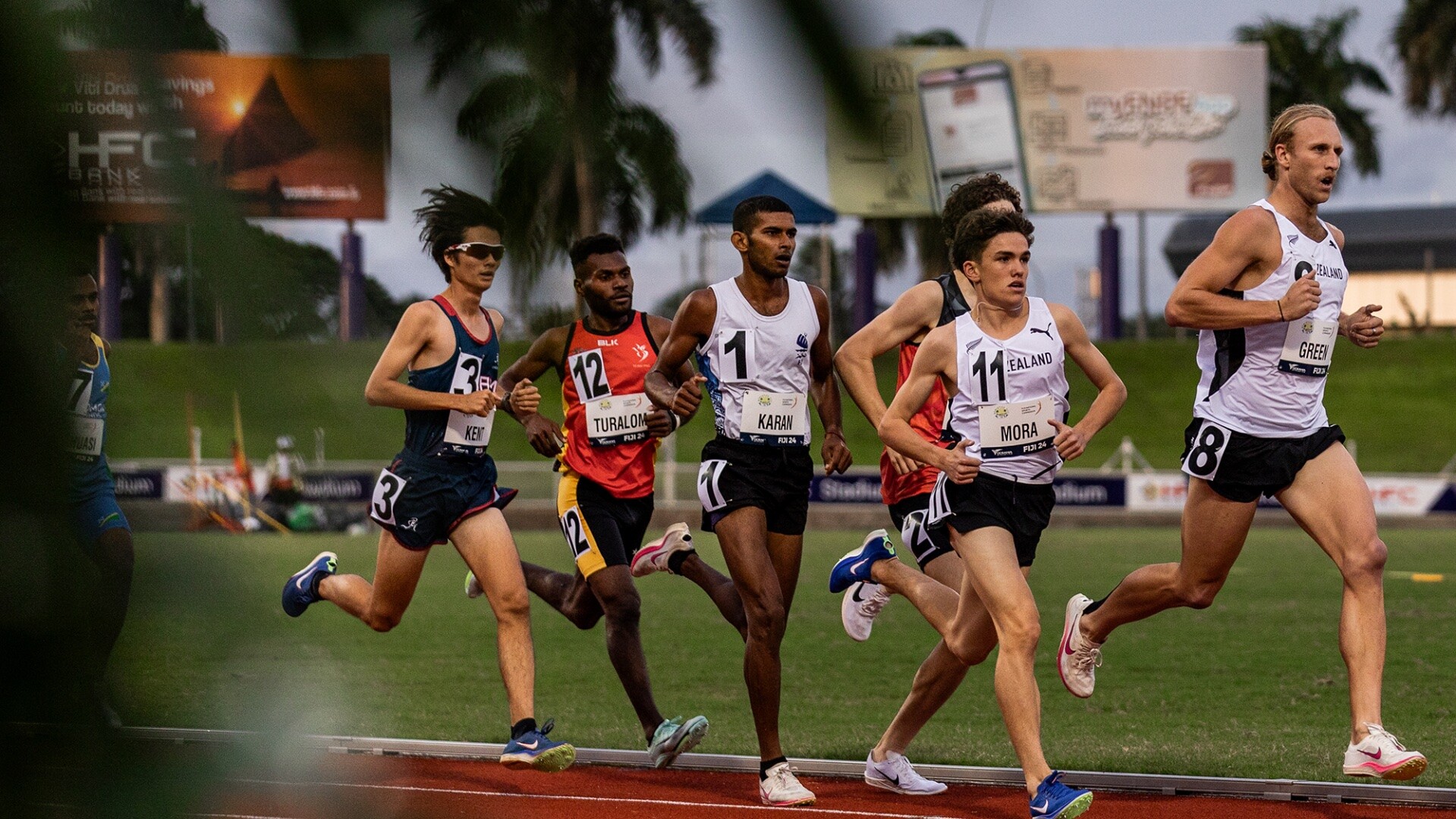
The long-awaited breakthrough was nothing short of spectacular. Murphy exploded down the home straight with supreme confidence and composure, crossing the line just fractions outside Darren Clark’s long-standing Australian record of 44.38. In doing so, the rising star climbed to second on Australia’s all-time rankings, confirming his arrival among the nation’s sprinting elite.
It was a race packed with quality from start to finish, as Australia completely dominated the podium. Thomas Reynolds chased hard for silver in an outstanding personal performance of 44.69, while Luke van Ratingen secured bronze in 45.04 to complete a memorable Australian sweep.
But the day belonged to Murphy.
After years of promise and patient development, the young Australian finally produced the performance many believed was coming. His run combined raw speed, control, and remarkable strength over the final 100 metres — the hallmarks of a world-class 400m athlete. From the stagger unwind to the powerful finish, Murphy looked every bit like a man ready to challenge the very best on the global stage.
The significance of the performance extends far beyond a championship title. Running 44.44 places Murphy among the fastest athletes ever produced in Oceania and sends a clear warning ahead of the major international championships later this season.
For Australian athletics, the result signals a new era in the men’s 400m. Three athletes under 45.10 in the same final highlights the growing depth of the event, but Murphy’s sensational breakthrough elevated the evening into something historic.
Darwin witnessed more than just a gold medal performance — it witnessed the rise of a genuine sprint force.
And if 44.44 is only the beginning, Australia’s national record may not survive much longer.
by Erick Cheruiyot for My Best Runs.
Login to leave a comment
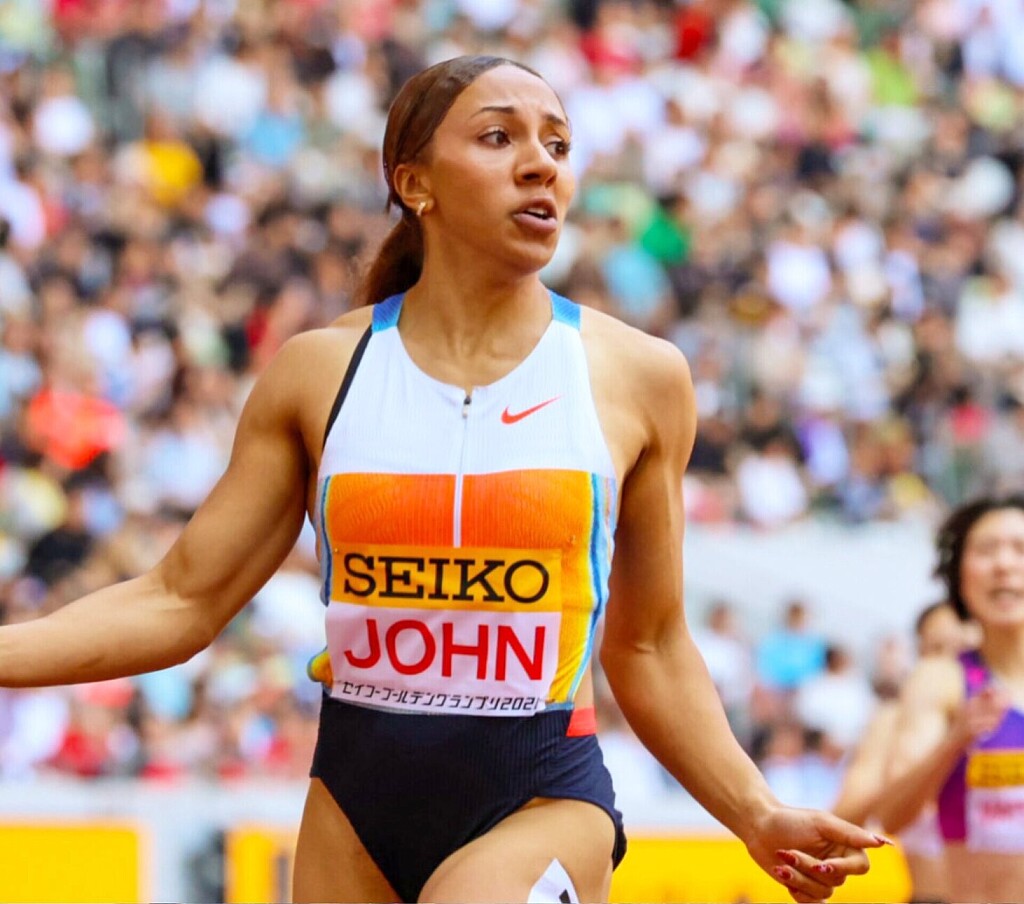
Yemi Mary John Storms Into British 400m History With Stunning Sub-50 Run in Tokyo
Britain’s rising sprint sensation Yemi Mary John delivered the performance of her career at the Seiko Golden Grand Prix, blazing to a sensational victory in the women’s 400m with a huge personal best of 49.85 seconds.
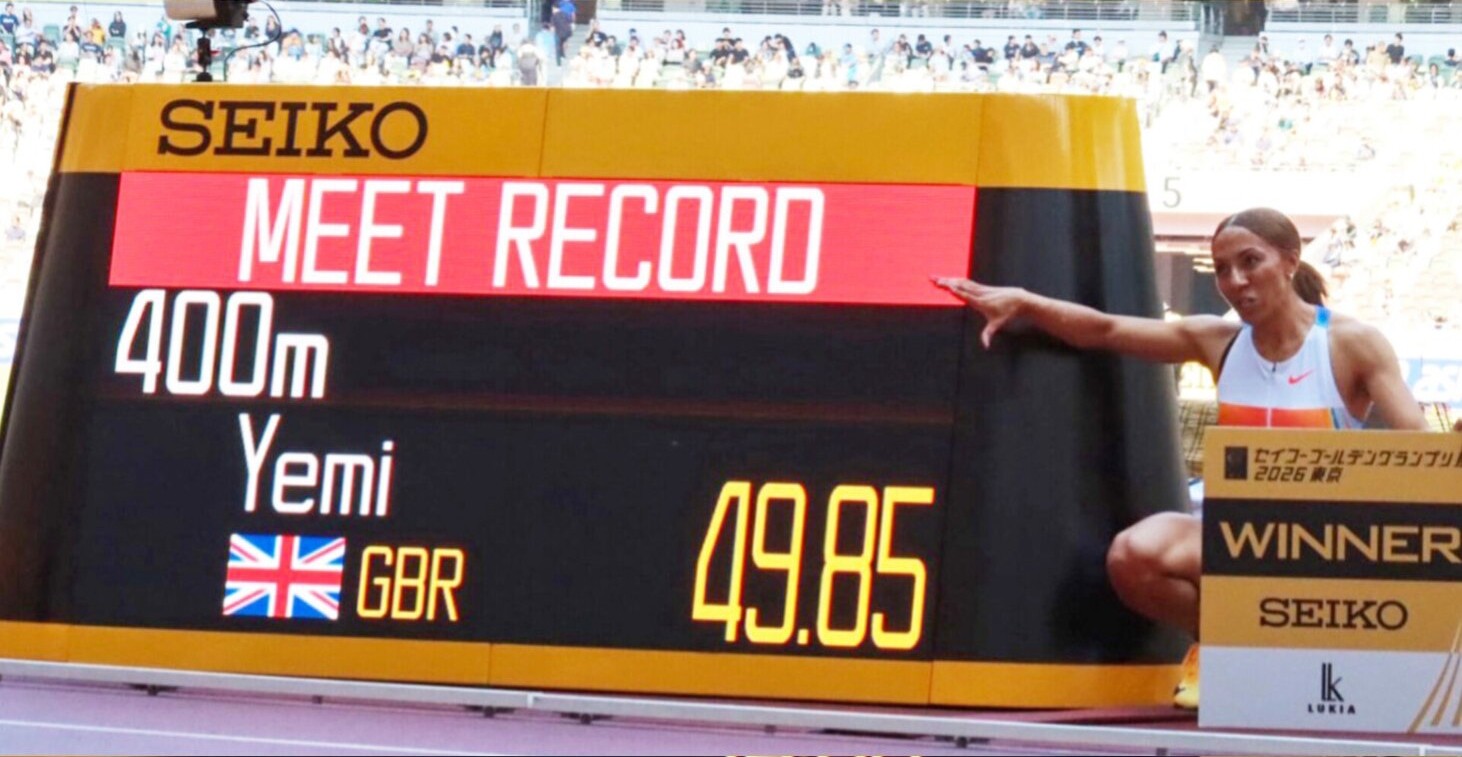
Under the bright lights in Tokyo, the young British star produced a fearless and composed run, powering through the final straight to dip under the coveted 50-second barrier for the very first time. In doing so, John etched her name into British athletics history, becoming only the ninth British woman ever to break 50 seconds in the one-lap event. Her remarkable performance also lifts her to seventh on the all-time British rankings, confirming her arrival among the nation’s elite quarter-milers.

The race unfolded at a relentless pace from the opening stages, but John remained calm and controlled before unleashing a devastating finish over the final 100 metres. Her breakthrough performance signals a major step forward in what is rapidly becoming one of the most exciting careers in British sprinting.
American athlete Bailey Lear also impressed with a lifetime best of 50.42 seconds to secure second place after a strong and competitive display. The high-quality contest in Tokyo highlighted the growing depth and intensity in women’s 400m sprinting on the international stage.
For John, however, the night belonged entirely to her. Breaking the 50-second barrier is widely regarded as one of the defining milestones in women’s sprinting, and the manner in which she achieved it suggests there may be even faster times ahead. Her victory in Tokyo not only delivered a statement win but also announced her as a serious force to watch as the global athletics season continues to build momentum.
by Erick Cheruiyot for My Best Runs.
Login to leave a comment
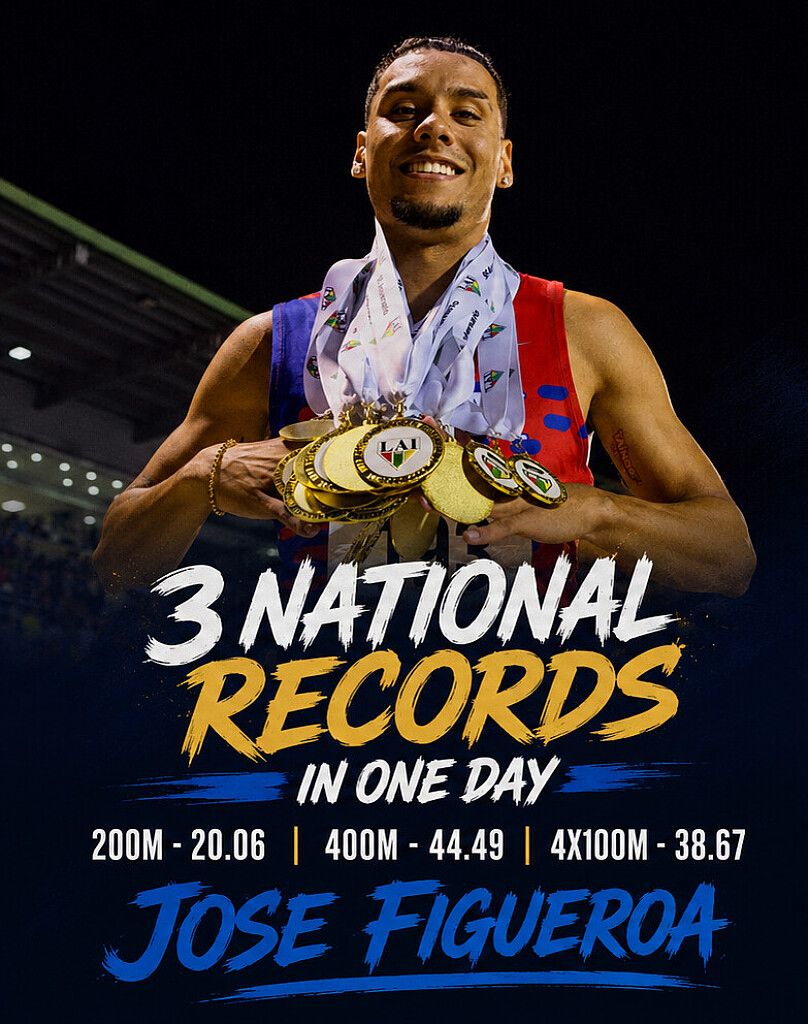
Triple Crown of Speed: Jose Figueroa Rewrites Puerto Rican Sprint History in Mayagüez
Puerto Rican 21 years old sprint sensation Jose Figueroa delivered one of the most extraordinary performances in the nation’s athletics history after shattering three National Records in a single day at the LAI Championships. Competing under difficult rainy conditions in Mayagüez, the rising star produced a breathtaking display of speed, resilience and composure that instantly elevated his name into Puerto Rican sporting folklore.
Figueroa first ignited the track with a sensational 20.06 seconds in the 200m, battling through a slight headwind of -0.2 to break yet another national barrier. The performance alone was enough to command attention, but the Puerto Rican star was only getting started. Moments later, he returned to the track for the 400m and produced the race of his life, storming to an astonishing 44.49 seconds to become the first man in Puerto Rican history to break the prestigious 45-second barrier.
What made the achievement even more remarkable was the manner in which it was accomplished. On a wet surface where rhythm, balance and execution become far more difficult, Figueroa ran with fearless aggression and remarkable control, showcasing both elite speed and maturity beyond his years. Every stride carried the weight of history, and by the finish line, he had permanently rewritten the national record books.
The unforgettable day did not end there. Fueled by momentum and confidence, Figueroa returned once again to help Puerto Rico’s 4x100m relay team storm to another National Record, clocking 38.67 seconds for yet another commanding victory. Completing three record-breaking performances in a single championship is a feat rarely witnessed in athletics, making his Mayagüez masterclass one of the most dominant sprint displays the Caribbean nation has ever seen.
Beyond the medals and records, this performance signals the arrival of a new sprint force for Puerto Rico. Figueroa is no longer simply a promising talent — he is now the standard-bearer of a new era, a sprinter capable of carrying Puerto Rican athletics onto the global stage. His explosive speed, versatility across multiple events and ability to thrive under pressure suggest that even greater moments may still lie ahead.
by Erick Cheruiyot for My Best Runs.
Login to leave a comment
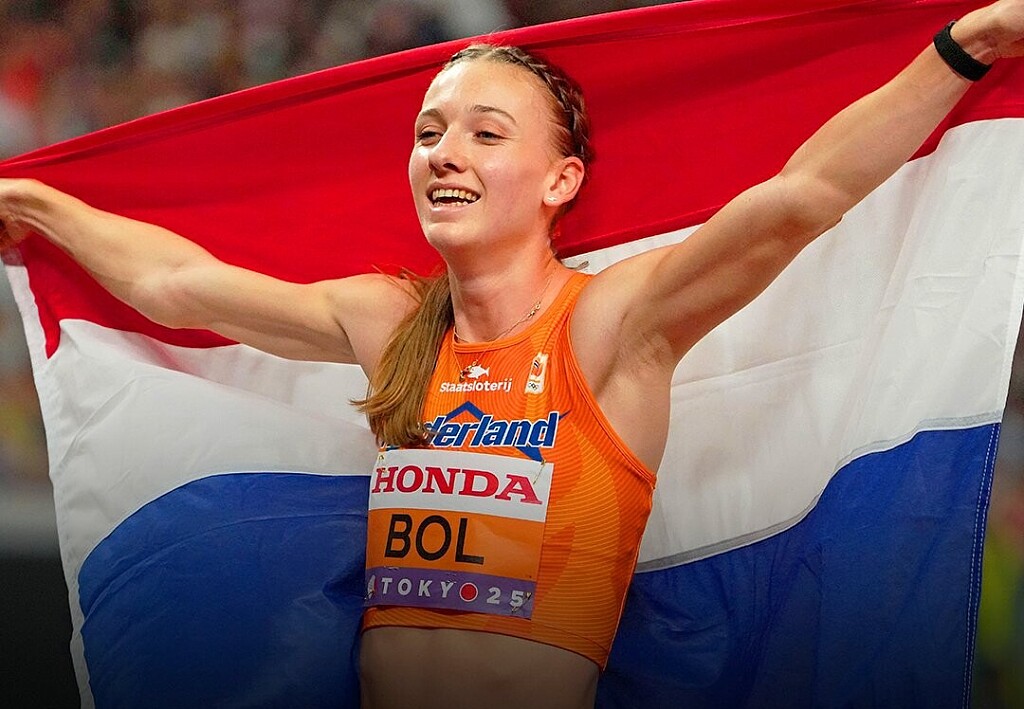
Dutch Queen of Speed: Femke Bol Ready to Light Up the FBK Games 800m
On Sunday, June 21, 2026, Femke Bol will once again command the spotlight as she prepares for a thrilling return to the 800m at the prestigious FBK Games in Hengelo. The Dutch superstar, already celebrated worldwide for her dominance in the 400m hurdles, is stepping back into the demanding two-lap event — a move that has generated enormous excitement across the athletics world.
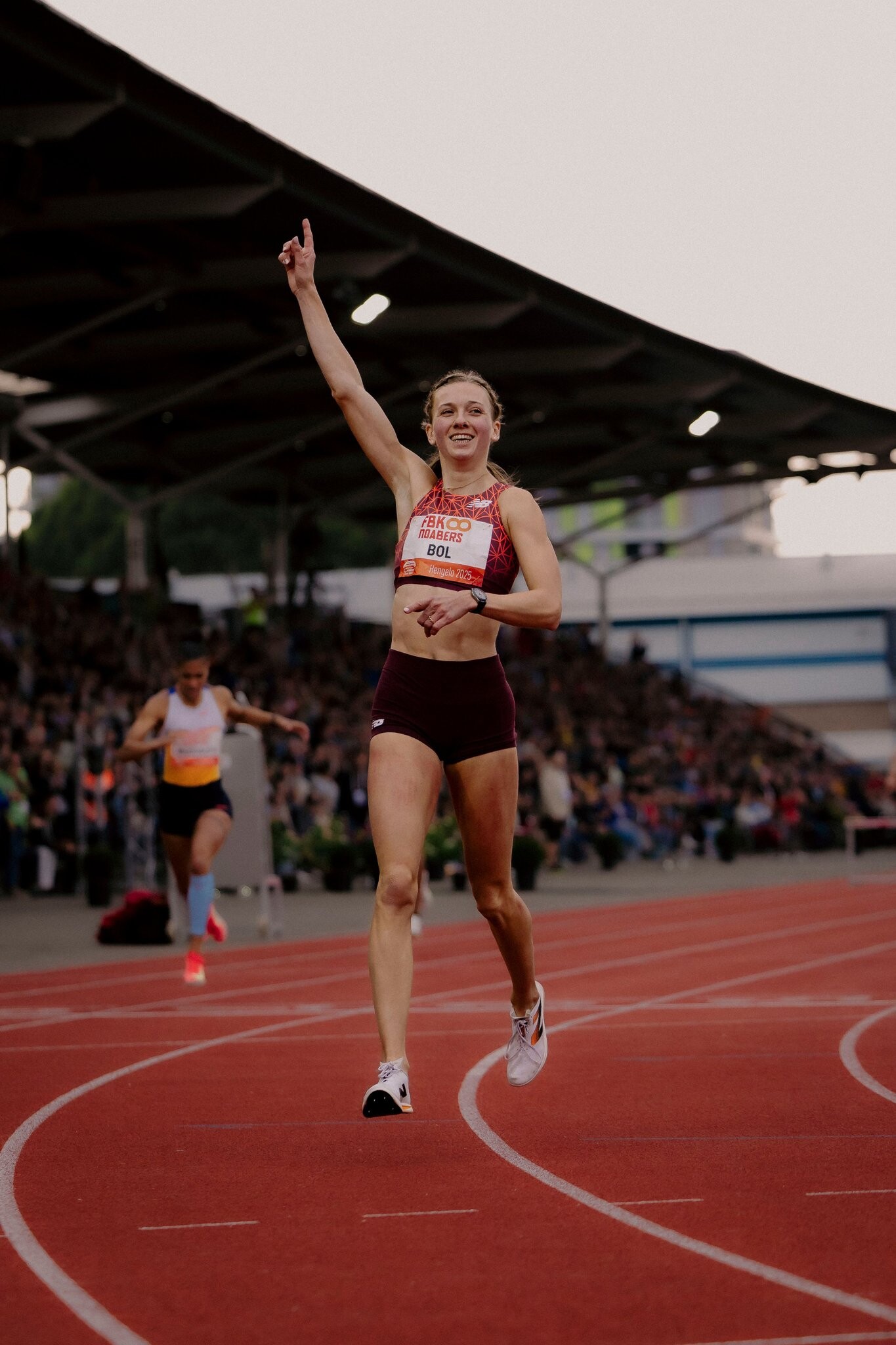
After delivering a sensational 800m breakthrough earlier this season, Bol proved that her brilliance extends far beyond the hurdles. During the World Indoor Tour meeting in Metz in February, she stormed to an incredible 1:59.07 performance, smashing the Dutch national record and announcing herself as a serious force in middle-distance running. The remarkable display highlighted her extraordinary endurance, speed and versatility — qualities that continue to elevate her status among the sport’s elite.
Now, the reigning Dutch sensation is set to bring that excitement onto home soil for what will be her very first 800m race in the Netherlands. Her appearance at the 45th edition of the FBK Games adds another compelling storyline to an already highly anticipated meeting, with supporters eager to witness how far she can push her limits in an event she has barely explored at elite level.
Renowned for her fearless racing style, devastating finishing strength and relentless competitiveness, Bol’s return to the 800m signals growing confidence in her range as an athlete. Every time she steps onto the track, she continues to challenge expectations and create unforgettable moments that captivate athletics fans around the globe.
The atmosphere in Hengelo is expected to be electric as the home favourite lines up before a passionate Dutch crowd. With anticipation building rapidly ahead of June 21, one thing is certain — whenever Femke Bol races, records, headlines and brilliance are never far away.
by Erick Cheruiyot for My Best Runs.
Login to leave a comment
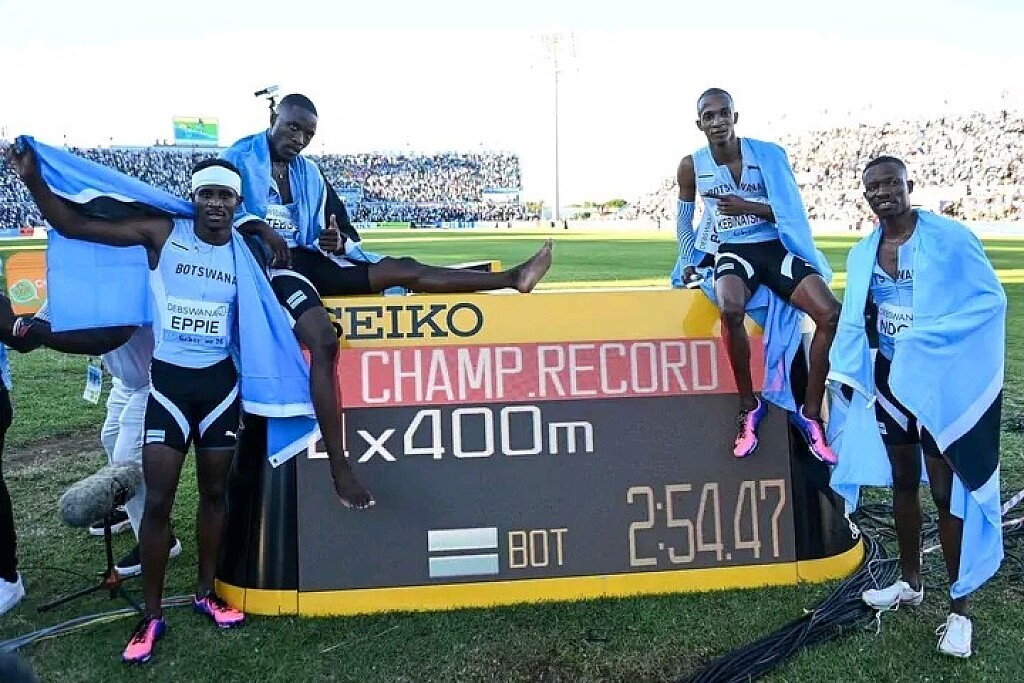
When Speed Meets History: The Greatest 4x400m Relay Showdown Ever Assembled
Track and field has witnessed many golden eras, but few moments compare to the breathtaking depth now defining the men’s 4x400m relay. What was once a race of dominance by a select few has transformed into a high-stakes battlefield where excellence is no longer exceptional—it is expected.
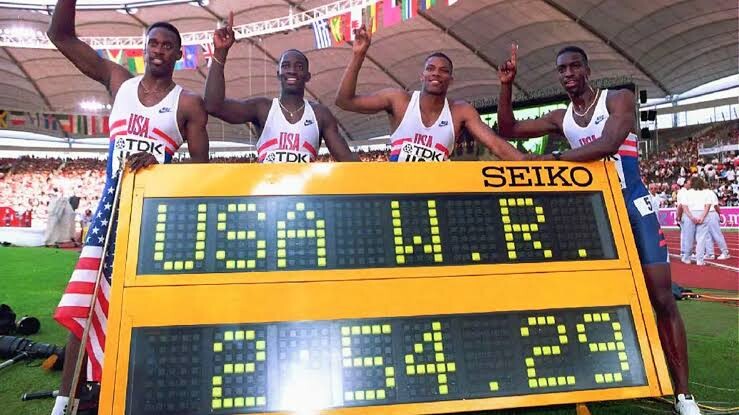
The record books tell a story that stretches across generations. The United States set the gold standard in Stuttgart 1993 with a blistering 2:54.29, a mark that stood as a symbol of relay perfection for decades. That legacy was nearly matched again in Paris 2024, where another American quartet stormed to 2:54.43, reaffirming their historic authority in the event.
Yet the narrative has taken a dramatic turn.
Emerging from the heart of Africa, Botswana has surged into the spotlight with astonishing force. Their 2:54.47 performance in Gaborone in 2026 now ranks among the fastest ever recorded, a statement not just of speed but of intent. Even their earlier 2:54.53 run in Paris 2024 signaled that this was no fleeting rise—it was the beginning of a new era.
But this is no two-horse race.
South Africa, with a powerful 2:55.07 in Gaborone, has firmly planted itself among the elite, while Australia’s remarkable 2:55.20 on the same track underscores the global spread of excellence in the event. These are not isolated performances—they are part of a broader, electrifying shift in the competitive landscape.
What makes this moment truly extraordinary is the sheer density of brilliance. Six national teams, all clocking sub-2:56 times, have shattered the traditional boundaries of relay racing. The margins between victory and defeat are now razor-thin, where a single stride, a flawless baton exchange, or a moment of hesitation can define history.
Imagine all six teams on the same track, at their very peak. It would not just be a race—it would be a spectacle of controlled chaos, a collision of speed, precision, and raw competitive fire. Each leg would carry the weight of history, each exchange a test of nerve, and each anchor lap a final, desperate bid for immortality.
This is the new reality of the men’s 4x400m relay: no longer predictable, no longer dominated by one nation, but elevated into one of the most fiercely contested events in athletics.
The clock is no longer the only opponent. Now, it’s each other.
by Erick Cheruiyot for My Best Runs.
Login to leave a comment
Thunder in Gaborone: Botswana Storms to Historic 4x400m Triumph
The roar inside the National Stadium reached a fever pitch as Collen Kebinatshipi powered down the final stretch, sealing a breathtaking men’s 4x400m victory for Botswana on home soil. In a moment charged with national pride and raw athletic brilliance, the world 400m champion delivered a masterclass anchor leg that ignited celebrations across the stands.
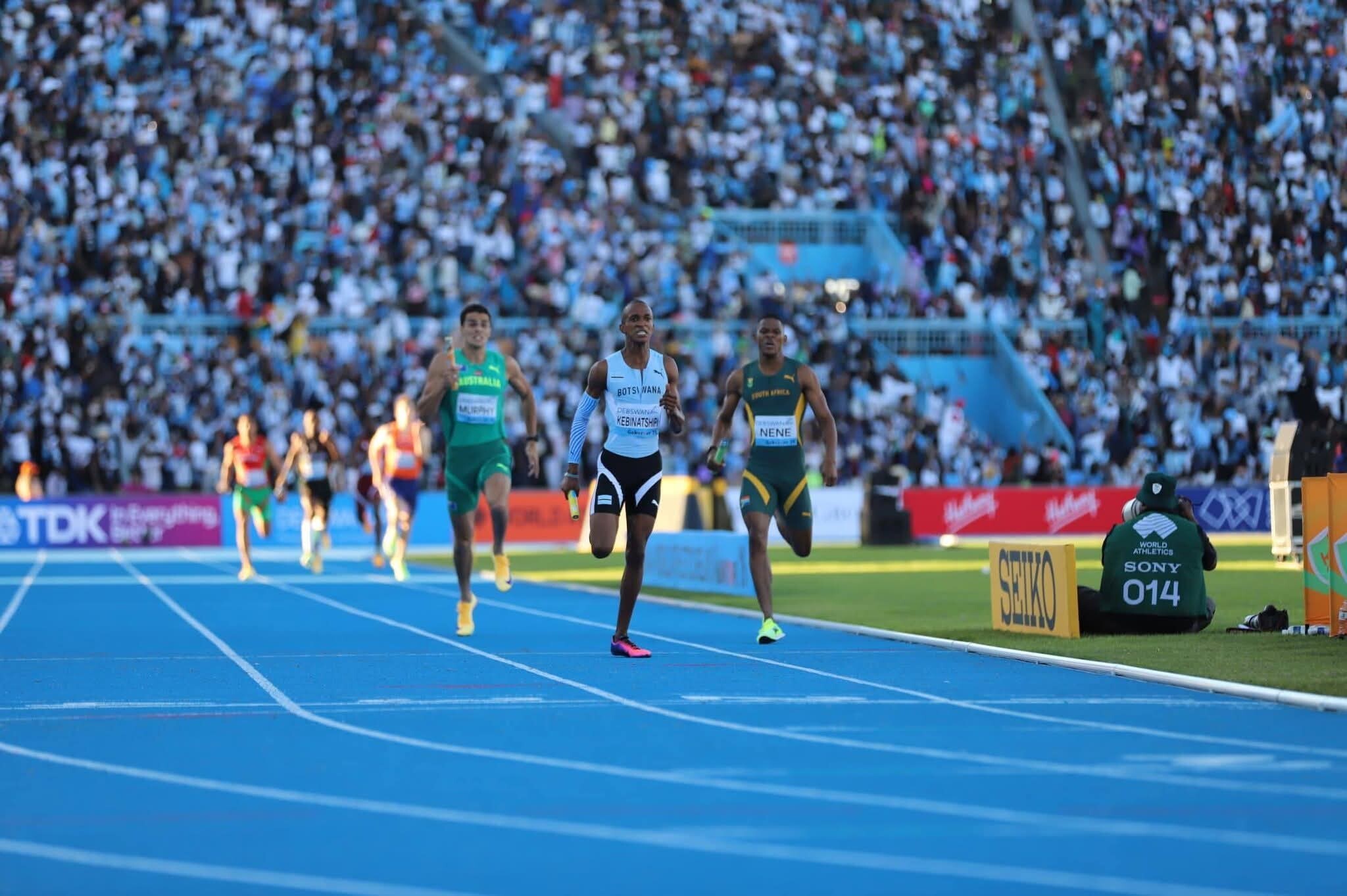
This was no ordinary win—it was a performance etched into the sport’s history. Botswana’s quartet of Lee Bhekempilo Eppie, Letsile Tebogo, Bayapo Ndori, and Kebinatshipi combined precision, speed, and composure to clock a stunning 2:54.47. The mark not only shattered the championships record but also stands as the third-fastest time ever recorded in the history of the event.

From the opening leg, Botswana signaled intent. Eppie launched the team into contention with controlled aggression, handing over to Tebogo, whose fluid stride and composure kept the momentum alive. Ndori, running the critical third leg, absorbed pressure from chasing rivals and ensured the team remained firmly in control heading into the final exchange.
Then came Kebinatshipi.
With the baton in hand and the weight of expectation on his shoulders, he surged forward with authority. His form was fierce, his cadence relentless. As he drove down the home straight, the gap widened, and with every stride, the certainty of victory grew. By the time he crossed the line, the stadium had already erupted—an entire nation rising to salute a performance of rare magnitude.
Beyond the time and the record, this victory carried deeper meaning. It was a statement of Botswana’s growing dominance in sprinting, a showcase of teamwork forged through discipline and belief, and a reminder of how powerful sport can be when it unfolds in front of a home crowd.
On a day where speed met history, Botswana didn’t just win—they announced themselves among the all-time great relay nations.
by Erick Cheruiyot for My Best Runs.
Login to leave a comment
A Statement Before the Final: Kenya Shatters African Record in Mixed Relay Showdown
In a race defined by precision, courage, and rising ambition, Kenya delivered a performance to remember at the World Athletics Relays 2026 in Gaborone. The quartet of Mercy Oketch, George Mutinda, Kevin Tonui, and Mercy Chebet combined brilliance and composure to clock an outstanding three minutes, nine point eight seven seconds, rewriting the African record in the mixed 4x400m relay.
It was more than just a fast race—it was a statement.
Team Kenya did not simply chase the clock; they reshaped expectations of African sprinting on the global stage. Their electrifying run secured second place in their heat, confidently advancing them to the final, while also sealing automatic qualification for the 2027 World Championships.
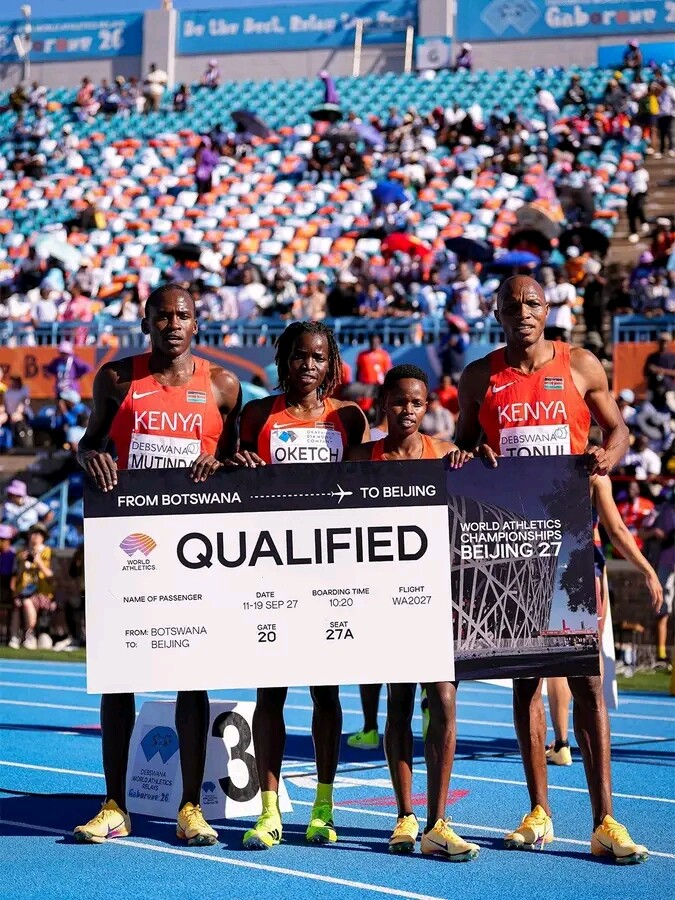
Though they crossed the line behind a dominant Great Britain & Northern Ireland squad, the significance of Kenya’s performance resonated far beyond the finishing order. This was a breakthrough moment—one that signaled a new era.
From the opening leg, Kenya showed intent. Oketch set the tone with a controlled yet aggressive start, keeping the team firmly in contention. Mutinda followed with discipline and balance, maintaining momentum under pressure. Tonui then injected raw power into the race, closing crucial ground before handing over to Chebet, who delivered a determined anchor leg to secure the historic result.
The achievement reflects a shifting identity in Kenyan athletics. Long revered for its dominance in distance running, the nation is now steadily building a formidable presence in sprint relays—an evolution underscored by this record-breaking display.
The mixed 4x400m relay continues to captivate with its blend of strategy, speed, and teamwork. In Gaborone, it offered Kenya the perfect stage to announce its arrival among the world’s elite.
Not a finish line, but a powerful warning—the final still awaits.
by Erick Cheruiyot for My Best Runs.
Login to leave a comment
Leendert Koekemoer Blazes to U20 Glory with Stunning 44.94s 400m Record at Simbine Classic
South African sprinting continues to announce its rising stars on the global stage, and Leendert Koekemoer has now firmly positioned himself among the most exciting young talents in the country. At the prestigious Simbine Classic, the teenage sensation delivered a performance of rare brilliance, storming to victory in the 400m with a blistering 44.94 seconds — a new South African U20 record.
On a day that already promised high-level competition, Koekemoer elevated the occasion with a run defined by composure, power, and fearless execution. From the gun, he showed remarkable control through the opening bend, building rhythm without overextending. By the time he entered the home straight, he was already in command — but it was his final surge that truly separated him from the field, as he powered through the finish to stop the clock at a historic sub-45-second mark.
The performance not only secured gold at the Simbine Classic but also etched his name into the national record books, underlining the rapid progression of South Africa’s next generation of sprinting talent. Breaking 45 seconds at junior level is a benchmark reserved for athletes with elite potential, and Koekemoer’s execution suggests a runner growing rapidly into senior world-class territory.
What makes the achievement even more significant is the context: delivering such a time in a high-pressure meet, against strong competition, reflects both physical maturity and competitive confidence beyond his years. It is a statement run — one that signals he is not just a prospect for the future, but a contender already shaping the present narrative of South African athletics.
As the cheers settled and the scoreboard confirmed the record, one thing became clear: Leendert Koekemoer has officially entered a new tier. And if this performance is any indication, the distance between promise and greatness may be shortening faster than anyone expected.
by Erick Cheruiyot for My Best Runs.
Login to leave a comment
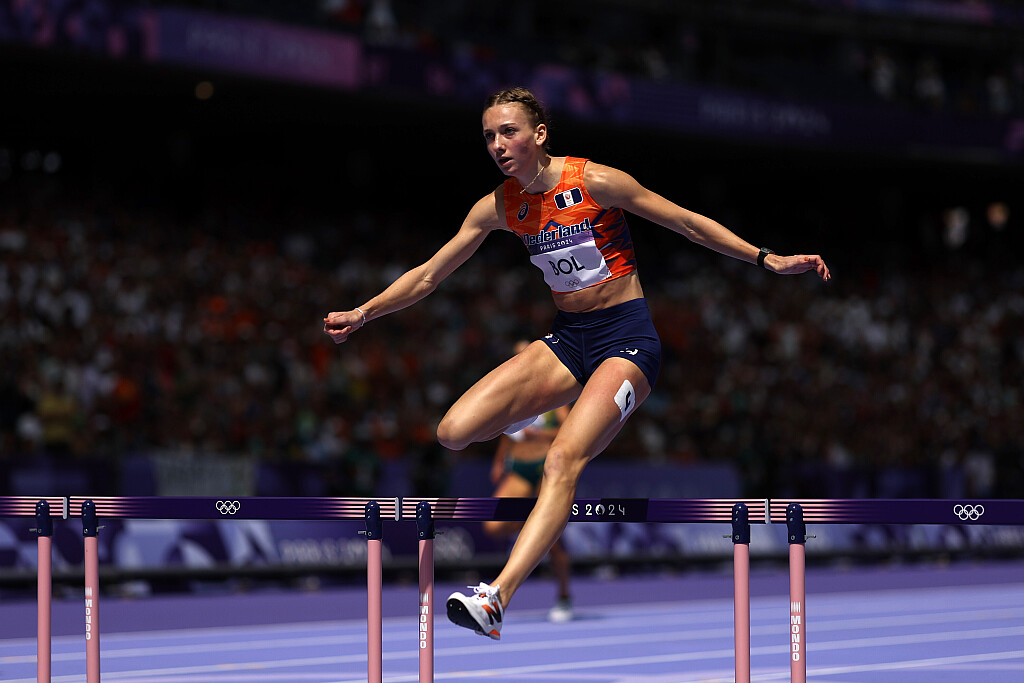
Silent Strides: Why Femke Bol Has Stepped Out of the Spotlight
In the fast-moving world of elite athletics, silence often sparks speculation. For Femke Bol, one of the sport’s most electrifying talents, the recent quiet spell is neither accidental nor alarming—it is calculated, necessary, and ultimately strategic.
At the start of the year, Bol signaled an intriguing evolution in her career. Known globally for her dominance in the 400m hurdles, she began exploring the demands of the 800m, a transition that immediately captured attention. Her indoor debut over the distance was nothing short of remarkable, clocking 1:59.07—a Dutch national record that underlined both her versatility and ambition.
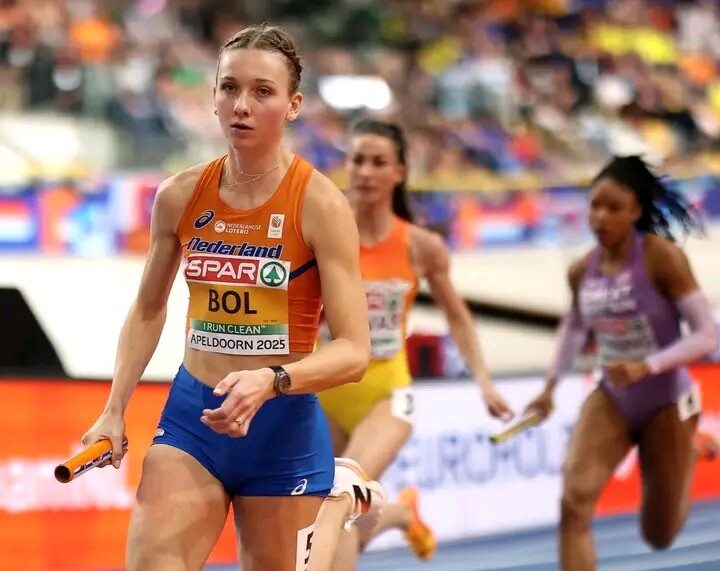
However, momentum in athletics can be fragile. Shortly after that breakthrough performance, Bol encountered a setback in the form of a foot tendon injury. Tendon issues, particularly for middle-distance athletes, require meticulous management. Unlike muscle injuries, they demand patience over urgency, often forcing athletes to pause at precisely the moment they appear to be accelerating.
The injury ultimately brought her indoor season to an early close. While fans may have noticed her absence from competition, behind the scenes the focus shifted entirely to recovery and long-term sustainability. Reports indicate that Bol has since resumed training, including a period in South Africa—a popular destination for elite runners seeking optimal conditions for controlled rehabilitation and endurance building.
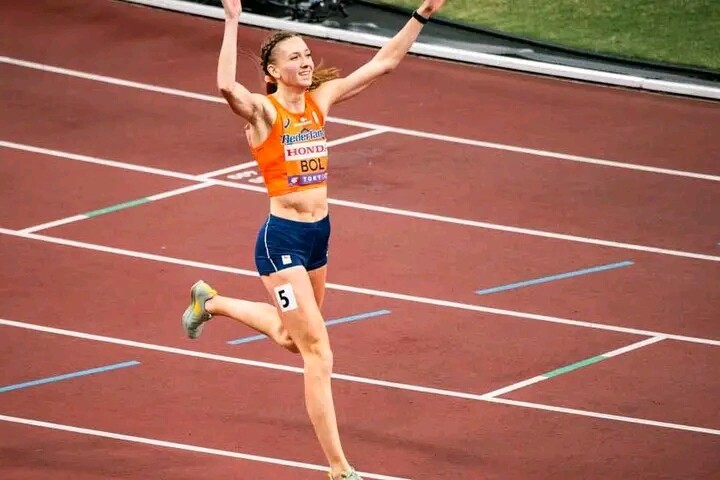
Her current approach reflects a deliberate and disciplined return. There is, as yet, no confirmed race schedule, a clear indication that she has not rushed back into competition. At this level, timing is everything; returning too soon can compromise not just a season, but an athlete’s trajectory. Bol’s camp appears intent on ensuring that when she does re-emerge, it will be on her own terms and at full strength.
This also explains her limited visibility in team activities, particularly relay preparations with the Dutch squad. Relay sessions are notoriously intense, often demanding repeated high-speed efforts—exactly the kind of strain that can aggravate a recovering tendon. For an athlete rebuilding carefully, such commitments are typically the first to be postponed.
Yet, if anything, this period of quiet should be viewed as a prelude rather than a pause. Bol has already demonstrated an ability to redefine expectations, and her venture into the 800m suggests an athlete unafraid to expand her boundaries. The temporary absence from the spotlight is not a retreat, but a recalibration.
When she returns, it is unlikely to be subtle.
by Erick Cheruiyot for My Best Runs.
Login to leave a comment
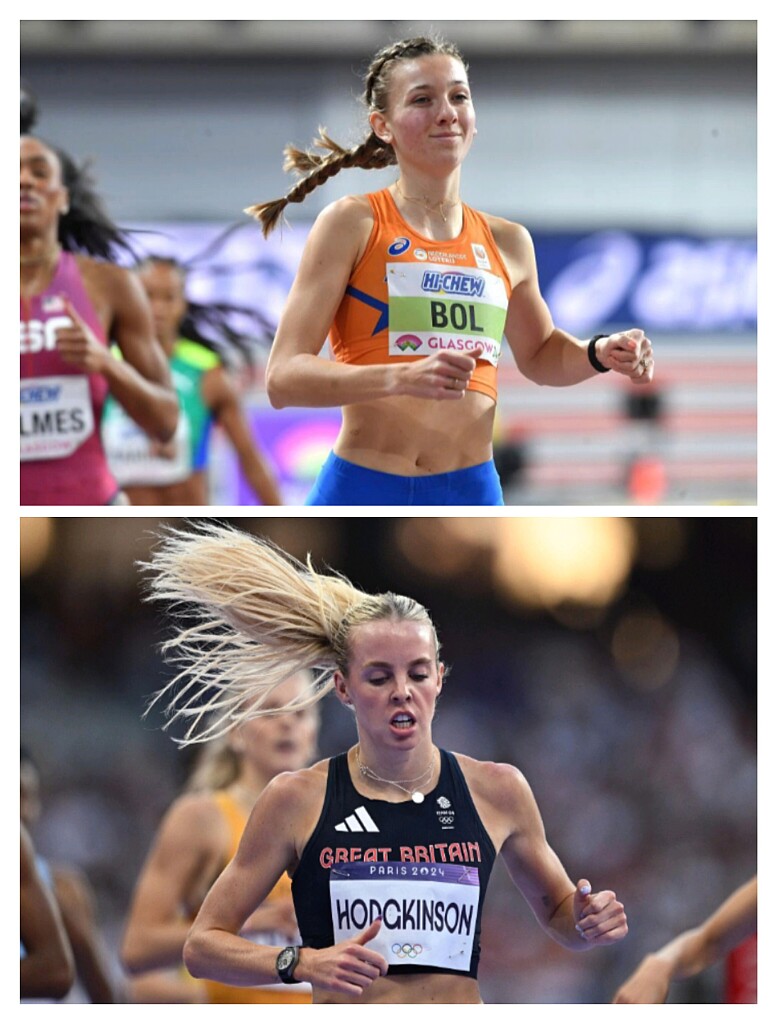
A Collision Course in Birmingham: Bol vs Hodgkinson for European Supremacy
As the summer spotlight turns toward Birmingham, the stage is set for a compelling middle-distance duel that could redefine the balance of power in European athletics. European Athletics Championships returns with more than just medals at stake—it brings with it a simmering rivalry between two of the continent’s most electrifying talents: Femke Bol and Keely Hodgkinson.
On paper, Bol holds the edge. The Dutch star, already a dominant force across multiple disciplines, has accumulated three European individual gold medals, underlining her consistency and championship pedigree. In contrast, Hodgkinson—Great Britain’s golden hope over 800 metres—has secured two individual European titles, each forged through tactical brilliance and fearless racing on the biggest stages.
But statistics, as ever in athletics, only tell part of the story.
Birmingham offers something far more intriguing: the possibility of convergence. Bol, long celebrated for her supremacy in the 400m hurdles and her seamless versatility, is widely expected to step up into the 800m. Should she do so, it would set the stage for a rare and highly anticipated head-to-head clash with Hodgkinson in her specialist event.
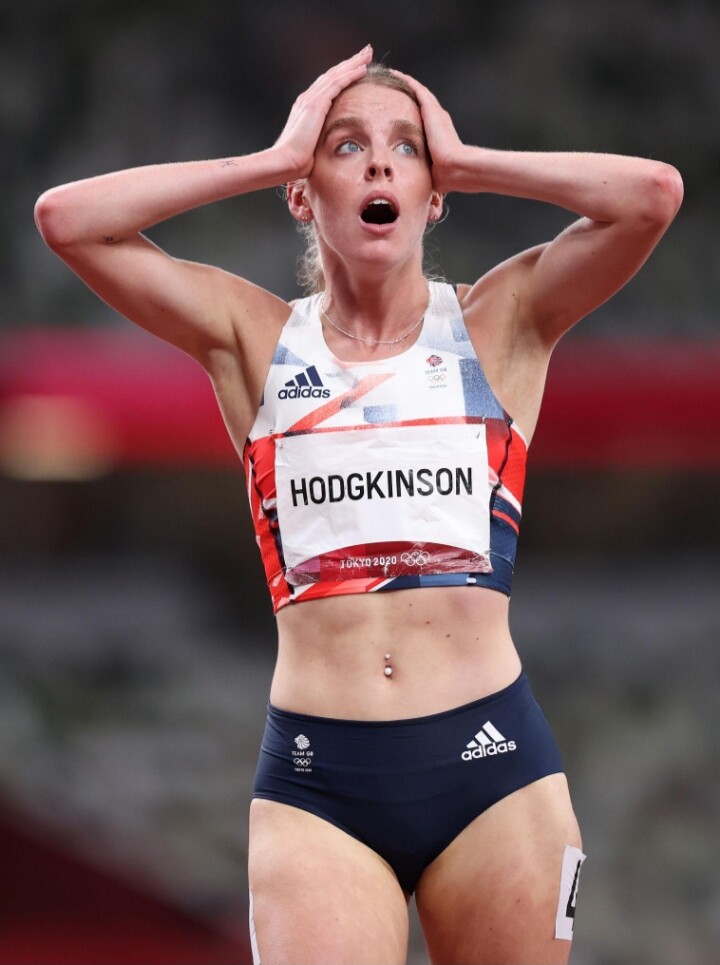
And that is where the narrative sharpens.
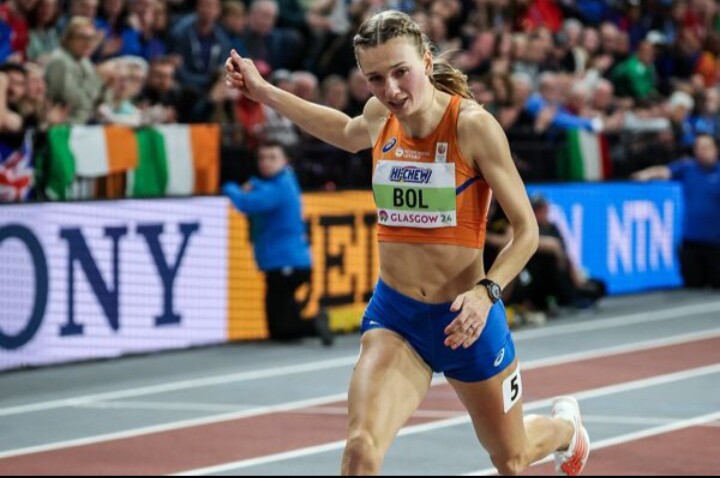
Hodgkinson’s authority over two laps is built on rhythm, poise, and an almost surgical sense of timing. She thrives in the tactical ebb and flow of championship racing, often striking with devastating precision in the closing stages. Bol, by contrast, brings an entirely different dimension—raw strength, relentless pace, and the capacity to stretch a race beyond conventional limits.
If they meet, it will not simply be a race. It will be a clash of philosophies.
For Bol, victory would extend her European dominance into new territory, reinforcing her status as one of the most versatile athletes of her generation. For Hodgkinson, it is an opportunity to defend home soil and reaffirm her command of the 800m against an opponent stepping into unfamiliar, yet dangerous, territory.
The stakes, then, are disarmingly simple yet profoundly significant: supremacy.
In a championship defined by fine margins and fleeting moments, Birmingham could become the arena where reputations are reshaped and legacies accelerated. One question lingers above all:
When the bell rings and the final lap unfolds, who will take control—and who will take the crown?
by Erick Cheruiyot for My Best Runs.
Login to leave a comment
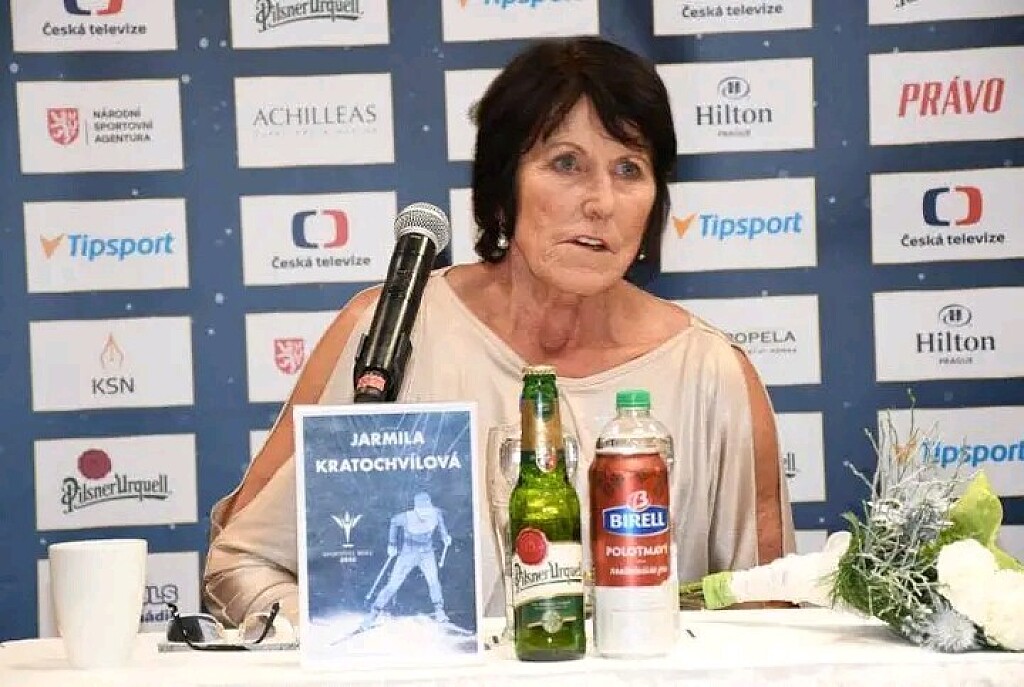
Jarmila Kratochvílová and the 800m Record That Time Could Not Touch
Some records are broken within months. Others survive for years. Then there are the rare marks that outlive generations and become part of sporting mythology. Few achievements in athletics carry that aura more powerfully than the women’s 800 metres world record of 1:53.28, set by Jarmila Kratochvílová on July 26, 1983, in Munich.
More than four decades later, the astonishing performance still stands untouched, making it one of the oldest and most remarkable world records in track and field. In an era where training science, technology, and competition standards have advanced dramatically, that number continues to resist every challenge.
What makes the feat even more extraordinary is the story behind it. Kratochvílová was primarily known as a 400-metre specialist, not an 800-metre star. Her appearance in Munich came after a late change of plans caused by injury, and she was not even expected to headline the event. Yet when the gun fired, she produced one of the finest races ever seen.
She passed the opening lap in a fearless 56.1 seconds, surged through 600 metres in 1:26.3, and still found another devastating finish over the final bend and straight. Crossing the line in 1:53.28, she did far more than win a race—she created a benchmark that would challenge every generation to come.
That unforgettable evening crowned a sensational 1983 campaign. Weeks later, at the first-ever World Championships in Helsinki, Kratochvílová completed a rare and historic double by winning gold in both the 400 metres and the 800 metres. She also ran 47.99 for the 400m that season, becoming the first woman in history to break the 48-second barrier. Only a select few athletes, including Marita Koch, have since joined that elite company.
Her rise had already been confirmed earlier when she claimed Olympic silver in the 400 metres at the 1980 Summer Olympics. Many believed even greater Olympic success awaited her, but history intervened. The boycott of the 1984 Summer Olympics denied her the chance to compete on sport’s biggest stage once again.
Even after leaving competition, Kratochvílová continued shaping the sport. As a coach, she guided Ludmila Formanová to the 800m world title in 1999, proving her knowledge and influence extended well beyond her own racing career.
Her record has not escaped controversy or debate. In 2017, World Athletics proposed stricter standards for the ratification of older world records, raising questions over marks set before modern testing systems. Yet the 1:53.28 remained official, preserving one of the sport’s most famous milestones.
As of 2026, athletes continue to chase history. Among the strongest modern contenders is Keely Hodgkinson, whose rise has renewed belief that the seemingly impossible may one day fall. But until that moment arrives, Kratochvílová’s run in Munich remains the gold standard.
Whether it survives another season or another generation, one truth is certain: Jarmila Kratochvílová did not simply set a world record—she created a legend that time itself has struggled to defeat.
by Erick Cheruiyot for My Best Runs.
Login to leave a comment
Gabby Thomas Brings Olympic Stardom to Africa in Blockbuster April Tour
American sprint star Gabby Thomas is set to headline one of the most exciting international appearances of the early athletics season, as she brings her world-class speed and star power to Africa for a three-meet tour in April.
Widely regarded as one of the finest 200m runners of her generation, Thomas arrives with a résumé that places her firmly among the sport’s elite. At the 2024 Paris Olympics, she delivered a historic performance, clinching three gold medals in the 200m, 4x100m relay, and 4x400m relay—an achievement that cemented her dominance on the global stage. Her Olympic journey began earlier at the 2020 Tokyo Olympics, where she captured bronze in the 200m and silver in the 4x100m relay, signaling the arrival of a future champion.
Beyond the Olympics, Thomas has consistently proven her pedigree. At the 2023 World Championships, she secured silver in the 200m and powered her team to gold in the 4x100m relay, further underlining her versatility and championship mentality. With a personal best of 21.60 seconds in the 200m—ranking her among the fastest women in history—she remains a formidable force every time she steps onto the track.
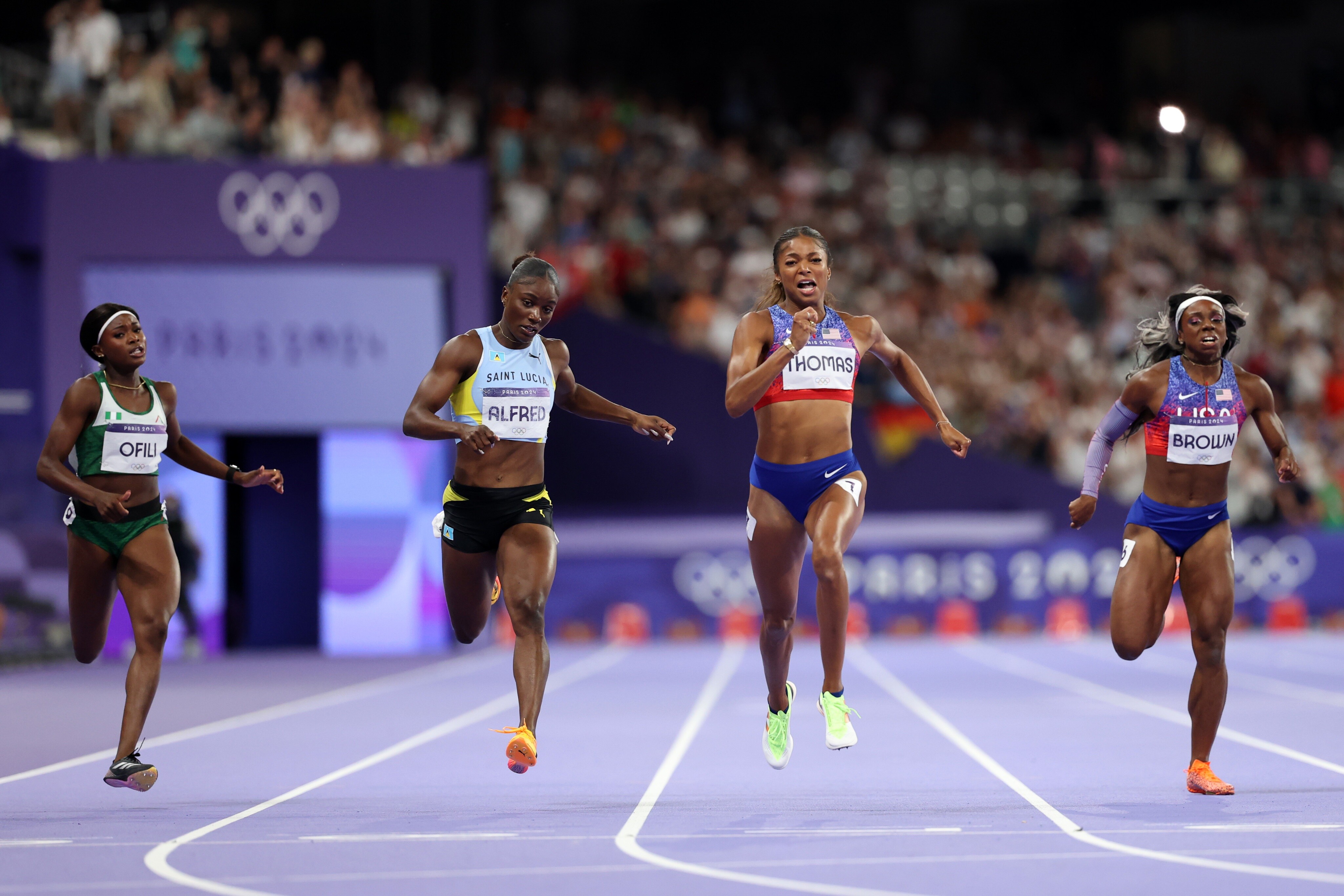
But Thomas’ brilliance extends beyond athletics. A graduate of Harvard University with a master’s degree in epidemiology, she represents a rare blend of elite sport and intellectual excellence. Her advocacy in public health and STEM continues to inspire a new generation, making her influence felt far beyond the finish line.
Her African tour will begin in Addis Ababa on April 18 at the Addis Ababa Grand Prix, before moving to Nairobi on April 24 for the Kip Keino Classic—one of the continent’s premier track and field events. She will then conclude her tour in Gaborone on April 26 at the Botswana Golden Grand Prix.
Each stop promises high-level competition and a rare opportunity for African fans to witness one of the sport’s brightest stars in action. Her presence is expected not only to elevate the quality of racing but also to shine a global spotlight on Africa’s rapidly growing athletics scene.
As the countdown begins, anticipation is building across the continent. With her unmatched combination of speed, intelligence, and global appeal, Gabby Thomas is not just arriving to compete—she is arriving to inspire.
by Erick Cheruiyot for My Best Runs.
Login to leave a comment

Igniting the Flame: Faith Kipyegon’s Journey from Barefoot Beginnings to Los Angeles 2028
In the ever-evolving journey of greatness, moments of quiet declaration often carry the loudest echoes. For Faith Kipyegon, a recent message from Los Angeles—the vibrant host of the 2028 Summer Olympics—was more than a passing remark. It was a powerful affirmation of intent.
Standing in the very city where future Olympic dreams will be forged, the Kenyan legend shared that she is “fueling her Olympic fire” ahead of LA 2028. Beneath those words lies a story not just of ambition, but of a remarkable journey—one that began far from the bright lights of global arenas.
Kipyegon’s rise is the embodiment of resilience and destiny intertwined. From running barefoot in her early school days to ascending to the pinnacle of women’s middle-distance running, her path has been nothing short of extraordinary. Born into a family deeply rooted in athletics—with a father who competed in the 400m and 800m, and a sister who excelled in long-distance road racing—her foundation was quietly laid long before the world took notice.
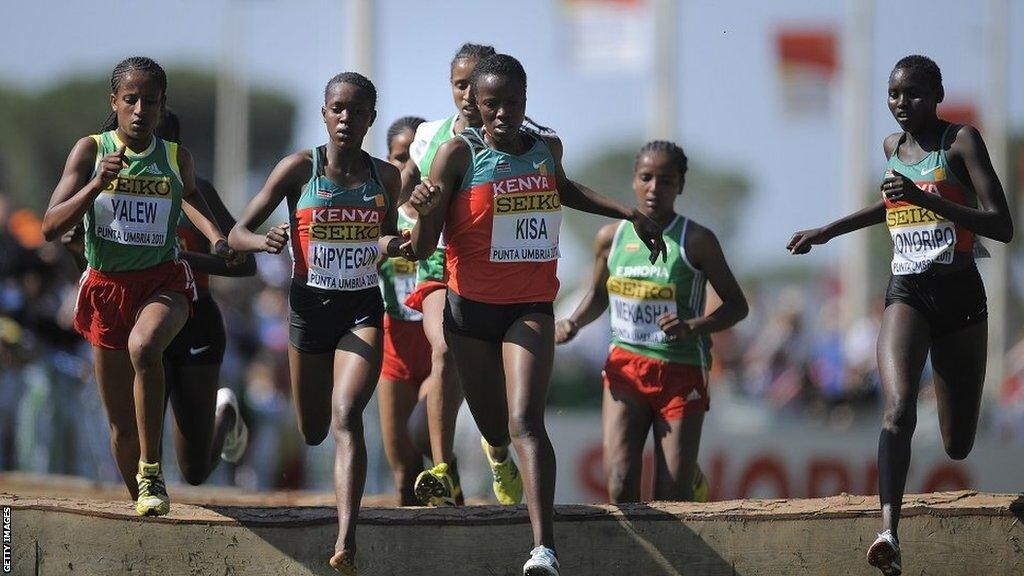
It wasn’t until the age of 15 that she began to seriously pursue athletics as a career. What followed was a rapid and emphatic emergence. She announced herself on the global stage by capturing junior titles at the World Cross Country Championships in Bydgoszcz in 2011 and 2013, alongside victories in the 1500m at both the World U18 and World U20 Championships. These early triumphs signaled the arrival of a rare and generational talent.
Her transition to the senior stage came at the World Championships in Moscow in 2013, where she finished fifth—a performance that hinted at the dominance to come. From that point onward, Kipyegon has established herself as a consistent force at the highest level, earning multiple podium finishes, world championship titles, and setting world records that have redefined the boundaries of women’s middle-distance running, further cementing her status as one of the greatest athletes of her era.
The Olympic stage, however, is where her legacy has reached historic heights. Since making her debut at the 2012 Summer Olympics, she has grown into one of the most decorated middle-distance runners in Olympic history. Her gold medal triumph at the 2016 Summer Olympics announced her arrival as a global force, while her commanding performance at the 2020 Summer Olympics reaffirmed her supremacy.
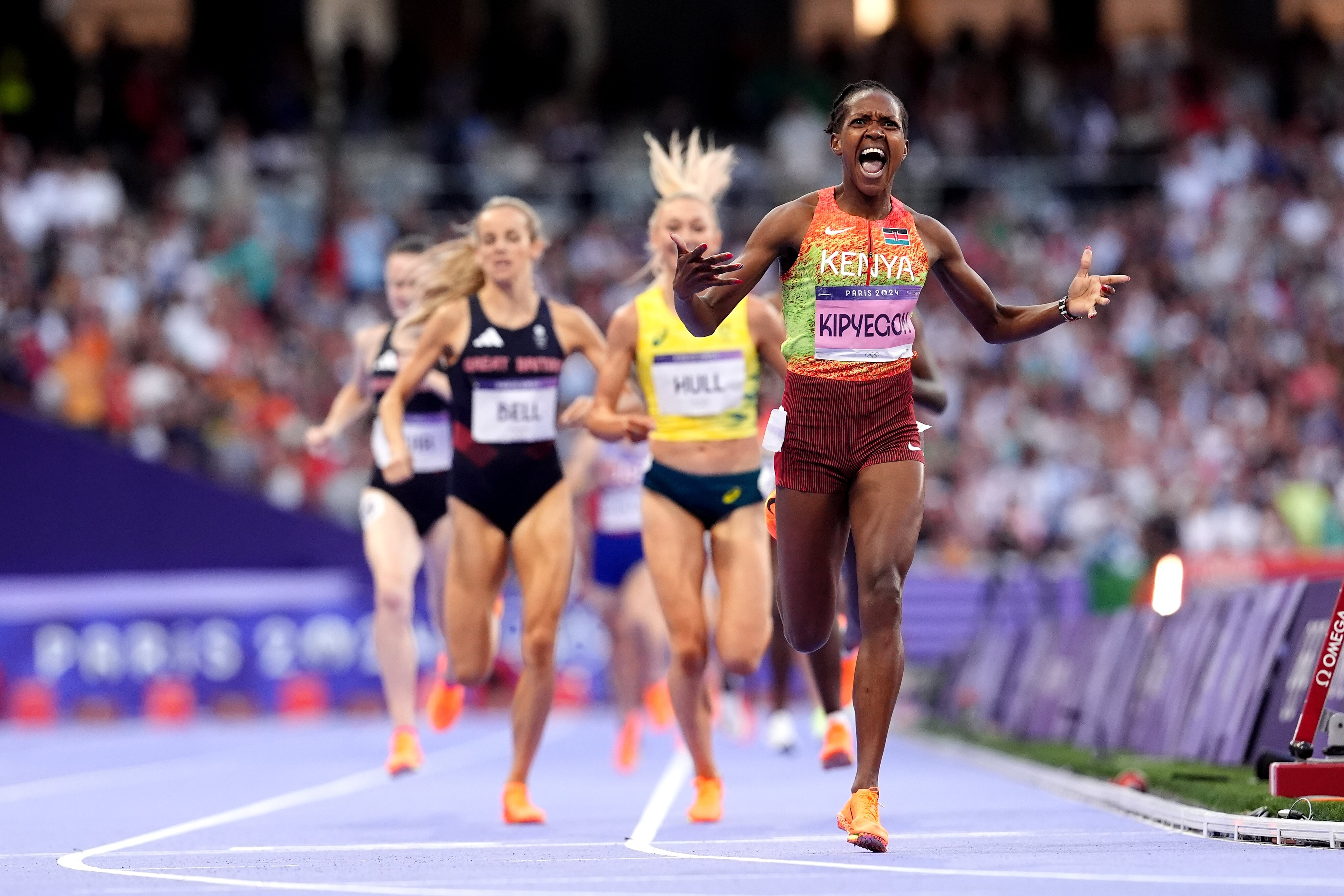
Yet it was at the 2024 Summer Olympics that Kipyegon etched her name permanently into the record books. On the final night of track action at the Stade de France, she produced a breathtaking run in the women’s 1500m, surging to victory in an Olympic record time of 3:51.29. With that performance, she became the first athlete—male or female—to win three Olympic gold medals in the 1500m, a feat that stands as a testament to her enduring brilliance and unmatched consistency.
Despite these extraordinary achievements, what defines Kipyegon is her relentless hunger for more. Her recent reflection from Los Angeles reveals an athlete not content with history, but driven by the possibilities that still lie ahead.

As the countdown to 2028 steadily builds, her presence in Los Angeles feels deeply symbolic—a champion returning to the stage where the next chapter of Olympic history will unfold. For fans and aspiring athletes alike, her journey is a powerful reminder that greatness is not a destination, but a continuous pursuit shaped by discipline, resilience, and vision.
From barefoot beginnings to rewriting Olympic history, Faith Kipyegon’s story continues to inspire across generations. And as the flame prepares to rise once more in Los Angeles, one truth is undeniable—her fire is still burning, brighter than ever, lighting the path toward yet another chapter of greatness.
by Erick Cheruiyot for My Best Runs.
Login to leave a comment
Kebinatshipi Ignites Gaborone with Stunning 9.91s Sprint Breakthrough
In a breathtaking display of raw speed and versatility, Collen Kebinatshipi stunned the athletics world by clocking a remarkable 9.91 seconds in the men’s 100m semifinals at the Botswana Athletics Championships in Gaborone.
Known globally as a world-class 400m specialist, Kebinatshipi’s explosive run over the shorter distance marked a defining moment in his career. This was not just a fast time—it was a historic breakthrough. With that performance, he became only the second athlete from Botswana to dip under the coveted 10-second barrier, following in the footsteps of sprint sensation Letsile Tebogo.
Even more impressively, Kebinatshipi now stands as the first man in 2026 to break the 10-second mark, setting an early benchmark for the global sprint season. Achieving such a feat in the semifinals only amplified the sense that something extraordinary was unfolding on home soil.
The race itself was a masterclass in controlled aggression. Kebinatshipi combined a composed start with a powerful drive phase before unleashing a devastating top-end speed that separated him from the field. His mechanics were sharp, his rhythm fluid—qualities rarely seen from athletes stepping outside their primary discipline.
This performance does more than rewrite personal bests; it reshapes perceptions. For an athlete already established as a 400m world champion, producing such elite speed over 100m signals a rare blend of endurance and acceleration. It opens the door to new tactical possibilities and raises the question of whether Botswana may soon witness a dual-threat sprint star at the highest level.
Beyond individual achievement, the moment carries national significance. Botswana’s sprinting legacy continues to rise, and Kebinatshipi’s run adds another powerful chapter to that story—one defined by ambition, progression, and global relevance.
As the championships continue, all eyes will remain fixed on Kebinatshipi. But regardless of what follows, his 9.91-second sprint has already secured its place in history—a performance that did not just win a race, but redefined potential.
by Erick Cheruiyot for My Best Runs.
Login to leave a comment
A Race Etched in Seconds: One Year Since Nanjing’s Gripping 400m Showdown
On March 22, 2025, beneath the bright lights of the World Indoor Championships in Nanjing, the women’s 400 metres delivered a spectacle that still resonates a year on—an exquisite blend of speed, strategy, and sheer competitive will.
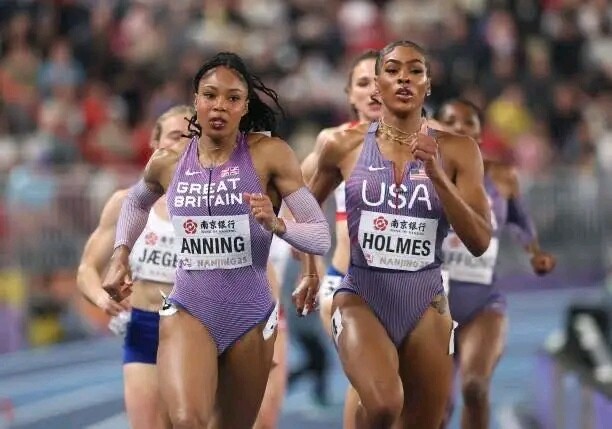
It was not just a race; it was a duel fought stride for stride.
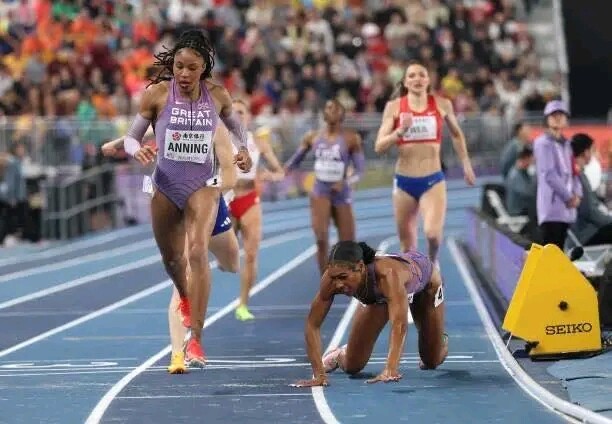
From the gun, the intensity was unmistakable. Alexis Holmes of the United States surged with authority, asserting control as the stagger unwound. By the sound of the bell, she had edged ahead, forcing Britain’s Amber Anning wide into the outside line—a tactical move that seemed, for a fleeting moment, decisive.
But championship races are rarely decided that early.
Anning, composed and fiercely determined, refused to yield. As the final straight opened, she summoned a devastating finishing kick, her stride lengthening with every step as she reeled Holmes back in. The margin was razor-thin, the outcome uncertain until the very last metres. Then, in a breathtaking climax, Anning surged past to seize gold in 50.60 seconds, a performance defined by courage under pressure and flawless timing.
Holmes followed just fractions behind, clocking 50.63 seconds in a run that would have won many finals, her bold front-running effort ultimately falling just short of glory.
Behind them, Norway’s Henrietta Jæger completed a remarkable season by securing bronze in 50.92 seconds. It was a fitting reward after an exceptional winter campaign, adding a global podium to her European success and cementing her status among the event’s rising forces.
One year later, the echoes of that race remain vivid—a reminder of how, in less than a minute, sport can capture drama, resilience, and brilliance in its purest form.
by Erick Cheruiyot for My Best Runs.
Login to leave a comment
Poland’s Moment of Glory: A Bronze Forged in Patience and Justice
History has unfolded in dramatic fashion at the World Athletics Indoor Championships, delivering a long-awaited moment of celebration for the host nation, Poland. What began as uncertainty has now transformed into triumph, as Poland are officially awarded the bronze medal in the Mixed 4x400m Relay following a decisive review that led to Jamaica’s disqualification.
In a competition defined by intensity and razor-thin margins, the relay initially concluded without Poland on the podium. However, the narrative took a compelling turn after officials conducted a thorough post-race evaluation. The ruling ultimately altered the final standings, elevating the host nation into the medal positions—an outcome that carries both emotional weight and historical significance.
The turning point came with the disqualification of Jamaica, who were found to have violated relay regulations—specifically exchanging positions before the takeover zone, a breach under rule TR24.22. In relay events, strict adherence to exchange procedures is crucial, and any premature movement or positional change before the baton is passed is deemed illegal. This technical infringement, though occurring in the heat of competition, proved decisive in reshaping the final results.
For Poland, this bronze medal is more than just a podium finish; it represents their first medal at these Championships, achieved on home soil in front of a passionate and expectant crowd. The significance of that milestone cannot be overstated. It is a testament to resilience, perseverance, and the unpredictable beauty of sport, where fortunes can shift long after the finish line has been crossed.
The Mixed 4x400m Relay, one of athletics’ most dynamic and strategic events, once again proved its capacity for drama. With men and women combining efforts in a seamless display of speed and teamwork, every leg carries immense pressure. Poland’s athletes executed their race with determination, keeping themselves within striking distance—an effort that ultimately paid dividends when the final decision was rendered.
While the circumstances surrounding Jamaica’s disqualification may spark debate, Poland’s elevation to bronze stands as a rightful recognition of their performance and persistence. It is a reminder that in elite sport, every detail matters, and every moment counts.
As the celebrations begin, this achievement will be etched into Poland’s sporting history—a breakthrough moment at the highest level of indoor athletics. For the athletes and the fans alike, it is a reward not only for what was seen on the track, but for the belief that no effort is ever in vain.
On a stage where dreams are chased at full speed, Poland have claimed theirs—proving that sometimes, history is not just written in seconds, but in decisions that follow.
by Erick Cheruiyot for My Best Runs.
Login to leave a comment
Lavreshina Lights Up the Track with Record-Breaking Surge at World Indoors
In a race defined by precision, poise, and a devastating finishing kick, Portugal’s rising sprint sensation Sofia Lavreshina delivered a performance of rare brilliance to claim victory in her 400m heat at the World Indoor Championships. Clocking a stunning 51.87 seconds, Lavreshina not only secured the win but also etched her name into the history books with a new Portuguese national record.
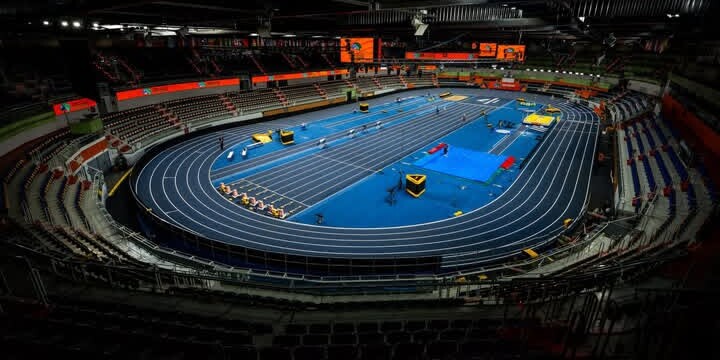
From the opening strides, the race unfolded with controlled intensity. Lavreshina, composed and measured through the early phases, positioned herself strategically as the stagger unwound. Yet it was in the final bend where the race truly ignited—her cadence sharpened, her stride lengthened, and with remarkable composure, she unleashed a powerful closing burst that left her rivals scrambling in her wake.
Hot on her heels was the Netherlands’ Myrte van der Schoot, who produced a commendable run to finish second in 51.97 seconds, staying within striking distance but ultimately unable to match the Portuguese athlete’s late acceleration. Completing the top three was American sprinter Rosey Effiong, who crossed the line in 52.13 seconds, showcasing her own strength in a tightly contested field.
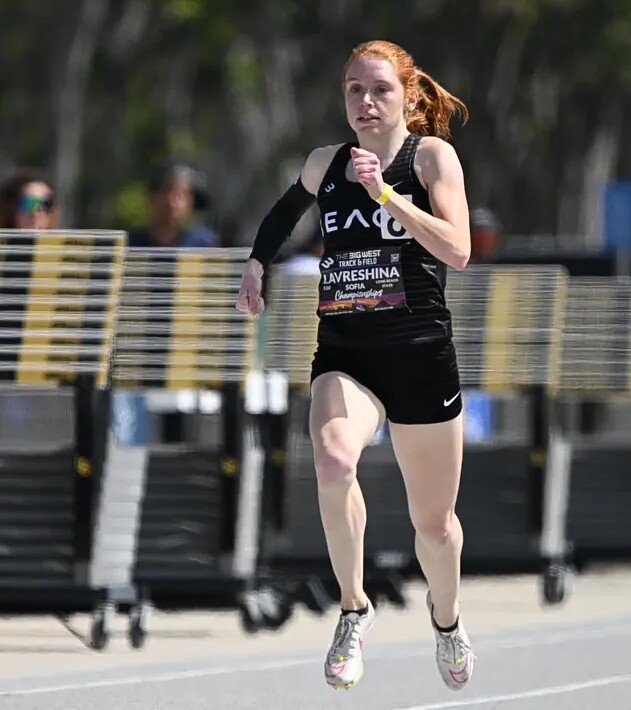
What set Lavreshina apart was not merely her time, but the authority with which she executed her race plan. Her rhythm remained unbroken under pressure, her form resilient even as fatigue crept in—hallmarks of an athlete stepping confidently onto the global stage.
This victory sends a clear message: Lavreshina is not just competing—she is evolving into a formidable force in the two-lap event. As the championships progress, all eyes will be on the Portuguese star, whose blend of tactical intelligence and explosive speed promises even greater moments ahead.
In a championship built on margins, Sofia Lavreshina created separation—and in doing so, delivered a performance that will resonate far beyond the confines of the indoor track.
by Erick Cheruiyot for My Best Runs.
Login to leave a comment
