

Running News Daily
Top Ten Stories of the Week
11/23/2024
These are the top ten stories based on views over the last week.
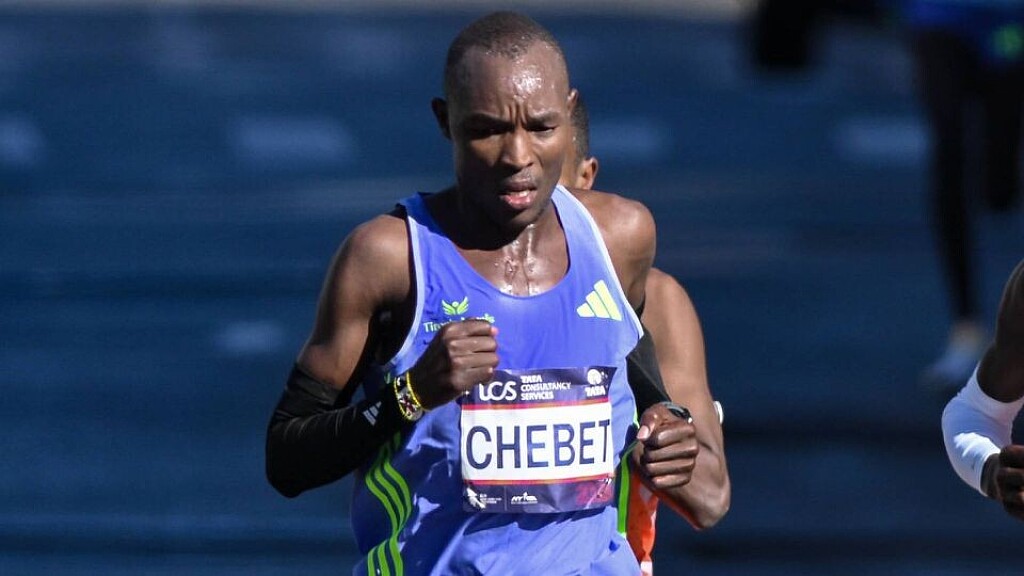


Evans Chebet reveals secrets behind his remarkable marathon success
Evans Chebet has disclosed the key principles behind his remarkable marathon success, sharing insights into his disciplined training, perseverance, and the challenges that shaped his journey to global acclaim.
Former Valencia Marathon champion Evans Chebet has become a towering figure in the world of distance running, boasting an illustrious career with 30 marathons under his belt and three World Major Marathon titles to his name.
From humble beginnings in Elgeyo Marakwet County to the global stage, Chebet’s journey to the top is a shining example of determination, dedication and faith.
Reflecting on his achievements, Chebet, who has conquered courses in Boston and New York, says his success comes down to a simple but powerful mantra.
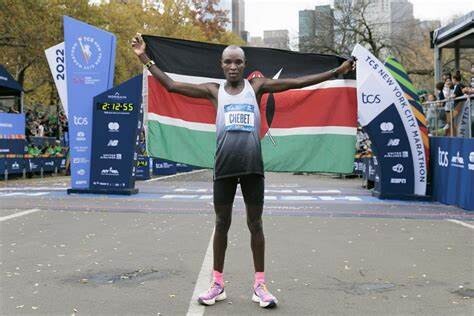
“The young upcoming athletes should exercise patience in their careers and not take shortcuts. My life story is a testament to that. I did not go past primary school, but the number of countries I have visited are numerous,” he said as per Star.
Chebet attributes much of his triumphs to unwavering discipline and a grueling training regimen.
The 35-year-old marathoner has no background in track running, focusing instead on road races from the start to provide for his family.
This unique approach was shaped by financial hardships that forced him to leave school at an early age to support his widowed mother and nine siblings.
“My father died just before I was born, leaving my mother to shoulder the burden of raising 10 children. I had to drop out of school while in Class Four and start burning charcoal to help her,” he recalled.
“Life was really hard, but I knew as a man, I had to do everything to support my family.”
Chebet’s turning point came in 2005 when his uncle, Isaac Koech, introduced him to running and bought him his first pair of training shoes.
Guided by his uncle and inspired by his late father, who had been a runner, Chebet began training with unwavering determination.
His big break came in 2006 when coach Claudio Berardelli invited him to join the Rosa camp in Kaptagat, where he honed his skills for the global stage.
“Coach Berardelli recruited me and began training me. In so many ways, he has moulded me into the man I am today,” Chebet said, acknowledging the critical role his mentor played in shaping his career.
Over the years, Chebet’s path to glory has been marked by strategic planning and meticulous preparation.
For instance, leading up to his impressive performance at the New York Marathon, he focused intensively on hill work.
“I had trained adequately before the New York race. My main area of focus was hill work and long runs. I used to do 20km to 30km of hill work every day as part of my training,” he revealed.
Despite his rigorous training and consistent results, Chebet has faced setbacks, including being overlooked for Kenya’s Olympic team.
However, he remains optimistic, using each challenge as motivation to push harder.
“It was heartbreaking not to have been included in the team for the Olympics. I know if I had been there, I would have no doubt come back home with gold,” he said.
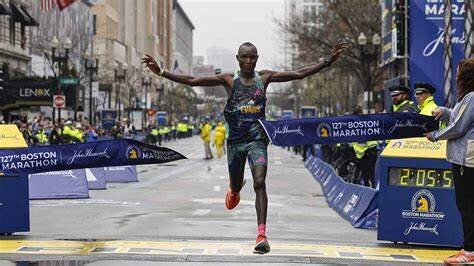
Chebet’s career highlights include victories at the 2019 Buenos Aires Marathon, the 2020 Lake Biwa and Valencia Marathons, and back-to-back wins at the Boston Marathon in 2022 and 2023.
His win in New York in 2022 further cemented his status as a world-class athlete.
“My target next season is to win both New York and Boston. It’s something I know I am capable of, and I will work towards it,” he said, expressing his desire to continue building his legacy in 2025.
Balancing his career and family life, Chebet draws inspiration from his five children and his wife, Brillian Jepkorir, who is also an athlete.
“I hope my children will take up running in the future,” he said.
To aspiring runners, Chebet offers invaluable advice rooted in his life experience.
“Be prayerful and learn to invest wisely to secure your futures. More importantly, exercise patience and avoid shortcuts. My journey proves that success is possible even when starting from nothing."
(11/16/24) Views: 122Festus Chuma
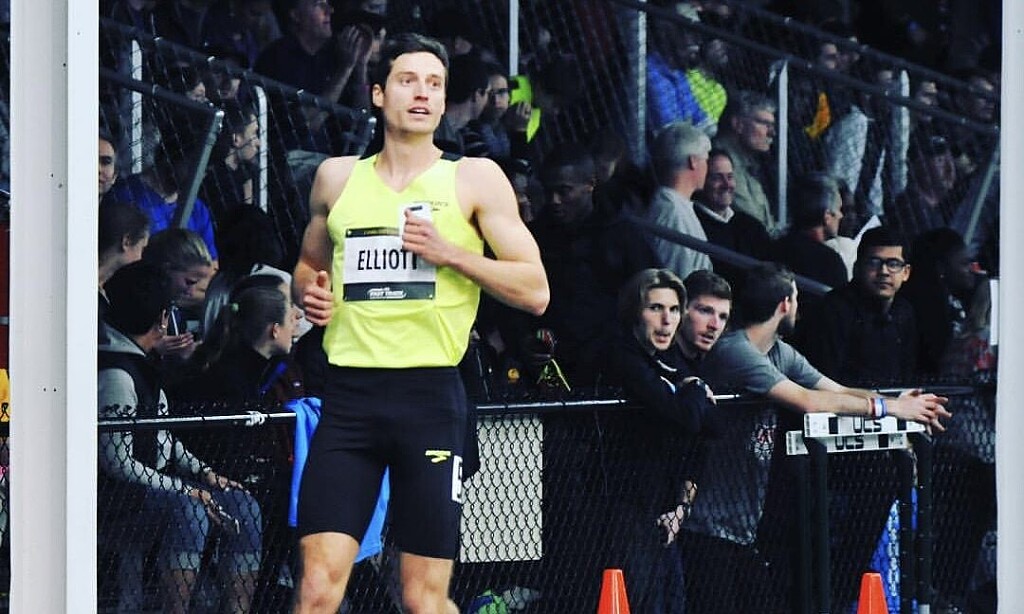
Former pro runner arrested for relationship with high-school student
Charlotte, N.C., high school running coach and former elite runner Matthew Elliott was arrested on Wednesday and charged with two counts of “indecent liberties” with a student. Last Friday, the victim, who is now an adult, came forward to the local police department, reporting the inappropriate relationship she had with Elliott, who was her cross-country coach while she was enrolled at the school, Charlotte Country Day.
Reportedly, the victim told officers that Elliott flirted with her and made “numerous advances,” and that they had an inappropriate relationship.
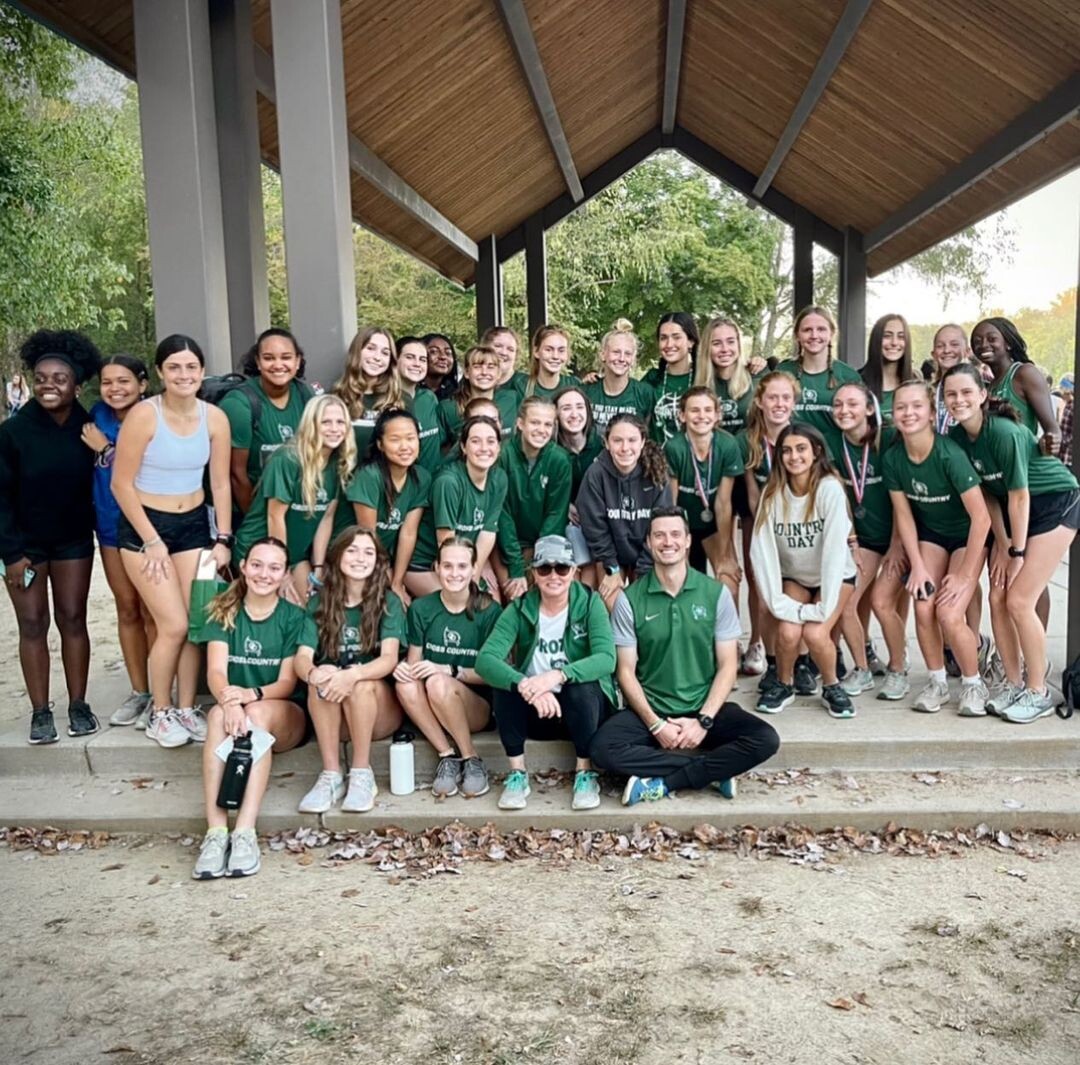
Elliott, 39, had been a coach and a substitute teacher at the high school since 2015. After the allegations emerged, the school terminated Elliott’s employment, barred him from their campuses and informed families and alumni of the misconduct. The statement revealed that the victim attended the school within the past few years.
“America’s fastest kindergarten teacher”

The development comes years after Elliott rose to fame in 2013 after placing fourth in the 1,500m at the U.S. Track and Field Championships, beating elite runners while teaching full-time. An emotional post-race interview with Elliott went viral; the athlete even received autograph requests in the mail. That year, he was referred to as “America’s Fastest Kindergarten Teacher,” and was a cover model for both Runner’s World and Running Times magazines.
Elliott was a kindergarten through third-grade teacher for children with special needs at the Palmetto School in Rock Hill, S.C. The magazine story revealed that the teaching job required Elliott to act as a bus driver as well; he drove the kids to and from their homes before and after school.
During his career, Elliott was coached by American Distance Project coach Scott Simmons and joined the Team Indiana Elite running group alongside athletes such as William Leer. He broke the four minute barrier on multiple occasions and became a Brooks-sponsored athlete.
He set his sights on making the 2016 U.S. Olympic team, and gave inspirational talks to cross-country teams about his journey. In 2021, Elliott was featured in a podcast for The Unearthing Project, where he shared his running and coaching stories. Elliott hasn’t competed since 2019, according to his World Athletics profile.
None of the recent allegations against Elliott have been proven in court. News sources report the former coach was held on a USD $10,000 bond and was released on Thursday morning, but was set to face a judge that afternoon.
(11/15/24) Views: 120
Cameron Ormond
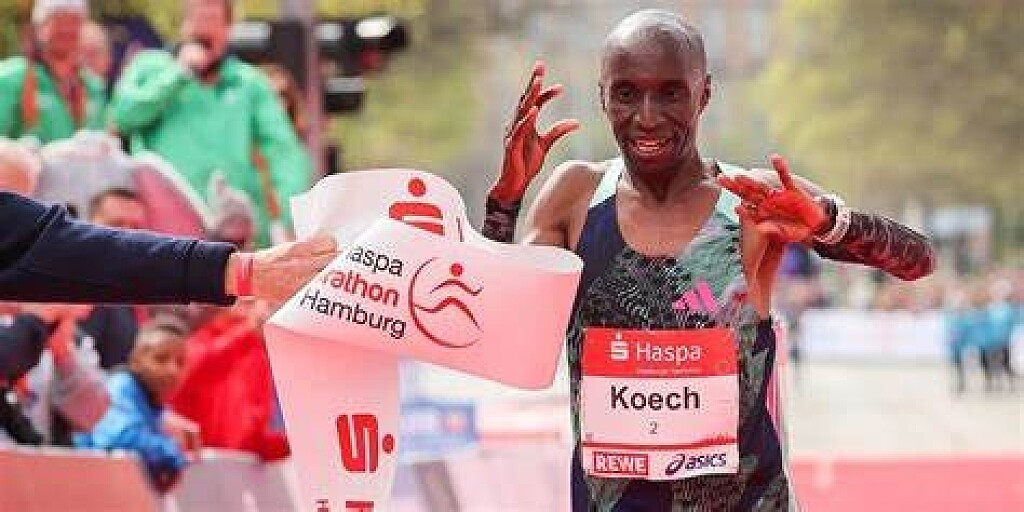
Bernard Koech: How I broke free from alcohol to reclaim my life and inspire other athletes
Marathoner Bernard Koech shares his journey from alcohol dependency to redemption, inspiring athletes to avoid similar pitfalls and embrace resilience.
If you love alcohol a little too much, the weekend drink can quickly become a daily ritual, gradually pulling you away from the things and people you once held dear.
For two-time Haspa Marathon Hamburg champion Bernard Koech, this slippery slope into dependency was one he stumbled down for years, reaching a point where he felt trapped, isolated and far from the promising career he had built as an elite Kenyan marathoner.
In his journey from darkness to redemption, Koech now shares his story to inspire fellow athletes and men facing similar pressures, advocating for change and awareness around the dangers of substance abuse.
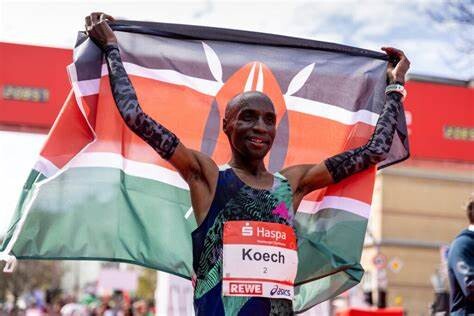
During his peak years, between 2015 and 2020, Koech was an admired marathoner known for his speed and strength, but his private life was becoming a struggle.
What began as a casual drink to unwind after training eventually spiraled into heavy drinking sessions with friends.
“Somewhere at the beginning of 2015, I started doing that,” Koech says in a past interview with NOS.
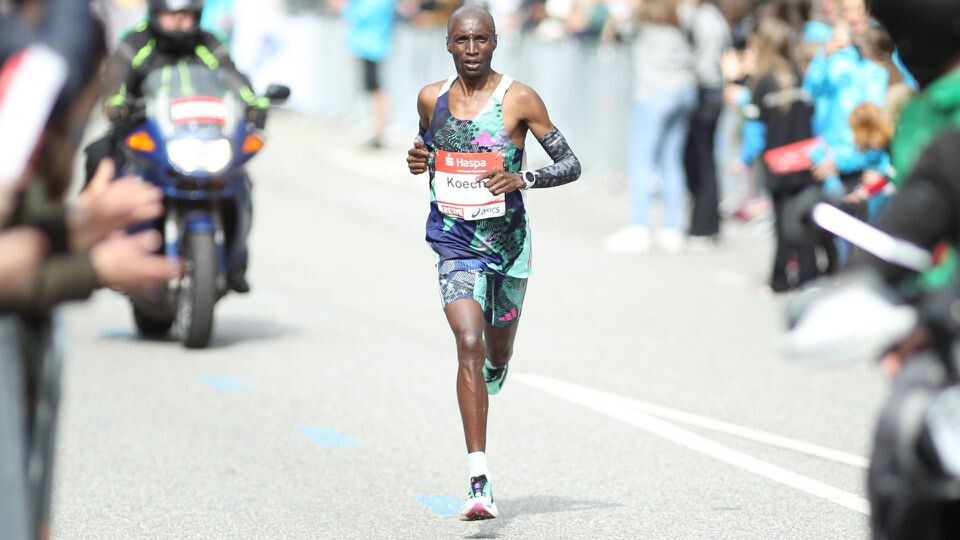
“Instead of going to bed after training, I looked for entertainment elsewhere.”
His growing dependence on alcohol started to overshadow his discipline, the very trait that had fueled his athletic success.
Koech recalls how he became increasingly disconnected from family, friends, and even his coach.
His drinking, initially limited to weekends, quickly morphed into a daily necessity that he would indulge in secret.
“At one point, I no longer drank in public, but smuggled bottles in during training camps to drink in anonymity,” he says.
The more he drank, the more isolated he became, as relationships with loved ones became strained and his motivation for training waned.
His performance started to reflect his inner turmoil, as his times slowed and his name began to fade from the competitive marathon landscape.
The isolation brought about by the COVID-19 pandemic became an unexpected turning point for Koech.
With events canceled and sponsors withdrawing, he was left with few options and limited financial support.
With no distractions to hide behind, he was forced to confront the reality of his life and how much he had given up to a habit that no longer served him.
Gradually, he realized that he had to reclaim his life not only for himself but also as an example to others who might find themselves in the same struggle.
For the last four years, Koech has dedicated his life to supporting fellow athletes, particularly young men vulnerable to the pitfalls of fame, stress, and societal expectations.
Each week, he meets with Kenyan athletes to talk about resilience, recovery and the importance of building a life that goes beyond momentary highs.
His experience has also motivated him to address issues like mental health, financial planning, and the pressures of modern relationships.
"For an athlete, discipline is the greatest condition for success," he says, highlighting the need for self-control not just in training but in everyday life.
Koech’s journey is a testament to the strength it takes to turn one’s life around, especially in a society where drinking can be culturally ingrained and sources of emotional support can be limited.
Recognizing the unique societal pressures men face, Pulse Kenya, in partnership with Money Clinic, has organized the second edition of the Average Joes forum.
This event, scheduled for November 23, 2024, will provide a supportive environment where men can openly share experiences and gain insights on topics from mental health and fatherhood to financial responsibility and social issues.
With a small registration fee of Sh500, attendees can register here to join this life-changing forum, designed to support men in their journeys toward healthier, more balanced lives.
(11/15/24) Views: 118Festus Chuma

Valencia Marathon up in the air after flooding hits region
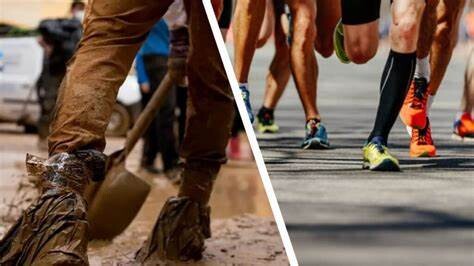
As severe flooding continues to affect many areas of Spain, the 2024 Valencia Marathon, scheduled for Sunday, Dec. 1, may face cancellation. According to recent reports, Valencia is under high alert due to the resurgence of storms that recently left parts of the city submerged in mud and debris, killing more than 200 residents. The recent rainfall and damage raise concerns about the city’s ability to safely host an event of this scale in two weeks.
Though the marathon course was relatively unaffected by the Oct. 29 storm, widespread damage elsewhere has led organizers to consult with local authorities to determine whether the race can safely go forward.

The race’s lead sponsor, New Balance, has already scaled back its plans, cancelling the hospitality and activation events planned around the marathon. On Wednesday, the brand sent an email to ambassadors, influencers and athletes, showing support for Valencia: “While the city is focused on recovery efforts, we still believe this event could bring the running community together in solidarity with Valencia. Runners are encouraged to defer their participation to 2025 and 2026, though New Balance will continue to provide bibs and accommodations for this year’s participants if it goes ahead.”
The marathon has historically drawn more than 30,000 runners from around the world, bolstered by its reputation as one of the world’s fastest courses. However, safety concerns have already led the city to cancel this weekend’s Grand Prix motorcycle race (2024 Valencia GP). A source within the Valencia Marathon organizing committee has indicated that while they are committed to moving forward if possible, the decision ultimately rests on government officials and local authorities.
Some athletes have already begun exploring alternatives, including Toronto’s Cory Nagler, who has invested nearly CAD $4,000 in flights, trains, accommodations and entry fees to run Valencia. Nagler, who has trained for the last six months, still remains hopeful but is preparing backup plans. “Valencia is still plan A, but Turin is plan B,” he says. Nearby marathons in Italy (Turin and San Remo), scheduled for the same day, offer potential options for thousands seeking certainty.
The race has told registrants they plan to make a decision in the near future, as the officials continue to monitor the safety and feasibility of holding one of the year’s biggest international running events amid ongoing recovery efforts.
(11/15/24) Views: 115Marley Dickinson

Chebet and Aregawi poised to strike in Seville
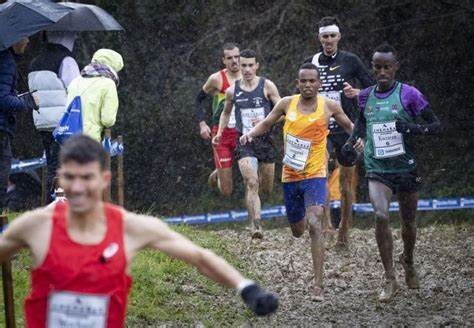
The Cross Internacional de Itálica in Santiponce on the outskirts of the Spanish city of Seville – the fifth Gold standard meeting in the current World Athletics Cross Country Tour – always boasts a quality line-up, and this year’s race on Sunday (17) features the most prominent line-up so far this season.
Entries for the women’s race, contested over 7.5km, are headed by Kenya’s two-time world cross-country champion and double Olympic gold medalist Beatrice Chebet. The 24-year-old has enjoyed a superb season, topped by her 5000m and 10,000m titles at the Paris Olympics, three months after becoming the first woman to dip under the 29-minute barrier for the latter distance thanks to a 28:54.14 clocking in Eugene on 25 May.
Chebet, who is also the reigning world champion and world record holder for the road 5km, will be making her third appearance here following her runner-up spot in 2020 and her third place in 2021. It will be her first race since her 14:09.82 5000m victory at the Diamond League Final in Brussels.
She will start as the overwhelming favourite for the victory, though she’ll face quality opposition in the form of compatriot Mercy Chepkemoi and Kazakhstan’s Daisy Jepkemei. The latter finished seventh at this year’s World Cross Country Championships in Belgrade, and more recently she captured a commanding win in Atapuerca last month.
Chepkemoi is fresh from a fine win in Cardiff last Saturday. She placed fourth over 5000m at the World U20 Championships in Lima in August, finishing just behind bronze medalist Charity Cherop of Uganda, who will also be racing in Santiponce this weekend.
The line-up also comprises Diana and Sharon Chepkemoi, who finished third and seventh respectively in the steeplechase in Lima. Both also competed in Soria last Sunday where they finished third (Diana) and fourth (Sharon).
Meanwhile, France’s Alice Finot, who set a European record of 8:58.67 when finishing fourth in the steeplechase at the Paris Olympics, will be contesting just her second cross-country race in the past seven years.
Portugal’s Mariana Machado recently finished sixth in Atapuerca, sandwiched between Spanish cross-country champion Carolina Robles and Olympic 1500m finalist Agueda Marques who finished fourth and seventh respectively there, closely followed by Maria Forero, the 2022 European U20 cross-country champion. All of them will renew their rivalry this weekend.
European 5000m bronze medalist Marta García, meanwhile, will be making her only cross-country outing of the winter before focusing on the indoor season.
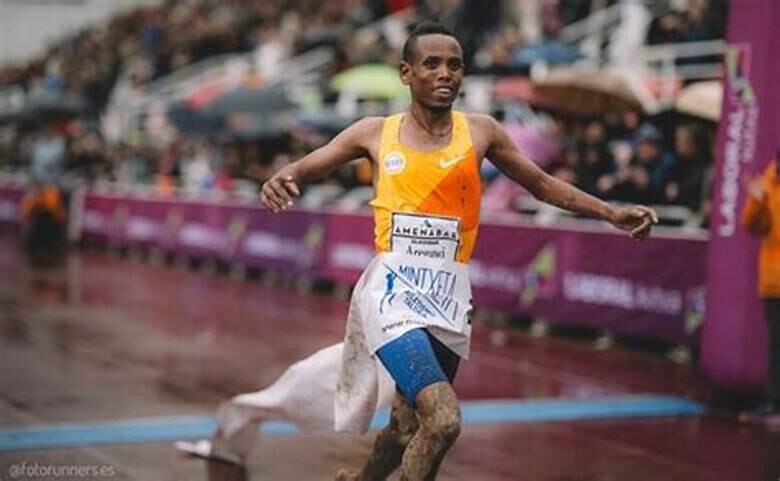
The men’s race has been reduced to 7.5km which plays into the hands of the middle-distance specialists. But that shouldn’t be a problem for Olympic 10,000m silver medalist Berihu Aregawi, as the Ethiopian is also the third-fastest man in history over 3000m.
The 23-year-old opened the year in style by retaining his silver medal at the World Cross Country Championships in Belgrade before setting a 10,000m PB of 26:31.13 in Nerja. Following his Olympic silver in Paris, he clocked an Ethiopian record of 7:21.28 for 3000m and won the 5000m at the Diamond League Final in Brussels.
Sunday’s race will be Aregawi’s first cross-country outing this season, but fellow Etiopians Ayele Tadesse and Wegene Addisu have already made a mark on the tour, finishing second and fourth respectively in Soria last weekend.
Yet Aregawi’s fiercest opposition should come from Burundi’s Rodrigue Kwizera and Spain’s Thierry Ndikumwenayo. Kwizera is still unbeaten this cross-country season, having won in Amorebieta, Atapuerca and Soria. He has successively finished first, second and third on his appearances in Seville over the past three years.
Meanwhile, his training partner Ndikumwenayo – winner in Seville in 2022 – is the European 10,000m bronze medallist and lowered his 10,000m PB to 26:49.49 for ninth place at the Paris Olympics. Ndikumwenayo will travel to Seville from his altitude stint in Sierra Nevada where he’s building up for the European Cross Country Championchips in Antalya on 8 December.
Watch out too for Uruguay’s Santiago Catrofe. He boasts PBs of 7:37:15 for 3000m and 13:05.95 for 5000m and was a surprise winner in San Sebastian two weeks ago when he kicked away from Uganda’s Martin Kiprotich, who’ll also be in contention on Sunday.
Kiprotich will be joined by his compatriots Kenneth Kiprop, Dan Kibet and Hosea Kiplangat. The former is the world U20 5000m bronze medallist and triumphed in Cardiff where Kibet had to settle for third.
The Spanish charge will be led by European indoor 3000m silver medallist Adel Mechaal, US-based Aarón Las Heras, national 10km record-holder Abdessadam Oukhelfen, and the always consistent Nassim Hassaous.
Past winners in Seville include Fernando Mamede (1984 and 1985), Paul Tergat (1998 and 1999), Paula Radcliffe (2001), Kenenisa Bekele (2003, 2004 and 2007), Faith Kipyegon (2016), Joshua Cheptegei (2018) and Jacob Kiplimo (2019).
Temperatures between 22-24C are predicted for the time of the elite races on Sunday.
(11/15/24) Views: 109World Athletics
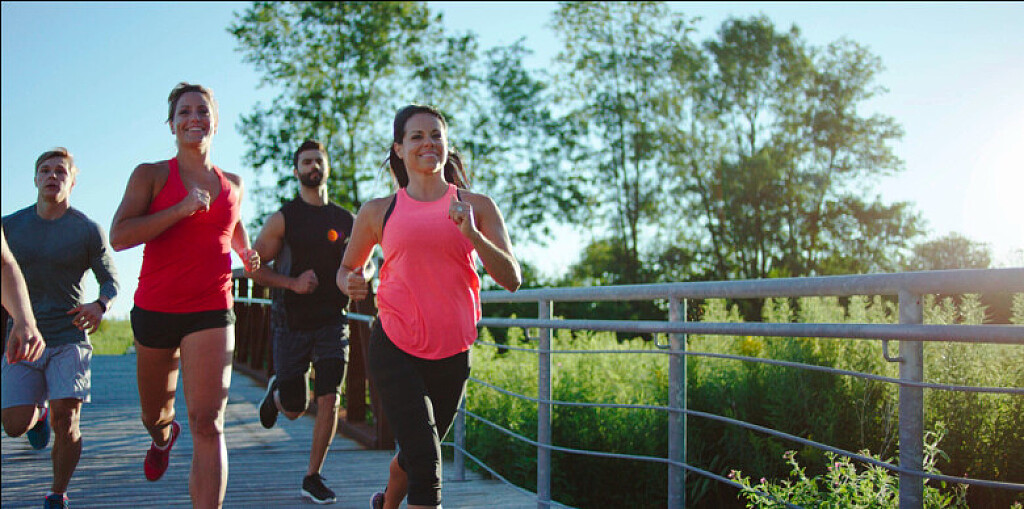
From Beginner to Advanced Runners: How Often Should You Be Lacing Up? Experts Break Down What Factors to Consider
Use these tips for figuring out your ideal running frequency.
Just like there’s no “best” running shoe for everyone, or training plan, or energy gel, there’s no ideal running frequency for all runners. Even though many runners ask how often they should run, the days per week you lace up depends on factors that vary from one individual to the next. Even when you do settle into a pattern that works for you, your approach may need to shift as aspects of your training (and life, in general) change.

However, there are some general guidelines that can help new runners identify a healthy starting point for how often to run, as well as some guidance more experienced athletes can follow to decide if it’s time to dial up or scale back on their weekly runs. Runner’s World spoke with Alison Marie Helms, Ph.D., UESCA-certified running coach and founder of Women’s Running Academy, and Raj Hathiramani, certified running coach at Mile High Run Club in New York City, to get their expert advice. Here’s what you need to know.
Factors to Consider When Determining How Often You Should Run
Before designing a personalized training schedule, any qualified coach will take the time to understand their runner, both as an athlete and a fully-realized person with a life outside of running. So, whether you’re working with a pro or developing a plan on your own, consider the following factors when deciding how often you should run:
Goals
Determining your running goals is a good place to start figuring out how often to run. Do you want to set a new half-marathon PR? Finish your first ultra? Improve your cardiovascular health? What you hope to accomplish can help you determine your overall running volume, which informs how many times a week you should ideally run.
“People who have more specific time or distance goals may be running more frequently per week, and those who have more fitness or wellbeing-oriented goals might be running less frequently,” Hathiramani says. Among runners with performance-related goals, those who race longer distances may need to run more often than those with their sights set on shorter distances.
Experience
Two runners can have the same goal, like finishing their first marathon, for example. But if one marathon hopeful is brand new to running and the other has multiple 5K, 10K, and half-marathon races under their belt, their training frequency should look different.
“It’s never a good idea to do too much too soon,” Hathiramani says. He recommends new runners gradually ease into running, even using a walk/run approach, and avoid running on back-to-back days. “This is
Running one to two days per week is also ideal for those just getting into running. You can do a walk/run workout or go for a quick, slow jog down the block. The goal is consistency if you’re looking to jumpstart a new workout habit.
Three Days a Week
For many runners, lacing up three days a week strikes a balance between feeling substantial and attainable. You can get in a variety of runs and still have plenty of time for cross-training and recovery. For example, you may plan a long run for the weekend, an interval on Tuesday, and a tempo run on Thursday. That still leaves four days for rest and activities like strength training and mobility work.
This frequency may be ideal for someone training for a short distance, like a 5K, but it may not be adequate for all runners with long-distance racing goals, like a half marathon or longer, Hathiramani says.
Four to Five Days a Week
For Hathiramani’s client base, which is primarily half marathon and marathon runners, four to five days a week is the “sweet spot,” as it allows runners to vary their training and accumulate the volume they
→At first, keep your volume the same
For example, if you’re used to running 12 miles over the course of three days, add a day of running but keep your total weekly mileage at 12. Helms recommends doing this for a week or two before adding additional miles to your runs.
→Increase overall volume gradually
The general rule of thumb is to increase your overall weekly mileage by no more than 10 to 15 percent. (However, if your current mileage is relatively low—like five to 10 miles per week—you’re probably safe to increase by up to 30 percent, Helms says.)
→Take “step-back” weeks
Every few weeks, reduce your mileage by a small percentage. For example, if you went from 20 to 22 miles in week one, then to 24 miles in week two, and 27 miles in week three, drop back down to 20 miles in week four. “You’re still running, but you’re letting your body recover, maybe taking an extra rest day or reducing your average mileage, and letting it sort of realize some of the endurance and aerobic capacity gains you’re making,” Hathiramani says.
→Resist the urge to “catch up”
Adjusting to a more demanding
“Consistency is a really important way to instill discipline and motivation in your training to help you achieve your goal,” Hathiramani says. “That being said, there are things out of your control that may make it hard for you to be consistent, and that’s okay.”
(11/16/24) Views: 108

Turn up the pre-run tunes to banish mental fatigue, science says
We all know that music can give us that extra boost to pick up the pace, but here’s the surprising part: music doesn’t just motivate us—it actually tricks our brains. New research from the University of Edinburgh suggests that cranking up your favourite playlist might be the secret to powering through a mentally tough run. The study, published in the Journal of Human Sport and Exercise, found that listening to self-selected, high-energy music can help combat mental fatigue, letting runners keep their performance levels up even when their minds feel wiped out. Here’s what you need to know to harness the hidden power of your favourite playlist.
Some research suggests that music can help runners improve their cadence, leading to a more efficient pace and fewer injuries. But music might just be the key to unlocking next-level endurance by easing mental fatigue and making even tough runs feel manageable.
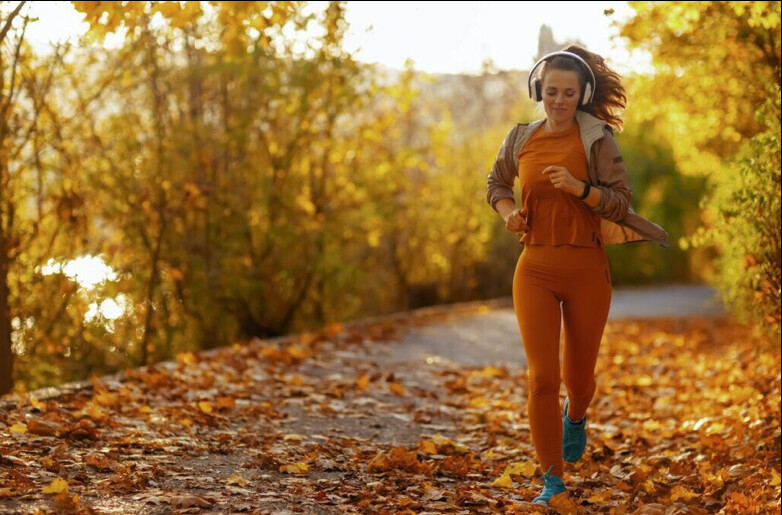
Testing the power of motivational music
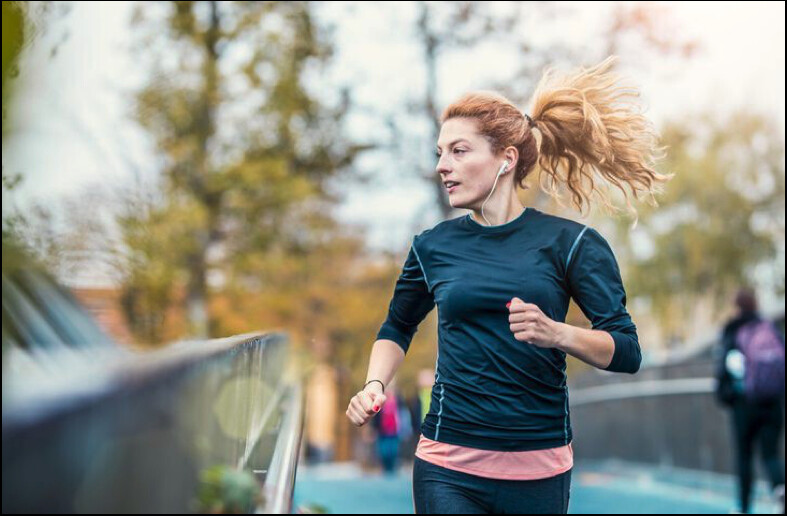
Researchers recruited 18 fitness fans and split them into two groups. Each group faced a mentally challenging, 30-minute cognitive test designed to leave them feeling mentally fatigued. One group took on an interval running workout afterward, while the other tackled a 5K time trial. Each runner completed their workout twice: once with music and once without. But the playlists weren’t just random—participants handpicked tracks they found especially motivating, rating them on factors like beat, melody and tempo. Songs included motivational tunes like “Eye of the Tiger” by Survivor and “Run This Town” by Jay-Z.
The results? When runners were able to listen to their self-selected playlists after the mentally taxing task, they performed just as well as they did when they weren’t fatigued. Interval runners with music performed better than those running in silence, and those running the 5K saw a small, but notable, improvement in their times.
How music might help
According to the researchers, these improvements might come from music’s ability to alter perception. By drowning out the discomfort and making the exercise feel less taxing, tunes can help mentally fatigued runners push through at higher intensities. As Dr. Shaun Phillips, lead author of the study, puts it: “The findings indicate that listening to self-selected motivational music may be a useful strategy to help active people improve their endurance running capacity and performance when mentally fatigued.”
The takeaway
Researchers say future studies could explore how music impacts performance in different settings—whether it’s race-day intensity or a casual run through the neighbourhood—and how it affects a wider range of runners.
For now, let your playlist do the work. The next time your brain feels zapped after a long day of meetings, hit play on those favourite tracks. They might not only lift your pace, but also push aside lingering mental stress and make those miles fly by.
(11/16/24) Views: 105

Running More Relaxed Can Improve Your Performance—Here’s How to Do It
Experts share their best tips to help you stay calm, cool, and collected while you’re out on the run.
It’s possible to run fast without clenching every muscle in your body. Just look at some of the pros like Cole Hocker, Nikki Hiltz, or Sarah Vaughn who seem to clock seriously fast times while making it look like an easy walk (er, run) in the park.

These pros and many others have mastered running with slack shoulders, fluid arms, and a powerful stride, all while seeming light on their feet. It’s the art of running relaxed—and it can actually help your performance.
Experts encourage you to run relaxed on easy and long run days—those workouts where you’re meant to go at an easy effort. But running relaxed is a tool you can use to your benefit for any type of run.
“It is important to remain relaxed in terms of not recruiting muscles that don’t need to be recruited, because that can increase the energy that you’re using for the run,” Heather Milton, M.S., exercise physiologist at NYU Langone Health’s Sports Performance Center tells Runner’s World. This can cause you to fatigue and slow down more quickly, she explains.
For example, lifting your shoulders up toward your ears or tensing up your face while you run requires more energy than letting your upper body and jaw hang a little looser. This could also affect form: If you’re running tensely upright, without a forward lean, you’re less able to activate the glutes, and your knees take on more force, potentially leading to knee pain, Milton explains.
To help you perfect the art of running relaxed and get the most out of your workouts, we tapped experts for their best tips.
Quick Forms Tips to Help You Relax on the Run
When it comes to running relaxed, maintaining the proper running form is key and will help improve your efficiency. Although not everyone’s stride is the same, keep these cues in mind while you’re out clocking miles:
➥Keep Your Upper Half Loose
Run
➥Lean Forward
“What we want to see is that there is a slight angle of your running, so from your ankle through your hips, through your shoulders, you’re progressively closer to your target, looking forward,” Milton says. You can imagine your body in a slight diagonal line as you run forward. This will enable a greater amount of lower leg activation, better push off, and better hip extension. It can also reduce your risk for injury and improve your performance, she explains.
➥Make Your Center Stable
“The core should be a stable column on which we run and can have more effective push off,” says Milton. This is why it's important to build core strength, she adds.
➥Drive Forward With Your Feet
In terms of your feet, Milton recommends you focus on swiping the ground behind you while you run.
8 Tips to Help You Stay Relaxed on the Run
Beyond fixing your form, here are a few things you can try leading up to race day and during your run to help you maintain that relaxed run posture. Rather than implementing all of these tips at once, try out a few of them to see which ones work best for you so you stay calm, cool, and collected on the road.
1. Work on Your Mobility
Limited range of motion can hinder your ability to run more relaxed.
“It really takes access to every joint movement in the body,”John Goldthorp, a certified personal trainer and run coach tells Runner’s World. If you can’t freely move your joints, then you can’t make the necessary movements that you need to help you run really well, he explains.
This is why he recommends working through different planes of motion (front to back, side to side, and rotational) before you run and even on non-running days.
To do that, practice moves like standing cat cow, side bends, and rib cage and pelvic rotations, all of which work the spine and upper body through the different movement patterns. Also, work on pronation
Working with a physical therapist or functional mobility specialist can also help you address these areas so you can improve your range of motion and run more fluidly.
2. Address Any Pain Areas
As you can imagine, or might have even experienced, running with pain can hinder your ability to relax. This is why Milton recommends strength training as a way to address some of your pain points.
For example, address shin splints by strengthening your feet, ankles, calves, and hips. Target pain associated with runner’s knee by strengthening your hips and inner quads.
“Strength training is a great way to make sure that your body is ready for the run,” says Milton.
3. Add Strides to Your Calendar
The key is to practice running short bouts at different paces like your easy, marathon, half marathon, 10K, 5K, and mile pace while relaxed, says Goldthorp. He recommends you start by introducing strides toward the middle or second half of an easy run.
“Like any new stimulus, you’ll want to introduce things gradually both in terms of how many repetitions you do and how fast you’re running them,” he explains. This may mean running four reps of 20-second strides with
Lastly, take a few minutes to gradually progress from a slow walk to a brisk walk and then to a light jog, says Goldthorp. “I always think to myself, I’m not really going to hit my ‘training pace’ for probably about 15 minutes,” so don’t rush it, he says.
This will not only help you ease into the run better, but it can help you find your rhythm more easily and allows you to remain relaxed as you adjust from not running to running slowly to running at a quick clip. Just remember to keep that loose feeling through each progression.
5. Complete a Quick Self Scan
Before you head out for a run, Goldthorp recommends you take note of where you typically hold tension in your body. For example, do you clench your jaw or shrug your shoulders?
“Scan your body. If you notice tension, see if you can let it go, see if you can soften that area,” he says. You can also visualize that area of your body flowing like water.
Then, on the run, check for specific body cues, says Milton. For example, make sure you’re bringing your arms back directly behind you and then letting
If you’re running with a watch on race day “check in and check your splits and make sure that you’re not running too fast, which can create a lot of undue tension,” Milton adds. If you are going too fast, she recommends coming back to your breathing and making sure it feels appropriate for your target pace.
8. Don’t Be Afraid to Give It Your All
There might be times, especially at the end of a workout or race, where we’re willing to get ugly and push past our comfort zone to hit your goal time or beat an opponent, says Accetta. In these moments, it’s acceptable to push yourself even if that means tensing up a bit.
The key is recognizing when to kick it into high gear, like when you’re sprinting to the finish. You don’t want to waste all your energy too soon, Accetta explains. Even when you do pick it up, remember some of those form tips of keeping your upper body loose and your jaw slack so your legs have the energy they need to turnover fast.
(11/16/24) Views: 105

You Have No Idea How Gross Your Water Bottle Is. Here’s How to Clean It.
As an active person, staying hydrated is one of your top priorities. Cleaning your water bottle should be high up on your to-do list, too, but for many of us—let’s be honest—it’s not.
This makes for a humbling (and gross) reality check when you go for a drink, glance down at your mouthpiece, and are forced to reckon with a film of mystery gunk that has collected there since the last time you washed it.
Due to busy schedules, forgetfulness, and a lack of extra tumblers, water bottles get nasty quickly. Although we love the sustainable choice of reusing one, that commitment requires some care-taking to avoid illness and maintain good water-bottle hygiene.

Below, experts dig into the dirty details and share their tips for keeping your water bottle safe and sanitary, no matter how many sweaty hikes or shared sips it endures.
What Types of Bacteria Are Lurking in Your Reusable Water Bottle?
According to the Water Quality Association, a not-for-profit organization in the water treatment industry, all drinking water contains microbes or heterotrophic microorganisms, a catch-all term for types of bacteria, mold, or yeast.
A September 2024 survey that swabbed water bottles found that the most common bacteria in reusable bottles were associated with antibiotic-resistant, hospital-acquired infections like pneumonia and meningitis (which can be fatal), and food poisoning, which comes with symptoms like vomiting and diarrhea.
The survey also concluded that Americans’ reusable water bottles, on average, contain 20.8 million CFUs of bacteria—about 40,000 times more than you’d typically find on a household toilet seat.
Exactly what type of invaders your water bottle collects depends on if it has a screw top with nooks and crannies for germs to stow away in, whether or not you share your bottle with others, or if you use it for anything other than water, like coffee or sports
Sugary beverages, in particular, leave behind nutrients for bacteria to feed on and multiply.
Drinking from a Dirty Bottle Can Make You Sick
If you don’t clean your water bottle properly, all kinds of bacteria can start to grow. Ingesting water from an unclean bottle can result in gastrointestinal or respiratory issues, says Qinchun Rao, a professor of Food and Nutrition at Florida State University.
How to Tell When Your Water Bottle Is Dirty
Acceptable levels of heterotrophic organisms, also known as heterotrophic plate counts (HPC), vary by country. The Environmental Protection Agency’s HPC standard for any given drinking water sample is less than or equal to 500 colony-forming units per milliliter (CFU/mL).
When your water surpasses that threshold, and/or other bacteria strains are introduced to the mix—like when a water bottle goes uncleaned after a workout—water safety is called into question.
You won’t always be able to tell how dirty your water bottle is. That’s a big reason cleaning them falls by the wayside: they “look” clean.
According to the Cleveland Clinic, more noticeable signs of contamination are visible mold spots, an unpleasant smell, cloudy water, or an off-putting taste.
Instead of waiting for it to show signs of grime, just get into the practice of cleaning it daily at a minimum.
However, if you fall behind and skip a few days, remain on the lookout for a tell-tale layer of dark slime known as a biofilm. It’s something that you will likely have to remove your lid and peek inside to notice, especially if it’s only
How to Clean Your Water Bottle
“Treat your water bottle like a utensil,” says Mitzi Baum, the CEO of Stop Foodborne Illness. If it’s dishwasher safe, she strongly recommends running it through a wash cycle.
Below are some more expert tips for water bottle washing.
Clean Your Water Bottle After You Purchase It
When you’ve bought your ideal water bottle, don’t race to use it. Baum says it’s important to clean and sanitize it with hot water before your lips ever touch it—because who knows how dirty its journey to the store was.
Wash Your Water Bottle Daily, and Do a Good Job
Rao recommends washing the bottle with warm, soapy water, especially if you use it frequently or for beverages other than water. (Reader: just rinsing the bottle under some running water doesn’t qualify as cleaning it.)
Clean Your Reusable Straw with a Small, Long Brush
Flushing the narrow spout with water won’t cut it. This is especially the case if your straw is plastic because, as Wu notes about plastic water bottles, they are most easily scratched and, therefore, more likely to harbor bacteria.
Regardless of material, straws are small and compact, making them the perfect hiding
If You Have a Water Bladder, Give It a Similar Treatment
Your hiking water reservoir can be treated like a giant water bottle. Soak it in hot, soapy water or use a cleaning tab, like the Bottle Bright Cleaning Tablets, scrub the inside (including the narrow drinking hose, which will require a slim, straw-cleaning brush), drain it, and rinse it well before refilling for the next adventure. During the soak stage, make sure to also fill the hose with cleaning solution.
Narrow-Neck Bottles Require Attention to Detail
Professor Wu points out that bottles with narrow necks make thorough cleaning difficult. Cleaning one efficiently might take a slender bottle-cleaning brush or, more simply, a soft sponge that’s easy to manipulate around its curves without missing any spots.
Don’t Forget to Wash the Outside
“People often carry their water bottle throughout the day and rest it on various surfaces,” says Dr. Mieses Malchuk, a board-certified family physician in North Carolina, like, for example, in a sweaty duffel or on a musty tree trunk. For that reason, cleaning the outside of your bottle with the same soapy water method matters.
The easiest way to keep your water bottle clean
(11/17/24) Views: 105
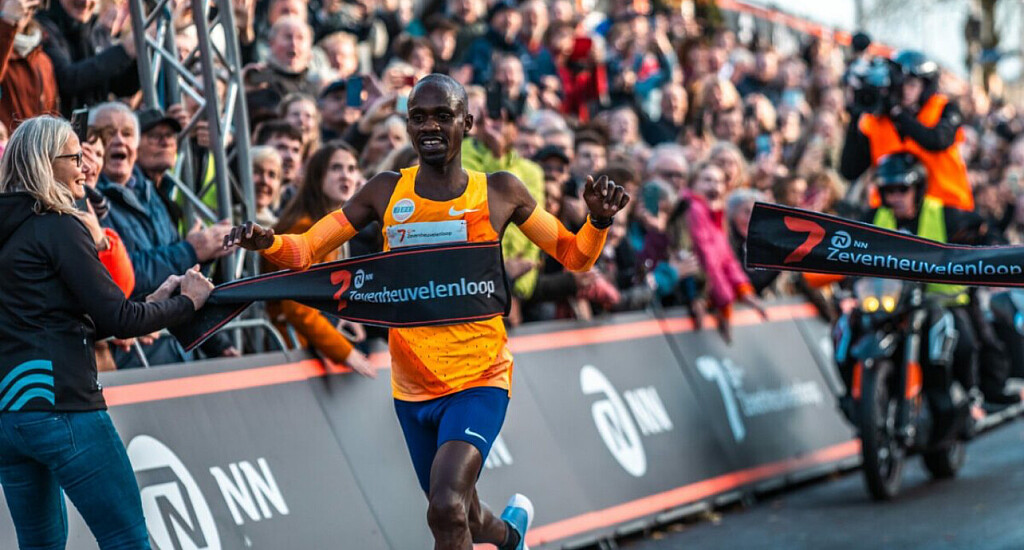
Jacob Kiplimo Shatters the 15k World Record
On November 17, 2024, the running world witnessed a historic moment as Ugandan athlete Jacob Kiplimo shattered the men’s 15-kilometer road race world record at the Zevenheuvelenloop in Nijmegen, Netherlands. Kiplimo completed the race in an astonishing 40 minutes and 27 seconds, surpassing his previous record of 41:05 set in 2023 at the same event.
The Zevenheuvelenloop, or “Seven Hills Run,” is renowned for its challenging course, featuring undulating terrain that tests even the most seasoned runners. Despite these challenges, Kiplimo’s performance was nothing short of extraordinary. He maintained a blistering pace throughout the race, averaging approximately 2:42 per kilometer. His final kilometer was particularly impressive, clocking in at 2:31, which underscores his exceptional endurance and speed.
Kiplimo’s achievement is a testament to his dedication and the rigorous training he has undertaken. At just 24 years old, he has already established himself as a dominant force in long-distance running. His previous accolades include a world record in the half marathon, set in Lisbon in 2021, where he recorded a 15-kilometer split of 40:27 en route to his 57:31 finish. This consistency in breaking records highlights his remarkable talent and potential for future accomplishments.
The significance of Kiplimo’s new world record extends beyond personal achievement; it also places Uganda prominently on the global athletics stage. His success serves as an inspiration to aspiring athletes in his home country and around the world, demonstrating that with perseverance and hard work, extraordinary feats are attainable.
In the women’s category, Kenyan runner Beatrice Chepkoech delivered a stellar performance, finishing the 15-kilometer race in 47 minutes and 12 seconds. Chepkoech, known for her prowess in the 3000-meter steeplechase, showcased her versatility and endurance in road racing, finishing 43 seconds ahead of her closest competitor.
The 2024 Zevenheuvelenloop will be remembered as a landmark event in the history of long-distance running. Jacob Kiplimo’s record-breaking run has set a new benchmark for the 15-kilometer distance, inspiring athletes worldwide to push the boundaries of human performance. As the running community celebrates this monumental achievement, all eyes will be on Kiplimo to see what records he may break next.
(11/17/24) Views: 101
