

Running News Daily
Top Ten Stories of the Week
1/18/2025
These are the top ten stories based on views over the last week.
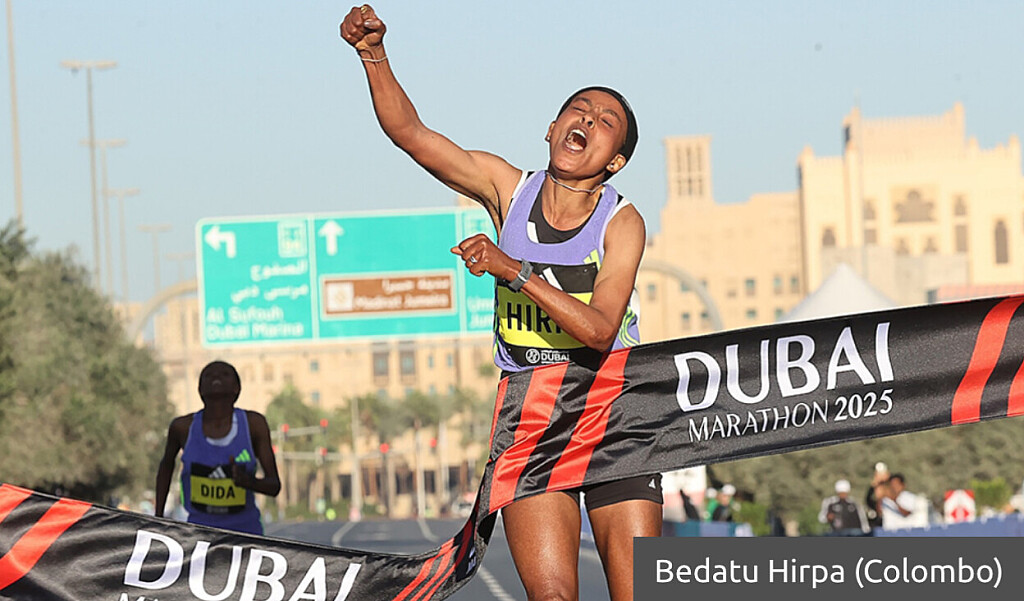


Hirpa and Gemechu lead Ethiopian sweep at Dubai Marathon
Bedatu Hirpa came from behind to take the women’s title at the Dubai Marathon in a huge PB of 2:18:27, while marathon debutant Bute Gemechu made it an Ethiopian double by taking the men’s title at the World Athletics Label road race in 2:04:51 on Sunday (12).
After an intriguing five-way tussle up to 25km, Dera Dida and training partner Hirpa forged a lead which was to prove unassailable for the pursers. When Dida eased away with 5km to go, it looked as though she was set to repeat her 2023 victory.
But as soon as she came into the lengthy finishing straight, she started to struggle with stomach cramps. At that stage, with less than a kilometre to run, Hirpa was still 10 seconds behind, but the 2015 world U18 1500m champion soon made up the ground and eased into the lead.
Hirpa crossed the line in 2:18:27, a substantial improvement on the PB of 2:21:09 she set in Amsterdam three months ago. Dida finished five seconds behind but was rewarded with a PB of 2:18:32. Tigist Girma, contesting her first marathon since December 2022, was third in 2:20:47.
Bute Gemechu broke away from the leading men’s group at 35km. Compatriot Shifera Tamru cut the gap to about 20 metres with two kilometres to go, but his challenge was short-lived.
Gemechu went on to win in 2:04:51, becoming the fifth Ethiopian debutant in succession to win the Dubai men’s race. Berehanu Tsegu came through for second place in 2:05:14 ahead of Tamru (2:05:28).
Ethiopian athletes filled the top 16 places in the women’s race and the first 14 positions in the men’s race.
Women1 Bedatu Hirpa (ETH) 2:18:272 Dera Dida (ETH) 2:18:323 Tigist Girma (ETH) 2:20:474 Zeineba Yimer (ETH) 2:21:125 Bertukan Welde (ETH) 2:21:546 Kuftu Tahir (ETH) 2:22:537 Gadise Mulu (ETH) 2:23:198 Almaz Kebede (ETH) 2:23:309 Kebebush Yisma (ETH) 2:24:0410 Dibabe Beyene (ETH) 2:24:38
Men1 Bute Gemechu (ETH) 2:04:512 Berehanu Tsegu (ETH) 2:05:143 Shifera Tamru (ETH) 2:05:284 Desalegn Girma (ETH) 2:06:525 Dejene Hailu (ETH) 2:07:036 Getachew Masresha (ETH) 2:07:047 Tadele Demissie (ETH) 2:08:218 Boki Diriba (ETH) 2:09:069 Embay Goitom (ETH) 2:09:0810 Yismaw Atinafu (ETH) 2:09:32
(01/12/25) Views: 151
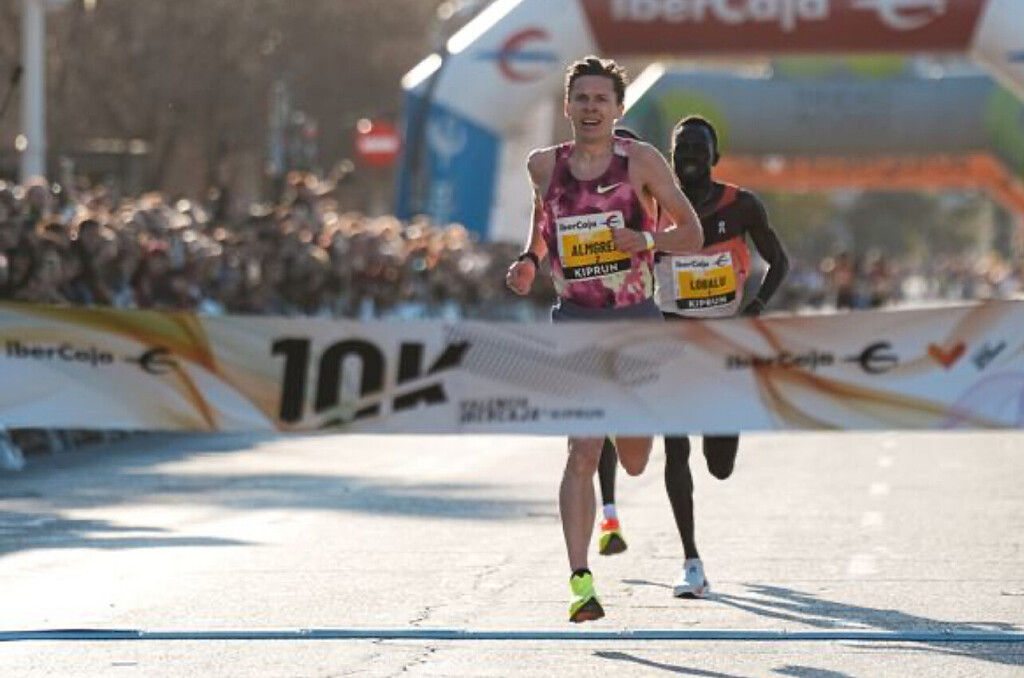
Almgren breaks European 10km record in Valencia
Kenya's Hellen Ekalale Lobun and Sweden’s Andreas Almgren claimed victories at the 10K Valencia Ibercaja by Kiprun, a World Athletics Label road race, on Sunday (12).
Lobun, who took the women’s title in 29:30, moved to fourth on the world all-time list while Almgren took 11 seconds off the European record, winning the men’s race in 26:53.
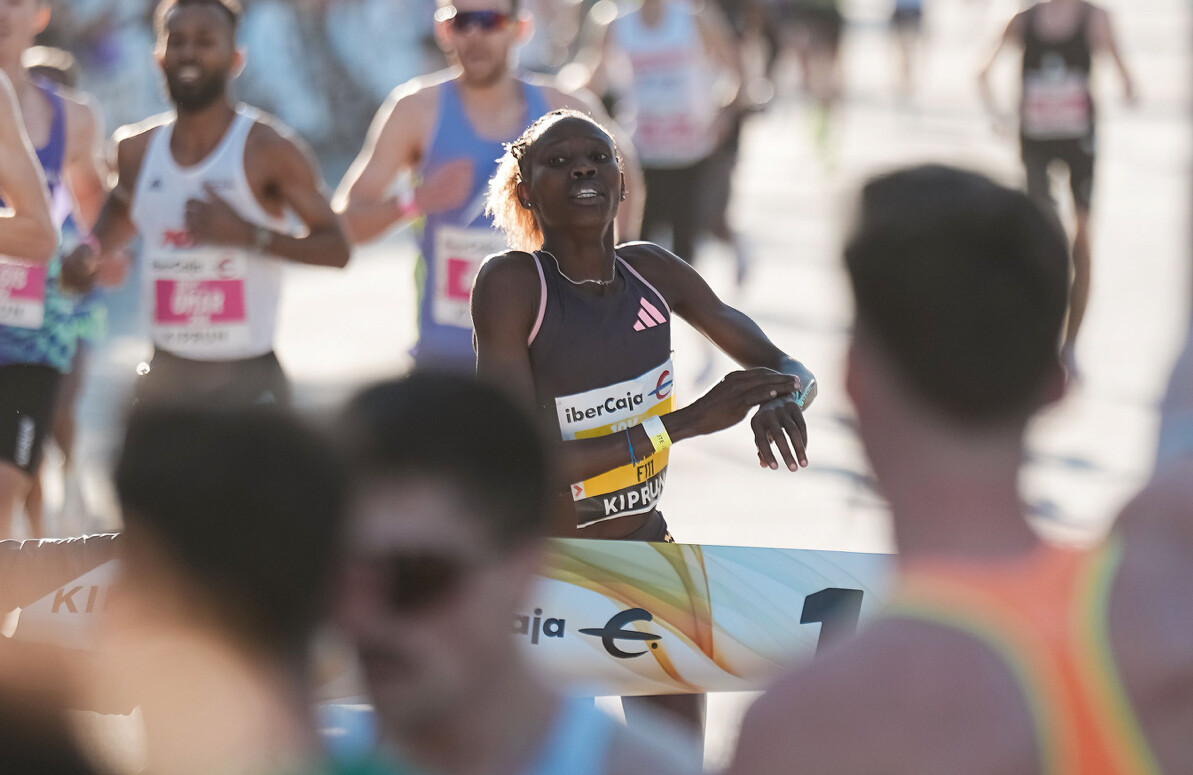
In a race of incredible depth, the first four women now feature in the top 10 on the world all-time list, while the men’s contest marked the first time 11 athletes had finished inside 27:30.
The women’s contest had been billed as an assault on the Ethiopian record (29:14) by pre-race favourite Fotyen Tesfay, who won the Valencia Half Marathon in 1:03:21 in October. Paced by Spain’s Abedarrahman El Khayami, the lead quartet of Tesfay, Lobun, Girmawit Gebrezihair and teenager Asayech Ayichew went through 3km in 8:46, putting them on course to break the world record of 28:46.
The cadence soon dropped, however, and Tesfay went through 5km in 14:31 with Lobun five seconds behind, Ayichew another two seconds in arrears and Gebrezihair clocking 14:42. Soon after, Tesfay had been reeled back in, and the lead trio – Tesfay, Lobun and Gebrezihair – reached 7km in 20:29.
Approaching the final kilometre, Tesfay dropped back, leaving Lobun and Gebrezihair to duel for the victory. Lobun broke away from her Ethiopian rival with 600 metres to go, crossing the line in 29:30 in what was her first standalone 10km race (though she has previously contested two half marathons).
Gebrezihair was second in 29:34, taking more than a minute off her previous best, while a tired Tesfay (29:42) managed to hold off Ayichew (29:43), both women setting PBs. It’s just the second time in history – after last year’s Valencia 10k – that four women have finished inside 30 minutes.
“I didn’t expect to win but I knew I was in good shape,” said Lobun who is based in Kirenget and is coached by Williams Langat. “It was my first 10km ever so my debut has been fantastic. I’ll next compete on 23 February at the Lobo Village cross country race in Eldoret and later I’ll focus on the track season as I try to make the Kenyan team for the World Championships in Tokyo.”
Despite the absence of the scheduled pacemaker Rodrigue Kwizera, who was forced to withdraw because of flu, the men’s contest ended up being one of the best ever in terms of depth.
Kenya’s Daniel Kinyanjui, Vincent Langat and Benard Langat, along with Ethiopia’s Tadese Worku and Telahun Haile Bekele took charge of the pacing duties with Almgren, Switzerland’s Dominic Lobalu and Belgium’s Isaac Kimeli also part of the leading pack. The opening 3km was covered in 8:13 and half way was passed in 13:43, suggesting a finishing time well outside 27 minutes.
The pace soon started to increase, though, as Bekele, Langat and Lobalu started to push harder, reaching 7km in 19:05 with seven athletes in the lead pack. The pace, now at 2:40/km, continued to increase as Lobalu, Langat and Almgren reached 9km well ahead of the rest.
European 10,000m champion Lobalu tried to surge in the closing stages, but Langat and Almgren stayed on his shoulder. With just seconds to go, track specialist Almgren put his kick finish to good use and edged in front to cross the line in 26:53, having covered the second half in 13:10.
Lobalu settled for second in 26:54 and Langat completed the podium in 26:55. Further down the field, Uruguay’s Santiago Catrofe set a South American record of 27:16 in eighth.
“Last year I ran 27:20 here and I knew I could run much faster today,” said Almgren, the 2014 world U20 800m bronze medallist who has moved up in distance in recent years and ran 26:53.57 for 10,000m on the track last year. “It’s my first European record so I’m over the moon; I’ll now spend four weeks in the altitude of Sierra Nevada to focus on my next target, the 3000m at the European Indoor Championships.”
In addition to the area records, national records were also set by Switzerland’s Lobalu, Eritrea’s Dawit Seare (27:21), Great Britain’s Rory Leonard (27:38), Spain’s Ilias Fifa (27:41) and Ireland’s Efrem Giday (27:43).
Leading results
Women1 Hellen Lobun (KEN) 29:302 Girmawit Gebrzihair (ETH) 29:343 Fotyen Tesfay (ETH) 29:424 Asayech Ayichew (ETH) 29:435 Fentaye Belayneh (ETH) 30:006 Christine Chesiro (KEN) 30:067 Maurine Toroitich (KEN) 30:288 Miriam Serem (KEN) 30:299 Alice Chemtai (KEN) 30:4710 Lomi Muleta (ETH) 31:01
Men1 Andreas Almgren (SWE) 26:532 Dominic Lokinyomo Lobalu (SUI) 26:543 Vincent Langat (KEN) 26:554 Daniel Kinyanjui (KEN) 27:065 Isaac Kimeli (BEL) 27:106 Benard Langat (KEN) 27:117 Telahun Haile Bekele (ETH) 27:138 Santiago Catrofe (URU) 27:169 Dawit Seare (ERI) 27:2110 Celestin Ndikumana (BDI) 27:23
(01/12/25) Views: 149
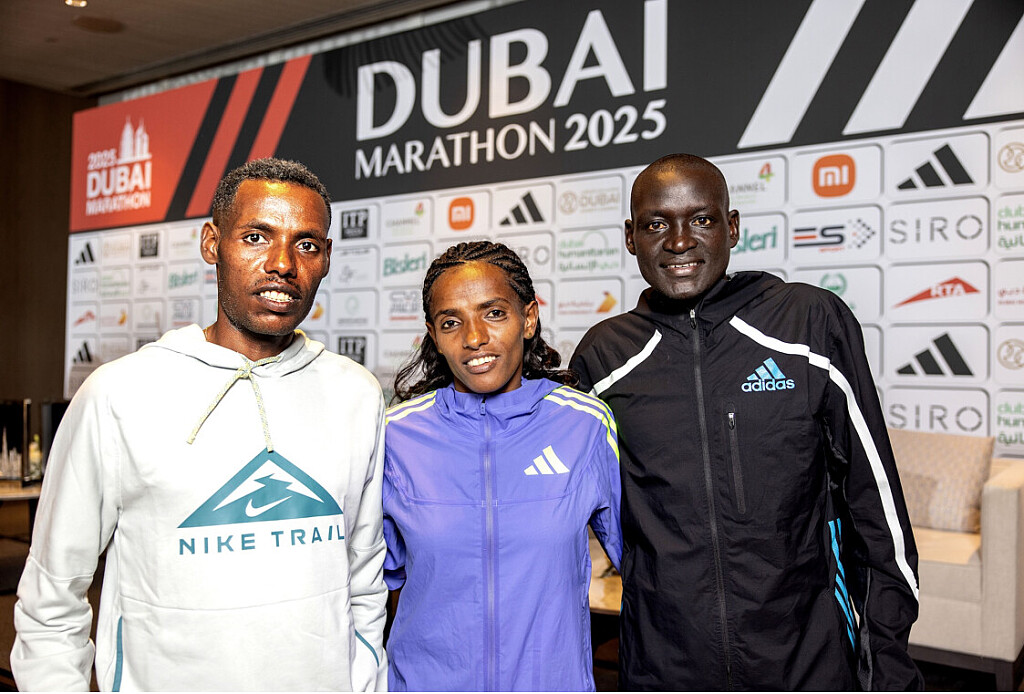
Fast field set for Dubai marathon this Sunday
If there’s such a thing as a First Family in athletics, then it has be the Tola-Dida clan from Ethiopia; and one of their favourite watering holes is the Dubai marathon, whose quarter century is celebrated with Sunday morning’s event. Current Olympic men’s champion Tamirat Tola won Dubai in 2017 (2.04.11), while spouse Dera Dida won in 2023 (2.21.11), on the same day that her brother-in-law, Tamirat’s younger sibling Abdisa won the men’s title (2.05.42).
Tamirat went on to greater things, with a world championship silver medal in London later in 2017, then gold in the delayed world championship in Eugene 2022, a New York Marathon victory in 2023, and the Olympic crown last year. This time round, he has a far more important task, staying at home and minding their daughter.
Because bringing their daughter (even with a nanny) to last year’s Dubai race may have distracted Dera from a repeat victory, though she still finished third in 2.19.29, two minutes faster than the previous year; but she’s left hubby to do the domestic chores this time, and comes determined to win her second Dubai Marathon while Tamirat watches on TV back home on the outskirts of capital Addis Ababa.
As befits a First Family, only the best is good enough, and their training group has got to be one of if not the strongest in the world. Among her running partners are former marathon world record holder and Olympic silver medallist Tigst Assefa as well as the current marathon World Champion Amane Beriso. ‘I don’t train with the group every day,’ she said through an interpreter. ‘On a day to day basis, I train with Tamirat, but I join them occasionally. Since Tamirat won the Olympics, we’ve had a lot more media interest, but we try to concentrate on our running and not get too distracted’.
Well, her rivals (and compatriots) here in Dubai, Tigist Girma and Zeineber Yimer already have plenty to distact her, given that their respective best times, 2.18.52 and 2.19.07 are better than hers (2.19.24), but not so much as to deter her ‘I think I’m in shape to run the course record (2.16.07, set by another colleague Tigist Ketema last year); I hope that will be enough to win‘.
Another return winner has equally high aspirations, although injuries have ploughed a broad furrow between Lelisa Desisa’s glory days and Sunday’s race. Lelisa was one of many debutant winners in Dubai over the last decade or so, but his came in winning probably the most exciting race in Dubai Marathon history. On a rare foggy day in the Emirates, Lelisa emerged from the mists with a superb sprint finish to clock 2.04.45, and outpace four close pursuers who all finished within a handful of seconds, the first time five men had ever gone inside two hours, five minutes for a marathon.
Like Tamirat, Lelisa went on a have a superlative set of sequels, two victories and two second places in Boston and a win in New York, culminating with the world title on a torrid night in Doha 2019. A series of injuries and the pandemic halted his progress, but he maintains he’s back close to his best.
Following today’s press conference, he said, ‘I’ve been training with Milkesa (Mengesha), who won the Berlin Marathon last year, and with Deresa (Geleta), who finished second in Valencia; I think I’m as good, and they’re running 2.02/2.03. Things have changed a lot since I won here in 2013. At that time, we were thinking of 2.04 to 2.07 for a marathon, now we have to think of two hours! I think I can run a personal best on Sunday’.
Since his best remains the 2.04.45 from 2013, if he and his young rivals can get anywhere near that, they’ll be threatening the course record of 2.03.34that another colleague Getaneh Mollah ran here in 2019.
An intriguing entrant is former world record holder, Dennis Kimetto of Kenya. One of the shooting stars of recent marathon history, Kimetto had a short stellar career during which (in addition to other top victories) he won three of the most important marathons in the world, Chicago, Tokyo and Berlin, breaking the course record in each event, and setting a world record in the final one, in Berlin 2014. He was the first to run sub 2:03 (2.02.57) and his record stood for four years. Obviously, at ten days short of his 41st birthday, Dubai 2025 is going to be a very different challenge for Kimetto.
Elite runners with personal bests
MEN:
Dennis Kimetto KEN 2:02:57
Lelisa Desisa ETH 2:04:45
Dino Sefir ETH 2:04:50
Shifera Tamru ETH 2:05:18
Gebru Redahgne ETH 2:05:58
Ashenafi Moges ETH 2:06:12
Abay Alemu ETH 2:06:50
Mesfin Nigusu ETH 2:07:58
Tadele Demissie ETH 2:08:25
Desalegn Girma ETH 2:08:30
Berehanu Tsegu ETH Debut
Boki Diriba ETH Debut
WOMEN:
Tigist Girma ETH 2:18:52
Zeineba Yimer ETH 2:19:07
Dera Dida ETH 2:19:24
Etagegne Woldu ETH 2:20:03
Gadise Mula ETH 2:20:59
Bedatu Hirpa ETH 2:21:09
Beyenu Degefa ETH 2:23:04
Kuftu Tahir Dadiso ETH 2:23:14
Tigist Geshaw ETH 2:24:39
Kebebush Yisma ETH 2:27:46
Mulugojam Ambi ETH 2:28:59
Betukan Welde ETH Debut
Etenesh Diro ETH Debut
Bekelech Teku ETH Debut
Alem Tsadik ETH Debut
(01/10/25) Views: 144
You Should Stop Showering Between Runs—and My 7 Other Running Rules for 2025
If you’ve been on social media lately, you might have seen your friends making in-and-out lists. It’s been a thing for a few years—maybe less-so now—but the idea is to come up with some trends that you think will be popular and unpopular.
The best ones are fun and off the top of the head. Some of the thought-out ones about culture are kind of annoying. (Yeah, everyone agrees that “being mean” is out in 2025.)
So I took the idea and applied it to my own running. Remember, these are specific to my experience. They’re not mandates or absolutes or even advice.
And at the end of the year, feel free to call me out if I was wrong. I probably was.
Out: Showering between runs
In a normal training week, I run twice a day on Wednesday and Thursday. Those are my recovery days, and I use them as a chance to get ahead on my weekly mileage. Usually, I run between 60 and 85 miles a week during marathon training, so to break it up, I’ll run once before work and then again during lunch or after work. Also known as “doubling.”
But that laundry piles up fast.
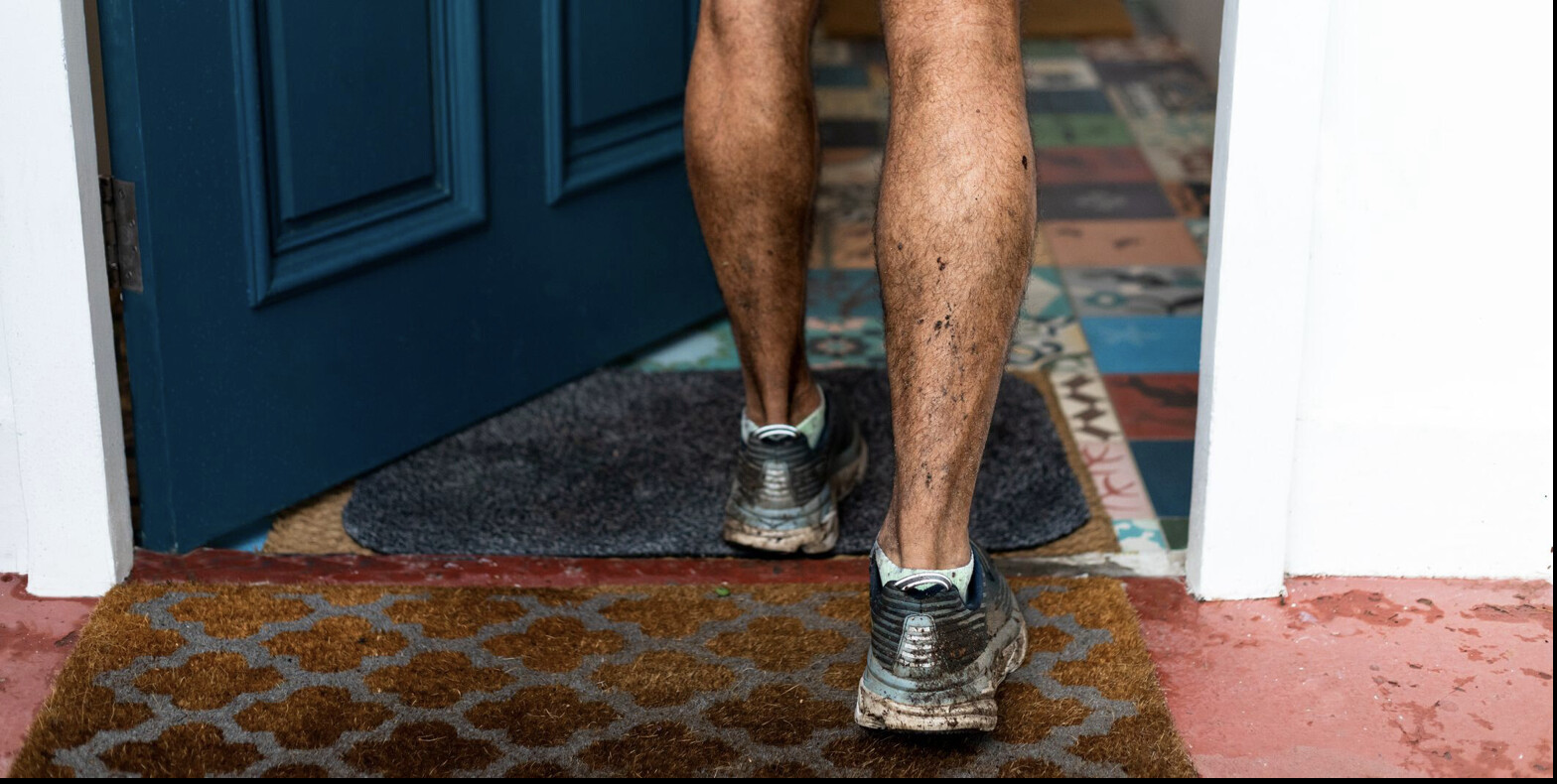
So on days when I work from home, sometimes I’ll put off my shower and stay in my workout clothes until my next run or weightlifting session. I live alone, so there’s no one to complain about my odor. (If you live with a roommate, partner, or family, use this strategy at your own risk.)
In: Wearing ugly race T-shirts
Remember the race T-shirts of the 2000s? The ones that looked like they were designed by a middle schooler and had no fewer than 1,000 ads on the back? I’ve gotten so many over the years, and most have gone straight to Goodwill or I’ve used them for yard work. But this year, I’d like to use my race T-shirts for their purpose—and run in them. There’s something fun about wearing an ill-fitting cotton tee with an ad for Jimbo’s Ford Dealership on the back.
Some races are pivoting away from shirts in favor of more environmentally friendly alternatives, but don’t expect them to completely disappear. According to Running USA, 58 percent of participants who took the 2024 Global Running Survey said that commemorative T-shirts are important to their race experience.
Out: Long runs
I’m planning on running Grandma’s Marathon in June, which means I’m building up my mileage now. But I’ve found that long runs are kind of overrated. Hear me out.
During my last marathon training block, I never ran more than 18 miles for my long run. Many programs call for 20 to 23-mile long runs, but my coach and I decided that 18-milers would get the job done. I’ve been running high mileage for close to a decade now, so I have a large aerobic base. The strategy worked, and I ran 2:27:07, hitting my goal of sub-2:28.
Right now, as I build, my coach and I are experimenting with the idea of downplaying the long run. Instead of using it as a key workout (for example, 10+ miles at marathon pace during the run), we’re focusing more on high-volume workouts twice a week, then using the long run just to get time on my feet. Similar to how Jakob Ingebrigtsen, who never runs more than 12.5 miles, trains.
A hard long run takes a large emotional and physical toll on my body, so I’ve found that I respond well when I keep the long run easy and focus on high-volume threshold sessions during the week. Of course, running on tired legs is key to running a good marathon. As I get closer to June, I’m sure there will be weeks where I use long runs as key workouts. But sometimes I need to remind myself that the other six days of the week are just as important.
In: Wearing a T-shirt over a long sleeve
For the past year, I’ve been mulling over buying a running vest. They look cool, but I keep telling myself that I don’t need to buy something that I’d probably only wear on a few runs each year. I live in eastern Pennsylvania, so I’m usually wearing something light in the fall or a full jacket in the winter. Enter, the working man’s vest: the T-shirt over the long sleeve shirt.
The sleeves keeps your arms warm while the T-shirt acts as a protectorate for your torso, insulating (not suffocating) you from the wind. Cooper Teare is a big fan.
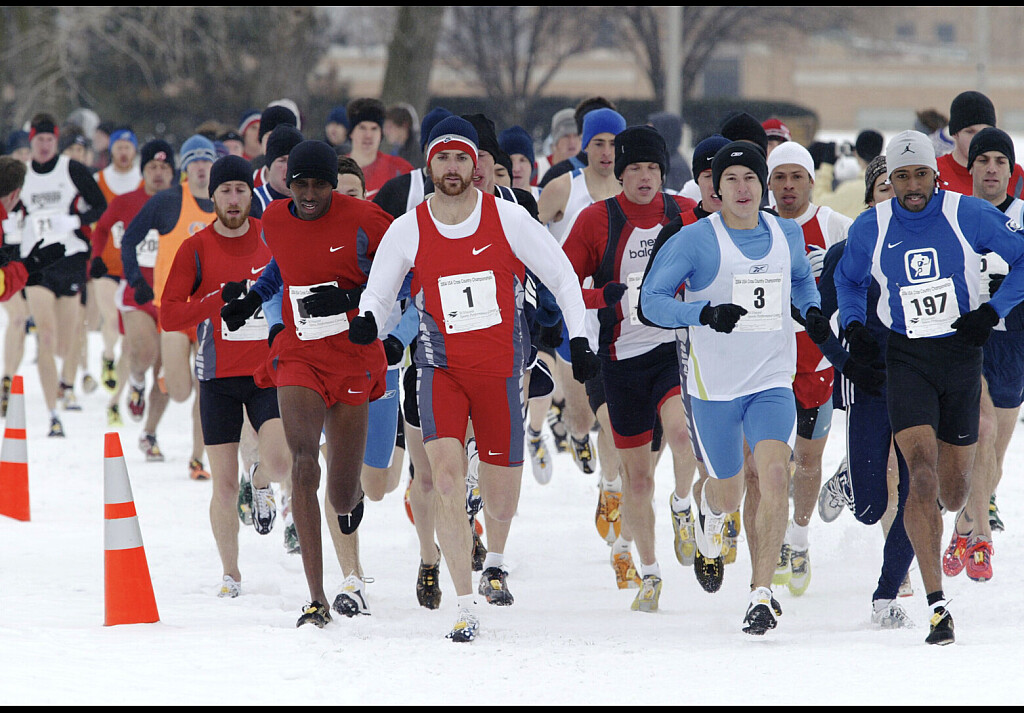
Bonus points if you pair the look with an ugly race T-shirt. And double bonus points if you rock the look in a snowy race, like seemingly everyone did at the 2004 USATF Cross-Country Championships in Indianapolis.
In: Sunscreen
Man, I’m bad at this. If I’m preparing to sit out at the beach or pool, I lather up thoroughly. But if I’m heading out for a 90-minute run, I rarely put on sunscreen, justifying to myself that the route is shady or 90 minutes isn’t that long in the sun.
I’ve gotten better at sun protection—I almost always wear a hat and sunglasses year-round now—but I need to get better at lathering up on a regular basis. If you see me jogging this summer, ask me if I have sunscreen on and, if I don’t, shame me until I turn around and go home.
Out: Marathon bottle service
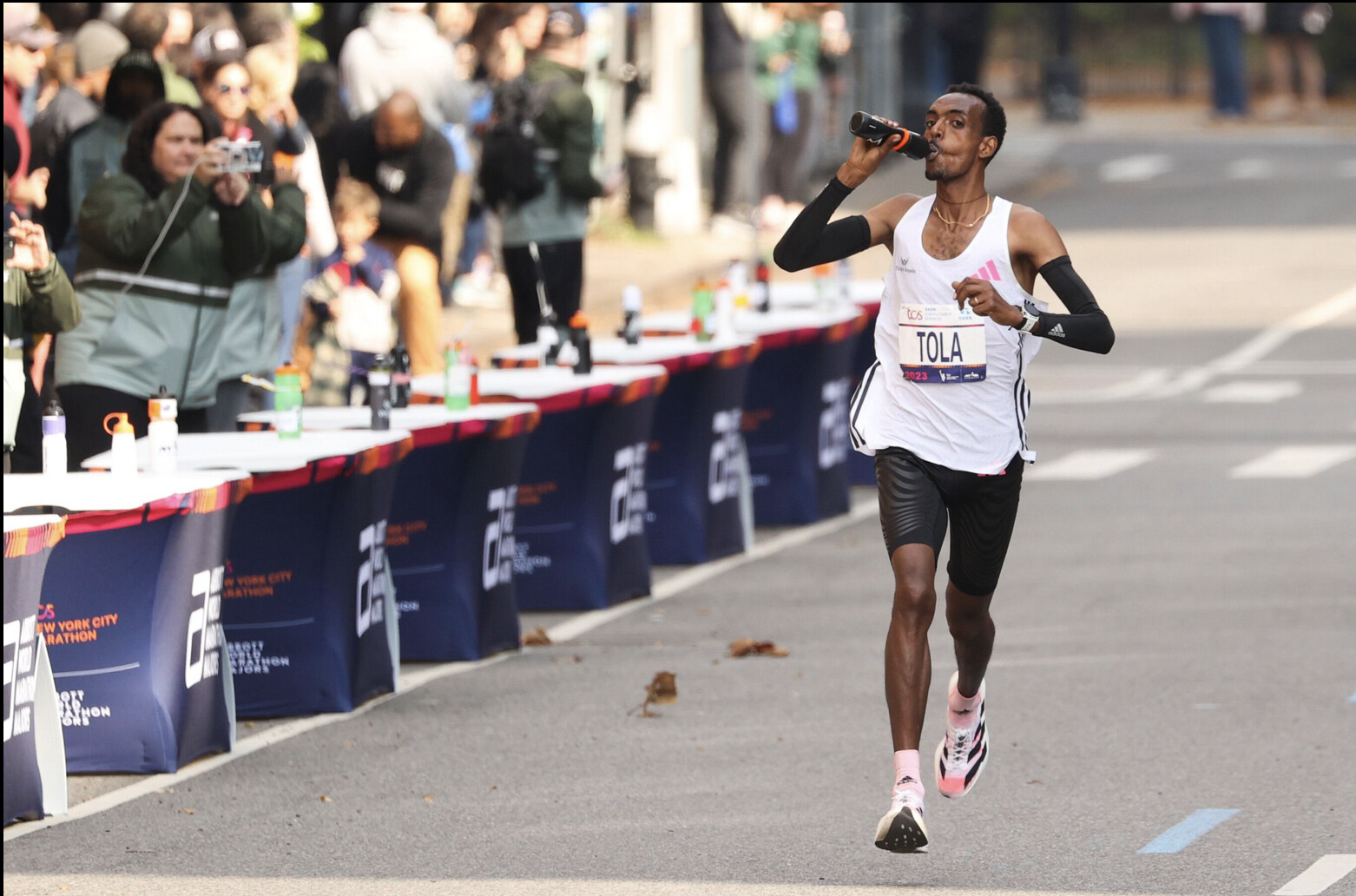
In my debut marathon at Indianapolis in November, I was lucky enough to qualify for the elite field, meaning I got perks like reserved restrooms, a separate warm-up area, and bottle service. For those unfamiliar, bottle service at a marathon is different from bottle service at a Las Vegas nightclub. Instead of access to marked-up Patrón, you get reserved spots on the course where you can stash your race fluid bottles.
Because there’s limited space, bottle stations are typically reserved for the fastest runners at a marathon. Instead of fumbling with the water or electrolyte-drink cups that the masses use, elites can consume whatever they trained with. In most cases, it’s some kind of carbohydrate mix.
At Indianapolis, there were three bottle stations: at miles 8, 14, and 20. I filled mine up with Maurten 160, but honestly, I didn’t feel like the perk was that necessary. I carried eight gels with me, taking them every 15 to 20 minutes, which was plenty. The bottles felt like more of a bonus or palate cleanser. They were cumbersome to hold and drink at race speed, and I found myself only taking a few sips then discarding them. Plus I had to pee the entire race, so I didn’t want to make the situation more dire.
Previously, I thought bottle service was non-negotiable to running a fast 26.2. But my mind has changed. If you envy the pros for their bottle access, don’t worry, you’re not missing out. Gels get the job done.
In: Off-distance races
I’m stealing this one from my 2024 in-and-out list. Off-distance races are events that diverge from traditional race distances (like the 5K, 10K, and marathon). Popular examples include the Bix 7 Road Race in Iowa (a 7-miler), the Boilermaker 15K in New York, and the Manchester Road Race in Connecticut (4.737 miles).
My favorite off-distance event is the Run for the Diamonds in Berwick, Pennsylvania. It’s a Thanksgiving day 9-miler that’s been going strong since 1908. The whole town comes out and cheers the runners up and down the massive hill that’s sandwiched in the middle of the route. Plus, the top seven men and women get real diamonds!
In: Short trail races
Speaking of race distances, let’s make short trail races a thing in 2025. Ultramarathons get most of the attention, but they’re not for everyone. At risk of contradicting myself against my previous “in,” there are plenty of trail options at the 5K, 10K, and half-marathon distance. Local state parks may host them, or sometimes there are running races tied in with mountain bike or cyclocross races. (Fifth Street ‘Cross in Pennsylvania does a great job of putting on both.)
I’d love to jump in a trail half marathon this summer between my two marathon training blocks. There won’t be any pressure to run a certain time, and let’s be real, running on the roads gets boring sometimes.
(01/11/25) Views: 132
Chipotle ends Los Angeles Strava challenge due to the wildfires
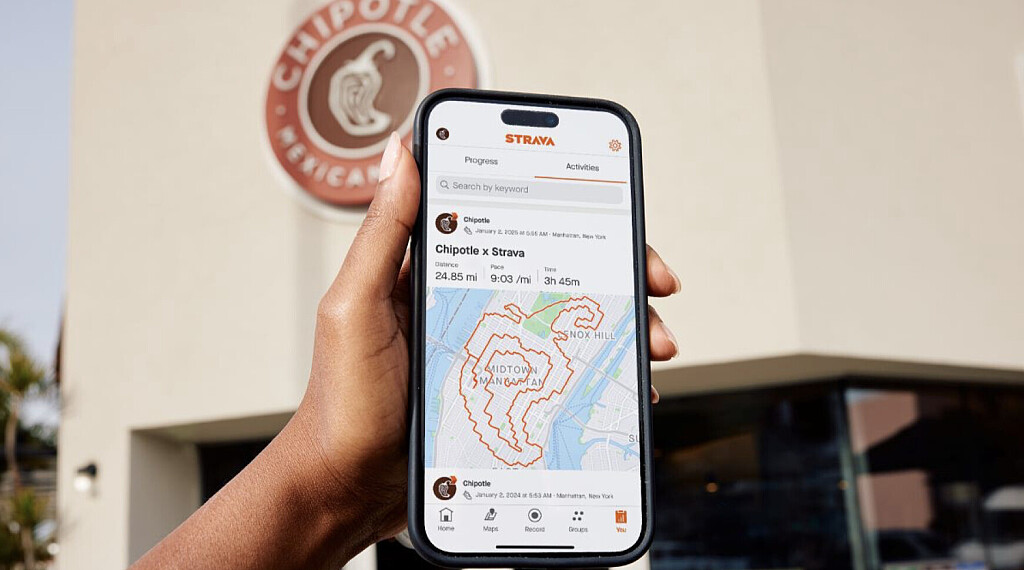
Chipotle’s January Strava challenge, offering runners a chance to win free Chipotle for a year, has come to a halt in Los Angeles as devastating wildfires forced the company to end the city competition early. With more than 180,000 residents evacuated due to fires in the city’s northwest, Chipotle decided it would be best to prioritize safety, and stopped the challenge at 11:59 p.m. PT on Thursday.The challenge was a hit in Los Angeles, which led to the global Strava x Chipotle City Challenge competition before the wildfires began on Jan. 7.
The challenge involves runners worldwide competing to become “Local Legends” by completing the most designated Strava segments during the month. The top individual in each participating city wins free Chipotle for a year, while cities collectively logging the highest mileage earn rewards like buy-one-get-one (BOGO) entrée deals for all residents.

Chipotle issued a statement explaining their decision: “Los Angeles, your health and safety is our greatest priority. Due to the devastating wildfires that are impacting the area, we are ending the Chipotle Los Angeles Segment Challenge at 11:59 p.m. PT on January 9, 2025. The Local Legend who has the greatest number of attempts at that time will be awarded with Lifestyle Bowls for a Year.”
Particles from wildfire smoke and other pollutants can be deadly and impact health. This is particularly concerning for runners, as intense outdoor exercise can aggravate the effects of airborne pollutants.
Brandon Fang of Del Rey, Calif., was named the winner after logging an incredible 284 efforts on the 330-metre segment (93.72 kilometres). On the final day of the challenge, Fang ran 12 kilometres on the segment in the morning, then returned later in the evening to run 50K after hearing about the early cutoff–all to secure a year’s worth of Chipotle.
While the Los Angeles competition came to an end due to the catastrophic fires, it continues in 24 other cities across North America and Europe (including Toronto). Runners in those cities still have a chance to win prizes and contribute to their city’s mileage totals.
(01/11/25) Views: 130
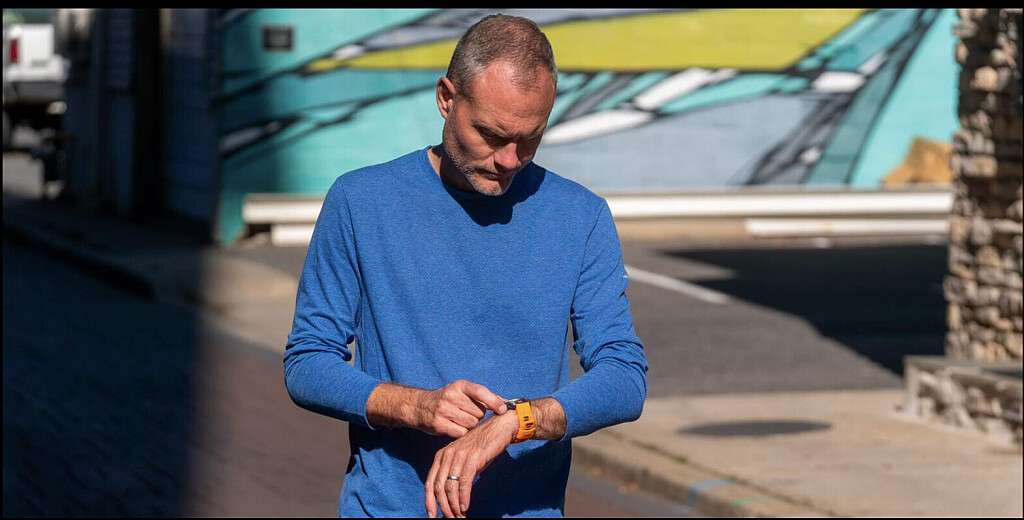
Here’s Why You Need a Training Plan Even if You’re Not Racing
This could be the key to making your running experience more enjoyable and productive.
Before you step outside or onto a treadmill to log your first steps as a new (or returning-from-a-long-break) runner, you might want to consider a training plan, even if you’re not training for a race. Yet.
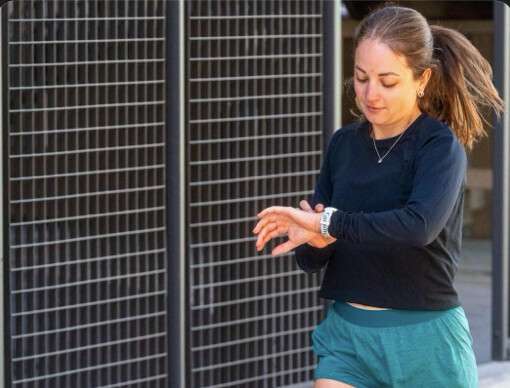
One the one hand, er, foot, yes, all you need to do is take those first steps and you’re on your way to logging miles and feeling those famous-yet-elusive endorphins that fuel the runner’s high. On the other foot, a training plan provides guidance that can help make the experience more enjoyable and productive, says Hiruni Wijayaratne, a coach with My Olympic Coach, who holds 10 Sri Lankan national records across varying distances.
“Following a training plan is very similar to following a recipe,” Wijayaratne says. “When you follow a plan, you can look back at the steps and the outcome, and go back and look at what went well or what went wrong along the way.”
Guidance From the Experts
When you’re unsure where to begin—how long to run, whether you should do a combination of run/walk, what rest days should look like—a trusted plan will provide the first step. It’s important to find a training plan from a trusted source or coach.
“Going with a basic plan is better than not having a plan at all,” says certified run coach Alethia (Mekela) Mongerie, the founder of Sole Legacy Coaching.
But don’t choose just any plan posted on the internet or what your cousin’s best friend who ran a marathon once says you should do. A major red flag in a training plan, Wijayaratne says, is that there is no variation. For example, it will tell a runner to run a 5K every other day, with no specificity or variety.
She also warns against plans that have no dedicated rest days. “My number-one goal is to make sure my athlete is healthy,” she says. “If recovery is not in the plan, it’s immediately setting someone up to not succeed.”
Mongerie cautions new runners to be wary of plans that have long speed workouts (for example, lots of fast repeats around the track) or if they require certain paces. Eventually runners will work up to these harder, more specific workouts, but there’s no need to start with them.
Remove the Guesswork
A training plan written by running experts lets you focus on one thing: Getting out the door and on the move. (Okay, that’s two things.)
A plan, Mongerie, says, gives runners guidance for when they should run, how much, and for beginners especially, how they should feel.
When you don’t have to focus on anything other than the workout, you can run more relaxed, making the workout more productive.
Plus, Mongerie says, having a plan can hold athletes accountable, especially helpful for when the mornings are dark and cold and wet.
“The structure of a training schedule can give purpose to the athlete,” she says. “Something about knowing [the specifics of a workout] gives the athlete control over their fitness journey… which makes it more likely they’ll have a successful outcome.”
Prevent Injury
If you’re not working with a coach, a structured training plan can be an effective way to help avoid injury, especially for novice runners, Mongerie says, noting the plan should meet the runner where they are in terms of mileage and fitness. For example, if someone is lacing up for the first time, a plan should not have them running 40-mile weeks.
“The plan should prescribe mileage in a conservative manner, never increasing it by too much and allowing for recovery weeks,” Mongerie says.
Another important aspect of sidestepping injury is strength and mobility work. A comprehensive training plan might include these, but runners may need to supplement on their own or work with a coach.
“Athletes need a strong and flexible body to run efficiently, which is a key to injury prevention,” Mongerie says.
Set Yourself Up for Future Success
A training plan will help you lay the groundwork for a successful (and enjoyable!) running career. Even if you never decide to race, you can use the lessons learned for the miles ahead.
“An athlete will become familiar with the proper terminology, the purpose of each training session, expected adaptations, and the benefits of recovery and injury prevention,” Mongerie says.
As the plan progresses so will you, as a runner, and these early building blocks will help you run longer—and faster, if that’s your goal.
Wijayaratne says that runners shouldn’t use the same plan over and over again; variables are the key to improving fitness.
“Let’s zoom out,” she says. “If the training went well, that plan went well, we’re always looking at the next evolution and what that looks like.”
In other words, a good training plan will help you hit your goal, and then you make the next goal a little bit more challenging—and your plan should reflect that.
“If you do the same things or the principles of the same thing, you’re going to get the same outcome,” she says.
(01/13/25) Views: 129
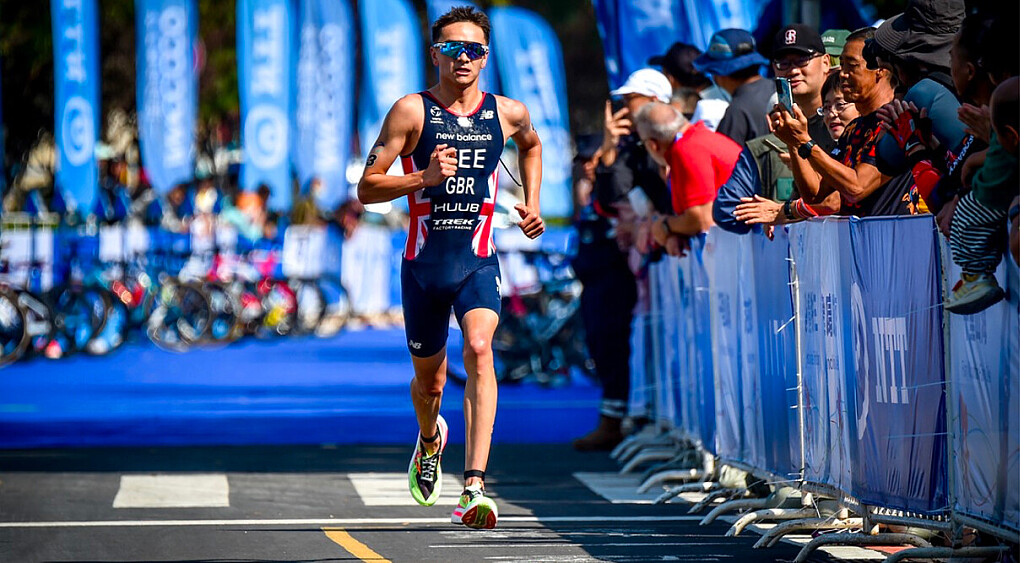
Olympic and World Triathlon Champion Alex Yee Shines at Valencia 10K Ahead of Marathon Debut
Olympic and world triathlon champion Alex Yee continued to impress with his running prowess, finishing in the top 30 at the Valencia 10K on Sunday, January 12, 2025. Competing in his first official race over the 10K distance, Yee clocked a time of 28:07, showcasing his versatility and speed as he prepares for his marathon debut in April at the London Marathon.
The 25-year-old, who has earned two Olympic gold medals and numerous triathlon world titles, was the third-fastest British runner in the race. Rory Leonard set a new British 10K record with an incredible 27:38, followed closely by Charlie Wheeler, who achieved a personal best of 27:42. Yee, finishing over a minute behind Sweden’s Andreas Almgren—who shattered the European 10K record in 26:53—remains focused on transitioning his elite triathlon career to include long-distance running.
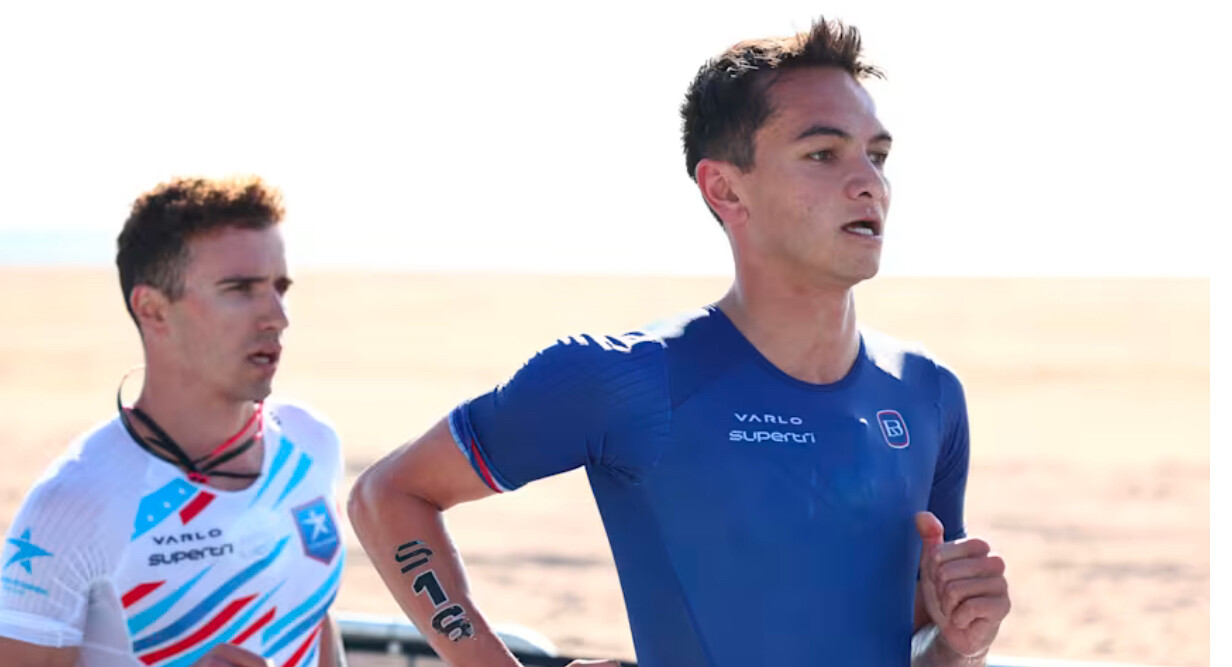
Known for his exceptional running ability, Yee has long been considered one of the fastest triathletes in history, often posting the fastest splits in international competitions. The Valencia 10K marked an important step in his progression as a pure runner, as he sets his sights on challenging for a strong marathon debut in London this April.
Yee’s dual success in triathlon and running highlights his incredible athleticism, endurance, and adaptability, making him a serious contender in the world of distance running.
The 26-year-old reflected on his performance in an Instagram story: “Not bad not good! Needed some strength on K 7/8... What an amazing race to be part of! 7 national records and a European record."
(01/12/25) Views: 129
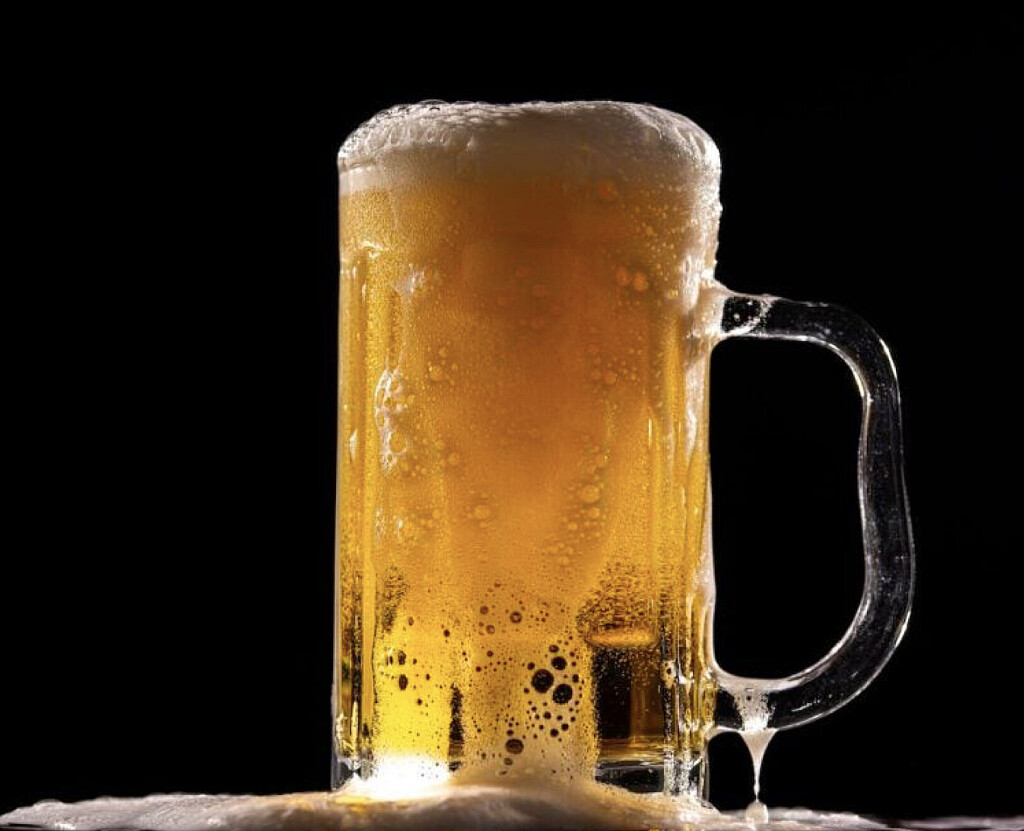
How Alcohol Tanks Your Heart Rate Variability and Sleep
It’s no secret that alcohol inhibits overall health, but for runners and other athletes, the risks are even more adverse. Drinking alcohol negatively affects your heart-rate variability (or HRV) and heart rate, hinders sleep, can lower testosterone, impair balance and coordination, decrease muscular strength, and impact bone health—which increases the risk of sports-related injuries. Simply put: you shouldn’t plan to just “sweat it out” post-drinking.
How long does it take an athlete to recover from drinking alcohol?

Varying amounts or types of alcohol tend to affect people differently. But generally speaking, the more that’s consumed, the greater the psychological and physiological consequences. It takes the liver at least one hour to remove each unit of alcohol from the body, and the liver may struggle to remove all the alcohol overnight.
Alcohol affects the body in many ways, including excessive thirst as a result of alcohol’s diuretic effect, and diarrhea and indigestion as the alcohol wreaks havoc on the digestive system and increases stomach acid production.
What about your heart?
What’s alcohol’s effect on heart rate and heart-rate variability?
Heart rate and heart-rate variability (HRV) are two useful metrics for athletes to monitor in order to get a baseline of nervous system activity and gauge how the body is capable of adapting to different situations. Consuming alcohol is shown to cause HRV to drop, and resting heart rate to rise. A normal resting heart rate for adults is between 60 and 100 beats per minute, and researchers in one study found that consuming just one standard drink elevated participants’ heart rates by five beats per minute. Another analysis by the fitness tracking company WHOOP reported that respondents’ HRV dropped by an average of seven milliseconds and their resting heart rate increased by an average of three beats per minute after one drink.
“Greater alcohol consumption is associated with more pronounced increases in heart rate,” said UK-based exercise physiologist Tom Cowan. “This may be amplified if the alcohol is accompanied by a mixer, which contains caffeine such as an energy drink or in a cocktail like an espresso martini, as caffeine also increases heart rate.”
Why is monitoring HRV and heart rate important?
Resting heart rate has long been a reliable tool for athletes to monitor, but HRV has now become increasingly popular as a recovery and training metric—both in general fitness trackers and for athletes. An HRV device measures the interval between each of your heart beats, in milliseconds (m/s), over a specific period of time. More variability between beats gives you a higher score—and, in general, means you’re fitter and more recovered and ready to go. HRV tends to drop when a person is tired, stressed, sick, not recovered from a previous day’s workout or after a night of drinking.
“A higher HRV generally equals better fitness,” said Harry Glorikian, healthcare expert and author of The Future You: How Artificial Intelligence Can Help You Get Healthier, Stress Less, and Live Longer. But it’s important for each person to establish an individual baseline before analyzing changes in their HRV, he noted, because it’s a highly individualized metric. What is normal for you might not be normal for someone else. “The first time I saw my HRV numbers, I started to look for ways to compare it to others. What I quickly found was that my HRV was specific to me and that changes that I made in my life affected my HRV and those changes do not apply universally to others.” His takeaway? Focus on implementing your own changes when it comes to diet and exercise, and watch as your HRV increases and your energy levels soar.
Start by establishing a baseline HRV and resting heart rate every morning for a least one to two weeks, using your fitness tracker or app. Then you can note differences.
It’s also important to note that while, in general, higher HRV correlates with better fitness and recovery and lower resting heart rate tends to mean an individual is more recovered and rested, this is not always the case. There can be individual circumstances that go against this general rule and extremely fit athletes can have inverse effects. For instance, the resting heart rate could become suppressed from extreme fatigue and overtraining.
“Once you start to utilize this measure, keep in mind that training is not the sole influencer of this metric. Work stress, poor sleep, stressful family life, poor nutrition, and more can negatively affect HRV,” he said.
How does alcohol impact sleep (and HRV)?
Poor sleep, as well as stress (physical or psychological), can reduce HRV. A restful night’s sleep helps the body to restore itself, repair cells and tissue, and prepare again for optimal performance. So what happens after a few evening glasses of wine?
“Alcohol disrupts sleep cycles, and since it is a diuretic, it may lead to you waking up to go to the toilet frequently during the night,” said Cowan. “This leads to a reduction in sleep quality, has negative impacts on recovery, and can result in lower heart rate variability. Alcohol is also often consumed at social gatherings and parties that extend into the night or the early hours of the morning, likely affecting sleep duration too, leading to inadequate recovery.”
(01/12/25) Views: 128
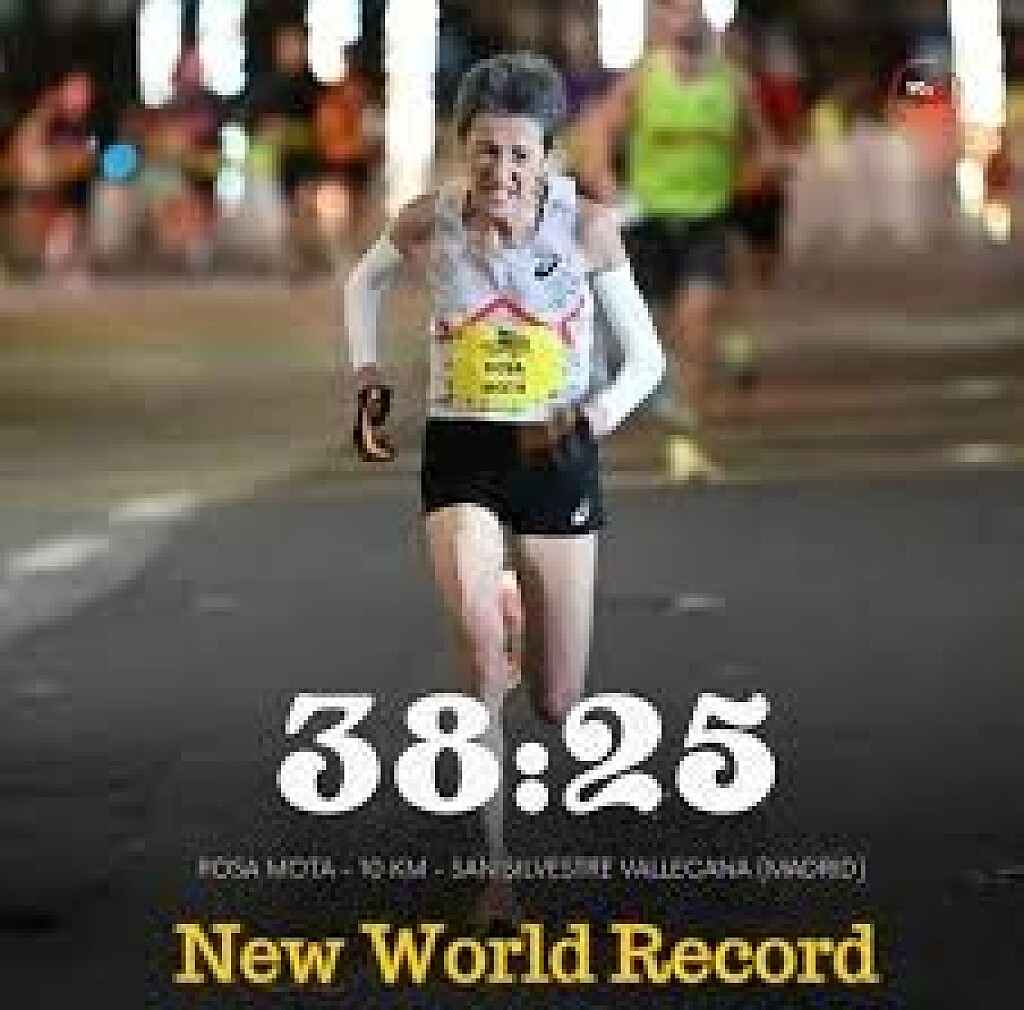
Rosa Mota: Defying Age with a 38-Minute 10K World Record at 66
At 66 years old, Rosa Mota, Portugal’s marathon icon and former Olympic champion, continues to prove that greatness knows no age. Most recently, she stunned the world by setting a new age-group world record for the 10K, finishing in an astonishing time of 38:25.This achievement not only cements her status as a legendary athlete but also highlights her remarkable longevity in a sport dominated by younger competitors.
The record-breaking performance occurred during the San Silvestre Vallecana 10K race, where Mota finished with a time of 38:25, significantly improving her previous W65 world record of 38:45, set in Valencia almost a year prior.
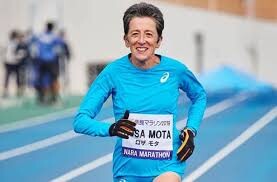
Rosa Mota rose to international fame in the 1980s, dominating the marathon scene and becoming one of the greatest long-distance runners in history. Born in Porto in 1958, she grew up with a love for running and quickly emerged as a standout athlete.
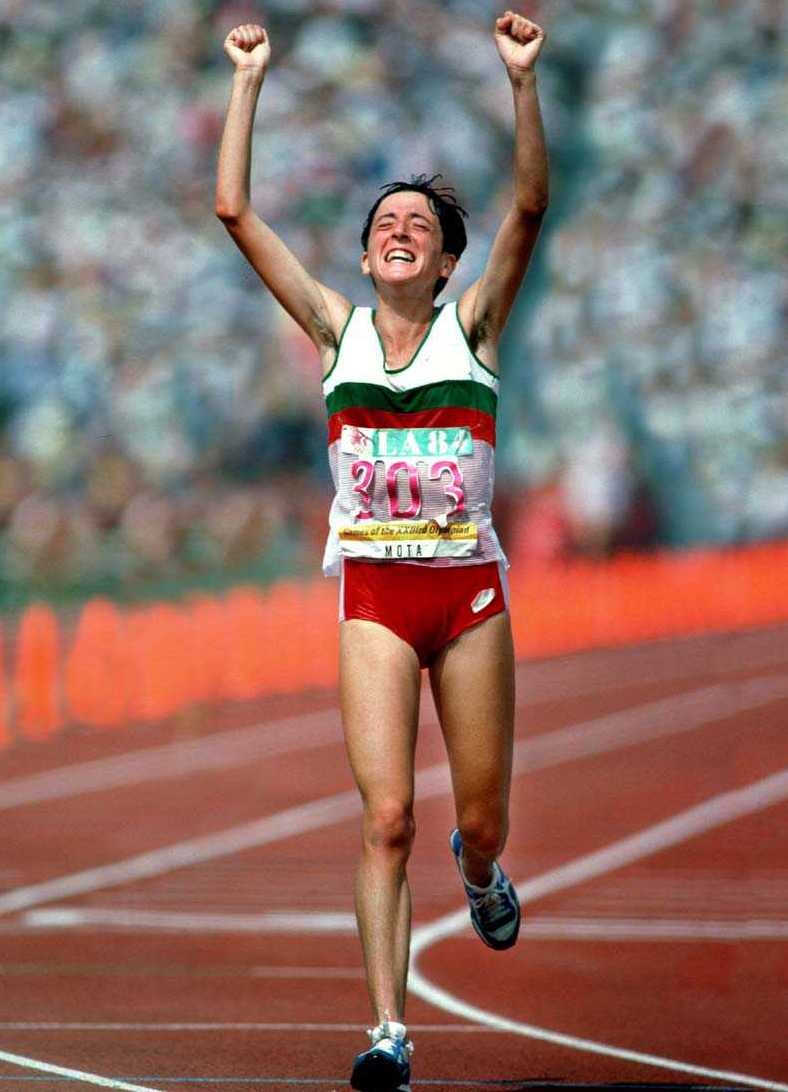
Her career highlights include winning the marathon gold medal at the 1988 Seoul Olympics and bronze at the 1984 Los Angeles Olympics. She also won the inaugural women’s marathon at the European Championships in 1982, setting the tone for her incredible career. Rosa claimed victories in major marathons worldwide, including Boston, Chicago, and London, and her legacy includes a World Championship title in 1987.
Pushing the Limits at 66:
Rosa’s most recent feat is part of a series of record-breaking performances that have reignited her fame in the running world. Earlier this year, she set a W65 world record in the half marathon with a time of 1:25:52, followed by her stunning 10K record of 38:25. These times are exceptional not just for her age group but for athletes of any age, underscoring Rosa’s incredible dedication and talent.
Rosa attributes her success to a lifelong passion for running and disciplined training. “I never stopped loving this sport,” she said after her race. “I still wake up every day excited to run, to challenge myself, and to show others that age is not a limit—it’s an opportunity.”
The Secret Behind Rosa’s Success:
Rosa’s training has evolved over the years, focusing on smart, consistent workouts that prioritize recovery. She combines speedwork, long runs, and cross-training with strength exercises and yoga to maintain her agility and endurance. A balanced Mediterranean diet, rich in fruits, vegetables, and lean proteins, also contributes to her vitality.
“I listen to my body more now than I did in my younger days,” she explains. “Rest and recovery are just as important as the training itself.”
A Beacon of Inspiration:
Beyond her athletic achievements, Rosa Mota is a symbol of resilience and empowerment. She remains an active figure in the running community, advocating for health, fitness, and women’s participation in sports. Through her recent performances, she has inspired not only her peers but also younger generations of runners.
“I want people to know it’s never too late to dream big,” Rosa says. “Set goals, stay consistent, and believe in yourself. That’s how records are broken—on and off the track.”
Legacy of Greatness:
Rosa Mota’s 38-minute 10K record is more than just a number—it’s a testament to the power of determination, discipline, and a lifelong love for running. As she continues to push boundaries, she reminds us all that the human spirit can triumph over any obstacle, including the passage of time.
(01/14/25) Views: 125
Boris Baron
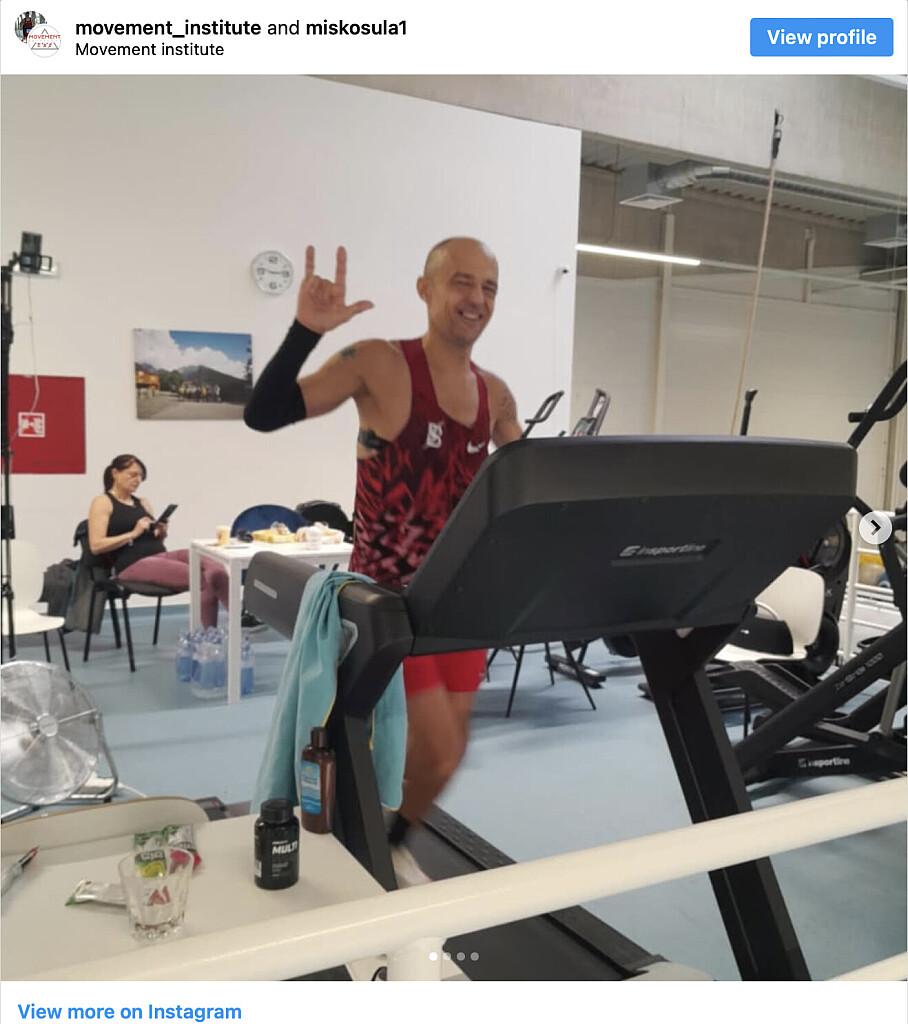
Slovak runner shatters 7-day treadmill world record
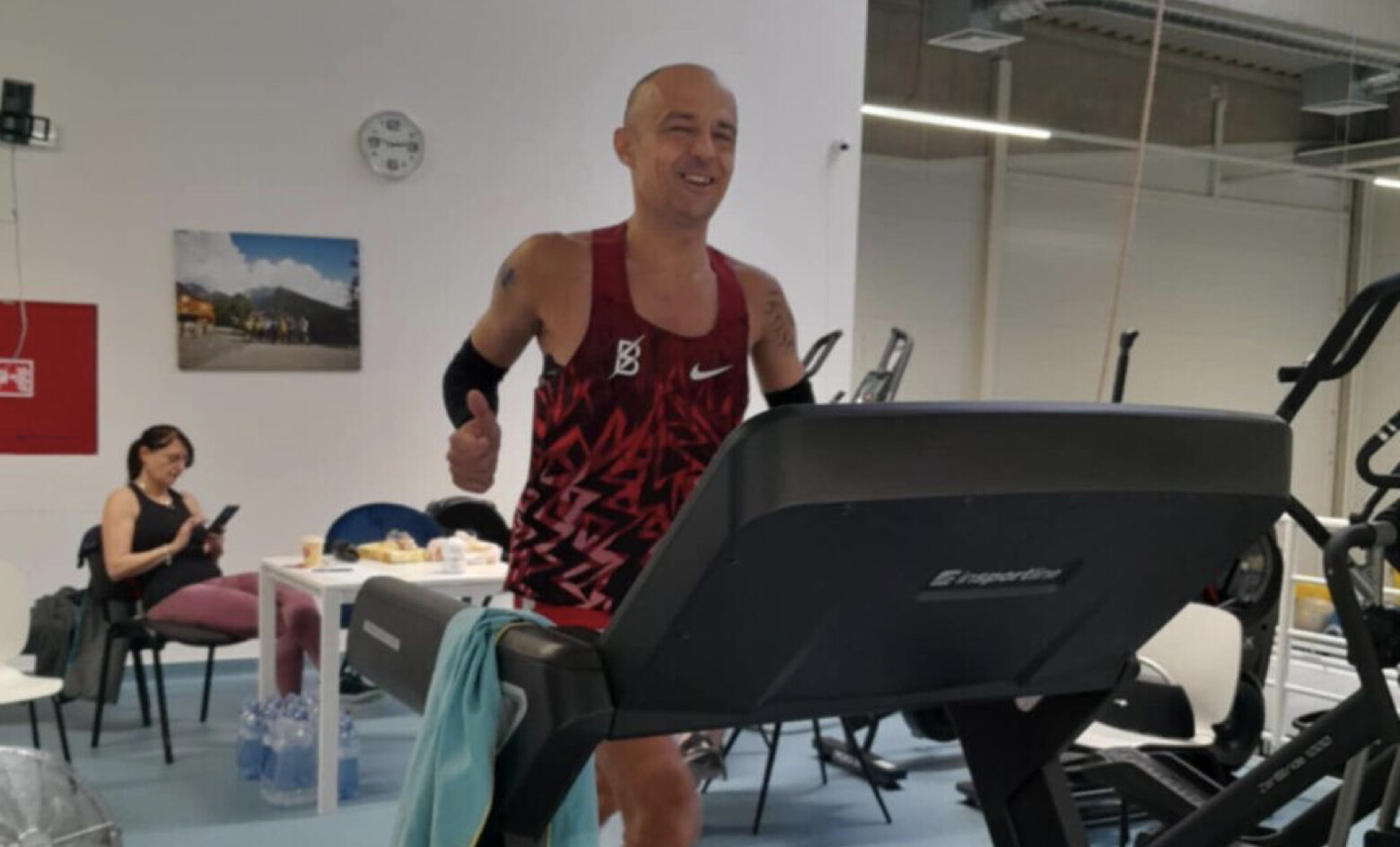
Last Thursday, Serbian-Slovak ultra-runner Michal Šuľa began a week-long venture going nowhere. Seven days later, the 50-year-old successfully completed his attempt at the Guinness World Record for greatest distance covered on a treadmill in one week (pending verification), covering 912.22 km in 168 hours. Šuľa streamed his entire run live on YouTube.
With 17 hours to spare, Šuľa had already surpassed the Guinness World Record. “The Guinness record is behind us… 151 h, 846.52 km,” Šuľa announced on Facebook, where he posted regular updates of his progress. In his live stream, viewers could watch friends keep him company in the room and on the second treadmill. A white board was constantly refreshed hourly with the runner’s logged distance, and “sleep” was written when Šuľa stepped off the treadmill for periodic breaks.
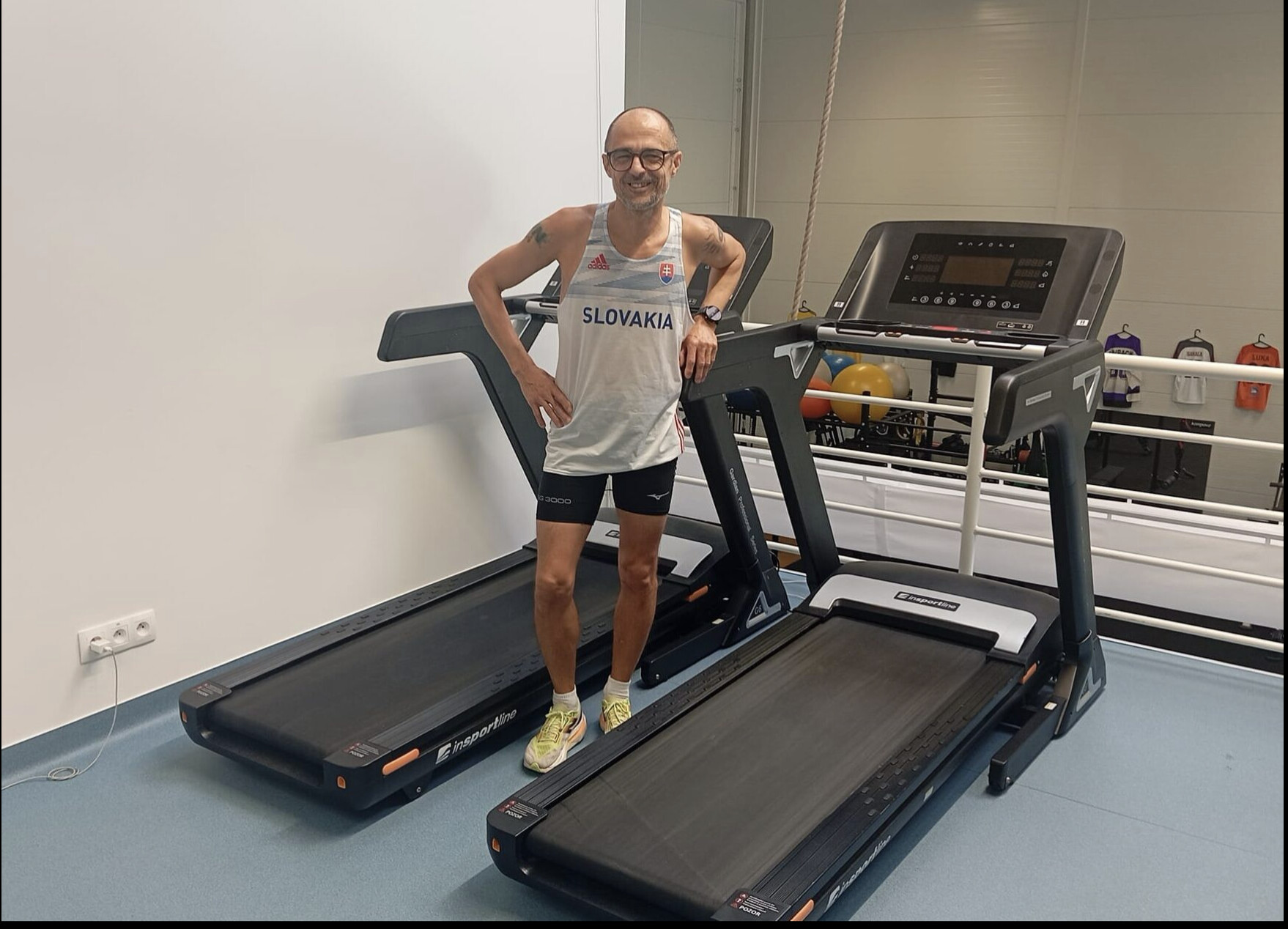
The previous record of 843.94 km had been held by the U.K.’s Jamie McDonald since 2019. Šuľa’s run also surpasses the female seven-day treadmill world record of 846.16, held by New Zealand’s Emma Timmis since June 2024.
Šuľa took on the challenge at a physical therapy clinic, the Movement Institute, in Bratislava, Slovakia. The organization shared the runner’s entire journey on Instagram, YouTube and Facebook. “Michal is aiming even further–his goal is an incredible 1,060 km!” the Movement Institute wrote on Facebook. According to Šuľa, the official, non-Guinness seven-day world record stands at 1,056 km. He fell short of taking down this record in addition to the other two.
In early 2024, Šuľa became a two-time Slovakian champion; he won the 24-hour national championship in March in Nitra, Slovakia, logging 224 km, and climbed to the top of the podium again at the 100-km race in June in Šamorín, Slovakia. Šuľa clocked 7:34:22, winning by nearly an hour and a half.
According to recordholders.org, Šuľa also managed to break the 6-hour treadmill world record on Dec. 14, less than four weeks ago; he ran 85.89 km over the half-dozen hours. His performance exceeded the previous record of 53.05 km, run by Italy’s Luca Ricci in April 2024.
(01/11/25) Views: 110
