

Running News Daily
Top Ten Stories of the Week
5/10/2025
These are the top ten stories based on views over the last week.
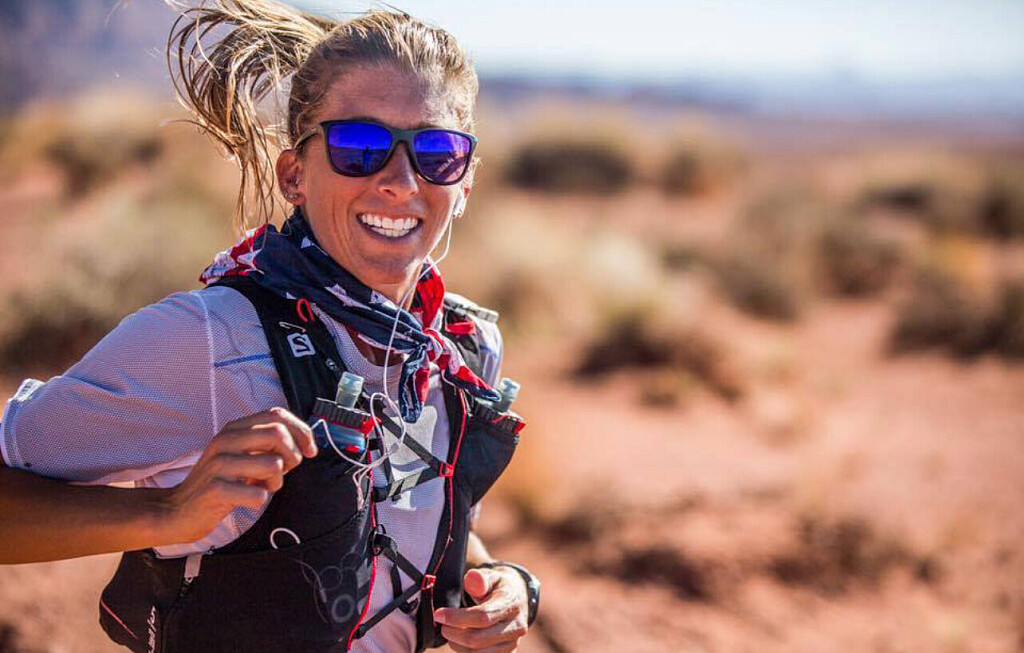


The GOAT Returns: Courtney Dauwalter Takes on the Cocodona 250 Mile Ultra
Courtney Dauwalter, widely regarded as one of the greatest ultrarunners of all time, is set to take on the formidable Cocodona 250—a 250-mile ultramarathon stretching from Phoenix to Flagstaff, Arizona. This grueling race, commencing at 5 a.m. PT on Monday, May 5, 2025, marks her first race over 200 miles since 2020 .
Born on February 13, 1985, in Hopkins, Minnesota, Dauwalter’s athletic journey began with cross-country skiing, where she became a four-time state champion during high school. She continued her athletic pursuits at the University of Denver on a cross-country skiing scholarship and later earned a master’s degree in teaching from the University of Mississippi in 2010 . Before turning professional in 2017, she taught middle and high school science in Denver.
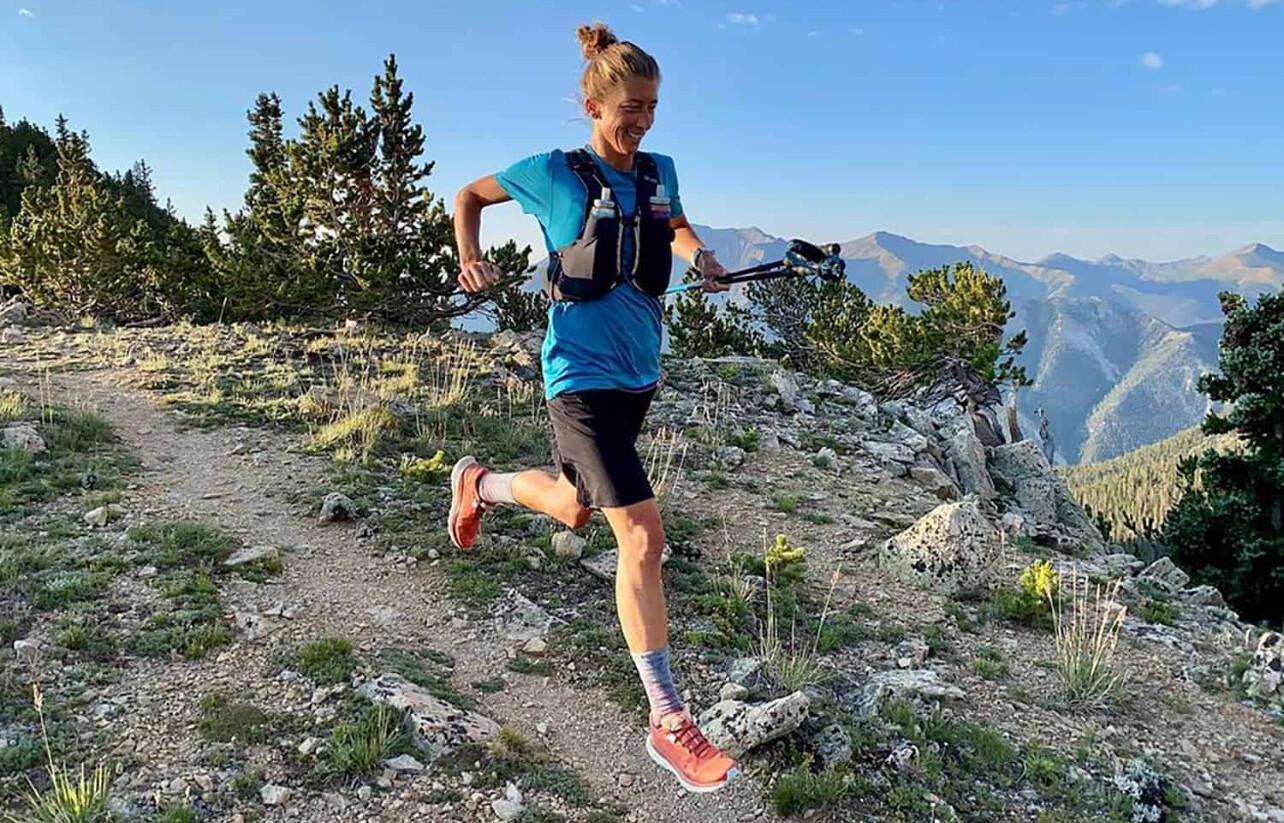
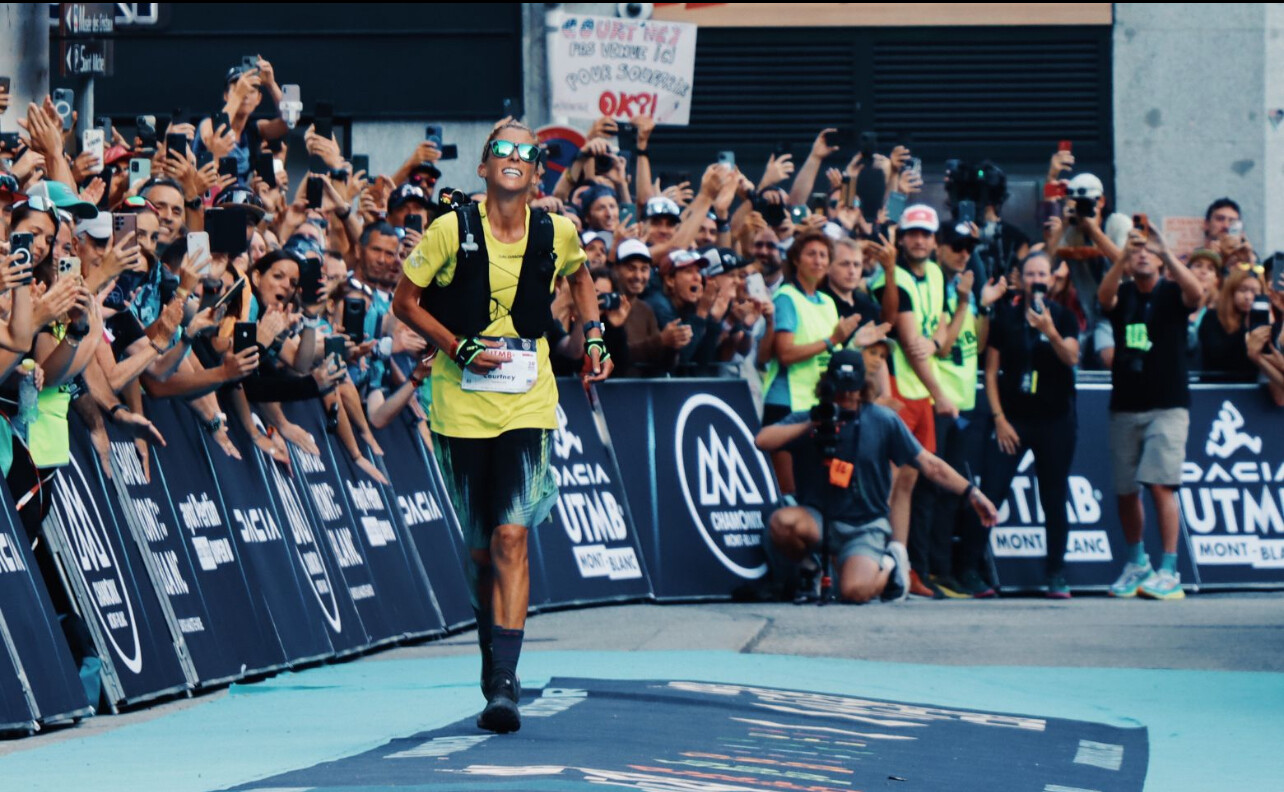
Dauwalter’s ultrarunning career is marked by remarkable achievements. In 2023, she became the first person to win the Western States 100, Hardrock 100, and the Ultra-Trail du Mont-Blanc (UTMB) in the same year . Her victories often come with record-breaking performances, showcasing her exceptional endurance and mental fortitude.
The Cocodona 250 is a point-to-point race that challenges runners with diverse terrains, including desert landscapes, mountainous trails, and significant elevation changes. For Dauwalter, this race presents an opportunity to explore new limits. “I haven’t run a race over 200 miles since 2020,” she noted, highlighting the significance of this endeavor .
Her preparation for Cocodona has been promising. She began her 2025 season with a victory at the Crown King Scramble 50K, indicating strong form leading into this ultramarathon .
A distinctive aspect of Dauwalter’s approach is her embrace of the “Pain Cave,” a term she uses to describe the mental space where she confronts and overcomes extreme physical challenges. She visualizes it as a place to “chip away” at her limits, finding growth through adversity.
Unlike many elite athletes, Dauwalter eschews strict training regimens and coaching, opting instead for an intuitive approach that prioritizes joy and curiosity. Her philosophy centers on listening to her body and finding happiness in the process, which she believes enhances performance.
Courtney Dauwalter’s journey from a science teacher to an ultrarunning icon serves as an inspiration to athletes and non-athletes alike. Her achievements demonstrate the power of resilience, mental strength, and a passion-driven approach to pursuing one’s goals.
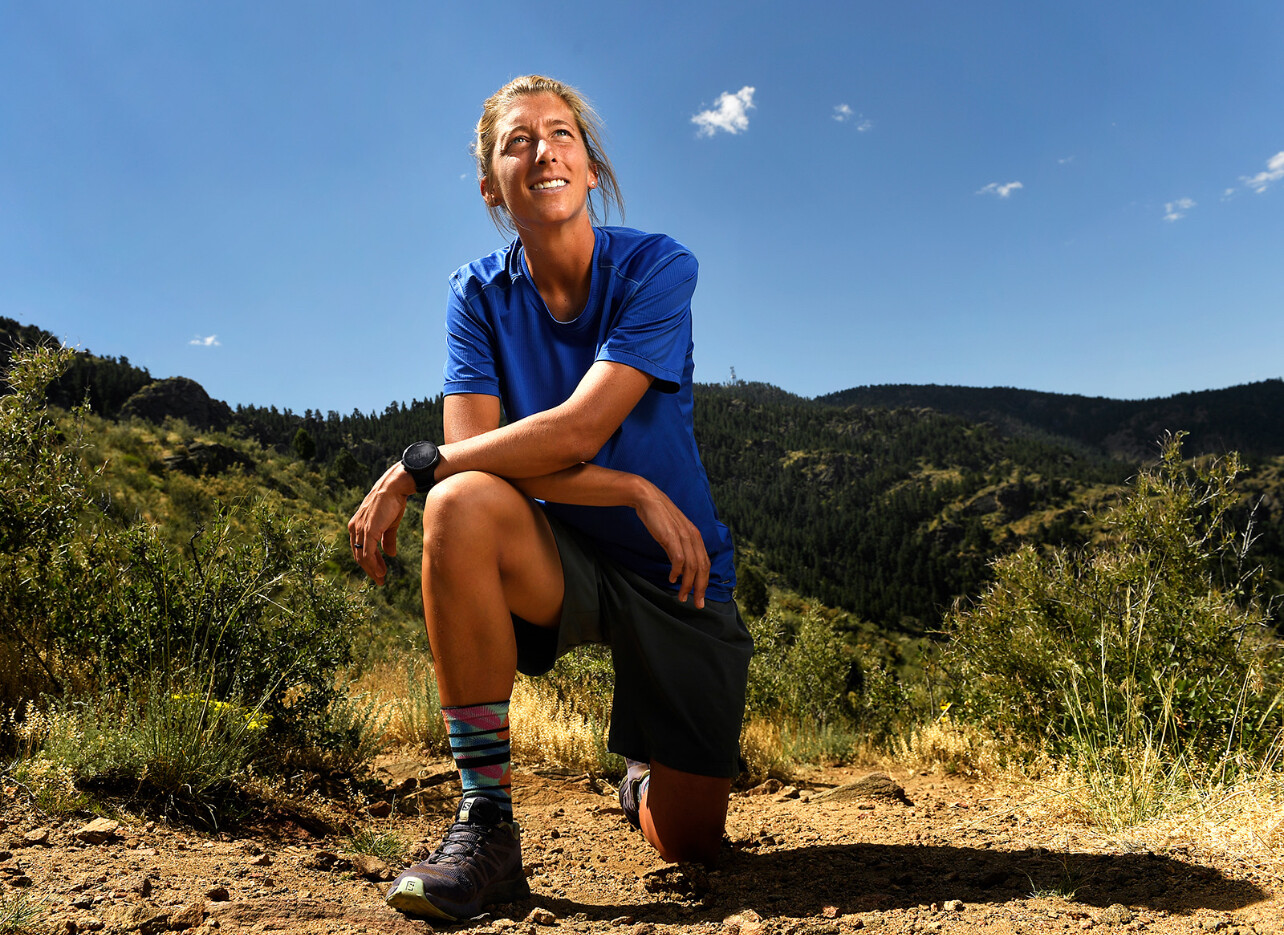
As she embarks on the Cocodona 250, the ultrarunning community watches with anticipation, eager to witness another chapter in the extraordinary career of this remarkable athlete.
(05/04/25) Views: 191Boris Baron
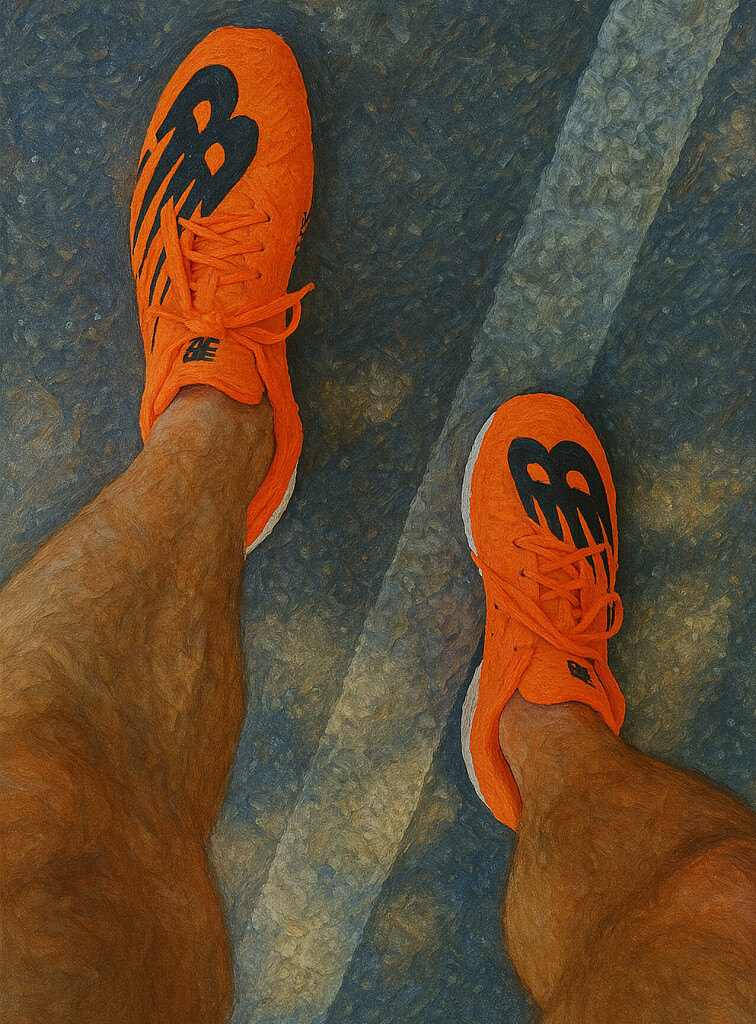
Can Robots Really Replace Human Hands in Making Running Shoes?
Some people think the answer to making running shoes in the United States is simple: just use robots. Let’s explore this concept, says lifelong runner and publisher Bob Anderson, who recently sparked a lively conversation online after posting, “It’s just not realistic to imagine an American company finding enough labor in the U.S. to make running shoes.”
Anderson’s concern is shared by many runners who are watching shoe prices soar. “At this rate,” he added, “running shoes could cost $400 or more unless companies sacrifice their markup—which could cause other problems.”
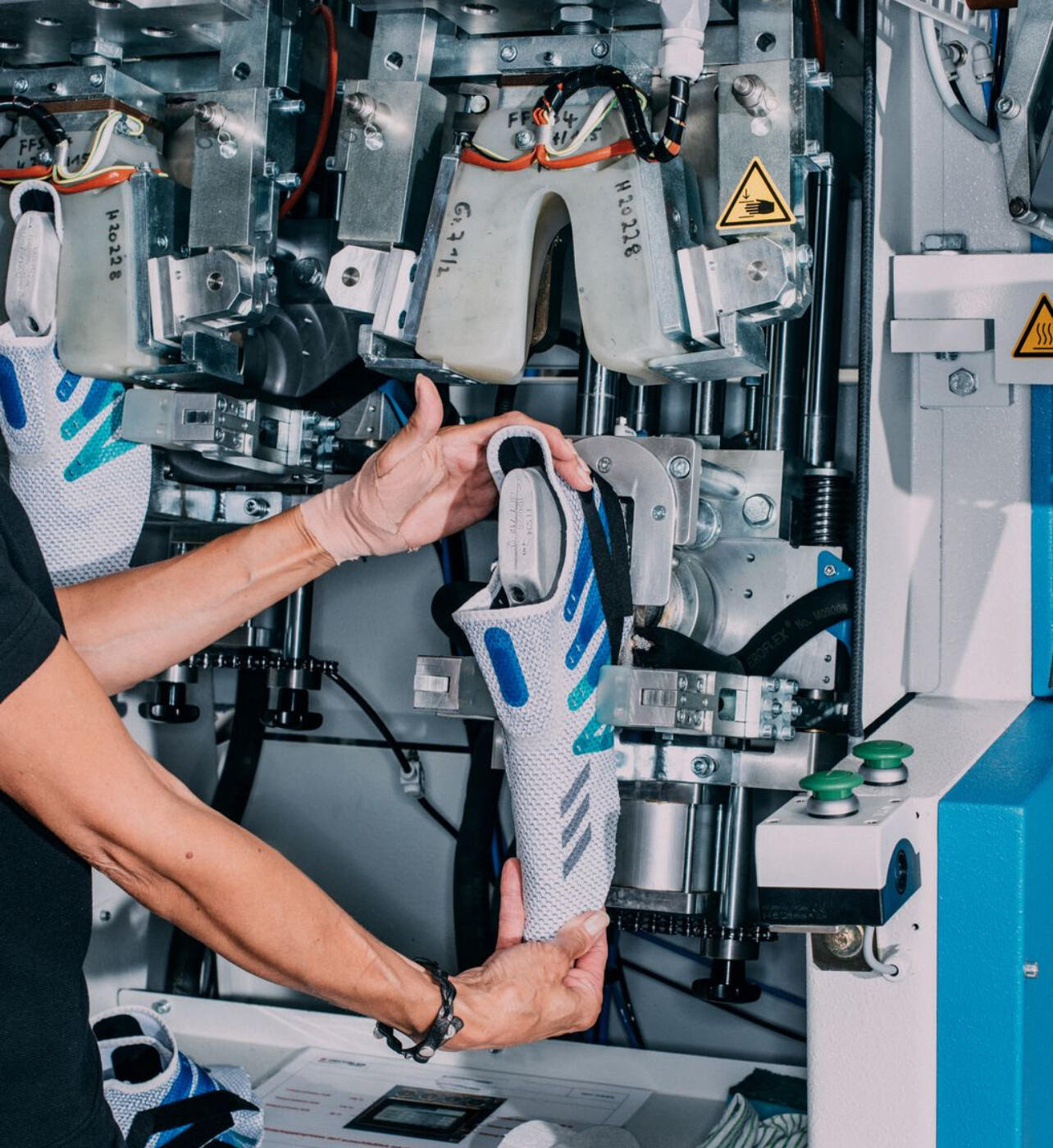
So, could robotics be the solution?
“It’s never too late,” one reader commented on Facebook. “Eventually shoes will be manufactured using robotics. Imagine how inexpensive shoes will be then.”
It’s a logical idea. Automation has changed industries from cars to electronics. But as Anderson and others pointed out in the thread, running shoes are a unique challenge. The materials are flexible, the stitching is complex, and every design has slight variations. Even with advances in AI and robotics, there’s still no fully automated way to produce a quality performance shoe from start to finish.
Lan Rupf responded: “Years ago, Steve Jobs wanted to manufacture in Fremont using automation. It couldn’t be done. Same for Elon’s wish. It’s just too expensive and too complex.” Last photo Bob's current shoes.
Let’s talk numbers. A full robotic setup capable of handling key parts of shoe production can cost upwards of $500,000–$750,000 when you factor in software, installation, and maintenance. If each pair of shoes saves $2.50 in labor costs compared to overseas production, a company would need to manufacture 300,000 pairs over five years just to break even. That’s 60,000 pairs per year—and that’s assuming full uptime, perfect output, and no production issues.
In contrast, factories in Vietnam, Indonesia, and China can produce millions of pairs annually, using skilled human labor that costs under $2 an hour. These workers are often happy to have the job, and the factories are already optimized for efficiency.
Another reader brought up ON Running’s use of robotics to custom-fit shoes, saying “Robotics will be doing many of these jobs.” True—there are steps toward automation happening. But these are limited use-cases, and even ON still relies heavily on human workers in final assembly.
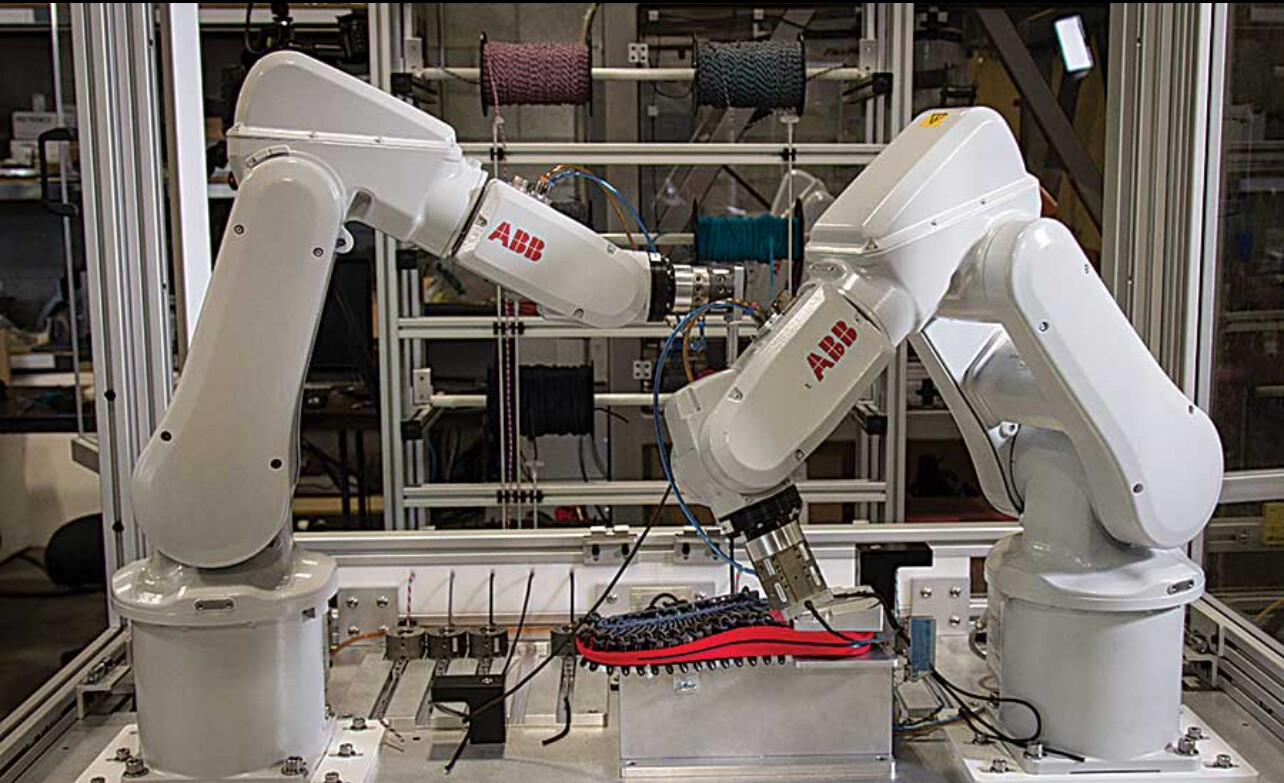
And beyond feasibility, there’s the bigger question: Even if we could automate everything, should we?Rupf warned, “If every job can be done by robots 100%, the majority of people in this world will be out of jobs. The future will be very bleak.”
So what’s the takeaway?
Right now, it’s too late to bring back large-scale running shoe factories to the U.S. using traditional labor, and it’s still too soon for robotics to be the magic solution. The most likely future? A hybrid approach, with robots assisting in certain areas, while skilled human workers overseas continue to handle the core of the work.
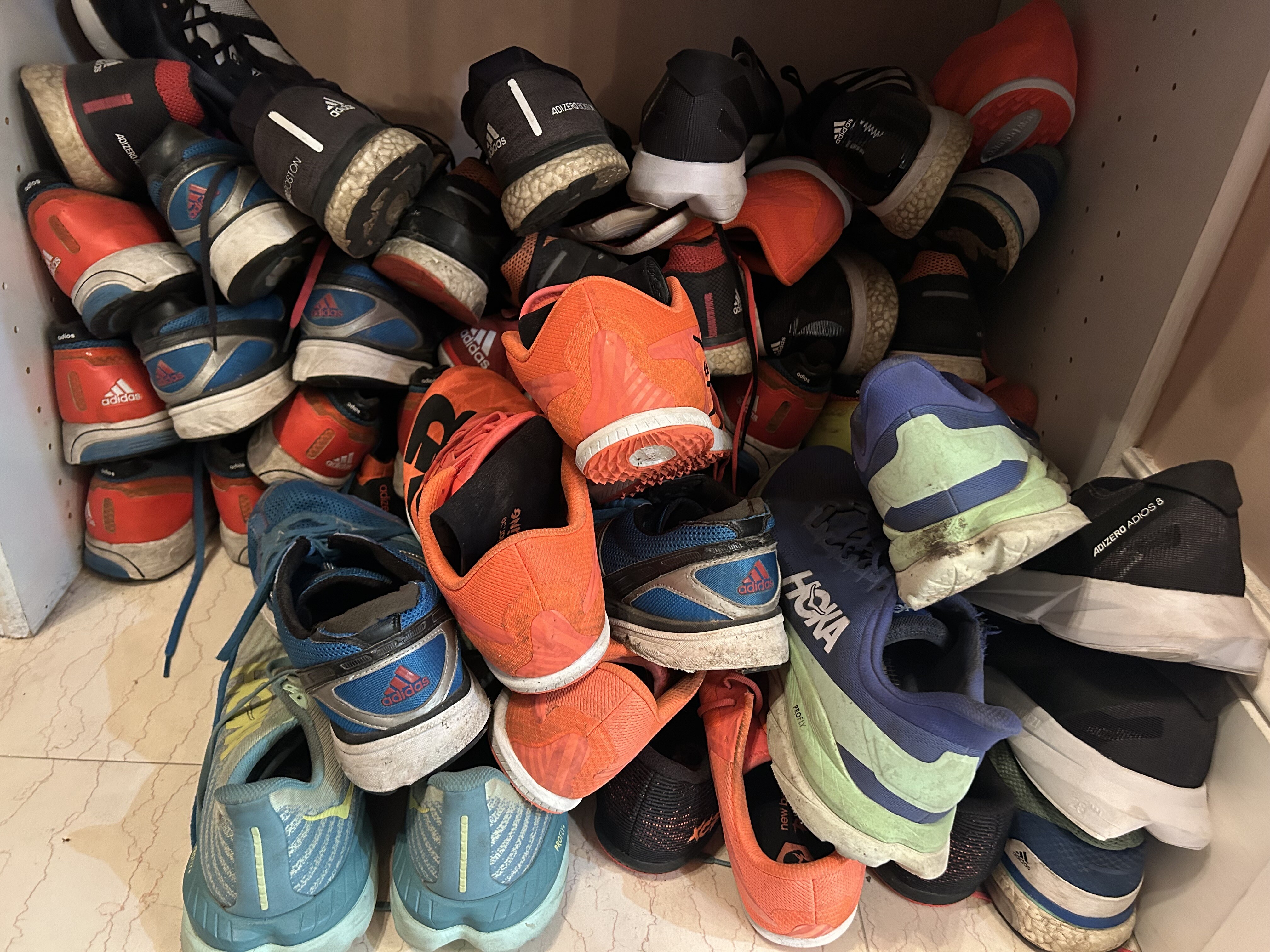
But for now, as Anderson concludes, “Don’t expect your next pair of running shoes to be made by a robot—in the U.S. or anywhere else.”
(05/02/25) Views: 172Boris Baron
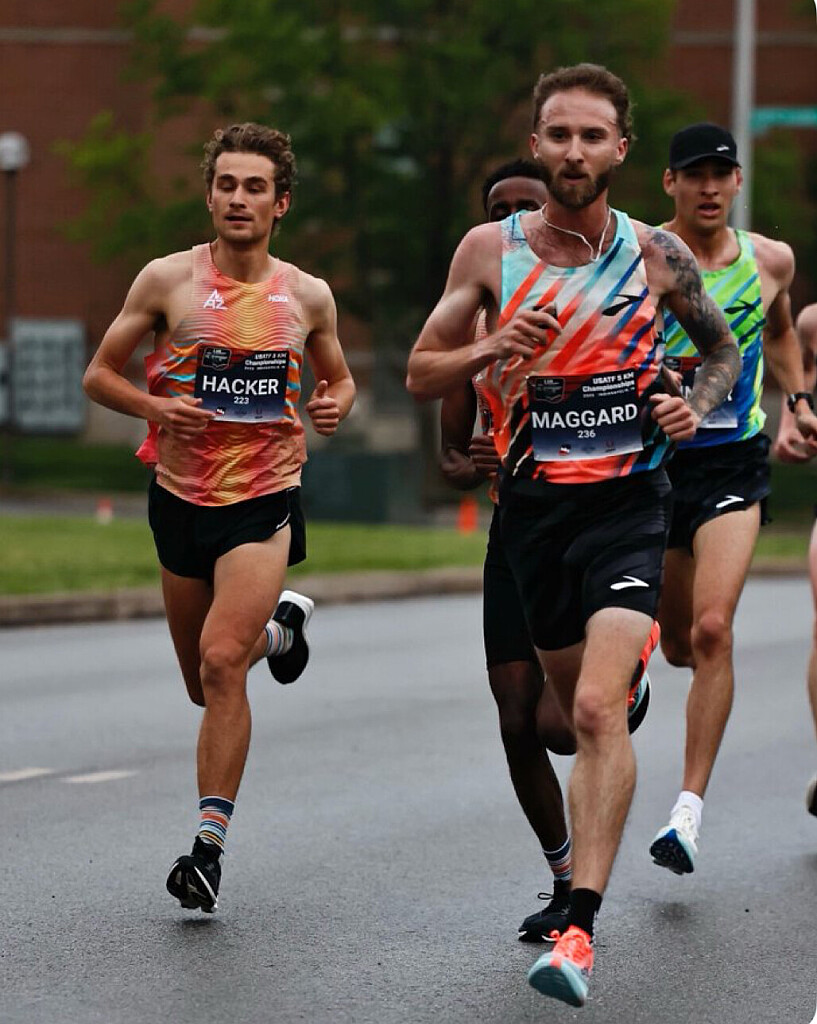
Fast Finishes in Indy as Hacker and Andrews Claim 5K Crowns
On a crisp morning in downtown Indianapolis, the 2025 USATF 5 km Championships delivered thrilling finishes and fast times, with Olin Hacker and Josette Andrews emerging as national champions.
In the men’s race, Olin Hacker of HOKA Northern Arizona Elite made a decisive move in the final kilometer, pulling away from a tightly packed lead group. His surge proved untouchable, and he crossed the finish line in 13:31.93 to claim the national title. Casey Clinger of Brooks was just a stride behind in 13:33.04, with Hacker’s teammate Ahmed Muhumed rounding out the podium in 13:36.88—completing a trio of sub-13:40 finishers.
Men’s Top 10 Finishers
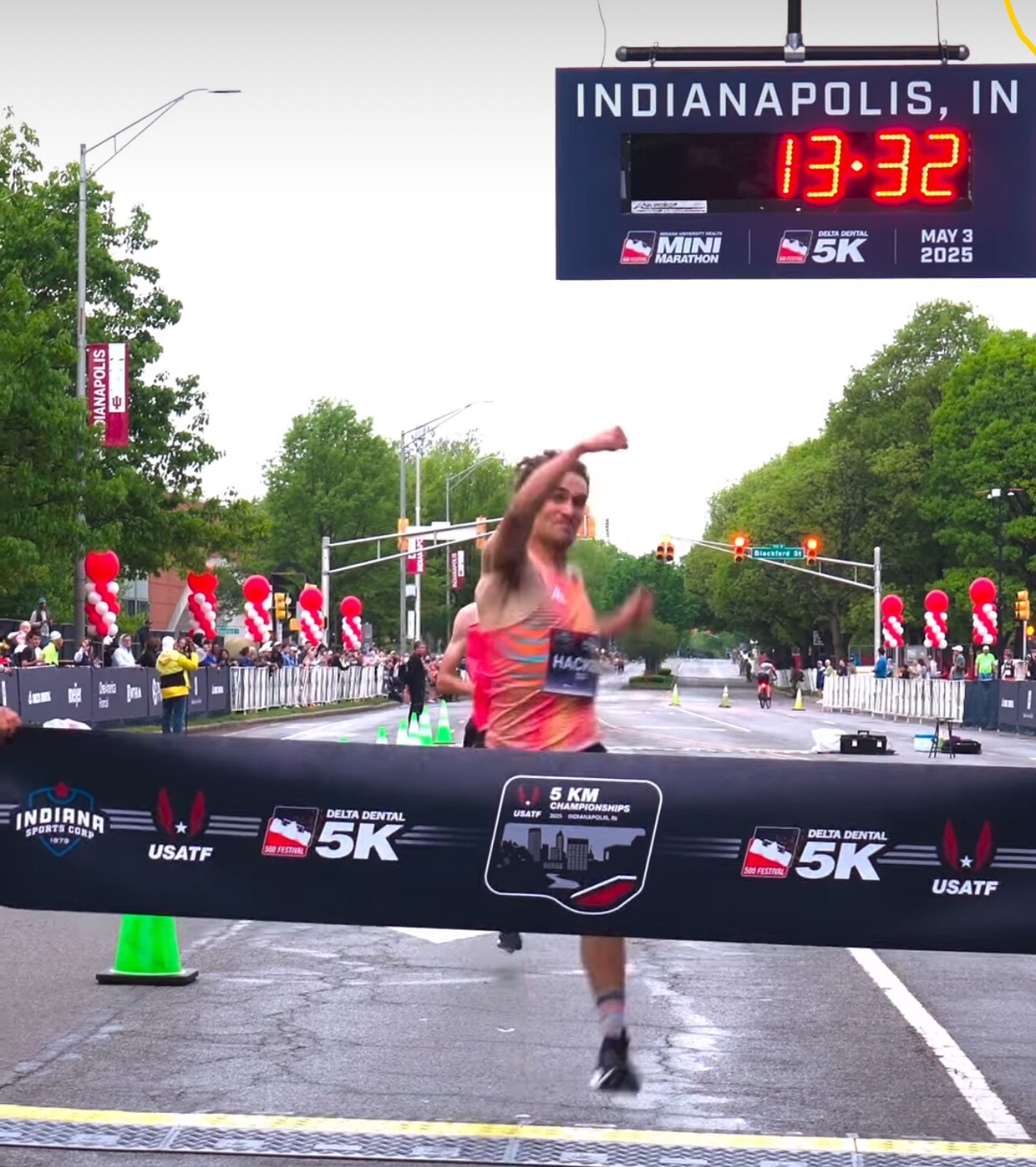
1. Olin Hacker (HOKA NAZ Elite) – 13:31.93
2. Casey Clinger (Brooks) – 13:33.04
3. Ahmed Muhumed (HOKA NAZ Elite) – 13:36.88
4. Morgan Beadlescomb (adidas) – 13:39.50
5. Graham Crawford (Reebok) – 13:42.10
6. Reed Fischer (Tinman Elite) – 13:44.75
7. Sam Chelanga (Nike) – 13:47.30
8. Ben Flanagan (On Running) – 13:49.60
9. Emmanuel Bor (U.S. Army) – 13:52.25
10. Eric Avila (HOKA) – 13:54.80
In the women’s race, Josette Andrews showed impressive strength and timing, kicking hard in the final stretch to take the win in 15:12.34. Emily Infeld of Nike followed closely in 15:14.50, and Karissa Schweizer of Bowerman Track Club secured third in 15:16.75, as the top trio pushed each other to the line.
Women’s Top 10 Finishers
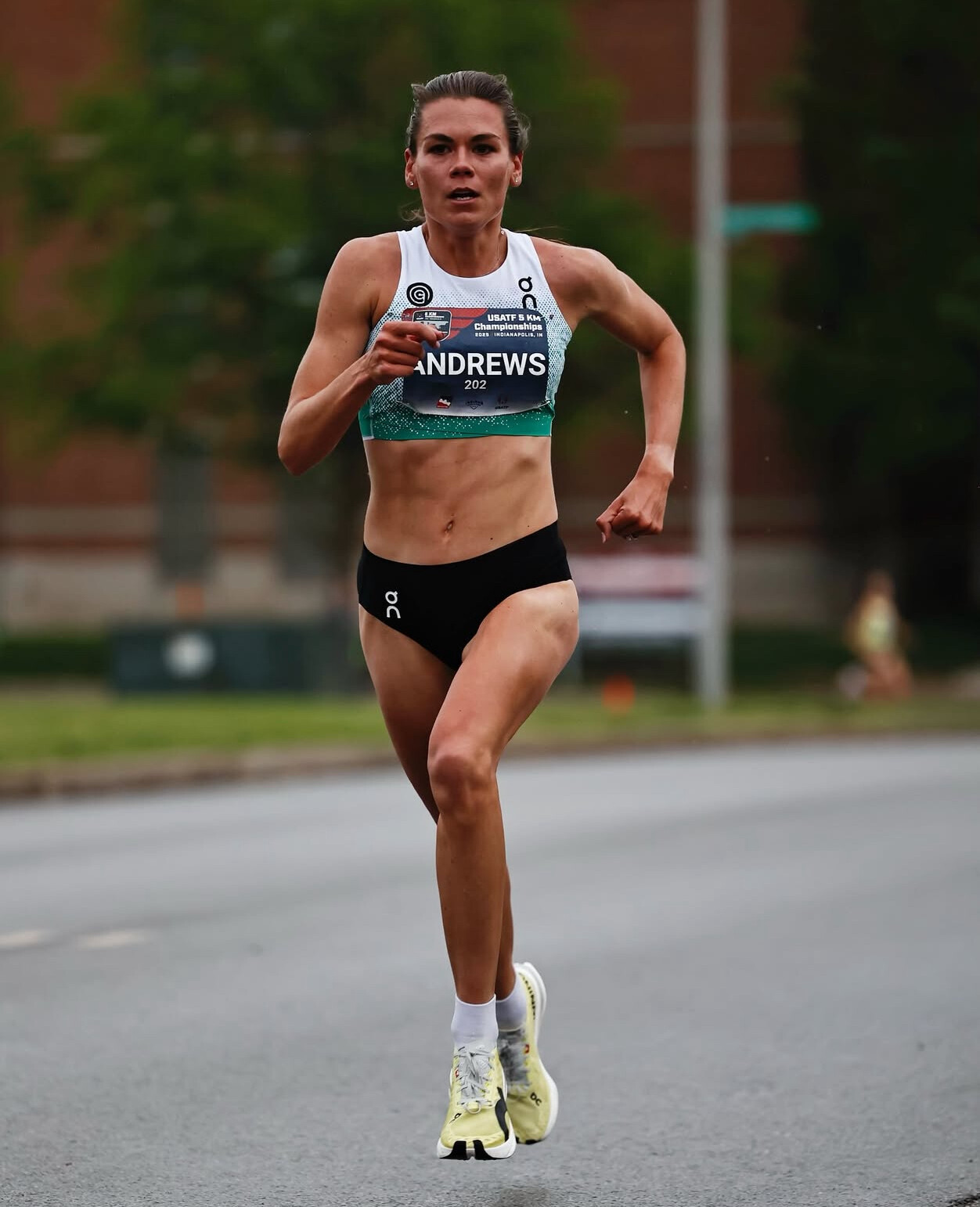
1. Josette Andrews – 15:12.34
2. Emily Infeld (Nike) – 15:14.50
3. Karissa Schweizer (Nike Bowerman TC) – 15:16.75
4. Elly Henes (adidas) – 15:19.20
5. Rachel Schneider (Under Armour) – 15:22.85
6. Abbey Cooper (New Balance) – 15:25.40
7. Molly Seidel (Saucony) – 15:28.95
8. Vanessa Fraser (Nike) – 15:31.50
9. Emily Lipari (adidas) – 15:34.05
10. Natosha Rogers (Hansons-Brooks) – 15:36.60
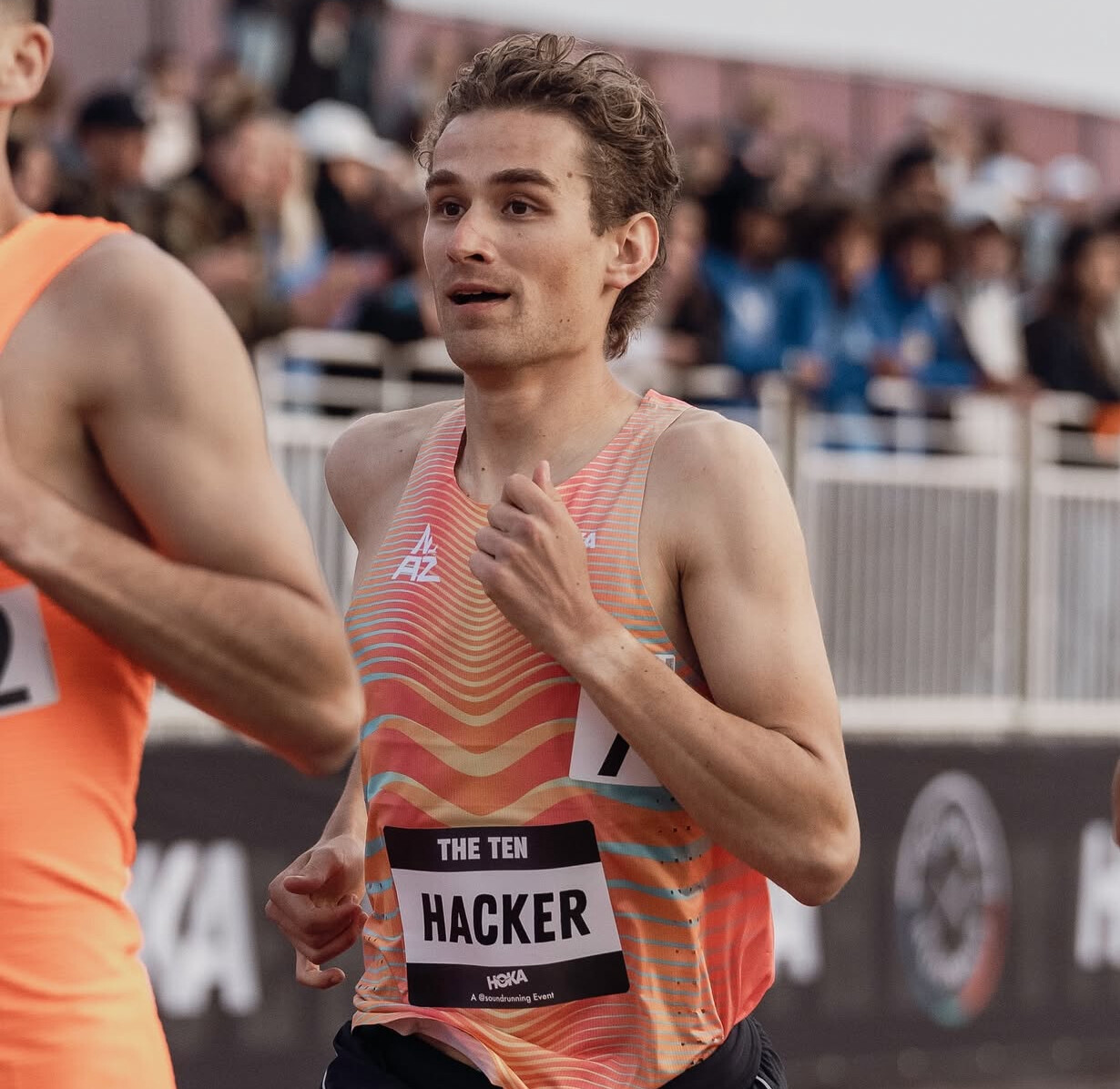
The performances in Indianapolis set the tone for what promises to be a fast and competitive summer racing season across the U.S. road circuit.
(05/03/25) Views: 159Boris Baron
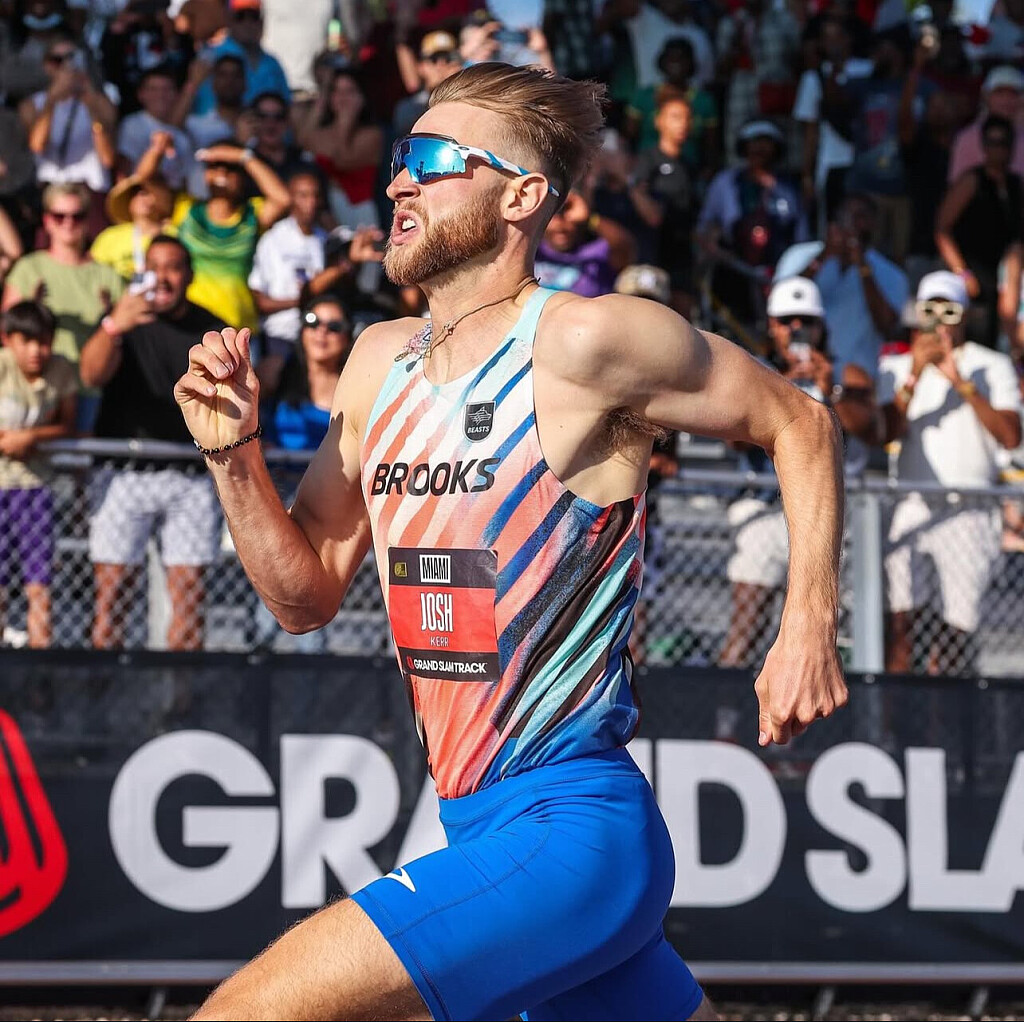
Records Fall on Day One at Grand Slam Track Miami
The opening day of the Grand Slam Track meet in Miami lived up to its billing as one of the most exciting events on the global track calendar. Held at the Ansin Sports Complex on May 2, the meet delivered fast times, dramatic finishes, and a new American record—all under sunny Florida skies.
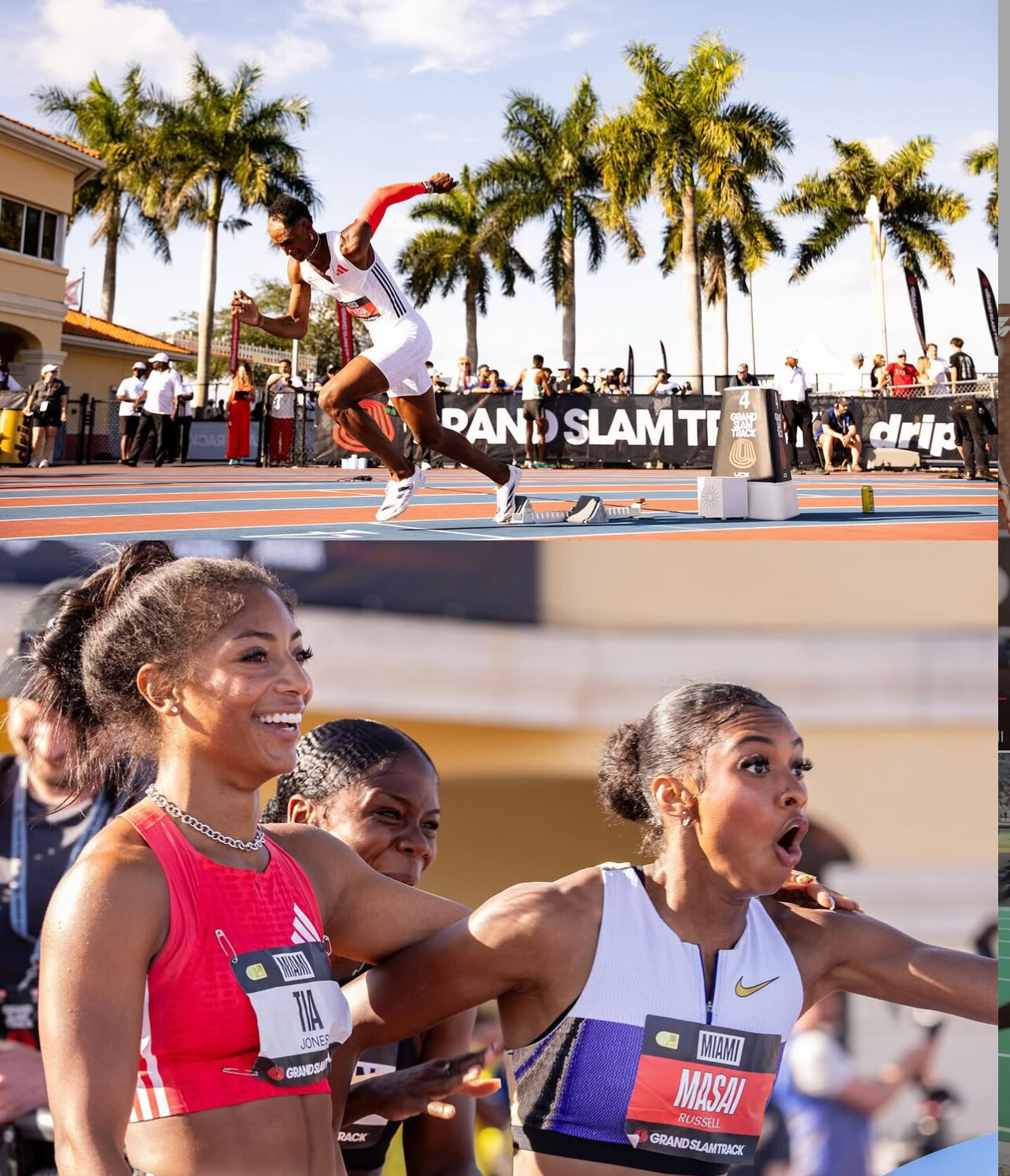
Masai Russell Breaks American Record in 100m Hurdles
Olympic gold medalist Masai Russell stole the spotlight by breaking the American record in the women’s 100m hurdles, clocking an incredible 12.17 seconds. The performance makes her the second-fastest woman in history behind Nigeria’s Tobi Amusan. In a race stacked with talent, Tia Jones followed closely in 12.19—now the third-fastest time ever—and Jamaica’s Ackera Nugent rounded out the podium with 12.34.
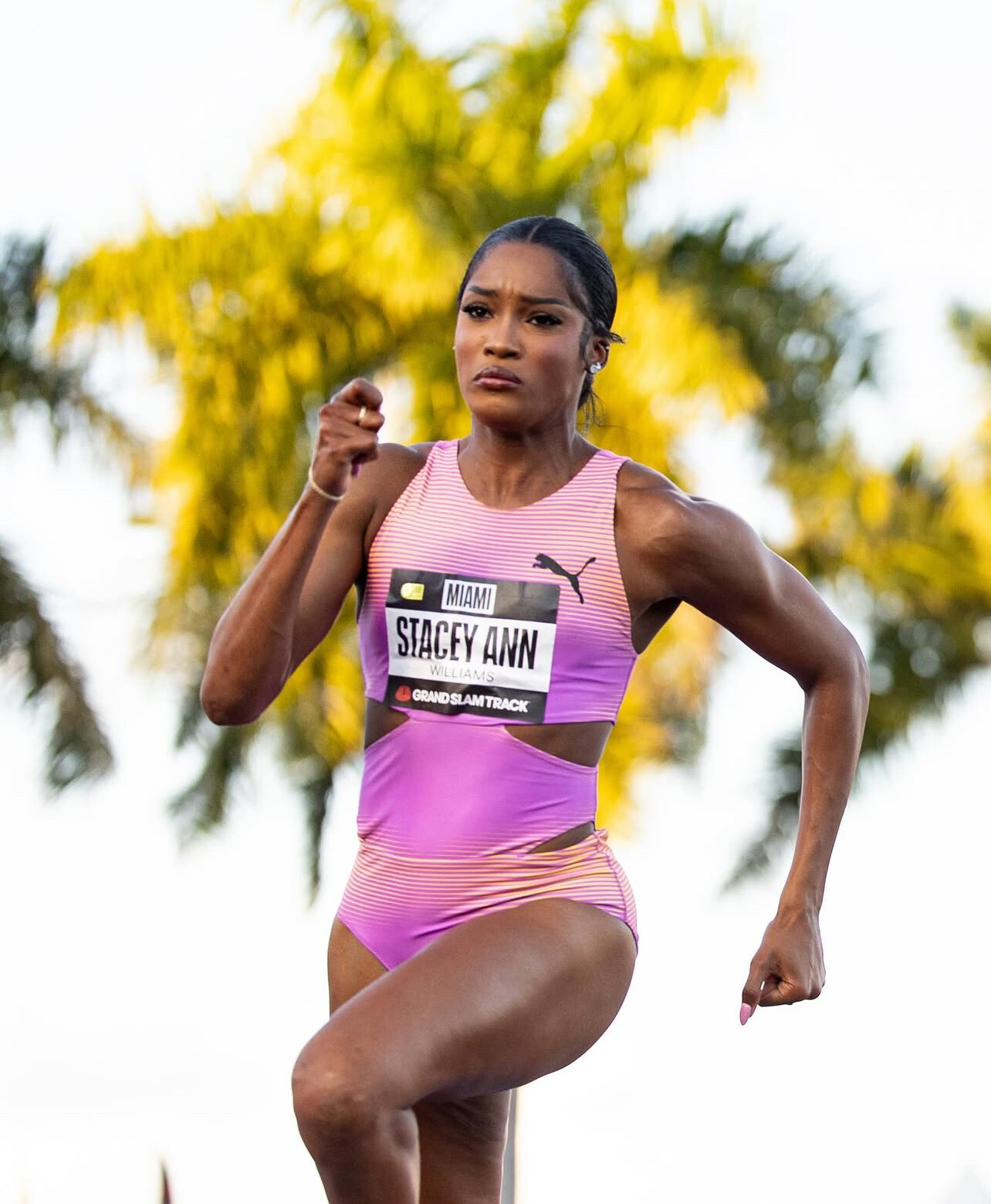
Melissa Jefferson-Wooden Sprints to 100m Win
In the women’s 100m, Melissa Jefferson-Wooden delivered a statement win with a wind-aided 10.75, continuing her strong 2025 campaign. Tamari Davis and Favour Ofili followed in a fiercely contested race that highlighted the depth of American sprinting.
Josh Kerr Outkicks Nuguse in 1500m Showdown
Great Britain’s Josh Kerr triumphed in a thrilling men’s 1500m, edging out top Americans Yared Nuguse and Cole Hocker with a 3:34.51 finish. Kerr’s victory marked a confident return to form after a quieter performance in Kingston earlier in the season.
World Lead for Jereem Richards in 200m
Trinidad & Tobago’s Jereem Richards ran a world-leading 19.86 in the men’s 200m, narrowly holding off Alexander Ogando of the Dominican Republic. Meanwhile, Marileidy Paulino continued her dominance in the women’s 400m, winning in 49.21 over Salwa Eid Naser.
Irish Victory in the 3000m
Ireland’s Andrew Coscoran claimed the men’s 3000m title with a time of 8:17.56, edging out American Grant Fisher and Great Britain’s George Mills. The distance event proved to be one of the day’s most tactical and tightly packed races.
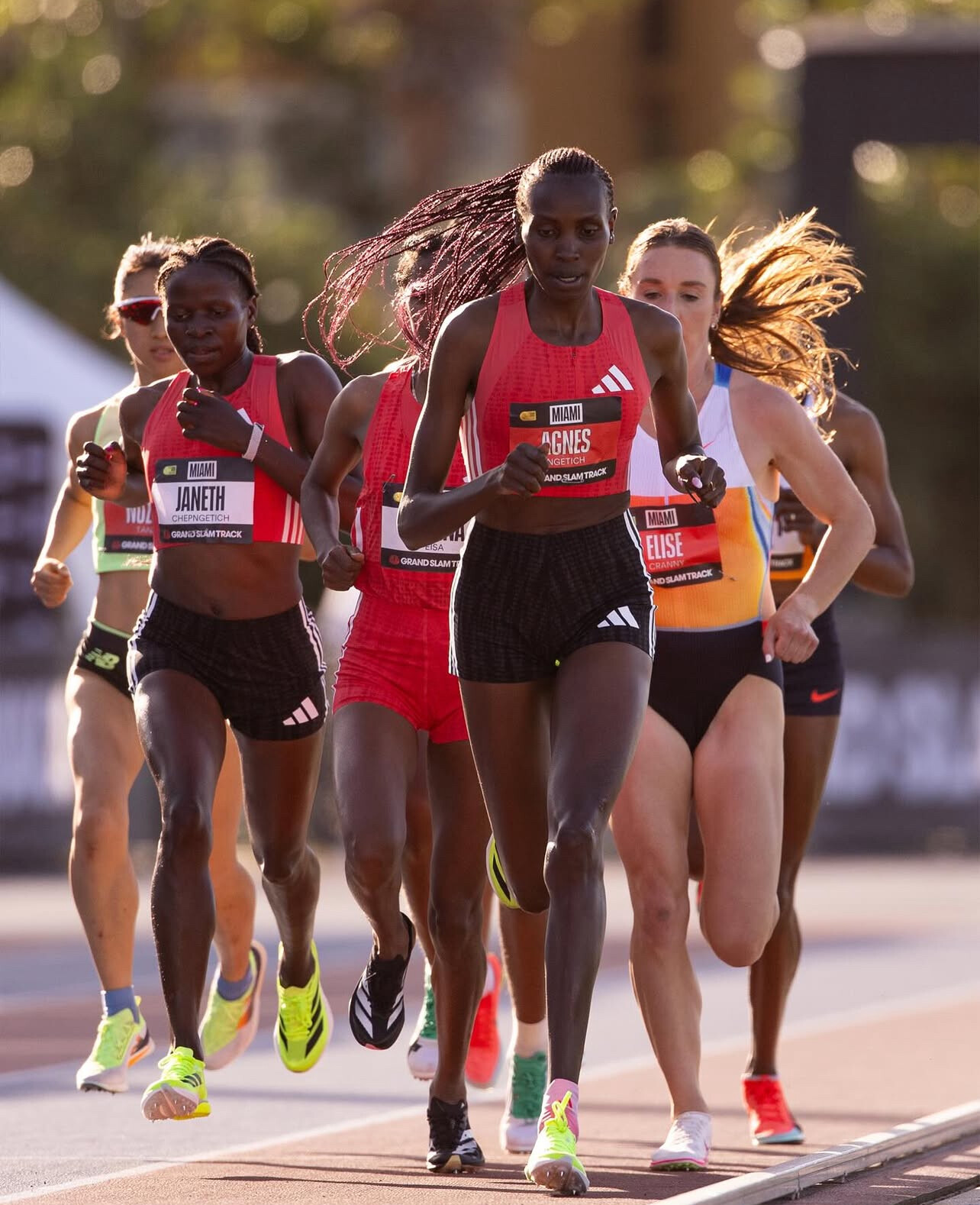
Ngetich Leads Kenyan Charge in 5000m
Kenya’s Agnes Jebet Ngetich controlled the women’s 5000m from the gun, finishing in a commanding 14:25.80. Ethiopia’s Medina Eisa and Hirut Meshesha gave chase, but couldn’t close the gap—another chapter in the ongoing Kenya-Ethiopia distance rivalry.
What’s Next
With more events set for the weekend, the Grand Slam Track’s Miami stop is already shaping up to be one of the season’s most memorable. The combination of elite talent, fast conditions, and prize money incentives has brought the very best to the starting line—and the fans are reaping the rewards.
(05/03/25) Views: 158Boris Baron
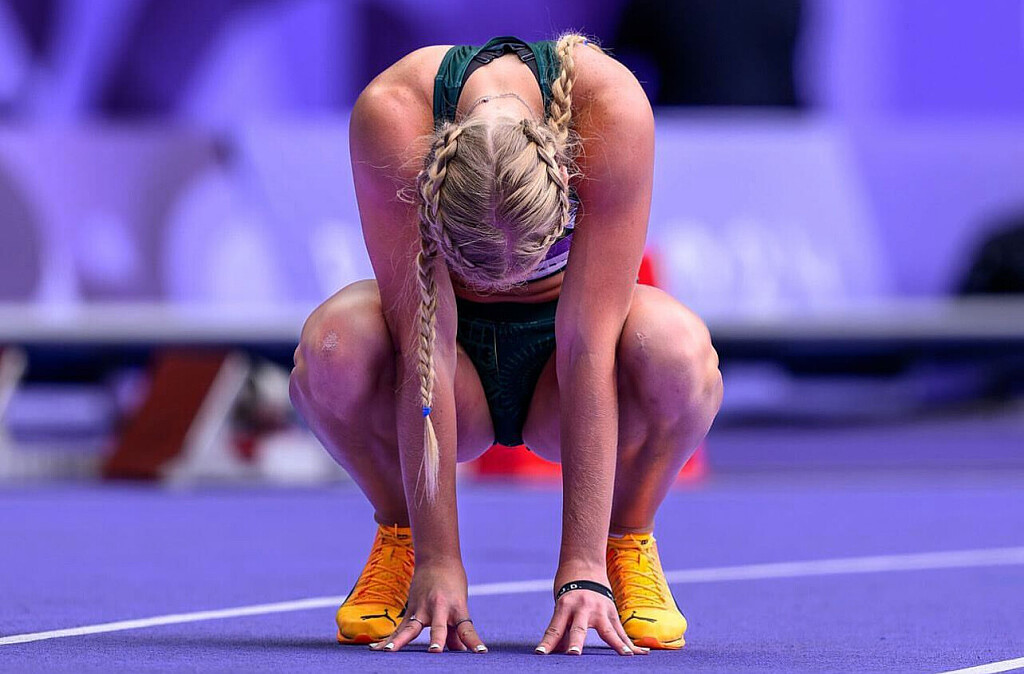
From Grief to Glory: Marione Fourie Honors Coach Juan Strydom Through Victory
South African hurdler Marione Fourie has continued to excel on the track, channeling her grief into determination following the sudden passing of her longtime coach, Juan Strydom, in early April 2025. Strydom, a revered figure in South African athletics, died of a heart attack at his home in Pretoria at the age of 59.
Fourie, who has been under Strydom’s guidance since her early teens, described him as more than just a coach, referring to him as a father figure. Their partnership was instrumental in her rise to prominence, including setting the South African 100m hurdles record of 12.49 seconds in July 2024.
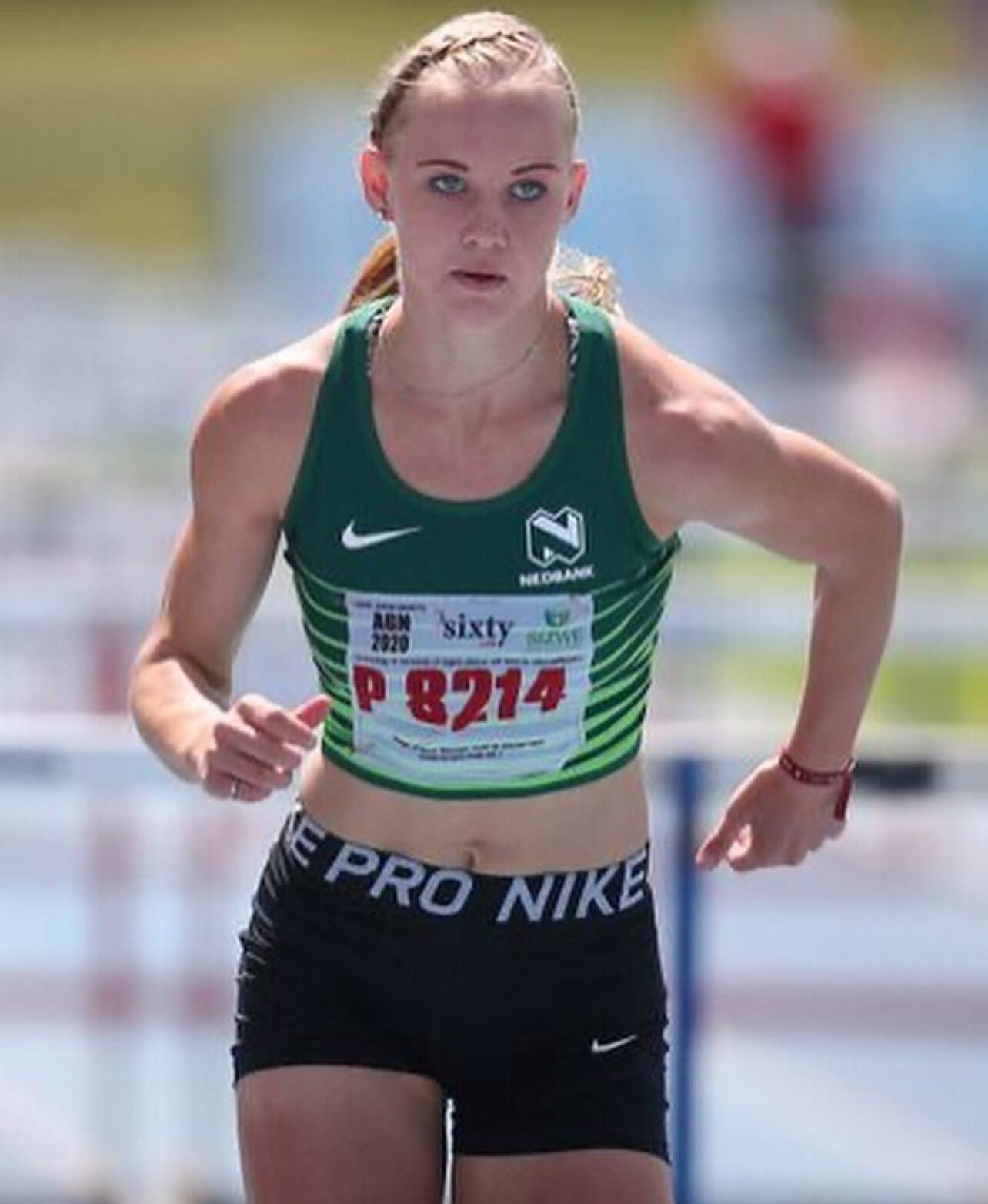
In the wake of Strydom’s death, Fourie has demonstrated remarkable resilience. She dedicated her recent victories to her late coach, stating, “I have managed to hold it together well since my coach passed away five weeks ago because I have managed to switch my mindset. I don’t like people to doubt me, and I am just running for him.”
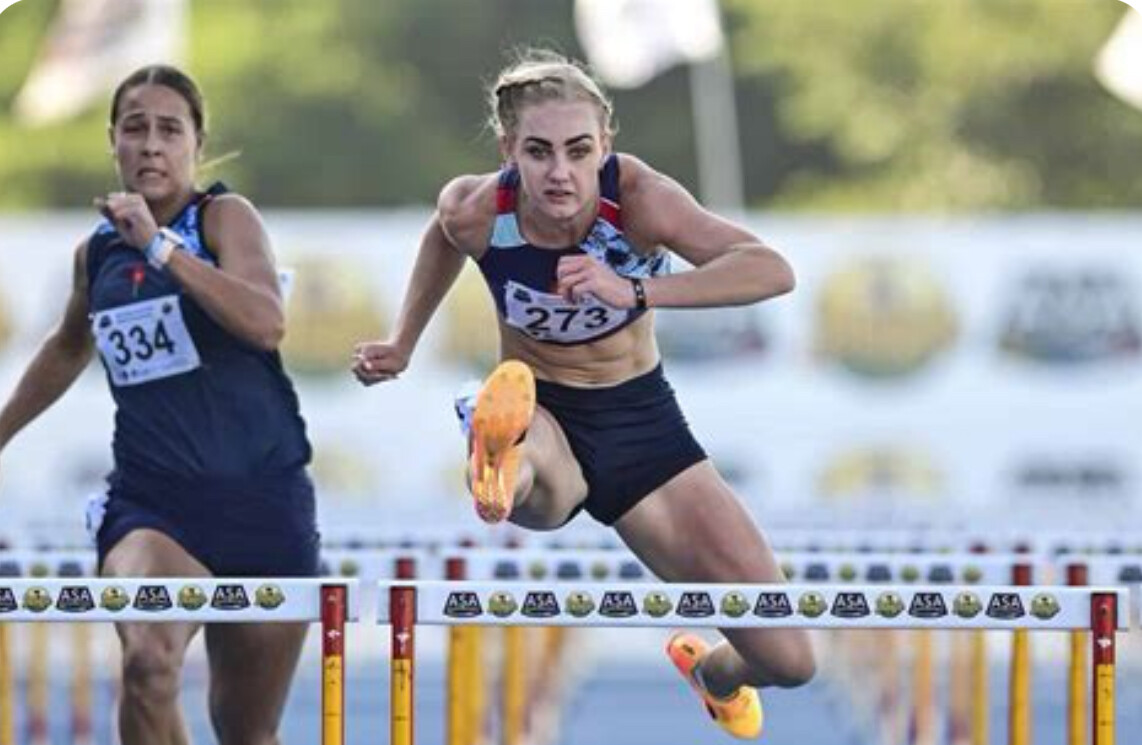
Strydom’s impact on South African athletics extended beyond Fourie. He was recognized as one of the country’s top sprint and hurdles coaches, known for his technical expertise and commitment to athlete development. His sudden passing left a significant void in the athletics community, with tributes pouring in from athletes and coaches nationwide.
As Fourie continues her athletic journey, she carries forward the legacy of her mentor, striving for excellence in honor of the man who played a pivotal role in her career.
(05/03/25) Views: 157Boris Baron

Miles with Daisy: The Joy of Running with My Dog
By Bob Anderson
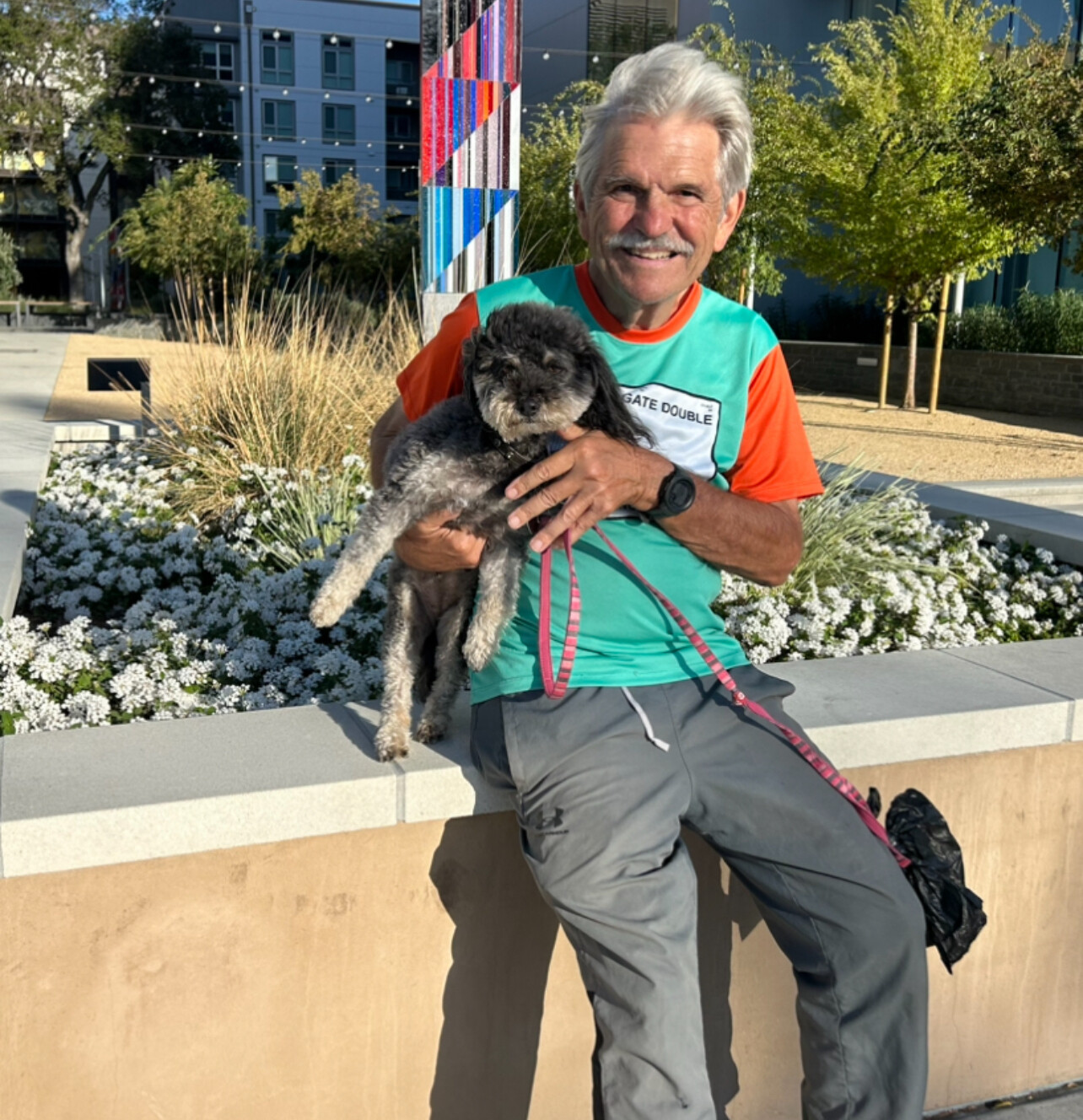
Running has been a cornerstone of my life for decades. Since July 4, 2018, I’ve averaged 45.5 miles per week, a routine that keeps me grounded and energized. In March 2020, my running journey took on new meaning when I rescued Daisy, a spirited little dog from the streets of Mexico. Since then, Daisy has become my steadfast running partner, averaging over 30 miles per week alongside me.
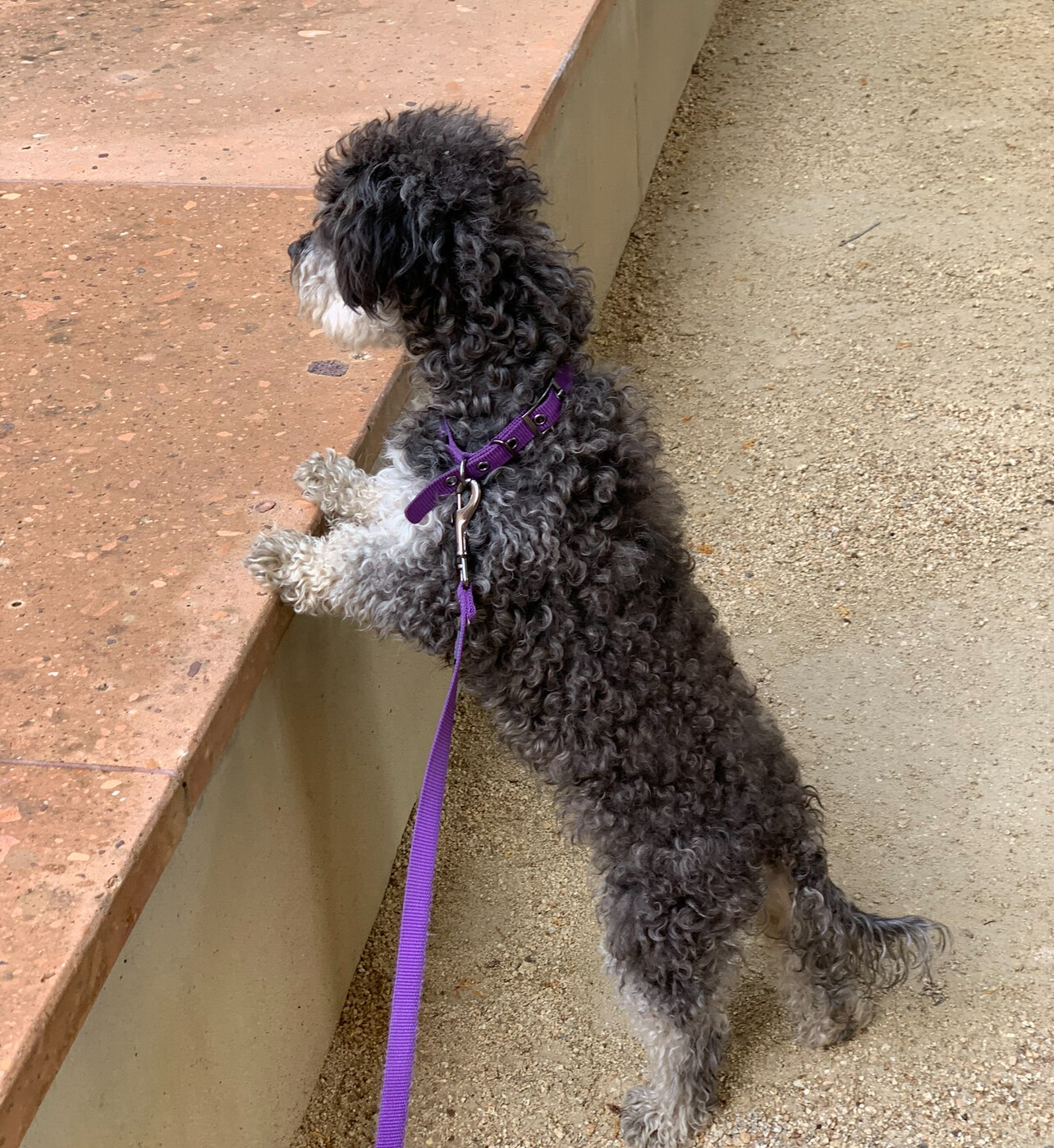
Daisy’s enthusiasm and unwavering spirit have not only enriched my runs but also helped me maintain and even increase my weekly mileage. Her presence adds joy and motivation to each stride, reminding me of the simple pleasures found in shared moments.
Benefits of Running with Your Dog
Running with a dog offers numerous benefits beyond physical fitness. It strengthens the bond between human and canine, provides mental stimulation, and brings joy to both parties. However, it’s essential to ensure your dog is healthy and suited for running. Consult with a veterinarian before starting, and gradually build up your dog’s endurance. Using appropriate gear, like a well-fitting harness and a sturdy leash, can make the experience safer and more comfortable for both of you.

Safety Considerations
Safety is paramount when running with your dog. Be mindful of weather conditions, as extreme temperatures can be harmful. Ensure your dog stays hydrated, and choose running surfaces that are gentle on their paws. Training your dog to run at your side and respond to commands can prevent accidents and make your runs smoother.
Conclusion
Incorporating your dog into your running routine can transform a solitary exercise into a shared adventure, enriching both your lives. With proper preparation and attentiveness to your dog’s needs, running together can become a rewarding and enduring practice.
Note: Always consult with a veterinarian before starting any new exercise regimen with your dog to ensure it’s safe and appropriate for their specific health needs.
(05/02/25) Views: 147With Boris Baron
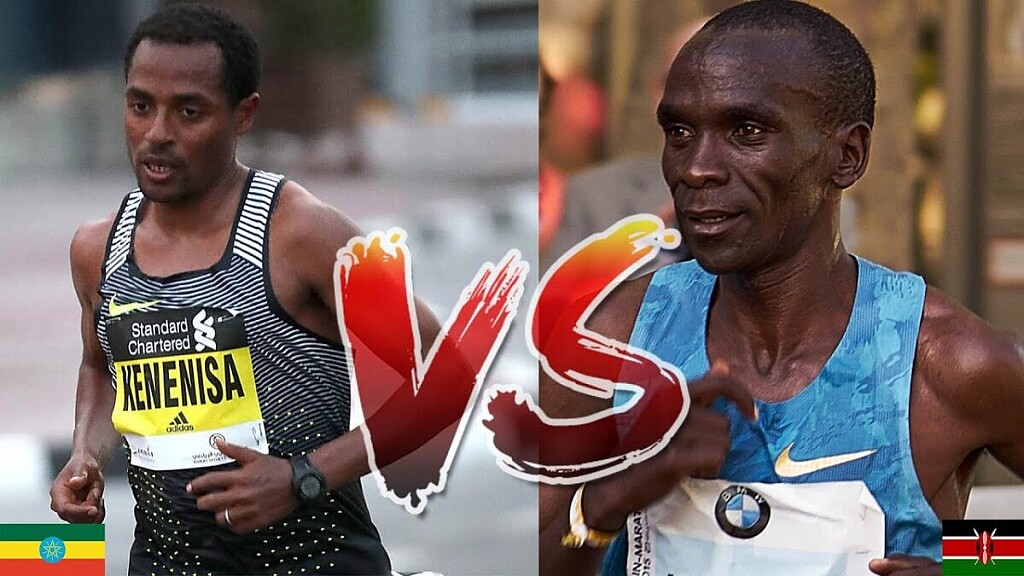
Kenya vs Ethiopia What Sets Their Runners Apart
When it comes to distance running, no two countries are more dominant—or more frequently compared—than Kenya and Ethiopia. From 5Ks to marathons, athletes from these East African nations consistently top podiums and rewrite record books. But while the results may look similar, the paths to victory are often quite different.
Altitude Advantage, Different Terrains
Both Kenya and Ethiopia benefit from high-altitude environments that naturally boost endurance. Kenya’s top training hubs, like Iten and Eldoret, sit between 7,000 and 8,000 feet. Ethiopia’s Bekoji and Sululta offer similar elevations. But terrain matters too: Kenya’s roads are often red clay or uneven gravel, ideal for building strength and resilience. Ethiopia’s runners more frequently train on hills and mountain trails, with steeper and more demanding climbs integrated into daily runs.
Training Philosophies Diverge
Kenyan training is rooted in simplicity and rhythm. Athletes often meet for large group sessions, with a strong focus on tempo runs, long-distance efforts, and unstructured fartleks. The vibe is community-oriented and competitive—if someone surges, the group follows.
In contrast, Ethiopia’s elite training tends to be more individualized and coach-driven. Athletes follow structured schedules with clearly defined paces, recovery sessions, and high-intensity track workouts. The approach is more scientific, and recovery days are strictly observed.
Daily Life and Recovery
Kenyan runners typically live together in camps, waking early to train, followed by long periods of rest. A second run often comes in the late afternoon, and the lifestyle emphasizes minimal distractions.
Ethiopian runners may train in smaller groups and return home between sessions. There’s more variety in how the day is structured, though the focus on discipline remains.
(Photos) Kenyan Training in Iten and Eldoret
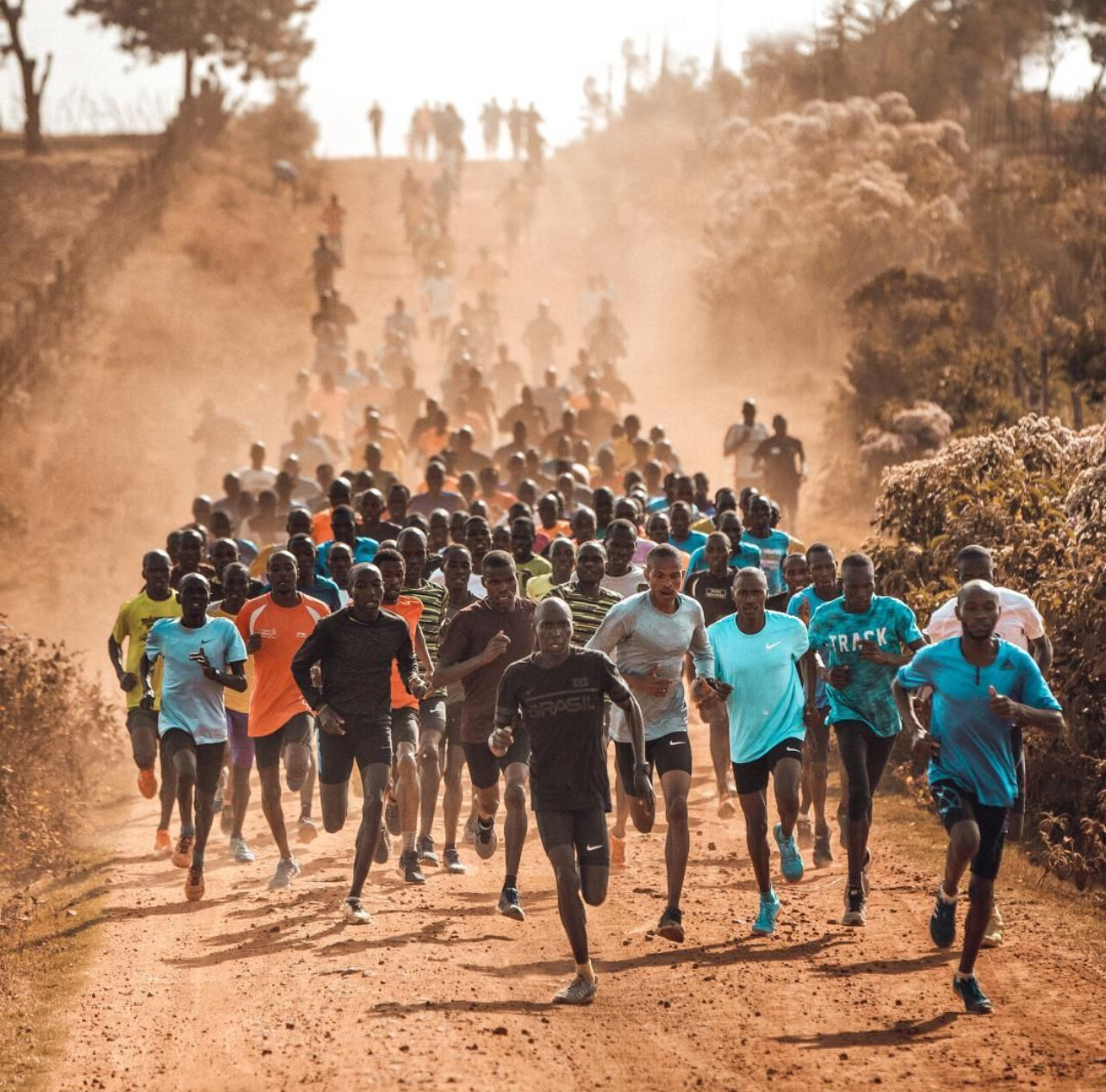
1. Mass Training Run in Iten
A striking image capturing a large group of Kenyan runners during a typical morning session on the red dirt roads of Iten, known as the “Home of Champions.”
2. Track Workouts in Eldoret
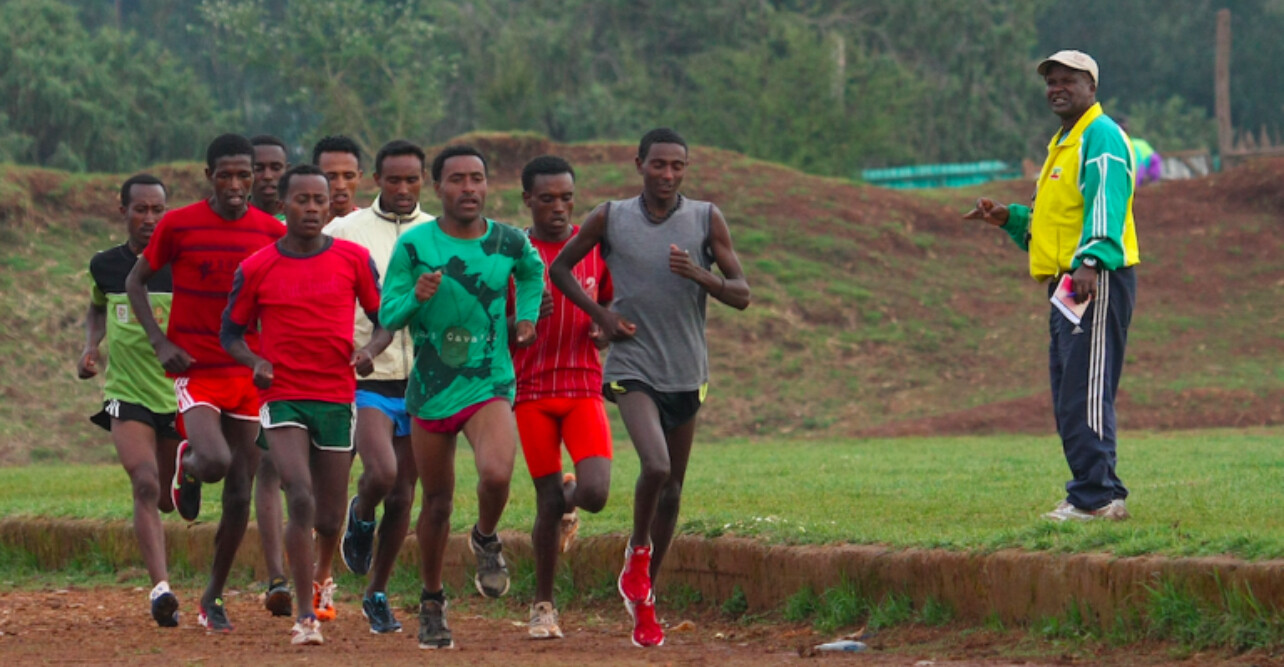
Kenyan marathon runners engaging in interval training at the athletics track in Eldoret, highlighting their emphasis on group cohesion and endurance.
(Photos) Ethiopian Training in Bekoji and Sululta
3. Group Training in Bekoji
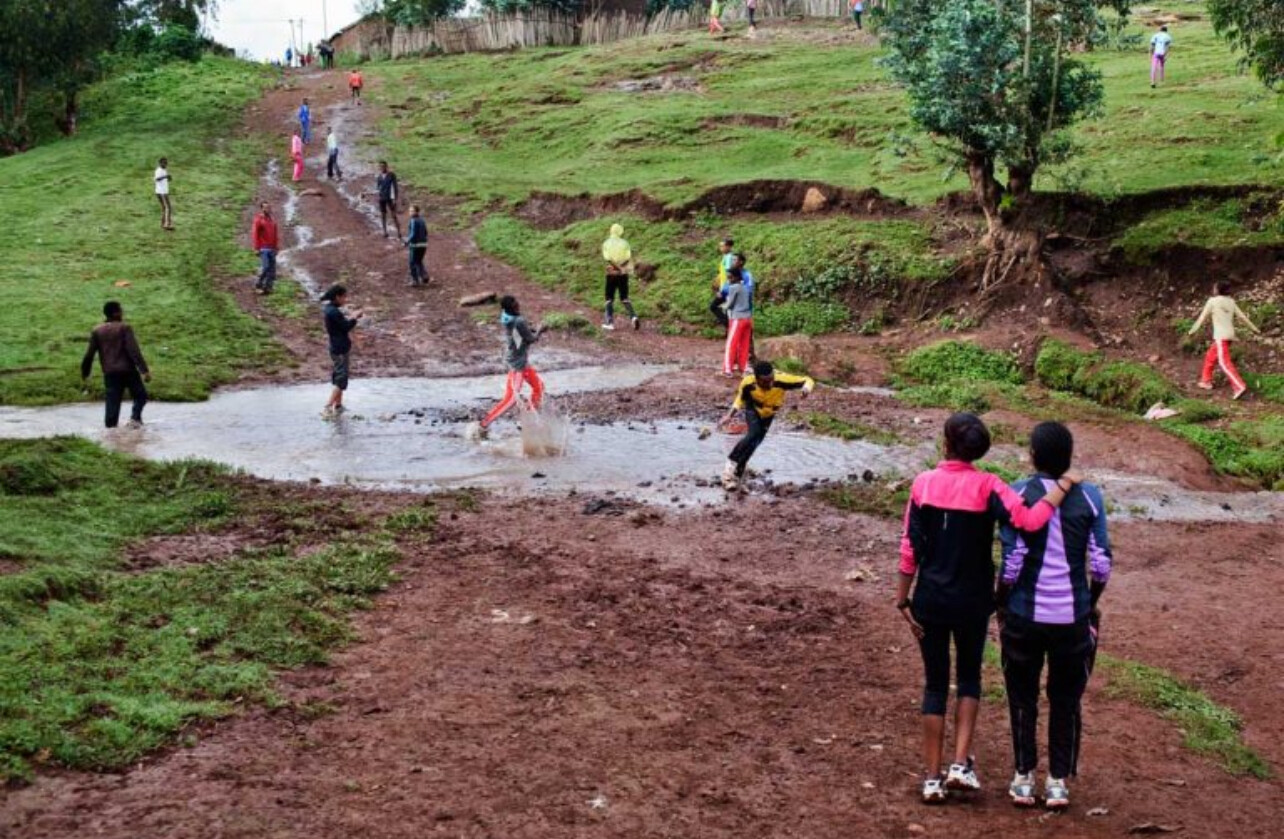
A glimpse into a training session in Bekoji, Ethiopia, showcasing runners on a dirt track, emphasizing their structured and coach-led routines.
4. Trail Running in Sululta
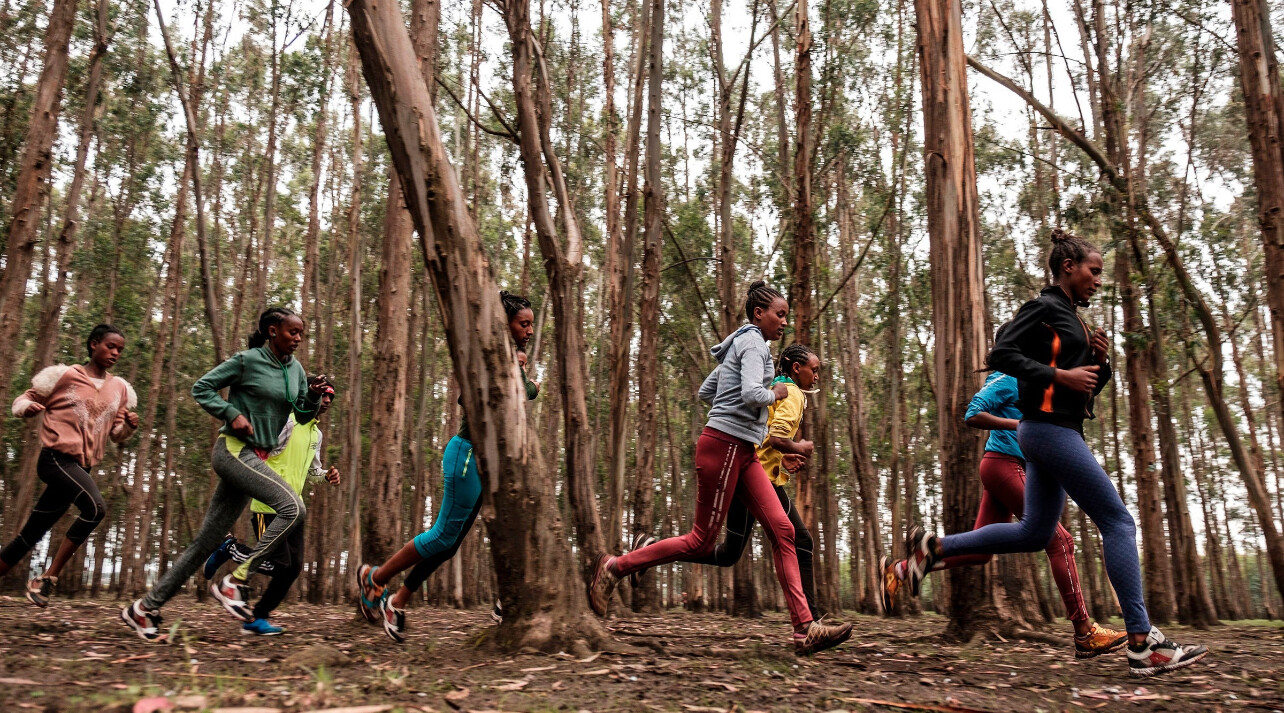
Ethiopian athletes navigating through forested trails in Sululta, reflecting their focus on varied terrains and natural environments.
Fueling for Success
Diet is another point of contrast. Kenyan athletes often eat ugali, a maize-based dish, with sukuma wiki (collard greens) and beans. Meals are consistent, simple, and heavy on carbohydrates. Hydration includes local teas and water, with little emphasis on supplements.
In Ethiopia, injera (a sour flatbread made from teff) is the foundation, served with protein-rich stews like shiro or doro wat. Teff is rich in iron and slow-digesting carbs—making it a valuable fuel for endurance.
Cultural and Coaching Influence
In Kenya, many athletes are inspired by runners from their own village or region—legends like Eliud Kipchoge or David Rudisha have inspired thousands. Training is often passed down through generations informally.
In Ethiopia, there’s a more centralized coaching system and support from the national federation. Greats like Haile Gebrselassie and Kenenisa Bekele have helped shape a more formal pathway from local clubs to the world stage.
Different Roads, Same Finish Line
Despite the differences, the results speak for themselves: both countries continue to dominate. Kenya may have the edge in the marathon, while Ethiopia consistently excels in 10K and track events. Together, they’ve redefined what’s possible in distance running.
(05/02/25) Views: 145Boris Baron
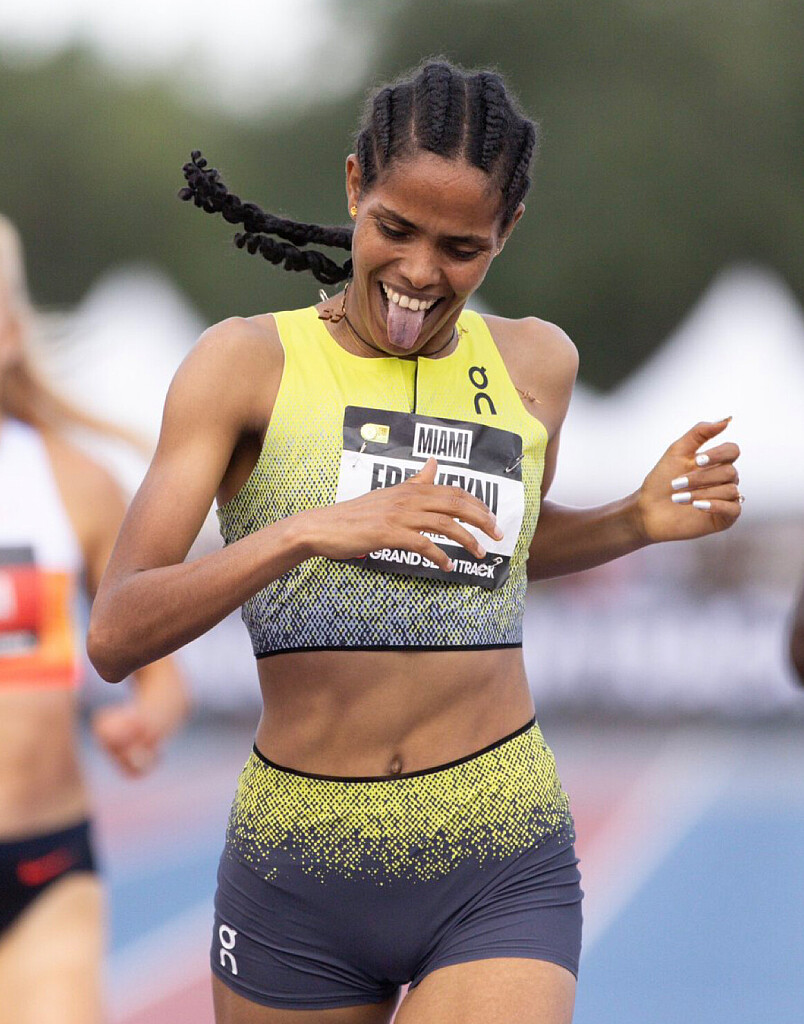
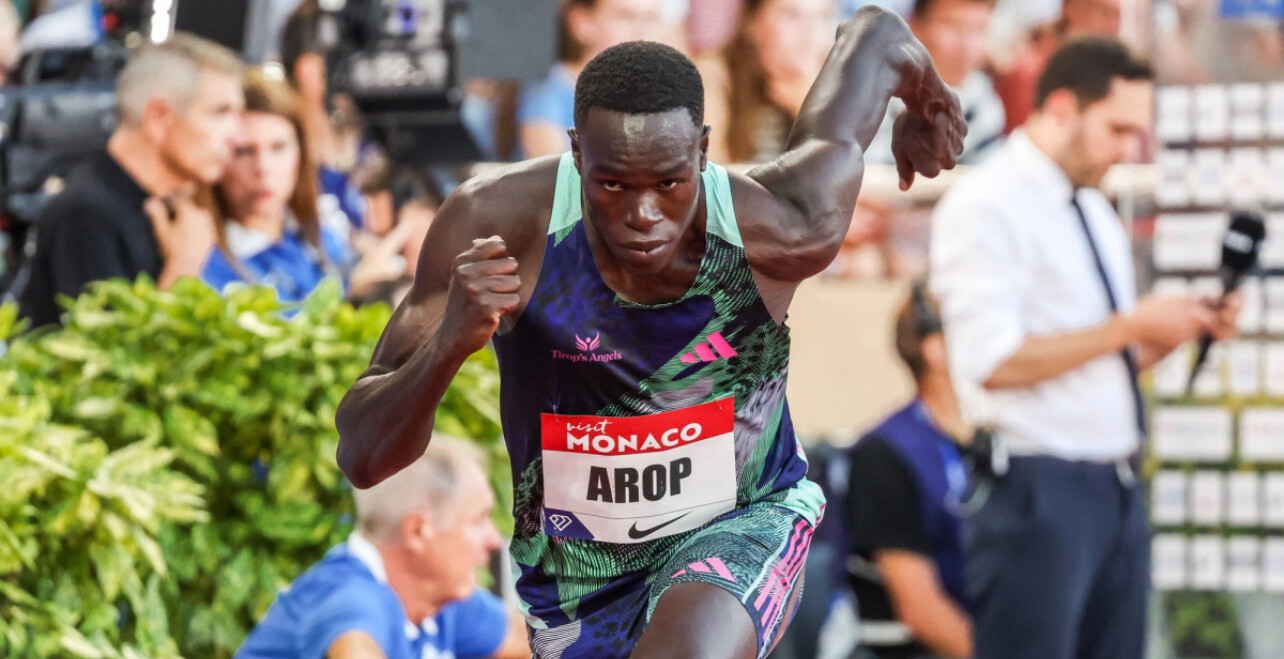
Miami Slam Day 2: Hailu, Arop, and Goule-Toppin Shine in Middle-Distance Showdowns
The second day of the Grand Slam Track meet in Miami, held on May 3, 2025, at the Ansin Sports Complex, showcased thrilling middle-distance races, with elite athletes delivering standout performances in the 800m and 1500m events.
Women’s 1500m: Hailu Edges Hiltz in a Nail-Biter
Ethiopia’s Freweyni Hailu clinched victory in the women’s 1500 meters, clocking 4:06.96. She narrowly defeated American Nikki Hiltz, who finished just 0.12 seconds behind at 4:07.08. Diribe Welteji secured third place with a time of 4:07.46. The race was a tactical battle, with Hailu making a decisive move in the final lap to outpace her competitors.
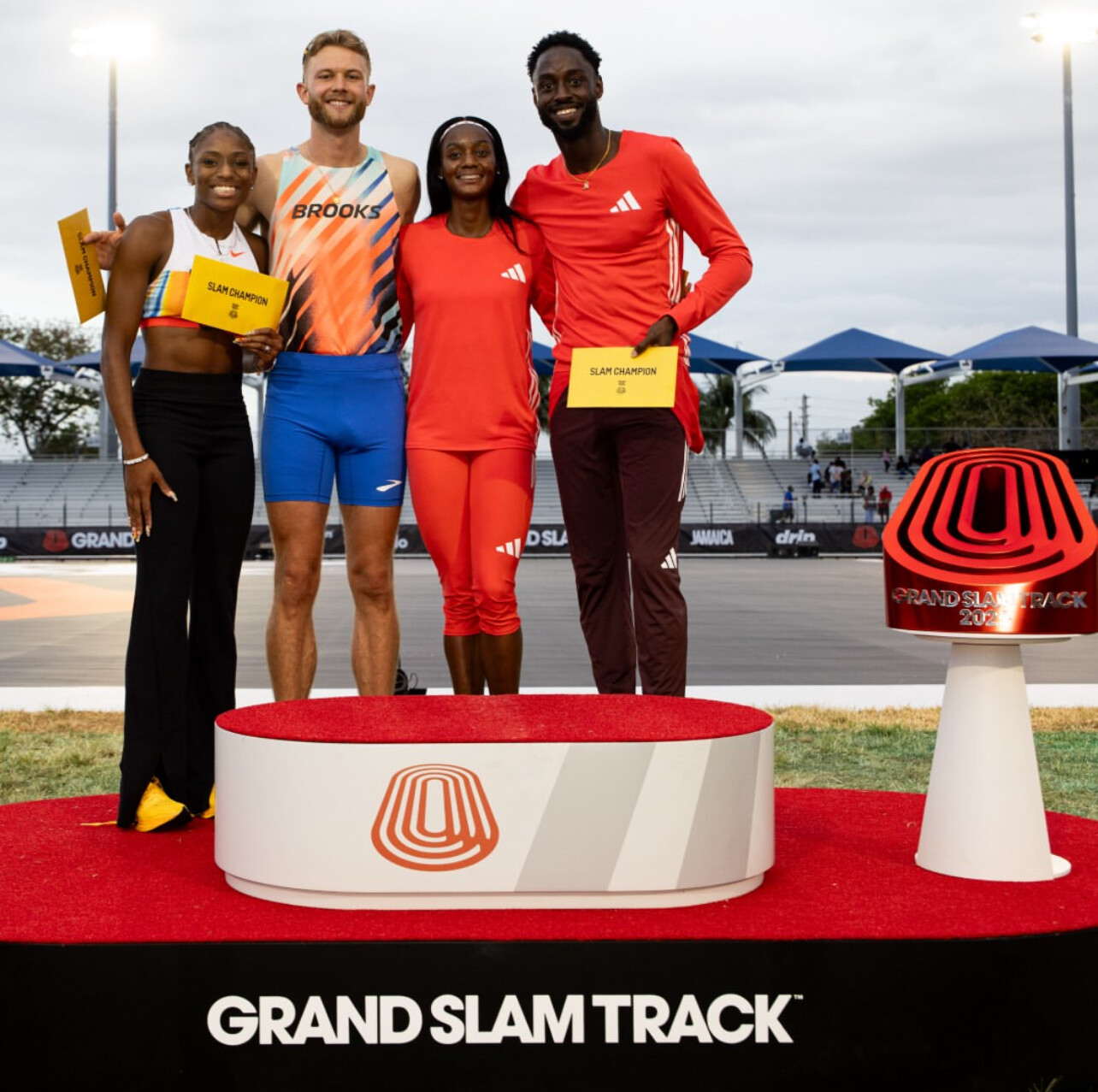
Men’s 800m: Arop Dominates with Commanding Win
Canada’s Marco Arop, the reigning world champion, showcased his dominance in the men’s 800 meters, winning with a time of 1:43.81. He led the race from the front, breaking away in the second lap to secure a comfortable victory. Djamel Sedjati of Algeria finished second in 1:44.49, while American Bryce Hoppel took third in 1:44.91.
Women’s 800m: Goule-Toppin Returns to Form
Jamaica’s Natoya Goule-Toppin delivered a strong performance in the women’s 800 meters, winning the race in 1:58.31. She held off a competitive field, with American Allie Wilson finishing second in 1:58.84 and Kenya’s Vivian Chebet taking third in 1:59.07. Goule-Toppin’s victory marks a significant return to form as she builds momentum for the upcoming season.
Prize Money Structure: Grand Slam Track’s Lucrative Payouts
The Grand Slam Track series offers a substantial prize pool of $12.6 million across its season. Each event, or “Slam,” awards prize money to the top eight finishers in each race group as follows:
• 1st Place: $100,000
• 2nd Place: $50,000
• 3rd Place: $30,000
• 4th Place: $25,000
• 5th Place: $20,000
• 6th Place: $15,000
• 7th Place: $12,500
• 8th Place: $10,000
In addition to per-event earnings, “Grand Slam Racers” receive annual base compensation for participating in all four Slams, while “Challengers” earn appearance fees per event.
Looking Ahead: Final Day in Miami
The Grand Slam Track meet in Miami concludes on Sunday, May 4, 2025, with the final day’s events scheduled from 3:00 PM to 6:00 PM Eastern Time at the Ansin Sports Complex. Key events include the women’s 800m, women’s 3000m, and men’s 5000m. Fans can watch the live broadcast on The CW Network or stream the events live on Peacock.
As the series progresses, athletes accumulate points based on their performances, aiming for the prestigious “Racer of the Year” title awarded at the season’s end.
(05/03/25) Views: 144Boris Baron
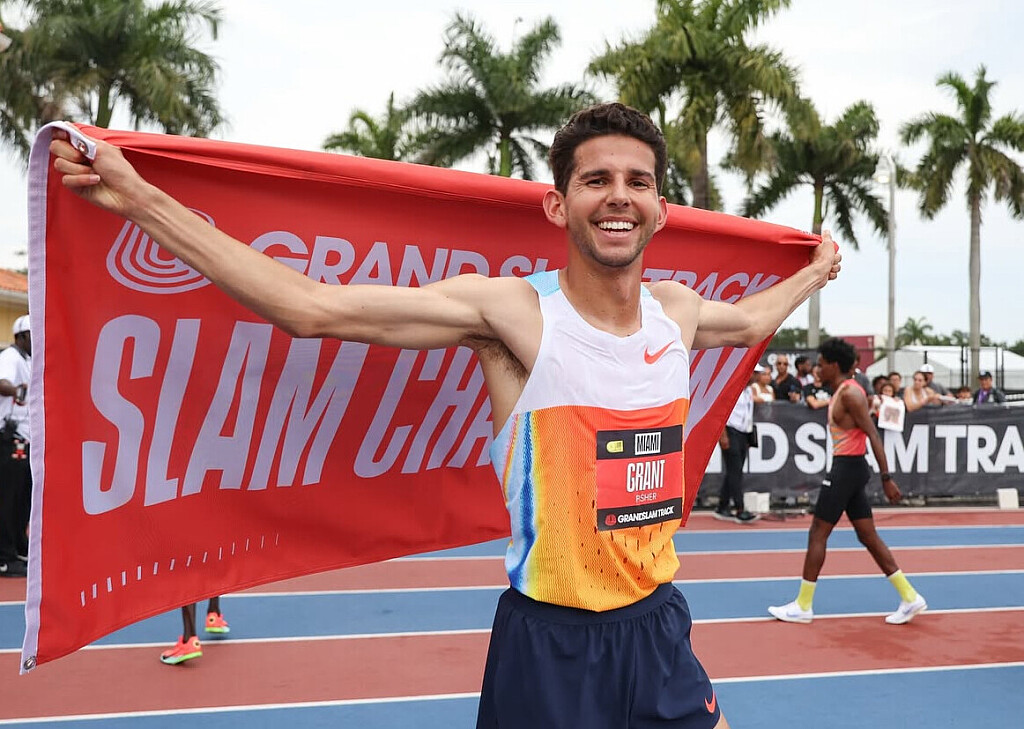
Day 3 Recap: Grand Slam Track Miami Delivers High Drama and Big Payouts
The final day of the Grand Slam Track meet in Miami concluded with thrilling performances and significant prize money awarded to top athletes. Held at the Ansin Sports Complex from May 2–4, this event marked the second stop in the inaugural Grand Slam Track series, founded by Olympic legend Michael Johnson.
Top Performers and Prize Money Winners
The Grand Slam Track series features six event groups, each comprising two disciplines. Athletes accumulate points across both events, with the highest total determining the group champion. Winners receive $100,000, with payouts extending to the eighth place at $10,000.
Men’s Short Sprints (100m & 200m):
Kenny Bednarek secured victories in both the 100m (9.79 seconds, wind-aided) and 200m (19.84 seconds), earning the maximum 24 points and the $100,000 prize.

Women’s Long Hurdles (400m Hurdles & 400m):
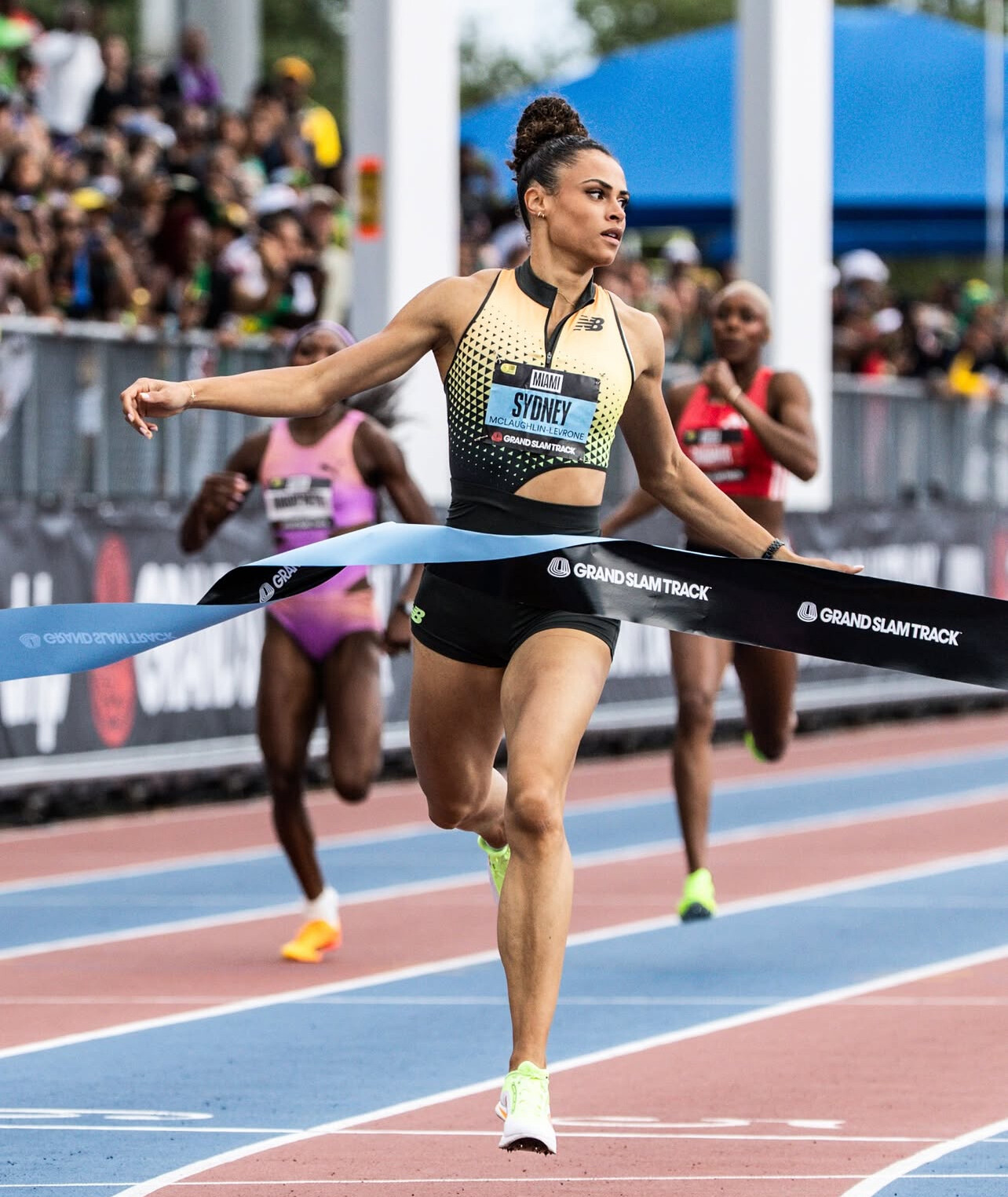
Sydney McLaughlin-Levrone dominated her events, including a 400m win in 49.69 seconds, clinching her second consecutive Grand Slam title and $100,000.
Men’s Short Distance (800m & 1500m):
Josh Kerr won the 1500m in 3:34.51 and placed fifth in the 800m with a personal best of 1:45.01, accumulating 16 points to secure the group title and $100,000.
Women’s Short Sprints (100m & 200m):
Melissa Jefferson-Wooden became the first athlete to win back-to-back Grand Slam titles, winning the 100m in 10.75 seconds and placing third in the 200m, totaling 18 points and earning $100,000.
Men’s Long Distance (3000m & 5000m):
Grant Fisher won the 5000m, securing enough points to top the long-distance group and take home $100,000.
“I need to be ready to win in a lot of different scenarios,” said Grant Fisher after his dominant performance in the men’s 5000m at the Grand Slam Track meet in Miami. The U.S. star closed with a blistering 3:57.58 over the final 1600 meters, showcasing both tactical patience and lethal finishing speed en route to his 13:40.32 victory over 12.5 laps.
Women’s Long Distance (3000m & 5000m):
Agnes Jebet Ngetich won the 5000m with a time of 14:25.80, setting a course record and claiming the group title and $100,000.
Prize Money Structure
The Grand Slam Track series offers substantial financial incentives:
First-place finishers in each event group receive $100,000. Second place earns $50,000, third place takes home $30,000, and fourth place is awarded $25,000. Fifth through eighth places receive $20,000, $15,000, $12,500, and $10,000 respectively. This structure ensures that all finalists receive compensation, promoting competitive participation across the board.
Emerging Stars and Notable Performances
Several athletes delivered standout performances:
• Andrew Coscoran: The Irish runner won the 3000m in 8:17.56, marking the biggest victory of his career.
• Masai Russell: Set a new American record in the 100m hurdles with a time of 12.17 seconds, the second-fastest in history.
• Peter Bol: The Australian middle-distance runner earned $30,000 in his Grand Slam Track debut, showcasing his potential in the league.
Looking Ahead
With two events completed, the Grand Slam Track series moves to Philadelphia and Los Angeles. Athletes will continue to compete for significant prize money and the coveted “Racer of the Year” title, awarded to the top male and female athletes based on cumulative points across all four Slams.
(05/04/25) Views: 143Boris Baron
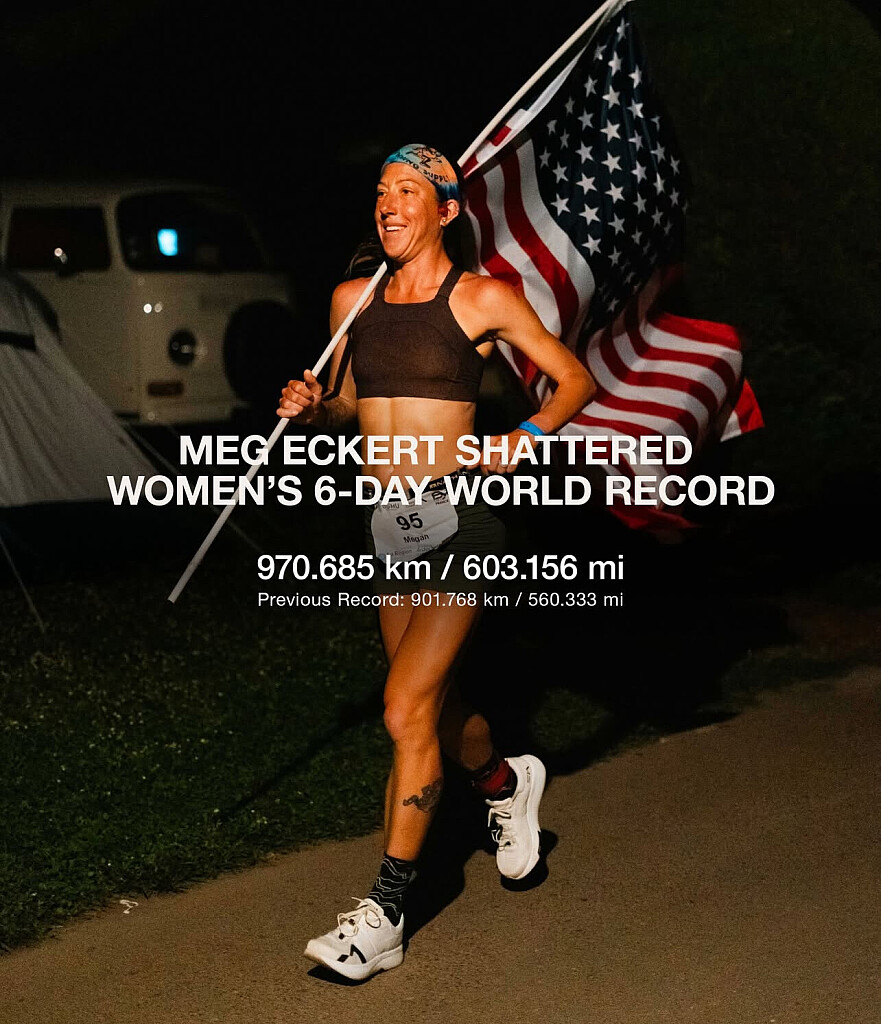
Meg Eckert Smashes World Record running Over 600 Miles in Six Days
American ultrarunner Meg Eckert has just rewritten the record books. Covering a jaw-dropping 603.156 miles (970.685 kilometers) over six days, Eckert shattered the women’s six-day world record at the 24H World Challenge in Policoro, Italy, making headlines in the ultrarunning world.
The previous record of 576.6 miles (928.1 km) was held by Australia’s Dipali Cunningham, set in 2001. Eckert not only surpassed that mark—she obliterated it with consistent pacing, minimal rest, and an iron will that held up through blistering heat, exhaustion, and the mental toll of running for nearly a full week.
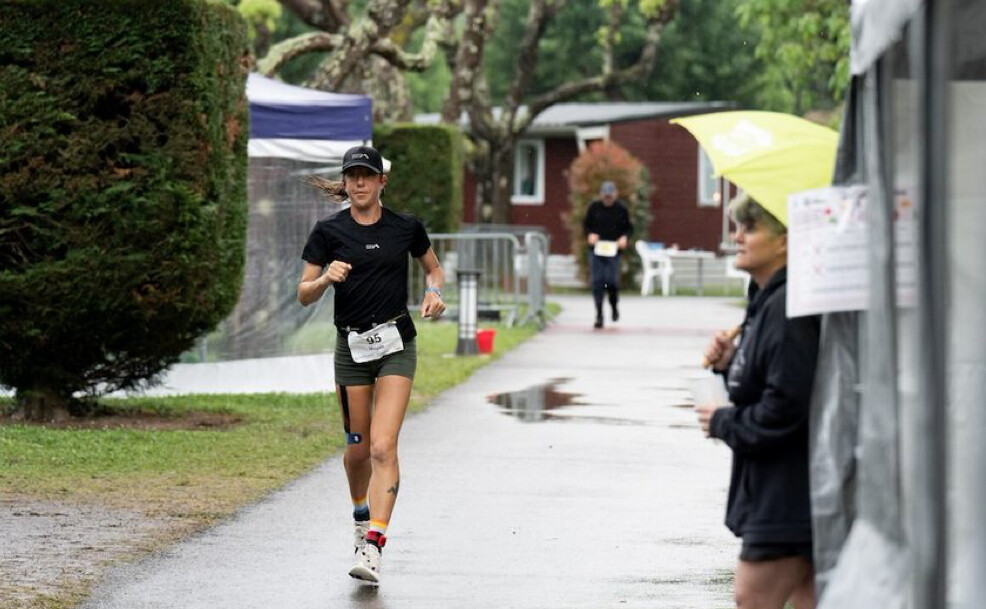
The six-day race is one of the ultimate endurance tests in ultrarunning, requiring not just physical toughness but strategic discipline. Athletes eat, rest, and sleep in short bursts, logging as many miles as possible around a looped course. Eckert averaged over 100 miles per day, an incredible feat. Many runners only average this in an entire month.
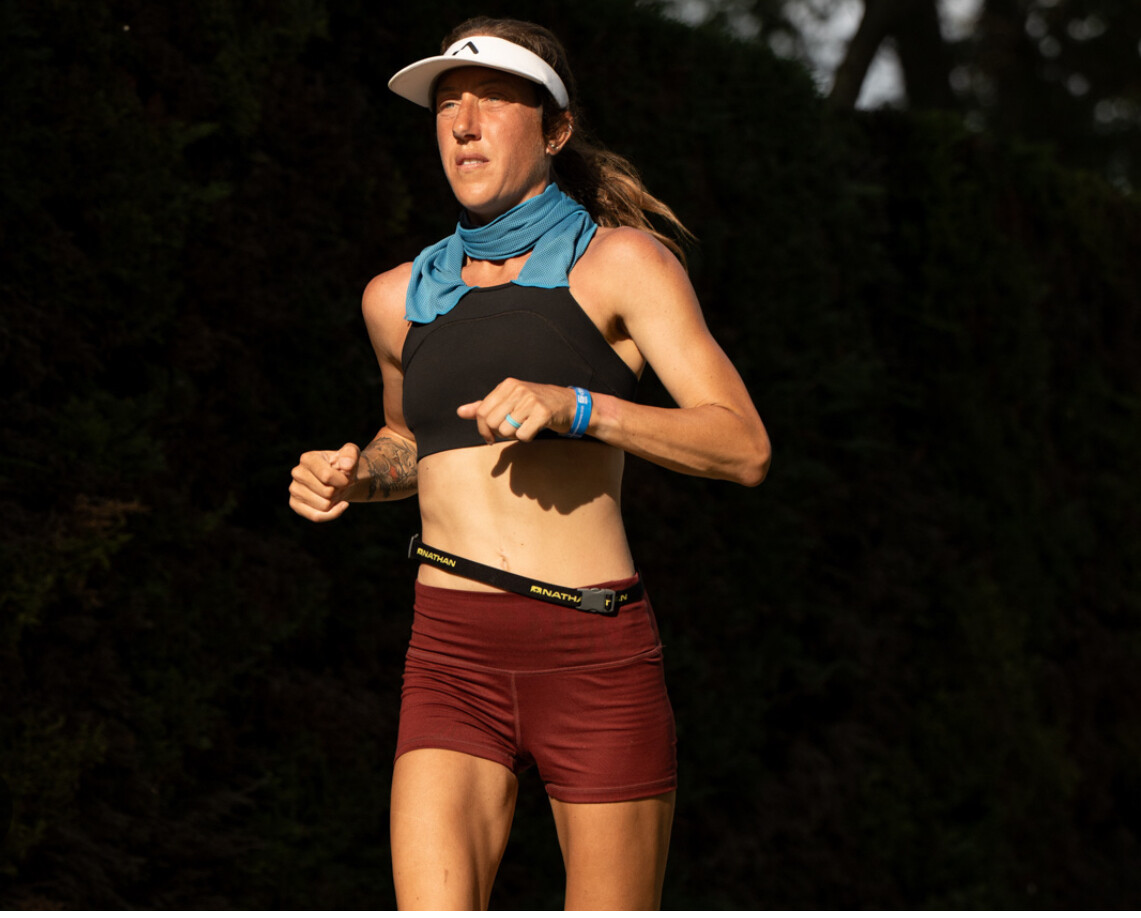
Eckert, 42, from the United States, has long been respected in the ultra community, but this performance launches her into an elite tier of historical significance. Her run wasn’t just about physical achievement—it was a showcase of mental strength and deep experience with multi-day racing.
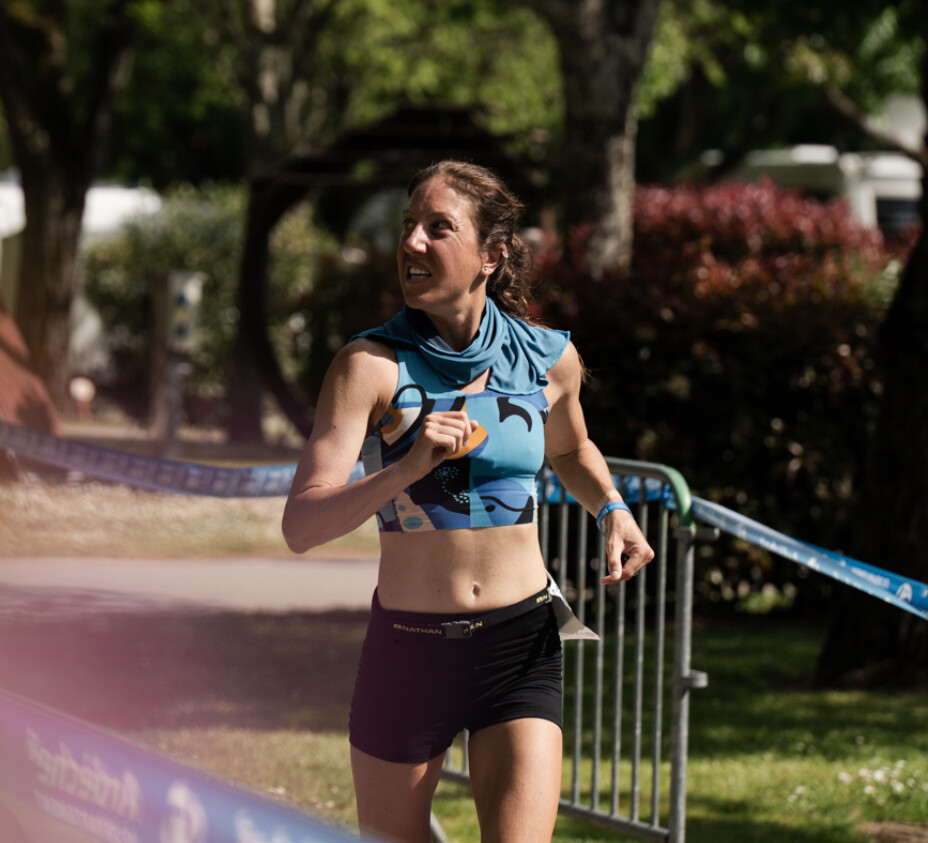
“It was about being in the moment, one lap at a time,” Eckert said afterward. “I knew what I was capable of, but to actually do it… that took everything.”
As more runners continue to push the boundaries of what the human body and mind can handle, performances like Eckert’s redefine the limits of endurance running. Her new world record is expected to stand as a monumental benchmark for years to come.
(05/05/25) Views: 140Boris Baron
