

Running News Daily
Running News Daily is edited by Bob Anderson and team. Send your news items to bob@mybestruns.com Advertising opportunities available.
Index to Daily Posts · Sign Up For Updates · Run The World Feed
Articles tagged #Austria
Today's Running News



The Final 1:59 D-Max: Eliud Kipchoge Celebrates a Legacy of Breaking Limits
Eliud Kipchoge has marked another memorable chapter in his remarkable journey after receiving the 159th and final Isuzu D-Max 1:59 Limited Edition vehicle, completing a unique partnership that celebrates one of the greatest achievements in marathon history.
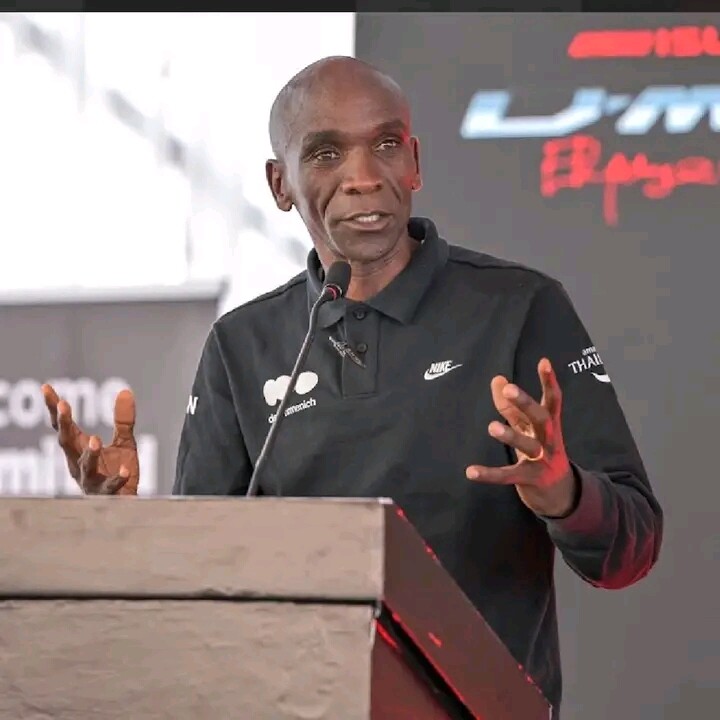
The legendary Kenyan marathoner expressed his appreciation to his Isuzu East Africa family after taking delivery of the final vehicle in a special series of just 159 units produced to commemorate his historic sub-two-hour marathon achievement.
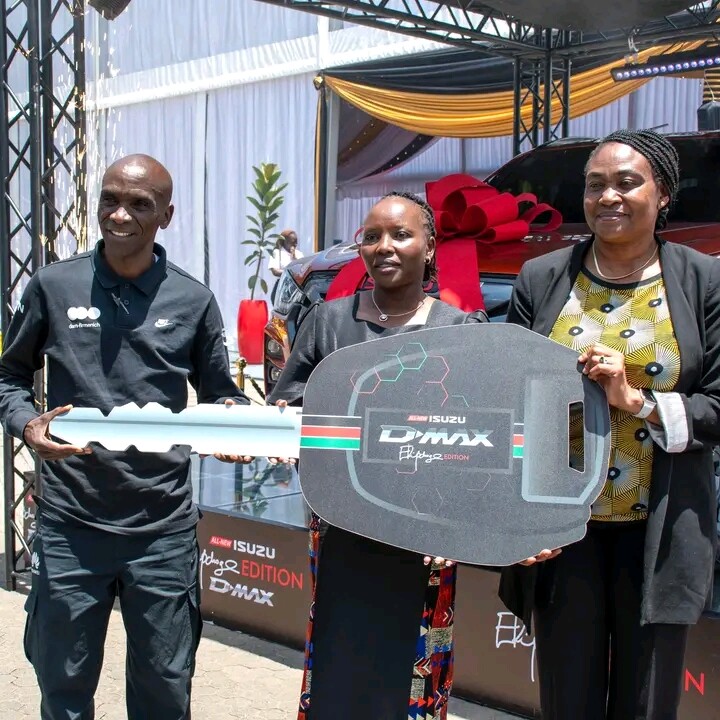
Each of the limited-edition D-Max vehicles carries Kipchoge’s name and signature, transforming the collection into more than a series of exclusive vehicles. It represents a story built around ambition, discipline, perseverance and the belief that seemingly impossible goals can be achieved through commitment and trust in the process.
The inspiration for the special edition dates back to October 12, 2019, when Kipchoge made history in Vienna, Austria, becoming the first person to run a marathon distance in under two hours in a controlled event. He completed the 42.195-kilometre distance in 1:59:40.2, a landmark moment that redefined the boundaries of human endurance.
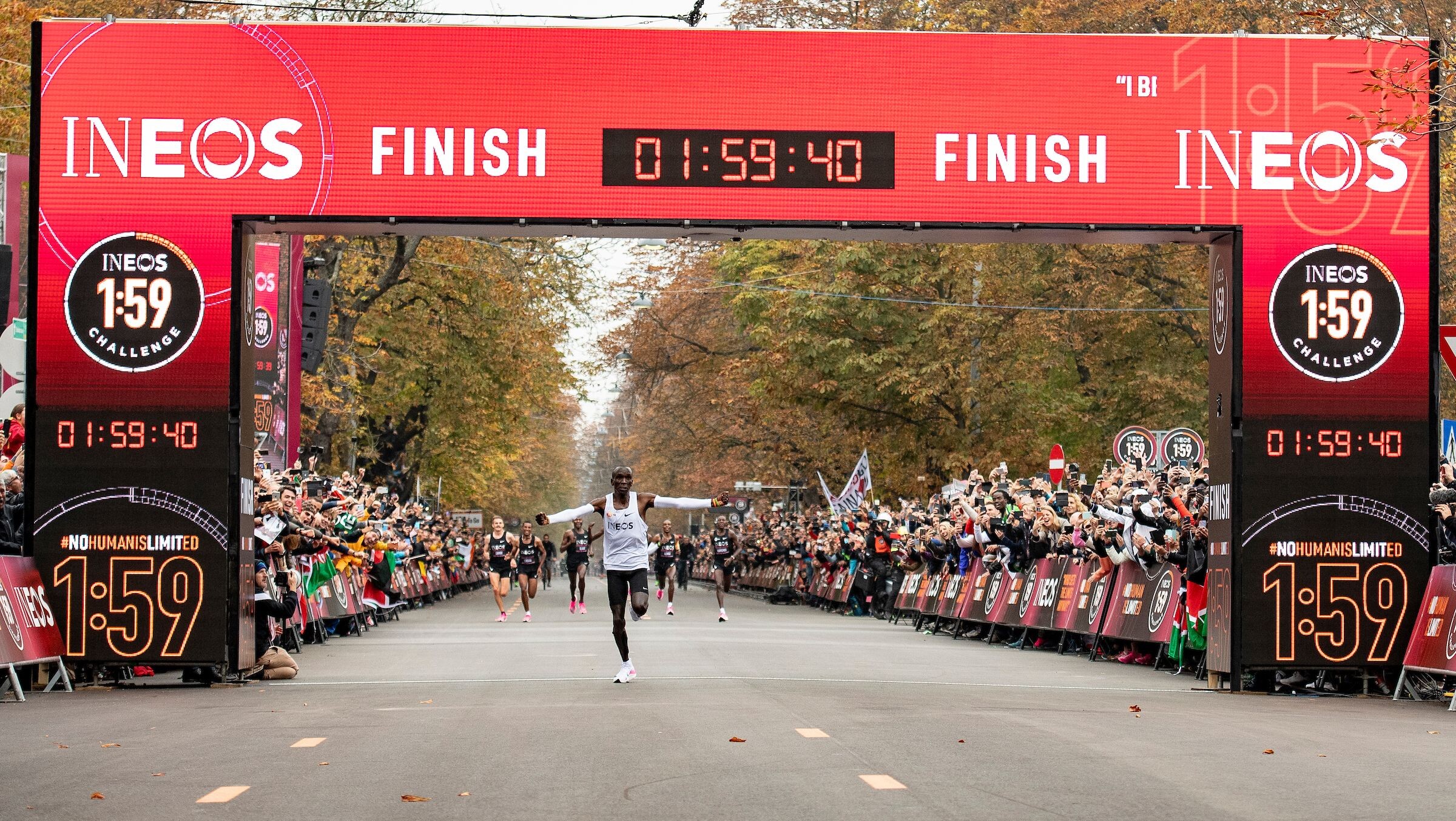
What began with that extraordinary morning in Vienna has since evolved into a lasting legacy on Kenyan roads, with 159 limited-edition vehicles now representing a shared connection between Kipchoge and their owners.
For Kipchoge, the final D-Max is therefore not simply the last vehicle to leave the production line. It is a symbolic conclusion to a story that connects his historic achievement with the values that have defined his career.
The number 159 carries particular significance, linking the limited production run to the historic 1:59 achievement while giving each owner a small piece of the story.
As he received the final unit, Kipchoge reflected on the journey from the streets of Vienna to the roads of Kenya, describing the 159 vehicles as a story shared by 159 owners who believe in the possibilities that emerge when people remain committed to their goals and trust the process.
The final D-Max consequently becomes another tangible reminder of a philosophy Kipchoge has carried throughout his career: no human is limited by the boundaries we initially believe exist.
From a historic morning in Vienna to a limited-edition collection spread across Kenya, the 1:59 legacy continues to inspire far beyond the marathon course.
by Erick Cheruiyot for My Best Runs.
Login to leave a comment
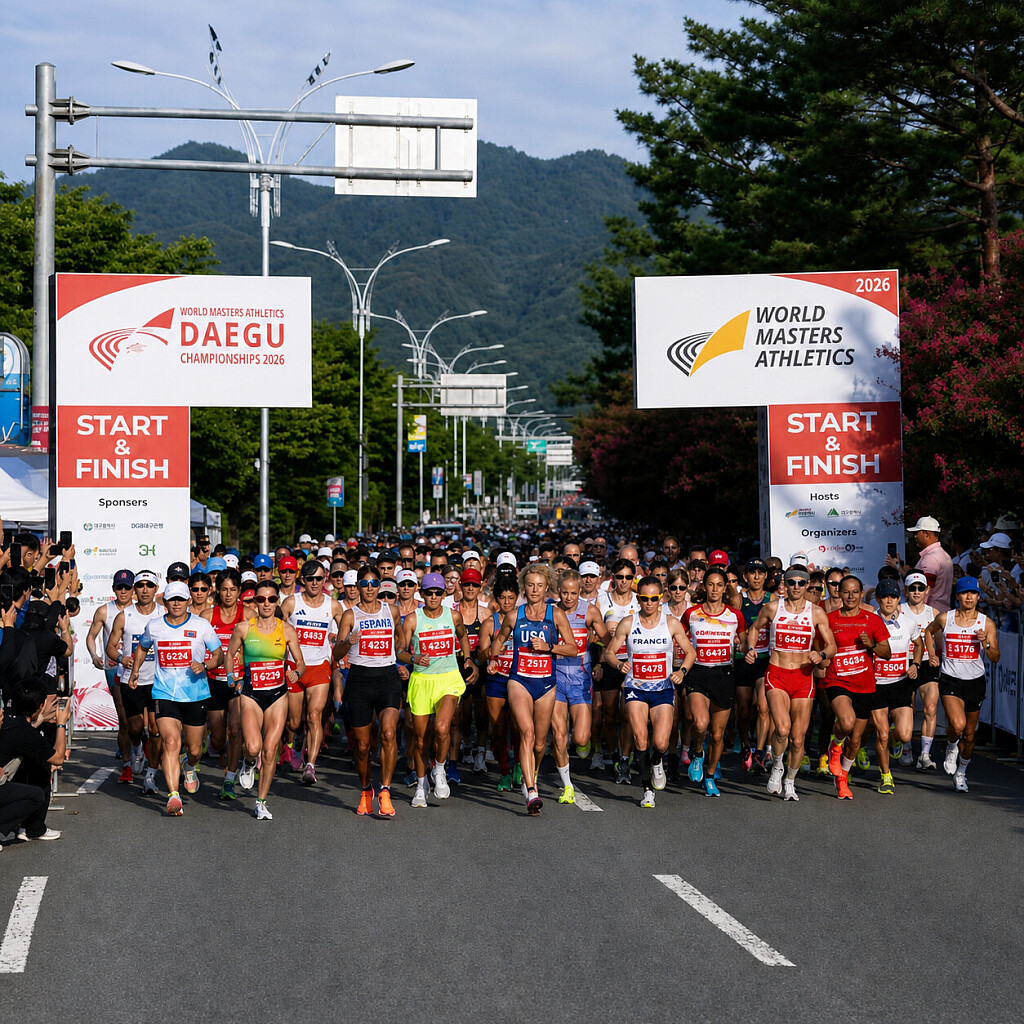
Four World Records Fall as Daegu Masters Championships Explode Into Life
The World Masters Athletics Championships in Daegu, South Korea, are only three days old, but the competition has already produced a remarkable display of speed, endurance and longevity, with four world records shattered and another 10 championship records rewritten.
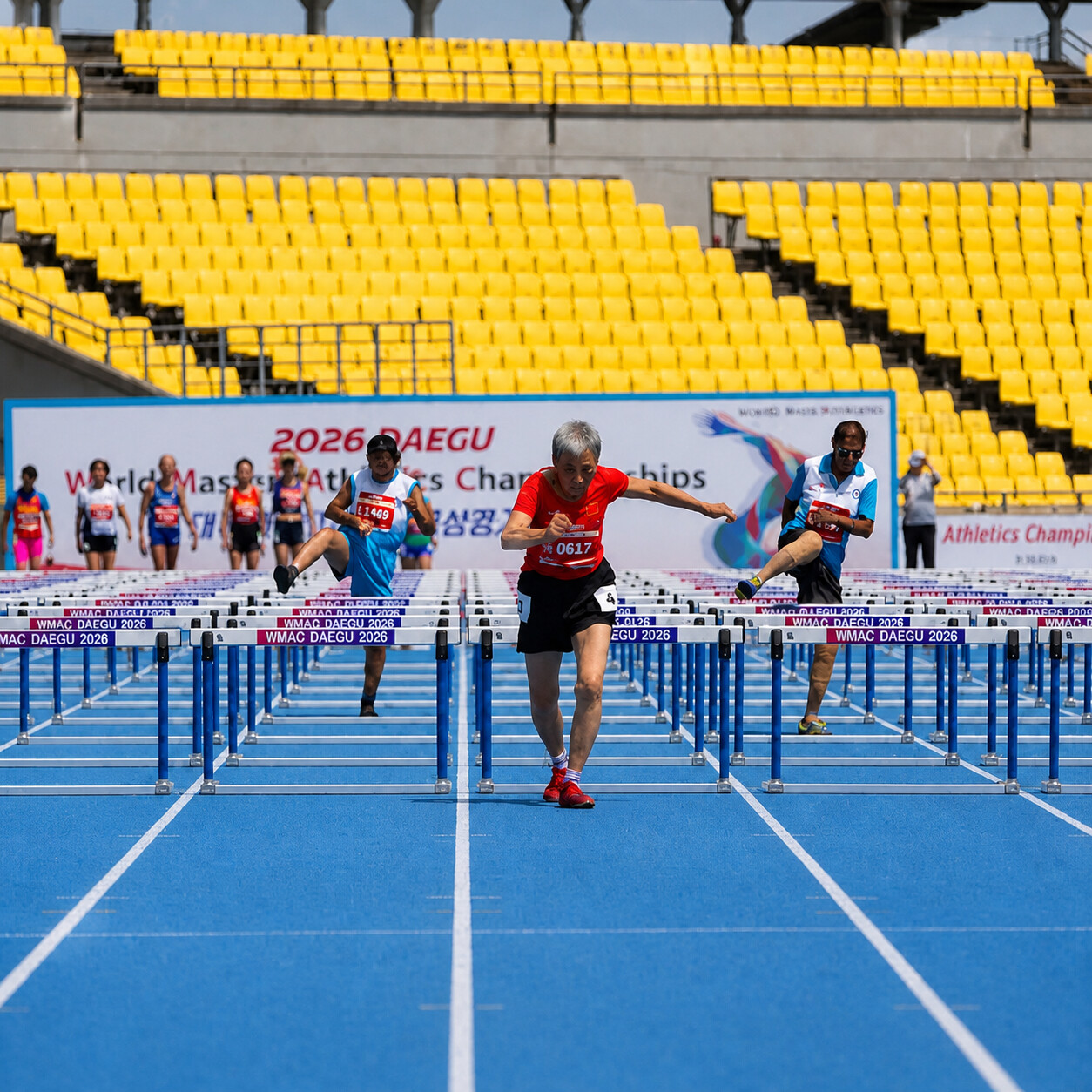
The record-breaking action began on the opening day when the United States’ Richard Lee produced a stunning performance in the M65 2,000m steeplechase. Lee stopped the clock at 7:09.29, winning gold while lowering the existing world record in the age group.
Day two proved even more dramatic, delivering three world records in quick succession.
Great Britain’s John Wright was first to strike, clocking 12.03 seconds to win the M65 100m. In doing so, the veteran sprinter improved his own world record of 12.15, set in 2024, underlining his remarkable consistency at the highest level of masters competition.
Only minutes later, the United States’ Kenton Brown produced another record-breaking run in the M80 100m. Brown crossed the line in 14.16, taking 0.05 seconds off his own previous world record of 14.21, which he established last year.
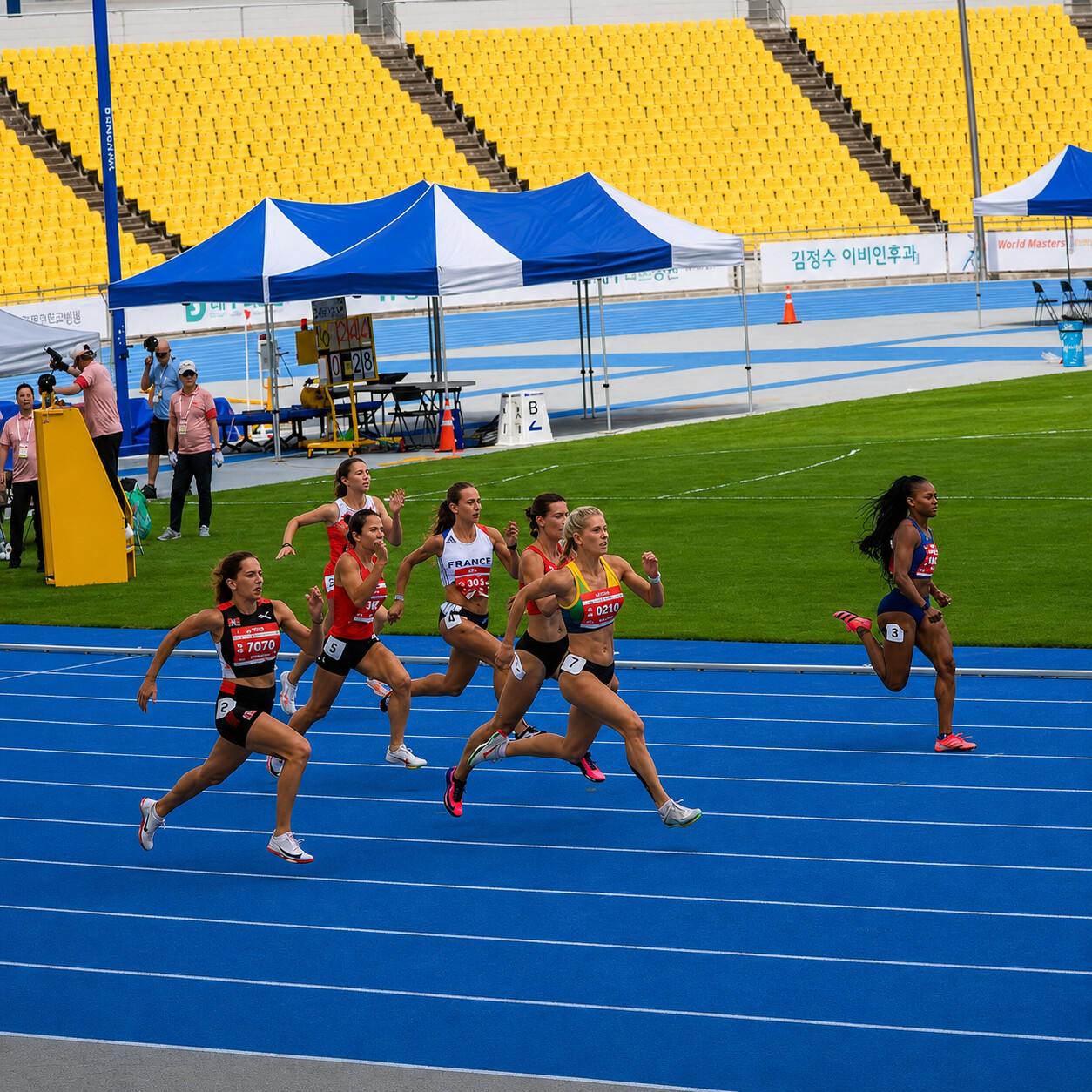
Thailand then added another name to the growing list of Daegu record-breakers. Somsanga Boonnok won the W70 80m hurdles in 15.61, breaking a world record that had belonged to Austria’s Marianne Maier since 2016.
Four world records in just three days tell only part of the story. Across the championships, 10 championship records have already fallen, highlighting the extraordinary standard being produced by athletes competing across the masters age groups.
Canada has also made its presence felt on the medal podium. Johana Flipsen captured W70 10K race walk gold in 1:04:18, while Vern Christensen won the M85 2,000m steeplechase in 14:48.25.
Canadian athletes have continued to add to the medal tally, with Lynne Wawryk Epp taking bronze in the W70 800m in 3:21.04, while Vanessa Johnson secured silver in the W40 race walk after finishing in 1:05:52.
But one of the most intriguing storylines to watch as the championships continue belongs to Canada’s Wendy Alexis.
At 71 years old, Alexis has arrived in Daegu with a world record firmly within reach. She is just 0.04 seconds away from the W70 100m world record of 14.37 seconds, and after targeting the championship throughout the season, she now has the opportunity to turn that ambition into history.
Alexis will contest her semifinal on Tuesday morning, with the final scheduled for later that evening.
With four world records already gone, 10 championship records broken and some of the world’s finest masters athletes still waiting to take to the track, Daegu is proving that age is no barrier to extraordinary performance.
And if the opening three days are anything to go by, the record books may have plenty more rewriting to come.
by Erick Cheruiyot for My Best Runs.
Login to leave a comment
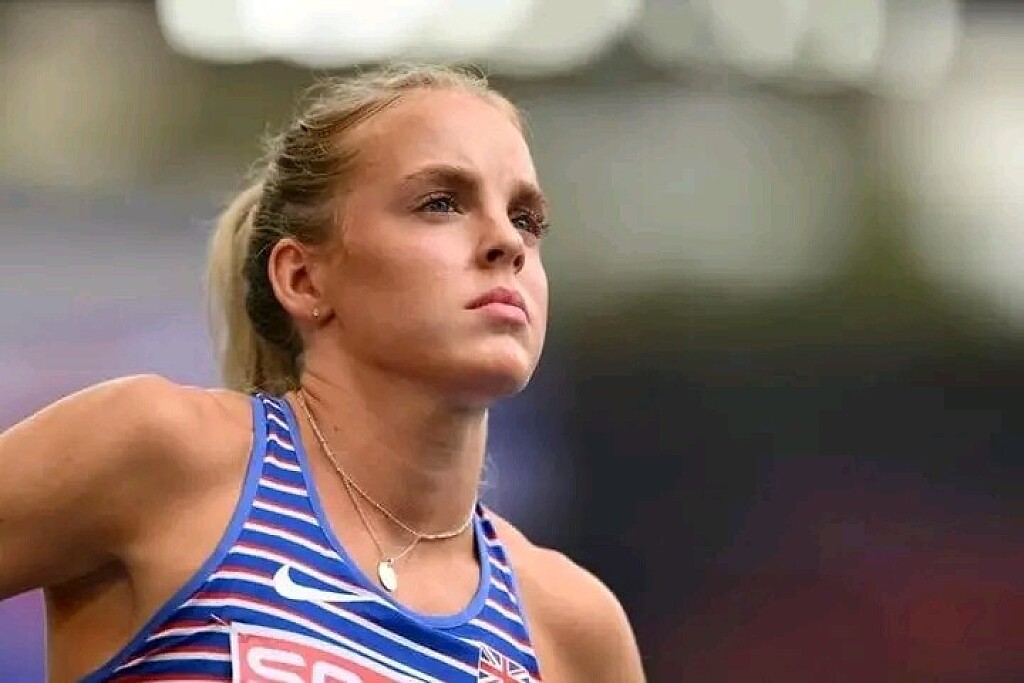
Keely Hodgkinson Embraces Fierce 800m Challenge In Bid For Third European Crown
Keely Hodgkinson is relishing the quality of competition awaiting her in Birmingham as she prepares to defend her European 800m title and pursue an unprecedented hat-trick on home soil.
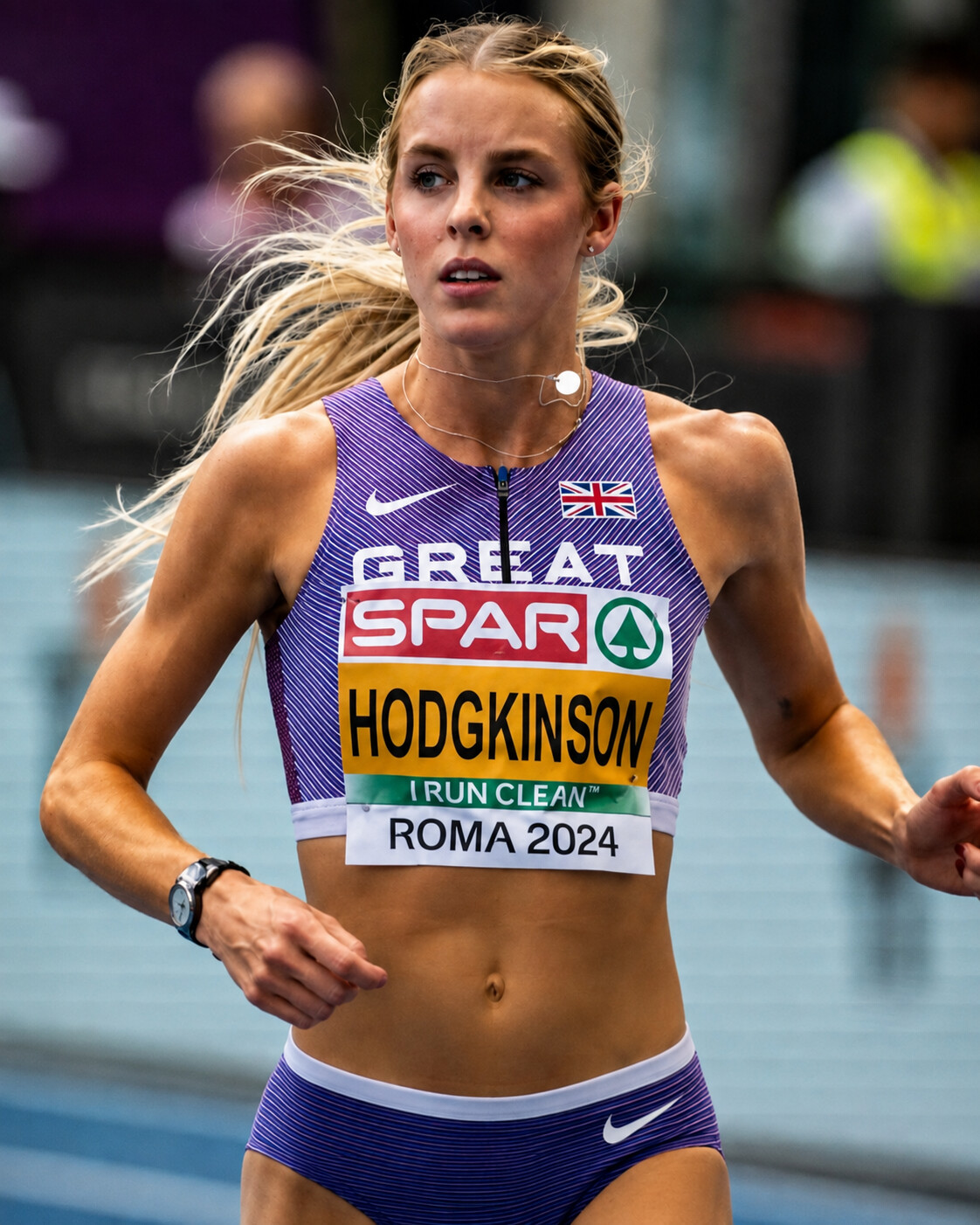
The Olympic champion arrives at the European Athletics Championships as the reigning two-time European champion over two laps, having successfully defended the title in Rome in 2024 after first winning European gold in Munich in 2022. Now, with a home crowd expected to rally behind her, Hodgkinson has another opportunity to underline her place among the leading 800m runners of her generation.
Her credentials are formidable. Hodgkinson produced the fastest race of her career at the Stockholm Diamond League, clocking 1:54.33 to break the British record and move to second on the world list for 2026. Only Austria’s Audrey Werro has gone faster this year, with her 1:53.80 placing her at the top of the rankings.
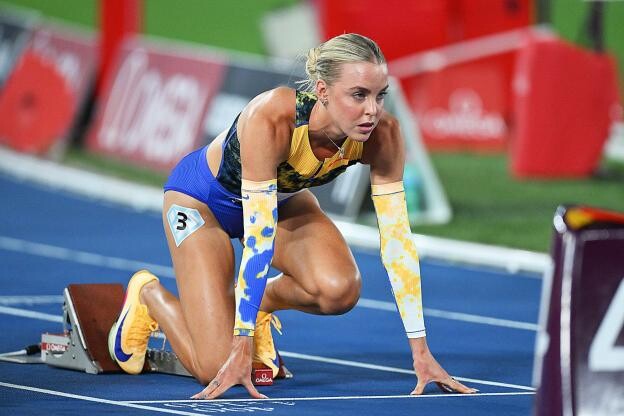
The Birmingham field also includes formidable opposition, with Femke Broeders-Bol at 1:55.60 and France’s Anaïs Bourgoin at 1:55.65, ensuring Hodgkinson will have little room for error if she is to extend her European reign.
Yet the 24-year-old Briton is not allowing the weight of expectation to overshadow what she has already achieved. Reflecting on her British-record performance in Stockholm, Hodgkinson emphasised that the mark represents the fastest she has ever run and something she wants to appreciate rather than take for granted.
“It was my fastest time ever and I’m going to remind myself of that because I’m proud of that,” Hodgkinson said.
Her perspective on the European Championships has also evolved as the standard of women’s 800m running across the continent has risen dramatically.
Looking back to the 2024 European Championships in Rome, Hodgkinson pointed to how much the event has progressed since then. She noted that the improvement in the European standard means winning a continental title now carries a significance comparable to a global championship.
“It means that a European title is just as important and just as fun as a world title at this point,” she said.
That transformation has added another layer to Hodgkinson’s challenge in Birmingham. She is not simply defending a title; she is entering an 800m environment that has become increasingly competitive, with several athletes now capable of producing times that would previously have been considered exceptional.
For Hodgkinson, however, the pressure of a home championship appears to be part of the attraction. With two European titles already secured, an Olympic gold medal in her collection and a new British record to her name, she arrives in Birmingham with both experience and ambition.
The target is clear: another European crown, another chapter in her remarkable 800m career and, potentially, a third consecutive continental title in front of a home crowd.
by Erick Cheruiyot for My Best Runs.
Login to leave a comment

Sophie Woods Rewrites the Record Books With Historic Fastest Crossing of the Alps
New Zealand ultra-endurance runner Sophie Woods has etched her name into mountain running history after completing the entire length of the Alps in the fastest time ever recorded, becoming the first person to conquer the legendary route in under 30 days.
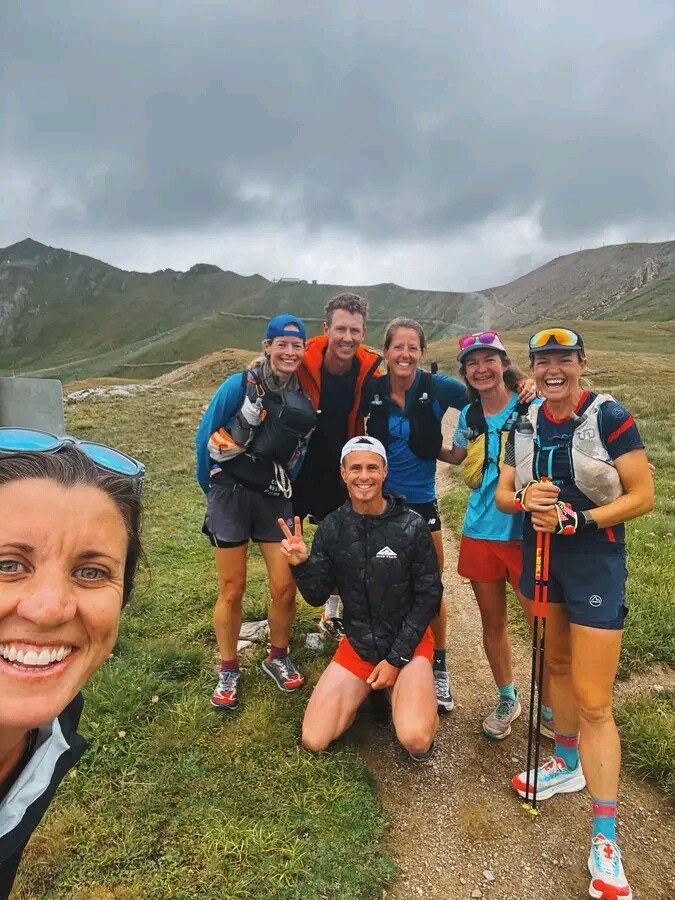
The 42-year-old reached the Mediterranean coastline in Monaco on Saturday night, bringing to an end an extraordinary 2,000-kilometre journey along the iconic Via Alpina. Her remarkable crossing took just 29 days, shattering both the overall and women's fastest known times on one of Europe's most demanding long-distance routes.

Woods began her challenge in Trieste, Italy, on July 4 before traversing seven countries—Italy, Slovenia, Austria, Germany, Liechtenstein, Switzerland and France—across some of the continent's most rugged and unforgiving mountain terrain.
The scale of the achievement is almost difficult to comprehend. Over the course of the expedition, Woods climbed a cumulative elevation equivalent to ascending Mount Everest 12 times, while covering relentless daily distances through alpine passes, remote trails and rapidly changing weather conditions.

Her record-breaking performance eclipsed the previous overall fastest known time, established by British ultra-runner Jake Catterall in 2024, by an astonishing six days. She also lowered the women's benchmark, previously held by Dutch endurance athlete Tessa Caspers, by nine days, setting a new standard that will be difficult to match.
The journey, however, was far from straightforward. Woods endured a brutal European heatwave, battled powerful mountain storms, navigated around wildfires that forced a five-kilometre detour, and pushed through relentless swarms of horseflies. As the finish drew closer, she made perhaps her greatest sacrifice—cutting her sleep to as little as 90 minutes to two-and-a-half hours per night to ensure the record remained within reach.
Despite the physical exhaustion, the New Zealander refused to let adversity slow her pursuit of history. Her resilience, meticulous planning and unwavering determination carried her across one of the world's toughest mountain traverses at a pace never before achieved.
Moments after reaching Monaco, the magnitude of the accomplishment began to sink in.
"I can't believe I did it. I am ecstatic but knackered."
With her unforgettable 29-day crossing, Sophie Woods has not only rewritten the record books but also delivered one of the most remarkable endurance performances the ultra-running world has witnessed, raising the bar for future athletes dreaming of conquering the Alps.
by Erick Cheruiyot for My Best Runs.
Login to leave a comment

Torrie Lewis Rewrites Australian Sprint History With Electrifying 11.04 Masterpiece In Slovakia
Australian sprint sensation Torrie Lewis continues to redefine the limits of her remarkable young career after storming to a stunning 11.04 seconds in the women's 100 metres at the TIPOS P-T-S Meeting in Slovakia, setting a new Australian record in breathtaking fashion.
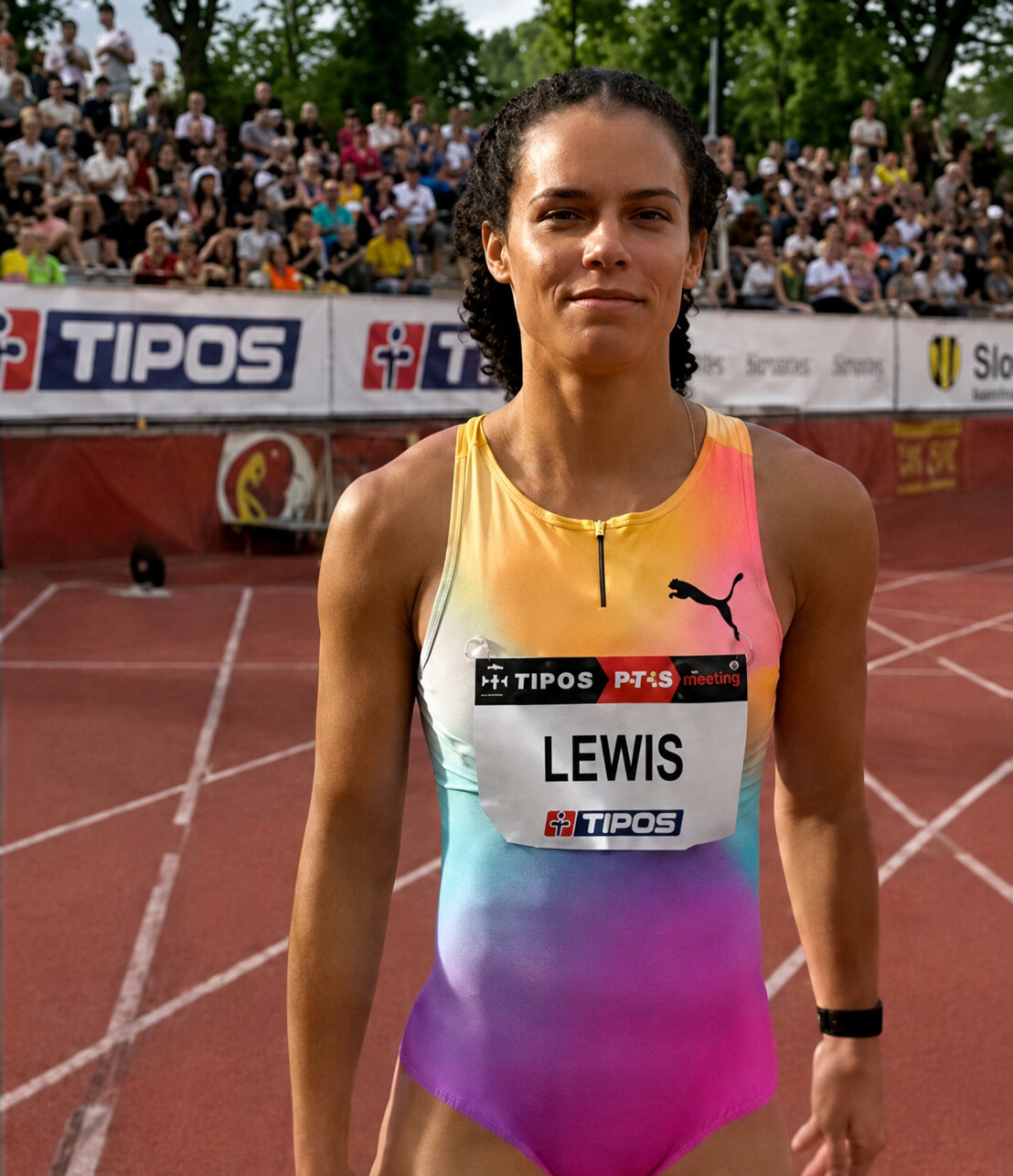
Lewis sliced 0.04 seconds off her own previous national record of 11.08, producing the fastest performance ever by an Australian woman over the distance. Her blistering run confirmed that her rise is no fleeting moment—it is the arrival of one of the world's most exciting sprint talents.
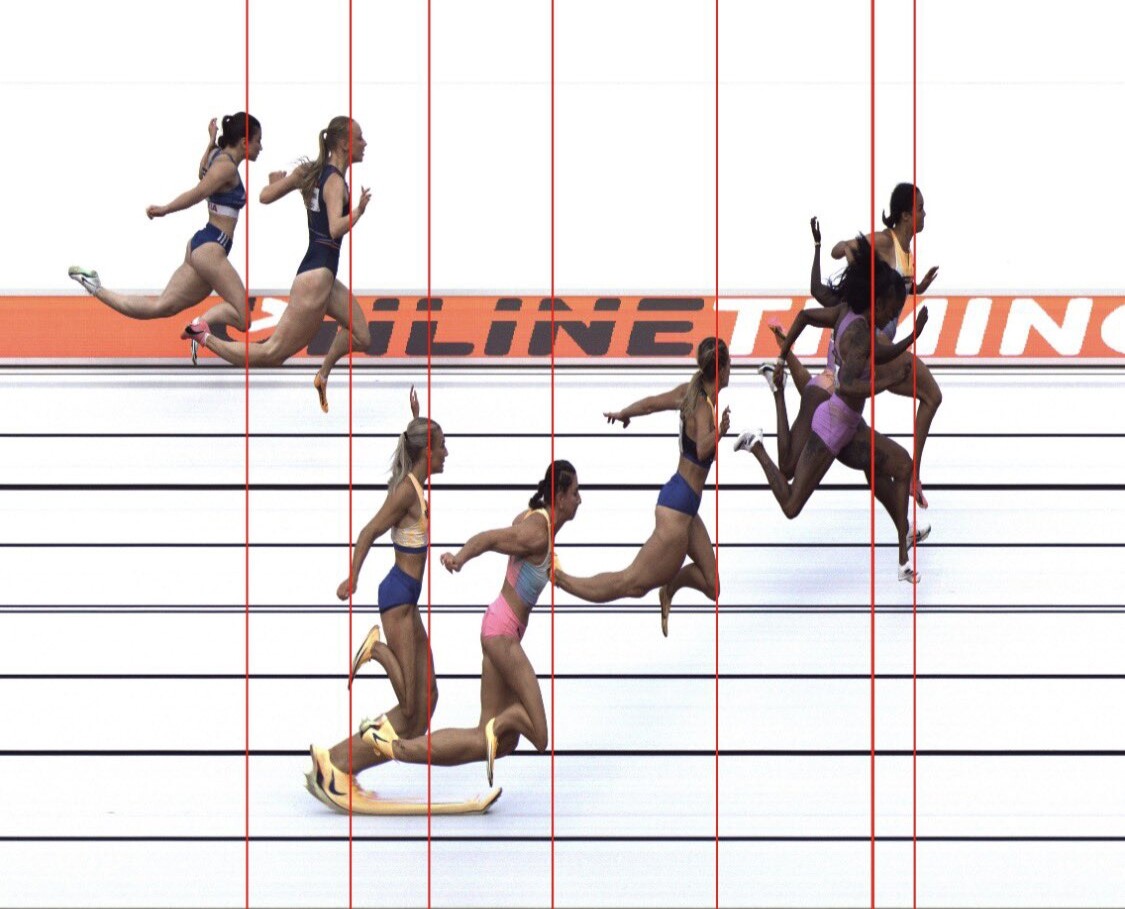
The race itself was a spectacle from start to finish. Lewis exploded from the blocks, held her composure through the drive phase, and unleashed a powerful finish to edge one of the greatest sprinters in history, Elaine Thompson-Herah of Jamaica, who crossed the line in 11.06. Austria's Christania Williams also clocked 11.06, making it one of the most fiercely contested 100-metre races of the meeting.
Beyond the victory, the performance carries even greater significance. Lowering a national record is never easy, especially after already establishing yourself as the country's fastest woman. Yet Lewis demonstrated that she is still finding new levels, delivering a performance that signals she is becoming an increasingly serious contender on the international stage.
The 11.04 clocking is another milestone in a season that continues to gather momentum. With every race, Lewis is proving she possesses not only exceptional speed but also the consistency and composure needed to challenge the world's elite when the stakes are highest.
As global championship season approaches, Australia's sprint star has sent a powerful message to her rivals. If this latest record-breaking performance is any indication, Torrie Lewis is only beginning to reveal the full extent of her potential, and the fastest chapters of her career may still lie ahead.
by Erick Cheruiyot for My Best Runs.
Login to leave a comment
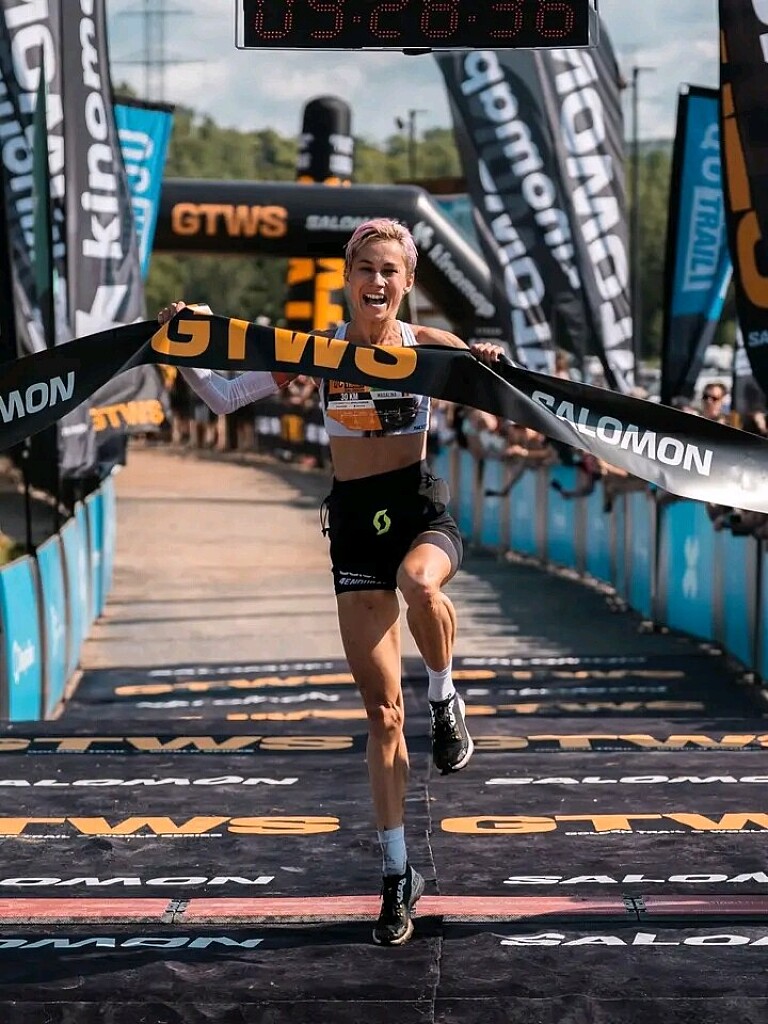
Madalina Florea Conquers Québec Mega Trail 30K to Seize Golden Trail World Series Lead
Romania's Madalina Florea delivered a commanding performance at the Québec Mega Trail 30K on Sunday, conquering one of the most demanding courses on the Golden Trail World Series calendar to claim victory and move to the top of the overall standings.
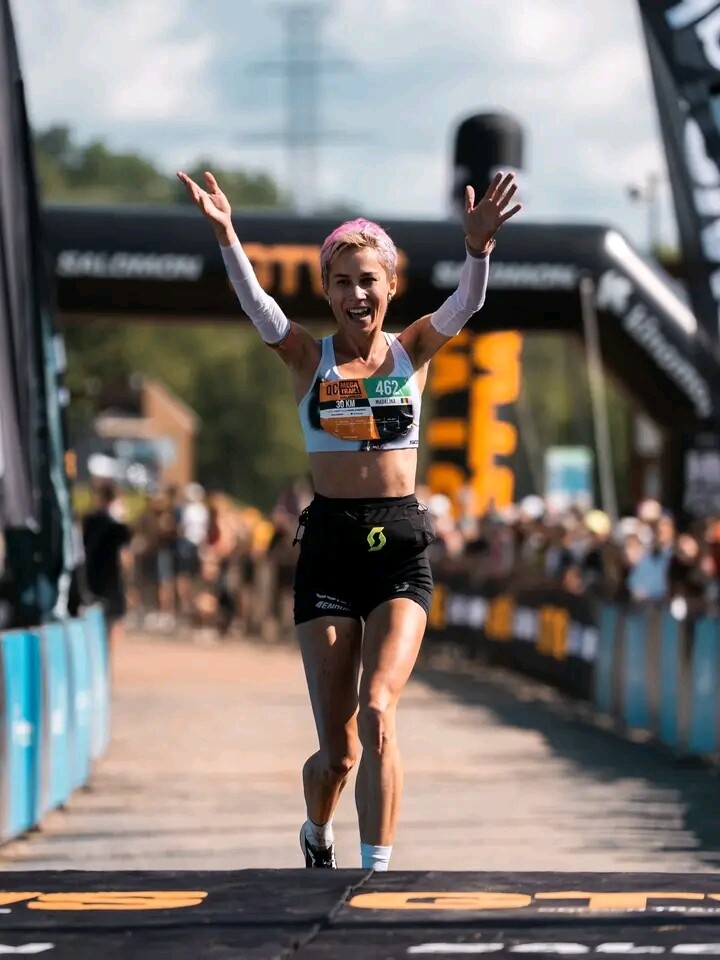
The reigning Golden Trail World Series champion crossed the finish line in 2:27:12, producing another masterclass in mountain racing on a brutal 28.7-kilometre course featuring 1,397 metres of elevation gain, two punishing ascents of Mont-Sainte-Anne, and highly technical descents across steep ski slopes.
The race began at a relentless pace as Caroline Kimutai surged to the front, continuing the aggressive strategy that has defined her season. Florea, however, remained composed, keeping the Kenyan well within reach during the opening climb before launching her decisive move on the first descent.
From that moment, the Romanian steadily tightened her grip on the race. She extended her advantage on the second ascent and never looked back, controlling the remainder of the contest with remarkable strength and technical precision.
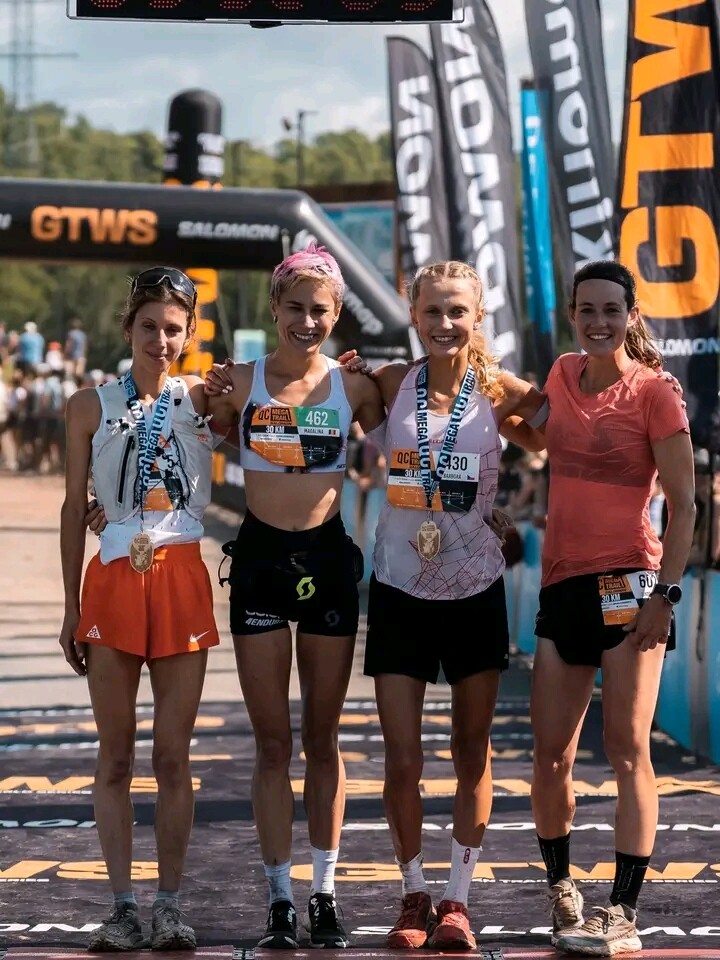
France's Marie Nivet secured second place, finishing more than seven minutes behind the winner, while Kimutai faded after her fast start to complete the podium in third.
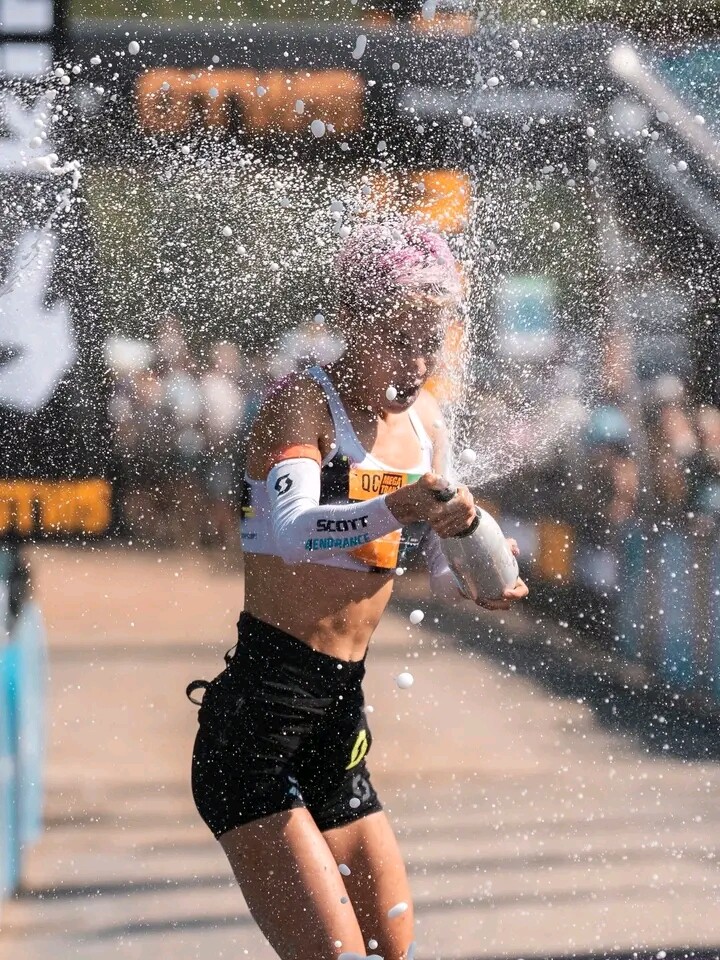
The victory propels Florea to the summit of the Golden Trail World Series rankings with 442 points, overtaking Kimutai, who now sits second on 408 points. Nivet's runner-up finish also lifts her into third place in the overall standings, setting up an intriguing battle for the remainder of the season.
With the Québec triumph, Florea has once again underlined why she is the defending series champion. Her ability to combine patience, tactical awareness and exceptional climbing and descending skills proved decisive on one of the circuit's toughest tests.
The Golden Trail World Series now pauses before returning on August 1 in Austria, followed by the iconic Sierre-Zinal race in Switzerland a week later. As the championship enters its decisive phase, Florea has firmly established herself as the athlete everyone else will be chasing.
by Erick Cheruiyot for My Best Runs.
Login to leave a comment
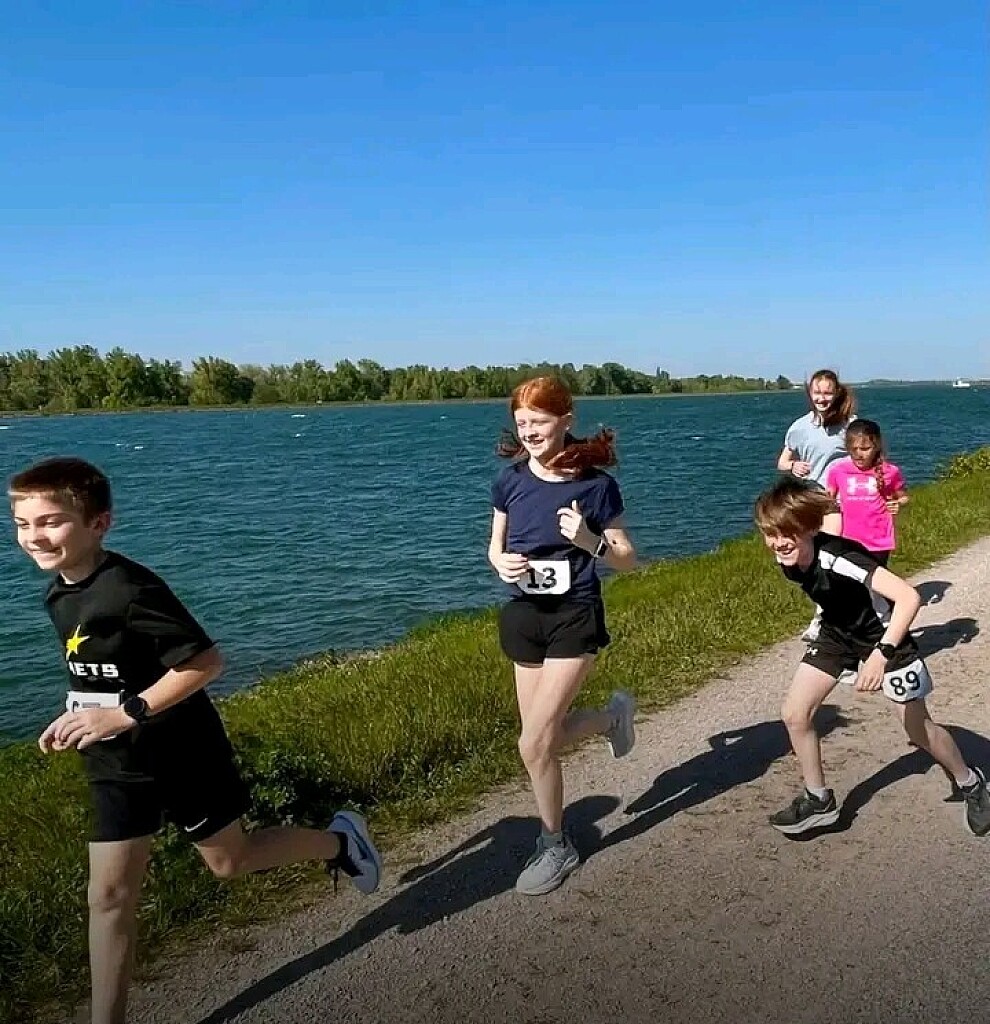
Six Countries, Six 5Ks, One Extraordinary Day: Young Runners Create a World-First Endurance Feat
What does it take to run six competitive 5Ks in a single day across six different countries? For five determined young athletes from Michigan, it took endurance, meticulous planning, and an unwavering passion for running.
In one of the most remarkable distance-running achievements of the year, the group completed a 5-kilometre race in Austria, Liechtenstein, Switzerland, France, Germany, and Luxembourg—all within a single day. Their extraordinary journey has earned them a unique world record, showcasing that age is no barrier to ambition.
The challenge began at 6:00 a.m. in Austria, where the runners lined up for the first of six races. After each 5K, they quickly climbed into a van and travelled across international borders before taking on the next event. The demanding schedule continued from country to country until the final race was completed just before sunset in Luxembourg.
Ranging in age from 10 to 15 years, the young athletes covered a total of 30 kilometres (18.6 miles) of racing while crossing six international borders in less than a day. It was a true test of endurance, resilience, and determination, requiring them to repeatedly recover, refocus, and perform under physically demanding conditions.
More than just a record-breaking adventure, the achievement highlights the power of youthful determination and the limitless possibilities that come with setting bold goals. Completing one 5K is a memorable accomplishment for many runners; completing six in six different nations on the same day is something almost unimaginable.
In a sport filled with incredible performances, this stands out as one of the most original and inspiring running achievements of the year—a celebration of endurance, teamwork, and the adventurous spirit that continues to redefine what is possible.
by Erick Cheruiyot for My Best Runs.
Login to leave a comment
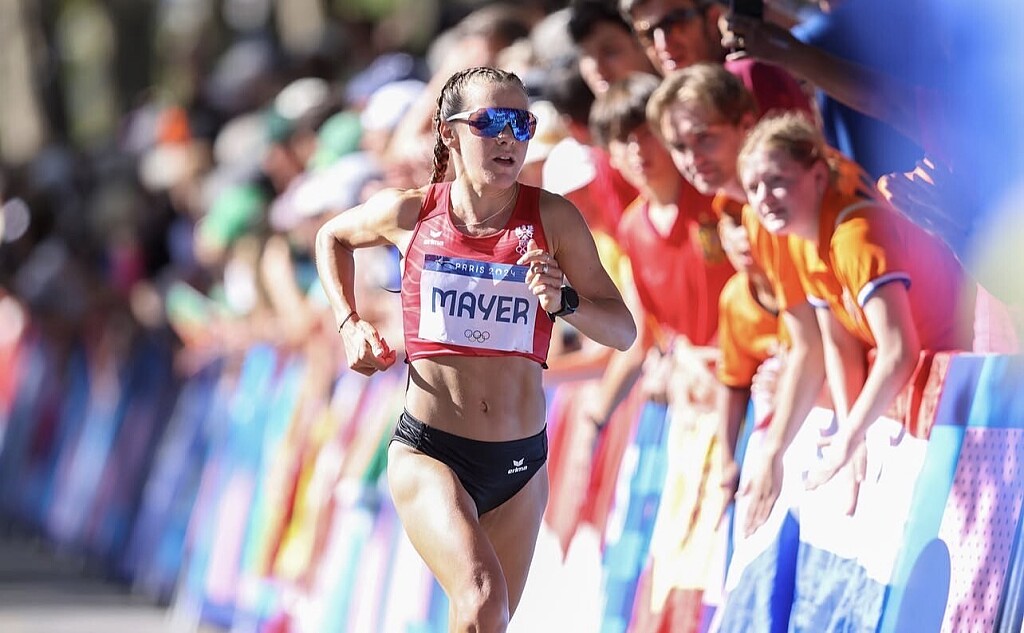
The Soccer Player Who Became Austria’s Olympic Marathon Record Holder
Most Olympic marathoners spend their youth focused on running. They join track clubs, compete in national championships, and pursue the sport from an early age.
Julia Mayer’s journey was very different.
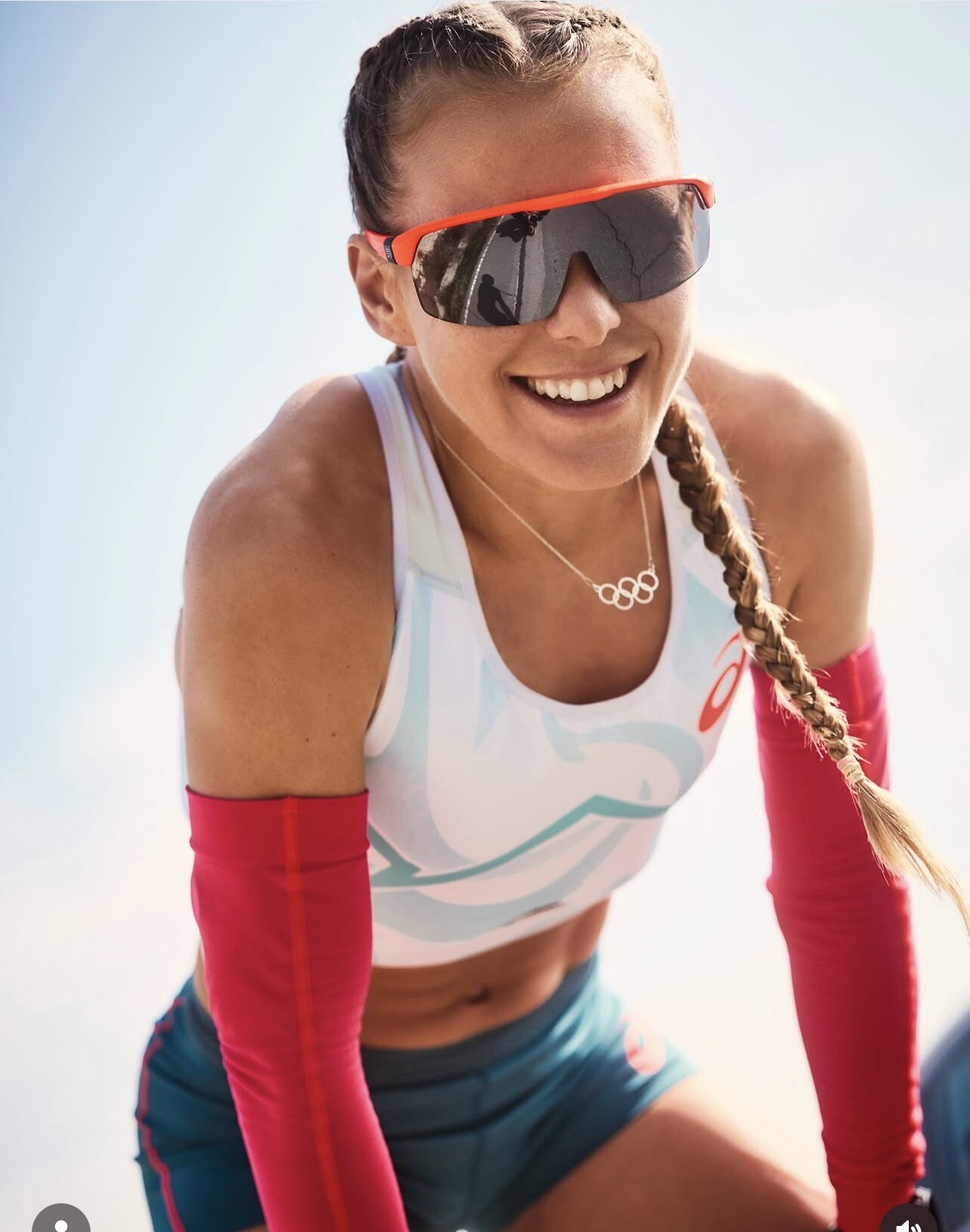
Today, Mayer is Austria’s marathon record holder, a multiple national record holder on the roads, and an Olympian. Yet for much of her athletic life, running was not her primary sport.
For 16 years, she played soccer.
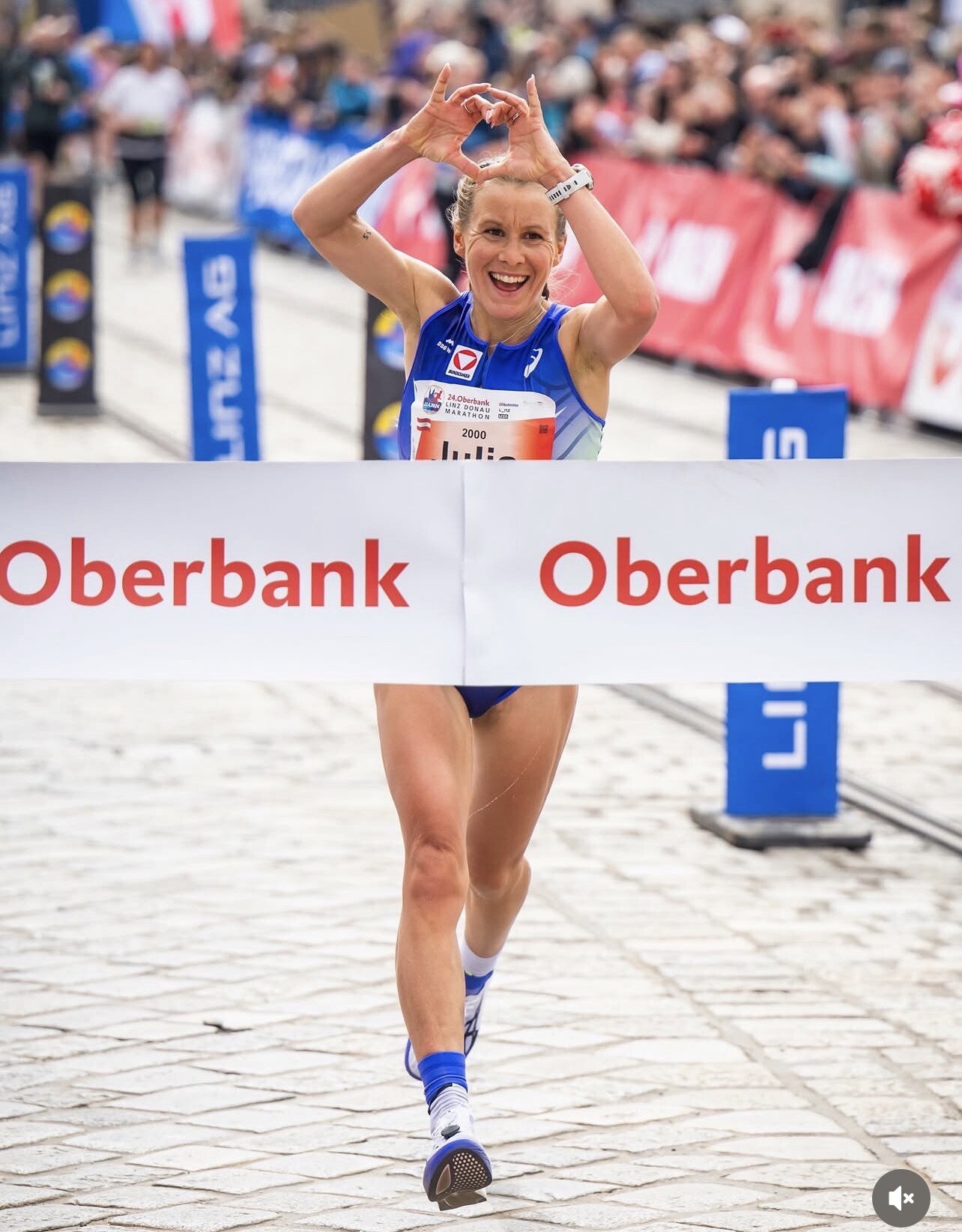
Then she discovered something that would change her life.
“I noticed that I was really fast in the fun runs and that it was really, really fun,” Mayer said when reflecting on her transition from soccer to distance running.
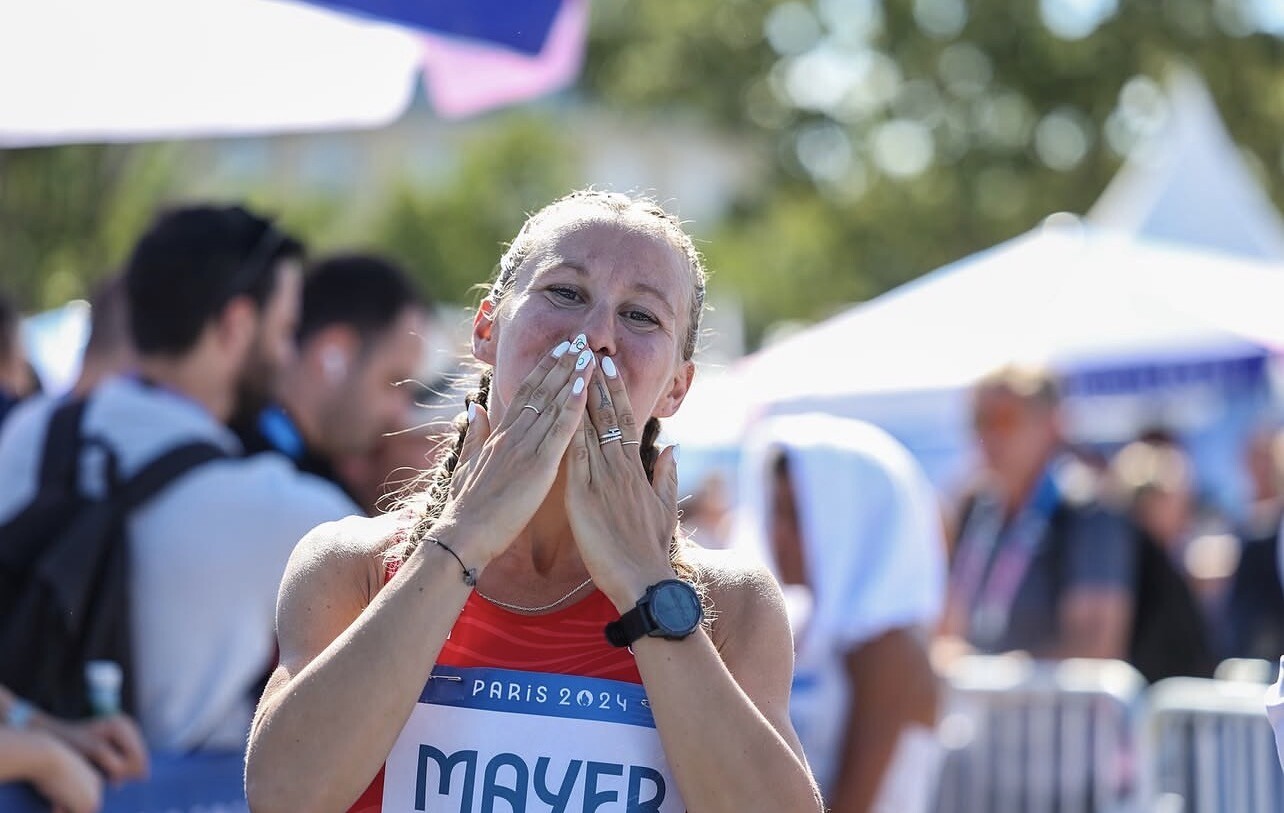
What began as curiosity quickly became a passion. She eventually made the bold decision to leave soccer behind and focus entirely on running. It was a move that surprised many people around her, but Mayer believed she had found her true athletic calling.
The decision proved to be the right one.
Within a few years, Mayer developed into one of Europe’s top marathon runners. Her steady improvement carried her from local races to the international stage, where she began rewriting Austria’s record books.
She now holds Austrian records in the marathon, half marathon, and road 10K. Her marathon best of 2:26:08 established her as the fastest female marathoner in Austrian history. Her performances in the half marathon and 10K have further cemented her place among the country’s all-time great distance runners.
Her rise culminated with qualification for the 2024 Olympic Games in Paris.
Competing in the Olympic marathon represented the realization of a dream. On one of the most challenging marathon courses ever used for the Olympics, Mayer ran courageously against the strongest field in the world and finished 55th in her Olympic debut.
Behind the scenes, success has come through extraordinary dedication. During marathon preparation, Mayer trains twice a day and covers approximately 200 kilometers, or 124 miles, each week. The workload demands discipline, patience, and a deep commitment to continuous improvement.
What makes her story especially inspiring is not simply the records or the Olympic appearance.
It is the fact that she found her greatest talent later than many elite runners.
In a sport where athletes are often identified at a young age, Mayer’s journey serves as a reminder that potential does not always reveal itself early. Sometimes it takes years of experience, a willingness to try something new, and the courage to follow a different path.
The former soccer player who once chased a ball across a field is now chasing history on the roads of Europe.
And according to those closest to her, her best performances may still be ahead.
For runners of every age and ability, Julia Mayer’s story delivers a powerful lesson: it is never too late to discover what you are capable of.
From soccer player to Olympian, her journey proves that remarkable achievements can begin when least expected.
by Boris Baron
Login to leave a comment
Gezahagn Breaks Course Record, Kiprotich Stuns Men’s Field at Vienna City Marathon
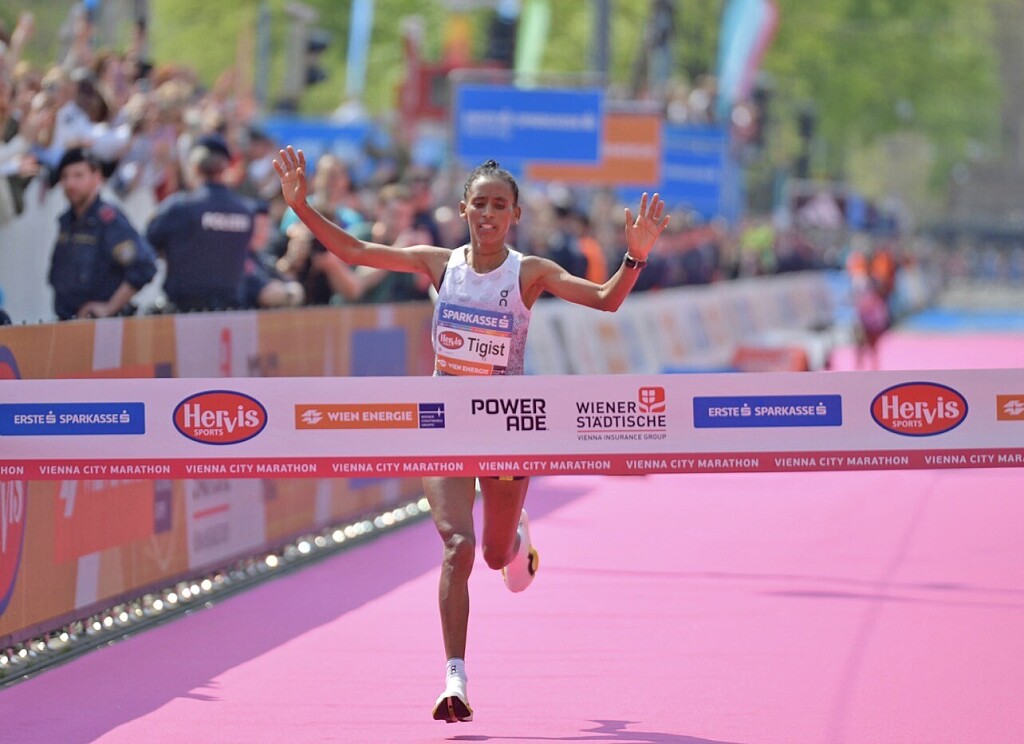
The Vienna City Marathon delivered a dramatic day of racing as Ethiopia’s Tigist Gezahagnshattered the course record and Kenya’s Fanny Kiprotich pulled off a surprise victory in the men’s race.
Gezahagn ran 2:20:06, slicing through the previous course record while also setting a personal best. The 26-year-old, who is visually impaired and a Paralympic 1500m champion, showed remarkable strength in the closing stages. Locked in a tight battle with fellow Ethiopian Haftamnesh Tesfaye, she made her decisive move inside the final kilometer, pulling clear in the last few hundred meters. Tesfaye, returning to the marathon after maternity leave, ran 2:20:18 to match her personal best from seven years ago. Kenya’s Hellen Chepkorir finished third in 2:23:48.
The women’s race quickly turned into a two-runner contest. Gezahagn and Tesfaye broke away early, hitting 10K in 33:30 with a growing gap. After a 70:24 half marathon split, the pace intensified. Tesfaye briefly fell near 30K after clipping Gezahagn’s heel but quickly rejoined the lead. The race remained close until Gezahagn surged again at 41K, creating a gap she would carry to the finish.
“This is a huge victory for me,” said Gezahagn. “The atmosphere was great. The warm temperatures did not bother me, but there was some wind.”
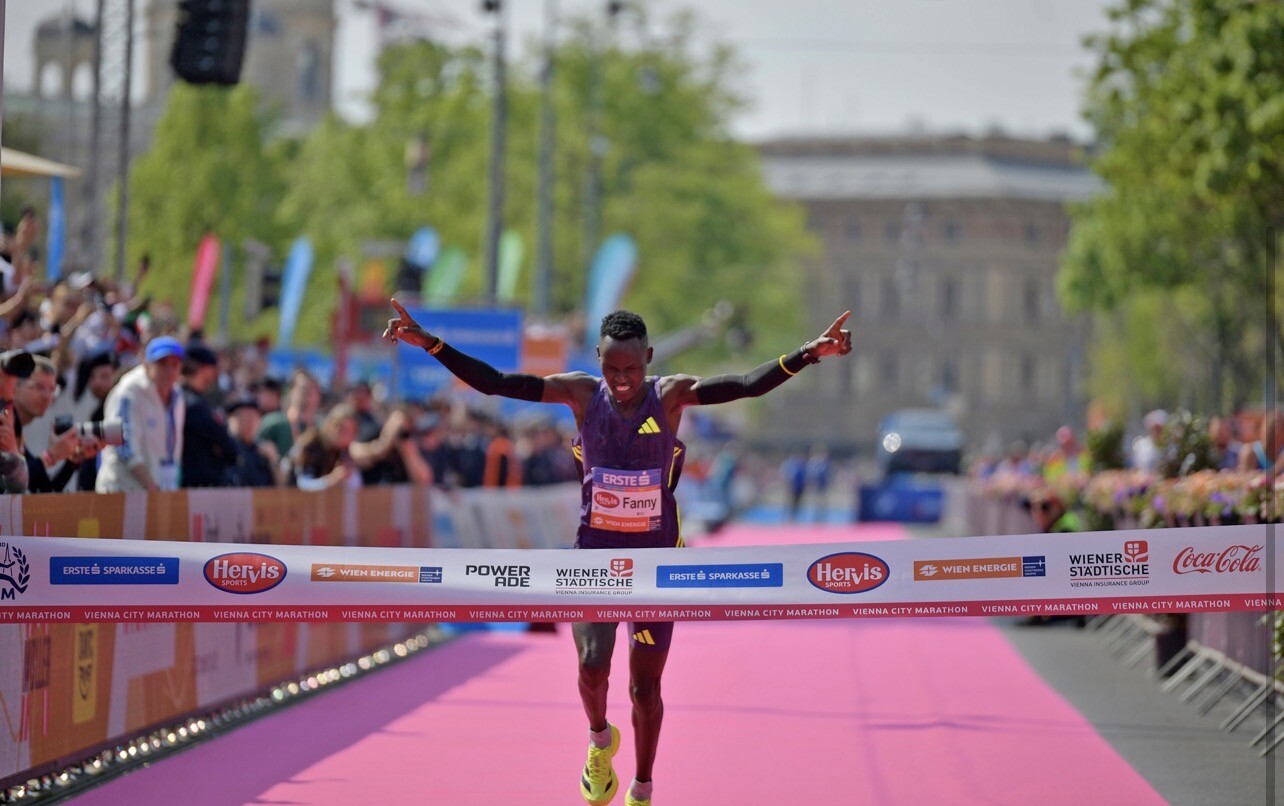
In the men’s race, few expected the outcome that unfolded. Fanny Kiprotich, a relative newcomer on the international stage, delivered a breakthrough performance, winning in 2:06:53 and improving his personal best by more than four minutes.
Pre-race favorite Oqbe Kibrom finished second in 2:08:10, while Kenya’s Charles Mneria took third in 2:08:42.
The early pace suggested a fast race, with the lead group hitting halfway in 63:06. After the pacemakers dropped out around 25K, four athletes remained in contention. Kiprotich made his first decisive move around 28K, and only Kibrom could respond. Passing 30K in 1:30:14, the race was still wide open—but Kiprotich surged again with about 10K to go and broke the race apart.
“I was confident because I was well prepared,” said Kiprotich. “My training was very good. I hope to improve significantly again in my next race.”
The 24-year-old had run just one previous marathon—winning in Tallinn last year in 2:11:21—making this performance all the more impressive.
The race also featured strong local performances, with Andreas Vojta finishing ninth in 2:15:07 as the top Austrian man, and Eva Wutti leading the Austrian women in 10th place with 2:42:37.
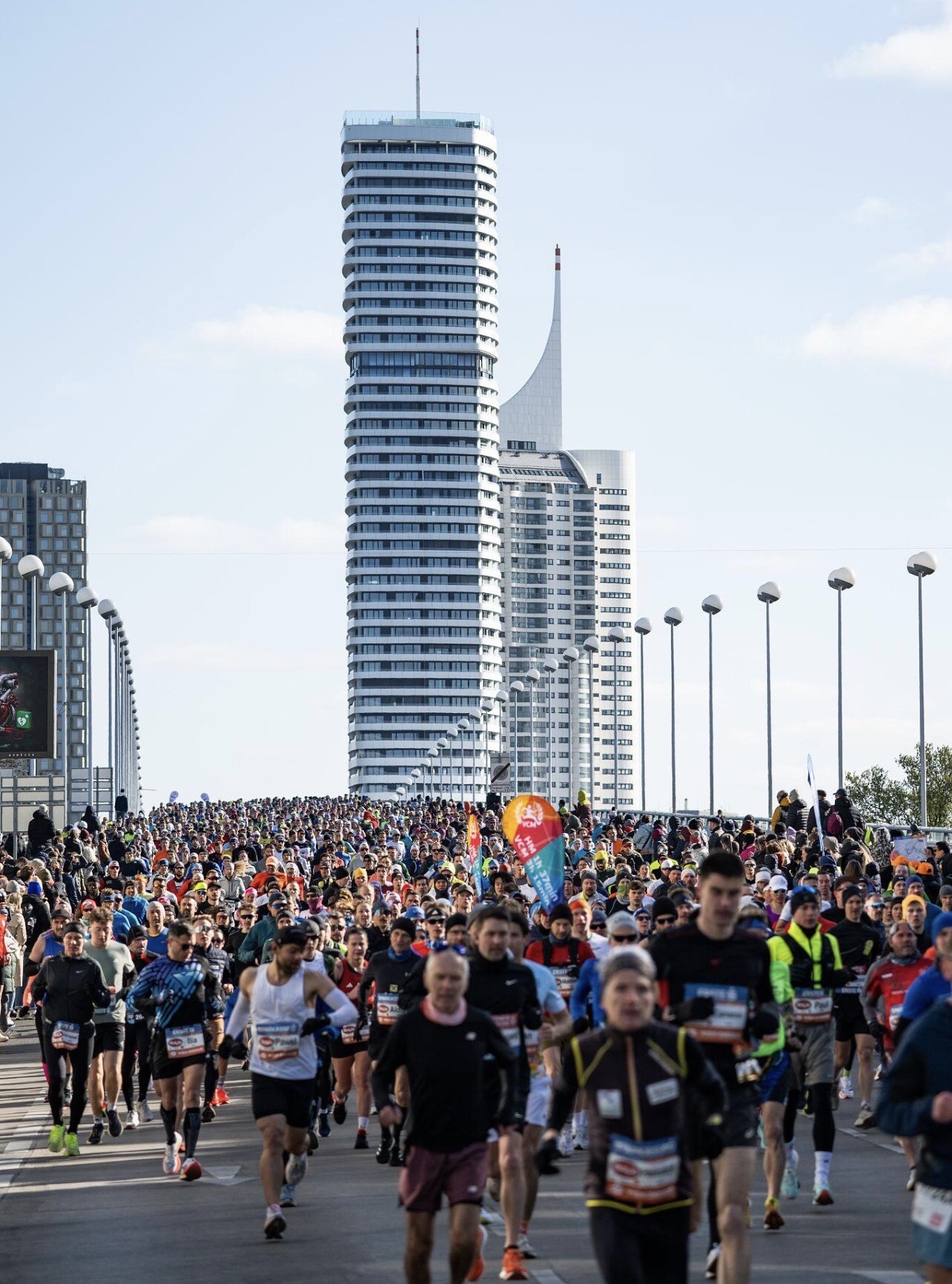
Now in its 43rd edition, the Vienna City Marathon continues to grow as one of Europe’s premier road races. A record 12,995 runners entered the marathon, while a total of 49,379 athletes from 150 countries participated across all weekend events.
One of the weekend’s standout performances came on Saturday in the Vienna 5K, where Austria’s Lisa Redlinger set a national record of 15:34, breaking the previous mark by six seconds.
Men
Fanny Kiprotich (KEN) – 2:06:53
Oqbe Kibrom (ERI) – 2:08:10
Charles Mneria (KEN) – 2:08:42
Samwel Kiptoo (KEN) – 2:09:03
Simon Mwangi (KEN) – 2:09:05
Tafese Delegen (ETH) – 2:09:55
Mica Cheserek (KEN) – 2:12:15
Adam Lomb (HUN) – 2:12:48
Women
Tigist Gezahagn (ETH) – 2:20:06
Haftamnesh Tesfaye (ETH) – 2:20:18
Hellen Chepkorir (KEN) – 2:23:48
Faith Chepkoech (KEN) – 2:28:10
Tegest Ymer (ETH) – 2:28:15
Mary Granja (ECU) – 2:28:29
Lindsay Flanagan (USA) – 2:28:34
Vaida Zusinaite (LTU) – 2:35:29
by Race News Service
Login to leave a comment

Vienna City Marathon
More than 41,000 runners from over 110 nations take part in the Vienna City Marathon, cheered on by hundreds of thousands of spectators. From the start at UN City to the magnificent finish on the Heldenplatz, the excitement will never miss a beat. In recent years the Vienna City Marathon has succeeded in creating a unique position as a marathon...
more...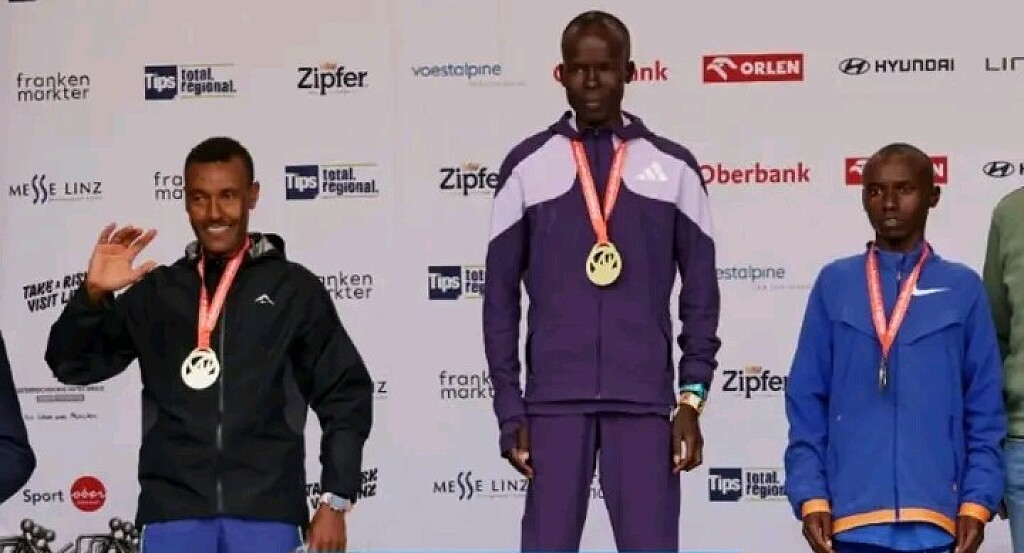
Kenya Dominates Linz Marathon as Cheruiyot and Chepngeno Lead a Commanding Charge
Kenya once again underlined its marathon supremacy with a stunning display at the 2026 Linz Marathon in Austria, producing brilliant victories in both the men’s and women’s races and filling the podiums with world-class depth. From the opening kilometres to the final strides, the East African distance powerhouse controlled the streets of Linz in emphatic fashion.
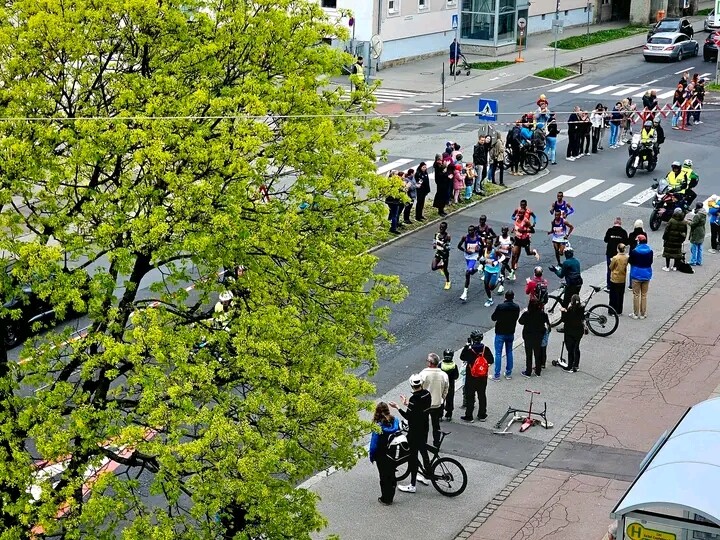
In the men’s contest, Abednego Cheruiyot delivered a composed and powerful performance to seize the title in 2:08:53. Running with confidence and precision, Cheruiyot timed his move to perfection and crossed the line as champion, adding another major international triumph to Kenya’s growing collection this season.
Ethiopia’s Sahelislassie Bekele Nigussie pushed hard in pursuit and secured second place in 2:09:32, while Kenya’s Victor Biwott Kipkoech completed the podium with an excellent 2:10:00, ensuring two Kenyan athletes stood among the top three finishers. Ethiopia’s Shengo Kebede followed in fourth with 2:10:32, while Kenya continued its dominance through Bernard Muia Katui in fifth and Jackson Rutto Kemboi in sixth.
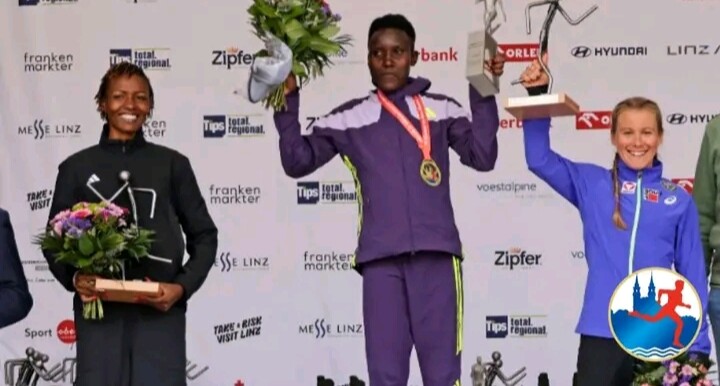
The women’s race brought more Kenyan celebration as Jackline Chepngeno stormed to victory in 2:26:01 after a commanding run filled with strength and consistency. She held her rhythm brilliantly and never allowed the challenge behind her to grow into a real threat.
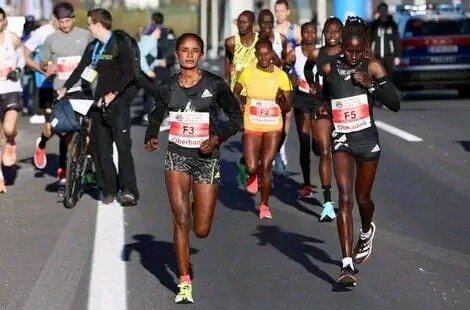
Fellow Kenyan Mary Munanu Waithira made it a memorable one-two finish for the nation, clocking 2:26:59 for second place. Austria’s home favourite Julia Mayer delighted local supporters with a strong third-place finish in 2:29:48, earning a deserved podium on home soil. Ethiopia’s Agrie Wole Belachew claimed fourth, with Kenya’s Rael Cherop Boiyo and Ukraine’s Olga Nyzhnyk rounding out the top six.
The final standings told the story of the day: Kenya’s athletes combined tactical intelligence, relentless endurance and finishing power to turn the Linz Marathon into a showcase of national excellence. With victories in both elite races and multiple top-six finishes, Kenya did not simply win in Linz — it ruled the event from start to finish.
by Erick Cheruiyot for My Best Runs.
Login to leave a comment

Linz Donau Marathon
The Linz Marathon is one since 2002 taking place in April each year marathon in Linz . Besides the classic route over 42.195 km, there is a half marathon , quarter marathon 10.5 km, a relay marathon and competitions for hand cyclists and inline skaters (since 2005).The marathon route starts on the VÖEST bridge the A 7 runs in the...
more...
SUPER MARATHON SUNDAY: A Global Racing Spectacle Awaits on April 12
The running world is set for one of its most thrilling days of the year as Sunday, April 12 delivers a marathon-packed schedule across multiple continents. From Europe’s fastest city courses to South America’s vibrant streets, elite athletes, rising contenders, and thousands of passionate runners will line up for a day that promises drama, speed, and unforgettable moments.
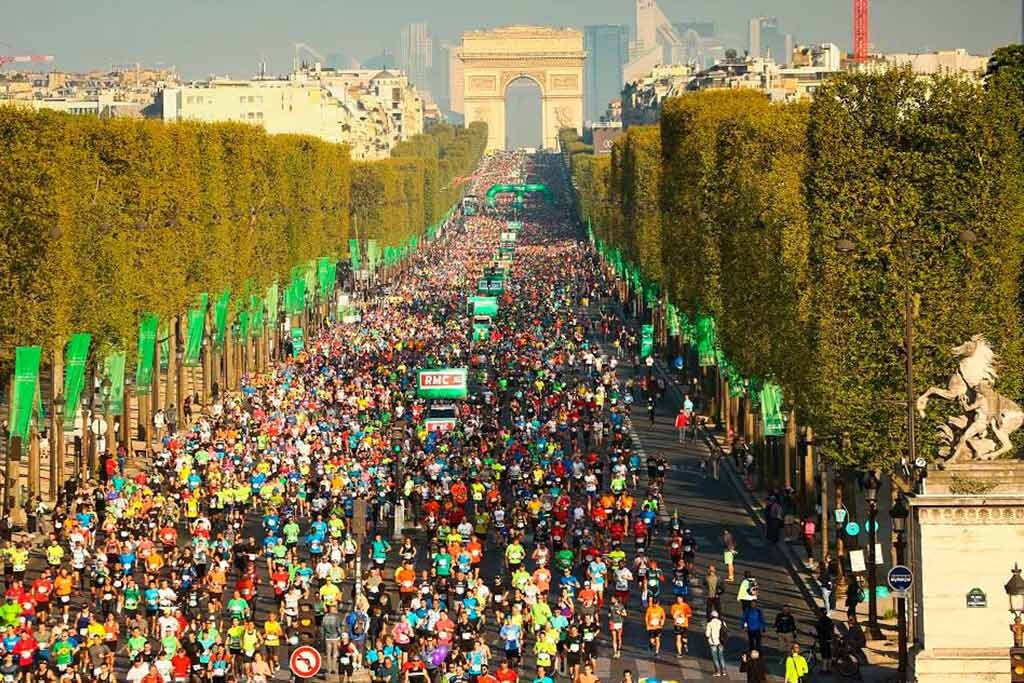
The spotlight will first shine on Paris, where the iconic streets of the French capital become the stage for one of the sport’s most prestigious races. With a reputation for fast times and electric crowds, the Paris Marathon is expected to provide an early burst of excitement as the world’s best chase victory through the City of Light.
Moments later, attention turns to Italy, where Milan prepares to host another major contest. Known for blending history, architecture, and fierce competition, the Milan Marathon has steadily become one of Europe’s standout races, attracting a deep field of talent each year.
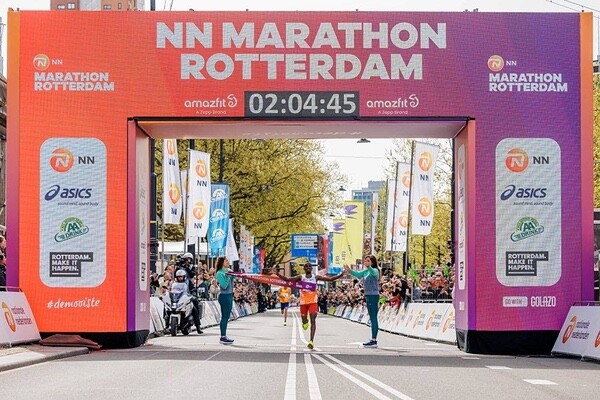
As the morning unfolds, the action intensifies across the continent. Rotterdam, widely regarded as one of the fastest marathon courses in the world, once again takes center stage. The Dutch classic has produced countless memorable performances and remains a favorite destination for athletes targeting personal bests and record-breaking runs.
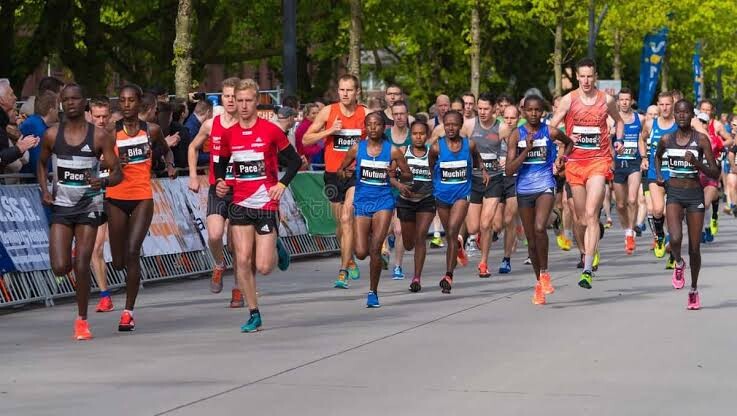
Elsewhere in the Netherlands, the historic Enschede Marathon adds another layer to the day’s excitement, while Germany’s Hannover Marathon promises high-energy racing and strong elite battles. Across Austria, Switzerland, Slovakia, and Spain, runners will also take to the roads in Linz, Zurich, Bratislava, and Zaragoza, ensuring nearly every corner of Europe joins the celebration.
Beyond Europe, São Paulo will carry the marathon spirit into South America, delivering its own powerful chapter to this worldwide running festival.
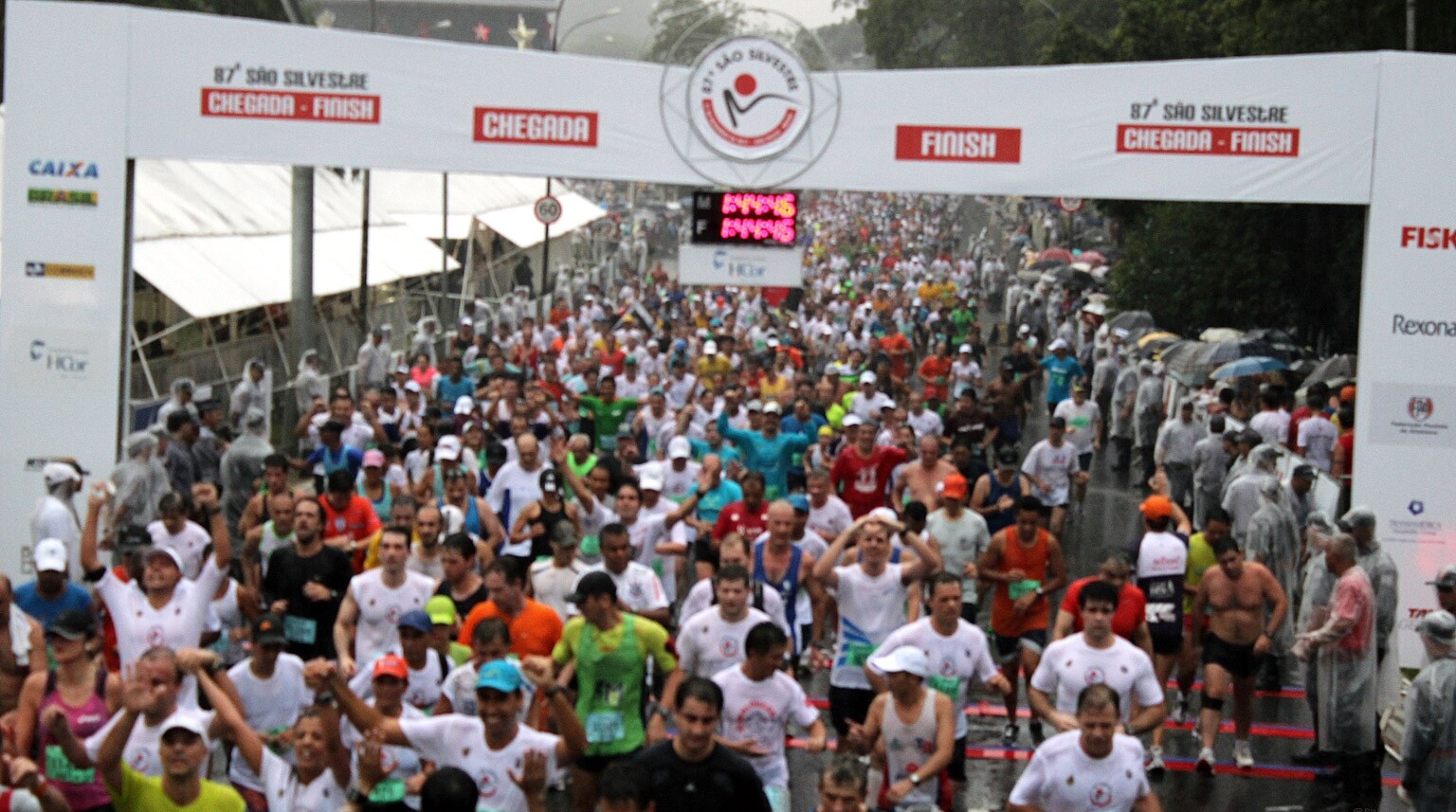
For fans around the world, the schedule offers a full day of nonstop marathon action. From the first starters in Europe to the excitement building across every course, viewers everywhere will have the chance to follow elite battles, breakthrough performances, and inspiring personal journeys. No matter your time zone, this is the kind of Sunday made for running fans everywhere.
What makes this Sunday so special is not only the elite competition, but the shared spirit of the marathon itself. While world-class athletes battle for titles and records, thousands of everyday runners will be chasing personal milestones, lifelong dreams, and the unforgettable joy of crossing the finish line.
This is more than a race day—it is a celebration of endurance, ambition, and the universal power of running. Wherever you are watching from, prepare for a remarkable Sunday as the world runs together.
by Erick Cheruiyot for My Best Runs.
Login to leave a comment
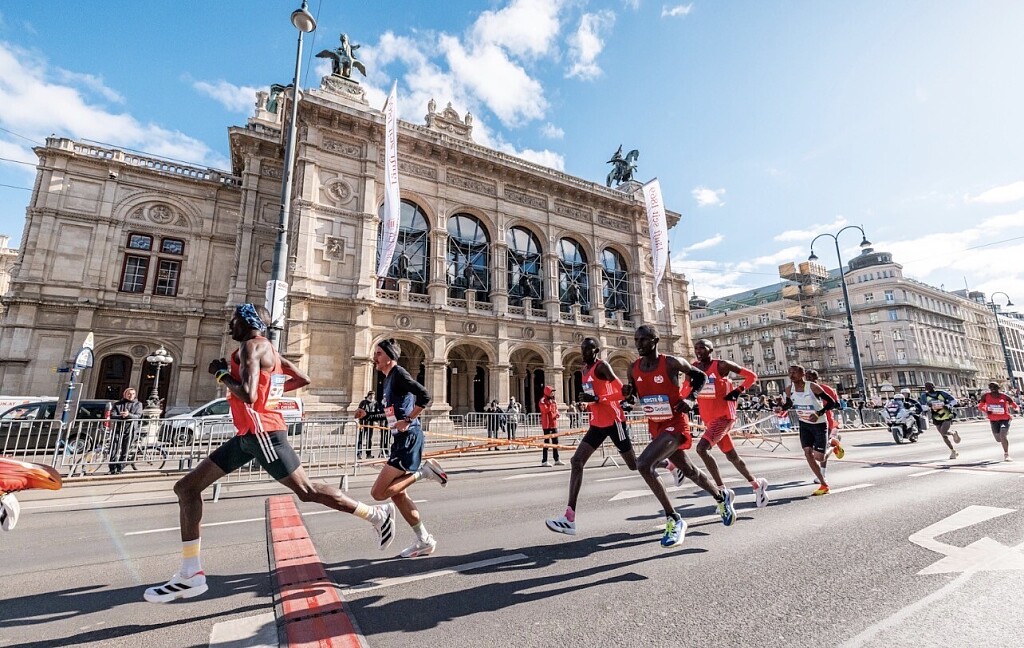
Vienna City Marathon Set for Strong African Challenge and Austrian Breakthrough
The Vienna City Marathon returns on April 19 with a deep elite field and the promise of fast racing on one of Europe’s most scenic courses. Now in its 43rd edition, the race continues to grow in stature, drawing top international talent alongside strong national contenders.
Organizers have recorded a record 49,000 entries, with 13,000 runners set to tackle the classic marathon distance—further cementing Vienna’s place as a major destination on the global running calendar.
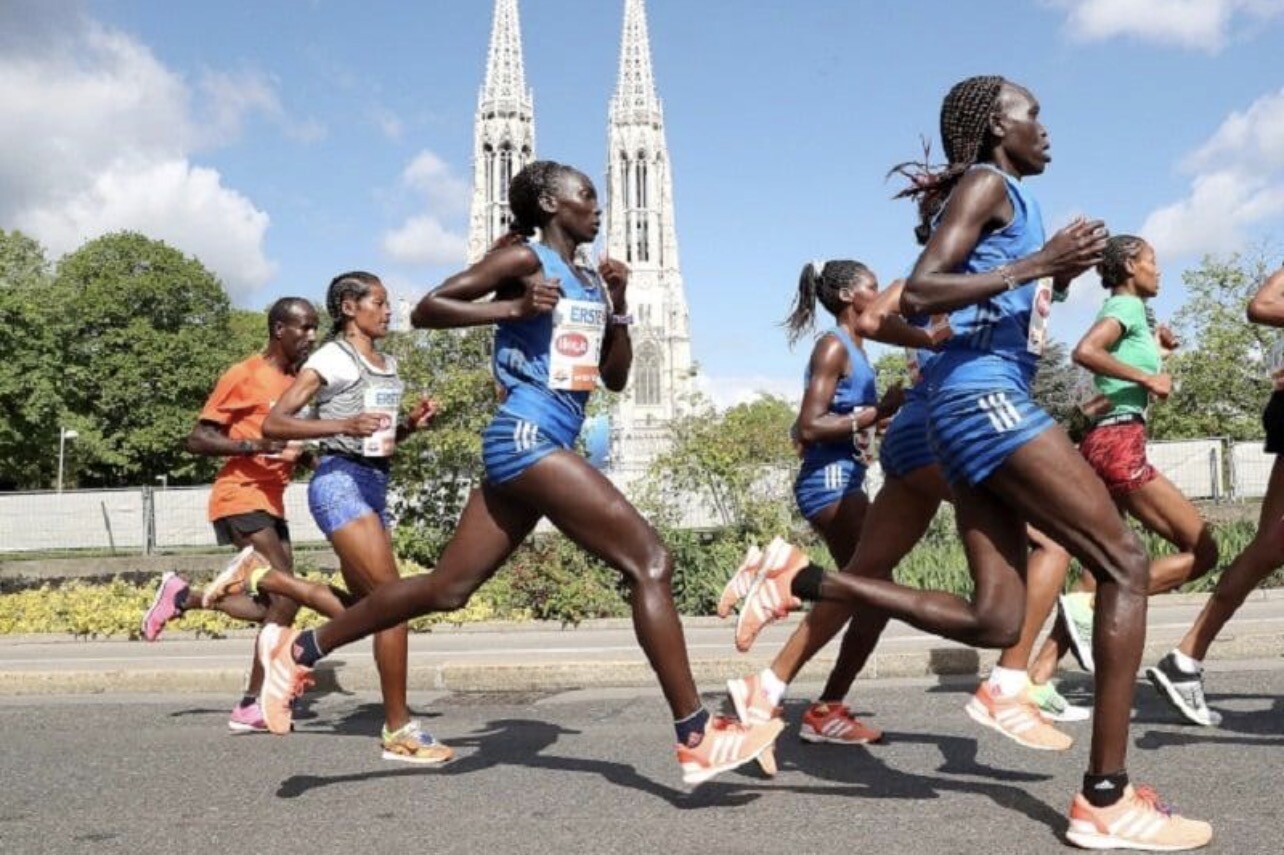
Women’s Race: Record in Sight
The women’s race could be historic. If conditions cooperate, the field may challenge both the course record and potentially break 2:20:00 for the first time on Austrian soil.
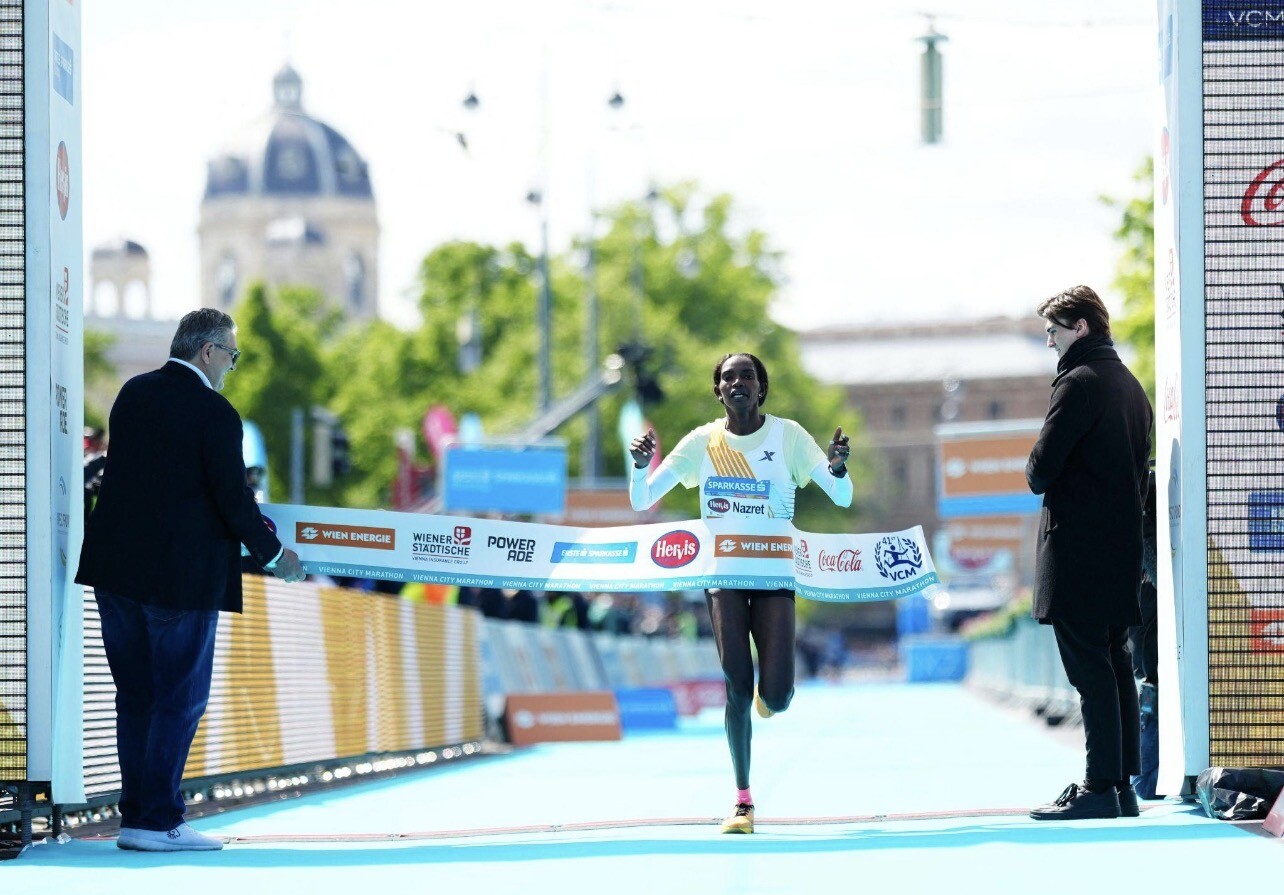
Four years ago, Kenya’s Vibian Chepkirui set the current course record of 2:20:59. This year, a trio of standout contenders could push the pace even further.
Ethiopia’s Haftamnesh Tesfaye leads the field with a personal best of 2:20:13. She is joined by compatriot Tigist Gezahagn (2:21:14), making Ethiopia a strong force at the front. Tesfaye also brings added intrigue as the sister of rising star Fotyen Tesfay.
Defending champion Betty Chepkemoi returns after a gritty win last year in difficult conditions, where she clocked a personal best of 2:24:14. Should the weather turn cold again, it could once more play to her strengths.
American Lindsay Flanagan adds further depth to the field. With a personal best of 2:23:31, she begins her comeback following injury and will be one to watch.
Men’s Race: Depth and Local Ambition
The men’s race features exceptional depth, with four athletes holding personal bests under 2:08:00.
Eritrea’s Oqbe Kibrom leads the field with a standout best of 2:05:37 and enters as the clear favorite. He will face strong competition from Ethiopia’s Tafese Delegen (2:06:11), along with Kenya’s Stanley Kurgat (2:07:05) and Albert Kangogo (2:07:26).
Beyond the front group, the race includes several sub-2:10 performers, ensuring a competitive and tactical contest.
A major storyline for the host nation centers on Austrian record holder Aaron Gruen. He surprised many last year by setting a national record of 2:09:53 and will now compete in Vienna for the first time, aiming to improve further on home soil.
Elite Fields – Personal Bests
MEN
Oqbe Kibrom (ERI) – 2:05:37
Tafese Delegen (ETH) – 2:06:11
Stanley Kurgat (KEN) – 2:07:05
Albert Kangogo (KEN) – 2:07:26
Charles Mneria (KEN) – 2:08:54
Mica Cheserek (KEN) – 2:09:26
Samwel Kiptoo (KEN) – 2:09:45
Aaron Gruen (AUT) – 2:09:53
Paul Tiongik (KEN) – 2:10:25
Abel Sikowo (UGA) – 2:10:33
Mogos Tuemay (ETH) – 2:10:33
Fanny Kiprotich (KEN) – 2:11:21
Andreas Vojta (AUT) – 2:13:43
WOMEN
Haftamnesh Tesfaye (ETH) – 2:20:13
Tigist Gezahagn (ETH) – 2:21:14
Lindsay Flanagan (USA) – 2:23:31
Betty Chepkemoi (KEN) – 2:24:14
Mary Granja (ECU) – 2:26:34
Faith Chepkoech (KEN) – 2:26:22
Hellen Chepkorir (KEN) – 2:27:17
Tegest Ymer (ETH) – 2:29:11
Caroline Korir (KEN) – 2:29:46
Abigail Jepkemboi (KEN) – 2:29:56
Eva Wutti (AUT) – 2:30:43
Aiwa Sakaguchi (JPN) – 2:31:50
Hanne Maridal (NOR) – 2:32:14
Vaida Zusinaite (LTU) – 2:32:50
Susanna Saapunki (FIN) – Debut
by Race News Service
Login to leave a comment
Vienna City Marathon
More than 41,000 runners from over 110 nations take part in the Vienna City Marathon, cheered on by hundreds of thousands of spectators. From the start at UN City to the magnificent finish on the Heldenplatz, the excitement will never miss a beat. In recent years the Vienna City Marathon has succeeded in creating a unique position as a marathon...
more...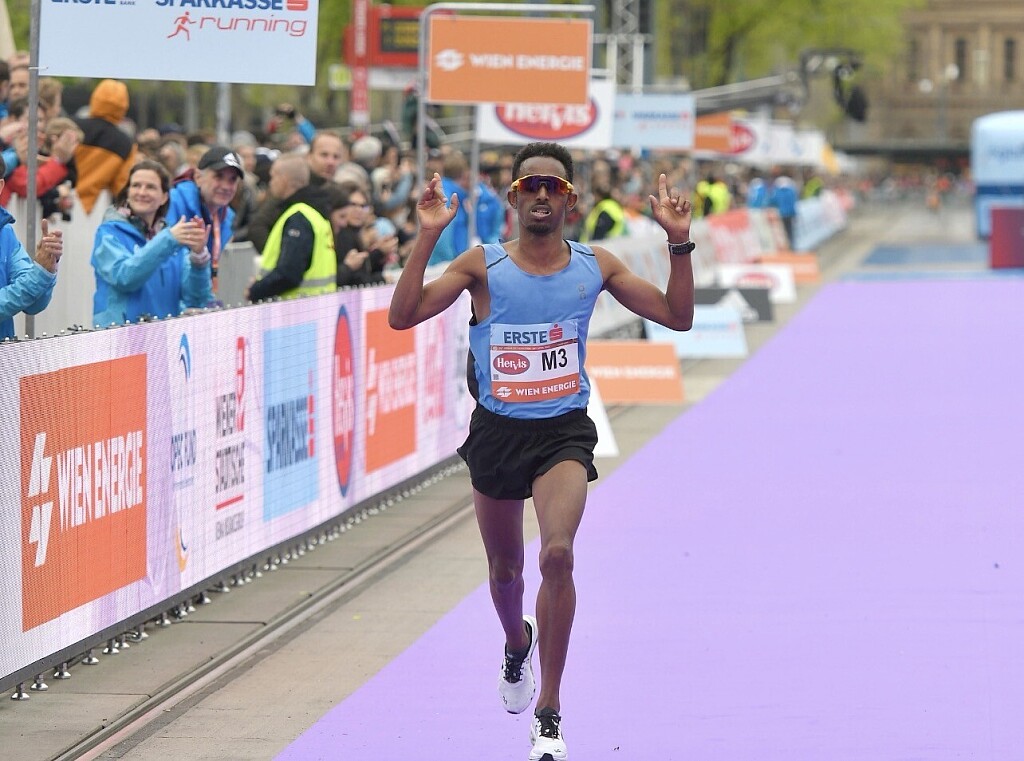
Oqbe Kibrom Returns to Vienna Chasing Historic First Eritrean Victory
The 43rd Vienna City Marathon will take place on April 19, and one runner arriving with unfinished business is Oqbe Kibrom of Eritrea. Kibrom will return to the Austrian capital hoping to become the first Eritrean athlete to win the men’s race at this prestigious event.
Kibrom finished third in Vienna in 2022, and he enters this year’s race as the fastest man on the current start list with a personal best of 2:05:37.
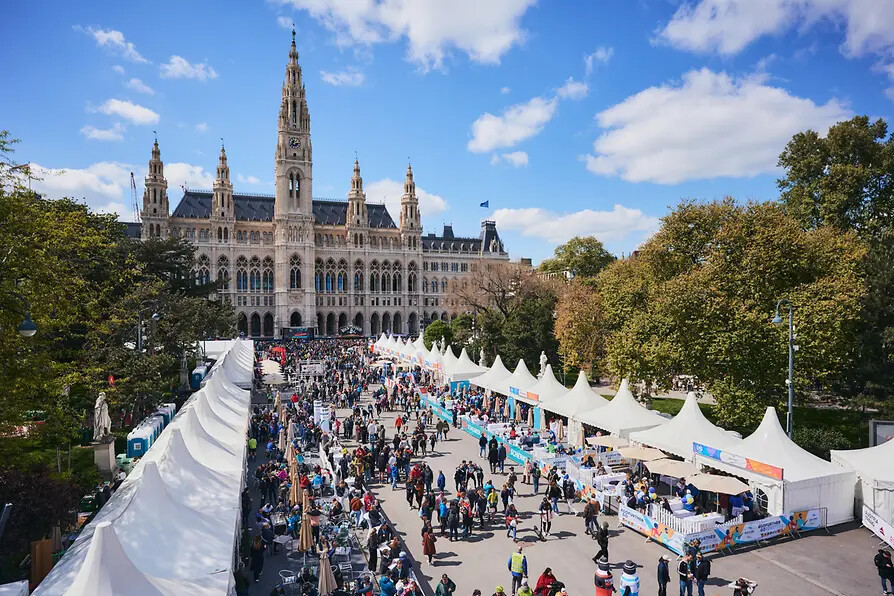
Organizers report strong participation for this year’s race. More than 13,000 runners are registered for the marathon distance alone, and when shorter races over the two-day weekend are included, the total number of participants climbs to over 46,000, a record for the event.
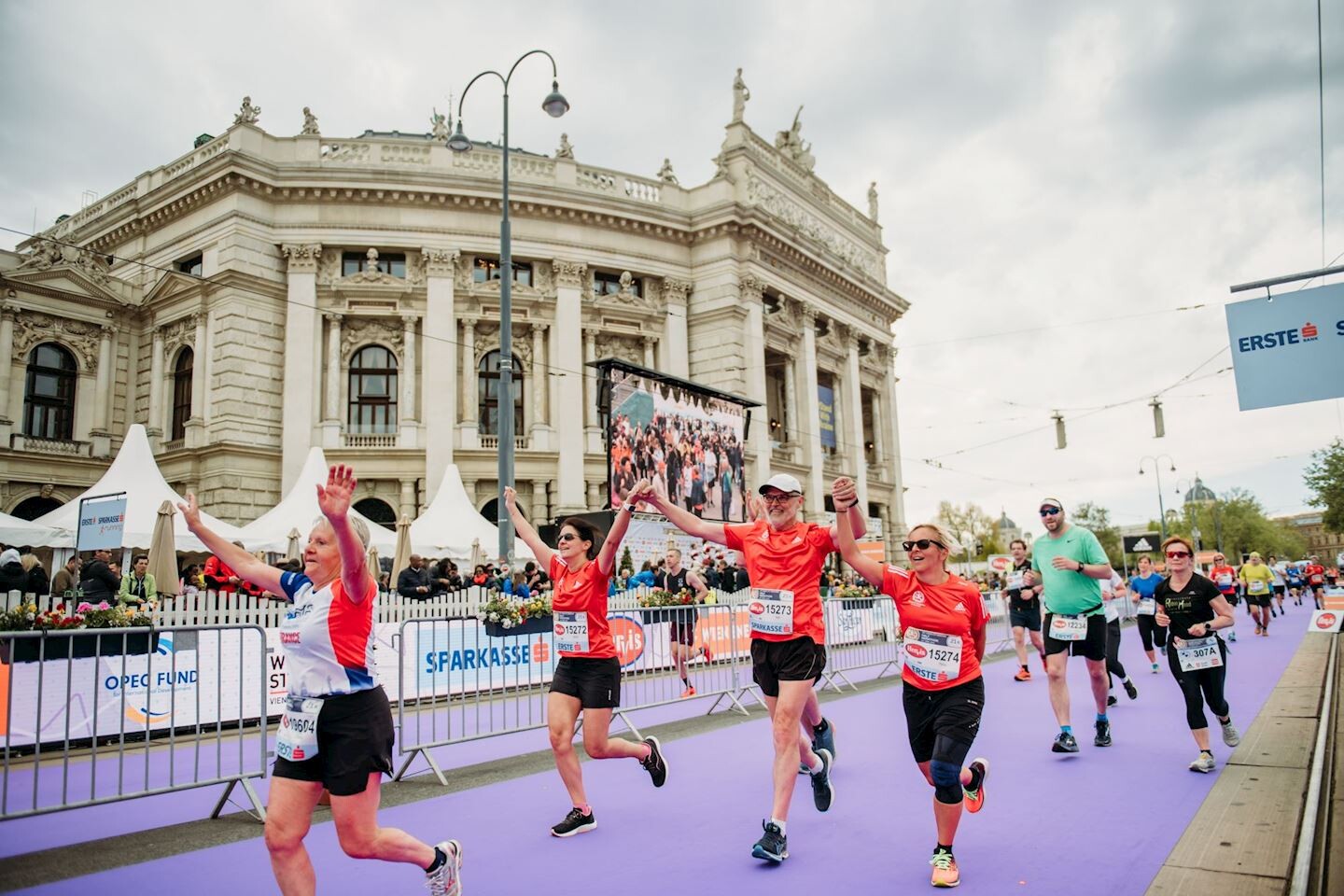
A Second Chance at Victory
When Kibrom raced in Vienna four years ago, it briefly appeared he might make history.
After the final pacemaker stepped aside just past 30 kilometers, Kibrom surged into the lead and looked poised to become the first Eritrean man to win the race. However, the effort proved costly.
Kenya’s Cosmas Muteti closed the gap late in the race and passed Kibrom with five kilometers remaining, eventually taking the win. Kibrom finished third in 2:07:25.
While Eritrea has celebrated a women’s champion in Vienna, the men’s race has yet to be won by an Eritrean athlete.
Kibrom, whose manager is Swiss marathon record holder Tadesse Abraham, has remained consistently competitive on the global marathon stage. The 28-year-old set his personal best of 2:05:37 when finishing eighth at the Berlin Marathon two years ago.
More recently, he finished fourth at the Daegu Marathon in South Korea in 2025, running 2:06:04. With three sub-2:06 performances to his name, Kibrom may now be poised for his first major marathon victory.
Strong African Contenders
Kibrom will face strong competition from fellow African runners.
Ethiopia’s Tafese Delegen owns a personal best of 2:06:11, set at the Seville Marathon two years ago.
Kenya’s Stanley Kurgat ran 2:07:05 at the Berlin Marathon, finishing seven places behind Kibrom in that race.
Another Kenyan to watch is Albert Kangogo, who ran 2:07:26 while finishing second at the Mersin Marathon in Turkey last December. Kangogo has already proven he can perform well in Vienna—he placed third in the 2023 race in 2:10:44.
Austrian Hope: Aaron Gruen
Local fans will also be watching Aaron Gruen, who made headlines last spring by becoming the first Austrian runner to break 2:10 in the marathon.
The 27-year-old ran 2:09:53 in Congers, New York, improving his personal best by nearly five minutes.
Gruen has continued his strong form in 2026, setting a half marathon personal best of 61:14 in Houston earlier this year. Balancing elite training with his studies, he is currently attending Harvard Medical School in Boston, making his preparation even more impressive.
European Marathon Classics Series Launched
The Vienna City Marathon is also playing a central role in a newly created marathon series called European Marathon Classics (EMC).
Alongside Vienna, the series includes major European marathons in:
• London Marathon
• Rome Marathon
• Madrid Marathon
• Lisbon Marathon
• Warsaw Marathon
• Copenhagen Marathon
• Frankfurt Marathon
Runners who complete at least five of these marathons in different cities will receive a specially designed medal recognizing the achievement.
“European Marathon Classics embodies our ambition to explore Europe together while pushing boundaries—both geographically and philosophically,” said Hugh Brasher, Event Director of the London Marathon. “I hope it will inspire runners from around the world to experience Europe’s great marathons, cities, and communities.”
Kathrin Widu, joint managing director of the Vienna City Marathon along with Dominik Konrad, added:
“The European Marathon Classics are an inspiring challenge. By bringing together leading European marathons, we aim to inspire even more people to embrace marathon running. We are united by shared values such as a passion for the sport, community, health, and sustainability.”
by Race News Service
Login to leave a comment
Vienna City Marathon
More than 41,000 runners from over 110 nations take part in the Vienna City Marathon, cheered on by hundreds of thousands of spectators. From the start at UN City to the magnificent finish on the Heldenplatz, the excitement will never miss a beat. In recent years the Vienna City Marathon has succeeded in creating a unique position as a marathon...
more...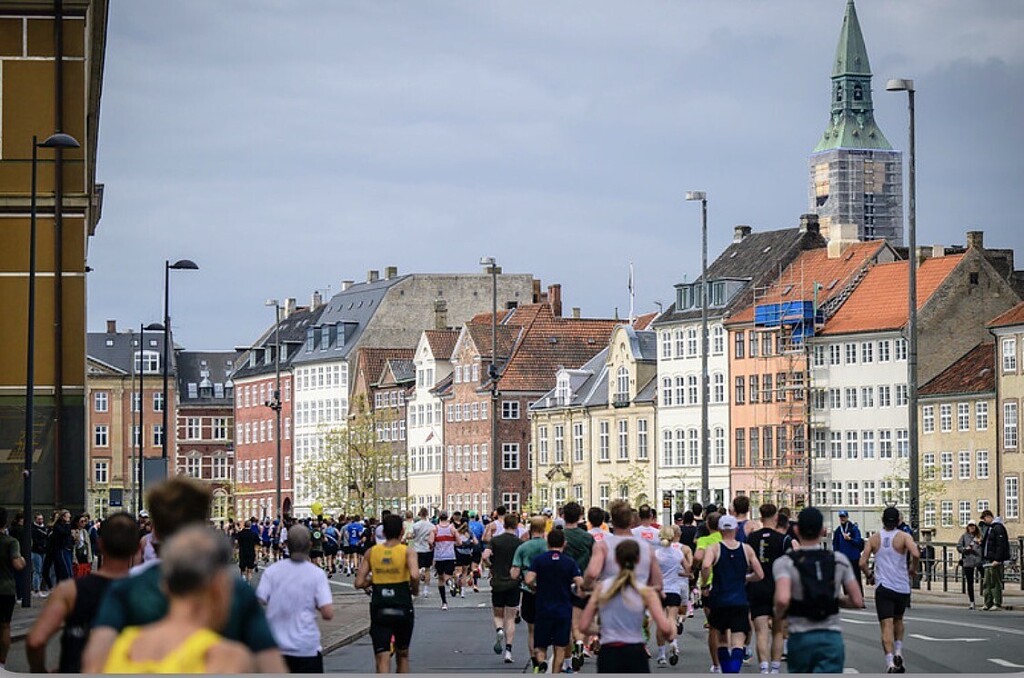
European Marathon Classics Launches New Era for Distance Running
A new chapter in European marathon running was unveiled on February 25, 2026, when organizers introduced the European Marathon Classics, a series linking eight of the continent’s most established races into one long-term challenge for runners.
The announcement was made in Vienna at the historic Schönbrunn Palace, bringing together race directors and organizers from across Europe. The concept is simple: one distance, eight cities, and a shared journey through some of Europe’s most celebrated marathon courses.
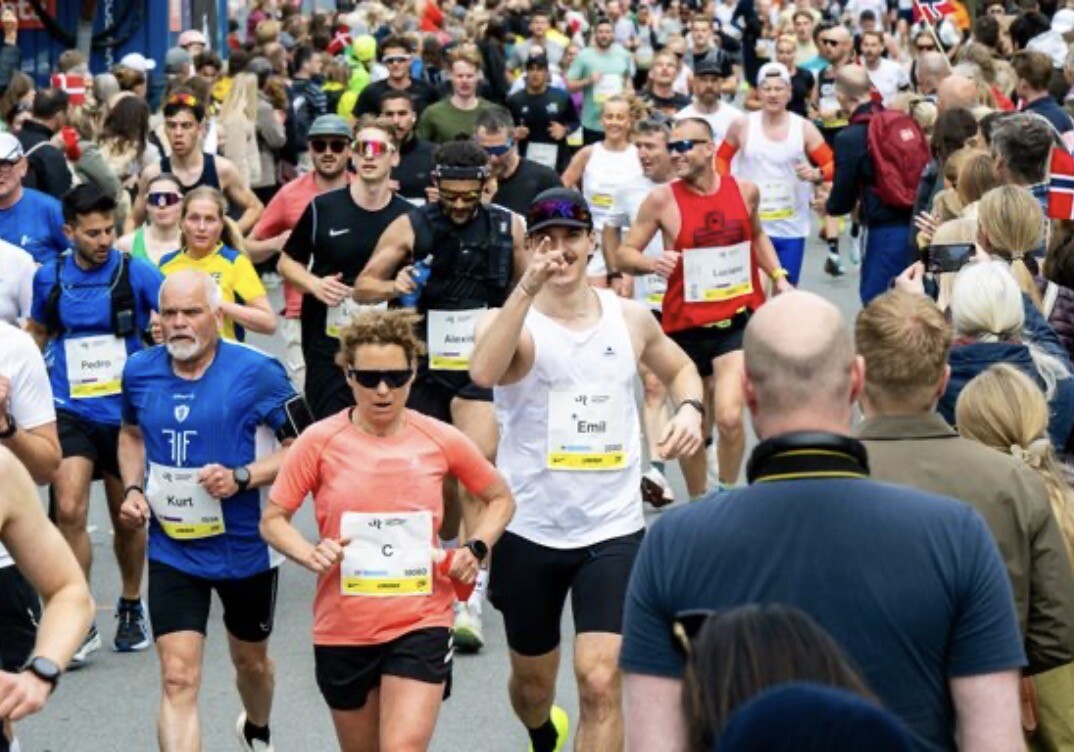
The new series connects races that already have strong identities of their own. By linking them together, organizers hope to inspire runners to explore different countries, cultures, and running traditions while pursuing a personal challenge.
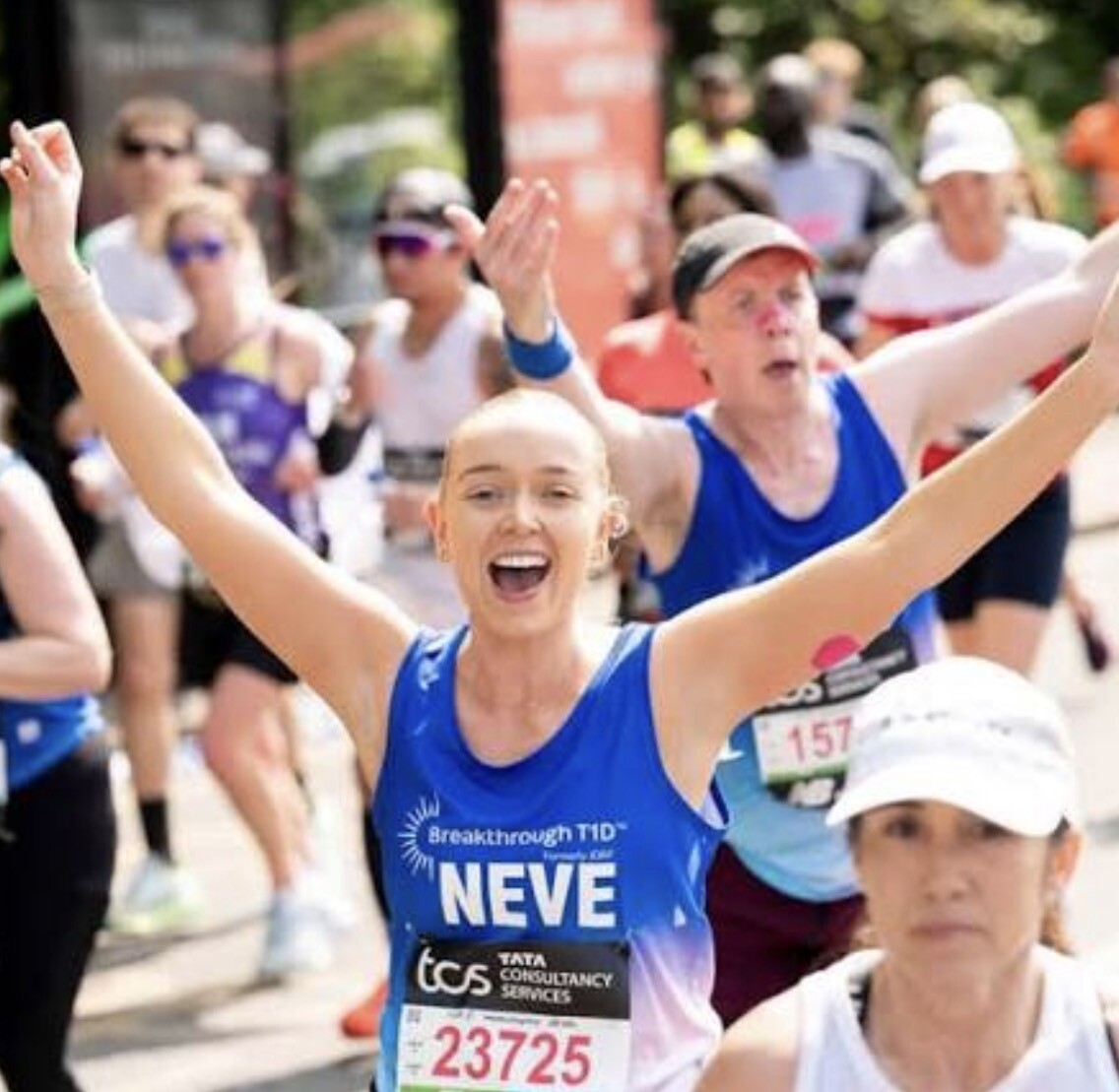
To earn the title European Marathon Classics Finisher, runners must complete five of the eight marathons, each in a different city. There is no time limit, allowing participants to build their journey over several seasons.
The eight races in the series form a calendar stretching from early spring to autumn:
2026 European Marathon Classics Schedule
March 22 – Rome Marathon (Italy)
April 19 – Vienna City Marathon (Austria)
April 26 – London Marathon (United Kingdom)
April 26 – Madrid Marathon (Spain)
May 10 – Copenhagen Marathon (Denmark)
September 27 – Warsaw Marathon (Poland)
October 10 – Lisbon Marathon (Portugal)
October 25 – Frankfurt Marathon (Germany)
Runners who complete five races will receive a commemorative medal designed to reflect the journey. The medal includes magnetic elements that allow athletes to add a marker for each marathon they finish.
One unusual feature of the project is that past results will count. Organizers say runners will be able to register historical performances from earlier editions of the races, recognizing the long traditions behind these events.
London Marathon Event Director Hugh Brasher said the idea is meant to highlight what connects runners across the continent.
by Bob Anderson for My Best Runs
Login to leave a comment
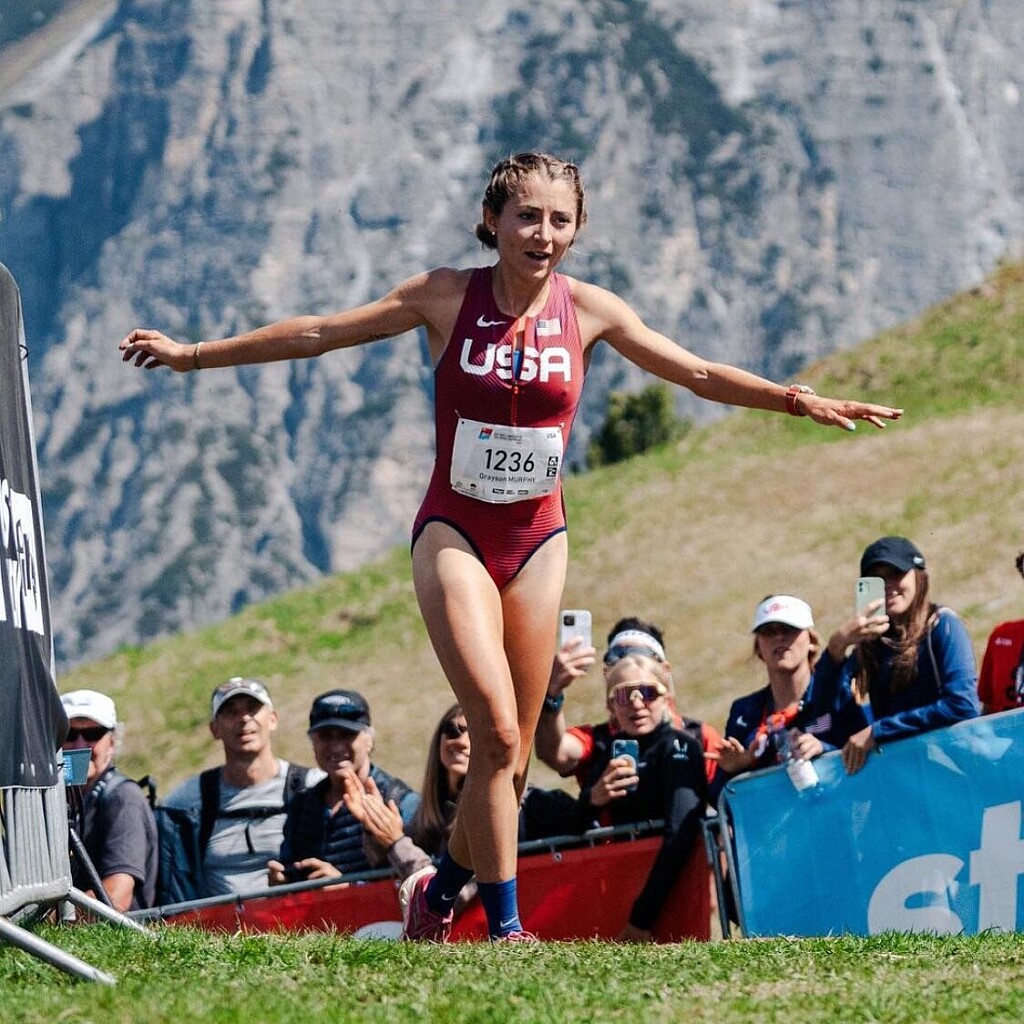
Chasing Summits, Defining Limits: Inside the 2026 World Mountain Running Cup Journey
With only sixty days remaining before the season opener, the anticipation surrounding the 2026 World Mountain Running Cup is reaching a powerful crescendo. Organized by the World Mountain Running Association (WMRA), this global series stands as the pinnacle of competitive mountain running — a demanding arena where athletic precision, endurance, and mental resilience intersect with some of the most dramatic landscapes on Earth.
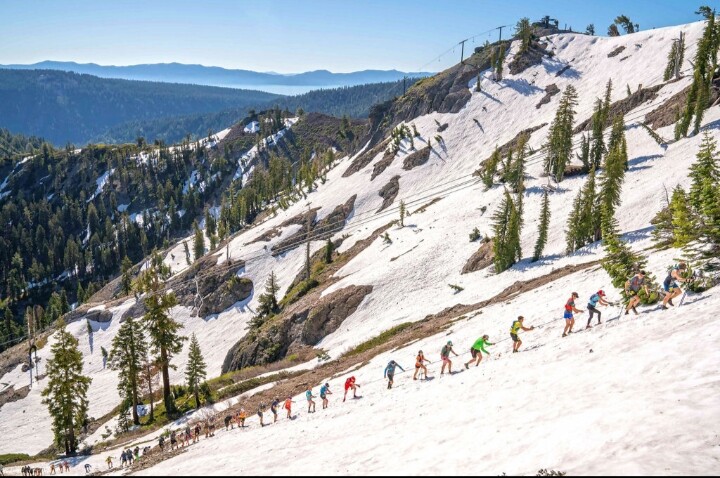
Mountain running is not merely a sport; it is an encounter between human ambition and vertical terrain. Unlike road racing, where predictability dominates, mountain racing introduces variables that cannot be controlled — altitude, weather volatility, technical descents, and the relentless resistance of gravity. Success belongs not only to the strongest athlete, but to the most adaptable mind.
The 2026 season promises exceptional intensity as elite runners and rising talents converge across multiple continents, competing in three primary formats: Uphill, Up & Down, and Long Distance. Each discipline demands a distinct physiological and tactical approach, ensuring that only the most versatile athletes can contend for the overall title.

From volcanic ridgelines and alpine glaciers to forested mountain corridors and historic highland communities, every race contributes to a narrative larger than sport itself — a celebration of exploration, resilience, and the pursuit of excellence in its purest form.
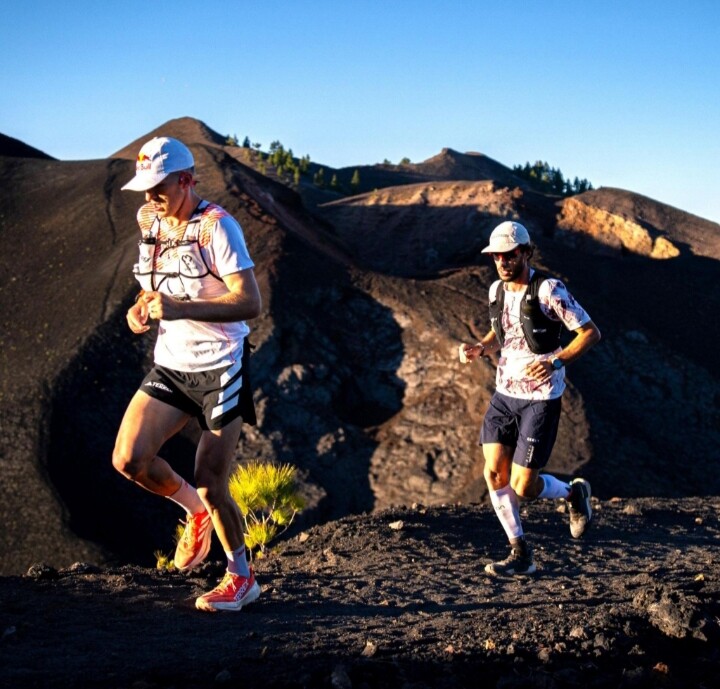
2026 World Cup Race Calendar
19 April — Portugal
São Brás de Alportel Cross — Up & Down
25–26 April — China
Beijing Changping Yanshou Trail Challenge — Uphill | Up & Down
7–9 May — Spain
Transvulcania — Uphill | Long
19–21 June — United States
Broken Arrow Skyrace — Uphill | Long
5 July — Austria
Grossglockner Mountain Run — Up & Down
18–19 July — France
Serre Che Trail Salomon — Uphill | Up & Down
8 August — Switzerland
Sierre-Zinal — Long
5–6 September — Italy
Trofeo Nasego — Uphill | Long
19 September — Poland
Maraton Trzech Jezior — Long Distance Final
10–11 October — Canada
Défi des Couleurs Simard — Uphill | Up & Down (World Cup Finals)
Beyond the competitive rankings, the World Cup embodies a deeper philosophy — trust in preparation, respect for nature, and belief in human potential. Athletes are not simply racing against one another; they are confronting terrain, fatigue, and uncertainty. Every climb becomes a negotiation with physical limits, and every descent demands courage under pressure.
The 2026 circuit also reflects the accelerating global growth of mountain running. Increased participation, improved race organization, and expanding media coverage are propelling the sport into a new era of recognition. For emerging athletes, this season represents opportunity; for established champions, it is a test of legacy.
As the countdown continues, training camps intensify, strategies evolve, and ambitions sharpen. Soon, starting lines will replace anticipation, and preparation will give way to performance.
In mountain running, there are no shortcuts — only the path upward and downward.
by Erick Cheruiyot for My Best Runs.
Login to leave a comment
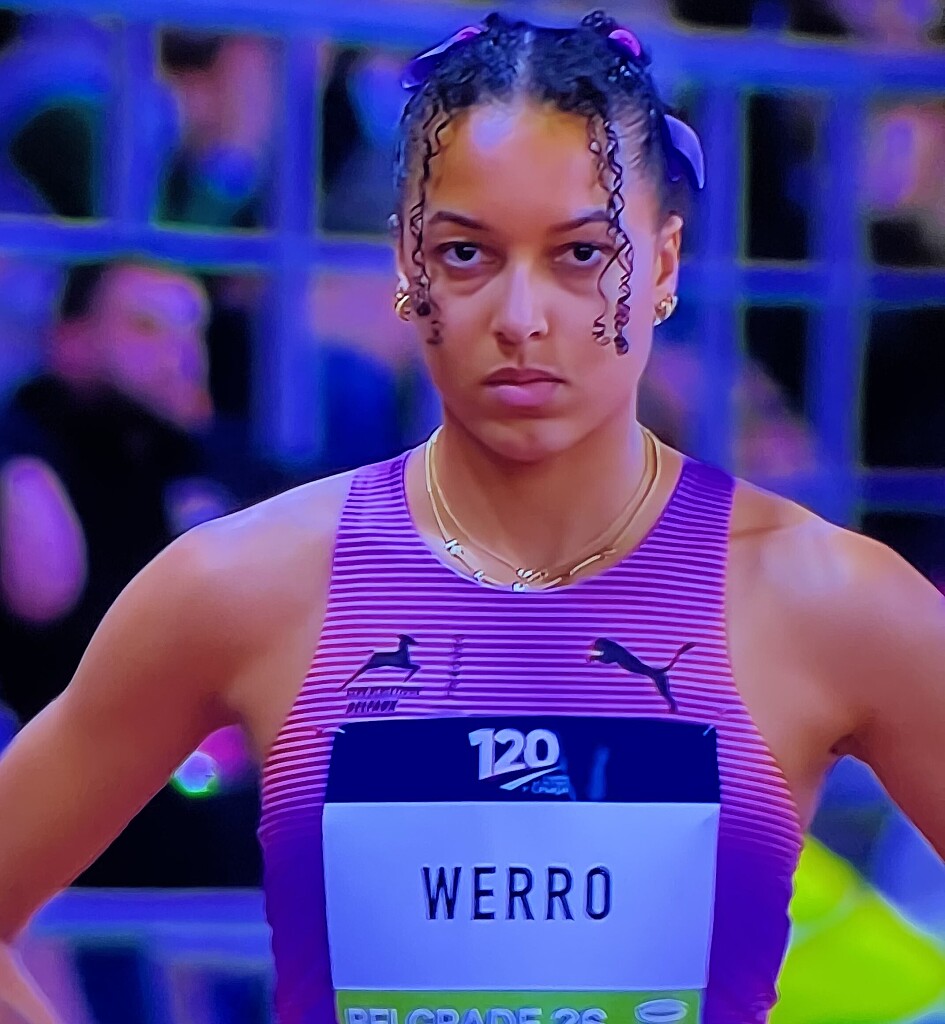
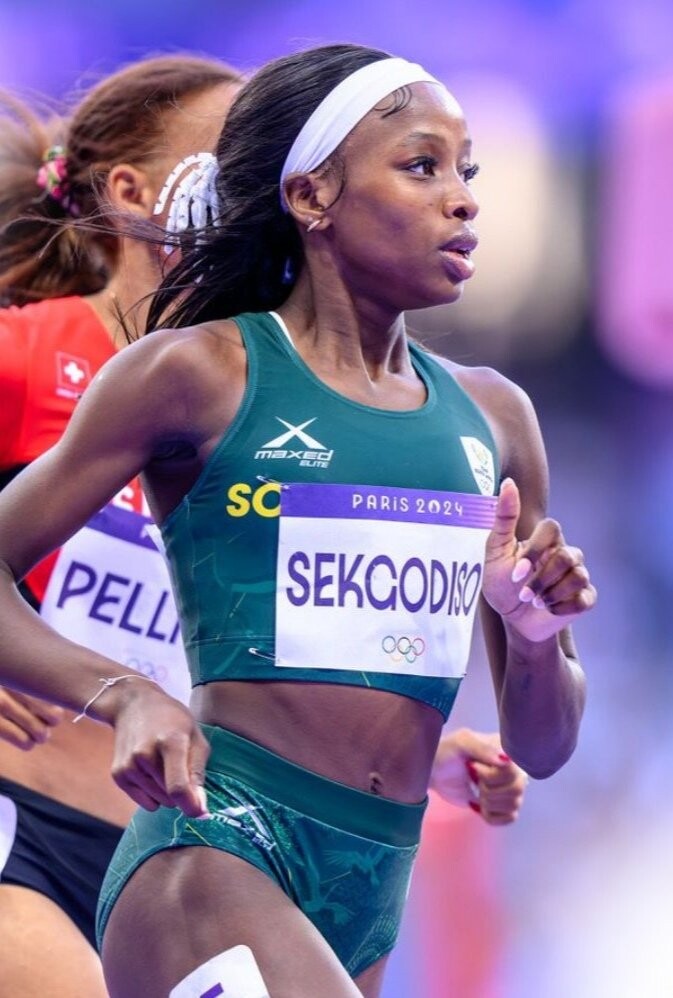
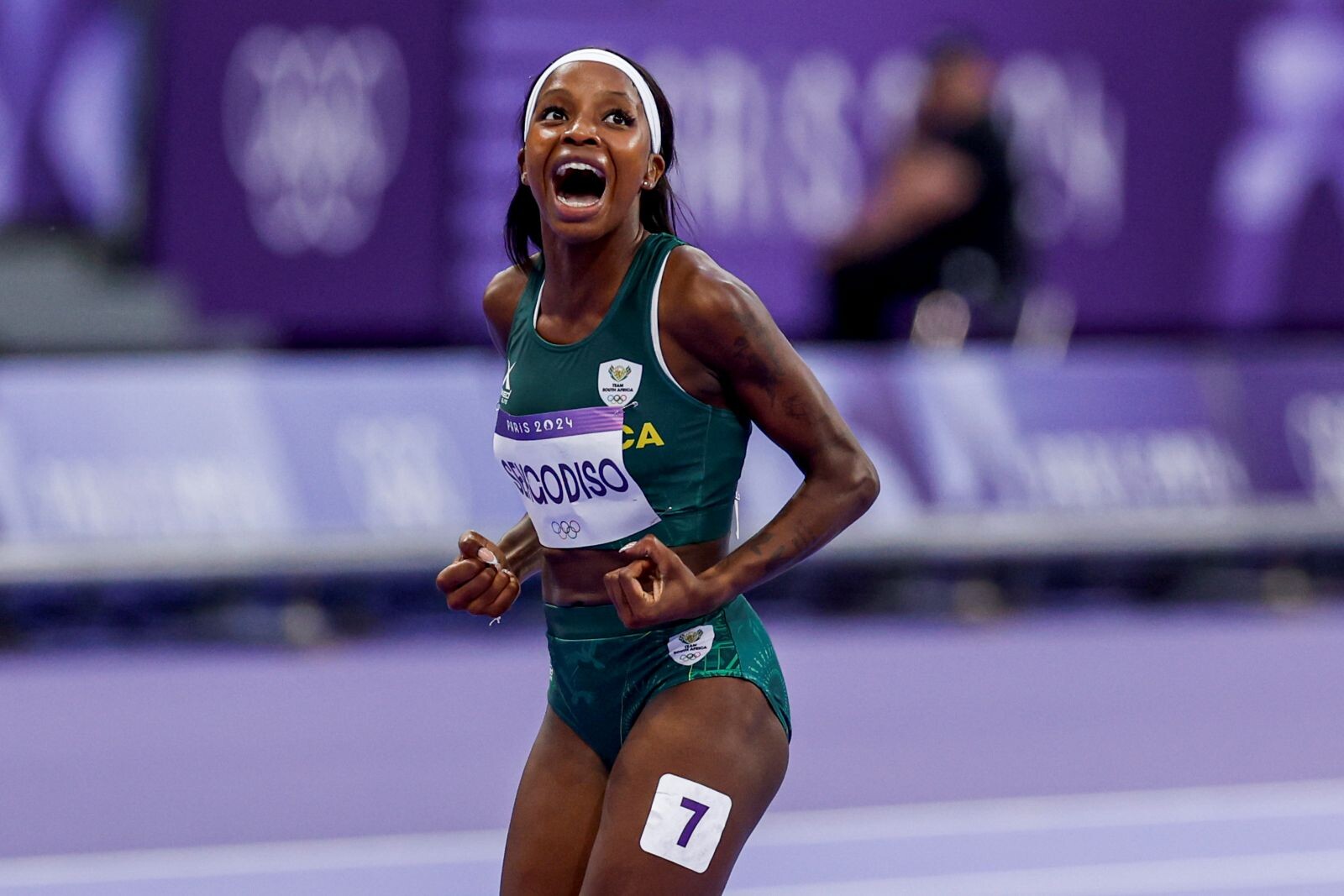
Sekgodiso Posts Season Best as Werro Rewrites History in Belgrade
Prudence Sekgodiso continued her steady rise this indoor season with a season-best performance at the Belgrade Indoor Meeting on Wednesday night, clocking 2:03.76 to finish fourth in a world-class women’s 800m showdown.
In only her second race of the campaign, the South African middle-distance star lined up in a stacked World Athletics Indoor Tour Gold field and embraced the fast tempo from the outset. Running with composure and determination, Sekgodiso crossed the line with her quickest time of the year so far — a clear indication that her form is building at the right time.
The race, however, belonged to Switzerland’s Audrey Werro, who delivered a historic performance. The 20-year-old stormed to victory in a world-leading 1:57.27, breaking her own Swiss indoor record. In doing so, Werro also surged to eighth on the all-time indoor 800m list, cementing her place among the fastest women ever over the distance indoors.
Behind her, Austria’s Caroline Bredlinger secured second place in 2:01.80, while Portugal’s Patrícia Silva completed the podium in 2:02.80 after a strong finishing effort. Sekgodiso followed closely in fourth, rounding off a fiercely competitive race that showcased the depth of talent on display in Belgrade.
Though narrowly outside the podium places, Sekgodiso’s performance marked a positive step forward. With her season-best now established against elite opposition, she leaves Belgrade with confidence and momentum as the indoor season gathers pace.
Women’s 800m Results – Belgrade Indoor Meeting
Audrey Werro (SUI) – 1:57.27 (WL, Swiss Indoor Record)
Caroline Bredlinger (AUT) – 2:01.80
Patrícia Silva (POR) – 2:02.80
Prudence Sekgodiso (RSA) – 2:03.76
Belgrade proved to be a night of both progress and history — Werro rewriting record books, and Sekgodiso steadily shaping her campaign with encouraging signs for the races ahead.
by Erick Cheruiyot for My Best Runs.
Login to leave a comment
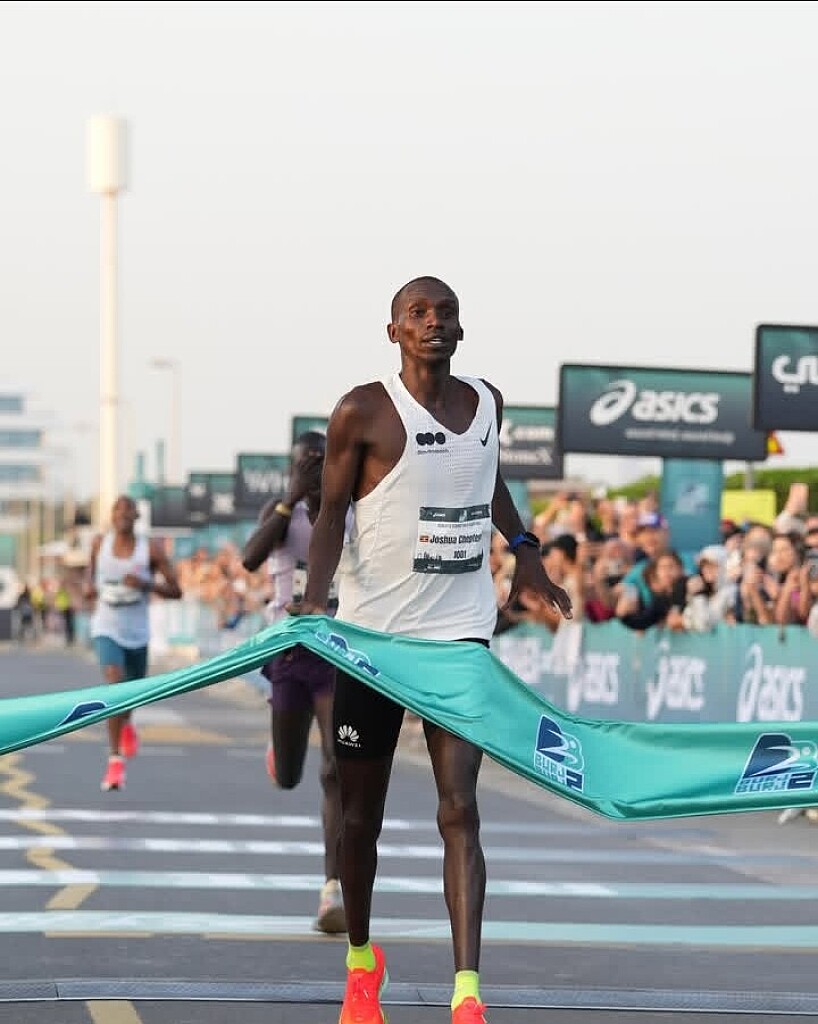
Seconds Decide, Champions Rise: Cheptegei and Cheptai Shine at a Thrilling Burj2Burj Half Marathon 2026
The Burj2Burj Half Marathon 2026 delivered a compelling showcase of elite road running, as Dubai’s iconic course provided the backdrop for high-speed racing, tactical brilliance, and photo-finish drama across both the men’s and women’s fields.
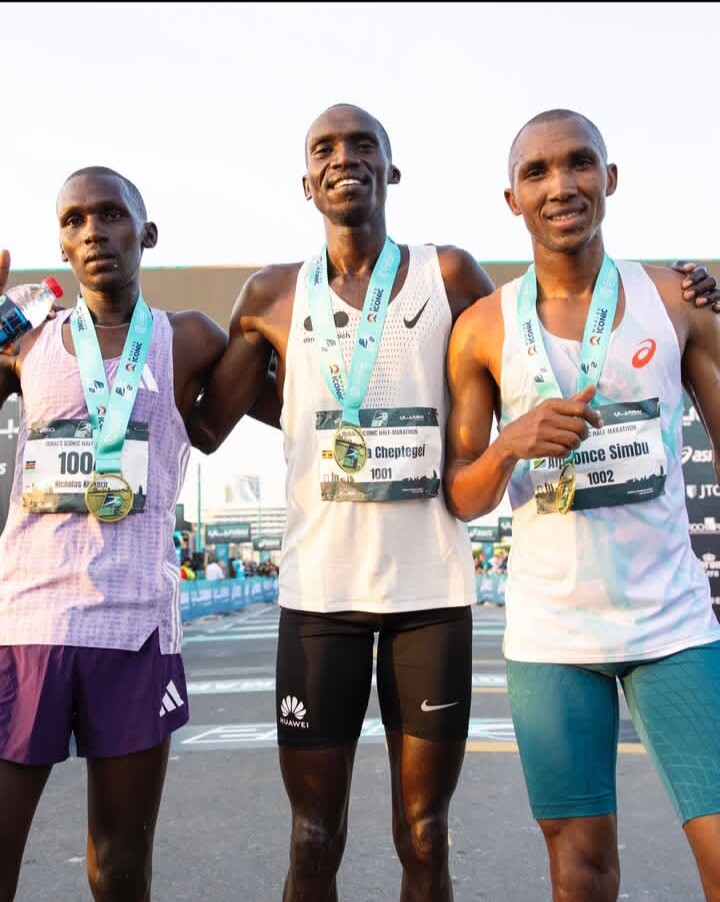
In the men’s race, Ugandan icon Joshua Cheptegei once again demonstrated his pedigree on the roads, powering to victory in 59:26 after a relentless battle over 21.1 kilometers. The Olympic champion and 5000m & 10,000m world record holder was pushed to the very limit, with Kenya’s Nicholas Kipkorir crossing the line just two seconds behind in 59:28, while Tanzania’s Alphonce Felix Simbu secured third place in 59:30. Only four seconds separated the podium finishers, reflecting the uncompromising pace and intensity from start to finish.
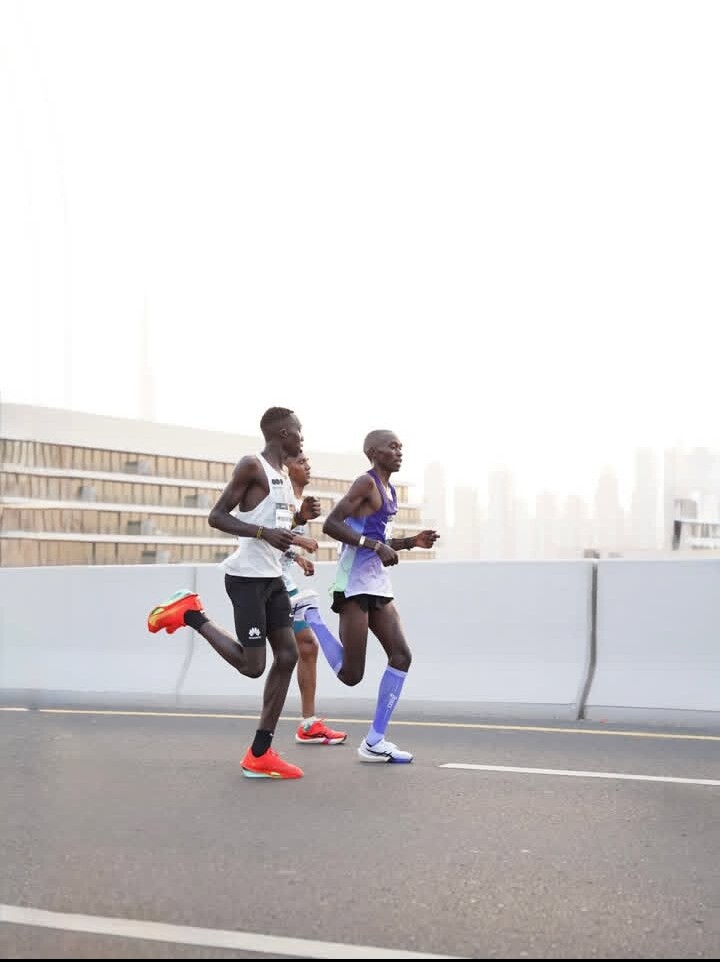
Kenya’s Enos Kipruto narrowly missed a place on the podium with 1:00:03, followed closely by Ethiopia’s Lulu Negera in 1:00:04, as the leading group maintained pressure throughout the fast course. Ethiopia’s Aklilu Asfaw, Germany’s Richard Ringer, Kenya’s Yonah Mateiko, and Ethiopia’s Haftu Teklu rounded out a deep and competitive top nine, while Carlos Díaz of Chile completed the top ten in 1:03:34 after a determined run against world-class opposition.
The women’s race matched the men’s contest for quality and suspense, producing a dramatic outcome decided by the narrowest of margins. Kenya’s Irene Cheptai delivered a composed and authoritative performance to claim victory in 1:06:57, demonstrating sharp tactical awareness as she stayed patient within a tightly packed lead group before asserting control in the decisive final stages.
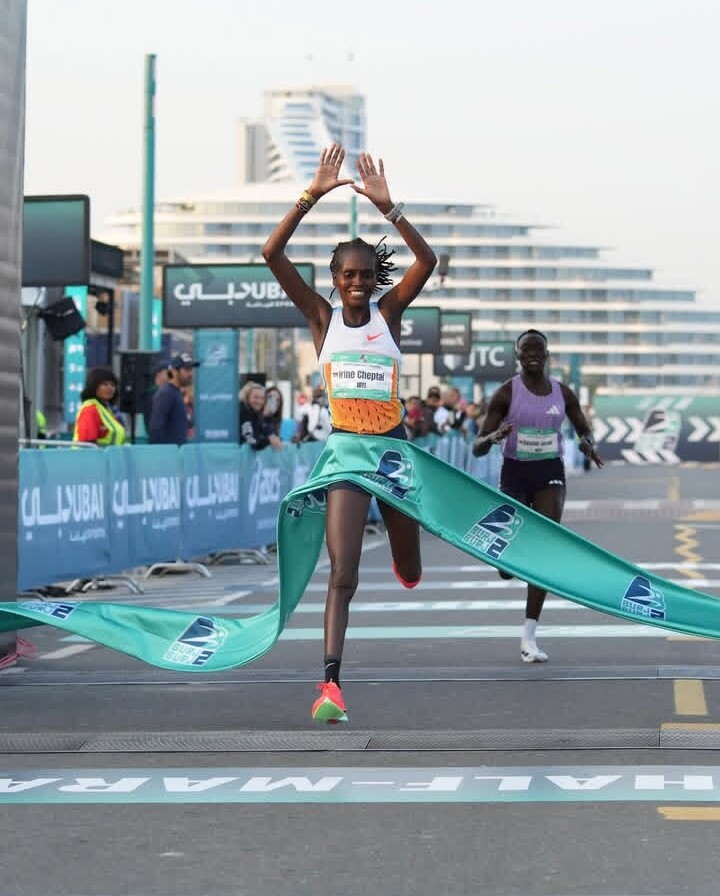
She was closely followed by compatriot Daisilah Jerono, who finished just two seconds adrift in 1:06:59, securing a Kenyan one-two, while Ethiopia’s Ftaw Zeray completed the podium in 1:07:01. As in the men’s race, only four seconds separated the top three, underlining the elite depth and competitiveness at the front of the field.
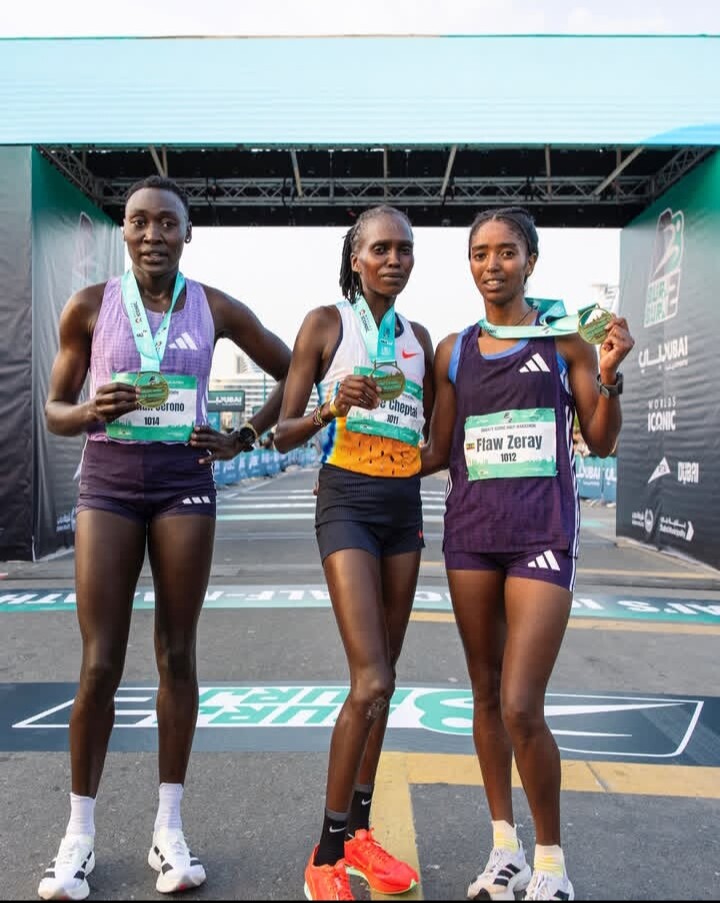
Behind the medalists, the strength of the women’s race was equally evident. Jackline Cherono reinforced Kenya’s presence with a strong fourth-place finish in 1:09:11, while Alexandra Bell of Great Britain impressed in fifth with 1:09:35. Meritxell Soler of Spain led the European contingent in sixth, followed by Ethiopia’s Seba Diba in seventh. The international top ten was completed by Mikky Keetels of the Netherlands in eighth, Tea Faber of Croatia in ninth, and Nada Ina Pauer of Austria in tenth, highlighting the global appeal of the event.
With world-class performances, deep international fields, and victories decided by seconds, the Burj2Burj Half Marathon 2026 once again stood out as a premier road-running spectacle, where precision, patience, and championship pedigree defined a memorable day of racing on the streets of Dubai.
by Erick Cheruiyot for My Best Runs.
Login to leave a comment
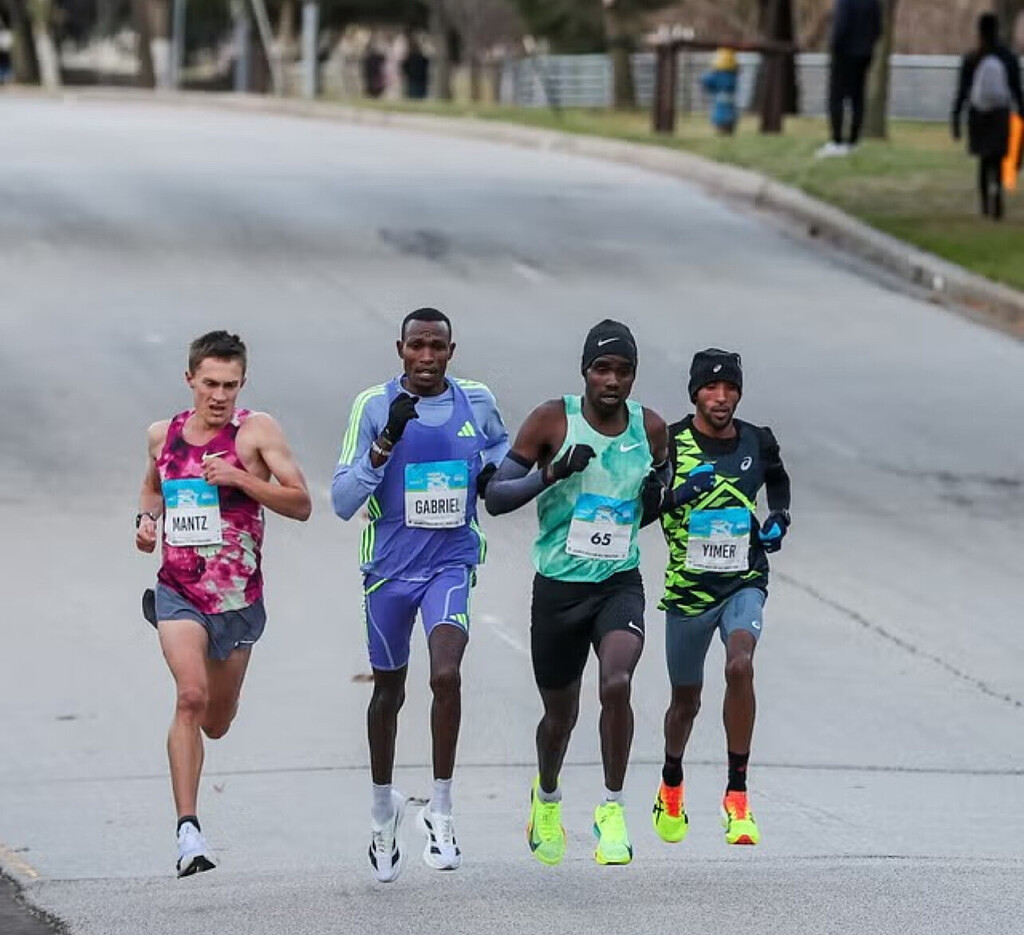
Houston Reloaded: Star-Studded Men’s Field Sets the Stage for a Wide-Open 2026 Half Marathon
With no defending champion, no American record holder, and a reshuffled elite lineup, the January 11, 2026, Houston Half Marathon is shaping up as one of the most open and unpredictable men’s races the event has seen in years.
A Reset Year in Houston
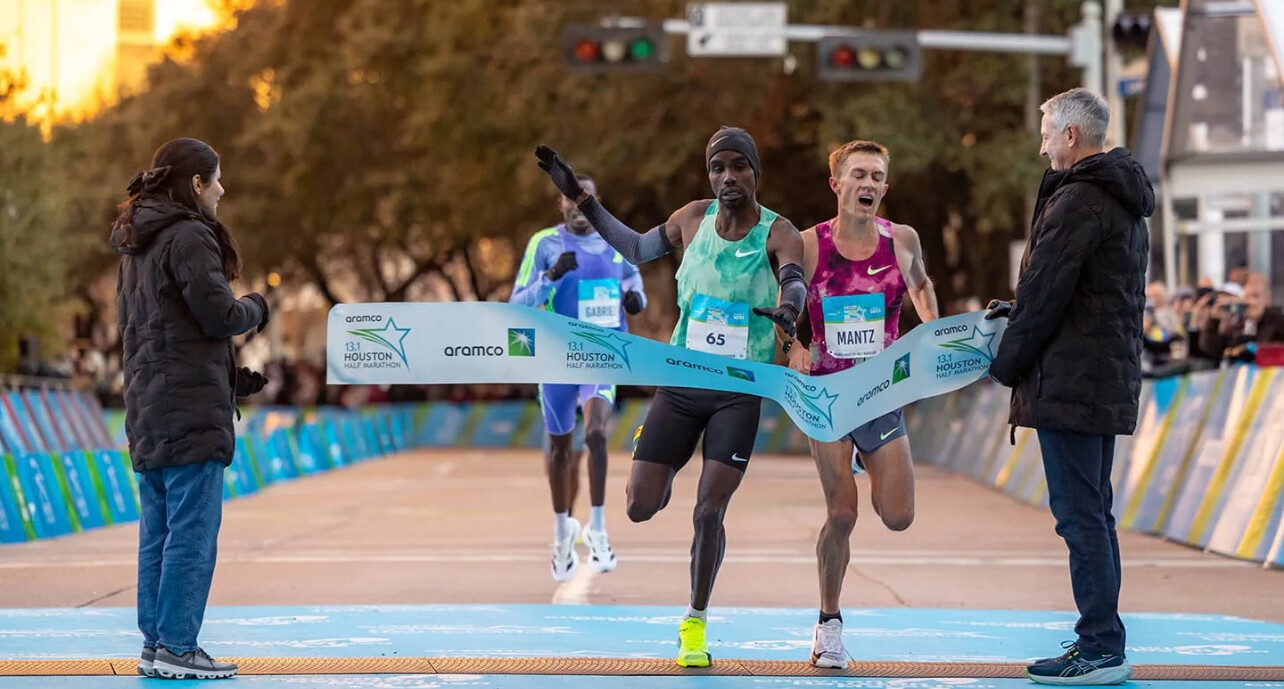
When the gun goes off on Sunday, Houston will once again showcase one of the fastest half-marathon courses in the world—but without the familiar faces that dominated the podium last year. None of the top five finishers from 2025 return, creating a rare reset for a race long associated with records, breakthroughs, and Olympic-cycle statements.
What remains is depth, intrigue, and a compelling blend of proven performers and ambitious newcomers ready to write a new chapter.
Vincent Ngetich: Speed Meets Staying Power
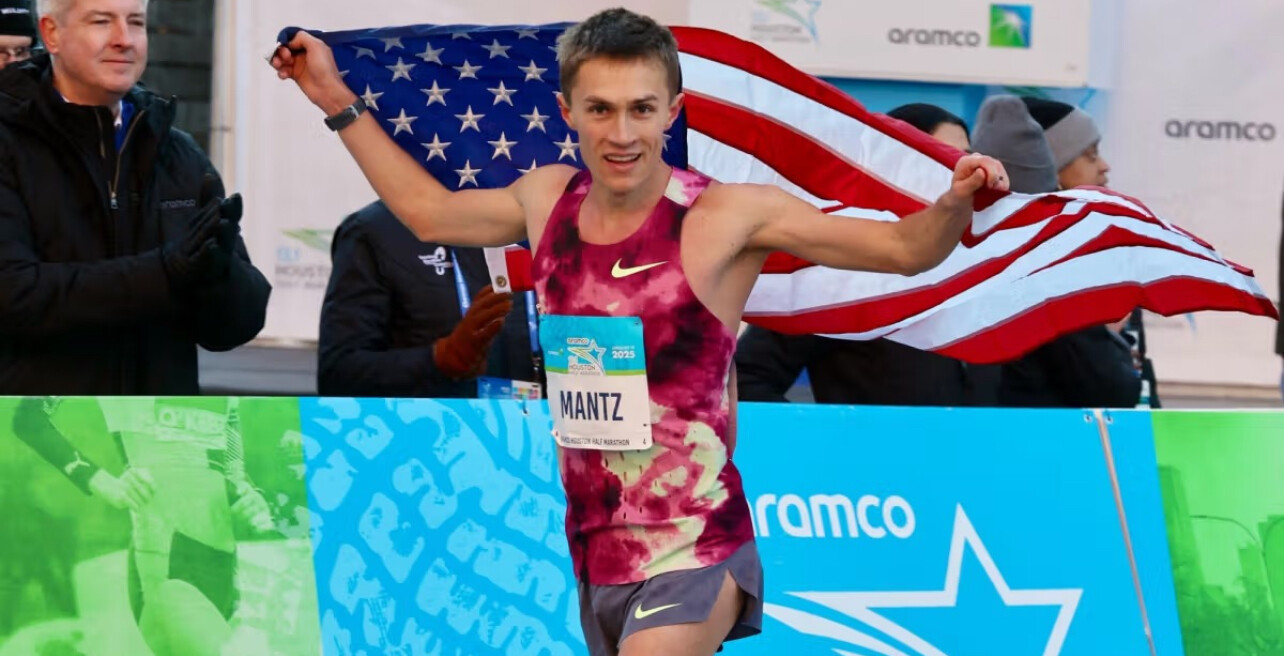
Kenya’s Vincent Ngetich enters as the fastest man in the field on paper, owning a 59:09 personal best from 2022. His half-marathon credentials are formidable, but his reputation soared after a stunning 2:03:13 runner-up finish at the 2023 Berlin Marathon, behind Eliud Kipchoge.
Houston offers Ngetich the opportunity to reassert himself over 21.1 km and test his speed against a deep American contingent on a course that rewards bold, aggressive racing.
Hillary Bor Leads the Returners
Kenyan-born American Hillary Bor is the top returner from last year’s race after finishing sixth in 1:00:20. His 59:55 personal best, set at the NYC Half Marathon, underscores his sub-60 capability—even if that performance came on a non-record-eligible course.
Bor arrives with consistency and experience on his side and will be keen to capitalize on a field without a clear dominant force.
Galen Rupp Back in the MiX
Few names carry the weight of Galen Rupp in American distance running. The two-time Olympian owns a 59:47 personal best from 2018 and returns to Houston after finishing 12th in 1:02:37 in 2024.
While Rupp is no longer chasing records, his race intelligence, experience, and ability to manage fast early pace could prove influential in a race likely to unfold aggressively from the start.
Rising Americans and International Depth
The American contingent is deep, with several sub-61 runners including Sam Chelanga, Biya Simbassa, Andrew Colley, Alex Maier, and Reed Fischer, all bringing strong recent road or cross-country form into the season.
International depth adds further intrigue, with athletes such as Cam Levins, Alex Masai, Patrick Kiprop, and Mohamed El Yousfi all capable of factoring into a fast-moving lead pack.
The Debutant to Watch: Habtom Samuel
One of the most compelling storylines belongs to Habtom Samuel, the 2025 NCAA cross country champion, who is set to make his half-marathon and road-racing debut. Samuel recently clocked 13:05.2 for 5000 meters at Boston University, signaling sharp fitness as he transitions from the track and cross country to the roads.
Houston has a long history of rewarding fearless debutants, and the University of New Mexico standout fits that mold perfectly.
A Race Built for Breakthroughs
With no defending champion, no American record holder, and a deep field eager to make a statement, the 2026 Houston Half Marathon promises fast early splits, tactical uncertainty, and genuine breakthrough potential.
On one of the world’s most trusted fast courses, opportunity—not reputation—may prove to be the real favorite.
2026 Houston Half Marathon – Men’s Elite Entrants (with Country)
1. Vincent Ngetich — Kenya (KEN)
2. Galen Rupp — United States (USA)
3. Hillary Bor — United States (USA)
4. Cam Levins — Canada (CAN)
5. Biya Simbassa — United States (USA)
6. Sam Chelanga — United States (USA)
7. Andrew Colley — United States (USA)
8. Alex Maier — United States (USA)
9. Marcelo Laguera — Mexico (MEX)
10. Reed Fischer — United States (USA)
11. Rory Linkletter — Canada (CAN)
12. Ryan Ford — United States (USA)
13. Alberto Mendez — Guatemala (GUA)
14. Alex Masai — Kenya (KEN)
15. Peter Lynch — Ireland (IRL)
16. Patrick Kiprop — Kenya (KEN)
17. Aaron Bienenfeld — Germany (GER)
18. Mohamed El Yousfi — Morocco (MAR)
19. Kengo Suzuki — Japan (JPN)
20. Haimro Alame — Israel (ISR)
21. William Amponsah — Ghana (GHA)
22. Daniel Michalski — United States (USA)
23. Bran Barraza — United States (USA)
24. Aaron Gruen — Austria (AUT)
25. Robert Warner-Judd — Great Britain (GBR)
26. Habtom Samuel — Eritrea (ERI) (half-marathon debut)
27. Casey Clinger — United States (USA) (debut)
28. Isai Rodriguez — United States (USA) (debut)
29. Graydon Morris — United States (USA) (debut)
30. Dylan Schubert — United States (USA) (debut)
31. Merga Gemeda — United States (USA) (debut)
32. Hunter Christopher — United States (USA) (debut)
by Robert Kibet
Login to leave a comment

Chevron Houston Marathon
The Chevron Houston Marathon offers participants a unique running experience in America's fourth largest city. The fast, flat, scenic single-loop course has been ranked as the "fastest winter marathon" and "second fastest marathon overall" by Ultimate Guide To Marathons. Additionally, with more than 200,000 spectators annually, the Chevron Houston Marathon enjoys tremendous crowd support. Established in 1972, the Houston Marathon...
more...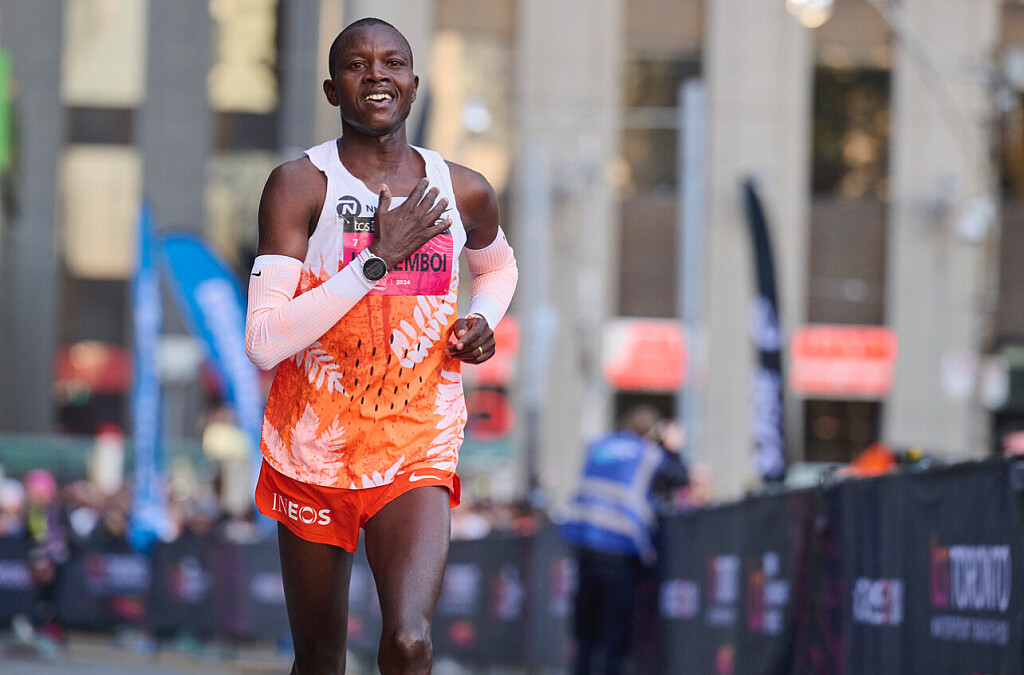
Noah Kipkemboi Has Victory in Mind at TCS Toronto Waterfront Marathon
Noah Kipkemboi returns to the TCS Toronto Waterfront Marathon on October 19 with one clear objective—victory at this World Athletics Elite Label race.
Last year, the 32-year-old Kenyan produced a personal best of 2:07:31 to finish third in Toronto. He now looks forward to another showdown with his compatriot Dominic Ngeno, who edged him by just eight seconds for second place.
“I hope to win,” Kipkemboi says with a smile. “Because he [Ngeno] challenged me last year with two kilometres to go. I think this time I will be able to catch up with him. For sure we are training well.”
Kipkemboi arrives in confident form, having recently finished third at the Klagenfurt Half Marathon in Austria (62:09). “Last year I went to that race and then had a good race in Toronto. I think I will run my best in Toronto,” he adds.
Training With the Best
Kipkemboi is represented by Global Sports Communications, the Netherlands-based management company that also manages marathon icon Eliud Kipchoge. Based at the Global Sports camp in Kaptagat, Kipkemboi has long been a trusted pacemaker for Kipchoge, including during the Kenyan legend’s 2022 Berlin Marathon world record of 2:01:09.
“I am in the same camp as Eliud—we train together and race together,” Kipkemboi reveals. “Most of the races I have been pacing have been for Eliud. When you are a pacemaker, you have to be ready to help push, but not to a time he doesn’t want. I know how to run with him.”
Under the guidance of Coach Patrick Sang, the group trains from Monday to Friday at the camp, going home only on weekends. For Kipkemboi, the commitment comes with sacrifice: he has a wife and three young children in Eldoret, where he also owns farmland and runs a small shop.
“Things I sell in the shop are things human beings use—like soap, flour, sweets, perfumes,” he explains. “It’s preparation for life after running.”
Giving Back to the Community
Like many Kenyan athletes, Kipkemboi is committed to helping those around him.
“I am supporting some people who are in need. Right now I’m supporting some students in my village,” he says. “It is an opportunity to help whoever needs help. I have some kids in my village who need support now and after five years.”
That support includes paying school fees and providing food—efforts made possible by his racing success.
Toronto, he adds, has also provided lasting memories: “We went to see Kenyan people while there last year. In Toronto we were like at home because there were Kenyan people living there who came to say hi to us. We were as happy as if we were at home.”
Eyes on Victory
Now, as he fine-tunes his preparation, Kipkemboi is clear about his goals.
“I am now preparing for a win. It is my hope to win the race this time,” he declares. “My objective is just to win and improve my time. I ran my personal best in Toronto (2:07:31), but I want to improve upon that.”
The Toronto Waterfront course record stands at 2:05:00, held by his training partner Philemon Rono. With strong pacemakers and good conditions, Kipkemboi knows that mark could be in sight.
by Paul Gains
Login to leave a comment
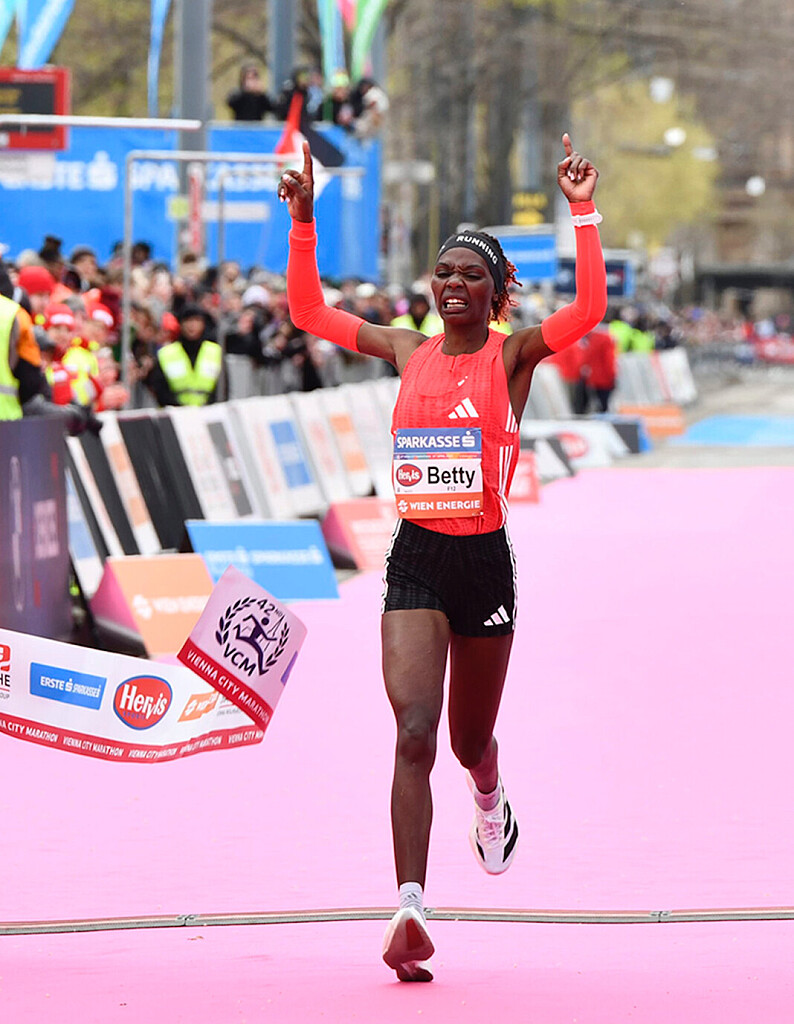
Surprise Wins and Record Turnout at the Vienna City Marathon
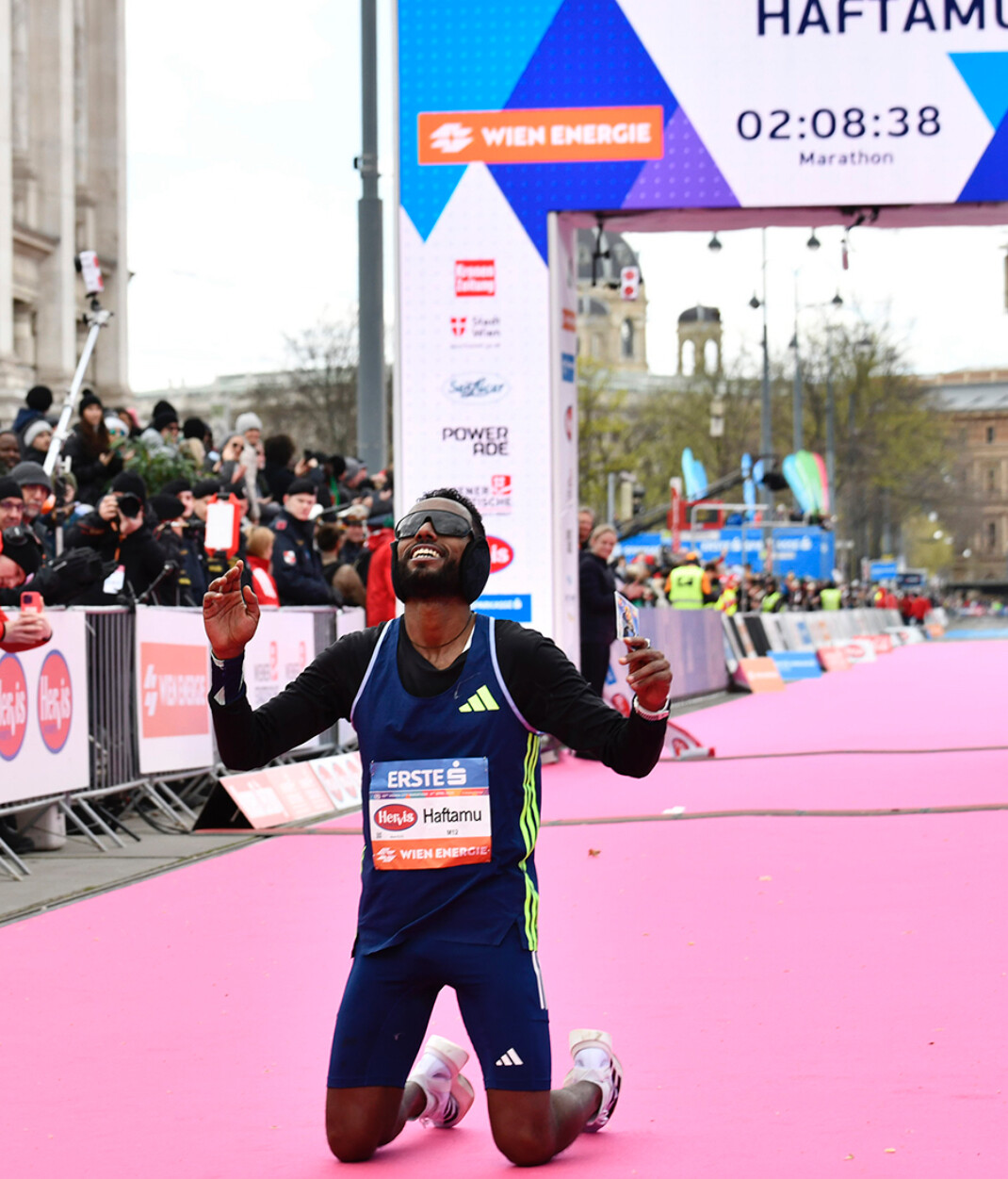
The 42nd Vienna City Marathon delivered icy conditions, personal bests, and breakout victories for two rising stars: Haftamu Abadi of Ethiopia and Betty Chepkemoi of Kenya. Both marathoners were competing in only their second career marathon, and both crushed their previous bests in a race that saw record participation.
Abadi, just 21 years old, broke away late in the race to win in 2:08:28, improving by more than two minutes from his debut in Berlin last year. Kenya’s Mica Cheserek took second in 2:10:23, followed closely by Ethiopian debutant Mogos Tuemay in 2:10:33.
In the women’s race, Betty Chepkemoi made a massive leap forward, chopping over ten minutes off her personal best to win in 2:24:14. Fellow Kenyans Rebecca Tanui (2:25:18) and Catherine Cherotich (2:25:45) rounded out the podium, while Germany’s Fabienne Königstein placed fourth in 2:28:49, just weeks after her Nagoya Marathon performance.
Record-Breaking Participation
Despite near-freezing temperatures at the start — the coldest in race history since 1986 — the Vienna City Marathon attracted a record field of 46,083 participants from 146 nations, including 12,968 marathoners, the most ever for the event.
Challenging Conditions, Slower Pacing
The cold (just 2°C at the start, with a “feels like” of -5°C) prevented any record-breaking times. The men’s lead pack passed halfway in 63:32, staying within range of a 2:07–2:08 finish before Abadisurged away near 29K. Notably, Abadi ran in full cold-weather gear — gloves, ear protection, and a long-sleeved shirt — while the others opted for lighter kits.
“I had hoped to run 2:05–2:06, but that wasn’t possible today,” Abadi said. “I’m happy with the win and I know I can go faster in better conditions.”
The women’s race began cautiously, with a 5K split of 17:24 pointing toward a 2:27 finish. But the Kenyan trio pulled away before halfway and Chepkemoi made her move with 6K to go, running solo to the finish.
“I’m so happy,” she said. “It was cold, and there were no pacemakers after halfway, but I know I can go faster next time.”
5K City Race Shines on the Eve of the Marathon
Vienna’s growing 5K race, held the day before the marathon on the iconic Ringstraße, also saw standout performances. Timo Hinterndorfer battled strong winds to set a course record of 14:17, with Markus Reißelhuber (14:51) and Thys Moreau of Belgium (15:00) finishing second and third.
In the women’s 5K, Sophie Hicks of New Zealand topped a strong Austrian field in 16:20, followed by Cordula Lassacher (16:27) and defending champion Lena Millonig (16:35).
Top 8 Marathon Results
Men:
1. Haftamu Abadi (ETH) – 2:08:28
2. Mica Cheserek (KEN) – 2:10:23
3. Mogos Tuemay (ETH) – 2:10:33
4. Asbel Rutto (KEN) – 2:11:37
5. Edward Koonyo (KEN) – 2:12:29
6. Geoffrey Koech (KEN) – 2:12:31
7. Justus Kangogo (KEN) – 2:13:25
8. Felix Kurui (KEN) – 2:14:36
Women:
1. Betty Chepkemoi (KEN) – 2:24:14
2. Rebecca Tanui (KEN) – 2:25:18
3. Catherine Cherotich (KEN) – 2:25:45
4. Fabienne Königstein (GER) – 2:28:49
5. Faith Chepkoech (KEN) – 2:30:00
6. Nora Szabo (HUN) – 2:30:31
7. Risper Chebet (KEN) – 2:32:39
8. Eva Wutti (AUT) – 2:37:43
by Race News Service
Login to leave a comment
Vienna City Marathon
More than 41,000 runners from over 110 nations take part in the Vienna City Marathon, cheered on by hundreds of thousands of spectators. From the start at UN City to the magnificent finish on the Heldenplatz, the excitement will never miss a beat. In recent years the Vienna City Marathon has succeeded in creating a unique position as a marathon...
more...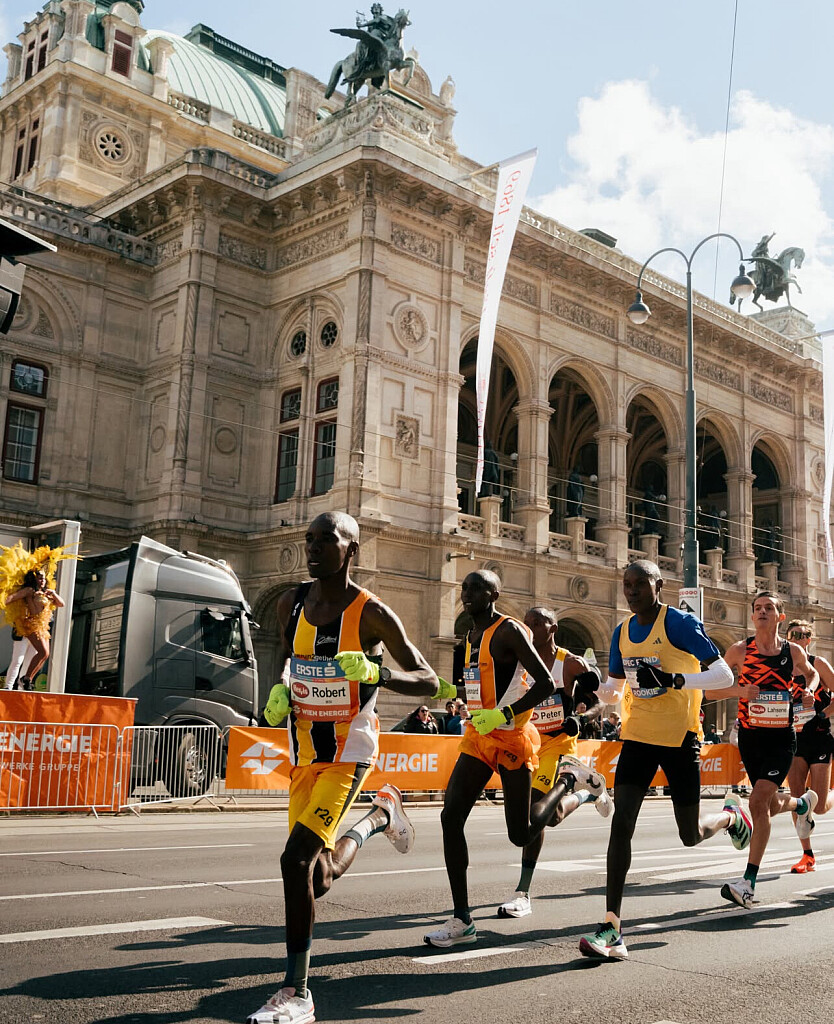
Kenyan Elites Eye Fast Times at Sunday’s Vienna City Marathon
The 42nd edition of the Vienna City Marathon, Austria’s premier road racing event and a World Athletics Elite Label race, is set to unfold this Sunday with over 45,000 participants—including a record 13,000 marathoners. A strong Kenyan contingent is expected to set a blistering pace as they aim for personal bests on the historic streets of Vienna.
Kenya’s Justus Kangogo (PB 2:05:57), Asbel Rutto (2:06:24), and Stanley Kurgat (2:07:05)headline a deep elite field. All three confirmed at Friday’s press conference that they’re not just here to win—they’re here to run fast.
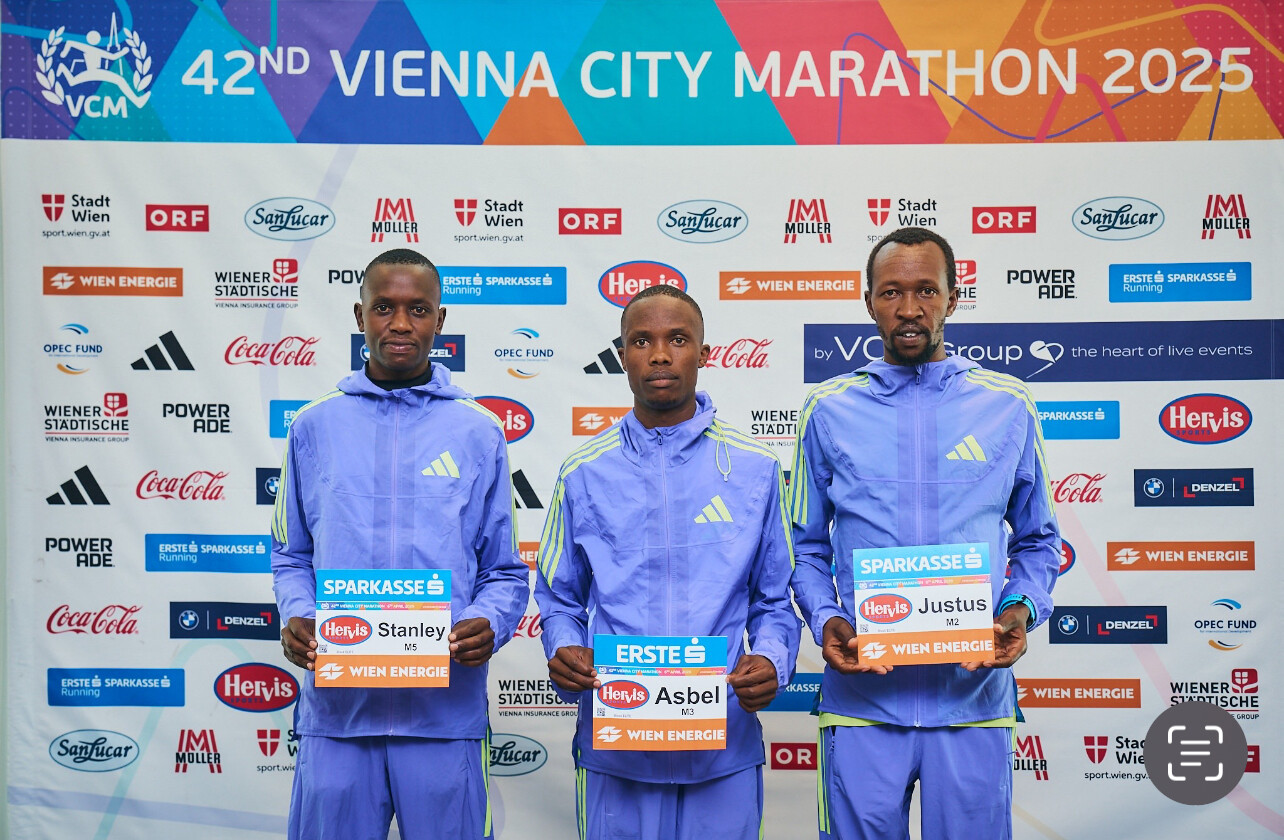
“We have an interesting elite field that should provide a thrilling race,” said Johannes Langner, elite coordinator. “Our target for the lead group is a half marathon split between 62:30 and 62:45, with a second group about a minute behind.”
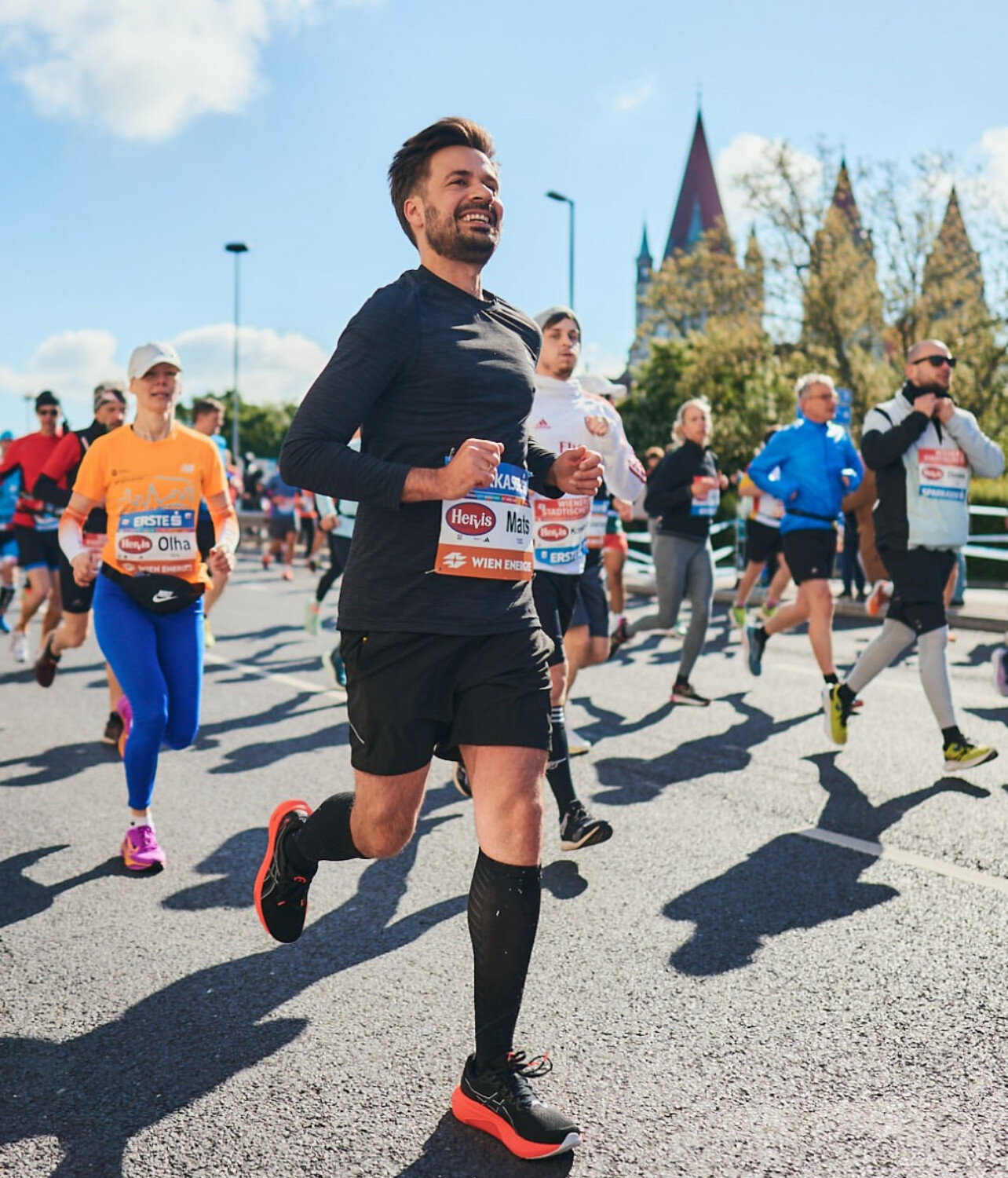
Though the forecast calls for dry but cold weather, with temperatures just above freezing at the 9 a.m. start, the elite field still has its sights set on the 2:05:08 course record.
Kangogo, who ran his PB in Berlin, said he’s eager to team up with Rutto: “I am a frontrunner as well, so we will work together. And once we finish, we will celebrate.”
Rutto made headlines with his course record victory in Rome last year, running solo to a 2:06:24 finish. “I am a frontrunner,” said the 23-year-old. “If you stay behind, you can’t win. On Sunday, I’m going for a personal best.”
Stanley Kurgat brings a strategic edge, having paced Vienna last year up to 32K. “Now I’ll go the full distance. I know this course, and even if it’s cold, it will still be a good race.”
Other strong contenders include Douglas Chebii (2:06:31), Charles Ndiema (2:08:12), and Benard Kimeli (2:08:34). Keep an eye on Bernard Muia, last year’s runner-up in Vienna, who comes in with a 2:09:17 PB from Munich. Meanwhile, Wisley Kibichii, a 59:57 half marathoner, will make his highly anticipated marathon debut.
Vienna City Marathon General Manager Dominik Konrad, son of longtime race director Wolfgang Konrad, emphasized the event’s growing impact: “We’re seeing another running boom. Entries came early and never stopped. This year’s marathon is not only a celebration of sport but also a huge boost to Vienna’s economy, with runners from 146 nations—a record.”
Top Men’s Elite Field – Personal Bests
• Justus Kangogo (KEN) – 2:05:57
• Asbel Rutto (KEN) – 2:06:24
• Douglas Chebii (KEN) – 2:06:31
• Stanley Kurgat (KEN) – 2:07:05
• Charles Ndiema (KEN) – 2:08:12
• Benard Kimeli (KEN) – 2:08:34
• Bernard Muia (KEN) – 2:09:17
• Mica Cheserek (KEN) – 2:09:26
• Kipsambu Kimakal (KEN) – 2:09:41
• Geoffrey Koech (KEN) – 2:10:12
• Haftamu Abadi (ETH) – 2:10:33
• Lemawork Ketema (AUT) – 2:10:44
• Gadisa Tajebe (ETH) – 2:11:02
• Edward Koonyo (KEN) – 2:11:24
• Evans Yego (KEN) – 2:12:56
• Henry Kichana (KEN) – 2:13:06
• Andreas Vojta (AUT) – 2:13:43
• Andrew Davies (GBR) – 2:14:23
• Daverso Ramos (PER) – 2:14:25
• Wisley Kibichii (KEN) – Debut
• Mogos Tuemay (ETH) – Debut
by Race News Service
Login to leave a comment
Vienna City Marathon
More than 41,000 runners from over 110 nations take part in the Vienna City Marathon, cheered on by hundreds of thousands of spectators. From the start at UN City to the magnificent finish on the Heldenplatz, the excitement will never miss a beat. In recent years the Vienna City Marathon has succeeded in creating a unique position as a marathon...
more...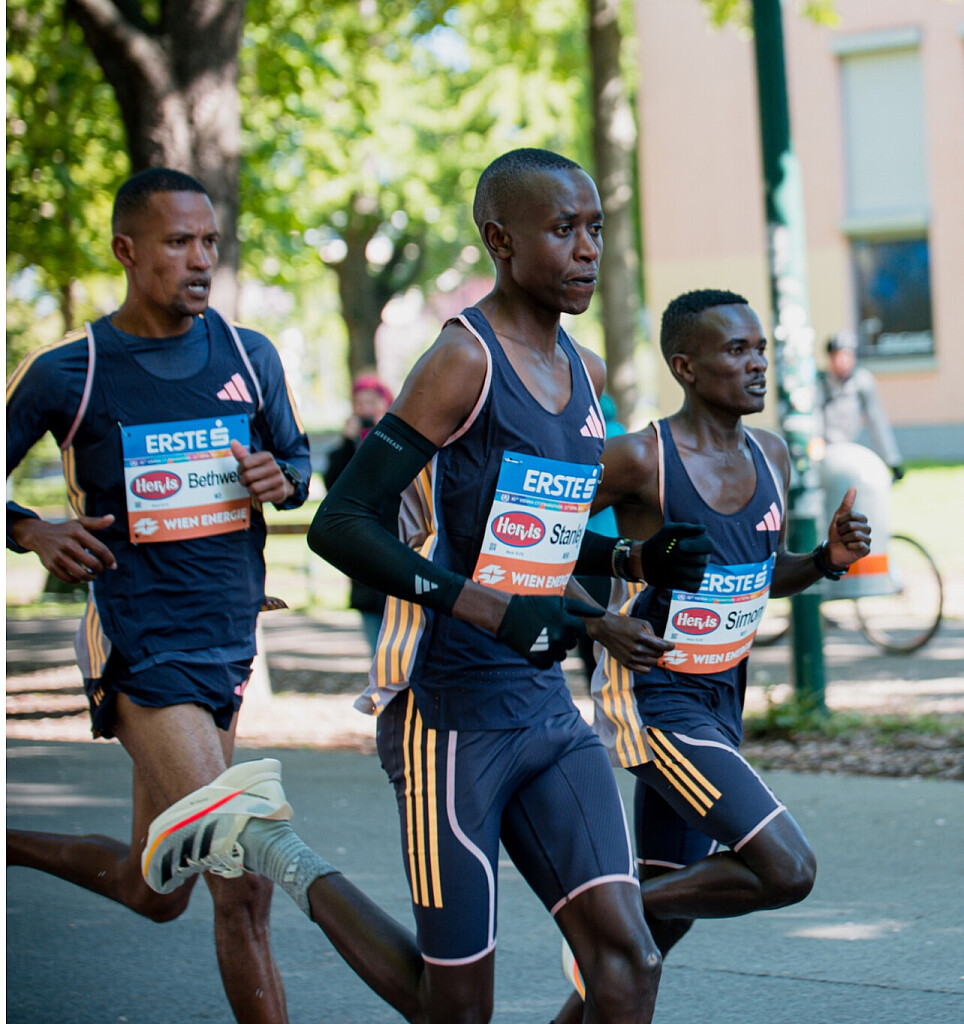
Kenyans Set Their Sights on Regaining Vienna City Marathon Crown
This year’s Vienna City Marathon will form a unique bond with the classical music Austria’s capital is known for. Celebrating Johann Strauss’ 200th birthday, his Danube Waltz will be played before the start of the race. While the music will be soft and flattering, once the runners get on their way, the battle for victory is expected to be thrilling and fierce, with no clear favorite.
The Kenyan trio of Justus Kangogo, Douglas Chebii, and Stanley Kurgat lead the men’s elite field on April 6. With personal best times ranging from 2:06 to 2:07, they will be joined by two more athletes who have run under 2:09. The organizers of Austria’s premier road race event have officially announced the men’s top contenders.
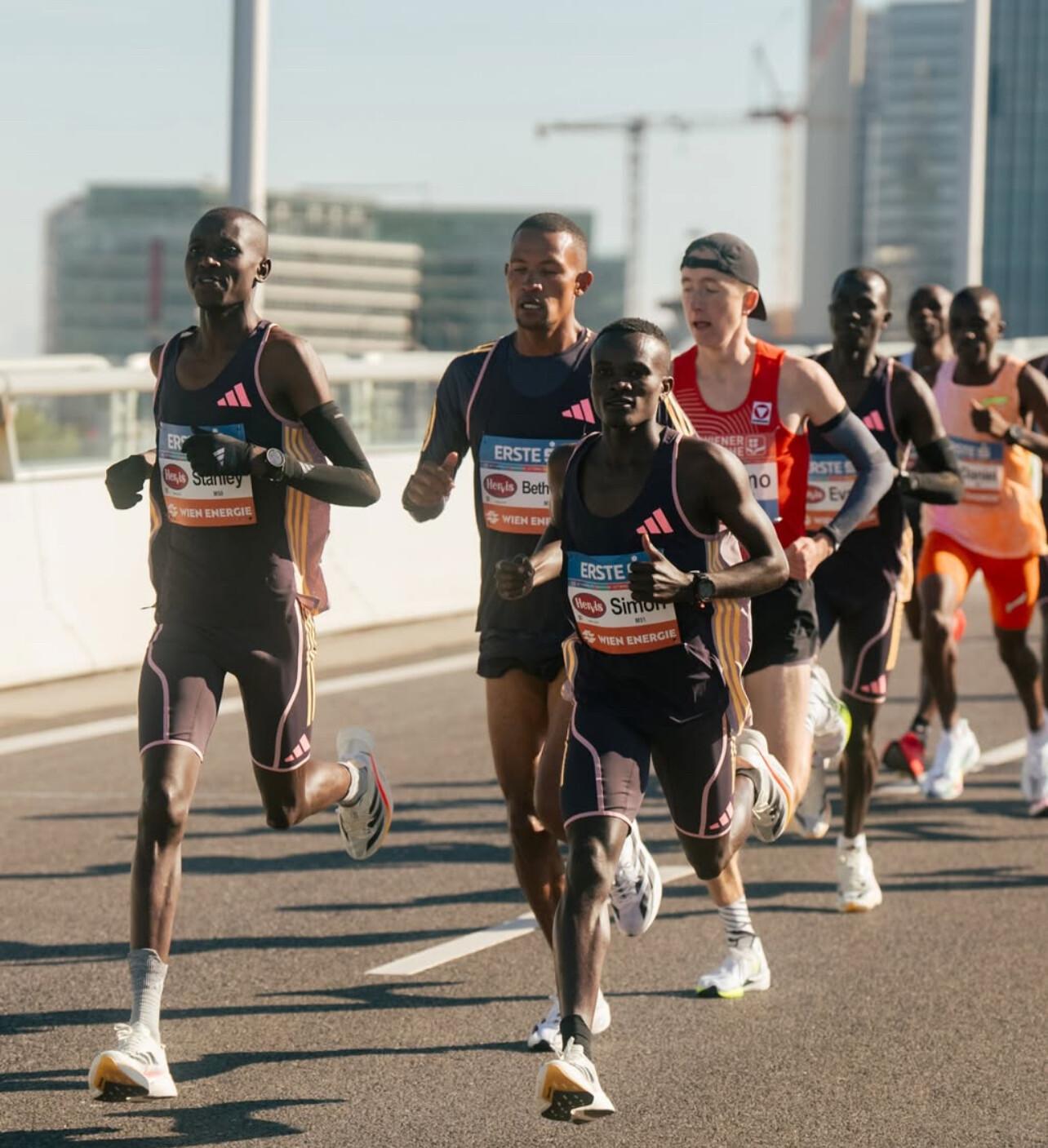
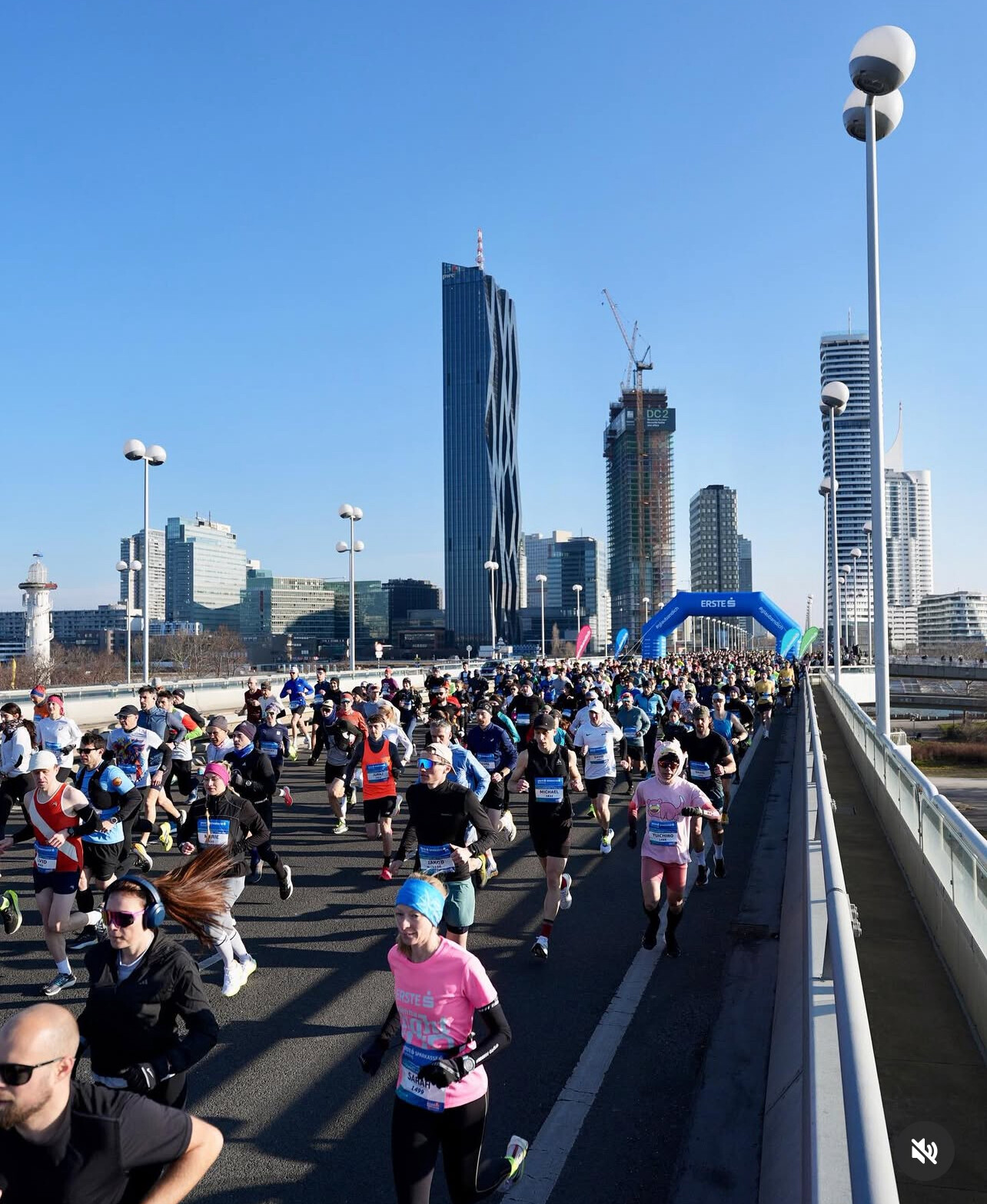
A record-breaking field of nearly 13,000 marathoners has been registered for the 42nd edition of the Vienna City Marathon, a World Athletics Elite Label Race. With shorter-distance events included, the total number of participants will exceed 45,000.
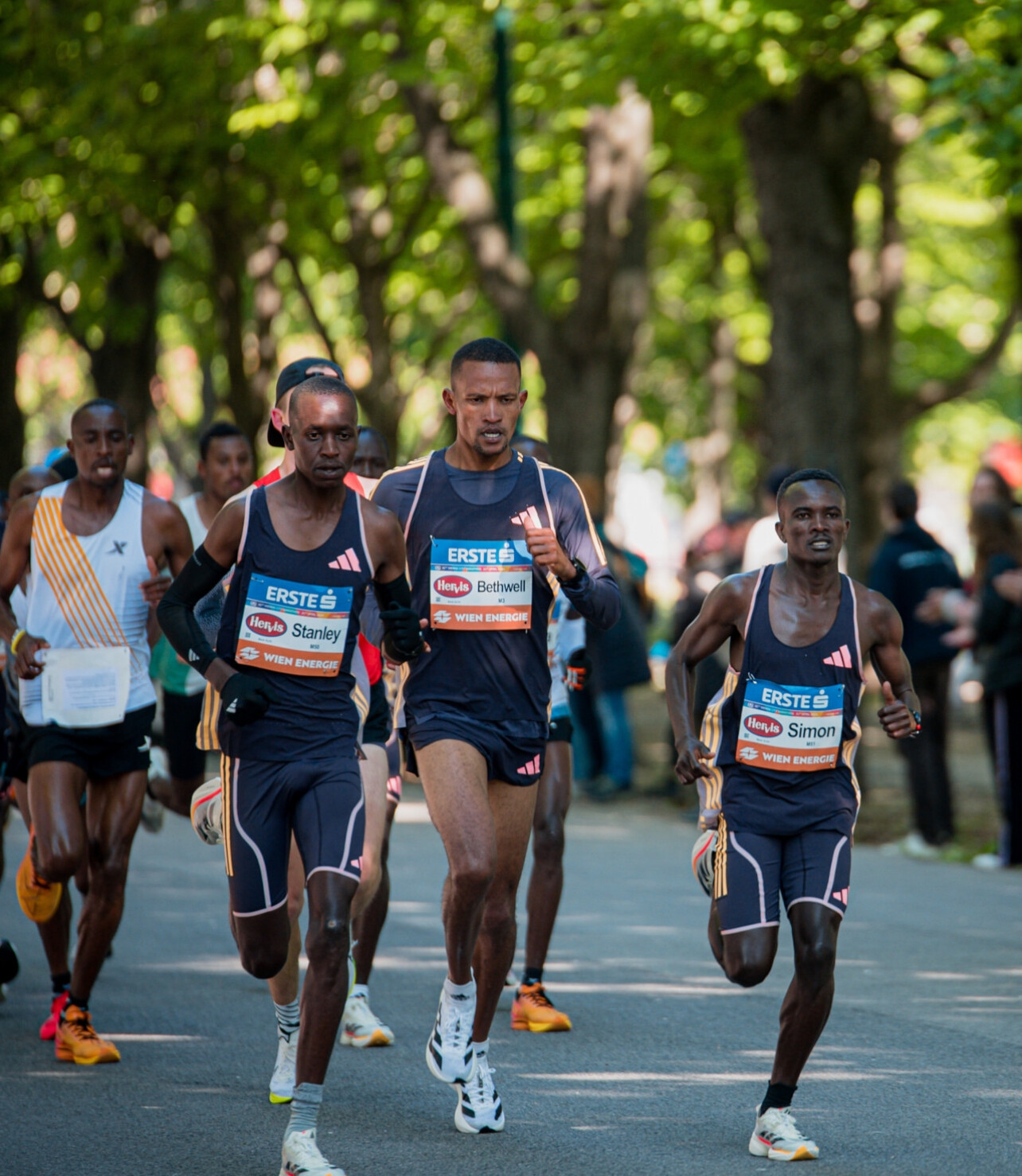
Kenya’s elite runners are eager to reclaim the men’s title after losing it last year to Ethiopia’s Chala Regasa. Prior to that, Kenya had dominated the event, securing four consecutive victories, culminating in Samwel Mailu’s record-breaking 2:05:08 win in 2023.
The three leading Kenyan contenders arrive in Vienna with strong credentials. Justus Kangogo, 29, clocked 2:06:45 for fourth place in Amsterdam last October. His personal best of 2:05:57 was set in Berlin in 2022. Douglas Chebii, 31, has demonstrated remarkable consistency, running 2:06:31 in Linz in 2022, 2:07:11 in Seville in 2023, and placing seventh in the highly competitive Dubai Marathon in 2024 with 2:08:15—making him the fastest Kenyan in Dubai that year.
The youngest of the trio, 25-year-old Stanley Kurgat, made a significant breakthrough just six months ago, improving his marathon time from 2:11:50 in his Valencia debut to 2:07:05 in Berlin. Though he finished 15th in that deep field, he now has a real shot at claiming his biggest career victory in Vienna. He also holds an advantage, having paced the race up to the 30K mark last year, giving him valuable experience on the course.
Other Kenyan hopefuls include Charles Ndiema and Benard Kimeli, both boasting sub-2:09 personal bests. Ndiema, who finished fourth in Vienna in 2022 with a time of 2:08:12, will look to improve on that performance. Kimeli ran 2:08:34 in Tokyo last year. Meanwhile, Bernard Muia is a potential dark horse. The Kenyan finished runner-up in Vienna last year with 2:10:42, surging from fourth to second place in the final two kilometers, closing a 48-second gap. Muia ran his PB of 2:09:17 when he won the Munich Marathon in 2023.
Austrian record holder Peter Herzog, who clocked 2:10:06 at the 2020 London Marathon, will lead the national elite field, aiming for a time around 2:12. Former Austrian record holder Lemawork Ketema (2:10:44) is also set to compete, hoping for a strong comeback after a long injury layoff.
With a highly competitive field and no clear frontrunner, the Vienna City Marathon promises an exciting showdown, as Kenya’s top athletes aim to reclaim the crown.
by Boris Baron
Login to leave a comment
Vienna City Marathon
More than 41,000 runners from over 110 nations take part in the Vienna City Marathon, cheered on by hundreds of thousands of spectators. From the start at UN City to the magnificent finish on the Heldenplatz, the excitement will never miss a beat. In recent years the Vienna City Marathon has succeeded in creating a unique position as a marathon...
more...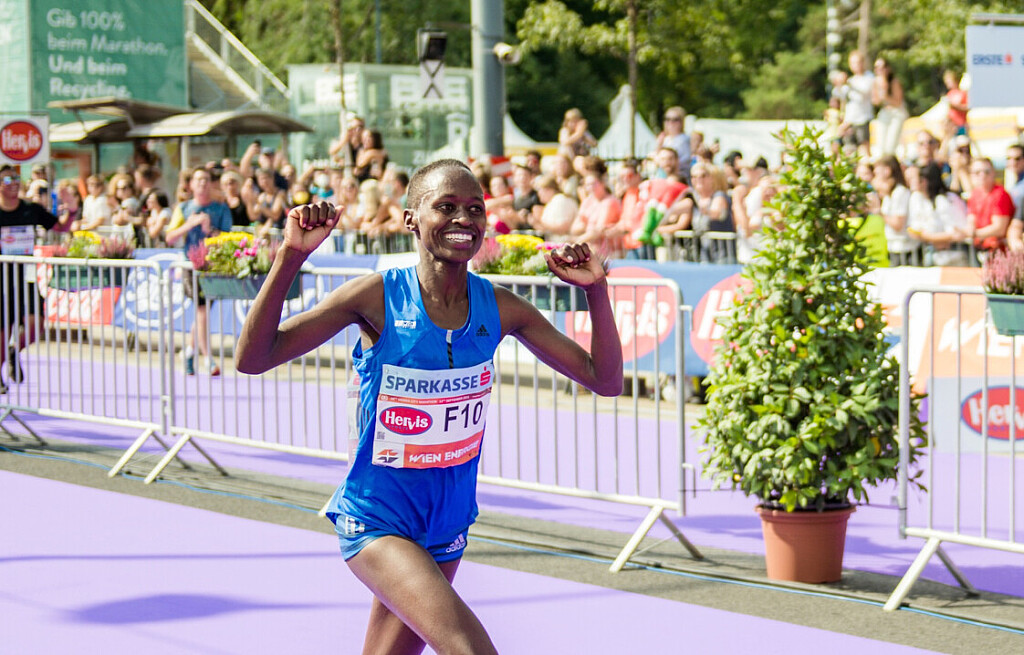
Vienna City Marathon 2025 Chepkirui Aims for Third Victory
The Vienna City Marathon is set to return on April 6, 2025, promising an exhilarating event for both elite athletes and amateur runners. As Austria's premier road race, the marathon continues to attract participants from around the globe, eager to experience the historic and scenic course through Vienna's iconic landmarks.
Elite Women's Race Chepkirui's Quest for a Third Victory
In the women's elite field, Vibian Chepkirui of Kenya aims for her third Vienna victory, having previously won in 2021 and 2022. Chepkirui, who set the current course record of 2:20:59 in 2022, returns with the ambition to surpass her personal best and further cement her legacy in Vienna.
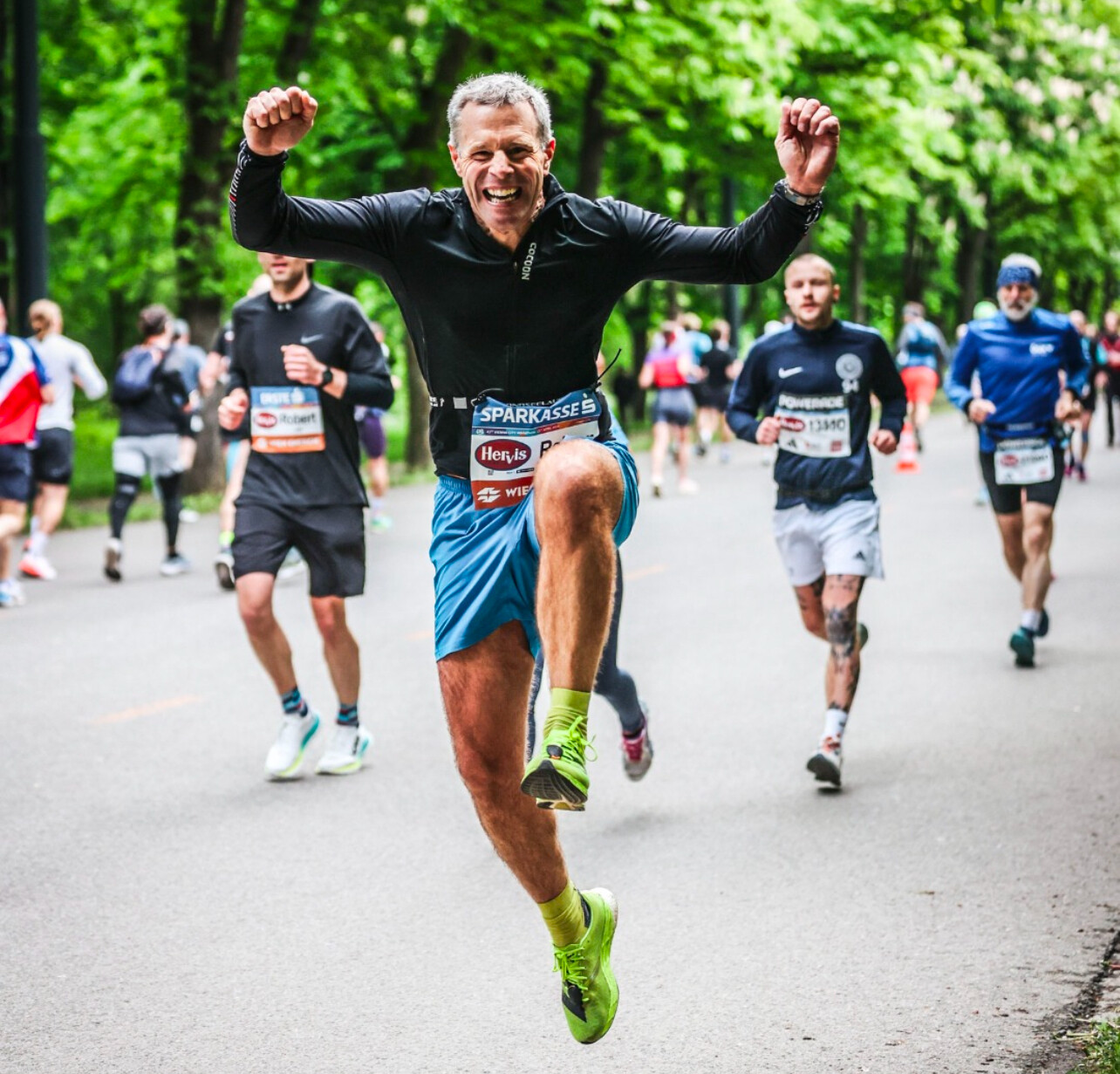
Challenging her are these Kenyans:
Rebbeca Tanui: With a personal best of 2:21:08, Tanui has shown consistent improvement and poses a significant threat to the defending champion.
Catherine Cherotich: After a breakthrough performance in 2024, clocking 2:22:42 in Frankfurt, Cherotich is poised to make a strong impact.
Faith Chepkoech: A rising star, Chepkoech achieved a personal best of 2:26:22 in Vienna last year and is determined to improve her standing.
Event Details
The 2025 Vienna City Marathon is not only about elite competition; it celebrates running for all enthusiasts. This year's event has seen record-high registrations, reflecting a growing enthusiasm for running across Europe.
The marathon weekend offers a variety of races:
Saturday, April 5, 2025
Vienna 5K: A 5 km run through the city center, starting at 6:15 PM at Schottentor near the University.
Children’s Races: The "Daily Mile 800" for ages 3 to 10 and the "Daily Mile 1,600" for ages 6 to 18, starting at 4:00 PM and 4:30 PM respectively on the Ringstraße near the Burgtheater.
Sunday, April 6, 2025
Marathon: Starting at 9:00 AM on Wagramer Straße near the Reichsbrücke.
Half Marathon: Also starting at 9:00 AM from the same location.
Relay Marathon: Teams of four share the marathon distance, starting concurrently with the individual marathon.
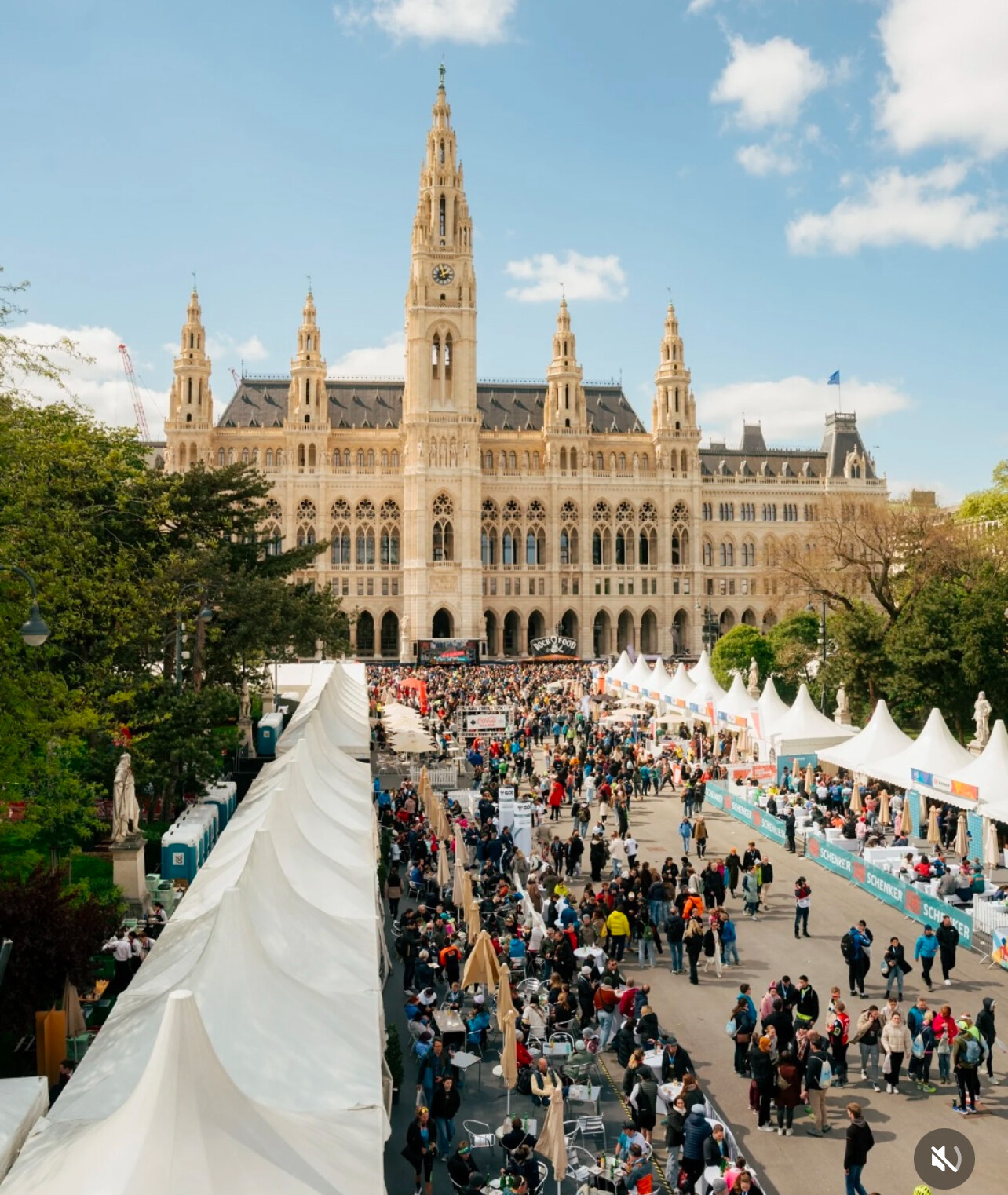
Participants will traverse a picturesque course that highlights Vienna's rich cultural heritage, passing landmarks such as the Vienna State Opera, Schönbrunn Palace, and the historic Ringstraße. The event not only offers a competitive platform for elite runners but also fosters a festive atmosphere for all participants and spectators, embodying the spirit of unity and celebration through sport.
Login to leave a comment
Vienna City Marathon
More than 41,000 runners from over 110 nations take part in the Vienna City Marathon, cheered on by hundreds of thousands of spectators. From the start at UN City to the magnificent finish on the Heldenplatz, the excitement will never miss a beat. In recent years the Vienna City Marathon has succeeded in creating a unique position as a marathon...
more...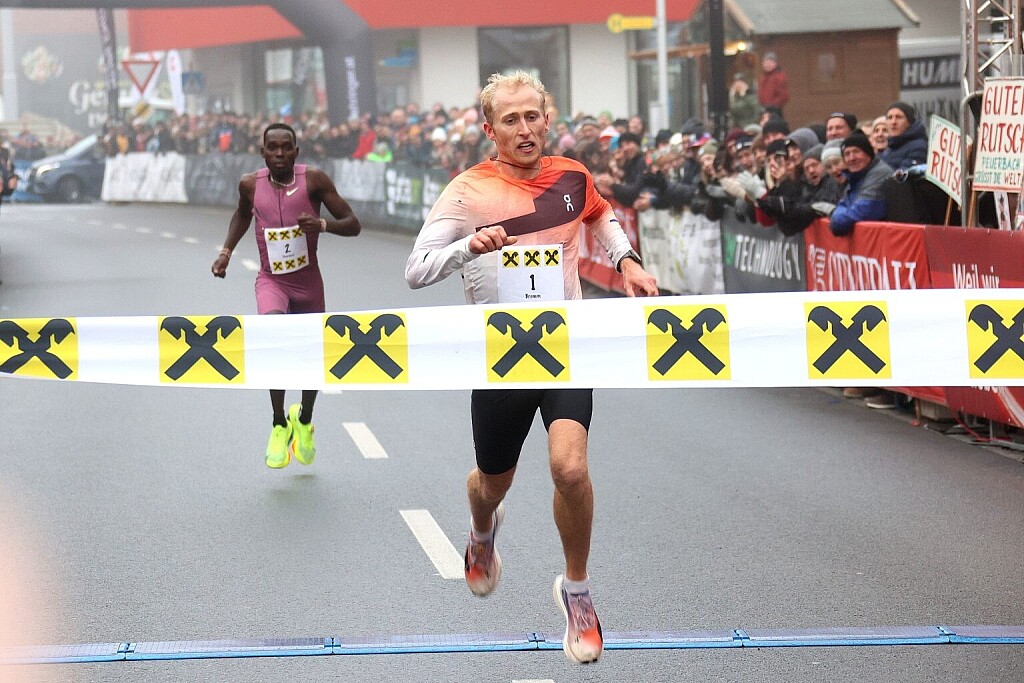
Florian Bremm successfully defends his title at the 42nd Int. Raiffeisen New Year's Eve Run in Peuerbach
A great running festival was offered today to the 5,000 enthusiastic spectators in Peuerbach. At the 42nd Int. Raiffeisen New Year's Eve Run – one of the five largest New Year's Eve runs in Europe – a new record number of participants was set with 1,103 registrations and 1,007 finishers.
The focus of the event was the women's and men's ace race, which was staffed by world-class athletes. And in both competitions, Germany was able to win the title this year: In the men's race, the reigning German 5,000 meter champion Florian BREMM defended his previous year's title in a thrilling final sprint against the Kenyan relay cross world champion Reynold CHERUIYOT, in the women's race, Elena BURKARD was the first European since 2013 to enter the winners' list. Austria took 4th place with Sebastian FREY from Vienna and Lotte SEILER from Styria. "We experienced two extremely exciting races today, the atmosphere was unique again," said OC boss Carsten Eich. The commitment of 120 volunteers from IGLA long life makes the implementation of this sensational event possible in the first place.
Thrilling men's race with German winner
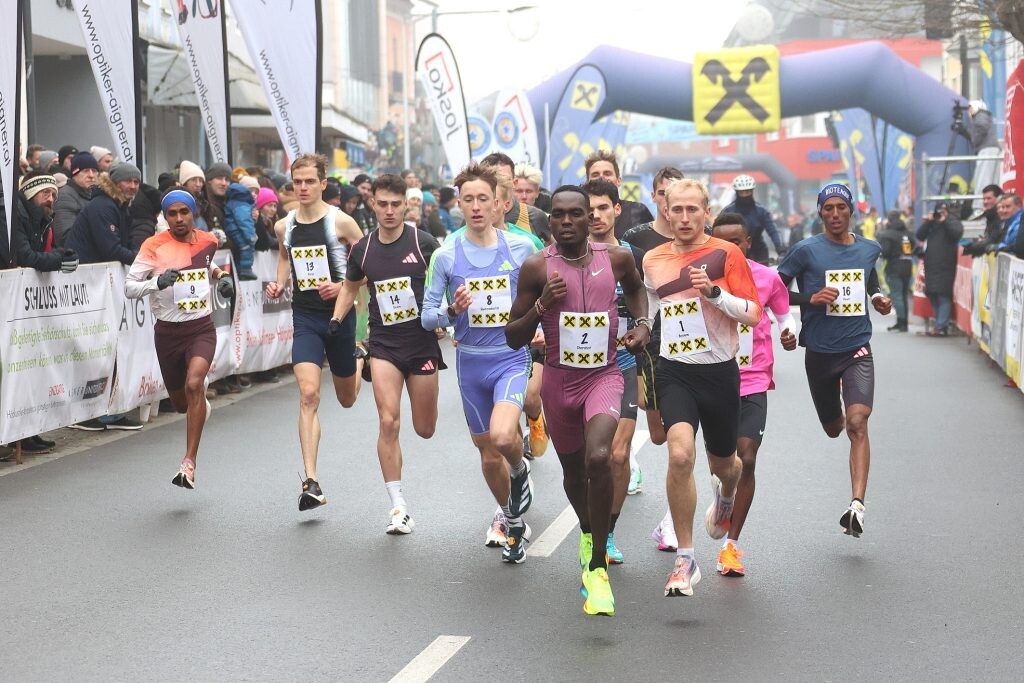
The run of the aces in the men's race was hard to beat in terms of excitement. The race over 6,800 meters was marked by a duel between the 2024 Cross Country World Champion Reynold CHERUIYOT and last year's German winner Florian BREMM. In the 6th of a total of 8 laps, the Kenyan attacked and looked like the sure winner in the meantime. But step by step, the 24-year-old from LCA Höchstadt/Aisch fought his way back and together the duo ran towards the finish line. On the home straight, Bremm had the better end for herself, as in the previous year, and won after 18:45.28 minutes with a 1.34-second lead. Sebastian Frey from DSG Wien was in 3rd place in the meantime and only had to admit defeat to the German Niklas BUCHHOLZ in the final sprint after 19:13.64 minutes. "The atmosphere in Peuerbach was simply outstanding, the crowd pushed me hard," Frey was very satisfied at the finish.
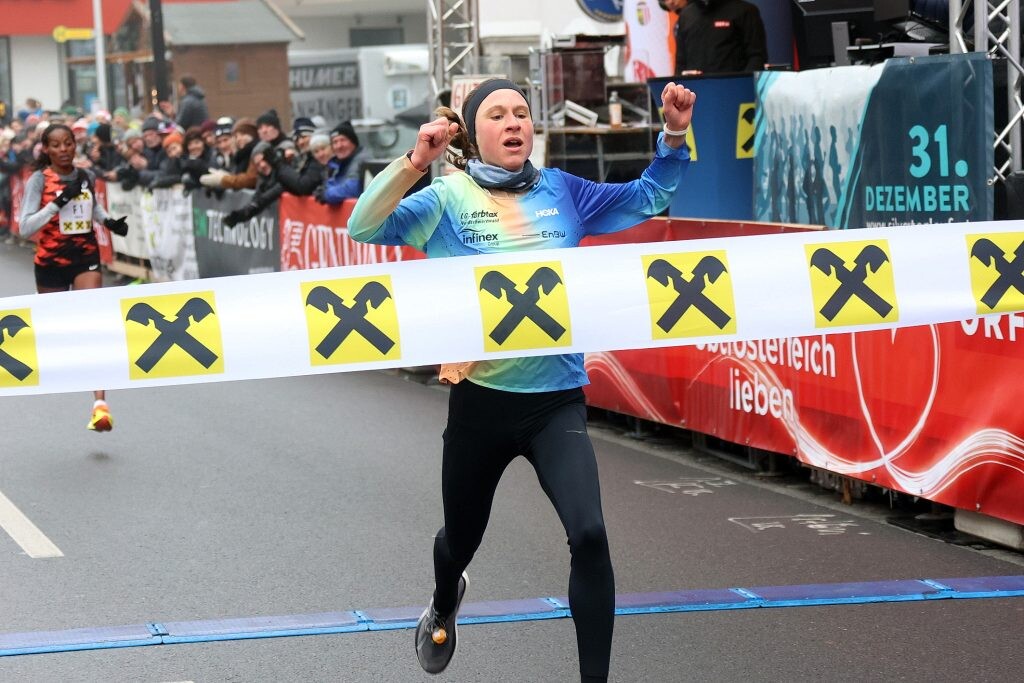
Elena Burkard wins in the women's aces race
In the women's race over 6 laps or 5,100 meters, the Ethiopian vice world champion over 1,500 meters Axumawit EMBAYE was the clear favorite. And from the beginning she took the lead of the 14-strong field, at the halfway point of the race the Ethiopian already had a seven-second lead over the two German athletes Elena BURKARD and Domenika MAYER. But the longer the race lasted, the closer Burkard got to the favorite and in the last lap the two opponents were on a par. In the last corner, the German attacked irresistibly and celebrated a much-acclaimed victory in Peuerbach after 15:57.41 minutes. This was the first victory by a European woman since 2013. A great performance was offered by Lotte Seiler from Kapfenberg, who secured 4th place in the final sprint against the strong Hungarian Lili Anna Vindics-Toth after 16:40.92.
Record field of participants at the start in nine competitions
With 1,103 registrations and 1,007 finishers, a new record number of participants was set at this year's New Year's Eve Run in Peuerbach, surpassing the record set in 2023 by 25 starters. "That was a wonderful running event in Peuerbach today, the atmosphere was simply great," says Marion Gierlinger from the organizing association IGLA long life. The Int. Raiffeisen New Year's Eve Run Peuerbach with its world-class athletes also offers the largest children's New Year's Eve run in Austria: Almost 500 boys and girls took part in the junior competitions alone, which opened the running day with starts every five minutes. Cheered on by parents and spectators, the stars of tomorrow ran from the sprint over 100 meters to the LONG LIFE mineral water mile over 1,700 meters. The Gebrüder Weiss Volkslauf over 6,800 meters was again a special experience this year, 420 starters in this and the other competitions made Peuerbach the capital of running.
Login to leave a comment

Silvesterlauf Peuerbach
The International Raiffeisen New Year's Eve Run in Peuerbach, Austria, is a celebrated annual event that has been delighting participants and spectators for over four decades. Held every December 31st, this race transforms the town into a hub of athletic excellence and festive entertainment. The event features a variety of races catering to different age groups and skill levels, including...
more...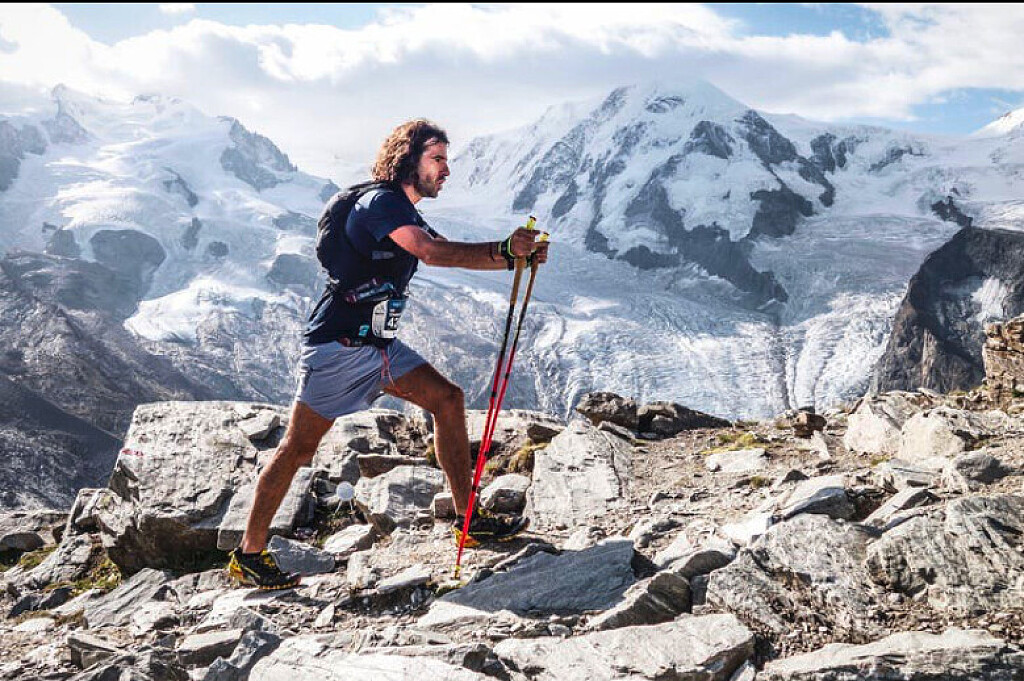
Singer Charles Costa Needed a Reset, So He Ran the Entire Pacific Crest Trail
Charles Costa spent three months running along the Pacific Crest Trail this summer and fall as an act of holistic rejuvenation.
The 39-year-old from London, England, set out with a bold goal of averaging 90 marathons in 90 days as a means to help reset his life-both to revive his stalled music career and to find a more balanced state of mind-but the multi-genre electronic British folk artist with 1 million streams and more than 120,000 monthly Spotify listeners says it turned out to be so much more than that.
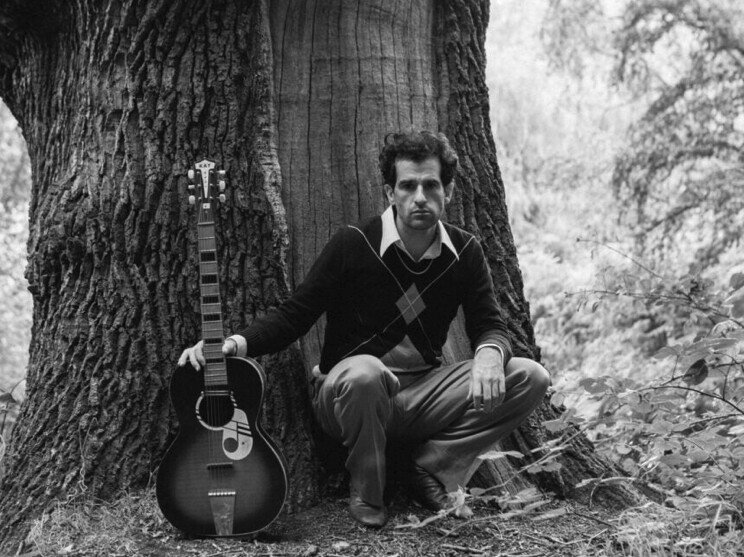
Because of lingering physical and psychological challenges from a brain injury suffered in a catastrophic skiing accident in Austria in 2010, Costa found himself in a delicate position that forced him at times to pause his music career while managing his mental health. Until he found trail running, he routinely battled a variety of mental, emotional and logistical ailments, ranging from uncontrollable anxiety to comprehensive darkness.
After averaging close to 30 challenging miles of running on the PCT per day starting on July 20, Costa admitted he was ready to finish the route, get off the trail, and get back to living a more stabilized
Recovering a Sense of Charles Costa
After the ski accident, Costa had been through numerous types of therapy and was taking what he characterized as "mind-monitoring, mind-maintaining drugs" that wound up consuming his life. In his long rehabilitative process, he eventually discovered that running-and specifically ultra-distance trail running-offered more of a physical, mental, and emotional panacea from lingering pain and mental discontinuity than anything else, and it also gave him a space to process what was going on in his life. It allowed him to get away from it all while being more connected to himself.
Costa said the more he immersed himself in running, the more he wanted to do something special to reinvigorate his life, relaunch his music career while also giving back. He's run numerous trail races in Europe in recent years, including the Montreux Trail Festival 70K last summer and the Swiss Canyon Trail 81K in Switzerland in June. (He placed 54th out of 225 runners in 11 hours, 23 minutes and 7 seconds.) He's also run the 813-mile length of Great Britain from the northern tip of Scotland down to the southwestern tip of England.
Seeking to challenge himself on a long and very difficult task that he hoped would be a transformative life experience, he settled on running the length of the PCT- a three-month, 2,650-mile trail running journey with 489,000 feet of elevation change. But he hasn't been doing it just for himself. Along the way, he's been raising money (about $170,000 so far) and stirring up attention for The Jed Foundation, a nonprofit that protects emotional health and prevents suicide for our nation's teens and young adults, and James' Place, a UK-based charity that provides free therapy and is dedicated to suicide prevention for men.
At the completion of the route, which has taken him from the U.S.-Canadian border and through parts of Washington, Oregon, and California, the British singer-songwriter officially released his first new song in several years and the first under his own name. (He originally performed and recorded under the moniker of "King Charles," a false front of a stage persona that he never really liked and that also contributed to his inability to fully express himself the way he wanted.)
The song is called "Nothing at the Most" and will be included on
Costa, who plays piano, guitar, and cello, has found his run to be a curing activity that has helped untangle his heart and mind and put him back in position to work as a professional musician.
"One thing I love about running is the rhythm of it," he said. "It's the effect that rhythm has on your mind. Days like I'm doing at the moment, it's dawn to dusk. It's up to 12 hours of just pounding the ground. And there are so many different rhythms that you get into. And I think once you're in a rhythm, your mind gets into a different place. You start thinking less. You let more in, especially when you're in beautiful places. You let more in in terms of inspiration. So, I find running very inspiring, especially in the wilderness and in some of these incredibly beautiful places."
The song "Nothing at the Most" is part of a collection of songs filled with the sounds and lyrics he says are meant to represent his journey between longing and lament. It's an intimate, cello-infused chamber-pop ballad with his soulful voice. Costa recorded several songs in the spring with producer Jesse Quin at
Enduring the Trail
As he was nearing the end of the route last week, Costa said his body was tired and a bit broken down but his soul felt re-energized. While he's remained injury-free, he's battled fatigue, blisters, muscle strains, all sorts of weather conditions, and insomnia-all common maladies to multi-day running adventures. He's worn through several pairs of On and La Sportiva trail running shoes and has relied heavily on his lightweight trekking poles, as well as his small but diligent crew that's managed his meals, gear, logistics and more.
Costa says he's listened to a lot of music out on the trail and has occasionally sang out loud to help the miles go by, but he's also made it a point to soak in the peaceful aura of the wilderness. He says it's been a devilishly hard endeavor and is amazed how "there isn't a single flat section" in the entire route.
"I'm holding it together. My muscles and limbs are all still working as they should, but I guess what starts falling apart is the mind," Costa said. "Even though I've been looking forward to the last 20 days and the last 10
Login to leave a comment
Firenze Marathon 2024: Top runners
Florence - Writing one's name in the roll of honour of a noble event and doing it on the occasion of the 40th birthday, the challenge of the 40^ Estra Firenze Marathon is therefore even more electrifying and the task of making it so is entrusted to twelve men and eight women.
Top runners – Men
Five from Kenya and Italy, one from France and Burundi to beat the record to be beaten currently in the legs of the Kenyan James Kipkogei Kutto who in 2006 crossed the finish line in 2h08'40". The Kenyan Dikson Simba Naykundi (Caivano Runners) could succeed in his debut on the queen distance. Dikson Nyakundi brings with him the excellent record of 60'39" on the half marathon distance that earned him victory in Treviso in 2022 and has racked up several podiums in Italy, as stated in his curriculum in which we find, among others, the victories in Cremona in 2021 and at the last edition of the Neapolis Half Marathon.
In the race, however, there are those who already have experience on the queen distance and will try to have their say having already run below the record of the event. This is the Kenyan Edwin Kimutai Kiplagat who with 2h08'21", detached in Geneva in 2021, could captain the leading group.
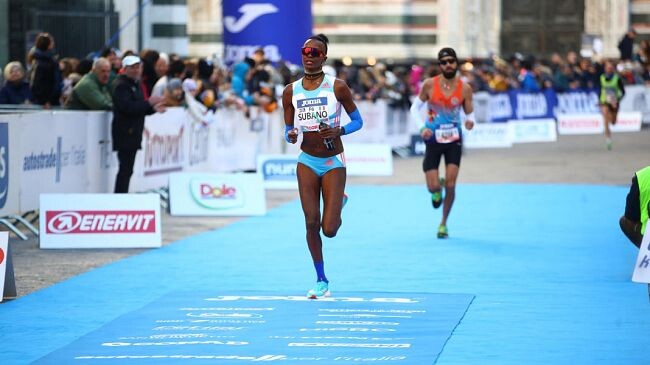
Just over a minute away, the winner of the last edition of the Neapolis Marathon, the Kenyan Samuel Naibei Kiplimo who has already stopped the clock of the 2022 Run Rome The Marathon at 2h09'41", when he conquered the seventh position overall. Behind him is the first on the home list, the Moroccan with an Italian passport Hicham Boufars (Asd International Security) who participated in Florence in 2019 (third overall with 2h13'29"), in 2018 with a personal best (second overall with 2h12'16"), 2015 (2h13'36") and 2014 (2h17'12"), followed by the Kenyan Hyllry Chemweno who this year snatched the personal best of 2h13'28" by winning the Skopje marathon (Macedonia).
A little further behind is Lhoussaine Oukhrid (ASD AT Running) with a personal best of 2h16'25" followed by the Algerian with a French passport Menad Lamrani, last year at the personal best of 2h16'45" at the Rennes marathon (France).
At the start, with the task of acting as a hare, the Kenyan Simon Dudi Ekidor who brings the time of 2h18'58" from the 2019 Nairobi marathon.
Closing the ranks are three Italian regulars of this event, the Moroccan Khalid Jbari (Athl. Club 96 Alperia), capable of 2h21'32", his personal best, in 2022 and Andrea Soffientini (Dinamo Running), for him already three medals in the Firenze Marathon, in 2022 (2h26'36"), in 2021 (2h22'29") and in 2021 (2h26'36") and Kabir Hicham (Pol Moving SSD ARL) who in Florence conquered his best time with 2h22'44" last year, when he showed up sixth at the finish line, improving on the 12^ position of 2021 (2h27'24").
Burundian Jean Marie Bukuru makes his debut with the record of 63'03" in his legs at the 2023 Arezzo half marathon.
Top runners – Women
Five from Kenya, two national standard-bearers and one from Morocco for the glory of the 40^ Estra Firenze Marathon, although, barring surprises, it does not seem that the women's record of the route that belongs to the Olympic Lonah Chemtai Salpeter can waver, in 2018 she had lowered it by four minutes compared to the previous one bringing it to 2h 24'17".
On paper, the victory goes to the Kenyan Vivian Cherotich to whom the Italian roads bring luck, as told by the record with victory conquered at the last edition of the Romeo & Giulietta Half Marathon with a time of 1h09'18" which is on a par with the victory of the last marathon in Eindhoven (Netherlands) when she set her personal best of 2h26'41". Watch out for the Moroccan Souad Kabouchia who here in Florence, in 2021, has already taken fourth place running in 2h27'49", a handful of seconds from the personal best that gave her the victory of the last marathon in Enschede, which ended in 2h27'16".
Three minutes behind her it is possible to see the stride of her compatriot Dorine Cherop Murkomen who this year in Seville set her best time with 2h29'39".
The breath on the neck is of the Kenyan Teresiah Kwaboka Omosa (Caivano Runners) who has racked up several victories, including the half marathons of Udine (2021), Wachau (2022) and Nancy (2024) as well as that of the Salzburg marathon in 2018. For her, the record on the queen distance is from 2021 when in Fürstenfeld (Austria) she stopped the clock at 2h30'12".
A little more detached is the Kenyan Hellen Chepkorir who brings 2h34'16" scored in Kosice (Slovakia) in 2017. In the group of pursuers the Kenyan Lucy Chepoghon Chelele who boasts the time of 2h38'12" a few weeks ago in Nairobi, the blue of Kenyan origin Maria Gorette Subano (Cus Pro Patria Milano), last year able to snatch the bronze medal of the 39^ Firenze Marathon and recently improved at the Berlin marathon (Germany) where she finished her efforts in 2h38'45". For Italy also her teammate Sarah Giomi with the time of 2h40'22" set in Amsterdam in 2018.
Hall of Fame
The ranking by nations still sees the colors of Italy in the lead with 22 victories (11 among men and 11 among women), followed by Kenya with 16 successes (12/4), then Ethiopia which with 15 victories (7/8) extends its lead over Great Britain with 9 victories (3/6); then at 2 there are Bahrain (2/0) and Hungary (0/2). Austria (0/1), Belgium (0/1), Brazil (1/0), Israel (0/1), Yugoslavia (1/0), Morocco (1/0), Norway (0/1), Czech Republic (0/1), Russia (0/1), Rwanda (0/1), Slovenia (0/1) and Ukraine (1/0) all have one win each. There are 18 nations that can boast at least one victory in the roll of honour.
Victories of 9 different nations among men and 13 different nations among women. Men: Kenya 12, Italy 11, Ethiopia 7, Great Britain 3, Bahrain 2. Brazil, Yugoslavia, Morocco and Ukraine: 1. Women: Italy 11, Ethiopia 8, Great Britain 6, Kenya 4, Hungary 2. Austria, Belgium, Israel, Norway, Czech Republic, Russia, Rwanda and Slovenia: 1.
The 2023 edition of the Florence Marathon brought the tricolor back to the men's podium with Said El Otmani (CS Army), in the women's victory of Clementine Mukandanga who signed the national record for Rwanda while the last Italian who had the national anthem sung is Giovanna Volpato who in 2008 cut the ribbon in 2h34'13".
Login to leave a comment

Firenze Marathon
This is Firenze (Florence) Marathon! Along the way you will be surrounded by centuries of art, history and culture, a unique emotion that can only be experienced by those who run in Florence. Thousands of sports people and enthusiasts from all over the world come to participate in this classic race on the last Sunday in November. The route takes...
more...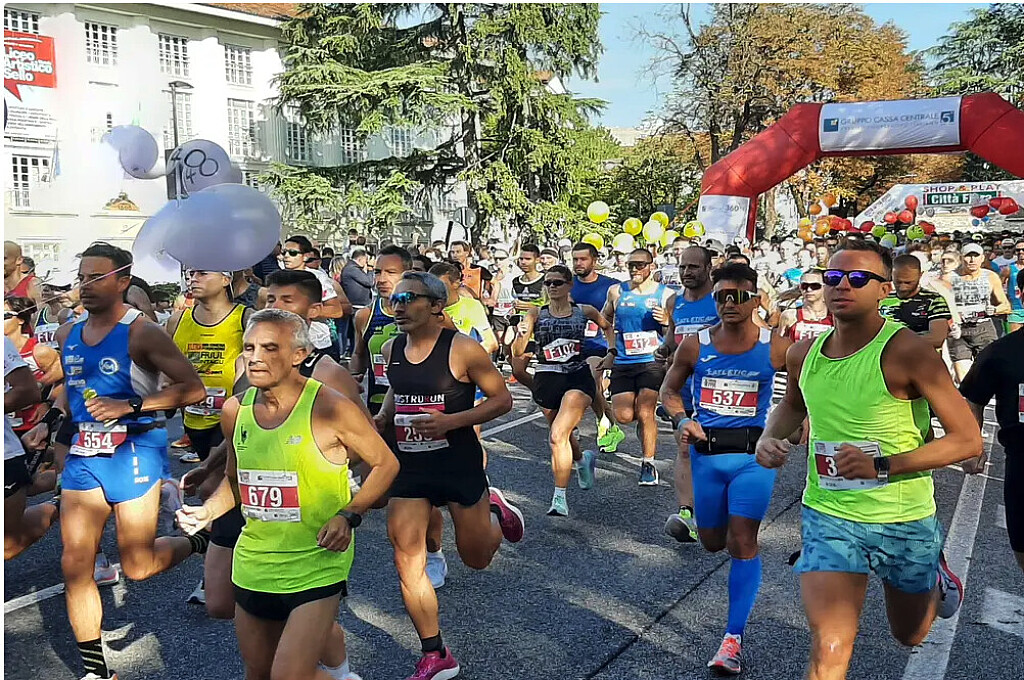
Yves Nimubona (Atletica Casoni Noceto) and Sara Nestola (Calcestruzzi Corradini) are the winners of the 24th edition of the Udine City Half Marathon
Yves Nimubona (Atletica Casoni Noceto) and Sara Nestola (Calcestruzzi Corradini) are the winners of the 24th edition of the Udine City Half Marathon, which took place this morning, Sunday 22 September. The Rwandan and the Italian completed the 21.097 km of the Friulian race in 1.00’56’’ and 1.12’16’’, adding their names to the roll of honor of the event organized by the Udine Half Marathon Association for the first time.
Completing the men’s podium are the Italians Yohanes Chiappinelli (Carabinieri) and Pietro Riva (Fiamme Oro), reigning European team champions over the distance. The former completed the race in 1.01’00’’, while the latter, individual continental vice-champion, stopped the clock at 1.01’55’’. Among the women, behind the Italian Nestola, the Kenyans Teresiah Omosa Kvamboka and Sharon Chebichiy close, capable of a time of 1.14’35’’ and 1.25’47’’ respectively.
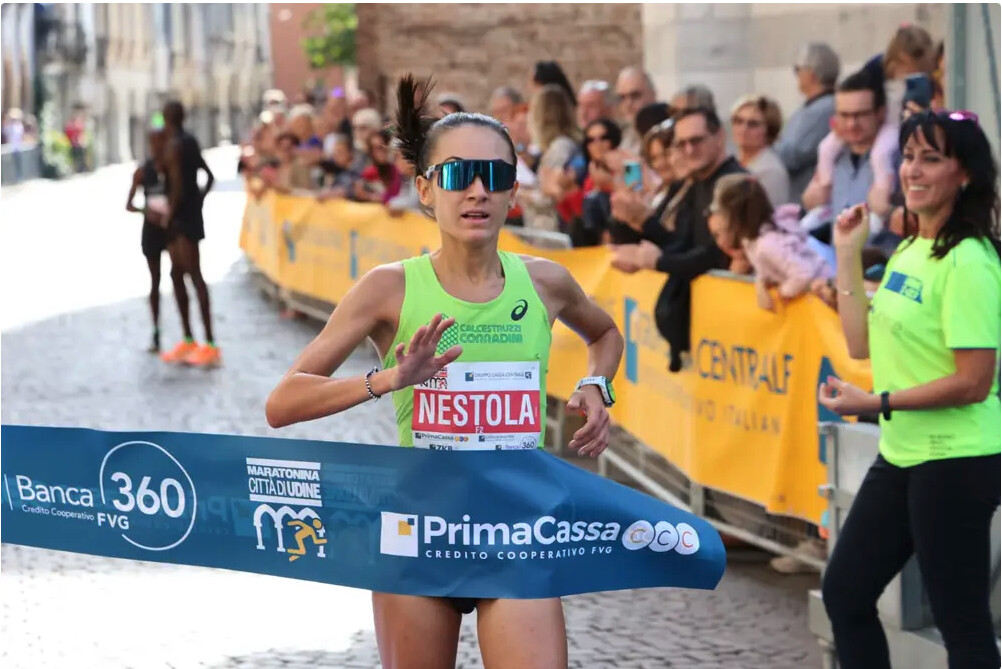
The men’s race is exciting, with Riva in the lead in the early stages. Pulled by the hares, the policeman from Alba passes in 14’31’’ at 5 km and in 29’04’’ at 10 km, to then remain in the lead together with the duo formed by Chiappinelli and Nimubona. The trio runs at a pace of 2’50’’ until the sixteenth km, when the first turning point of the race is recorded. Riva loses contact with the two rivals, who take the lead of the race maintaining the pace of 2’50’’ per km. It’s neck and neck until the twentieth kilometer, when Nimubona (born in 1998) accelerates and manages to leave the Carabinieri standard-bearer behind him.
Thus, the African, 21st at the Paris Olympic Games in the 10,000 meters, raises his arms to the sky in the heart of Udine. Behind him, the two Italians, at the start of the Friulian race in preparation for the Valencia marathon on December 1st.
Among the women, the favorite of the eve, Sara Nestola, arrives in front of everyone, also in Friuli to carry out a test in view of her debut in the marathon, scheduled in Valencia. The race run by the student of Stefano Baldini is of great importance: the Italian, always in the lead, passes in 34'09'' at 10 km and in 51'03'' at 15 km, arriving at the finish line in a time one minute less than her personal best of 1.11'16''. The girl from Emilia, born in 2001, 35th at the European championships over 21.097 km, is the first Italian to win in Udine six years after the last time (in 2018 Sara Dossena won).
Great performance also for the Friulians Steve Bibalo, of Altetica Buja, who ranked tenth (1h 08'01"), and Mariangela Stringaro, of Keep Moving (1h 30'01"): they were awarded the Faustino Anzil Prize, a gold medal introduced in 2023 to honor the memory of the late Professor Faustino Anzil, a leading figure in regional and national sport - in his role as dean of athletic trainers of Friuli Venezia Giulia - as well as councilor, with the delegations for education and sport, in the Municipality of Udine: Anzil was, among other things, one of the most convinced supporters of the "Udine Half Marathon project".
A thousand participants in the Udine half marathon, which as always put on a show.
Among the half marathon runners, this year too, was the scientist from Udine Mauro Ferrari, at his fifth participation in the Half Marathon.The youngest athletes were 18-year-olds Tamer Al Halabi and Nicole Cos, the oldest were Giorgio Zuzzi, 77, and Graziella Minetto, 68. Fausto Finocchiaro turned 35 on the day of the 2024 Half Marathon; 174 teams competed. The largest was Run Card, with 291 participants.
The most represented nations were (in order of participants) Italy, Austria, United Kingdom, Poland, Saudi Arabia, Slovenia, Czech Republic, Belgium, United States, Israel.Among the members of the StraUdine (about 600) were the two actors - Daniele Fior and Marco Rogante - busy these days, at the Teatro S. Giorgio in Udine, in the rehearsals of the show "Maratona di New York", the new version of the famous text by Edoardo Erba, translated into Friulian by Paolo Patui and directed by Rita Maffei. On stage they run and act for 65 minutes: therefore they could not miss the city race, to continue the long training before the debut, scheduled for 11 and 12 October in the Season Teatro Contatto.
This At the StraUdine the largest group was the Mostro Run (18 participants); the youngest member was a six-month-old baby, the oldest Aderina Kraghel, 87 years old; the sympathy award went to a little girl who ran with a cast.
THE CLIMB OF THE CASTLE. The weekend of the Half Marathon, never so long - the first of the many events scheduled took place on Thursday evening -, came to life, at a competitive level, with the always spectacular men's and women's invitation time trial "Salita del Castello Autotorino": the speed record on the ramp that leads to the top of the hill was set by Lorenzo Brugnizza (San Marino Athletics Academy), with a time of one minute and 6 seconds; second place for Andrea Lamparelli (Atletica Malignani Libertas Udine), who arrived in one minute and 9 seconds, third for Alessandro De Marco (1 minute and 10 seconds), of the Atletica 2000 team.
First among the women was Miriam Sartor (of Atletica Ponzano), who climbed the hill in 1 minute and 27 seconds; silver for Lisa Rivetta, of Trieste Atletica (1 minute and 28), bronze for Emily Grace Campanelli (also Trieste Atletica), with 1 minute and 1 minute and 32.
Login to leave a comment

Udine Half Marathon
The Maratonina Città di Udine features a flat and fast half marathon course which begins and ends on the stunningly beautiful Piazza Libertà in the historic centre of Udine, a city of about 100,000 people in the Friuli area in the north-east of Italy Organized by Associazione Maratonina Udinese with Polisportiva Libertas Grions del Torre e Remanzacco. The racefinishes in...
more...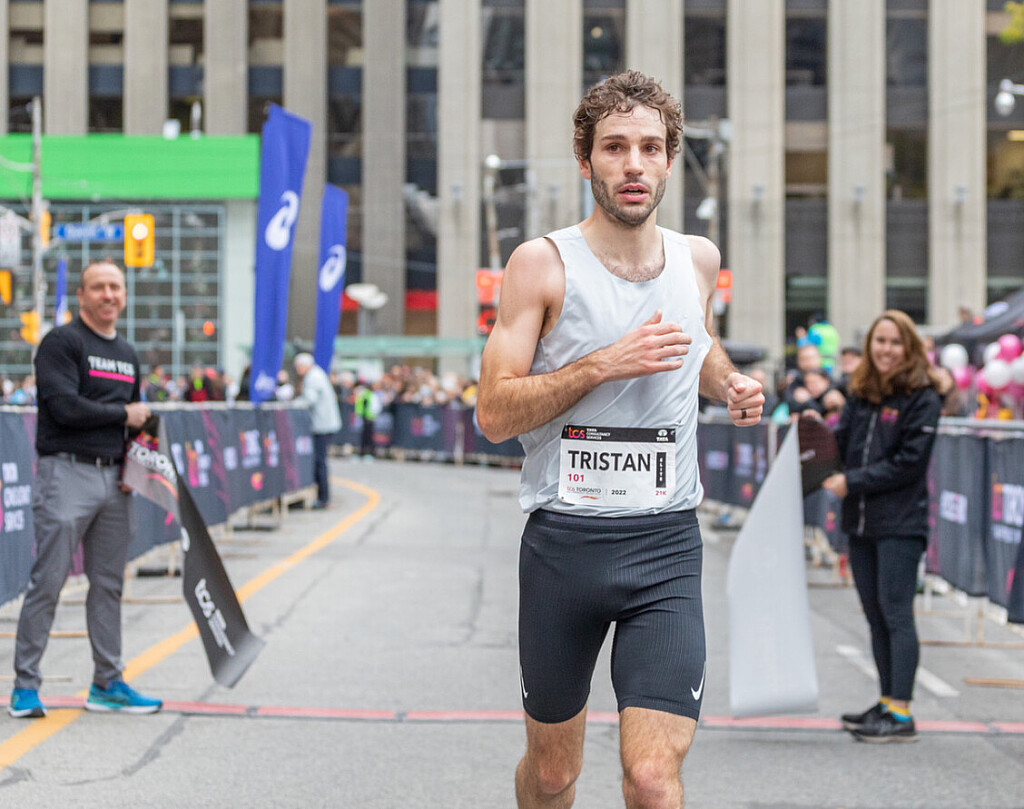
Tristan Woodfine Chasing Canadian Title at TCS Toronto Waterfront Marathon
The past two years have been mostly good to Tristan Woodfine as he has recorded personal bests over several distances most significantly with his 2:10:39 finish at the 2024 Houston Marathon in January.
That makes him the sixth fastest Canadian marathoner of all time.
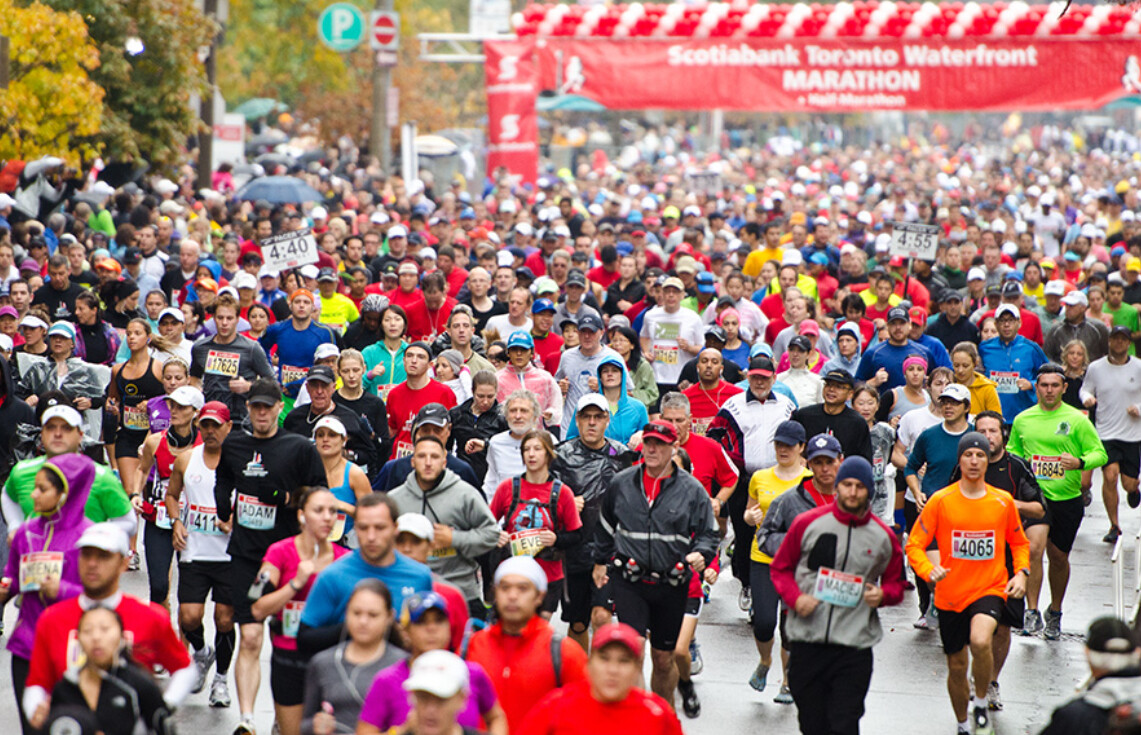
This uplift in fortune coincides with his seeking coaching advice from none other than two-time Canadian Olympic marathoner Reid Coolsaet.
Now the 31-year-old Woodfine has confirmed he will race the 2024 TCS Toronto Waterfront Marathon, October 20th, with the objective of running both a fast time and earning the Canadian Marathon Championship title. The event doubles as a World Athletics Elite Label race as well as the Athletics Canada National Marathon Championships.
“It’s local, close, the support is good,“ he says of his choice for an autumn marathon. “The Canada Running Series (team) always does a great job. I have run the course before.
“Getting under 2:10 would be nice, finally. We will see how the rest of the build goes. Ten weeks is still a long timeand things can change for better or worse - hopefully for better - and by the time Toronto comes around I’d definitely love to get a PB and make another step forward there.”
Woodfine, who is currently living just outside of Eganville, Ontario with his wife Madeline, ran the Toronto Waterfront Marathon once before. That was in 2019 when he finished 13th in a time of 2:13:16. But he has twice won the Toronto Waterfront Half Marathon (2022 and 2017) - run concurrently with the full marathon - and has also had success at the Toronto Waterfront 10K. That race includes a long section of the marathon course too.
Credit for his upward trajectory goes to Coolsaet.
“Reid has had so much experience in the sport,” Woodfine says of his coach. “He has got a lot of valuable insights on the training front and beyond. He has done a lot of racesand he knows the deal with which races might work well for your goals, that kind of thing.
“He has got so much experience on any aspect of training, racing, nutrition, injuries, he has seen so much he can really help out.”
One of the differences in Woodfine’s program since his association with Coolsaet comes as a surprise but might well be a valuable lesson for all runners.
“Some of the workouts in the base training period are almost a bit easier than what I was doing (before),” he explains. “I think maybe before I was pushing a bit too hard too early in the training base. So backing off a little bit when coming into the marathon block was probably one of the bigger things.”
Like most runners he has had his share of hiccups, most notably a nagging case of plantar fasciitis that saw him drop out of the Boston Marathon back in April. He blames a mechanical deficiency in his running form. But that is behind him now and as he enters his marathon specific buildup phase he is full of optimism.
Recently he raced the Falmouth Road Race in Massachusetts finishing 11th in 33:33 over the 7-mile course. A successful result at the shorter distance has added to his confidence.
“The last few weeks leading into Falmouth I did get my longer mileage in,” he reveals. “I got a 37km long run in there just to get things ready. The week before Falmouth was 220km. In this (Toronto) buildup block I would like to get up to a maximum of 250 or 260km.”
Besides a personal best, Woodfine is fully aware that a national championship offers the chance for maximum World Athletics points that would count heavily in 2025 World Championships qualifying. Those Championships are set for Tokyo.
“I talked to Reid about trying to qualify for Tokyo,” he admits. “I have had a few sit-downs (with him). I’d get a fair amount of points with another good performance with a strong time. A solid finish in Toronto would put me in a good position.”
Unlike many elite runners Woodfine doesn’t have a shoe sponsor. After completing his paramedic studies at the Ontario Health and Technology College he has put on hold a career in that field to focus on his running. To make ends meet he has been doing some online coaching, a sideline that continues to grow.
“I definitely love helping other runners achieve their goals,” he adds. “I also do some remote work for a pharmacy in the area. It’s best described as inventory and purchasing. It’s very flexible and works great with running.”
Like many elite runners the Olympic Games has been a target for Woodfine. In 2020 he beat the Tokyo Olympics qualifying standard running 2:10:51 at the London Marathon and thought he’d achieved his dream of being an Olympian. But when Cam Levins ran 2:10:14 in Austria six months later it was Levins who was chosen for the team and not Woodfine. This, despite the fact Woodfine had beaten Levins in London by well over a minute.
Despite falling short of the Paris Olympic standard with his Houston Marathon personal best he still harbours an Olympic dream.
“Yes it is still a goal. I try not to put as much emphasis on the Olympics being an ‘all or nothing’, a defining factor of success for my career,” he declares. “I think that can kind of end up making you miserable. Whether you are going to the Olympics or not. For sure, it’s a goal.
“I am in this for another Olympic cycle and hopefully I can be on the start line in LA - the third time is a charm. But I am really focused on each year and trying to enjoy each race for what it is.”
The TCS Toronto Waterfront Marathon is an obvious step forward in his career path.
by Paul Gains
Login to leave a comment
TCS Toronto Waterfront Marathon
The Scotiabank Toronto Waterfront Marathon, Half-Marathon & 5k Run / Walk is organized by Canada Running Series Inc., organizers of the Canada Running Series, "A selection of Canada's best runs!" Canada Running Series annually organizes eight events in Montreal, Toronto and Vancouver that vary in distance from the 5k to the marathon. The Scotiabank Toronto Waterfront Marathon and Half-Marathon are...
more...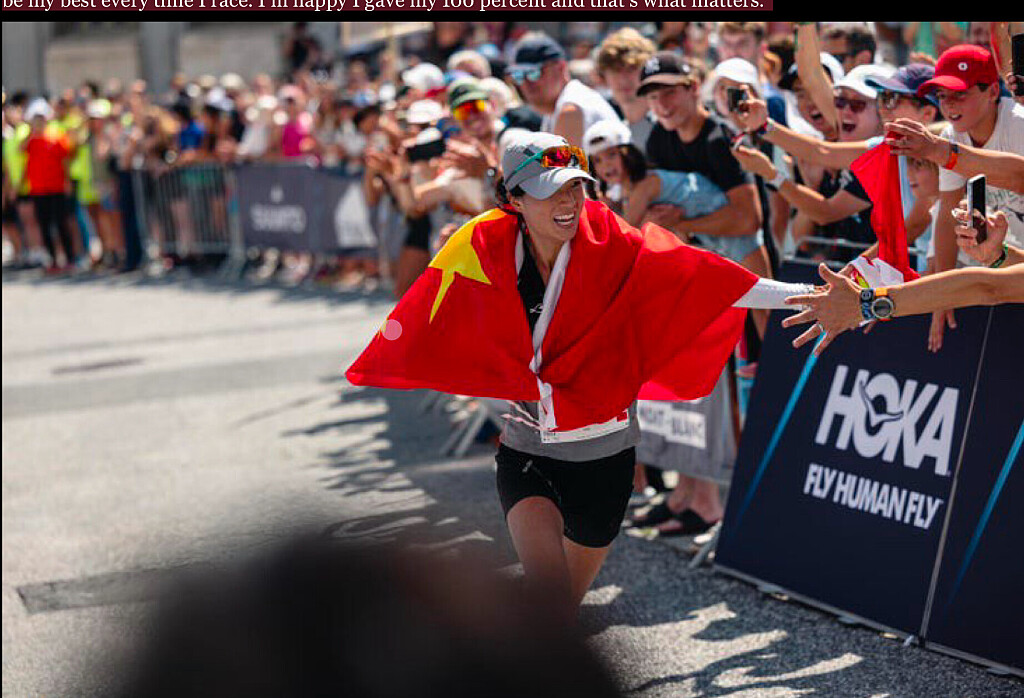
USA’s Eli Hemming and China’s Miao Yao Make History at 2024 OCC
It’s the first time an American or Chinese runner has won the prestigious 57K trail race that serves as a de facto global trail running championship. All year, Eli Hemming said his primary focus was charging up and over the La Flégère ski resort on the last climb of the Orsières-Champex-Lac-Chamonix (OCC) race at the UTMB World Series Finals to then break the finish line tape in Chamonix, France, as the champion.
That’s almost exactly how it played out on Thursday afternoon. The 29-year-old runner from Kremmling, Colorado, fended off the world closing in around him as he overheated under a humid, sunny 80 degree day, as well as a hard-charging Francesco Puppi, to win the 57K (36-mile) race in 5 hours, 11 minutes in 48 seconds. In doing so, he not only claimed a UTMB-Mont Blanc Finals title and the 13,000 euro (about $14,400) prize, he became the first American ever to win the prestigious race that serves as the de facto global championship at the shorter ultra distances.
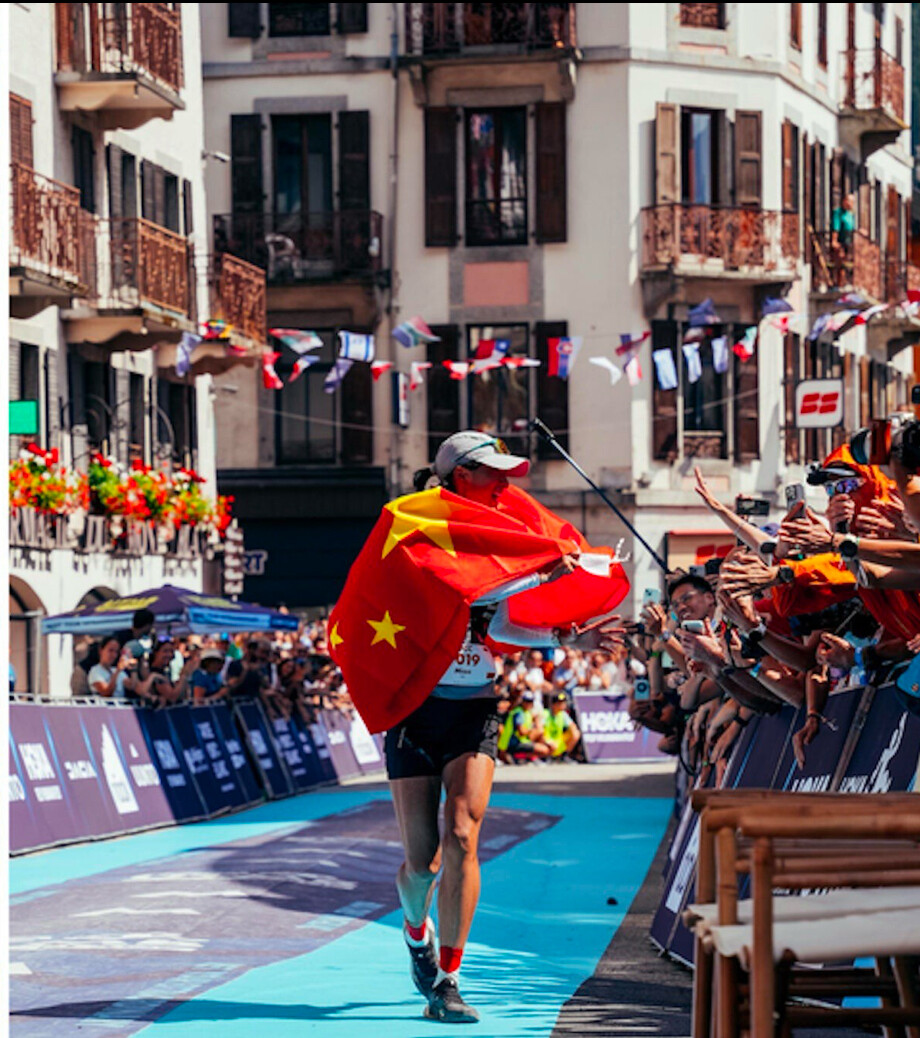
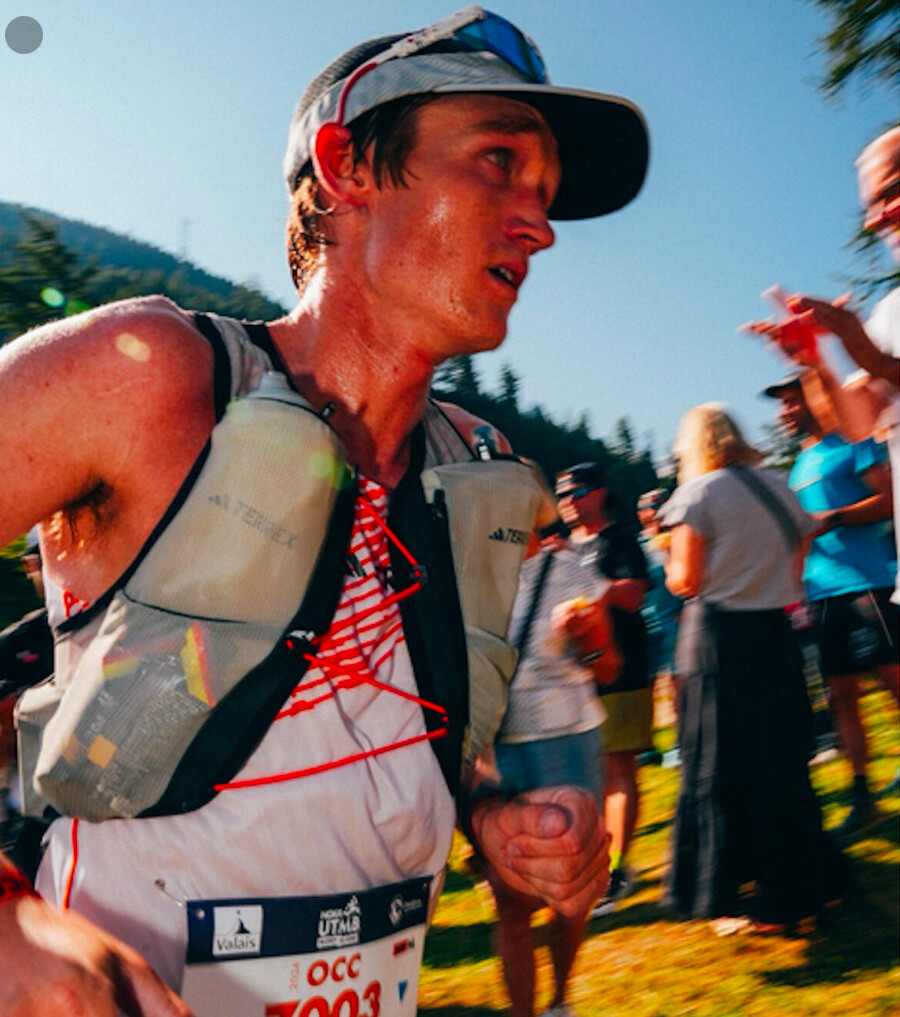
But the race was a dastardly tilt, and Hemming had to turn himself inside out to get the win. It figured to be a grueling battle, both because of the 11,500 feet of elevation gain and descent but also because of the strong field of international runners and hot, humid weather with sunny skies soaring into the 80s under the early afternoon sun. Hemming went out hard early in the race, but he didn’t feel compelled to challenge for the lead up the first two climbs over the first 9 miles. That’s because fellow American Christian Allen was absolutely flying off the front, as the 26-year-old runner from Orem, Utah, surged to the lead from the gun and led by more than 2 minutes through the 15-mile mark as he passed through Swiss the village of Trient. But that’s where the runners faced the toughest test of the race, a spikey 4-mile, 2,300-foot technical climb to the Chalet des Grands before continuing upward on slightly less steep terrain to the Col de Balme mountain pass. In all, it’s a 3,000-foot ascent over about 6 miles to the 7,200-foot high point on the course.
That was the first crux of the race, and that’s where Hemming took charge. As Allen faded, Hemming surged up the big climb as several other speedy runners gave chase, including Swiss runner Remi Bonnet who is known for his uphill running abilities. But Hemming had been waiting for this all year and specifically trained on long mountain ascents near Breckenridge, Colorado. He continued to surge across the Swiss-French border and up to the pass, building a nearly 7-minute lead over Spanish runner Antonio Martinez Perez.
From there, Hemming extended his lead to 10 minutes on the 7-mile, 3,000-foot descent to the French village of Argentière. But with one more big climb—a 3.5-mile, 2,000-foot technical grind to 6,200 feet atop the ski resort—he was anything but home free. Early in the climb, he slowed from a run to a walk, and even stopped at one point midway through the climb, bent over and rested his hands on his knees. He looked in distress, but eventually gathered himself and started running slowly up the hill again.
Perez had been charging up the mountain behind him and there was a brief moment where it looked like Hemming’s lead might be in jeopardy. But he managed to reach the final checkpoint at the 50K La Flégère aid station in first, and immediately looked better as he began the 4-mile descent down to Chamonix. Although he had gained ground, Perez felt the impact of the climb, too, and was caught by Italian runner Francesco Puppi before reaching the ski resort aid station. After a cordial acknowledgement as he passed, Puppi suddenly had a new spring in his step. He surged up the final 200 meters to reach the checkpoint about 4 minutes after Hemming then began bombing down the rocky, rooty dirt trail in pursuit of the leader.
Up front, Hemming had recovered slightly, running smoothly albeit without the intensity of a couple hours earlier. Puppi was clearly running faster. What had been a 10-minute lead at the 28.2-mile mark had greatly diminished with less than 3 miles to go. But with every stride, Hemming was one step closer to his year-long goal of winning OCC and he wasn’t going to let it slip away.
When he reached the edge of the Chamonix pedestrian village, he was quickly re-energized by the throngs of cheering spectators and increased his pace briefly as he dashed through the winding 200-meter section before slowly slightly on the final blue-carpeted approach to the finish line.
“I was trying to pace it as well as I could, and I knew if I made it over Col de Balme with a good gap, unless I blow up—which I did a little bit—I knew I could hold up pretty well to the end,” Hemming said. “It ended up being a bit of a grind. I knew I had about a 10-minute lead at Argentière, but I was very much overheated and the walls started closing in a bit. I tried to take a little time to cool down, but I knew I had to keep moving and just make it to the top.”
Still running hard, Puppi dashed through the village three minutes later to finish second in 5:14:46, followed by Perez in third at 5:17:56, China’s Juwei Zi in fourth (5:22:17), and Aritz Egea Caceres in 5th (5:27:07). Nick Handel, a 32-year-old runner from San Francisco, was the second American runner in the men’s race, finishing 13th in 5:41:08. The victory is the first big international win for Hemming, who transitioned into trail running in 2021 after several years as a professional triathlete. Hemming has won several domestic 50K races in the US, including the Canyons Endurance Runs 50K on April 26 in Auburn, California. Last year, he placed second to Bonnet in the Mont-Blanc Marathon and also finished fifth in the Golden Trail World Series Final 20K championship in Noli, Italy. For a while, it looked like Hemming, and his 27–year-old wife, Tabor, might be on the verge of one of the best trail running stories of the year. They decided to part ways with sponsor Salomon, in the offseason, and sign with the Adidas-Terrex team at the start of the year. While they both raced well early in the season—Tabor took third at the Canyons 50K in April and third at the Broken Arrow Skyrace 25K in June—they opted not to race as much this year as they’ve been known to. They also decided not to join their new teammates at an extended Chamonix training camp in late July and instead stay home and train at high-altitude in central Colorado.
Knowing what they’d be facing on the course, they sought out long climbs near Breckenridge and Frisco that topped out between 12,000 and 13,000 feet—including Wheeler Pass between Copper Mountain ski resort and the community of Blue River. “The course is fast and steep, but it’s also very runnable,” Tabor said. “We knew we could get quality training at home, so we used those climbs to train, so we were happy to stay at home and run the places we know best.”
Tabor looked great early in the race, running with a strong pack of lead women that included Judith Wyder of Switzerland, Clementine Geoffray of France, and Miao Yao of China, plus Spain’s Sara Alonso, New Zealand’s Caitlin Fielder, and fellow Americans Dani Moreno and Allie McLaughlin.
Wyder was the early leader and figured to be tough to beat—despite a recent bout of COVID. She had earned the silver medal in the 50K race at last year’s World Mountain and Trail Running Championships in Austria, and more recently took second in the 20K mountain running race at the European Championships and first at the Mont-Blanc Marathon in early July. Wyder led Geoffray, Moreno, McLaughlin, and Yao through the initial 4.5-mile climb to Champex, then expanded her lead to the top of the second climb at the 6,200-foot summit of La Giete as Yao and Alonso maneuvered into the second and third spots. But following a similar strategy as her husband, Tabor took the lead on the long downhill into Trient and began to surge on the technical climb up to Chalet des Grands with Yao, Wyder, Alonso and McLaughlin in tow. Hemming ran in the lead for part of the climb, but she paid for the aggressive move. Wyder and Yao overtook her and those two separated from the rest of the field. They dueled back and forth but Yao took the lead over Col de Balme and would never relinquish it. She seemed to get stronger as the race went on and she extended the gap on Wyder to 4 minutes at La Flégère ski resort.
From there, Yao cruised into Chamonix to secure the first win by a Chinese athlete at OCC in 5:54:03. With a 2018 CCC win already under her belt, she also enters the rarified air of having two UTMB World Series Finals championship titles to her name. Wyder was second in 6:00:05, followed by Geoffray in third at 6:02:10, Alonso in fourth (6:05:15), and Fielder in fifth (6:05:46). Moreno, who was third in the OCC in 2022 and dropped out last year, ran a strong second half to finish sixth as the top American in 6:06:59. Tabor Hemming continued up and over Col de Balme but slowed significantly and eventually dropped out at Argentière.
“I’m really happy about my race. It was really fun out there to compete with such strong ladies,” Wyder said, “Miao Yao was flying in the end. I’m so proud of myself to be back and to be able to be racing healthy. I didn’t think about [having COVID recently]. Today I was really happy with my performance and with my legs today.”
Login to leave a comment
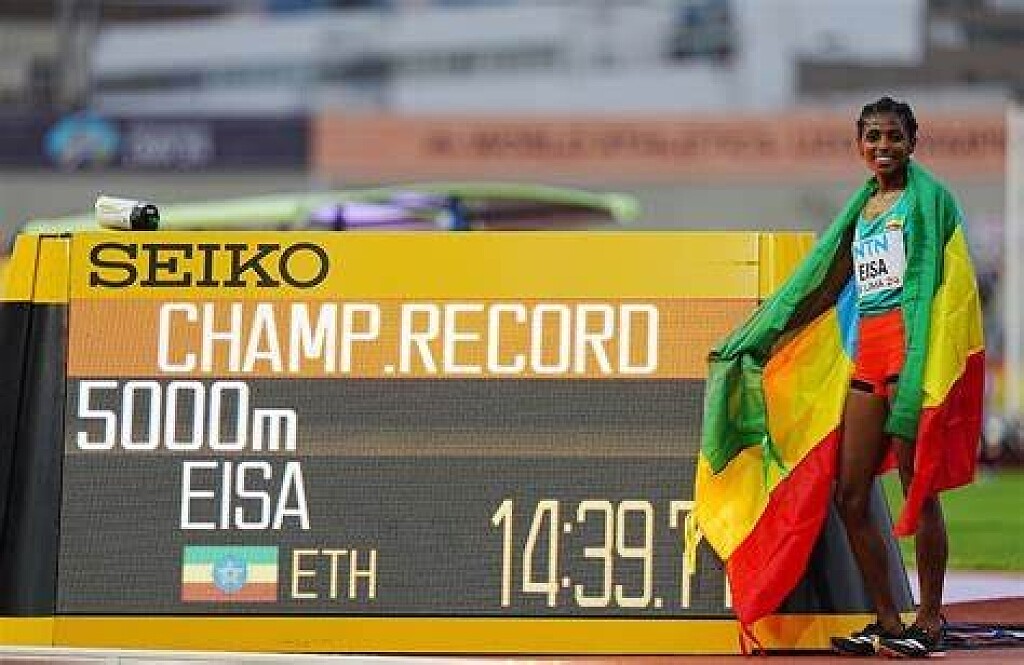
Eisa runs championship record to retain world U20 5000m title in Lima
On a cool, crisp evening in the Peruvian capital on Tuesday (27), Ethiopia’s Medina Eisa turned up the heat on her rivals to successfully defend her 5000m title, the highlight of the first day of action at the World Athletics U20 Championships Lima 24.
Eisa’s winning time of 14:39.71 carved more than 28 seconds off the championship record set by Genzebe Dibaba, which had stood since 2010, and brought her home well clear of her compatriot Mekedes Alemeshete. The two broke away from the field from the outset and alternated pace-setting duties, passing 2000m in 5:58.59 with a 40-meter lead.
By 3000m, reached in 8:57.28, they’d built a 70-meter lead and from there it only extended, with Eisa breaking clear of her compatriot with three and a half laps to run and lapping most of the field to hand women’s 5000m gold to Ethiopia for the eighth time in the last nine editions.
“I'm very happy with this win and to achieve a championship record after the Olympics,” said Eisa, who finished seventh in the 5000m in Paris. “I wanted to be a champion, I have wanted this for months.”
Alemeshete followed her home in 14:57.44, with Uganda’s Charity Cherop getting bronze in a PB of 15:25.02.
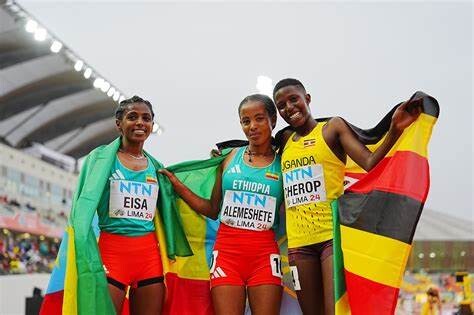
The men’s 5000m proved a very different race, with some early moves proving inconsequential and the final boiling down to a sprint finish, with seven clustered together at the bell. As the contenders hit full speed on the final turn it was Kenya’s Andrew Kiptoo Alamisi who soon took flight like a bird, soaring to victory in 13:41.14 ahead of Ethiopia’s Abdisa Fayisa (13:41.56) and Uganda’s Keneth Kiprop (13:41.73).
Australia reigned supreme in the mixed 4x400m final, their quartet of Jordan Gilbert, Bella Pasquali, Jack Deguara and Sophia Gregorevic controlling the race and hitting the line comfortably in front in an Oceanian record of 3:19.27. Poland claimed silver in 3:20.44 with China coming through strongly for bronze in 3:21.27 courtesy of a big final leg from Liu Yinglan.
In the men’s shot put, it was no surprise to see gold go to the Netherlands for the first time in 24 years, but it wasn’t the thrower many were expecting, with Dutch U20 record-holder Yannick Rolvink – who topped the entry lists by more than a metre – finishing fifth with 19.88m.
It was his teammate, Jarno van Daalen, who shone brightest, the 18-year-old adding 36cm to his lifetime best with his opening round effort of 20.76m. That was a mark no one else could match in the subsequent rounds, though South Africa’s JL van Rensburg came close, launching a PB of 20.74m in the final round for silver. Germany’s Georg Harpf took bronze with 20.28m.
With four events completed in the heptathlon, Croatia’s Jana Koscak tops the standings with 3536 points, the 2022 European U18 champion adding to her 13.80 hurdles performance and 1.81m high jump earlier in the day with a 12.01m shot put and 25.12 200m in the afternoon session.
Second overnight is Switzerland’s Lucia Acklin, who rocketed up the standings during the latter part of the day after throwing 13.42m in the shot put and clocking a PB of 24.42 in the 200m. That leaves her on 3472 points. Australia’s Mia Scerri sits third with 3385, closely followed by Czechia’s Adela Tkacova who is fourth with 3351, aided by her season’s best of 24.14 in the 200m.
"It's been a long day, but I'm happy," said Koscak. "I ran a solid 200m, a good high jump, but the hurdles and shot put could have been a little better. It's been a long process because I've been travelling a lot, with climate changes, times zones. This is the World Championships so I'm not going to complain."
In the women’s 100m semifinals, Jamaica’s Alana Reid was highly impressive when winning in 11.44 (-0.3m/s), easing off the gas far from the line to beat Nigeria’s Justina Tiana Eyakpobeyan (11.56) and Aleksandra Stoilova of Australia (11.58), who also advanced. Kishawna Niles of Barbados and Britain’s Nia Wedderburn-Goodison were the quickest qualifiers, both clocking 11.39 in the first semifinal ahead of South Africa’s Viwe Jingqi (11.49). Germany’s Chelsea Kadiri won the third semifinal in 11.52 ahead of Adaejah Hodge of the British Virgin Islands (11.59).
Thailand’s Puripol Bonsoon, who finished fourth in this event two years ago, was the quickest qualifier for the men’s 100m final, clocking 10.30 (-0.6m/s) in the semifinals to edge South Africa’s Bradley Nkoana by one thousandth of a second. Jamaica’s Gary Card qualified in third with 10.39.
Deandre Daley of Jamaica powered to victory in the first semifinal in 10.34 (-0.9m/s) with Japan’s Naoki Nishioka taking the second automatic spot in 10.43. South Africa’s Bayanda Walaza recovered from an early stumble to win the third semifinal in 10.33 (-0.2m/s) ahead of Britain’s Teddy Wilson (10.35) and China’s He Jinxian (10.36), who also advanced.
China’s Wang Xiaobo led the way in men’s javelin qualification, launching 73.83m with Slovenia’s Tom Tersek next best with 73.37m ahead of Germany’s Oskar Janicke (73.02m). Ukraine’s Illia Saievskyi was the only other thrower to surpass the 72.50m automatic qualification mark.
In women's pole vault qualification, the automatic qualifying mark of 4.25m wasn't necessary and four athletes cleared 4.10m with faultless performances. One vault was all it took for USA's Molly Haywood to make the final as she entered at 4.10m and cleared that first time. She'll be joined by athletes including Estonia's Miia Tillmann, Australia's Tryphena Hewett and Austria's Magdalena Rauter.
The women’s 3000m steeplechase heats saw a dominant performance from race favourite Sembo Almayew who coasted to victory in 9:30.59 ahead of Kenya’s Diana Chepkemoi and Uganda’s Nancy Chepkwurui (9:49.06). Ethiopia’s Firehiwot Gesese eased to victory in the other heat in 10:00.96 ahead of Uganda’s Loice Chekwemoi (10:01.85) and Kenya’s Sharon Chepkemoi (10:07.59).
by Cathal Dennehy for World Athletics
Login to leave a comment
Montenegrin Olympian runs 100m on broken foot to honor late father
Montenegro's Darko Pešić broke his foot two days ago, but he did not let that stop him from competing in the men's 100m.
Two days before his Olympic debut, Montenegrin athlete Darko Pešić broke his foot during a training session. Despite doctors and the Montenegro Olympic Committee advising him not to compete, Pešić decided to honour his late father by lining up in the men’s 100m prelims.
Pešić spent the last two days in a walking boot, removed the cast and took to the blocks in the men’s 100m prelims, running 11.85 seconds on a broken foot.
“The 100m was not for me; it was for my father, who passed away four years ago and paved the way for me in this sport,” Pešić told Canadian Running in a post-race interview. “When I crossed the line, it meant everything to me. Because of him, I am the man I am today.”
Primarily a decathlete, Pešić does not usually compete in the men’s 100m. He was given a spot via the World Athletics universal spot program, which aims to ensure broader global representation by allowing athletes from countries with less-developed sports programs to participate in the Olympics.
The 31-year-old explained he sustained the injury on Thursday while doing a plyometric workout (jumping exercises). “I went to the medics in the village, and they gave me a walking boot,” Pešić said. “The doctors said I would not be able to run for six weeks.”
His country advised him not to compete and risk the rest of his career due to the seriousness of the injury, but Pešić said he couldn’t give up.
“The time or place did not matter,” Pešić said. “Even if I walked the 100m, I still would’ve enjoyed it. Being an Olympian means more than anything.”
Pešić hopes to return to the decathlon once he recovers, with aspirations to compete next year at the Götzis Hypomeeting in Austria and the 2025 World Championships.
Athletics events at the Paris 2024 Olympic Games are taking place from Aug. 1-11. Today’s coverage is brought to you by Canadian Running and New Balance Canada. Follow us on Twitter on Instagram for all things Team Canada and up-to-date exclusive news and content.
by Marley Dickinson
Login to leave a comment

Paris 2024 Olympic Games
For this historic event, the City of Light is thinking big! Visitors will be able to watch events at top sporting venues in Paris and the Paris region, as well as at emblematic monuments in the capital visited by several millions of tourists each year. The promise of exceptional moments to experience in an exceptional setting! A great way to...
more...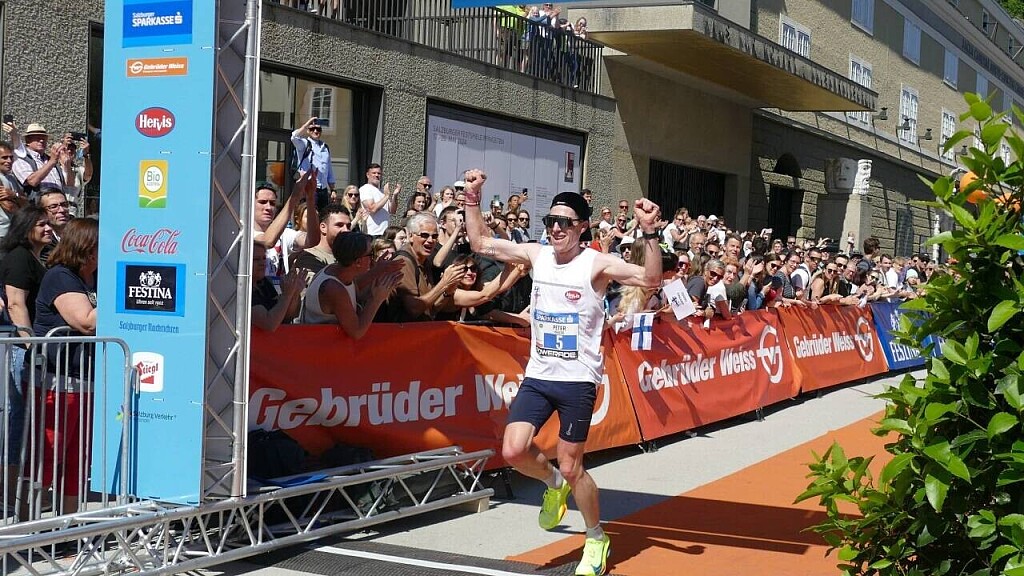
Herzog and Kovacs win Salzburg Marathon
The marathon specialist Peter Herzog from Saalfelden (Pinzgau), who has been active internationally for a long time, won the Salzburg Marathon on Sunday. The 36-year-old ran for the first time in his own state capital. The Hungarian Eva Kovacs won the women's event.
For his victory, Herzog needed two hours, 21 minutes and 46 seconds to cover the 42.2 kilometers. Shortly behind him, world-class runner Peter Wahome Murithi from Kenya crossed the finish line – just under a minute behind. Then nothing happened for a while. The Austrian Mahdi Sareban came third, almost 15 minutes behind Herzog.
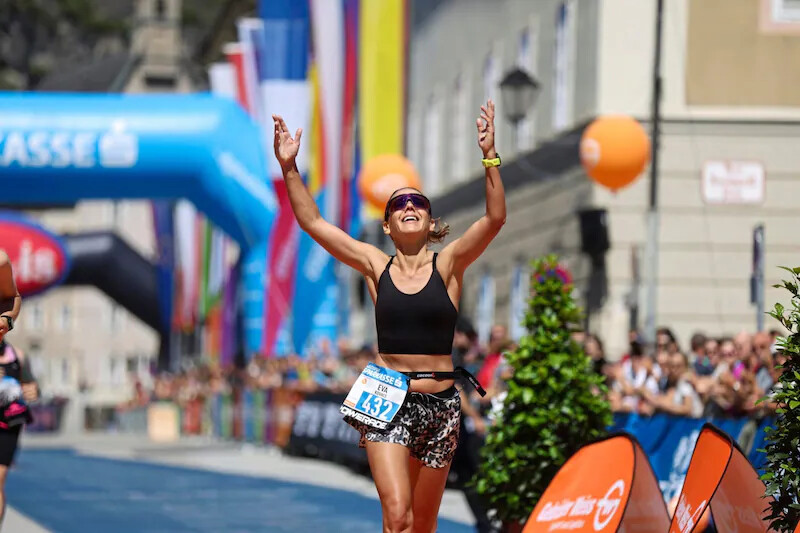
The Pinzgauer's song of praise for the route
The Saalfelden native said immediately after his arrival: “It went better than I could have hoped for. Time is totally irrelevant. The feeling was awesome. By the second round I already felt that I was no longer as fit as I was in Vienna. But the marathon feeling and the scenery were perfect. That’s exactly how I wanted it.”
Hungarian woman in front
In the women's race, Hungarian Eva Kovacs needed three hours, nine minutes and six seconds - ahead of Tyrolean triathlete Sabrina Exenberger, who arrived two minutes later. The German Eva Kiggen came third.
Login to leave a comment
Salzburg Marathon
The Salzburg Marathon is a marathon in Salzburg, Austria. First held in 2004 and organized by Club Run Austria. The program also includes a half marathon that has been held since 2001, a 10 km run, the "Get active" junior marathon and other competitions. Enjoy a special marathon-feeling while passing many of the best known sights of Mozart's hometown! The...
more...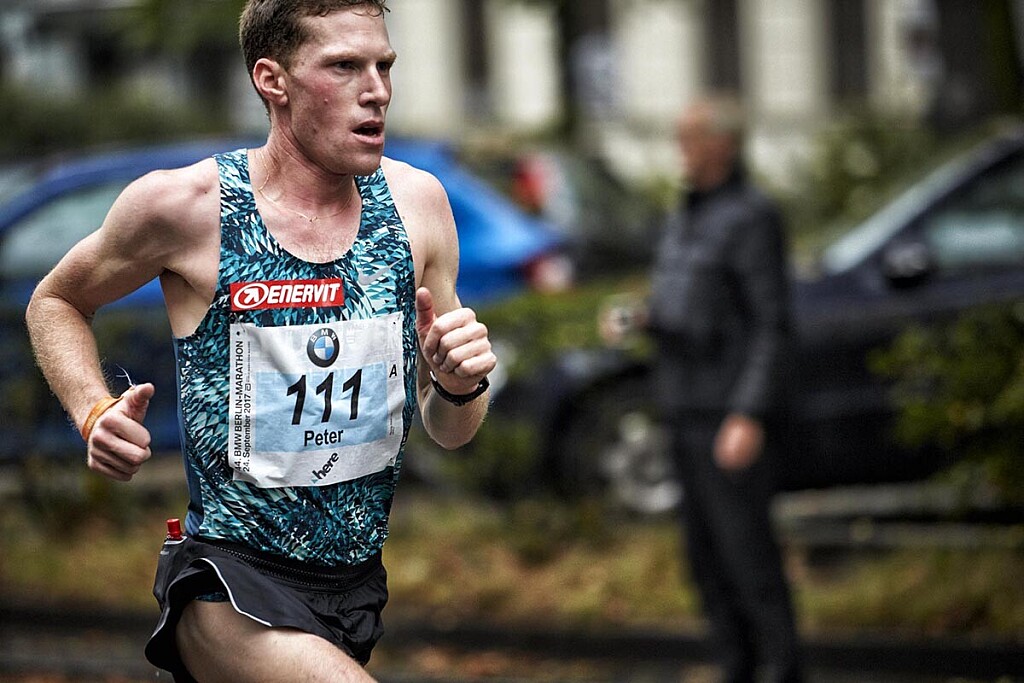
Salzburg prepares for duel between Murithi and Herzog
The Salzburg Marathon is ready for its 21st edition on Sunday, May 12th. A new starting area, the historic flair of the “Mozart City”, the participation of the Austrian national record holder and a truly international field with runners of 85 nationalities provide all the ingredients for an unforgettable event.
Austrian national record holder Peter Herzog and Kenyan Peter Wahome Murithi are the headliners in the marathon race. An exciting duel is on the cards. Herzog has a personal best of 2:10:06 from London 2020 and made a return to good shape this spring after a year and a half full of injuries. Murithi even ran 2:09:40 in Graz 2023, a time that has to remain unofficial, as this event was not registered in the World Athletics Global Calendar.
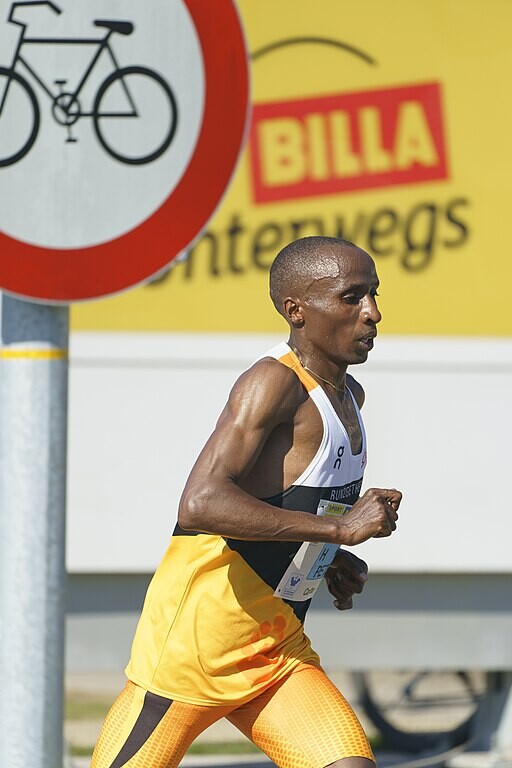
Both athletes are coming to Salzburg bringing their personal running experience from the recent Vienna City Marathon three weeks ago. Herzog made a fine comeback in 2:15:29 in Vienna, while Wahome was on course for a sub-2:10 time, but dropped out after 30 km due to health problems. He is now hoping to make the most of his second chance to achieve a good result in this spring marathon.
Local hero Peter Herzog explains: “It was a decision of desire, not necessarily one of logic. I have rediscovered my marathon euphoria and am delighted that I will be able to enjoy this special marathon feeling a second time.”
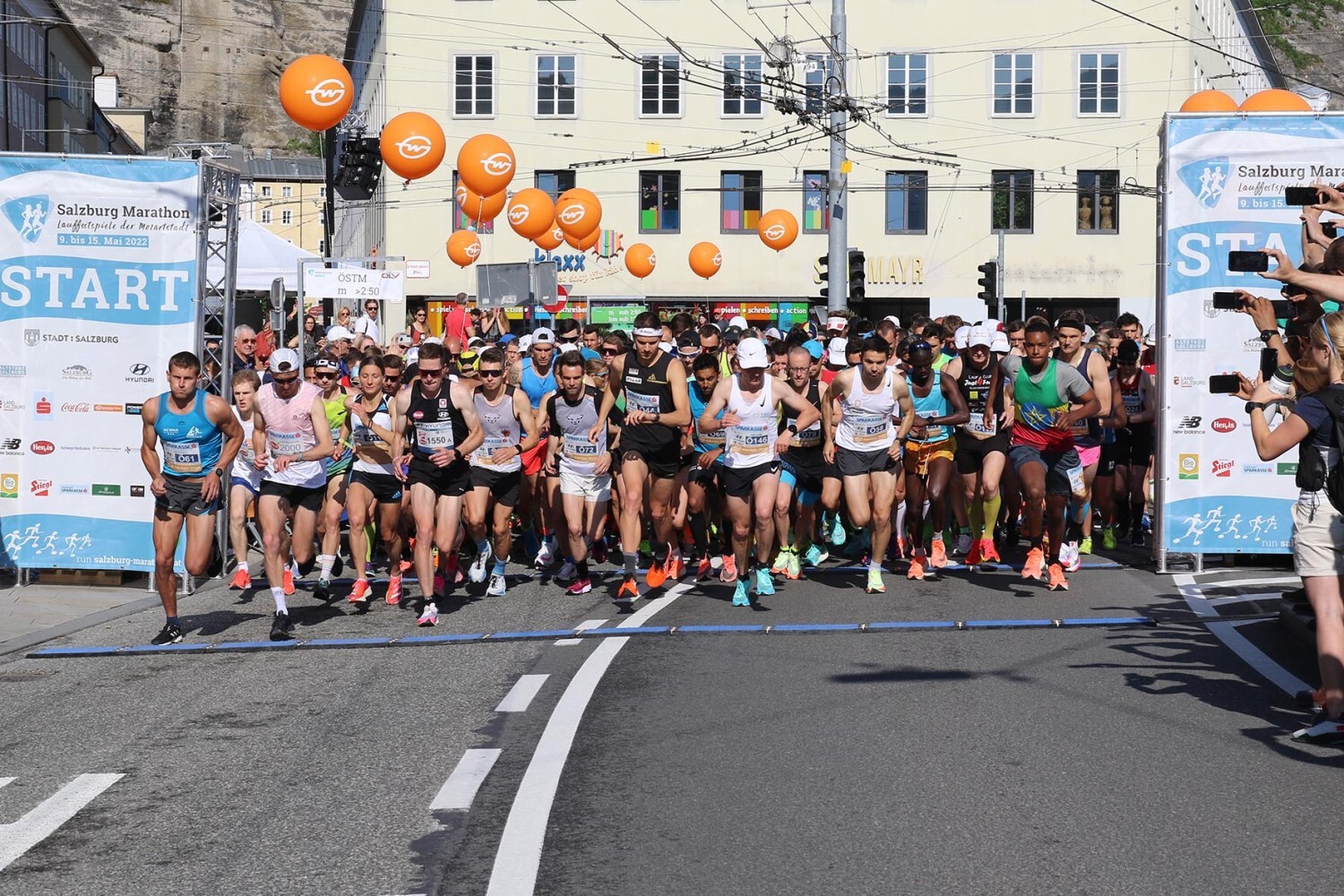
The marathon field will be sent off at a new start area on the “Staatsbrücke“ bridge with a great view on the historic city center and UNESCO World Heritage Site of Salzburg. “Over the past two decades, we have gradually put Salzburg on the international map of running and anchored it there. Today, we are an international event that attracts participants of 85 different nationalities from all over the world. Our aim is to ensure that they arrive in Salzburg with anticipation and a good feeling and return home with outstanding personal experiences“, say the race organizers.
Compared to previous years, the start has been brought forward by half an hour. This will give amateur runners in the marathon in particular the opportunity to run in the cooler morning hours for 30 minutes longer and 30 minutes less in the time when the highest temperatures of the day are expected.
Public transport to and from the race is available free of charge for all participants within the region of Salzburg on the day of their race. Salzburg Marathon is certified as an ecologically sustainable event by Austrian control authorities. Runners enjoy high quality organic food made from local products at the marathon village. The use of renewable materials and an integrated programme for the reduction of transports and natural resources is in place.
by AIMS
Login to leave a comment
Salzburg Marathon
The Salzburg Marathon is a marathon in Salzburg, Austria. First held in 2004 and organized by Club Run Austria. The program also includes a half marathon that has been held since 2001, a 10 km run, the "Get active" junior marathon and other competitions. Enjoy a special marathon-feeling while passing many of the best known sights of Mozart's hometown! The...
more...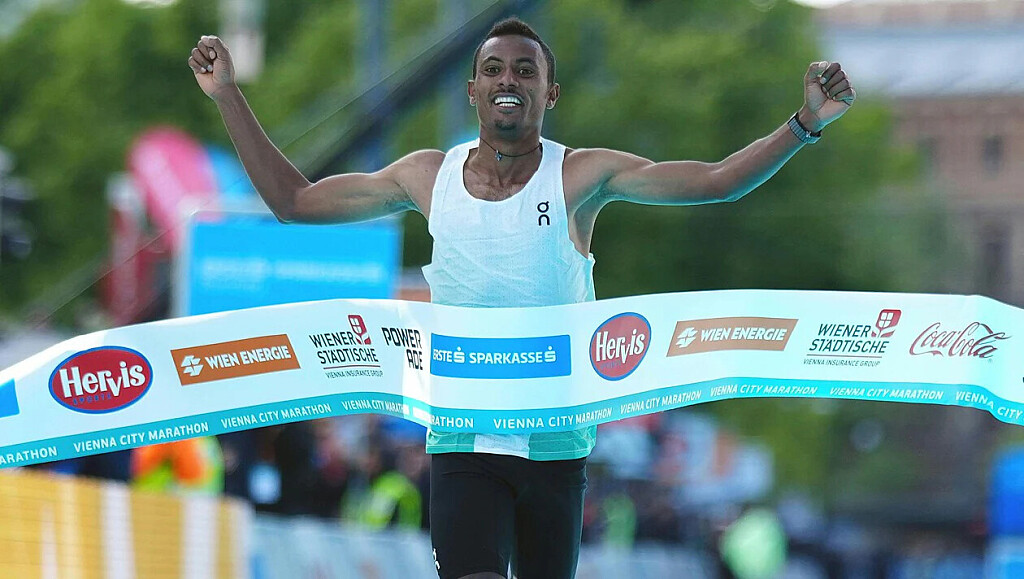
The 41st Vienna City Marathon was won by ethiopian Chala Regasa
The 41st Vienna City Marathon has its winner. The Ethiopian Chala Regasa won on Sunday in 2:06:35 hours. The best Austrian was Mario Bauernfeind, who crossed the finish line after 2:14:19 hours. Nazret Weldu triumphed in the women's race in 2:24:08.
Regasa secured the first Ethiopian VCM victory since 2015, when Sisay Lemma won in 2:07:31. Regasa himself had only competed in one marathon before that, finishing fifth in Rotterdam in April 2023 in 2:06:11. However, he had already been to Vienna in 2019 when he paced Eliud Kipchoge in his 1:59 "lab race" in 2019, including on parts of the VCM course. "I'm not here to hold back," Regasa said on Thursday - and put his plan into action.
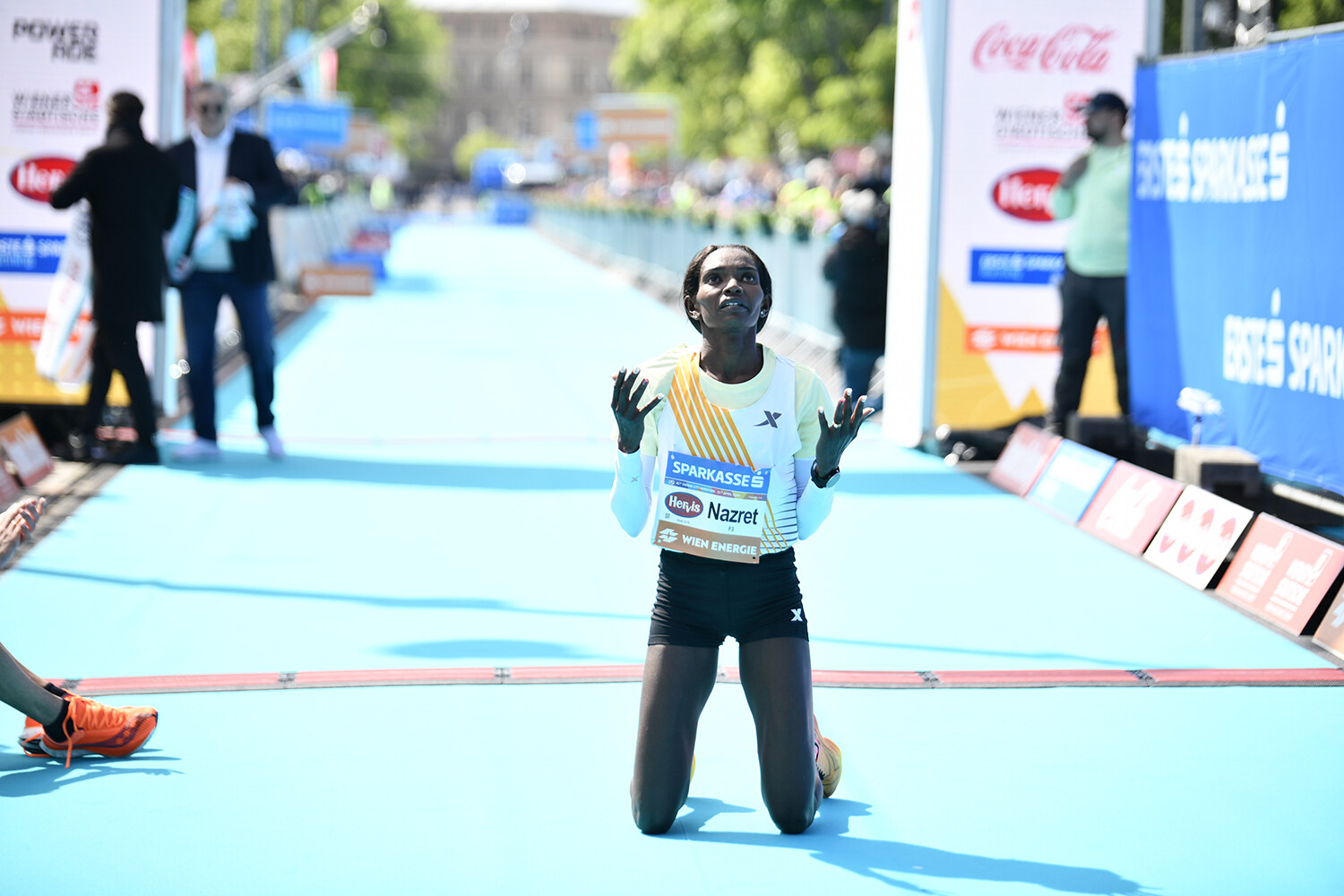
Bauernfeind beats HerzogIn the end, he had a huge lead of more than four minutes over the second-placed Kenyan Leonard Barsoton. Bauernfeind clearly won the duel with ÖLV record holder Peter Herzog for the best ÖLV athlete and was also ranked among the European leaders in this race. Herzog was a good minute behind his compatriot. "This is a dream come true for me," said a delighted Bauernfeind.
Mayer defies her periodJulia Mayer was unable to match her ÖLV record, but her performance was almost as impressive as the magnificent 2:26:43 in Valencia. "Unfortunately, I'm going through a difficult phase at the moment, I'm on my period," Mayer reported at the finish. "But I've already been able to prepare myself mentally for it. But it was a really good performance today and I'm proud of it." She finished tenth and second best European in 2:31:25. "That's also a respectable result."
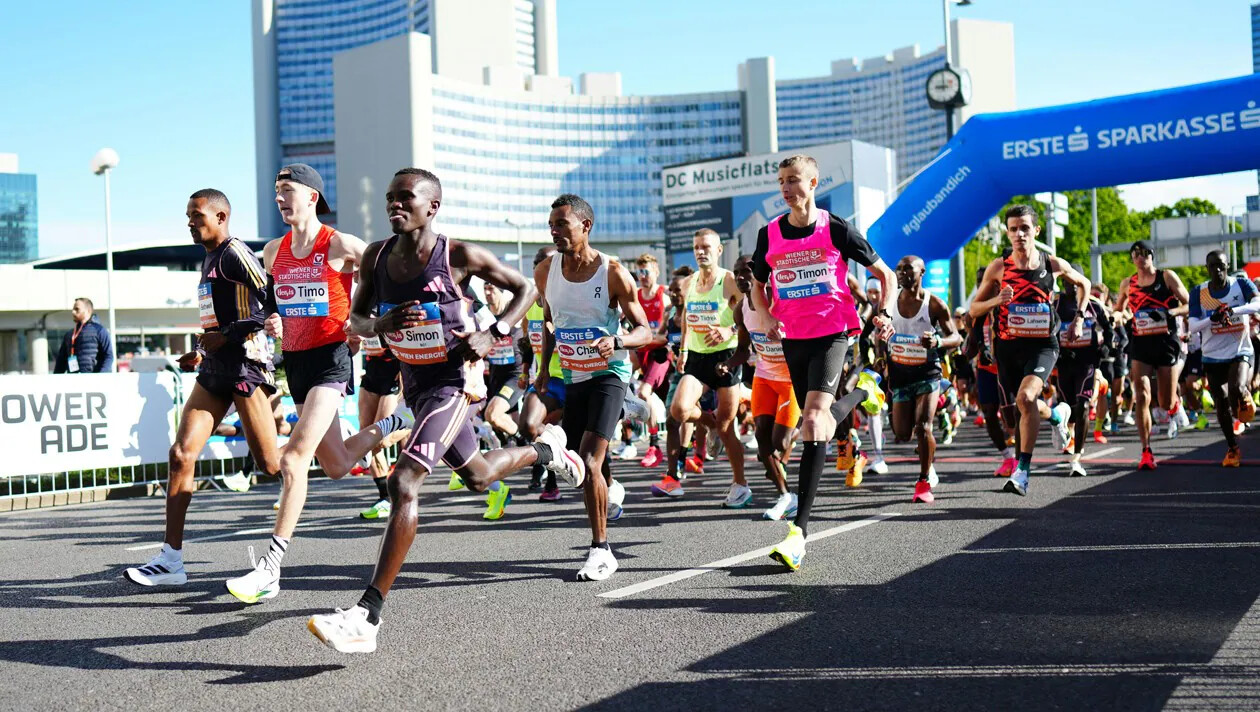
Austrian victoryThere was an Austrian victory in the half marathon. The 19-year-old Timo Hinterndorfer from Vienna ran with the marathon leaders and completed the distance in a new personal best time of 1:03:05 hours, just two seconds slower than the VCM leaders. Just two weeks ago, Hinterndorfer had won the Linz half marathon in 1:03:25. Timon Theuer in 1:05:45 and Thomas Messner in 1:06:29 completed an Austrian triple victory.
The race took place in better conditions than had been feared from the forecast. Even at the start area, the 35,000 athletes, including the side events, were greeted by sunshine, temperatures were in the low single digits and the wind was not as disruptive as expected.
by Nachrichten
Login to leave a comment
Vienna City Marathon
More than 41,000 runners from over 110 nations take part in the Vienna City Marathon, cheered on by hundreds of thousands of spectators. From the start at UN City to the magnificent finish on the Heldenplatz, the excitement will never miss a beat. In recent years the Vienna City Marathon has succeeded in creating a unique position as a marathon...
more...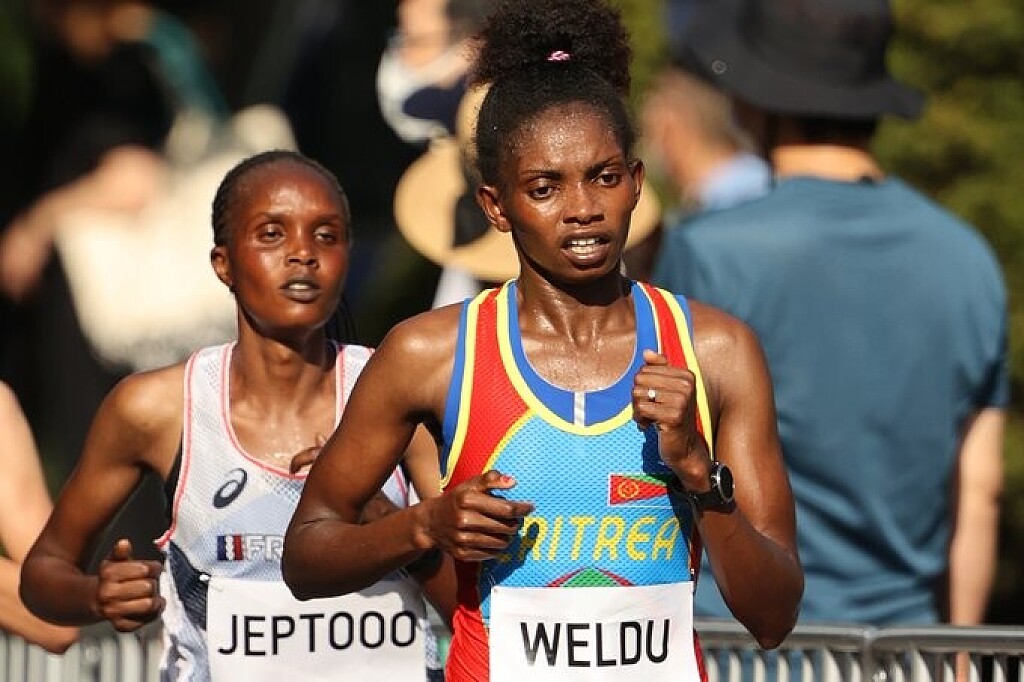
Eritrean runner Nazret Weldu wants to get to Paris via Vienna
Nazret Weldu intends to get to Paris via Vienna on Sunday. The Eritrean long distance runner is among a number of athletes who target a last minute qualification for the Olympic Games in August at the Vienna City Marathon.
Weldu is the favorite in the women’s race and could produce the first ever Eritrean victory in the history of Austria’s major road running event.
A total of over 42,000 runners have entered the 41st edition of the Vienna City Marathon. This is the third highest entry number of the event. For the first time since 2013 there are more than 10,000 marathon runners among them. The Vienna City Marathon is an Elite Label Road Race of World Athletics.
Nazret Weldu broke the national marathon record at the World Championships in Eugene in 2022 with 2:20:29. She placed fourth and missed the bronze medal by just eleven seconds. She was additionally unlucky since the qualifying period for the Olympic Games in Paris did not start until a few months later. Nazret Weldu ran two impressive marathons in 2023 as well, but somehow still did not achieve an Olympic qualifier. She was sixth in Boston with a fine 2:23:25. However this course is not record eligible, so World Athletics does not accept the Boston times for qualification. Next Nazret Weldu produced another very strong performance at the World Championships: In tremendous heat she finished eighth in Budapest – this time she was outside the 2:26:50 Olympic qualifying time with 2:27:23.
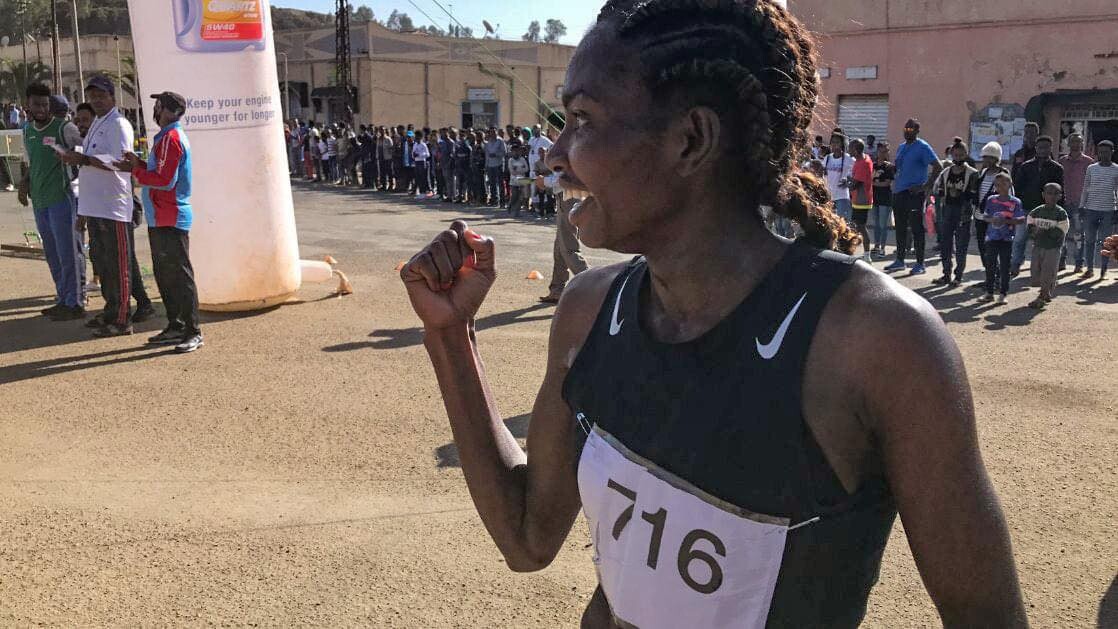
“I was fourth in the World Championships in 2022 and eighth in 2023 and still I am not qualified for the Olympic marathon this year in Paris,“ she said during Thursday’s press conference in Vienna. “But now I have the big chance to finally do it here in Vienna. My goal is to run a fast time on Sunday. I will see how it goes during the race. If there should be problems then I will make sure to run just fast enough to qualify for Paris,” explained Nazret Weldu, who trains in Ethiopia. “The reason for training in Addis is that I have a strong training group there.“ Among her training partners is Ethiopia’s 2022 World Champion Gotytom Gebreslase who was runner-up in Budapest last year.
While fellow Eritrean Dolshi Tesfu had to cancel her start in Vienna due to visa problems the strongest challenge for Nazret Weldu will probably come from two Kenyans: Shyline Torotich won the Enschede Marathon last year with a personal best of 2:22:45. The personal record of Rebecca Tanui is in a similar time range. She took the San Sebastian Marathon in 2022 with 2:23:09 and has the advantage of knowing the course in Vienna. A year ago she was fourth here with 2:26:34 when there were warm conditions.
“Last year I was unlucky since I was injured two weeks before the race. During training a motorcycle hit me from behind. This year I am fine,” said Rebecca Tanui. “For me the cooler conditions forecasted now are better than the warm weather we had last year. So I hope to run a PB on Sunday.“
Namibia’s Helalia Johannes is the fastest woman on the start list with a personal best of 2:19:52. The 43 year-old is not expected to join the first group which is likely to run roughly a 2:22 pace. However she will be among those runners who target the Olympic qualifying time of 2:26:50. Jovana de la Cruz Capani of Peru will probably join this group as well. To be among the three fastest runners of her country during the qualifying period she needs to improve her PB of 2:26:49 by just three seconds.
With a surprise improvement to 2:26:43 in Valencia last year Austria’s Julia Mayer has achieved the Olympic qualifying time. “I am ready to go on Sunday, it is a home game for me. I don’t expect to run a PB, but the goal is to achieve a very good place,“ said Mayer.
Kenyans Faith Chepkoech and Winny Kosgei are part of this year’s “OPEC Fund Rookie Team” in Vienna. They will both run their marathon debuts on Sunday.
by AIMS
Login to leave a comment
Vienna City Marathon
More than 41,000 runners from over 110 nations take part in the Vienna City Marathon, cheered on by hundreds of thousands of spectators. From the start at UN City to the magnificent finish on the Heldenplatz, the excitement will never miss a beat. In recent years the Vienna City Marathon has succeeded in creating a unique position as a marathon...
more...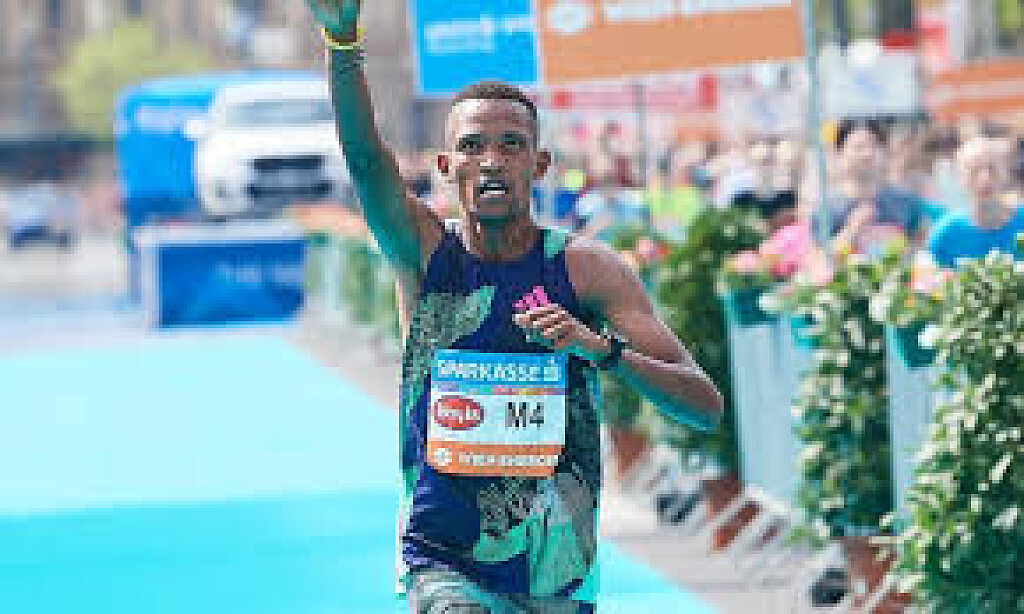
Bethwell Yegon and Chala Regasa head start list in Vienna
Bethwell Yegon returns to the Vienna City Marathon where he was runner-up in unusually warm conditions last year. The Kenyan hopes to go one better this time and win his first marathon on 21st April. He will be challenged by Ethiopia’s Chala Regasa, who is also targeting a first major marathon triumph.
Both athletes have personal bests of slightly over 2:06 and head the competitive men’s field of the Vienna City Marathon. Over a dozen athletes on the current start list have personal records of sub 2:10 and a number of them hope to qualify for the Olympic marathon in Paris this summer.
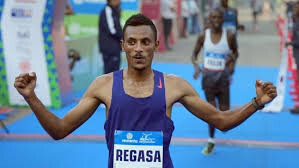
With over 40,000 entries the Vienna City Marathon is Austria’s biggest one-day sporting event and the only road race in the country that features a World Athletics Elite Label. The figure includes entries for shorter races staged parallel to the marathon.
Bethwell Yegon ran a stunning marathon race in Berlin in 2021, when he came from far behind, overtook Ethiopia’s superstar Kenenisa Bekele and almost challenged for victory in the final stages. Yegon finished second and improved his personal best by more than two minutes to 2:06:14. This remains the fastest time of the 31 year-old who trains in Iten, the heart of Kenyan long distance running. “I am happy to return to Vienna and my goal is to fight for victory and take a place on the podium. Hopefully the weather conditions will be fine and there will be a strong group to run with,” said Bethwell Yegon, who clocked 2:06:57 a year ago, which is the fifth fastest time ever run in the history of the Vienna City Marathon.
Chala Regasa has already run on Vienna’s roads as well, though in a different role. The 26 year-old Ethiopian was part of the pacemaking team that supported Eliud Kipchoge when he sensationally broke the two hour marathon barrier in 2019. It was a year ago when Regasa finally ran his marathon debut in Rotterdam with a fine 2:06:11 for fifth place. With this time he is currently the fastest runner in the field. Vienna will be his second marathon and his strong half marathon PB of 59:10 suggests that there is some room for improvement. His biggest career win so far came in the New Delhi Half Marathon in 2022, where Regasa clocked 60:30 and beat a strong field.
Felix Kibitok is another runner who features both, a personal best of sub 2:06:30 and a very fast half marathon PB. The Kenyan was fifth in Barcelona in 2022 with 2:06:28 and achieved 59:08 in the Prague Half Marathon back in 2019. On two more occasions Kibitok ran sub one hour half marathon times. Samsom Amare from Eritrea, who won his marathon debut in Abu Dhabi in 2023 with 2:07:10 and was ninth at the World Half Marathon Championships in 2023, plus Kenyans Albert Kangogo (2:07:48) and Leonard Barsoton (2:09:06) could well challenge for a place on the podium as well.
The Vienna City Marathon is one of the last few races during the second half of April giving athletes a chance to qualify for the Olympic Games’ marathon in Paris this summer. The official qualifying time is 2:08:10 and the qualifying window shuts on 30th April. There are a number of athletes who will try to fulfill their Olympic dream in Vienna: Belgium’s Lahsene Bouchikhi has a personal best of 2:08:36 from Valencia last year while Daniel Paulus is the national record holder of Namibia. He clocked 2:08:40 in his debut in Daegu, South Korea, in 2023. Juan Pacheco from Mexico is also expected to try to qualify for Paris. He has a personal record of 2:09:45 while Tiidrek Nurme from Estonia has run 2:10:02.
The Vienna City Marathon will also be hosting the Hungarian national marathon championships for the second time in a row. Around 40 of the best athletes from the neighbouring country will come to Vienna to determine their champions.
by AIMS
Login to leave a comment
Vienna City Marathon
More than 41,000 runners from over 110 nations take part in the Vienna City Marathon, cheered on by hundreds of thousands of spectators. From the start at UN City to the magnificent finish on the Heldenplatz, the excitement will never miss a beat. In recent years the Vienna City Marathon has succeeded in creating a unique position as a marathon...
more...
How Little Strength Training Can You Get Away With?
To be a maximalist, you must first be a minimalist. That's an aphorism I first heard from Michael Joyner, the Mayo Clinic physiologist and human performance expert, and it resonates. To truly reach your potential in one or a few areas, you have to be disciplined about all the other ways in which you could fritter away your valuable time and energy. Excellence requires tough choices.
All this is to say that when it comes to strength training, I'm not ashamed to admit that my number one question is, "How little can I get away with?" I'm convinced that strength training has important benefits for health and performance, and I recognize that lifting heavy things can be a source of meaning and self-mastery. But I've got miles to run before I sleep and, metaphorically, a bunch of errands to run before my kids get home, so a recent review in Sports Medicine caught my eye. An international group of researchers, led by David Behm of Memorial University of Newfoundland and Andreas Konrad of Graz University in Austria, sum up the existing research on minimalist resistance training: how low can you go and still get meaningful gains in strength and fitness?

For starters, let's acknowledge that making meaningful gains is not the same as optimizing or maximizing your gains. There's a general pattern in the dose-response functions of various types of exercise: doing a little bit gives you the biggest bang for your buck, but adding more training leads to steadily diminishing returns (and eventually, for reasons that aren't as obvious as you might think, a plateau). Those diminishing returns are worth chasing if you're trying to maximize your performance. But if your goal is health, more is not necessarily better, as we'll see below.
In a perfect world, you'd like to see a systematic meta-analysis of all the literature on minimalist strength training, meaning that you'd pool the results of all the different studies into one big dataset and extract the magic training formula. Unfortunately, the resistance training literature is all over the map: different types of strength training, study subjects with different characteristics and levels of experience, different ways of measuring the outcome. That makes it impossible to meaningfully combine them in one dataset. Instead, Behm and Kramer settled for a narrative review, which basically means reading everything you can find and trying to sum it up.
Their key conclusion is that "resistance training-hesitant individuals" can get significant gains from one workout a week consisting of just one set of 6 to 15 reps, with a weight somewhere between 30 and 80 percent of one-rep max, preferably with multi-joint movements like squats, deadlifts, and bench press. That's strikingly similar to a minimalist program I wrote about a couple of years ago: that one involved a single weekly set of 4 to 6 reps, but the lifting motions were ultra-slow, which heightens the stimulus. You don't even necessarily have to lift to failure, though you probably need to get within a couple of reps of it.
The data that Behm and Kramer looked at came from studies that typically lasted 8 to 12 weeks. One of the unanswered questions is whether such a minimalist program would keep producing gains on a longer timeframe. You'd clearly need to continue increasing the weight you lift to ensure that you're still pushing your body to adapt. But do you reach a point where further progress requires you to increase the number of sets, or the number of workouts per week? Maybe-but it's worth recalling that we're not trying to maximize gains here, we're just trying to achieve some hazily defined minimum stimulus. For those purposes, the evidence suggests running through a rigorous full-body workout once a week is enough to maintain a minimum level of muscular fitness.
There's another, less obvious angle to minimalist strength training that researchers continue to grapple with. Duck-Chul Lee of Iowa State and I-Min Lee of Harvard, both prominent epidemiologists, published a recent review in Current Cardiology Reports called "Optimum Dose of Resistance Exercise for Cardiovascular Health and Longevity: Is More Better?"
The question echoes a debate that flared up a decade or so ago about whether too much running is bad for you, in which Duck-Chul Lee played a key role. Back in 2018, he also published a study of 12,500 patients from the Cooper Clinic in Dallas which found that those who did resistance training were healthier-but that the benefits maxed out at two workouts a week, and were reversed beyond about four workouts a week. At the time, I assumed the result was a fluke. But the new article collects a larger body of evidence to bolster the case. The newer data suggests that about an hour of strength training a week maximizes the benefits, and beyond two hours a week reverses them. Lee and Lee hypothesize that too much strength training might lead to stiffer arteries, or perhaps to chronic inflammation.
Now, when Duck-Chul Lee and others produced data suggesting that running more than 20 miles a week is bad for your health, I was brimming with skepticism and went over the data with a fine-tooth comb. I'm similarly cautious about these new results, and have trouble believing that there's anything unhealthy about doing three weekly strength workouts. But they do put the idea of minimalist strength training in a different light. Maybe you're not maximizing strength or muscle gains, but it's possible that you're optimizing long-term health-especially if the reason you only hit the gym once or twice a week is that you're too busy hitting the trails.
by trail runner magazine
Login to leave a comment
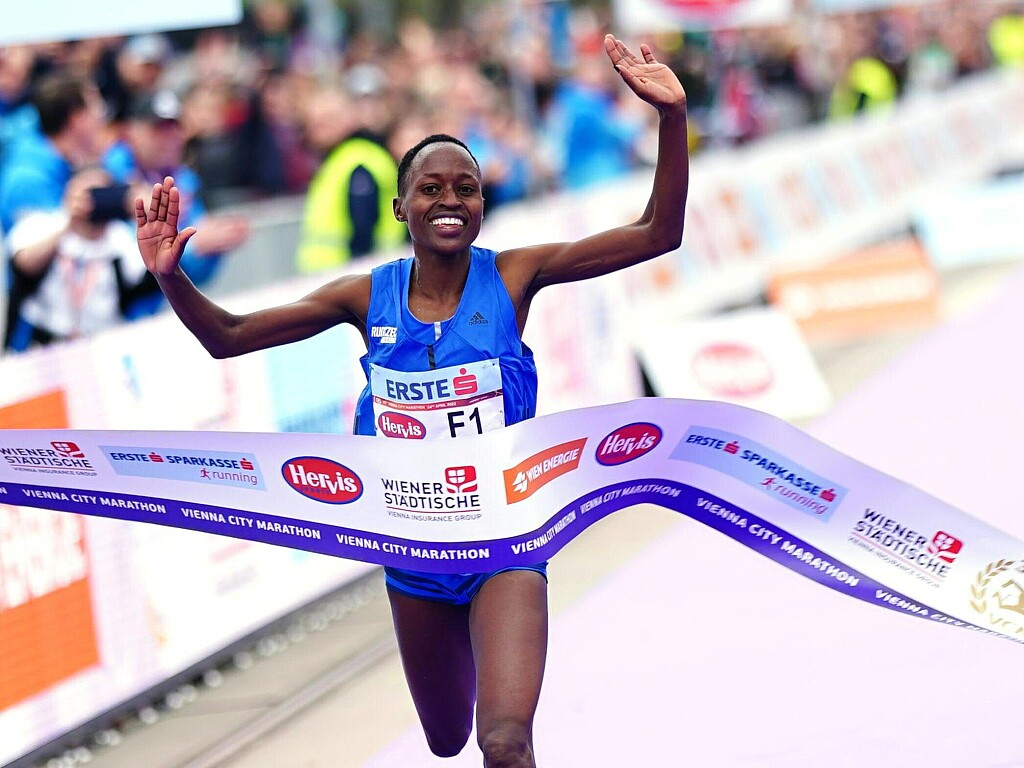
Kenyans Leonard Langat and Vibian Chepkirui will return to defend their Vienna Marathon titles
Kenyans Leonard Langat and Vibian Chepkirui will return to defend their Vienna Marathon titles, while there are three men on the start list who have broken 2:06 and five women featuring personal bests of sub 2:25.
With regard to these personal records it will be strongest line-up in the history of the Vienna City Marathon which will see its 39th edition next week. Including races at shorter distances more than 31,000 runners have registered for Austria’s biggest running event, a World Athletics Marathon Label Road Race.
Kifle had a fine year in 2021: He was third in Enschede, 14th in the Olympic marathon in Sapporo and then 6th in Valencia, where he ran his PB. With his personal record the Eritrean is a little faster than Vienna’s course record of 2:05:41 by Ethiopia’s Getu Feluke in 2014.
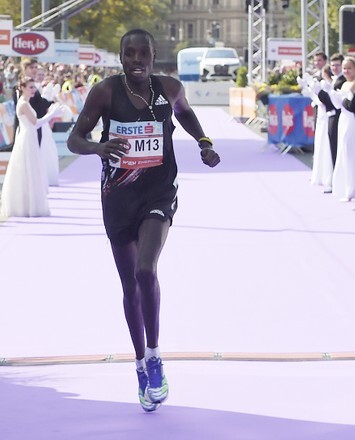
Abdi Fufa of Ethiopia is the third athlete in Vienna’s line-up who has run sub 2:06. A year ago he was second in Siena’s elite only race with 2:05:57.
It looks a tough task for Leonard Langat to defend his title in the Austrian capital. The Kenyan improved to 2:09:25 in Vienna last September. But with this PB he is only the eighth fastest athlete on the start list.
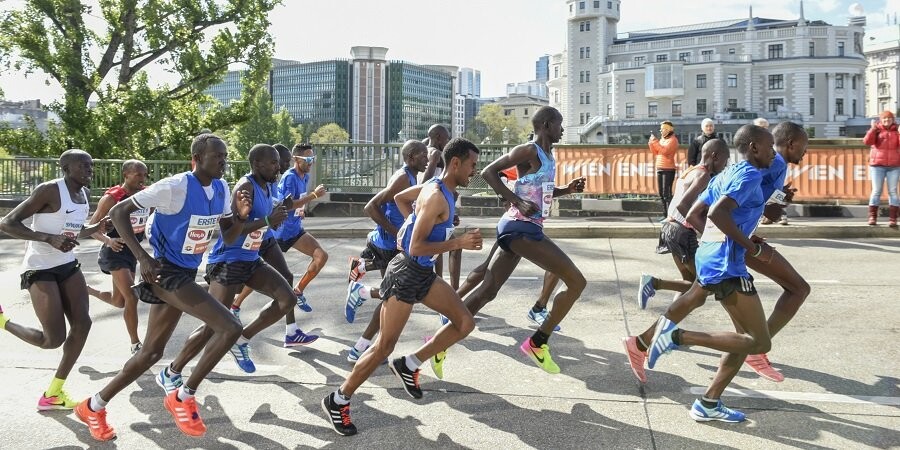
Unfortunately there were a number of cancellations from elite runners recently. Among them are Mekuant Ayenew and fellow-Ethiopian Derara Hurisa, who had originally crossed the line first in last year’s Vienna City Marathon. However he then had to be disqualified for wearing illegal racing shoes and Leonard Langat became the winner.
The fastest runner on the women’s start list is Caroline Kilel, who ran 2:22:34 when she took the Frankfurt Marathon back in 2013. While the Kenyan did not reach these sort of times recently there are other athletes who showed promising last year.
Defending champion Vibian Chepkirui may only be number five on the list with her PB of 2:24:29. However she did run this time last September in Vienna in very warm conditions.
Afterwards the Kenyan said that she could have been at least two minutes faster in more suitable conditions. Chepkirui could be capable of attacking the course record of fellow-Kenyan Nancy Kiprop who was the winner in 2019 with 2:22:12.
Kenya’s Ruth Chebitok and Ethiopia’s Sifan Melaku are number two and three on Vienna’s start list with PBs of 2:23:29 and 2:23:49 respectively.
Sheila Jerotich of Kenya is a contender for victory as well. She took the Istanbul Marathon in November, improving to 2:24:15.
“We are very happy that we were able to surpass the mark of 30,000 entries. Compared to our comeback race in September 2021 this is a nice step forward. We feel the enthusiasm of the runners,“ said Kathrin Widu, the General Manager of the Vienna City Marathon.
There has never been an Eritrean winner in the history of the Vienna City Marathon which had its first edition back in 1984. This may change next week though since the two fastest entrants are from this country: Goitom Kifle and Oqbe Kibrom feature personal bests of 2:05:28 and 2:05:53 respectively.
by ATAF
Login to leave a comment
Vienna City Marathon
More than 41,000 runners from over 110 nations take part in the Vienna City Marathon, cheered on by hundreds of thousands of spectators. From the start at UN City to the magnificent finish on the Heldenplatz, the excitement will never miss a beat. In recent years the Vienna City Marathon has succeeded in creating a unique position as a marathon...
more...
Eritrean duo might eye two records at once in Vienna
Eritrean duo Nazret Weldu and Dolshi Tesfu head the current women’s start list of the Vienna City Marathon on 21st April, race organizers have announced.
Weldu and Tesfu, who are by some distance the fastest Eritrean women marathon runners in history, may be challenged by Kenyans Shyline Toroitich and Rebecca Tanui. There are hopes that the 41st edition of Austria’s major road race will see an attempt to break the course record, which currently stands at 2:20:59.
Including races at shorter distances, the organizers of the Vienna City Marathon expect to register over 40,000 entries for the 41st edition. Around 10,000 of them will be marathon runners. The Vienna City Marathon is a World Athletics Elite Label Road Race.
It took 19 years until the women’s course record of Italy’s late Maura Viceconte was finally broken in the Austrian capital in 2019. Kenya’s Nancy Kiprop improved the mark to 2:22:12. However Kiprop’s time lasted much shorter than Viceconte’s. In 2022 fellow-Kenyan Vibian Chepkirui clocked 2:20:59.
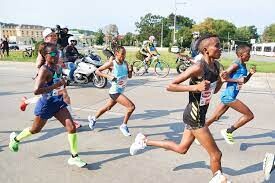
Nazret Weldu and Dolshi Tesfu have both already run faster than Vienna’s course record: 34 year-old Weldu clocked a national record of 2:20:29 when she took a very strong fourth place in the World Championships’ Marathon in Eugene in 2022. She won the Daegu Marathon in South Korea with 2:21:56 in the same year and then placed sixth in Boston in 2023 with 2:23:25. Competing in a hot World Championships’ race in Budapest last summer Weldu finished eighth with 2:27:23. Despite this series of strong performances Nazret Weldu still has not achieved the Olympic qualifying standard for Paris. She will want to make sure in Vienna that she runs fast enough to get into the Olympic race.
Dolshi Tesfu features a personal best of 2:20:40. The 24 year-old, who is just 1.56 m tall and weighs just 42 kg, ran this time in her debut marathon when she finished ninth in Valencia in 2022. During the race Dolshi Tesfu ran the first half in 68:53, which is by far the fastest half marathon time ever run by an Eritrean woman. Dolshi Tesfu then showed fine performances in her two marathons in 2023 as well: First she was runner-up in Rotterdam with 2:21:35 and then she finished 10th in a hot World Championships’ marathon in Budapest in August. She is already qualified for the Olympic marathon.
When Weldu and Tesfu will come to Vienna for the first time they could attack two records in one go: While the course record stands at 2:20:59 for the two athletes the national record of 2:20:29 would probably be even more significant.
There is an athlete on the start list with a sub 2:20 PB, but at the age of 43 Helalia Johannes is not expected to challenge for victory. The Namibian ran 2:19:52 in 2020 and holds the masters world record since then.
Two Kenyan women could be the main challengers for Weldu and Tesfu: Shyline Toroitich and Rebecca Tanui both know how to win a city marathon. Toroitich took the Enschde Marathon last year with a personal best of 2:22:45 while Tanui was the winner of the San Sebastian Marathon in 2022 with a PB of 2:23:09 and then also won in Venice last autumn. Tanui will have the advantage of knowing the course of the Vienna City Marathon since she was fourth here last year with 2:26:34 in warm weather conditions.
For Andrea Ramirez Limon the Vienna City Marathon presents the last chance to achieve qualification for the Olympic Games’ marathon this summer. The Mexican has a personal best of 2:26:34. However she ran this back in 2020, so it does not count as an Olympic qualifier for Paris. While the qualifying time is 2:26:50, Andrea Ramirez Limon would need a faster time to succeed since the Olympic race will have a limit of 80 starters.
Austria’s record holder Julia Mayer has achieved qualification since she was among the 64 pre-qualified athletes at the end of January with her PB of 2:26:43. She will be among a group of runners who target the Olympic qualifying standard.
by AIMS
Login to leave a comment
Vienna City Marathon
More than 41,000 runners from over 110 nations take part in the Vienna City Marathon, cheered on by hundreds of thousands of spectators. From the start at UN City to the magnificent finish on the Heldenplatz, the excitement will never miss a beat. In recent years the Vienna City Marathon has succeeded in creating a unique position as a marathon...
more...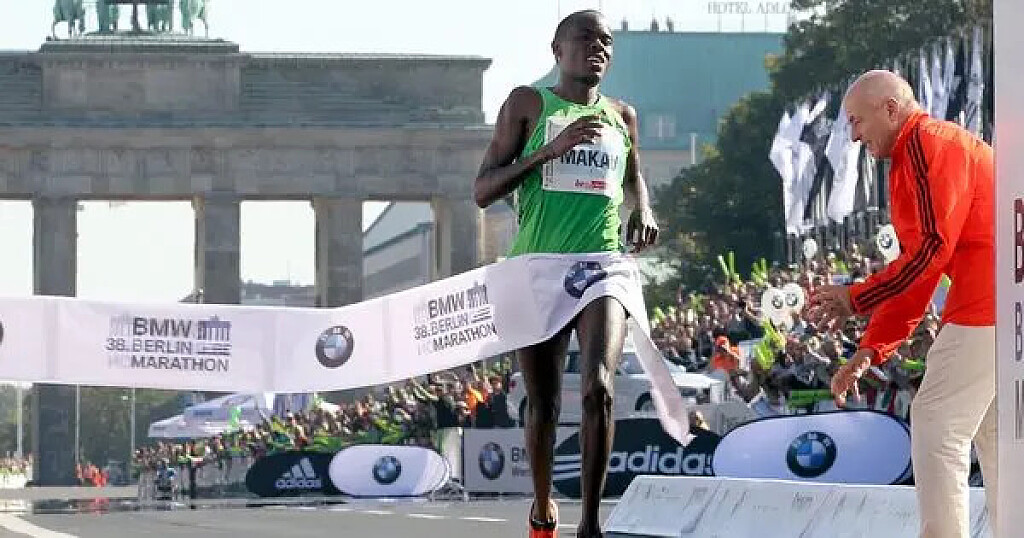
Patrick Makau believes current generation of athletes can run under 2 hours
Former world marathon record holder Patrick Makau believes the current generation of athletes in the country will soon run under two hours in the marathon.
The 38-year-old is also notable for his half marathon performances, having won several prominent competitions in Europe in sub-1-hour performances.
Some of the races include the Berlin Half Marathon in 2007, where he clocked 58:56 hours.
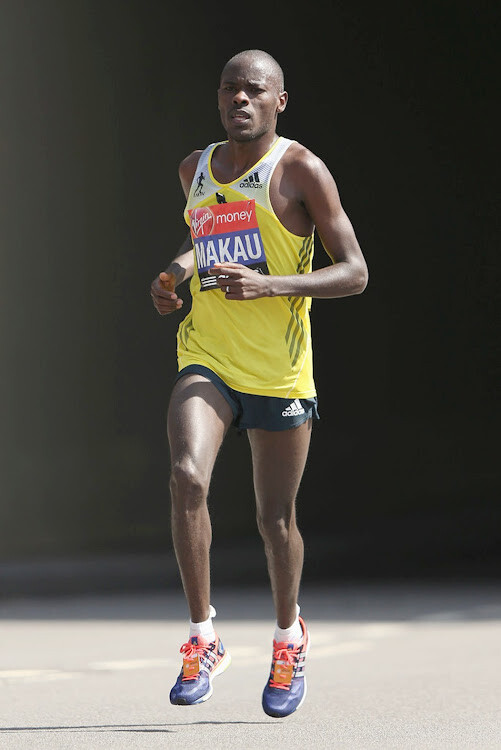
Marathons had changed a lot due to technology and were far better than the marathons they ran during his time.
“As I see it, the marathons have changed a lot because it is not like the olden times. We used to view sub-two hours as something unattainable but now with the current crop of athletes like the current world record holder Kevin Kiptum and two-time Olympic champion Eliud Kipchoge, this looks like a possibility,” he noted.
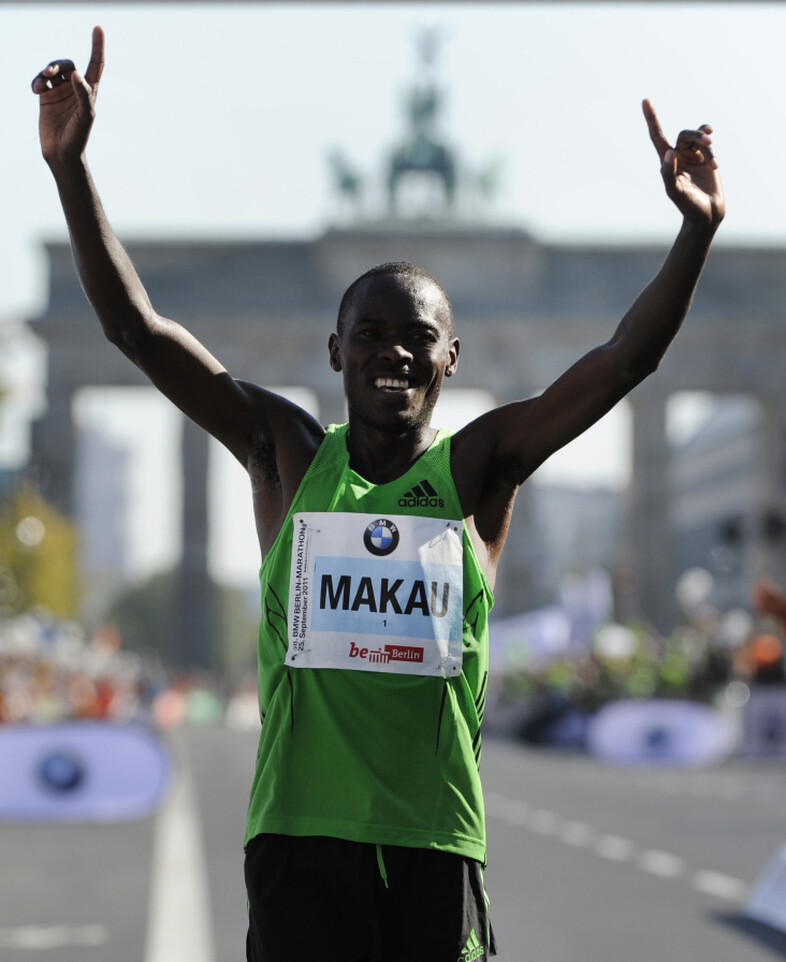
The signs of an athlete running a marathon in under two hours are already evident if Kipchoge and Kiptum's recent performances are anything to go by.
In an unofficial race in Vienna, Austria in 2019, Kipchoge became the first person ever to run a marathon in under two hours, clocking 1:59.40 during the INEOS 1:59 Challenge.
Regarded as one of the greatest marathoners of all time, Kipchoge was the world record holder in the marathon then with a time of 2:01:09 set at the 2022 Berlin. His mark was later broken by Kiptum at the Chicago Marathon on October 8, 2023, when he clocked 2:00:35.
The 24-year-old Kiptum is currently the only person in history to run the marathon in under two hours and one minute in a record-eligible race.
Kiptum has won all three of the major marathons he has entered between December 2022 and October 2023 with three of his times among the six fastest in history. Makau revealed that hard work and endurance were the key for him to break the world record in 2011.
“I used to go to train in Iten and Machakos and to the polishing in Ngong. This is because speed work and build-up are two different programs,” Makau noted.
Makau encouraged athletes to find a training routine that would enable them to run a sub-two-hour marathon shortly.
“What Kiptum, Kipchoge and the other athletes can do now is to find the pace that will be able to help them run a sub-two-hour marathon shortly,” he added.
The duo currently occupy the top two positions in the world marathon ranking. Ethiopians Kenenisa Bekele (2:01.41), Sisay Lemma (2:01.48 hrs), Birhanu Legese (2:02.48 hrs) and Mosinet Geremew (2:02.55 hrs) follow in that order.
The former world record holder, who currently trains the Kenya Police team and other athletes, also cited technology, especially in running shoes as a reason behind the fastest times being witnessed.
“During our time, there was not as much technology as we were accustomed to normal shoes. In today’s era, running shoe technology plays a key role in determining the pace in a particular race,” he said.
Innovations in Running Shoe Technology mean shoes are now lighter, more dynamic, and more resilient, thanks to advancements in foams, rubbers, construction, textiles, and other essential components.
Kipchoge's performances during the INEOS 1:59 challenge opened the world's eyes to the condensed foam, carbon-plated super shoes which Nike claimed could increase running efficiency and in particular the amount of oxygen consumed per minute by by 4 percent.
Makau is optimistic the young athletes under his wings will also go further and make not only him but also the country proud. He said he is looking forward to the national trials in April to see if they get selected.
“We have intensified training in both Machakos and Kitui camps and I am hopeful. I am waiting for the trials in April to see if they will be able to represent Kenya at the Paris 2020 Olympic Games,” he said.
He also tipped Kenya to once again dominate the marathon at the Olympic Games slated for July 26 to August 11.
“I am sure Kipchoge, Kiptum, Peres Jepchirchir and Ruth Chepng'etich will represent the country well in the marathon at the Olympics,” he asserted.
by Teddy Mulei
Login to leave a comment
How Little Strength Training Can You Get Away With?
To be a maximalist, you must first be a minimalist. That's an aphorism I first heard from Michael Joyner, the Mayo Clinic physiologist and human performance expert, and it resonates. To truly reach your potential in one or a few areas, you have to be disciplined about all the other ways in which you could fritter away your valuable time and energy. Excellence requires tough choices.
All this is to say that when it comes to strength training, I'm not ashamed to admit that my number one question is "How little can I get away with?" I'm fully convinced that strength training has important benefits for health and performance, and I recognize that lifting heavy things can be a source of meaning and self-mastery. But I've got miles to run before I sleep and, metaphorically, a bunch of errands to run before my kids get home, so a recent review in Sports Medicine caught my eye. An international group of researchers, led by David Behm of Memorial University of Newfoundland and Andreas Konrad of Graz University in Austria, sum up the existing research on minimalist resistance training: how low can you go and still get meaningful gains in strength and fitness?

For starters, let's acknowledge that making meaningful gains is not the same as optimizing or maximizing your gains. There's a general pattern in the dose-response functions of various types of exercise: doing a little bit gives you the biggest bang for your buck, but adding more training leads to steadily diminishing returns (and eventually, for reasons that aren't as obvious as you might think, a plateau). Those diminishing returns are worth chasing if you're trying to maximize your performance. But if your goal is health, more is not necessarily better, as we'll see below.
In a perfect world, you'd like to see a systematic meta-analysis of all the literature on minimalist strength training, meaning that you'd pool the results of all the different studies into one big dataset and extract the magic training formula. Unfortunately, the resistance training literature is all over the map: different types of strength training, study subjects with different characteristics and levels of experience, different ways of measuring the outcome. That makes it impossible to meaningfully combine them in one dataset. Instead, Behm and Kramer settled for a narrative review, which basically means reading everything you can find and trying to sum it up.
Their key conclusion is that "resistance training-hesitant individuals" can get significant gains from one workout a week consisting of just one set of 6 to 15 reps, with a weight somewhere between 30 and 80 percent of one-rep max, preferably with multi-joint movements like squats, deadlifts, and bench press. That's strikingly similar to a minimalist program I wrote about a couple of years ago: that one involved a single weekly set of 4 to 6 reps, but the lifting motions were ultra-slow, which heightens the stimulus. You don't even necessarily have to lift to failure, though you probably need to get within a couple of reps of it.
The data that Behm and Kramer looked at came from studies that typically lasted 8 to 12 weeks. One of the unanswered questions is whether such a minimalist program would keep producing gains on a longer timeframe. You'd clearly need to continue increasing the weight you lift to ensure that you're still pushing your body to adapt. But do you reach a point where further progress requires you to increase the number of sets, or the number of workouts per week? Maybe-but it's worth recalling that we're not trying to maximize gains here, we're just trying to achieve some hazily defined minimum stimulus. For those purposes, the evidence suggests running through a rigorous full-body workout once a week is enough to maintain a minimum level of muscular fitness.
There's another, less obvious angle to minimalist strength training that researchers continue to grapple with. Duck-Chul Lee of Iowa State and I-Min Lee of Harvard, both prominent epidemiologists, published a recent review in Current Cardiology Reports called "Optimum Dose of Resistance Exercise for Cardiovascular Health and Longevity: Is More Better?"
The question echoes a debate that flared up a decade or so ago about whether too much running is bad for you, in which Duck-Chul Lee played a key role. Back in 2018, he also published a study of 12,500 patients from the Cooper Clinic in Dallas which found that those who did resistance training were healthier-but that the benefits maxed out at two workouts a week, and were reversed beyond about four workouts a week. At the time, I assumed the result was a fluke. But the new article collects a larger body of evidence to bolster the case. The newer data suggests that about an hour of strength training a week maximizes the benefits, and beyond two hours a week reverses them. Lee and Lee hypothesize that too much strength training might lead to stiffer arteries, or perhaps to chronic inflammation.
Now, when Duck-Chul Lee and others produced data suggesting that running more than 20 miles a week is bad for your health, I was brimming with skepticism and went over the data with a fine-tooth comb. I'm similarly cautious about these new results, and have trouble believing that there's anything unhealthy about doing three weekly strength workouts. But they do put the idea of minimalist strength training in a different light. Maybe you're not maximizing strength or muscle gains, but it's possible that you're optimizing long-term health-especially if the reason you only hit the gym once or twice a week is that you're too busy hitting the trails.
by Trail Runner Magazine
Login to leave a comment
Most People Get Slower with Age. But Is That Inevitable? Age may be just a number—but so is your weekly mileage
Recently, while sifting through some of the excruciatingly detailed performance data he’d collected over decades as a Colorado-based triathlon coach, Alan Couzens noticed a pleasing symmetry. All else being equal, the amount of aerobic fitness his athletes lost by getting a year older was almost identical to the amount they gained by adding an hour per month of training time. Want to freeze the biological clock from one birthday to the next? Find a spare 15 minutes per week and fill it with running.
The long-haul practicality of this approach is debatable: after a decade, that additional training time would total 2.5 hours a week. But the underlying premise of what we might call the Couzens Immortality Quotient taps into a fertile area of debate. How much of the aging process is an inevitable slide into decrepitude, and how much is a result of not getting enough exercise?
That’s the question Johannes Burtscher of the University of Lausanne, along with colleagues in Switzerland and Austria, posed recently in the International Journal of Environmental Research and Public Health. By pooling the results of more than a dozen studies, the group reached an encouraging, quantifiable conclusion: only about half of the fitness losses suffered by endurance athletes as they get older are attributable to the passage of time. The other half can be chalked up to reduced training.
The standard gauge of aerobic fitness is VO2 max, which measures how quickly you’re able to breathe oxygen into your lungs, pump it through your arteries, and use it to help fuel muscle contraction. It’s expressed in milliliters of oxygen per kilogram of body weight per minute, and in young adults it typically hovers somewhere in the forties.
After age 25, it declines by about 10 percent each decade, dropping more quickly in your sixties and seventies. Among endurance athletes, the numbers aren’t so predictable. Some studies find losses of 5 percent per decade; others as much as 46 percent. What accounts for the difference? The extent to which you continue training as you get older. After all, the fitter you are, the more you stand to lose.
The effects of ceasing training entirely seem to be similar in athletes of all ages. Your VO2 max begins to plummet within a few days of stopping exercise, and you might lose as much as 20 percent after 12 weeks. These losses are explained mostly by changes in how much blood your heart can pump with each beat; the good news is that the trend can be reversed fairly quickly when training is resumed. Other age-related changes, such as stiffening arteries, occur more slowly and are harder to undo.
When Burtscher and his colleagues ran the numbers, they found that 54 percent of the variation in fitness loss by male endurance athletes was explained by differences in how much they trained. That number in women was 39 percent, but the scarcity of data for female subjects makes it impossible to tell whether there’s a real physiological difference between the sexes. Overall, the data fits with the observation that athletes who keep training at a fairly constant level over the years lose about 5 percent per decade—half as much as the typical nonathlete.
There are a couple of key questions raised by these findings. The first one: If you miss a year, or a decade, can you get back to where you were? Or is some of that fitness lost forever? There’s no research to suggest a solid answer, according to Grégoire Millet, one of Burtscher’s colleagues at the University of Lausanne. It probably depends to some degree on how much you trained prior to stopping, and for how long. The risk upon resuming would be that your bones and connective tissue are no longer prepared to handle a heavy load, making you more susceptible to injury.
Still, there are some encouraging hints in the literature. In 2020, researchers published lab dataon Tommy Hughes (first photo) an Irish man who’d recently run an eye-popping 2:27 marathon at age 59. Hughes’s VO2 max was 65.4, more than twice what you’d expect from a largely sedentary man his age.
Not surprisingly, Hughes was a former elite marathoner; he competed at the Barcelona Olympics in 1992. But he’d taken a 16-year break from running, starting again at the age of 48. We can’t know for sure if that pause hurt him—if it did, it couldn’t have been by much, given that he currently holds the world marathon record for the 60-to-64 age group, at 2:30:02.
The other question is how to maintain your training level as the years pass. We all have good intentions, but real life rarely resembles the smooth aging curve that results from graphing the average data from large groups of people. Instead, there are plateaus and gentle declines punctuated by steep drops—you break a leg, your first kid is born, you become addicted to social media, and so on. Avoiding periods of rapid decline goes a long way toward slowing the overall slide.
Another superstar case study, this one published in 2022 by a team led by Bas Van Hooren of Maastricht University in the Netherlands, illustrates the benefits of consistency. A 75-year-old middle-distance runner named Hans Smeets (second photo), who holds multiple European and world age-group records, had clocked a VO2 max of 50.5, equal to the highest known measurement for his age. Smeets only began running at 50, further evidence that it’s never too late to start (or start again). And once he’d begun, he kept going. Over the next 25 years, he never missed more than a week of training. Initially, he ran more than 85 miles per week, and at 75 he was still logging as many as 50. He attributed his ability to handle all that mileage without injury to doing most of his runs at, in his words, “an easy pace.”
That, as it turns out, aligns perfectly with Couzens’s view about what’s required for long-term athletic success: lots of low-intensity exercise. To be sure, the idea of adding an hour of training per month every year to ward off the effects of aging sounds suspiciously like an endurance version of the legend of Milo of Croton, the ancient Olympian wrestler said to have lifted a calf over his head every day until it was a full-grown bull. In both cases, each step in the process seems simple, but the result is nonetheless… improbable, let’s call it.
Yet, as an aspiration, or simply as a formulation of what’s possible, the Couzens Immortality Quotient tells us the same thing as the examples of Tommy Hughes and Hans Smeets, and as Johannes Burtscher’s meta-analysis. You don’t train less because you’re getting old; you get old, to a surprising extent, because skipping that long Sunday run with your pals becomes a habit instead of a rare exception. Don’t do it.
by Alex Hutchinson (Outside Online)
Login to leave a comment
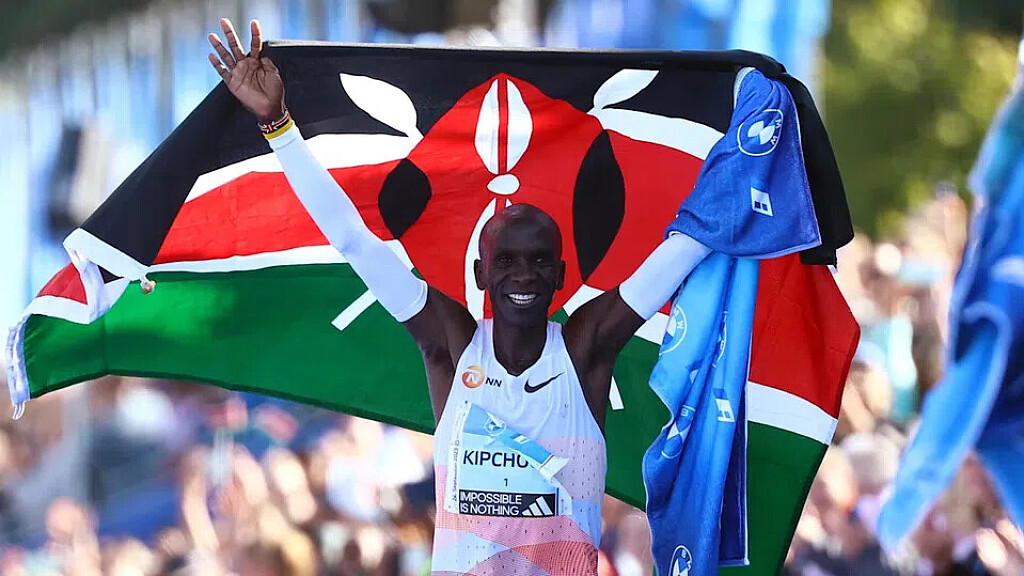
Marathon legend Eliud Kipchoge set to receive honorary doctorate degree
Marathon great Eliud Kipchoge is set to be conferred with a prestigious honorary doctorate degree from a Kenyan university for his outstanding contribution to humanity.
Marathon legend Eliud Kipchoge is set to be awarded an honorary doctorate degree by the Jomo Kenyatta University of Science and Technology (JKUAT) during the institution’s 41st graduation ceremony on December 1.
In a notice issued by JKUAT, the five-time Berlin Marathon champion will receive the degree in honor of his “outstanding and commendable humanitarian and philanthropic contributions to humanity.”
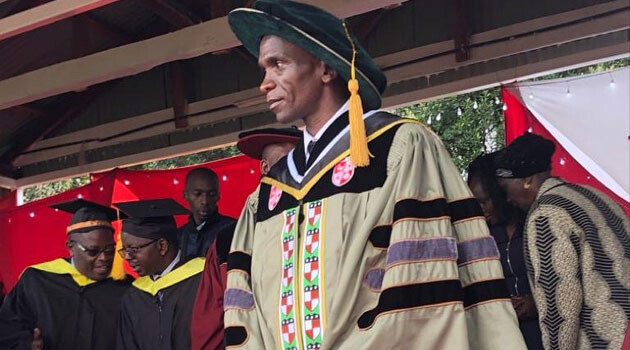
“Widely regarded as the world’s greatest marathoner, Eliud Kipchoge has met the requirements by the Honorary Degree Committee, the University Senate, and Council for the award of the degree. Kipchoge will be conferred with the prestigious honorary degree of Doctor of Humane Letters (Honoris Causa),” JKUAT said in the notice.
This will be the second such degree for the former world marathon record holder after being conferred with an honorary doctorate degree from the Laikipia University for his contribution to sports in 2019.
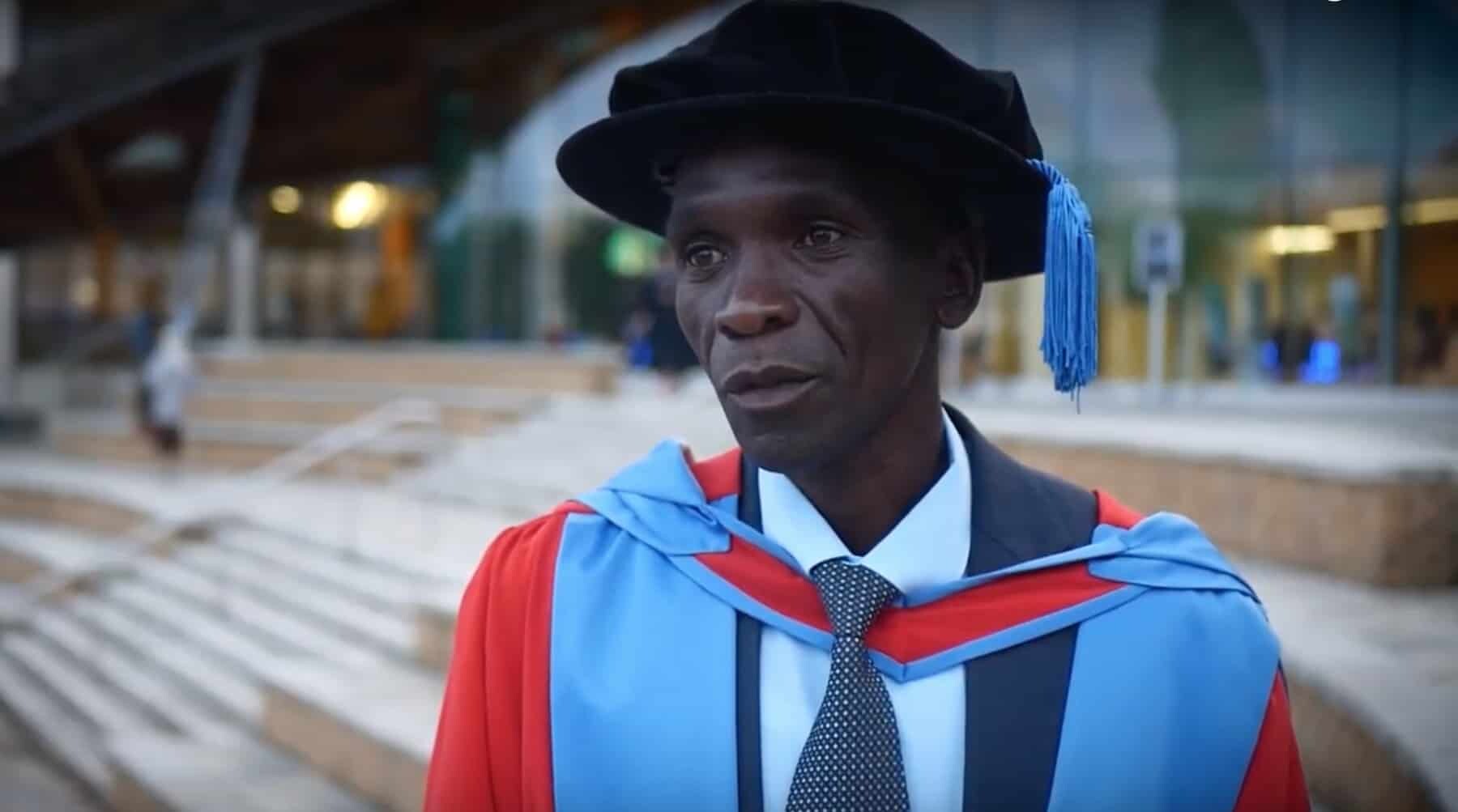
That was after he had won the London Marathon before becoming the first man to run a marathon under two hours when he clocked 1:59:40 in Vienna, Austria in a race dubbed INEOS 1:59 Challenge.
Kipchoge has had a mixed 2023 season, finishing fifth at the Boston Marathon in April before winning in Berlin in September although he watched youngster Kelvin Kiptum break his world record following his 2:00:35 feat in Chicago in October.
The 39-year-old was also honored by his sponsors Nike with a running track named after him in the European headquarters in the Netherlands, coming days after his statue was unveiled by the giant American kit manufacturer in Oregon, USA.
by Joel Omotto
Login to leave a comment
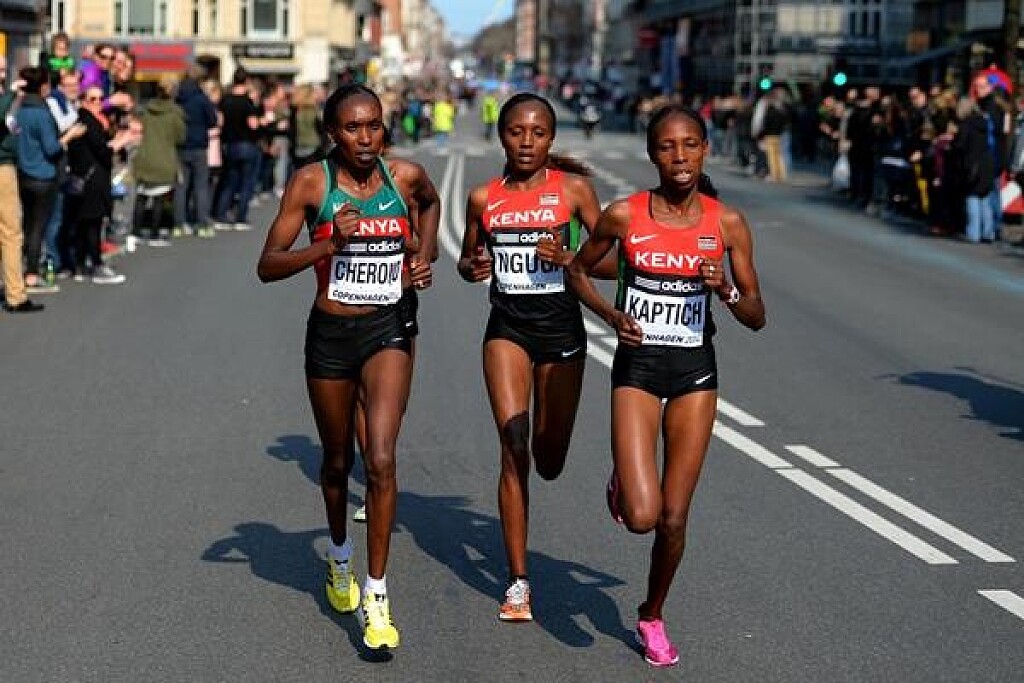
Frankfurt Marathon this Sunday, Kenyans Brimin Misoi and Selly Kaptich top the field
After a two-year break due to the Covid-19 pandemic, the Mainova Frankfurt Marathon returned in 2022 with a vengeance. The 2023 edition is happening this Sunday and organizers want the men to run sub 2:06 and the women sub 2:18. They have put up an additional $18,000 USD for the top finishers under those benchmarks.
Men
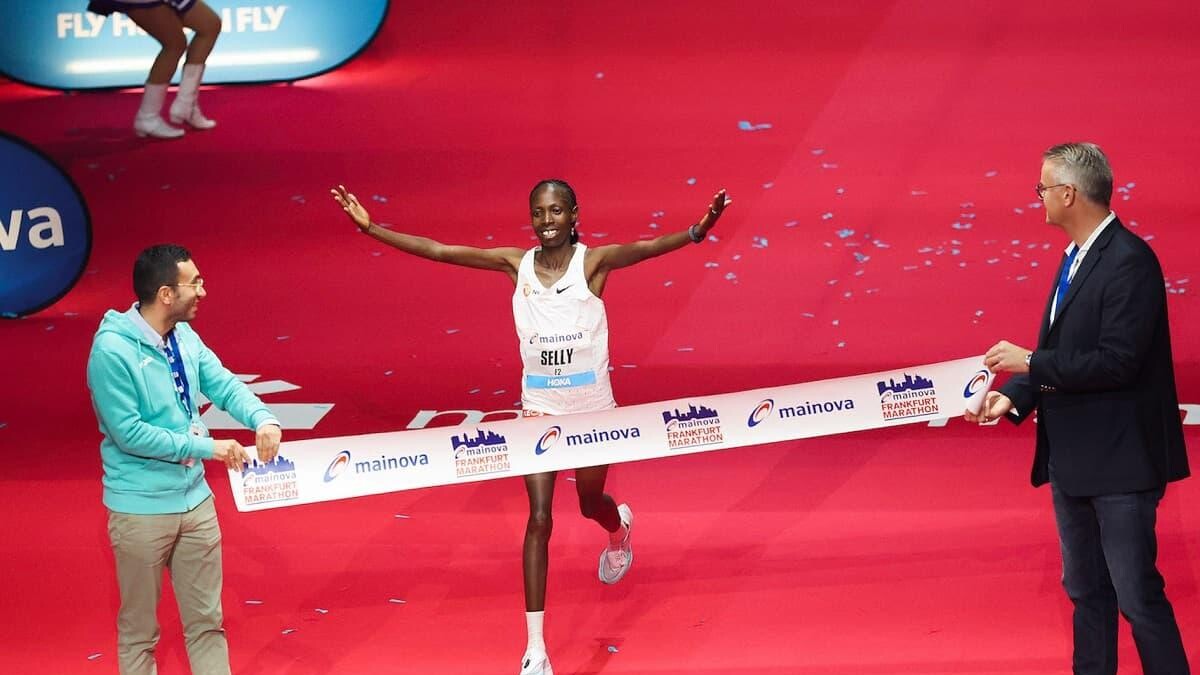
Last year, Kenyans Brimin Misoi and Selly Kaptich won the 39th edition. The 33-year-old Misoi was a surprise victory running a personal best of 2:06:11. Meanwhile, 37-year-old Kaptich, prevailed with 2:23:11. With very warm temperatures of around 20C during the final part of the race, almost all elite runners could no longer keep up their pace and lost a lot of time.
Sunday’s forecast calls for race start to be 8C with a high of 12C, very light rain and a slight breeze.
For 2023, Misoi renews his rivalry with runner-up Samwel Mailu, the latter arriving in Frankfurt in outstanding form. Among the challengers to both Kenyans should be Guye Adola. The Ethiopian has a personal best of 2:03:46 which makes him among the fastest ever lining up for the Frankfurt Marathon.
Simon Boch is the top German toeing the line. He owns a best of 2:09:25, which the 29-year-old set in Lint, Austria in April this year. Swedish 27-year-old Archie Casteel looks to improve upon his Seville performance earlier this year that earned him his personal best of 2:10:25.
Women
A close contest is also expected in the women’s race with five contenders showing personal bests of under 2:23:00. It has been a while, but Visiline Jepkesho, a Kenyan with a 2:21:37 personal best from Paris in 2017 will toe the line. Magdalyne Masai ran 2:24:10 in Wien this year. She owns a best of 2:26:16 from the 2019 running of the Toronto Marathon.
Nine women have run under 2:25, five sub-2:23. Miriam Dattke is slated to be the top German athlete competing on Sunday. She ran 2:26:50 in Seville last year. Thirty-four-year-old British Athlete Stephanie Twell ran the Frankfurt Marathon in 2019 in the time of 2:26:40 which is her personal best. She placed fourth that year.The latest additions to the line-ups are homegrown with Simon Boch joining the men’s field and Miriam Dattke, fourth in the European Championships in the women’s event last year, both among Germany’s top distance performers. They have every intention of making good use of Frankfurt’s historically fast course in seeking qualification for the Olympic Marathon in Paris next year. In April she ran the Wien Austria marathon in the time of 2:27:13.
by Christopher Kelsall
Login to leave a comment
Mainova Frankfurt Marathon
Frankfurt is an unexpectedly traditional and charming city, with half-timbered buildings huddled in its quaint medieval Altstadt (old city), cosy apple wine taverns serving hearty regional food, village-like neighbourhoods filled with outdoor cafes, boutiques and street art, and beautiful parks, gardens and riverside paths. The city's cache of museums is second in Germany only to Berlin’s, and its nightlife...
more...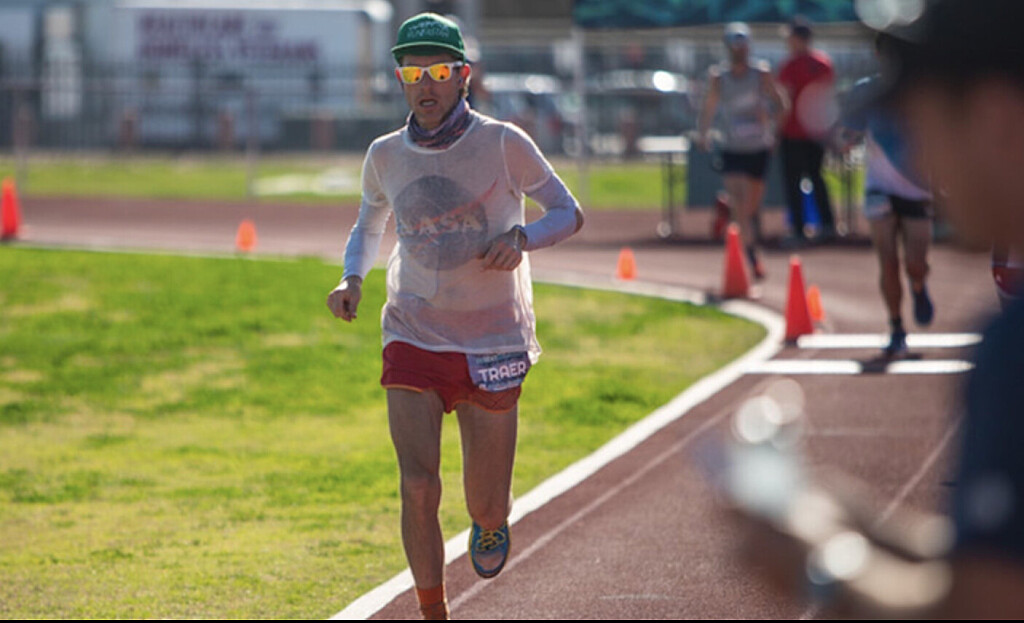
He Qualified for Team USA. Then Came the Bill.
Even as trail and ultrarunning explode, the spoils of professionalization aren’t spread equally across the sport. Athletes on this year’s U.S. 24-hour team are looking to change that
Scott Traer qualified for his first U.S. national team more than a decade ago in 2012. He was new to the sport and naive about what it took to compete at the international level—even after being selected as one of the country’s best athletes in the 24-hour discipline, a niche tributary of trail and ultrarunning where athletes complete as many laps around a track as possible within 24 hours.
While the 24-hour race format may seem eccentric, well-known names like Courtney Dauwalter, Kilian Jornet, and Camille Heron have dabbled in the ultra-track scene. International governing bodies regulate the discipline with USA Track & Field (USATF), the national governing body for track and field, cross country, road running, race walking, and mountain-ultra-trail (MUT) disciplines, overseeing the American contingent.
Traer, then 31, was working odd construction jobs in and around Boston to make ends meet while training when he got the call from USATF that he had been selected for Team USA.
“I was really excited,” says Traer. “Then, I found out that I had to pay for everything. So I was like, ‘Forget about it.’”
That financial reality took the wind out of Traer’s sails. He didn’t have the disposable income to foot the bill for international travel and didn’t have paid time off from his jobs. While he was disappointed that he wouldn’t get to represent his country in 2012, he was still determined to pursue his dream of chasing a career in coaching and racing.
Now, Traer, 42, is a full-time coach living near Phoenix and working with the Arizona-based event organization Aravaipa Running as an assistant race director. He has earned top accolades in the sport, including a course record at the Javelina 100K and a Golden Ticket to Western States at the Black Canyons 100K, eventually leading to a top-ten finish at the Western States Endurance Run.
True to his blue-collar roots, he is known for racing in unbranded gear, typically a long-sleeve, white SPF shirt unbuttoned and flapping in time with his stride. Ten years after making his first 24-hour team, he re-qualified for the opportunity to compete for the U.S. again, this time for the 2023 IAU 24-Hour World Championships in Taiwan (which international sports federating bodies officially refer to as Chinese Taipei), on December 2.
The catch: USATF is only providing a stipend of $600 to Team USA athletes.
Oregon ultrarunner Pam Smith has competed on Team USA seven times in the 24-hour and 100K world championship events. Now, she’s serving as the Team USA manager to help steward the next generation of ultra athletes. But that passion has come at a cost.
“I estimate I’ve spent around $10,000 in personal funds to be able to compete at the world championships and to represent the USA at these events,” says Smith, 49, who finished fourth at the 2019 IAU World Championships in France. “USATF does pay for the manager’s travel expenses, but there is no other compensation; in fact, the managers have to use their own funds to cover some fees, like membership dues and background checks.”
It might surprise fans of the sport that many of their favorite athletes are paying significant money to sport the red, white, and blue uniform—and that many can’t compete because they cannot shoulder the cost. The U.S. is known for strong 24-hour runners, and the men’s and women’s teams both won gold at the previous IAU 24-Hour World Championships in 2019 in Albi, France, with two individual podium spots.
“The U.S. has many of the best 24-hour runners in the world,” says Smith. “It’s a shame that these athletes don’t even get their airfare covered.”
While Smith’s airfare is covered, her work and that of her colleagues is presumed to be done on a volunteer basis. (A quick online search shows a flight to Chinese Taipei from most U.S. cities costs in the $1,500-$2,400 price range.)
Trail running, particularly the elite side of the sport, is at an inflection point. While some races dole out prize money, and a select few athletes at the top of the sport command respectable salaries, most runners at the elite level rely on a scattershot combination of brand partnerships and personal funding to float their racing. While the sport’s very best athletes are well compensated professionals, most “sponsored” trail runners earn between $10,000 and $30,000 per year. Between travel, gear, nutrition, and other expenses, many runners at the elite level are fronting their own cash to compete.
When Chad Lasater qualified for Team USA after a strong run at the Desert Solstice 24-Hour Race, he hadn’t planned on making the team. But, when he found out he’d qualified, he started looking into the logistics and was shocked to discover he’d be responsible for paying his way to Taipei.
“The cost of airfare, lodging, food, and time away from work can be significant, especially when traveling to somewhere like Taipei,” says Lasater, 51, from Sugar Land, Texas. “I feel that everyone should have an equal opportunity to be on the U.S. team, and the cost of traveling to the world championships should not preclude anyone from accepting a spot on the team. We should really be sending our best 24-hour athletes to the world championships, not the best athletes who can afford to travel.”
Teams that rely on individual brands or athletes to foot the bill will prefer runners with sponsorships or disposable income and can afford to take time off work and pay for childcare.
At the top of the sport, like the world championships, it’s routine to see completely unsponsored runners competing with no brand affiliation, especially in the eccentric realm of 24-hour track events. Even some sponsored runners don’t always get their travel expenses covered.
While a world championship event is certainly a big deal, it doesn’t command the same fanfare and media attention as other marquee events, like the Western States Endurance Run or Ultra-Trail du Mont-Blanc, where many brands prefer to focus their resources.
Jeff Colt, a 32-year-old professional ultrarunner for On who lives in Carbondale, Colorado, publicly debated the merits of returning to Western States in California this year or competing in the 2023 World Mountain and Trail Running Championships in Austria in early June. (The trail running world championships and 24-hour world championships are different events, but the Team USA athletes who compete in each one face similar challenges when it comes to funding and market value to brands.) He ultimately decided to claim his Golden Ticket and compete at States. More eyeballs on the event mean a higher return on the investment for running brands, which in turn elevates athletes’ value to their sponsors
“My sponsor, On, was clear that they supported my decision either way, but they were more interested in me running Western States,” says Colt. “And rightfully so. There’s a lot of media attention at races like States and UTMB, which allow brands to activate and get visibility for their logo. That support feels good as an athlete, too. It’s not just better for the brand.”
Nike has an exclusive partnership with USATF; all athletes competing at any world championship event in the mountain-ultra-trail disciplines (as well as the Olympics and World Athletics Championships for track and field and the marathon) must wear Nike-issued Team USA uniforms that are provided to the athletes free of charge, with the exception of shoes. Any photos or videos of professional runners at these events are less valuable to competing running brands because their athletes will appear bedecked in another company’s logo. This disincentivizes many brands from investing in unsponsored athletes’ travel expenses and limits athletes’ ability to get financial support, most of which currently comes from shoe and apparel brands in the trail running industry. And if athletes cannot compete because of illness or injury, they must return parts of the kit. Even if they keep the kit, many sponsored runners’ contracts prohibit them from training and racing in the gear, so it gathers dust at the back of their closets.
Arizona runner Nick Coury, preparing to compete on his third U.S. 24-hour team, says this contract limits the economic opportunities of unsponsored athletes—partially because it disallows an athlete to place another sponsor’s logo on the Nike gear.
“This is especially upsetting to many because Nike provides large sums of money to USATF for this arrangement, yet neither passes through significant support to national teams despite USATF being a nonprofit aimed at ‘driving competitive excellence and popular engagement in our sport,’” says Coury, 35, from Scottsdale, Arizona. “USATF is taking money from Nike, restricting elite athletes to fund themselves through sponsorship, and doing little to nothing to encourage a competitive national team.”
One athlete, sharing anonymously, reported selling parts of their Nike kit to help offset travel expenses. “It’s the same kit [100-meter and 200-meter track and field superstar] Noah Lyles wears, so it’s super valuable.”
Traer thinks it’s unfair that athletes are forced to wear Nike gear and render free labor supporting a huge company, especially when the 24-hour team isn’t fully funded. Lyles, an Adidas athlete who won the 100-meter dash at this year’s World Athletics Championships in Budapest, had to wear Nike gear while warming up and racing, too. But his travel and expenses were paid in full by USATF, and his Adidas relationship benefits because track and field stars get considerably more exposure than ultrarunners. Furthermore, in track and field, the world championships serve as a prelude to the biggest running event on the calendar, the Olympics, which take place every four years and attract an expansive viewership that reaches far beyond hardcore running fans.
“It bothers me because Nike is making a huge amount of money,” Traer says. “I don’t want to hear that there isn’t enough money to support athletes because I see smaller brands in our sport that have less money doing a much better job supporting athletes.”
Nancy Hobbs is the chairperson of the USATF Mountain and Ultra Trail Running Council, the division of USATF that oversees the U.S. 24-Hour Team. Her executive committee has been discussing more equitable distribution of funds. Initially, funding was based on the number of years the championships had been held and how many athletes were attending.
Ultimately though, it comes down to the relatively small amount of Nike money that USATF allocates to the USATF MUT Running Council.
“With a certain amount of money in the budget, we could choose to send fewer athletes (i.e., just a scoring team with no spares in case of injury, etc.), but the council discussion has been on the importance of fielding a full team with some additional athletes for attrition and providing more athletes an opportunity to compete internationally (provided they qualify for the team based on selection criteria),” says Hobbs.
Though the compensation for mountain-ultra-trail athletes may feel low, it is significantly higher than in the past. In 1999, a mere $250 was distributed to each MUT subcommittee, totaling $750 for all 1999 expenses. In 2013, MUT teams received $25,000 in funding for travel. This year, $83,000 was distributed across all of the teams it sends to international championships for MUT disciplines.
“We’ve come a long way with MUT since 1998,” says Hobbs. “We have more work to do. This is a volunteer-driven group which is passionate about our sport and trying to provide athletes opportunities through championships, teams, and programs within the structure of USATF.”
Coury qualified for his third U.S. 24-hour team in 2021 and broke the American 24-hour record. He’s had to fund his travel out of pocket for all three international appearances. He says the lack of funding limits the team’s ability to compete on the world stage.
“I’ve found it extremely challenging to train for a 24-hour event while holding a full-time job, as have others, and I know I haven’t and won’t hit my personal potential as a result,” says Coury. “We’ve seen an explosion in the competitiveness and interest in trail races, and part of that is the ability for ultrarunners to make a living as professional athletes. We see very few runners in the 24-hour space who can go professional, which reflects in our team’s competitiveness.”
While Team USA won both gold medals in 2019, international competition is escalating. Coury says opening up additional funding would help draw elites and strong amateurs alike to try their hand at the 24-hour format, which would help Team USA’s standing on the world stage.
“Athletes like Courtney Dauwalter and Camille Herron have represented Team USA multiple times and been key to our results,” says Coury. “Yet I am certain they must weigh training, qualifying, and representing Team USA against the sponsorship opportunities in trail ultrarunning, where financial support is much greater. I imagine there would be more interest from some of our most capable athletes if we had a better financial story around the team, providing a path for it to fund an athlete’s career instead of costing out of pocket. Given the prospects of making a living at a trail race versus paying to represent Team USA, I’m positive we’re discouraging some of our best athletes from even wanting to try.”
In previous years, Team USA has resorted to raising money through bake sales and selling T-shirts to raise funds for the team’s travel expenses. Past team captain Howard Nippert made and sold ice bandanas to support the team. This year’s captain Smith is hosting fundraising dinners. Coury says that the ultrarunning community has stepped up to support the team where traditional funding has failed.
“It reminds me in some ways of the amateur athlete situation back in the 1970s, where representing your country came at a significant financial burden and really made athletes reconsider it,” says Coury. “Why isn’t USATF making it desirable to train and compete for Team USA? Why is it seemingly doing the opposite?”
The 24-hour team is at a crossroads: either it will receive adequate funding and support to send the best team possible to the world championships, or it will maintain this status quo while Team USA falls further and further behind on the international stage. Traer has launched a petition on Change.org to draw attention to the funding issue and is determined to sound the alarm about how a lack of funding holds athletes and all of Team USA back.
“No one should have to decide that they made Team USA but can’t afford to pay to wear their country’s flag,” says Traer. “If an athlete earns their spot on the team, they should get the support they need to compete. End of story.”
by Outside Online
Login to leave a comment
Kenyans are favorites in Munich, Hendel chases Olympic dream
A group of Kenyan runners headed by Luke Kibet could be challenged by Sebastian Hendel in the race for victory at the GENERALI MUNICH MARATHON on Sunday. The German elite runner hopes to dip under the Olympic qualifying time of 2:08:10 when he will finish in the Munich Olympic Stadium. Athletes from Kenya are the fastest on the women’s start list as well. Catherine Cherotich has a personal best of 2:26:41.
Including events at shorter distances well over 20,000 runners have so far registered for the 37th edition of the GENERALI MUNICH MARATHON. More than 5,000 of them will run the classic distance through the Bavarian capital, starting and finishing inside the Olympic Stadium. Entries are still accepted at: www.generalimuenchenmarathon.de
The GENERALI MUNICH MARATHON will be streamed live from 8.55 am (CET).
"After a great elite race comeback with two course records a year ago we are now looking forward to more thrilling races at the GENERALI MUNICH MARATHON on Sunday. Additionally I hope that Sebastian Hendel can produce a strong performance and makes the next step with a sub 2:10 time,“ said Race Director Gernot Weigl. Relatively warm temperatures are expected around midday on Sunday. While the elite athletes will have already finished their races water supply at the course has been increased for the fun runners.
With a personal record of 2:08:45 Luke Kibet is the fastest runner on the start list. The 28 year-old Kenyan achieved this time in Chuncheon, Korea, four years ago. Kibet has prepared for the GENERALI MUNICH MARATHON in Iten, Kenya, where he joined the strong training group of Germany’s marathon record holder Amanal Petros. While compatriots Edwin Kimaiyo and Cosmas Kiplimo are number two and three on the start list with PBs of 2:09:12 and 2:09:44 respectively Bernard Muia could be in for a surprise.
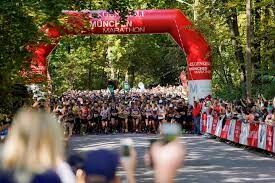
He has only a 2:13:40 to his credit so far, but the Kenyan ran this time in Nairobi in high altitude. Muia is a training partner of Samwel Mailu, the course record holder of the Vienna City Marathon and world half marathon championships bronze medalist. He is a said to be in fine form. Benson Nzioki, also from Kenya, is tipped to produce a good debut.
Sebastian Hendel was fourth in Munich a year ago with a 2:10:37 debut. When the 27 year-old returns to the GENERALI MUNICH MARATHON he wants to break 2:10 and hopes to become the third German to break the Olympic qualifying time of 2:08:10. “My shape is good and actually better than a year ago. I want to run the first half in 64:20 and then hope to achieve the Olympic standard with a negative split,“ said Sebastian Hendel. If he should be able to run such a time he will most probably be in contention for victory as well.
With personal bests of around 2:27:00 three Kenyan women head the elite start list. With 2:26:41 Catherine Cherotich is the fastest of the three. It is worth noting that she ran her PB in Nairobi. Because of the high altitude she should be able to run faster on Sunday in Munich. While Caroline Chepkwony took the Enschede Marathon in 2019 with 2:27:00 Munich’s elite race coordinator Michael Kraus expects Teclah Chebet to do well. She has won six of her seven marathons and most recently took the race in Linz, Austria, this spring with a PB of 2:27:18.
Elite runners with personal bests:
MEN
Luke Kibet KEN 2:08:45
Edwin Kimaiyo KEN 2:09:12
Cosmas Kiplimo KEN 2:09:44
Sebastian Hendel GER 2:10:37
Cornelius Chepkok KEN 2:11:46
Jackson Rutto KEN 2:12:02
Merhawi Ghebreslasie FRA 2:12:34
Amos Birgen KEN 2:13:09
Bernard Muia KEN 2:13:40
Alessandro Giacobazzi ITA 2:15:25
Benson Nzioki KEN Debüt
WOMEN
Catherine Cherotich KEN 2:26:41
Caroline Chepkwony KEN 2:27:00
Teclah Chebet KEN 2:27:18
Beatrice Cheburet KEN 2:30:41
Flomens Ngurasia KEN 2:30:42
Login to leave a comment
Generali Munich Marathon
The GENERALI MUNICH MARATHON has held the elite label of the WORLD ATHLETICS since 2020 and the marathon route is officially measured and recognized. The route runs from the Olympic Park and Schwabing to Leopoldstraße with the Siegestor, via Königsplatz and the Pinakotheken to the English Garden. From there past the Chinese Tower and Art Nouveau villas in Bogenhausen, through...
more...
Edwin Kimaiyo will return to Germany with one goal in mind
Edwin Kimaiyo will be returning to Germany with the hope of achieving a podium finish at the Munich Marathon scheduled for Sunday October 8.
Germany is definitely one of the favorite destinations for Kimaiyo and he will be hoping to improve on his performance from last year.
During the 2022 edition of the race, the 37-year-old finished fifth. With mastery of the course, he will definitely pull a surprise performance.
Kimaiyo has a Personal Best time of 2:09:12 and he is the fastest in the men’s field currently in Germany’s fourth biggest marathon.
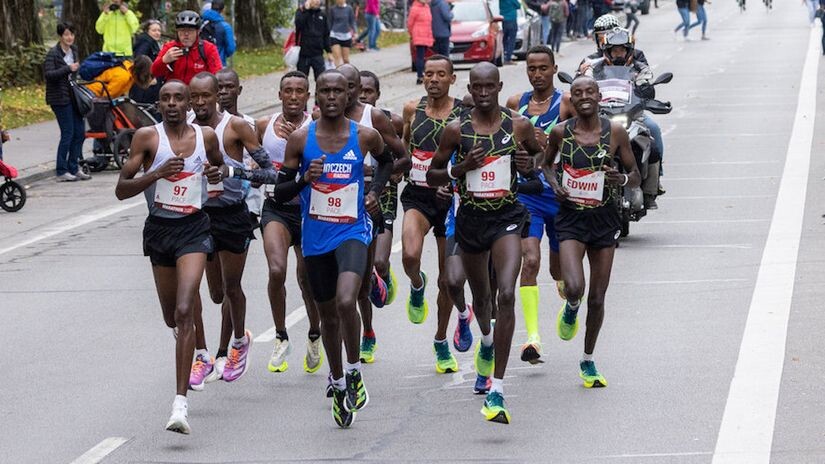
The Kenyan has vast experience and he took a fine third place at the 2011 Berlin Marathon with 2:09:50. He will be joined by compatriot Cosmas Kiplimo who is still a newcomer to international road racing.
He made his international debut at the Linz Marathon in Austria last year, clocking 2:09:44 for 11th place. He finished third at the Geneva Marathon earlier this year.
Sebastian Hendel will lead the home charge and he will be returning to the Munich Marathon as well. He goes into the race after clocking 2:11:29 at the Vienna City Marathon.
In the women’s field, Caroline Jepchirchir leads the field with a PB time of 2:26:11. The 35-year-old ran her personal best in Enschede, Netherlands, in 2022 when she settled for fourth.
Her compatriot, Tecla Chebet will be among her challengers but she is yet to run a major international marathon. Jepchirchir has managed to bag six of her seven international marathons. This year the Kenyan took the Linz Marathon with a personal record of 2:27:18.
Meanwhile, the organisers of the 37th edition of the event are expecting a field of around 22,000 runners including races at shorter distances. It was noted that around 7,000 of them will run the marathon.
by Abigael Wuafula
Login to leave a comment
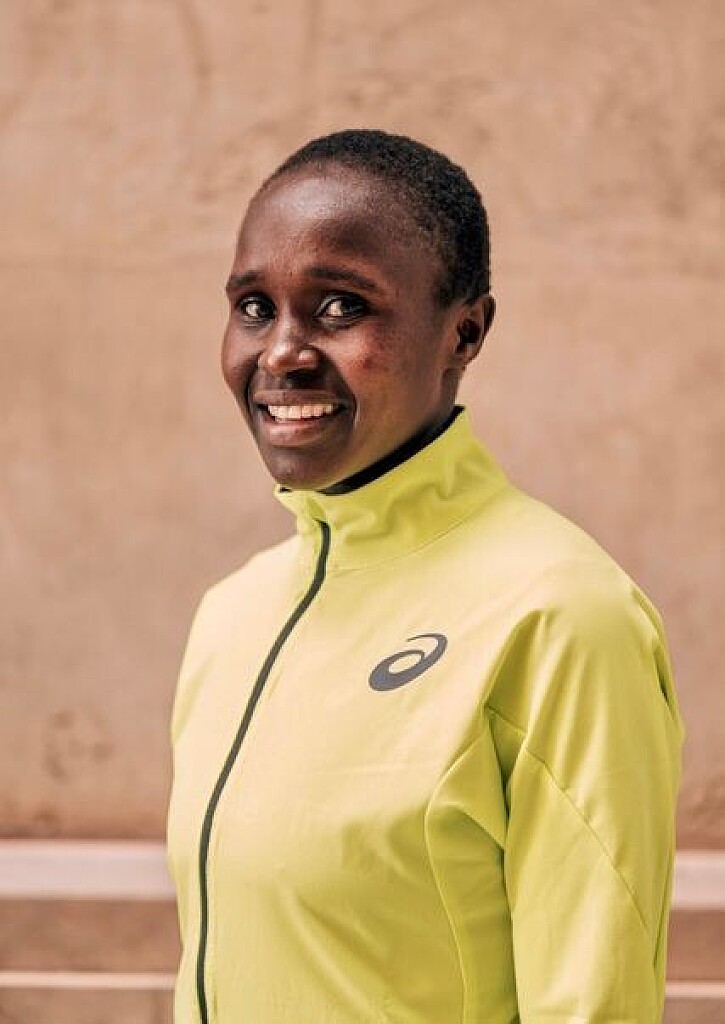
Sharon Kemboi looking to prove herself at TCS Toronto Waterfront Marathon
Sharon Kemboi might not be well known on the world athletics stage at the moment but there’s a solid chance the Kenyan will have a major impact on the TCS Toronto Waterfront Marathon on October 15.
For a start, the 30-year-old Asics athlete from the town of Iten raced only in Kenya until 2022. And she has only one marathon race to her credit winning the 2022 Kobe Marathon in Japan last November in a time of 2:29:13. That saw her end the year as the 241st fastest woman of the year, hardly a world beater. Yet, to dismiss her as a contender in this World Athletics Elite Label race would be foolish.
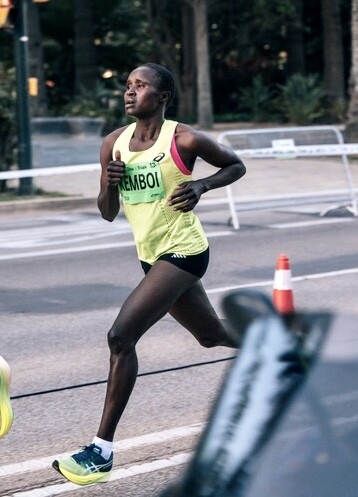
Last year Kemboi ran two world-class half marathons in Spain finishing second both times. Her personal best of 1:07:28 in Madrid followed by a strong 1:08:08 clocking two weeks later in Malaga indicates a time on Toronto Waterfront’s fast course nearer 2:22 is possible. The course record remains 2:22:16 by Magdalyne Masai – also from Kenya – set in 2019.
“The Kobe marathon course was a hard course, it is not easy. The course is so hard,” Kemboi says during a video call from her home in Iten. “I will try to run 2:25 or faster in Toronto. I want to run my personal best.
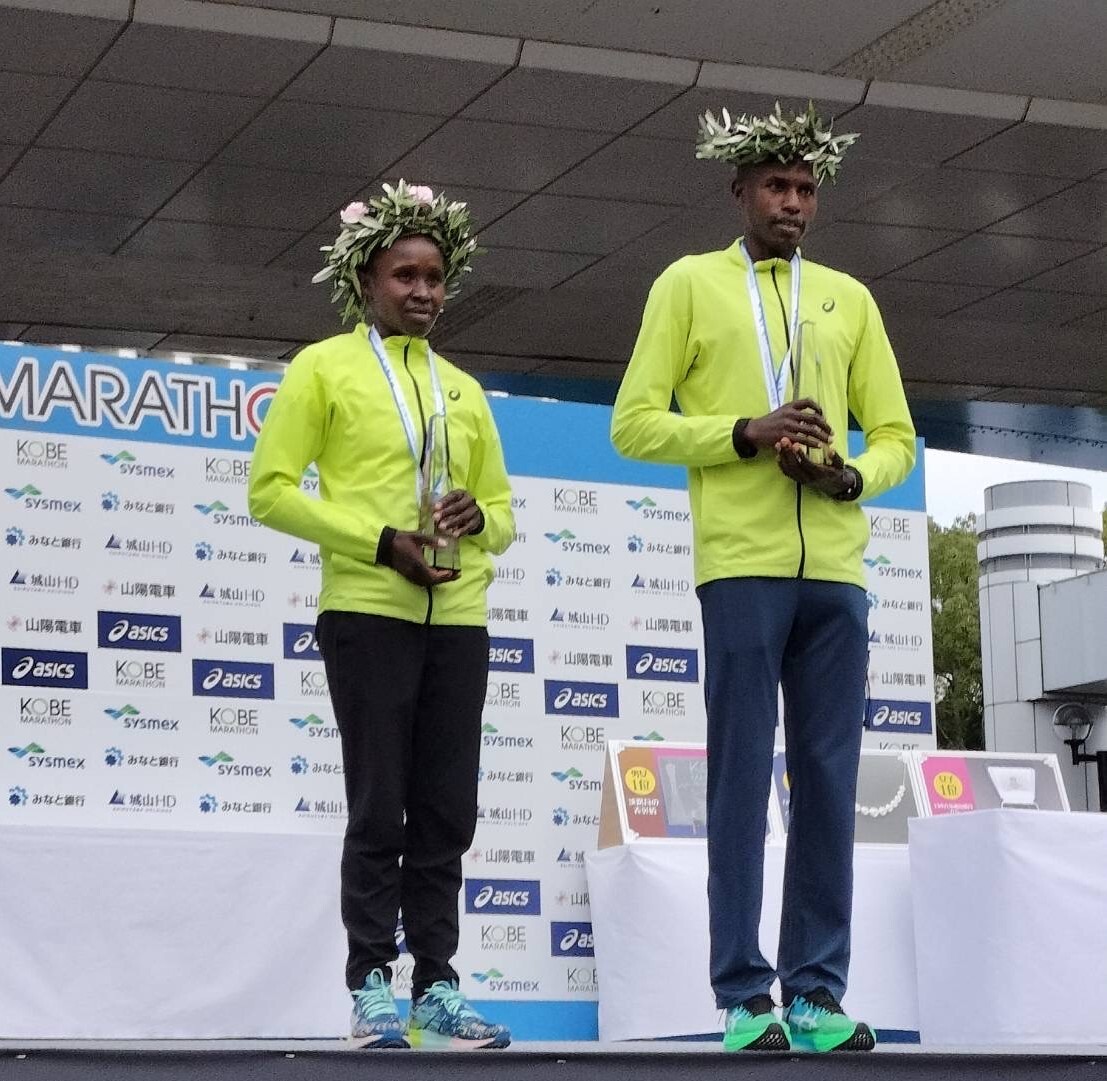
“I am training with Antonina Kwambai. She won last year in Toronto (2:23:20). She told me about Toronto and also I used to watch the Toronto races on YouTube. She told me the course is not so hard and she said she really enjoyed it.”
A few hours prior to her overseas video call Kemboi and Kwambai along with their training partners, Immaculate Chemuta, who is a Ugandan training in Kenya, and Gladys Chepkurui, had run a 30 kilometres time trail paced by three male pacemakers and under the watchful eye of coach Thomas Portzinger. The Austrian native has worked with Kemboi for close to three years now and with Kwamboi for nearer seven. Pacemakers are often employed for special sessions. Training for Toronto Waterfront is progressing well.
Clearly, she is taking her running seriously now after showing promise as a high school runner at Chepkongony Church of Christ Secondary School near Eldoret.
“When I ran in high school I ran at the national level in the 5,000m and 10,000m. And then I got married and had two kids. Then I started training again,” she offers.
“I wanted to be like (2016 Olympic 5000m champion) Vivian Cheruiyot when I was in high school. I did not meet her but I used to watch the races she ran. I watched her Olympic races on YouTube.”
It was during her time at high school that she met her husband Lawrence Kemboi Kipsang who attended a boy’s school in Marakwet which is very close to her home village of Kendur.
A world-class 3,000m steeplechaser, he has a best time of 8:11.26 in the event. In 2022 he was a much sought after pacemaker on the European circuit and helped Ethiopia’s Lamecha Girma beat the world 3,000m steeplechase record at the Paris Diamond League meet. The husband and wife will occasionally run together.
“We have a house helper who watches our children when we go training,” she reveals. “They are 7 and 4 and their names are Adele Jelegat and Adriana Jerop.”
Unlike many other Kenyan distance runners, she does not stay in a training camp but instead meets up for training sessions in Iten with her mates. The town of Iten is well known as a haven for distance runners from many nations. With a balance in training and family life Kemboi is very content with her fortunes.
Once again TCS Toronto Waterfront Marathon is a World Athletics Elite Label race meaning the competition she will face is sure to be of the highest standard. Kemboi welcomes the challenge. This, after all, will be her opportunity to continue her successful transition from the half marathon to the marathon and shine on the world stage.
by Paul Gains
Login to leave a comment
TCS Toronto Waterfront Marathon
The Scotiabank Toronto Waterfront Marathon, Half-Marathon & 5k Run / Walk is organized by Canada Running Series Inc., organizers of the Canada Running Series, "A selection of Canada's best runs!" Canada Running Series annually organizes eight events in Montreal, Toronto and Vancouver that vary in distance from the 5k to the marathon. The Scotiabank Toronto Waterfront Marathon and Half-Marathon are...
more...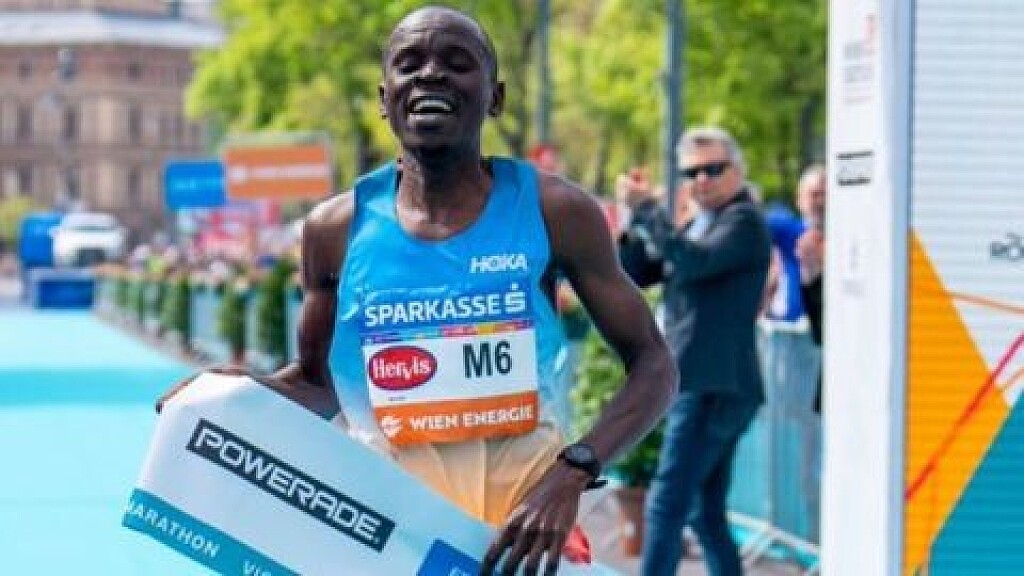
Kenyan Samwel Mailu and European silver medalist Matea Parlov Kostro to toe the line at Frankfurt Marathon
The 40th Mainova Frankfurt Marathon on October 29 will feature European Silver Medalist Matea Parlov Kostro and rising Kenyan star Samwel Mailu. Taking into account events held in conjunction with the main race, organizers of the Mainova Frankfurt Marathon expect around 25,000 participants on the last Sunday of October. The event holds an Elite Road Race Label, awarded by World Athletics, the sport’s governing organization.
“In Matea Parlov Kostro and Samwel Mailu we’ve succeeded in recruiting two rising stars of the international marathon scene. I’m delighted that we are going to have two popular figures in running on the start line in Frankfurt,” said the race director Jo Schindler. “After our successful comeback from the Corona lockdown a year ago we want to stage an exciting show of running in celebrating the anniversary of the oldest German city race in Frankfurt.
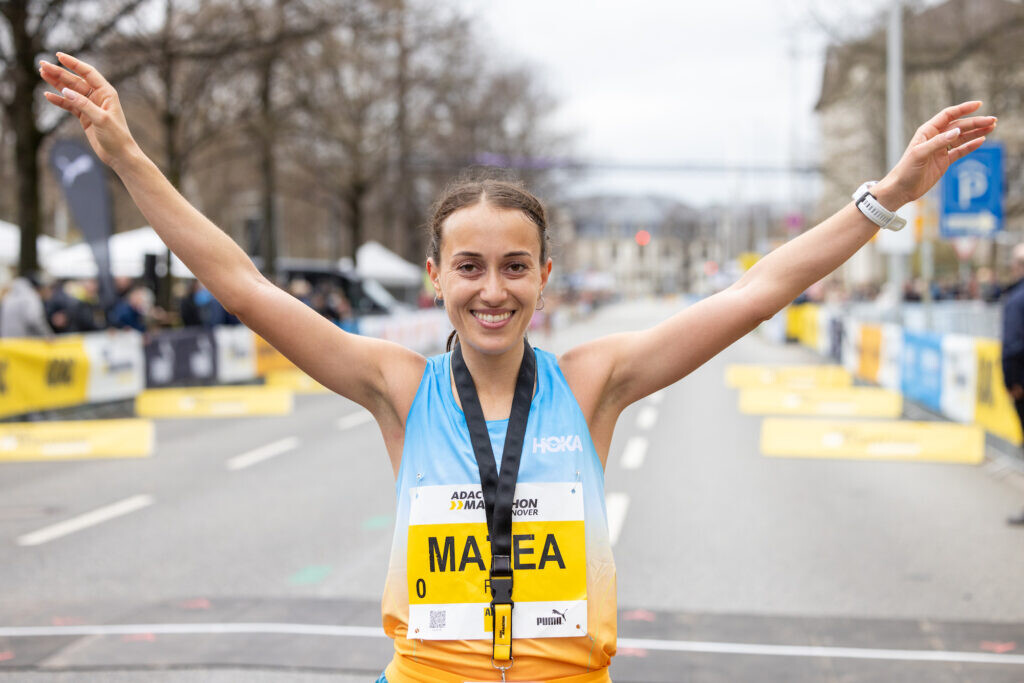
A year ago Mailu made his event debut at the Frankfurt Marathon. He was originally entered as a pacemaker but the now 30-year-old Kenyan showed top form, did not drop out of the race and, despite the role of pacemaker, finished second in 2:07:19. After this strong debut he won The Wein Marathon in April to take the next step in his career. Despite high temperatures, Mailu triumphed in Vienna with 2:05:08, breaking the men’s course record which had stood for nine years.
After his success in the 40th edition of Austria’s most important road race, Mailu now has another big anniversary event in his sights, “I have a good feeling in returning to Frankfurt. After all, I made my marathon debut there and the organization is very good. My aim is to improve my personal best and to run under 2:05 in Frankfurt,” said Mailu. In his hometown of Ulawani, the Kenyan supports younger runners and also takes on the role of event director himself, organizing a 10k road race.
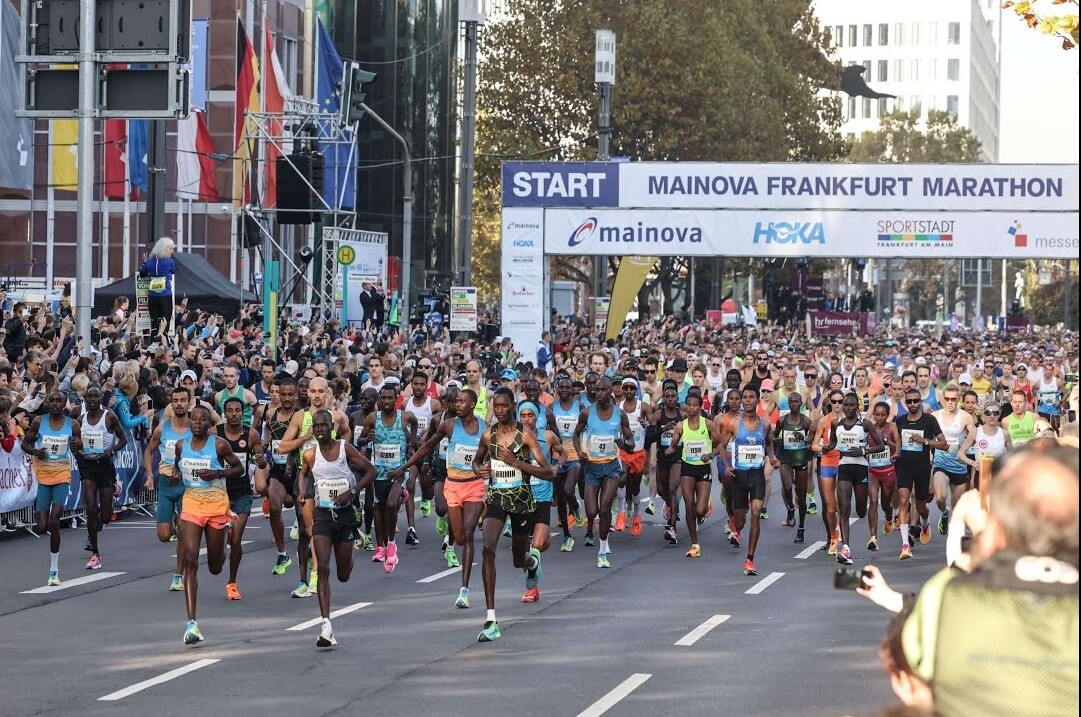
Kostro will be racing in Frankfurt for the first time. The 31-year-old has made great inroads among the European marathon elite in recent years and became a sporting star at home in Croatia after the European Championships in 2022. Her silver medal was the first of any kind won by a Croatian woman in a running event since the European Championships were first staged almost a century ago. She achieved the biggest win of her career so far in winning the Hanover title in April, running 2:25:45 for a course record and personal best.
“I decided to run Frankfurt because I knew that it offers a high-quality field and fast course. I always have a good feeling when I race in Germany – and that’s another reason for deciding on Frankfurt,” explained Matea Parlov Kostro, who is almost certain of an Olympic marathon place for Croatia in Paris next year. “I hope that I further improve my personal best in Frankfurt and am looking forward very much to the race, especially the fantastic finish in the Festhalle.”
by Christopher Kelsall
Login to leave a comment
Mainova Frankfurt Marathon
Frankfurt is an unexpectedly traditional and charming city, with half-timbered buildings huddled in its quaint medieval Altstadt (old city), cosy apple wine taverns serving hearty regional food, village-like neighbourhoods filled with outdoor cafes, boutiques and street art, and beautiful parks, gardens and riverside paths. The city's cache of museums is second in Germany only to Berlin’s, and its nightlife...
more...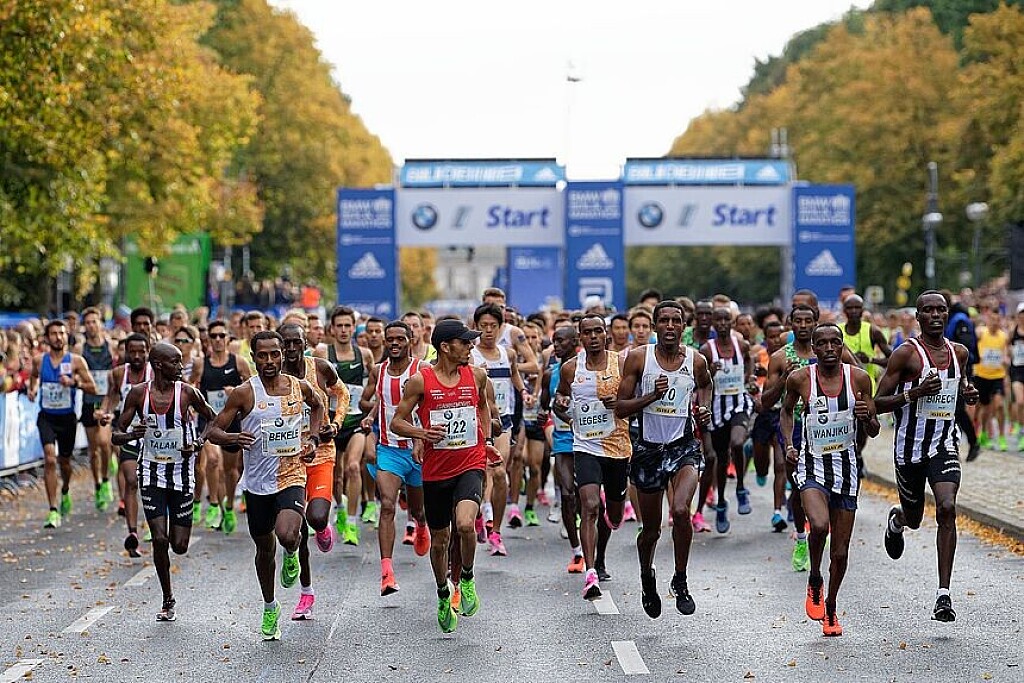
National top athletes will also participate in the BMW BERLIN-MARATHON 2023
This year's BMW BERLIN-MARATHON will take place on September 24 - the sports event is one of the most prestigious marathons in the world. SCC EVENTS, the organizer of the event, is expecting more than 45,000 runners from about 150 nations. In addition to the huge field of amateur athletes, the top international as well as national athletes will be competing.
As already announced in the press release sent out by SCC EVENTS on July 13, 2023, the world record holder Eliud Kipchoge (KEN) and the winner of the TCS London Marathon 2022, Amos Kipruto (KEN), will be at the start in the German capital. With Tigst Assefa (ETH) as course record holder and winner of the BMW BERLIN-MARATHON 2022 and Sheila Chepkirui, winner of the GENERALI BERLIN HALF MARATHON 2022, the women's field is just as elite.
The German record holder will be competing
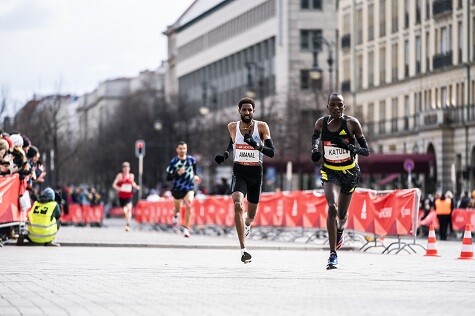
From the ranks of the German starters, Amanal Petros should be the first to be mentioned. The winner of this year's Hannover Marathon holds the German records for both the marathon and half-marathon distances. The MARATHON TEAM BERLIN runner is certainly hoping to achieve a German best time at his race on September 24. At the 2022 European Athletics Championships, Petros won the silver medal in the marathon team classification.
Top German men in Berlin
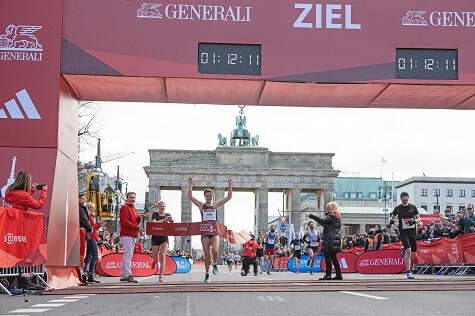
Amanal Petros stood beside teammates Simon Boch, Konstantin Wedel as well as Hendrik Pfeiffer on the podium in the aforementioned European Championship silver-medal team. All four will be competing at the BMW BERLIN-MARATHON. Simon Boch (LG Telis Finanz Regensburg) was German runner-up in the half marathon in the spring and secured the German team title for his team with this performance. Hendrik Pfeiffer, who competes for TK Hannover, won the Hannover Marathon last year. And just like his competition, the 30-year-old is hoping to use the race in Berlin to qualify for the Olympic Games in Paris.
European marathon champions at the start
The German women's marathon team was even more successful than the men at the 2022 European Athletics Championships. With the line-up of Miriam Dattke, Domenika Mayer (both LG Telis Finanz Regensburg), Deborah and Rabea Schöneborn (both MARATHON TEAM BERLIN) and Kristina Hendel (LG Braunschweig), they won the gold medal. The mentioned European champions will run at the BMW BERLIN-MARATHON. For the women, too, the race in Berlin is considered to be an important milestone to make it to the 2024 Olympic Games.
Partnerships with great added value
For the BMW BERLIN-MARATHON 2023, SCC EVENTS announced NORQAIN as its new timing partner. NORQAIN is familiar as a high-quality, family-owned watch manufacturer. The company is based in Nidau, the heart of the Swiss chronograph industry. Christian Jost, Managing Director of SCC EVENTS, is delighted about the commitment of the traditional Swiss watch manufacturer: "Reliability is one of our core values in the mission statement of SCC EVENTS. With NORQAIN, the BMW BERLIN-MARATHON gains a partner whose recipe for success is based on reliability and quality. This partnership has a great added value for us as organiser and for all the participants, who always expect a spirit of innovation and a reliably high standard from the BMW BERLIN-MARATHON."
"As a brand deeply rooted in the world of adventure and exploration, we are thrilled to embark on this multi-year partnership with the BMW BERLIN-MARATHON", said Ben Küffer, Founder & CEO of NORQAIN. "We are honoured to be the Official Timekeeper of the BMW BERLIN-MARATHON, an iconic event that embodies the values of perseverance, determination, and the pursuit of excellence, which are at the core of NORQAIN's DNA.”
The cashless online payment system PayPal has also been one of the partners of the BMW BERLIN-MARATHON for some time. "Anyone competing at the BMW BERLIN-MARATHON is expecting a high-quality sports experience. A fast, simple and secure payment system makes it easier for runners be able to focus on the essential aspects of the event," says Christian Jost.
"We are very happy about the renewed cooperation with SCC EVENTS. Whether at registration, beverage stands or after the race: For easy and convenient payments during the event, runners can pay with the PayPal app using a QR code Athletes can leave cash or cards at home," explains Jörg Kablitz, Managing Director of PayPal Germany, Austria and Switzerland.
Options to secure race entries possibilities and media accreditation
Although registration to participate in the race entry lottery for the 49th BMW BERLIN-MARATHON is now closed, there are still opportunities to secure a race entry for the BMW BERLIN-MARATHON 2023: through our charity partners and our official travel agents. Registration is still open for inline skaters. To apply for accreditation for the BMW BERLIN-MARATHON 2023, you must send a request via the press portal on our website, which is now possible.
Login to leave a comment
BMW Berlin Marathon
The story of the BERLIN-MARATHON is a story of the development of road running. When the first BERLIN-MARATHON was started on 13th October 1974 on a minor road next to the stadium of the organisers‘ club SC Charlottenburg Berlin 286 athletes had entered. The first winners were runners from Berlin: Günter Hallas (2:44:53), who still runs the BERLIN-MARATHON today, and...
more...