

Running News Daily
Running News Daily is edited by Bob Anderson and team. Send your news items to bob@mybestruns.com Advertising opportunities available.
Index to Daily Posts · Sign Up For Updates · Run The World Feed
Articles tagged #Vienna
Today's Running News



The Final 1:59 D-Max: Eliud Kipchoge Celebrates a Legacy of Breaking Limits
Eliud Kipchoge has marked another memorable chapter in his remarkable journey after receiving the 159th and final Isuzu D-Max 1:59 Limited Edition vehicle, completing a unique partnership that celebrates one of the greatest achievements in marathon history.
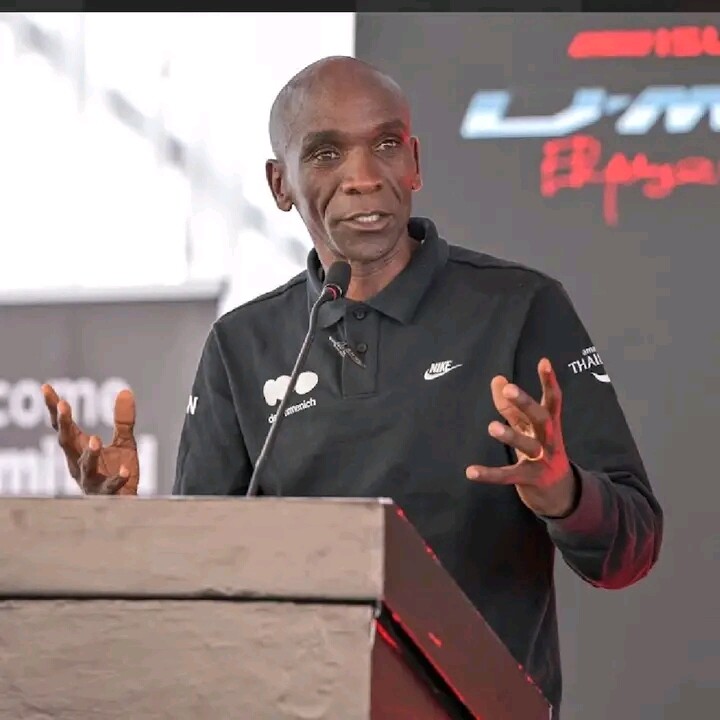
The legendary Kenyan marathoner expressed his appreciation to his Isuzu East Africa family after taking delivery of the final vehicle in a special series of just 159 units produced to commemorate his historic sub-two-hour marathon achievement.

Each of the limited-edition D-Max vehicles carries Kipchoge’s name and signature, transforming the collection into more than a series of exclusive vehicles. It represents a story built around ambition, discipline, perseverance and the belief that seemingly impossible goals can be achieved through commitment and trust in the process.
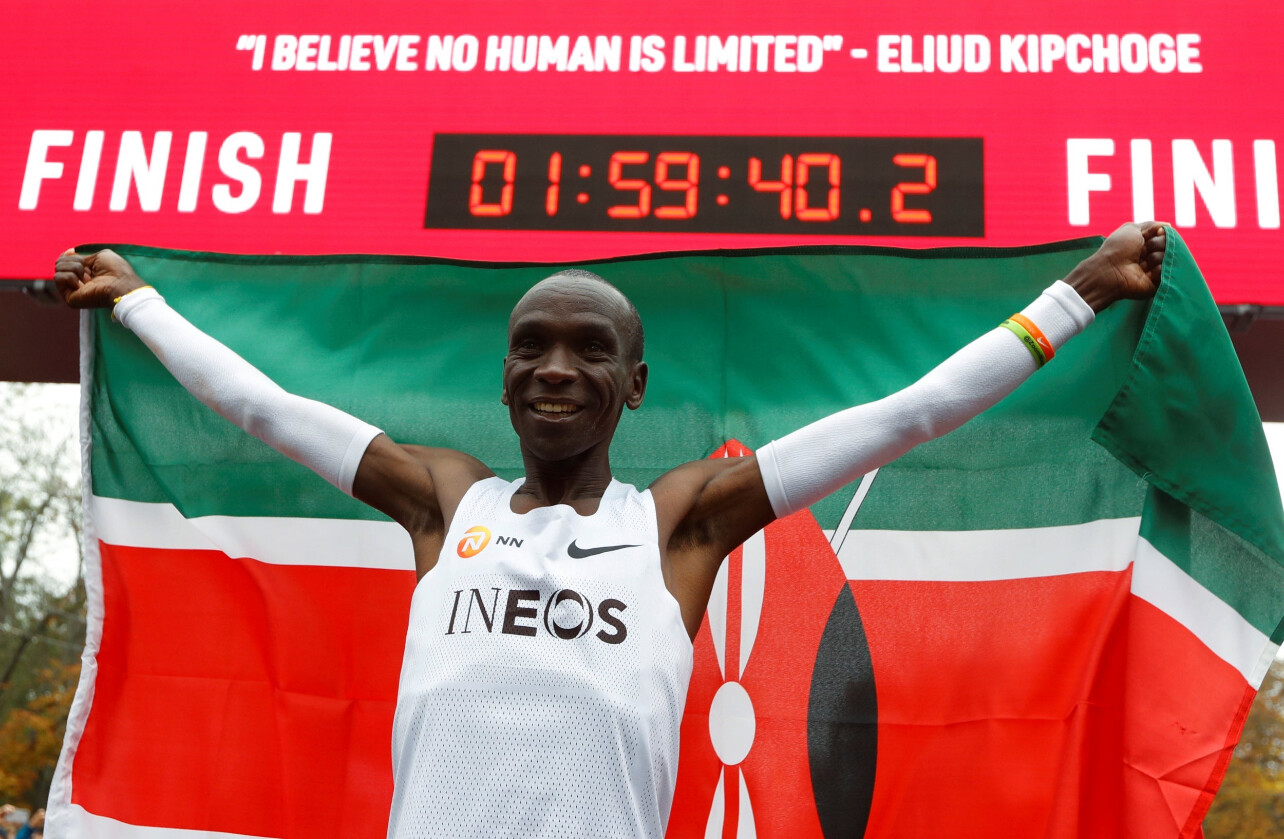
The inspiration for the special edition dates back to October 12, 2019, when Kipchoge made history in Vienna, Austria, becoming the first person to run a marathon distance in under two hours in a controlled event. He completed the 42.195-kilometre distance in 1:59:40.2, a landmark moment that redefined the boundaries of human endurance.
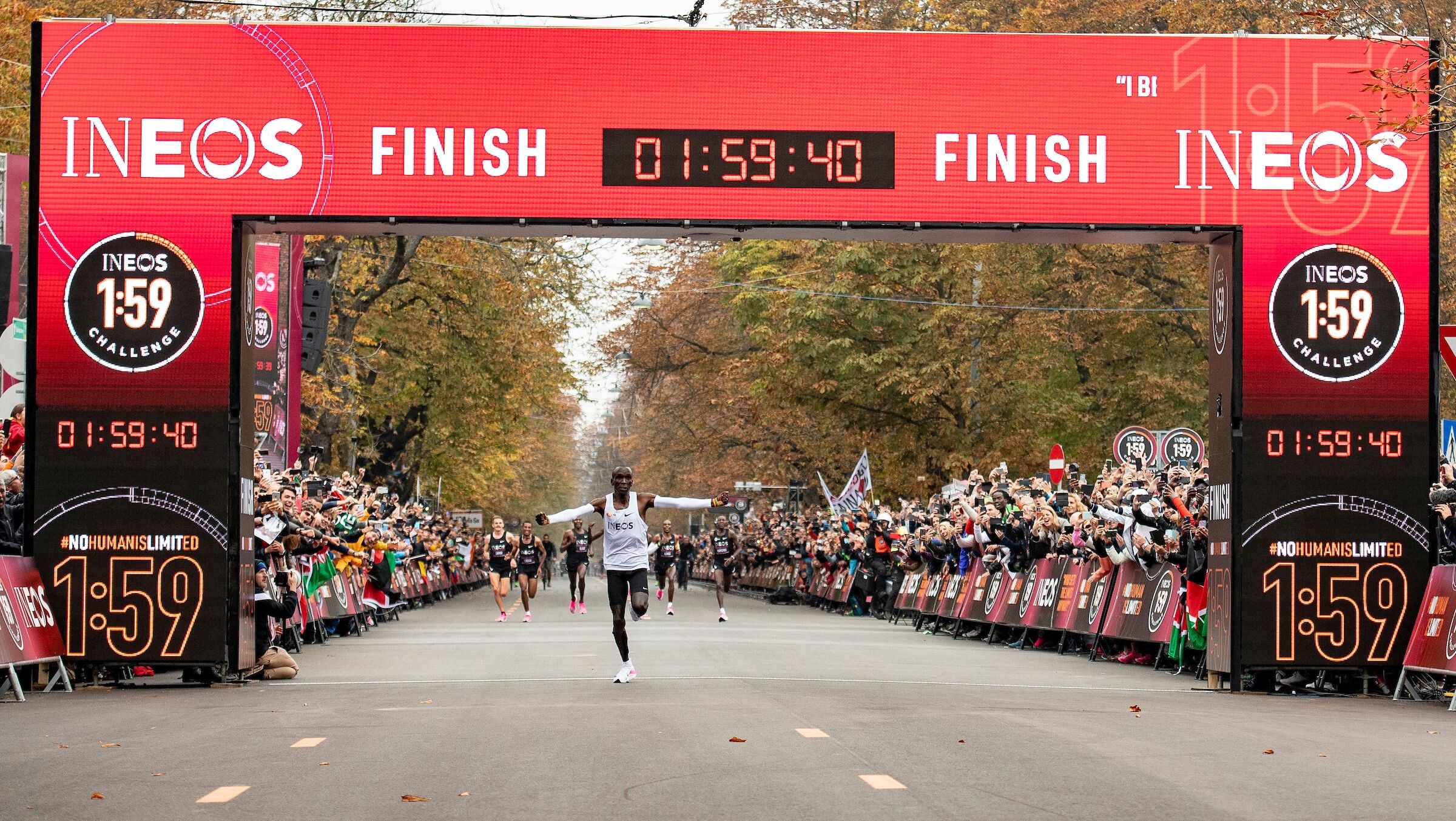
What began with that extraordinary morning in Vienna has since evolved into a lasting legacy on Kenyan roads, with 159 limited-edition vehicles now representing a shared connection between Kipchoge and their owners.
For Kipchoge, the final D-Max is therefore not simply the last vehicle to leave the production line. It is a symbolic conclusion to a story that connects his historic achievement with the values that have defined his career.
The number 159 carries particular significance, linking the limited production run to the historic 1:59 achievement while giving each owner a small piece of the story.
As he received the final unit, Kipchoge reflected on the journey from the streets of Vienna to the roads of Kenya, describing the 159 vehicles as a story shared by 159 owners who believe in the possibilities that emerge when people remain committed to their goals and trust the process.
The final D-Max consequently becomes another tangible reminder of a philosophy Kipchoge has carried throughout his career: no human is limited by the boundaries we initially believe exist.
From a historic morning in Vienna to a limited-edition collection spread across Kenya, the 1:59 legacy continues to inspire far beyond the marathon course.
by Erick Cheruiyot for My Best Runs.
Login to leave a comment
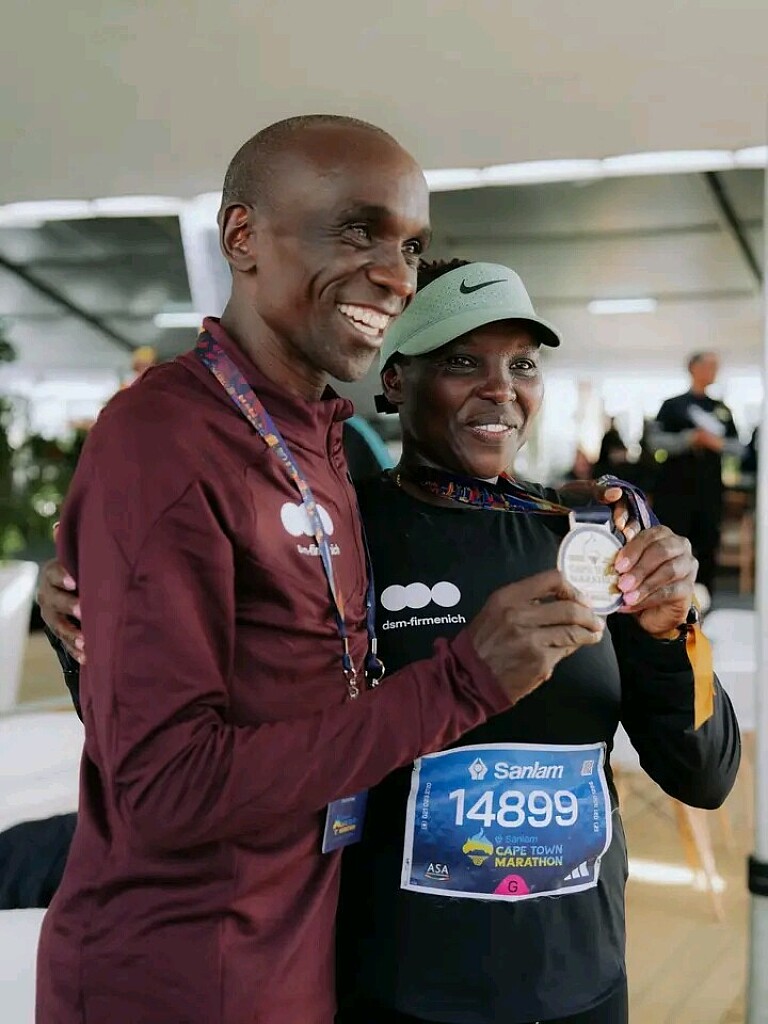
From Supporting a Legend to Running Her Own Race: Grace Sugut Conquers Cape Town Marathon
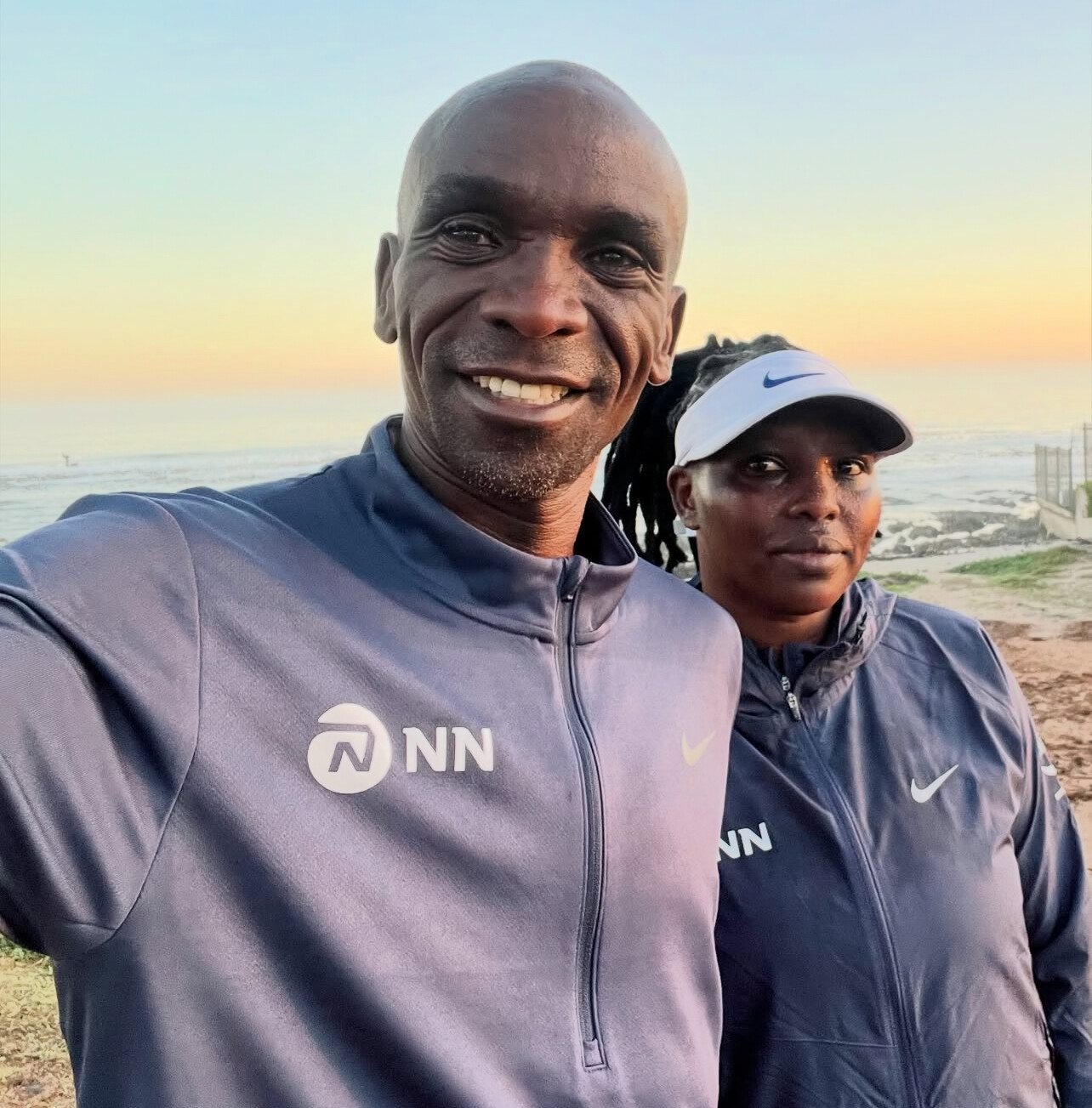
For more than two decades, the world has watched Eliud Kipchoge redefine the boundaries of endurance and greatness. At the 2026 Sanlam Cape Town Marathon, however, the spotlight belonged to someone whose strength has long existed away from the cameras — his wife, Grace Sugut.
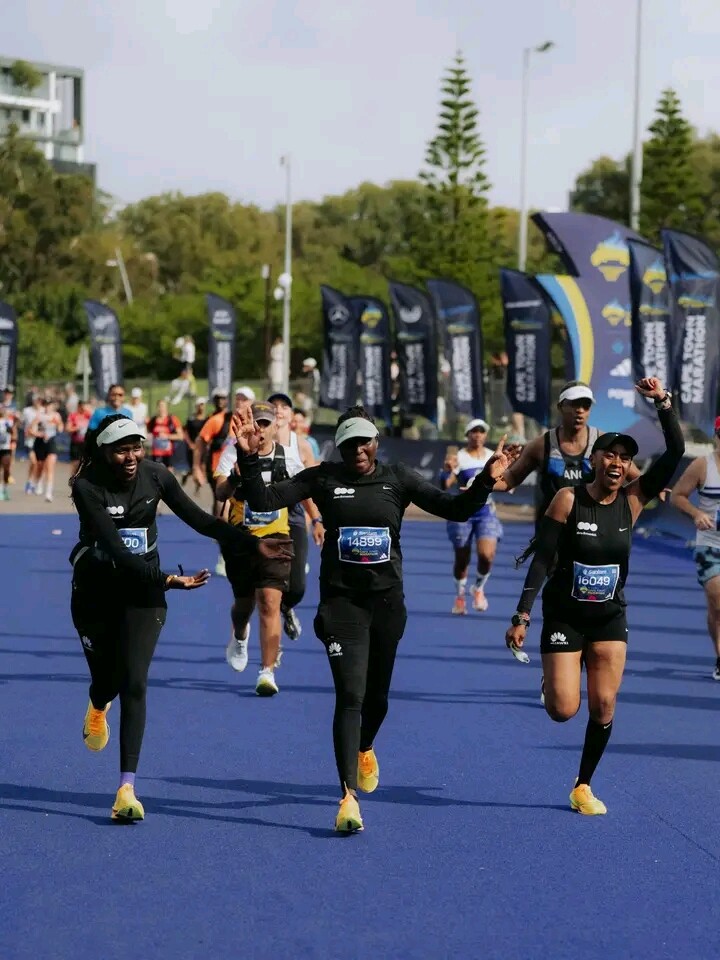
In one of the most emotional stories of the marathon weekend, Grace completed her very first 42.2-kilometre race in 4:29:59, transforming a personal milestone into a moment that resonated far beyond the finish line in Cape Town.
Her marathon journey unfolded exactly the way most first marathons do — honest, demanding, unpredictable, and deeply human. She opened with calm discipline, reaching 5K in 28:30 while maintaining a controlled rhythm. By halfway, she was still moving strongly through the streets of the Mother City in 2:02:47, showing patience and composure in the early stages of the race.
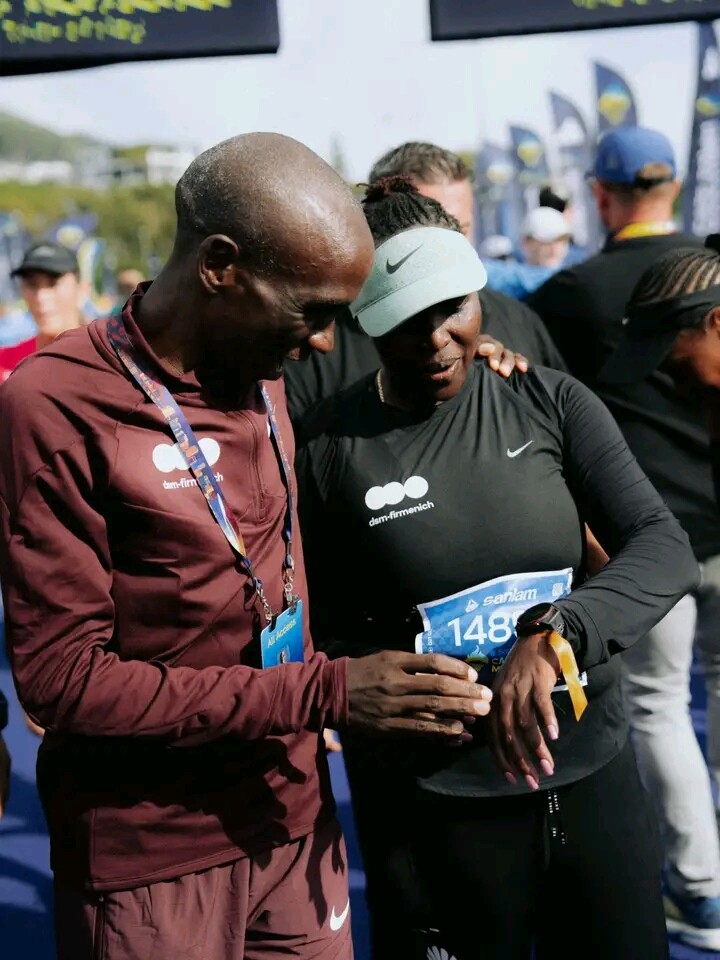
Then the marathon began asking harder questions.
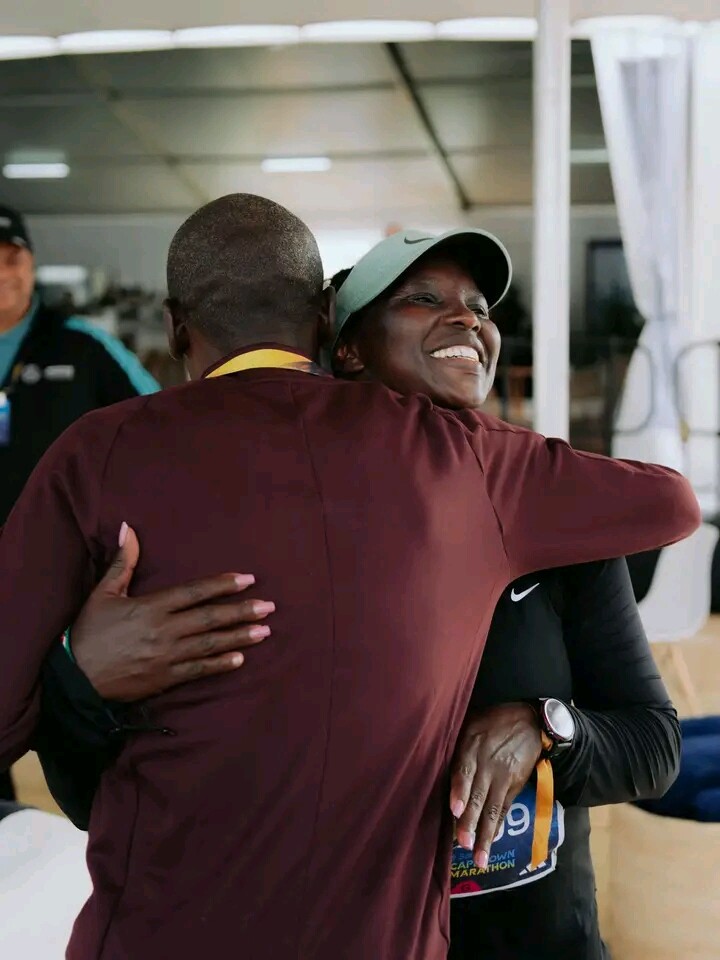
As the kilometres accumulated, the pace gradually slowed — the inevitable reality familiar to nearly every debut marathoner. By 30K, fatigue had started to take hold, and the final stretch became less about time and more about determination. Yet Grace kept pushing forward, kilometre after kilometre, refusing to surrender to the pain that defines the final chapter of every marathon.
And that perseverance carried special meaning.

Before the race, Eliud Kipchoge had spoken publicly about his wife’s challenge, encouraging her to embrace the suffering, trust the process, and simply finish the race. After she crossed the line, his words became even more powerful.
“I have run my first marathon 13 years ago. It has brought me to where I am today, but I could not do this without the support of many including my family,” Kipchoge shared. “My heart is filled with pride, for my wife Grace completing her first marathon in Cape Town.”
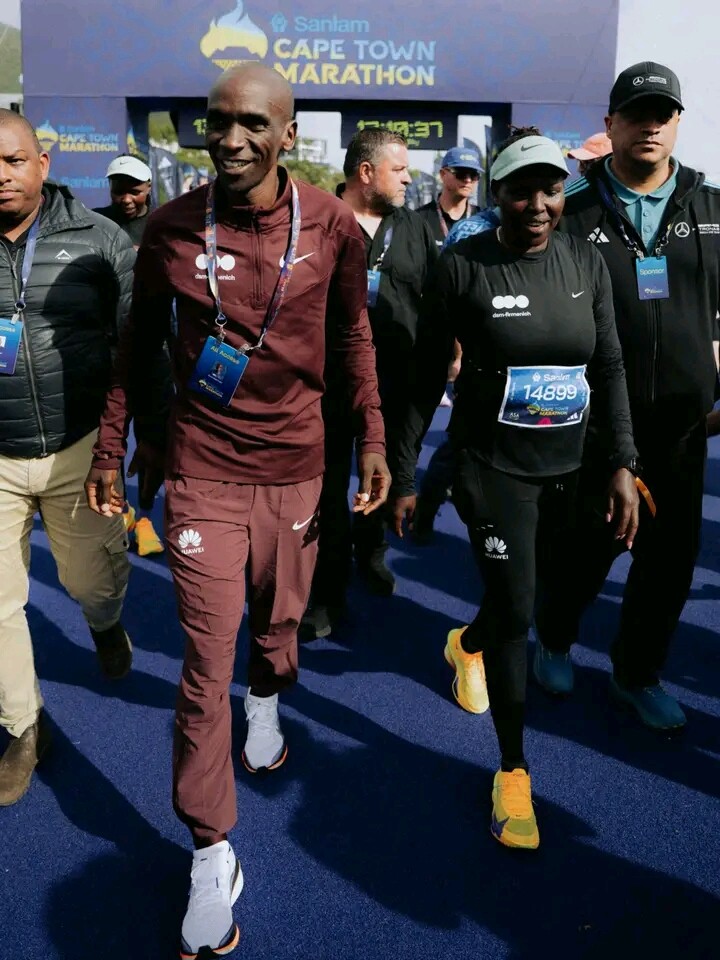
The message revealed a side of the marathon icon the world rarely sees — not the record-breaker or Olympic champion, but the grateful husband recognising the woman who has stood beside him throughout one of the greatest careers in sporting history.
While Eliud built a global legacy on the roads of Berlin, London, Tokyo, and Vienna, Grace quietly anchored the family behind the scenes in Eldoret, raising their children and managing family responsibilities far from international attention. For years, she supported marathon greatness from the sidelines. In Cape Town, she stepped into the arena herself.
That alone made her finish extraordinary.
Grace’s 4:29:59 will not enter record books, but its significance reaches somewhere deeper. It reflects the experience shared by countless runners around the world — the excitement of the start line, the physical battle through the closing kilometres, and the emotional reward that comes only after refusing to quit.
The final 12 kilometres tested her in every possible way. She answered every challenge with courage.
When Grace Sugut crossed the finish line in Cape Town, the crowd did not witness another world record performance. Instead, they witnessed something equally memorable: the beginning of a new running journey built on resilience, humility, and the quiet strength that has always existed behind one of athletics’ greatest champions.
by Erick Cheruiyot for My Best Runs.
Login to leave a comment
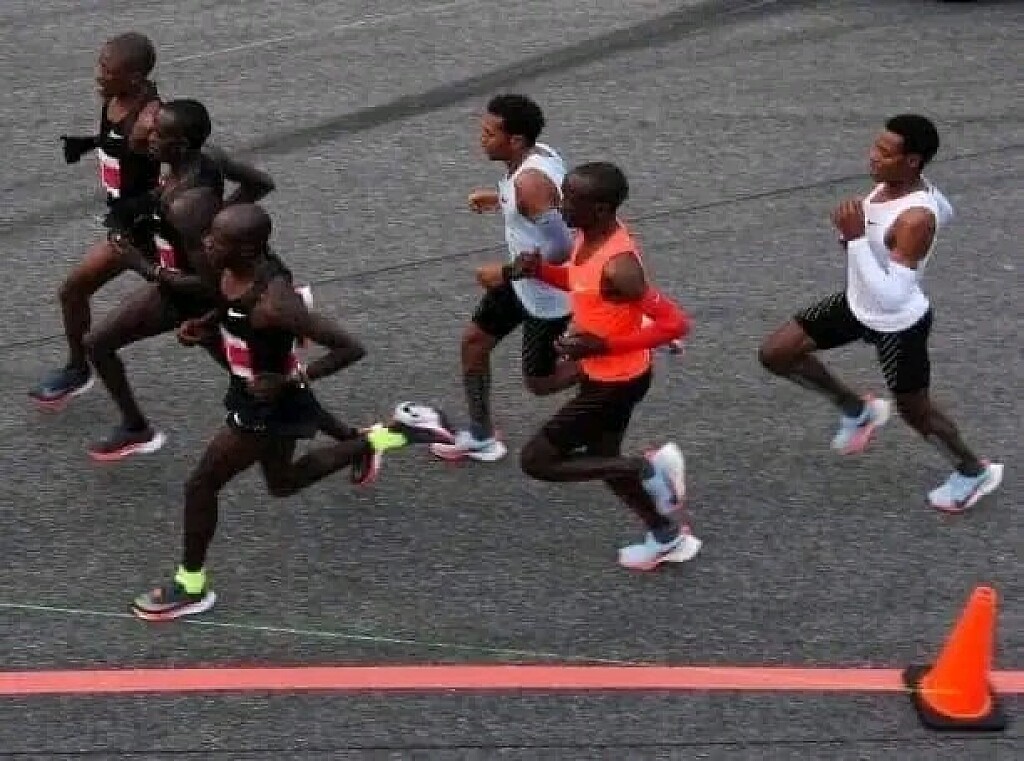
Breaking2: The Day Nike and Eliud Kipchoge Changed Marathon History Forever
On May 6, 2017, the world witnessed one of the boldest and most revolutionary experiments ever attempted in distance running. Under the ambitious Nike Breaking2 project, three elite athletes lined up with a single mission that many believed was impossible — to run a marathon in under two hours.

At the time, the official marathon world record stood at 2:02:57, and shaving nearly three minutes from that mark seemed beyond human limits. But Nike was not simply organizing a race. Breaking2 was designed as a complete scientific and athletic operation, bringing together advanced sports technology, physiology, pacing strategy, nutrition, and environmental optimization in pursuit of history.
The challenge took place at the Monza Formula One circuit in Italy, where conditions were carefully selected to maximize speed. Rotating pacemakers shielded the runners from wind resistance, hydration was delivered while moving, and every detail — from temperature and race rhythm to training models and recovery — was analyzed with precision.
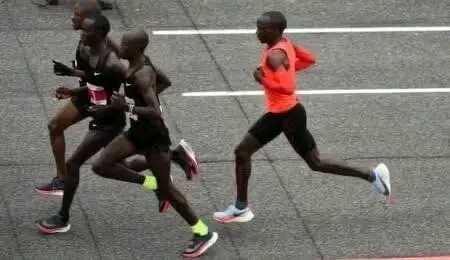
Although the event was not recognized as an official world record attempt because of the rotating pacemakers and mobile aid delivery, it became one of the defining moments in modern athletics.
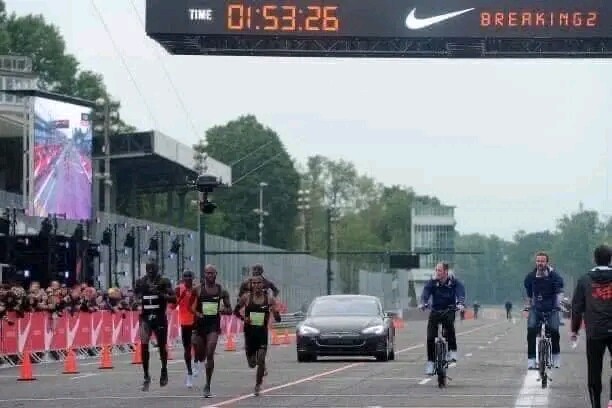
At the center of it all stood Eliud Kipchoge.
The Kenyan superstar produced a performance that stunned the sporting world, crossing the line in an astonishing 2:00:25 — just 25 seconds short of the mythical barrier. Remarkably, he missed the target by roughly one second per mile, proving just how close humanity had come to redefining endurance sport forever.
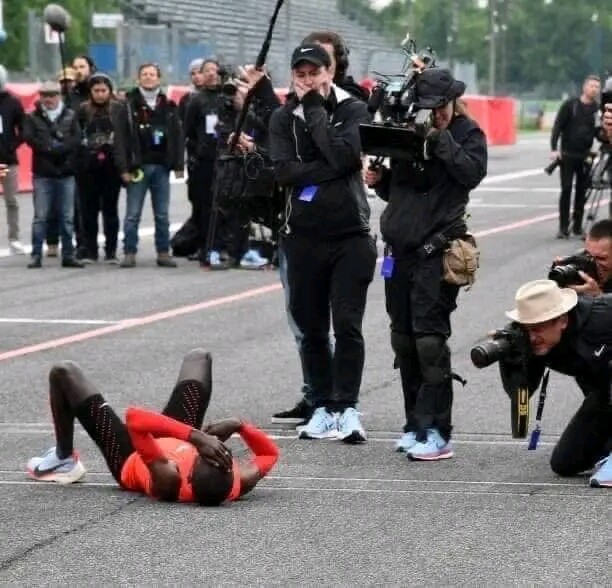
What made Kipchoge’s run even more extraordinary was the calmness and control he displayed throughout the attempt. While the pace demanded near perfection for two straight hours, he maintained remarkable composure, turning the final laps into an unforgettable moment of belief and resilience.
Years later, Kipchoge would finally complete the mission by running under two hours at the INEOS 1:59 Challenge in Vienna, cementing his legacy as the greatest marathon runner of all time. But Breaking2 was the foundation. It was the experiment that shifted human imagination.
The other two athletes in the challenge — Zersenay Tadese and Lelisa Desisa — also delivered courageous performances, though both finished outside the sub-two-hour mark despite all the optimizations provided.
Final Results
1. Eliud Kipchoge — 2:00:25
2. Zersenay Tadese — 2:06:51
3. Lelisa Desisa — 2:14:10
Beyond the stopwatch, Breaking2 transformed the entire sport. The project introduced the revolutionary Nike Zoom Vaporfly Elite, featuring a curved carbon-fiber plate combined with highly responsive Pebax foam cushioning. That innovation sparked the modern “super shoe” era that has since reshaped road racing and distance running worldwide.
For decades, marathon racing shoes were designed to be thin and lightweight with minimal cushioning. Breaking2 changed that philosophy completely. Suddenly, athletes could run with greater energy return, more protection, and increased efficiency without sacrificing speed. The impact has been so profound that marathon performances across the globe have entered an entirely new era.
More importantly, Breaking2 proved something deeper about sport itself: even with cutting-edge technology, ideal pacing, scientific preparation, and world-class talent, running a marathon at such extraordinary speeds remains one of the greatest physical achievements on Earth.
Nine years later, the images from Monza still feel iconic — the clock ticking toward two hours, the pacemakers rotating in formation, and Kipchoge surging toward the finish line with a smile that symbolized possibility itself.
Breaking2 was more than an event. It was the moment marathon running stepped into the future.
by Erick Cheruiyot for My Best Runs.
Login to leave a comment
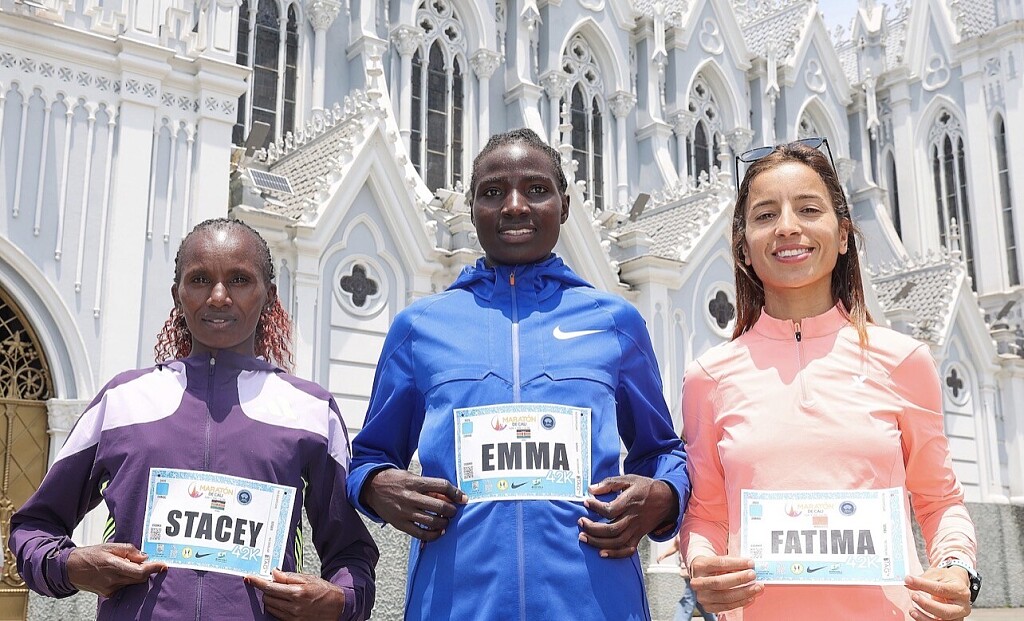
Cali Marathon Draws World-Class Talent in Bid to Become South America’s Premier Race
“Run in Heaven’s Capital.” That’s the bold promise as the Cali Marathon returns this Sunday in southwestern Colombia for its second edition. After a strong debut last year, organizers are aiming higher—positioning Cali as a future major international marathon.
They’ve taken a big step toward that goal with one of the deepest elite fields ever assembled on the continent. Kenya’s Ronald Korir (2:04:22) headlines the men’s race, while Eritrea’s Nazret Weldu (2:20:29) leads the women’s field. Defending champions Evans Mayaka and Emmah Ndiwa are back, but repeating will be anything but easy. No other marathon in South America currently matches Cali’s depth.
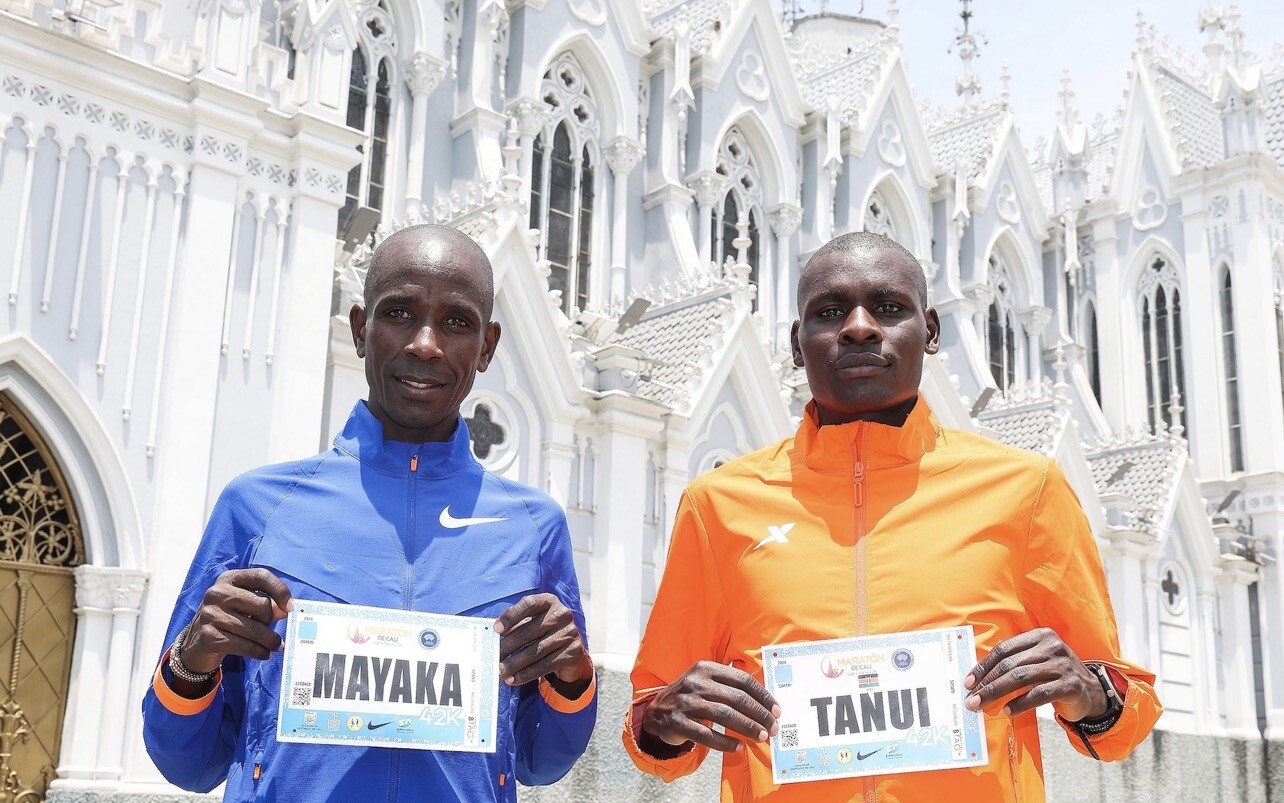
Participation has surged. A total of 20,000 athletes from 49 nations have entered across all distances, nearly doubling last year’s 11,000. The marathon itself will feature 3,000 runners. Race Director Luis Felipe Posso is encouraged but measured: the goal isn’t simply bigger numbers—it’s building a world-class marathon.
“This race has grown incredibly fast,” said Posso. “Now we want to increase the quality and establish Cali as a true destination for marathon runners.”
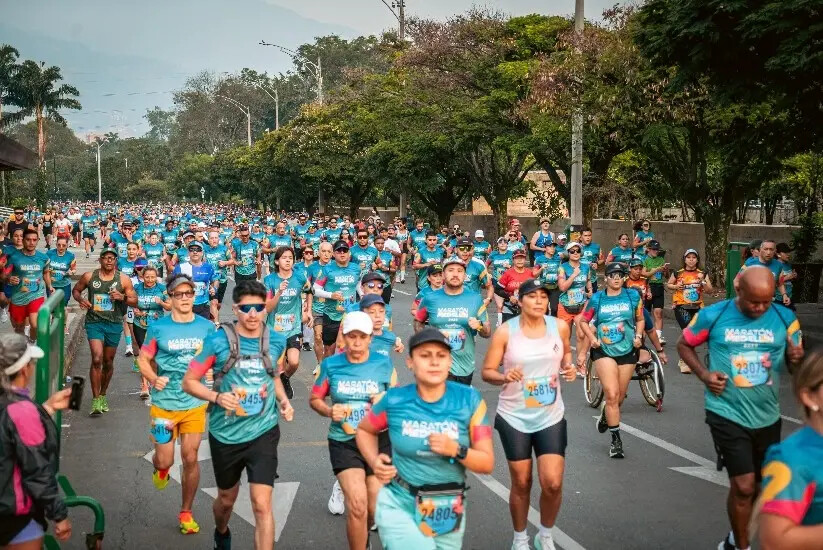
Even seasoned observers are impressed. Abel Antón, Spain’s two-time world marathon champion (1997, 1999), is in Cali as a guest of honor and noted how quickly the event has developed.
Conditions will play a role. At roughly 1,000 meters altitude with expected humidity and temperatures around 20°C (68°F), fast times are unlikely. But that often leads to compelling racing. Last year proved that, with late-race drama deciding the outcome.
Mayaka and Ndiwa both set Colombian all-comers’ records in 2025—2:11:04 and 2:29:26 respectively. Organizers would love to see those marks fall again, especially a first-ever sub-2:10 on Colombian soil.
Men’s Race
The depth is remarkable. Five athletes have run under 2:06, and eight have broken 2:10. Interestingly, defending champion Evans Mayaka ranks just ninth on paper with his 2:10:00 best—but he proved last year that position on a start list doesn’t decide the race.
Ronald Korir enters as the fastest man in the field. He ran 2:04:44 in Berlin and followed that with a strong 2:05:41 for fourth place in Hamburg. After battling injuries, he’s optimistic.
“It’s been a difficult couple of years, but my training for Cali has gone well,” Korir said. “I believe I can win.”
Ezra Tanui arrives in top form. He swept three marathons in 2025—Doha, JiLin, and Yellow River—and followed that with a 2:05:55 personal best for third in Osaka earlier this year.
“I’m confident,” Tanui said. “I’m not chasing a time—I trust my strength to carry me through.”
Adding to the moment, Kenya’s Abel Kirui—two-time world champion and Olympic silver medalist—will run the final marathon of his career. The 44-year-old owns a personal best of 2:05:04 and remains one of the sport’s most respected figures.
Women’s Race
The women’s field is equally competitive. Morocco’s Fatima Gardadi could thrive in Cali’s conditions. She won bronze at the 2023 World Championships in Budapest and has proven strength in warm-weather racing.
Nazret Weldu returns to competition after giving birth to her daughter in May last year. The Eritrean star, fourth at the 2022 World Championships and winner of the 2024 Vienna Marathon, is focused on competing rather than chasing time.
“I want to be competitive,” Weldu said. “I hope my strength will help me perform well.”
Kenya’s Stacy Ndiwa is another strong contender. The 2024 Los Angeles Marathon champion owns a 2:23:29 personal best and has shown consistency at major races. She is not related to defending champion Emmah Ndiwa, who will also be in the mix despite ranking outside the top tier on paper.
With so many athletes capable of contending, both races could come down to strength, patience, and positioning in the final kilometers—especially in Cali’s demanding conditions.
Elite runners with personal bests
MEN:
Ronald Korir KEN 2:04:22
Abel Kirui KEN 2:05:04
Okubay Tsegay ERI 2:05:20
Eric Kiptanui KEN 2:05:47
Ezra Tanui KEN 2:05:55
Challa Gossa ETH 2:07:32
Martin Musau UGA 2:08:42
Habtamu Birlew ETH 2:09:10
Evans Mayaka KEN 2:10:00
Derlys Ayala PAR 2:10:11
Ezra Kering KEN 2:11:55
Bernard Geay TAN 2:15:47
Mayko Geay TAN Debut
Brian Kwemoi KEN Debut
David Wanjohi KEN Debut
WOMEN:
Nazret Weldu ERI 2:20:29
Gladys Chesir KEN 2:20:30
Stacy Ndiwa KEN 2:23:29
Cynthia Kosgei KEN 2:23:43
Fatima Gardadi MAR 2:24:06
Letebrhan Haylay ETH 2:24:47
Sadiya Awel ETH 2:24:57
Emmah Ndiwa KEN 2:25:15
Rosa Chacha ECU 2:26:43
Nigist Muluneh ETH 2:27:41
Fatiha Benchatki MAR 2:28:29
Marcela Gomes ARG 2:28:58
Veronicah Wanjiru KEN 2:29:03
Login to leave a comment
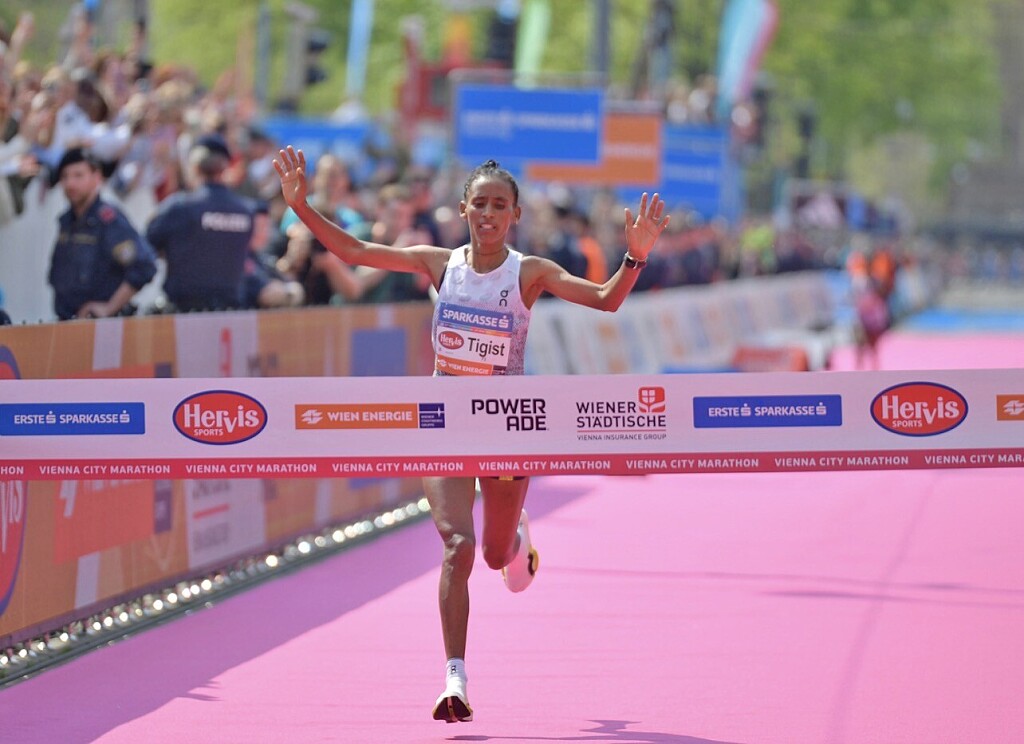
Gezahagn Breaks Course Record, Kiprotich Stuns Men’s Field at Vienna City Marathon
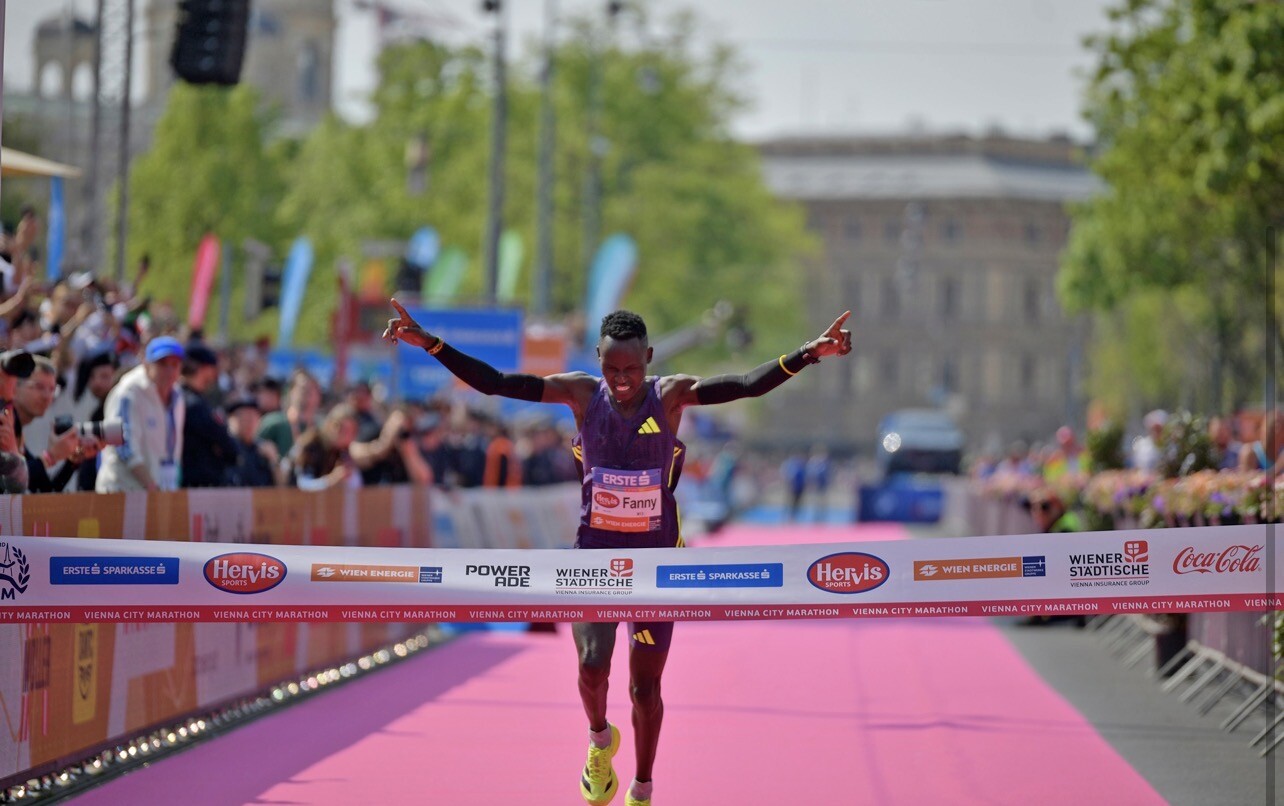
The Vienna City Marathon delivered a dramatic day of racing as Ethiopia’s Tigist Gezahagnshattered the course record and Kenya’s Fanny Kiprotich pulled off a surprise victory in the men’s race.
Gezahagn ran 2:20:06, slicing through the previous course record while also setting a personal best. The 26-year-old, who is visually impaired and a Paralympic 1500m champion, showed remarkable strength in the closing stages. Locked in a tight battle with fellow Ethiopian Haftamnesh Tesfaye, she made her decisive move inside the final kilometer, pulling clear in the last few hundred meters. Tesfaye, returning to the marathon after maternity leave, ran 2:20:18 to match her personal best from seven years ago. Kenya’s Hellen Chepkorir finished third in 2:23:48.
The women’s race quickly turned into a two-runner contest. Gezahagn and Tesfaye broke away early, hitting 10K in 33:30 with a growing gap. After a 70:24 half marathon split, the pace intensified. Tesfaye briefly fell near 30K after clipping Gezahagn’s heel but quickly rejoined the lead. The race remained close until Gezahagn surged again at 41K, creating a gap she would carry to the finish.
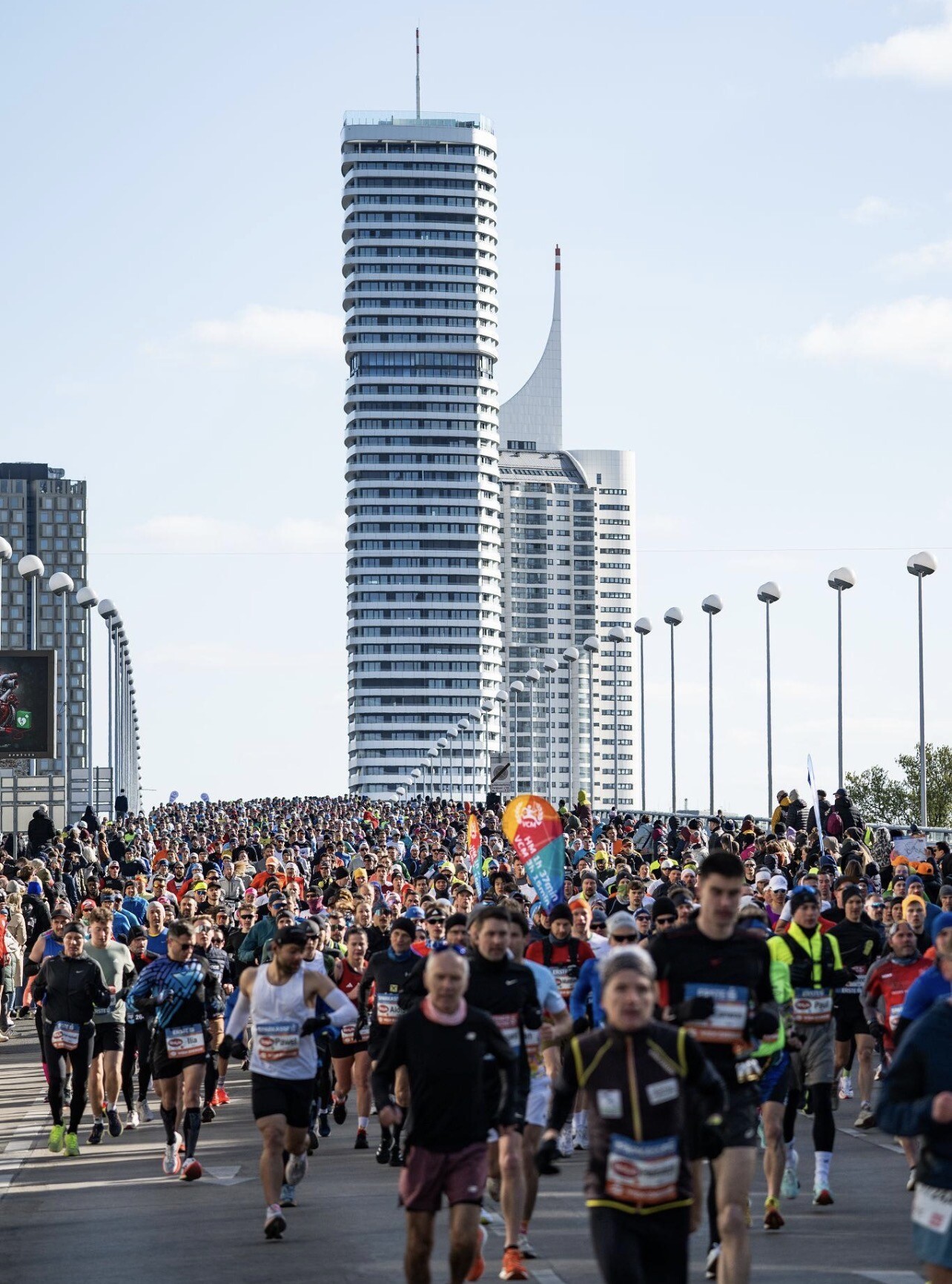
“This is a huge victory for me,” said Gezahagn. “The atmosphere was great. The warm temperatures did not bother me, but there was some wind.”
In the men’s race, few expected the outcome that unfolded. Fanny Kiprotich, a relative newcomer on the international stage, delivered a breakthrough performance, winning in 2:06:53 and improving his personal best by more than four minutes.
Pre-race favorite Oqbe Kibrom finished second in 2:08:10, while Kenya’s Charles Mneria took third in 2:08:42.
The early pace suggested a fast race, with the lead group hitting halfway in 63:06. After the pacemakers dropped out around 25K, four athletes remained in contention. Kiprotich made his first decisive move around 28K, and only Kibrom could respond. Passing 30K in 1:30:14, the race was still wide open—but Kiprotich surged again with about 10K to go and broke the race apart.
“I was confident because I was well prepared,” said Kiprotich. “My training was very good. I hope to improve significantly again in my next race.”
The 24-year-old had run just one previous marathon—winning in Tallinn last year in 2:11:21—making this performance all the more impressive.
The race also featured strong local performances, with Andreas Vojta finishing ninth in 2:15:07 as the top Austrian man, and Eva Wutti leading the Austrian women in 10th place with 2:42:37.
Now in its 43rd edition, the Vienna City Marathon continues to grow as one of Europe’s premier road races. A record 12,995 runners entered the marathon, while a total of 49,379 athletes from 150 countries participated across all weekend events.
One of the weekend’s standout performances came on Saturday in the Vienna 5K, where Austria’s Lisa Redlinger set a national record of 15:34, breaking the previous mark by six seconds.
Men
Fanny Kiprotich (KEN) – 2:06:53
Oqbe Kibrom (ERI) – 2:08:10
Charles Mneria (KEN) – 2:08:42
Samwel Kiptoo (KEN) – 2:09:03
Simon Mwangi (KEN) – 2:09:05
Tafese Delegen (ETH) – 2:09:55
Mica Cheserek (KEN) – 2:12:15
Adam Lomb (HUN) – 2:12:48
Women
Tigist Gezahagn (ETH) – 2:20:06
Haftamnesh Tesfaye (ETH) – 2:20:18
Hellen Chepkorir (KEN) – 2:23:48
Faith Chepkoech (KEN) – 2:28:10
Tegest Ymer (ETH) – 2:28:15
Mary Granja (ECU) – 2:28:29
Lindsay Flanagan (USA) – 2:28:34
Vaida Zusinaite (LTU) – 2:35:29
by Race News Service
Login to leave a comment

Vienna City Marathon
More than 41,000 runners from over 110 nations take part in the Vienna City Marathon, cheered on by hundreds of thousands of spectators. From the start at UN City to the magnificent finish on the Heldenplatz, the excitement will never miss a beat. In recent years the Vienna City Marathon has succeeded in creating a unique position as a marathon...
more...
Vienna City Marathon Set for a World-Class Showdown as Global Stars Arrive
The stage is set for an electrifying edition of the Vienna City Marathon as an impressive field of international stars prepares to take on the streets of Vienna. With proven champions, rising contenders, and elite distance specialists all confirmed, fans can expect a thrilling battle from start to finish.
Leading the spotlight is Kenya’s Betty Chepkemoi, who returns as defending champion determined to protect her crown after last year’s triumph. Her experience on the Vienna course makes her one of the standout names in the women’s race.

She will face fierce competition from Ethiopia’s talented duo of Haftamnesh Tesfaye and Tigist Gezahagn, both eager to challenge for top honors and continue Ethiopia’s proud tradition of marathon excellence.
The international women’s field is further strengthened by American standout Lindsay Flanagan, whose consistency and strength over the marathon distance make her a serious contender for the podium.

In the men’s race, Eritrea’s Oqbe Kibrom brings major championship pedigree and determination, while Kenya’s Stanley Kurgat and Mica Cheserek add more firepower to an already loaded field.
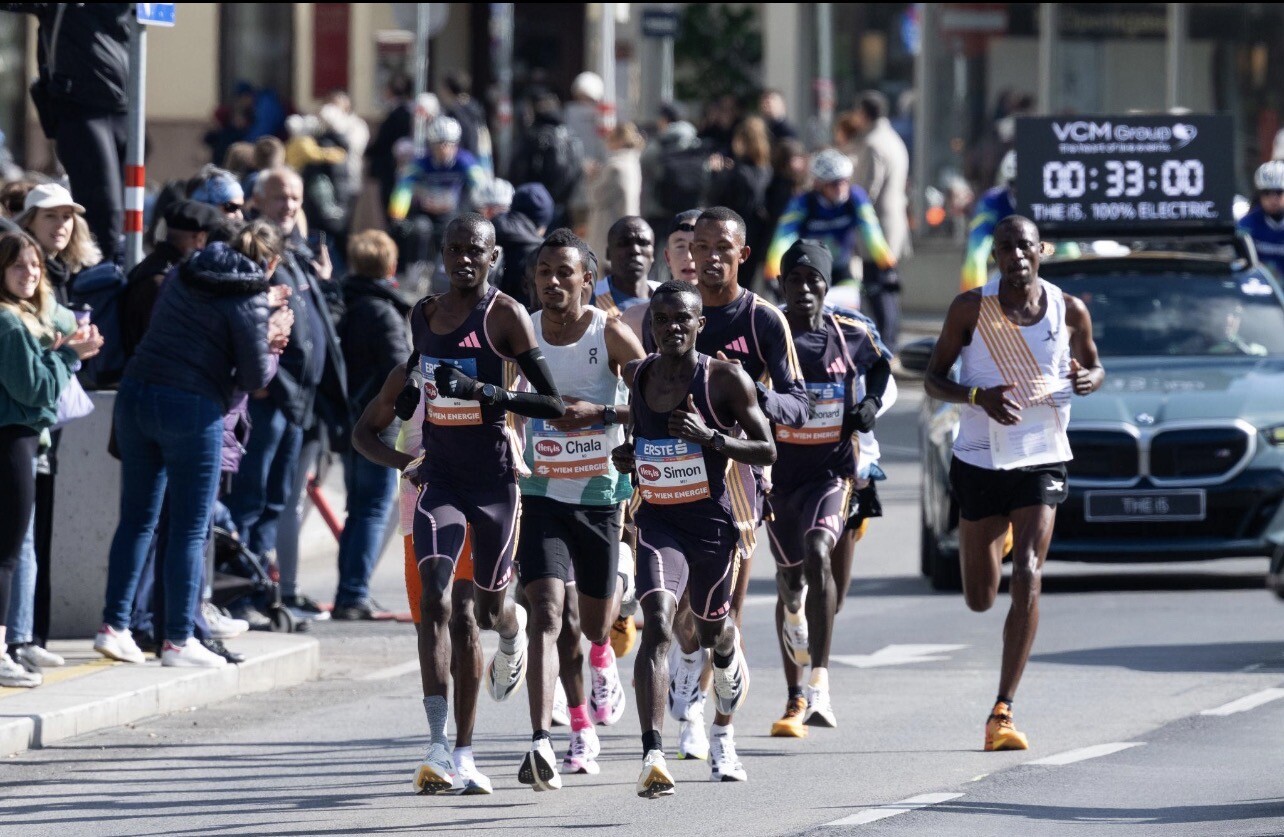
Beyond the elite competition, the atmosphere in Vienna promises to be unforgettable, with thousands of spectators expected to line the route and cheer on runners from around the world. The race has built a reputation for fast times, passionate crowds, and unforgettable moments—and this year looks no different.
With so much talent assembled on one start line, the Vienna City Marathon is ready to deliver another chapter of world-class road racing. All eyes now turn to Vienna for what could be one of the season’s most exciting marathon battles.
Big Event, Global Field
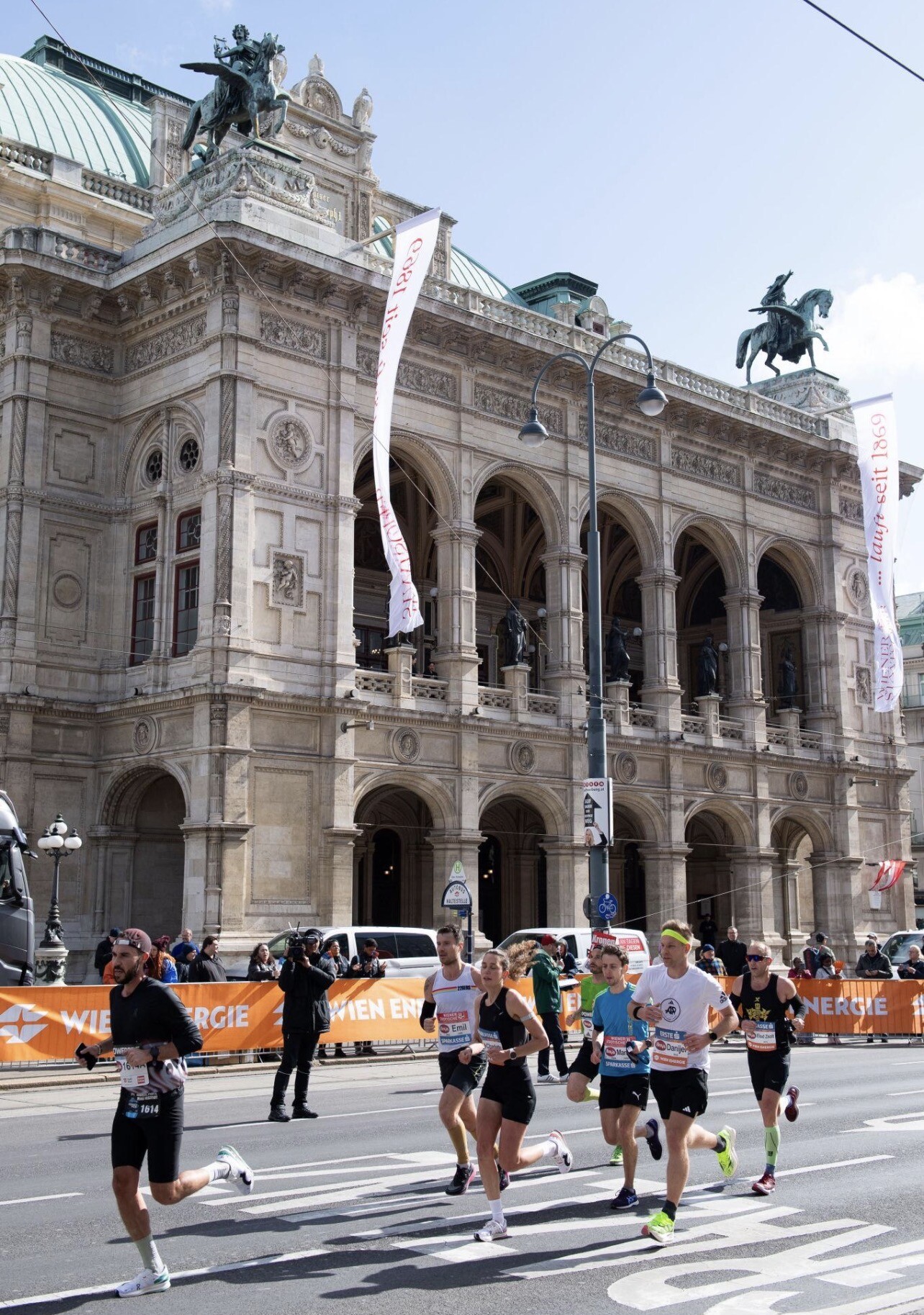
Around 13,000 runners will take part in the marathon, with a total of 49,000 participants across all events, representing 150 countries
Elite Field (Personal Bests)
MEN
Oqbe Kibrom (ERI) – 2:05:37
Tafese Delegen (ETH) – 2:06:11
Stanley Kurgat (KEN) – 2:07:05
Albert Kangogo (KEN) – 2:07:26
Charles Mneria (KEN) – 2:08:54
Micah Cheserek (KEN) – 2:09:26
Samwel Kiptoo (KEN) – 2:09:45
Aaron Gruen (AUT) – 2:09:53
Paul Tiongik (KEN) – 2:10:25
Abel Sikowo (UGA) – 2:10:33
Mogos Tuemay (ETH) – 2:10:33
Fanny Kiprotich (KEN) – 2:11:21
Andreas Vojta (AUT) – 2:13:43
by Erick Cheruiyot for My Best Runs with Race News Service
Login to leave a comment
Vienna City Marathon
More than 41,000 runners from over 110 nations take part in the Vienna City Marathon, cheered on by hundreds of thousands of spectators. From the start at UN City to the magnificent finish on the Heldenplatz, the excitement will never miss a beat. In recent years the Vienna City Marathon has succeeded in creating a unique position as a marathon...
more...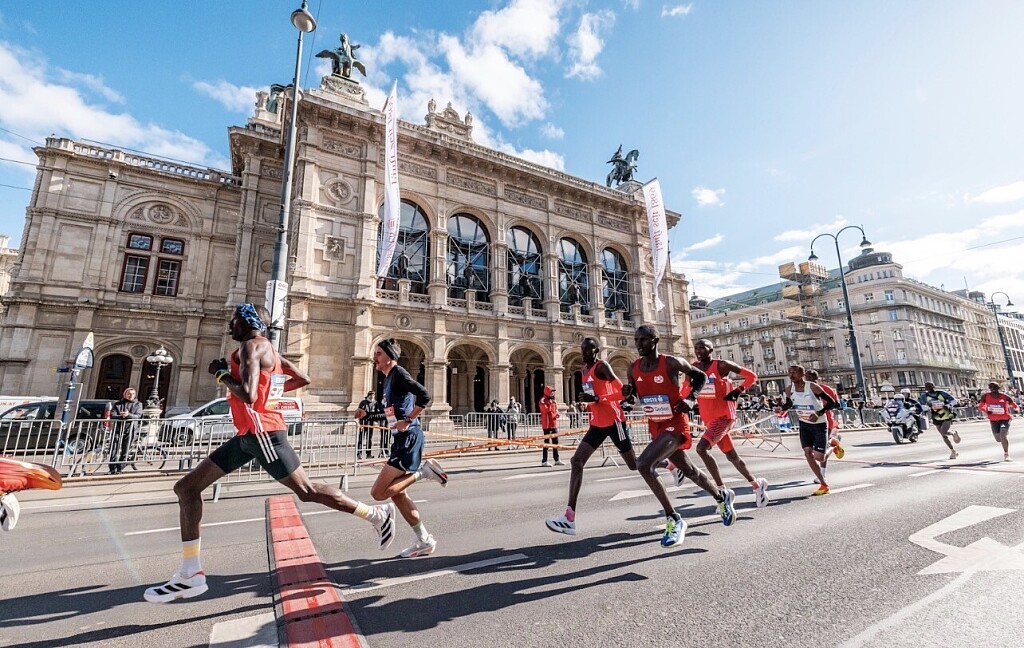
Vienna City Marathon Set for Strong African Challenge and Austrian Breakthrough
The Vienna City Marathon returns on April 19 with a deep elite field and the promise of fast racing on one of Europe’s most scenic courses. Now in its 43rd edition, the race continues to grow in stature, drawing top international talent alongside strong national contenders.
Organizers have recorded a record 49,000 entries, with 13,000 runners set to tackle the classic marathon distance—further cementing Vienna’s place as a major destination on the global running calendar.
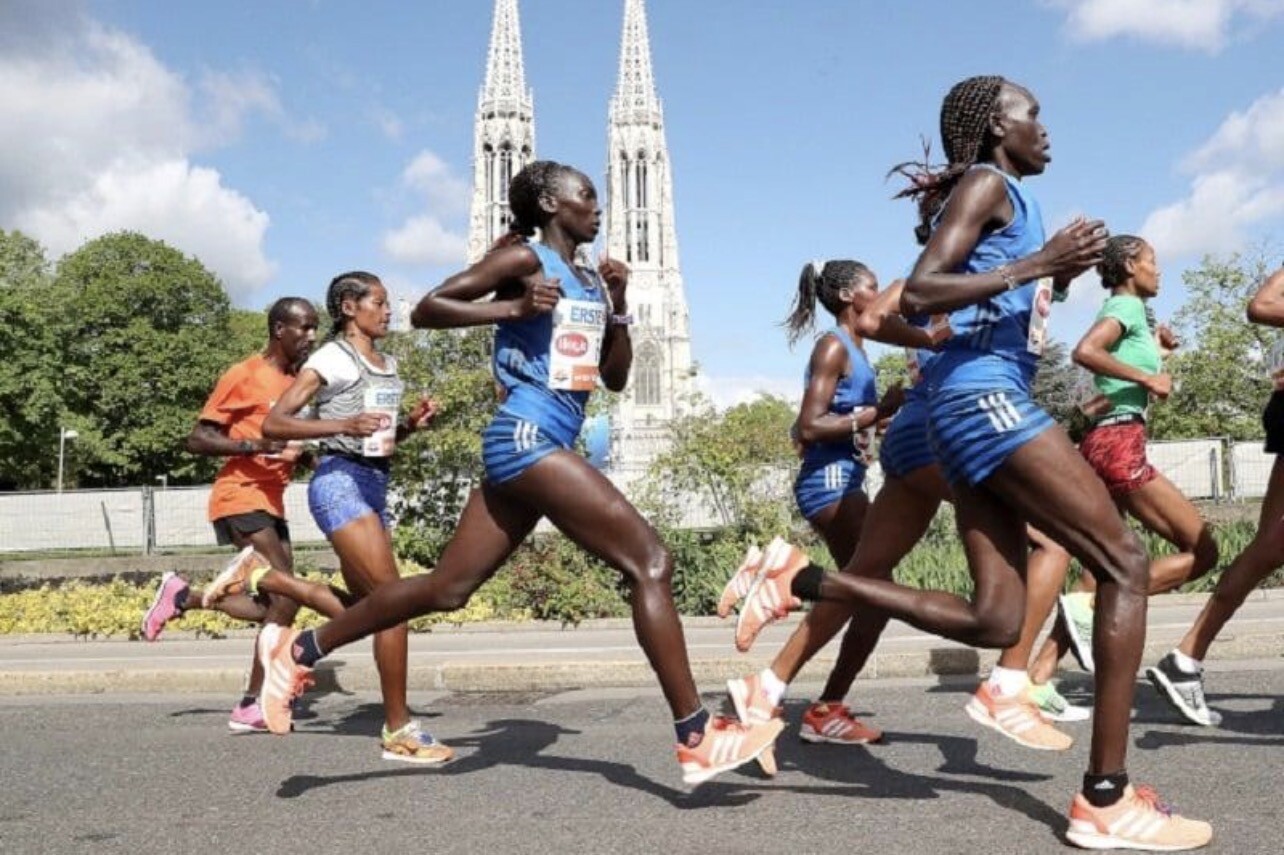
Women’s Race: Record in Sight
The women’s race could be historic. If conditions cooperate, the field may challenge both the course record and potentially break 2:20:00 for the first time on Austrian soil.
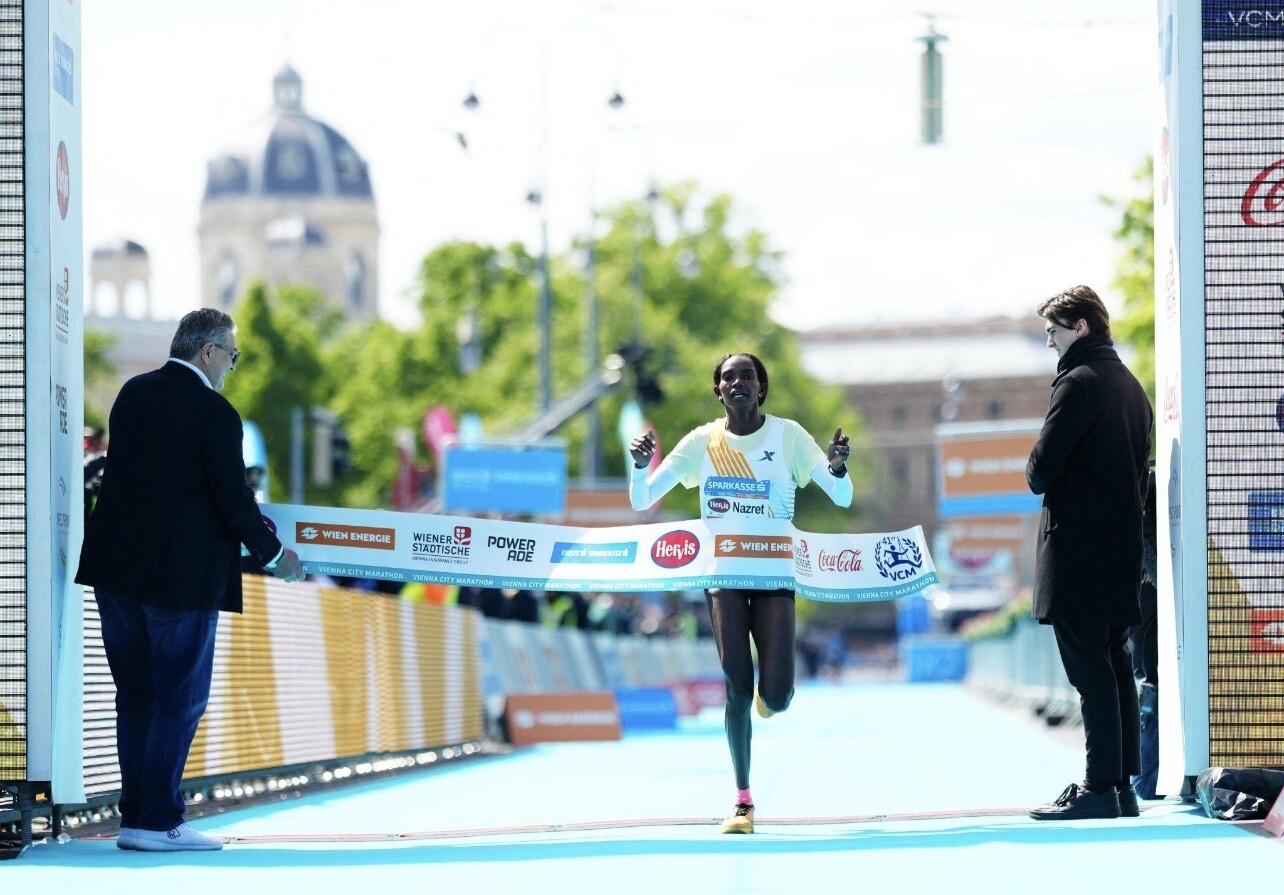
Four years ago, Kenya’s Vibian Chepkirui set the current course record of 2:20:59. This year, a trio of standout contenders could push the pace even further.
Ethiopia’s Haftamnesh Tesfaye leads the field with a personal best of 2:20:13. She is joined by compatriot Tigist Gezahagn (2:21:14), making Ethiopia a strong force at the front. Tesfaye also brings added intrigue as the sister of rising star Fotyen Tesfay.
Defending champion Betty Chepkemoi returns after a gritty win last year in difficult conditions, where she clocked a personal best of 2:24:14. Should the weather turn cold again, it could once more play to her strengths.
American Lindsay Flanagan adds further depth to the field. With a personal best of 2:23:31, she begins her comeback following injury and will be one to watch.
Men’s Race: Depth and Local Ambition
The men’s race features exceptional depth, with four athletes holding personal bests under 2:08:00.
Eritrea’s Oqbe Kibrom leads the field with a standout best of 2:05:37 and enters as the clear favorite. He will face strong competition from Ethiopia’s Tafese Delegen (2:06:11), along with Kenya’s Stanley Kurgat (2:07:05) and Albert Kangogo (2:07:26).
Beyond the front group, the race includes several sub-2:10 performers, ensuring a competitive and tactical contest.
A major storyline for the host nation centers on Austrian record holder Aaron Gruen. He surprised many last year by setting a national record of 2:09:53 and will now compete in Vienna for the first time, aiming to improve further on home soil.
Elite Fields – Personal Bests
MEN
Oqbe Kibrom (ERI) – 2:05:37
Tafese Delegen (ETH) – 2:06:11
Stanley Kurgat (KEN) – 2:07:05
Albert Kangogo (KEN) – 2:07:26
Charles Mneria (KEN) – 2:08:54
Mica Cheserek (KEN) – 2:09:26
Samwel Kiptoo (KEN) – 2:09:45
Aaron Gruen (AUT) – 2:09:53
Paul Tiongik (KEN) – 2:10:25
Abel Sikowo (UGA) – 2:10:33
Mogos Tuemay (ETH) – 2:10:33
Fanny Kiprotich (KEN) – 2:11:21
Andreas Vojta (AUT) – 2:13:43
WOMEN
Haftamnesh Tesfaye (ETH) – 2:20:13
Tigist Gezahagn (ETH) – 2:21:14
Lindsay Flanagan (USA) – 2:23:31
Betty Chepkemoi (KEN) – 2:24:14
Mary Granja (ECU) – 2:26:34
Faith Chepkoech (KEN) – 2:26:22
Hellen Chepkorir (KEN) – 2:27:17
Tegest Ymer (ETH) – 2:29:11
Caroline Korir (KEN) – 2:29:46
Abigail Jepkemboi (KEN) – 2:29:56
Eva Wutti (AUT) – 2:30:43
Aiwa Sakaguchi (JPN) – 2:31:50
Hanne Maridal (NOR) – 2:32:14
Vaida Zusinaite (LTU) – 2:32:50
Susanna Saapunki (FIN) – Debut
by Race News Service
Login to leave a comment
Vienna City Marathon
More than 41,000 runners from over 110 nations take part in the Vienna City Marathon, cheered on by hundreds of thousands of spectators. From the start at UN City to the magnificent finish on the Heldenplatz, the excitement will never miss a beat. In recent years the Vienna City Marathon has succeeded in creating a unique position as a marathon...
more...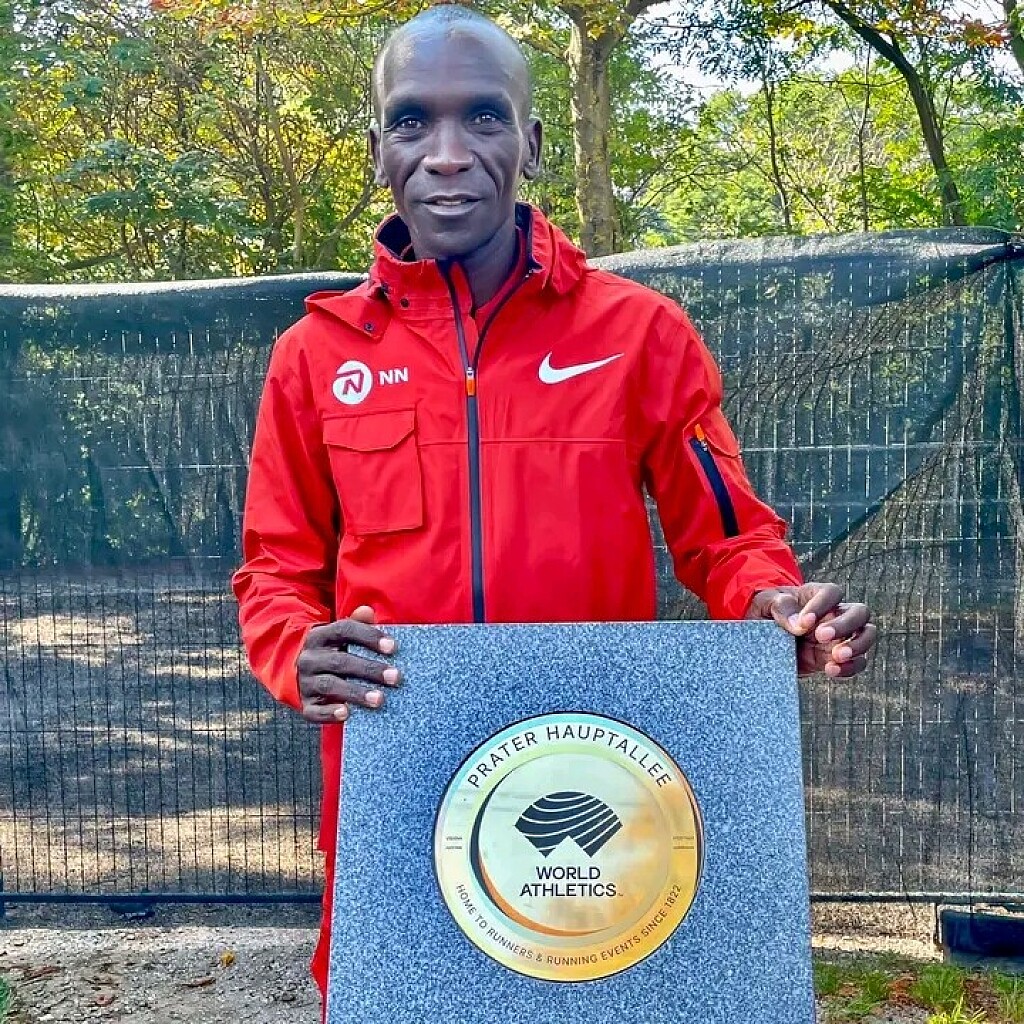
Where History Breathes: Kipchoge Returns to Vienna’s Sacred Road
In the quiet elegance of Vienna’s Prater, where chestnut trees line a road that has witnessed one of the greatest moments in human endurance, Eliud Kipchoge stood once again—this time not in motion, but in reflection. The Kenyan legend posed beside the World Athletics Heritage Plaque, a symbol that immortalizes the very ground where history was rewritten.
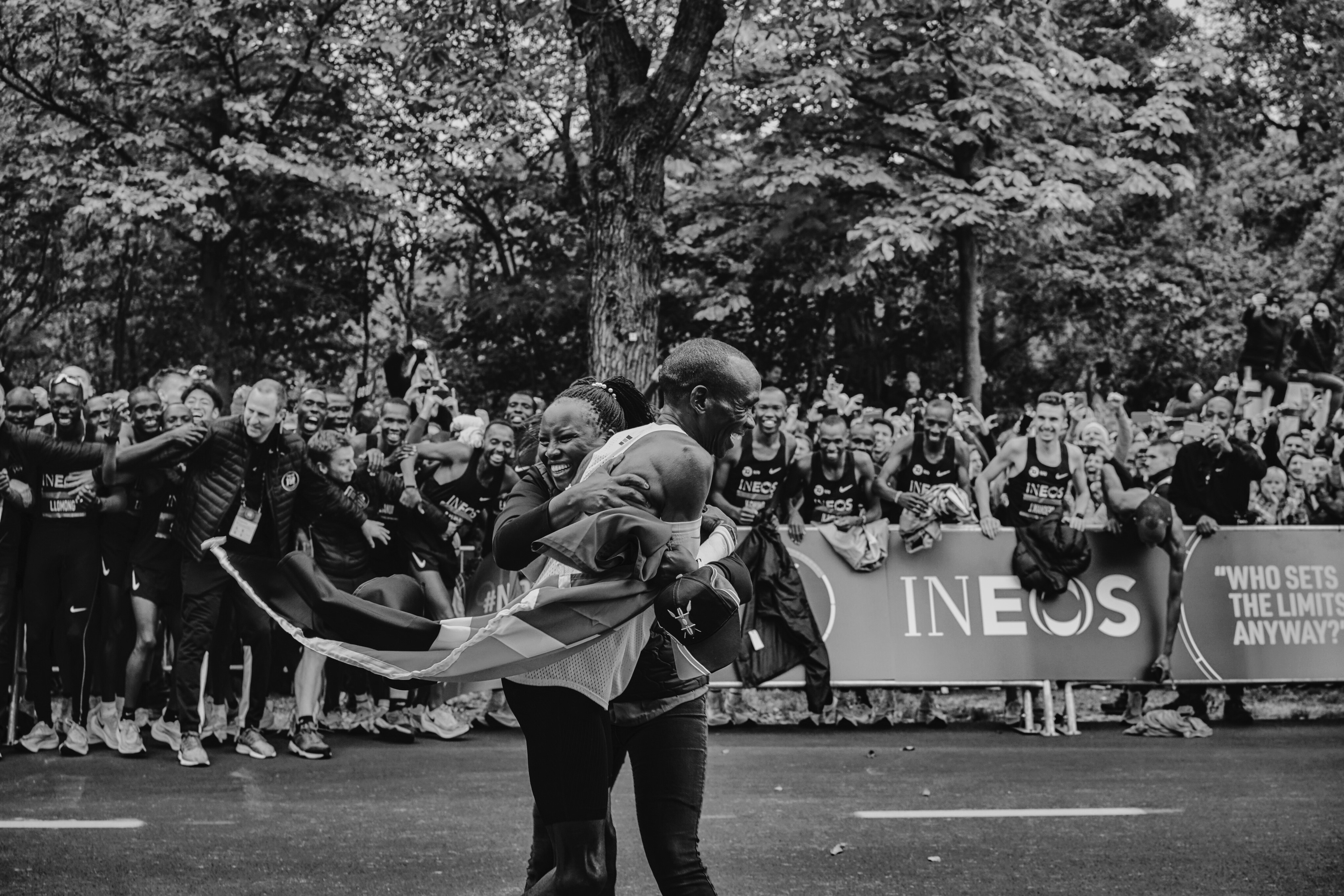
The Prater Hauptallee, a long, straight boulevard in Vienna, is no ordinary stretch of road. In 2019, it became the stage for the extraordinary during the INEOS 1:59 Challenge, when Kipchoge achieved what had long been considered beyond human limits—running a marathon in under two hours. Clocking an astonishing 1:59:40, he didn’t just break a barrier; he redefined possibility itself.
Though the performance was not ratified as an official world record due to controlled conditions, its significance transcended regulations. It was a moment that united science, precision, and human willpower in perfect harmony. The road beneath his feet that day has since been recognized as a site of global athletic importance.
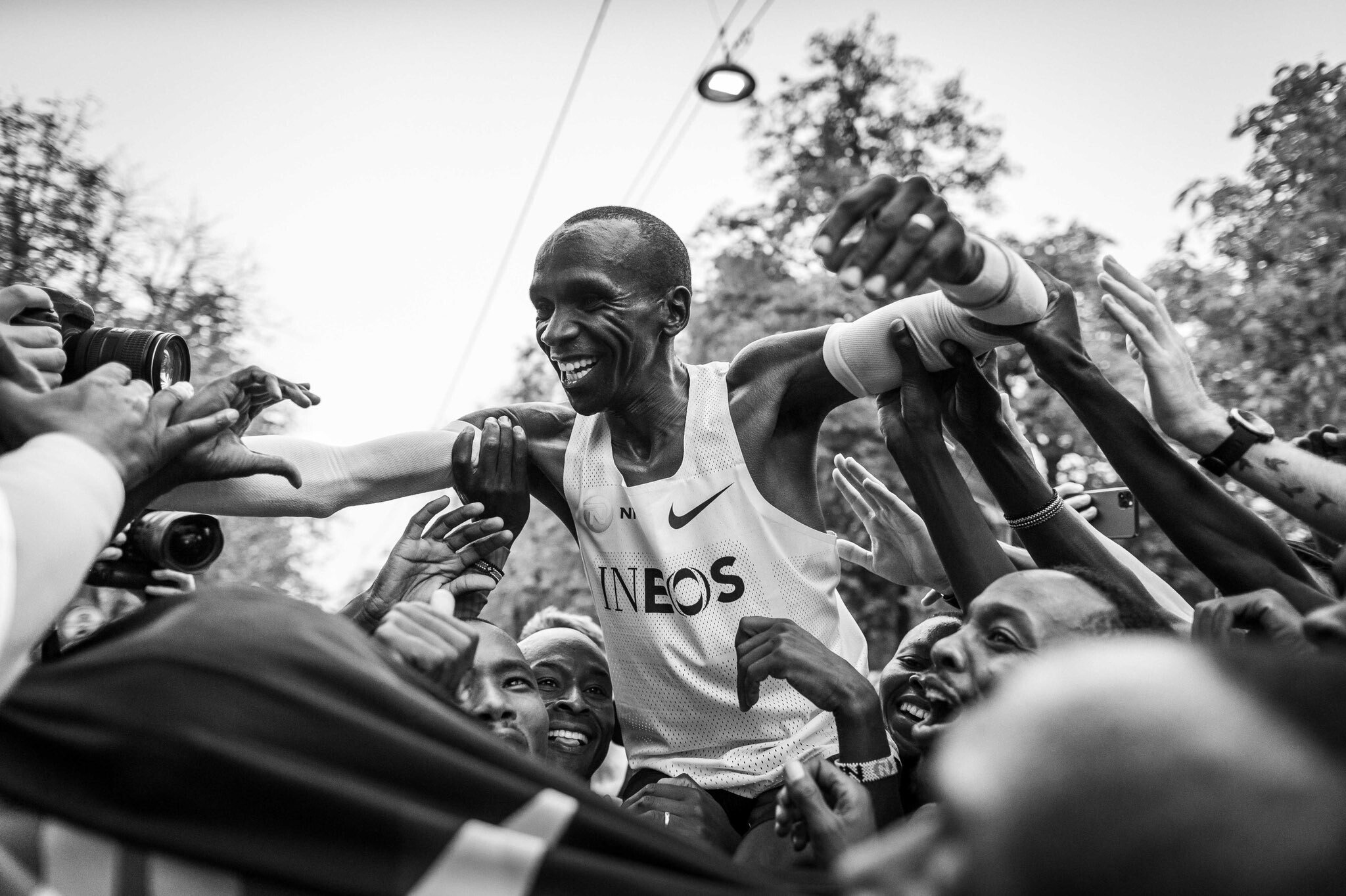
In 2022, World Athletics awarded the Prater Hauptallee its prestigious Heritage Plaque, officially acknowledging it as a landmark in the history of sport. And now, years later, Kipchoge’s return to that same location feels almost poetic—a reunion between a man and the path that carried him into immortality.
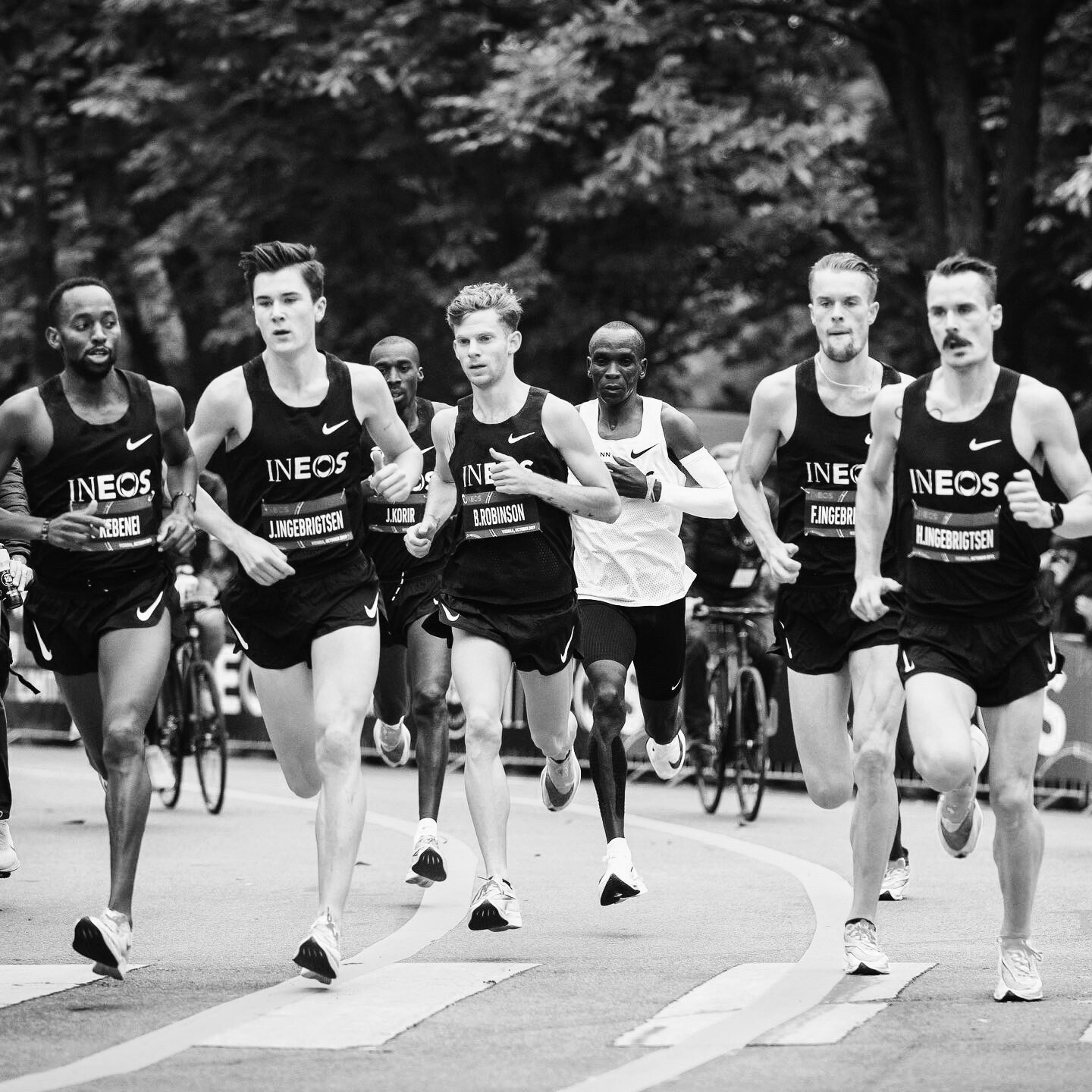
There is something deeply symbolic about the image: Kipchoge, calm and composed, standing still on the very ground where he once moved faster than any human ever had over 42.195 kilometers. It is a reminder that greatness is not only about speed, but also about legacy.
For Kipchoge, whose philosophy has always centered on discipline, humility, and mental strength, the moment is less about celebration and more about reflection. “No human is limited,” he famously said—a mantra that echoed across the world after that historic run. Today, that message feels just as powerful, etched not only in memory but now in the very soil of Vienna.
As athletes and dreamers continue to chase their own limits, the Prater stands as a quiet witness—a place where the impossible was made real. And at its heart remains Kipchoge, not just as a champion, but as a symbol of what humanity can achieve when belief meets relentless pursuit.
by Erick Cheruiyot for My Best Runs.
Login to leave a comment
Vienna City Marathon Women Ready to Chase History
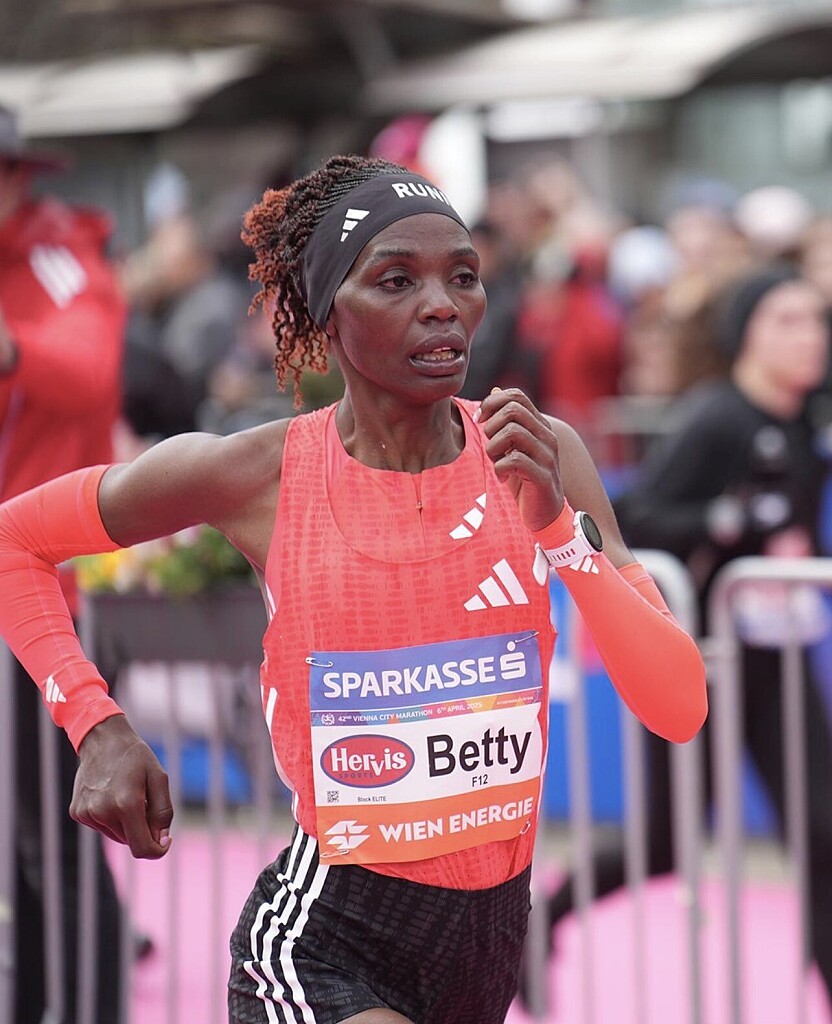
The spotlight may shine brightest on the women’s race at the Vienna City Marathon on April 19, where a deep Ethiopian lineup is ready to push the pace. Haftamnesh Tesfaye and Tigist Gezahagn lead the elite field, with organizers targeting not only the course record of 2:20:59 but potentially the first sub-2:20 performance in race history.
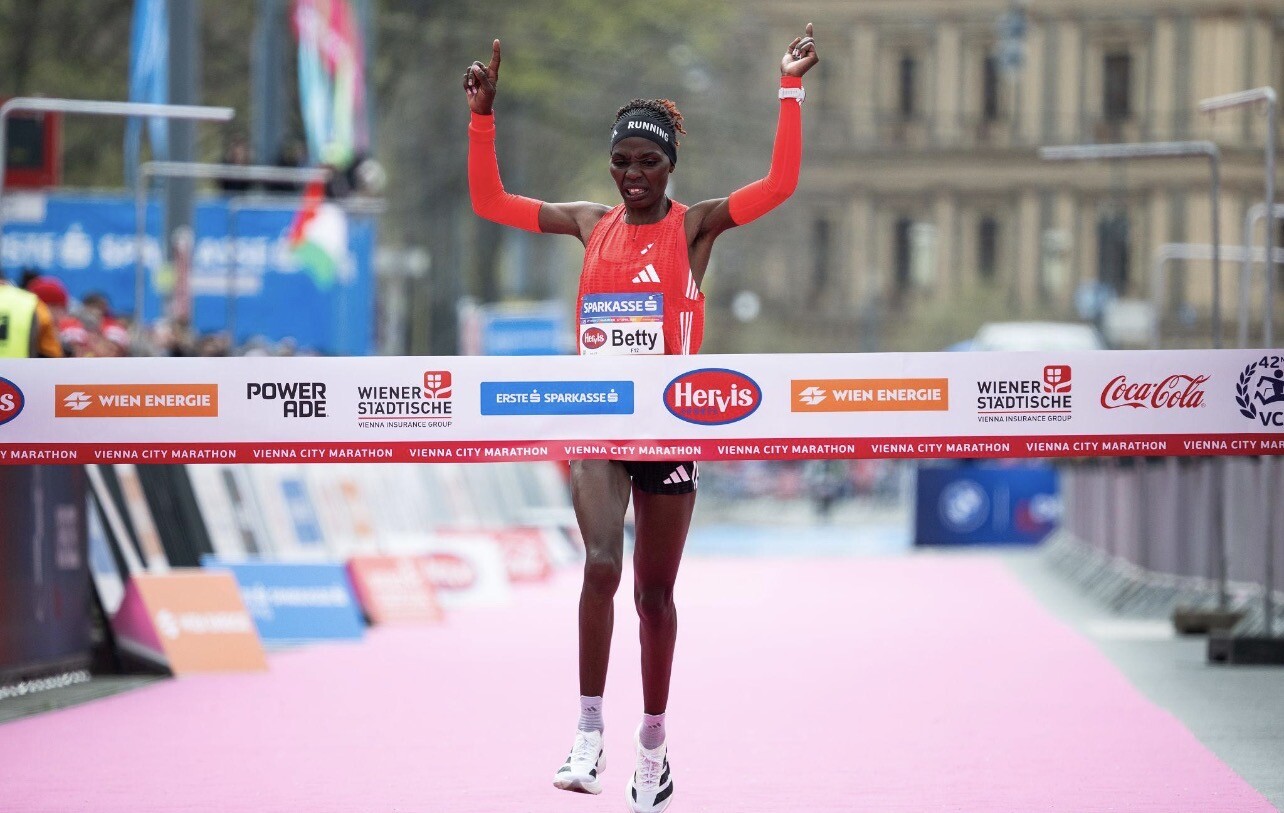
They will be challenged by Kenya’s defending champion Betty Chepkemoi, who returns with confidence after a breakthrough victory last year.
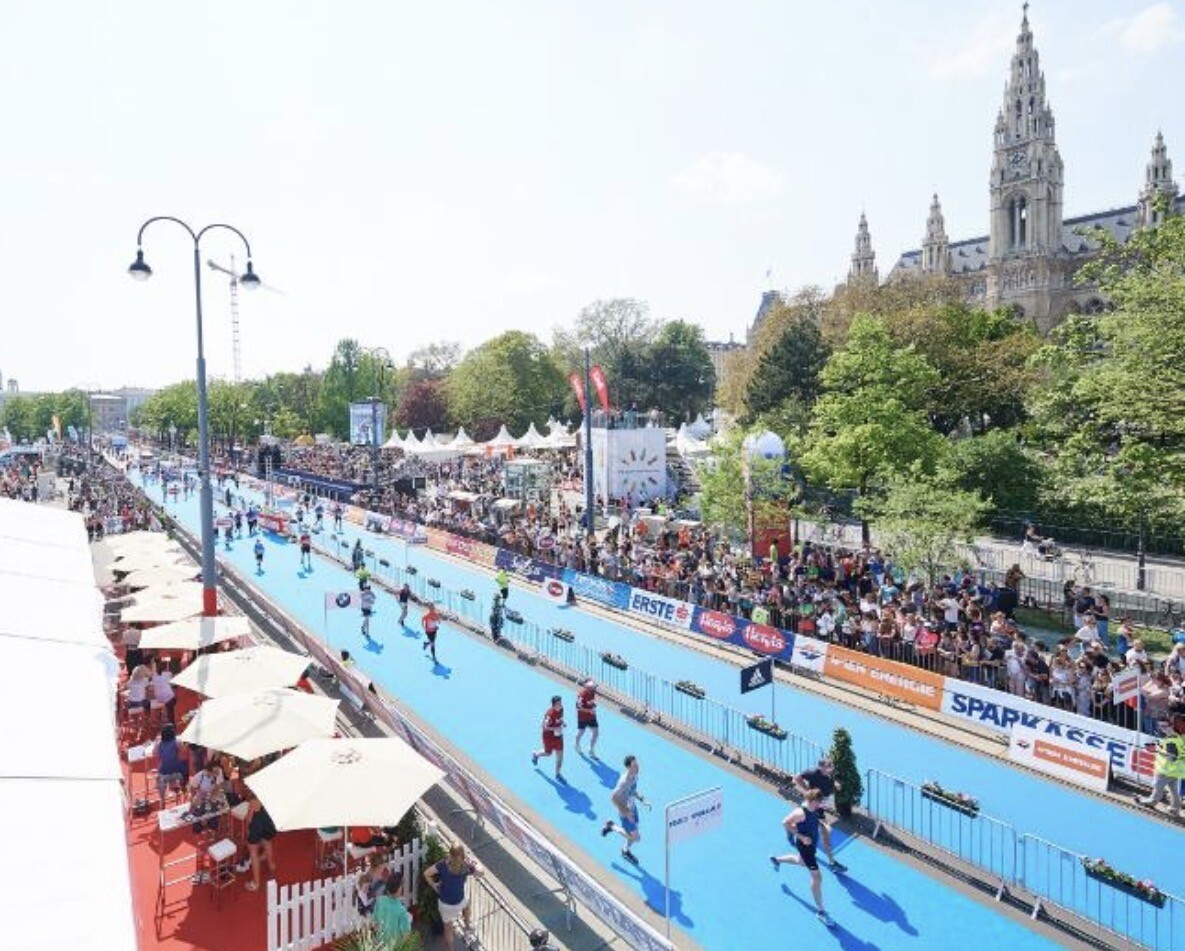
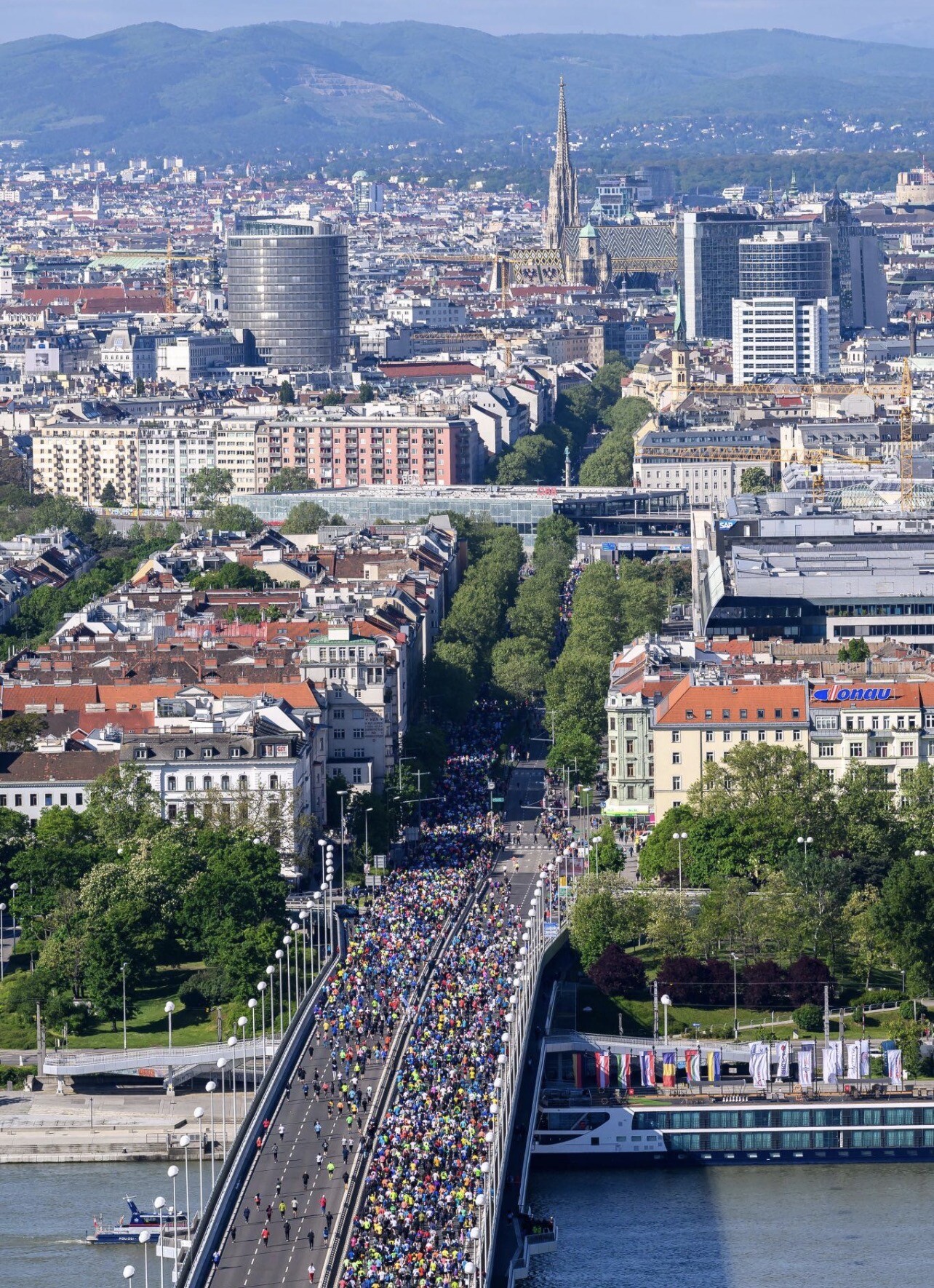
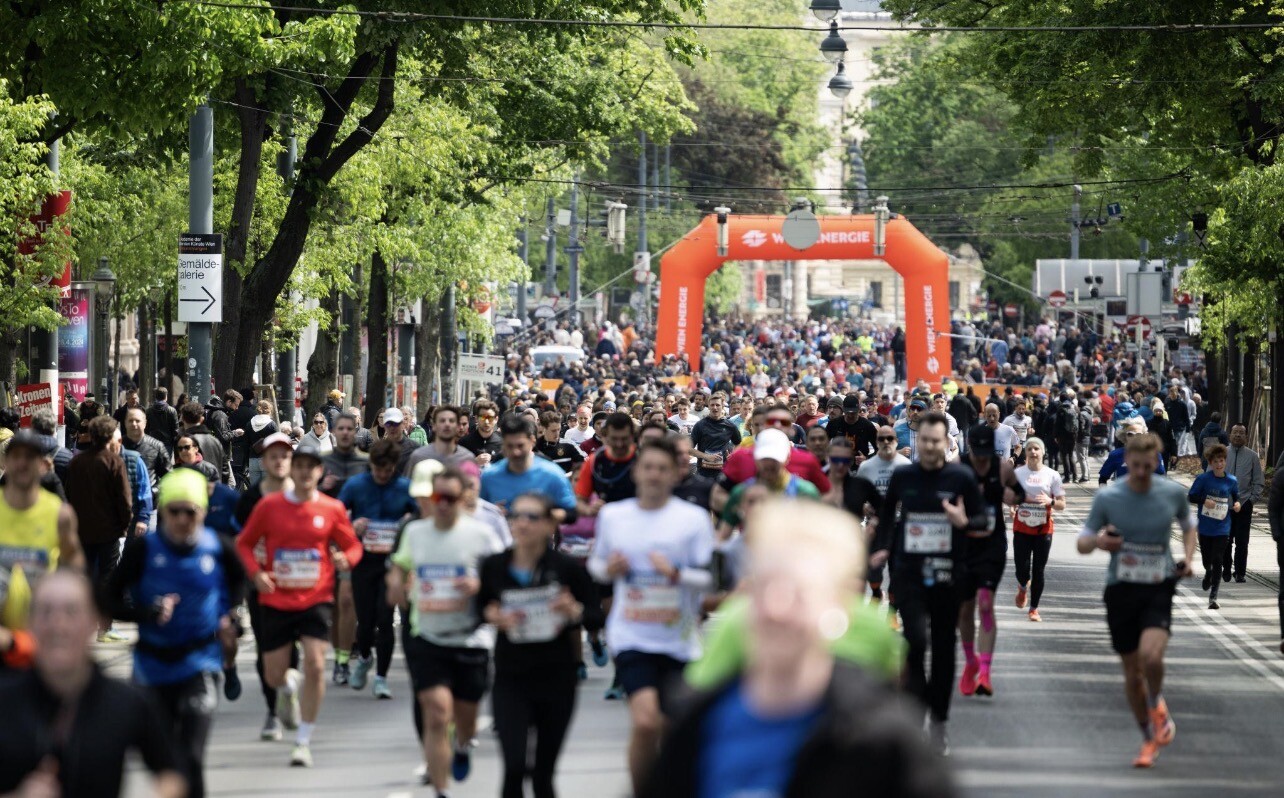
A record 46,000 athletes are entered across the two-day event, including 13,000 marathon runners, reinforcing Vienna’s position as one of Europe’s premier spring marathons and a World Athletics Elite Label Road Race.
Could Vienna see a Tesfaye breakthrough moment
Earlier this month, Foyten Tesfaye shocked the marathon world with a stunning 2:10:51 debut in Barcelona, becoming one of the fastest women ever. While that level may be out of reach here, her older sister Haftamnesh Tesfaye arrives as a serious contender.
Now 31, Tesfaye ran 2:20:13 in her 2018 Dubai debut, which remains her personal best. After stepping away from the sport in 2020 and becoming a mother of two, she returns to the marathon stage in strong form and well prepared.
She has been training in Addis Ababa under Gemedu Dedefo alongside a world-class group that includes Olympic silver medalist and former world record holder Tigst Assefa, Chicago Marathon champion Hawi Feysa, and Dubai and Berlin winner Tigist Ketema.
Tigist Gezahagn, 26, has already won a marathon this year, taking victory in Doha in January with a personal best of 2:21:14. She now sets her sights on Vienna’s course record.
Her manager Tadesse Abraham said her recovery from Doha has gone well and that she is capable of a very strong performance if conditions are favorable. Gezahagn trains in Addis Ababa under coach Getamesay Molla.
Defending champion Betty Chepkemoi may not top the start list, but she brings momentum. Last year, in freezing conditions, she surged to victory in 2:24:14, improving dramatically in just her second marathon.
She said her training has gone well and that she hopes to improve her personal best and defend her title. Chepkemoi trains in Kapsabet under Claudio Berardelli.
American Lindsay Flanagan is the fastest non African woman in the field with a personal best of 2:23:31 from Chicago. After a long injury break, Vienna will mark her return to the marathon distance.
Another athlete to watch is Kenya’s Faith Chepkoech, who made a strong impression here two years ago when she finished second in her marathon debut with 2:26:22. She returns aiming to go even faster.
With a fast course, deep international field, and favorable expectations, Vienna is set up for a high level race. If conditions cooperate, the women’s field could deliver one of the most exciting performances of the spring season.
by Race News Service
Login to leave a comment
Vienna City Marathon
More than 41,000 runners from over 110 nations take part in the Vienna City Marathon, cheered on by hundreds of thousands of spectators. From the start at UN City to the magnificent finish on the Heldenplatz, the excitement will never miss a beat. In recent years the Vienna City Marathon has succeeded in creating a unique position as a marathon...
more...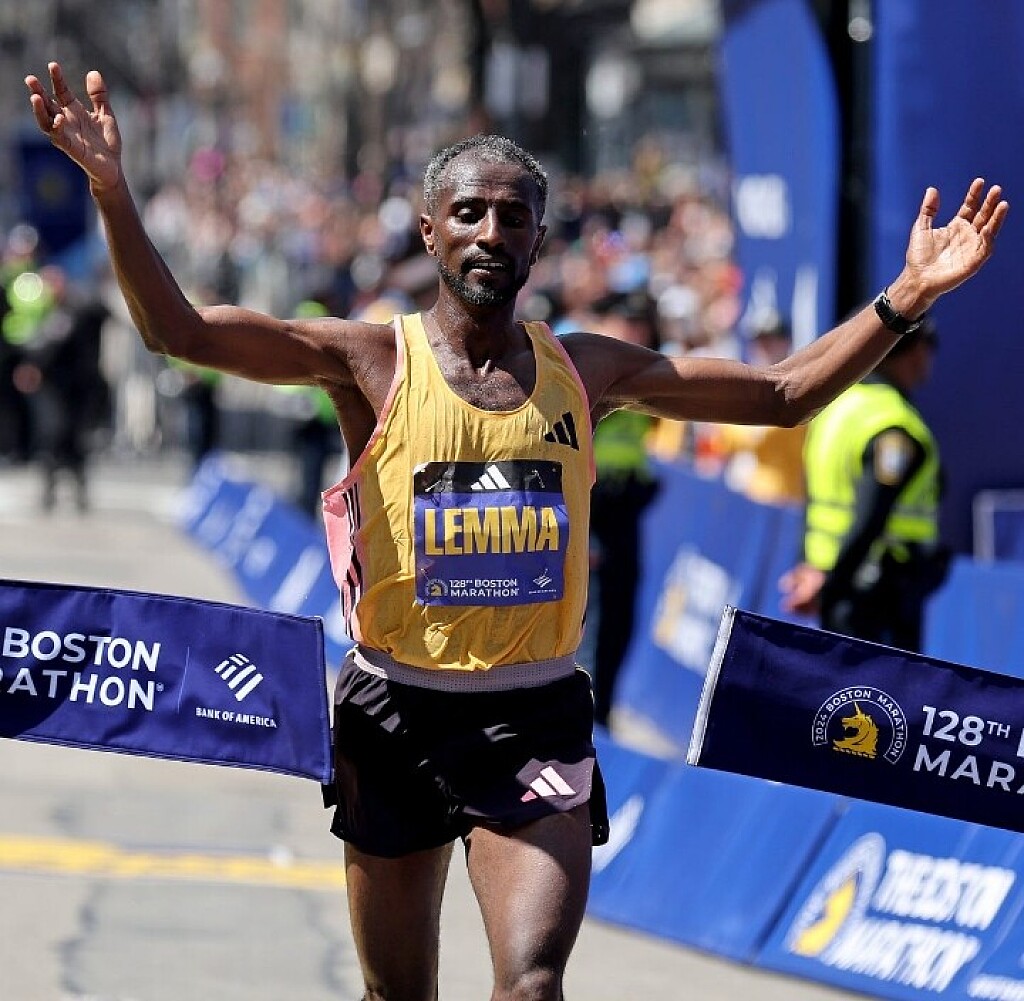
Sisay Lemma Headlines Powerful Elite Field as Seoul Marathon 2026 Promises High-Speed Showdown
The stage is set for a thrilling contest at the Seoul Marathon as a world-class men’s field prepares to race through the streets of the South Korean capital on Sunday, March 15, 2026. With a deep lineup featuring some of the fastest marathoners on the planet, the race is expected to deliver a captivating battle between seasoned champions and emerging contenders.

The marathon will begin at 7:30 a.m. local time in Seoul (KST). Fans around the world will tune in at different hours to follow the action: 1:30 a.m. in Kenya and Ethiopia (EAT), 11:30 p.m. on Saturday in Central Europe (CET), 3:30 p.m. Saturday on the U.S. West Coast (PST), and 9:30 a.m. Sunday in Australia’s east coast (AEDT) across Oceania.
Leading the field is Ethiopian marathon star Sisay Lemma, who enters the race as one of the clear favorites. With an impressive personal best of 2:01:48, Lemma has established himself among the world’s elite marathoners and arrives in Seoul with the kind of form capable of producing a very fast race.
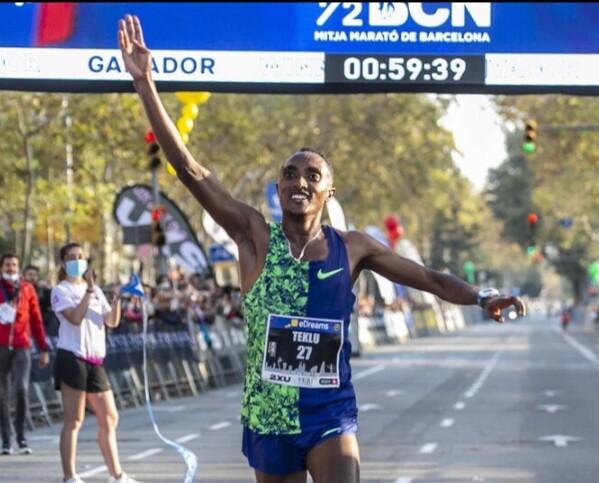
Standing in his path is defending champion Haftu Teklu, who returns determined to defend the title he captured last year. Teklu, whose personal best stands at 2:04:42, proved his strength on these roads before and will be eager to repeat that success.
Another major threat is Getaneh Molla, the winner of the prestigious Dubai Marathon in 2019. Molla’s outstanding 2:03:34 personal best highlights his ability to sustain an aggressive pace, making him one of the most dangerous competitors in the field.
Also in Ethiopia’s strong contingent is Tsegaye Getachew, known for consistent results across Europe, including strong performances at the Amsterdam Marathon and the Lisbon Marathon. With a personal best of 2:04:18, he remains firmly within striking distance of the leading contenders.

Kenya’s challenge will be spearheaded by experienced runners such as Sammy Kirop and Nick Kitundu, both capable of competing for podium positions. Their presence is reinforced by a strong Kenyan lineup that includes Enock Kinyamal, Gilbert Kibet, Collins Kipkurui, Edmond Kipngetich, and Felix Kipkoech, forming a deep and competitive squad.
Another intriguing entrant is Ethiopian athlete Haftamu Abadi, who enjoyed an impressive season last year with victories at the Vienna City Marathon and the Ljubljana Marathon. His appearance in Seoul marks his first marathon race in Asia, adding another layer of excitement to the elite contest.
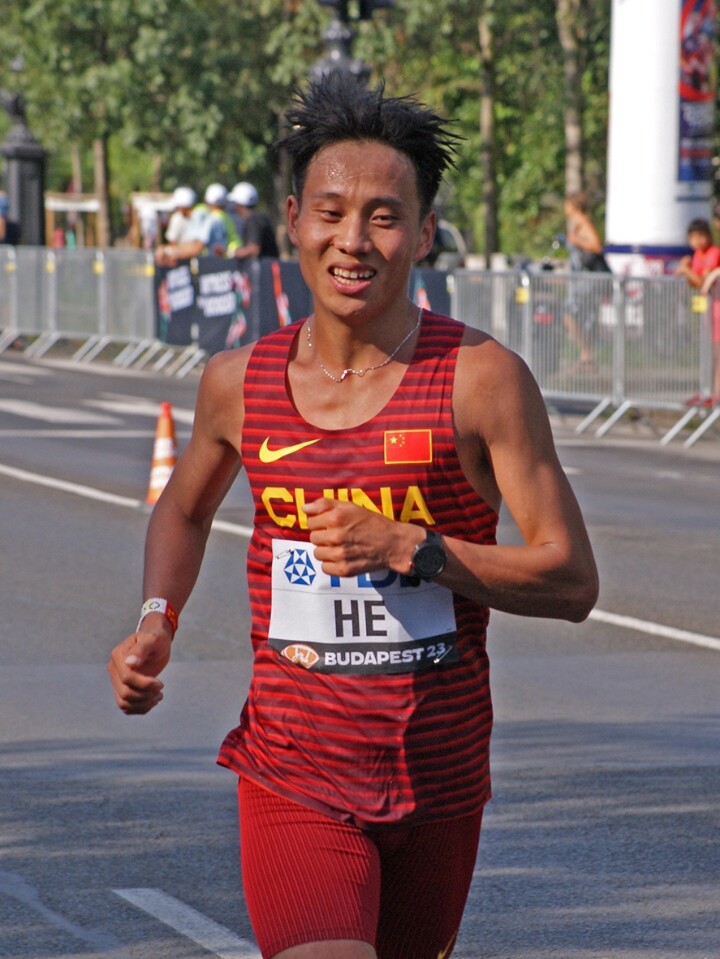
The race also highlights the growing global reach of marathon running, with athletes such as Japan’s Daisuke Uekado and China’s Jie He representing the host region.
With proven champions, hungry challengers, and a course historically known for fast times, the 2026 Seoul Marathon promises a gripping contest from start to finish. As the world’s elite converge on Seoul, the question remains: who will seize the moment and conquer one of Asia’s most prestigious marathons?
by Erick Cheruiyot for My Best Runs.
Login to leave a comment

Seoul International Marathon
The only marathon hosted in the heart of the Korean capital. Seoul marathon is the oldest marathon race hosted in Asia andis one of the fastestmarathon in the world. First held in 1931, Seoul marathon is the oldest marathon eventcontinuously held in Asia, and the second oldest in the world followingthe Boston Marathon. It embodies modern history of Korea, also...
more...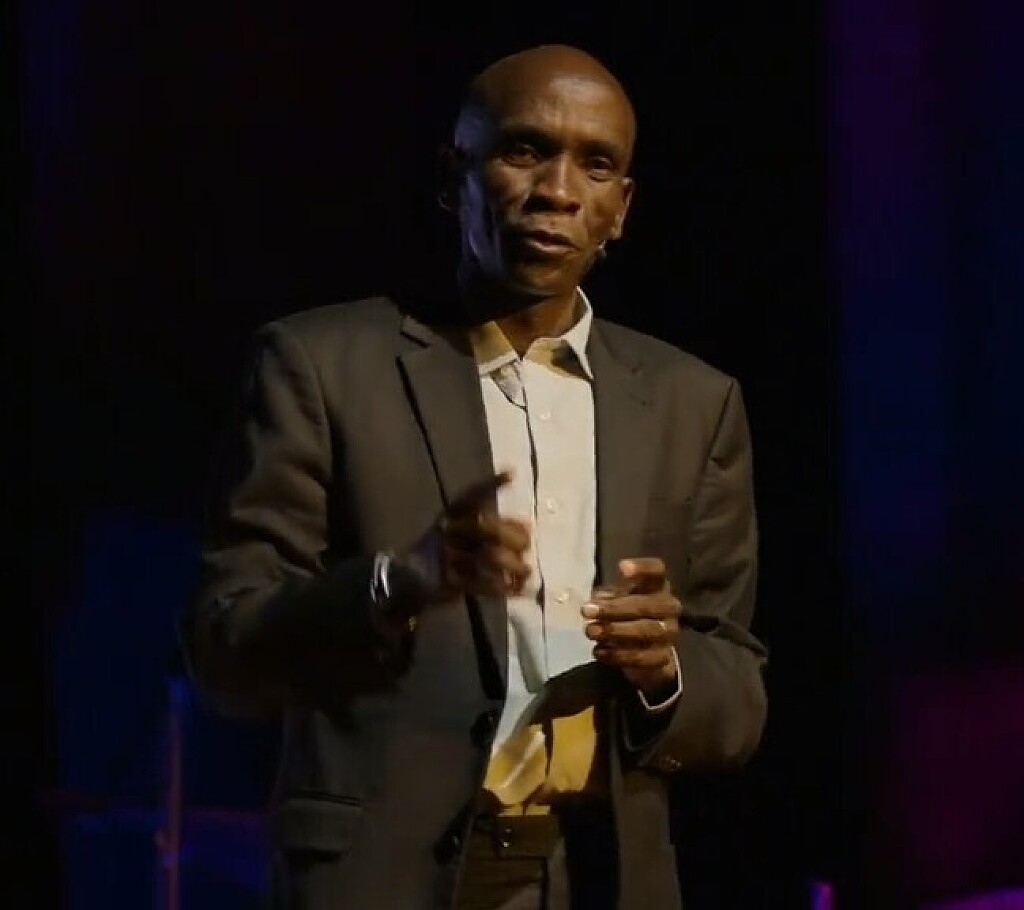
“I Was Down to My Knees” — Kipchoge Opens Up on Cruel Rumours After Kiptum’s Fatal Crash
The death of marathon world record holder Kelvin Kiptum sent shockwaves through the global athletics community in February 2024. Tributes poured in from across the world as athletes, officials and fans mourned the loss of one of distance running’s brightest talents.
But for fellow Kenyan legend Eliud Kipchoge, the tragedy was followed by an intensely painful personal ordeal — a wave of online rumours that falsely attempted to link him to the accident that claimed Kiptum’s life.
A tragic night in Elgeyo-Marakwet
Kiptum, who held the marathon world record at the time, died on February 11, 2024, following a road accident in the Kaptagat area of Elgeyo‑Marakwet County in western Kenya.
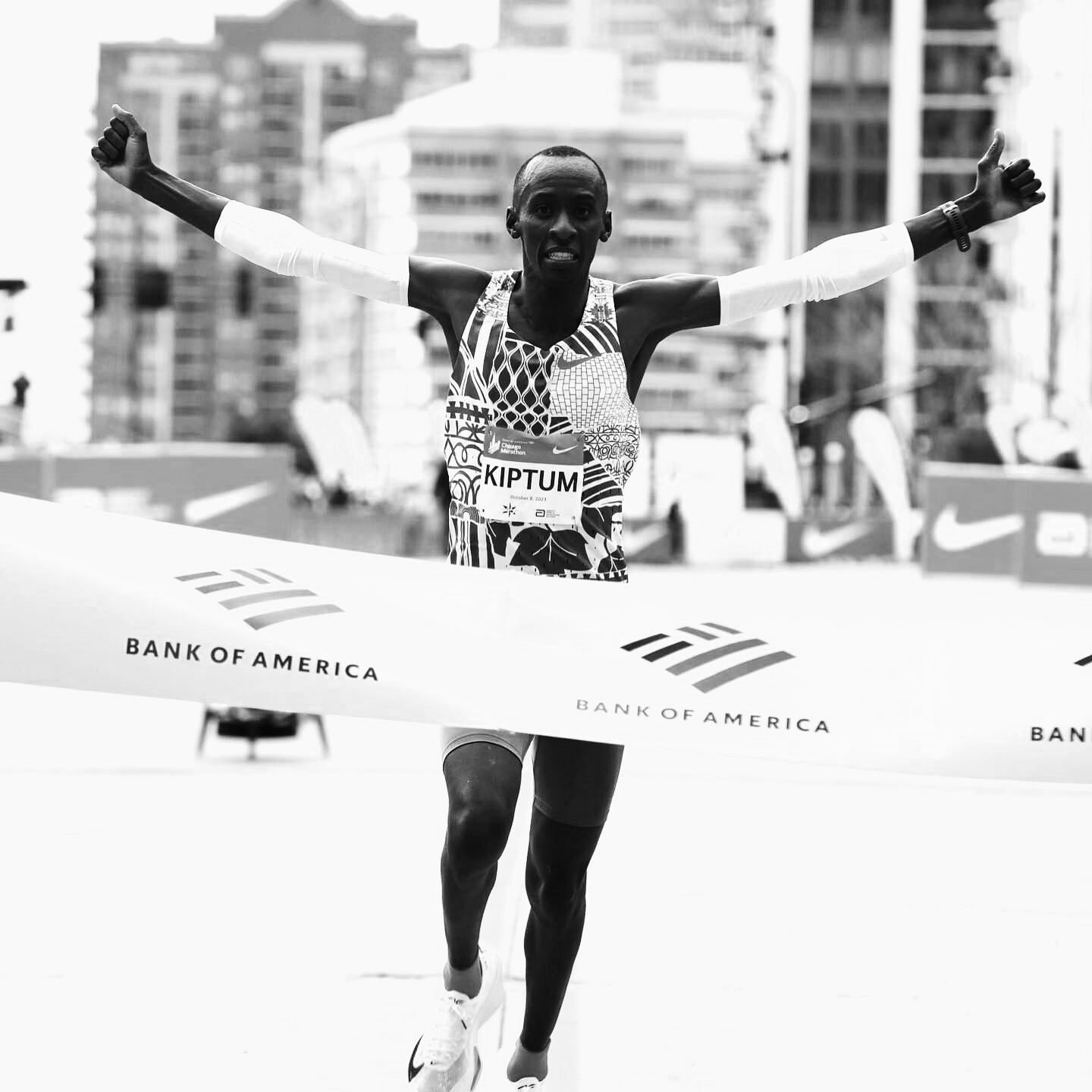
He was travelling with his Rwandan coach Gervais Hakizimana, who also lost his life in the crash. The devastating incident brought an abrupt end to a career that had risen at breathtaking speed.
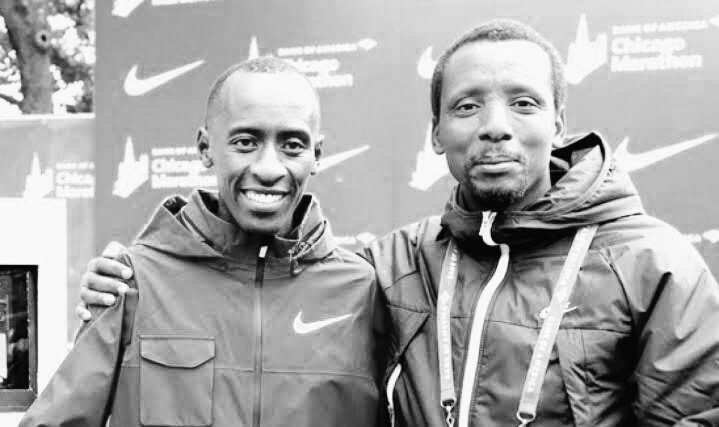
Only months earlier, Kiptum had stunned the athletics world at the Chicago Marathon, clocking a remarkable 2:00:35 to set a new marathon world record — a performance that cemented his status as one of the most extraordinary long-distance talents of his generation.
The moment Kipchoge heard the news
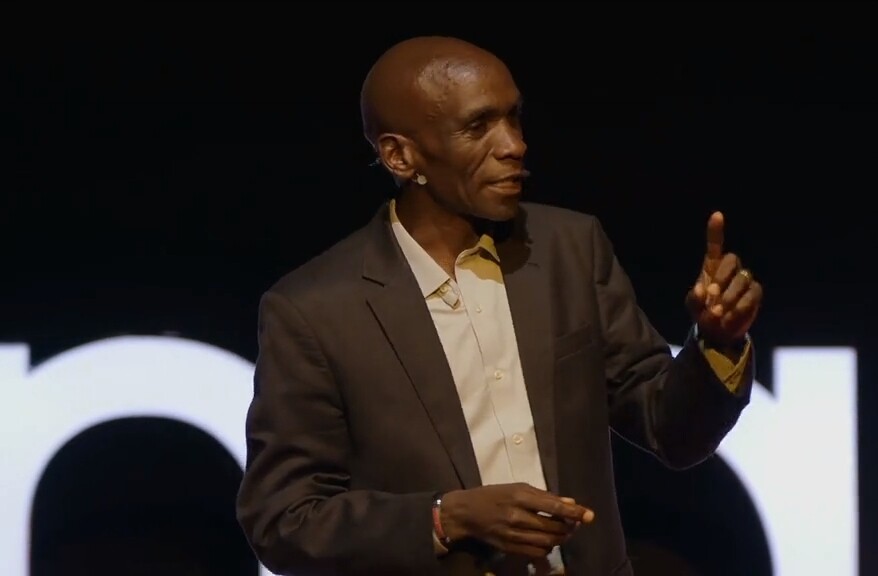
In a deeply emotional interview shared on the Engage Talk YouTube platform, Kipchoge recalled the moment he first learned of the tragedy.
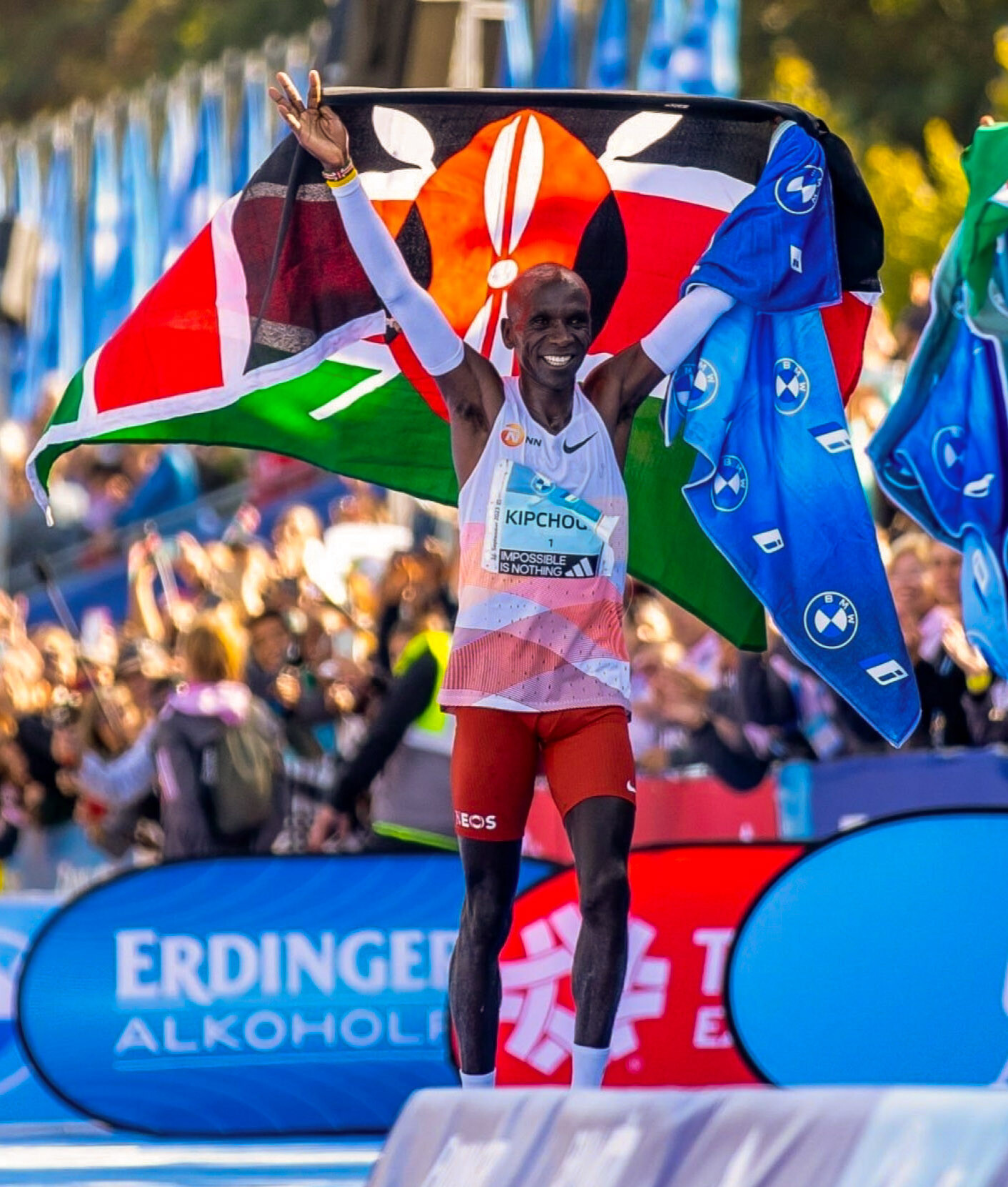
The two-time Olympic marathon champion explained that he had just returned home from a training session when someone at the gate informed him that Kiptum had died in a road accident. Shocked by the news, he immediately checked his phone — only to discover a different kind of storm unfolding online.
Within hours of the crash, social media had become flooded with baseless rumours accusing Kipchoge of being somehow connected to the incident.
The accusations, he said, left him devastated.
“Social media was everywhere saying Eliud killed Kiptum in a road accident. I was really down… down to my knees,” Kipchoge said during the interview.
Threats and fear for his family
The false claims quickly escalated into a wave of online hostility, with Kipchoge revealing that threats were directed not only at him but also at members of his family.
For safety reasons, the family was forced to change parts of their daily routine. Kipchoge explained that his sons had previously cycled to school, a normal routine in their community, but the arrangement had to be altered after the threats emerged.
He also expressed disappointment that some of the accusations circulating online took on an ethnic tone — something that deeply troubled the athlete, who has long spoken publicly about unity and national harmony in Kenya.
Silence from many, support from a few
The episode also revealed an unexpected reality for one of the most celebrated athletes in the world.
Despite having millions of followers across social media platforms, Kipchoge said only a small number of people reached out to check on him during the difficult period.
It was a stark reminder, he noted, that genuine support often comes from close relationships rather than public admiration.
A career defined by greatness
Kipchoge’s legacy in distance running remains unmatched. He won Olympic marathon gold medals at the 2016 Rio Olympics and the 2020 Tokyo Olympics, cementing his place among the greatest marathon runners in history.
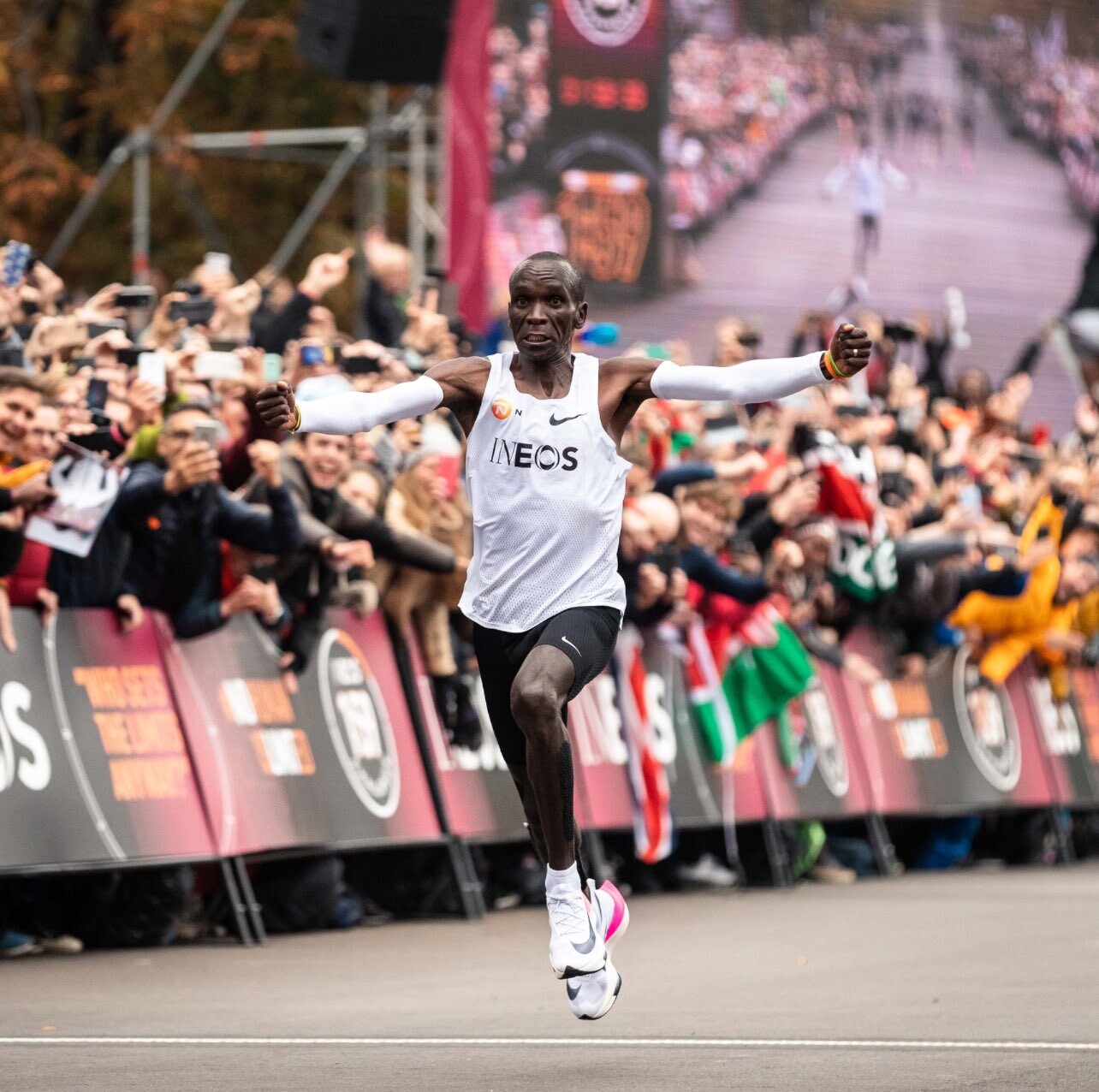
In 2019, he also achieved one of the most iconic moments in sport by becoming the first person to run a marathon distance in under two hours during the INEOS 1:59 Challenge in Vienna, completing the run in 1:59:40 during the special exhibition event.
A painful lesson in resilience
Looking back, Kipchoge described the aftermath of Kiptum’s death as one of the most emotionally testing moments of his life.
The experience, he said, reinforced the importance of resilience and the value of strong personal relationships when navigating moments of crisis.
While the loss of Kelvin Kiptum remains a deep wound for the athletics world, Kipchoge’s reflections reveal another side of the tragedy — the unseen emotional toll that misinformation and online hostility can inflict, even on the strongest of champions.
by Erick Cheruiyot for My Best Runs.
Login to leave a comment
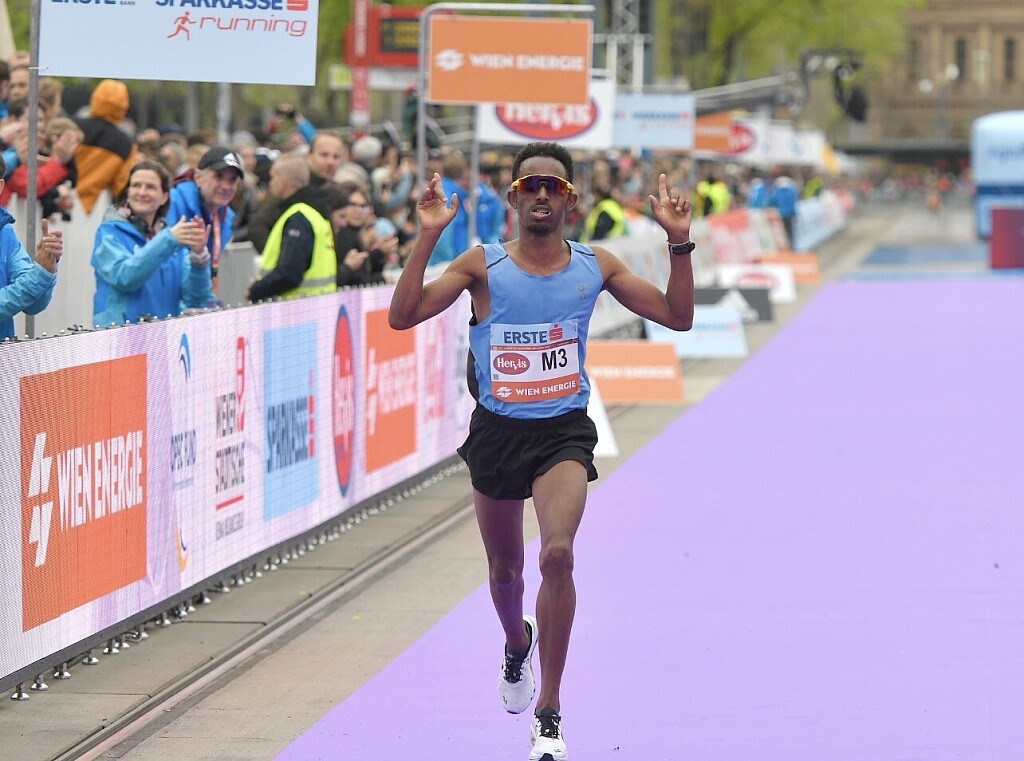
Oqbe Kibrom Returns to Vienna Chasing Historic First Eritrean Victory
The 43rd Vienna City Marathon will take place on April 19, and one runner arriving with unfinished business is Oqbe Kibrom of Eritrea. Kibrom will return to the Austrian capital hoping to become the first Eritrean athlete to win the men’s race at this prestigious event.
Kibrom finished third in Vienna in 2022, and he enters this year’s race as the fastest man on the current start list with a personal best of 2:05:37.
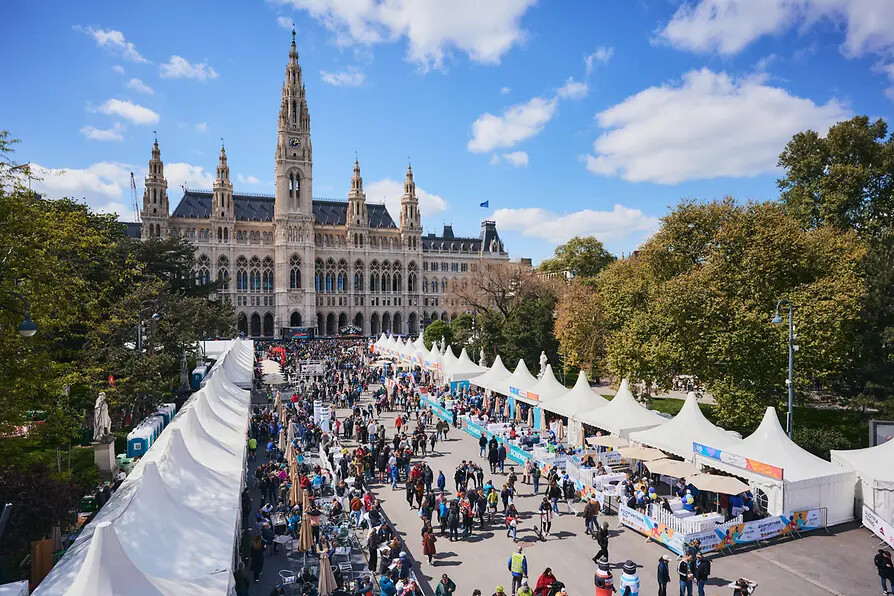
Organizers report strong participation for this year’s race. More than 13,000 runners are registered for the marathon distance alone, and when shorter races over the two-day weekend are included, the total number of participants climbs to over 46,000, a record for the event.
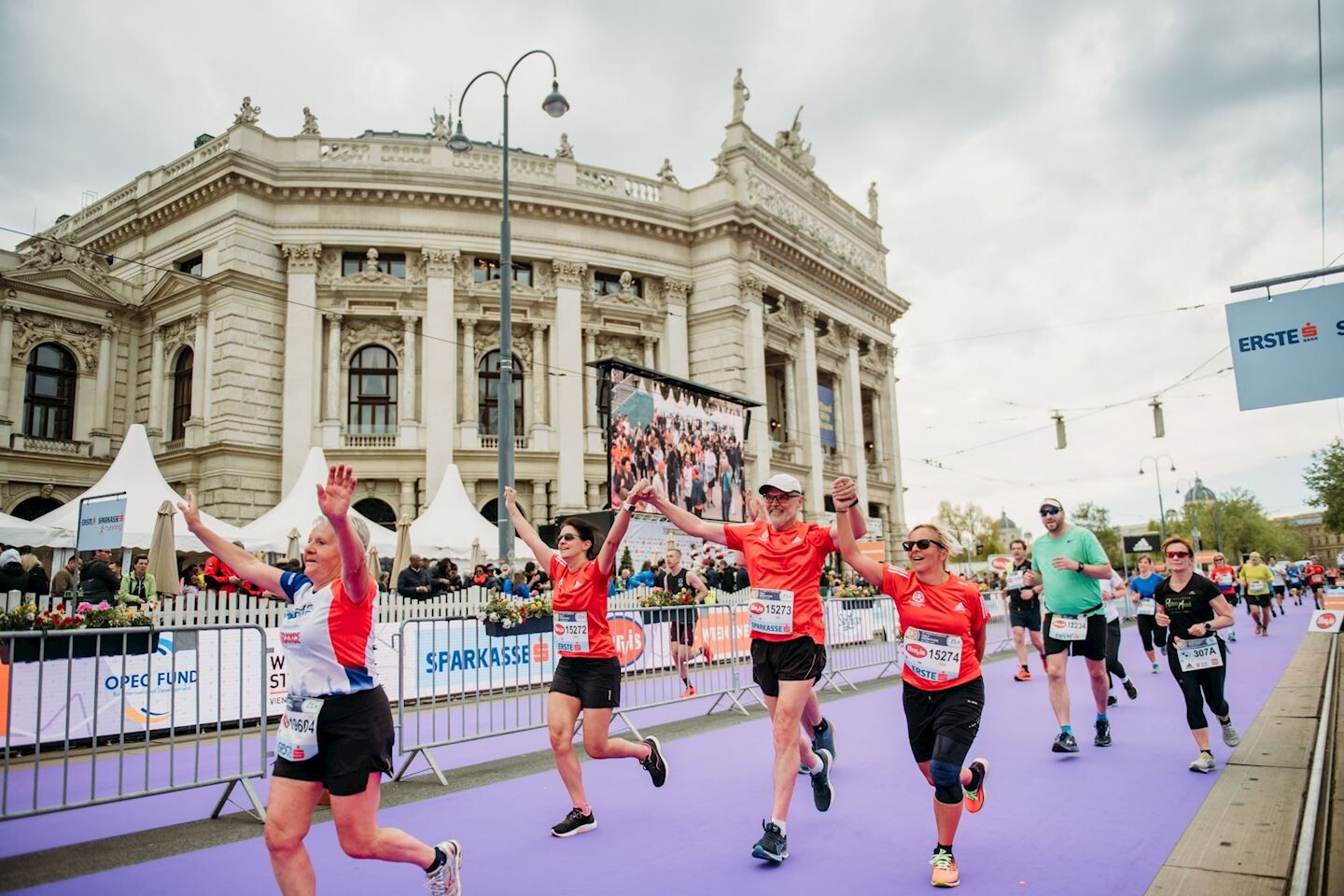
A Second Chance at Victory
When Kibrom raced in Vienna four years ago, it briefly appeared he might make history.
After the final pacemaker stepped aside just past 30 kilometers, Kibrom surged into the lead and looked poised to become the first Eritrean man to win the race. However, the effort proved costly.
Kenya’s Cosmas Muteti closed the gap late in the race and passed Kibrom with five kilometers remaining, eventually taking the win. Kibrom finished third in 2:07:25.
While Eritrea has celebrated a women’s champion in Vienna, the men’s race has yet to be won by an Eritrean athlete.
Kibrom, whose manager is Swiss marathon record holder Tadesse Abraham, has remained consistently competitive on the global marathon stage. The 28-year-old set his personal best of 2:05:37 when finishing eighth at the Berlin Marathon two years ago.
More recently, he finished fourth at the Daegu Marathon in South Korea in 2025, running 2:06:04. With three sub-2:06 performances to his name, Kibrom may now be poised for his first major marathon victory.
Strong African Contenders
Kibrom will face strong competition from fellow African runners.
Ethiopia’s Tafese Delegen owns a personal best of 2:06:11, set at the Seville Marathon two years ago.
Kenya’s Stanley Kurgat ran 2:07:05 at the Berlin Marathon, finishing seven places behind Kibrom in that race.
Another Kenyan to watch is Albert Kangogo, who ran 2:07:26 while finishing second at the Mersin Marathon in Turkey last December. Kangogo has already proven he can perform well in Vienna—he placed third in the 2023 race in 2:10:44.
Austrian Hope: Aaron Gruen
Local fans will also be watching Aaron Gruen, who made headlines last spring by becoming the first Austrian runner to break 2:10 in the marathon.
The 27-year-old ran 2:09:53 in Congers, New York, improving his personal best by nearly five minutes.
Gruen has continued his strong form in 2026, setting a half marathon personal best of 61:14 in Houston earlier this year. Balancing elite training with his studies, he is currently attending Harvard Medical School in Boston, making his preparation even more impressive.
European Marathon Classics Series Launched
The Vienna City Marathon is also playing a central role in a newly created marathon series called European Marathon Classics (EMC).
Alongside Vienna, the series includes major European marathons in:
• London Marathon
• Rome Marathon
• Madrid Marathon
• Lisbon Marathon
• Warsaw Marathon
• Copenhagen Marathon
• Frankfurt Marathon
Runners who complete at least five of these marathons in different cities will receive a specially designed medal recognizing the achievement.
“European Marathon Classics embodies our ambition to explore Europe together while pushing boundaries—both geographically and philosophically,” said Hugh Brasher, Event Director of the London Marathon. “I hope it will inspire runners from around the world to experience Europe’s great marathons, cities, and communities.”
Kathrin Widu, joint managing director of the Vienna City Marathon along with Dominik Konrad, added:
“The European Marathon Classics are an inspiring challenge. By bringing together leading European marathons, we aim to inspire even more people to embrace marathon running. We are united by shared values such as a passion for the sport, community, health, and sustainability.”
by Race News Service
Login to leave a comment
Vienna City Marathon
More than 41,000 runners from over 110 nations take part in the Vienna City Marathon, cheered on by hundreds of thousands of spectators. From the start at UN City to the magnificent finish on the Heldenplatz, the excitement will never miss a beat. In recent years the Vienna City Marathon has succeeded in creating a unique position as a marathon...
more...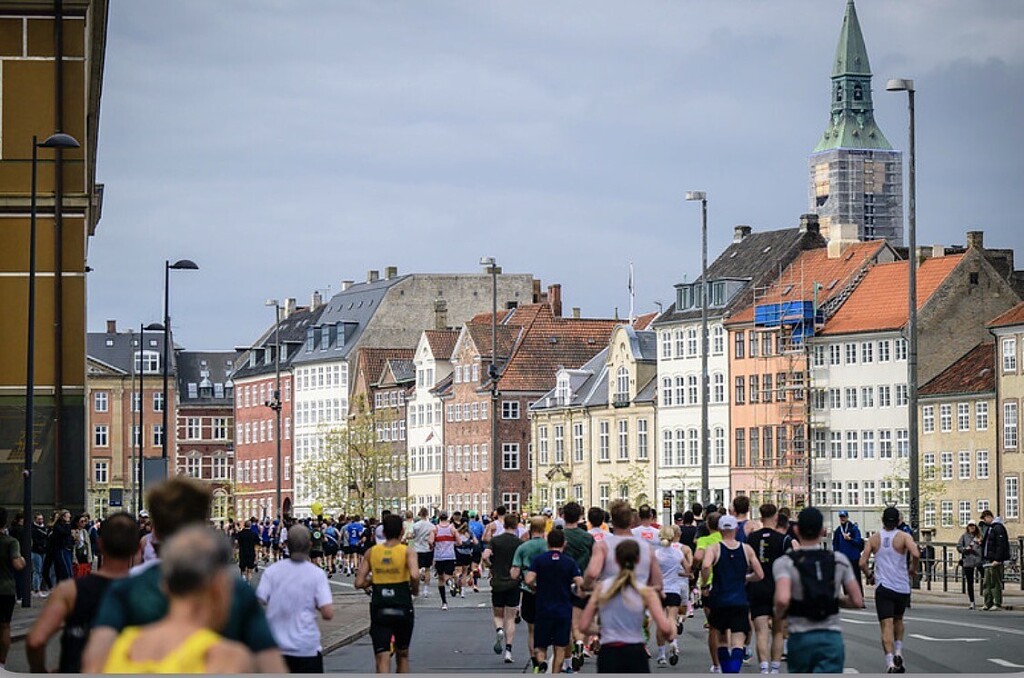
European Marathon Classics Launches New Era for Distance Running
A new chapter in European marathon running was unveiled on February 25, 2026, when organizers introduced the European Marathon Classics, a series linking eight of the continent’s most established races into one long-term challenge for runners.
The announcement was made in Vienna at the historic Schönbrunn Palace, bringing together race directors and organizers from across Europe. The concept is simple: one distance, eight cities, and a shared journey through some of Europe’s most celebrated marathon courses.
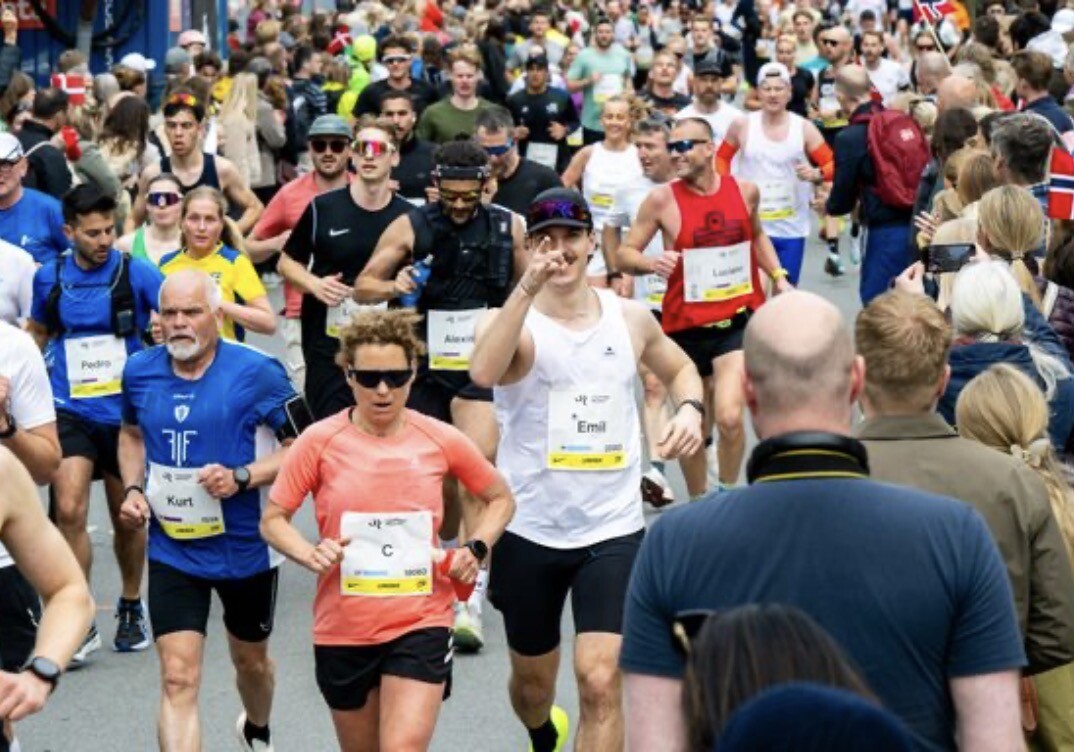
The new series connects races that already have strong identities of their own. By linking them together, organizers hope to inspire runners to explore different countries, cultures, and running traditions while pursuing a personal challenge.
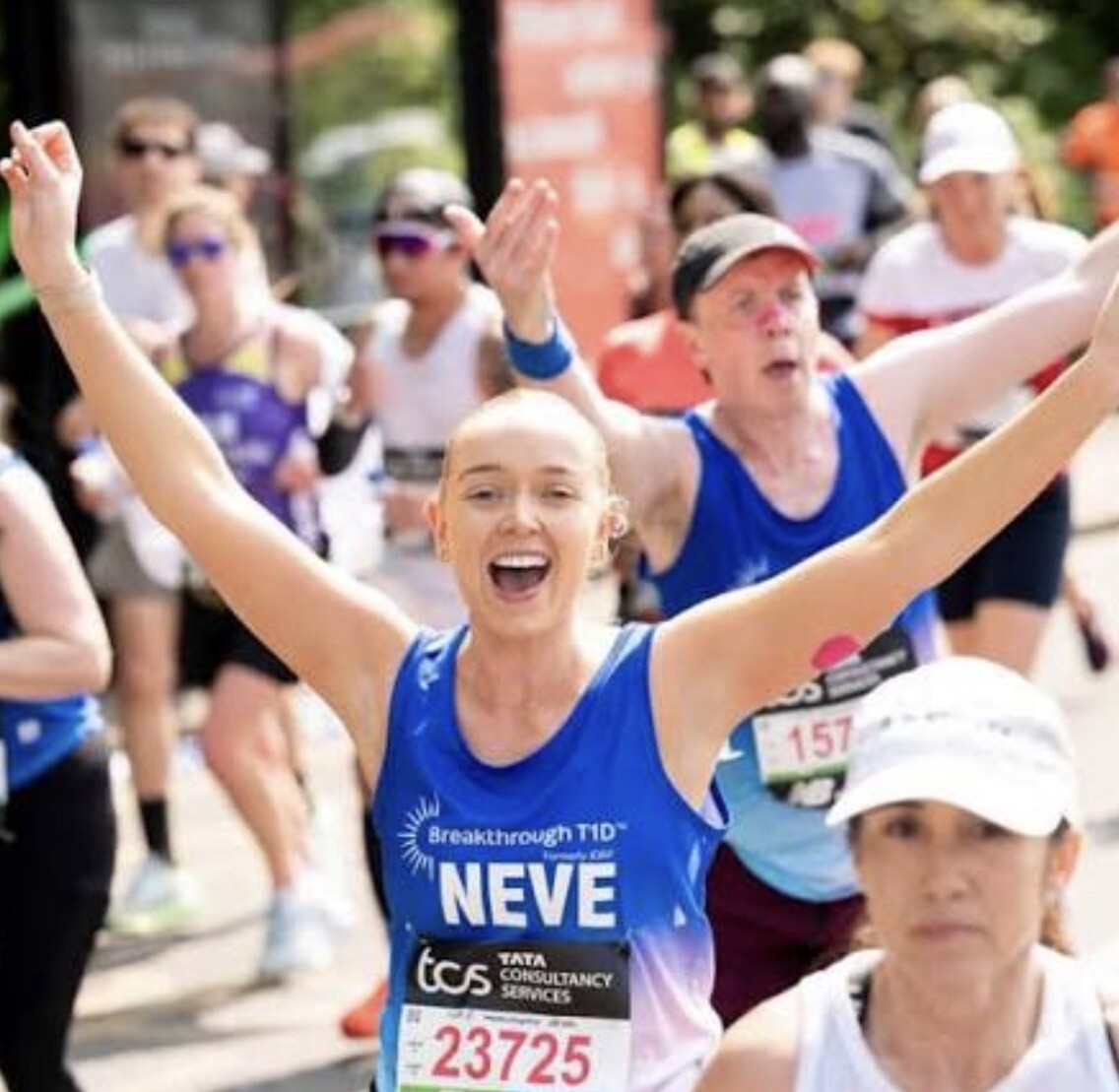
To earn the title European Marathon Classics Finisher, runners must complete five of the eight marathons, each in a different city. There is no time limit, allowing participants to build their journey over several seasons.
The eight races in the series form a calendar stretching from early spring to autumn:
2026 European Marathon Classics Schedule
March 22 – Rome Marathon (Italy)
April 19 – Vienna City Marathon (Austria)
April 26 – London Marathon (United Kingdom)
April 26 – Madrid Marathon (Spain)
May 10 – Copenhagen Marathon (Denmark)
September 27 – Warsaw Marathon (Poland)
October 10 – Lisbon Marathon (Portugal)
October 25 – Frankfurt Marathon (Germany)
Runners who complete five races will receive a commemorative medal designed to reflect the journey. The medal includes magnetic elements that allow athletes to add a marker for each marathon they finish.
One unusual feature of the project is that past results will count. Organizers say runners will be able to register historical performances from earlier editions of the races, recognizing the long traditions behind these events.
London Marathon Event Director Hugh Brasher said the idea is meant to highlight what connects runners across the continent.
by Bob Anderson for My Best Runs
Login to leave a comment
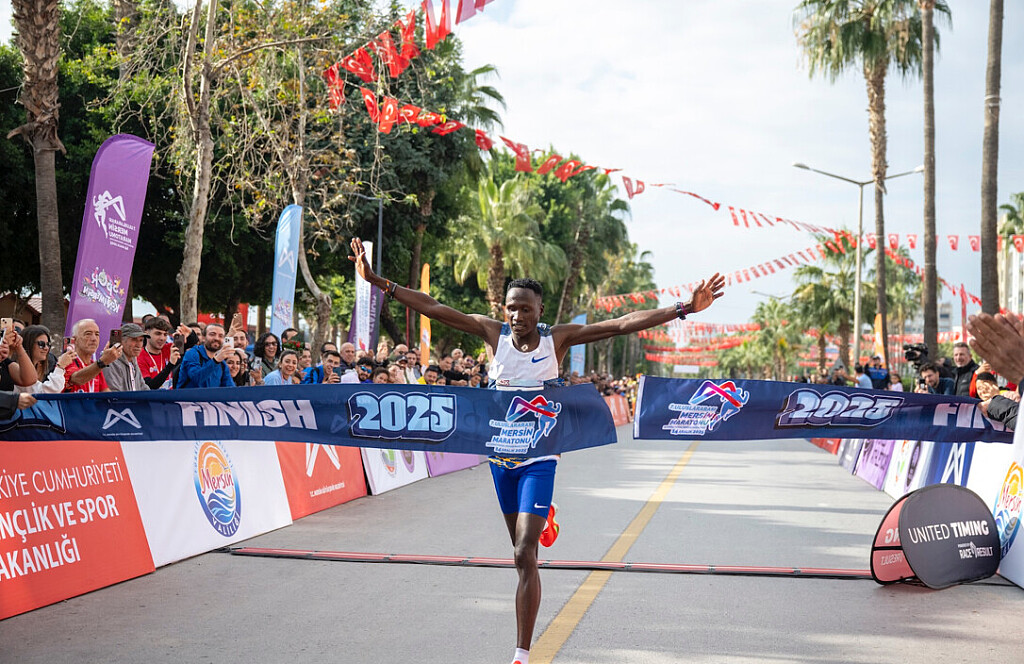
Vitalis Kibiwott Shatters Turkish Allcomers’ Record at Mersin Marathon
Vitalis Kibiwott delivered the breakthrough performance of his career on Sunday, storming to victory at the Mersin Marathon and smashing the Turkish Allcomers’ record. The 27-year-old Kenyan clocked a stunning personal best of 2:07:14, improving both the national mark and the course record by nearly a minute.
In the women’s race, pre-race favorite Rebecca Tanui of Kenya lived up to expectations, winning convincingly in 2:25:35 under excellent weather conditions. The Mersin Marathon holds World Athletics Elite Label status.
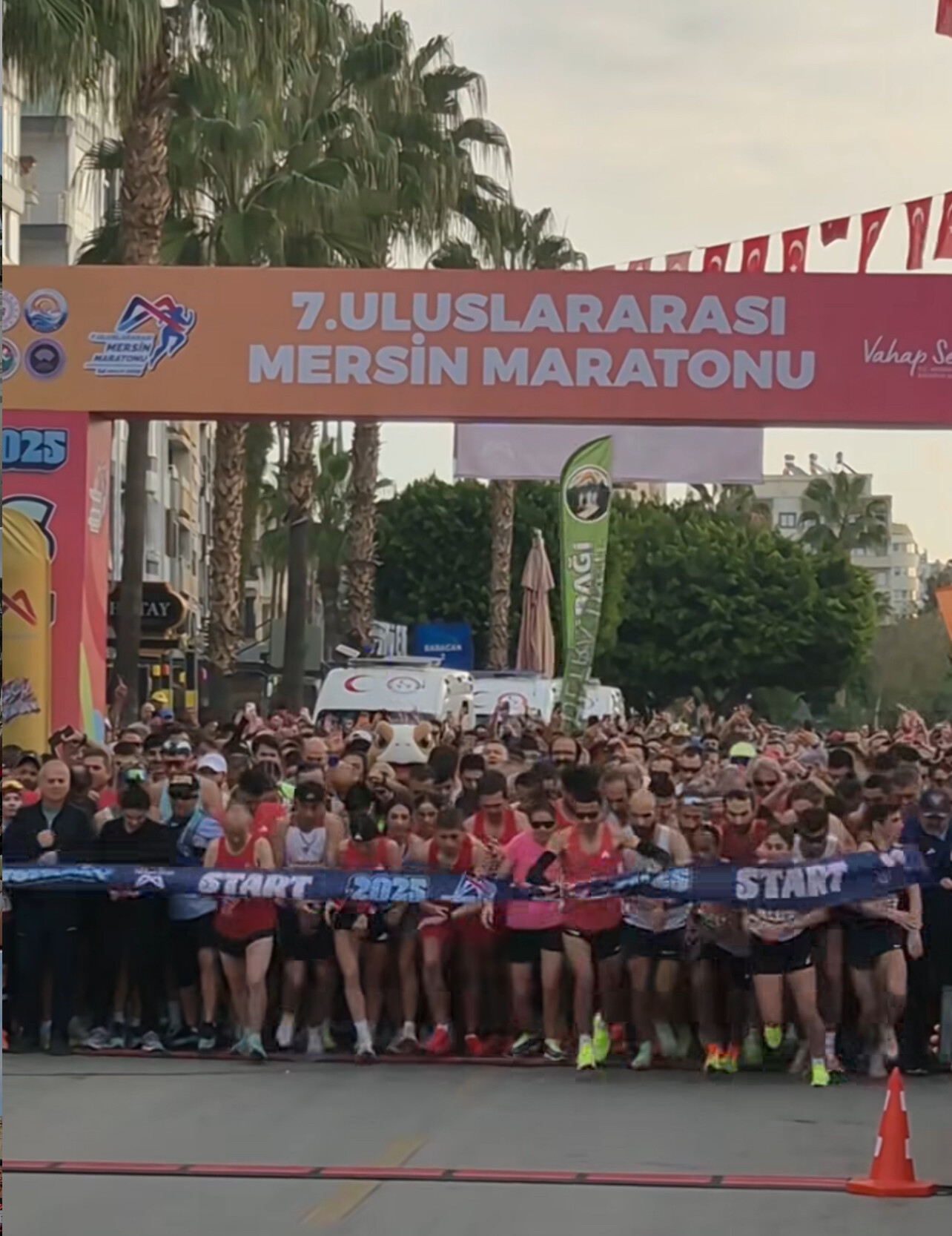
Still relatively unknown on the international marathon calendar, the Mersin Marathon is held in the major port city of Mersin, located on Türkiye’s southeastern Mediterranean coast and home to just over one million people. The seventh edition of the race attracted just over 400 marathon runners, alongside approximately 2,000 participants in the non-elite 10K. Despite its modest field size, the event has steadily built a reputation for fast times on its flat, out-and-back course.
The headline name on the men’s start list was Ghirmay Gebreslassie, Eritrea’s 2015 world champion. However, the 30-year-old was forced to drop out at 18 kilometers after developing a hamstring problem. That opened the door for a surprise turn of events, as his 18-year-old brother Abraham Embaye boldly took control of the race, passing halfway in 63:52.
Embaye remained in front deep into the race, but with just over five kilometers to go, experience prevailed. Kibiwott steadily closed the gap before moving past the young Eritrean, followed shortly by fellow Kenyan Albert Kangogo. Embaye fought on gamely to secure third place in 2:08:29.
Kibiwott finished powerfully to claim the win in 2:07:14, slicing 59 seconds off the Turkish Allcomers’ record. A year earlier, Kenyan Bethwell Kipkemboi had won in 2:08:13. Coming into the race with a personal best of 2:11:08, Kibiwott had been ranked only 11th on the start list—making his near four-minute improvement all the more remarkable.
“My training was very good, so I was expecting to run sub-2:08 and fulfilled my expectations,” said Kibiwott. “The young Eritrean was far ahead early, but I didn’t hurry. I felt strong at the end and made my move. The Mersin Marathon has a completely flat and very fast course.”
Women’s Race
Rebecca Tanui took command of the women’s race early and reached halfway in 72:30, closely shadowed by Ethiopia’s Genet Robi. The two remained together until around the 30-kilometer mark, where Tanui gradually pulled clear to secure a decisive victory.
While the course record of 2:23:08 remained intact, Tanui’s 2:25:35 was the fastest women’s marathon time run in Türkiye this year. The 33-year-old continues to show impressive consistency at the distance, following her victory at the 2023 Košice Marathon (PB 2:21:08) and a runner-up finish at this spring’s Vienna City Marathon.
Results
Men
1. Vitalis Kibiwott (KEN) – 2:07:14
2. Albert Kangogo (KEN) – 2:07:26
3. Abraham Embaye (ERI) – 2:08:29
4. Samuel Naibei (KEN) – 2:08:59
5. Abebaw Desalew (ETH) – 2:09:14
6. Isaac Kibet (UGA) – 2:10:19
Women
1. Rebecca Tanui (KEN) – 2:25:35
2. Genet Robi (ETH) – 2:26:07
3. Peninah Jerop (KEN) – 2:30:52
4. Millicent Kibet (KEN) – 2:31:05
5. Letebrhan Gebreslasea (ETH) – 2:35:35
by Race News Service
Login to leave a comment

Anne Flower Sets New Women’s 50-Mile World Record at the 2025 Tunnel Hill 50 Mile
In a stunning display of endurance and precision pacing, emergency-room physician and ultramarathon standout Anne Flower blazed to a new women’s world record of 5:18:57 for the 50-mile distance at the 2025 Tunnel Hill 50 Mile in Vienna, Illinois. The mark shatters the previous record of 5:31:56 held by Courtney Olsen, set on the same course last year.
Record-Setting Performance

Held on the flat, crushed-gravel rails-to-trails route of the Tunnel Hill State Trail, the race has become a proving ground for world-class performances. Flower averaged an extraordinary 6:23 per mile (3:57 per kilometer) across the full 80.47 km course, running even splits and showing no signs of strain even as temperatures climbed later in the race.l
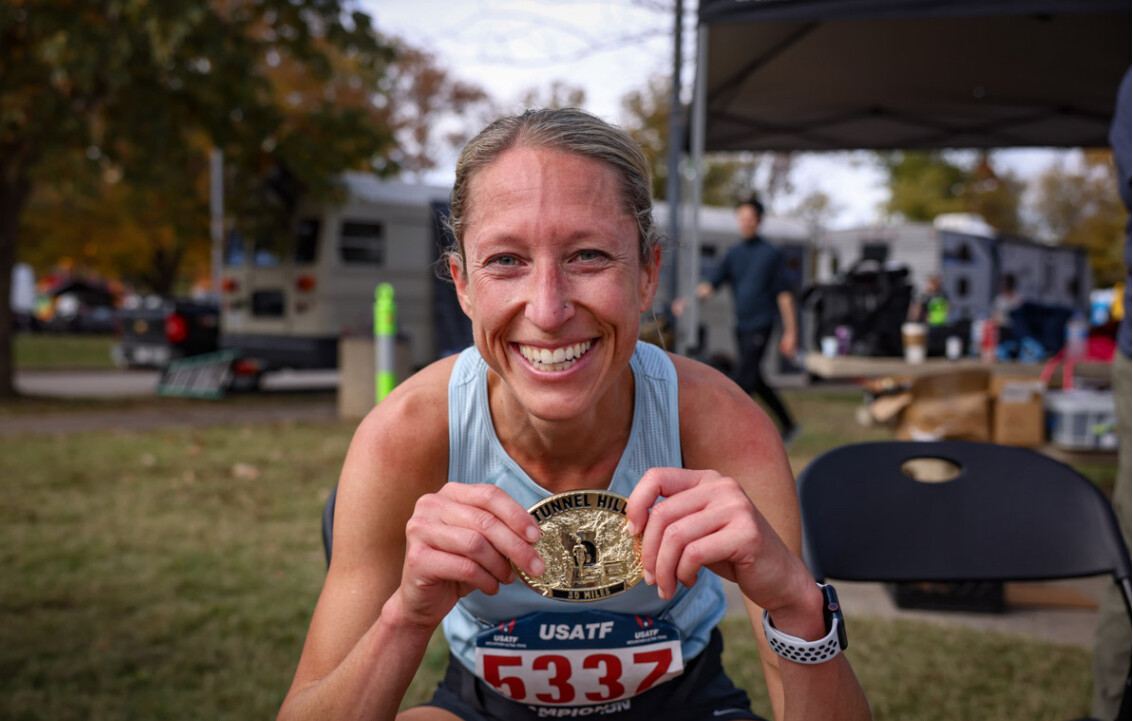
From the opening miles, Flower stayed well ahead of record pace, never faltering and closing strongly to seal a performance that redefines the women’s 50-mile standard. Olsen, competing in the 100k event this year, passed the 50-mile mark in 5:33:59—still an elite split, but more than 15 minutes behind Flower’s record pace.
From Marathons to Ultramarathons
Based in Colorado Springs, Colorado, Flower balances her demanding career as an emergency-room doctor with elite-level training. Before moving to the trails in 2019, she competed in marathons and took part in the 2020 U.S. Olympic Marathon Trials. Her road background shows in her efficient stride and disciplined pacing.
Over the past two seasons, she has built an impressive résumé:
Winner of the 2024 Javelina 100k
Champion of the 2025 Silver Rush 50 Mile
Record-breaker at the 2025 Leadville 100 Mile, where she eclipsed Ann Trason’s 31-year-old mark in her debut at the distance
These results paved the way for her dominant performance at Tunnel Hill, demonstrating both her endurance and her remarkable consistency.
Raising the Bar for Women’s Ultrarunning
Flower’s 5:18:57 isn’t just fast—it’s a historic leap forward. Taking more than 12 minutes off a world record at this level is rare, and doing so with such control underscores her potential for even greater achievements ahead.
Tunnel Hill has become synonymous with world-record performances, and Flower’s run further cements the race’s reputation as one of the premier venues for ultradistance excellence.
What’s Next
With records now at both 50 and 100 miles, Flower’s next challenge may be defending or lowering her new mark—or shifting her focus toward international championship events. Whatever path she chooses, her rise through the sport has been nothing short of extraordinary.
Anne Flower has proven that it’s possible to balance a demanding professional life with world-class athletic performance. Her blend of discipline, determination, and pure endurance has elevated her into the top tier of ultrarunning’s global elite.
by Boris Baron
Login to leave a comment

Eliud Kipchoge Chases One Final Milestone as He Makes His New York City Marathon Debut This Sunday
One of the most anticipated starts in marathon history arrives this Sunday as Eliud Kipchoge, the two-time Olympic marathon champion and widely regarded as the greatest marathoner of all time, makes his debut at the TCS New York City Marathon (NYC Marathon).
The Big Picture
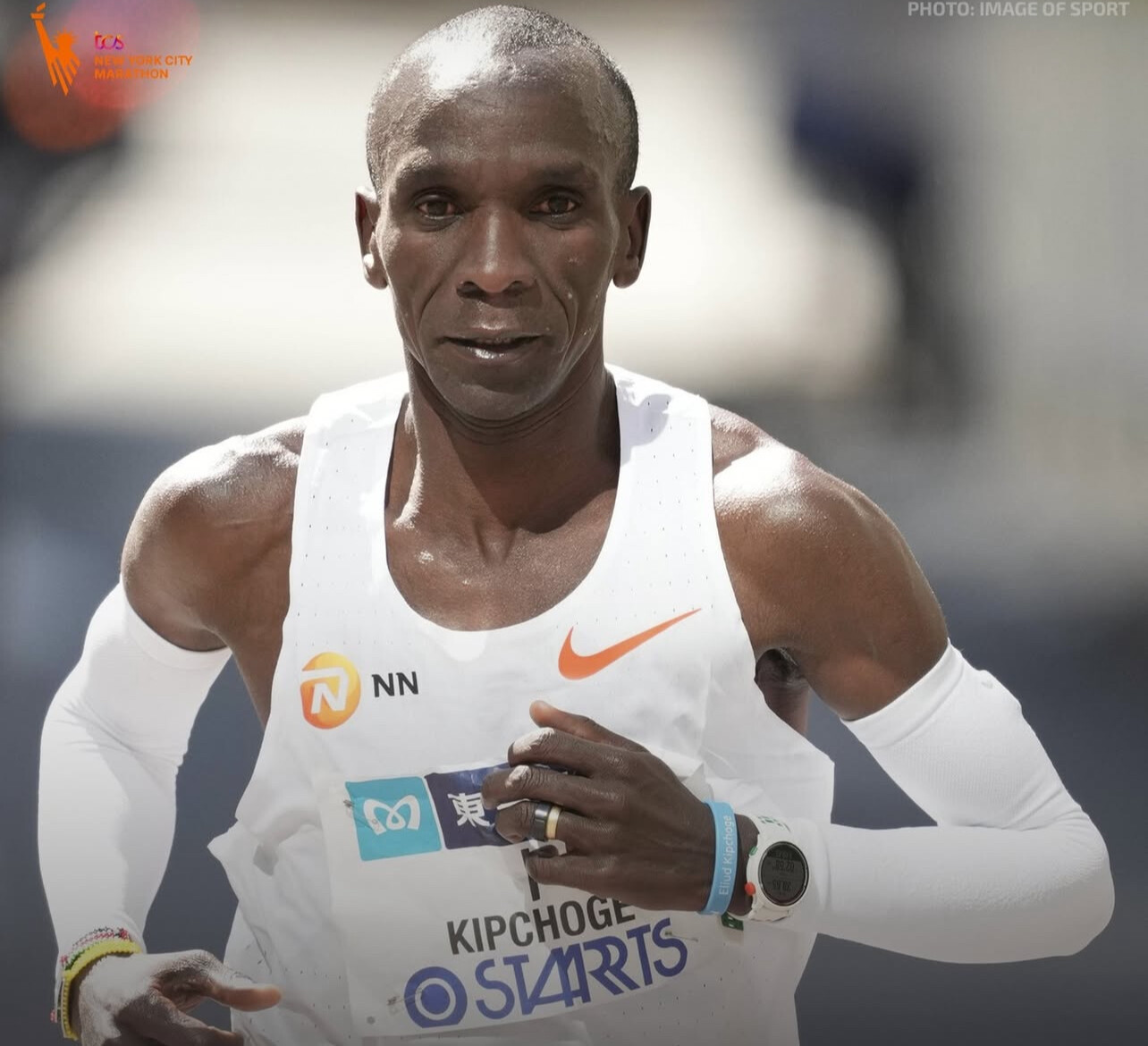
At 40 years old, Kipchoge has already built an extraordinary legacy: Olympic gold medals in 2016 (Rio) and 2020 (Tokyo), a world-record marathon time of 2:01:09 in Berlin 2022, and a historic sub-2-hour marathon effort in Vienna 2019 (1:59:40 – though not ratified).
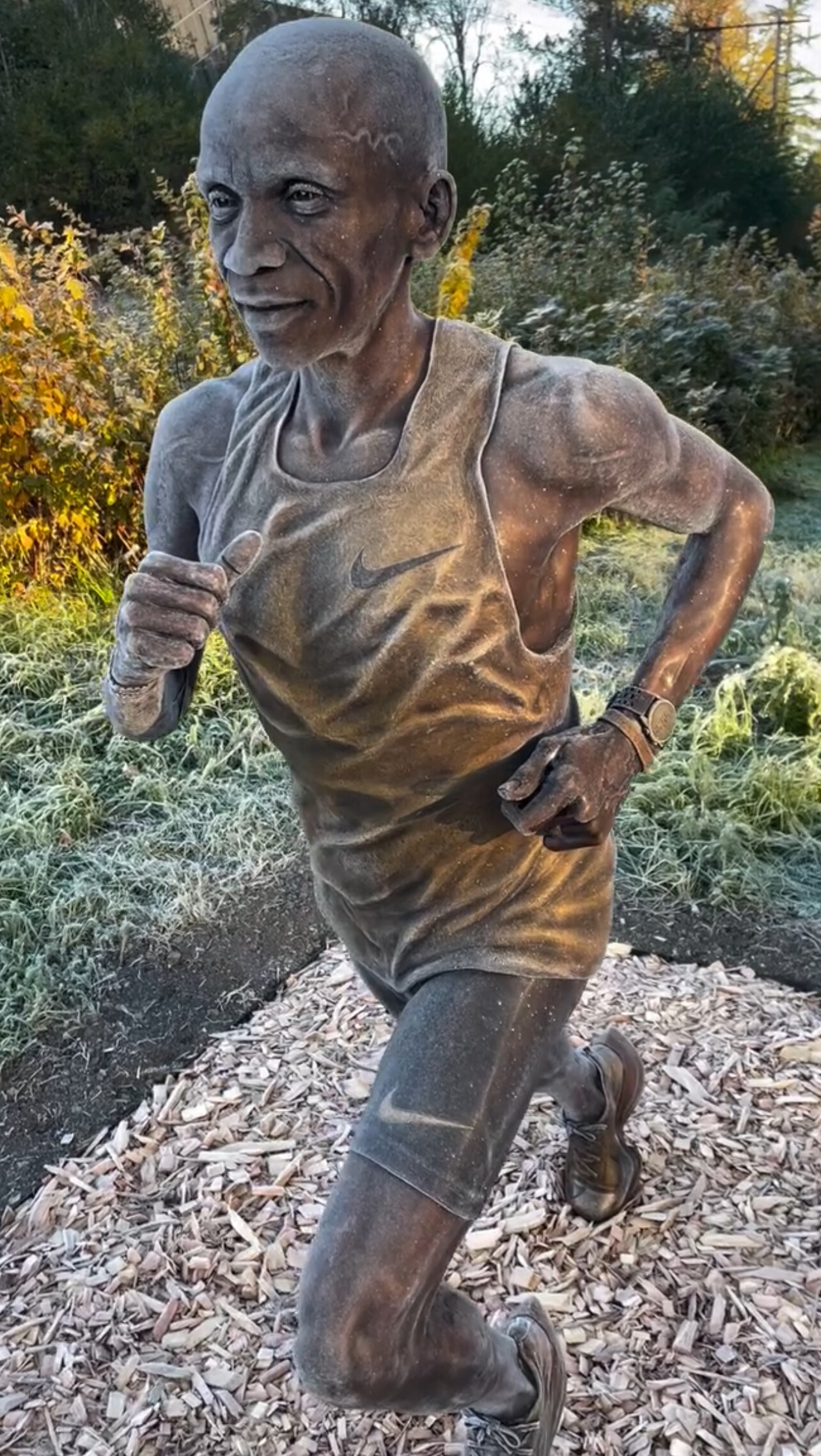
Yet until now, the NYC Marathon has been the elusive piece of the puzzle. By lining up this Sunday, Kipchoge will complete his set of the major Abbott World Marathon Majors (AWMM) if he crosses the finish line—it’s the only major marathon he has yet to run.
Why It Matters
• Legacy: Finishing NYC would give Kipchoge the coveted “six-star” AWMM medal for running all six of the premier majors.
• New challenge: The NYC course is markedly different from the flat, fast courses of Berlin or London. It’s undulating, uses bridges, and traverses the five boroughs—a true test of both physical and mental strength.
• Age and motivation: While Kipchoge remains in top shape, he acknowledges the impact of time and says this race is as much about meaning and experience as it is about finishing fast.
The Competition & Conditions
Kipchoge enters a stacked elite field. He’ll face defending champion Abdi Nageeye of the Netherlands, former NYC winners Evans Chebet and Albert Korir, and several rising stars with sub-2:04 personal bests.
What to Watch
• Will Kipchoge go for a bold win or focus on completing this final major?
• How will the unique challenges of NYC—bridges, hills, and roaring crowds—affect his pacing and strategy?
• Could this race mark the close of his competitive marathon career—or the beginning of a new chapter as ambassador and mentor?
Sunday’s race isn’t just another marathon for Eliud Kipchoge. It’s a long-awaited chapter in a legendary career—one that may see him conquer the final major, inspire millions, and reaffirm his enduring message: No human is limited.
by Boris Baron
Login to leave a comment
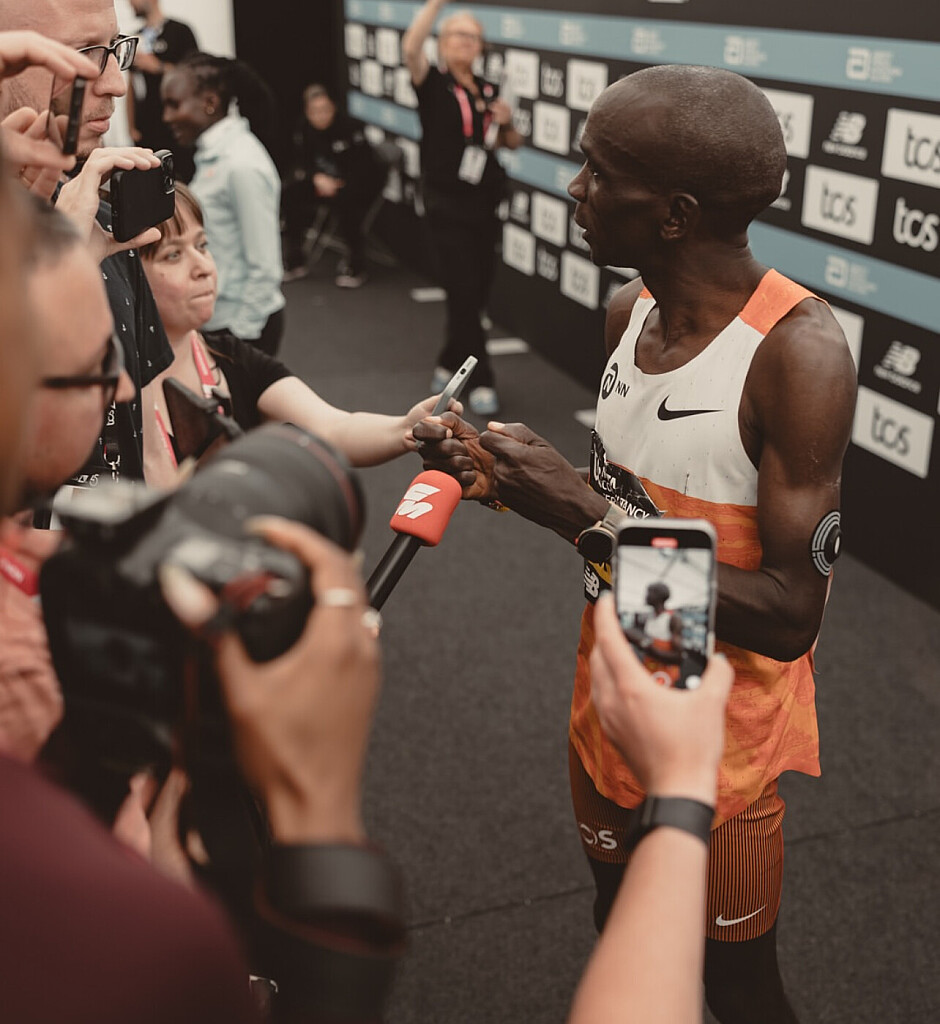
Marathon Legend Kipchoge Shifts Focus to Global Causes
Marathon legend says he has one more year—and plans to run for causes around the world
The news may have flown under the radar during race day coverage, but a powerful quote from Eliud Kipchoge at the finish of the 2025 London Marathon is now making waves in the global running community.
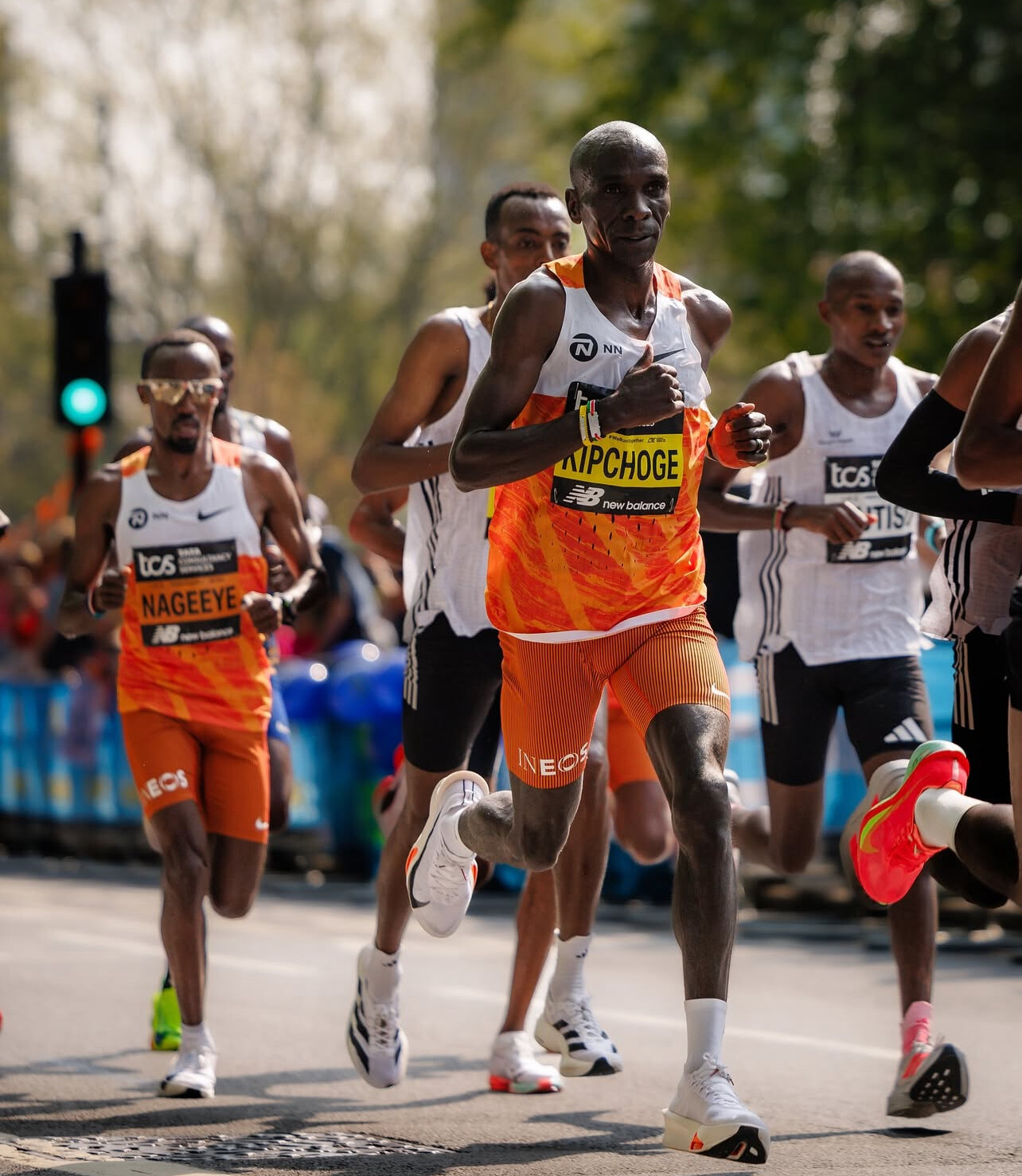
“It might be the last time I come here to run competitively,” Kipchoge said quietly after finishing the race on April 27. While the moment was overshadowed at the time by headlines about the winners and fast times, his words are now resonating deeply with fans.
Thankfully, Kipchoge wasn’t announcing a full retirement. The two-time Olympic marathon champion and former world record holder added: “I think I’ll be going around the world to run in big city marathons for a cause, for education, and for conservation. But above all, I’m still having one more year.”
That final sentence is the reprieve the world needed. After more than 20 years at the pinnacle of distance running, Kipchoge isn’t done yet. But it does suggest that the end of his elite competitive career is near.
A Legacy Like No Other
Widely regarded as the greatest marathoner of all time, Kipchoge has won 11 World Marathon Majors, including a record four in London and five in Berlin. His 2:01:09 Berlin performance stood as a world record and remains the second-fastest official marathon ever recorded.
In 2019, he made history as the first person to break the two-hour barrier for the marathon, clocking 1:59:40 in Vienna in a specially staged event. He also won Olympic gold in Rio (2016) and successfully defended his title in Tokyo (2021).
What Comes Next
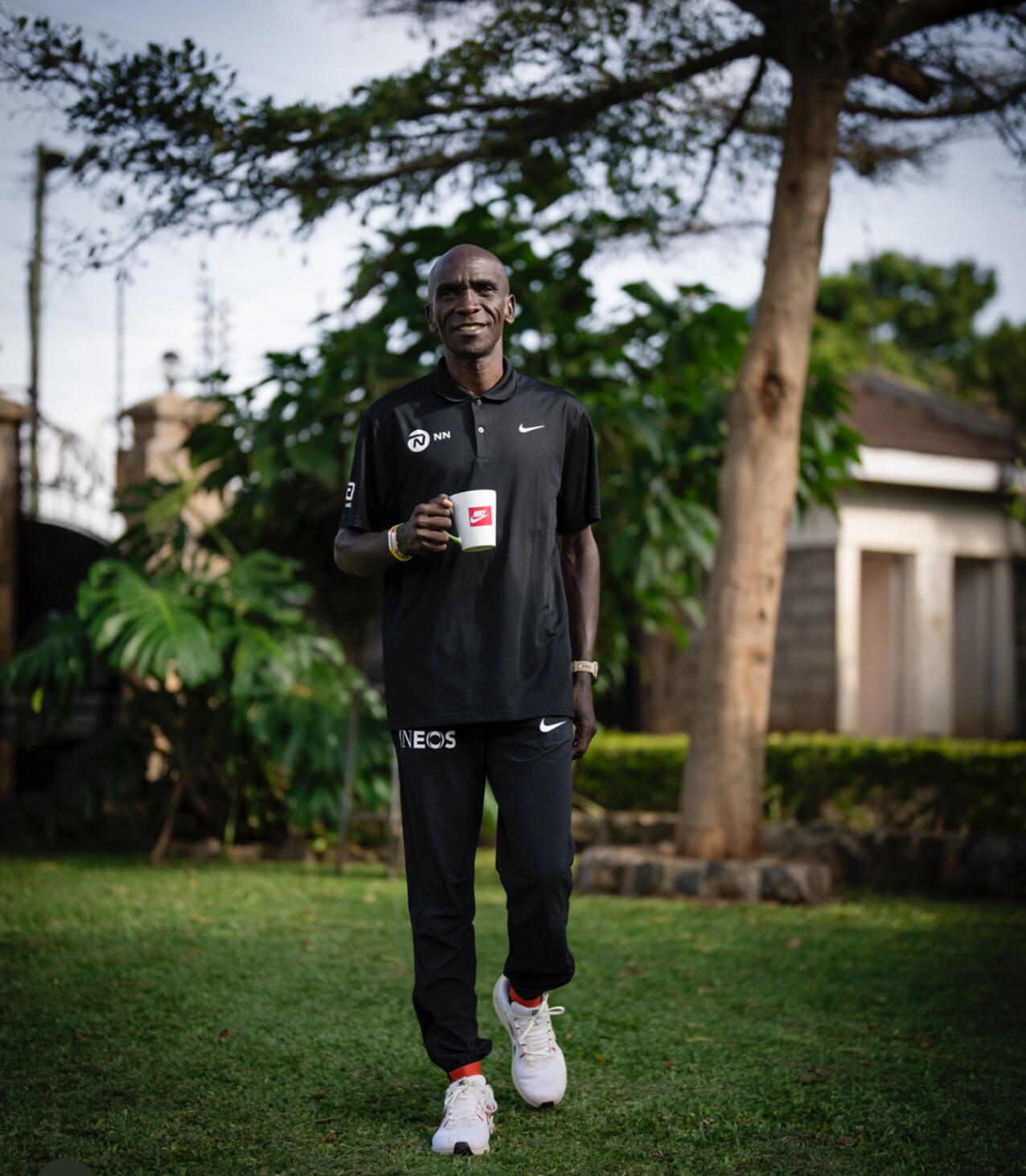
At age 40, Kipchoge has more than earned the right to step away—but he’s choosing to run with purpose instead. He plans to use his final year of competitive racing to spotlight global causes close to his heart, including education and conservation. His future appearances in major city marathons will be driven by more than medals.
While London may never see Kipchoge in full competitive mode again, the running world will still have a chance to celebrate the living legend. One more year. One final lap. And a legacy that will endure for generations.
by Boris Baron
Login to leave a comment
Why Negative Splits Win Races and How to Master Them
For serious runners chasing personal records and breakthrough performances, mastering the negative split can be a game-changer. A negative split means running the second half of a race faster than the first—and while it sounds simple, it requires discipline, pacing, and confidence.
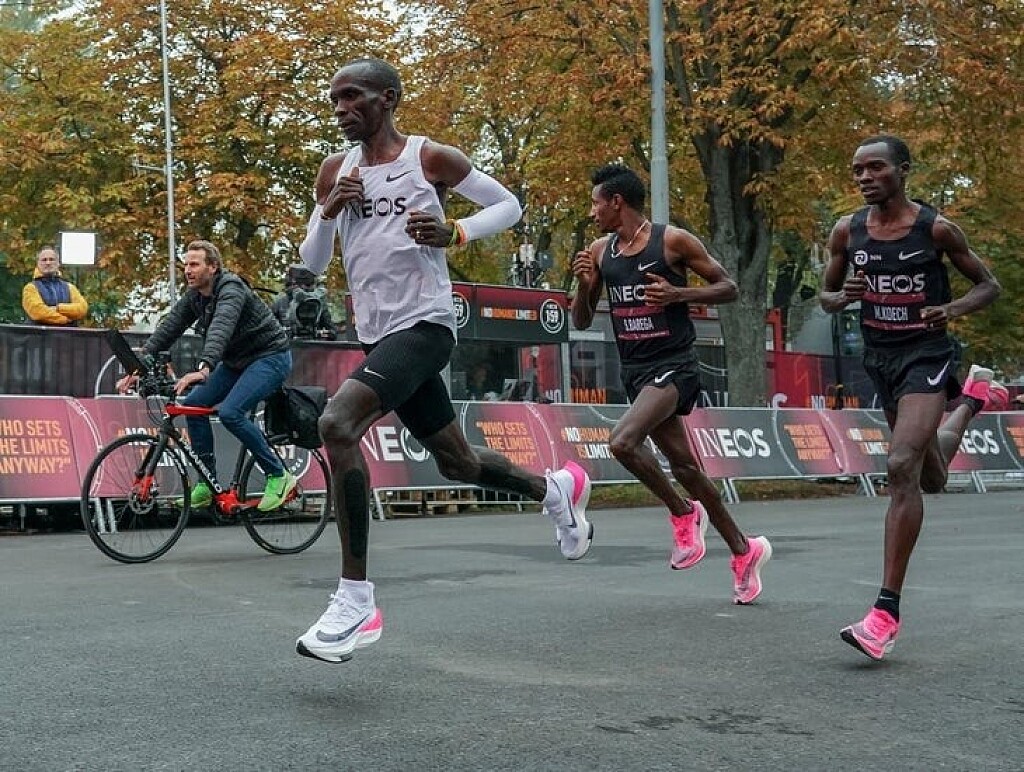
Elite marathoners like Eliud Kipchoge and Paula Radcliffe have used negative split strategies to break records and win major races. Kipchoge’s historic sub-2-hour marathon in Vienna was executed with near-perfect even splits, and many of his victories were sealed with strong second halves.
Why It Works
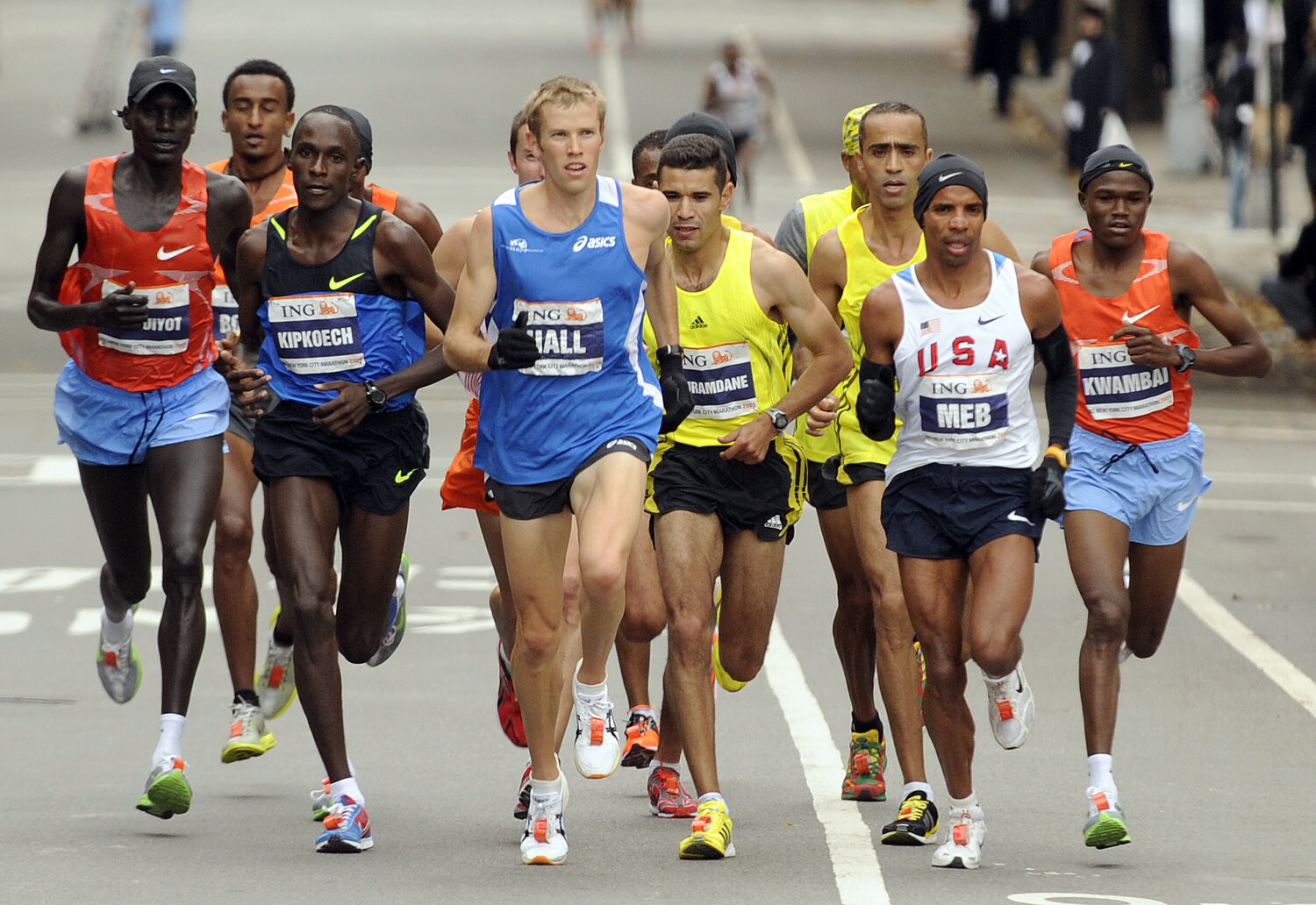
Running a negative split allows you to conserve energy early, delay fatigue, and surge when it counts most. By holding back slightly in the first half, you avoid lactate buildup and maintain better control. Mentally, it can be a major boost—there’s nothing more empowering than passing fading runners in the final miles.
Pacing too fast early is a common mistake, even among experienced runners. But a controlled first half followed by a confident finish often leads to faster times, stronger performances, and more satisfying races.
Bob Anderson’s Progressive Step-Up Method
Bob Anderson, founder of Runner’s World and owner of KATA Portugal at Anderson Manor and KATA Kenya, has long believed in the power of progressive step-ups in training. “Every mile needs to be faster than the one before,” he says.
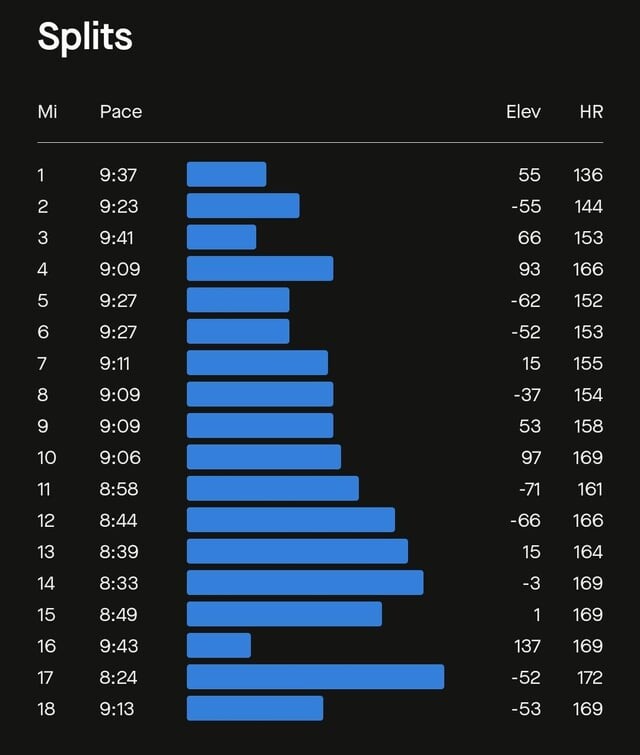
At age 53, Anderson ran a ten-mile race in 59:17 using this principle. In one key workout leading up to the race, he ran six one-mile repeats, starting with a 5:47 and finishing with a 5:17—each one faster than the last. His rest periods ranged from three to five minutes, enough to regroup but not fully recover. Once he felt ready to run faster, he did.
Even if you don’t run negative splits during a race, training this way helps build the strength, stamina, and mental focus needed to finish fast and stay in control.
How to Train for Negative Splits
Want to incorporate this strategy into your training? Try the following:
• Progression Runs: Start easy and increase pace gradually every few miles.
• Tempo Finishes: End long runs with 2–3 miles at goal pace or faster.
• Split Tempos: Run the second half of a tempo run faster than the first.
• Step-Up Intervals: Run repeats with each one faster than the last to simulate race finish intensity.
Pacing on Race Day
A successful negative split starts with patience. Know your goal pace and run slightly slower for the first few miles. Let others surge ahead—your time will come. For the marathon, aim to reach the halfway point feeling strong and confident. Then turn it up.
Final Thoughts
Negative splits aren’t just a strategy—they’re a mindset. With smart training, steady pacing, and progressive workouts, you’ll not only race faster—you’ll finish stronger. Whether you’re chasing a new PR or just want to run your best race yet, mastering this approach can take your performance to the next level.
by Boris Baron
Login to leave a comment
Breaking the Two-Hour Marathon: Could London 2025 Be the Stage?
The marathon world has long been captivated by the elusive sub-two-hour barrier. While Eliud Kipchoge’s 1:59:40 in Vienna 2019 showcased human potential, it occurred under controlled conditions and isn’t recognized as an official world record. As the 2025 TCS London Marathon approaches on April 27, the question arises: Could this be the race where history is officially rewritten?
The Elite Field: A Convergence of Legends and Rising Stars
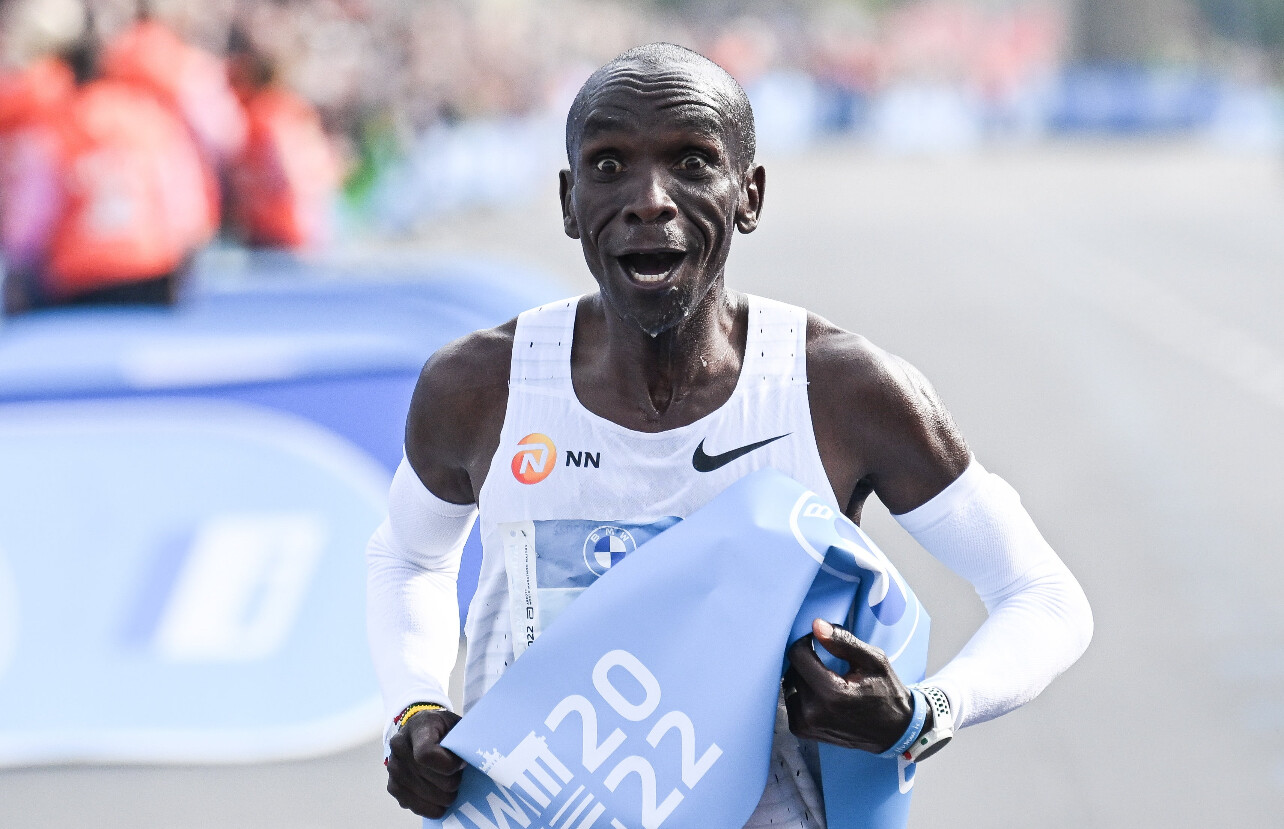
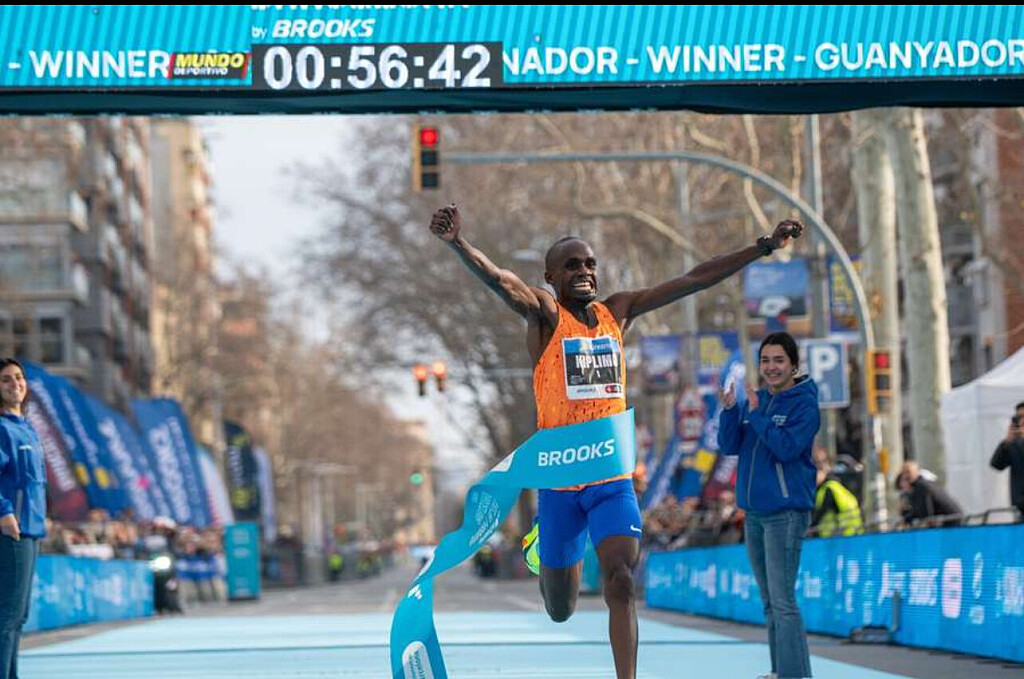
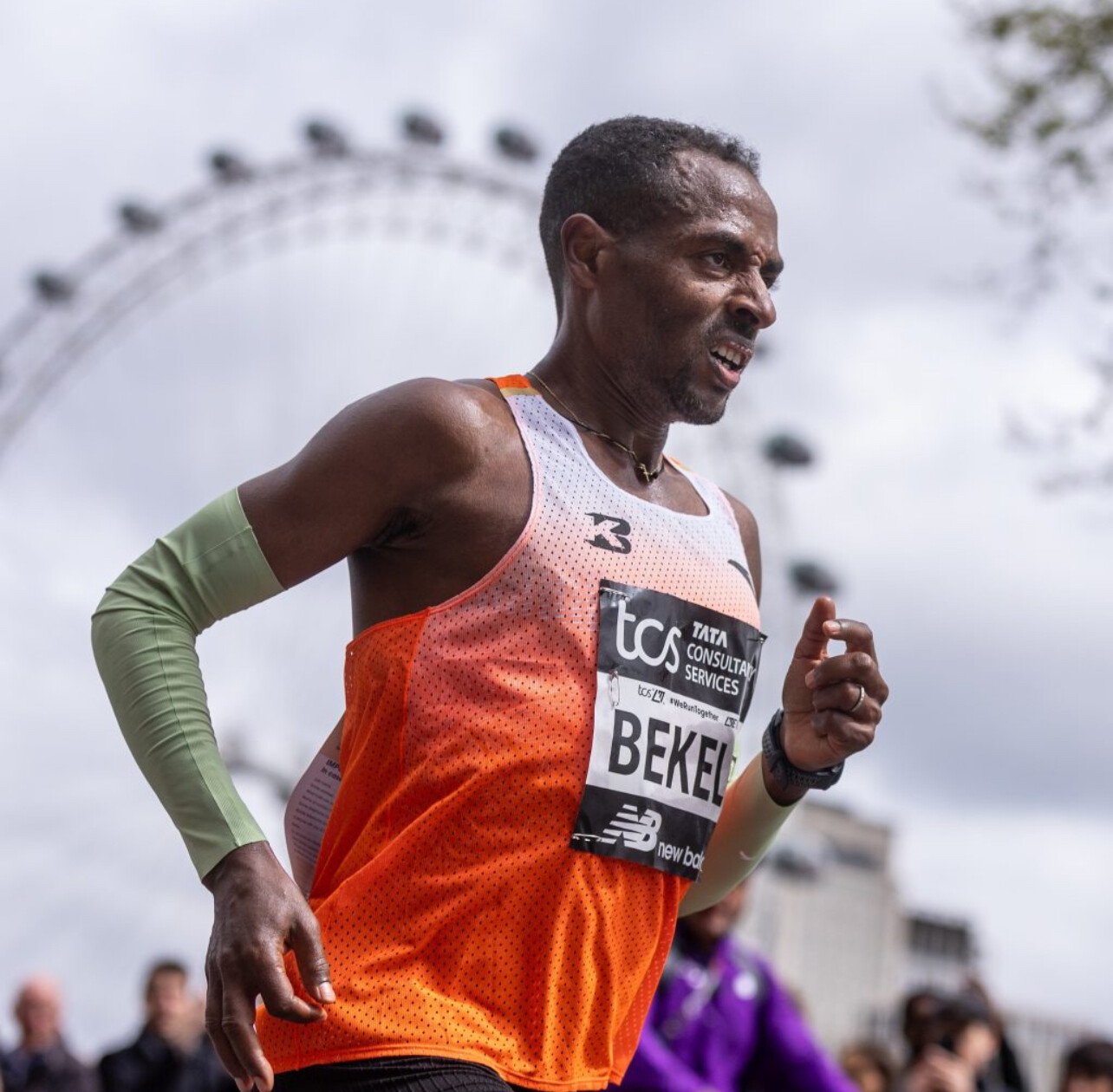
London’s 2025 lineup is arguably its most formidable yet. Eliud Kipchoge, the four-time London champion and former world record holder (2:01:09), returns to a course he has dominated. Joining him is Kenenisa Bekele, the third-fastest marathoner ever (2:01:41), seeking redemption after a close second-place finish in 2024. The field also features Olympic champion Tamirat Tola, reigning London champion Alexander Mutiso, and debutant Jacob Kiplimo, who holds the half marathon world record at 56:42.
“The elite field for London is loaded, but my pick (if I must) is Jacob Kiplimo after watching him destroy the half marathon record,” says MBR editor Bob Anderson. “But the marathon is a different animal, and a sub-two-hour marathon is very possible. However, the weather will need to be perfect, and Jacob needs to have an ‘on’ day for it to happen. He might just go for the win. I wonder how his training has differed in preparation?”
Course and Conditions: London’s Favorable Terrain
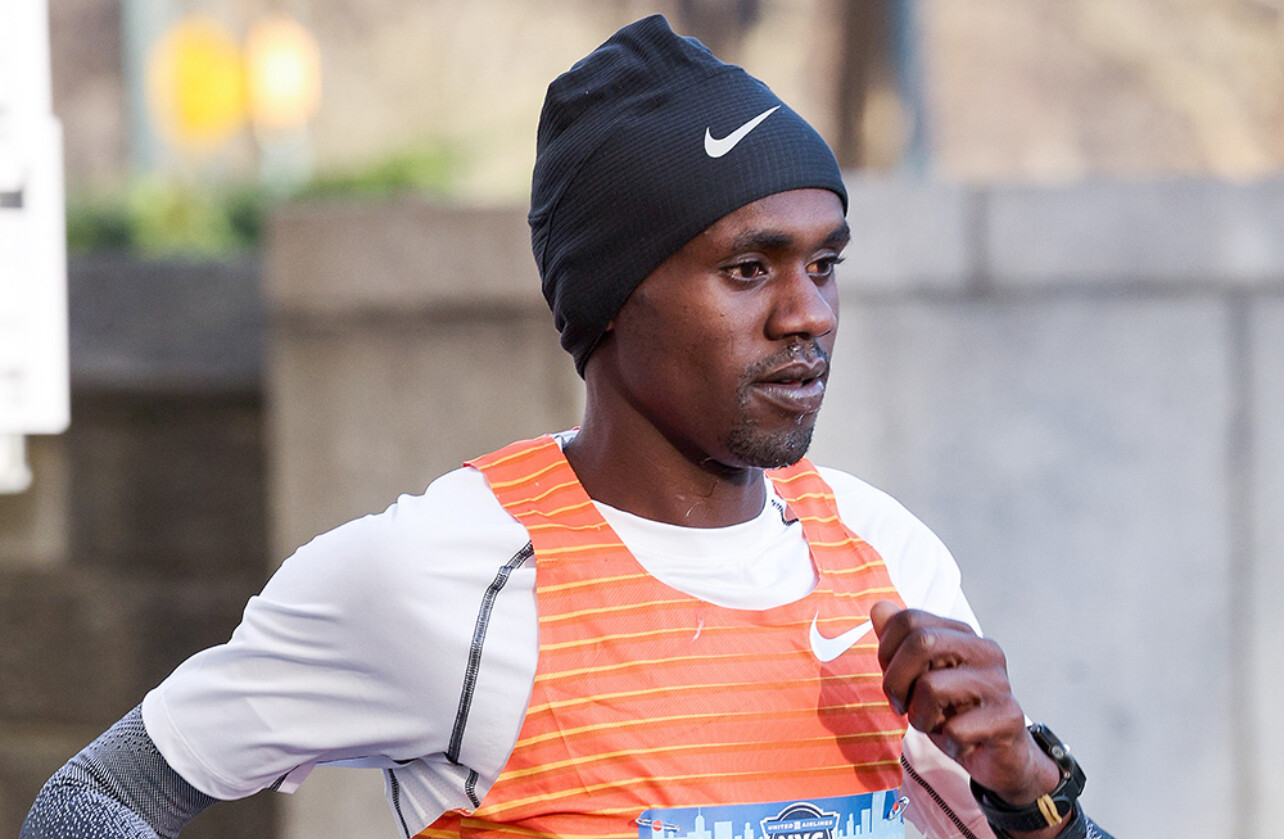
The London Marathon’s flat and fast course, combined with its sea-level altitude, provides an ideal setting for record-breaking attempts. The 2025 weather forecast predicts partly cloudy skies with temperatures ranging from 45°F to 56°F (7°C to 13°C) and minimal wind—conditions conducive to fast times.
Technological Advancements: The Role of Innovation
Modern advancements, notably in footwear technology, have played a significant role in recent marathon performances. The latest “super shoes” offer enhanced energy return, potentially shaving crucial seconds off elite runners’ times. Additionally, strategic pacemaking and optimized nutrition strategies are integral components in the pursuit of the sub-two-hour marathon.
The Verdict: Is Sub-Two Within Reach?
While the convergence of elite talent, favorable course conditions, and technological support makes the prospect enticing, breaking the two-hour barrier in an official race remains a monumental challenge. However, if ever there was a race poised to witness such a historic feat, the 2025 London Marathon stands as a prime candidate.
Stay tuned to My Best Runs for comprehensive coverage of the London Marathon and insights into the evolving landscape of elite distance running.
by Boris Baron
Login to leave a comment
TCS London Marathon
Since its inaugural edition on March 29, 1981, the TCS London Marathon has grown into one of the world's most prestigious road races, blending elite competition with an extraordinary charitable legacy. Founded by former Olympic champion and journalist Chris Brasher alongside Welsh athlete John Disley, the event has been staged every year and has been held in the spring annually...
more...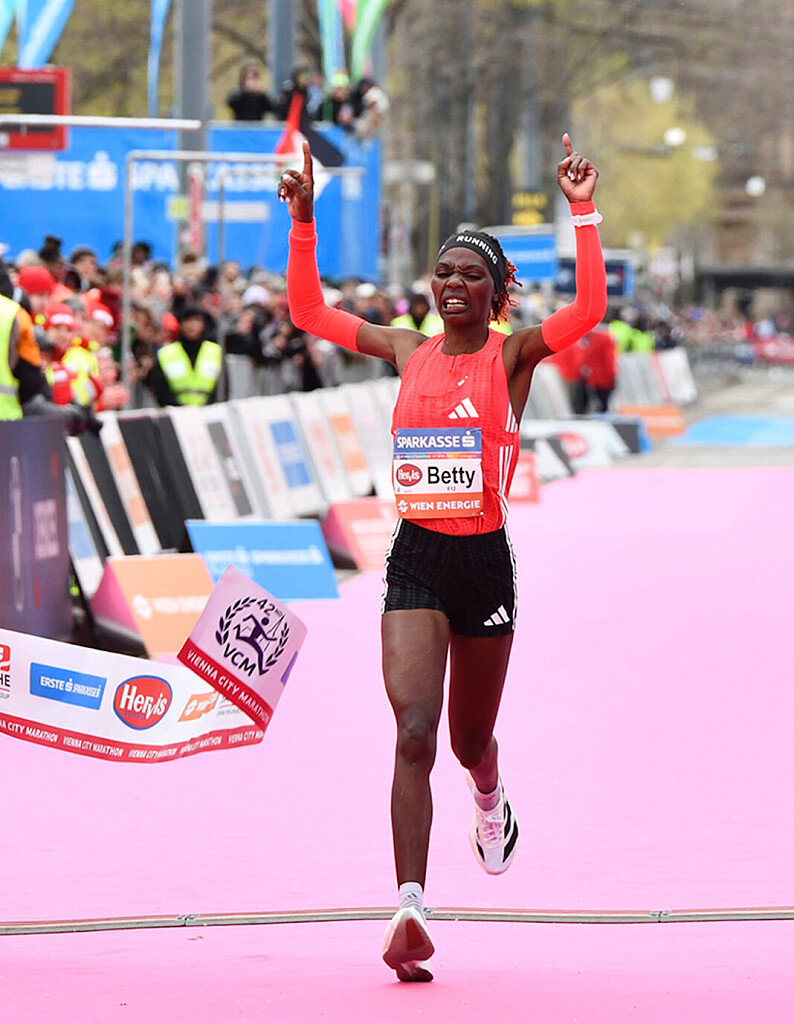
Surprise Wins and Record Turnout at the Vienna City Marathon
The 42nd Vienna City Marathon delivered icy conditions, personal bests, and breakout victories for two rising stars: Haftamu Abadi of Ethiopia and Betty Chepkemoi of Kenya. Both marathoners were competing in only their second career marathon, and both crushed their previous bests in a race that saw record participation.
Abadi, just 21 years old, broke away late in the race to win in 2:08:28, improving by more than two minutes from his debut in Berlin last year. Kenya’s Mica Cheserek took second in 2:10:23, followed closely by Ethiopian debutant Mogos Tuemay in 2:10:33.
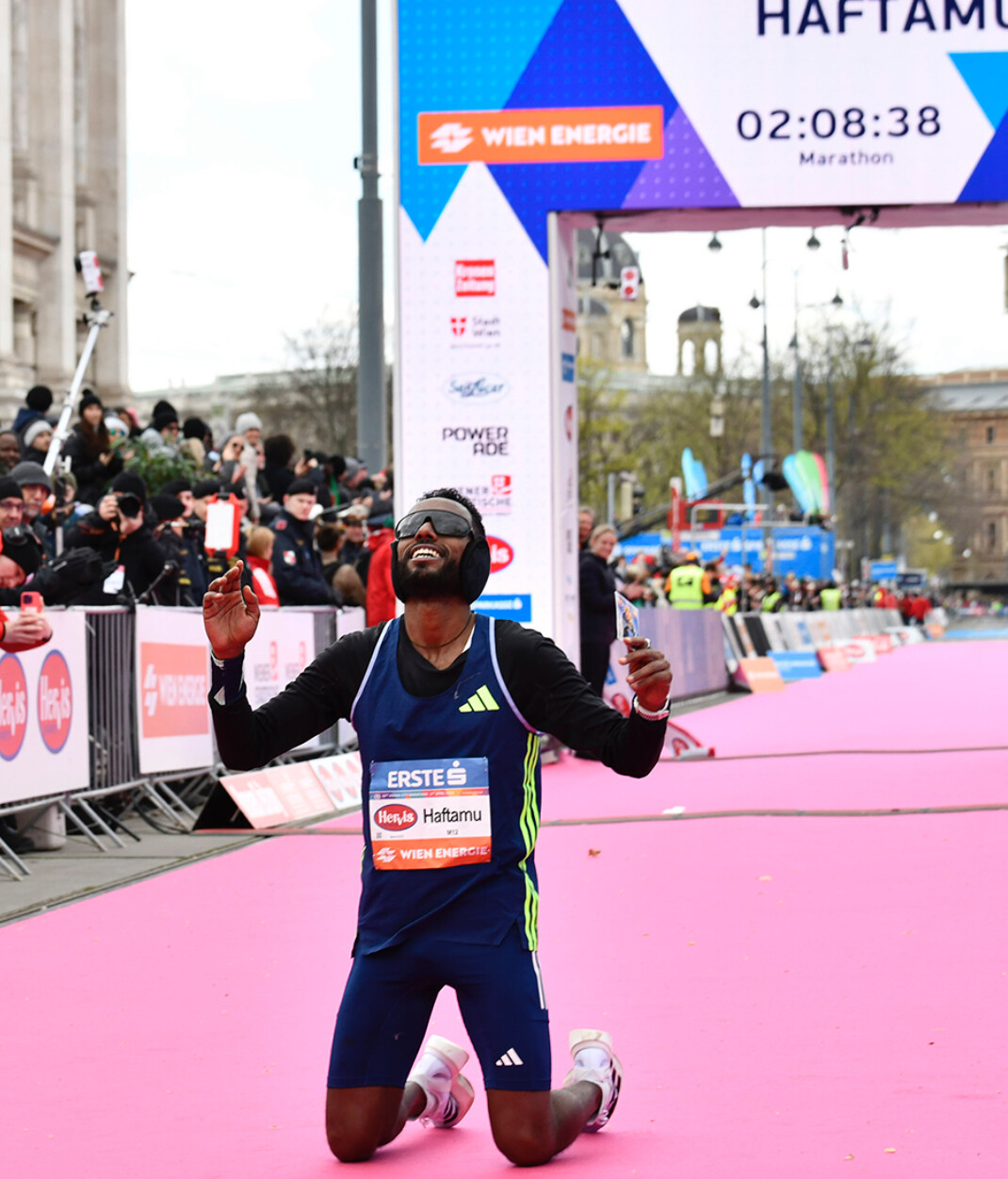
In the women’s race, Betty Chepkemoi made a massive leap forward, chopping over ten minutes off her personal best to win in 2:24:14. Fellow Kenyans Rebecca Tanui (2:25:18) and Catherine Cherotich (2:25:45) rounded out the podium, while Germany’s Fabienne Königstein placed fourth in 2:28:49, just weeks after her Nagoya Marathon performance.
Record-Breaking Participation
Despite near-freezing temperatures at the start — the coldest in race history since 1986 — the Vienna City Marathon attracted a record field of 46,083 participants from 146 nations, including 12,968 marathoners, the most ever for the event.
Challenging Conditions, Slower Pacing
The cold (just 2°C at the start, with a “feels like” of -5°C) prevented any record-breaking times. The men’s lead pack passed halfway in 63:32, staying within range of a 2:07–2:08 finish before Abadisurged away near 29K. Notably, Abadi ran in full cold-weather gear — gloves, ear protection, and a long-sleeved shirt — while the others opted for lighter kits.
“I had hoped to run 2:05–2:06, but that wasn’t possible today,” Abadi said. “I’m happy with the win and I know I can go faster in better conditions.”
The women’s race began cautiously, with a 5K split of 17:24 pointing toward a 2:27 finish. But the Kenyan trio pulled away before halfway and Chepkemoi made her move with 6K to go, running solo to the finish.
“I’m so happy,” she said. “It was cold, and there were no pacemakers after halfway, but I know I can go faster next time.”
5K City Race Shines on the Eve of the Marathon
Vienna’s growing 5K race, held the day before the marathon on the iconic Ringstraße, also saw standout performances. Timo Hinterndorfer battled strong winds to set a course record of 14:17, with Markus Reißelhuber (14:51) and Thys Moreau of Belgium (15:00) finishing second and third.
In the women’s 5K, Sophie Hicks of New Zealand topped a strong Austrian field in 16:20, followed by Cordula Lassacher (16:27) and defending champion Lena Millonig (16:35).
Top 8 Marathon Results
Men:
1. Haftamu Abadi (ETH) – 2:08:28
2. Mica Cheserek (KEN) – 2:10:23
3. Mogos Tuemay (ETH) – 2:10:33
4. Asbel Rutto (KEN) – 2:11:37
5. Edward Koonyo (KEN) – 2:12:29
6. Geoffrey Koech (KEN) – 2:12:31
7. Justus Kangogo (KEN) – 2:13:25
8. Felix Kurui (KEN) – 2:14:36
Women:
1. Betty Chepkemoi (KEN) – 2:24:14
2. Rebecca Tanui (KEN) – 2:25:18
3. Catherine Cherotich (KEN) – 2:25:45
4. Fabienne Königstein (GER) – 2:28:49
5. Faith Chepkoech (KEN) – 2:30:00
6. Nora Szabo (HUN) – 2:30:31
7. Risper Chebet (KEN) – 2:32:39
8. Eva Wutti (AUT) – 2:37:43
by Race News Service
Login to leave a comment
Vienna City Marathon
More than 41,000 runners from over 110 nations take part in the Vienna City Marathon, cheered on by hundreds of thousands of spectators. From the start at UN City to the magnificent finish on the Heldenplatz, the excitement will never miss a beat. In recent years the Vienna City Marathon has succeeded in creating a unique position as a marathon...
more...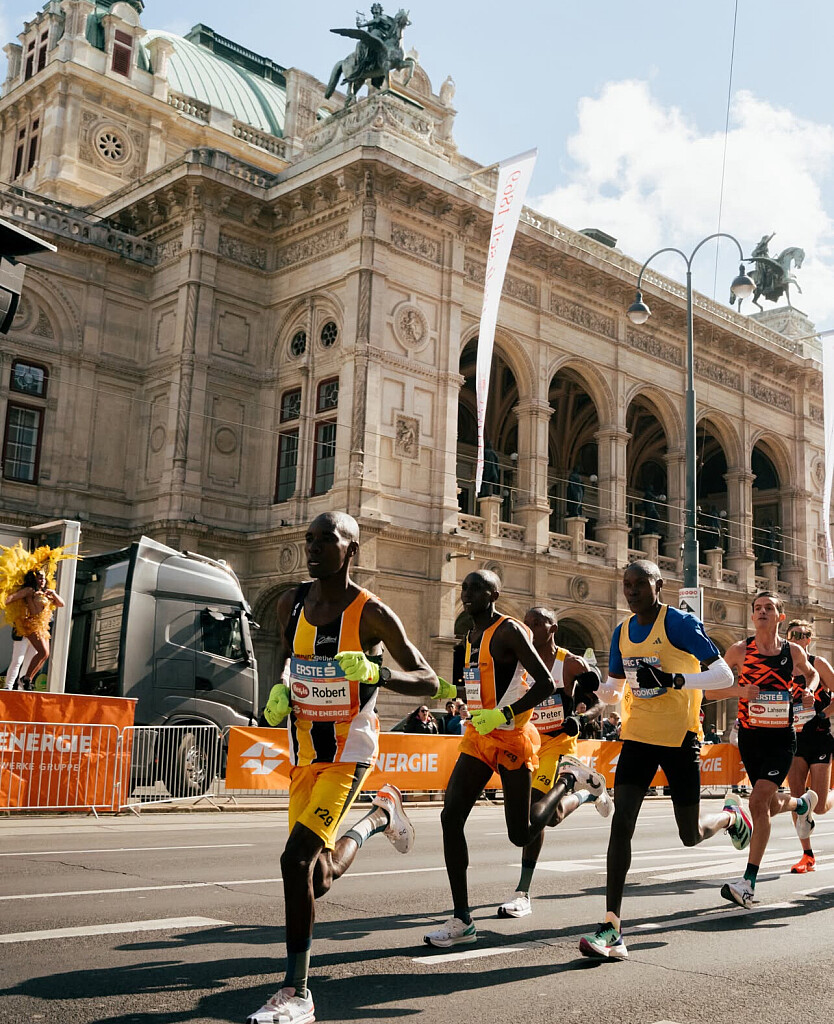
Kenyan Elites Eye Fast Times at Sunday’s Vienna City Marathon
The 42nd edition of the Vienna City Marathon, Austria’s premier road racing event and a World Athletics Elite Label race, is set to unfold this Sunday with over 45,000 participants—including a record 13,000 marathoners. A strong Kenyan contingent is expected to set a blistering pace as they aim for personal bests on the historic streets of Vienna.
Kenya’s Justus Kangogo (PB 2:05:57), Asbel Rutto (2:06:24), and Stanley Kurgat (2:07:05)headline a deep elite field. All three confirmed at Friday’s press conference that they’re not just here to win—they’re here to run fast.
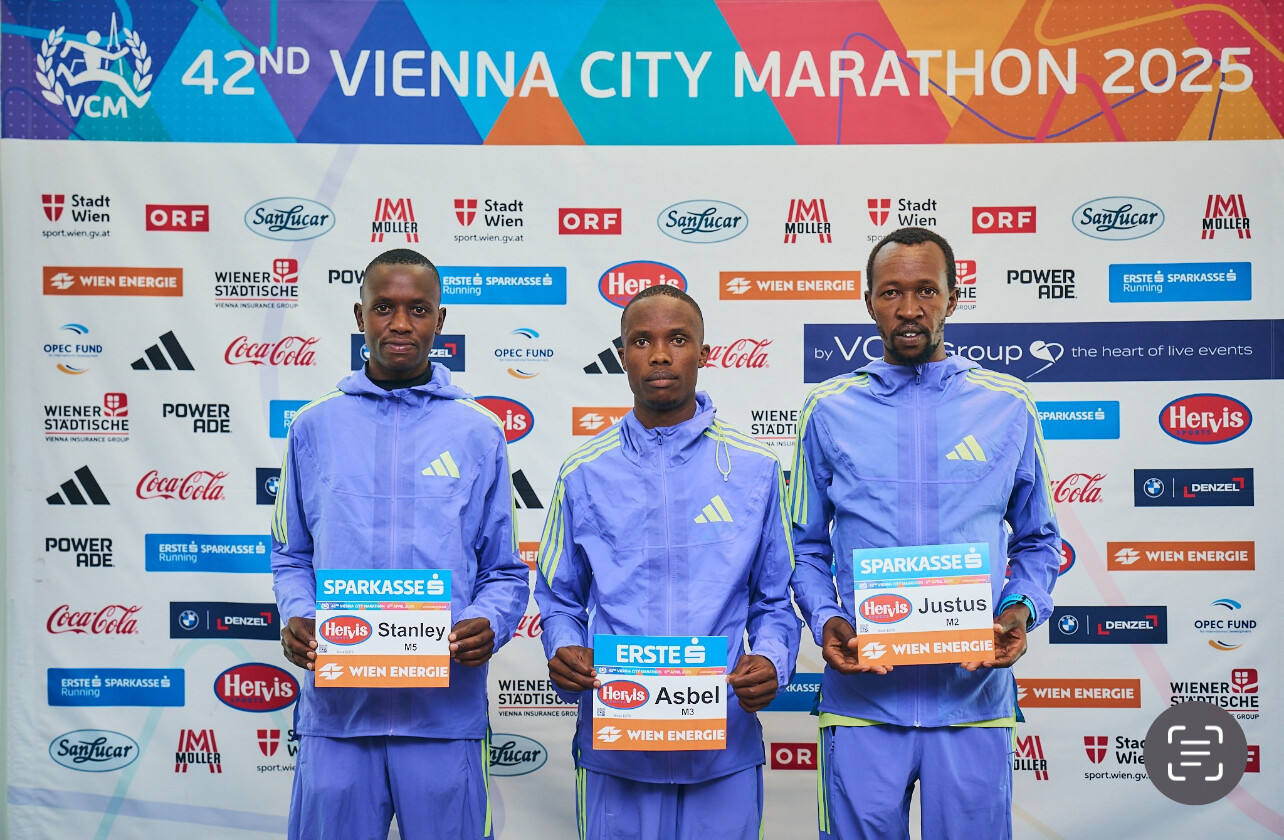
“We have an interesting elite field that should provide a thrilling race,” said Johannes Langner, elite coordinator. “Our target for the lead group is a half marathon split between 62:30 and 62:45, with a second group about a minute behind.”
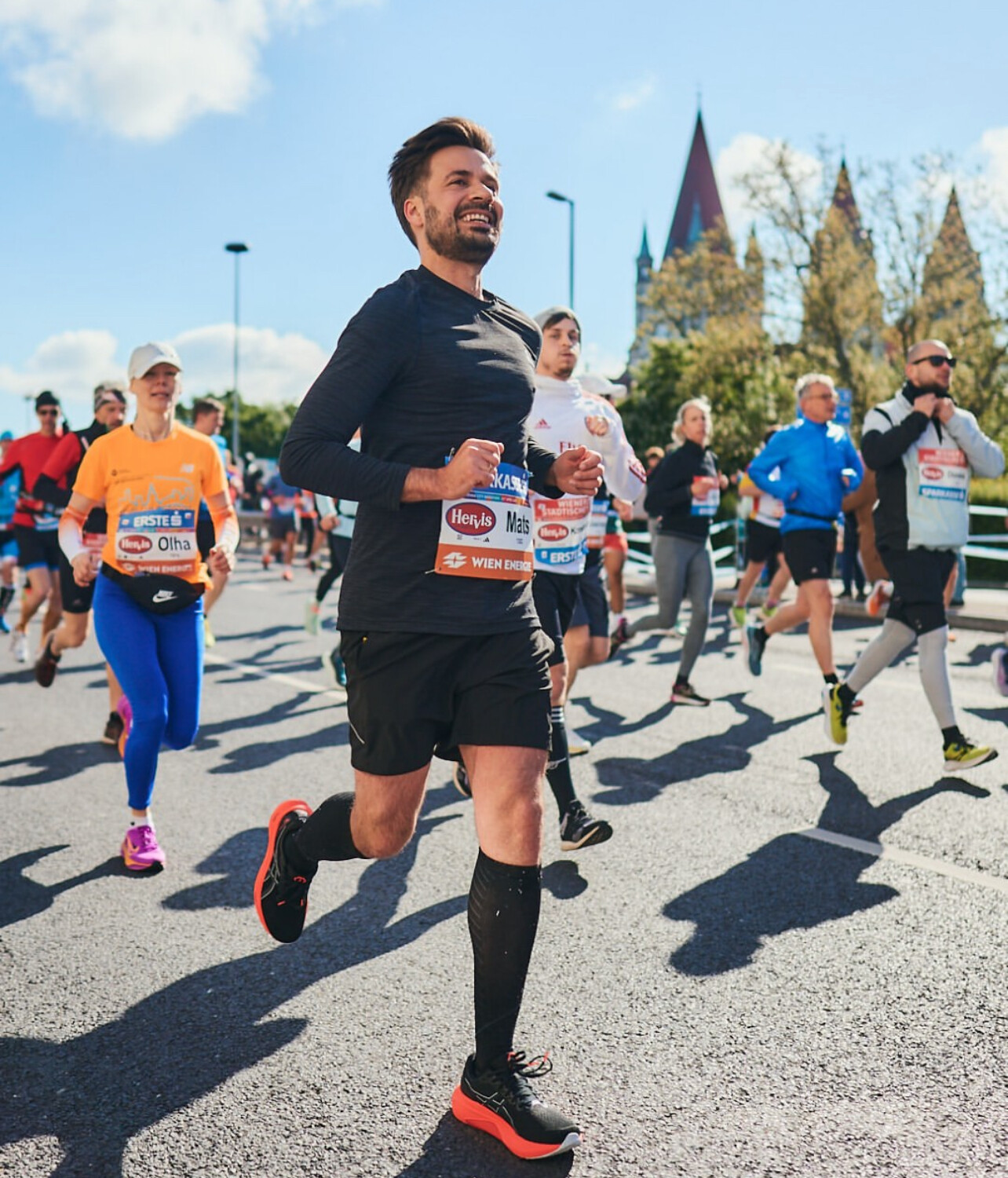
Though the forecast calls for dry but cold weather, with temperatures just above freezing at the 9 a.m. start, the elite field still has its sights set on the 2:05:08 course record.
Kangogo, who ran his PB in Berlin, said he’s eager to team up with Rutto: “I am a frontrunner as well, so we will work together. And once we finish, we will celebrate.”
Rutto made headlines with his course record victory in Rome last year, running solo to a 2:06:24 finish. “I am a frontrunner,” said the 23-year-old. “If you stay behind, you can’t win. On Sunday, I’m going for a personal best.”
Stanley Kurgat brings a strategic edge, having paced Vienna last year up to 32K. “Now I’ll go the full distance. I know this course, and even if it’s cold, it will still be a good race.”
Other strong contenders include Douglas Chebii (2:06:31), Charles Ndiema (2:08:12), and Benard Kimeli (2:08:34). Keep an eye on Bernard Muia, last year’s runner-up in Vienna, who comes in with a 2:09:17 PB from Munich. Meanwhile, Wisley Kibichii, a 59:57 half marathoner, will make his highly anticipated marathon debut.
Vienna City Marathon General Manager Dominik Konrad, son of longtime race director Wolfgang Konrad, emphasized the event’s growing impact: “We’re seeing another running boom. Entries came early and never stopped. This year’s marathon is not only a celebration of sport but also a huge boost to Vienna’s economy, with runners from 146 nations—a record.”
Top Men’s Elite Field – Personal Bests
• Justus Kangogo (KEN) – 2:05:57
• Asbel Rutto (KEN) – 2:06:24
• Douglas Chebii (KEN) – 2:06:31
• Stanley Kurgat (KEN) – 2:07:05
• Charles Ndiema (KEN) – 2:08:12
• Benard Kimeli (KEN) – 2:08:34
• Bernard Muia (KEN) – 2:09:17
• Mica Cheserek (KEN) – 2:09:26
• Kipsambu Kimakal (KEN) – 2:09:41
• Geoffrey Koech (KEN) – 2:10:12
• Haftamu Abadi (ETH) – 2:10:33
• Lemawork Ketema (AUT) – 2:10:44
• Gadisa Tajebe (ETH) – 2:11:02
• Edward Koonyo (KEN) – 2:11:24
• Evans Yego (KEN) – 2:12:56
• Henry Kichana (KEN) – 2:13:06
• Andreas Vojta (AUT) – 2:13:43
• Andrew Davies (GBR) – 2:14:23
• Daverso Ramos (PER) – 2:14:25
• Wisley Kibichii (KEN) – Debut
• Mogos Tuemay (ETH) – Debut
by Race News Service
Login to leave a comment
Vienna City Marathon
More than 41,000 runners from over 110 nations take part in the Vienna City Marathon, cheered on by hundreds of thousands of spectators. From the start at UN City to the magnificent finish on the Heldenplatz, the excitement will never miss a beat. In recent years the Vienna City Marathon has succeeded in creating a unique position as a marathon...
more...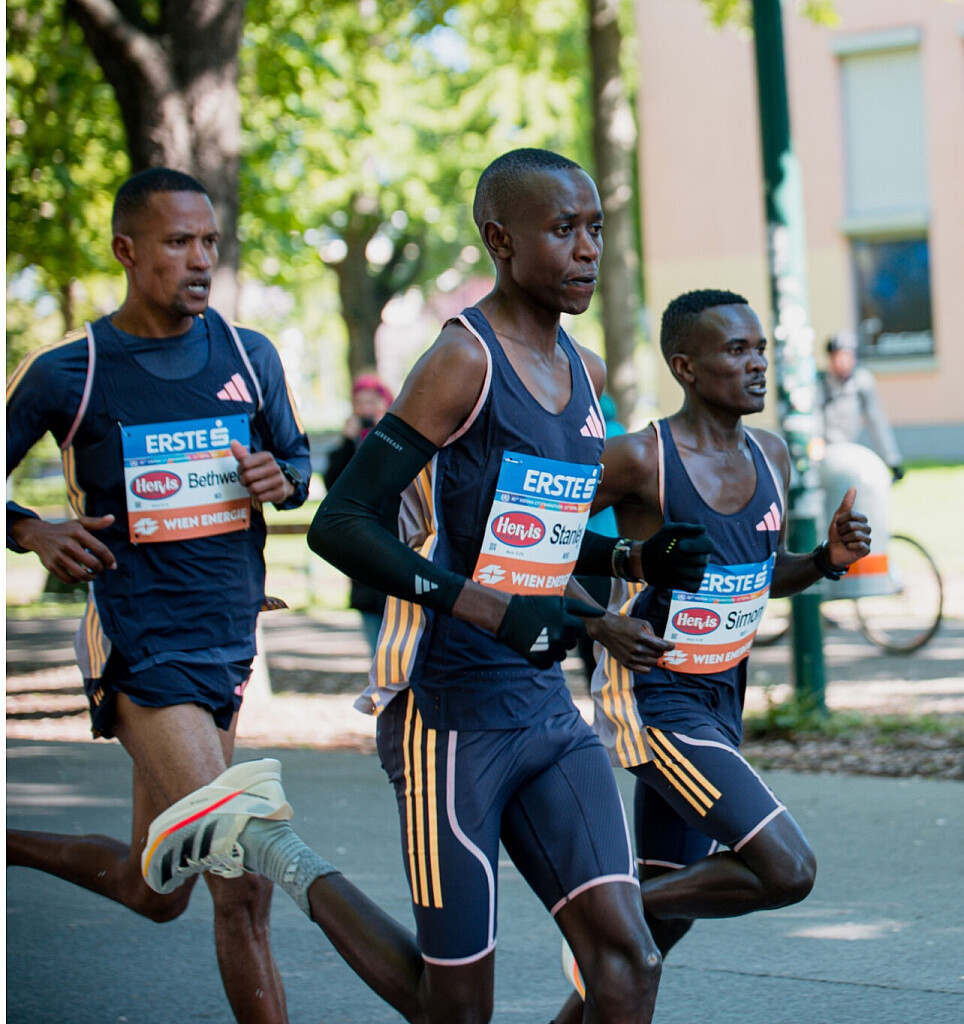
Kenyans Set Their Sights on Regaining Vienna City Marathon Crown
This year’s Vienna City Marathon will form a unique bond with the classical music Austria’s capital is known for. Celebrating Johann Strauss’ 200th birthday, his Danube Waltz will be played before the start of the race. While the music will be soft and flattering, once the runners get on their way, the battle for victory is expected to be thrilling and fierce, with no clear favorite.
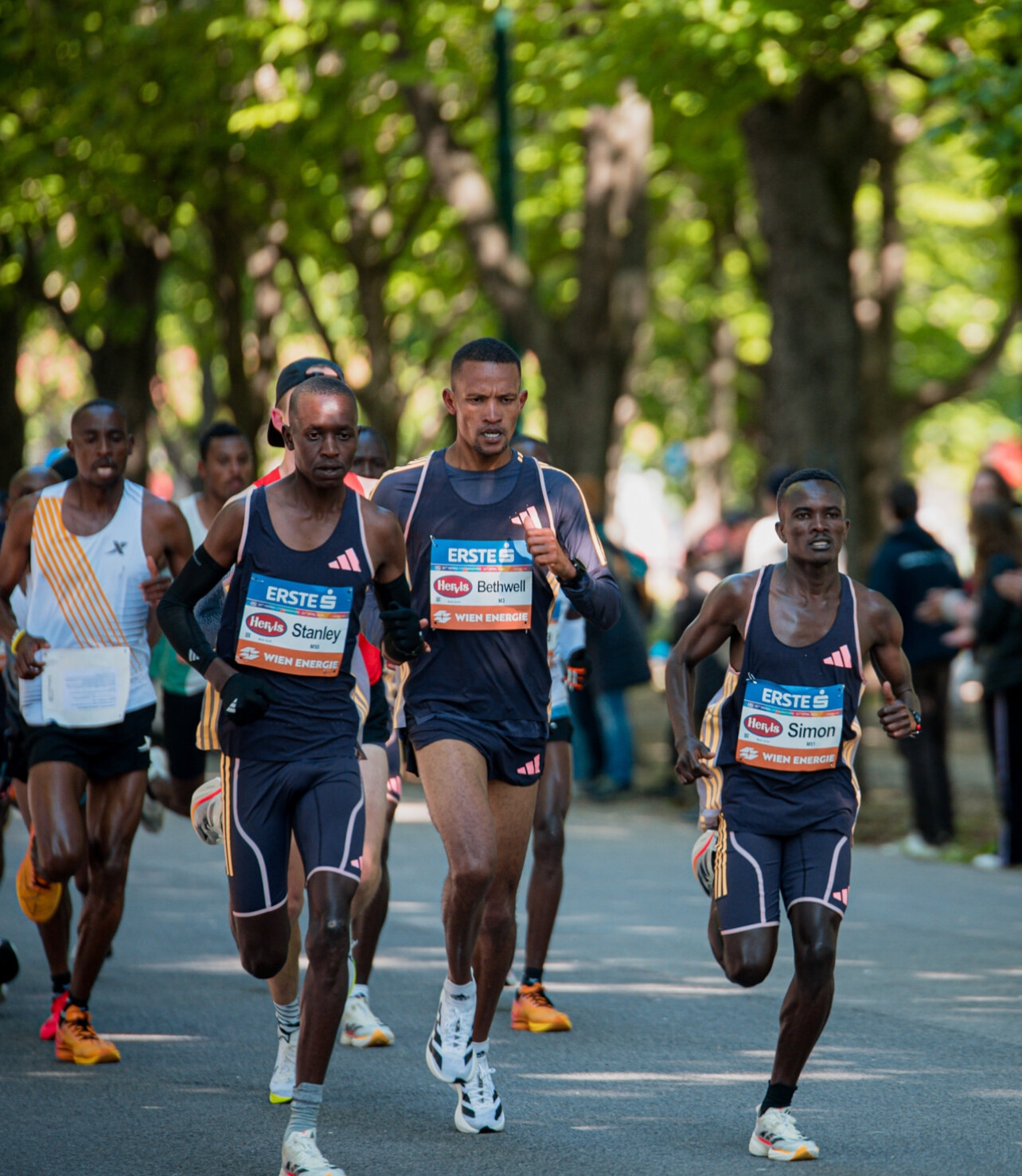
The Kenyan trio of Justus Kangogo, Douglas Chebii, and Stanley Kurgat lead the men’s elite field on April 6. With personal best times ranging from 2:06 to 2:07, they will be joined by two more athletes who have run under 2:09. The organizers of Austria’s premier road race event have officially announced the men’s top contenders.
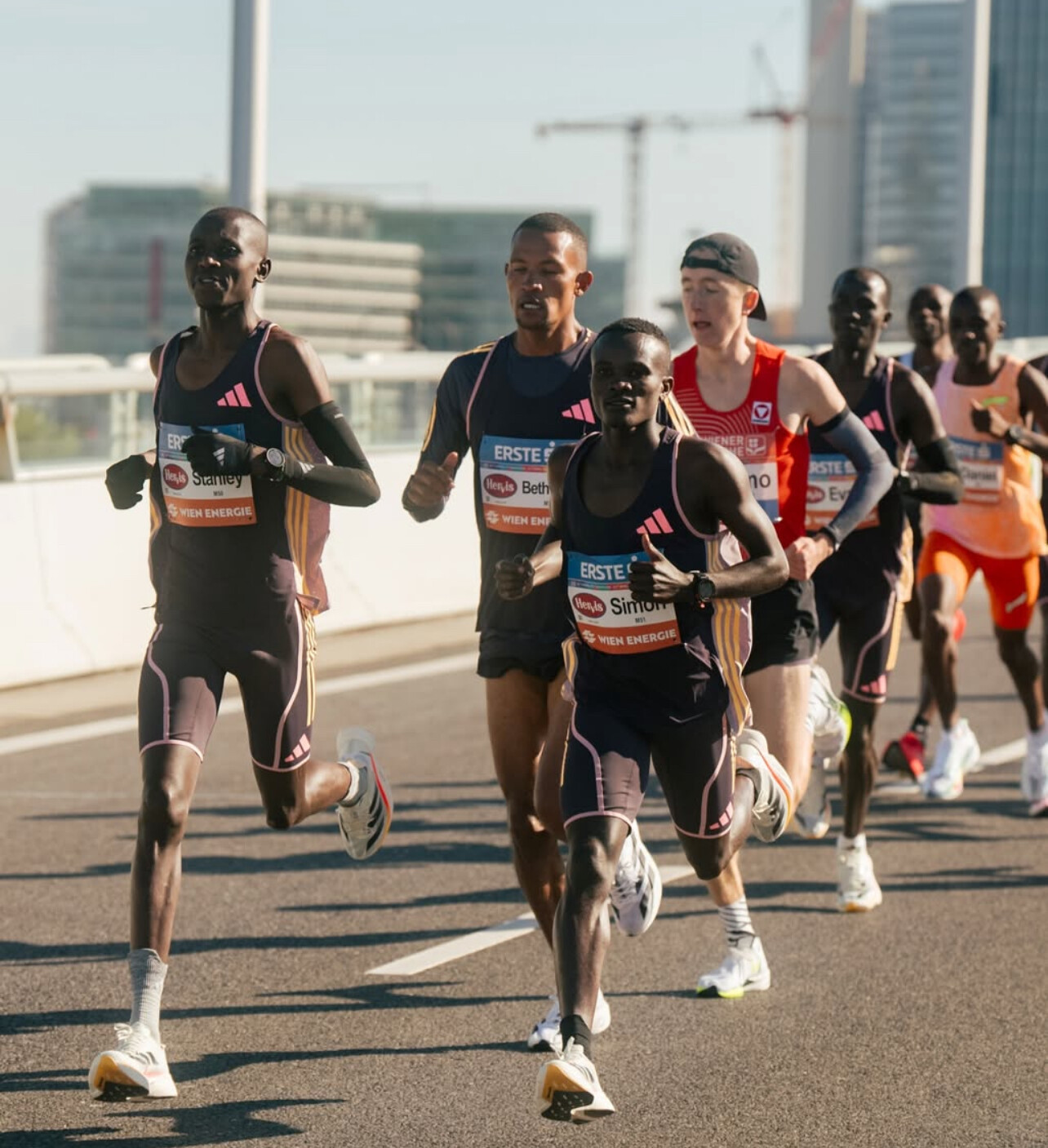
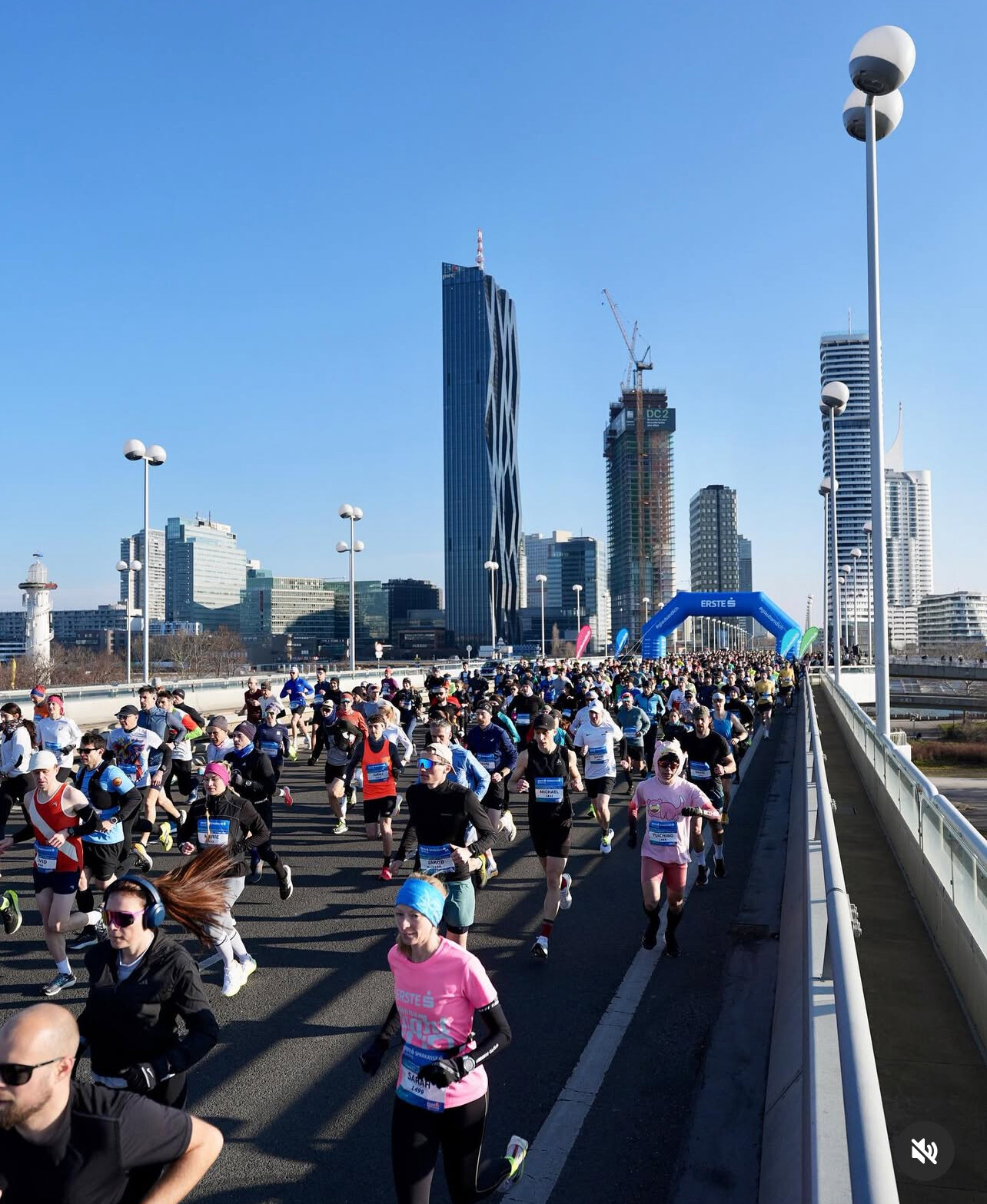
A record-breaking field of nearly 13,000 marathoners has been registered for the 42nd edition of the Vienna City Marathon, a World Athletics Elite Label Race. With shorter-distance events included, the total number of participants will exceed 45,000.
Kenya’s elite runners are eager to reclaim the men’s title after losing it last year to Ethiopia’s Chala Regasa. Prior to that, Kenya had dominated the event, securing four consecutive victories, culminating in Samwel Mailu’s record-breaking 2:05:08 win in 2023.
The three leading Kenyan contenders arrive in Vienna with strong credentials. Justus Kangogo, 29, clocked 2:06:45 for fourth place in Amsterdam last October. His personal best of 2:05:57 was set in Berlin in 2022. Douglas Chebii, 31, has demonstrated remarkable consistency, running 2:06:31 in Linz in 2022, 2:07:11 in Seville in 2023, and placing seventh in the highly competitive Dubai Marathon in 2024 with 2:08:15—making him the fastest Kenyan in Dubai that year.
The youngest of the trio, 25-year-old Stanley Kurgat, made a significant breakthrough just six months ago, improving his marathon time from 2:11:50 in his Valencia debut to 2:07:05 in Berlin. Though he finished 15th in that deep field, he now has a real shot at claiming his biggest career victory in Vienna. He also holds an advantage, having paced the race up to the 30K mark last year, giving him valuable experience on the course.
Other Kenyan hopefuls include Charles Ndiema and Benard Kimeli, both boasting sub-2:09 personal bests. Ndiema, who finished fourth in Vienna in 2022 with a time of 2:08:12, will look to improve on that performance. Kimeli ran 2:08:34 in Tokyo last year. Meanwhile, Bernard Muia is a potential dark horse. The Kenyan finished runner-up in Vienna last year with 2:10:42, surging from fourth to second place in the final two kilometers, closing a 48-second gap. Muia ran his PB of 2:09:17 when he won the Munich Marathon in 2023.
Austrian record holder Peter Herzog, who clocked 2:10:06 at the 2020 London Marathon, will lead the national elite field, aiming for a time around 2:12. Former Austrian record holder Lemawork Ketema (2:10:44) is also set to compete, hoping for a strong comeback after a long injury layoff.
With a highly competitive field and no clear frontrunner, the Vienna City Marathon promises an exciting showdown, as Kenya’s top athletes aim to reclaim the crown.
by Boris Baron
Login to leave a comment
Vienna City Marathon
More than 41,000 runners from over 110 nations take part in the Vienna City Marathon, cheered on by hundreds of thousands of spectators. From the start at UN City to the magnificent finish on the Heldenplatz, the excitement will never miss a beat. In recent years the Vienna City Marathon has succeeded in creating a unique position as a marathon...
more...
Vienna City Marathon 2025 Chepkirui Aims for Third Victory
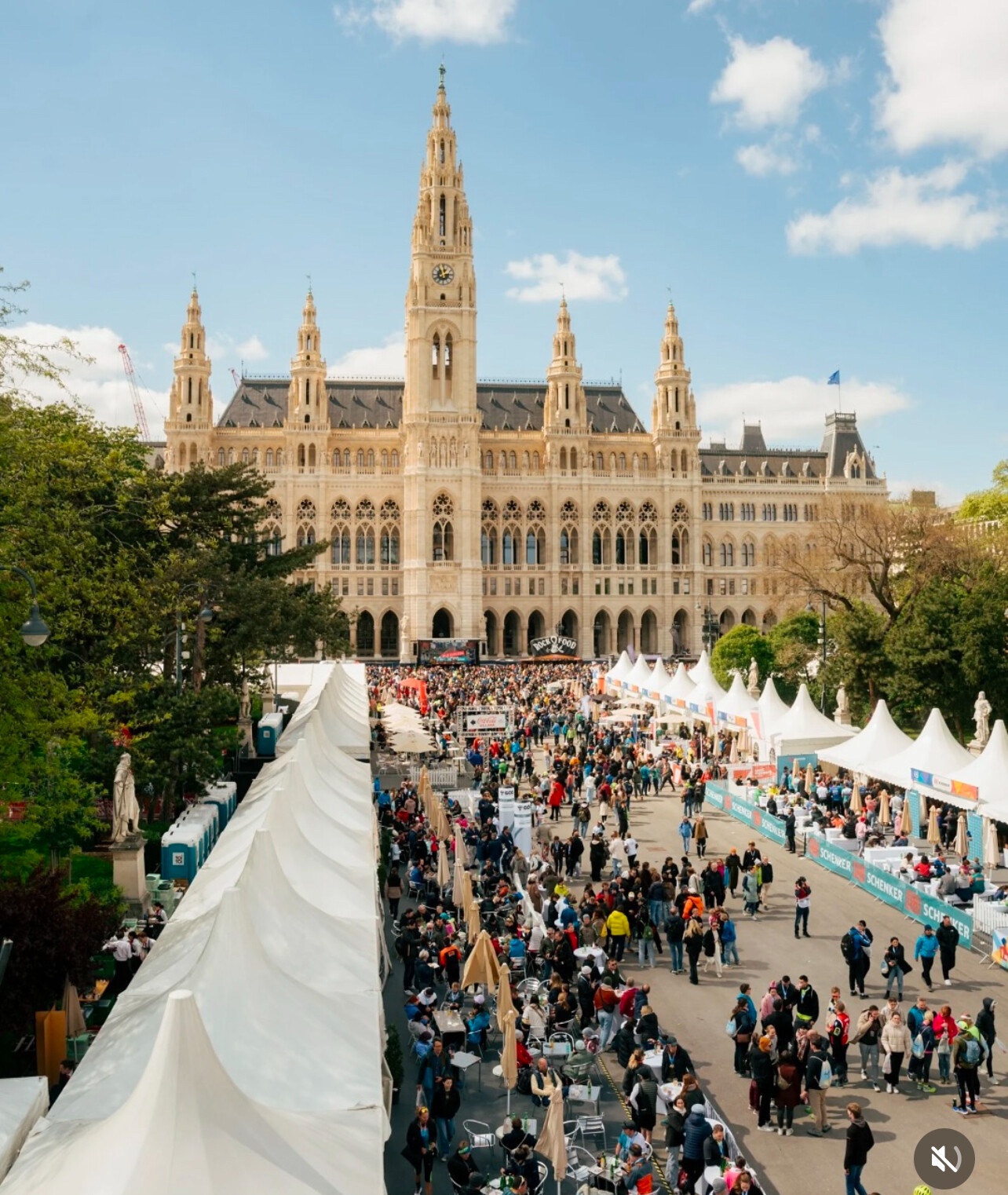
The Vienna City Marathon is set to return on April 6, 2025, promising an exhilarating event for both elite athletes and amateur runners. As Austria's premier road race, the marathon continues to attract participants from around the globe, eager to experience the historic and scenic course through Vienna's iconic landmarks.
Elite Women's Race Chepkirui's Quest for a Third Victory
In the women's elite field, Vibian Chepkirui of Kenya aims for her third Vienna victory, having previously won in 2021 and 2022. Chepkirui, who set the current course record of 2:20:59 in 2022, returns with the ambition to surpass her personal best and further cement her legacy in Vienna.

Challenging her are these Kenyans:
Rebbeca Tanui: With a personal best of 2:21:08, Tanui has shown consistent improvement and poses a significant threat to the defending champion.
Catherine Cherotich: After a breakthrough performance in 2024, clocking 2:22:42 in Frankfurt, Cherotich is poised to make a strong impact.
Faith Chepkoech: A rising star, Chepkoech achieved a personal best of 2:26:22 in Vienna last year and is determined to improve her standing.
Event Details
The 2025 Vienna City Marathon is not only about elite competition; it celebrates running for all enthusiasts. This year's event has seen record-high registrations, reflecting a growing enthusiasm for running across Europe.
The marathon weekend offers a variety of races:
Saturday, April 5, 2025
Vienna 5K: A 5 km run through the city center, starting at 6:15 PM at Schottentor near the University.
Children’s Races: The "Daily Mile 800" for ages 3 to 10 and the "Daily Mile 1,600" for ages 6 to 18, starting at 4:00 PM and 4:30 PM respectively on the Ringstraße near the Burgtheater.
Sunday, April 6, 2025
Marathon: Starting at 9:00 AM on Wagramer Straße near the Reichsbrücke.
Half Marathon: Also starting at 9:00 AM from the same location.
Relay Marathon: Teams of four share the marathon distance, starting concurrently with the individual marathon.
Participants will traverse a picturesque course that highlights Vienna's rich cultural heritage, passing landmarks such as the Vienna State Opera, Schönbrunn Palace, and the historic Ringstraße. The event not only offers a competitive platform for elite runners but also fosters a festive atmosphere for all participants and spectators, embodying the spirit of unity and celebration through sport.
Login to leave a comment
Vienna City Marathon
More than 41,000 runners from over 110 nations take part in the Vienna City Marathon, cheered on by hundreds of thousands of spectators. From the start at UN City to the magnificent finish on the Heldenplatz, the excitement will never miss a beat. In recent years the Vienna City Marathon has succeeded in creating a unique position as a marathon...
more...
Chronobiology and Marathons – How to Hack Your Body Clock for Race Day Success
Imagine this. You’ve spent months preparing for race day, meticulously logging miles and fine-tuning your nutrition. But when the marathon gun goes off, something feels off. Your legs feel heavy, your focus is blurred, and instead of hitting your stride, you struggle.
It’s not just nerves—it could be your circadian rhythm working against you. The latest research in chronobiology (the study of the body’s natural clock) suggests that syncing your training, sleep, and fueling habits with your internal rhythms could unlock serious race-day advantages. Here’s how to tap into this powerful, science-backed strategy for your next marathon.

The Body Clock – Your Hidden Marathon Coach
Every system in your body—from energy production to muscle function—follows a 24-hour circadian rhythm. Key factors include
Energy cycles. Cortisol spikes in the morning to wake you up. Melatonin rises at night for recovery.
Muscle efficiency. Research shows endurance and strength peak in the late afternoon.
Recovery processes. Deep sleep fuels glycogen restoration and tissue repair.
But here’s the catch. Not everyone’s rhythm is the same. Your chronotype, whether you’re a morning “lark” or a night “owl,” dictates when you naturally perform best. A study in Current Biology found that athletes who train in sync with their chronotype can improve performance by up to 26 percent. However, most marathons start early in the morning, meaning night owls are at a biological disadvantage unless they train their body clock accordingly.
Why Early Race Starts Can Sabotage Your Performance
Marathon start times prioritize logistics, not biology. Whether it’s beating the heat or coordinating city road closures, most races begin at 7 or 8 AM. This is great for morning people but can be disastrous for night owls, whose bodies are still in sleep mode.
Add jet lag from destination races, and the issue gets worse. If you’re traveling across time zones, your circadian rhythm could take days to adjust, leaving you sluggish on race day.
Solution. Shift your sleep schedule in 30-minute increments starting one or two weeks before the race. Use morning sunlight exposure and strategic meal timing to reset your clock faster.
Train Your Body Clock for Race-Day Success

How do you adapt your training to match marathon timing?
Step 1. Identify Your Chronotype
Morning larks. Schedule key workouts early in the day.
Night owls. Shift workouts 10 to 15 minutes earlier every three days to gradually sync up.
Step 2. Mimic Race ConditionsFour to six weeks out, start running at the exact time your race starts to train your body to mobilize energy at that hour.
Step 3. Use External Cues (Zeitgebers)
Light exposure. Get 10 minutes of sunlight first thing in the morning to naturally boost cortisol.
Meal timing. Eat breakfast at the same time you will on race day.
Cold exposure. A cold shower after morning runs can help your body adjust faster.
Sleep – The Marathoner’s Secret Weapon
Sleep deprivation can wreck endurance, glycogen storage, and decision-making during a race. During training
Protect deep sleep. No alcohol, heavy meals, or screens two hours before bed.
Strategic naps. A 20-minute post-run nap enhances recovery without causing grogginess.
What about pre-race insomnia? It’s common for runners to struggle with sleep the night before a race. Don’t panic—just resting in bed with your eyes closed is still beneficial for energy conservation.
The Science Behind Kipchoge’s Sub-2-Hour Marathon
When Eliud Kipchoge shattered the two-hour marathon barrier in 2019, his team optimized every biological factor, including circadian timing.
His marathon in Vienna was scheduled for his peak performance window between 8 and 10 AM.
He adjusted his sleep and meal schedule weeks in advance to match race conditions.
He used light therapy to fine-tune his cortisol and melatonin cycles.
Most of us aren’t chasing a sub-2 marathon, but small tweaks in timing can still yield big performance gains.
Your Personalized Race-Day Chrono-Checklist
Three months out. Identify your chronotype and start syncing workouts to race time.
One month out. Gradually shift your sleep and wake times by 15-minute increments if needed.
Race week. Prioritize sleep over mileage and use light exposure to maintain rhythms.
Race morning. Wake up three hours before start time—your body needs 90 to 120 minutes to fully boot up.
Final Takeaway – Train With Time, Not Against It
Your body isn’t just responding to mileage—it’s responding to timing. Syncing your training with your natural rhythms can help you avoid injury, optimize performance, and feel stronger in those final miles. As Kipchoge says
"Only the disciplined ones are free."
And discipline, it turns out, means listening to your body clock.
by Boris Baron and Bruce Baronton
Login to leave a comment
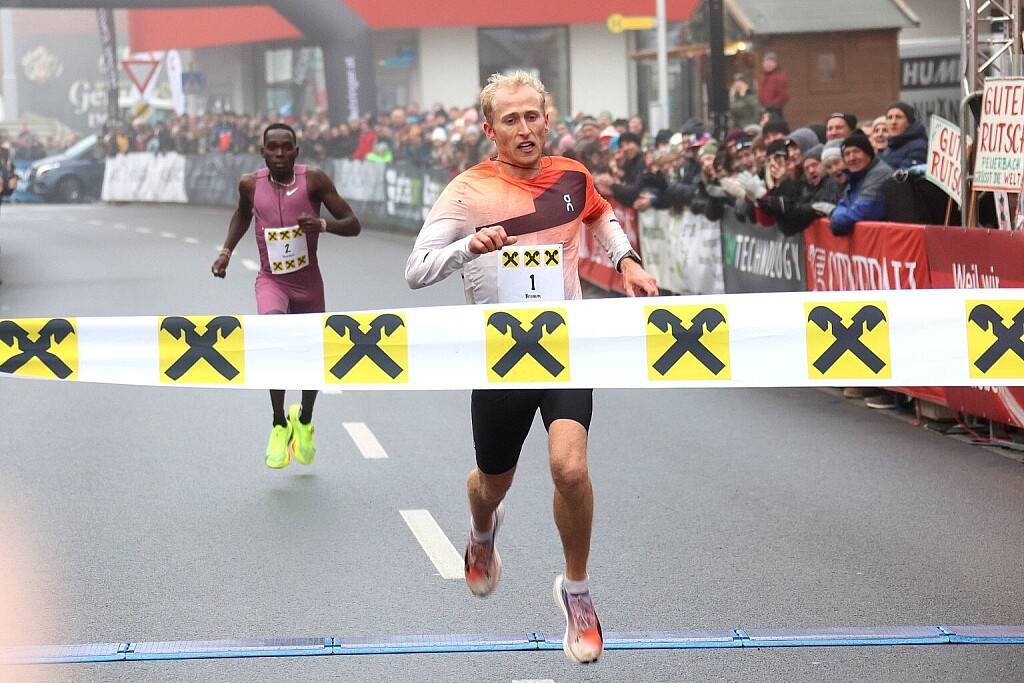
Florian Bremm successfully defends his title at the 42nd Int. Raiffeisen New Year's Eve Run in Peuerbach
A great running festival was offered today to the 5,000 enthusiastic spectators in Peuerbach. At the 42nd Int. Raiffeisen New Year's Eve Run – one of the five largest New Year's Eve runs in Europe – a new record number of participants was set with 1,103 registrations and 1,007 finishers.
The focus of the event was the women's and men's ace race, which was staffed by world-class athletes. And in both competitions, Germany was able to win the title this year: In the men's race, the reigning German 5,000 meter champion Florian BREMM defended his previous year's title in a thrilling final sprint against the Kenyan relay cross world champion Reynold CHERUIYOT, in the women's race, Elena BURKARD was the first European since 2013 to enter the winners' list. Austria took 4th place with Sebastian FREY from Vienna and Lotte SEILER from Styria. "We experienced two extremely exciting races today, the atmosphere was unique again," said OC boss Carsten Eich. The commitment of 120 volunteers from IGLA long life makes the implementation of this sensational event possible in the first place.
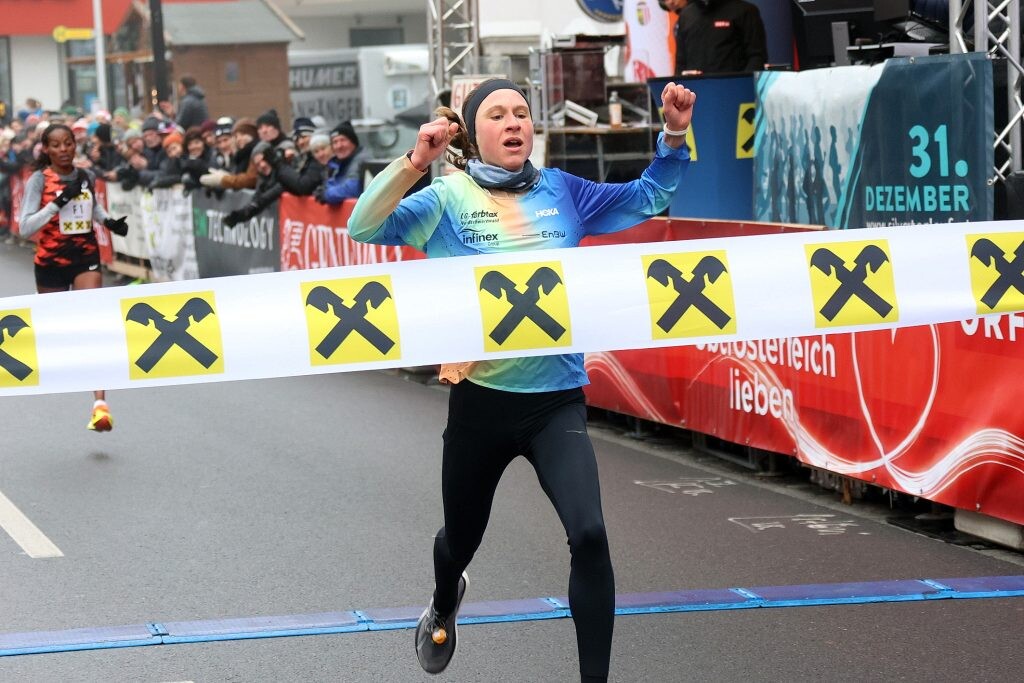
Thrilling men's race with German winner
The run of the aces in the men's race was hard to beat in terms of excitement. The race over 6,800 meters was marked by a duel between the 2024 Cross Country World Champion Reynold CHERUIYOT and last year's German winner Florian BREMM. In the 6th of a total of 8 laps, the Kenyan attacked and looked like the sure winner in the meantime. But step by step, the 24-year-old from LCA Höchstadt/Aisch fought his way back and together the duo ran towards the finish line. On the home straight, Bremm had the better end for herself, as in the previous year, and won after 18:45.28 minutes with a 1.34-second lead. Sebastian Frey from DSG Wien was in 3rd place in the meantime and only had to admit defeat to the German Niklas BUCHHOLZ in the final sprint after 19:13.64 minutes. "The atmosphere in Peuerbach was simply outstanding, the crowd pushed me hard," Frey was very satisfied at the finish.
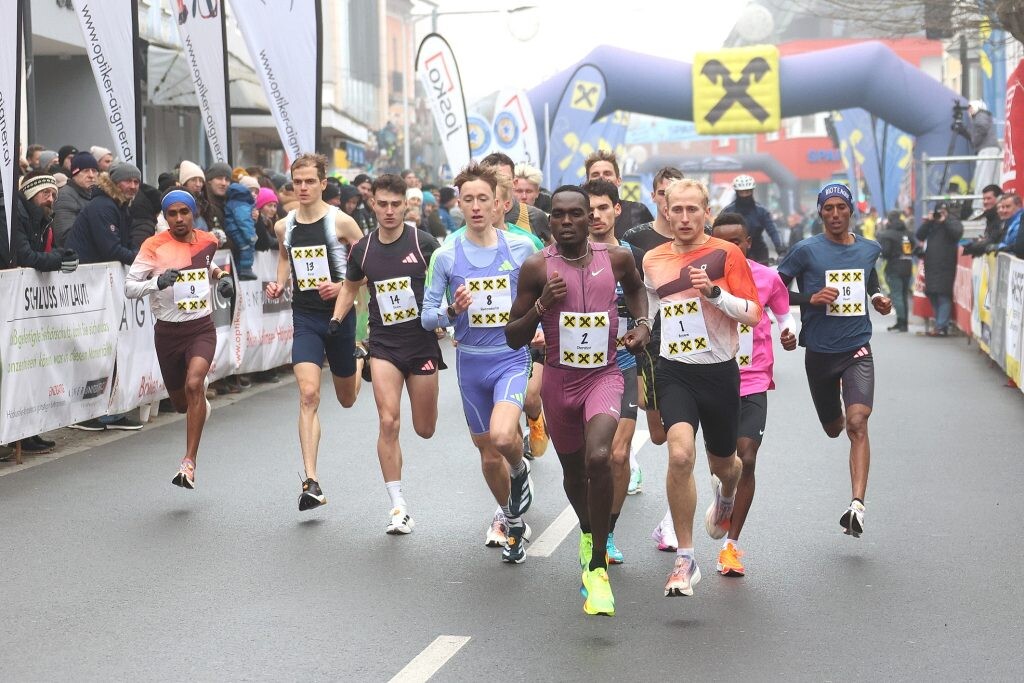
Elena Burkard wins in the women's aces race
In the women's race over 6 laps or 5,100 meters, the Ethiopian vice world champion over 1,500 meters Axumawit EMBAYE was the clear favorite. And from the beginning she took the lead of the 14-strong field, at the halfway point of the race the Ethiopian already had a seven-second lead over the two German athletes Elena BURKARD and Domenika MAYER. But the longer the race lasted, the closer Burkard got to the favorite and in the last lap the two opponents were on a par. In the last corner, the German attacked irresistibly and celebrated a much-acclaimed victory in Peuerbach after 15:57.41 minutes. This was the first victory by a European woman since 2013. A great performance was offered by Lotte Seiler from Kapfenberg, who secured 4th place in the final sprint against the strong Hungarian Lili Anna Vindics-Toth after 16:40.92.
Record field of participants at the start in nine competitions
With 1,103 registrations and 1,007 finishers, a new record number of participants was set at this year's New Year's Eve Run in Peuerbach, surpassing the record set in 2023 by 25 starters. "That was a wonderful running event in Peuerbach today, the atmosphere was simply great," says Marion Gierlinger from the organizing association IGLA long life. The Int. Raiffeisen New Year's Eve Run Peuerbach with its world-class athletes also offers the largest children's New Year's Eve run in Austria: Almost 500 boys and girls took part in the junior competitions alone, which opened the running day with starts every five minutes. Cheered on by parents and spectators, the stars of tomorrow ran from the sprint over 100 meters to the LONG LIFE mineral water mile over 1,700 meters. The Gebrüder Weiss Volkslauf over 6,800 meters was again a special experience this year, 420 starters in this and the other competitions made Peuerbach the capital of running.
Login to leave a comment

Silvesterlauf Peuerbach
The International Raiffeisen New Year's Eve Run in Peuerbach, Austria, is a celebrated annual event that has been delighting participants and spectators for over four decades. Held every December 31st, this race transforms the town into a hub of athletic excellence and festive entertainment. The event features a variety of races catering to different age groups and skill levels, including...
more...
Courtney Olsen Sets 50-Mile World Record of 5:31:56 at 2024 Tunnel Hill 50 Mile
American Courtney Olsen continues to make her mark on ultrarunning history, this time provisionally setting a women’s 50-mile world record of 5:31:56 at the Tunnel Hill 50 Mile in Vienna, Illinois, on November 9, 2024.
The previous record of 5:40:18 was set in 1991 by the iconic American ultrarunner Ann Trason. Olsen’s effort resets the world record by 8 minutes and 22 seconds.
Her performance represents an average pace of 6:39 per mile (4:08 per kilometer) over 50 miles (80.47 kilometers). Wow!
The Tunnel Hill 50 Mile is run as a double out-and-back on the Tunnel Hill State Trail, a rails-to-trails trail composed mostly of dirt. The event and trail are named after the tunnel through which the trail passes and was the location of a new men’s 50-mile world record in 2023. It is a USA Track & Field-certified course, and the event has an International Association of Ultrarunners (IAU) Gold Label. The IAU governs the 50-mile distance for world records, and will be responsible for ratifying the record.
The 37-year-old hails from Bellingham, Washington, and appears to be amidst a big year in racing. Earlier in 2024, she took third at the Comrades Marathon. She’s also on Team USA, set to compete at the IAU 100-Kilometer World Championships in December, 2024. In 2022, the last time the 100k world champs took place, Olsen finished fourth and ran 7 hours and 15 minutes. Her marathon PR appears to be 2:36:21.
Login to leave a comment
Fukuoka International Marathon Elite Field Released
Fukuoka International Marathon is the first of this winter season's big selection races for the home soil team for next year's Tokyo World Championships, and the domestic field is a great one.
Kenya Sonota, 2:05:59 in Tokyo last year, and 2:06 men Yusuke Nishiyama, Yuya Yoshida, Kazuya Nishiyama and Daisuke Doi make up the main contenders to get a spot, with internationals Lemeck Too, Jie He, Bethwel Yegon, Vincent Raimoi, last year's winner Michael Githae, and Shaohui Yang perfectly positioned to add momentum to the shot at the 2:06:30 Worlds standard that they'll all be taking.
8 other Japanese men in the 2:07 to 2:09 range make it one of the most competitive Fukuoka editions in a long, long time.
Last year Githae outkicked Yang by 1 second to win 2:07:08 to 2:07:09, Yang with a Chinese NR that was broken a few months later by He in Wuxi. Chinese men's marathoning has momentum right now too, and it wouldn't be surprising to see either He or Yang become Fukuoka's first Chinese winner. Jianhua Peng, 2:09:59 last year in Seoul, and Bo Li, 2:11:23 in Nanchang, are also in the race.
Fukuoka International Marathon Elite Field Highlights
Kenya Sonota (JR Higashi Nihon) - 2:05:59 (Tokyo 2023)
Lemeck Too (Kenya) - 2:06:29 (Rotterdam 2024)
Yusuke Nishiyama (Toyota) - 2:06:31 (Tokyo 2024)
Yuya Yoshida (GMO) - 2:06:37 (Osaka 2024)
Kazuya Nishiyama (Toyota) - 2:06:45 (Osaka 2023)
Daisuke Doi (Kurosaki Harima) - 2:06:54 (Osaka 2024)
Jie He (China) - 2:06:57 (Wuxi 2024)
Bethwel Yegon (Kenya) - 2:06:57 (Vienna 2023)
Vincent Raimoi (Kenya/Suzuki) - 2:07:01 (Fukuoka Int'l 2022)
Michael Githae (Kenya/Suzuki) - 2:07:08 (Fukuoka Int'l 2023)
Shaohui Yang (China) - 2:07:09 (Fukuoka Int'l 2023)
Koki Yoshioka (Kyudenko) - 2:07:28 (Osaka 2023)
Shin Kimura (Honda) - 2:07:34 (Tokyo 2024)
Derese Workneh (Ethiopia/Hiramatsu Byoin) - 2:07:58 (Beppu-Oita 2024)
Bedan Karoki (Kenya/Toyota) - 2:07:59 (Tokyo 2024)
Kazuya Azegami (Toyota) - 2:08:29 (Osaka 2023)
Kiyoshi Koga (Yasukawa Denki) - 2:08:30 (Beppu-Oita 2022)
Ryu Takaku (Yakult) - 2:08:38 (Fukuoka Int'l 2021)
Naoki Aiba (Chudenko) - 2:08:44 (Beppu-Oita 2022)
Kenta Murayama (Asahi Kasei) - 2:09:00 (Osaka 2024)
Kohei Futaoka (Chudenko) - 2:09:14 (Fukuoka Int'l 2021)
Jianhua Peng (China) - 2:09:59 (Seoul 2023)
Tesema Moges (Israel) - 2:10:31 (Rotterdam 2023)
Takumi Kumagai (Sumitomo Denko) - 2:10:41 (Fukuoka Int'l 2021)
Yusuke Tobimatsu (Hioki City Hall) - 2:10:47 (Hofu 2021)
Luka Musembi (Kenya/Tokyo T&F Assoc.) - 2:10:49 (Hokkaido 2022)
Asuka Tanaka (Runlife) - 2:11:09 (Tokyo 2022)
Bo Li (China) - 2:11:23 (Nanchang 2023)
Tadese Getahon (Israel) - debut - 1:00:47 (Copenhagen Half 2024)
by Brett Larner
Login to leave a comment

Fukuoka Marathon
The Fukuoka International Open Marathon Championship is one of the longest running races in Japan, it is alsoan international men’s marathon race established in 1947. The course record is held by Tsegaye Kebede of Ethiopia, running 2:05:18 in 2009. Frank Shorter won first straight years from 1971 to 1974. Derek Clayton set the World Record here in 1967 running 2:09:37. ...
more...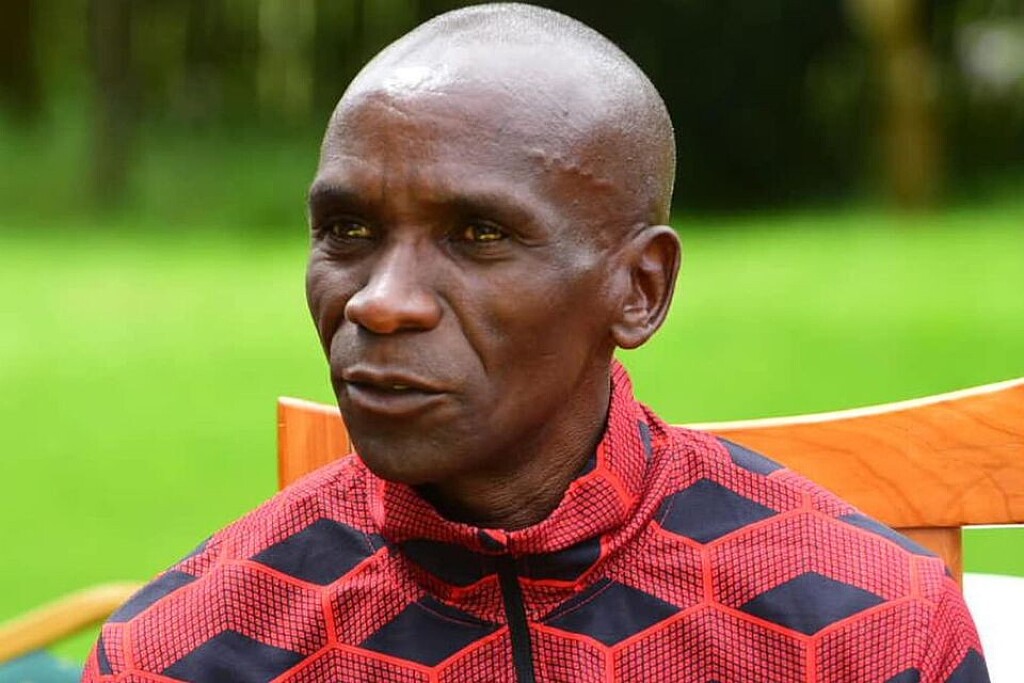
Eliud Kipchoge at 40: Records broken, medals won, history made…what more is left for marathon GOAT?
Marathon legend Eliud Kipchoge turns 40 on Tuesday and as he celebrates his landmark birthday, Pulse Sports rolls back the years in a career filled with many highs and some all-time lows.
They say life begins at 40 but for Kipchoge, he has been living the dream since his 20s.
Kipchoge turns 40 on Tuesday, November 5 and as he begins a new chapter in his life, the last two decades have been marked with remarkable success on track and roads.
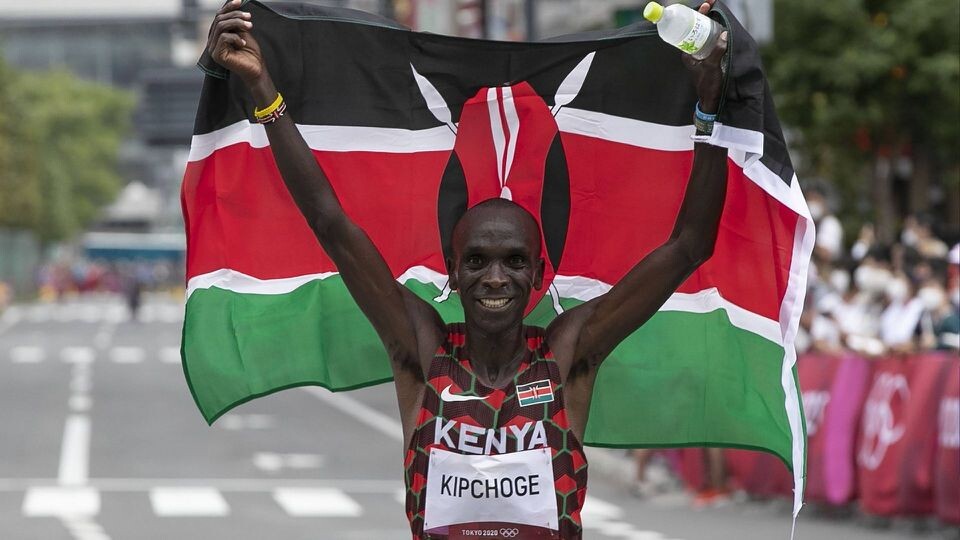
The two-time Olympics champion is the undisputed greatest marathoner of all-time, having won 15 of the 20 marathons he has participated in since he made the transition to from track to road in 2013.
Kipchoge has also won gold in Cross-Country, after claiming a junior title in 2003, the same year he won 5,000m gold at the World Championships in Paris.
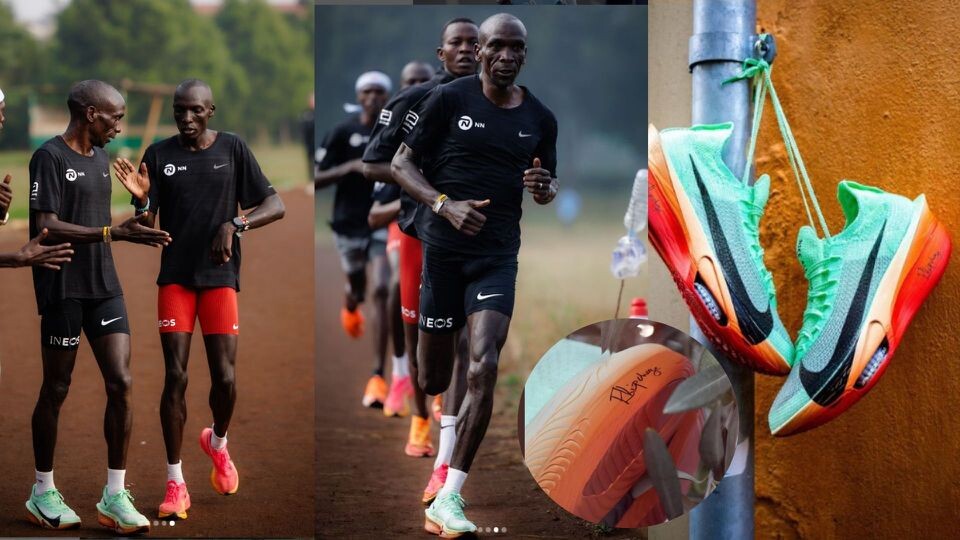
However, his years on track were not as storied as what he has achieved in marathons.
Major marathon success
In marathons, he has won five titles in Berlin, where he also broke two world records, while he has been to London five times and won on four occasions.
From the six major marathons (Tokyo, Boston, London, Berlin, Chicago, and New York), Kipchoge has been to five of them, with only New York where he is yet to run. He has won at four of them with only Boston proving tough after a sixth-place finish last year.
History maker
When the history of marathons is written, Kipchoge’s name will hog most of the chapters as he has made running a global phenomenon.
His ‘No human is Limited’ mantra has made everyone get encouraged not just to run but to succeed in their professions while he is the first man to run a marathon under two hours.
While it was not a competitive race, Kipchoge’s INEOS 1:59 Challenge in October 2019 proved that it is possible to clock under two hours in 42km, having run 1:59:40 in Vienna.
World records broken
Kipchoge was running in Vienna one year after breaking his first marathon record, having clocked 2:01:39 in Berlin in September of the previous year.
He had shaved off an astonishing 1 minute and 18 seconds from the 2:02:57 set by Kenyan compatriot Dennis Kimetto at the same venue four years earlier, proving that a sub-2:02 was possible.
That was his third win in Berlin and on his fourth appearance in the German capital, he lowered his own world record, running 2:01:09. His record lasted one year before compatriot Kelvin Kiptum broke it in Chicago last year (2:00:35) but the GOAT had already made his mark.
Role model to rivals & youngsters
Throughout his career, Kipchoge’s biggest strength has been how he kept up with younger and hungrier runners who were looking to dethrone him from the throne.
The veteran has never backed away from a challenge, even if there was an emerging threat, and most of the time, he came out on top.
Kipchoge sets an example for runners by the way he lives his life, how disciplined he is, his strict training regime and how keenly he follows his diet.
It is no wonder he has rarely suffered injuries in his long career, which draws parallels with football superstar Cristiano Ronaldo, who has enjoyed a long largely injury-free career due to how he looks after himself.
Bouncing back from setbacks
Kipchoge’s other strength is how he deals with disappointment. He does not let a bad race or bad words put him down.
Like every other athlete, he has suffered losses but always comes back strong. His failed attempt to break sub-2-hour mark in Monza in 2017 did not see him lose hope as he returned two years later and did it in Vienna, while finishing eighth in London in 2020 was answered back with Olympics, Berlin and Tokyo Marathon wins, with a world record in between.
After a sixth place in Boston in April 2023, he was on the winner’s podium in Berlin five months later, showing how resilient he is.
Even when many said he was finished after 10th place in Tokyo, he still came back to feature at the Paris Olympics and while he was not successful, he has not let it put him down.
Dealing with hate & cyberbullying
The year 2024 has thrown Kipchoge into a whole new territory, as a man who was so loved in Kenya quickly turned into a figure of hate in his own country.
It started in October 2023 when he took time before congratulating Kiptum for breaking his world record. It elicited vile comments on social media and it reached a whole new level when the world record holder died in February.
Kipchoge received abuses and threats that left him fearing for his life and that of his family, having been accused of having a hand in the death, and to his shock, even those whom he thought were friends and colleagues felt the same towards him.
He, however, took it on the chin and went about his business, featuring in two races this year although it is not known if it might have affected his performance.
What does the future hold?
Kipchoge’s strong mentality has seen him bounce back from all these setbacks and as he celebrates his 40th birthday, he is back in camp training for his next race.
A number of runners have shown that it is still possible to do it in their 40s and knowing Kipchoge, he must be backing himself to defy age and continue making marathon history.
Happy birthday, Eliud.
by Joel Omotto
Login to leave a comment
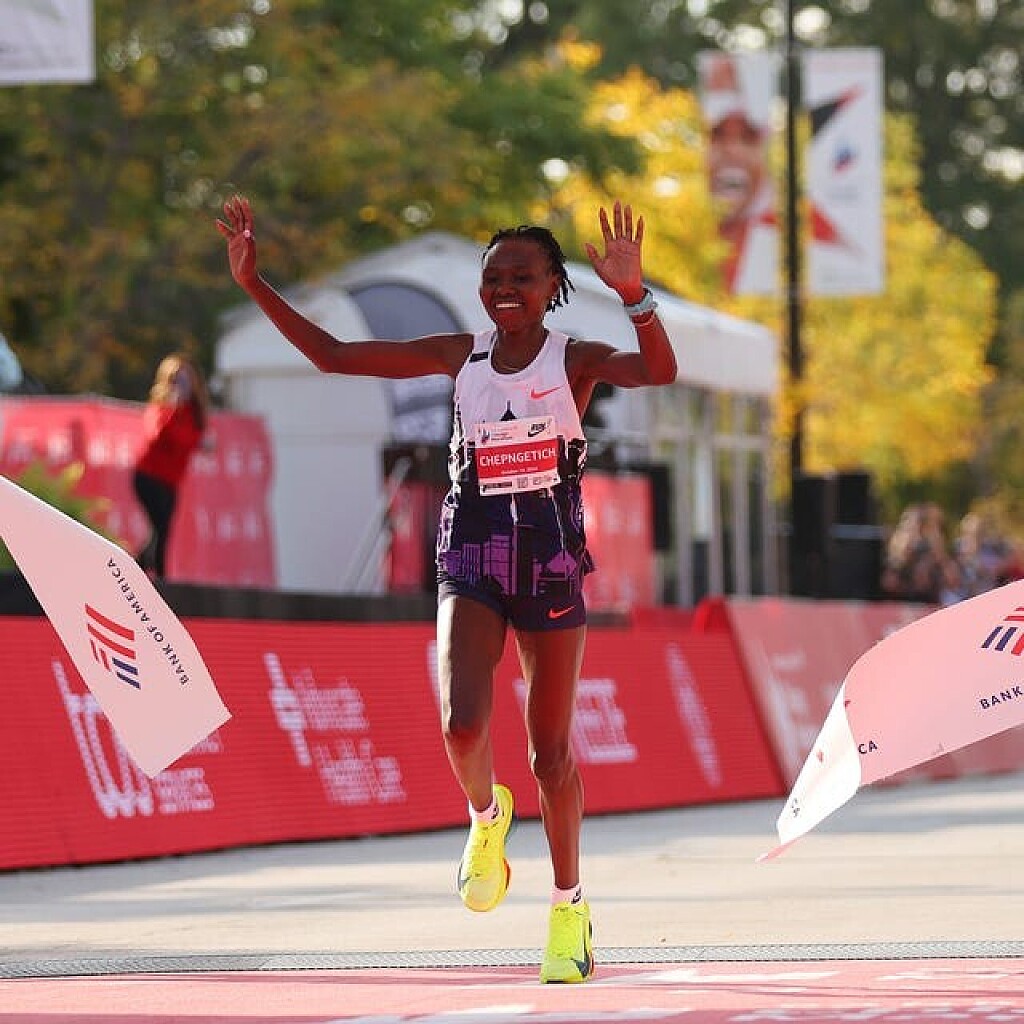
MARATHON GROUNDBREAKERS
Since Australia’s Derek Clayton ran history’s first sub—2:10 marathon in Fukuoka, Japan, on 3 December 1967, there have been a total of 4538 sub—2:10 marathons (as of 30 October 2024), 4537 by men, one by a woman.
As with any new ground-breaking performance, Ruth Chepngetich’s 2:09:56 in Chicago on 13 October has forced us to reassess all our past assumptions, or, like many, to doubt the validity of the performance itself. But no matter how we got here, to whatever you want to ascribe it, this is where we are now, 2:09:56 by a woman.
In this new reality, until proven otherwise, Ruth Chepngetich is the new Paula Radcliffe, just as Paula was the new Grete Waitz, one ground-breaker to the next, 1978 to 2003 to 2024.
There have been many talented women champions through the years besides those three, including all the pioneers who had to overcome centuries of gender bias that restricted women from even showing their stuff.
But in terms of pure ground-breaking, the 1978 New York City Marathon drew a bright line between what once was and what would be.
On 22 October 1978, Norway’s track and cross-country star Grete Waitz participated in the marathon for the first time, almost on a whim, as the trip was more of a honeymoon for her and husband Jack after the long track season.
The 2:32:30 world record Grete ran that day was totally unexpected by both the public and Grete herself. She wore bib #1173, wasn’t included on the list of elite women, and came with no specific marathon preparation (not a single run over 13 miles). In fact, she was so upset with husband, Jack, for suggesting she come run the marathon that she threw her shoes at him in the hotel room following her victory.
Still, like almost all debuting marathoners, after a short period of recovery and reflection, Grete concluded she could probably improve next time.
Thus, in New York 1979, following a more careful preparation, Grete ripped nearly five full minutes off her 1978 mark to record history’s first sub—2:30 by a woman at 2:27:33. Her margin of victory over England’s Gillian Adams was 11 minutes (2:38:33). The combination of the mild-mannered former geography teacher from Oslo and the raucous New York City crowds proved transformative, elevating women’s running to heights previously unimagined.
Though Japan’s Naoko Takahashi broke the 2:20 barrier for women in Berlin 2001, after Norway’s Ingrid Kristiansen (2:21:15, London ‘85), America’s Joan Benoit Samuelson (2:21:21, Chicago’85), and Kenyan Tegla Loroupe (2:20:43, Berlin ‘99) all challenged the barrier in the 1980s and ‘90s, it was England’s Paula Radcliffe who established new headlands in the marathon in London 2003 with her 2:15:25.
Nearly two minutes faster than her own 2:17:18 record from Chicago the year before, her 2:15 arced away from Catherine Ndereba’s 2:18:47 from Chicago 2001, completed just one week after Takahashi’s first sub-2:20 in Berlin.
The quality of Paula’s 2:15 can be seen in the 16 years and an entire shoe technology revolution that developed before Kenya’s Brigid Kosgei did Paula one better in Chicago 2019 at 2:14:04. That performance plowed new ground again. And now we have Ruth Chepngetich in Chicago 2024 with history’s first sub-2:10, just a year after Ethiopia’s Tigst Assefa’s first sub—2:12 in Berlin `23 (2:11:53).
Twice before, Chepngetich had come to Chicago with world record intentions. In 2022, she won the race in 2:14:18, just 14 seconds off Kosgei’s record. In 2023 she finished second in 2:15:37. On both occasions she flew through halfway under 66 minutes, only to falter in the second half. Perhaps she was a close reader of Malcolm X.
“There is no better teacher than adversity. Every defeat, every heartbreak, every loss, contains its own seed, its own lesson on how to improve your performance the next time.” – Malcolm x
In simple terms, making innovative strides in athletics requires time, experimentation, and reviewing, similar to how new scientific theories are examined before full acceptance. But women just haven’t been at the marathon game long enough to produce a large enough sample size to define their outer limits with any accuracy. They are barely two generations in since 1978.
Men have been competing for a much longer time with a much larger sample size.
Though Eliud Kipchoge surpassed the two-hour barrier in Vienna in 2019, that was accomplished as an exhibition, not a sanctioned race. In that sense, we are still awaiting the next barrier breaker on the men’s side in the Marathon.
Looking back, England’s Jim Peters stands as the first modern barrier breaker with his 2:18:40 win at the 1953 Polytechnic Marathon between Windsor and Chiswick in West London, England, history’s first sub—2:20.
Next was Ethiopia’s Abebe Bikila, the legendary double Olympic victor in Rome 1960 and Tokyo 1964. His 2:15:17 in Rome still stands as the barefoot marathon world record.
Next came Australia’s Derek Clayton, the first man under both 2:10 and 2:09. His 2:08:34 from Antwerp 1969 lasted for 12 years, holding off challenges throughout the entire Running Boom era headed by Americans Frank Shorter and Bill Rodgers.
Though never world record holders, the two Americans dominated the 1970s boom era, Shorter through the first half, Rodgers the second.
The Eighties were the last decade of international marathon champions: American (Al Salazar, Greg Meyer); European (Steve Jones, Carlos Lopes); Japanese (Toshihiko Seko and the Soh brothers); and Australian (Rob de Castella). Kenya’s Joe Nzau won Chicago in 1983 in a thrilling duel with England’s Hugh Jones when Chi-town was still developing its reputation as a world class event.
Ibrahim Hussein set new records in Honolulu and kick-started the Kenyan marathon revolution
The full East African deluge didn’t begin until 1987 and ‘88 when Kenya’s Ibrahim Hussein (already a two-time and soon to be three-time Honolulu Marathon champion) became Africa’s first New York City and Boston Marathon winner and Ethiopia’s Belayneh Dinsamo set the world record, 2:06:50, in Rotterdam 1988 that lasted over a decade.
The list of marathon stars from other nations scaled back markedly in the 1990s. Mexico had its turn at the top via greats like Dionicio Cerón (1994-`96 London champion), and back-to-back New York Ciy winner German Silva (1994 & 1995).
Moroccan-born American Khalid Khannouchi twice ran a world marathon record, first in Chicago 1999 (2:05:42), then three years later in London 2002 (2:05:38). And who could forget the personable Brazilian, Marílson Gomes dos Santos, who won New York City twice in 2006 & 2008, or Meb in NYC `09 and Boston 2014??
But the United Nations pickings get rather meager after that as East African athletes have had a stranglehold on the sport of marathoning, most dominatingly by Kenya’s Eliud Kipchoge. His run of sustained excellence over 42.2 kilometers was, and is, unprecedented in its longevity, including double gold in Rio 2016 and London 2020. And his last world record of 2:01:09 in Berlin 2022.
Sadly, the current record holder, Kelvin Kiptum, died in a car accident in February 2024 after establishing the 2:00:35 world record in Chicago 2023.
With the 2024 TCS New York City Marathon scheduled this weekend, we don’t expect to see any record performances. Yet, all the above is why we follow the game, isn’t it, to witness the arc of improvement over time, while hoping to discover a new name to remember? It’s as valid a focus as any other in this life.
And despite its many flaws and corruptions, the sport of marathoning retains an innate dignity that many endeavors do not. People may have bruised, battered, and tarnished it in the name of glory and money. But it survives, nonetheless, as a simple reflection of the human drive to achieve more in the quest to discover our best.
Doesn’t always turn out that way, but I don’t think we are done with it quite yet. Onward!
by Toni Reavis
Login to leave a comment
Kenyans target a double hat-trick in Munich
Kenya’s elite runners target a double hat-trick at Sunday’s Generali Munich Marathon: If successful it will be the third time in a row that runners from this country take Germany’s fourth biggest marathon race.
Cosmas Birech and Shamilah Kipsiror are heading the start list with personal bests of 2:08:03 and 2:27:33 respectively.
Organizers registered a record total of over 27,000 entries from 120 countries for the 38th edition of the Generali Munich Marathon, which will start and finish next to the iconic Munich Olympic Stadium. Due to building works in the arena runners can not finish inside on the track this year. While the total figure includes races at shorter distances there will be around 6,200 marathon runners on Sunday.
A number of athletes had to cancel their start due to either injuries of visa problems. The latest withdrawal came from Dominic Nyairo of Kenya, who would have been a strong favorite on Sunday. However there is still enough talent left to produce a good race. “It is our aim to achieve winning times of sub 2:09 and sub 2:26,“ said Michael Kraus, the elite field coordinator. The weather might be challenging, but we remain optimistic to see faster winning times than last year.“
Cosmas Birech ran his personal record when he won the Rome Marathon in 2018 with 2:08:03. Rome is not known as a particularly fast course, so Birech hopes to achieve a similar time at the Generali Munich Marathon. Fellow Kenyans William Kibor and Benard Chumba are also among the favorites. Kibor has a PB of 2:08:32 from the Vienna City Marathon back in 2012 and Chumba ran 2:10:33 in Marrakech last year. All three of them are from Kaptagat and train together. “My training went very well and I feel that I am in the same kind of shape as when I ran my personal best. If the weather is good I hope to run between 2:07 and 2:09 on Sunday,“ said William Kibor at Friday’s press conference in Munich.
A marathon debutant could do very well on Sunday: Kenya’s Nehemiah Kipyegon showed very promising form recently. The 26 year-old improved his half marathon PB to 60:34 in Copenhagen last month. In the highly competitive race he finished ninth. Siyum Tola of Ethiopia is another athlete who will run his debut in the Generali Munich Marathon. He has been involved in marathons as a pacemaker and is a training partner of Milkesa Mengesha who won the Berlin Marathon two weeks ago.
In the women’s race Shamilah Kipsiror will be the main favorite. The Kenyan improved to 2:27:33 for fourth place in Rome this spring. Her half marathon PB of 67:53 indicates that there is potentially more to come, especially on a flat course like Munich. A trio of Ethiopians will most likely be her strongest rivals on Sunday. Gelane Senbete has a personal record of 2:29:54 while Gadise Negasa has run 2:30:30. Asmare Assefa could be in for a surprise and a big improvement. So far she has not run faster than 2:33:10 but the Generali Munich Marathon will be her first race outside Africa. Assefa is in the same training group with Tola and Mengesha in Addis Ababa.
“We are thrilled by the record entry which means we have a 20 percent surge compared to last year. We are proud of these figures which show that our event and the course are really popular,“ said Gernot Weigl, who runs the Generali Munich Marathon as Race Director for almost 25 years. Stronger elite fields and international media work have helped bring up the numbers recently.
Although the city of Munich benefits from the growing number of international runners the event attracts, it was Munich’s government that clouded the future of the Generali Munich Marathon. Officers of the city’s district department (Kreisverwaltungsreferat) decided to pass on the right of staging a marathon in the city to a new organizer who has never ever staged a road race. There is talk of a two-lap marathon course and it looks as if the city of Munich gambles with a successful international event that in addition keeps a legacy of the 1972 Munich Olympic Games. “I have never heard of anything like this happening to a major international marathon race,” said Gernot Weigl, who is now legally challenging the decision of the Munich district department.
by AIMS
Login to leave a comment

Generali Munich Marathon
The GENERALI MUNICH MARATHON has held the elite label of the WORLD ATHLETICS since 2020 and the marathon route is officially measured and recognized. The route runs from the Olympic Park and Schwabing to Leopoldstraße with the Siegestor, via Königsplatz and the Pinakotheken to the English Garden. From there past the Chinese Tower and Art Nouveau villas in Bogenhausen, through...
more...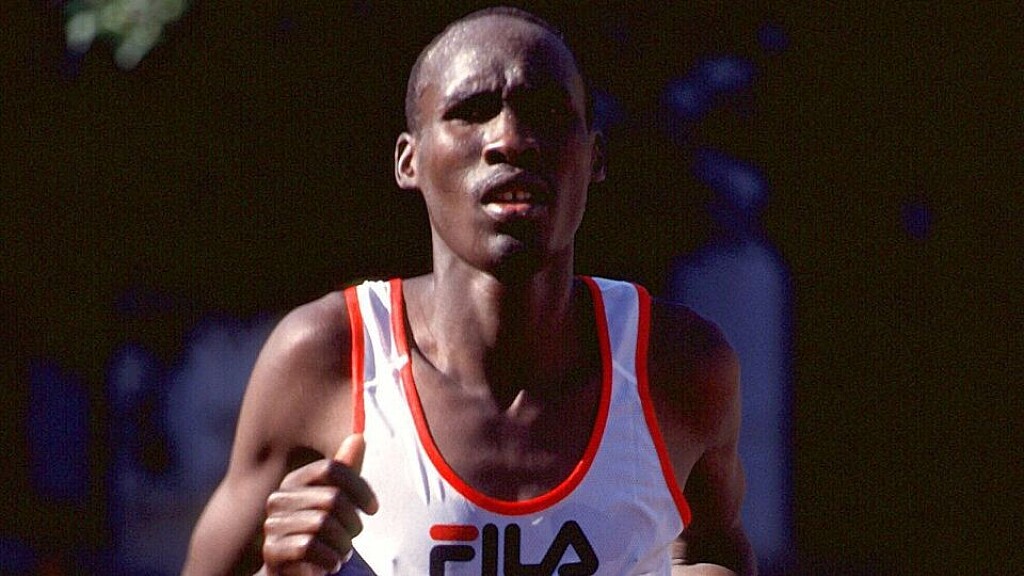
Veteran Kenyan marathoner dies after armed attack at his home in Eldoret
The former Vienna and Sapporo Marathon winner was attacked by thugs at his home in one of Eldoret’s exclusive estates.
Former Kenyan marathoner Samson Kandie has reportedly passed away following an armed attack at his home in Eldoret on Thursday.
Reports claim, Kandie, who represented Kenya at the 2001 World Championships, succumbed to his injuries following an attack by thugs at his Elgon View house in Eldoret, Uasin Gishu county.
The motive of the attack is yet to be known but police in Eldoret are pursuing the matter with a view to nabbing those responsible.
The former Vienna and Sapporo Marathon winner was attacked by thugs at his home in one of Eldoret’s exclusive estates.
Former Kenyan marathoner Samson Kandie has reportedly passed away following an armed attack at his home in Eldoret on Thursday.
Reports claim, Kandie, who represented Kenya at the 2001 World Championships, succumbed to his injuries following an attack by thugs at his Elgon View house in Eldoret, Uasin Gishu county.
The motive of the attack is yet to be known but police in Eldoret are pursuing the matter with a view to nabbing those responsible.
It was his second third place finish in successive years after doing the same at the 1998 edition of the event, when he clocked 2:09:11.
Kandie also recorded third place at the Xiamen Marathon in China in 2000 and at the 2003 Prague Marathon after clocking 2:11:48 and 2:14:02 respectively.
His other marathon win came in San Sebastian Spain in 2001 after clocking 2:10:21.
by Joel Omotto
Login to leave a comment
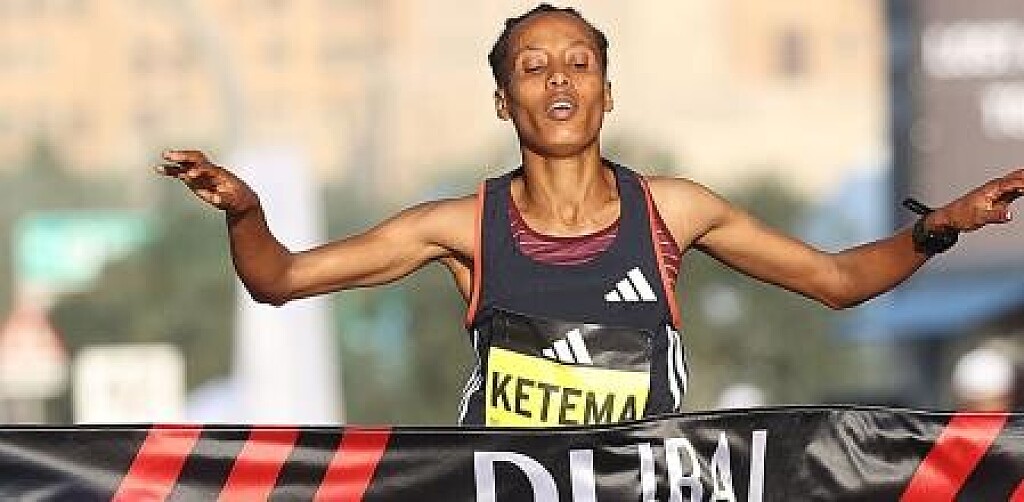
Ketema and Takele head entries for 50th Berlin Marathon
Ethiopia’s Tigist Ketema and Tadese Takele start as the fastest in the fields and will be hoping to lead the way when they line up for the BMW Berlin Marathon, a World Athletics Platinum Label road race, on Sunday (29).
Ketema, previously better known as an 800m and 1500m specialist, made her mark in the marathon in Dubai in January as she ran 2:16:07, a time that places her ninth on the women’s world marathon all-time list. She then ran 2:23:21 to place seventh in London in April and Berlin will be her first race since then.
“I have prepared for a personal best and plan to run the first half on Sunday in around 68 minutes,” she said. “I hope it won't be too cold because I prefer to run in slightly warmer weather.”
Ketema is one of three women with sub-2:20 PBs on the entry list, as her competition includes her compatriots Genzebe Dibaba and Yebrugal Melese, who have respective PBs of 2:18:05 and 2:19:36.
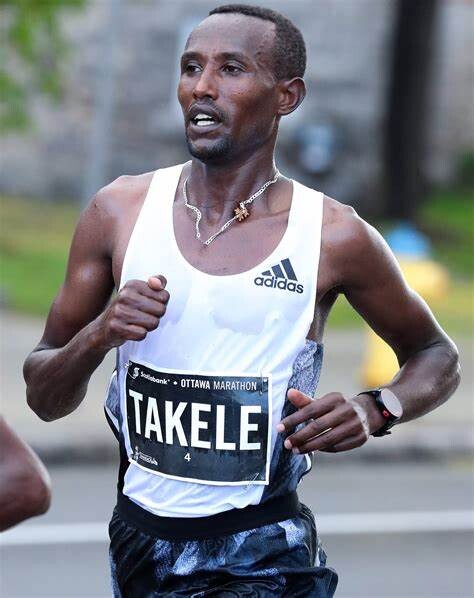
Dibaba ran that PB on her debut in Amsterdam in 2022 and she clocked 2:21:47 in Chicago a year later. “I saw Haile Gebrselassie run two world records in Berlin on TV and since then I've always wanted to run in Berlin,” she said. “Now the time has come. It would be a success for me if I ran a personal best.”
Another eight women on the entry list have dipped under 2:22 for the marathon in their careers so far, including Mestawot Fikir (2:20:45), Azmera Gebru (2:20:48), Sisay Gola (2:20:50), Fikrte Wereta (2:21:32) and Aberu Ayana (2:21:54), as well as Japan’s Mizuki Matsuda (2:20:52) and Ai Hosoda (2:21:42).
Germany’s Melat Kejeta is also part of that group, having clocked 2:21:47 in Dubai in January. She placed sixth at the Tokyo Olympics but was unable to finish the Olympic marathon in Paris due to stomach problems.
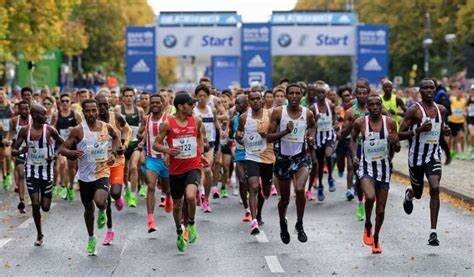
A total of 13 world records have so far been set in the Berlin Marathon, the most recent being the 2:11:53 by Tigist Assefa – a training partner of Ketema – in last year’s women’s race.
The men’s title on that occasion was won by Eliud Kipchoge, as he claimed a record fifth victory.
Kipchoge does not return this year but Takele does, following his third-place finish in last year’s race in a PB of 2:03:24. That was his most recent race due to injury, but he says he is now fit and ready to run. “I’ve trained very well,” he said, “and expect to run a strong race.”
Another four men to have dipped under 2:05 feature on the entry list, including Kenya’s Cybrian Kotut, who ran his PB of 2:04:34 when finishing second in Amsterdam last year, and Ethiopia’s Hailemaryam Kiros and Bazezew Asmare, who respectively clocked 2:04:41 in Paris in 2021 and 2:04:57 in Amsterdam in 2022.
Kenya’s former world half marathon record-holder Kibiwott Kandie races the marathon for the third time and will be looking to build on the PB of 2:04:48 he set in Valencia last year as he hunts for a first win over the distance.
They will be joined by athletes including Kenya’s Samwel Mailu, the world half marathon bronze medallist who set a course record of 2:05:08 to win the Vienna City Marathon last year and continues his comeback after injury, and Ethiopia’s Milkesa Mengesha, who finished sixth at the World Championships last year and has a best of 2:05:29.
Elite fields
Women
Tigist Ketema (ETH) 2:16:07
Genzebe Dibaba (ETH) 2:18:05
Yebrugal Melese (ETH) 2:19:36
Mestawot Fikir (ETH) 2:20:45
Azmera Gebru (ETH) 2:20:48
Sisay Gola (ETH) 2:20:50
Mizuki Matsuda (JPN) 2:20:52
Fikrte Wereta (ETH) 2:21:32
Ai Hosoda (JPN) 2:21:42
Melat Kejeta (GER) 2:21:47
Aberu Ayana (ETH) 2:21:54
Calli Hauger-Thackery (GBR) 2:22:17
Bekelech Gudeta (ETH) 2:22:54
Lisa Weightman (AUS) 2:23:15
Betelihem Afenigus (ETH) 2:23:20
Veronica Maina (KEN) 2:24:46
Bosena Mulatie (ETH) 2:26:59
Alisa Vainio (FIN) 2:27:26
Sonia Samuels (GBR) 2:28:04
Nora Szabo (HUN) 2:28:25
Philippa Bowden (USA) 2:29:14
Pauline Esikon (KEN) debut
Men
Tadese Takele (ETH) 2:03:24
Cybrian Kotut (KEN) 2:04:34
Hailemaryam Kiros (ETH) 2:04:41
Kibiwott Kandie (KEN) 2:04:48
Bazezew Asmare (ETH) 2:04:57
Samwel Mailu (KEN) 2:05:08
Milkesa Mengesha (ETH) 2:05:29
Haymanot Alew (ETH) 2:05:30
Philimon Kipchumba (KEN) 2:05:35
Josphat Boit (KEN) 2:05:42
Dejene Megersa (ETH) 2:05:42
Enock Onchari (KEN) 2:05:47
Oqbe Ruesom (ERI) 2:05:51
Justus Kangogo (KEN) 2:05:57
Haimro Alame (ISR) 2:06:04
Ashenafi Moges (ETH) 2:06:12
Asbel Rutto (KEN) 2:07:04
Samuel Tsegay (SWE) 2:06:53
Yohei Ikeda (JPN) 2:06:53
Stephen Kiprop (KEN) 2:07:04
Hendrik Pfeiffer (GER) 2:07:14
Kento Kikutani (JPN) 2:07:26
Melaku Belachew (ETH) 2:07:28
Godadaw Belachew (ISR) 2:07:45Y
uhei Urano (JPN) 2:07:52
Guojian Dong (CHN) 2:08:12
Filimon Abraham (GER) 2:08:22
Haftom Welday (GER) 2:08:24
Sebastian Hendel (GER) 2:08:51
Olonbayar Jamsran (MGL) 2:08:58
Haftamu Gebresilase (ETH) debut
by World athletics
Login to leave a comment
BMW Berlin Marathon
The story of the BERLIN-MARATHON is a story of the development of road running. When the first BERLIN-MARATHON was started on 13th October 1974 on a minor road next to the stadium of the organisers‘ club SC Charlottenburg Berlin 286 athletes had entered. The first winners were runners from Berlin: Günter Hallas (2:44:53), who still runs the BERLIN-MARATHON today, and...
more...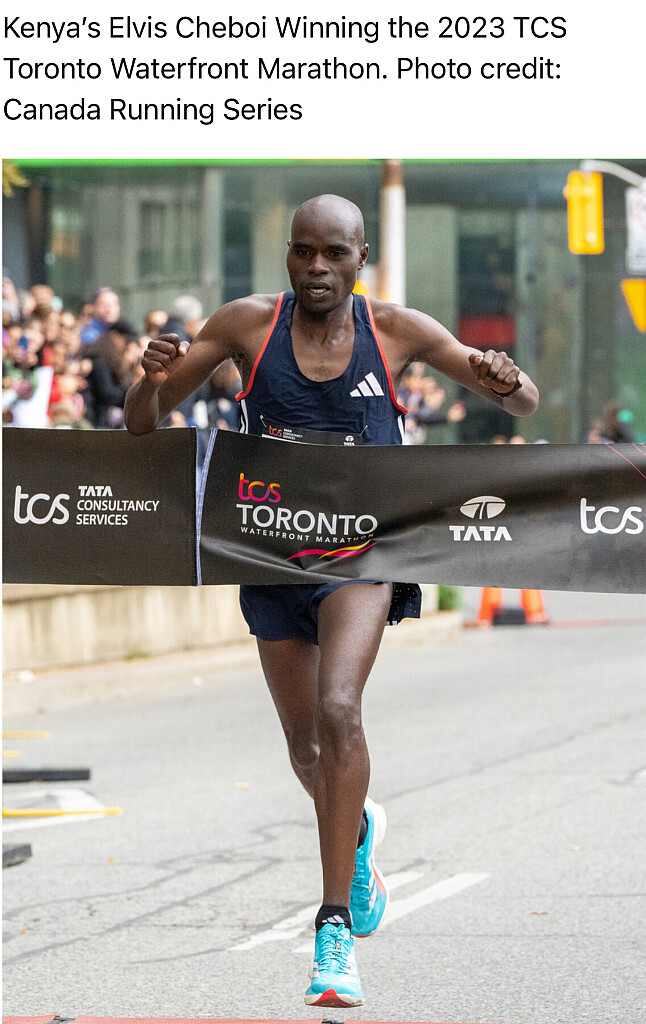
Elvis Cheboi Aiming to Win TCS Toronto Waterfront Marathon for Second Time
Much was expected of Kenya’s Elvis Cheboi when he arrived in Toronto last year for the TCS Toronto Waterfront Marathon. He did not disappoint.
Crossing the finish line first to claim the $20,000 winner’s prize he beat several international athletes who have run two to three minutes faster than his winning time of 2:09:20.
By today’s standards his personal best is not a quick time. But a victory at this World Athletics Elite Label Race against a terrific field - and by over a minute - has
increased his prowess in the sport. Now he returns to Toronto hoping for favourable conditions and a world-class field where he can also run a time more representative of his ability.
Indeed, he ran a personal best of 59:15 at the 2022 Barcelona Half Marathon indicating he might be capable of a time closer to the Toronto Waterfront course record of 2:05:00 held by his countryman, Philemon Rono (2019).
Winning Toronto was a milestone in his career nonetheless.
"That (Toronto) race made me a great memory because I had never won a marathon or any race abroad,” he says from his living room in Kenya. “So it was memorable. That was my second marathon race and I won it.”
As he speaks, his two children - daughter Shaline, 6, and son Shalom, 2 - are watching a television program and he instructs them to lower the volume. Then he smiles.
“Tomorrow the small boy is two years old,” he reveals laughing. “There is a cake here. He is still young so doesn’t know it’s a birthday but I will sing ‘Happy Birthday’to him.”
Family is of the utmost importance and running, in order to earn money is a priority. Yet, Cheboi has not raced since Toronto.
He and his management team at Demadonna Athletics Promotion had him lined up to race in the Vienna Marathon this past April. But he had slight issues with both his hamstrings which interrupted his buildup. So the decision was made by him and his coach, Gabriele Nicola, to put all their energies into having him fully prepared for a Toronto Waterfront Marathon title defence.
For many years now Cheboi has lived in Mororia which is about three kilometres from the famed ‘running town’ of Iten. A local hotel serves as the Demadonna team camp and houses several of the twelve strong marathon training group during the week. They go home on weekends. But, since Cheboi has a young family, it was felt
it was better for him to drive in for the training sessions and for massage therapy three times a week.
Several of his training partners have run much faster than Cheboi’s best - led by Philemon Kiplimo (2:04:56) - so he is benefiting from being in such a talented group.
Like most Kenyan runners he sees his running profession as a means for a brighter future for himself and his young family. He maintains a farm where he grows maize which is used to make the Kenyan staple, ugali. He also plants wheat and potatoes while keeping goats, sheep and cattle. It’s an exhausting lifestyle and so he has enlisted help from family members.
“Yes I have help with my farm. My relatives help; my brother and also my parents,” he reveals adding he doesn’t expect to rely on farming after he retires from competition.
"God willing, I will not depend on the farm only. I think I will also find another way.
Somehow I will do another thing.”
Several times during the video call from Canada he thanks the caller for taking interest and expresses his gratitude for being invited back to Toronto Waterfront Marathon.
“I’m looking forward to coming back to Toronto very much. Yes,” he declares.
“Firstly, I want to thank the organizers for inviting me back. I think I will try to win for the second time but I can’t promise.
“The good weather on the day will determine if I can run my best time.”
by Paul Gains
Login to leave a comment
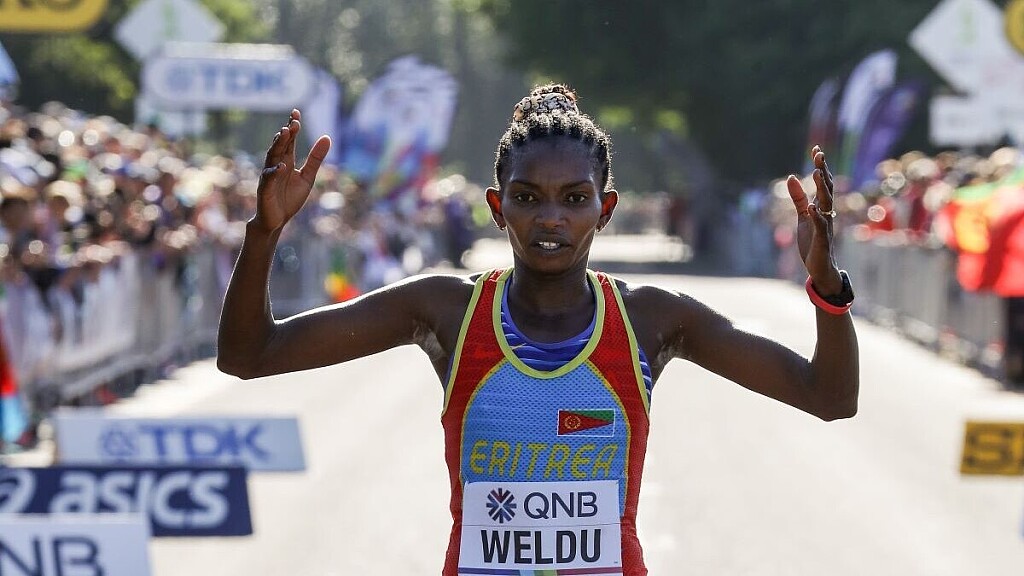
Eritrean marathon national record holder suspended on whereabouts
Eritrea’s Nazret Weldu, who finished fourth and eighth in the last two World Athletics Championships, has been handed a 20-month suspension for missing multiple doping tests.
On Wednesday, the Athletics Integrity Unit (AIU) announced the suspension of Nazret Weldu, Eritrea’s marathon record holder and 2024 Vienna Marathon champion, for violating World Athletics’ whereabouts regulations. The 34-year-old athlete has been banned for 20 months after missing three out-of-competition tests within 12 months, initiating an automatic suspension under World Athletics anti-doping rules.
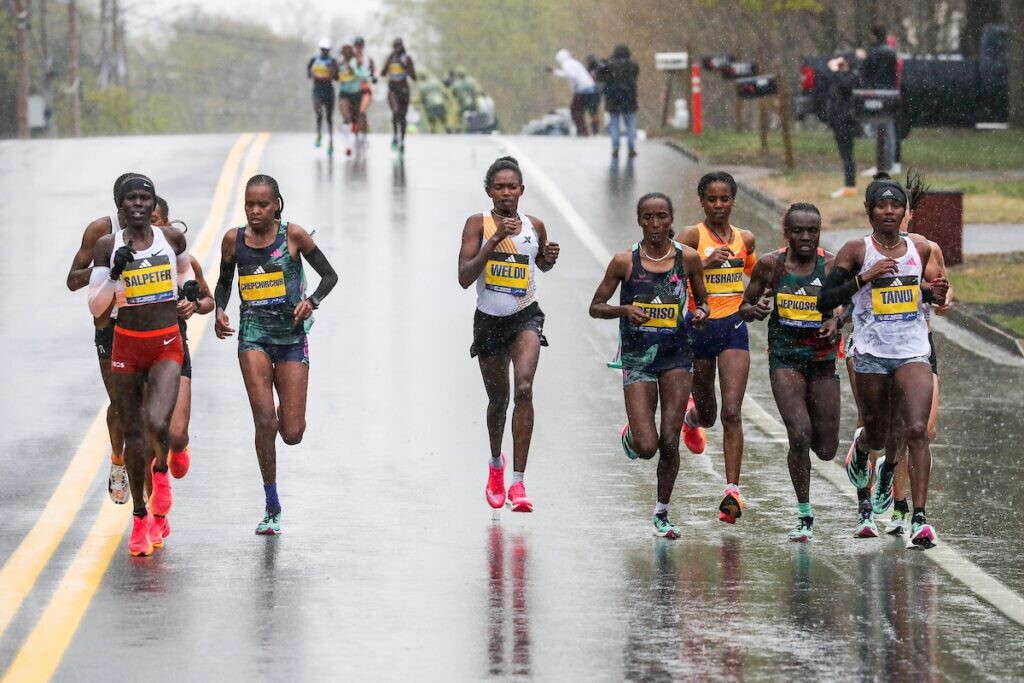
The AIU detailed that Weldu’s three missed tests occurred between Nov. 9, 2023, and May 22, 2024. All athletes are required to provide accurate and up-to-date location information to allow for unannounced doping tests, a critical component in maintaining a clean sport. Weldu was given several weeks after each missed test to provide an explanation but failed to do so before AIU deadlines.
Weldu has been one of the top-ranked female marathoners in the world over the last three years, having recorded two top-10 finishes at the World Championships and a personal best marathon time of 2:20:29, which also stands as Eritrea’s national record. In April 2024, she won the Vienna Marathon in 2:24:08.
While an initial two-year ban is the standard penalty for three missed tests, Weldu’s suspension was reduced by four months. The AIU took into consideration her limited access to the internet and a lack of understanding of how to update her whereabouts information. Eritrea, her home country, has low internet penetration, with only 35 per cent of the population connected to a network.
The AIU and World Athletics rely on the whereabouts system to detect doping violations and ensure fairness in sport. Missing three tests is treated with the same severity as a positive doping result, underscoring the importance of accurate whereabouts information.
by Marley Dickinson
Login to leave a comment
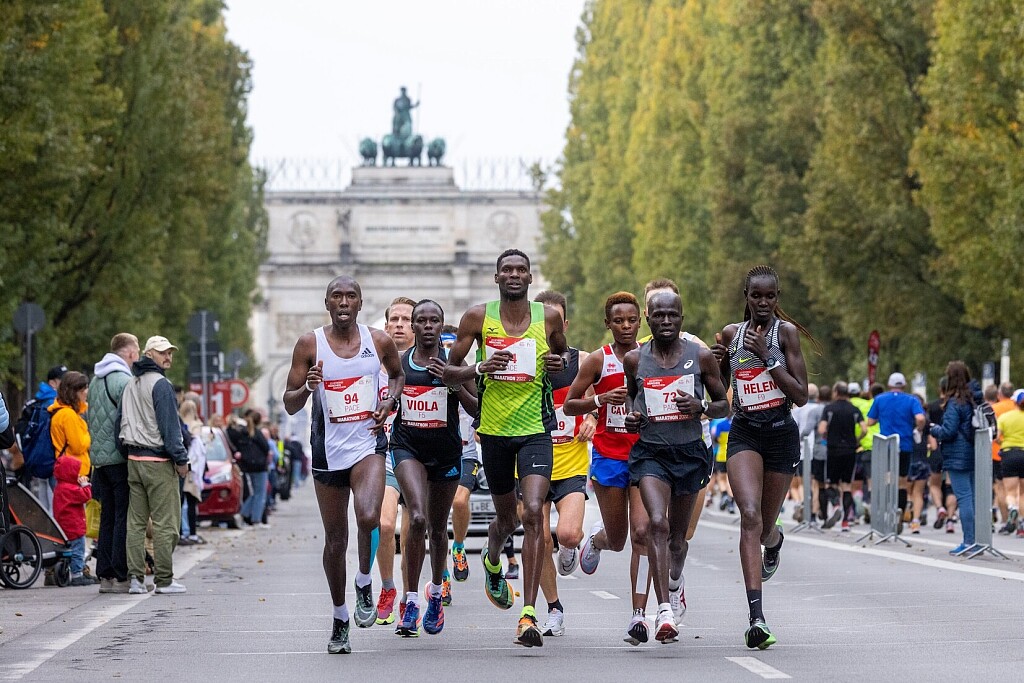
Kenyans aim to continue Munich’s success story
With the help of a strong African elite field organisers of the GENERALI MUNICH MARATHON hope to continue their recent success story on 13th October. Three Kenyan runners with personal bests slightly over 2:08:00 will be on the start line besides the Olympic Stadium. The women’s race will feature two runners who have clocked good half marathon times and could be in for a breakthrough over the full distance in Munich.
Including races at shorter distances a record total of over 25,000 runners is expected to compete in the 38th edition of the GENERALI MUNICH MARATHON, which is an increase of around 20 percent compared to last year. About 7,000 will run the marathon. Registration is still possible at: www.generalimuenchenmarathon.de
“We are really happy with the strong development of our entry figures. This shows that our concept is working and bearing fruit,“ said Race Director Gernot Weigl.
Parts of the elite fields were announced today. Kenya’s Cosmas Birech is currently the fastest runner on the start list. He won the 2018 Rome Marathon in 2:08:03. In the same year he also clocked a half marathon PB of 60:06. While there were hardly any races during the pandemic Cosmas Birech was unlucky once the period of lockdowns was over. The Kenyan was injured for a longer time. At the age of 38 he now wants to give it another go and hopes to get back to his best.
Dominic Nyairo, who has a personal best of 2:08:13, produced fine performances in his recent marathons. The 27 year-old will be one of the main favorites on 13th October. In 2021 Nyairo won his debut in Hofu, Japan, with a sprint finish in 2:09:34. In 2023 the Kenyan came back to Japan and placed 16th in the highly competitive Tokyo Marathon, improving to 2:08:13. He then ran the Berlin Marathon and finished 19th in a fine 2:08:47. In contrast William Kibor achieved his personal best quite some time ago. He clocked 2:08:32 when he was fifth in the Vienna City Marathon in 2012. After a longer break, which was partly due to the pandemic, he came back running a couple of half marathons last year. The GENERALI MUNICH MARATHON will be Kibor’s first race at the classic distance since 2019.
“We have produced the fastest times in the history of our event in the past two years. And I hope that we will once again see results in the region of 2:08to 2:09,“ said Gernot Weigl. „In the women’s race times between 2:25 and 2:27 should be possible.“
Two women who can still be regarded as newcomers could produce a surprise at the GENERALI MUNICH MARATHON. Shamilah Kipsiror only started her career last year when she was already 36 years old. When she competed outside Kenya for the first time she had instant success, winning the Ghent Half Marathon in a fine 67:53. Kipsiror then ran a 2:28:13 marathon debut in Venice last October. She was fourth in that race and fourth again when she returned to Italy for the Rome Marathon this spring, improving to 2:27:33.
One of Kipsiror’s strongest rivals will be Uganda’s Viola Chemos. She has only run one marathon so far, but that was in high altitude in Eldoret, Kenya. While she clocked 2:36:38 the 31 year-old followed this up with a fine race in July. Chemos took the Kaptagat Half Marathon in Kenya’s well-known high altitude training region with 69:23. Because of their strong half marathon performances Shamilah Kipsiror and Viola Chemos could improve significantly at the GENERALI MUNICH MARATHON.
Login to leave a comment
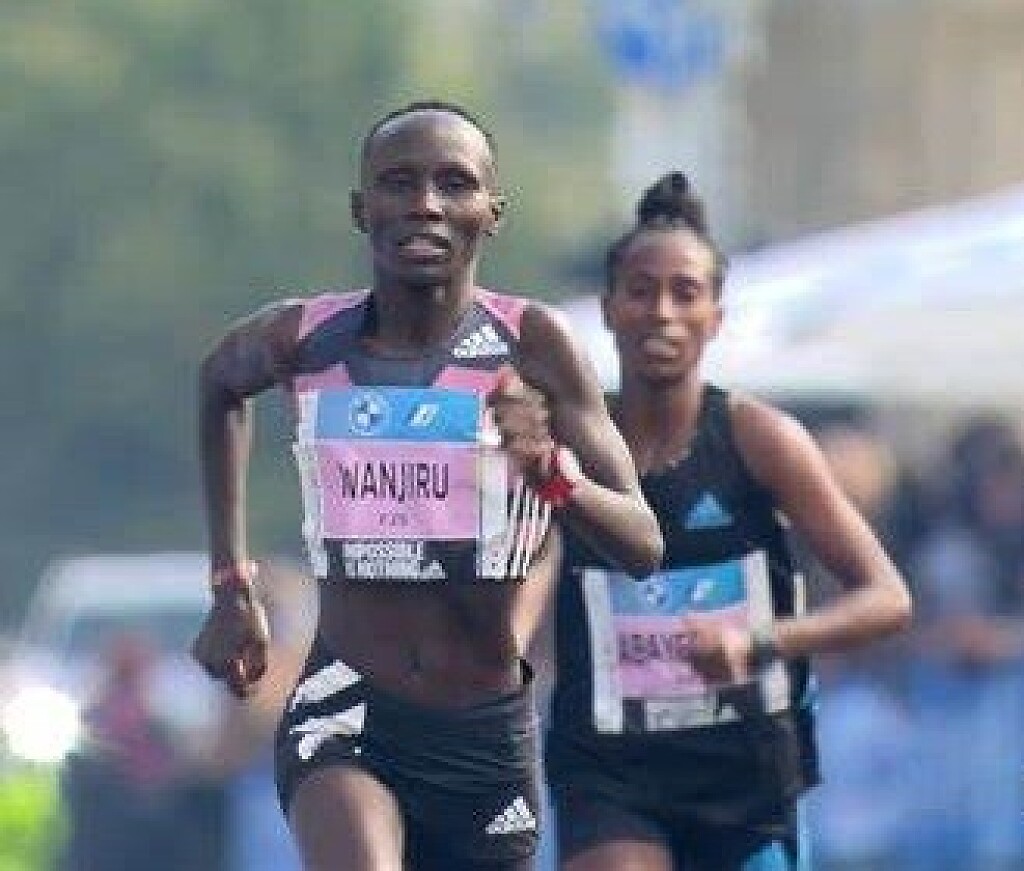
Wanjiru and Takele return for 50th Berlin Marathon
Four women with sub-2:20 PBs and six men to have dipped under 2:05 feature on the entry lists for the BMW Berlin Marathon, a World Athletics Platinum Label road race, on September 29.
Ethiopia’s Tigist Ketema and Kenya’s Rosemary Wanjiru top the women’s entry list with PBs that put them in the top 10 on the world marathon all-time list.
Ketema, who had been better known as an 800m and 1500m specialist, stormed into the marathon spotlight in Dubai in January as she ran 2:16:07, a time that makes her the ninth-fastest women’s marathon runner in history. She followed that with 2:23:21 for seventh place in London in April and Berlin will be her first race since then.
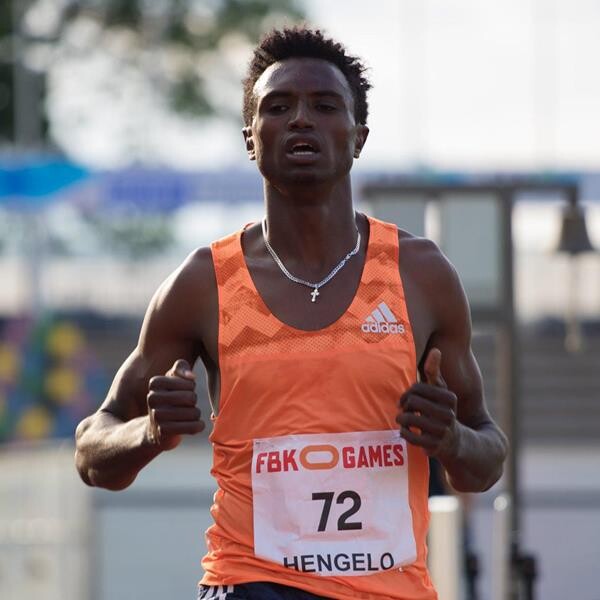
Just one place behind Ketema on the all-time list is Wanjiru, who clocked 2:16:14 to finish second in Tokyo in March. That followed her sixth place in the World Championships marathon in Budapest and victory in the Tokyo Marathon last year. Wanjiru also finished second in Berlin in 2022, running 2:18:00 on her debut.
Joining them on the start line are Ethiopia’s Genzebe Dibaba and Yebrugal Melese, who have respective PBs of 2:18:05 and 2:19:36, plus their compatriots Mestawot Fikir (2:20:45), Azmera Gebru (2:20:48), Sisay Gola (2:20:50), Ababel Yeshaneh (2:20:51) and Fikrte Wereta (2:21:32), as well as Japan’s Mizuki Matsuda (2:20:52).
A total of 13 world records have so far been set in the Berlin Marathon, the most recent being the 2:11:53 by Tigist Assefa in last year’s women’s race.
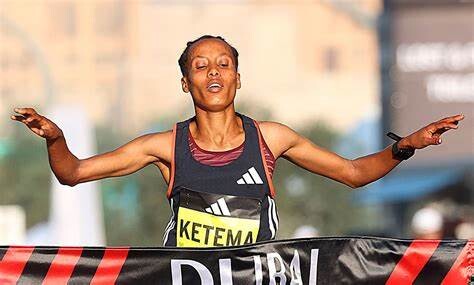
The men’s title on that occasion was won by Eliud Kipchoge, as he claimed a record fifth victory.
This year, for the first time since 2014, the men’s race will not feature Kipchoge or Kenenisa Bekele – who between them have won the race seven times, with two of Kipchoge’s wins having been claimed in world records – but fast times will still be the target.
Among those who will be returning to Berlin are Ethiopia’s Tadese Takele and Ronald Korir of Kenya, who placed third and fourth last year in respective PBs of 2:03:24 and 2:04:22.
Kenya’s Cybrian Kotut ran his PB of 2:04:34 when finishing second in Amsterdam last year and makes his Berlin Marathon debut, while Ethiopia’s Hailemaryam Kiros and Bazezew Asmare have also broken 2:05 in their careers so far, respectively running 2:04:41 in Paris in 2021 and 2:04:57 in Amsterdam in 2022.
Kenya’s Kibiwott Kandie races the marathon for the third time. The former world half marathon record-holder, who clocked 57:32 for 13.1 miles in 2020, will be looking to build on the PB of 2:04:48 he set in Valencia last year.
Also seeking a spot on the podium will be Kenya’s Samwel Mailu, the world half marathon bronze medallist who set a course record of 2:05:08 to win the Vienna City Marathon last year and continues his comeback after injury.
by World Athletics
Login to leave a comment
BMW Berlin Marathon
The story of the BERLIN-MARATHON is a story of the development of road running. When the first BERLIN-MARATHON was started on 13th October 1974 on a minor road next to the stadium of the organisers‘ club SC Charlottenburg Berlin 286 athletes had entered. The first winners were runners from Berlin: Günter Hallas (2:44:53), who still runs the BERLIN-MARATHON today, and...
more...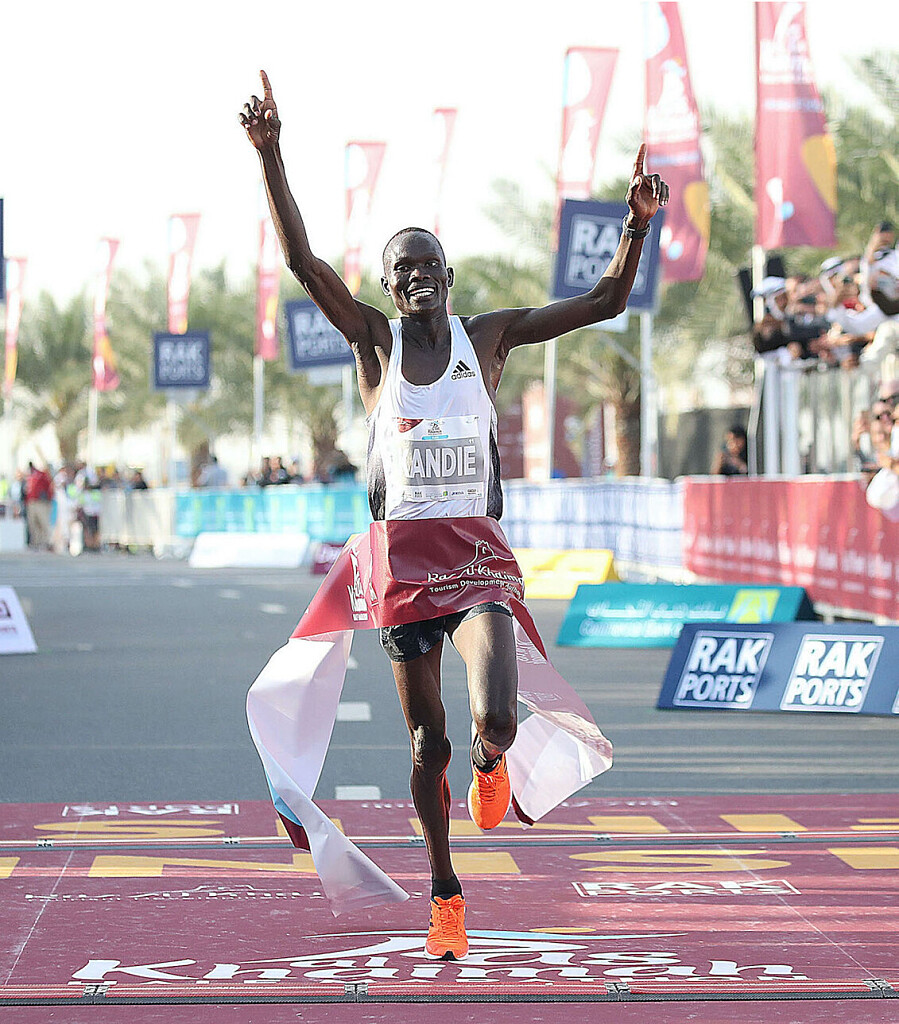
50th BMW BERLIN-MARATHON ON 29 SEPTEMBER: ELITE FIELD
The men’s elite field for the 50th edition of the BMW BERLIN-MARATHON race comes with a change that reflects the recent development at the very top of elite marathon racing.
It will be the first time since 2014 that you will not find the name of either Eliud Kipchoge or Kenenisa Bekele on the start list of the BMW BERLIN-MARATHON. However the Elite Race Director of the marathon where most world records (13) were broken, Mark Milde, can be confident that not so much will change regarding the outcome. Although world-records will not be the target on 29th September, the jubilee race could well deliver extraordinary fast times yet again.
A record number of more than 50,000 runners are expected to run the 50th BMW BERLIN-MARATHON on 29th September. The race, that saw its first edition back in 1974 with 244 finishers, never had over 50,000 runners before.
From those on the men’s start list at least one has the potential to become Kenya’s next marathon superstar: Kibiwott Kandie is a former world half marathon record holder with a personal best of 57:32. This time suggests that he could become one of the fastest marathon runners of all time if he can transform his talent to the classic distance. The 28 year-old, who has a current PB of 2:04:48 and was inspired by former Berlin world record breaker Paul Tergat, is one of half a dozen runners who feature very strong personal bests of sub 2:05:00.
Returning to the BMW BERLIN-MARATHON will be Ethiopia’s Tadese Takele and Ronald Korir of Kenya, who placed third and fourth last year. Both ran their personal bests of 2:03:24 and 2:04:22 here. Kenya’s Cybrian Kotut, a younger brother of former Abbott World Marathon Majors Champion Martin Lel, will run his first BMW BERLIN-MARATHON. Kotut features a PB of 2:04:34. Ethiopians Hailemaryam Kiros (2:04:41) and Bazezew Asmare (2:04:57) are the other two runners with sub 2:05 PBs. Another runner who could challenge for a place on the podium is Samwel Mailu. The Kenyan smashed the course record of the Vienna City Marathon last year with 2:05:08. Due to an injury the bronze medallist from the 2023 World Half Marathon Championships was unable to compete this spring.
The women’s race could see a battle between Ethiopia’s newcomer Tigist Ketema and Kenya’s Rosemary Wanjiru. With their personal bests they are among the top ten on the marathon all-time list. Tigist Ketema took the Dubai Marathon this year with an unofficial world debut record of 2:16:07.
She is a training partner of Tigst Assefa, who smashed the world record at the BMW BERLIN-MARATHON a year ago. Rosemary Wanjiru ran her marathon debut in Berlin two years ago and finished second with a brilliant 2:18:00. This year she improved to 2:16:14 when she was runner-up in Tokyo.
Former 1,500m world record holder Genzebe Dibaba, who is the younger sister of Ethiopian running legend Tirunesh Dibaba, will hope to achieve a fast time on the flat Berlin course. She ran a 2:18:05 debut in Amsterdam two years ago, but was not yet able to improve this time. Genzebe Dibaba was the 2014 Laureus World Sportswoman of the Year. Fellow-Ethiopian Yebrgual Melese is the fourth woman on the start list who has a sub 2:20 PB with 2:19:36.
Elite Runners for the 50th BMW BERLIN-MARATHON:
MEN
Tadese Takele ETH 2:03:24
Ronald Korir KEN 2:04:22
Cybrian Kotut KEN 2:04:34
Hailemaryam Kiros ETH 2:04:41
Kibiwott Kandie KEN 2:04:48
Bazezew Asmare ETH 2:04:57
Samwel Mailu KEN 2:05:08
Milkesa Mengesha ETH 2:05:29
Haymanot Alew ETH 2:05:30
Philimon Kipchumba KEN 2:05:35
Stephen Kiprop KEN 2:07:04
WOMEN
Tigist Ketema ETH 2:16:07
Rosemary Wanjiru KEN 2:16:14
Genzebe Dibaba ETH 2:18:05
Yebrugal Melese ETH 2:19:36
Mestawot Fikir ETH 2:20:45
Azmera Gebru ETH 2:20:48
Sisay Gola ETH 2:20:50
Ababel Yeshaneh ETH 2:20:51
Mizuki Matsuda JPN 2:20:52
Fikrte Wereta ETH 2:21:32
Login to leave a comment
BMW Berlin Marathon
The story of the BERLIN-MARATHON is a story of the development of road running. When the first BERLIN-MARATHON was started on 13th October 1974 on a minor road next to the stadium of the organisers‘ club SC Charlottenburg Berlin 286 athletes had entered. The first winners were runners from Berlin: Günter Hallas (2:44:53), who still runs the BERLIN-MARATHON today, and...
more...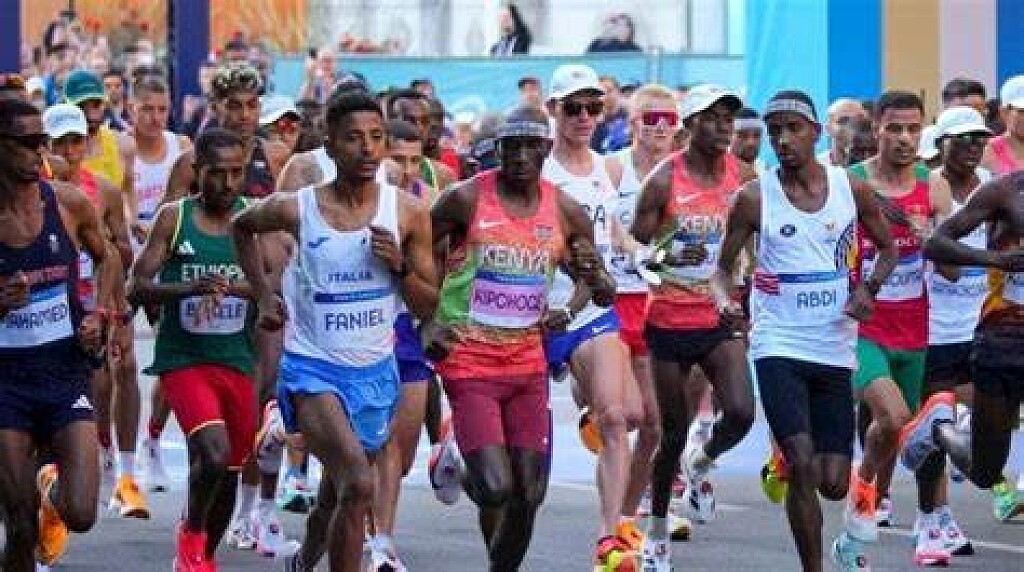
Why Eliud Kipchoge will still be at the Los Angeles Olympics in 2028 following dissapointment in Paris
Kipchoge has confirmed he will be involved in the 2028 Los Angeles Olympics following his unprecedented setback in Paris last Saturday that forced him to withdraw.
Eliud Kipchoge, Kenya's legendary marathon runner and two-time Olympic gold medalist, has set his sights on a new chapter after returning home from the Paris 2024 Olympics.
While the world had high expectations for another podium finish, Kipchoge’s focus has now shifted from competition to inspiring the next generation of athletes and the wider public.
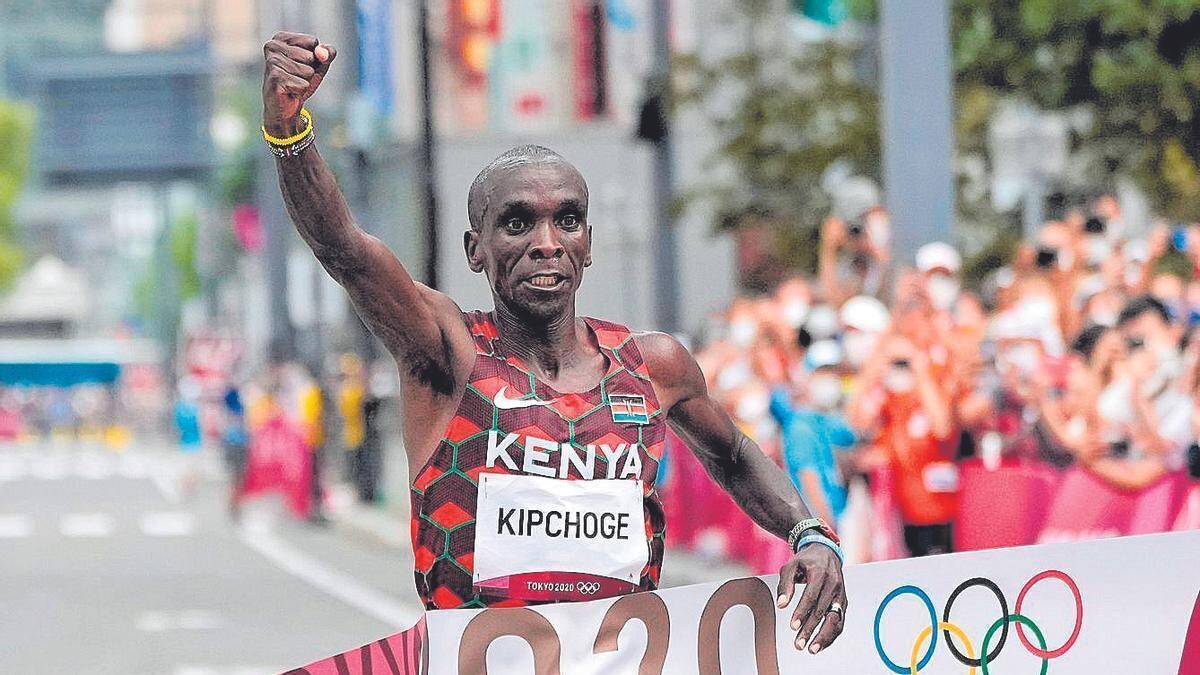
Widely celebrated for his resilience and unparalleled achievements in long-distance running, Kipchoge spoke candidly about his future during a recent interview.
Despite the challenges and the outcome in Paris, Kipchoge emphasized his excitement for the future, particularly with an eye on the Los Angeles 2028 Olympics.
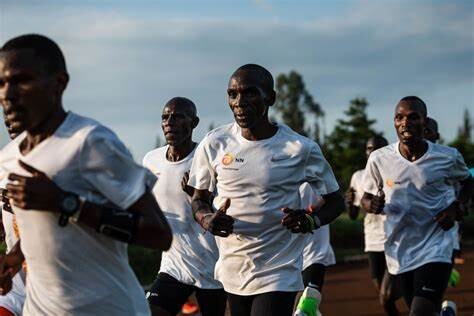
"As an athlete, I will be at the Olympics in another capacity to inspire hope and optimism not just in my country and continent, but across the entire world," Kipchoge stated, as quoted on Citizen Digital.
While he has confirmed that he will not be competing, Kipchoge’s presence at the 2028 Olympics will be one of inspiration rather than competition.
“The future of the marathon in Kenya is bright; it is only a matter of molding the next generation and guiding them on what is needed to excel,” Kipchoge stated on Olympics. Com. His reflections underscore his belief in Kenya’s potential to continue producing world-class marathon runners.
“I will not go into coaching. I have many other things to do. I will travel around the country motivating people,” he revealed, signaling a shift from his active role in competitive sports to one centered on inspiration and mentorship.
Kipchoge's return from Paris marked a moment of introspection for the marathon icon. Having dominated the sport for years, he has now decided to step away from global running competitions.
Kipchoge's legacy as a marathon legend is undeniable. Over his career, he has participated in approximately 20 world marathons, securing 15 victories. His 2019 world record of 1:59:40 in Vienna remains unchallenged, a testament to his extraordinary talent and dedication.
However, as he steps off the track, Kipchoge is determined to continue making an impact, this time through motivation and mentorship.
by Mark Kinyanjui
Login to leave a comment

LA 2028 Summer Olympics Games
Discover how the Los Angeles Candidature Committee describes their vision for the Games and the legacy they plan to leave behind: For centuries, people have been following the sun to California – to a coastal paradise of beautiful weather, inspiring landscapes and an ocean of possibilities. Since it was first settled, LA – the City of Angels – has built...
more...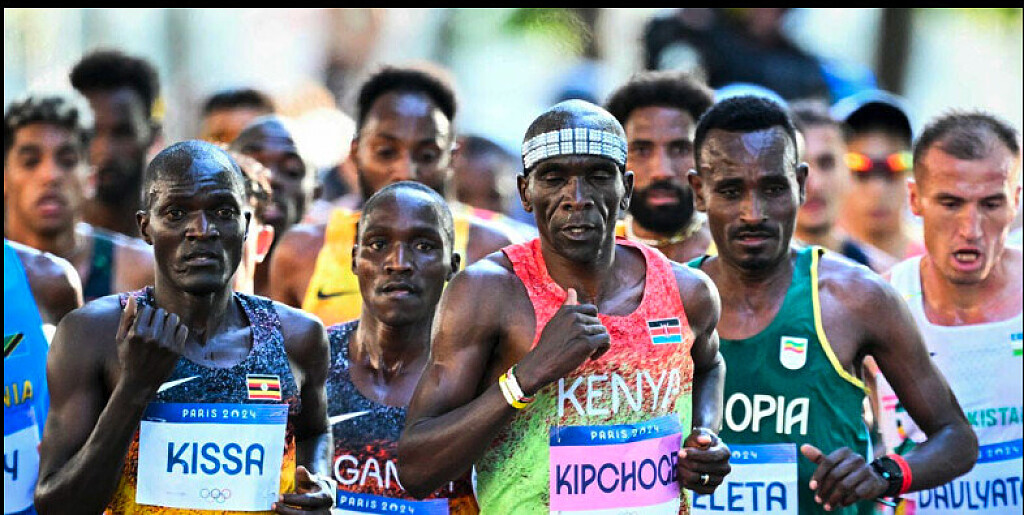
Eliud Kipchoge Drops Out of the 2024 Olympic Marathon
It may be the two-time gold medalist’s final Olympic Games.
In what may be his final Olympic Games, Eliud Kipchoge of Kenya dropped out of Saturday’s men’s marathon around the 31K mark. Today’s race was Kipchoge’s chance to be the first man to win the Olympic marathon three times in a career. His other Olympic marathon wins came in the Rio Olympics in 2016 and Tokyo in 2021.
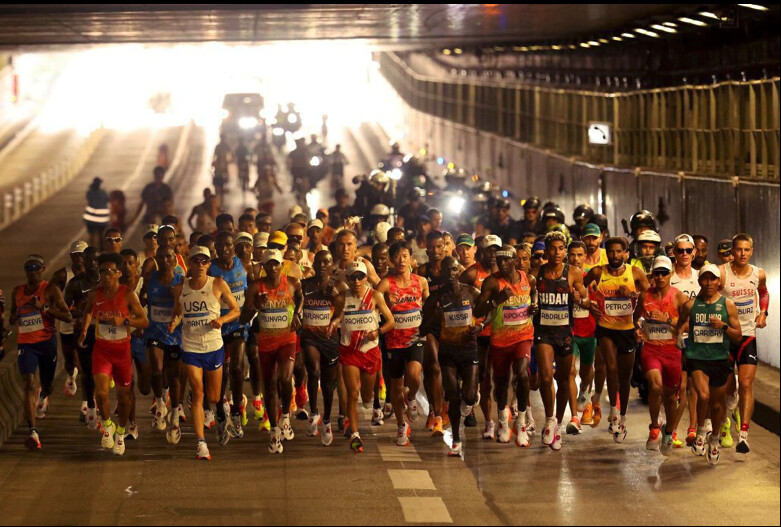
“I will be the happiest on earth to win an Olympic medal for the third time, back-to-back-to-back,” Kipchoge said about the race prior to the Games on Olympics.com. “It’s about making history, it’s about inspiring a generation.”
Wearing a cooling headband for what was going to end up being a warm day, the race started relatively cool in the lower 60s on a clear day in Paris. Kipchoge hung with the lead pack for the first 15K until the notoriously challenging Paris Olympic Marathon hills started claiming victims.
After reaching Versailles and turning back to head toward Paris, Kipchoge was more than a minute off the lead pack, not within the top 50 runners. He split 25K to the 30K mark—the segment of the course from Chaville to Meudon with the steepest uphill and downhill—a little over 21 minutes, putting him more than 8 minutes off the lead pack. He was out of contention but gutting it out toward the finish line, buoyed by the Olympic crowd.
Journalist Michelle Katami found Kipchoge after the race, where he described his final few kilometers of the race. “I walked for about 2 kilometers, there were about 300 people walking with me. That’s why I don’t have my shirt, shoes. I gave them all out. Seeing that support is what motivates me.”
Win or not, Kipchoge’s extensive career has earned him G.O.A.T. status in the running world. He’s eclipsed the world record mark twice—both times at the Berlin Marathon—and became the only man ever to run under 2 hours in a non-record eligible marathon attempt in Vienna back in 2019.
For a period, Kipchoge was untouchable at the distance. He won 10 marathons in a row from 2014 to 2019. He finally showed himself as human at the 2020 London Marathon (a race he’s still won four times), when he finished a surprising 8th. He bounced back by winning the marathon in the 2021 Tokyo Olympics, then winning both the Tokyo Marathon and Berlin Marathon in 2022.
Some recent marathons have been a step back for Kipchoge. He was 6th overall in his first Boston Marathon in 2023 but returned to form with a Berlin win later that year. Earlier this year Kipchoge placed 10th in the Tokyo Marathon.
He’s openly spoken about the strain he has taken after the tragic passing of the new marathon world record holder Kelvin Kiptum in a car crash in February 2024. He told the BBC that he was was subjected to online abuse wrongly linking him to Kiptum’s death.
“I was shocked that people (on) social media platforms are saying, ‘Eliud is involved in the death of this boy,’ That was my worst news ever in my life. I received a lot of bad things; that they will burn the (training) camp, they will burn my investments in town, they will burn my house, they will burn my family. It did not happen but that is how the world is. What happened has (made) me not trust anybody. Even my own shadow, I will not trust."
And on the track, he has two other Olympic medals, both in the 5,000 meters, with silver in 2008, and bronze in 2004.
by Runner’s World
Login to leave a comment
Strong world class elite field competing in Riga marathon this weekend
This weekend, the Rimi Riga Marathon will host world-class running stars who have stood atop the podium at prestigious marathons in Paris, Amsterdam, Frankfurt, Doha, Vienna, Hamburg, Dubai, Seville, and other prestigious events. The biggest competition for a spot on the podium this year is expected in the half marathon, where an especially strong field of runners will compete on the same course where world champions in the half marathon were crowned last October.
An intense battle is also anticipated among Latvia’s leading runners, who will compete not only for the Latvian championship medals in the road mile and the marathon, but also for high-quality results in the 5km and 10km distances. Because of the strong lineup of participants, we anticipate that in several distances we’ll see the Rimi Riga Marathon course records, and possibly even Latvian records, broken.
The Rimi Riga Marathon, the Baltic’s most magnificent mass sports event, on May 18 and 19, will not only bring together over 30,000 running enthusiasts from nearly 100 countries worldwide but also top elite runners from Latvia and around the globe.
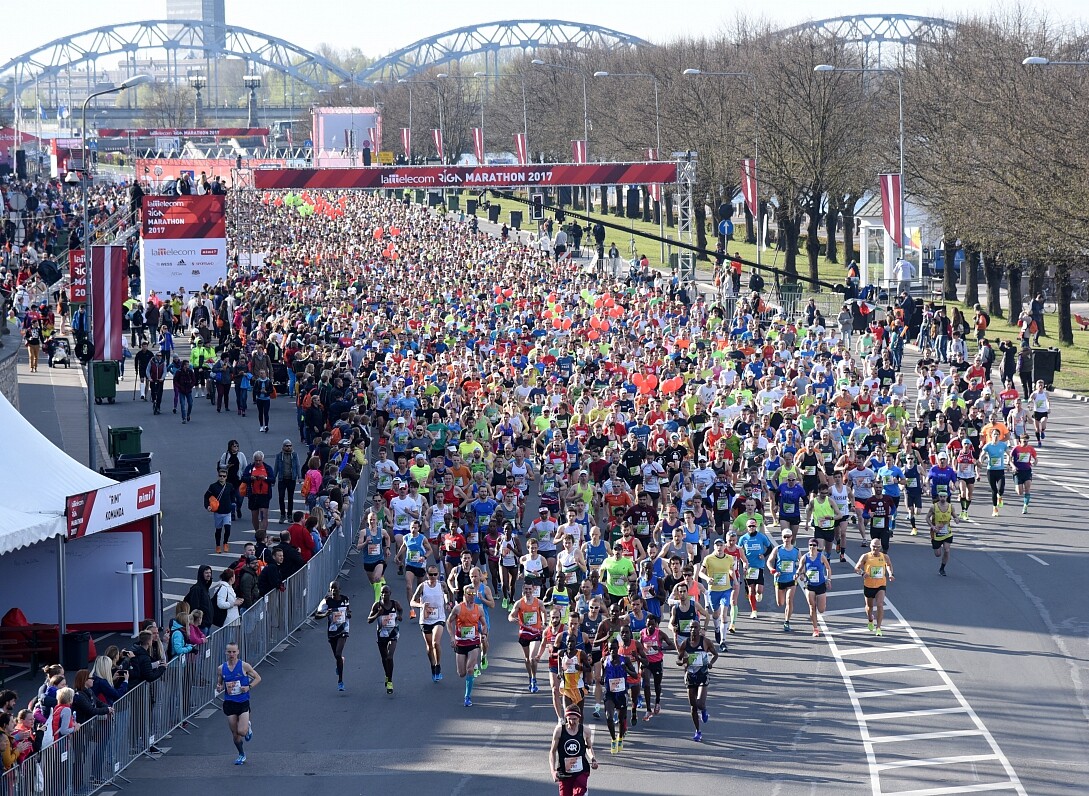
FOREIGN FAVORITES IN THE HALF MARATHON WILL AIM TO BREAK THE RIMI RIGA MARATHON COURSE RECORDS
The most intense competition is expected in the half marathon at the Rimi Riga Marathon, where participants will attempt to surpass the time of 59:10 set by Sebastian Sawe, the winner of the World Athletics Road Running Championships in Riga last October. In the men’s elite competition, several accomplished Kenyan runners will compete this year, including last year’s World Athletics Road Running Championships bronze medalist Samwel Nyamai Mailu, Solomon Kipchoge, who ran under one hour – 59:37 in 2023, and Titus Kimutai Kipkosgei who triumphed in the Milan Marathon in April this year and holds a half marathon personal best of 59:44 set back in 2022.
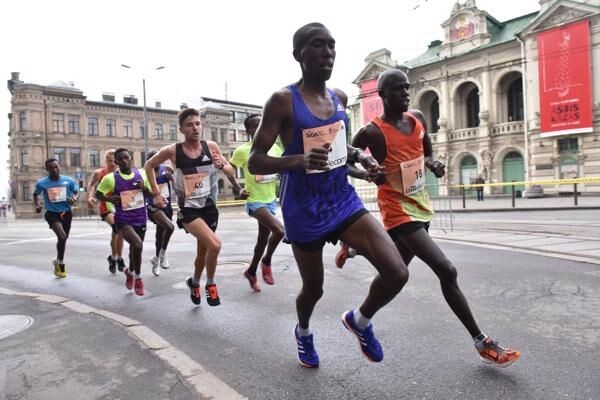
Among the international elite women in the half marathon, there are also several representatives from Kenya and Ethiopia. Among them, Judy Jelagat Kemboi, a Kenyan runner who set an impressive personal best in the half marathon on May 5 this year – 65:45, clinching victory in the Geneva Half Marathon. She will face competition from her compatriots – Valary Jemeli (personal best of 66:14 set in 2019), who triumphed in the Doha Marathon this February, and Gladys Jemaiyo, who set her best time of 68:18 in 2022. On the course, we’ll also have the opportunity to see Ethiopian Gebru Azmera Hagos, whose personal record in the half marathon from 2017 stands at 70:40.
To break the records of the half marathon course, which belong to the Kenyan Sebastian Sawe (59:10) and the acclaimed Kenyan runner and the reigning Olympic marathon champion Peres Jepchirchir (67:25) since the World Athletics Road Running Championships 2023 in Riga, organizers encourage Riga residents and visitors to actively support the leaders on the streets of Riga on the morning of May 19.
ON THE MARATHON COURSE, THE LATVIAN CHAMPIONS WILL BE DETERMINED
Determined to become the Latvian marathon champion this year is Dmitrijs Serjogins, the national record holder in the half marathon and the holder of the highest marathon personal best among Latvians. Also lining up at the starting line will be the podium finishers of the Latvian Marathon championship 2023 – the reigning champion Aleksandrs Raščevskis, vice-champion Renārs Roze, and bronze medalist Kristaps Vējš-Āboliņš.
In the marathon course, several strong foreign runners have also registered, including the Kenyan Rodgers Maiyo, who boasts an impressive personal record in the half marathon – 61:56 (2015), and multiple-time Georgian champion and holder of the national record Davit Kharzishvili (2:11:46, 2023), both of whom will be aiming to be the first to cross the finish line in Riga.
In the women’s competition, for the Latvian championship medals will compete last year’s medalists – Amanda Krūmiņa, who won the gold medal, Anna Kļučņika, who secured the silver, and one of the holders of the all-time highest marathon results and the 2023 bronze medalist, Anita Siliņa (PB 2:39:57, 2014).
Worth remembering is that the Rimi Riga Marathon record holder for men is the Ethiopian Andualem Belay Shiferaw, who won in 2019 with a time of 2:08:51. However, in the women’s marathon Ethiopian Birke Debele Beyene’s time remains unbeaten from 2019 – 2:26:22. Meanwhile, the fastest Latvian runner results in the Rimi Riga Marathon are the Latvian record set by Valērijs Žolnerovičs in 2017 with a time of 2:14:24, and the 2:40:23 result set by Ariana Hilborn in 2015.
Login to leave a comment

Lattelecom Riga Marathon
If you have never been to Riga then, running a marathon or half-marathon could be a good reason to visit one of the most beautiful cities on the Baltic Sea coast. Marathon running has a long history in Riga City and after 27 years it has grown to welcome 33,000 runners from 70 countries offering five race courses and...
more...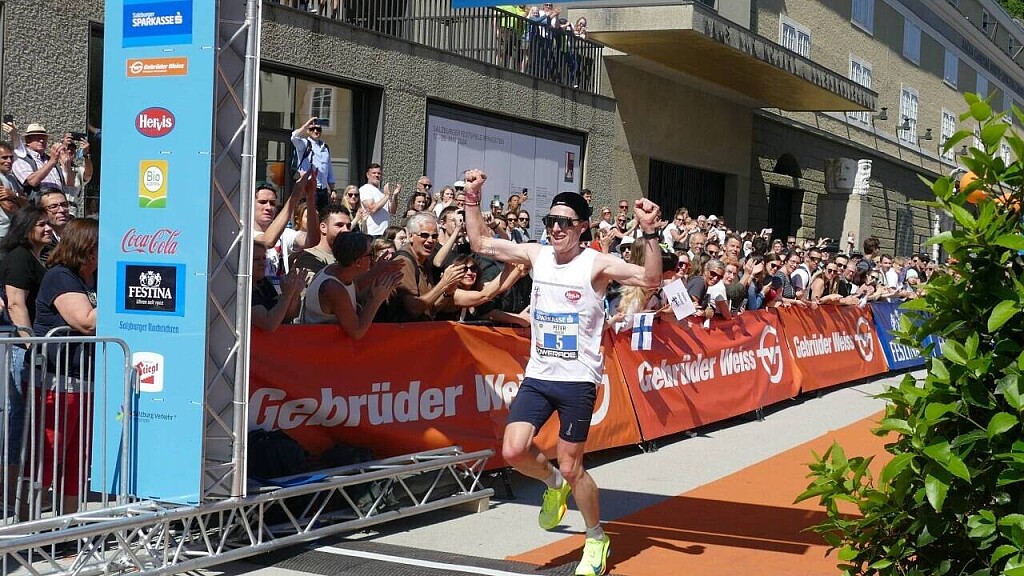
Herzog and Kovacs win Salzburg Marathon
The marathon specialist Peter Herzog from Saalfelden (Pinzgau), who has been active internationally for a long time, won the Salzburg Marathon on Sunday. The 36-year-old ran for the first time in his own state capital. The Hungarian Eva Kovacs won the women's event.
For his victory, Herzog needed two hours, 21 minutes and 46 seconds to cover the 42.2 kilometers. Shortly behind him, world-class runner Peter Wahome Murithi from Kenya crossed the finish line – just under a minute behind. Then nothing happened for a while. The Austrian Mahdi Sareban came third, almost 15 minutes behind Herzog.
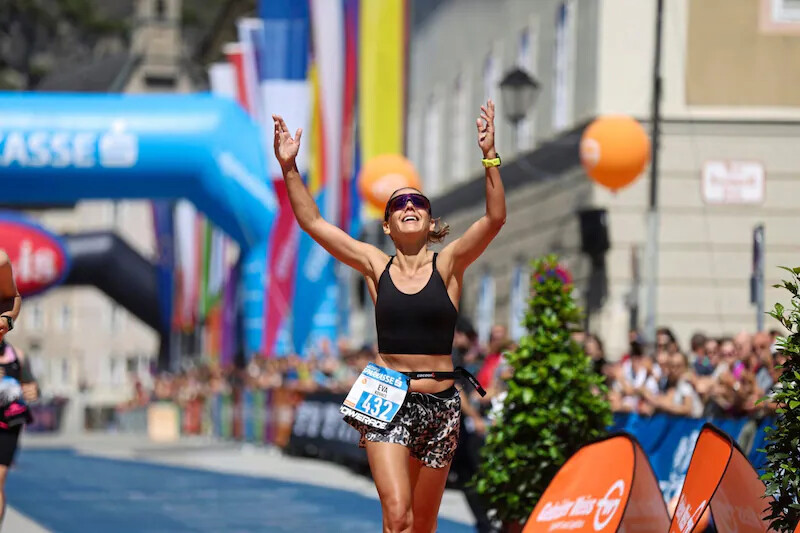
The Pinzgauer's song of praise for the route
The Saalfelden native said immediately after his arrival: “It went better than I could have hoped for. Time is totally irrelevant. The feeling was awesome. By the second round I already felt that I was no longer as fit as I was in Vienna. But the marathon feeling and the scenery were perfect. That’s exactly how I wanted it.”
Hungarian woman in front
In the women's race, Hungarian Eva Kovacs needed three hours, nine minutes and six seconds - ahead of Tyrolean triathlete Sabrina Exenberger, who arrived two minutes later. The German Eva Kiggen came third.
Login to leave a comment

Salzburg Marathon
The Salzburg Marathon is a marathon in Salzburg, Austria. First held in 2004 and organized by Club Run Austria. The program also includes a half marathon that has been held since 2001, a 10 km run, the "Get active" junior marathon and other competitions. Enjoy a special marathon-feeling while passing many of the best known sights of Mozart's hometown! The...
more...
Salzburg prepares for duel between Murithi and Herzog
The Salzburg Marathon is ready for its 21st edition on Sunday, May 12th. A new starting area, the historic flair of the “Mozart City”, the participation of the Austrian national record holder and a truly international field with runners of 85 nationalities provide all the ingredients for an unforgettable event.
Austrian national record holder Peter Herzog and Kenyan Peter Wahome Murithi are the headliners in the marathon race. An exciting duel is on the cards. Herzog has a personal best of 2:10:06 from London 2020 and made a return to good shape this spring after a year and a half full of injuries. Murithi even ran 2:09:40 in Graz 2023, a time that has to remain unofficial, as this event was not registered in the World Athletics Global Calendar.
Both athletes are coming to Salzburg bringing their personal running experience from the recent Vienna City Marathon three weeks ago. Herzog made a fine comeback in 2:15:29 in Vienna, while Wahome was on course for a sub-2:10 time, but dropped out after 30 km due to health problems. He is now hoping to make the most of his second chance to achieve a good result in this spring marathon.
Local hero Peter Herzog explains: “It was a decision of desire, not necessarily one of logic. I have rediscovered my marathon euphoria and am delighted that I will be able to enjoy this special marathon feeling a second time.”
The marathon field will be sent off at a new start area on the “Staatsbrücke“ bridge with a great view on the historic city center and UNESCO World Heritage Site of Salzburg. “Over the past two decades, we have gradually put Salzburg on the international map of running and anchored it there. Today, we are an international event that attracts participants of 85 different nationalities from all over the world. Our aim is to ensure that they arrive in Salzburg with anticipation and a good feeling and return home with outstanding personal experiences“, say the race organizers.
Compared to previous years, the start has been brought forward by half an hour. This will give amateur runners in the marathon in particular the opportunity to run in the cooler morning hours for 30 minutes longer and 30 minutes less in the time when the highest temperatures of the day are expected.
Public transport to and from the race is available free of charge for all participants within the region of Salzburg on the day of their race. Salzburg Marathon is certified as an ecologically sustainable event by Austrian control authorities. Runners enjoy high quality organic food made from local products at the marathon village. The use of renewable materials and an integrated programme for the reduction of transports and natural resources is in place.
by AIMS
Login to leave a comment
Salzburg Marathon
The Salzburg Marathon is a marathon in Salzburg, Austria. First held in 2004 and organized by Club Run Austria. The program also includes a half marathon that has been held since 2001, a 10 km run, the "Get active" junior marathon and other competitions. Enjoy a special marathon-feeling while passing many of the best known sights of Mozart's hometown! The...
more...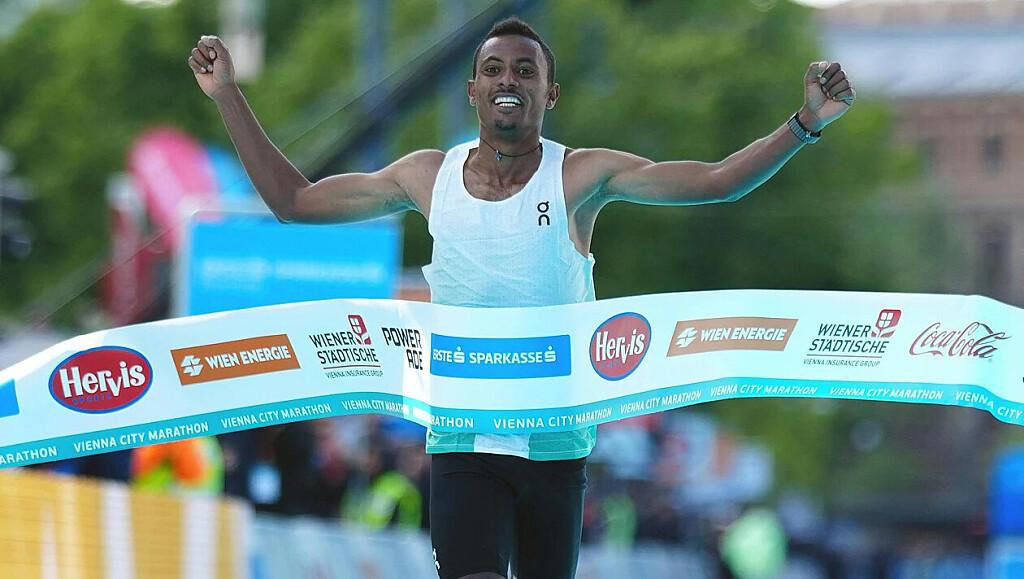
The 41st Vienna City Marathon was won by ethiopian Chala Regasa
The 41st Vienna City Marathon has its winner. The Ethiopian Chala Regasa won on Sunday in 2:06:35 hours. The best Austrian was Mario Bauernfeind, who crossed the finish line after 2:14:19 hours. Nazret Weldu triumphed in the women's race in 2:24:08.
Regasa secured the first Ethiopian VCM victory since 2015, when Sisay Lemma won in 2:07:31. Regasa himself had only competed in one marathon before that, finishing fifth in Rotterdam in April 2023 in 2:06:11. However, he had already been to Vienna in 2019 when he paced Eliud Kipchoge in his 1:59 "lab race" in 2019, including on parts of the VCM course. "I'm not here to hold back," Regasa said on Thursday - and put his plan into action.
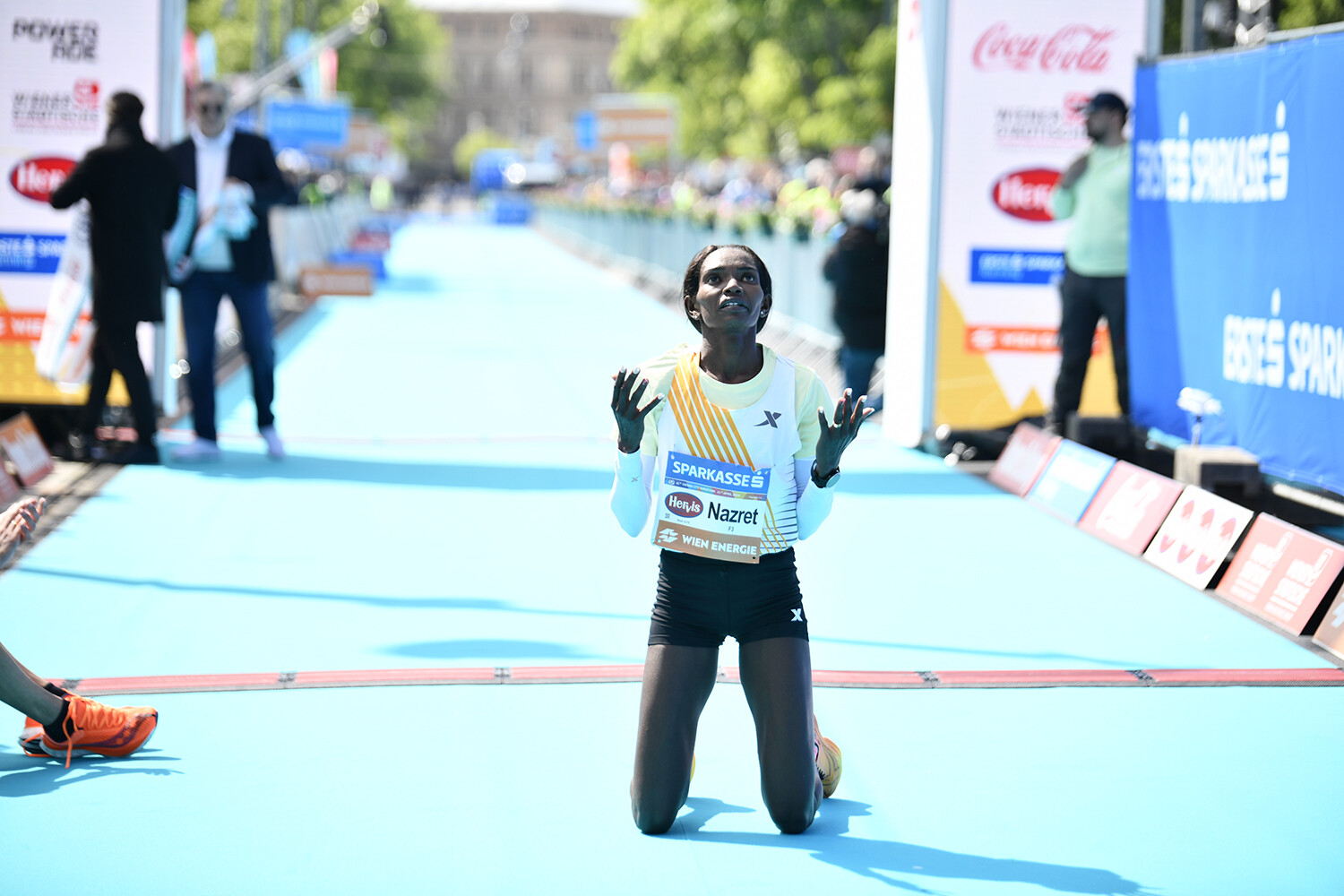
Bauernfeind beats HerzogIn the end, he had a huge lead of more than four minutes over the second-placed Kenyan Leonard Barsoton. Bauernfeind clearly won the duel with ÖLV record holder Peter Herzog for the best ÖLV athlete and was also ranked among the European leaders in this race. Herzog was a good minute behind his compatriot. "This is a dream come true for me," said a delighted Bauernfeind.
Mayer defies her periodJulia Mayer was unable to match her ÖLV record, but her performance was almost as impressive as the magnificent 2:26:43 in Valencia. "Unfortunately, I'm going through a difficult phase at the moment, I'm on my period," Mayer reported at the finish. "But I've already been able to prepare myself mentally for it. But it was a really good performance today and I'm proud of it." She finished tenth and second best European in 2:31:25. "That's also a respectable result."
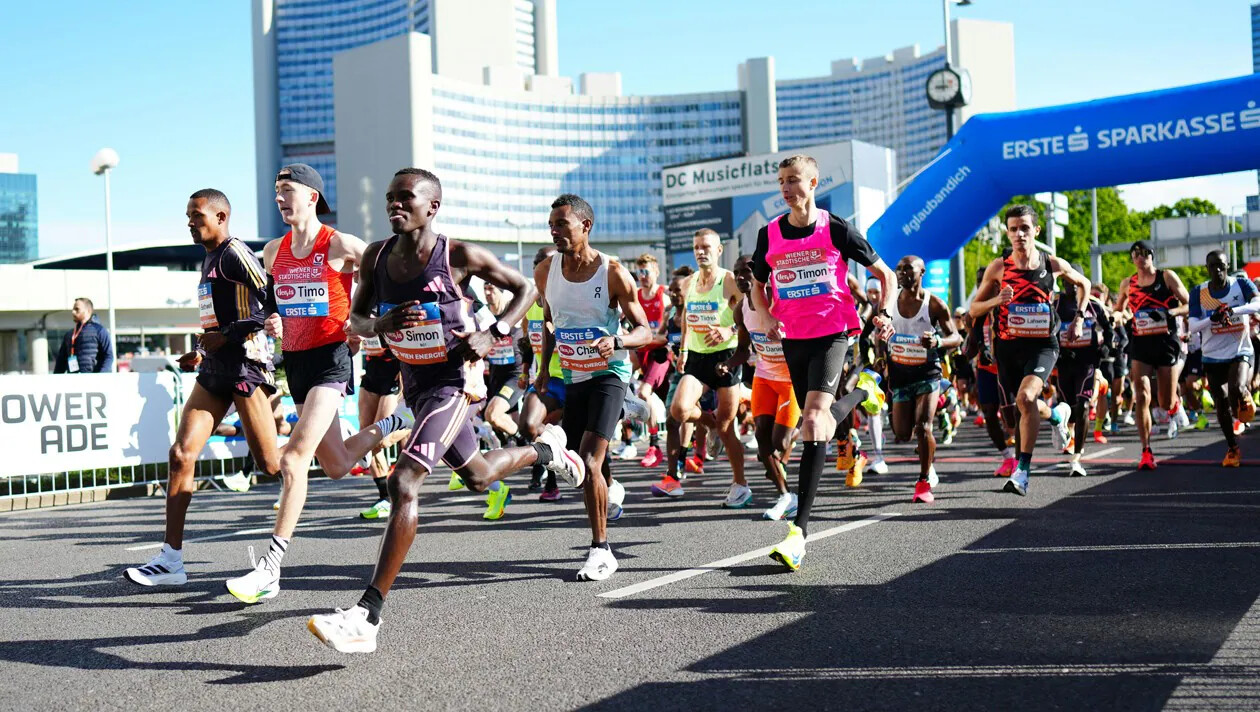
Austrian victoryThere was an Austrian victory in the half marathon. The 19-year-old Timo Hinterndorfer from Vienna ran with the marathon leaders and completed the distance in a new personal best time of 1:03:05 hours, just two seconds slower than the VCM leaders. Just two weeks ago, Hinterndorfer had won the Linz half marathon in 1:03:25. Timon Theuer in 1:05:45 and Thomas Messner in 1:06:29 completed an Austrian triple victory.
The race took place in better conditions than had been feared from the forecast. Even at the start area, the 35,000 athletes, including the side events, were greeted by sunshine, temperatures were in the low single digits and the wind was not as disruptive as expected.
by Nachrichten
Login to leave a comment
Vienna City Marathon
More than 41,000 runners from over 110 nations take part in the Vienna City Marathon, cheered on by hundreds of thousands of spectators. From the start at UN City to the magnificent finish on the Heldenplatz, the excitement will never miss a beat. In recent years the Vienna City Marathon has succeeded in creating a unique position as a marathon...
more...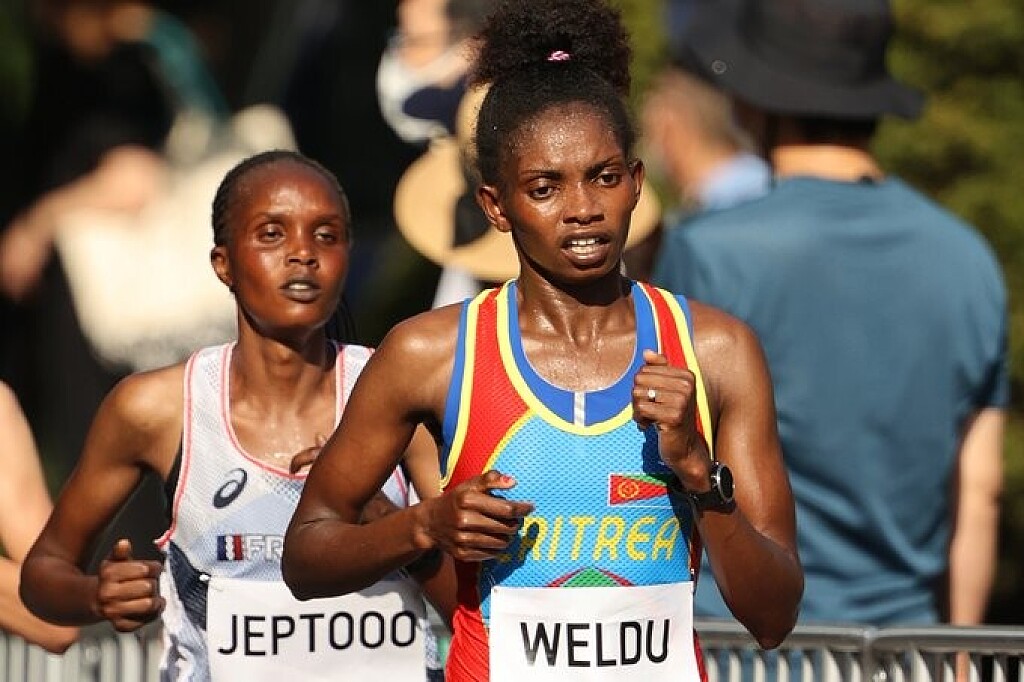
Eritrean runner Nazret Weldu wants to get to Paris via Vienna
Nazret Weldu intends to get to Paris via Vienna on Sunday. The Eritrean long distance runner is among a number of athletes who target a last minute qualification for the Olympic Games in August at the Vienna City Marathon.
Weldu is the favorite in the women’s race and could produce the first ever Eritrean victory in the history of Austria’s major road running event.
A total of over 42,000 runners have entered the 41st edition of the Vienna City Marathon. This is the third highest entry number of the event. For the first time since 2013 there are more than 10,000 marathon runners among them. The Vienna City Marathon is an Elite Label Road Race of World Athletics.
Nazret Weldu broke the national marathon record at the World Championships in Eugene in 2022 with 2:20:29. She placed fourth and missed the bronze medal by just eleven seconds. She was additionally unlucky since the qualifying period for the Olympic Games in Paris did not start until a few months later. Nazret Weldu ran two impressive marathons in 2023 as well, but somehow still did not achieve an Olympic qualifier. She was sixth in Boston with a fine 2:23:25. However this course is not record eligible, so World Athletics does not accept the Boston times for qualification. Next Nazret Weldu produced another very strong performance at the World Championships: In tremendous heat she finished eighth in Budapest – this time she was outside the 2:26:50 Olympic qualifying time with 2:27:23.
“I was fourth in the World Championships in 2022 and eighth in 2023 and still I am not qualified for the Olympic marathon this year in Paris,“ she said during Thursday’s press conference in Vienna. “But now I have the big chance to finally do it here in Vienna. My goal is to run a fast time on Sunday. I will see how it goes during the race. If there should be problems then I will make sure to run just fast enough to qualify for Paris,” explained Nazret Weldu, who trains in Ethiopia. “The reason for training in Addis is that I have a strong training group there.“ Among her training partners is Ethiopia’s 2022 World Champion Gotytom Gebreslase who was runner-up in Budapest last year.
While fellow Eritrean Dolshi Tesfu had to cancel her start in Vienna due to visa problems the strongest challenge for Nazret Weldu will probably come from two Kenyans: Shyline Torotich won the Enschede Marathon last year with a personal best of 2:22:45. The personal record of Rebecca Tanui is in a similar time range. She took the San Sebastian Marathon in 2022 with 2:23:09 and has the advantage of knowing the course in Vienna. A year ago she was fourth here with 2:26:34 when there were warm conditions.
“Last year I was unlucky since I was injured two weeks before the race. During training a motorcycle hit me from behind. This year I am fine,” said Rebecca Tanui. “For me the cooler conditions forecasted now are better than the warm weather we had last year. So I hope to run a PB on Sunday.“
Namibia’s Helalia Johannes is the fastest woman on the start list with a personal best of 2:19:52. The 43 year-old is not expected to join the first group which is likely to run roughly a 2:22 pace. However she will be among those runners who target the Olympic qualifying time of 2:26:50. Jovana de la Cruz Capani of Peru will probably join this group as well. To be among the three fastest runners of her country during the qualifying period she needs to improve her PB of 2:26:49 by just three seconds.
With a surprise improvement to 2:26:43 in Valencia last year Austria’s Julia Mayer has achieved the Olympic qualifying time. “I am ready to go on Sunday, it is a home game for me. I don’t expect to run a PB, but the goal is to achieve a very good place,“ said Mayer.
Kenyans Faith Chepkoech and Winny Kosgei are part of this year’s “OPEC Fund Rookie Team” in Vienna. They will both run their marathon debuts on Sunday.
by AIMS
Login to leave a comment
Vienna City Marathon
More than 41,000 runners from over 110 nations take part in the Vienna City Marathon, cheered on by hundreds of thousands of spectators. From the start at UN City to the magnificent finish on the Heldenplatz, the excitement will never miss a beat. In recent years the Vienna City Marathon has succeeded in creating a unique position as a marathon...
more...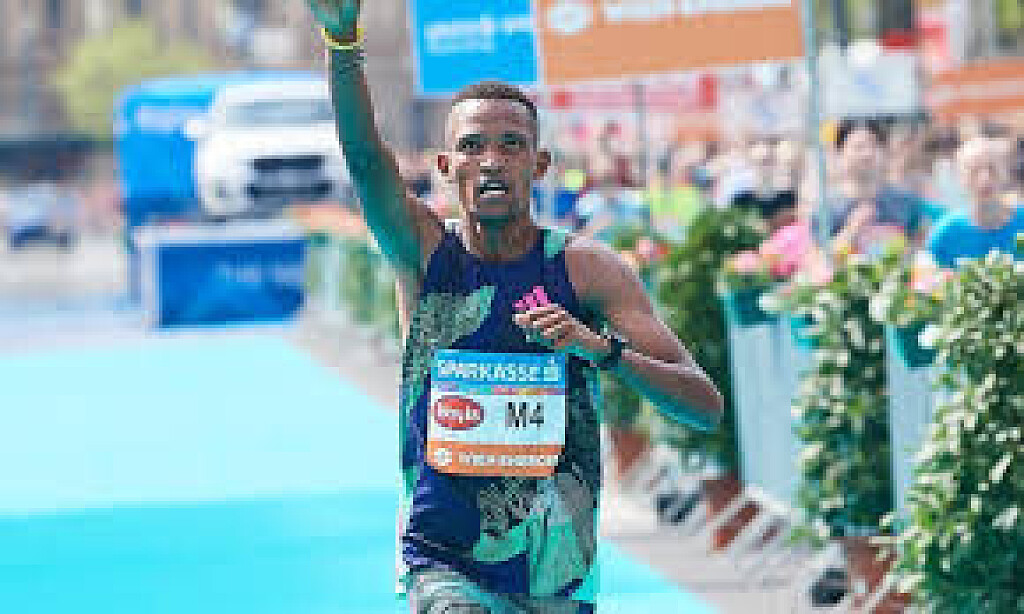
Bethwell Yegon and Chala Regasa head start list in Vienna
Bethwell Yegon returns to the Vienna City Marathon where he was runner-up in unusually warm conditions last year. The Kenyan hopes to go one better this time and win his first marathon on 21st April. He will be challenged by Ethiopia’s Chala Regasa, who is also targeting a first major marathon triumph.
Both athletes have personal bests of slightly over 2:06 and head the competitive men’s field of the Vienna City Marathon. Over a dozen athletes on the current start list have personal records of sub 2:10 and a number of them hope to qualify for the Olympic marathon in Paris this summer.
With over 40,000 entries the Vienna City Marathon is Austria’s biggest one-day sporting event and the only road race in the country that features a World Athletics Elite Label. The figure includes entries for shorter races staged parallel to the marathon.
Bethwell Yegon ran a stunning marathon race in Berlin in 2021, when he came from far behind, overtook Ethiopia’s superstar Kenenisa Bekele and almost challenged for victory in the final stages. Yegon finished second and improved his personal best by more than two minutes to 2:06:14. This remains the fastest time of the 31 year-old who trains in Iten, the heart of Kenyan long distance running. “I am happy to return to Vienna and my goal is to fight for victory and take a place on the podium. Hopefully the weather conditions will be fine and there will be a strong group to run with,” said Bethwell Yegon, who clocked 2:06:57 a year ago, which is the fifth fastest time ever run in the history of the Vienna City Marathon.
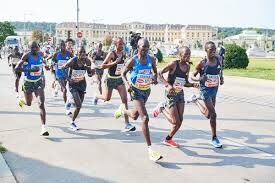
Chala Regasa has already run on Vienna’s roads as well, though in a different role. The 26 year-old Ethiopian was part of the pacemaking team that supported Eliud Kipchoge when he sensationally broke the two hour marathon barrier in 2019. It was a year ago when Regasa finally ran his marathon debut in Rotterdam with a fine 2:06:11 for fifth place. With this time he is currently the fastest runner in the field. Vienna will be his second marathon and his strong half marathon PB of 59:10 suggests that there is some room for improvement. His biggest career win so far came in the New Delhi Half Marathon in 2022, where Regasa clocked 60:30 and beat a strong field.
Felix Kibitok is another runner who features both, a personal best of sub 2:06:30 and a very fast half marathon PB. The Kenyan was fifth in Barcelona in 2022 with 2:06:28 and achieved 59:08 in the Prague Half Marathon back in 2019. On two more occasions Kibitok ran sub one hour half marathon times. Samsom Amare from Eritrea, who won his marathon debut in Abu Dhabi in 2023 with 2:07:10 and was ninth at the World Half Marathon Championships in 2023, plus Kenyans Albert Kangogo (2:07:48) and Leonard Barsoton (2:09:06) could well challenge for a place on the podium as well.
The Vienna City Marathon is one of the last few races during the second half of April giving athletes a chance to qualify for the Olympic Games’ marathon in Paris this summer. The official qualifying time is 2:08:10 and the qualifying window shuts on 30th April. There are a number of athletes who will try to fulfill their Olympic dream in Vienna: Belgium’s Lahsene Bouchikhi has a personal best of 2:08:36 from Valencia last year while Daniel Paulus is the national record holder of Namibia. He clocked 2:08:40 in his debut in Daegu, South Korea, in 2023. Juan Pacheco from Mexico is also expected to try to qualify for Paris. He has a personal record of 2:09:45 while Tiidrek Nurme from Estonia has run 2:10:02.
The Vienna City Marathon will also be hosting the Hungarian national marathon championships for the second time in a row. Around 40 of the best athletes from the neighbouring country will come to Vienna to determine their champions.
by AIMS
Login to leave a comment
Vienna City Marathon
More than 41,000 runners from over 110 nations take part in the Vienna City Marathon, cheered on by hundreds of thousands of spectators. From the start at UN City to the magnificent finish on the Heldenplatz, the excitement will never miss a beat. In recent years the Vienna City Marathon has succeeded in creating a unique position as a marathon...
more...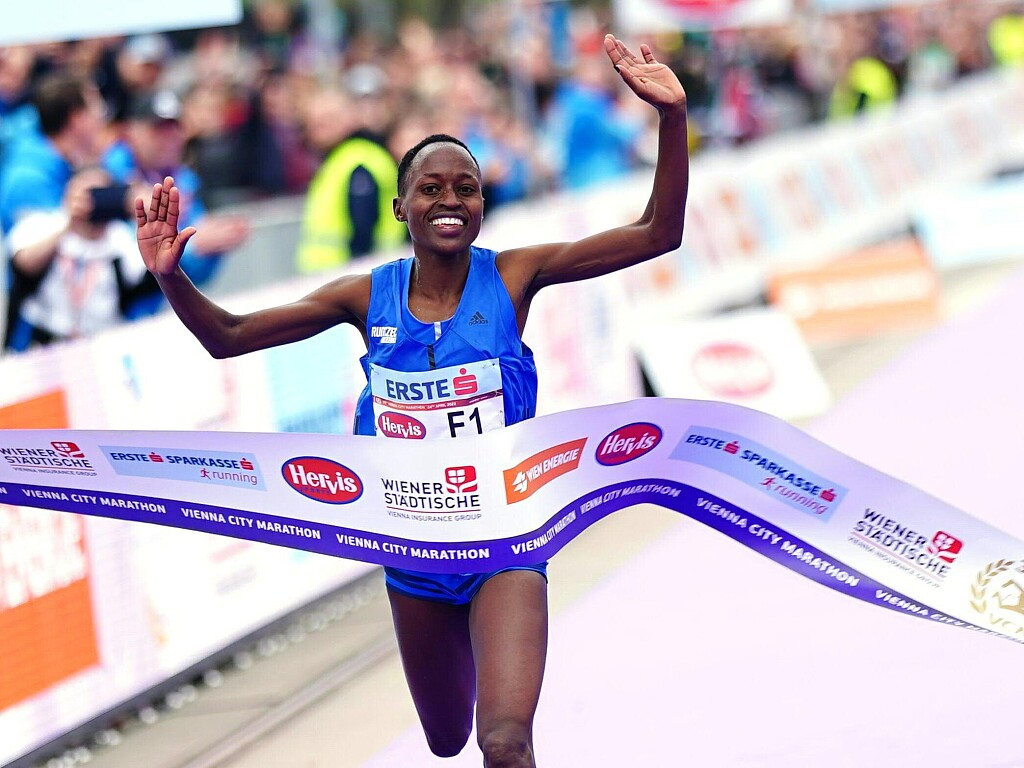
Kenyans Leonard Langat and Vibian Chepkirui will return to defend their Vienna Marathon titles
Kenyans Leonard Langat and Vibian Chepkirui will return to defend their Vienna Marathon titles, while there are three men on the start list who have broken 2:06 and five women featuring personal bests of sub 2:25.
With regard to these personal records it will be strongest line-up in the history of the Vienna City Marathon which will see its 39th edition next week. Including races at shorter distances more than 31,000 runners have registered for Austria’s biggest running event, a World Athletics Marathon Label Road Race.
Kifle had a fine year in 2021: He was third in Enschede, 14th in the Olympic marathon in Sapporo and then 6th in Valencia, where he ran his PB. With his personal record the Eritrean is a little faster than Vienna’s course record of 2:05:41 by Ethiopia’s Getu Feluke in 2014.
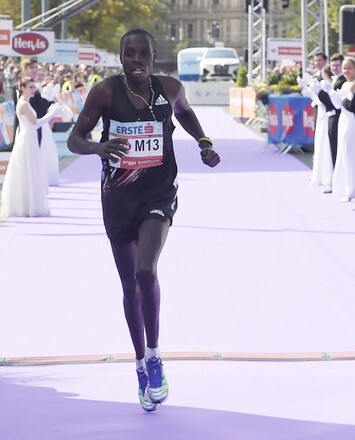
Abdi Fufa of Ethiopia is the third athlete in Vienna’s line-up who has run sub 2:06. A year ago he was second in Siena’s elite only race with 2:05:57.
It looks a tough task for Leonard Langat to defend his title in the Austrian capital. The Kenyan improved to 2:09:25 in Vienna last September. But with this PB he is only the eighth fastest athlete on the start list.
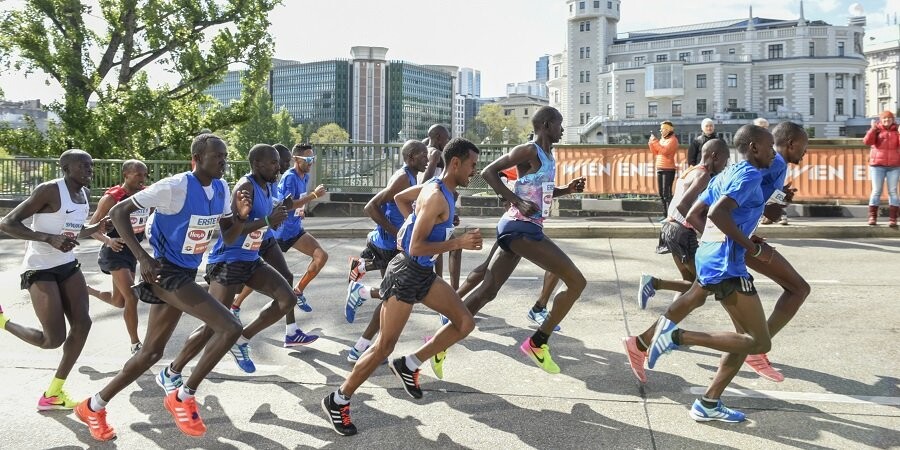
Unfortunately there were a number of cancellations from elite runners recently. Among them are Mekuant Ayenew and fellow-Ethiopian Derara Hurisa, who had originally crossed the line first in last year’s Vienna City Marathon. However he then had to be disqualified for wearing illegal racing shoes and Leonard Langat became the winner.
The fastest runner on the women’s start list is Caroline Kilel, who ran 2:22:34 when she took the Frankfurt Marathon back in 2013. While the Kenyan did not reach these sort of times recently there are other athletes who showed promising last year.
Defending champion Vibian Chepkirui may only be number five on the list with her PB of 2:24:29. However she did run this time last September in Vienna in very warm conditions.
Afterwards the Kenyan said that she could have been at least two minutes faster in more suitable conditions. Chepkirui could be capable of attacking the course record of fellow-Kenyan Nancy Kiprop who was the winner in 2019 with 2:22:12.
Kenya’s Ruth Chebitok and Ethiopia’s Sifan Melaku are number two and three on Vienna’s start list with PBs of 2:23:29 and 2:23:49 respectively.
Sheila Jerotich of Kenya is a contender for victory as well. She took the Istanbul Marathon in November, improving to 2:24:15.
“We are very happy that we were able to surpass the mark of 30,000 entries. Compared to our comeback race in September 2021 this is a nice step forward. We feel the enthusiasm of the runners,“ said Kathrin Widu, the General Manager of the Vienna City Marathon.
There has never been an Eritrean winner in the history of the Vienna City Marathon which had its first edition back in 1984. This may change next week though since the two fastest entrants are from this country: Goitom Kifle and Oqbe Kibrom feature personal bests of 2:05:28 and 2:05:53 respectively.
by ATAF
Login to leave a comment
Vienna City Marathon
More than 41,000 runners from over 110 nations take part in the Vienna City Marathon, cheered on by hundreds of thousands of spectators. From the start at UN City to the magnificent finish on the Heldenplatz, the excitement will never miss a beat. In recent years the Vienna City Marathon has succeeded in creating a unique position as a marathon...
more...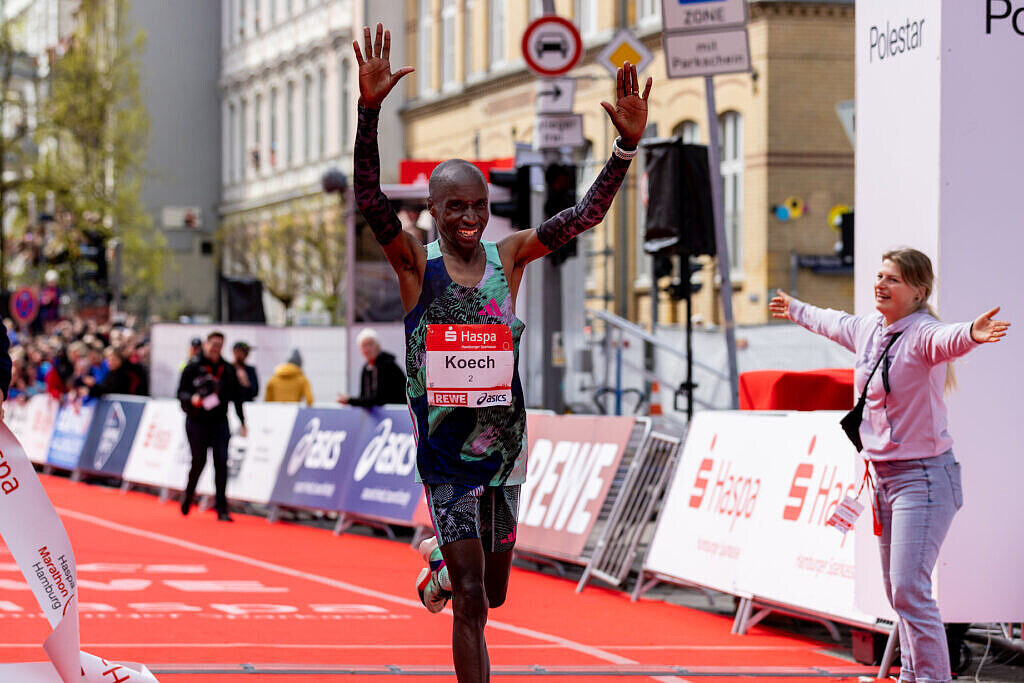
Haspa Marathon Hamburg: Defending champion Bernard Koech returns
Defending champion and course record holder Bernard Koech will return for the 38th edition of the Haspa Marathon Hamburg on April 28th. The 36-year-old Kenyan, who improved the course best to 2:04:09 last year, will face very strong opponents in Germany’s major spring marathon. Samwel Mailu of Kenya and Ethiopia’s Abdisa Tola, who both produced breakthrough performances in 2023, will challenge the defending champion. In Martin Musau there will be another former winner of the Haspa Marathon Hamburg returning to the race: The Ugandan was the winner in 2021.
“After consecutive course records, we can look forward to another high-quality men’s race. Bernard Koech, Samwel Mailu, and Abdisa Tola are all capable of running world-class times on the fast course. We are happy that these three have chosen Hamburg for their spring marathon,“ said chief organizer Frank Thaleiser, who expects a total of around 12,000 marathon runners on 28th April. Online registration for the race is still possible at: www.haspa-marathon-hamburg.de
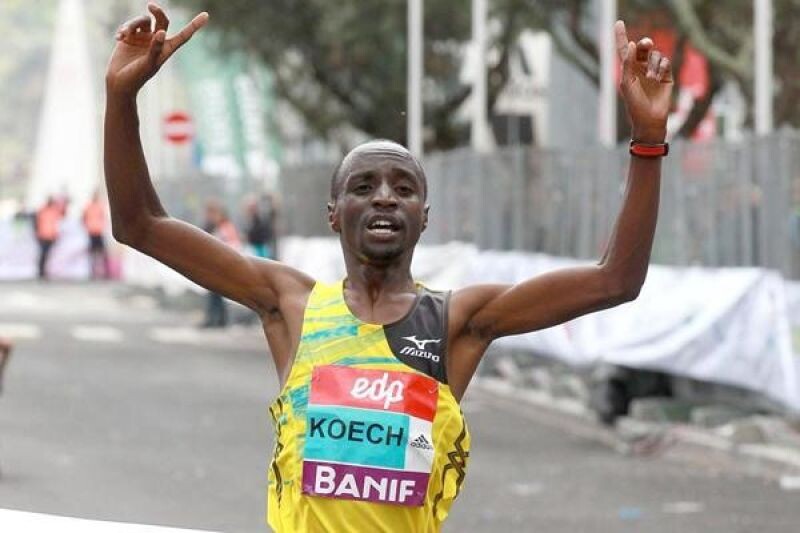
“I am looking forward to returning to Hamburg. Last year’s victory was a perfect comeback performance for me because I had problems for some time and there were the Corona lockdowns as well,“ said Bernard Koech, who tied his two-year-old personal best of 2:04:09 last year in Hamburg. However, after achieving his biggest career victory in that race the Kenyan was unlucky when he ran the Amsterdam Marathon in autumn. An injury forced him to drop out of the race. Looking ahead to his Hamburg return Bernard Koech said: “Although I broke the course record last year I believe that I can still run faster in Hamburg.“
A fast pace should suit Samwel Mailu, who wants to improve his personal best. The Kenyan newcomer, who is already 31 years old, stormed to a sensational course record of 2:05:08 despite warm weather conditions at the Vienna Marathon last spring. Later that year he produced another exceptional performance. Added to the Kenyan team at very short notice Samwel Mailu took the bronze medal at the World Half Marathon Championships in Riga, Latvia. “I chose Hamburg for my spring marathon because of the fast course. Hopefully, I can improve my current 2:05 personal best to 2:04,“ said Samwel Mailu.
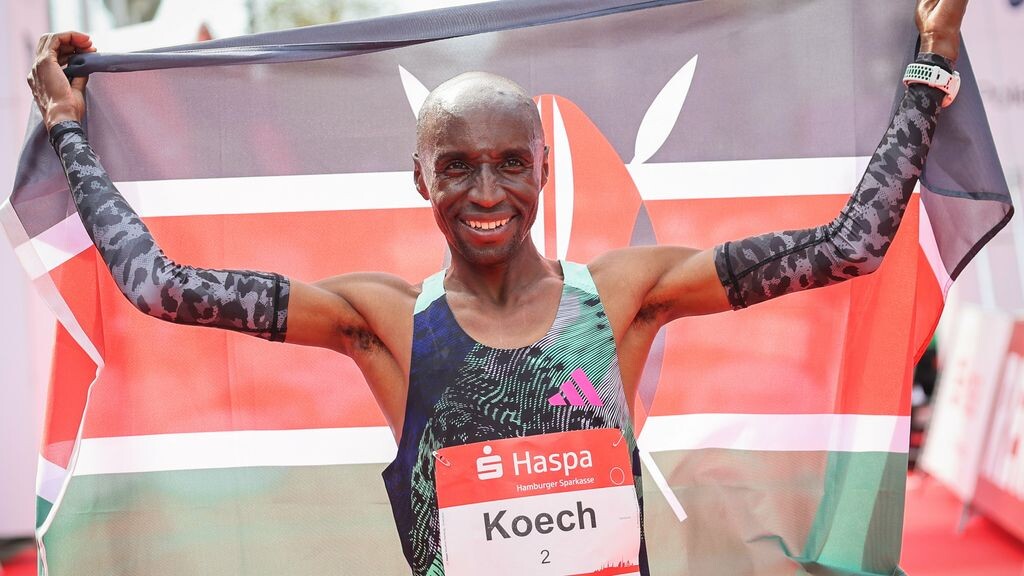
Twenty-three-year-old Ethiopian Abdisa Tola will be another top contender on 28th April. The younger brother of Tamirat Tola, the World Marathon Champion from 2021 and current New York Marathon winner, ran a stunning marathon debut a year ago: Abdisa Tola won the competitive Dubai Marathon in 2:05:42.
Besides Bernard Koech there will be another runner in the elite field who has already won the Haspa Marathon Hamburg: Martin Musau of Uganda took the race at 2:10:15 in 2021, when the fields were much reduced due to the pandemic. It was last year in Hamburg when Musau improved to a fine 2:08:45 and finished in seventh position.
by Christopher Kelsall
Login to leave a comment
Haspa Marathon Hamburg
The HASPA MARATHON HAMBURG is Germany’s biggest spring marathon and since 1986 the first one to paint the blue line on the roads. Hamburcourse record is fast (2:05:30), the metropolitan city (1.8 million residents) lets the euphoric atmosphere spill over and carry you to the finish. Make this experience first hand and follow the Blue Line....
more...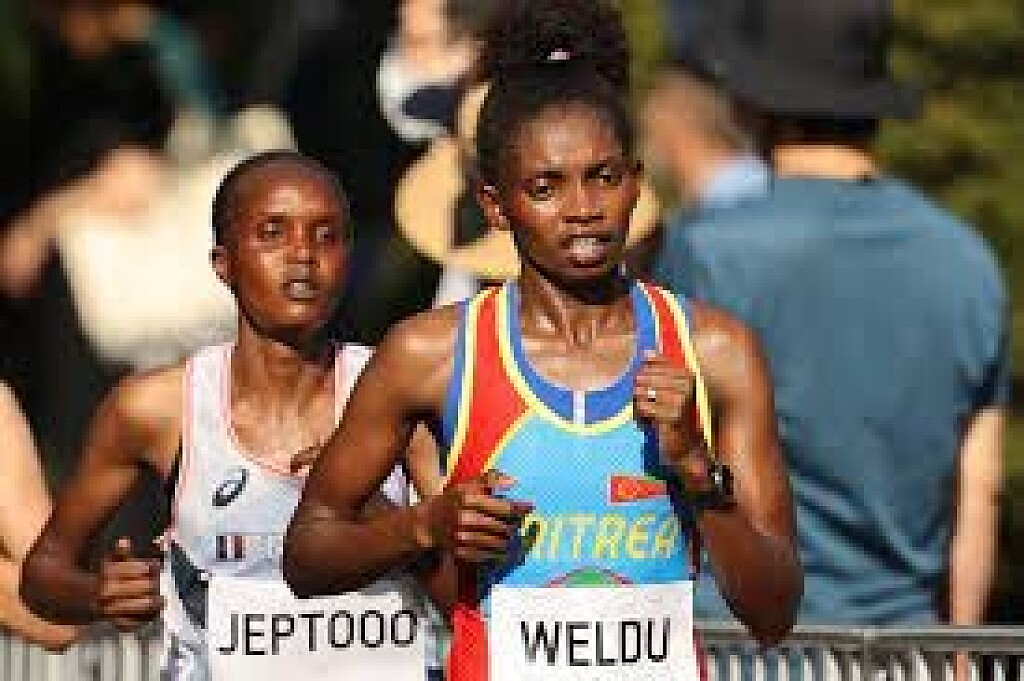
Eritrean duo might eye two records at once in Vienna
Eritrean duo Nazret Weldu and Dolshi Tesfu head the current women’s start list of the Vienna City Marathon on 21st April, race organizers have announced.
Weldu and Tesfu, who are by some distance the fastest Eritrean women marathon runners in history, may be challenged by Kenyans Shyline Toroitich and Rebecca Tanui. There are hopes that the 41st edition of Austria’s major road race will see an attempt to break the course record, which currently stands at 2:20:59.
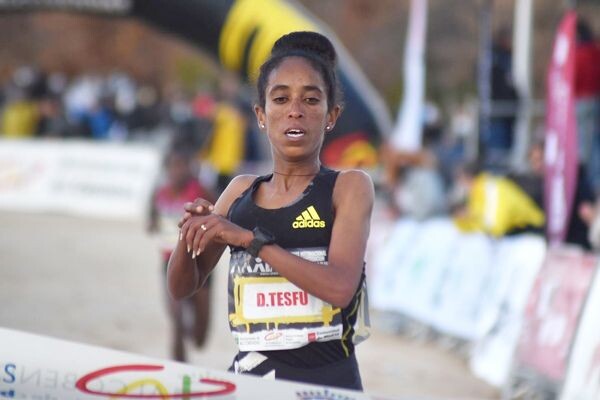
Including races at shorter distances, the organizers of the Vienna City Marathon expect to register over 40,000 entries for the 41st edition. Around 10,000 of them will be marathon runners. The Vienna City Marathon is a World Athletics Elite Label Road Race.
It took 19 years until the women’s course record of Italy’s late Maura Viceconte was finally broken in the Austrian capital in 2019. Kenya’s Nancy Kiprop improved the mark to 2:22:12. However Kiprop’s time lasted much shorter than Viceconte’s. In 2022 fellow-Kenyan Vibian Chepkirui clocked 2:20:59.
Nazret Weldu and Dolshi Tesfu have both already run faster than Vienna’s course record: 34 year-old Weldu clocked a national record of 2:20:29 when she took a very strong fourth place in the World Championships’ Marathon in Eugene in 2022. She won the Daegu Marathon in South Korea with 2:21:56 in the same year and then placed sixth in Boston in 2023 with 2:23:25. Competing in a hot World Championships’ race in Budapest last summer Weldu finished eighth with 2:27:23. Despite this series of strong performances Nazret Weldu still has not achieved the Olympic qualifying standard for Paris. She will want to make sure in Vienna that she runs fast enough to get into the Olympic race.
Dolshi Tesfu features a personal best of 2:20:40. The 24 year-old, who is just 1.56 m tall and weighs just 42 kg, ran this time in her debut marathon when she finished ninth in Valencia in 2022. During the race Dolshi Tesfu ran the first half in 68:53, which is by far the fastest half marathon time ever run by an Eritrean woman. Dolshi Tesfu then showed fine performances in her two marathons in 2023 as well: First she was runner-up in Rotterdam with 2:21:35 and then she finished 10th in a hot World Championships’ marathon in Budapest in August. She is already qualified for the Olympic marathon.
When Weldu and Tesfu will come to Vienna for the first time they could attack two records in one go: While the course record stands at 2:20:59 for the two athletes the national record of 2:20:29 would probably be even more significant.
There is an athlete on the start list with a sub 2:20 PB, but at the age of 43 Helalia Johannes is not expected to challenge for victory. The Namibian ran 2:19:52 in 2020 and holds the masters world record since then.
Two Kenyan women could be the main challengers for Weldu and Tesfu: Shyline Toroitich and Rebecca Tanui both know how to win a city marathon. Toroitich took the Enschde Marathon last year with a personal best of 2:22:45 while Tanui was the winner of the San Sebastian Marathon in 2022 with a PB of 2:23:09 and then also won in Venice last autumn. Tanui will have the advantage of knowing the course of the Vienna City Marathon since she was fourth here last year with 2:26:34 in warm weather conditions.
For Andrea Ramirez Limon the Vienna City Marathon presents the last chance to achieve qualification for the Olympic Games’ marathon this summer. The Mexican has a personal best of 2:26:34. However she ran this back in 2020, so it does not count as an Olympic qualifier for Paris. While the qualifying time is 2:26:50, Andrea Ramirez Limon would need a faster time to succeed since the Olympic race will have a limit of 80 starters.
Austria’s record holder Julia Mayer has achieved qualification since she was among the 64 pre-qualified athletes at the end of January with her PB of 2:26:43. She will be among a group of runners who target the Olympic qualifying standard.
by AIMS
Login to leave a comment
Vienna City Marathon
More than 41,000 runners from over 110 nations take part in the Vienna City Marathon, cheered on by hundreds of thousands of spectators. From the start at UN City to the magnificent finish on the Heldenplatz, the excitement will never miss a beat. In recent years the Vienna City Marathon has succeeded in creating a unique position as a marathon...
more...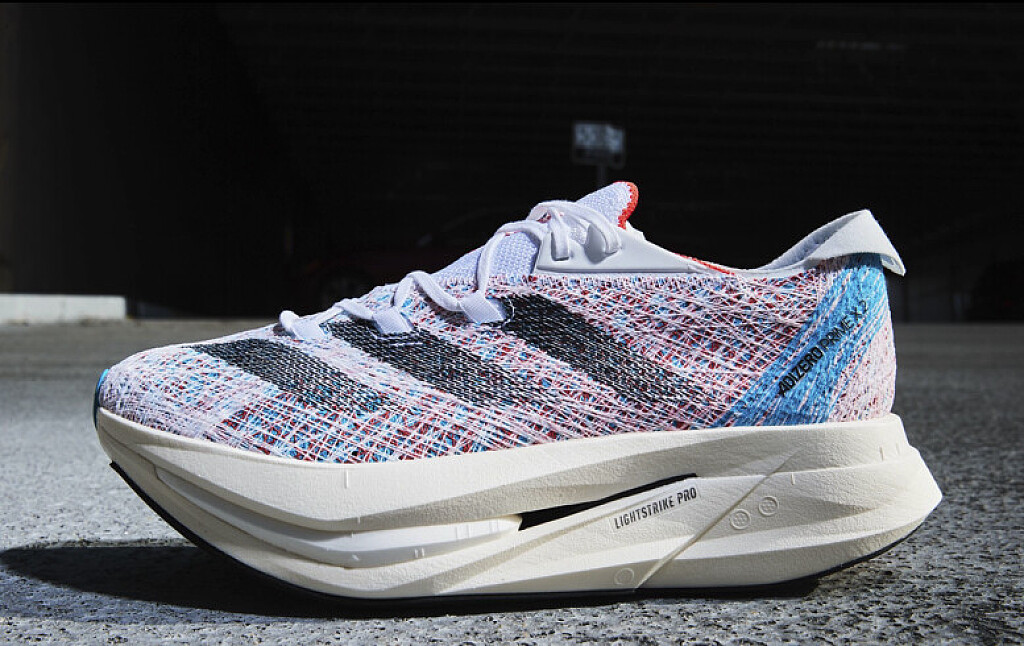
Rise of the “Illegal” Running Shoes
Super trainers are fast, fun, and maybe a little risky. Here’s what to know about these max-cushioned shoes.
Banned shoes emerged courtside long before they found their way onto a marathon course. Legend has it that nearly 40 years ago, Michael Jordan laced up a pair of red-and-black high-tops in violation of the NBA’s approved uniform colors.

In 2010, the league cracked down again—this time, for reasons besides aesthetics—on a pair of basketball shoes that were shown to increase a player’s vertical-jump height. Today, Nike’s Air Jordan brand is a household name and multibillion-dollar business, and shoemaker Athletic Propulsion Labs (APL) has since released additional banned styles (Superfuture and Concept X) of its performance-boosting kicks.
Though some speculate these bans were mostly crafty marketing, the same can’t be said about the wave of “illegal” shoes that is flooding the roadways on the feet of runners. Super shoes have proven a true performance boon to both elites and recreational runners on race day. Now the tech has trickled down to shoes for daily runs, ushering in super-thick, though still permissible, shoes that have created their own category: super trainers.
What Is a Super Trainer?
Technically, a formal definition doesn’t exist. But we’ll establish some general parameters.
Super trainers share many of the same qualities as super shoes built for race day: a tall stack height, efficient midsole geometry, high-powered super foam, and usually some sort of plate. But these trainers aren’t meant for racing, like a Nike Vaporfly or Saucony Endorphin Elite—they’re designed for everyday mileage.
Super shoes for racing have to balance cushioning and propulsion, but still be lightweight. Super trainers, though, can have beefier constructions that help to extend their life spans. For example, shoe brand On guarantees only four marathons from the Cloudboom Echo 3—that’s little more than 100 miles. Super trainers can handle more mileage, and should have the typical 300- to 500-mile range of a normal running shoe.
To do that, they may have more outsole rubber for durability. Their uppers are usually softer and thicker than a racing shoe’s, as well, with comfortably cushioned ankle collars and tongues. They tie up with sturdier laces and offer a more forgiving fit overall, closer to what you’d expect from a workhorse daily trainer. And, since super trainers aren’t made to toe a starting line, brands can pile on midsole foam in excess of the 40mm limit imposed by World Athletics.
But they’re more than just extremely cushioned running shoes. Super trainers have additional mechanisms and “super foams” geared toward running efficiency and energy return, explained below.
Anatomy of a Super Trainer
If we break down a super trainer into its key components, we see a recurring theme: a stack of super foam in the ballpark of 40mm (or more), a carefully sculpted midsole shape for propulsion, and a plate that harnesses those pieces and holds it all together. This is the tech that puts the “super” in super trainers; it needs to interact with the foot and the rest of the kinetic chain in specific ways to deliver the intended ride and energy return.
Here’s what’s happening inside the midsole under your foot, and how these elements work to boost your stride.
1. Rocker Geometry
When we talk about a rocker sole, we’re describing the curvature of the bottom of the shoe’s sole. Both the heel and the toe curve upward, away from the ground, to give the shoe a more rounded base. The result is a shape like that you’ll find on a rocking chair. This is needed because the shoes are so thick, they don’t bend under the forefoot for a smooth transition during your gait cycle.
Shoe developers can also manipulate the inflection points of the rockers around a runner’s pace and foot strike to potentially manipulate transition time. Usually, you’ll find the most aggressive rocker designs in racing shoes. Still, pronounced rocker soles on super trainers are essential to make transitions comfortable.
→ How do rocker soles work?
Rocker soles in shoes function to mimic the natural rockers of the foot to make us feel more efficient. The foot has three functional rockers—the heel (first), ankle (second), and forefoot (third)—that we use while walking and running. The heel bevel in a shoe prepares the foot to contact the ground and smooths out the shoe’s ride when you land. Forefoot rockers assist movement during toe-off, which generally means the toes and ankle joint don’t have to work as hard.
For some runners, a stiff rocker sole can decrease demand on the calves by transitioning effort upward to the knee and hips. A runner’s experience will depend on their specific biomechanics, where the rocker is placed, and how their footstrike contacts it.
2. Super Foam
Polyether Block Amide, or PEBA, is a common foam compound for super trainer midsoles. (A popular trade name for the material is Pebax, made by a company called Arkema.) It’s the basis for foams like Nike ZoomX, Saucony Pwrrun PB, Puma Nitrofoam, and Asics FF Blast Turbo. Many of those brands leverage the same foam used in their top-tier racing shoes for their super trainer models.
Right now, PEBA-based foams lead the way for energy return. While current research and our own testing indicates that supercritical EVA and TPU blends are also impressive, PEBA has the edge more often than not. Why? It’s lighter than TPU and far softer and bouncier than supercritical EVA. Some iterations are firmer than others, depending on which brand’s flavor you try.
→ How does foam work?
Cushioning serves to absorb shock upon landing and provide overall comfort while running, but it can also return energy to the runner and stabilize the shoe. PEBA foams are especially lightweight, so brands can pile it on—both in thickness and in width—without the same weight penalty applied when using EVA or TPU materials. The additional width is just as important as the height. These shoes often need a wide platform of midsole material to remain stable.
Every brand’s PEBA-based foam compresses at a different rate, with varying amounts of responsiveness, so each offers a unique benefit based on the runner. For example, runners who land with lots of force can bottom out and crush a foam that’s too squishy, so they may prefer a firmer platform. A harder midsole can offer more support without any additional stability elements. On the other hand, a softer foam can provide more comfort, and research suggests that it may have a protective benefit for lighter runners.
Keep in mind that dozens of pieces within a shoe, as well as countless runner-specific characteristics, come together alongside a super foam to deliver its specific ride and response. It’s not always possible to parse each element individually.
3. Plates
Not every super trainer has a plate in its midsole, but it’s increasingly common. That’s because—regardless of whether it’s made from TPU, EVA, PEBA, carbon fiber, or a mix—a plate stiffens the midsole and can add support. It may also give the ride some extra pop, but it largely functions to stabilize the shoe. The Adidas Adizero Prime X 2 Strung, which has a heel stack height of 50mm, requires two stiff carbon-infused plates.
Some shoes need less support and utilize pliable materials with thinner rod constructions or forgo full-length plates for ones that extend only halfway along the midsole.
→ How do midsole plates work?
While plates can add propulsion, research suggests that the true hero is the foam itself. A plate mostly serves to “facilitate motion and add stiffness to the sole to balance out the softer compliant foams,” says Matt Klein, DPT and founder of the Doctors of Running website and podcast.
He explains that the effects of stiff-plated shoes are not clear-cut. “Everything we know [about super trainers] is applied from super shoe and maximal shoe research. These shoes shift work up to the knees and hips. The ankles may do less, but that doesn’t always apply. If the shoe is too stiff, the ankles will actually end up doing more work. But once a midsole gets so thick, it may not need a plate; the amount of material naturally stiffens the ride.”
What Are the Benefits of Super Trainers?
Simply put, these shoes are so much fun to run in. They can lend a bounce to your stride that feels like bounding on a trampoline. And since the springy sensation and high energy return can help you move more efficiently, running fast feels easier.
Plus, a review of 63 research studies concluded that these trainers can also help attenuate shock and dampen some of the hard impacts from training. So, runners recover from hard efforts more quickly; they’ll lace up the next day feeling fresher and less sore than if they’d worn regular running shoes. And for those eager to increase mileage, this may allow some runners to increase their weekly workload with less fatigue and fewer aches and pains.
“These have the benefit of having similarities to super racing shoes. These shoe types certainly increase the capacity of work you can do, so I suspect those running higher miles will probably benefit most from these,” Klein speculates.
But, the recovery boost from super trainers can make it tempting to tack on too many miles too soon or overcook the pace on easy days. “Just because you are less sore does not mean you are at a lower risk for injury. You can still get injured with overdoing things,” Klein says.
Our wear-testers report that they’re able to run faster paces with less effort in super trainers, but it’s still important to keep easy jogs relaxed. Double-check your training log and pull back on the reins if you notice spikes in mileage or intensity outside your typical training volume.
Are There Any Risks to Super Trainers?
Though they feel great, super trainers can have an impact on our natural gaits and biomechanics. “One of the injury risks for this shoe type is that it is so different from normal mechanics and footwear. The current evidence from super shoes and super-max stack-height shoes is that we tend to stiffen our legs in taller, softer shoes,” Klein says. “This is not bad short-term, but some evidence suggests long-term super-max stack-height shoes can actually increase joint loading due to that stiffening.”
“I suspect running in them a ton will cause less joint motion, as the body will stiffen up to find stability as shock absorption isn’t needed. This may be great for a recovery run/faster run, but trying to transition back to normal shoes can take time if you only run in these and super racing shoes.” Klein recommends making the transition slowly to avoid injury and keeping more than one pair of running shoes in your rotation.
“I do suspect that with the workload being shifted up to the knee and especially the hip, there may be an increase in injuries in those areas. The hip still has to work harder being on a softer, less stable surface. So, those with hip instability and strength issues may want to avoid super shoes, at least until these issues have been addressed,” Klein says. New runners should focus on building strength and experience before experimenting with super trainers.
There is little doubt that these shoes have effects at the point where our feet meet the midsoles as well as farther along our kinetic chains. Super trainers shift more of the workload of running to the hamstrings, which means that you won’t engage the calves and lower leg muscles as much. Moving some of that effort to larger muscle groups can be beneficial for some runners, like those who are struggling with calf or Achilles tendon injuries. But those who have a nagging hamstring strain may need to be wary. Whether or not it’s your goal, those upper leg muscles will receive more of a workout.
At the very least, one thing can be said for sure. It’s that all the foam underfoot is going to put a lot of distance between your foot and the ground. This limits the amount of ground feel you receive from the shoe. It can be easier to wipe out if you’re hopping a curb on a night run. And on rain-slicked sidewalks or technical trails, it can be tough to steer a thick and bulky midsole. If you’re prone to ankle rolls or need a keen sense of where and how your foot is landing whenever you touch down, a super trainer might not serve you well.
Will I Really Get DQ’d in a Race?
It depends. If you’re an elite runner, absolutely. But if you’re going for a 3:10 BQ, it’s unlikely. Ethiopian runner Derara Hurisa won the 2021 Vienna Marathon in 2:09:22 but was disqualified when race organizers found he’d raced in the Adidas Adizero Prime X, a different shoe than he’d declared on his prerace form. Another runner at a fall 2023 half marathon was disqualified after winning in the same shoe.
Our Favorite Super Trainers
Running shoes aren’t cheap. Maxed-out midsoles with top-end shoe tech only add to the bill. Most super trainers will cost you $180 at least, and there are options to be had for well over $200.
by Runner’s World
Login to leave a comment
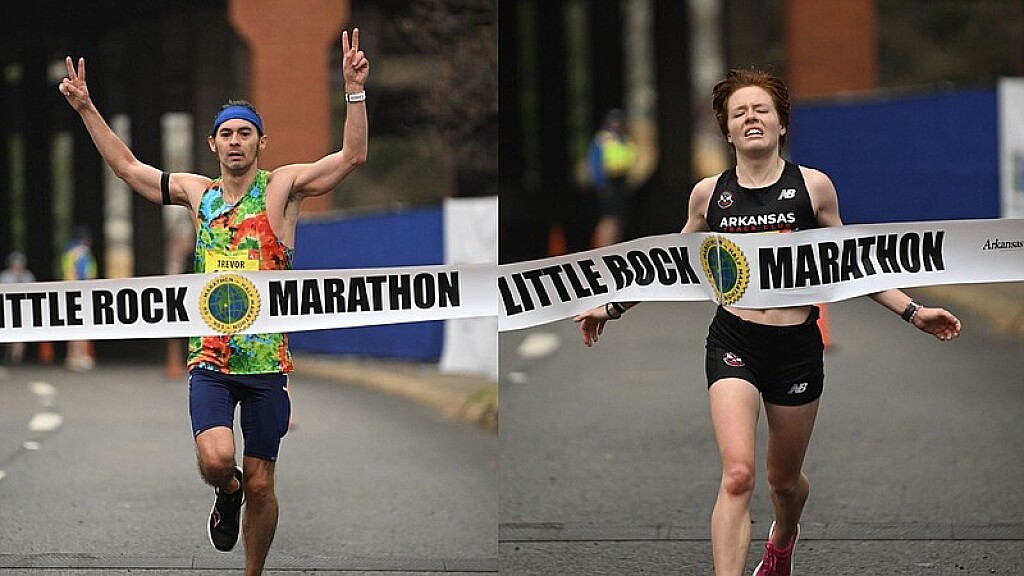
Trevor Uyemura and Abigayle Money claimed victories at the 2024 Little Rock Marathon
On a day that showcased the epitome of endurance and speed, Trevor Uyemura and Abigayle Money emerged victorious at the 2024 Little Rock Marathon. Uyemura, hailing from Vienna, Virginia, clinched the men's title with a blistering pace, clocking in at 2:42:58.8. Meanwhile, Abigayle Money, representing Fayetteville, Arkansas, dominated the women's division with her impressive finish time of 2:51:37.4.
Race Day Highlights

The Little Rock Marathon, known for its challenging course and enthusiastic community support, did not disappoint this year. From the early hours, the streets of Little Rock buzzed with excitement as runners from across the nation gathered to test their limits. Uyemura's and Money's victories were not just personal triumphs but also inspirational achievements that underscored the marathon's competitive spirit. Their performances set a high bar for future competitors and added to the event's growing reputation as a must-participate race for marathon enthusiasts.
Behind the Victories
Both Uyemura and Money trained rigorously in the months leading up to the marathon, their victories a testament to their dedication, strategy, and resilience. Uyemura, at 40, proved that age is but a number when it comes to long-distance running, while Money's win highlighted the growing prominence of female athletes in competitive sports. Their successes are a source of inspiration for aspiring marathoners and a reminder of the physical and mental fortitude required to conquer such a demanding race.
Looking Ahead
The 2024 Little Rock Marathon may have concluded, but the stories of Uyemura and Money will undoubtedly fuel the aspirations of many future participants. As the dust settles on this year's event, the focus shifts to the next race, with athletes around the world already setting their sights on Little Rock for 2025. The marathon's ability to draw talent and foster a sense of community among runners is a testament to its enduring appeal and the unifying power of sports.
The victories of Trevor Uyemura and Abigayle Money at the 2024 Little Rock Marathon are not just remarkable achievements in their running careers but also significant milestones for the event itself. Their performances, underpinned by sheer determination and hard work, set new records and exemplify the spirit of marathon running. As the Little Rock community and the wider world of athletics celebrate their accomplishments, the anticipation for next year's marathon is already building, promising another chapter in the storied history of this beloved race.
by Salman Khan
Login to leave a comment

Little Rock Marathon
The mission of the Little Rock Marathon is provide a premier event open to athletes of all abilities, while promoting a healthy lifestyle through running and walking and raising money for Little Rock Parks & Recreation. Since inception in 2003, more than $1,093,000 has been donated to Little Rock Parks & Recreation. Little Rock Marathon Race Weekend is held the...
more...