

Running News Daily
Running News Daily is edited by Bob Anderson and team. Send your news items to bob@mybestruns.com Advertising opportunities available.
Index to Daily Posts · Sign Up For Updates · Run The World Feed
Articles tagged #Tigst Assefa
Today's Running News
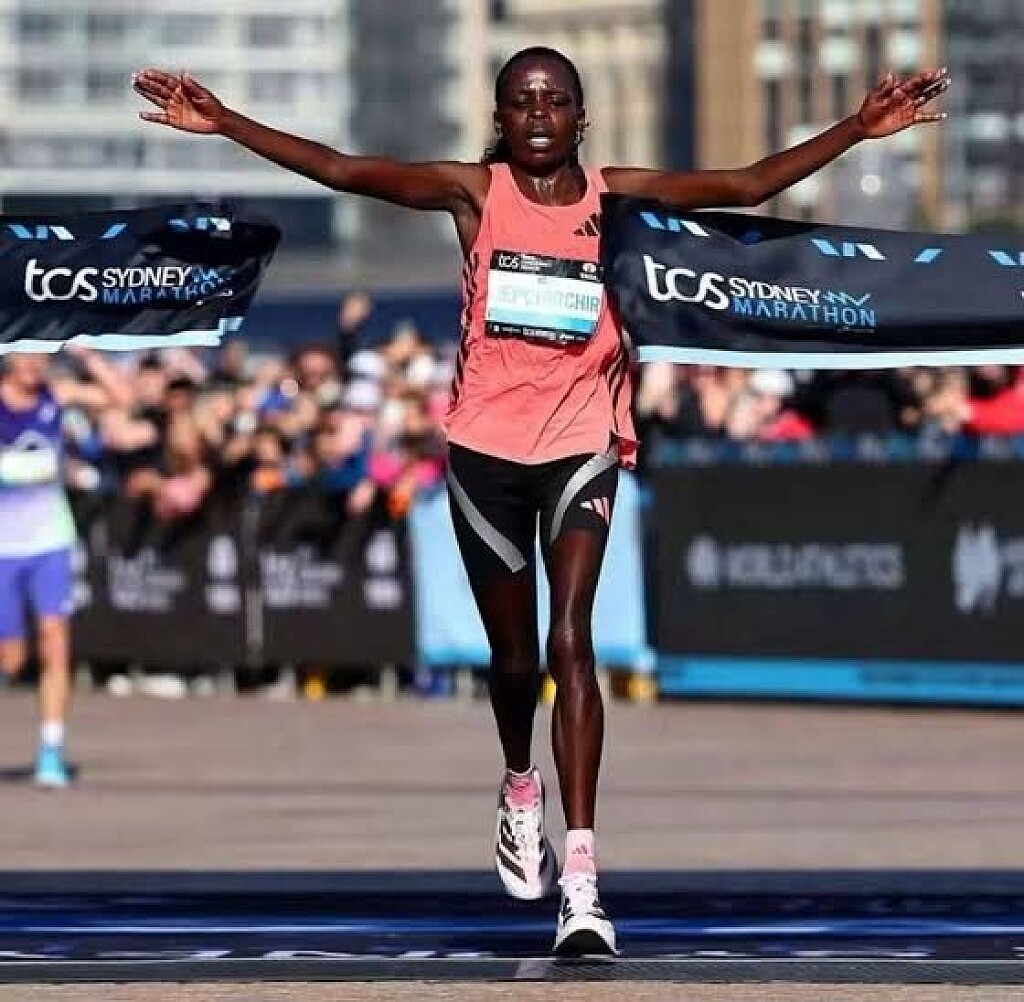


Shocking Development: Peres Jepchirchir Provisionally Suspended Over EPO Finding As Sydney Marathon Title Hangs In The Balance
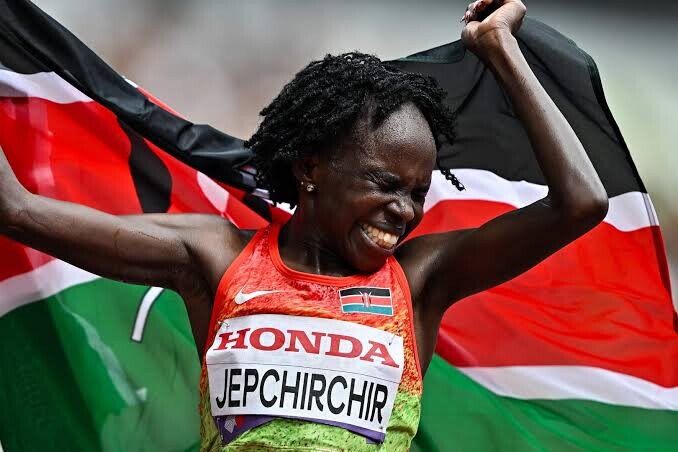
Kenyan distance running has been rocked by a major development after Peres Jepchirchir, the reigning world marathon champion and 2021 Olympic gold medallist, was provisionally suspended by the Athletics Integrity Unit (AIU) following an adverse analytical finding for erythropoietin (EPO).
The 33-year-old reportedly tested positive for the prohibited substance in an out-of-competition sample collected in Kenya before the Sydney Marathon on August 30, 2026. The development has cast uncertainty over the future of one of the most accomplished female marathon runners of her generation, whose impressive career includes Olympic gold, a world championship title and victories at three of the sport's most prestigious marathons.
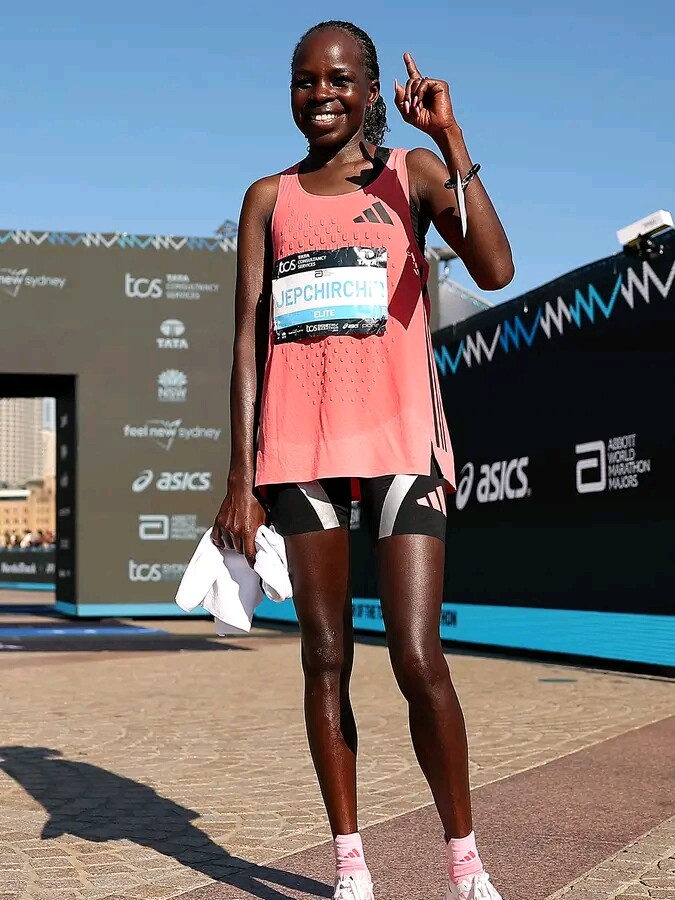
Jepchirchir returned to marathon competition in Sydney after a stress fracture forced her to withdraw from the London Marathon in April. Her comeback initially appeared to be another triumphant chapter in her career, as she stormed to victory in 2:18:31, finishing 3:40 ahead of compatriot Irine Cheptai.
However, the reported adverse analytical finding has placed that achievement under scrutiny, with the possibility that her Sydney victory could eventually be annulled depending on the outcome of the anti-doping proceedings.
Under anti-doping rules, results can be disqualified from the date of an adverse analytical finding or another applicable date determined under the regulations. If the relevant results are annulled, Jepchirchir could lose the Sydney Marathon title, which would have given her victories at four different World Marathon Majors, following her previous triumphs in New York, Boston and London.
EPO is a prohibited substance that stimulates red blood cell production, increasing the blood's capacity to transport oxygen to working muscles. Its performance-enhancing potential makes it particularly significant in endurance sports, including marathon running.
The substance is prohibited under anti-doping regulations, and a confirmed violation can carry serious consequences. Under the World Anti-Doping Code, a first violation involving a non-specified substance such as EPO generally carries a four-year period of ineligibility when the applicable conditions are met, although the final sanction depends on the circumstances of the case.
Jepchirchir's provisional suspension, however, is not a final sanction and does not itself establish that an anti-doping rule violation has been conclusively proven. The case must proceed through the relevant process, during which the athlete has the opportunity to exercise her rights under the applicable rules.
As of the information available, Jepchirchir has not commented publicly on the matter.
The Sydney Marathon has also acknowledged the seriousness of the situation while emphasising the importance of a fair process. In a statement, the event said Jepchirchir “is entitled to due process, and we will make no further comment on the case until that process has concluded.”
The case has attracted considerable attention because of Jepchirchir's standing in international athletics. She won Olympic marathon gold at the Tokyo Games in 2021 before claiming victory at the New York City Marathon later that year. In 2022, she conquered the Boston Marathon, adding another prestigious title to her growing collection.
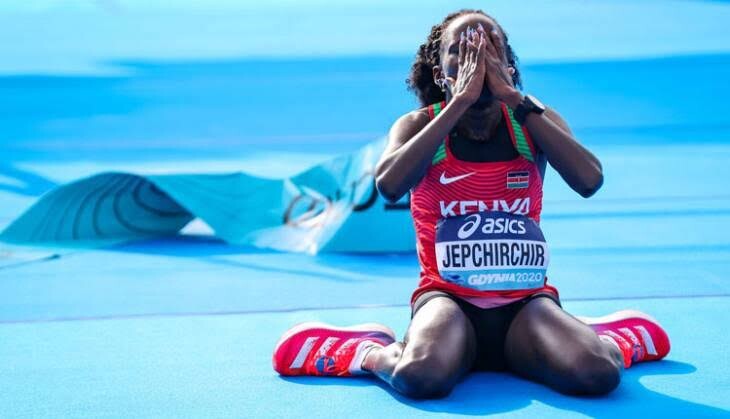
Her success continued in 2024 when she won the London Marathon, becoming one of the few women to capture victories at New York, Boston and London. She subsequently reached another career milestone at the 2025 World Athletics Championships in Tokyo, where she won the women's marathon title by just two seconds in a dramatic finish against Ethiopia's Tigst Assefa.
Jepchirchir has also established herself among the fastest women in marathon history. Her personal best of 2:14:43 places her ninth on the all-time women's marathon list, underscoring the level of performance that has defined her career.
Beyond the immediate implications for her Sydney victory, the case could have wider consequences if an anti-doping rule violation is ultimately established. The World Marathon Majors' rules provide for lifetime exclusion from the series for athletes who receive a doping-related ban of three months or longer, meaning a sufficiently lengthy sanction could jeopardise Jepchirchir's future participation in all eight events.
For an athlete who has built her reputation through success on the sport's biggest stages, such an outcome would represent a significant setback. Nevertheless, any consequences for her results, eligibility or future participation will depend on the applicable rules and the final outcome of the proceedings.
The development also renews attention on Kenya's ongoing efforts to protect the integrity of distance running. The country has produced generations of exceptional marathon runners, but high-profile anti-doping cases continue to raise difficult questions about clean competition and the responsibility of athletes, coaches and support personnel.
For now, the focus remains on the AIU's proceedings and the evidence surrounding the reported finding. Jepchirchir's provisional suspension marks a serious moment in her career, but the distinction between an adverse analytical finding and a final ruling remains essential as the case moves forward.
Once celebrated for her Olympic triumph, world championship glory and victories in the world's most prestigious marathons, the Kenyan star now faces an uncertain period as the anti-doping process unfolds. The eventual outcome will determine whether her latest Sydney success remains part of her remarkable record or becomes one of the most consequential episodes of her career.
by Erick Cheruiyot for My Best Runs.
Login to leave a comment

Tigst Assefa Set A Berlin Record Through Pain — Now The Real Fight Begins
Ethiopian marathon superstar Tigst Assefa has begun the long road to recovery after undergoing successful surgery to repair a ruptured right Achilles tendon sustained during the closing stages of the 2026 Berlin Marathon.
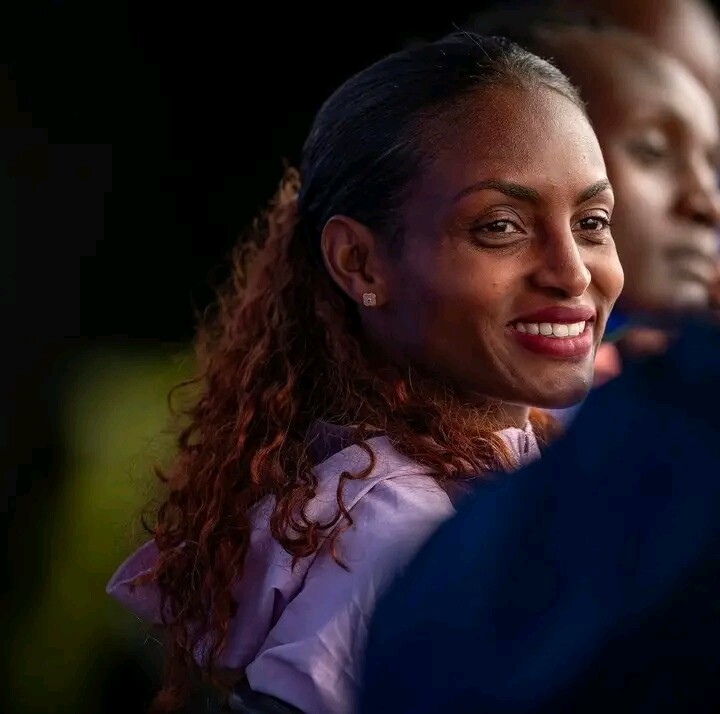
What made her performance in Berlin even more remarkable was not simply the record she broke, but the extraordinary circumstances under which she achieved it.
With just a few kilometres remaining, Assefa suffered the serious Achilles injury. Yet instead of stopping, the Ethiopian fought through the pain, hopping and running on her injured leg as she battled her way toward the finish.
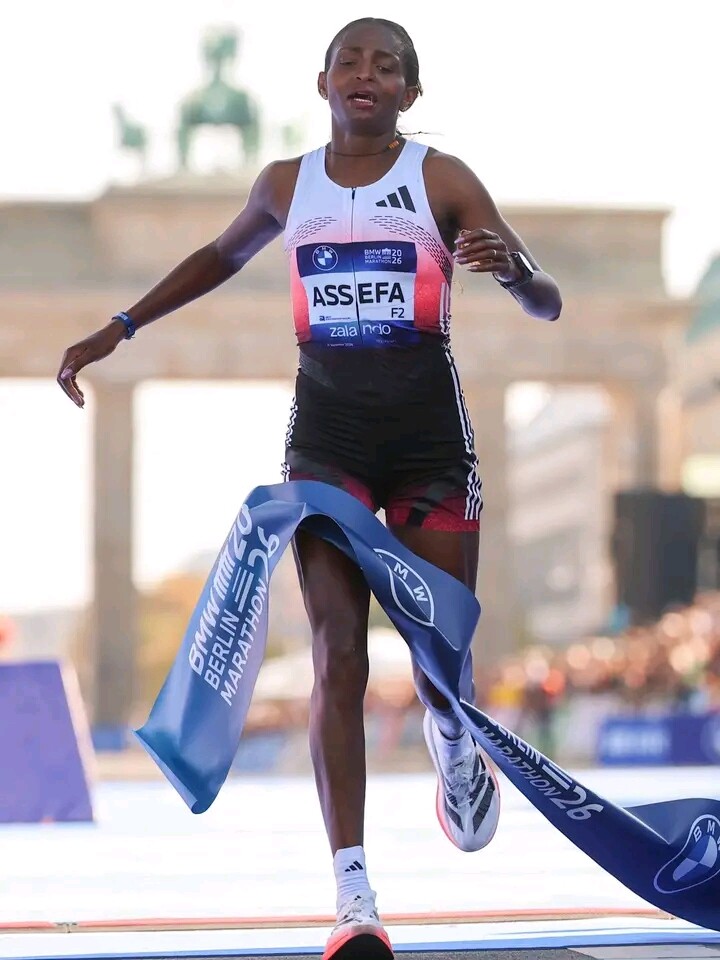
She eventually crossed the line in 2:11:04, producing a remarkable performance that secured a new Berlin Marathon course record despite the devastating injury.
It was a finish that revealed another side of a champion — one defined not only by speed and world-class talent, but also by extraordinary determination and an unwillingness to give up when the odds were suddenly stacked against her.
Following the race, Assefa underwent successful surgery in Munich, Germany, to repair the ruptured Achilles tendon. Her rehabilitation is now expected to keep her away from competitive running for at least six months as she begins the demanding process of healing, rebuilding strength and gradually working her way back toward full fitness.
Her medical care and recovery are being coordinated with the support of Demadonna Athletic Promotions.
For an athlete who has spent recent years redefining the limits of women’s marathon running, the coming months will require a very different kind of patience. There will be no starting lines, record attempts or final-kilometre battles. Instead, her progress will be measured through the quieter victories of rehabilitation — restoring strength, regaining confidence, rebuilding fitness and eventually returning to the training environment.
Assefa’s Berlin performance will forever be remembered for the course record, but the manner in which she reached the finish may prove just as unforgettable. She did not simply run through adversity; she fought her way through it.
Now, however, the record can wait.
The race has changed. The goal is no longer to chase seconds on the clock, but to give her body the time and care it needs to heal.
The road back may be long and challenging, but the athletics world will be watching, supporting and waiting for the day one of marathon running’s biggest stars is ready to lace up again.
by Erick Cheruiyot for My Best Runs.
Login to leave a comment
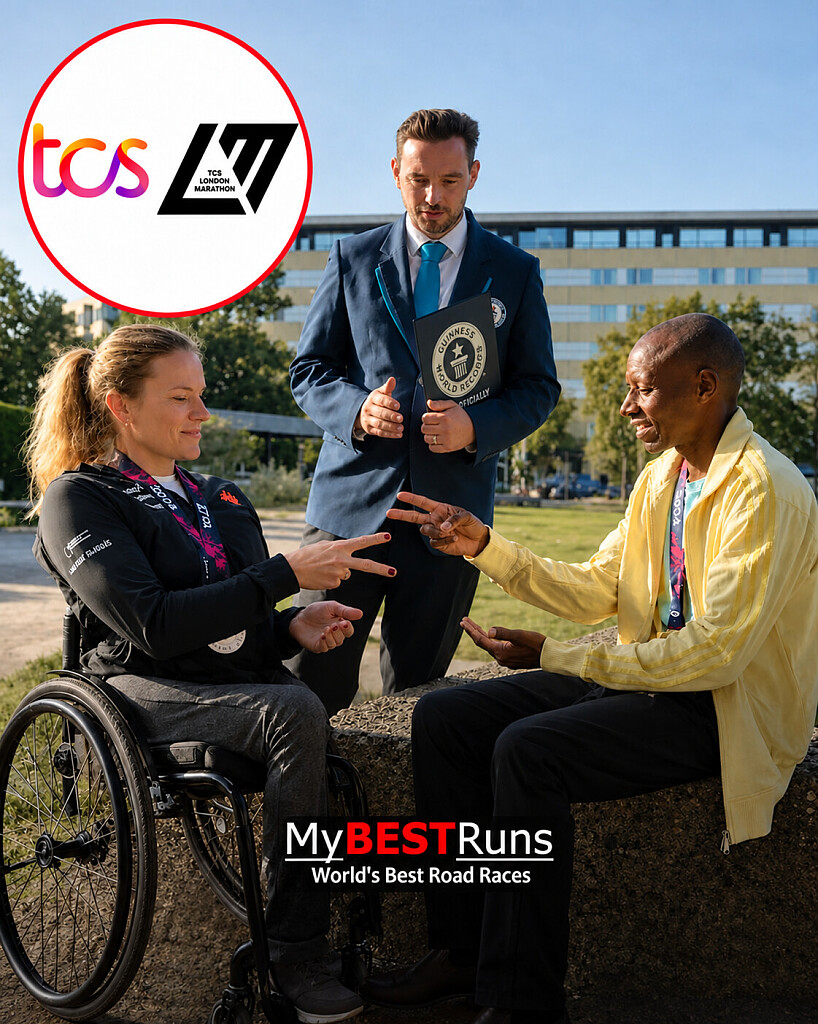
London Marathon’s 2027 Elite Schedule Decided By Rock, Paper, Scissors
The 2027 TCS London Marathon has found a remarkably unconventional way to settle one of its biggest questions — with a game of rock, paper, scissors.

Kenyan marathon star Sabastian Sawe and Swiss wheelchair champion Catherine Debrunner, the reigning London Marathon champions in their respective races, went head-to-head in a contest overseen by an official Guinness World Records adjudicator.
Debrunner emerged victorious, securing Sunday, April 25, 2027, for the elite women’s and women’s wheelchair races. As a result, the elite men’s and men’s wheelchair races will open the historic weekend on Saturday, April 24.
The unusual showdown has also earned its place in the record books, with Guinness World Records recognising it as the first elite marathon race start ever decided by a game of rock, paper, scissors.
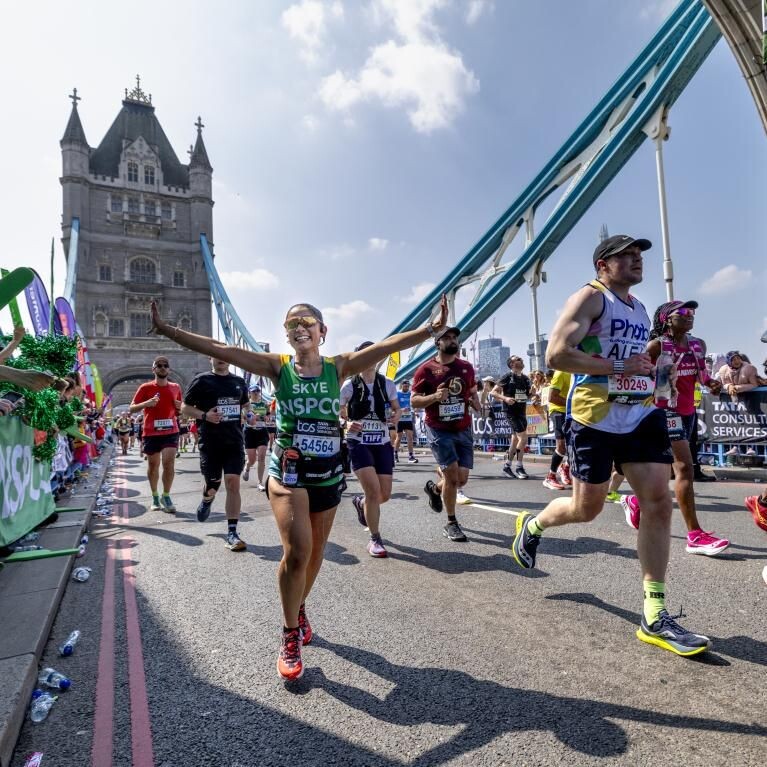
The decision adds another memorable chapter to what will already be an extraordinary edition of the London Marathon. For 2027 only, the race will be staged across two days, creating the Double TCS London Marathon, with around 100,000 participants expected to take part across the weekend.
Sawe enters the story as one of the defining figures of the 2026 London Marathon. The Kenyan made history by clocking 1:59:30, becoming the first athlete to run a sub-two-hour marathon in a record-eligible competitive race.
Debrunner, meanwhile, is a four-time London Marathon wheelchair champion, making her one of the most successful athletes in the event’s history. Her victory over Sawe means the women’s elite and women’s wheelchair races will retain the traditional Sunday spotlight.
The 2026 London Marathon also produced another landmark performance on the same course, with Ethiopia’s Tigst Assefa setting a women’s-only marathon world record.
The unprecedented two-day format was introduced following extraordinary demand for places. A record 1.33 million people applied for the 2027 London Marathon ballot, surpassing the previous record for any marathon.
With approximately 100,000 runners expected to finish on The Mall over the weekend — close to twice the size of the 2026 field — London is preparing for one of the biggest marathon weekends ever staged.
London Marathon Events chief executive Hugh Brasher added a playful warning after the rock-paper-scissors showdown, suggesting that while Sawe and Debrunner could settle the schedule with a game, the atmosphere would be considerably more competitive once the racing begins.
And so, before the first elite athlete has even reached the start line, the 2027 London Marathon has already made history — with its schedule decided not by the clock, but by rock, paper, scissors.
by Erick Cheruiyot for My Best Runs.
Login to leave a comment

Tigst Assefa Vows To Return To Berlin And Chase The Marathon World Record After Achilles Surgery
Ethiopian marathon star Tigst Assefa has delivered a powerful message from her hospital bed after undergoing successful surgery on a completely ruptured right Achilles tendon suffered during her extraordinary victory at the 2026 BMW Berlin Marathon.

The 29-year-old produced one of the most remarkable performances of her career, winning the women’s race in 2:11:04 and setting a new Berlin Marathon course record. Her performance became even more extraordinary after it emerged that she suffered the serious injury during the closing stages of the race.
At around the 40-kilometre mark, Assefa developed a problem with her right leg, with her stride visibly affected as she approached the finish. Despite the severe discomfort, the Ethiopian refused to abandon the race.
She fought through the final kilometres and crossed the finish line to secure another memorable Berlin victory, before receiving immediate medical attention. Medical examinations later confirmed a complete rupture of her right Achilles tendon.
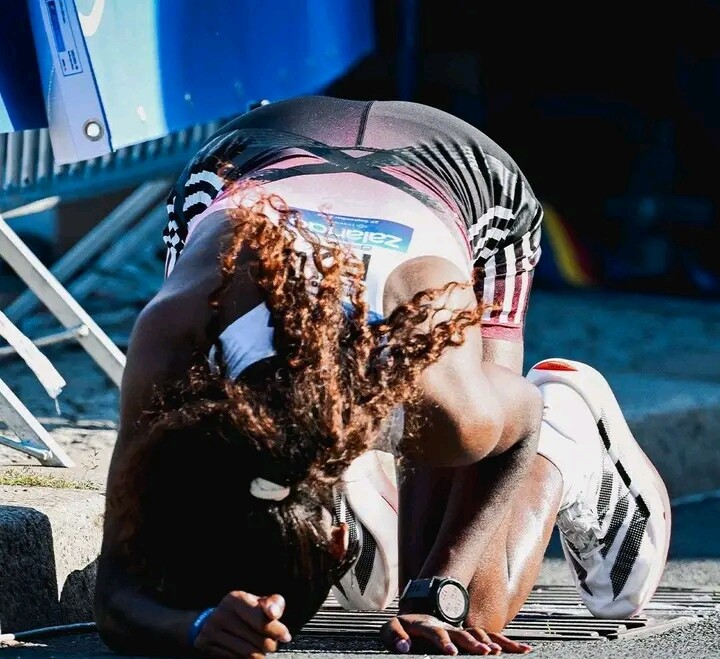
Assefa was subsequently taken for treatment in Germany and underwent successful surgery at a hospital south of Munich. She now faces the challenging rehabilitation process required to return to elite competition.
In her first message since the operation, Assefa expressed her heartfelt gratitude to supporters around the world who have sent messages of encouragement and concern.
She thanked the global running community for standing beside her during the difficult period, saying she was deeply moved by the tremendous support she had received.
But the most striking part of her message was her determination to look beyond the injury and towards the future.
“I will definitely return to Berlin, and then I will break the world record,” Assefa said.
The declaration underlines the extraordinary ambition that has defined her marathon career. Berlin has played a particularly important role in her rise to the top of the sport.
Assefa first won the Berlin Marathon in 2022 before producing a historic performance the following year, when she ran 2:11:53 to establish a then-world record.
Although the women's marathon world record has since been lowered to 2:09:56, Assefa remains one of the most formidable marathoners in history. Her latest 2:11:04 victory also stands as the fastest women's performance ever recorded on the Berlin Marathon course.
Her latest triumph therefore carries a remarkable mixture of achievement and adversity. She not only secured the victory and course record but did so while suffering an injury that ultimately required surgery.
Now, a different race begins for the Ethiopian superstar — one that will demand patience, rehabilitation and resilience rather than simply speed and endurance.
Whether she can return to her best remains a question for the future, but Assefa's message has already made her intentions unmistakably clear.
Berlin may have witnessed her latest triumph, but Tigst Assefa believes her unfinished business with the German capital has only just begun.
by Erick Cheruiyot for My Best Runs.
Login to leave a comment

Tigst Assefa’s Achilles Surgery A Success As Marathon Star Begins Road To Recovery
Tigst Assefa has received encouraging news following the dramatic injury that overshadowed her remarkable victory at the 2026 Berlin Marathon.

The Ethiopian marathon star has successfully undergone surgery to repair a completely ruptured Achilles tendon, with her management team, Demadonna Athletic Promotions, confirming that the operation went well. The agency also shared photographs of Assefa recovering in hospital, offering fans a reassuring first glimpse of the marathon star after the procedure.
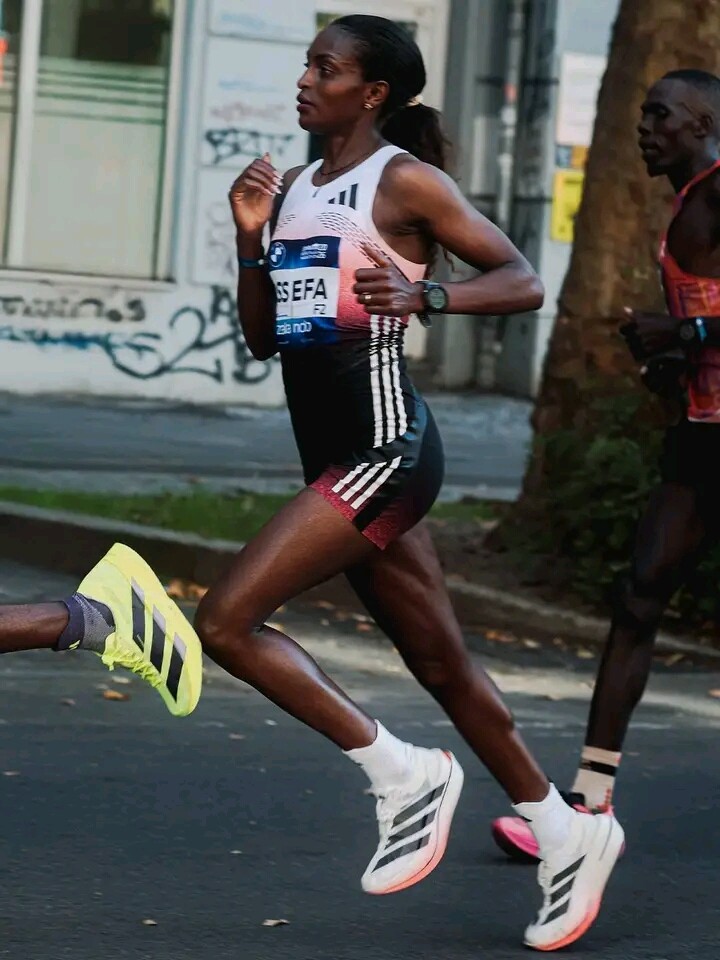
The successful operation comes just one day after Assefa produced one of the most extraordinary finishes in recent marathon history. She crossed the line in 2:11:04 to claim victory in Berlin despite suffering the serious Achilles injury during the closing stages of the race.
Assefa had been charging towards the world record of 2:09:56 and reached 40 kilometres in 2:03:00, remaining firmly on course for a historic performance. However, her stride suddenly deteriorated as the injury took hold, forcing her to limp through the final stages.
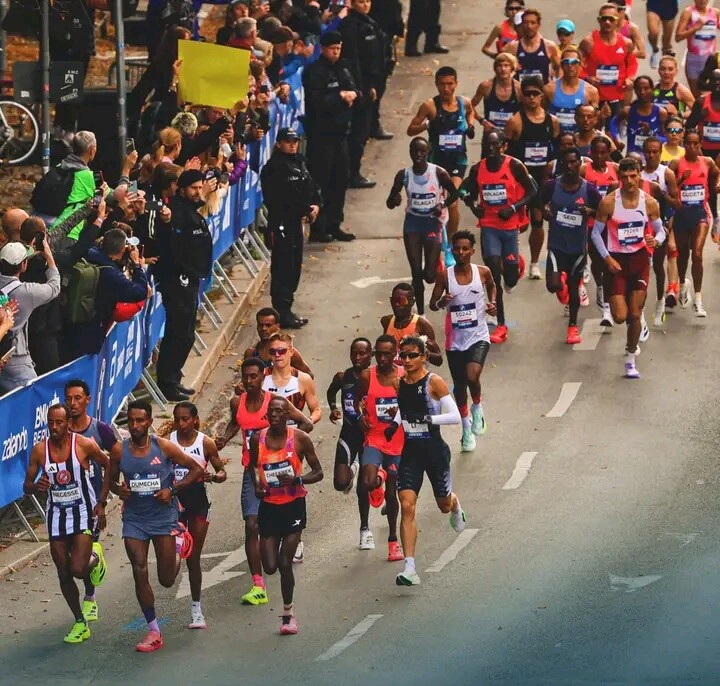
Despite the immense pain, Assefa refused to give up. She completed the final 2.195 kilometres in 8:04, displaying remarkable determination to reach the finish line and secure one of the most memorable victories of her career.
Her final time of 2:11:04 ranks among the fastest women's marathon performances ever recorded and also represents a new Berlin Marathon course record.
Demadonna Athletic Promotions praised Assefa's courage and resilience, expressing hope that she will be able to gradually return to training in the coming months. However, the exact timeline for her return to competition remains uncertain, with her recovery now taking priority.
For now, the focus is firmly on healing. Assefa's Berlin triumph ended under heartbreaking circumstances, but the successful surgery represents an important first step in her rehabilitation.
The running world will now wait patiently for the return of one of Ethiopia's greatest marathon stars. After showing extraordinary courage in Berlin, Assefa faces a very different challenge — rebuilding her strength, regaining full fitness and eventually finding her way back to the marathon start line.
by Erick Cheruiyot for My Best Runs.
Login to leave a comment

BMW Berlin Marathon
The story of the BERLIN-MARATHON is a story of the development of road running. When the first BERLIN-MARATHON was started on 13th October 1974 on a minor road next to the stadium of the organisers‘ club SC Charlottenburg Berlin 286 athletes had entered. The first winners were runners from Berlin: Günter Hallas (2:44:53), who still runs the BERLIN-MARATHON today, and...
more...
Agony In Victory: Tigst Assefa Fights Through Final-Kilometre Struggles To Win Berlin Marathon
Ethiopia’s Tigst Assefa produced one of the most dramatic performances of the 2026 BMW Berlin Marathon, winning the women’s race in a stunning 2:11:04 after seeing a potential world-record run unravel in the closing stages.
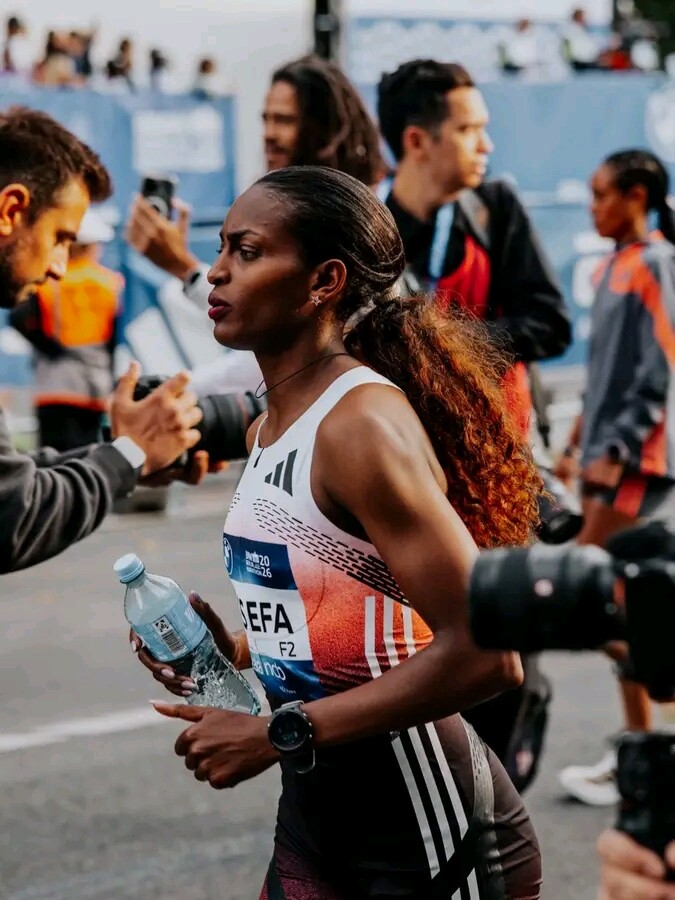
The 29-year-old Ethiopian arrived in Berlin with one enormous target in mind—the 2:09:56 world record set by Kenya’s Ruth Chepngetich in Chicago in 2024. For much of the morning, Assefa looked perfectly positioned to attack the mark.
Running patiently behind her pacers, she remained on world-record schedule through halfway. At 35 kilometres, the Ethiopian was still moving at a pace that put the global record within reach, and even with only seven kilometres remaining, the possibility of history remained very much alive.
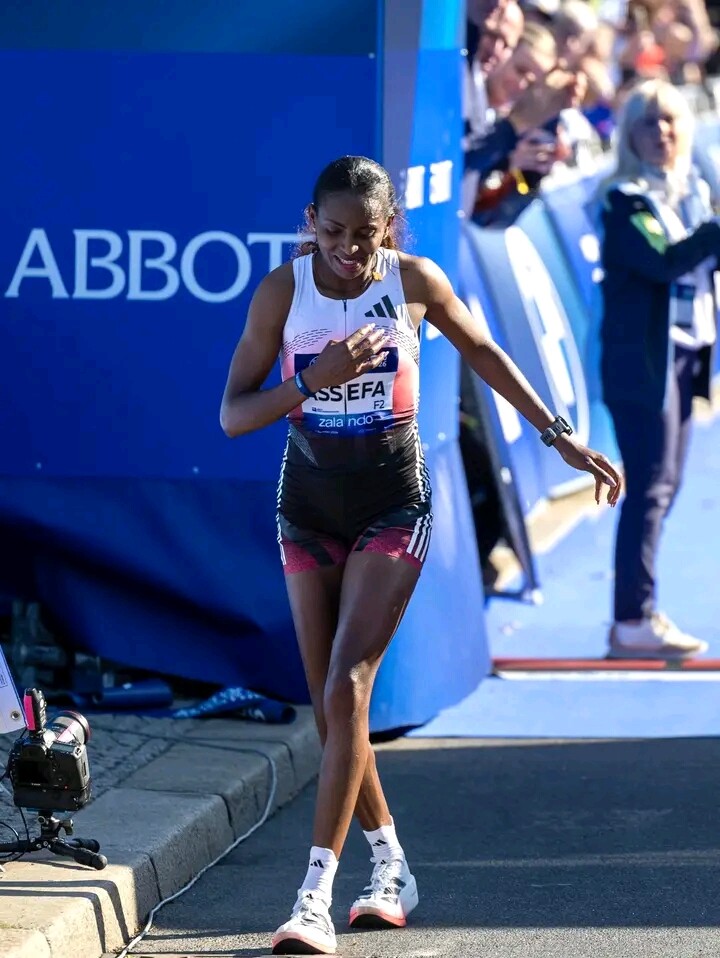
Then the race changed dramatically.
As the kilometres ticked down, Assefa’s pace began to slip. In the closing kilometre, she appeared to be struggling badly and started to limp, turning what had been a world-record assault into a desperate battle to reach the finish line.
The record was gone—but Assefa refused to surrender the race.
Despite the apparent physical setback and the immense fatigue of the final stages, she kept moving forward and crossed the line in 2:11:04, securing her third Berlin Marathon victory.
The final time was 1 minute and 8 seconds outside Chepngetich’s world record, but Assefa still walked away with an extraordinary collection of achievements: a new personal best and a new Berlin course record.
And the course record she broke was her own.
Assefa previously ran 2:11:53 in Berlin in 2023, a performance that established a world record at the time. Three years later, she returned to the same course and took an astonishing 49 seconds off that mark.
The performance also places Assefa among the fastest women ever to run the marathon, with only two women having recorded faster times.
Her Berlin story has now entered another remarkable chapter. Assefa has won the prestigious race three times—2022, 2023 and 2026—and each victory has come with a course record.
Her relationship with the German capital has therefore become extraordinary. Berlin has repeatedly been the place where Assefa has transformed ambition into historic performances, and Sunday was no different, even though the world record ultimately remained beyond her reach.
Her remarkable season had already included another major achievement. Five months ago in London, Assefa lowered her own women-only marathon world record to 2:15:41, further establishing herself as one of the defining marathoners of her generation.
But Berlin demanded something different from her.
This was no longer simply about speed. It became a test of resilience as the world-record dream disappeared and the final kilometre became a fight against exhaustion and apparent physical discomfort.
Assefa kept going.
She pushed through the pain, reached the finish line and secured another historic victory on the streets that have played such a defining role in her career.
Behind Assefa, Ethiopia dominated the front of the field, with Bratu Hirpa and Dera Dida completing an Ethiopian 1-2-3. Bekelech Gudeta and Alemitu Tariku also finished inside the top five, underlining the depth of the Ethiopian challenge. Kenya’s Pascaline Jelagat led the Kenyan contingent in sixth, followed by Ethiopia’s Misgane Alemayehu, while Ludwina Chepngetich and Evaline Chirchir finished eighth and ninth respectively.
Top 10 Women’s Results – 2026 BMW Berlin Marathon
1. Tigst Assefa (Ethiopia) — 2:11:04
2. Bratu Hirpa (Ethiopia) — 2:16:53
3. Dera Dida (Ethiopia) — 2:16:55
4. Bekelech Gudeta (Ethiopia) — 2:18:58
5. Alemitu Tariku (Ethiopia) — 2:19:01
6. Pascaline Jelagat (Kenya) — 2:20:23
7. Misgane Alemayehu (Ethiopia) — 2:20:27
8. Ludwina Chepngetich (Kenya) — 2:21:25
9. Evaline Chirchir (Kenya) — 2:21:32
10. Aminet Ahmed (Ethiopia) — 2:21:45
The world record survived in Berlin. Her own course record did not.
And perhaps that is what makes the 2026 edition of the BMW Berlin Marathon another unforgettable chapter in the remarkable story of Tigst Assefa.
by Erick Cheruiyot for My Best Runs.
Login to leave a comment
BMW Berlin Marathon
The story of the BERLIN-MARATHON is a story of the development of road running. When the first BERLIN-MARATHON was started on 13th October 1974 on a minor road next to the stadium of the organisers‘ club SC Charlottenburg Berlin 286 athletes had entered. The first winners were runners from Berlin: Günter Hallas (2:44:53), who still runs the BERLIN-MARATHON today, and...
more...
Tigst Assefa, Rosemary Wanjiru And Gabriel Geay Headline A Star-Studded Berlin Marathon
With just three days remaining until the BMW Berlin Marathon, anticipation is building for another spectacular edition of one of the world’s fastest marathon races.

The 52nd edition of the race will take place on Sunday, September 27, with a deep international field set to take on the famously fast streets of the German capital.
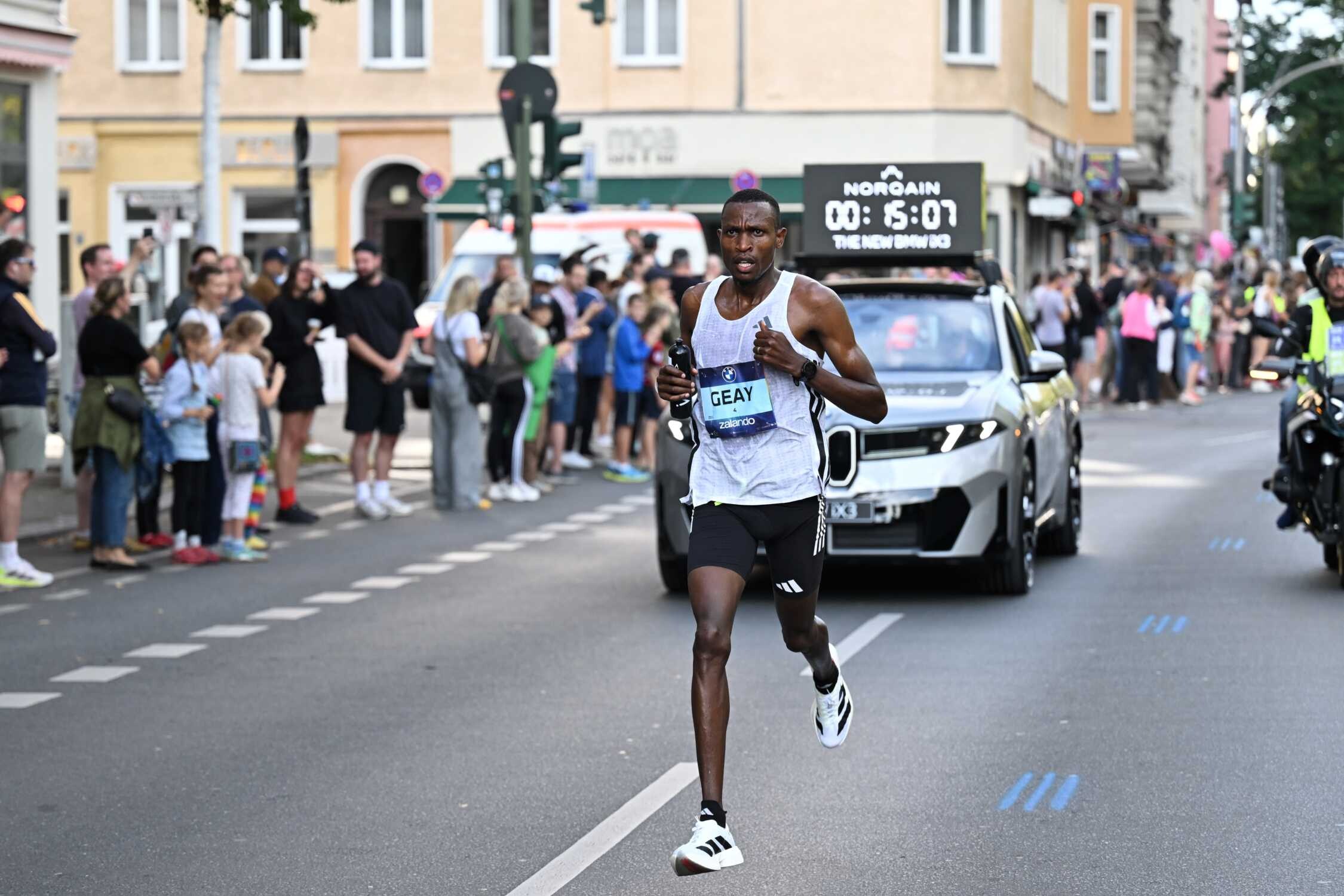
Tanzania’s Gabriel Geay is among the leading names in the men’s race, bringing a personal best of 2:03:00 to Berlin. His mark, set in Valencia in 2022, places him among the fastest marathoners in the elite field. However, Ethiopia’s legendary Kenenisa Bekele has since been added to the field with a 2:01:41 personal best, meaning Geay is not the fastest entrant on paper.
The men’s field also features Getaneh Molla (2:03:34), Guye Adola (2:03:46), Shura Kitata (2:03:59), Kenya’s Erick Sang (2:04:30) and Olympic 10,000m champion Selemon Barega (2:05:00), setting the stage for an exceptionally deep contest.
For Bekele, however, this return to Berlin carries a significance that goes far beyond the start list. The last time the Ethiopian legend stood on the Berlin start line was in 2019, when he ran 2:01:41—just two seconds outside the then-world record of 2:01:39. Had he gone two seconds faster, Bekele would have become the only athlete in history to simultaneously hold the world records for the 5,000 metres, 10,000 metres and marathon.
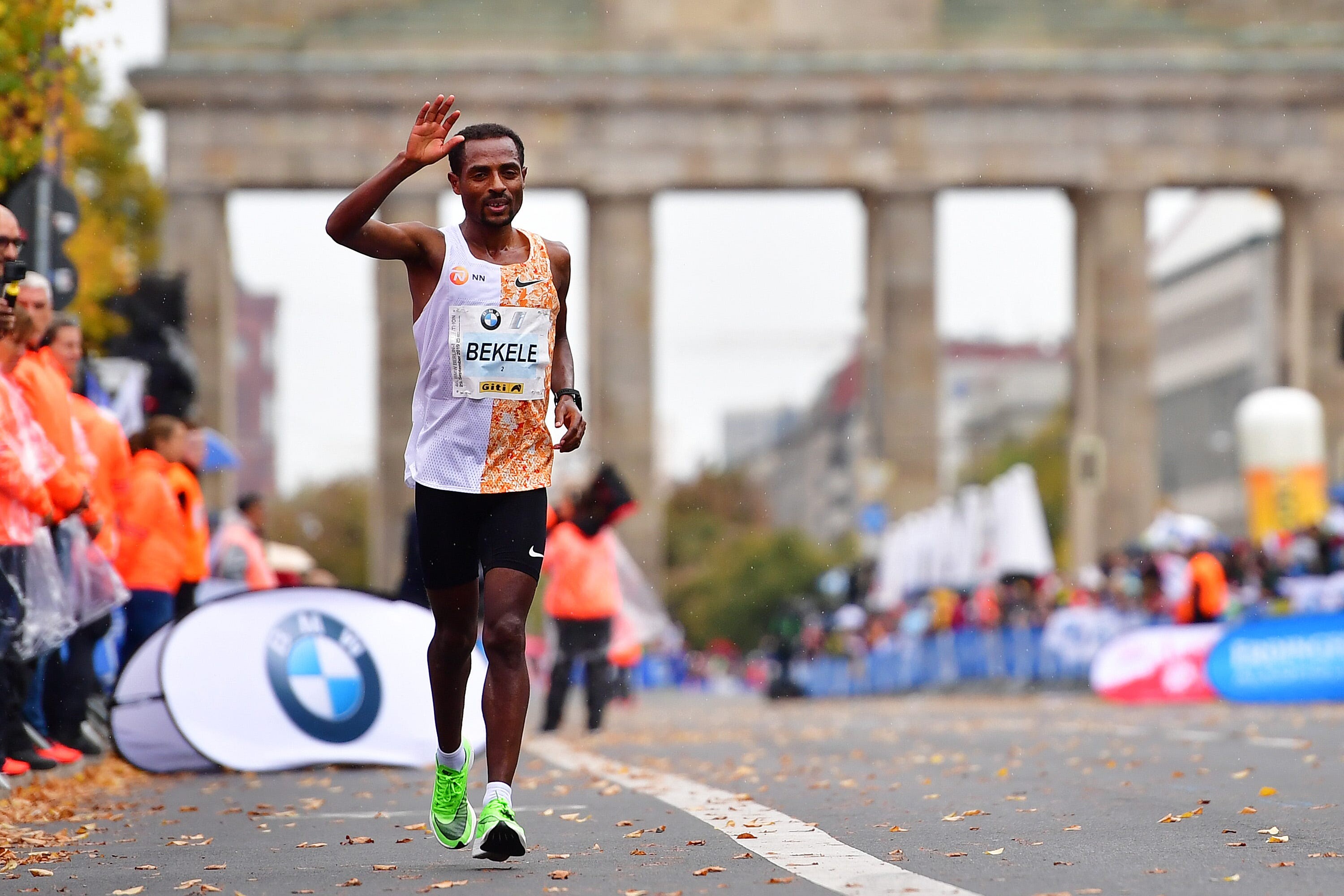
Bekele returns to Berlin on Sunday at the age of 44. His most recent race was the New York City Marathon in November, where he did not finish. Berlin, however, holds a special place in his marathon career. He claimed his first Berlin Marathon victory in 2016 and has won the race twice. He also owns the masters world record of 2:04:15, set in London last year.
He will not be the favourite in this year’s race, particularly after Sabastian Sawe was ruled out with a stress fracture. Adola, Molla, Kitata and Geay lead the field on paper, but Bekele’s presence adds another layer of intrigue to a race already packed with established marathon talent.
For Bekele, Berlin is more than another marathon. It is the course where he came closer than anyone to achieving a piece of distance-running history that remains untouched. Some athletes retire from the sport. Some retire toward one course. Bekele is running the second kind of retirement.
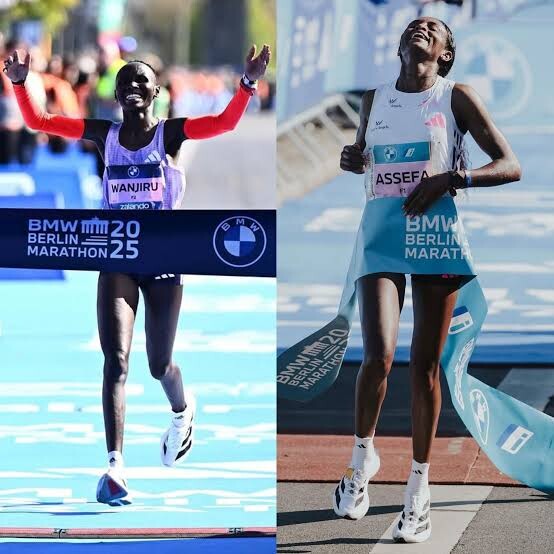
In the women’s race, all eyes will be on Tigst Assefa as the Ethiopian superstar returns to the course where she produced one of the most remarkable marathon performances in history. Assefa clocked 2:11:53 in Berlin in 2023, setting a world record at the time and establishing a course record that still stands.
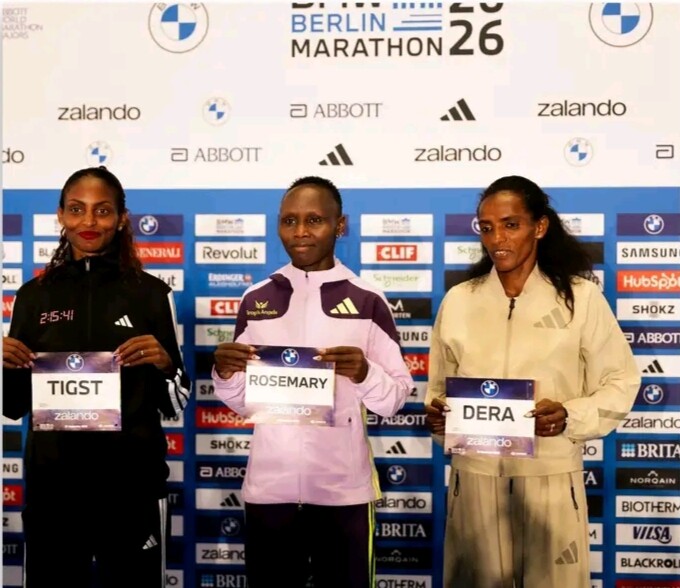
Assefa, a two-time Berlin Marathon champion, will face defending champion Rosemary Wanjiru, who returns to the German capital looking to retain her title. Wanjiru won the 2025 edition in 2:21:05 after previously finishing second in Berlin in 2022 in 2:18:00. Her personal best of 2:16:14 came at the 2023 Tokyo Marathon.
Wanjiru’s challenge will be particularly intriguing given the depth of the Ethiopian contingent. Bedatu Hirpa enters with a 2:18:27 personal best, followed by Dera Dida at 2:18:32, Zeineba Yimer at 2:18:47, Bosena Mulatie at 2:19:00, Misgane Alemayehu at 2:19:08 and Bekelech Gudeta at 2:19:39.
Kenya will also have another strong presence through Evaline Chirchir, whose 2:20:33 personal best places her among the leading women on the start list.
The Berlin Marathon’s reputation for producing fast times adds another layer of intrigue to an already stacked field. With a flat course, long stretches of uninterrupted running and a history of world records, the German capital has consistently provided elite athletes with the ideal conditions to test the limits of marathon performance.
Beyond the headline names, the race will also offer an opportunity for several contenders to make their mark on one of the biggest stages in road running. With experienced marathoners and ambitious challengers sharing the start line, the battle for the podium is expected to unfold at a demanding pace from the opening kilometres through the final stages of the race.
With Assefa returning to the scene of her historic 2023 run, Wanjiru arriving as the defending champion and a deep international cast lining up across both races, Berlin is once again set for a weekend of world-class marathon racing.
Three days out, the stage is set. The fast Berlin streets are waiting.
by Erick Cheruiyot for My Best Runs.
Login to leave a comment
BMW Berlin Marathon
The story of the BERLIN-MARATHON is a story of the development of road running. When the first BERLIN-MARATHON was started on 13th October 1974 on a minor road next to the stadium of the organisers‘ club SC Charlottenburg Berlin 286 athletes had entered. The first winners were runners from Berlin: Günter Hallas (2:44:53), who still runs the BERLIN-MARATHON today, and...
more...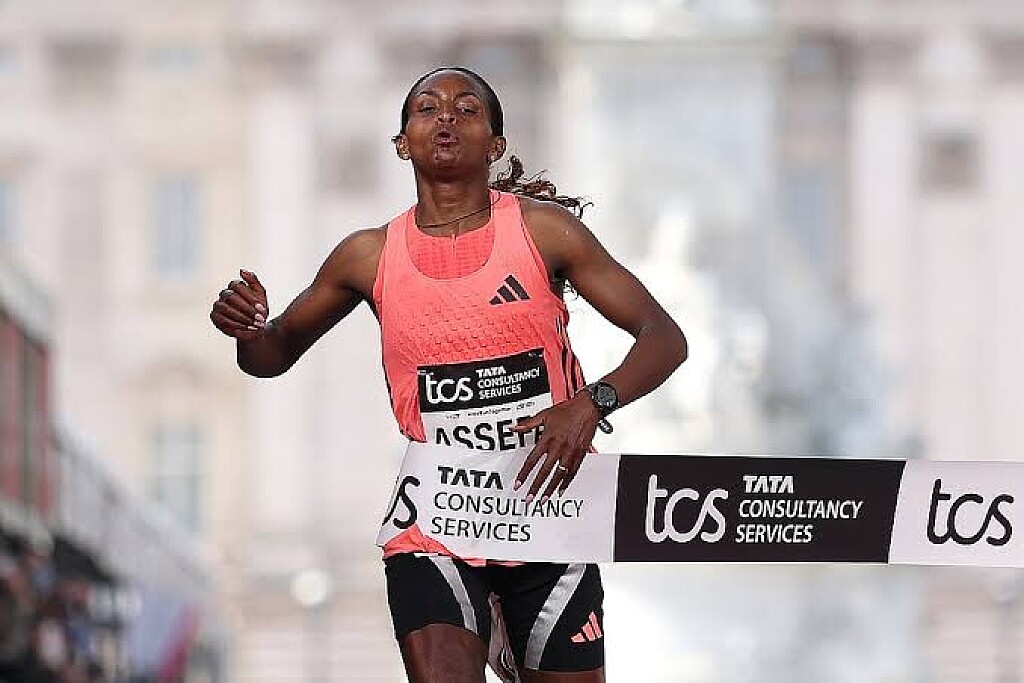
Tigst Assefa Extends East Africa’s Remarkable Reign Over the Women-Only Marathon World Record
The women-only marathon world record has remained in East African hands since 2017, with Kenya and Ethiopia trading the historic mark in a remarkable sequence of record-breaking performances.
The latest chapter belongs to Ethiopia’s Tigst Assefa, who lowered the record to 2:15:41 at the 2026 London Marathon, taking nine seconds off her own previous mark of 2:15:50.

The progression began with Britain’s Paula Radcliffe, whose 2:17:42 in 2005 stood for 12 years before Kenya’s Mary Keitany finally brought the record down. Keitany clocked 2:17:01 at the 2017 London Marathon, beginning the current East African era of the women-only record.
Kenya strengthened its grip in 2024 when Olympic champion Peres Jepchirchir produced one of the defining performances of her career in London. She ran 2:16:16, cutting 45 seconds from Keitany’s record and becoming the latest Kenyan to set the women-only marathon world record.
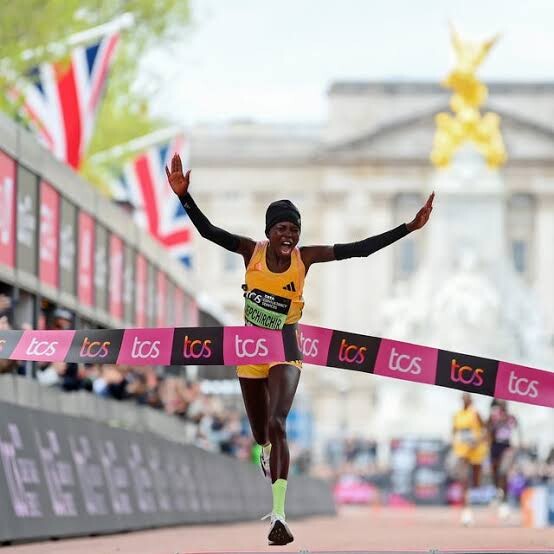
But the record did not remain in Kenya for long. At the 2025 London Marathon, Assefa produced a spectacular 2:15:50, improving Jepchirchir’s mark by 26 seconds and establishing herself as the latest Ethiopian custodian of the record.
A year later, Assefa returned to London with the record still in her sights. She delivered again, running 2:15:41 to successfully defend her title and extend her own world record by another nine seconds.
Behind her, Kenya’s Hellen Obiri ran a personal best of 2:15:53, while Joyciline Jepkosgei followed in 2:15:55. The extraordinary depth of the race meant three women finished inside 2:16 in the same marathon.
The rivalry between Kenya and Ethiopia has consequently become a defining feature of the modern women-only marathon record. Each breakthrough has raised the standard, creating an increasingly demanding target for the next generation of marathon stars.
It is also important to distinguish the women-only record from the overall women's marathon world record. A women-only race does not use male pacemakers, while mixed-gender races can have male athletes helping to maintain the pace. This distinction makes the progression of the women-only record a particularly interesting measure of women's marathon racing.
For now, the record progression reads:
Great Britain — Paula Radcliffe, 2:17:42 (2005)
Kenya — Mary Keitany, 2:17:01 (2017)
Kenya — Peres Jepchirchir, 2:16:16 (2024)
Ethiopia — Tigst Assefa, 2:15:50 (2025)
Ethiopia — Tigst Assefa, 2:15:41 (2026)
From Radcliffe’s landmark performance in 2005 to Assefa’s latest breakthrough in 2026, the record has undergone a remarkable transformation. Since Keitany ended Radcliffe’s 12-year reign, every improvement has come from either Kenya or Ethiopia, underlining the extraordinary depth of East African women’s marathon running.
And with the record now standing at 2:15:41, the next chapter is waiting to be written. The question is not only who will break the mark next, but how much further the women-only marathon can ultimately be pushed.
by Erick Cheruiyot for My Best Runs.
Login to leave a comment
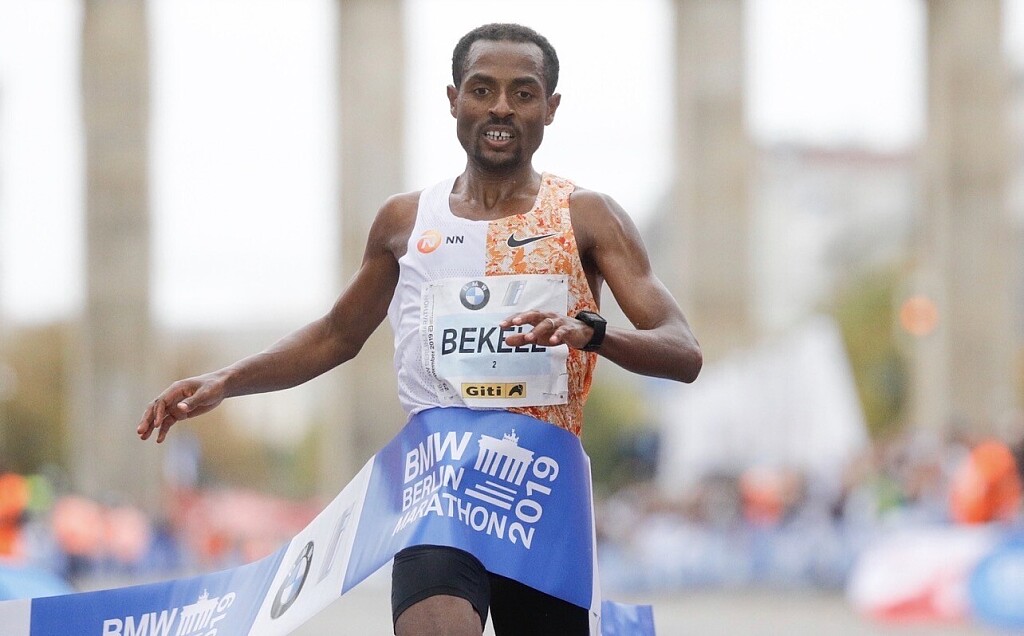
Kenenisa Bekele Returns to Berlin; Alisa Vainio Added to Elite Field
Kenenisa Bekele will run the BMW BERLIN-MARATHON on September 27, race organizers announced today. It will be the legendary Ethiopian’s first race of the year. At 44, Bekele may no longer be among the favorites for victory, but a strong performance remains possible.
Bekele has won the BMW BERLIN-MARATHON twice during his remarkable career, narrowly missing the world record on both occasions. In 2016, he crossed the line in 2:03:03, and in 2019, he clocked 2:01:41. Had he been just two seconds faster seven years ago, he would have become the first runner in history to hold the world records for 5,000 meters, 10,000 meters and the marathon simultaneously.

His return brings one of the greatest distance runners of all time back to Berlin. Bekele’s achievements on the track and in cross-country are extraordinary. He held the world records for 5,000 meters (12:37.35) and 10,000 meters (26:17.53) for approximately 15 years—longer than any other runner in history.
Bekele won 5,000-meter gold at the 2008 Olympic Games and the 2009 World Championships. Over 10,000 meters, he won Olympic gold in 2004 and 2008, along with world titles in 2003, 2005, 2007 and 2009. He also earned 11 individual gold medals at the World Cross Country Championships.
Two and a half years ago, at 41, Bekele nearly produced another extraordinary victory. He led during the closing stages of the London Marathon before finishing second in 2:04:15, setting a world masters record for the 40-plus age group that still stands. He was subsequently selected for the 2024 Olympic Games but finished 39th in Paris. Berlin offers him the opportunity to complete his first marathon since those Games.
European Champion Alisa Vainio Joins the Field
The women’s elite field has also received a strong late addition: European marathon champion Alisa Vainio.
A month ago, the Finnish runner claimed gold at the European Championships in Birmingham with a commanding performance, setting a championship record of 2:22:26.

Last year, Vainio was the top European finisher at the World Championships in Tokyo, placing fifth. She then went on to set three consecutive Finnish national records, improving to 2:20:39 with her victory in Seville in February.
That performance made her the fastest Nordic women’s marathon runner in history, surpassing the 2:21:06 set by Norway’s former world record-holder Ingrid Kristiansen.
Fastest Runners on the Start List
Men
|
Athlete |
Country |
Personal Best |
|
Kenenisa Bekele |
ETH |
2:01:41 |
|
Gabriel Geay |
TAN |
2:03:00 |
|
Getaneh Molla |
ETH |
2:03:34 |
|
Guye Adola |
ETH |
2:03:46 |
|
Shura Kitata |
ETH |
2:03:59 |
|
Erick Sang |
KEN |
2:04:30 |
|
Selemon Barega |
ETH |
2:05:00 |
|
Taresa Tolosa |
ETH |
2:05:17 |
|
Tadu Abate |
ETH |
2:05:38 |
|
Asefa Boki |
ETH |
2:05:40 |
|
Kenya Sonota |
JPN |
2:05:59 |
|
Tsubasa Ichiyama |
JPN |
2:06:00 |
|
Kiyoto Hirabayashi |
JPN |
2:06:14 |
|
Yuhei Urano |
JPN |
2:06:23 |
|
Hidekazu Hijikata |
JPN |
2:06:26 |
Women
|
Athlete |
Country |
Personal Best |
|
Tigst Assefa |
ETH |
2:11:53 |
|
Rosemary Wanjiru |
KEN |
2:16:14 |
|
Bedatu Hirpa |
ETH |
2:18:27 |
|
Dera Dida |
ETH |
2:18:32 |
|
Zeineba Yimer |
ETH |
2:18:47 |
|
Bosena Mulatie |
ETH |
2:19:00 |
|
Misgane Alemayehu |
ETH |
2:19:08 |
|
Bekelech Gudeta |
ETH |
2:19:39 |
|
Evaline Chirchir |
KEN |
2:20:33 |
|
Alisa Vainio |
FIN |
2:20:39 |
|
Deshun Zhang |
CHN |
2:20:53 |
|
Gadise Mulu |
ETH |
2:20:59 |
|
Eebbisee Addunyaa |
ETH |
by Race News Service
Login to leave a comment
BMW Berlin Marathon
The story of the BERLIN-MARATHON is a story of the development of road running. When the first BERLIN-MARATHON was started on 13th October 1974 on a minor road next to the stadium of the organisers‘ club SC Charlottenburg Berlin 286 athletes had entered. The first winners were runners from Berlin: Günter Hallas (2:44:53), who still runs the BERLIN-MARATHON today, and...
more...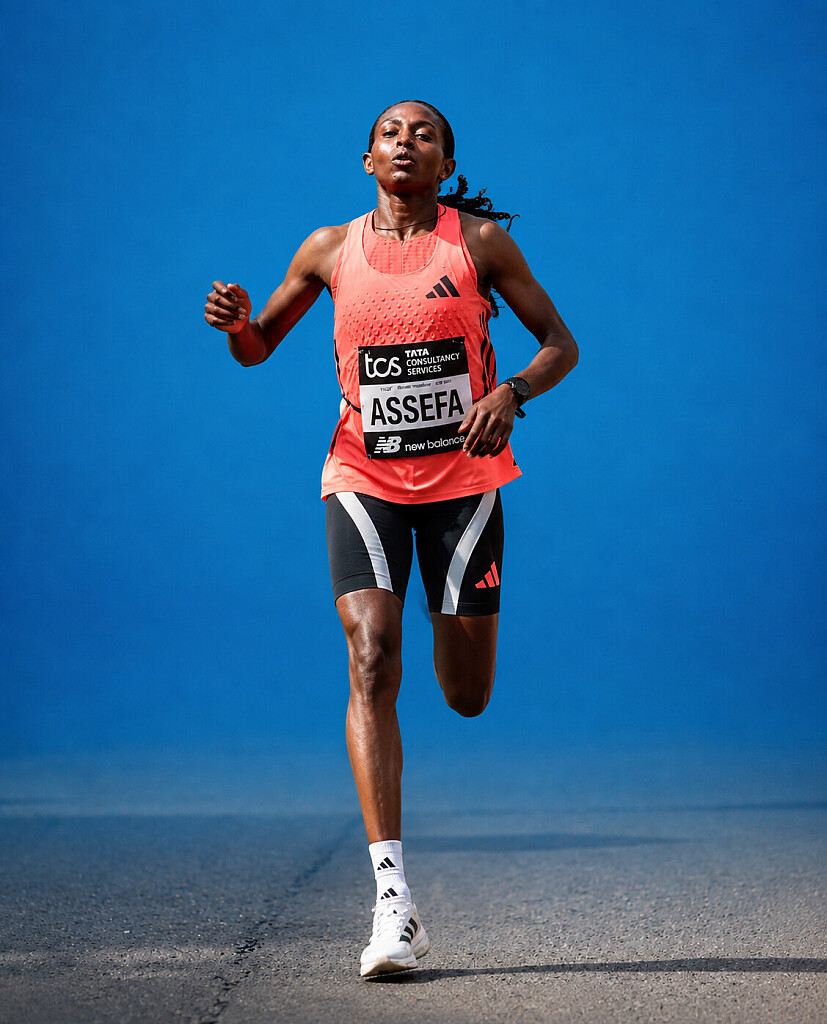
Berlin’s Women’s Marathon Field Brimming With Elite Talent as Star-Studded Line-Up Takes Shape
The women’s field for the 2026 BMW BERLIN-MARATHON is rapidly developing into one of the most intriguing marathon line-ups of the year, bringing together world-class champions, established contenders and an exciting collection of athletes determined to make their mark on one of the sport’s fastest stages.
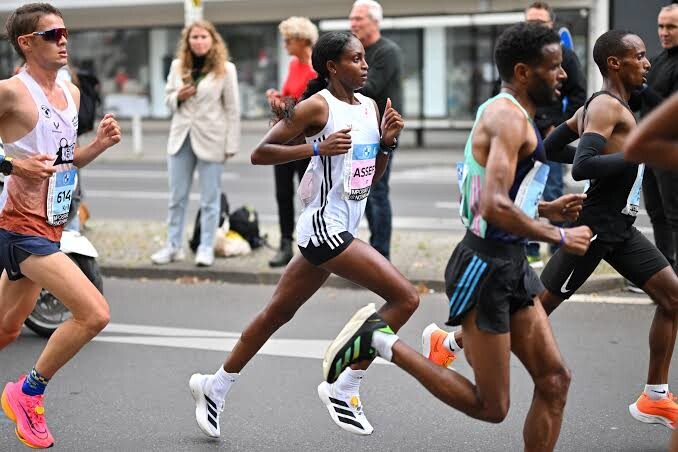
At the forefront is Ethiopia’s Tigst Assefa, whose extraordinary marathon career has already placed her among the all-time greats. Assefa is the current women-only marathon world-record holder, having improved her own mark to 2:15:41 at the 2026 TCS London Marathon, where she successfully defended her title.
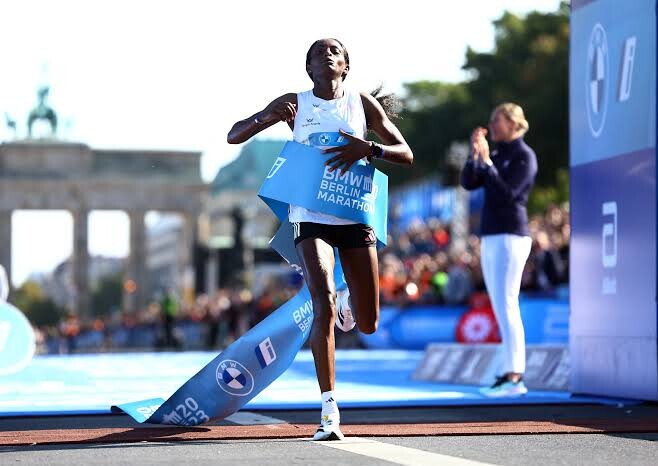
Her place in marathon history was secured even earlier in Berlin. At the 2023 BMW BERLIN-MARATHON, Assefa stormed to 2:11:53, smashing the then women’s world record by more than two minutes. The performance was subsequently ratified by World Athletics and remains among the fastest women’s marathon ever recorded in a mixed-gender race.
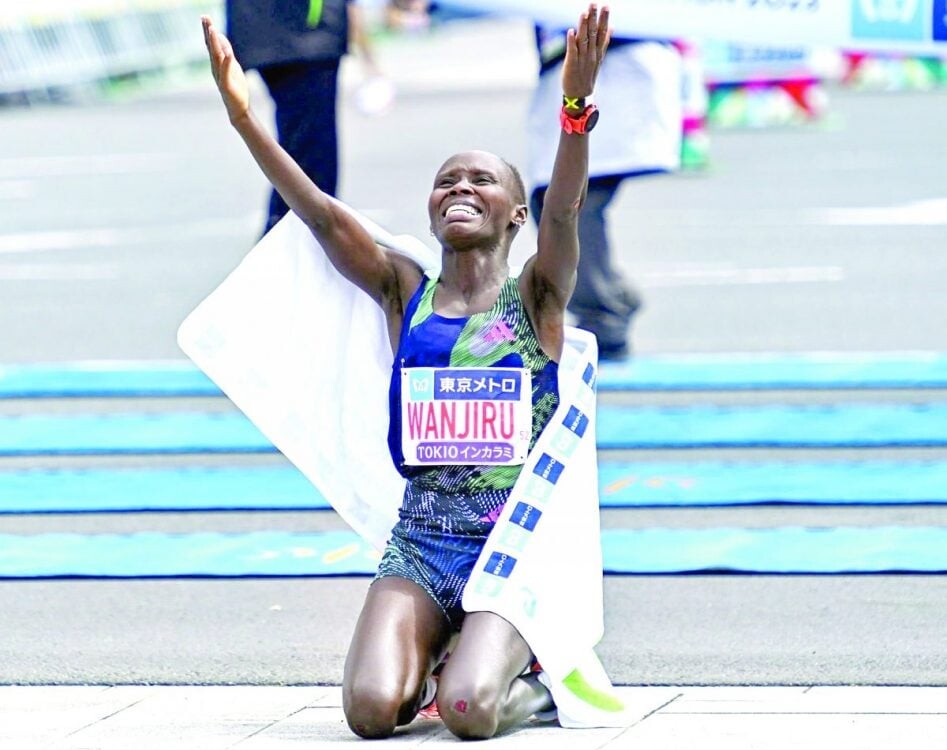
Kenya’s Rosemary Wanjiru, with a 2:16:14 personal best, provides another formidable presence at the sharp end of the race, while Ethiopia’s Bedatu Hirpa adds yet another major threat to an already exceptional field.
The 27-year-old Hirpa has built an impressive marathon résumé in a remarkably short period. She owns a 2:18:27 personal best, achieved when she won the Dubai Marathon, before continuing her winning momentum with victory at the Paris Marathon just months later. She also underlined her consistency this year with a second-place finish at the Osaka Marathon in 2:19:54. With her combination of speed, confidence and major-marathon experience, Hirpa could be one of the athletes capable of challenging the leading names in Berlin.
The Ethiopian challenge does not end there. Dera Dida (2:18:32), Zeineba Yimer (2:18:47), Bosena Mulatie (2:19:00), Misgane Alemayehu (2:19:08), Bekelech Gudeta (2:19:39), Gadise Mulu (2:20:59), Eebbisee Addunya (2:21:13) and Aminet Ahmed (2:21:24) give Ethiopia extraordinary depth, with every one of them boasting a personal best inside 2:22.
Kenya will also have strong representation through Evaline Chirchir (2:20:33) and Pascaline Jelagat (2:22:44), adding further firepower to a nation renowned for producing world-class marathon talent. China’s Deshun Zhang (2:20:53) also brings a sub-2:21 credential to the starting line.
Japan arrives with a deep group of proven marathoners. Rika Kaseda (2:21:55), Mao Uesugi (2:22:11), Natsuki Omori (2:23:45) and Rino Goshima (2:24:44) all possess impressive personal bests and could play an important role as the race develops. Morocco’s Fatima Gardadi (2:24:06) adds another strong international presence, while France’s Manon Trapp (2:23:38), the United States’ Jacqueline Gaughan (2:24:40) and Kodi Kleven (2:24:48), and Great Britain’s Lucy Reid (2:26:37) further strengthen the international depth.
Germany will have plenty to cheer for on home soil, with a sizeable contingent led by Kristina Hendel (2:27:29), who will be looking to rediscover the form that made her one of the country’s leading marathoners. After injury setbacks interrupted her progress, Hendel returns with the ambition of rebuilding her momentum on one of the biggest stages in the sport.
Anna Langerwisch is another German athlete attracting considerable interest. The 24-year-old has emerged rapidly among the country’s promising marathoners, winning the Hanover Half Marathon in 70:53 before improving her marathon personal best to 2:32:13 in Prague, remarkably in only her second marathon. Her recent 32:17 over 10 kilometres at the adidas Runners City Night in early August has added further intrigue around what she might produce over the full marathon distance.
Germany’s depth extends further, with Thea Heim (2:33:25), Cara Zollenkopf (2:36:05), Esther Pfeiffer (2:37:00), Katja Fischer (2:40:13), Sophia Wunsch (2:40:49) and Jule Vetter (2:42:18) also listed for the race. Their presence gives the home nation a broad representation across the field and adds another layer to an already fascinating international contest.
With Assefa’s extraordinary pedigree, Wanjiru’s proven class, Hirpa’s growing reputation and a supporting cast filled with athletes boasting sub-2:25 credentials, Berlin is shaping up for a women’s race packed with possibilities.
For Assefa, the return to Berlin carries an added historical dimension. It was on these very streets in 2023 that she produced the 2:11:53 performance that changed the landscape of women’s marathon running. Now, after lowering the women-only world record to 2:15:41 in London, she returns with another opportunity to write a new chapter in her remarkable career.
For the established stars, Berlin will be a chance to reaffirm their place among the marathon elite; for the emerging contenders, it could be the moment they announce themselves on one of the sport’s grandest stages.
The BMW BERLIN-MARATHON is renowned for fast racing and ambitious performances, and with such remarkable depth already assembled, the 2026 edition promises to deliver a captivating battle from the opening kilometres to the iconic finish on the Straße des 17. Juni.
by Erick Cheruiyot for My Best Runs.
Login to leave a comment
BMW Berlin Marathon
The story of the BERLIN-MARATHON is a story of the development of road running. When the first BERLIN-MARATHON was started on 13th October 1974 on a minor road next to the stadium of the organisers‘ club SC Charlottenburg Berlin 286 athletes had entered. The first winners were runners from Berlin: Günter Hallas (2:44:53), who still runs the BERLIN-MARATHON today, and...
more...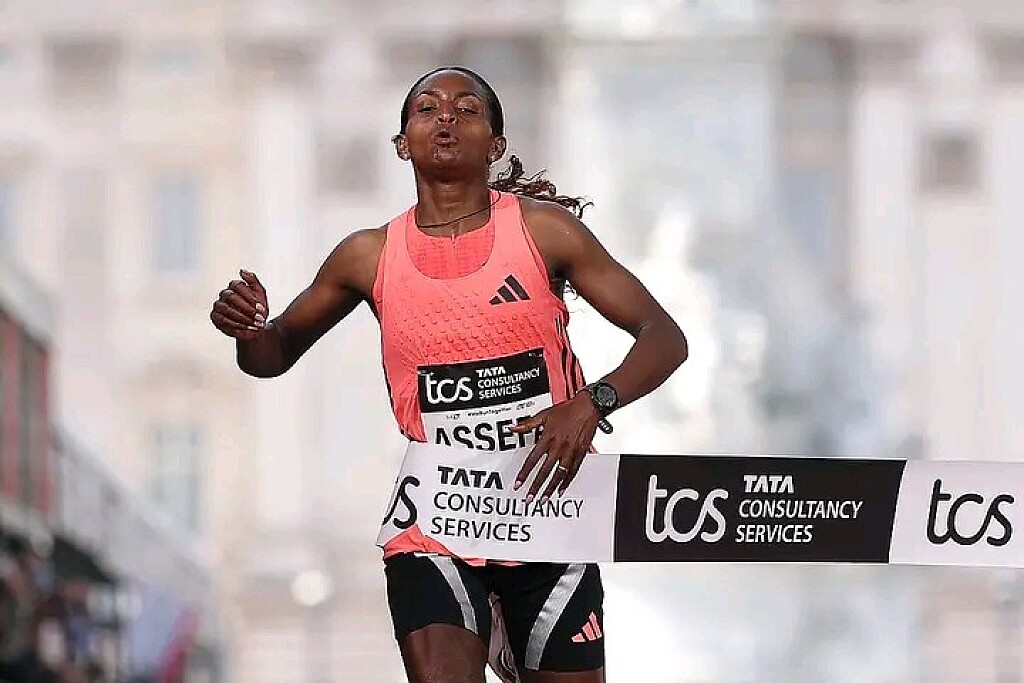
World Athletics Ratifies Tigst Assefa's Historic Women-Only Marathon World Record
History has officially been confirmed.

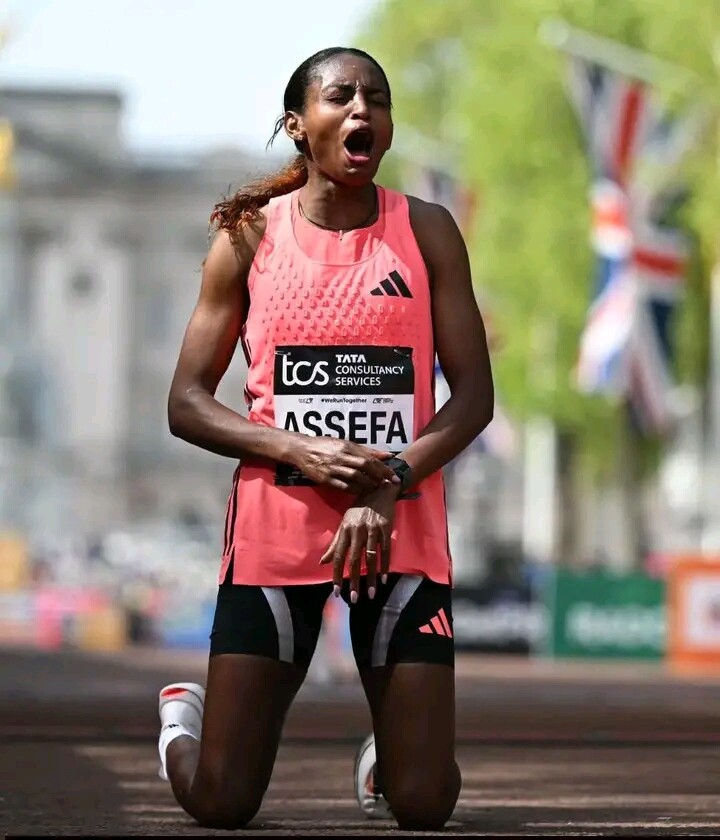
World Athletics has ratified Tigst Assefa's sensational 2:15:41 performance at the London Marathon as the new women-only marathon world record, cementing the Ethiopian star's place among the greatest marathon runners of all time.
The record-breaking run, produced on the streets of London, improves the previous women-only world record that Assefa herself established on the same course just one year earlier. With another remarkable display of endurance, precision and speed, she once again rewrote the history books, proving that her dominance in the marathon continues to reach new heights.
Unlike mixed-gender marathons, where male pacemakers are permitted, the women-only category is contested exclusively by female athletes from start to finish. It is regarded as one of the purest tests of marathon racing, making Assefa's achievement even more significant.
Her ratified mark of 2:15:41 stands as one of the fastest performances ever produced by a woman under women-only race conditions, highlighting her extraordinary consistency at the highest level of the sport.
The official ratification by World Athletics removes any remaining formality, transforming a breathtaking race-day performance into a permanent chapter in athletics history. It is another milestone in a glittering career that has seen Assefa repeatedly redefine what is possible over the 42.195-kilometre distance.
For Ethiopia, the record adds another proud moment to the nation's rich tradition of producing world-class distance runners. For the global athletics community, it is further evidence that the women's marathon continues to evolve, with barriers once considered untouchable now being shattered.
Tigst Assefa's name is now permanently etched into the record books once again—not only as an Olympic and world-class marathon champion, but as the officially ratified women-only marathon world record holder, a distinction earned through an unforgettable performance on one of the sport's biggest stages in London.
by Erick Cheruiyot for My Best Runs.
Login to leave a comment
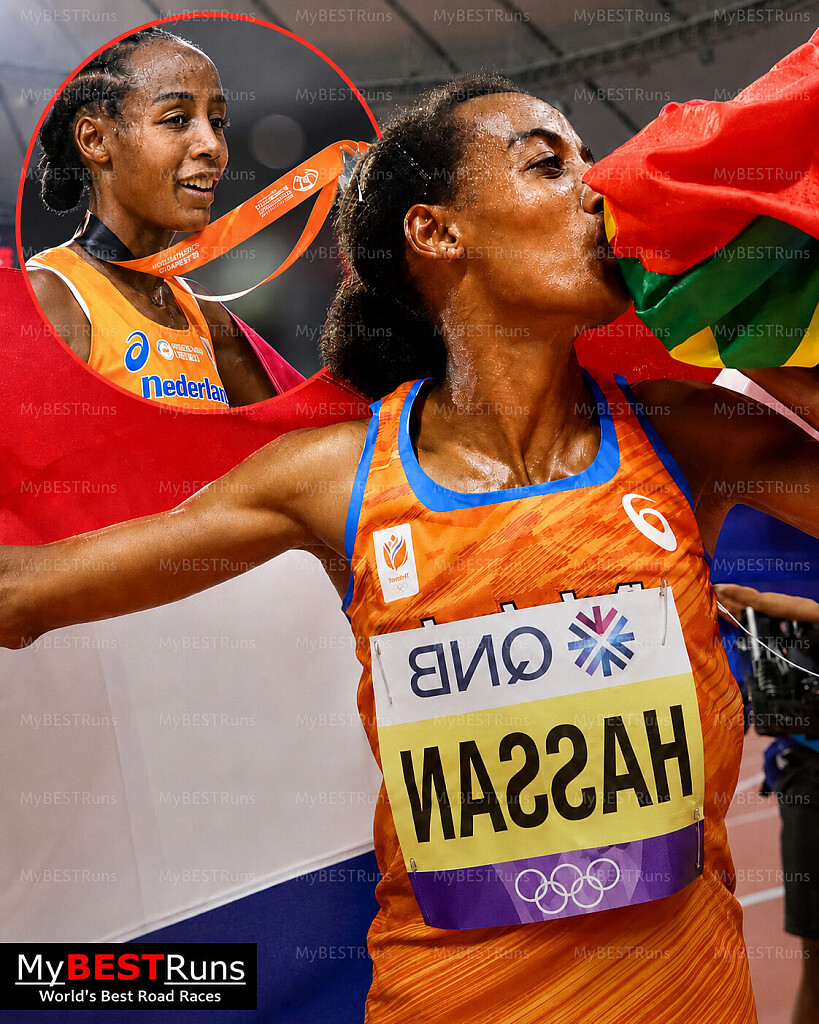
The Achilles Setback That Changed a Marathon Season: Sifan Hassan’s Unfinished Pursuit of History
In elite sport, the smallest moments can have the biggest consequences. For Sifan Hassan, one routine training session on a treadmill proved to be the turning point of an entire marathon season.
Earlier this year, the reigning Olympic marathon champion announced her withdrawal from the 2026 London Marathon after suffering an Achilles injury during what her management described as an unfortunate treadmill accident. The setback occurred approximately six weeks before race day, abruptly halting preparations for one of the most anticipated appearances of the season.
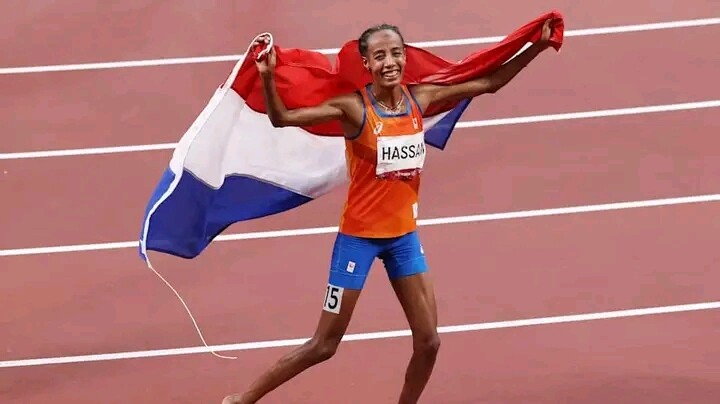
Hassan entered the year carrying the weight of extraordinary expectations. She was not only the defending London Marathon champion but also one of the strongest contenders to challenge the elusive 2:15 barrier in women’s marathon running. Few athletes possess a résumé comparable to hers. From Olympic gold medals in the 5,000m and 10,000m to her historic marathon triumphs, Hassan has consistently pushed the boundaries of what distance runners can achieve.
Initially, there was hope that the injury would be manageable. Like many elite athletes, she attempted to train through the discomfort, believing time and careful management might allow her to return in time for London. But the Achilles tendon had other plans. As the weeks passed, recovery failed to progress as expected, leaving Hassan with little choice but to step away from competition.
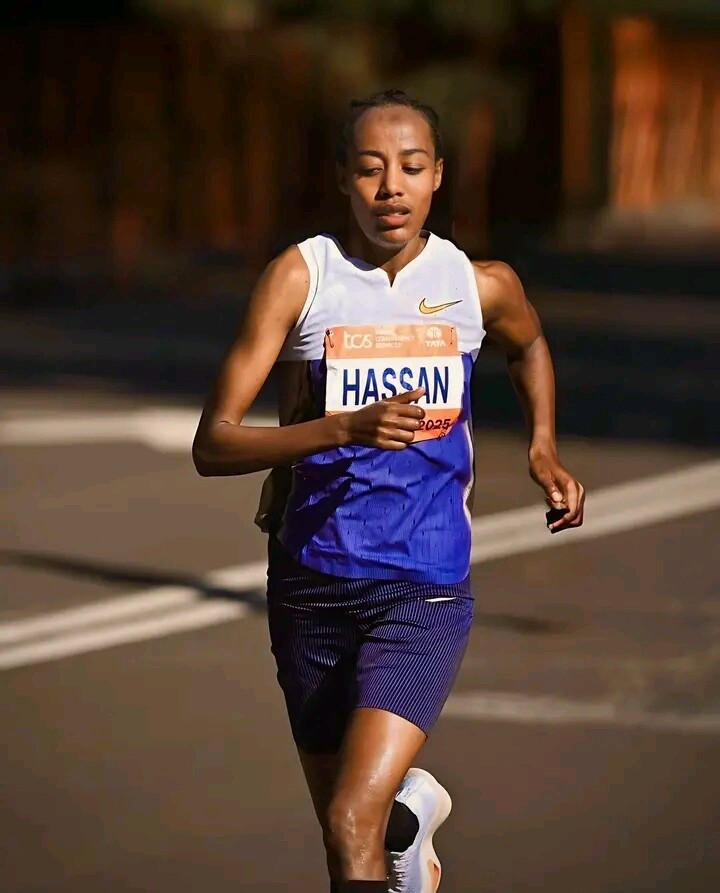
Her withdrawal created a significant shift in the dynamics of the London Marathon. What had been expected to be a showdown featuring one of the sport’s greatest champions suddenly became an open race. The absence of Hassan altered the landscape and opened the door for others to seize the moment.
Among them was Tigst Assefa, who delivered a performance for the ages. Taking advantage of the opportunity, the Ethiopian star stormed to a remarkable 2:15:41, setting a new women-only world record and producing one of the finest marathon performances ever witnessed. It was the kind of historic race many believed Hassan would have been central to contesting.
Instead, she watched from the sidelines as the record books were rewritten.
Yet Hassan's response reflected the maturity and patience that have defined her career. Rather than rushing back, she emphasized the importance of listening to her body and allowing the healing process to take its natural course. It was a reminder that even the greatest champions cannot negotiate with injury.
For athletes operating at the highest level, talent, preparation, and determination can overcome many obstacles. Recovery, however, follows its own timeline. No amount of ambition can accelerate an Achilles tendon's healing process.
The marathon world continues to wonder what might have happened had Hassan lined up in London healthy and fully prepared. Could she have challenged the record? Could she have become the first woman to break the 2:15 barrier?
Those questions remain unanswered.
What is certain is that Sifan Hassan's story is far from finished. If her career has demonstrated anything, it is her remarkable ability to return stronger after adversity. The treadmill incident may have delayed another historic chapter, but it has not closed the book.
For now, the marathon world waits patiently for the return of one of the most extraordinary distance runners the sport has ever seen.
by Erick Cheruiyot for My Best Runs.
Login to leave a comment

Tigst Assefa Targets History Again as Berlin Awaits Another World Record Assault
Three years after rewriting marathon history on the streets of Berlin, Ethiopia's Tigst Assefa is returning to the German capital with one goal firmly in sight — the world record.

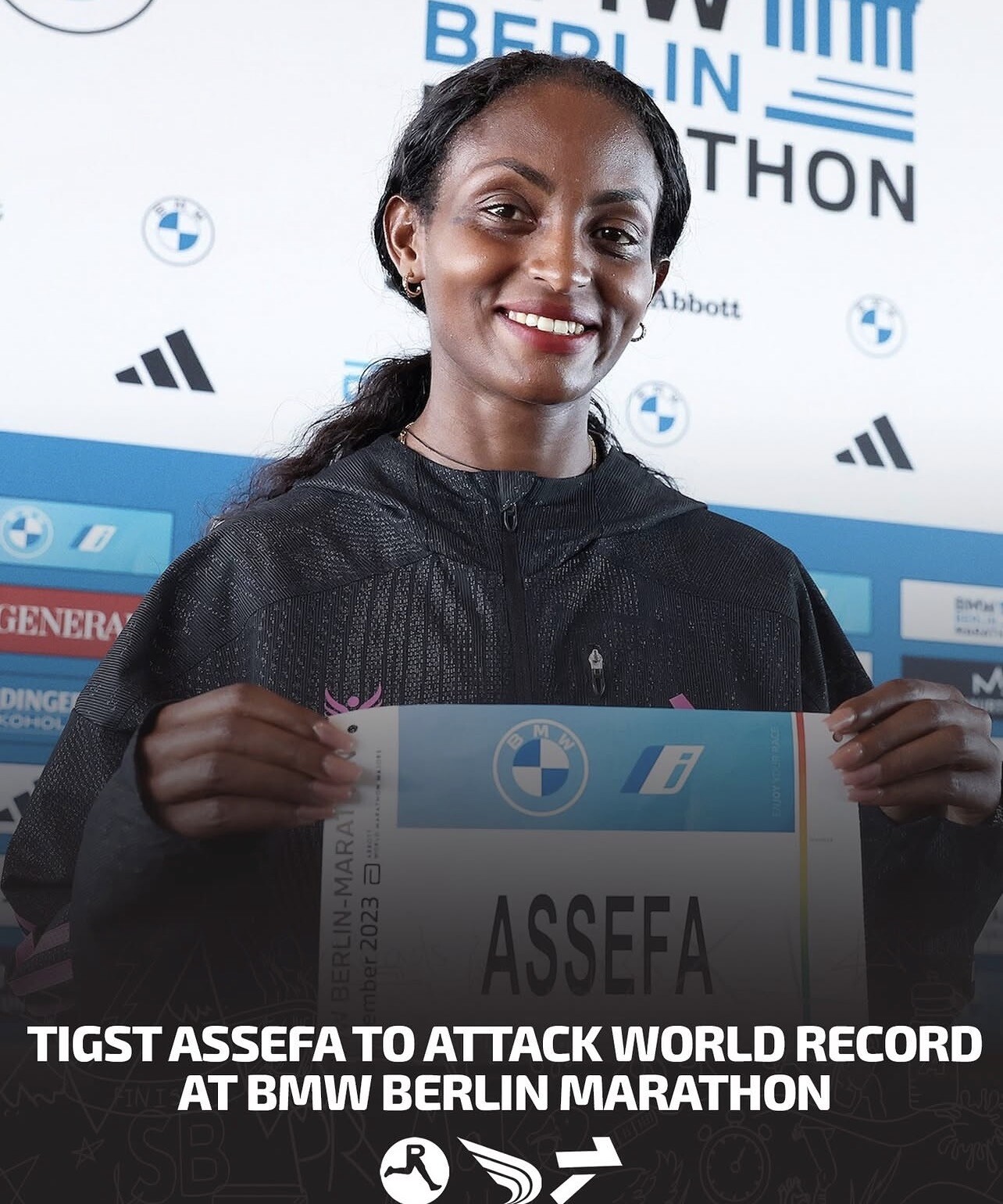
The former world record holder has been confirmed for the 2026 Berlin Marathon, scheduled for September 27, and has already made her intentions clear. Assefa wants to produce another historic performance on the course where she delivered one of the greatest marathon runs ever seen.
"It is a great pleasure for me to return to the streets of Berlin three years after setting my world record here in 2023. I am excited to once again try to break the world record," Assefa said after her participation was announced.
Berlin has long been regarded as the world's fastest marathon course, and few athletes understand that better than Assefa. It was there in 2023 that she stunned the athletics world by clocking a then-world record, cementing her place among the greatest marathon runners of her generation.

Now, the Ethiopian star is preparing for another assault on history.
Armed with a remarkable personal best of 2:11:53, Assefa will attempt to lower the current women's world record of 2:09:56, set by Kenya's Ruth Chepngetich. Achieving such a feat would require one of the fastest marathon performances ever produced, but Assefa has already shown she possesses the talent, courage and speed to challenge seemingly impossible barriers.
Her quest, however, will be far from straightforward.
The Berlin field is shaping up to be one of the strongest women's marathon line-ups of the year. Joining Assefa on the start line will be fellow Ethiopian and training partner Amane Beriso, a world-class performer capable of matching any pace on her day. Also in the race will be Kenya's Rosemary Wanjiru, the defending champion, who returns determined to protect her crown after a commanding victory in Berlin last year.
With three of the world's elite marathoners set to clash, the race promises a fascinating battle between championship experience, tactical intelligence and raw speed.
For Assefa, though, the challenge extends beyond defeating her rivals. The bigger target is the clock.
The Ethiopian has repeatedly demonstrated her ability to thrive on Berlin's flat and fast roads, and her return instantly raises expectations of another historic performance. Marathon fans around the world will be watching closely to see whether she can once again produce a run for the ages.
As the world's best distance runners converge on Berlin this September, the stage is set for another potentially historic afternoon. With a proven record on the course, unmatched ambition, and a world record firmly in her sights, Tigst Assefa arrives not merely to compete, but to challenge the limits of what is possible in women's marathon running. Whether history falls once again remains to be seen, but one thing is certain: all eyes will be on Berlin when the gun goes off on September 27.
by Erick Cheruiyot for My Best Runs.
Login to leave a comment
BMW Berlin Marathon
The story of the BERLIN-MARATHON is a story of the development of road running. When the first BERLIN-MARATHON was started on 13th October 1974 on a minor road next to the stadium of the organisers‘ club SC Charlottenburg Berlin 286 athletes had entered. The first winners were runners from Berlin: Günter Hallas (2:44:53), who still runs the BERLIN-MARATHON today, and...
more...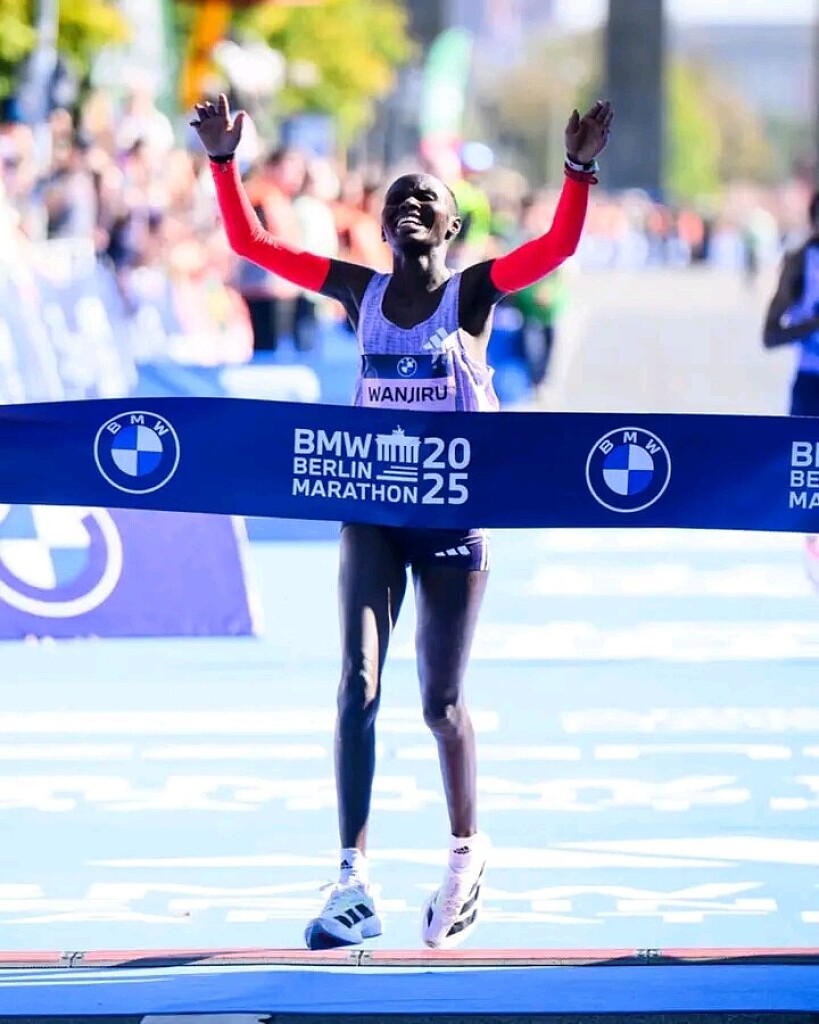
Berlin Braces for a Marathon Masterpiece as Assefa, Wanjiru and Beriso Collide
The stage is set for one of the greatest women's marathon races ever assembled.
When the BMW Berlin Marathon returns on September 27, 2026, the streets of the German capital will welcome an extraordinary cast of distance-running royalty led by Ethiopia's Tigst Assefa, Kenya's Rosemary Wanjiru and fellow Ethiopian star Amane Beriso. With three of the fastest women in marathon history confirmed for the race, anticipation is already building around what could become another landmark chapter in Berlin's rich marathon legacy.
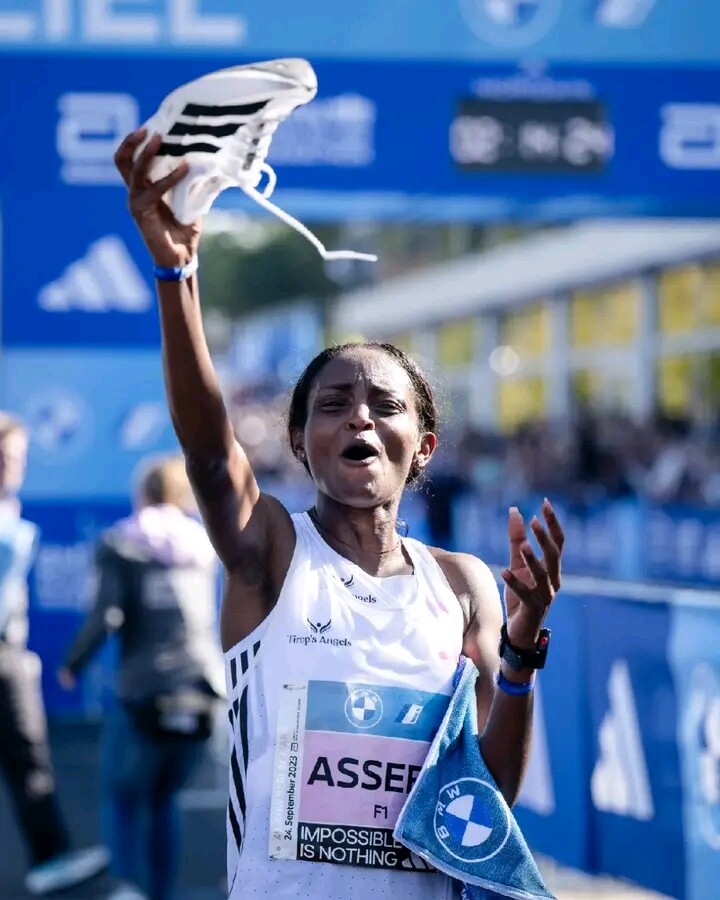
Adding even greater intrigue to the occasion is the return of Tigst Assefa, who will be chasing a remarkable hat-trick of victories in Berlin. Having already established herself as one of the course's most dominant champions, the Ethiopian star returns to a venue where she has repeatedly showcased her extraordinary talent. Few athletes in the modern era have forged such a powerful connection with the Berlin Marathon, and another victory would further cement her place among the event's all-time greats.
Standing in her path is defending champion Rosemary Wanjiru, the Kenyan star who captured the Berlin crown with a display of strength, patience and tactical brilliance. Wanjiru has consistently proven she belongs among the world's elite marathoners, and her return as defending champion adds another compelling storyline to what is already shaping up to be an unforgettable contest.
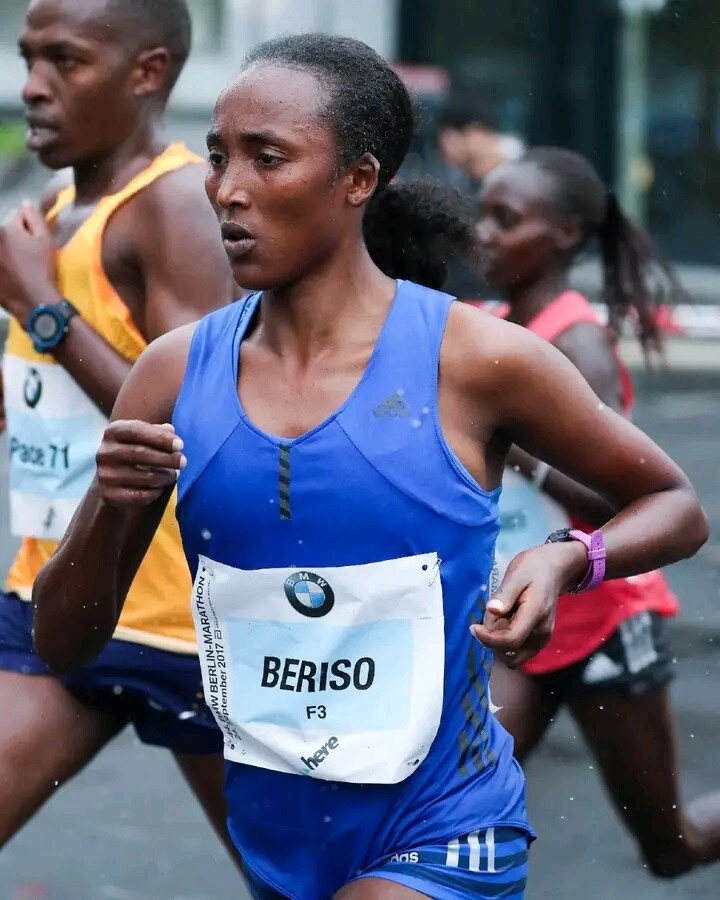
Completing the star-studded trio is Amane Beriso, one of the most accomplished marathon runners of her generation. With a personal best of 2:14:58 and a reputation for thriving under pressure, Beriso possesses all the credentials required to challenge for victory on one of the sport's biggest stages.
The numbers alone highlight the quality of the field. Assefa's astonishing personal best of 2:11:53 remains one of the fastest performances ever recorded by a woman, while Wanjiru's 2:16:14 and Beriso's 2:14:58 underline the exceptional depth assembled for this year's race.
Yet this race is about more than personal bests. It is about the collision of champions, the pursuit of greatness and the possibility of witnessing history unfold on Berlin's famously fast roads. The German capital has become synonymous with marathon excellence, producing countless record-breaking performances over the years. Whenever the world's finest athletes gather there, expectations naturally rise.
With Assefa seeking a third consecutive Berlin title, Wanjiru defending her crown and Beriso determined to add another major triumph to her résumé, the ingredients are in place for a spectacular battle from the opening kilometres to the finish line.
The marathon world has already begun counting down the days. Fans, analysts and athletes alike recognize that opportunities to witness a field of this calibre are rare. Three champions, three distinct stories and one iconic course create the perfect formula for a race that could redefine what is possible in women's marathon running.
On September 27, all roads will lead to Berlin. And if these three superstars push one another to their limits, the clock may once again become the biggest casualty of all.
by Erick Cheruiyot for My Best Runs.
Login to leave a comment
BMW Berlin Marathon
The story of the BERLIN-MARATHON is a story of the development of road running. When the first BERLIN-MARATHON was started on 13th October 1974 on a minor road next to the stadium of the organisers‘ club SC Charlottenburg Berlin 286 athletes had entered. The first winners were runners from Berlin: Günter Hallas (2:44:53), who still runs the BERLIN-MARATHON today, and...
more...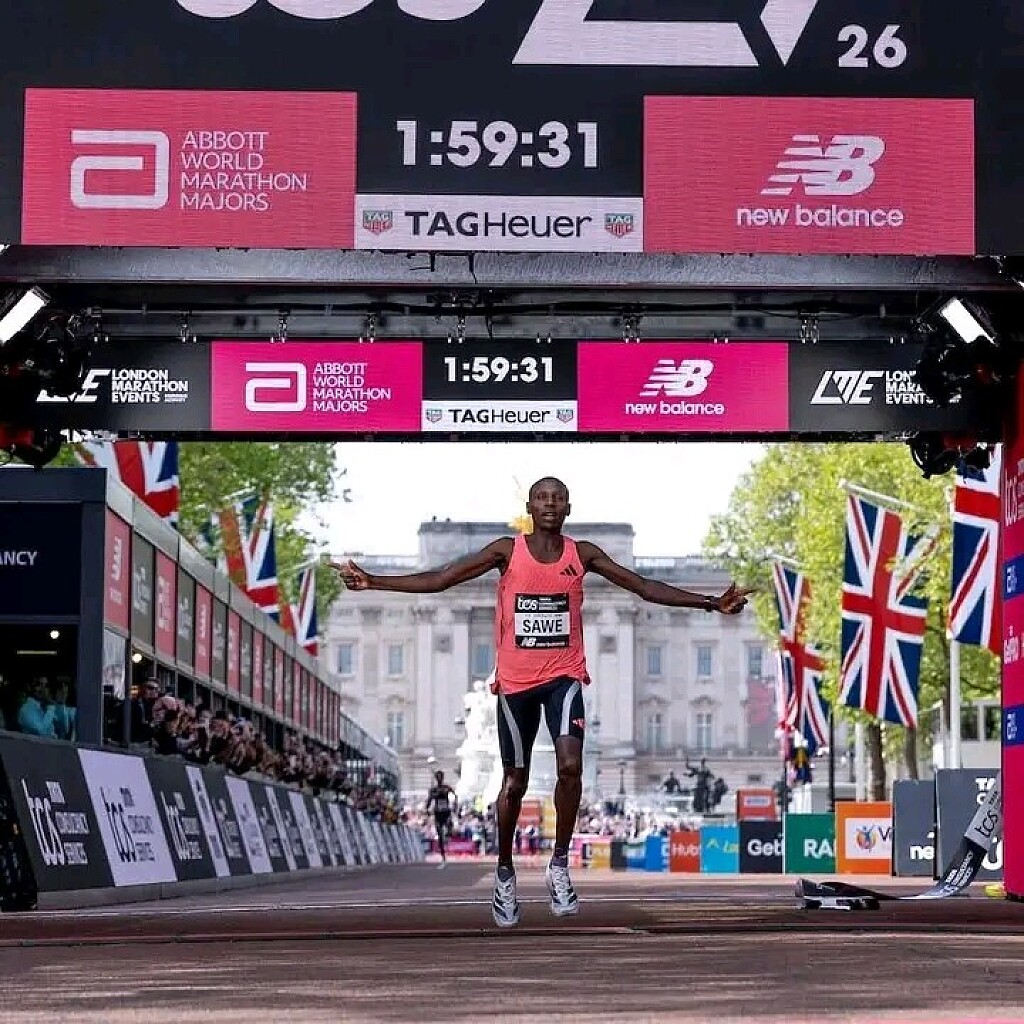
One Month Since Marathon Running Witnessed Its Greatest Day Ever
Exactly one month ago, at the TCS London Marathon the sport of marathon running experienced a moment so extraordinary that it permanently altered the limits of human endurance. What unfolded that historic day was not simply fast racing — it was the complete rewriting of what the athletics world believed was possible over 42.195 kilometers.
The headlines alone sounded almost fictional.
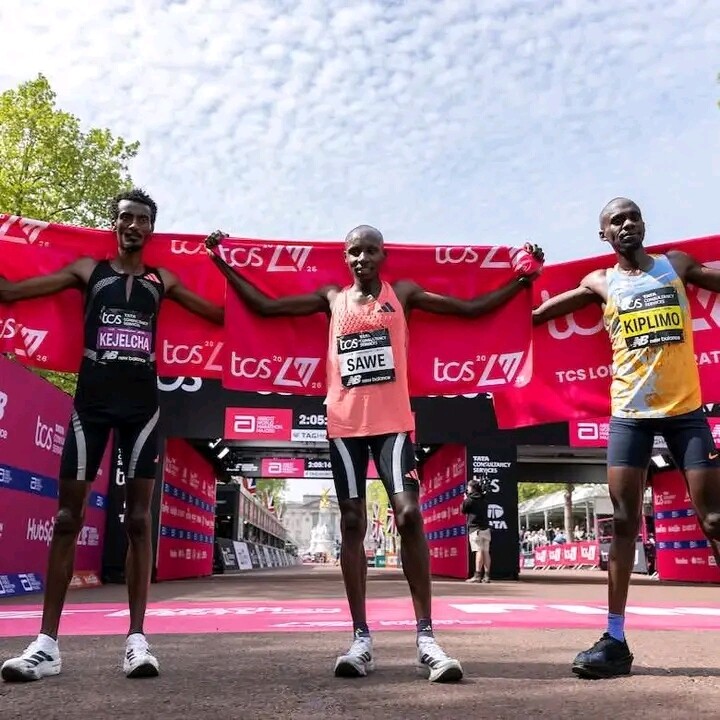
Kenya’s Sabastian Sawe delivered the performance of a lifetime, storming into history as the first athlete ever to break the two-hour barrier in an official marathon race. His astonishing 1:59:30 shattered one of the final frontiers in distance running and instantly became one of the greatest athletic achievements ever witnessed on the roads.
For decades, the sub-two-hour marathon had existed as an almost mythical benchmark — discussed by scientists, coaches and legends of the sport as the ultimate human endurance challenge. Sawe did not just cross that barrier; he obliterated the psychological wall surrounding it with fearless pacing, ruthless consistency and unmatched composure under pressure.
Yet the drama was only beginning.
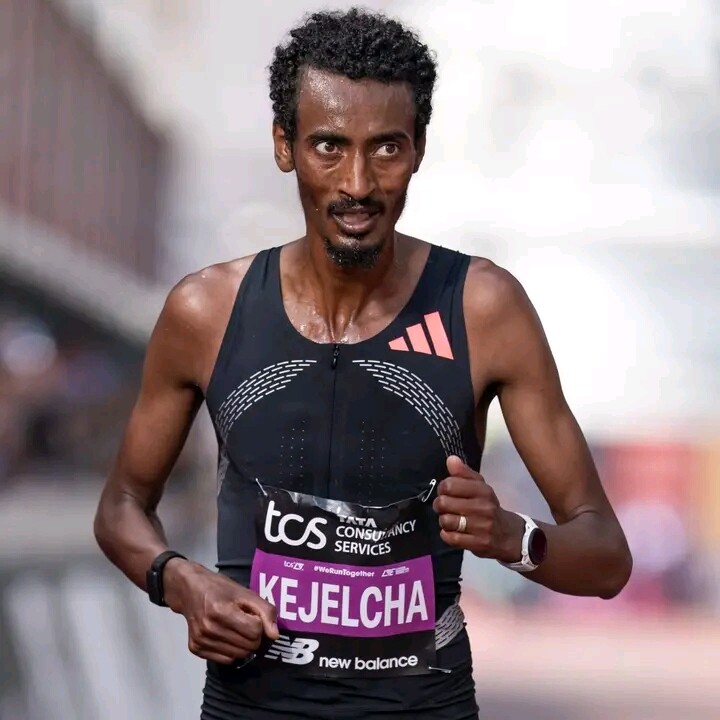
In one of the most remarkable marathon debuts the sport has ever seen, Ethiopia’s Yomif Kejelcha stunned the world by becoming the second man in history to run under two hours — clocking an extraordinary 1:59:41 in his very first marathon appearance. To achieve such a performance without prior marathon experience elevated the race from historic to almost surreal.
Kejelcha’s transition from track and half marathon brilliance to immediate marathon greatness showcased a rare combination of speed, efficiency and tactical intelligence. Most athletes spend years mastering the marathon. He conquered it on his first attempt.
And somehow, the race still had more history to offer.
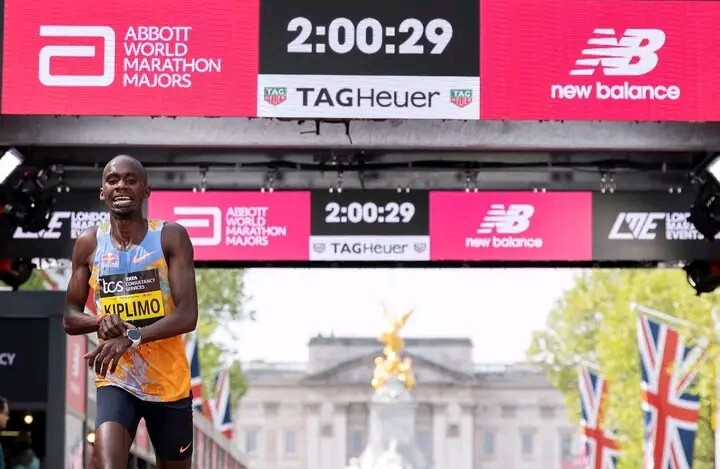
Uganda’s Jacob Kiplimo finished third in an astonishing 2:00:28 — a performance that, incredibly, was faster than the previous marathon world record of 2:00:35. On nearly any other day in athletics history, Kiplimo’s run would have dominated global headlines. Instead, it became part of a once-in-a-generation showcase of endurance greatness.
The depth of quality in the men’s race was unprecedented. Three athletes produced times once considered impossible within the same event, transforming the marathon from a race against rivals into a collective assault on history itself.
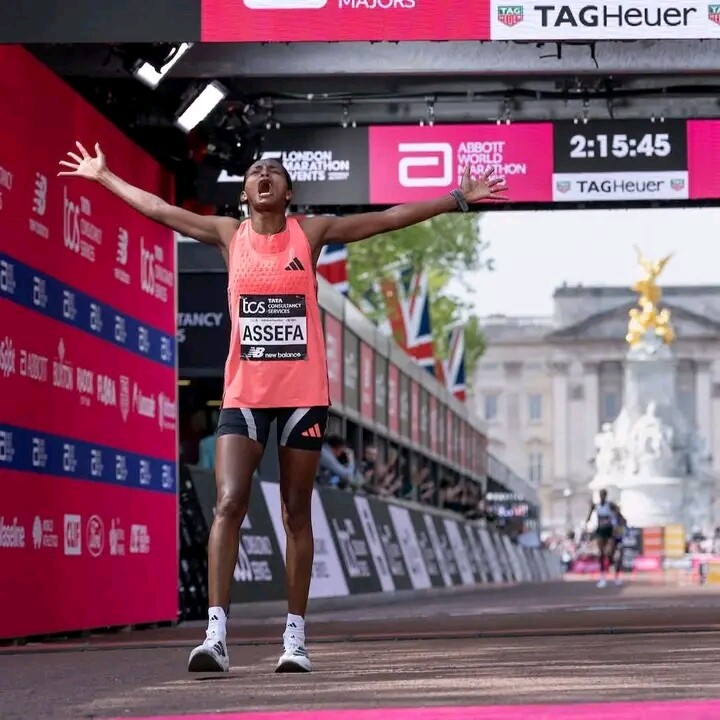
The women’s race was equally unforgettable.
Ethiopia’s Tigst Assefa once again proved why she remains one of the defining marathon athletes of this era. Defending her London crown in dominant fashion, Assefa surged to a sensational women’s-only world record of 2:15:41, combining elegance, strength and relentless rhythm from start to finish.
Her performance reinforced the rapid evolution of women’s marathon running, where barriers continue to fall and records are being pushed into territory previously unimaginable.
What made that day truly special was not only the records, but the feeling surrounding the races. Fans across the globe were witnessing history unfold in real time — a sporting spectacle where every split seemed impossible, every kilometer carried anticipation, and every finish line delivered another shock to the athletics world.
One month later, the echoes of that extraordinary day still resonate throughout global sport.
It was the day marathon running entered a new era. The day limits disappeared. The day history was rewritten kilometer after kilometer. And perhaps, the greatest single day the marathon has ever seen.
by Erick Cheruiyot for My Best Runs.
Login to leave a comment

TCS London Marathon
Since its inaugural edition on March 29, 1981, the TCS London Marathon has grown into one of the world's most prestigious road races, blending elite competition with an extraordinary charitable legacy. Founded by former Olympic champion and journalist Chris Brasher alongside Welsh athlete John Disley, the event has been staged every year and has been held in the spring annually...
more...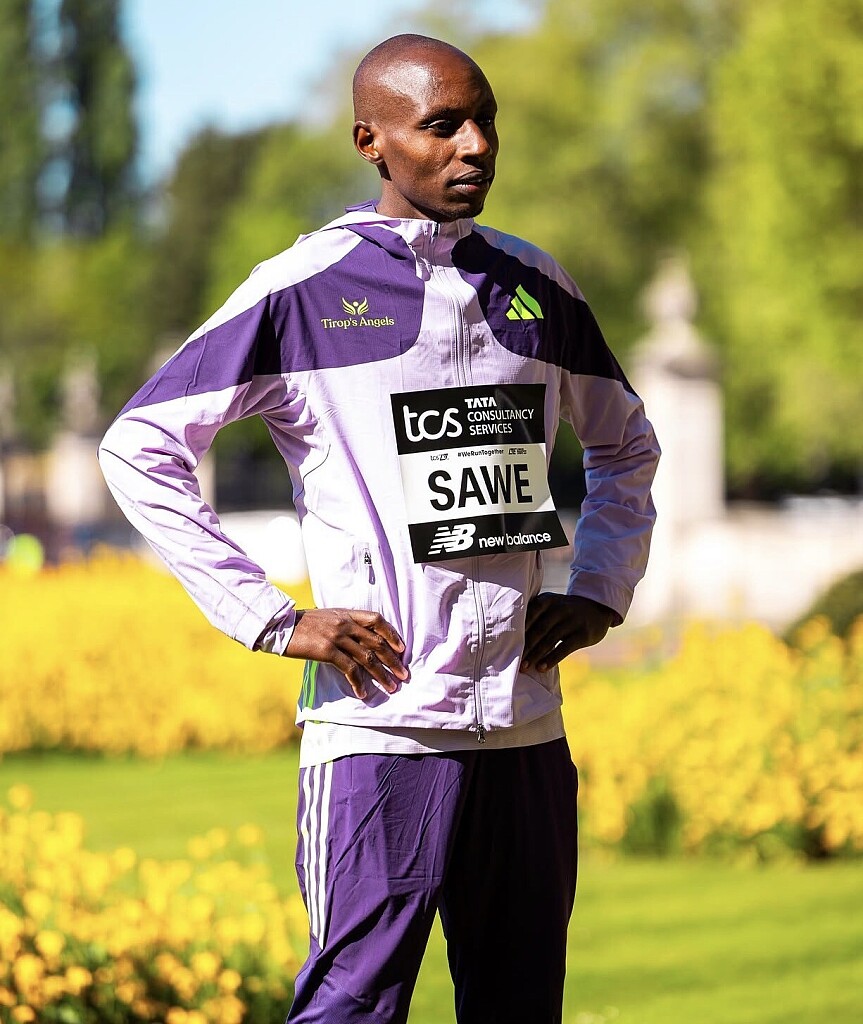
It has been achieved
Today in London, Sabastian Sawe didn’t just win the marathon—he broke the barrier, clocking an incredible 1:59:30.
His splits tell the story of something truly special:
5K – 14:14
10K – 28:35
15K – 43:10
20K – 57:21
Half – 60:29
25K – 1:11:41
30K – 1:26:03
35K – 1:39:57
40K – 1:53:39
Finish – 1:59:30
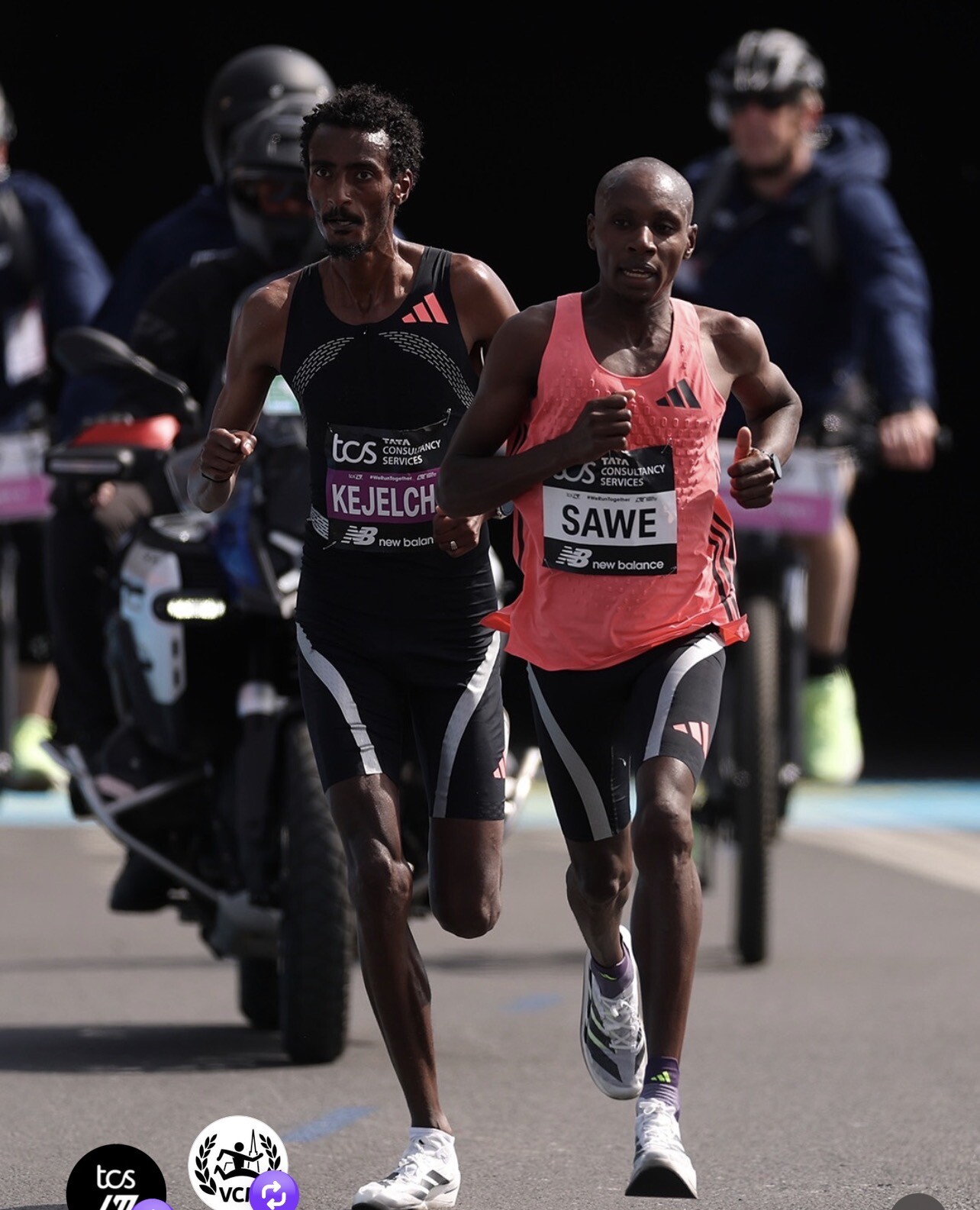
And it wasn’t just one man today. Yomif Kejelcha finished second in 1:59:41—also under two hours in his marathon debut.
On the women’s side, Tigst Assefa delivered a performance of her own, setting a women-only world record of 2:15:41.
We’ve talked about moments like this for years. Today, it all came together.

— Bob Anderson
by Bob Anderson Publisher My Best Runs
Login to leave a comment
TCS London Marathon
Since its inaugural edition on March 29, 1981, the TCS London Marathon has grown into one of the world's most prestigious road races, blending elite competition with an extraordinary charitable legacy. Founded by former Olympic champion and journalist Chris Brasher alongside Welsh athlete John Disley, the event has been staged every year and has been held in the spring annually...
more...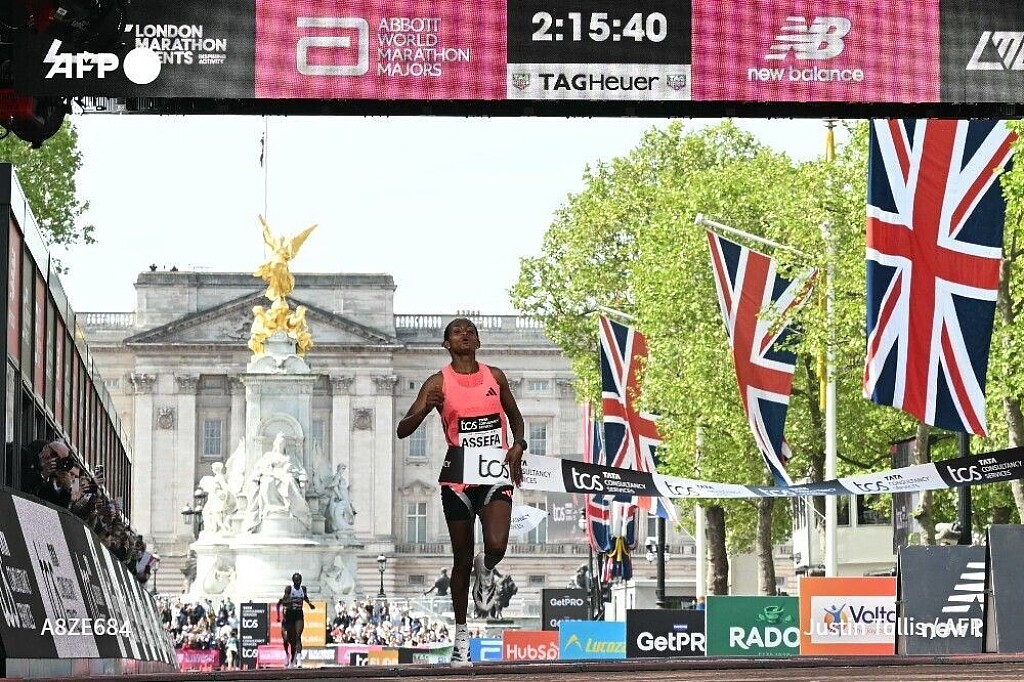
Assefa’s Historic Surge Headlines East African Masterclass in London
The 2026 edition of the London Marathon 2026 delivered a race for the ages, as East Africa once again stamped its authority on one of the sport’s grandest stages. At the center of it all was Ethiopia’s Tigst Assefa, who produced a breathtaking performance to win the women’s race in 2:15:41, breaking her own women-only world record in emphatic fashion.
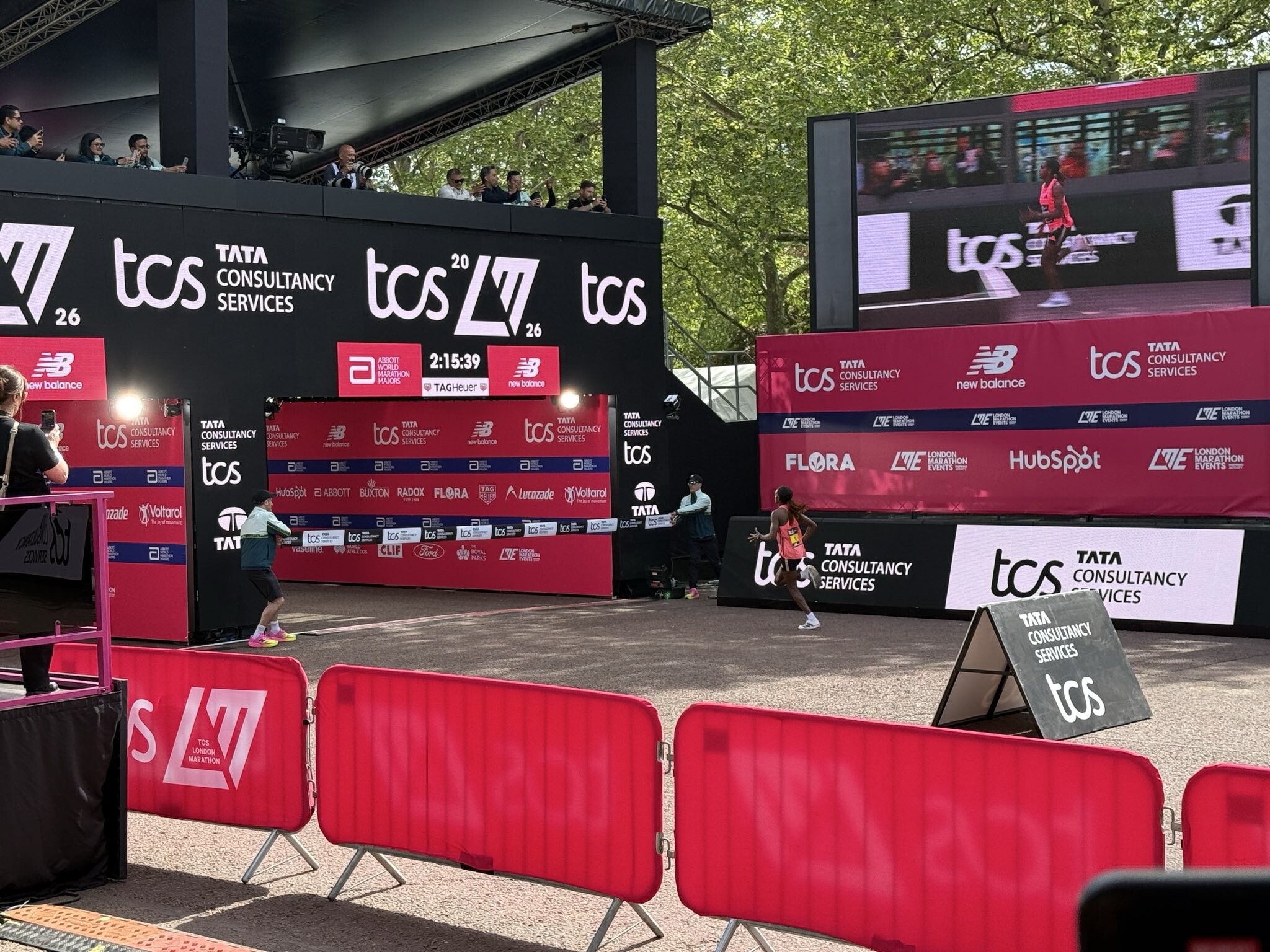
From the gun, the pace was unrelenting. The lead group, dominated by Ethiopian and Kenyan contenders, surged through the early checkpoints with intent, setting the tone for what would become a historically fast contest. Assefa, calm yet decisive, positioned herself perfectly before gradually turning the race into a test of pure strength and precision.
By the latter stages, the Ethiopian star had shifted gears, her stride smooth and efficient as she pulled away under the weight of expectation and the pressure of elite competition. When she crossed the finish line along the iconic streets of London, the clock confirmed what the racing world had begun to suspect—history had been rewritten once more.
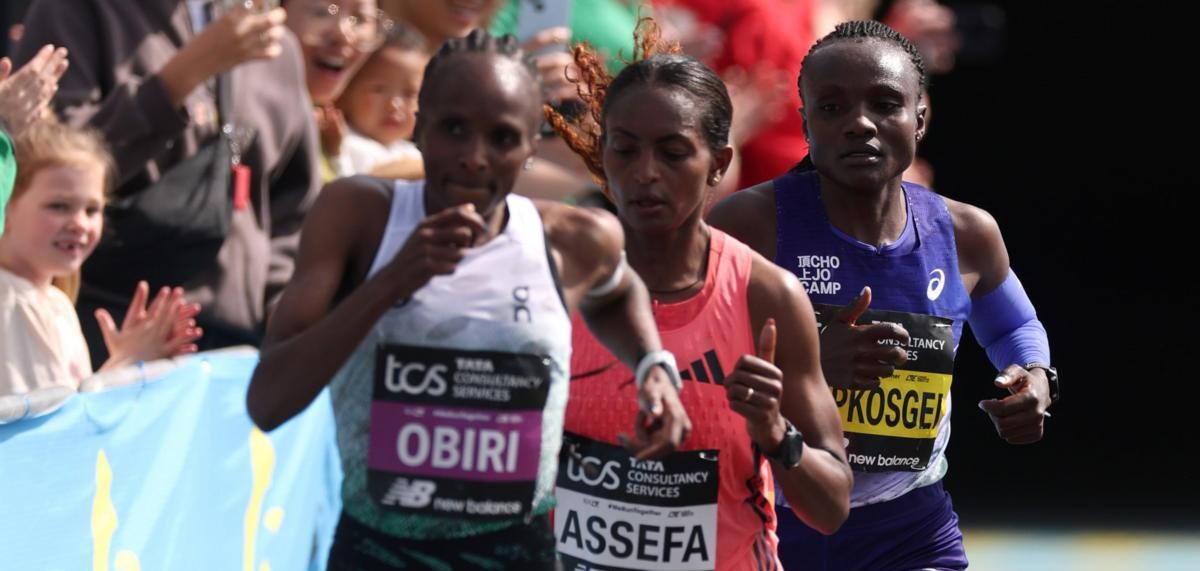
Hot on her heels was Kenya’s Hellen Obiri, who clocked an outstanding 2:15:53 to finish second, just 12 seconds adrift in one of the closest high-caliber finishes in recent marathon memory. Fellow Kenyan Joyciline Jepkosgei completed the podium in 2:15:55, only two seconds behind Obiri, underlining the fierce competitiveness at the very top.
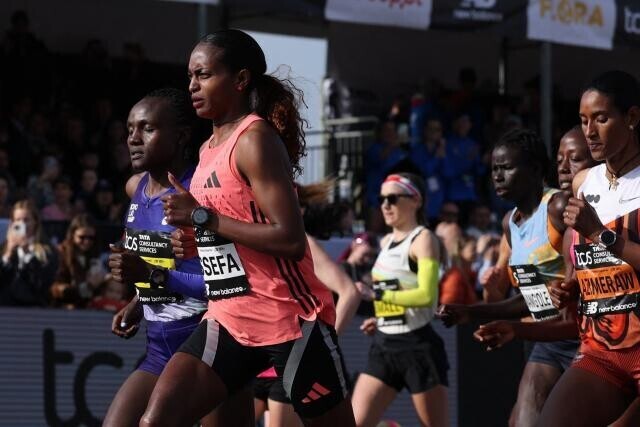
The narrow margins separating the top three told a deeper story—this was not merely a race, but a battle of resilience, tactics, and extraordinary endurance. All three athletes dipped well into elite territory, showcasing a level of depth that continues to define women’s marathon running today.
Top 10 Finishers – Women’s Marathon Final Results
1. Tigst Assefa (ETH) – 2:15:41 WR
2. Hellen Obiri (KEN) – 2:15:53 PB
3. Joyciline Jepkosgei (KEN) – 2:15:55
4. Degitu Azimeraw (ETH) – 2:19:13
5. Catherine Reline Amanang'ole (KEN) – 2:21:20
6. Eunice Chebichii Chumba (BRN) – 2:23:44
7. Eilish McColgan (GBR) – 2:24:51
8. Jucia Paternain (URU) – 2:25:47 NR
9. Rose Harvey (GBR) – 2:26:14
10. Marta Galimany (ESP) – 2:27:38
Beyond the times and records, the race served as a powerful reminder of East Africa’s enduring dominance in long-distance running. With discipline forged at altitude and an unmatched competitive culture, athletes from Ethiopia and Kenya once again transformed London into a theatre of excellence.
As the crowds roared and the finish line drama unfolded, one narrative stood clear: this was a day where greatness met opportunity—and Tigst Assefa seized it to perfection, delivering a performance that will echo through marathon history.
by Erick Cheruiyot for My Best Runs.
Login to leave a comment
TCS London Marathon
Since its inaugural edition on March 29, 1981, the TCS London Marathon has grown into one of the world's most prestigious road races, blending elite competition with an extraordinary charitable legacy. Founded by former Olympic champion and journalist Chris Brasher alongside Welsh athlete John Disley, the event has been staged every year and has been held in the spring annually...
more...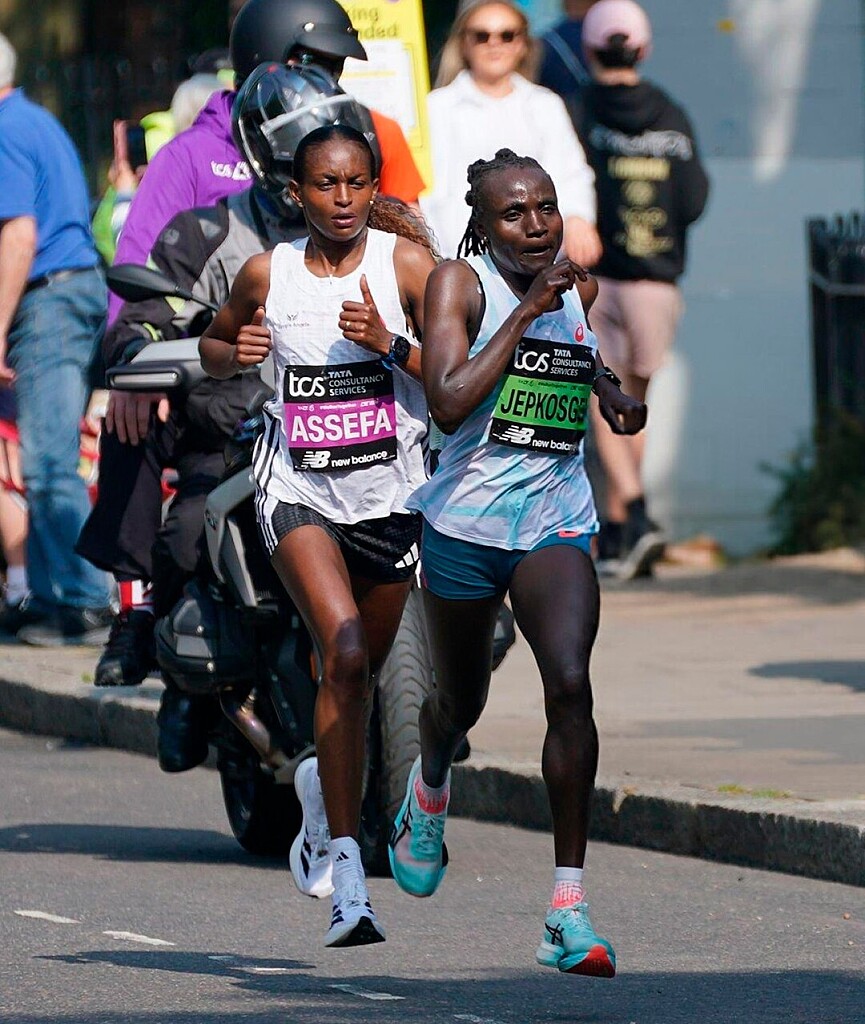
Queens of the Road: A Star-Studded Women’s Field Set to Ignite the 2026 London Marathon
The streets of London are once again poised to host one of the most electrifying spectacles in distance running as the 2026 London Marathon prepares to unfold on Sunday, April 26. With the women’s elite race scheduled for 9:30 AM (GMT), anticipation is building for a contest that promises both tactical intrigue and blistering pace.
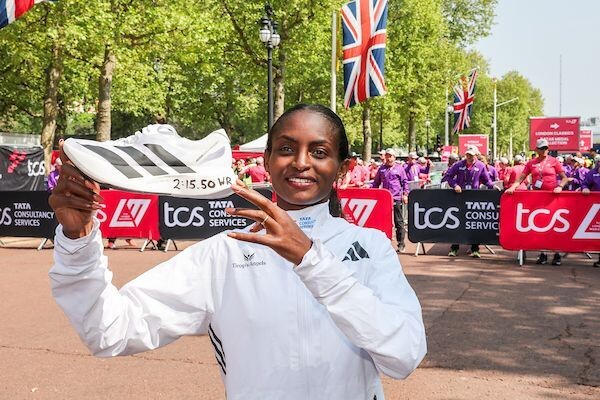
At the heart of the lineup is Ethiopia’s formidable Tigst Assefa, a marathoner whose record-breaking credentials have redefined the limits of the sport. Known for her relentless rhythm and devastating finishing strength, Assefa arrives as a central figure in what could become another historic chapter on London’s fast and flat course.
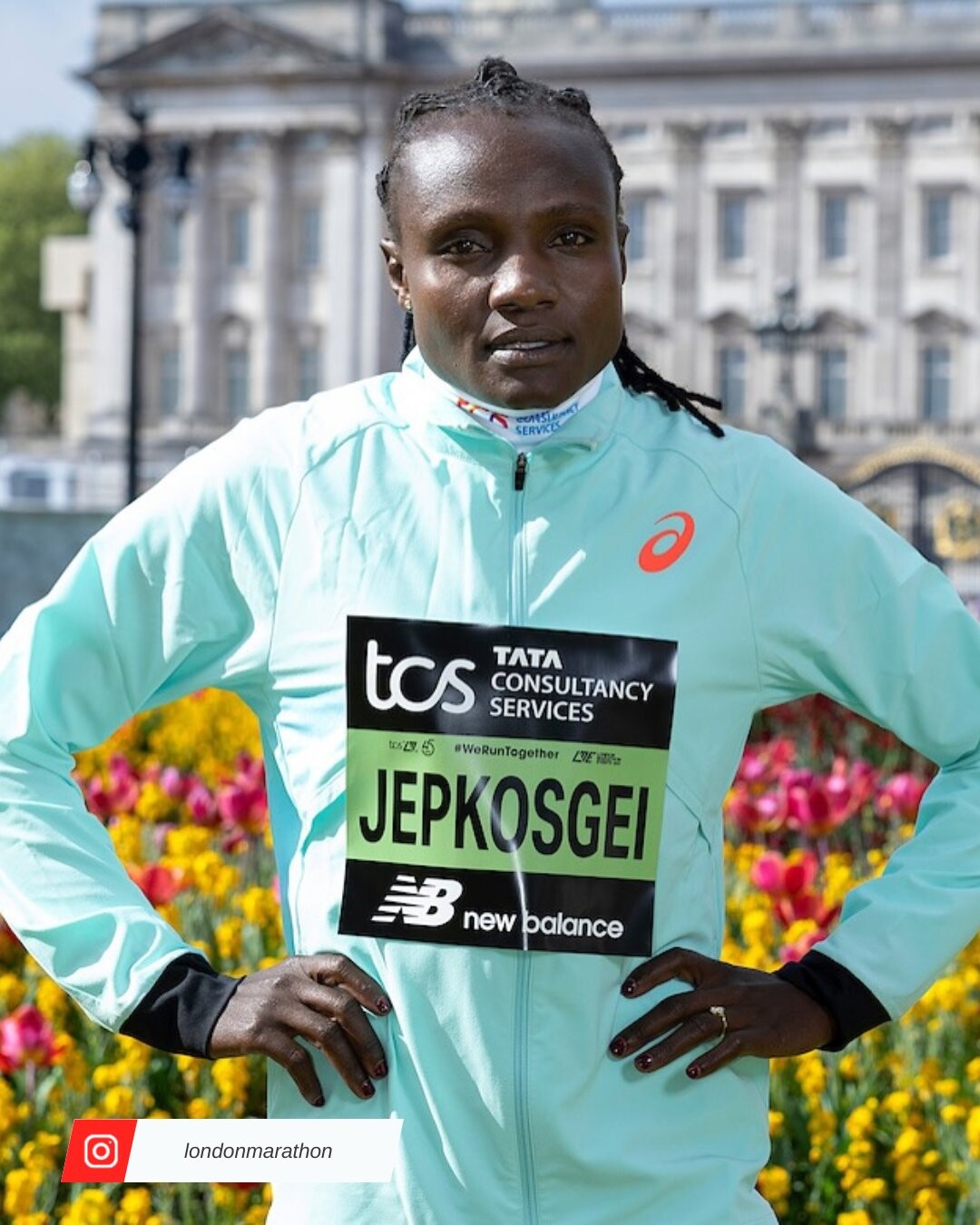
Kenya’s challenge will be led by the ever-consistent Joyciline Jepkosgei and the immensely versatile Hellen Obiri. Jepkosgei, a proven road racing specialist, brings tactical sharpness and endurance, while Obiri—already a global champion on track, cross country, and the marathon—continues to demonstrate a remarkable ability to adapt and conquer across disciplines.
Ethiopia’s depth does not end with Assefa. Athletes such as Megertu Alemu and Degitu Azimeraw add further firepower, ensuring that the East African rivalry remains as fierce as ever. Meanwhile, Kenya’s lineup is bolstered by emerging and experienced names, including Catherine Reline Amanang'ole, adding depth to an already formidable contingent.
The international flavor of the race extends well beyond East Africa. Great Britain’s hopes will rest on athletes like Eilish McColgan, whose transition to the marathon has been closely followed, alongside compatriots such as Charlotte Purdue and Rose Harvey. Their presence ensures a strong home narrative, with the London crowd expected to rally behind its local stars.

Elsewhere, Spain’s Laura Luengo, Argentina’s Florencia Borelli, and France’s Fadouwa Ledhem add further international intrigue, turning the race into a truly global showdown.
What makes this edition particularly compelling is not just the depth of talent, but the clash of styles—front-runners capable of forcing a punishing pace against tacticians who thrive in championship-like scenarios. London’s course, known for its speed, has often been the stage for record-breaking performances, and with such a loaded field, another fast time cannot be ruled out.
As the countdown continues, the 2026 London Marathon women’s elite race shapes up as more than just a competition—it is a convergence of the world’s finest endurance athletes, each chasing victory, legacy, and perhaps even history.
by Erick Cheruiyot for My Best Runs.
Login to leave a comment
TCS London Marathon
Since its inaugural edition on March 29, 1981, the TCS London Marathon has grown into one of the world's most prestigious road races, blending elite competition with an extraordinary charitable legacy. Founded by former Olympic champion and journalist Chris Brasher alongside Welsh athlete John Disley, the event has been staged every year and has been held in the spring annually...
more...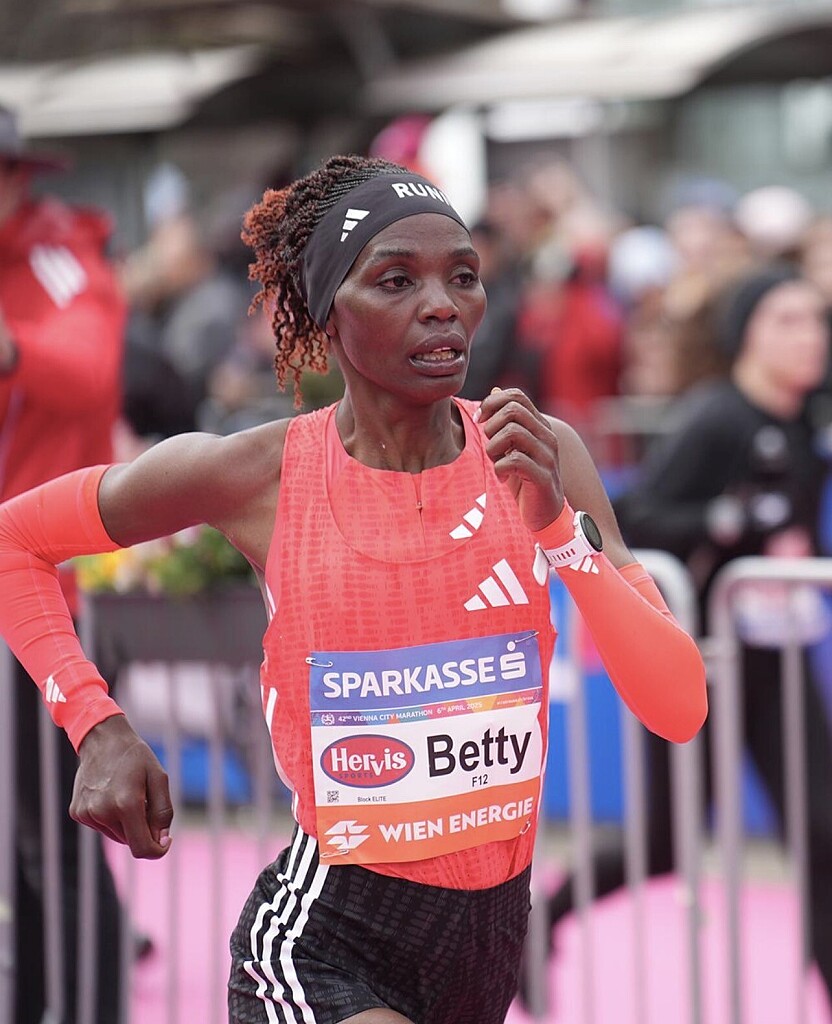
Vienna City Marathon Women Ready to Chase History
The spotlight may shine brightest on the women’s race at the Vienna City Marathon on April 19, where a deep Ethiopian lineup is ready to push the pace. Haftamnesh Tesfaye and Tigist Gezahagn lead the elite field, with organizers targeting not only the course record of 2:20:59 but potentially the first sub-2:20 performance in race history.
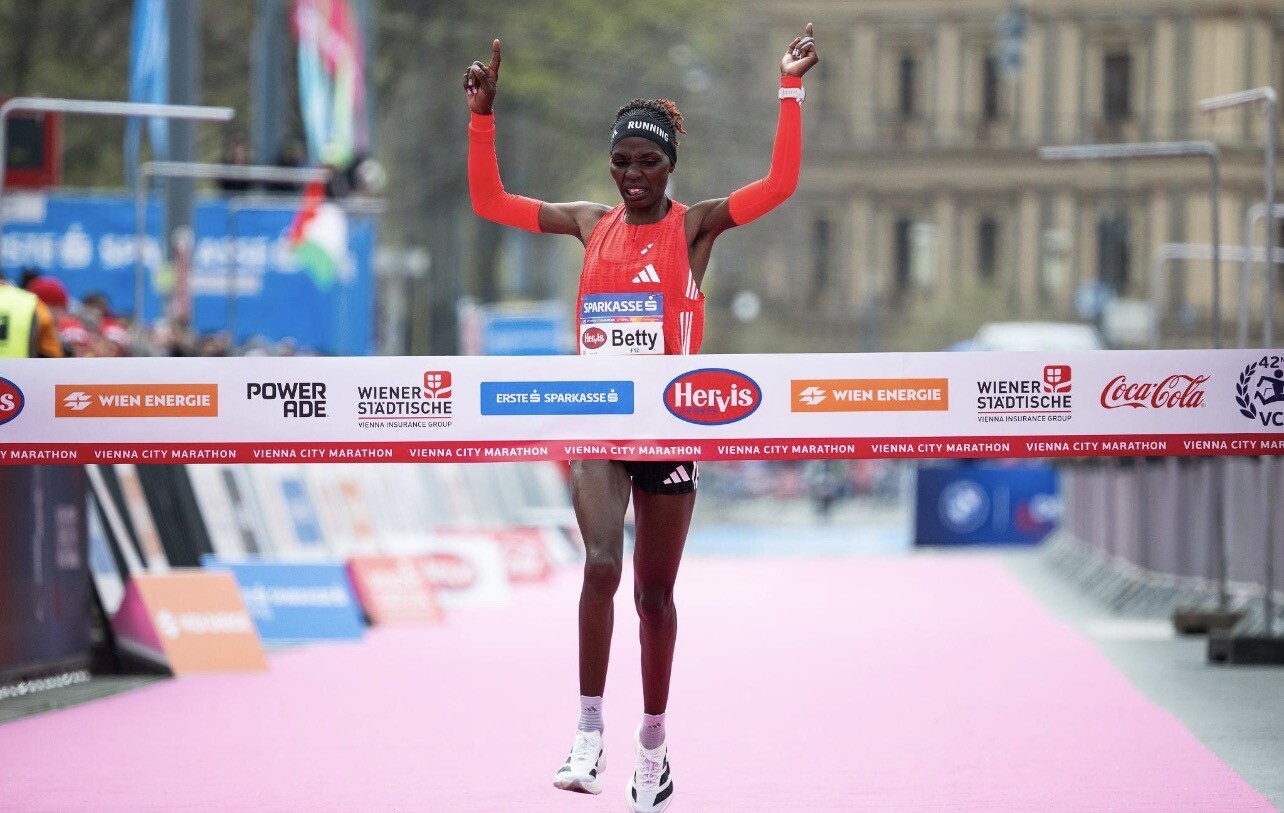
They will be challenged by Kenya’s defending champion Betty Chepkemoi, who returns with confidence after a breakthrough victory last year.

A record 46,000 athletes are entered across the two-day event, including 13,000 marathon runners, reinforcing Vienna’s position as one of Europe’s premier spring marathons and a World Athletics Elite Label Road Race.
Could Vienna see a Tesfaye breakthrough moment
Earlier this month, Foyten Tesfaye shocked the marathon world with a stunning 2:10:51 debut in Barcelona, becoming one of the fastest women ever. While that level may be out of reach here, her older sister Haftamnesh Tesfaye arrives as a serious contender.

Now 31, Tesfaye ran 2:20:13 in her 2018 Dubai debut, which remains her personal best. After stepping away from the sport in 2020 and becoming a mother of two, she returns to the marathon stage in strong form and well prepared.
She has been training in Addis Ababa under Gemedu Dedefo alongside a world-class group that includes Olympic silver medalist and former world record holder Tigst Assefa, Chicago Marathon champion Hawi Feysa, and Dubai and Berlin winner Tigist Ketema.
Tigist Gezahagn, 26, has already won a marathon this year, taking victory in Doha in January with a personal best of 2:21:14. She now sets her sights on Vienna’s course record.

Her manager Tadesse Abraham said her recovery from Doha has gone well and that she is capable of a very strong performance if conditions are favorable. Gezahagn trains in Addis Ababa under coach Getamesay Molla.
Defending champion Betty Chepkemoi may not top the start list, but she brings momentum. Last year, in freezing conditions, she surged to victory in 2:24:14, improving dramatically in just her second marathon.
She said her training has gone well and that she hopes to improve her personal best and defend her title. Chepkemoi trains in Kapsabet under Claudio Berardelli.
American Lindsay Flanagan is the fastest non African woman in the field with a personal best of 2:23:31 from Chicago. After a long injury break, Vienna will mark her return to the marathon distance.
Another athlete to watch is Kenya’s Faith Chepkoech, who made a strong impression here two years ago when she finished second in her marathon debut with 2:26:22. She returns aiming to go even faster.
With a fast course, deep international field, and favorable expectations, Vienna is set up for a high level race. If conditions cooperate, the women’s field could deliver one of the most exciting performances of the spring season.
by Race News Service
Login to leave a comment

Vienna City Marathon
More than 41,000 runners from over 110 nations take part in the Vienna City Marathon, cheered on by hundreds of thousands of spectators. From the start at UN City to the magnificent finish on the Heldenplatz, the excitement will never miss a beat. In recent years the Vienna City Marathon has succeeded in creating a unique position as a marathon...
more...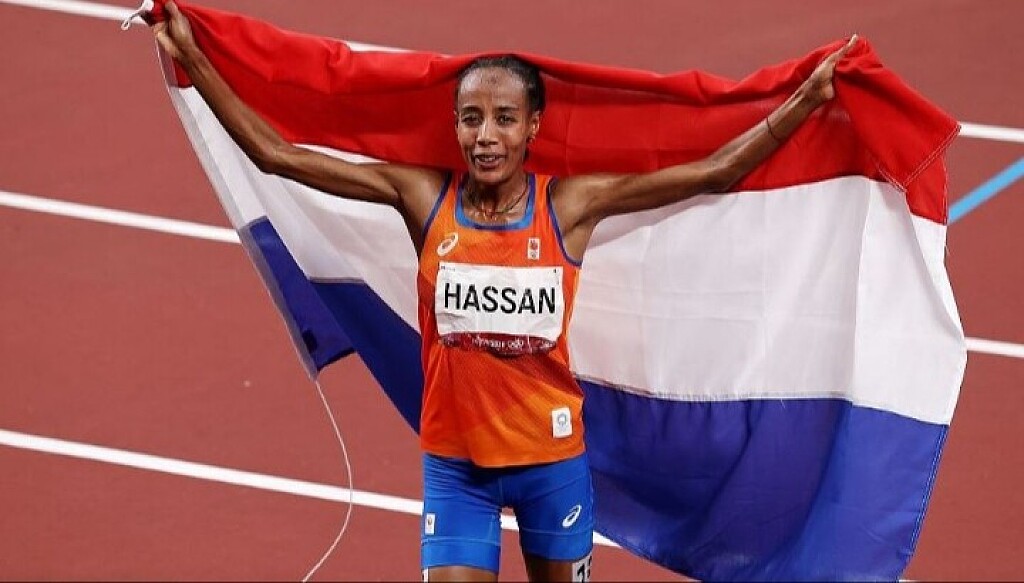
Hassan Sidelined: Olympic Champion Withdraws from London Marathon in Injury Blow
The road to the 2026 edition of the London Marathon—scheduled for Sunday, April 26th, 2026, in London—has suffered a major shake-up following the withdrawal of reigning Olympic champion Sifan Hassan. The Dutch star has been forced to pull out after sustaining an Achilles injury during a treadmill training session approximately six weeks ago, cutting short what many expected to be another thrilling appearance.
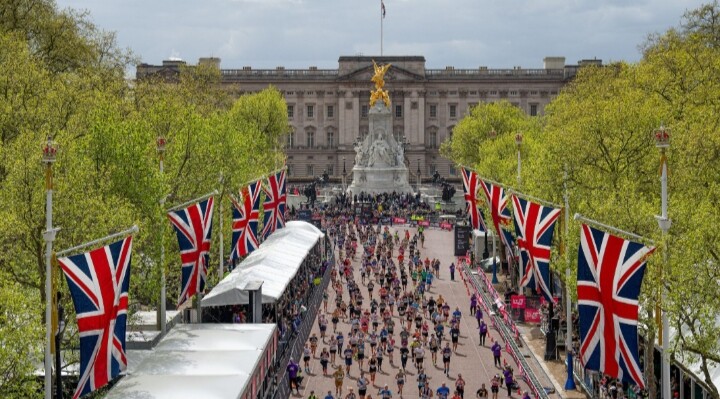
For Hassan, the decision was anything but simple. London holds a special place in her career—it is the stage where she announced her marathon brilliance to the world, capturing her first victory over the distance in unforgettable fashion. However, elite competition demands peak physical condition, and anything less can compromise both performance and long-term health.
In a heartfelt reflection, Hassan acknowledged the emotional weight behind stepping away from a race she deeply cherishes. Despite initial hopes that the injury would subside, it became increasingly clear as training progressed that she could not reach the level she expects of herself. Prioritizing recovery, she has chosen patience over risk, signaling the mindset of a seasoned champion who understands the importance of longevity in sport.
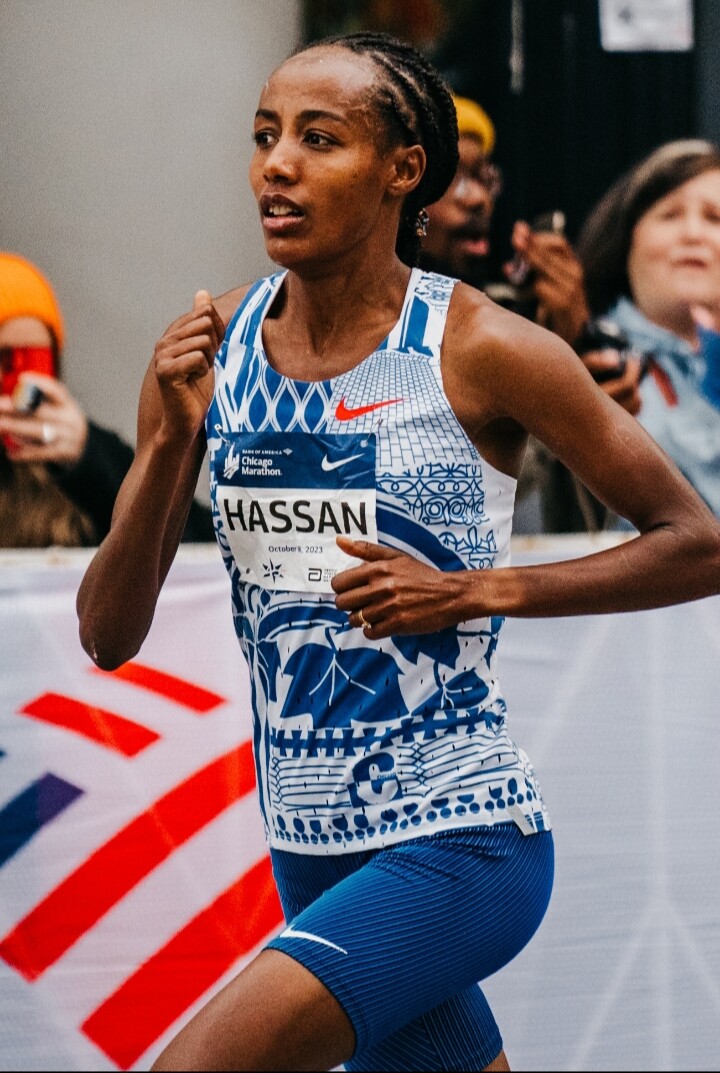
Her absence undeniably alters the dynamic of the race, yet the women’s field remains exceptionally strong. World-class contenders such as Tigst Assefa, Joyciline Jepkosgei, and Hellen Obiri are still set to headline the event, ensuring that the competition will retain its elite status and global appeal.
While fans will miss Hassan’s electrifying presence on the streets of London, her focus now shifts to recovery and a full return to racing. If her career has proven anything, it is that setbacks often serve as the foundation for even greater comebacks. And when she does return to the London stage, it will undoubtedly be with renewed strength and unfinished business.
by Erick Cheruiyot for My Best Runs.
Login to leave a comment
A Historic Debut in Barcelona Sparks a Global Debate
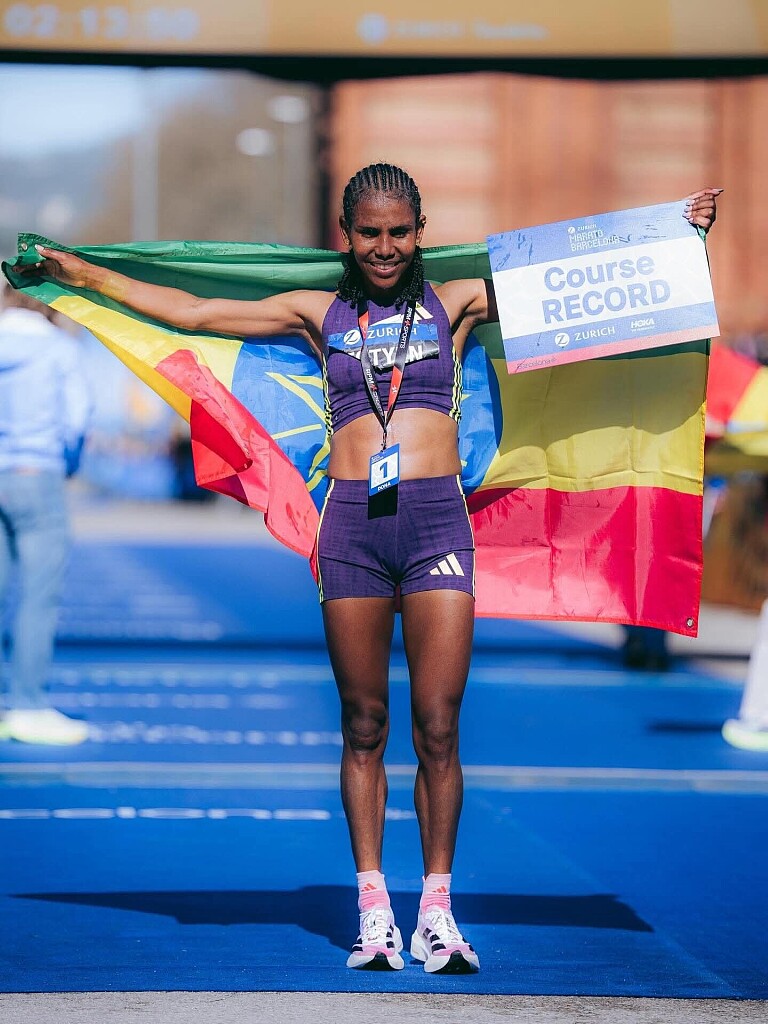
Distance running witnessed a remarkable moment at the Barcelona Marathon 2026, where Ethiopian star Fotyen Tesfay delivered one of the most extraordinary marathon debuts ever recorded. In her first attempt at the classic 42.195-kilometer distance, Tesfay stormed through the streets of Barcelona in 2:10:53, producing the second-fastest women’s marathon time in history.
The performance instantly reverberated across the athletics world. Not only was it a commanding victory, but it also placed Tesfay within striking distance of the current world record of 2:09:56, held by Kenya’s Ruth Chepngetich.
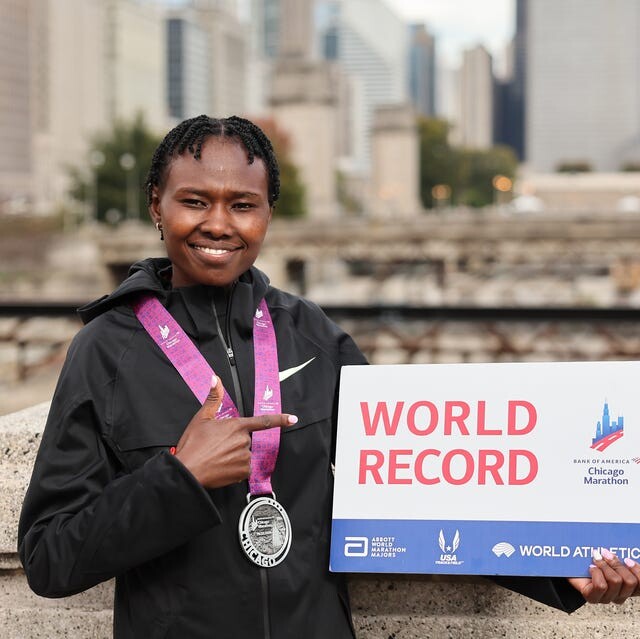
That historic record was set on 13 October 2024 during the Chicago Marathon 2024, when Chepngetich delivered a groundbreaking run of 2:09:56, shattering the previous world record of 2:11:53 established by Ethiopia’s Tigst Assefa by nearly two minutes — one of the largest improvements ever seen in the women’s marathon.
Tesfay’s run in Barcelona was a masterclass in pacing, strength, and composure. Transitioning from shorter road races and track events to the marathon often presents a steep learning curve, yet the Ethiopian appeared completely at ease over the demanding distance. From the early kilometers to the decisive closing stretch, she maintained a relentless rhythm that carried her to a historic debut.

However, as admiration for Tesfay’s performance spread across the global running community, another conversation inevitably resurfaced. Chepngetich, despite holding the official world record, is currently serving a three-year doping ban, a situation that has complicated how many fans and analysts view the record.
While the mark still stands in the official record books, the circumstances have sparked renewed debate within the sport. Many observers are now asking a difficult question: should Tesfay’s 2:10:53 be regarded as the true benchmark in women’s marathon running?
The discussion underscores one of athletics’ enduring challenges — safeguarding credibility while honoring exceptional performances. Records are meant to represent the very peak of human achievement, yet controversies surrounding banned athletes can leave lasting doubts.
For Tesfay, however, the significance of her achievement remains undeniable. Few runners in history have debuted in the marathon with such authority. Her time now ranks among the greatest ever recorded and signals the arrival of a formidable new contender in women’s distance running.
Whether or not the official record books are ever reconsidered, one thing is clear: Fotyen Tesfay has ignited a powerful new chapter in the women’s marathon — and her breathtaking debut in Barcelona will be remembered for years to come.
by Erick Cheruiyot for My Best Runs.
Login to leave a comment
A Dream Showdown Awaits: London Marathon Unveils a Historic Women’s Elite Field
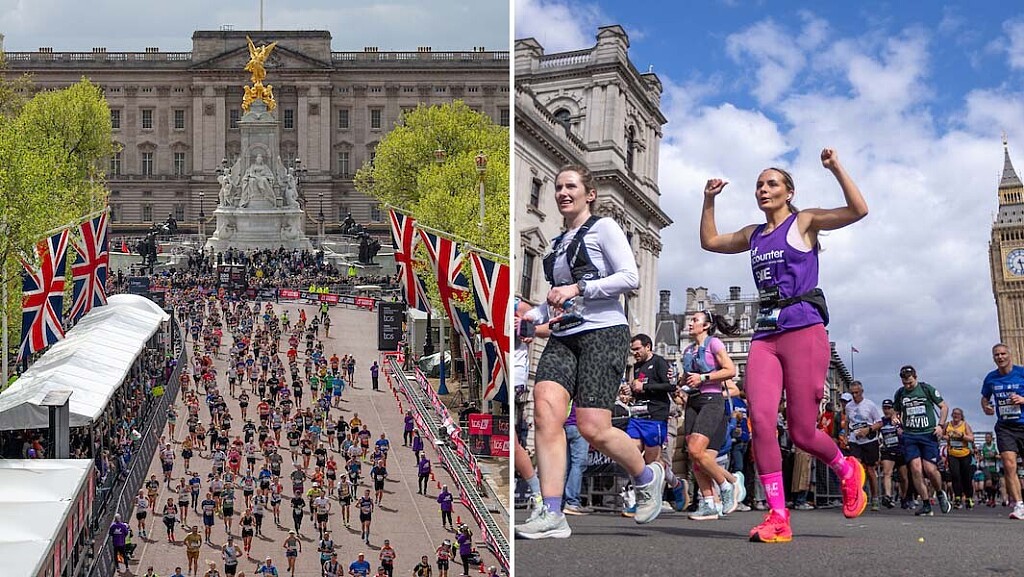
The 2026 TCS London Marathon, scheduled for Sunday, April 26, 2026, is shaping up to be one of the most electrifying races in the event’s storied history, with an elite women’s field that reads like a roll call of modern marathon greatness.
Reigning champion Tigst Assefa returns to London carrying both confidence and unfinished business. The Ethiopian star, whose 2:11:53 personal best ranks among the fastest ever recorded, will once again test her limits on the streets of the British capital. But this time, the challenge is even steeper.
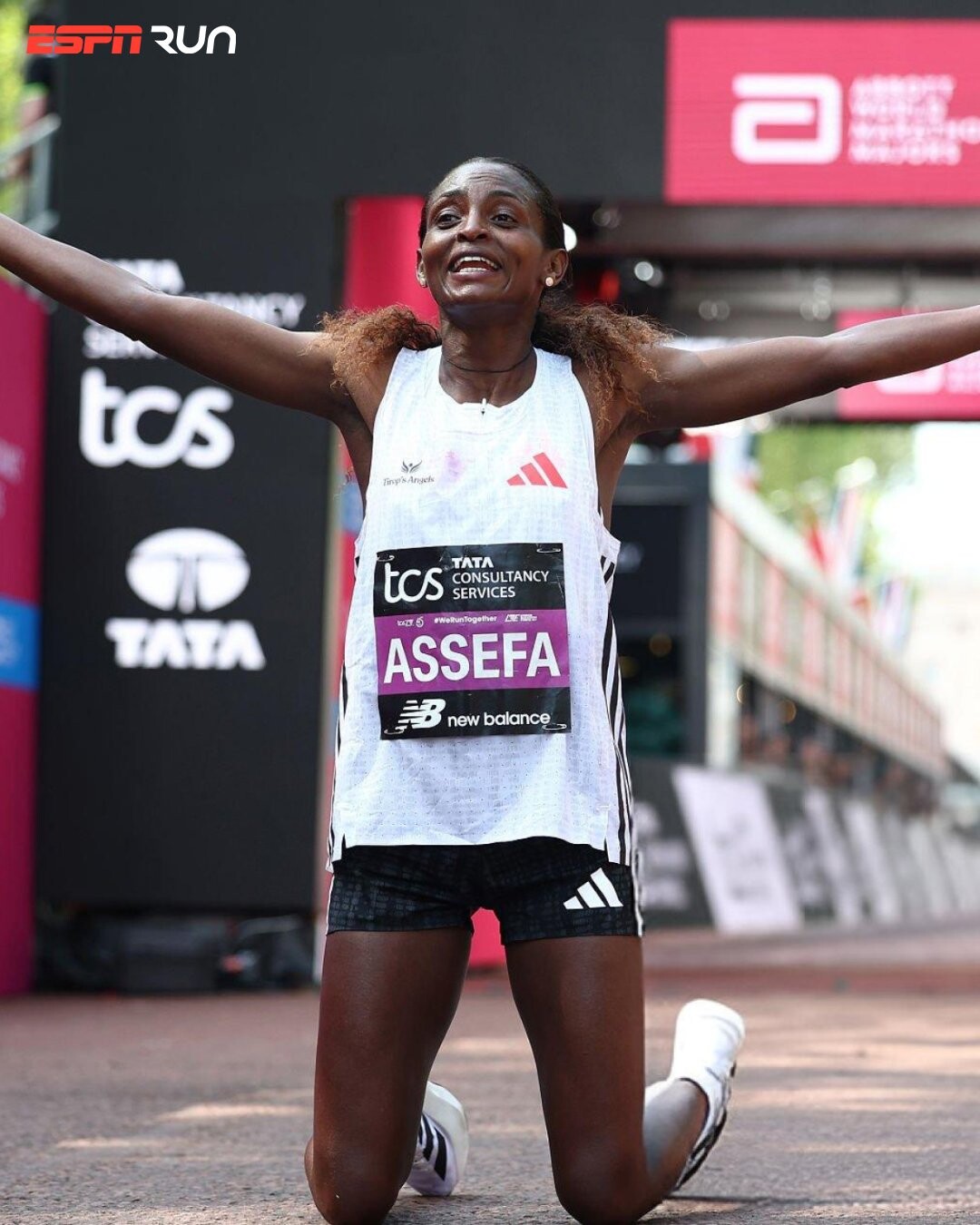
Standing in her way are the current Olympic and world marathon champions, Sifan Hassan and Peres Jepchirchir, setting the stage for a clash that fans have long dreamed of. Hassan’s fearless racing style and unmatched versatility have redefined what is possible in distance running, while Jepchirchir’s tactical brilliance and finishing power make her one of the most dangerous competitors over 42.195 kilometers.
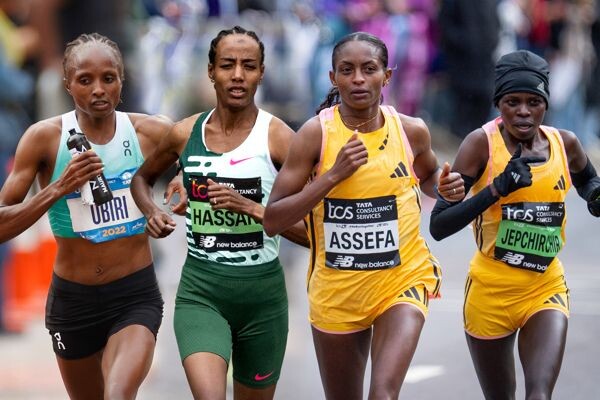
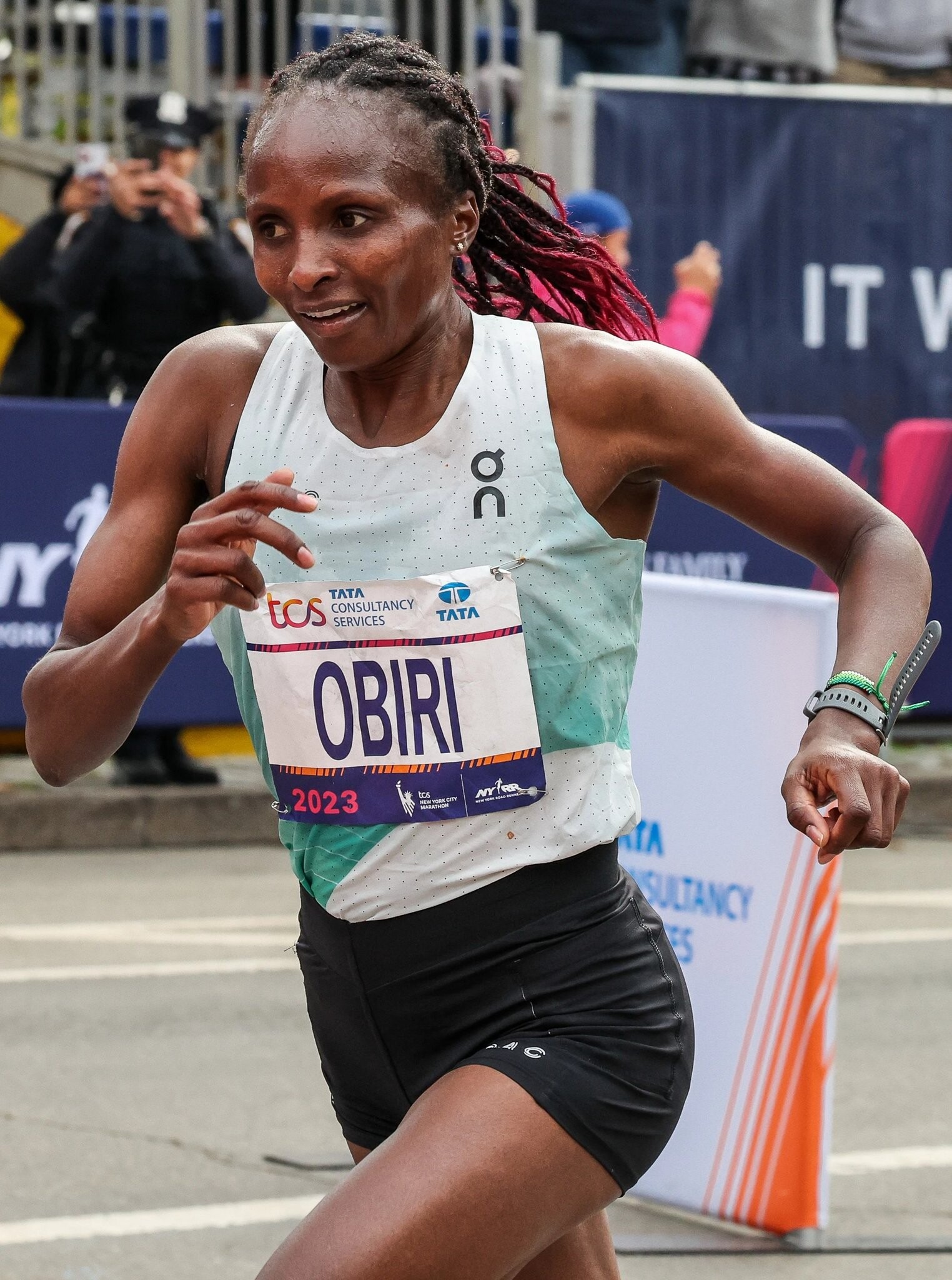
Adding another layer of intrigue is Hellen Obiri, the double New York City and Boston Marathon champion, who will be making her long-awaited London Marathon debut. Already proven on the toughest courses in the world, Obiri’s arrival in London raises expectations and deepens an already stacked field.
Experience and consistency also feature prominently through Megertu Alemu, a familiar force in major marathons. With four podium finishes at World Marathon Majors—two of them in London—Alemu knows exactly what it takes to perform on this stage and could once again play a decisive role.
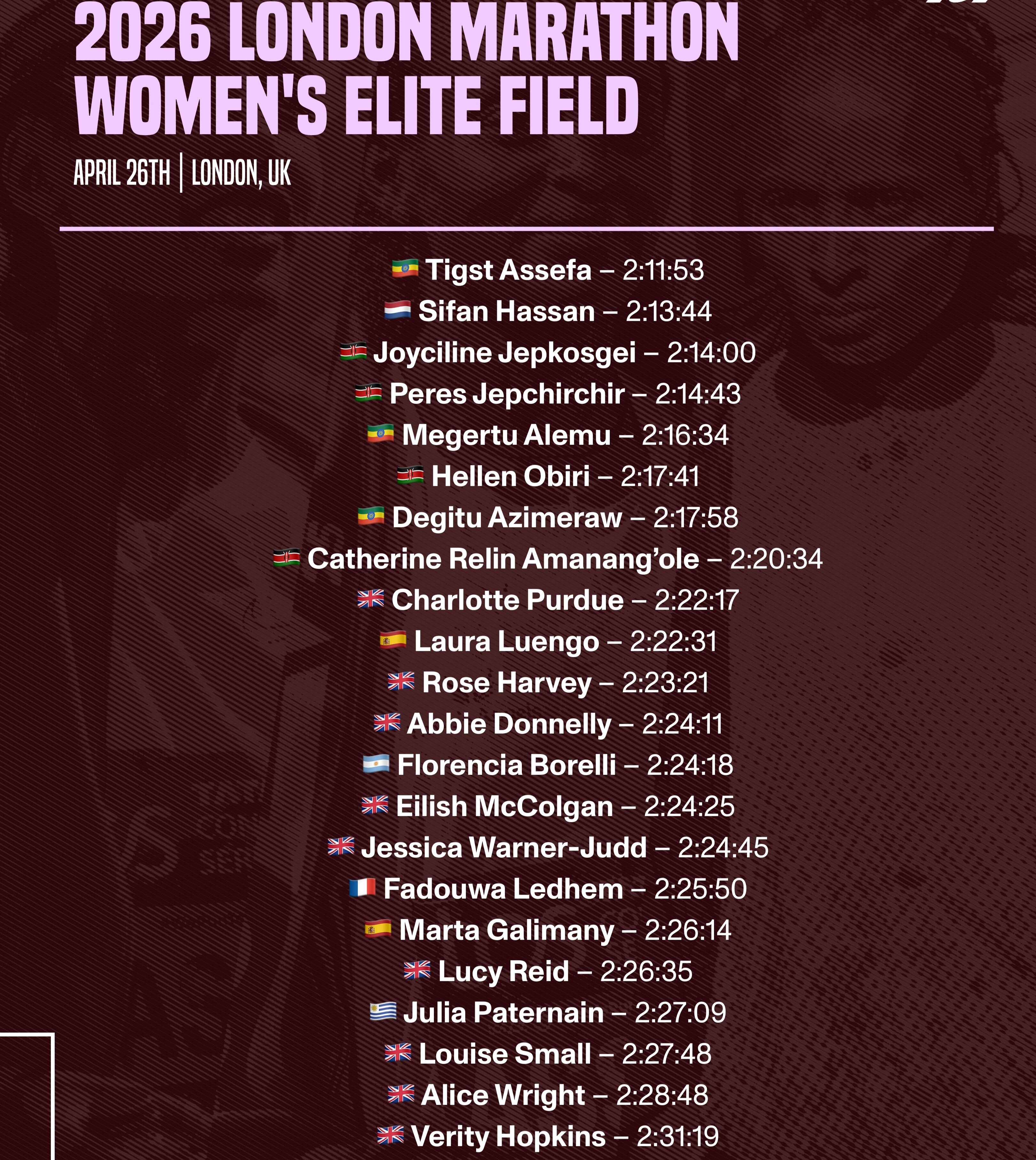
The depth does not end there. Former London winner Joyciline Jepkosgei, along with accomplished athletes such as Degitu Azimeraw, Catherine Amanang’ole, Charlotte Purdue, and Laura Luengo, ensures that no moment of the race will be predictable. From the opening kilometers to the final stretch along The Mall, pressure will be relentless.
More than just a race, the April 26, 2026 showdown promises a celebration of excellence, resilience, and fearless competition. With world-class champions, debutants hungry for glory, and proven contenders ready to strike, this year’s women’s race is not merely about winning—it is about redefining greatness on one of marathon running’s biggest stages.
The countdown to London has truly begun.
by Erick Cheruiyot for My Bestruns.
Login to leave a comment
TCS London Marathon
Since its inaugural edition on March 29, 1981, the TCS London Marathon has grown into one of the world's most prestigious road races, blending elite competition with an extraordinary charitable legacy. Founded by former Olympic champion and journalist Chris Brasher alongside Welsh athlete John Disley, the event has been staged every year and has been held in the spring annually...
more...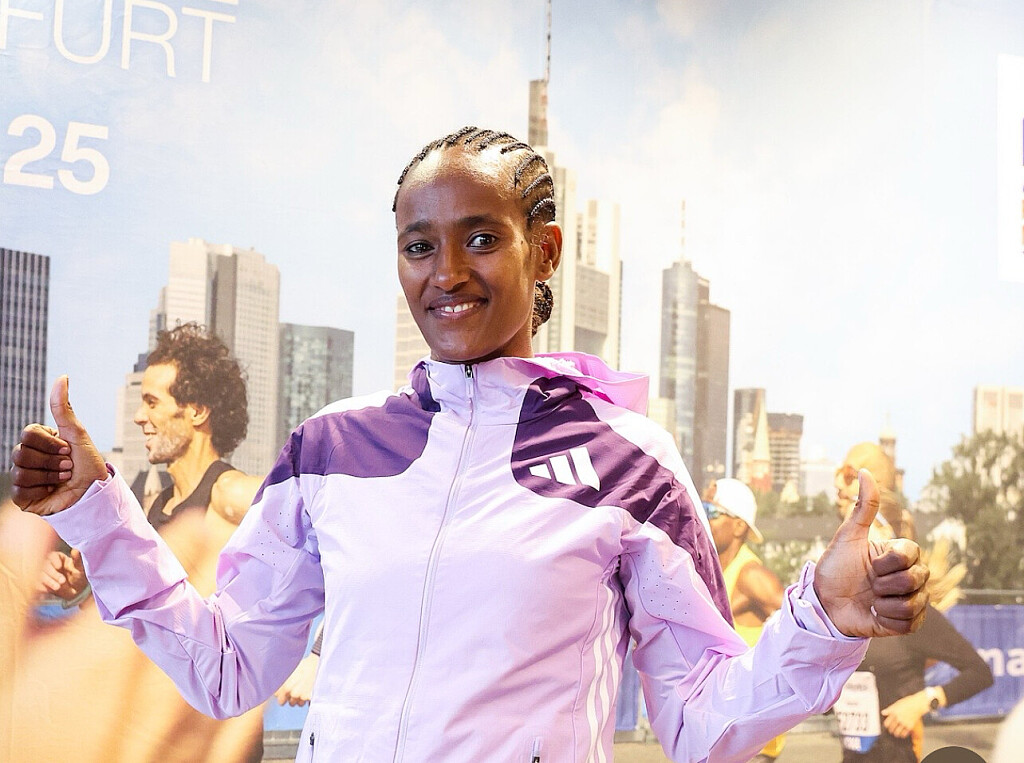
Buze Diriba Eyes Greater Heights After Frankfurt Marathon Triumph
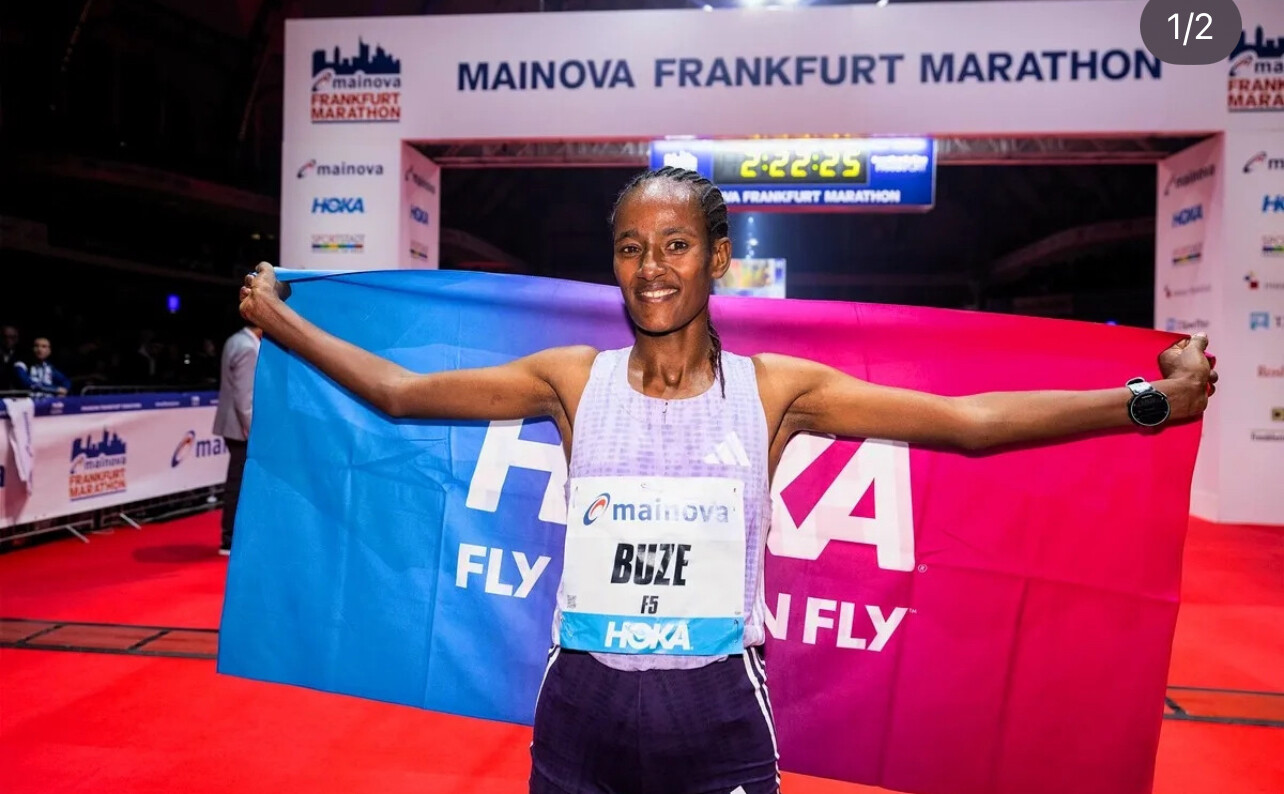
Ethiopia’s Buze Diriba could be the next major star in women’s marathon running, judging by her performance at the Mainova Frankfurt Marathon. On Sunday, the 31-year-old captured the biggest win of her road-running career, dominating the race from start to finish and clocking a personal best of 2:19:34 — making her the fifth-fastest woman in Frankfurt’s history.
Despite strong headwinds and the loss of her pacemaker with 10 kilometers to go, Diriba maintained control. “If that hadn’t happened and the wind hadn’t been so strong, I would have run 2:16 today,” she said after earning the €30,000 winner’s prize. “Next time I’ll aim to run around 2:16.”
Ambitions Beyond Frankfurt
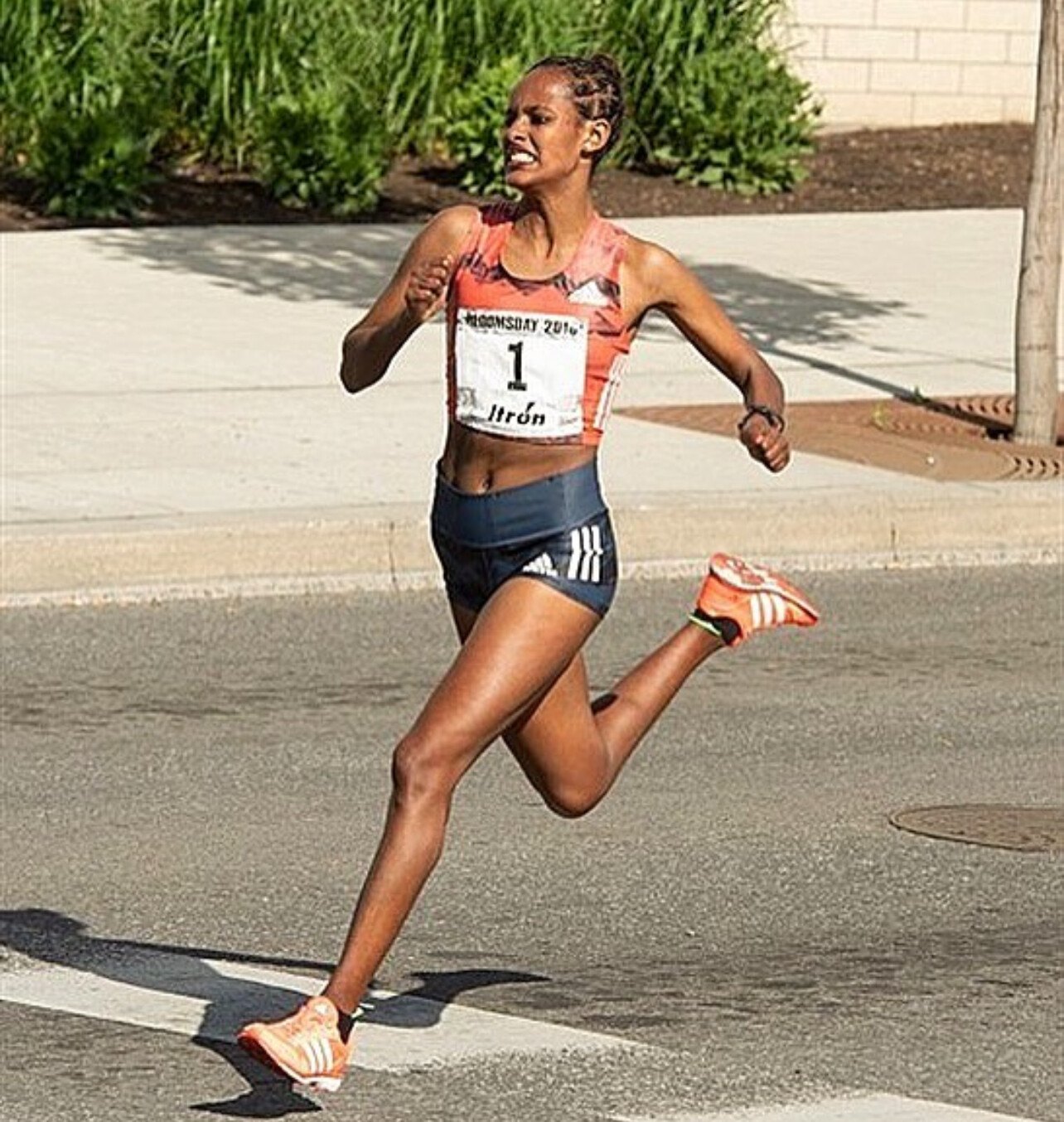
Diriba’s breakthrough in Frankfurt could mark the beginning of a new chapter. “I want to run in the World Championships and Olympic Games and win titles,” she said. Her goal is clear — to join the elite ranks of Ethiopia’s greatest distance runners.
She trains under Gedemu Dedefo in Addis Ababa, one of the most powerful marathon training groups in the world. The camp includes Olympic and World Championship silver medalist Tigst Assefa, Chicago Marathon champion Hawi Feysa, and Olympic marathon champion Tamirat Tola.
A year ago, Feysa used Frankfurt as her own launchpad to stardom, setting a course record of 2:17:25. Diriba came to this year’s edition determined to challenge that mark. “It helps me to have such strong training partners — it makes me stronger,” she explained. “I know I’ll need to run under 2:15 in the future to reach world-class level.”
From Arsi to the World Stage
Diriba hails from Asela, in Ethiopia’s famed Arsi region — the same area that produced legends such as Haile Gebrselassie. Her parents are farmers, and as a child she helped with chores before running to school each morning, “only about 20 minutes away.”
She began running competitively at 16, inspired by Ethiopian Olympic champions Meseret Defar and Tirunesh Dibaba. At 18, she captured the World Junior 5,000m title (2012), signaling her potential as a future great.
“Since then, Gemedu Dedefo has been my coach,” Diriba said. Now a mother of two young daughters, she credits her husband Guta Wami for keeping the household running while she trains and competes.
A Family of Runners
Athletic talent runs deep in the Diriba family. Her younger brother Boki Diriba, 21, is already making his mark, finishing 10th at the 2023 World Cross Country Championships and running 2:07:13 for sixth in Hamburg this April.
With Buze and Boki both rising fast, the Diriba name could soon become one of the most recognized in international road running — a new family dynasty emerging from Ethiopia’s storied highlands.
by Race News Service
Login to leave a comment
Sabastian Sawe Dominates in Berlin With 2:02:16 Victory
Berlin, September 21, 2025 — The Berlin Marathon once again lived up to its reputation as the world’s fastest stage for marathon running. Kenya’s Sabastian Sawe stormed to victory on Sunday, clocking 2:02:16, the fastest marathon time in the world this year and the fourth-fastest ever run on the streets of Berlin.
Sawe, already the reigning champion from Valencia (2024) and London (2025), extended his unbeaten record over the marathon distance. From the gun, he attacked with confidence, hitting 5km in 14:09and 10km in 28:26, well inside world-record pace. By halfway, his split of 60:16 electrified the Berlin crowds and suggested history might be on the cards.

But conditions proved decisive. Unseasonably warm temperatures — climbing to 25°C (mid-70s°F) — and the loss of his pacemakers before the 23km mark forced Sawe to shoulder the workload alone. Though the second half slowed, he maintained control and powered down Unter den Linden to the Brandenburg Gate, finishing with a commanding lead.
Behind him, Akira Akasaki of Japan impressed with a breakthrough run, finishing second in 2:06:15, while Ethiopia’s Chimdessa Debele held on for third in 2:06:57.
Wanjiru Outkicks Dida in Women’s Duel

The women’s race produced its own drama, with Kenya’s Rosemary Wanjiru edging Ethiopia’s Dera Dida by just three seconds. Wanjiru clocked 2:21:05 after a decisive surge past the 25km mark. Dida followed in 2:21:08, while fellow Ethiopian Azmera Gebru completed the podium in 2:21:29.
“I knew it would come down to the final kilometers,” Wanjiru said afterward. “The crowd in Berlin gave me so much energy.”
Berlin’s Enduring Legacy
This year’s edition was the 51st running of the Berlin Marathon, and once again, the German capital showcased why it is considered the “world record course.” Since 2003, the men’s world record has been broken eight times in Berlin, most recently by Eliud Kipchoge’s 2:01:09 in 2022. On the women’s side, Tigst Assefa stunned the world here in 2023 with her record 2:11:53.
While Sawe fell short of rewriting those marks, his performance in the heat confirmed his status as the man to beat in global marathon running. With three straight victories in world-class fields, he has announced himself as the heir apparent to Kipchoge.
Results at a Glance
Men
1. Sabastian Sawe (Kenya) — 2:02:16
2. Akira Akasaki (Japan) — 2:06:15
3. Chimdessa Debele (Ethiopia) — 2:06:57
Women
1. Rosemary Wanjiru (Kenya) — 2:21:05
2. Dera Dida (Ethiopia) — 2:21:08
3. Azmera Gebru (Ethiopia) — 2:21:29
by Boris Baron
Login to leave a comment
BMW Berlin Marathon
The story of the BERLIN-MARATHON is a story of the development of road running. When the first BERLIN-MARATHON was started on 13th October 1974 on a minor road next to the stadium of the organisers‘ club SC Charlottenburg Berlin 286 athletes had entered. The first winners were runners from Berlin: Günter Hallas (2:44:53), who still runs the BERLIN-MARATHON today, and...
more...
Super Shoes or Super Runners? How Carbon-Plated Racing Shoes Are Reshaping the Distance Running World
A Bold Step Forward—or Too Much?
The eye-catching shoes in the images, with their bright yellow color and radical stack height, exemplify the cutting-edge engineering behind today’s carbon-plated distance racing shoes. These models, possibly from Puma’s Nitro range, showcase an exaggerated rocker design, thick midsoles, and strategically placed carbon plates, all intended to maximize energy return. However, this aggressive design pushes the limits of World Athletics regulations, which restrict stack heights to a maximum of 40mm for road races. If these shoes exceed that, they would be deemed illegal in sanctioned competitions—a fine line that highlights the tension between innovation and fairness in modern distance running.
Over the past few years, the distance running community has witnessed a revolution, not just in athletic performance but in technology. At the heart of this transformation are the carbon-plated “super shoes,” with models like the Nike Alphafly 3, Adidas Adizero Pro Evo 1, and Saucony Endorphin Elite capturing headlines—and finish lines.
These shoes are more than just a flashy innovation. They represent a fusion of engineering, biomechanics, and material science aimed at optimizing energy return and minimizing fatigue. The secret lies in their construction: a lightweight, resilient foam midsole paired with a rigid carbon-fiber plate that creates a propulsive effect. Research has shown these super shoes can improve running economy by up to 4%, translating into crucial seconds—or even minutes—shaved off race times for elite athletes.
Marathon world records and personal bests are being rewritten at a blistering pace. From Eliud Kipchoge’s sub-two-hour marathon in a prototype Nike shoe to Tigst Assefa’s stunning women’s world record at the Berlin Marathon, the combination of human talent and advanced footwear is undeniable.
However, this technological leap hasn’t come without controversy. Critics argue that super shoes are blurring the line between natural ability and mechanical advantage, creating an uneven playing field. Access is also a concern: with many of these models retailing at $250 or more, elite athletes and well-funded programs often have a leg up on competitors who can’t afford the gear. Some purists feel this shift detracts from the simplicity and rawness of the sport, which historically prized grit and determination over gear.
Yet others argue that innovation is inevitable. After all, every era of distance running has had its technological advances, from cinder to synthetic tracks, from wool to moisture-wicking gear. Super shoes are merely the latest chapter in this ongoing evolution. They offer athletes a tool—how they use it is still up to them.
For amateur runners, these shoes are not just for the elites. Weekend warriors chasing personal records have embraced carbon-plated models, with many reporting improvements in comfort and reduced post-race soreness. But it’s essential to note that no shoe can replace proper training, nutrition, and race strategy.
Looking ahead, the super shoe debate will likely continue, especially as brands develop even more advanced models. World Athletics, the sport’s governing body, has already implemented regulations on shoe design and stack height to maintain some level of fairness.
In the end, the question remains: are we witnessing the rise of super runners, or is this the dawn of a new era where gear becomes as crucial as training? Either way, carbon-plated racing shoes have changed distance running forever—and there’s no turning back.
"As a master runner I like a shoe that does not have such a thick sole," says 77 year old lifetime runner Bob Anderson. "I have taken a few falls and these new super shoes could be a problem."
by Boris Baron
Login to leave a comment
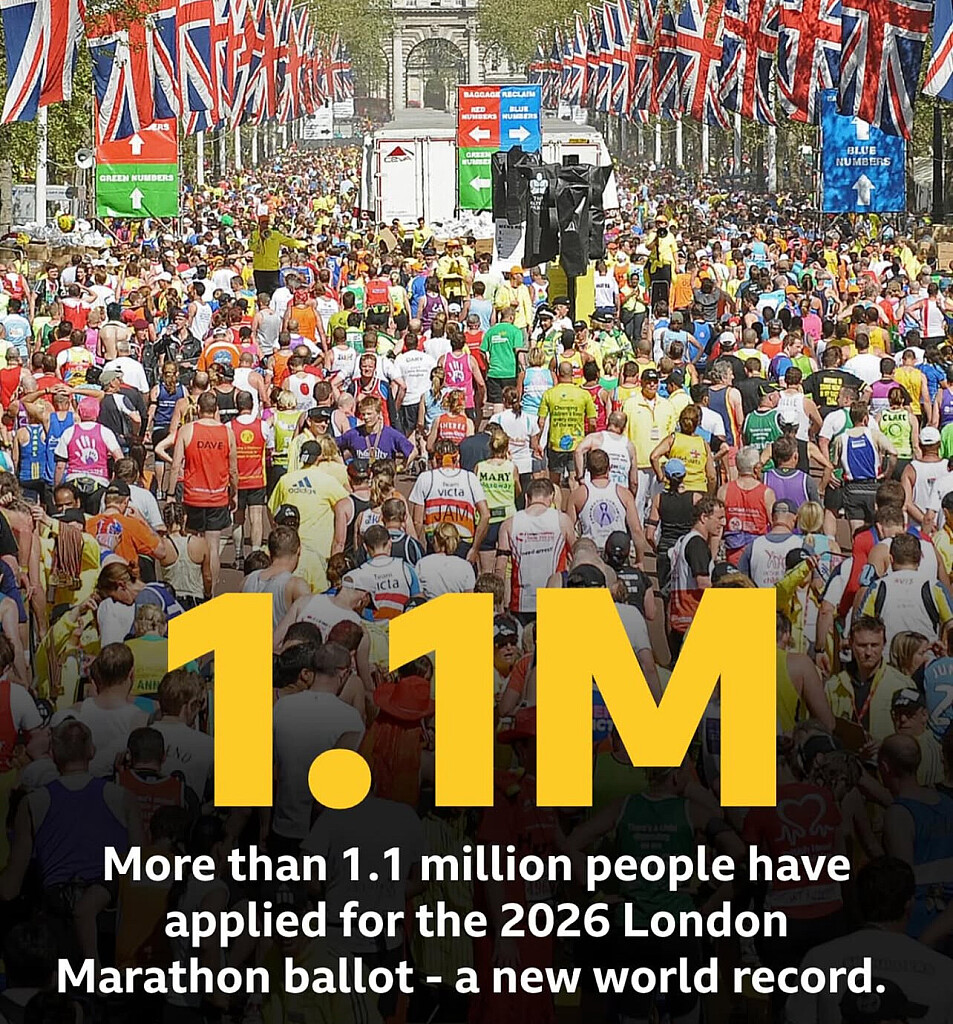
London Marathon Sets New Record with Over 1.1 Million Applications for 2026
The London Marathon continues to captivate the global running community, as organizers announced a record-breaking 1,133,813 applications for the 2026 race. This figure represents a 36% increase from the previous year’s record of 840,318 applications for the 2025 event, underscoring the marathon’s unparalleled appeal .
“This is an absolutely staggering total which reaffirms London as by far the most popular marathon on the planet,” said Hugh Brasher, CEO of London Marathon Events. “Marathon Day is always an extraordinary and inspirational day when we celebrate the very best of humanity.”
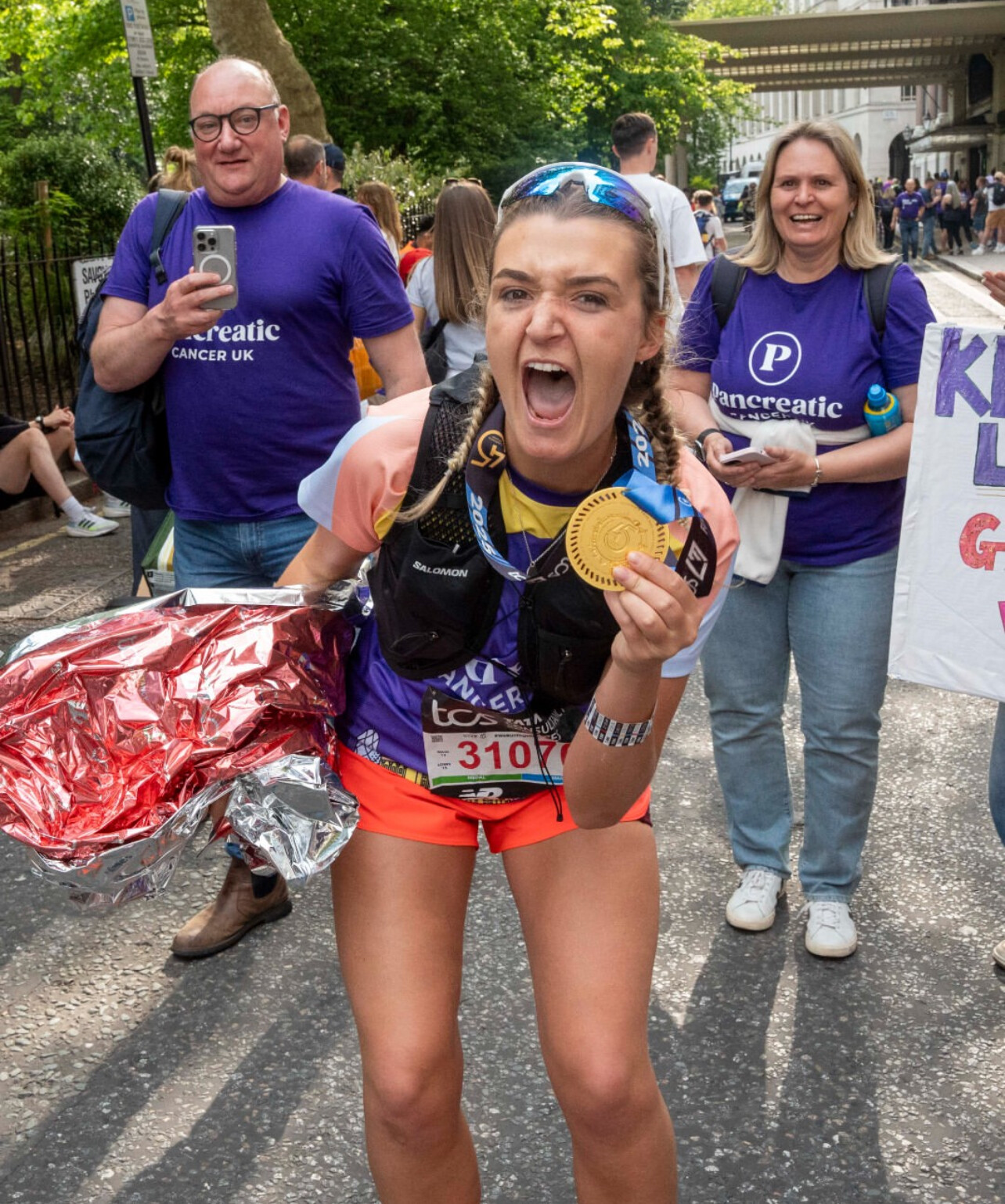
The 2025 edition of the marathon further cemented its legendary status. A record 56,640 runners crossed the finish line, setting a new world record for the highest number of finishers in a marathon. This achievement surpasses the previous record of 55,646 set by the New York City Marathon in 2024 .

In the women’s elite race, Ethiopia’s Tigst Assefa delivered a historic performance, completing the course in 2:15:50. This time set a new women’s-only marathon world record, surpassing the previous mark of 2:16:16 established by Peres Jepchirchir in 2024 .

The men’s elite race saw Kenya’s Sabastian Sawe claim victory with a time of 2:02:27, the second-fastest in London Marathon history, trailing only Kelvin Kiptum’s 2:01:25 set in 2023 .
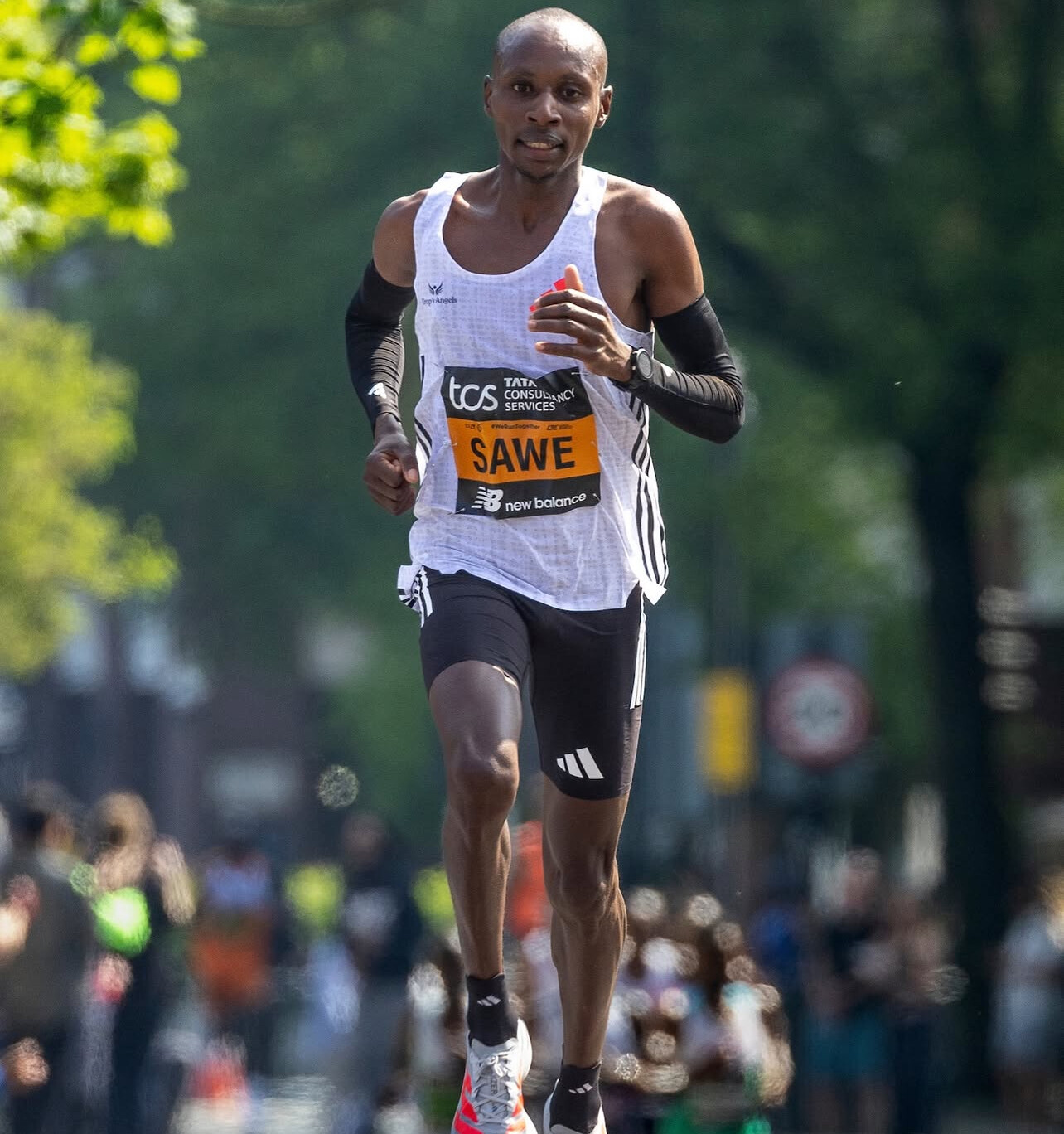
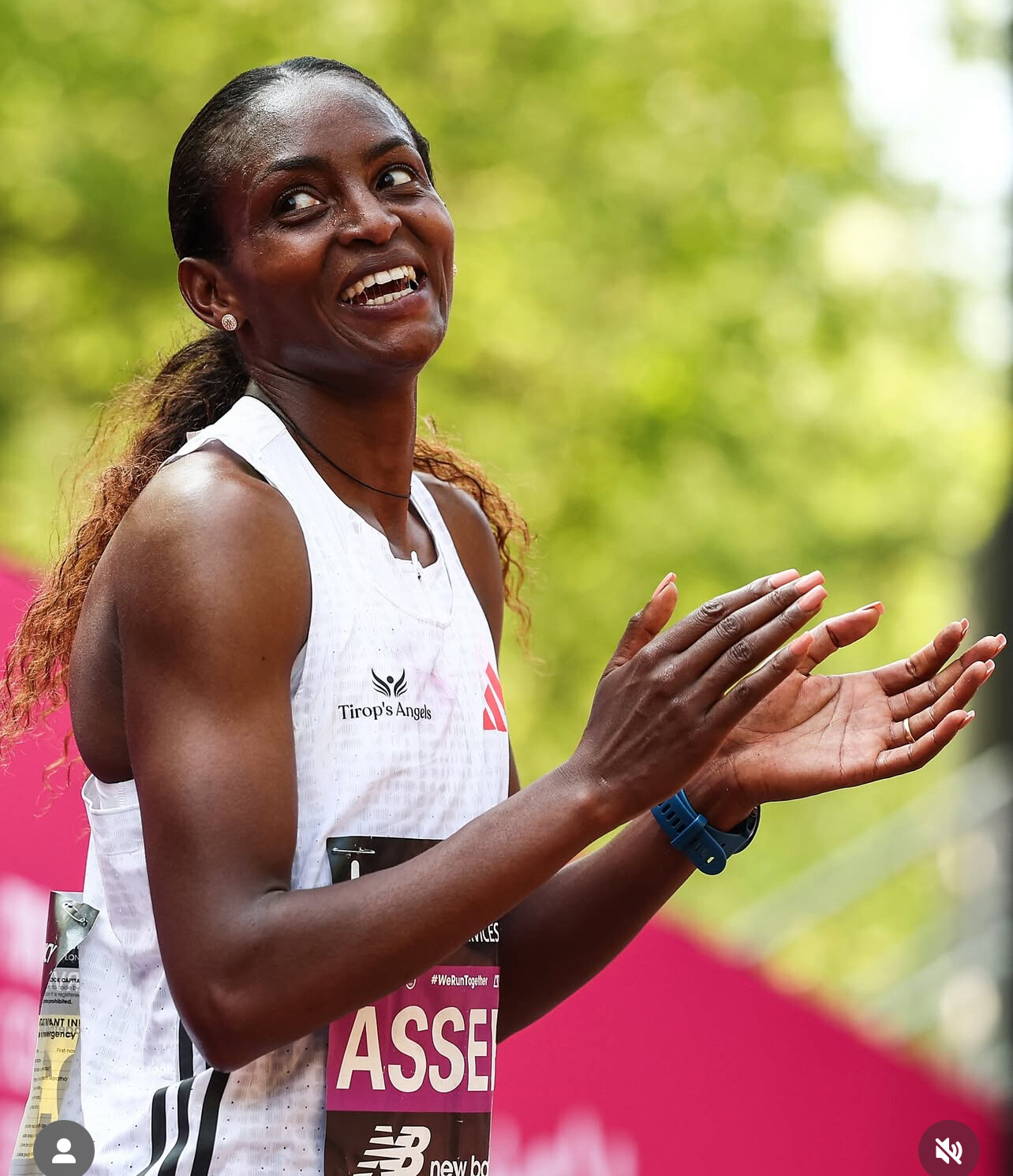
Beyond athletic achievements, the 2025 marathon also made a significant philanthropic impact. Participants raised over £75 million (approximately $99.9 million USD) for various charities, reinforcing the event’s status as the world’s largest single-day fundraising event .

With its blend of elite competition, mass participation, and charitable fundraising, the London Marathon continues to set the standard for global marathon events.
by Boris Baron
Login to leave a comment
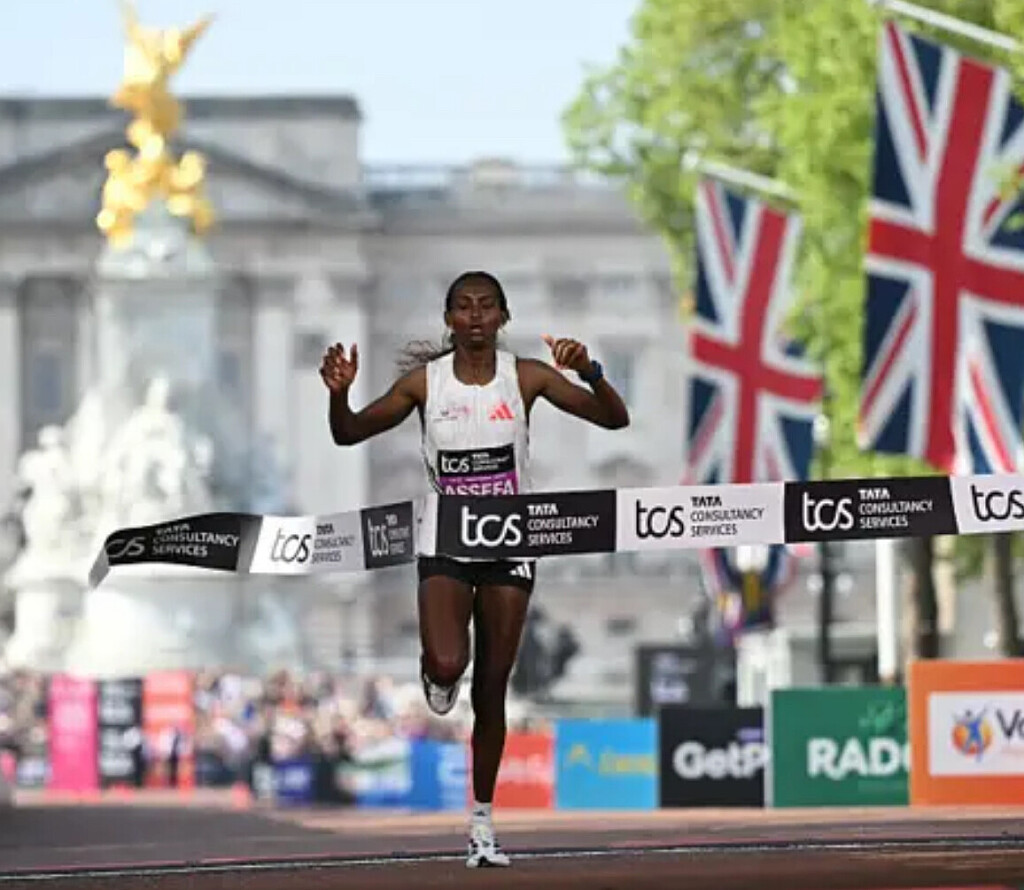
Tigst Assefa Shatters Women’s-Only World Record at the 2025 London Marathon
History was made on the streets of London this morning. Ethiopia’s Tigst Assefa surged to victory at the 2025 TCS London Marathon, setting a new women’s-only world record with an unofficial time of 2:15:50.
With cool, crisp conditions early in the race, Assefa quickly established her dominance. Pulling away from her rivals by the halfway point, she maintained a strong and steady pace through the final miles. In the closing stages, it was clear the race against the clock had begun — and she delivered in spectacular fashion, crossing the finish line with a commanding lead of over a minute ahead of second-place Joyciline Jepkosgei.

The previous women’s-only world record was held by Britain’s Paula Radcliffe, whose 2:17:01 mark from London in 2005 had stood for two decades. Assefa’s breakthrough performance, pending official ratification, trims over a minute from that legendary time.
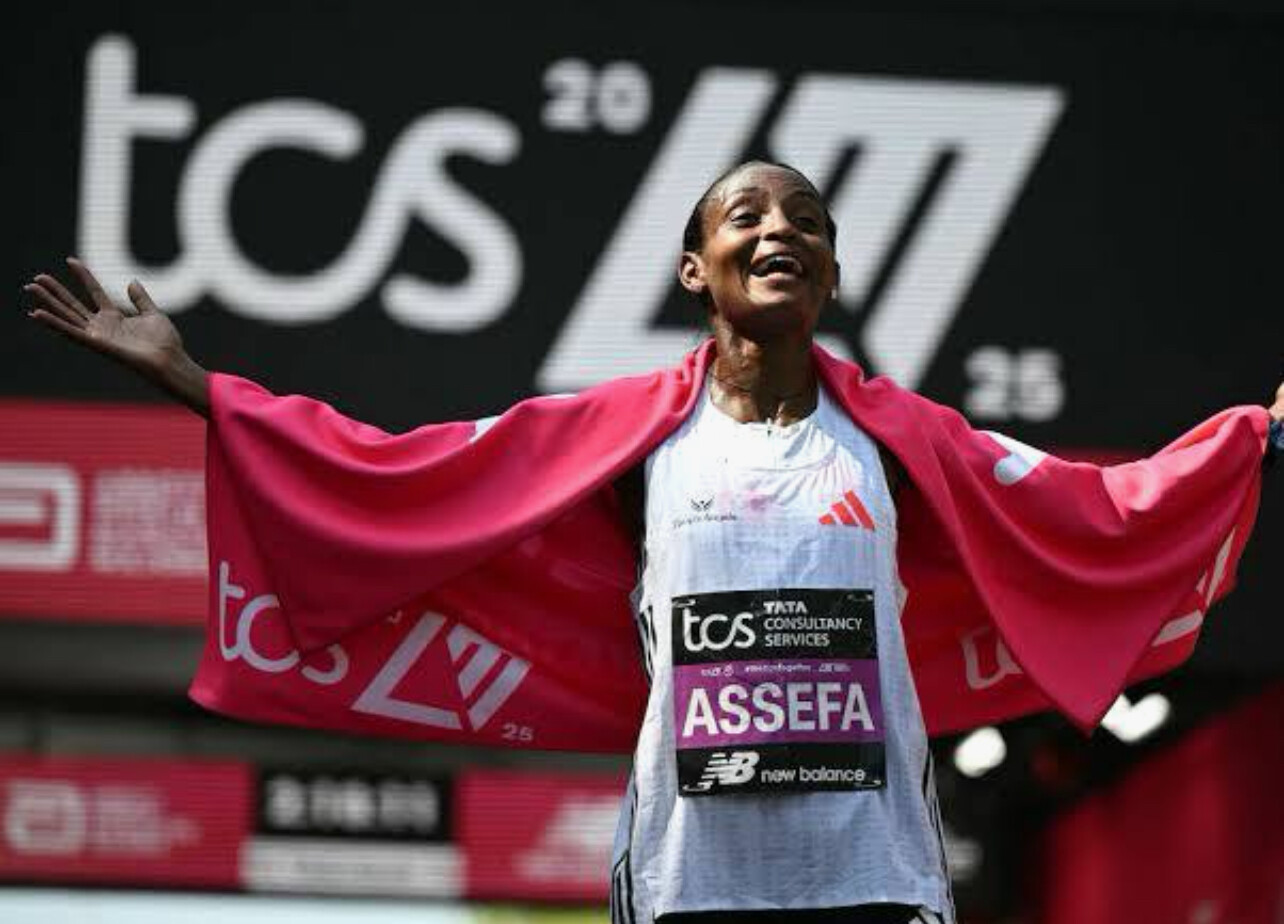
Tigst Assefa had already stunned the running world with her mixed-race world record of 2:11:53 set in Berlin in 2023. Today, she confirmed her place among the all-time greats by dominating a race staged without male pacemakers, underlining her incredible solo strength.
Assefa’s record run headlined what has already become one of the most memorable editions of the London Marathon, with over 56,000 participants and perfect spring weather creating an electric atmosphere.
Paula Radcliffe posted "That was a phenomenal race so hats off to Tigst Assefa for being brave enough to go out in the pace she did!
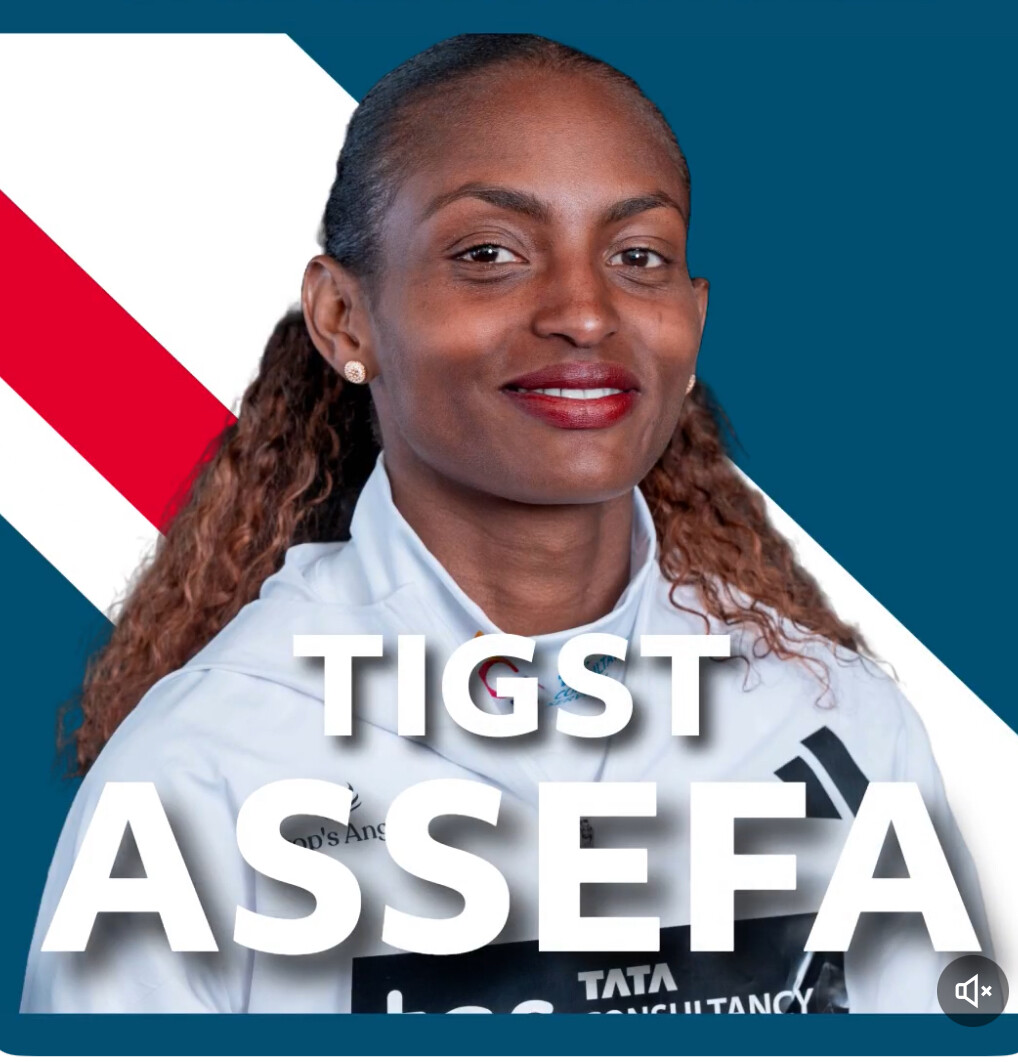
The manner in which she lifted herself to get across the line as well.
You can see how much it means to her. It's more to build on for her moving forward."
Eilish McColgan picks up the pace as she comes across the line in 02:24:25 for eighth place.
She's tired on her marathon debut but has done one thing she wanted - beat her mum Liz's best time. Liz McColgan won here in 1996.
A decent effort for a first attempt.
Top 13 Women’s Elite Finishers
1. Tigst Assefa (ETH) – 2:15:50
2. Joyciline Jepkosgei (KEN) – 2:18:44
3. Sifan Hassan (NED) – 2:19:00
4. Haven Hailu Desse (ETH) – 2:19:17
5. Vivian Cheruiyot (KEN) – 2:22:32
6. Stella Chesang (UGA) – 2:22:42
7. Sofiia Yaremchuk (ITA) – 2:23:14
8. Eilish McColgan (GBR) – 2:24:25
9. Rose Harvey (GBR) – 2:25:01
10. Susanna Sullivan (USA) – 2:29:30
11. Phily Bowden (GBR) – 2:30:28
12. Molly Bookmyer (USA) – 2:32:31
13. Holly Archer (GBR) – 2:39:45
Ethiopia’s Tigst Assefa delivered a historic performance, setting a new women-only world record with a time of 2:15:50. She broke away from the pack after the 30-kilometer mark and maintained her lead to the finish line.
Kenya’s Joyciline Jepkosgei secured second place with a strong finish at 2:18:44, while the Netherlands’ Sifan Hassan completed the podium in third with a time of 2:19:00.
Notably, Great Britain’s Eilish McColgan finished eighth, setting a new Scottish marathon record with her time of 2:24:25.
by Boris Baron
Login to leave a comment
Emile Cairess Withdraws from London Marathon Due to Injury, Halting Record Pursuit
Top British marathoner Emile Cairess has officially withdrawn from the 2025 TCS London Marathon due to a persistent ankle tendon injury that has derailed his training. The setback forces the 27-year-old to put his pursuit of Mo Farah’s British marathon record of 2:05:11 on hold as he focuses on recovery.
Cairess, who burst onto the marathon scene as the fastest British debutant of all time in 2023 with a 2:08:07 finish, had since lowered his personal best to 2:06:46, securing third place in last year’s London Marathon behind Alex Mutiso and Kenenisa Bekele. He followed that success with a fourth-place finish at the Paris Olympics, further solidifying his status as one of Britain’s brightest distance-running stars.

“It’s incredibly disappointing to miss London this year, especially after how well things had been progressing,” Cairess shared. “But the ankle injury has made it impossible to maintain the consistency I need. Right now, my focus is on healing properly so I can come back stronger.”
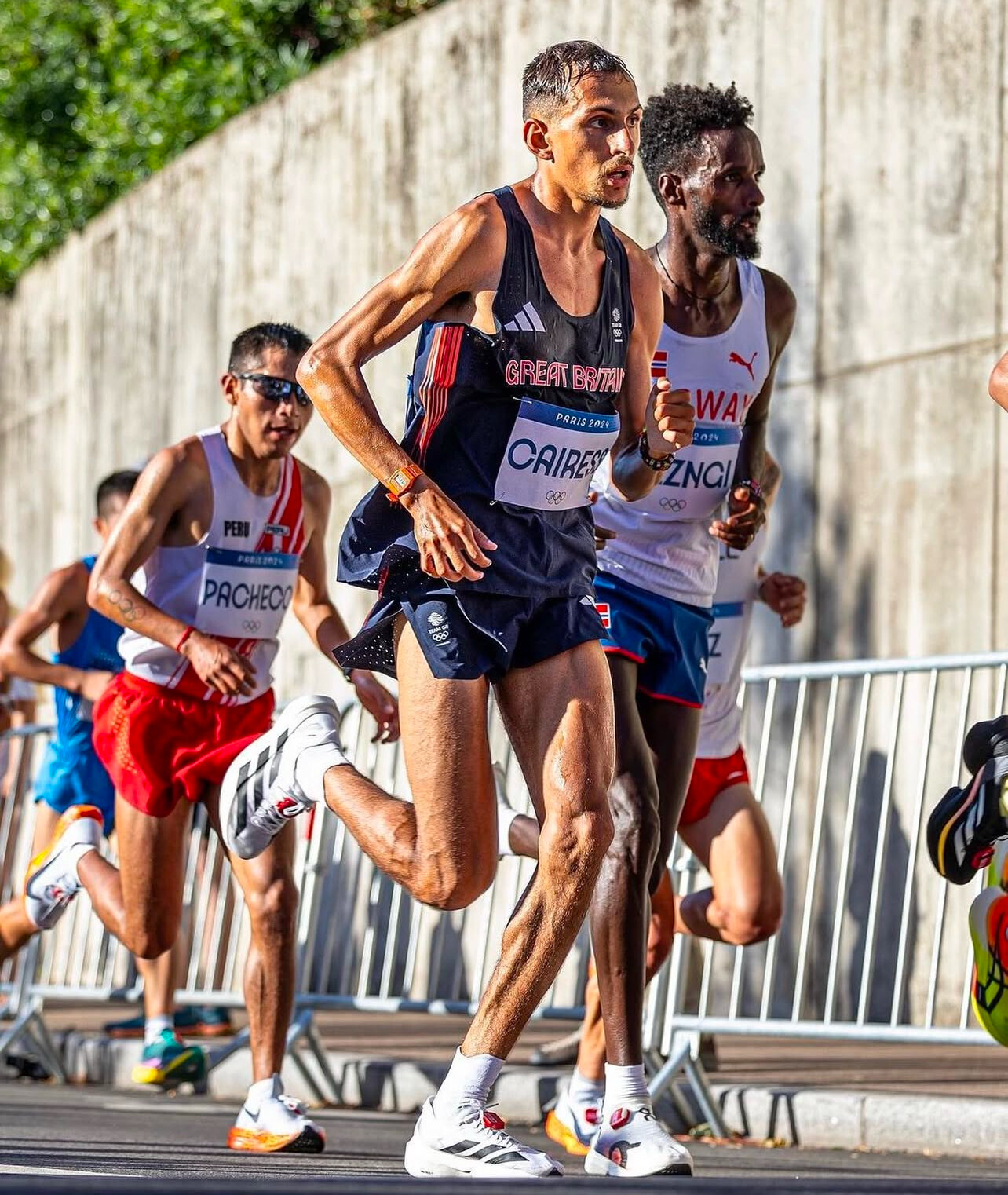
Star-Studded Field Remains

While Cairess’s absence is a blow to British hopes, the men’s elite field remains stacked with talent. Eliud Kipchoge, Kenenisa Bekele, and Olympic champion Tamirat Tola are set to headline the race, joined by world half-marathon record-holder Jacob Kiplimo and defending champion Alex Mutiso.
On the British front, Olympic triathlon champion Alex Yee will make his highly anticipated marathon debut, while Mahamed Mahamed and Phil Sesemann, both fresh from the Paris Olympics, aim to make their mark on home soil.
Women’s Elite Race Draws Global Talent
In the women’s race, Lucy Reid has also withdrawn due to injury after initially planning her London debut following a breakthrough 2:26:35 in Malaga last December. However, the competition remains fierce, with world record-holder Ruth Chepngetich, reigning Olympic champion Sifan Hassan, and Tigst Assefa—who famously shattered the Berlin Marathon record—leading the charge.
Adding to the excitement, defending champion Peres Jepchirchir will return, while British star Eilish McColgan is set to make her long-awaited marathon debut, bringing further domestic interest to the race.
While Cairess’s withdrawal is undoubtedly disappointing, the marathon season is far from over. With careful rehabilitation, he remains hopeful for a return later this year, possibly targeting the Berlin or Chicago Marathons as alternative stages for his record pursuit.
The London Marathon, meanwhile, continues to promise world-class performances, with a stellar field ready to light up the streets of the British capital come race day.
Login to leave a comment
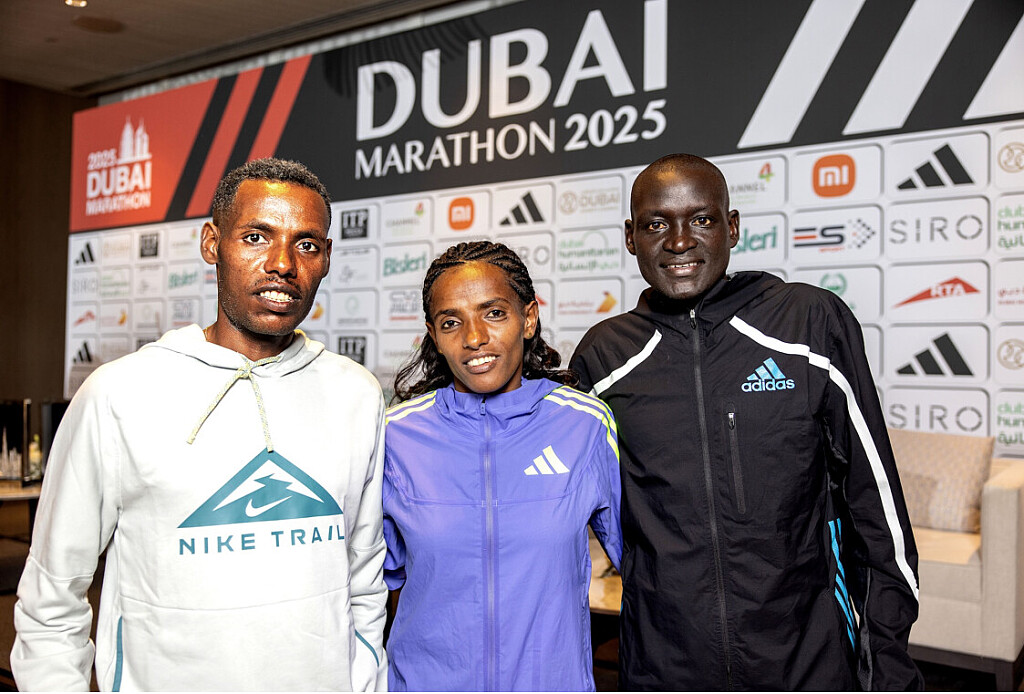
Fast field set for Dubai marathon this Sunday
If there’s such a thing as a First Family in athletics, then it has be the Tola-Dida clan from Ethiopia; and one of their favourite watering holes is the Dubai marathon, whose quarter century is celebrated with Sunday morning’s event. Current Olympic men’s champion Tamirat Tola won Dubai in 2017 (2.04.11), while spouse Dera Dida won in 2023 (2.21.11), on the same day that her brother-in-law, Tamirat’s younger sibling Abdisa won the men’s title (2.05.42).
Tamirat went on to greater things, with a world championship silver medal in London later in 2017, then gold in the delayed world championship in Eugene 2022, a New York Marathon victory in 2023, and the Olympic crown last year. This time round, he has a far more important task, staying at home and minding their daughter.
Because bringing their daughter (even with a nanny) to last year’s Dubai race may have distracted Dera from a repeat victory, though she still finished third in 2.19.29, two minutes faster than the previous year; but she’s left hubby to do the domestic chores this time, and comes determined to win her second Dubai Marathon while Tamirat watches on TV back home on the outskirts of capital Addis Ababa.
As befits a First Family, only the best is good enough, and their training group has got to be one of if not the strongest in the world. Among her running partners are former marathon world record holder and Olympic silver medallist Tigst Assefa as well as the current marathon World Champion Amane Beriso. ‘I don’t train with the group every day,’ she said through an interpreter. ‘On a day to day basis, I train with Tamirat, but I join them occasionally. Since Tamirat won the Olympics, we’ve had a lot more media interest, but we try to concentrate on our running and not get too distracted’.
Well, her rivals (and compatriots) here in Dubai, Tigist Girma and Zeineber Yimer already have plenty to distact her, given that their respective best times, 2.18.52 and 2.19.07 are better than hers (2.19.24), but not so much as to deter her ‘I think I’m in shape to run the course record (2.16.07, set by another colleague Tigist Ketema last year); I hope that will be enough to win‘.
Another return winner has equally high aspirations, although injuries have ploughed a broad furrow between Lelisa Desisa’s glory days and Sunday’s race. Lelisa was one of many debutant winners in Dubai over the last decade or so, but his came in winning probably the most exciting race in Dubai Marathon history. On a rare foggy day in the Emirates, Lelisa emerged from the mists with a superb sprint finish to clock 2.04.45, and outpace four close pursuers who all finished within a handful of seconds, the first time five men had ever gone inside two hours, five minutes for a marathon.
Like Tamirat, Lelisa went on a have a superlative set of sequels, two victories and two second places in Boston and a win in New York, culminating with the world title on a torrid night in Doha 2019. A series of injuries and the pandemic halted his progress, but he maintains he’s back close to his best.
Following today’s press conference, he said, ‘I’ve been training with Milkesa (Mengesha), who won the Berlin Marathon last year, and with Deresa (Geleta), who finished second in Valencia; I think I’m as good, and they’re running 2.02/2.03. Things have changed a lot since I won here in 2013. At that time, we were thinking of 2.04 to 2.07 for a marathon, now we have to think of two hours! I think I can run a personal best on Sunday’.
Since his best remains the 2.04.45 from 2013, if he and his young rivals can get anywhere near that, they’ll be threatening the course record of 2.03.34that another colleague Getaneh Mollah ran here in 2019.
An intriguing entrant is former world record holder, Dennis Kimetto of Kenya. One of the shooting stars of recent marathon history, Kimetto had a short stellar career during which (in addition to other top victories) he won three of the most important marathons in the world, Chicago, Tokyo and Berlin, breaking the course record in each event, and setting a world record in the final one, in Berlin 2014. He was the first to run sub 2:03 (2.02.57) and his record stood for four years. Obviously, at ten days short of his 41st birthday, Dubai 2025 is going to be a very different challenge for Kimetto.
Elite runners with personal bests
MEN:
Dennis Kimetto KEN 2:02:57
Lelisa Desisa ETH 2:04:45
Dino Sefir ETH 2:04:50
Shifera Tamru ETH 2:05:18
Gebru Redahgne ETH 2:05:58
Ashenafi Moges ETH 2:06:12
Abay Alemu ETH 2:06:50
Mesfin Nigusu ETH 2:07:58
Tadele Demissie ETH 2:08:25
Desalegn Girma ETH 2:08:30
Berehanu Tsegu ETH Debut
Boki Diriba ETH Debut
WOMEN:
Tigist Girma ETH 2:18:52
Zeineba Yimer ETH 2:19:07
Dera Dida ETH 2:19:24
Etagegne Woldu ETH 2:20:03
Gadise Mula ETH 2:20:59
Bedatu Hirpa ETH 2:21:09
Beyenu Degefa ETH 2:23:04
Kuftu Tahir Dadiso ETH 2:23:14
Tigist Geshaw ETH 2:24:39
Kebebush Yisma ETH 2:27:46
Mulugojam Ambi ETH 2:28:59
Betukan Welde ETH Debut
Etenesh Diro ETH Debut
Bekelech Teku ETH Debut
Alem Tsadik ETH Debut
Login to leave a comment

Dubai Marathon
In its relatively brief history (the race was first held in 2000), the Dubai Marathon has become one of the fastest, most respected and the most lucrative marathon in the world in terms of prize money. Each year thousands of runners take to the roads in this beautiful city in the United Arab Emirates (UAE) for this extraordinary race starting...
more...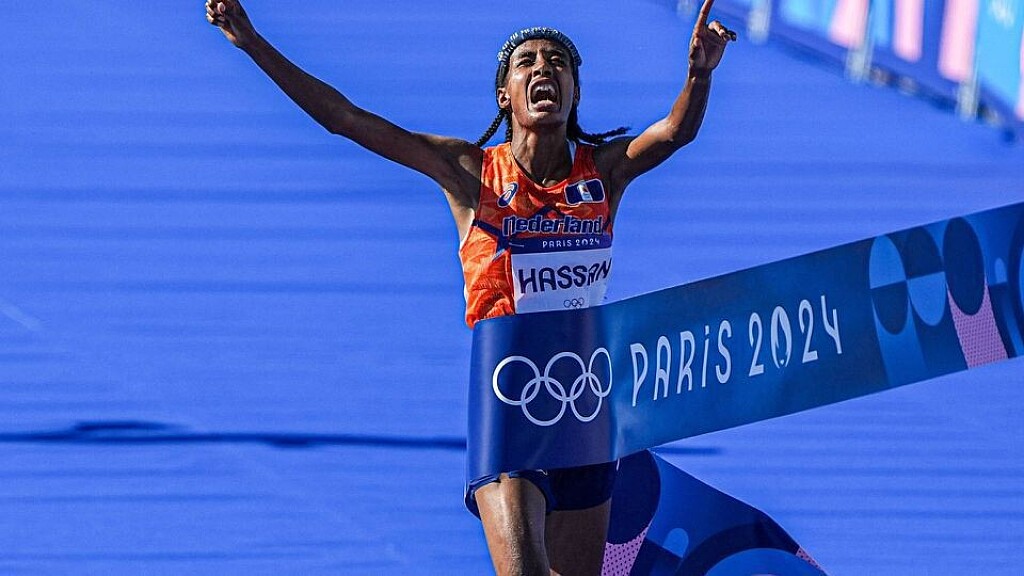
'I want to see how far females can go'- Sifan Hassan eyes breaking marathon barriers inspired by Ruth Chepng'etich
Sifan Hassan aims to break the marathon barriers, inspired by Ruth Chepng’etich’s world record of 2:09:56.
Dutch woman Sifan Hassan knows no boundaries when it comes to being an athlete and she has recently opened up about running under 2:10 in a marathon.
The reigning Olympic marathon champion, in an interview with Athletics Weekly, revealed that Ruth Chepng’etich has proved that is possible to clock fast times and she believes that someday, she will be able to achieve greater milestones when it comes to time.
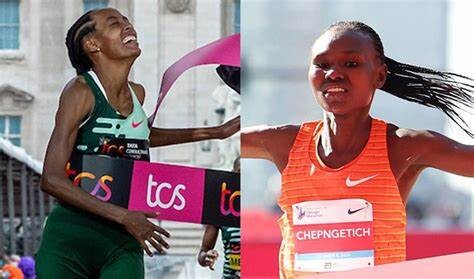
The former Chicago Marathon champion is currently the third fastest marathoner in the world with her time of 2:13:44 that she set at the 2023 edition of the event.
Chepng’etich is the fastest marathoner in the world, having the world record time of 2:09:56. Ethiopia’s Tigst Assefa is second with a time of 2:11:53 that she set at the 2023 Berlin Marathon. Sifan is training hard and she hopes that at some point, she will be able to achieve that milestone.
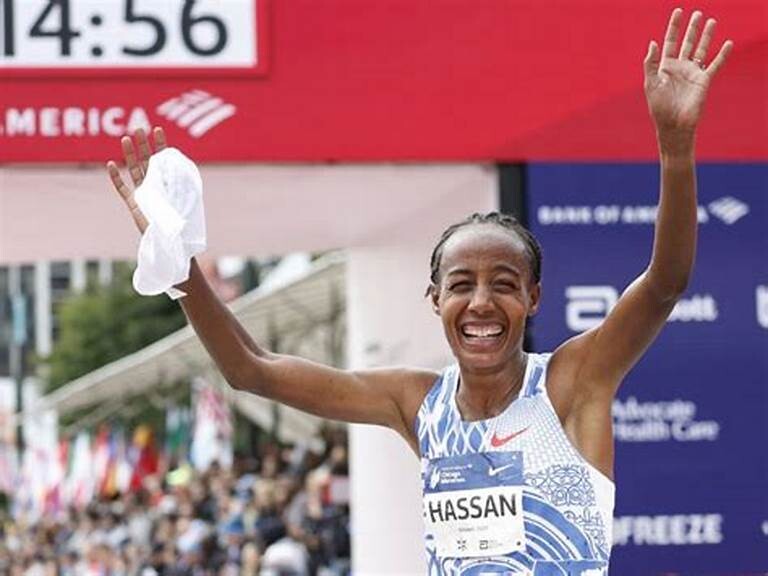
“Maybe, it takes me longer to work hard to achieve it (sub 2:10 marathon) but Ruth Chepng’etich has shown me it’s possible. We will now try and hit the thing,” Sifan said.
"I want to see how far females can go, to see what is inside me and what I can do."
Sifan made her full marathon debut at the 2023 Chicago Marathon where she stunned a strong field which had defending champion Ruth Chepng’etich to take the win.
She was fresh from competing at the 2022 World Championships where she took bronze in the 1500m and silver in the 5000m. in the 10,000m Sifan finished 11th.
In 2024, she experienced one of the most successful seasons, starting out with a fourth-place finish at the Tokyo Marathon before she began preparations for the Paris Olympic Games. At the Olympic Games, she finished third in both the 5000m and 10,000m.
Sifan Hassan rounded up her season with a win in the women’s Olympic marathon. She was honored by World Athletics following her successful season, winning the women’s out of stadium category before being named as women’s World Athlete of the Year.
by Abigael Wafula
Login to leave a comment
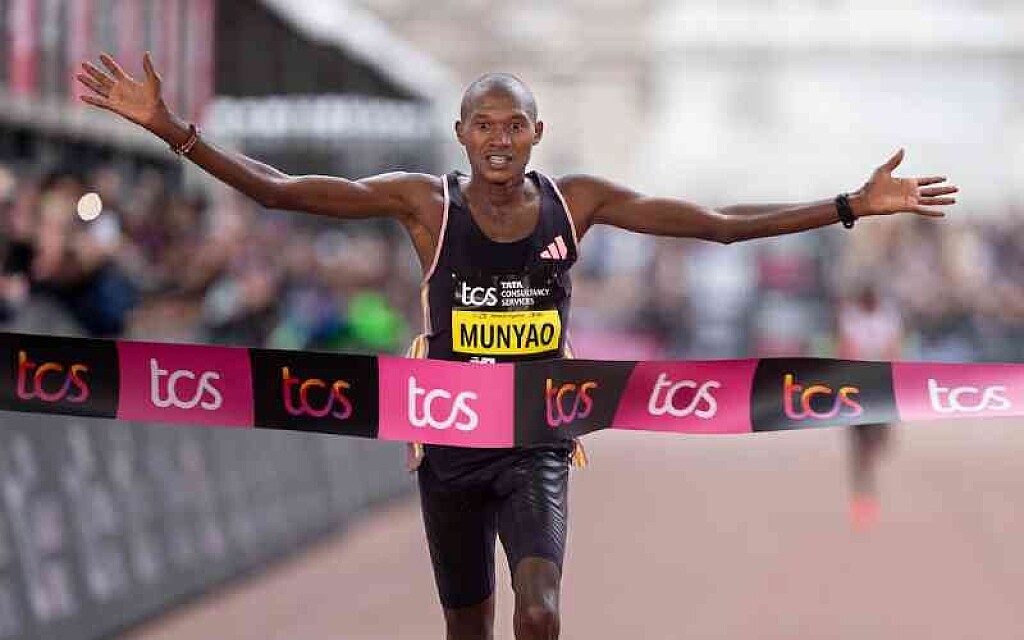
London marathon champion eyes season-ending glory in Thailand
The 2024 London Marathon champion Alexander Munyao is hoping to cap off his season with an emphatic victory as he takes on the Bangsaen Half Marathon in Thai- land this Sunday.
After a mixed year on the global stage, Munyao is determined to secure victory and build momentum for a demanding 2025 season.
“I am targeting a win in Thailand to close my season on a high note. This will motivate me for the busy 2025 calendar,” Munyao said.
For the 28-year-old, success in Thailand would provide a much-needed confidence boost, especially after finishing a disappointing 21st at the Paris Olympics with a time of 2:10:31.
However, Munyao remains wary of the tropical heat that awaits in Thailand, acknowledging it as a critical factor in his race strategy.
“The heat will be a big challenge on race day, with temperatures ranging from 23 to 30 degrees. I am not focused on clocking a fast time, as my goal is purely to win,” he emphasized.
Munyao admits his preparations for the race have been less than ideal, citing limited training time after competing in Japan’s 12 NIT- TAIDAI Challenge Games, where he clocked a 27:42.04 for a runner-up finish in the 10,000m in October.
“My training has been average since I competed in Japan. But I believe the work I have put in will suffice. I will do some light training before Sunday’s race,” he said.
Despite his confidence, he is mindful of the formidable competition.
“I expect tough opposition—it won’t be an easy race. But I’m confident I can pull off a win,” he said.
Munyao carries an impressive half-marathon record into the race, including victories at the 2020 Santa Pola Half Marathon ( 59:09 ) and the 2023 Kagawa Half Marathon ( 59:17 ).
He holds runners-up finishes at the 2020 Ras Al Khaimah ( 59:16 ) and 2021 Adizero Road to Records ( 59:20 ) Half Marathons.
In the women’s race, a titanic battle looms as 2023 Tokyo Marathon champion Rosemary Wanjiru faces off against Ethiopia’s Tigst Assefa, the 2024 Olympic marathon silver medalist.
The two are no strangers to each other’s tactics having clashed at the 2022 Berlin Marathon, where Assefa stormed to victory in a course record of 2:15:37, leaving Wanjiru in second with 2:18:00.
Wanjiru’s road credentials are stellar, highlighted by her 2023 Tokyo Marathon triumph in 2:16:28 and a runner-up finish in 2024, clocking 2:16:14 behind Ethiopia’s Sutume Kebede ( 2:15:55 ).
Meanwhile, Assefa holds back-to-back victories in the Berlin Marathon 2022 ( 2:15:37 ) and 2023 ( 2:11:53 ), as well as runners-up finish at the 2024 London Marathon ( 2:16:23 ).
Joining the fray, is the 2023 Tokyo Legacy Half Marathon champion Gladys Chepkurui, add- ing depth to a star-studded field.
by Teddy Mulei
Login to leave a comment

Bangsaen 21
We woud like to invite all kind of runners from all over the world to join us in the firts an only half marathon "World Athletics Elite Label" Award in Thailand. Bangsaen 21 Half Marathon, ASIA´S best Half Marathon. A single race of Half Marathon distance, experience the most beautiful and challege course along the unique Bangsaen Beach....
more...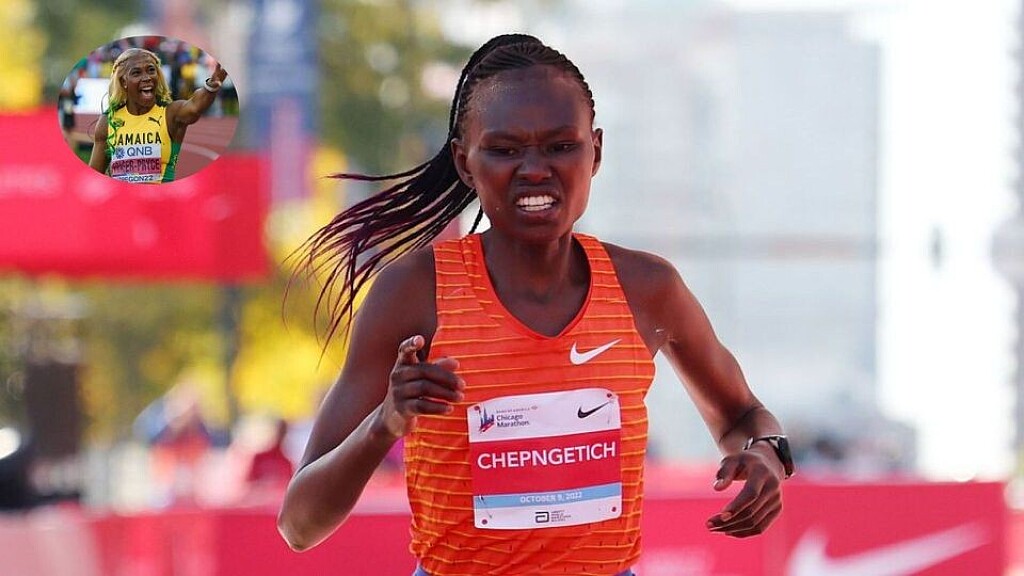
'Shelly-Ann Fraser-Pryce motivates me' - When Ruth Chepng’etich opened up about her inspiration & family sacrifices
Ruth Chepng’etich once stated that Shelly Ann Fraser-Pryce inspired her journey, reflecting her motivations and record-breaking marathon achievements.
New women’s marathon record holder Ruth Chepng’etich has long been one of the most dominant forces in long-distance running.
From clinching the World Championship in 2019 to winning gold at the 2021 and 2022 Chicago Marathons, the Kenyan runner has proven her mettle time and again on the global stage.
Earlier this year, in an exclusive interview with Athletics Weekly, Chepng’etich opened up about her admiration for Jamaican sprinting legend Shelly Ann Fraser-Pryce.
“Shelly Ann (Fraser-Pryce), she motivates me, inspires me, to do a lot. Shelly Ann, I think she started a long time ago, before me, so I'm following (in) her footsteps. Like her, I want to run for long, run smart, and fall and get up,” Chepng’etich shared.
Fraser-Pryce, widely regarded as one of the greatest sprinters of all time, has not only inspired Chepng’etich’s approach to competition but has also served as a role model for longevity in athletics.
Chepng’etich expressed a desire to emulate the sprinter's perseverance and adaptability, striving to push boundaries in her own discipline of marathon running.
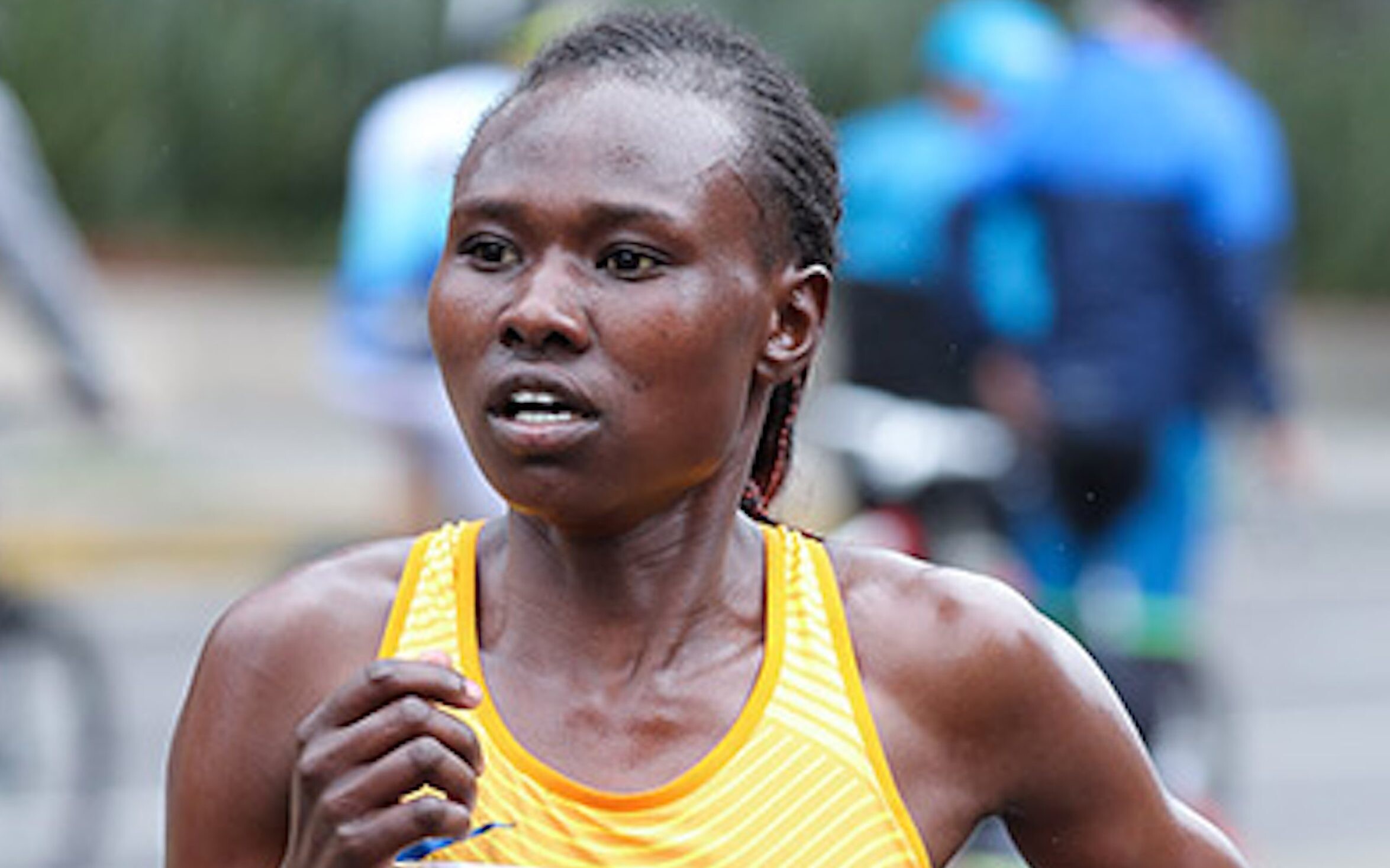
The Kenyan champion also credited her family as a source of motivation, particularly her daughter.
“I think about my daughter, I am pushing so much because of my daughter. My daughter is motivating me to work harder. I have to work hard for her to study. Mothers have a lot to do, so it is not easy. Our children are motivating us to work harder. We want to show them the way in how life goes,” she added.
Chepng’etich’s remarkable journey reached new heights at this year’s Chicago Marathon, where she set a jaw-dropping world record time of 2:09:56, becoming the first woman ever to run a marathon in under 2 hours and 10 minutes.
Her incredible performance not only shattered the previous record of 2:11:53 held by Tigst Assefa but also firmly established her as one of the greatest marathon runners in history.
Reflecting on her world-record performance, Chepng’etich expressed both pride and a sense of accomplishment.
“I feel so great, I'm proud of myself. This is my dream that has come true. I've fought a lot, thinking about the world record, and I have fulfilled it,” she said after the race.
She attributed her success to meticulous preparation, favorable weather, and unwavering determination.
Chepng’etich dedicated her record-breaking run to the late Kelvin Kiptum, a fellow Kenyan marathoner who set a men's world record at the Chicago Marathon last year.
“The world record has come back to Kenya, and I dedicate this world record to Kelvin Kiptum,” she said.
Her achievement is awaiting ratification by World Athletics, but it has already resonated worldwide as a testament to the indomitable spirit of Kenyan runners.
Chepng’etich’s feat not only cements her legacy but also reinforces Kenya's stature as a powerhouse in distance running.
Her admiration for Fraser-Pryce and the motivation she draws from her daughter underscore her commitment to excellence both on and off the track.
by Festus Chuma
Login to leave a comment

Valencia marathon participants promised millions if they break Kelvin Kiptum's record
The 2024 Valencia marathon will take place this weekend as runners return to one of the fastest courses in the world.
It is in Valencia that the late Kelvin Kiptum introduced himself to the world by running the fastest-ever time clocked by a debutant after he used 2:01:53 in 2022.
Valencia Marathon 2024 start list
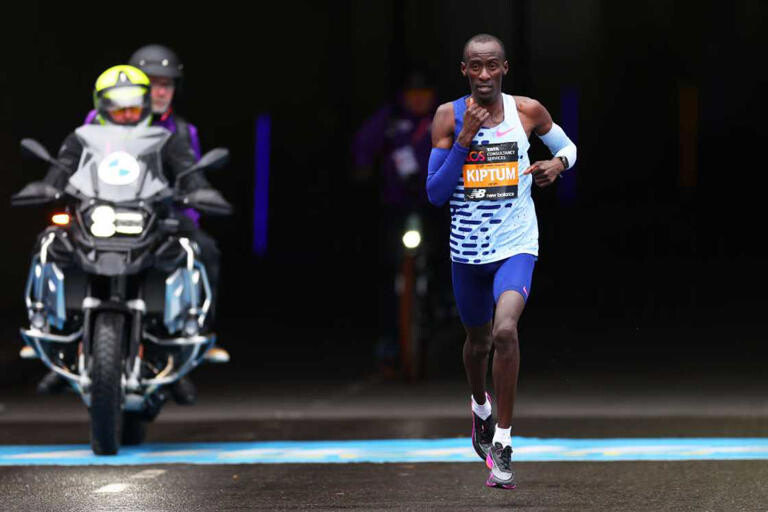
This year, 2023 champion Sisay Lemma will headline the stacked list. The Ethiopian will be looking to win a second marathon this year after winning in Boston in March.
His time of 2:01:48 to win in Valencia last year is the sixth-fastest time in history, making him an overwhelming favorite on Sunday.
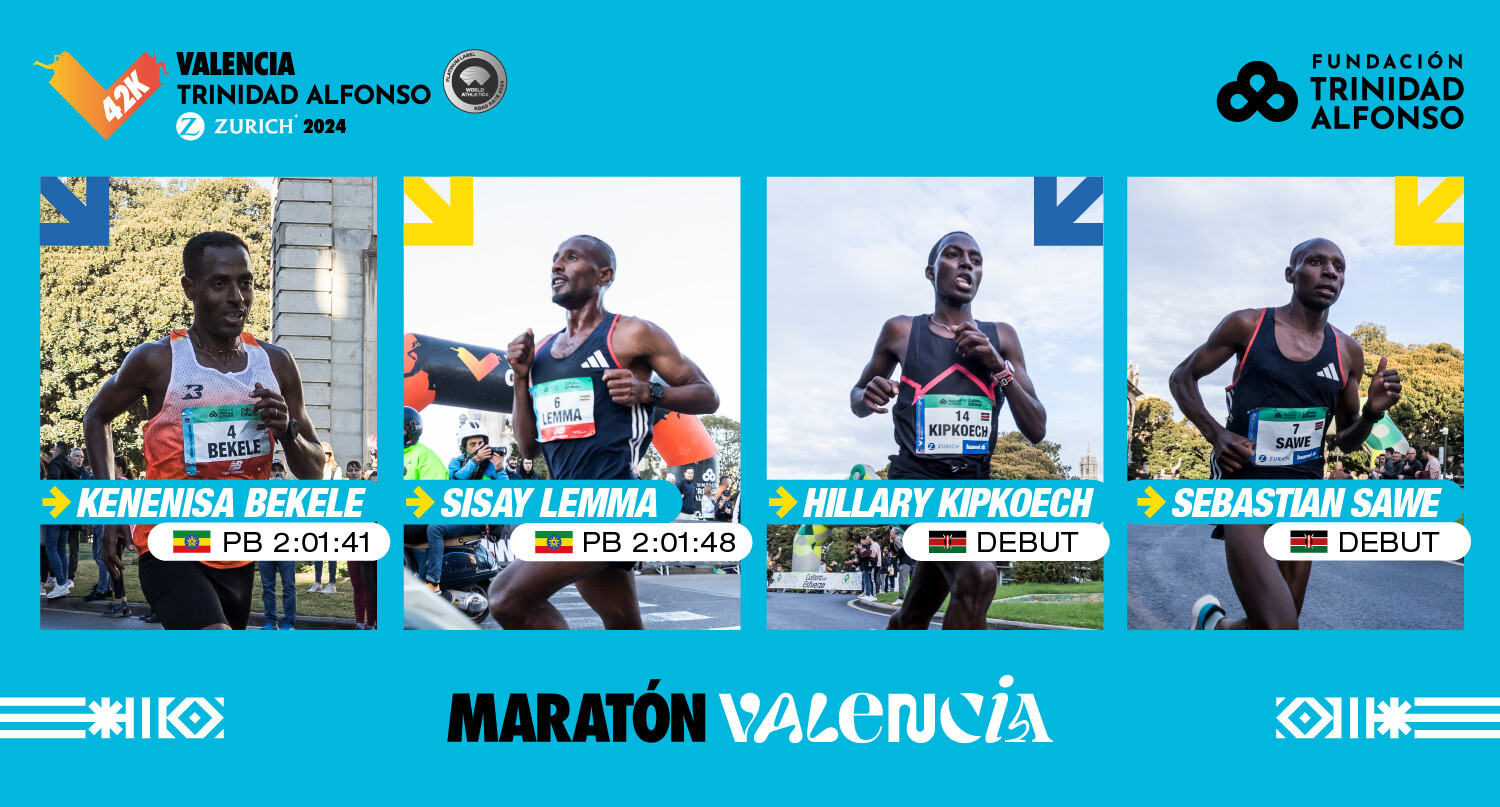
Kenenisa Bekele will also be part of the start list. Bekele is the third-fastest marathoner in history. The 42-year-old finished a distant 39th at the 2024 Paris Olympics, and redemption will be on his mind.
Others include world half marathon champion Sebastian Sawe and two-time Tokyo marathon winner Birhanu Legese.
The organizers have made the race sweeter by introducing a raft of monetary awards if certain records are broken.
Valencia Marathon 2024 prize money
Athletes who break the course record of 2:01:48 (men's) and 2:14:58 (women's) will win €30,000 (approximately 4 million Kenya shillings).
Meanwhile, athletes who break the men's and women's marathon world records will get a whooping €1,000,000 (approximately 135 million Kenya shillings).
What is the men's marathon world record?
The late Kiptum is the current world record holder. He clocked 2:00:35 to win the 2023 Chicago Marathon.
The website indicates that the women's time the participants need to beat is 2:11:53 despite Ruth Chepng'etich lowering it to 2:09:56 last month in Chicago. Chepng'etich's record is, however, yet to be ratified by World Athletics.
The 2:11:53 mentioned therein is the former world record set by Ethiopian Tigst Assefa. Evaline Chirchir is the only Kenyan registered in the women's race.
by Richard Nutakor
Login to leave a comment

VALENCIA TRINIDAD ALFONSO
The Trinidad Alfonso EDP Valencia Marathon is held annually in the historic city of Valencia which, with its entirely flat circuit and perfect November temperature, averaging between 12-17 degrees, represents the ideal setting for hosting such a long-distance sporting challenge. This, coupled with the most incomparable of settings, makes the Valencia Marathon, Valencia, one of the most important events in...
more...
The Evolution of Marathon Running: A Kenyan Perspective
I can still vividly remember when 2:08:32 in the marathon seemed like an unbreakable barrier. Derek Clayton of Australia set this world record back in 1969 at the Antwerp Marathon—a time so remarkable that it stood for nearly 12 years. Now, hundreds of runners have far surpassed that mark. Today, running a sub-2:05 marathon has become almost routine, particularly for athletes from Africa.
On the women’s side, the achievements are just as groundbreaking. Ruth Chepngetich of Kenya recently made history at the 2024 Chicago Marathon by breaking the 2:10 barrier, finishing in a stunning 2:09:56. While this remarkable time is still awaiting ratification, it is set to redefine the boundaries of women’s marathon running. This performance follows the previous world record of 2:11:53, set by Tigst Assefa of Ethiopia at the 2023 Berlin Marathon. These times show just how far women’s marathon performances have progressed in recent years.
While advancements like “magic” shoes have undoubtedly played a role in these extraordinary performances, it’s important to note that better pacing by other professional runners, now a standard practice, has also made a significant difference. These pacesetters help keep athletes on target through much of the race, ensuring consistency and reducing mental strain. However, the story of record-breaking runs runs much deeper than technology and pacing strategies.
In Kenya alone, there are at least 80,000 distance runners who dream of nothing else but becoming professional athletes. For them, running isn’t just a passion—it’s a path to success and stability.
At the Kenyan Athletics Training Academy (KATA), the training camp I established in Thika, Kenya, we house, feed, and train aspiring athletes. I Each week, I receive messages from 10 or more runners hoping to join our program. For these athletes, running is not a hobby or a pastime. It’s a career aspiration, with the ultimate goal of winning races and securing prize money. They love running, but make no mistake—their drive is fueled by the potential to achieve financial security and support their families.

Contrast this with the United States, where very few runners train with the sole focus of becoming professional athletes. Instead, many children grow up dreaming of careers in sports like baseball, basketball, football, or, more recently, soccer. The talent pool for these sports is massive, and from this base, the superstars emerge.
That said, American marathoners have delivered incredible performances. Ryan Hall’s 2:04:58 at the 2011 Boston Marathon remains a monumental achievement, showcasing what U.S. athletes are capable of on a favorable course. On the women’s side, runners like Keira D’Amato (2:19:12) and Emily Sisson (2:18:29, an American record) are setting new benchmarks, proving that the U.S. can compete at the highest levels.
In the U.S., running is often a lifestyle choice rather than a career ambition. Recreational and “fun” runners dominate the scene, which has its benefits—contributing to a higher average life expectancy (76 years in the U.S. compared to 63 in Kenya). In Kenya, it’s rare to see runners over 40 years old out training. The focus there is on younger athletes whose primary goal is to make a living through running.
For many in Kenya, running is the equivalent of pursuing a high-paying job in other fields. This mentality dates back to pioneers like Kip Keino, who opened the door for countless Kenyan athletes to achieve global success. His legacy inspired generations, and today, Kenyan runners—both men and women—continue to push the limits of human potential.
As marathon times keep dropping and prize money continues to grow, I believe we’ll see even faster performances from both men and women—especially in Africa, where running is deeply ingrained as a pathway to opportunity.
by Bob Anderson
Login to leave a comment
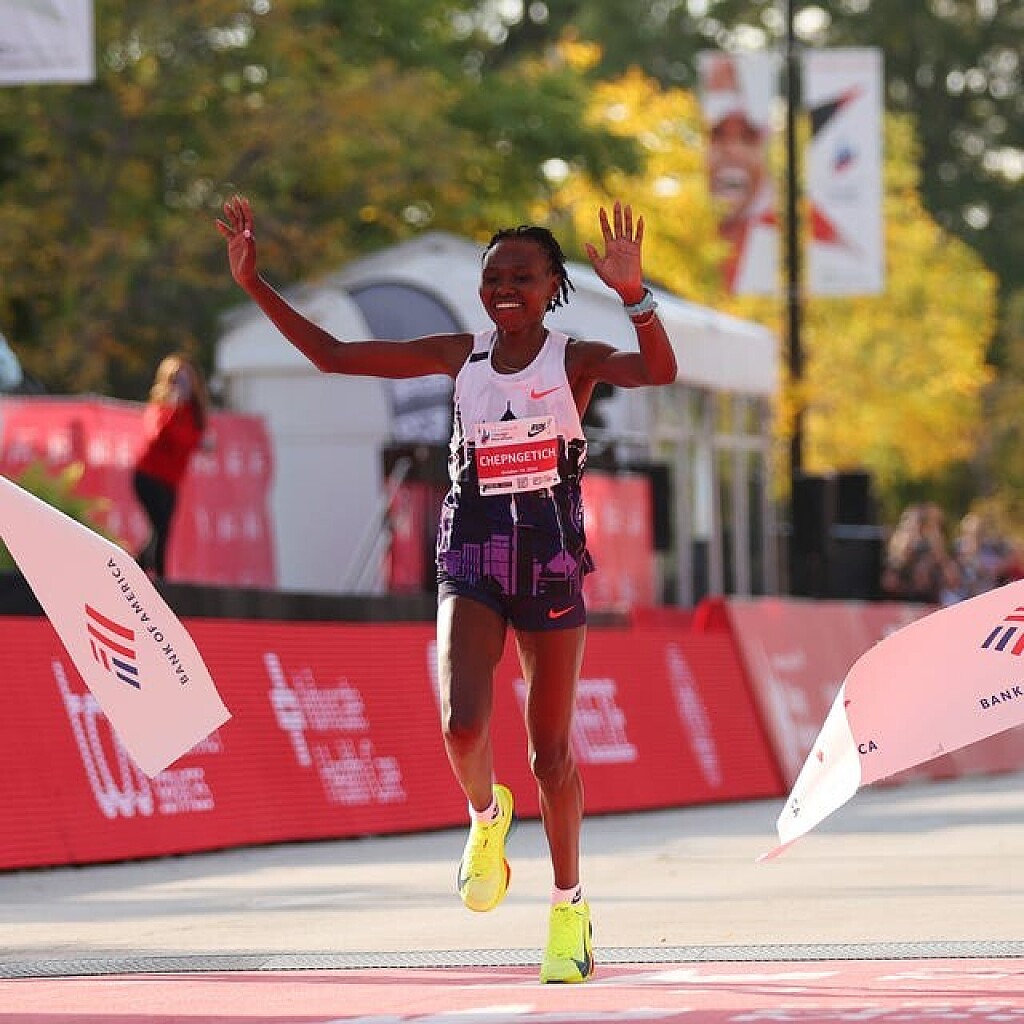
MARATHON GROUNDBREAKERS
Since Australia’s Derek Clayton ran history’s first sub—2:10 marathon in Fukuoka, Japan, on 3 December 1967, there have been a total of 4538 sub—2:10 marathons (as of 30 October 2024), 4537 by men, one by a woman.
As with any new ground-breaking performance, Ruth Chepngetich’s 2:09:56 in Chicago on 13 October has forced us to reassess all our past assumptions, or, like many, to doubt the validity of the performance itself. But no matter how we got here, to whatever you want to ascribe it, this is where we are now, 2:09:56 by a woman.
In this new reality, until proven otherwise, Ruth Chepngetich is the new Paula Radcliffe, just as Paula was the new Grete Waitz, one ground-breaker to the next, 1978 to 2003 to 2024.

There have been many talented women champions through the years besides those three, including all the pioneers who had to overcome centuries of gender bias that restricted women from even showing their stuff.
But in terms of pure ground-breaking, the 1978 New York City Marathon drew a bright line between what once was and what would be.

On 22 October 1978, Norway’s track and cross-country star Grete Waitz participated in the marathon for the first time, almost on a whim, as the trip was more of a honeymoon for her and husband Jack after the long track season.
The 2:32:30 world record Grete ran that day was totally unexpected by both the public and Grete herself. She wore bib #1173, wasn’t included on the list of elite women, and came with no specific marathon preparation (not a single run over 13 miles). In fact, she was so upset with husband, Jack, for suggesting she come run the marathon that she threw her shoes at him in the hotel room following her victory.
Still, like almost all debuting marathoners, after a short period of recovery and reflection, Grete concluded she could probably improve next time.
Thus, in New York 1979, following a more careful preparation, Grete ripped nearly five full minutes off her 1978 mark to record history’s first sub—2:30 by a woman at 2:27:33. Her margin of victory over England’s Gillian Adams was 11 minutes (2:38:33). The combination of the mild-mannered former geography teacher from Oslo and the raucous New York City crowds proved transformative, elevating women’s running to heights previously unimagined.
Though Japan’s Naoko Takahashi broke the 2:20 barrier for women in Berlin 2001, after Norway’s Ingrid Kristiansen (2:21:15, London ‘85), America’s Joan Benoit Samuelson (2:21:21, Chicago’85), and Kenyan Tegla Loroupe (2:20:43, Berlin ‘99) all challenged the barrier in the 1980s and ‘90s, it was England’s Paula Radcliffe who established new headlands in the marathon in London 2003 with her 2:15:25.
Nearly two minutes faster than her own 2:17:18 record from Chicago the year before, her 2:15 arced away from Catherine Ndereba’s 2:18:47 from Chicago 2001, completed just one week after Takahashi’s first sub-2:20 in Berlin.
The quality of Paula’s 2:15 can be seen in the 16 years and an entire shoe technology revolution that developed before Kenya’s Brigid Kosgei did Paula one better in Chicago 2019 at 2:14:04. That performance plowed new ground again. And now we have Ruth Chepngetich in Chicago 2024 with history’s first sub-2:10, just a year after Ethiopia’s Tigst Assefa’s first sub—2:12 in Berlin `23 (2:11:53).
Twice before, Chepngetich had come to Chicago with world record intentions. In 2022, she won the race in 2:14:18, just 14 seconds off Kosgei’s record. In 2023 she finished second in 2:15:37. On both occasions she flew through halfway under 66 minutes, only to falter in the second half. Perhaps she was a close reader of Malcolm X.
“There is no better teacher than adversity. Every defeat, every heartbreak, every loss, contains its own seed, its own lesson on how to improve your performance the next time.” – Malcolm x
In simple terms, making innovative strides in athletics requires time, experimentation, and reviewing, similar to how new scientific theories are examined before full acceptance. But women just haven’t been at the marathon game long enough to produce a large enough sample size to define their outer limits with any accuracy. They are barely two generations in since 1978.
Men have been competing for a much longer time with a much larger sample size.
Though Eliud Kipchoge surpassed the two-hour barrier in Vienna in 2019, that was accomplished as an exhibition, not a sanctioned race. In that sense, we are still awaiting the next barrier breaker on the men’s side in the Marathon.
Looking back, England’s Jim Peters stands as the first modern barrier breaker with his 2:18:40 win at the 1953 Polytechnic Marathon between Windsor and Chiswick in West London, England, history’s first sub—2:20.
Next was Ethiopia’s Abebe Bikila, the legendary double Olympic victor in Rome 1960 and Tokyo 1964. His 2:15:17 in Rome still stands as the barefoot marathon world record.
Next came Australia’s Derek Clayton, the first man under both 2:10 and 2:09. His 2:08:34 from Antwerp 1969 lasted for 12 years, holding off challenges throughout the entire Running Boom era headed by Americans Frank Shorter and Bill Rodgers.
Though never world record holders, the two Americans dominated the 1970s boom era, Shorter through the first half, Rodgers the second.
The Eighties were the last decade of international marathon champions: American (Al Salazar, Greg Meyer); European (Steve Jones, Carlos Lopes); Japanese (Toshihiko Seko and the Soh brothers); and Australian (Rob de Castella). Kenya’s Joe Nzau won Chicago in 1983 in a thrilling duel with England’s Hugh Jones when Chi-town was still developing its reputation as a world class event.
Ibrahim Hussein set new records in Honolulu and kick-started the Kenyan marathon revolution
The full East African deluge didn’t begin until 1987 and ‘88 when Kenya’s Ibrahim Hussein (already a two-time and soon to be three-time Honolulu Marathon champion) became Africa’s first New York City and Boston Marathon winner and Ethiopia’s Belayneh Dinsamo set the world record, 2:06:50, in Rotterdam 1988 that lasted over a decade.
The list of marathon stars from other nations scaled back markedly in the 1990s. Mexico had its turn at the top via greats like Dionicio Cerón (1994-`96 London champion), and back-to-back New York Ciy winner German Silva (1994 & 1995).
Moroccan-born American Khalid Khannouchi twice ran a world marathon record, first in Chicago 1999 (2:05:42), then three years later in London 2002 (2:05:38). And who could forget the personable Brazilian, Marílson Gomes dos Santos, who won New York City twice in 2006 & 2008, or Meb in NYC `09 and Boston 2014??
But the United Nations pickings get rather meager after that as East African athletes have had a stranglehold on the sport of marathoning, most dominatingly by Kenya’s Eliud Kipchoge. His run of sustained excellence over 42.2 kilometers was, and is, unprecedented in its longevity, including double gold in Rio 2016 and London 2020. And his last world record of 2:01:09 in Berlin 2022.
Sadly, the current record holder, Kelvin Kiptum, died in a car accident in February 2024 after establishing the 2:00:35 world record in Chicago 2023.
With the 2024 TCS New York City Marathon scheduled this weekend, we don’t expect to see any record performances. Yet, all the above is why we follow the game, isn’t it, to witness the arc of improvement over time, while hoping to discover a new name to remember? It’s as valid a focus as any other in this life.
And despite its many flaws and corruptions, the sport of marathoning retains an innate dignity that many endeavors do not. People may have bruised, battered, and tarnished it in the name of glory and money. But it survives, nonetheless, as a simple reflection of the human drive to achieve more in the quest to discover our best.
Doesn’t always turn out that way, but I don’t think we are done with it quite yet. Onward!
by Toni Reavis
Login to leave a comment

WHAT THE NUMBERS SAY (ABOUT WOMEN’S MARATHOING)
I am a numbers’ guy. I’ve always been a numbers’ guy. I always want to see what the numbers tell me before I opine from an emotional standpoint.
Accordingly, I did a deep dive into the last five women to hold the marathon world record going back to Kenyan Catherine “The Great” Ndereba, in 2001. What I found was a changing world order.
Catherine Ndereba was the last of the old school road racers who then progressed to the marathon. Catherine came to compete on the U.S. road tour beginning in 1995, but really began winning convincingly in 1996 at age 24, winning four times in New York City; Spokane, Washington; Utica, NY; Flint, Michigan; and Philadelphia, Pa.
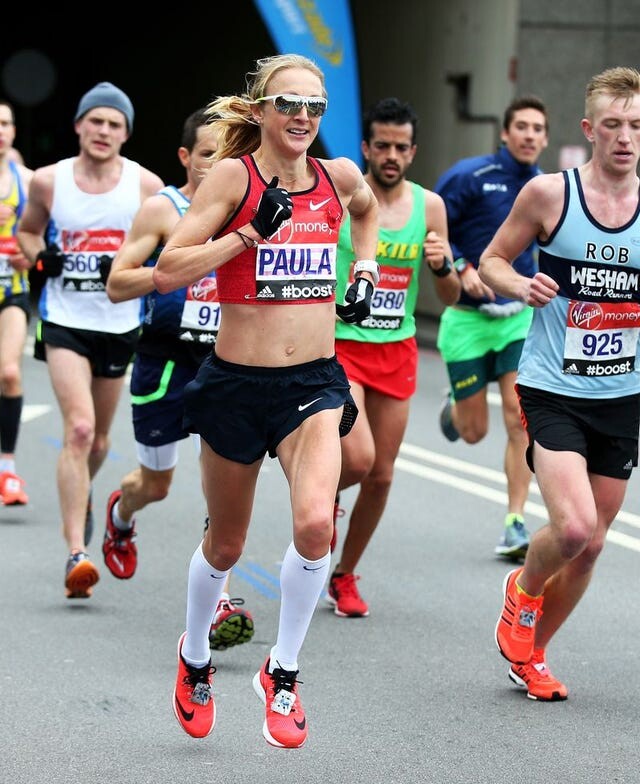
In 1999, she made her marathon debut in Boston, running to eighth place in 2:28:26. Later that fall, she finished second in New York City in 2:27:34. But she also had eight wins on the road circuit when you could still make money there and the marathon wasn’t yet as lucrative as it is today.
The following year, 2000, Catherine won her first Boston and Chicago Marathons, with another eight wins on the road circuit. She won Boston again in 2001 in 2:22:53, then set her world record in Chicago in the fall in her sixth career marathon, running 2:18:47, with another eight wins on the roads. Catherine was 29 when she ran her record and set her personal best by 2:46 seconds.
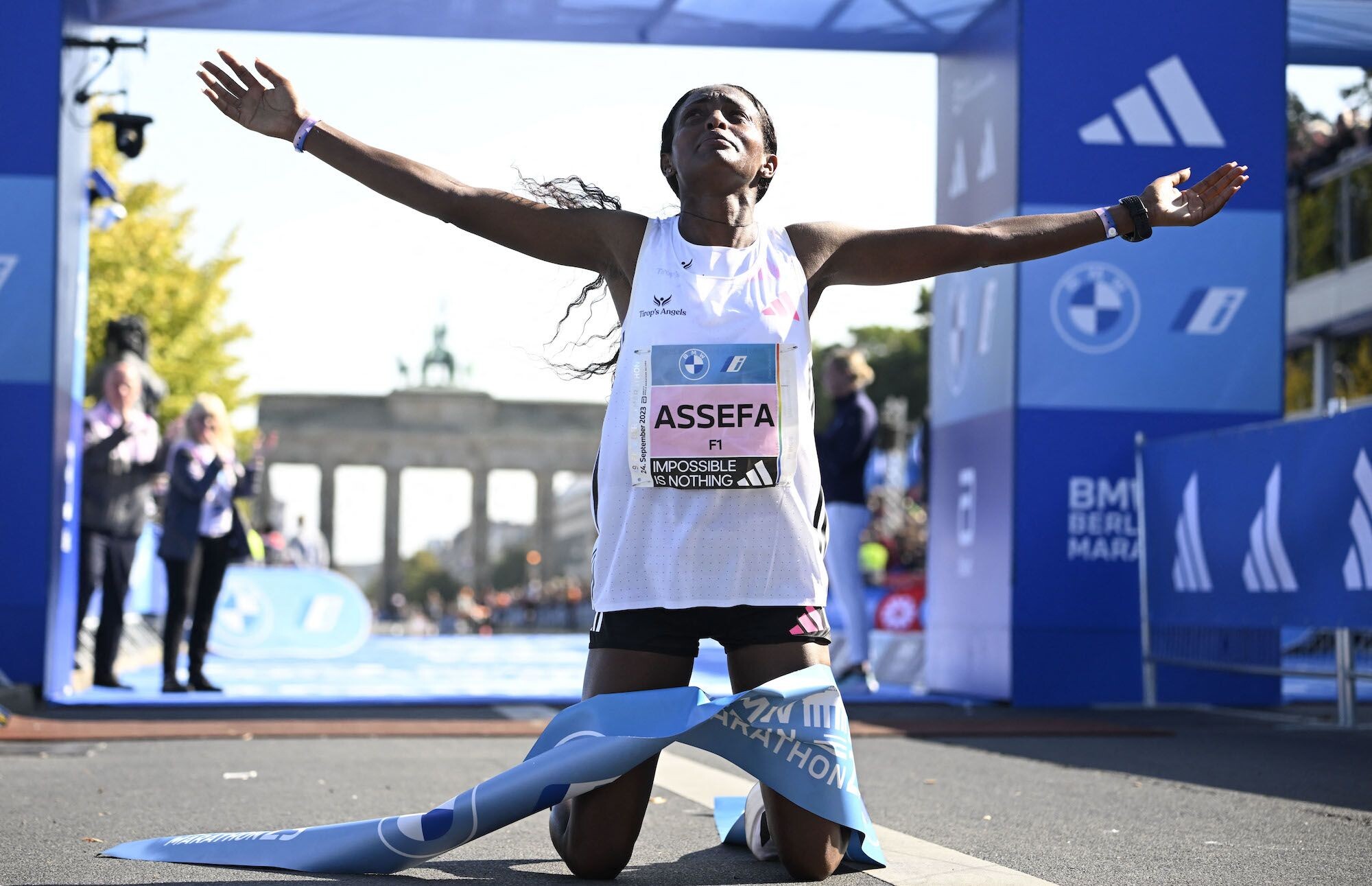
In all, she ran 23 marathons, finished 23, won 8.
Great Britain’s Paul Radcliffe broke Catherine‘s world record one year later in Chicago 2002 (2:17:18) then smashed her own record one year later in London (2:15:25), a record that would last 16 years, by far the longest standing women’s marathon world record in history. Before that, Paula had run her debut in the spring of 2002 in London, at age 28, winnng in 2:18:56, a debut record.
In all, Paula started 13 marathons, finished 12, won 8. She, like Catherine, was age 29 when she set her final record at 2:15:25.
But Paula had a long, distinguished career in cross country and track going all the way back to 1992 when won the IAAF World Cross Country U20 championship in snowy Boston before finishing fourth in the World Junior Championships in the 3000m, a circumstance that would repeat itself over the years until she moved up in distance.
Paula ran fifth at the 1996 Olympic 5000m final in Atlanta. Then fourth in the 1997 World Championships 5000 in Athens; second in the WC 10,000m in Seville; and fourth again in the 2000 Olympic 10,000 in Sydney. She just couldn’t finish the last 200-300m with the East Africans like Derartu Tulu and Gete Wami to nab gold.
She entered her first marathon in London 2002 after showing her ability at the half marathon, winning at the Great North Run and the World Half Marathon Championships in Vera Cruz in 2000, and again in Bristol in 2001 – though she still ran on the track at 3k, 5k and 10k. From there, it was clear sailing, as the world came to expect Paula’s 2:15:25 to last for a long, long time.
It wasn’t until Brigid Kosgei came along in Chicago 2019, running 2:14:04, that Paula’s mighty record fell. But that was a bit of a stunner, as people didn’t see it coming. That gave even more gravity to the super-shoe era, because Brigid was 25 years old running the ninth of her 17 career marathons when she set her record. It was a personal best by 4:16, very similar to what we saw with Ruth Chepngetich last Sunday in Chicago. Both were deep into their marathon careers before producing their other worldly record performances.
Between Brigid and Ruth came Ethiopia’s Tigst Assefa. She ran her world record of 2:11:53 at age 26 in Berlin in the third of only five career marathons. And that WR was a personal best by 3:44 at age 26.
And now, of course, we have Ruth Chepngetich, whose 2:09:56 in Chicago last Sunday has had heads spinning faster than Linda Blair in the Exorcist.
Ruth has run 15 marathons, finished 13, won 9, while running her world record in her 15th marathon, seven years into her career, setting a PB by 4:22. That last stat is the one people have trouble getting their heads around. You don’t improve that much so late in your career; they say.
But Brigid Kosgei ran her world record in the ninth of 17 career marathons with a personal best by 4:16. So what Ruth did was not unprecedented, though taken from a tiny sample.
The ages when they produced their world records:
Catherine, age 29; Paula, age 28 and 29;Brigid, age 25; Tigst, age 26; Ruth, age 30.
The world is constantly spinning, changing. Catherine Ndereba and Paula Radcliffe came from an old world, not just pre-super shoes, but pre-only focusing on marathons and half marathons.
And with the super shoes and super nutrition and super coaching and super God knows what else, there has been a great stir in the running community. Some refuse to even consider the possibility of these record times. Others say “wait and see if any positive testing follows down the line”, as we have seen many times before. And very few say, “everything‘s on the up and up. There’s nothing here to see other than a great performance.”
That doesn’t leave the sport in a very good place. But guess what? We are kidding ourselves if we think 2:09:56 is going to last very long. Look at Chicago’s women’s splits: 15:00 at 5K = 2:06:46 pace; 45:32 at 15k = 2:08:16 pace; and 64:16 at halfway = 2:08:32 pace. You even out that effort just a little, and you’re looking at sub-2:09! It’s coming. You can count on it. Plus, once one-person shows what’s possible, it inspires many more to try.
Remember, we are still in the first two generations of world-class women’s distance running. We have no idea what their limits may be, notwithstanding all nefariousness that attends the sport these days.
And so the debate continues, even as the sport searches for leadership, which seems to be missing in action. It’s one hell of a Wild West show, isn’t it?
by Tony Reavis
Login to leave a comment
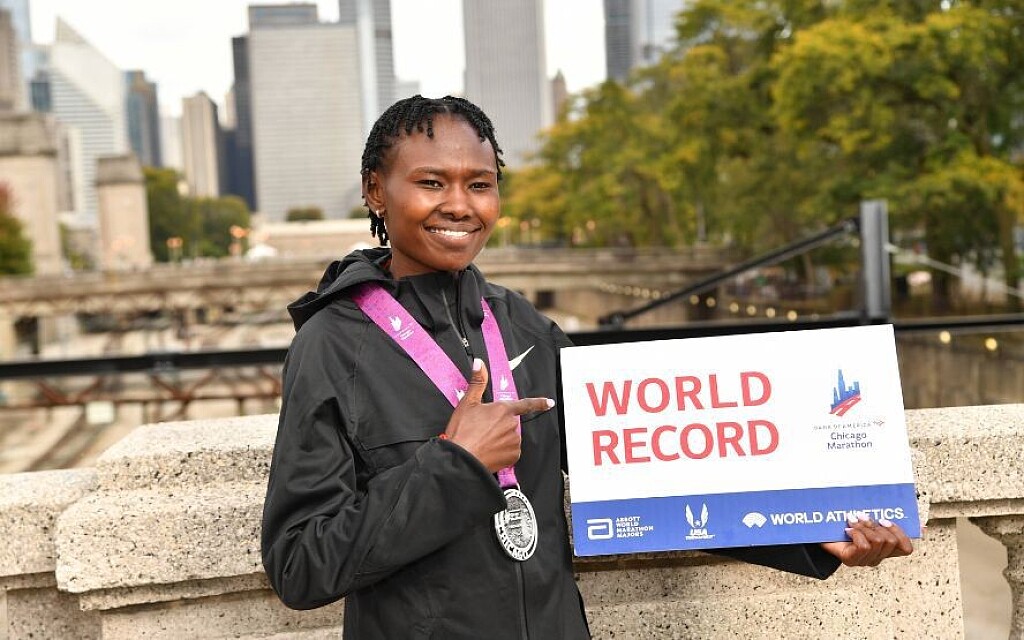
'Give Ruth the respect she deserves!'- Athletics Kenya jumps to Ruth Chepng'etich's defense following doping accusation
Athletics Kenya has defended Ruth Chepngetich after her record-breaking Chicago Marathon win, urging respect and dismissing doping accusations, emphasizing her consistent, hard-earned success.
Athletics Kenya has called for the respect of newly-crowned Chicago Marathon champion Ruth Chepng’etich who is fresh from breaking the marathon world record.
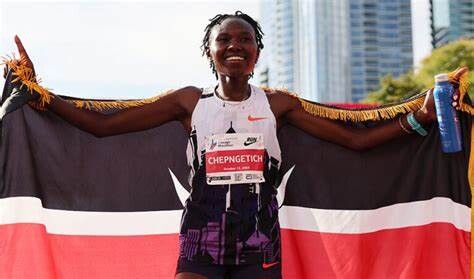
Ruth Chepng’etich clocked an impressive 2:09:56 to win the race at the Chicago Marathon, shattering Tigst Assefa’s previous record of 2:11:53 that she set to win the 2023 Berlin Marathon.
The Kenyan distance sensation ran a solo race to showcase her mastery of the course after winning the 2021 and 2022 editions of the race and finishing second behind Sifan Hassan at the 2023 edition of the event.

However, rumours have emerged that Ruth Chepng’etich might have doped following her impressive splits and that her world record might not be credible. However, Chepng’etich is one of the most consistent marathoners who has a lot of titles including the world marathon title she won at the 2019 World Championships in Doha, Qatar.
Following a ton of accusations, Athletics Kenya has jumped to her defence, urging the public to allow her to celebrate her huge feat and acknowledge her efforts as one of the most outstanding marathon runners in the world.
In a statement released on Wednesday, Athletics Kenya acknowledged her efforts, noting that she has been extraordinary in her performances for over five years and has joined the exclusive world of world record holders including Faith Kipyegon, Beatrice Chebet and Beatrice Chepkoech.
“In any case, many world records were broken this year, and to single her out is utterly unfair. It is therefore disheartening to witness some sections of the media casting unwarranted doubt on her achievements. Such aspersions, made without due process, undermine not only her efforts but the integrity of the sport,” Athletics Kenya said in a statement.
“We urge the media and the global community to give Ruth the respect she deserves and protect athletes from harassment. Let her celebrate this hard-earned victory and let us acknowledge the years of hard work and discipline that have brought her to this moment.”
The Kenyan federation was quick to note that every athlete, including Ruth Chepng’etich, underwent the required anti-doping tests and defended her performance on the global stage.
Login to leave a comment

Bank of America Chicago
Running the Bank of America Chicago Marathon is the pinnacle of achievement for elite athletes and everyday runners alike. On race day, runners from all 50 states and more than 100 countries will set out to accomplish a personal dream by reaching the finish line in Grant Park. The Bank of America Chicago Marathon is known for its flat and...
more...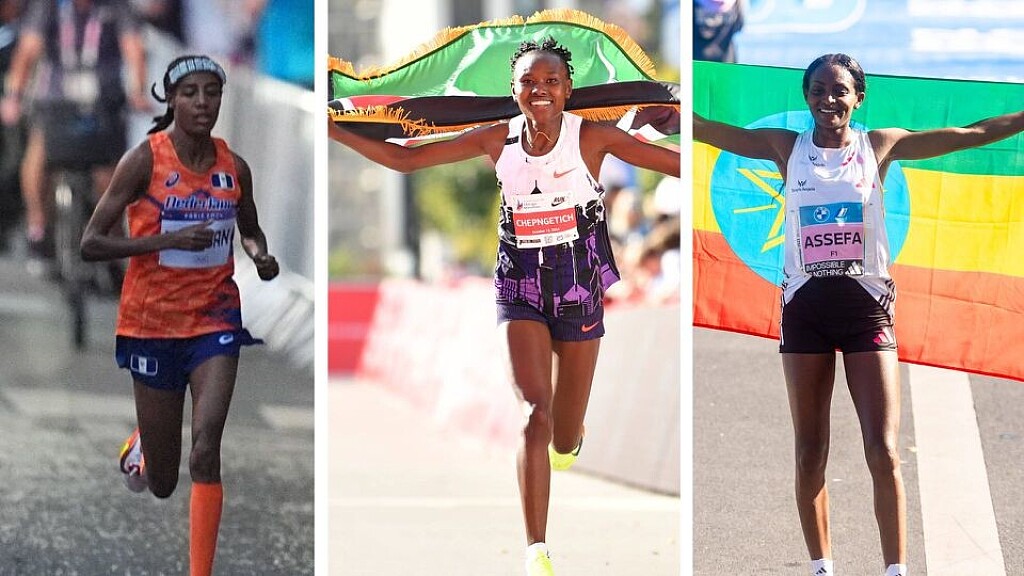
Top five fastest women marathoners in the world
Discover the top 5 fastest female marathoners in the world, featuring record-breaking athletes from Kenya and Ethiopia who continue to redefine the sport.
Kenya and Ethiopia, long-standing powerhouses in long-distance running, are known for producing some of the greatest female marathoners of all time, consistently setting new records and redefining athletic excellence.
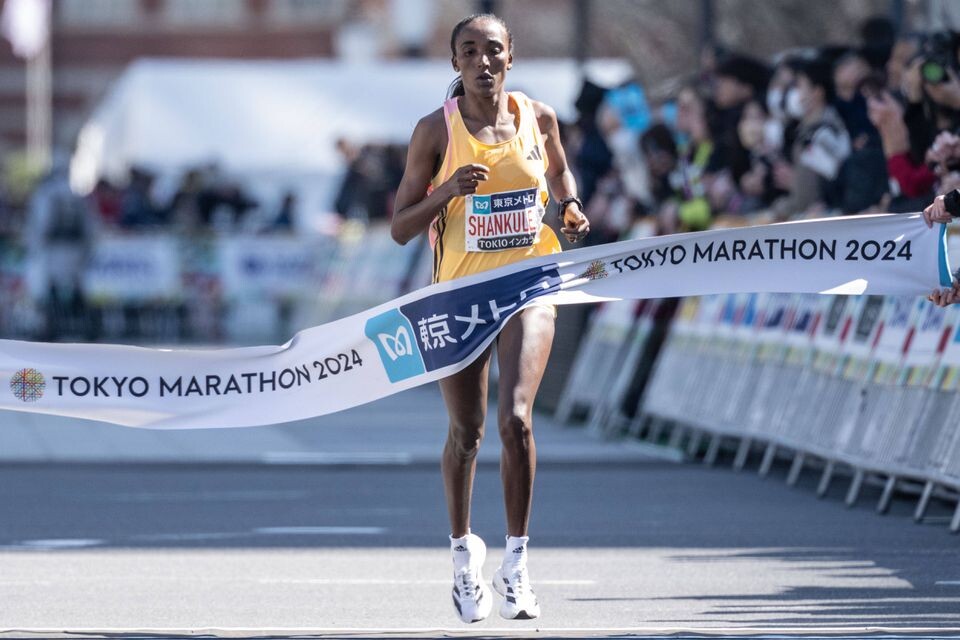
Athletes such as Ruth Chepngetich of Kenya and Tigst Assefa of Ethiopia have not only dominated the marathon world but have also broken significant barriers with their remarkable times.
The competitive landscape of the World Marathon Majors (WMM) — including iconic races like the Berlin Marathon, Chicago Marathon, and London Marathon — has seen historic performances from these and other top runners.
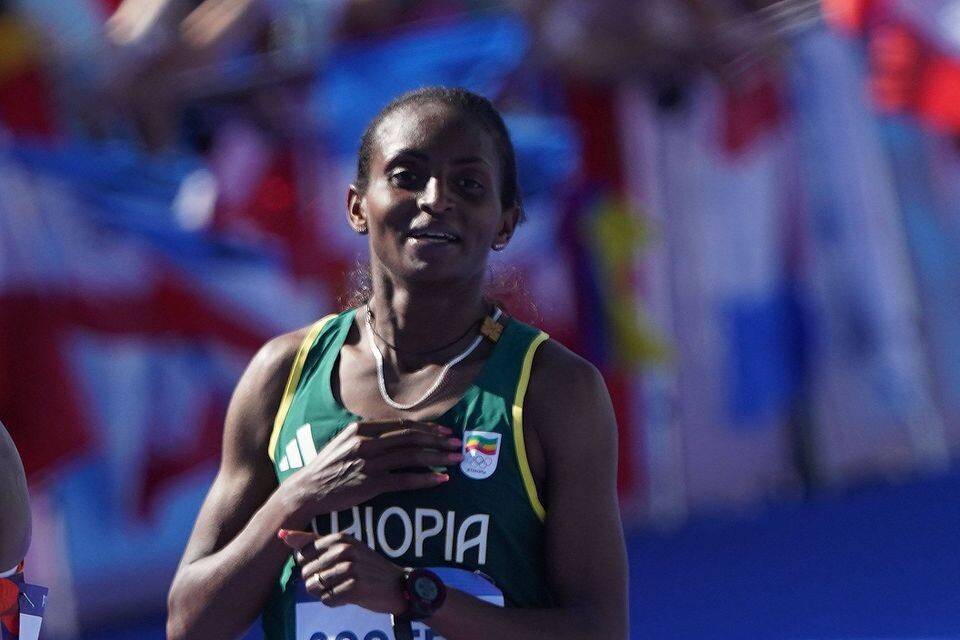
In this article, we review the top 5 fastest female marathoners in the world, analyzing their breakthrough races, their contributions to the sport, and how they continue to inspire future generations of athletes.
5. Amane Beriso Shankule (Ethiopia) – 2:14:58
Rounding out the top 5 is Amane Beriso Shankule of Ethiopia, whose incredible performance at the 2022 Valencia Marathon earned her a place among the fastest female marathoners. Shankule completed the race in 2:14:58, showcasing her strength and determination in long-distance running.
Although still relatively new to the elite marathon circuit, Shankule’s time places her in an elite group of women who have broken the 2:15 barrier. Ethiopia has long been a dominant force in long-distance running, and Shankule’s success further underscores the depth of talent in the country. Her performance in Valencia will likely serve as a stepping stone to even greater achievements in the future.
4. Brigid Kosgei (Kenya) – 2:14:04
Brigid Kosgei of Kenya is no stranger to marathon success, having made history during the 2019 Chicago Marathon. On October 13, 2019, Kosgei crossed the finish line in 2:14:04, breaking the previous world record and establishing herself as one of the sport’s all-time greats.
Kosgei’s performance in Chicago was groundbreaking, as she broke the world record that had stood for over 16 years. Her run was characterized by her smooth stride and exceptional stamina, which allowed her to dominate the race from start to finish. Her record time remained unbeaten until 2023 when Tigst Assefa surpassed it.
Kosgei’s marathon career has been illustrious, with multiple wins in prestigious events such as the London Marathon. Her success has further cemented Kenya’s reputation as a global leader in marathon running. Although her record was eventually broken, Kosgei’s achievements remain a significant chapter in the history of women’s marathoning.
3. Sifan Hassan (Netherlands) – 2:13:44
In third place is Sifan Hassan, a Dutch athlete known for her incredible versatility. Originally a middle-distance runner, Hassan shocked the world when she ran the 2023 Chicago Marathon in 2:13:44, marking her debut in the marathon with one of the fastest times ever recorded by a woman.
Hassan’s ability to transition from track events to the marathon is nothing short of exceptional. Her success in the 1,500m, 5,000m, and 10,000m events — where she has multiple Olympic and World Championship titles — clearly translated well to the marathon. Her 2023 performance in Chicago not only placed her among the fastest female marathoners but also demonstrated the potential for athletes to excel across different distances.
Hassan’s achievement has inspired many young runners, especially those who see her as a symbol of athletic versatility. By running one of the fastest marathons on her debut, Hassan proved that success in the marathon does not always require years of specialized training in the event.
2. Tigst Assefa (Ethiopia) – 2:11:53
Second on the list is Ethiopian sensation Tigst Assefa, who delivered a breathtaking performance at the 2023 Berlin Marathon. On September 24, 2023, Assefa finished the race in 2:11:53, setting a new course record and breaking the previous world record for female marathoners at the time. This monumental run placed her firmly among the fastest women in marathon history.
Assefa’s journey to the top has been remarkable. A former middle-distance runner, she transitioned to marathon running with great success, demonstrating her versatility across different distances. Assefa’s victory also highlighted Ethiopia’s dominance in marathon running, adding her name to a long list of world-class Ethiopian athletes who have left their mark on the sport.
With her record-breaking time, Assefa solidified her position as one of the greatest marathoners of all time.
1. Ruth Chepngetich (Kenya) – 2:09:56
Ruth Chepngetich stands as the fastest female marathoner in history, having recently shattered records at the 2024 Chicago Marathon. On October 13, 2024, Chepngetich clocked a stunning time of 2:09:56, becoming the first woman to break the 2:10 barrier. This incredible achievement has cemented her position as the top female marathoner globally.
Known for her aggressive pacing and strong endurance, Chepngetich’s performance in Chicago was nothing short of extraordinary. She had already been a prominent figure in the marathon world, having won the 2019 World Championships Marathon in extreme heat conditions. However, her 2024 run in Chicago redefined what was possible for women in the marathon, establishing her as a trailblazer in the sport.
Chepngetich’s ability to push boundaries continues to inspire countless female athletes, especially those from Kenya, where marathon running has become a symbol of national pride. Her record-breaking marathon will undoubtedly remain a benchmark for years to come.
by Festus Chuma
Login to leave a comment

Another look at the new women’s marathon record set in Chicago today
30-year-old Kenyan Ruth Chepngetich destroyed the women’s marathon world record today (13 Oct. 2024) at the 46th Bank of America Chicago Marathon. Her time of 2:09:56 ripped 1:57 from the previous mark set in Berlin 2023 by Ethiopia’s Tigst Assefa (2:11:53).
At this point, the athletics record book feels like it ought to be written in No. 2 Ticonderoga pencil. That’s how fast records fall in this age of technological and nutritional advances. This is especially true at the longer distances where such advancements create greater margins.
Still, Ruth Chepngetich’s new world record stands out as history’s first women’s sub-2:10, and first sub-5:00 per mile pace average. But Tigst Assefa’s 2:11:53 mark set last year in Berlin had us all cradling our heads, as well. That performance cut 2:11 off Brigid Kosgei‘s 2:14:04 record from Chicago 2019, which shattered Paula Radcliffe‘s seemingly impregnable 2:15:25 set in London 2003.
In each case: Radcliffe’s, Kosgei’s, Assefa’s, and now Chepngetich’s record have caused mouths to gape in the immediacy of their efforts. But nothing should surprise us anymore.
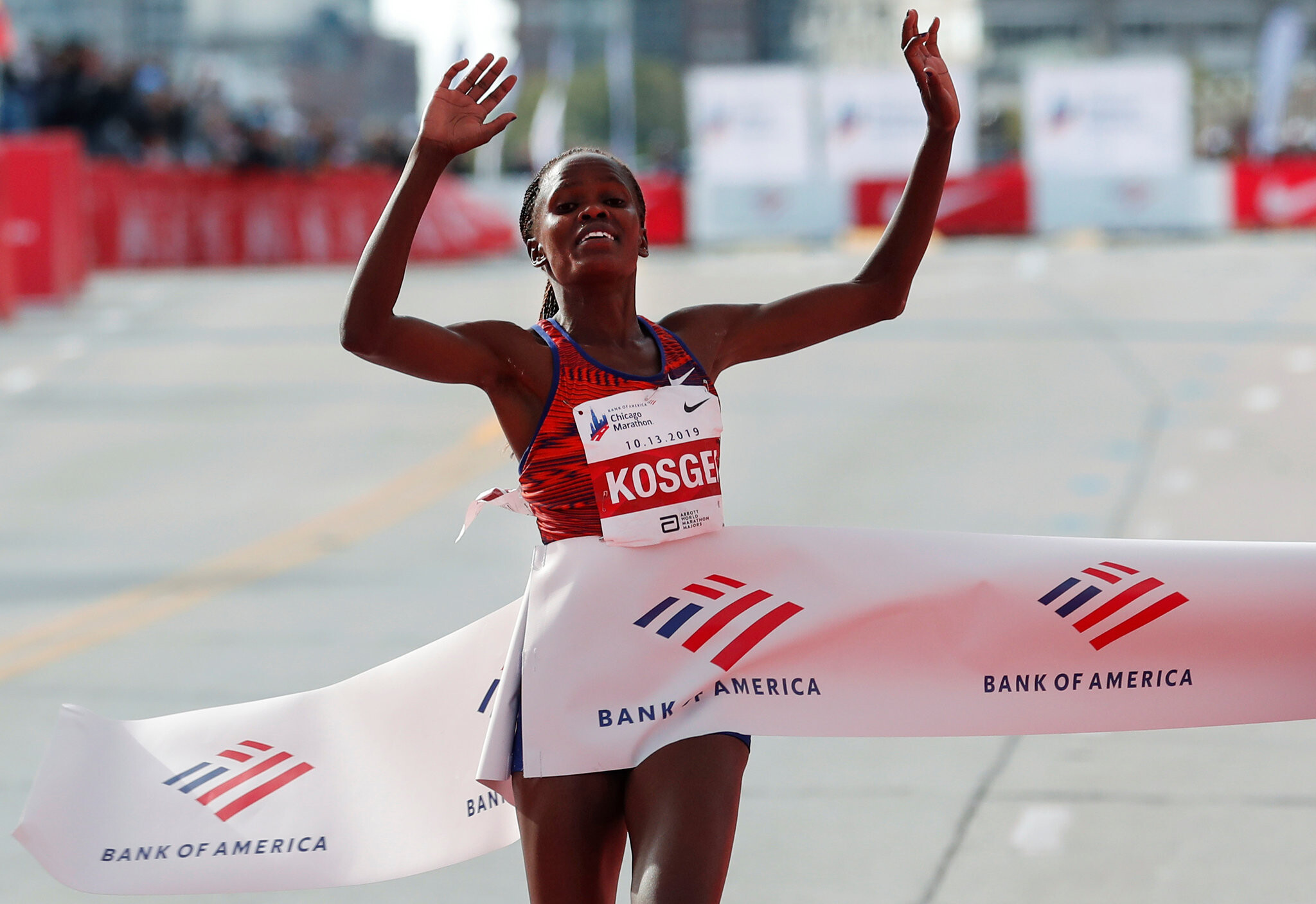
Racing is often a self-fulfilling prophecy determined by one’s build-up. Ruth Chepngetich said in her TV interview she came into Chicago off a perfect three-months of training after her disappointing ninth-place finish in London in April (2:24:36). Two previous wins in the Windy City (2021 and 2022) and a runner-up in 2023 meant Ms. Chepngetich arrived well seasoned on this course, with a keen understanding of what training was required to produce such a record run.
Of course, sadly, no record in athletics can be free of skepticism considering the industrial level of PED use that is uncovered, seemingly, every other Tuesday. Though understandable, cynicism should not be one’s default reaction.
To maintain any allegiance to the game, to follow it with any interest at all, we have to celebrate each record at face value. Just as rabid fans have to acknowledge some records to be ill-gotten, cynics accept that many special runs are exactly as they appear, above reproach.
Besides, when you break down Ruth’s 5k splits, each one from 5k to 35k was slower than the previous 5k. Not until the split from 35k to 40k (15:39) did she run faster than the split before (15:43 from 30 to 35k)
5k – 15:0010k – 30:14 (15:14)15k – 45:32 (15:18)20k – 60:51 (15:19)25k – 1:16:17 (15:26)30k – 1:31:40 (15:32)35k – 1:47:32 (15:43)40k – 2:03:11 (15:39)Fini – 2:09:56
1st half – 64:162nd half – 65:40
So congratulations to Ruth Chepngetich and her team for a marvelous run through a beautiful city. Now, let’s see how long this mark stays on the books before the No. 2 Ticonderoga pencil gets pulled out again.
BY THE NUMBERS
There have been 26 women’s world records set in the marathon since Beth Bonner‘s 2:55:22 in New York City in 1971. Over the ensuing 53 years, the average percentage change from one record to the next has been 1:26%. See WOMEN’S WORLD RECORD PROGRESSION.
Today’s record by Ruth Chepngetich, 2:09:56 (just one second slower than Bill Rodgers‘ American men’s record in Boston 1975!), lowered Tigst Assefa’s 2:11:53 mark by a healthy 1.5%. And Assefa’s time cut Brigid Kosgei’s 2:14:04 by 1.65%.
These latest records are still taking significant chunks off their predecessors and doing so in quick order. That suggests women are far from slicing everything they can from even this new record.
Yet, when comparing the women’s marathon world record to the men’s (2:00:35, set by Kelvin Kiptum in Chicago 2023), we see a differential of 7.2%. That is by far the best women’s record vis-à-vis the men’s throughout the running spectrum. Second place on that list is Florence Griffith-Joyner‘s 10.49 100m in relation to Usain Bolt‘s 9.58, a percentage difference of 8.675%.
The traditional rule of thumb has been a 10% gap between men’s and women’s records. But there are so many factors in play, it is difficult to make any definitive statement that explains one event, much less one athlete from another. I guess that’s why we keep watching.
by Toni Reavis
Login to leave a comment
Bank of America Chicago
Running the Bank of America Chicago Marathon is the pinnacle of achievement for elite athletes and everyday runners alike. On race day, runners from all 50 states and more than 100 countries will set out to accomplish a personal dream by reaching the finish line in Grant Park. The Bank of America Chicago Marathon is known for its flat and...
more...
50th BMW Berlin-Marathon Sunday: Deep fields promise fast and exciting races in Berlin’s jubilee marathon
The 50th edition of the BMW Berlin Marathon promises fast and exciting elite races. Deep fields will be assembled with 14 men who have already run sub 2:06:00. While there is no strong favourite among them it is different with the women: Ethiopia’s Tigist Ketema heads the list with her stunning 2:16:07 debut time, which makes her the ninth-fastest marathon runner ever.
Ten more women have personal bests of sub 2:22:00. Thirteen world records were broken in the history of the BMW Berlin Marathon, many more than in any other marathon. The jubilee edition of Germany’s most spectacular road race will have a record number of around 50,000 participants.
Men’s field
Without Kenya’s superstar Eliud Kipchoge, the winner of the past two editions, the fastest on paper is Tadese Takele. The Ethiopian was third in Berlin a year ago when he improved to 2:03:24. Since another fast race is expected Takele will probably have to run quicker to be in contention for the prestigious marathon victory at the Brandenburg Gate.
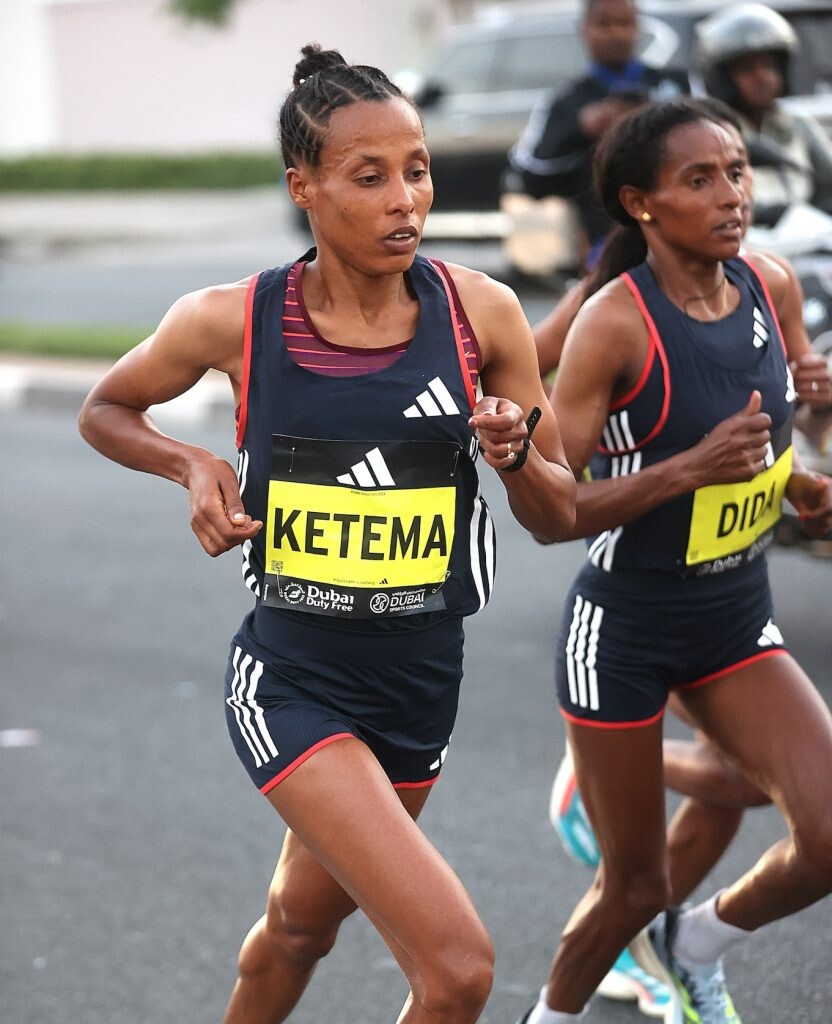
Fellow Kenyan Kibiwott Kandie could well challenge for his first triumph over the classic distance. The Kenyan is the former world half marathon record holder (57:32) with great potential. Germany’s Hendrik Pfeiffer leads a group of strong domestic runners. He improved to 2:07:14 early this year in Houston.
Women’s field
Tigist Ketema stormed to a sensational victory in Dubai at the beginning of the year, clocking an unofficial world debut record of 2:16:07. Coming to another very fast course now the training partner of Tigst Assefa, who smashed the world record here with 2:11:53 a year ago, might look to improve her personal best.
The women’s field includes a former world record holder as well, but at a much shorter distance: Genzebe Dibaba ran 3:50.07 in the 1,500m in 2015. When she switched to the marathon she ran a fast debut with 2:18:05 in Amsterdam two years ago.
Unfortunately, Kenya’s Rosemary Wanjiru had to cancel her start due to injury. But Germany’s Melat Kejeta is a late addition to the field. She dropped out of the Olympic Marathon early because of stomach problems and now hopes to bounce back in Berlin with a personal best. Kejeta might well try to become the second German woman after Irina Mikitenko (2:19:19 in Berlin in 2008) to break 2:20:00.
MEN
Tadese Takele ETH 2:03:24
Cybrian Kotut KEN 2:04:34
Hailemaryam Kiros ETH 2:04:41
Kibiwott Kandie KEN 2:04:48
Bazezew Asmare ETH 2:04:57
Samwel Mailu KEN 2:05:08
Milkesa Mengesha ETH 2:05:29
Haymanot Alew ETH 2:05:30
Philimon Kipchumba KEN 2:05:35
Josphat Boit KEN 2:05:42
Dejene Megersa ETH 2:05:42
Enock Onchari KEN 2:05:47
Oqbe Ruesom ERI 2:05:51
Justus Kangogo KEN 2:05:57
Haimro Alame ISR 2:06:04
Ashenafi Moges ETH 2:06:12
Asbel Rutto KEN 2:07:04
Samuel Tsegay SWE 2:06:53
Yohei Ikeda JPN 2:06:53
Stephen Kiprop KEN 2:07:04
Hendrik Pfeiffer GER 2:07:14
Kento Kikutani JPN 2:07:26
Melaku Belachew ETH 2:07:28
Godadaw Belachew ISR 2:07:45
Yuhei Urano JPN 2:07:52
Guojian Dong CHN 2:08:12
Filimon Abraham GER 2:08:22
Haftom Welday GER 2:08:24
Sebastian Hendel GER 2:08:51
Olonbayar Jamsran MGL 2:08:58
Haftamu Gebresilase ETH Debut
WOMEN
Tigist Ketema ETH 2:16:07
Genzebe Dibaba ETH 2:18:05
Yebrugal Melese ETH 2:19:36
Mestawot Fikir ETH 2:20:45
Azmera Gebru ETH 2:20:48
Sisay Gola ETH 2:20:50
Mizuki Matsuda JPN 2:20:52
Fikrte Wereta ETH 2:21:32
Ai Hosoda JPN 2:21:42
Melat Kejeta GER 2:21:47
Aberu Ayana ETH 2:21:54
Calli Hauger-Thackery GBR 2:22:17
Bekelech Gudeta ETH 2:22:54
Lisa Weightman AUS 2:23:15
Betelihem Afenigus ETH 2:23:20
Veronica Maina KEN 2:24:46
Bosena Mulatie ETH 2:26:59
Alisa Vainio FIN 2:27:26
Sonia Samuels GBR 2:28:04
Nora Szabo HUN 2:28:25
Philippa Bowden USA 2:29:14
Pauline Esikon KEN Debut
by Christopher Kelsall
Login to leave a comment
BMW Berlin Marathon
The story of the BERLIN-MARATHON is a story of the development of road running. When the first BERLIN-MARATHON was started on 13th October 1974 on a minor road next to the stadium of the organisers‘ club SC Charlottenburg Berlin 286 athletes had entered. The first winners were runners from Berlin: Günter Hallas (2:44:53), who still runs the BERLIN-MARATHON today, and...
more...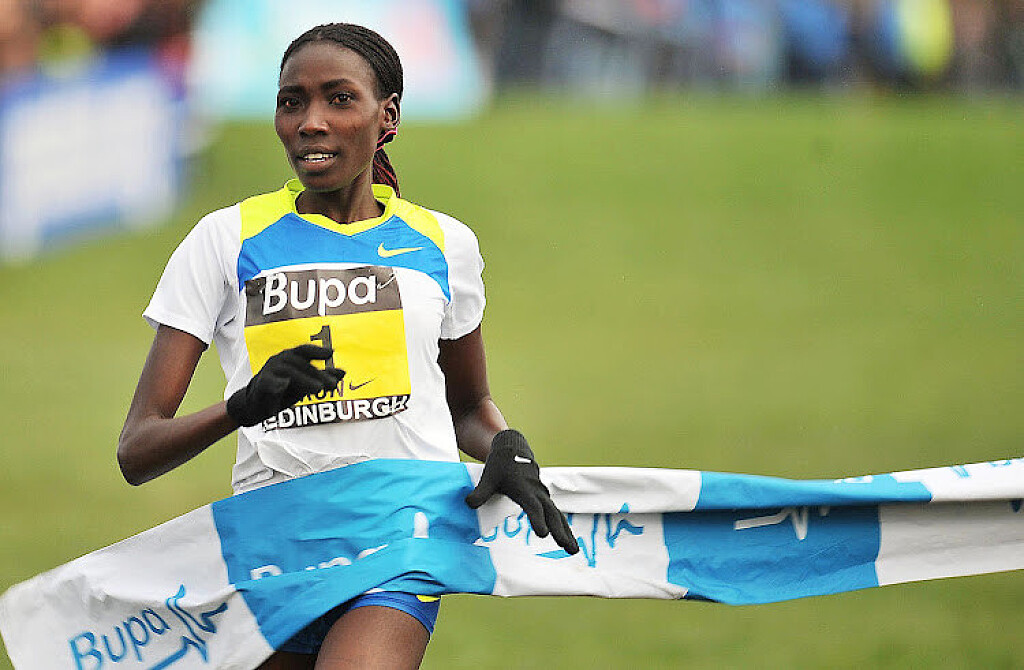
Masai, Kiptanui spearhead Kenya's charge at Frankfurt Marathon
The 2021 Chicago Marathon second runner-up Eric Kiptanui and Beijing 2008 Olympics 10,000m bronze medalist Linet Masai will spearhead Kenya’s charge at the Frankfurt Marathon set for October 27.
Race organizers anticipate a turnout of 12,000 participants, with expectations of a thrilling, fast-paced competition.
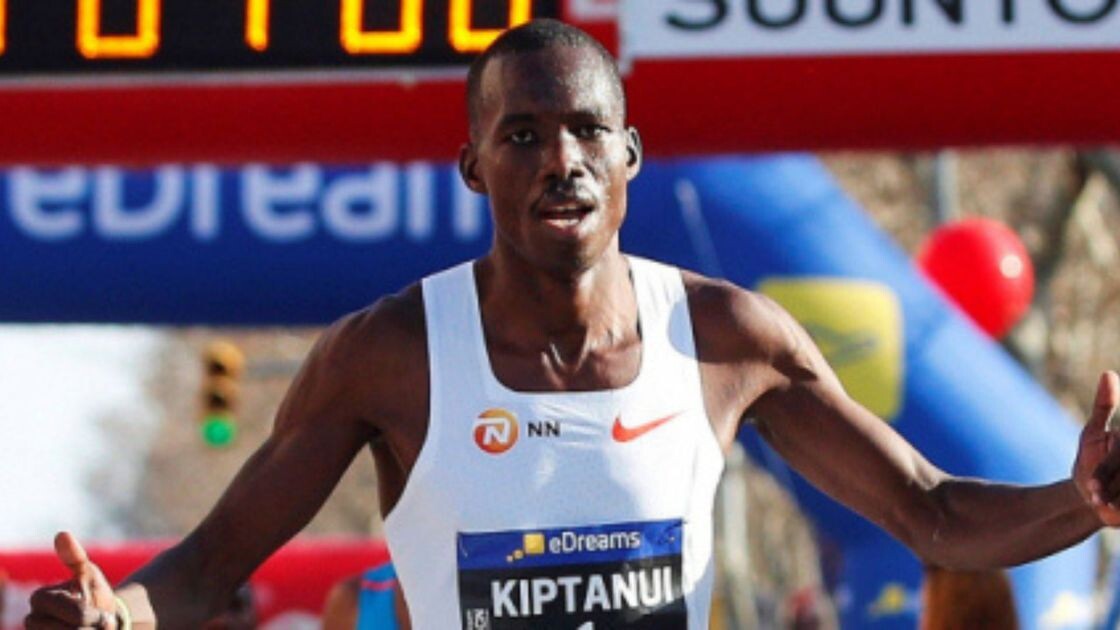
“We are looking forward to another high-class race that will certainly hold one or two surprises. After having the fastest race in the event's history last year in terms of the two winning times added together, we are excited to see what will be possible on October 27,” said race director Jo Schindler.
During last year’s race, Brimin Kipkorir sealed the title in 2:04:53 ahead of Ethiopian duo of Mulugeta Asefa (2:06:47) and Guye Idemo (2:07:44).
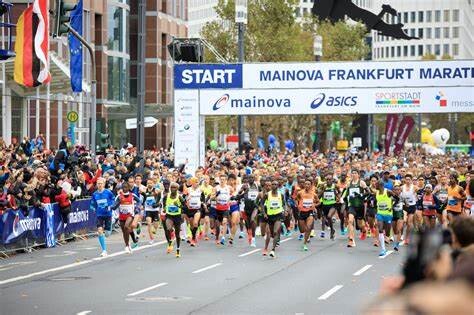
In the women’s elite race, Ethiopia’s Buzunesh Getachew (2:19:27) beat Winfred Moseti (2:20:55) and Sharon Chelimo (2:22:07) to the title.
Kiptanui enters the race with an impressive resume, including half marathon victories in Berlin (58:42) and Lisbon (1:00:05) in 2018, and Barcelona in 2019 (1:01:04).
In the marathon, he boasts a title from the Xiamen and Tuscany Marathon in 2021 (2:05:47-PB). He also secured runner-up finishes in Dubai 2020 (2:06:17) and Chicago 2021 (2:06:17).
His other accolades include a victory at the 2017 Madrid 10k Road race (27:34).
His main rival will be Ethiopia’s Herpasa Negasa, who finished second at the 2022 Seoul Marathon.
Negasa holds a personal best of 2:03:40 set during the 2019 Dubai Marathon where he placed second behind compatriot Getaneh Molla (2:03:34).
The Ethiopian’s accolades include runner-up finishes at the Hengshui 2018 Marathon (2:09:14), Lyon 2015 (2:10:17) and a second runner-up finish at the 2018 Warszawa Marathon (2:11:46).
In the women’s race, Masai will face a stern challenge from 2022 Berlin Marathon third-place finisher Tigist Abayechew.
Masai brings a rich trophy cabinet that includes bronze from the Beijing 2008 Games in the 10,000m (30:26.50) and a world title in the same event from the 2009 Berlin World Championships (30:51:24).
The 34-year-old is also a gold medalist from the 2007 World Cross Country Championships and a three-time silver medalist from Amman 2009, Bydgoszcz 2010 and Punta Umbria 2011.
In the full marathon, Masai holds a lifetime best of 2:23:46 from the 2018 Amsterdam Marathon where she finished fifth.
Abayechew holds a best of 2:18:03 she set during the Berlin Marathon, where she placed third behind Rosemary Wanjiru (2:18:00) and Tigst Assefa (2:15:37).
by Teddy Mulei
Login to leave a comment

Mainova Frankfurt Marathon
Frankfurt is an unexpectedly traditional and charming city, with half-timbered buildings huddled in its quaint medieval Altstadt (old city), cosy apple wine taverns serving hearty regional food, village-like neighbourhoods filled with outdoor cafes, boutiques and street art, and beautiful parks, gardens and riverside paths. The city's cache of museums is second in Germany only to Berlin’s, and its nightlife...
more...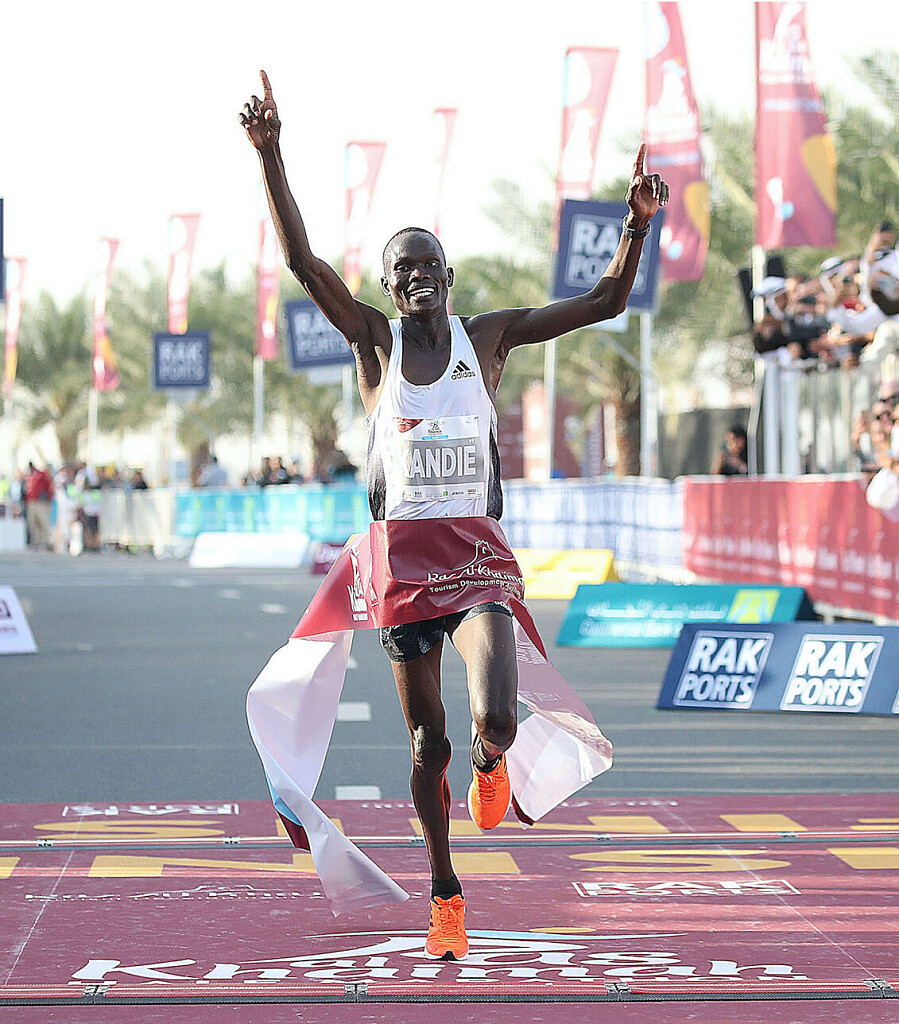
50th BMW BERLIN-MARATHON ON 29 SEPTEMBER: ELITE FIELD
The men’s elite field for the 50th edition of the BMW BERLIN-MARATHON race comes with a change that reflects the recent development at the very top of elite marathon racing.
It will be the first time since 2014 that you will not find the name of either Eliud Kipchoge or Kenenisa Bekele on the start list of the BMW BERLIN-MARATHON. However the Elite Race Director of the marathon where most world records (13) were broken, Mark Milde, can be confident that not so much will change regarding the outcome. Although world-records will not be the target on 29th September, the jubilee race could well deliver extraordinary fast times yet again.
A record number of more than 50,000 runners are expected to run the 50th BMW BERLIN-MARATHON on 29th September. The race, that saw its first edition back in 1974 with 244 finishers, never had over 50,000 runners before.
From those on the men’s start list at least one has the potential to become Kenya’s next marathon superstar: Kibiwott Kandie is a former world half marathon record holder with a personal best of 57:32. This time suggests that he could become one of the fastest marathon runners of all time if he can transform his talent to the classic distance. The 28 year-old, who has a current PB of 2:04:48 and was inspired by former Berlin world record breaker Paul Tergat, is one of half a dozen runners who feature very strong personal bests of sub 2:05:00.
Returning to the BMW BERLIN-MARATHON will be Ethiopia’s Tadese Takele and Ronald Korir of Kenya, who placed third and fourth last year. Both ran their personal bests of 2:03:24 and 2:04:22 here. Kenya’s Cybrian Kotut, a younger brother of former Abbott World Marathon Majors Champion Martin Lel, will run his first BMW BERLIN-MARATHON. Kotut features a PB of 2:04:34. Ethiopians Hailemaryam Kiros (2:04:41) and Bazezew Asmare (2:04:57) are the other two runners with sub 2:05 PBs. Another runner who could challenge for a place on the podium is Samwel Mailu. The Kenyan smashed the course record of the Vienna City Marathon last year with 2:05:08. Due to an injury the bronze medallist from the 2023 World Half Marathon Championships was unable to compete this spring.
The women’s race could see a battle between Ethiopia’s newcomer Tigist Ketema and Kenya’s Rosemary Wanjiru. With their personal bests they are among the top ten on the marathon all-time list. Tigist Ketema took the Dubai Marathon this year with an unofficial world debut record of 2:16:07.
She is a training partner of Tigst Assefa, who smashed the world record at the BMW BERLIN-MARATHON a year ago. Rosemary Wanjiru ran her marathon debut in Berlin two years ago and finished second with a brilliant 2:18:00. This year she improved to 2:16:14 when she was runner-up in Tokyo.
Former 1,500m world record holder Genzebe Dibaba, who is the younger sister of Ethiopian running legend Tirunesh Dibaba, will hope to achieve a fast time on the flat Berlin course. She ran a 2:18:05 debut in Amsterdam two years ago, but was not yet able to improve this time. Genzebe Dibaba was the 2014 Laureus World Sportswoman of the Year. Fellow-Ethiopian Yebrgual Melese is the fourth woman on the start list who has a sub 2:20 PB with 2:19:36.
Elite Runners for the 50th BMW BERLIN-MARATHON:
MEN
Tadese Takele ETH 2:03:24
Ronald Korir KEN 2:04:22
Cybrian Kotut KEN 2:04:34
Hailemaryam Kiros ETH 2:04:41
Kibiwott Kandie KEN 2:04:48
Bazezew Asmare ETH 2:04:57
Samwel Mailu KEN 2:05:08
Milkesa Mengesha ETH 2:05:29
Haymanot Alew ETH 2:05:30
Philimon Kipchumba KEN 2:05:35
Stephen Kiprop KEN 2:07:04
WOMEN
Tigist Ketema ETH 2:16:07
Rosemary Wanjiru KEN 2:16:14
Genzebe Dibaba ETH 2:18:05
Yebrugal Melese ETH 2:19:36
Mestawot Fikir ETH 2:20:45
Azmera Gebru ETH 2:20:48
Sisay Gola ETH 2:20:50
Ababel Yeshaneh ETH 2:20:51
Mizuki Matsuda JPN 2:20:52
Fikrte Wereta ETH 2:21:32
Login to leave a comment
BMW Berlin Marathon
The story of the BERLIN-MARATHON is a story of the development of road running. When the first BERLIN-MARATHON was started on 13th October 1974 on a minor road next to the stadium of the organisers‘ club SC Charlottenburg Berlin 286 athletes had entered. The first winners were runners from Berlin: Günter Hallas (2:44:53), who still runs the BERLIN-MARATHON today, and...
more...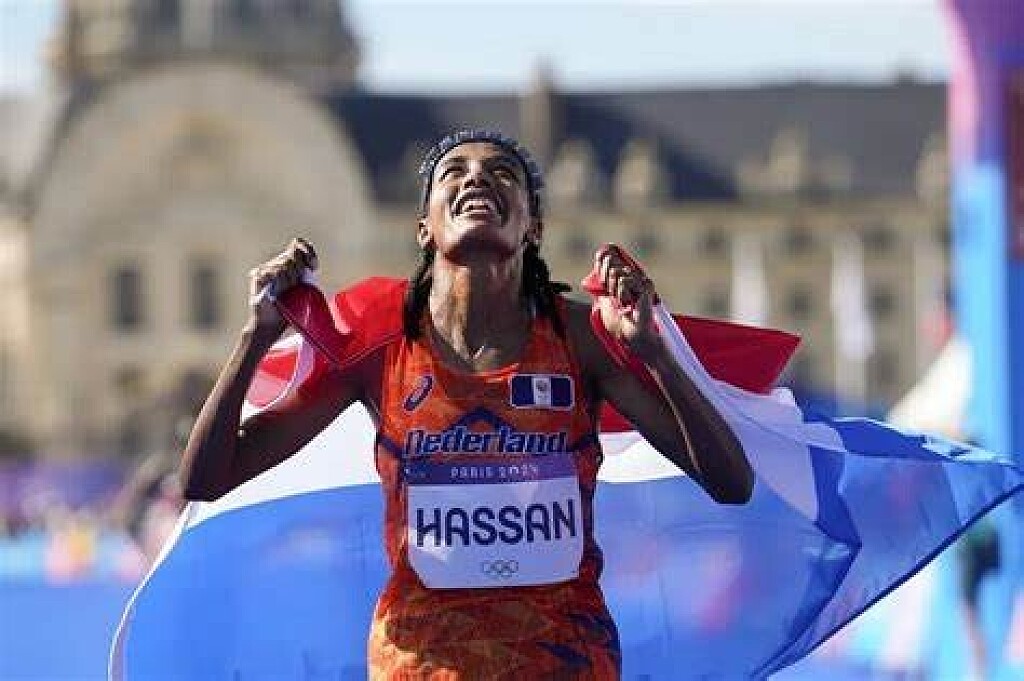
Sifan Hassan promises to outrun Kenyan and Ethiopian legends until her last breath
The Dutch marathon runner has vowed to dominate her Kenyan and Ethiopian rivals aiming to race until her last breath.
Dutch distance running great Sifan Hassan has set a new gold standard in Olympic marathon running emphatically stating she plans to dominate the event for years to come.
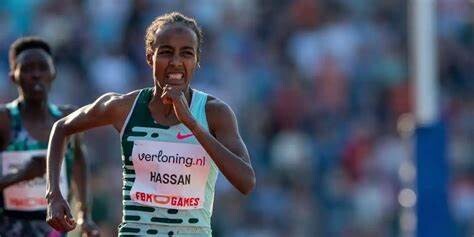
After a stunning victory at the Paris Olympics, Hassan warned her top rivals from Kenya and Ethiopia that she is just getting started.
In one of the most grueling tests of human endurance, Hassan pulled off a historic victory in what was dubbed the toughest Olympic marathon course ever.
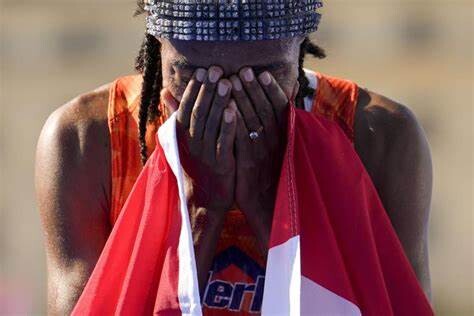
The race included punishing hills and an elevation surpassing those of the Boston and New York marathons.
Despite these challenges, Hassan managed to claim gold with a new Olympic record of 2 hours, 22 minutes, and 55 seconds, narrowly defeating world record holder Tigst Assefa of Ethiopia by just three seconds.
“I’m really crushed.I don’t want to disappoint myself. I want to give everything. That’s what I did. It feels like a dream," she said as per Independent..
The 31-year-old Dutch athlete has now become the first woman to secure Olympic gold medals in the 1500m, 5,000m, 10,000m, and marathon across multiple games.
“Everybody else was fresh but I was telling myself, I don’t feel fresh, I don’t feel good, why didn’t you just run the marathon? From the beginning to the end, I felt uncomfortable,” Hassan explained.
Yet, her strategic focus on the marathon paid off, culminating in a breathtaking final sprint that left onlookers gasping at the idyllic gardens surrounding the golden dome of Les Invalides.
The race was not just a physical battle but also a mental one.
Hassan has been open about her fears and the immense pressure she faces each time she lines up at the starting line.
“Yes, I’m still scared of the marathon, I’ve only done four and they’re all different.You’re uncomfortable for two hours or more, and the brain wants to protect you," she added.
Hassan’s mental resilience and ability to manage her heart rate were critical in her Olympic success.
“I recover great, that’s good, but the rest is the challenge, I love the extra challenge. I like to try things out. I’m not scared... I mean, I am scared but I like to try things. Does it work or does it not? That’s what makes me better than others, I try,” Hassan said.
“I’ll still get nervous, but I’m not finished yet, I think I’ll do marathons until I die. I’m not going to stop. It’s a lot of fun,” she declared.
by Festus Chuma
Login to leave a comment
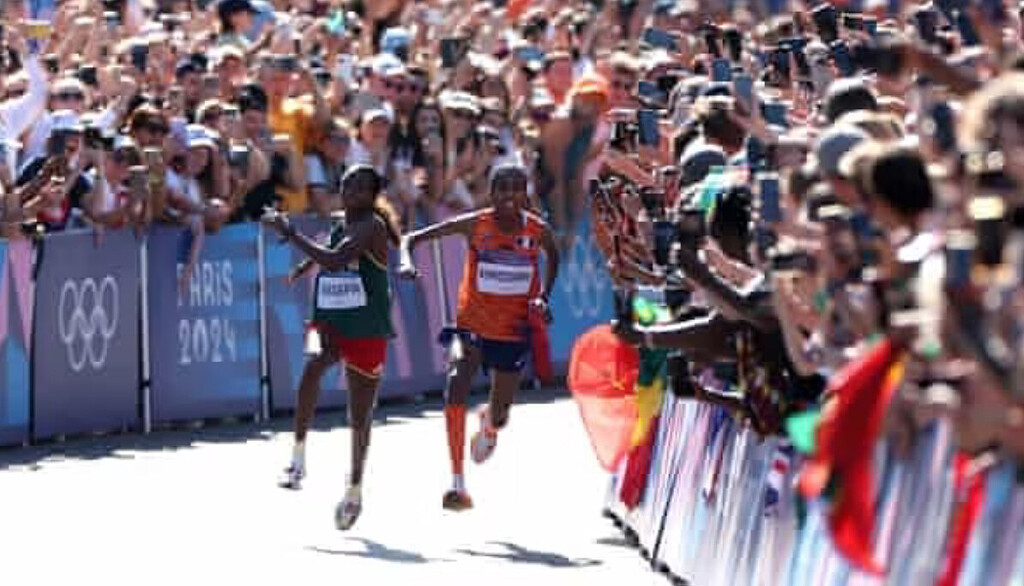
Sifan Hassan caps remarkable Olympics with women’s marathon gold by 3seconds after winning two medals days earlier
Sifan Hassan and Tigst Assefa moved towards the final corner of the breathless, frenetic women’s marathon shoulder‑to‑shoulder as they fought desperately for one of the last gold medals of the Paris Olympics. Under normal circumstances, Hassan’s supreme footspeed would almost always outstrip marathon specialists, but this was remarkably her 62nd kilometre of the Games after 10 days of racing. Anything was possible.
Only Hassan is crazy enough to attempt a ridiculous treble of 5,000m, 10,000m and marathon, but she is also the only athlete talented and versatile enough to succeed in all three. In the final metres, the Dutchwoman pulled away from Assefa, after a dramatic coming together, to win her first marathon gold medal with a blistering Olympic record of 2hr 22min 55sec. Assefa of Ethiopia, the world record holder, finished 3sec behind Hassan in second place while Kenya’s Hellen Obiri took the bronze.
“Can you imagine for two hours, just focusing on every step? I have never focused like I focused today,” said Hassan, who had to survive an appeal from the runner-up. “I’m Olympic champion and what can I say? Marathon; I’ve been Olympic champion [in other events] but it’s something else.”
Having already built up one of the most extraordinary track and field careers of all time, this is surely Hassan’s crowning achievement. The 31-year-old has won three medals at the Paris Olympics, her marathon gold complemented by bronzes in the 5,000m and 10,000m. The last athlete to win medals in all three events in one Olympics was the Czech Emil Zatopek in 1952. She is also the first woman to win Olympic gold in 5,000m, 10,000m and marathon competitions, having won the first two in Tokyo. She is a six-time Olympic medallist overall.
Nine days earlier, Hassan’s Olympics began in the women’s 5,000m heats on Friday 2 August before she won bronze in the rapid, hectic final last Monday. The women’s 10,000m final followed four days later on Friday, Hassan also finishing with an excellent bronze medal.
Just 35 hours later, Hassan lined up for a legendary Olympic marathon performance. The race came alive at the 28km mark as the runners scaled a painfully steep hill. Hassan struggled badly and a significant 50m gap opened up between her and the leading pack as, with her closing speed in mind, the marathon specialists accelerated up the hill in order to distance themselves. But they just could not get rid of her. As the course flattened, Hassan quickly closed the gap, stalking the leaders from the back of the group.
The formidable final five of Hassan, Assefa, Obiri, Sharon Lokedi and Amane Beriso Shankule remained extremely tight. But as the pace picked up, the group gradually thinned out until only Hassan and Assefa remained. Hassan made her move with about 300m to go, drawing her brilliant speed developed through years of greatness in 1500m races. As she took the inside line and flitted past Assefa, all the Ethiopian could do to try to stop her was put her body in the way and extend an elbow. But Hassan nudged the 27-year-old back and tore past her rival to close out an unforgettable win.
“I have no words for it. When I started this morning, every single moment [in the race] I was regretting that I ran the 5,000m and 10,000m,” Hassan said. “I was telling myself: ‘If I hadn’t done that, I would feel comfortable today.’ From the beginning until the end, I felt every step so hard and I regretted it: ‘What is wrong with me?’ The moment I felt good was at 20km.”
The post-event ceremony was significantly delayed after Ethiopia filed a protest over the incident when Assefa and Hassan crashed into each other towards the end of the race. Their protest was unsurprisingly rejected. Afterwards, Assefa claimed the clash had cost her the gold.
Hassan, who was born in Ethiopia before becoming a refugee and moving to the Netherlands in 2008 at 15, ran her first marathon only last year, in London. After her first medal in the 5,000m final, Hassan explained that she had chosen such an intense challenge because she is equally crazy and inquisitive: “I’m very curious. Could I podium? Could I even complete [each race]? I’m trying to fight with myself. What can I do after the 10,000m? Am I strong enough to keep the pace?”
As has been the case throughout a career in which she has constantly experimented and pushed her athleticism to its limits, her performance answered every single question affirmatively.
Wow, what an amazing athlete! Maybe the best of the games!
Login to leave a comment

Paris 2024 Olympic Games
For this historic event, the City of Light is thinking big! Visitors will be able to watch events at top sporting venues in Paris and the Paris region, as well as at emblematic monuments in the capital visited by several millions of tourists each year. The promise of exceptional moments to experience in an exceptional setting! A great way to...
more...
SIFAN HASSAN WINS WOMEN’S MARATHON IN NEW OLYMPIC RECORD
Sifan Hassan has raced to victory in a new Olympic record in the Paris 2024 women’s marathon on Sunday 11 August.
The Dutch athlete braved the undulating course that wound through some of the most iconic sights in Paris, finishing the race in 2:22:55.
Hassan raised eyebrows when she announced she would complete the 5000m/10,000m/marathon treble at these Games. However, her brilliant gold in today's marathon, added to the bronze medals she won over the shorter distances, is proof that the 31-year-old is able to overcome the type of sporting challenges others would deem impossible. She placed third in the 10000m as well.
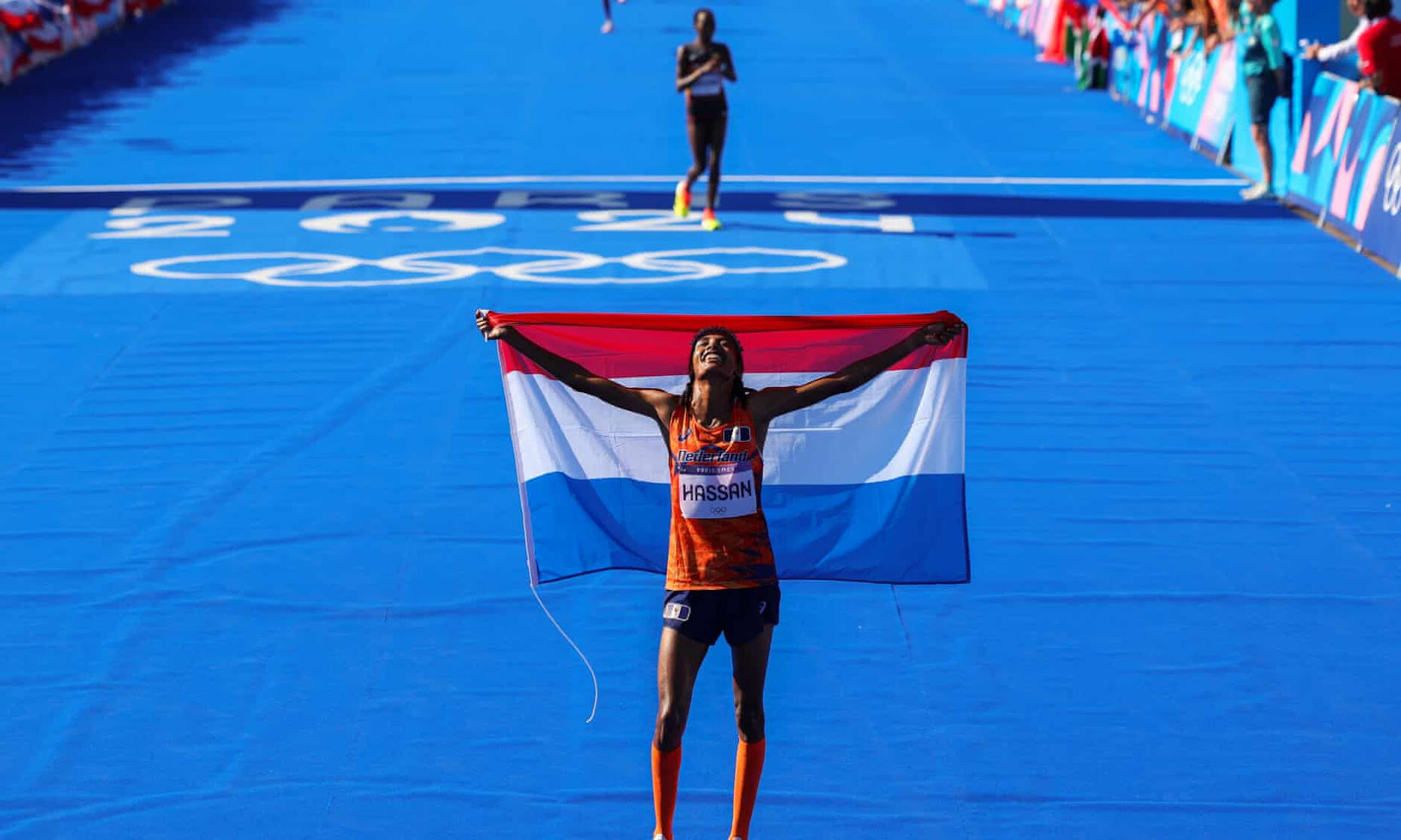
Much has also been made about the unique challenges posed by the Paris 2024 marathon course with its steep, gruelling inclines followed by fast downhill sections.
But in front of a cheering crowd that lined the streets of France’s capital, Hassan proved herself strongest, fastest and more determined over the 42.195km race.
Tigst Assefa of Ethiopia won silver (2:22:58) with Kenya’s Hellen Obiri claiming bronze (2:23:10).
Login to leave a comment
Paris 2024 Olympic Games
For this historic event, the City of Light is thinking big! Visitors will be able to watch events at top sporting venues in Paris and the Paris region, as well as at emblematic monuments in the capital visited by several millions of tourists each year. The promise of exceptional moments to experience in an exceptional setting! A great way to...
more...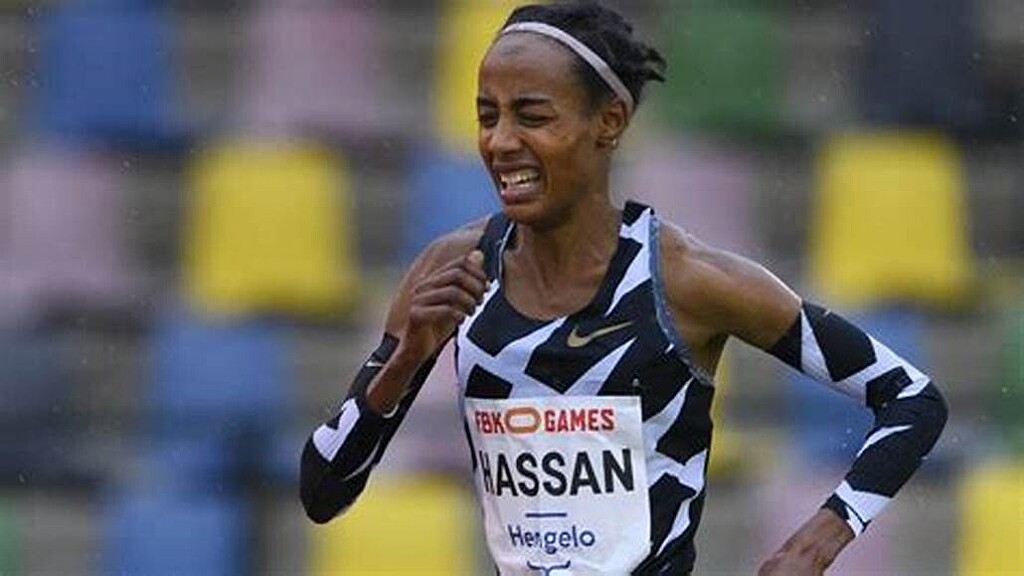
The Dutch distance specialist has decided to drop the 1,500m to focus on the marathon
After the Dutch Olympic team announced that distance phenom Sifan Hassan was set to become the first athlete in history to attempt four Olympic athletics events, Hassan has decided to drop down to a triple. In 2023, she became the first athlete to medal in the 1,500m, 5,000m, and 10,000m at a single Games, bringing home a bronze (in the 1,500m) and two golds. This year, she will swap out the 1,500 for her newest discipline, the marathon.
Hassan’s third-place finish in the 1,500m at Tokyo 2020, behind Kenya’s Faith Kipyegon and Team GB’s Laura Muir, was the weakest of her three performances. Now, the deep field in the women’s 1,500m in Paris threatens her chances to bring home another medal in the event. Kipyegon (the defending world champion and world record holder) and Australia’s Jessica Hull (the newly crowned 2,000m world record holder), ran the world’s best times in the discipline earlier this month. Muir (the Olympic silver medallist) and Ethiopia’s Gudaf Tsegay (5,000m world record holder) are also medal contenders in the event, adding to the challenge.
Hassan only made her marathon debut in 2023, and followed up her win at the London Marathon by clocking a 2:13:44 (the second-fastest women’s marathon time in history) to win the 2023 Chicago Marathon. With world record holder Tigst Assefa of Ethiopia the sole competitor ranked ahead of her, Hassan stands a much better chance of bringing home a medal in the marathon. (Additionally, the women’s 1,500m final is scheduled for Saturday evening, Aug. 10, which is the night before the marathon–obviously not ideal timing for a strong marathon.)
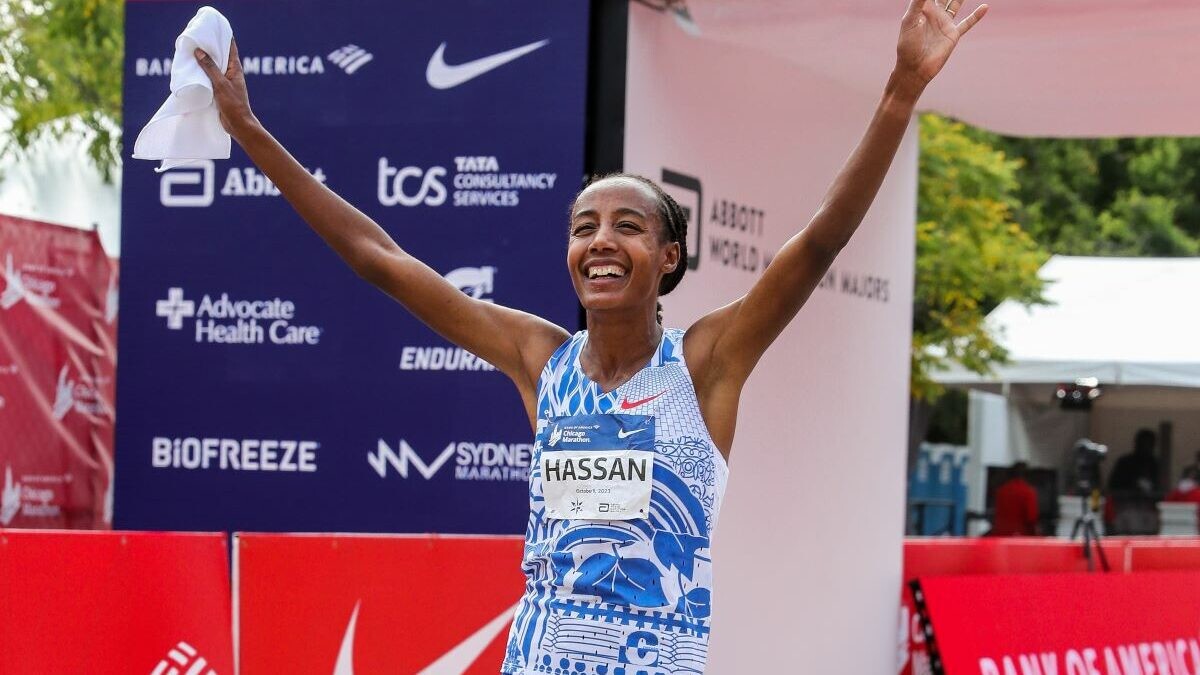
With three races removed from her Olympic itinerary, Hassan’s new schedule is somewhat less demanding, with her races spaced out by a couple of days each.
Aug. 2: 5,000m, Round 1 – 6:10 p.m. local timeAug. 5: 5,000m, Final – 9:10 p.m.Aug. 9: 10,000m Final – 8:55 p.m.Aug. 11: Marathon – 8:00 a.m.
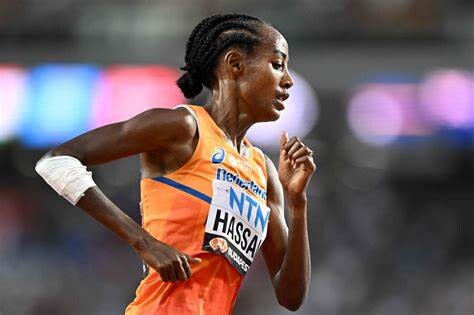
by Cameron Ormond
Login to leave a comment
Paris 2024 Olympic Games
For this historic event, the City of Light is thinking big! Visitors will be able to watch events at top sporting venues in Paris and the Paris region, as well as at emblematic monuments in the capital visited by several millions of tourists each year. The promise of exceptional moments to experience in an exceptional setting! A great way to...
more...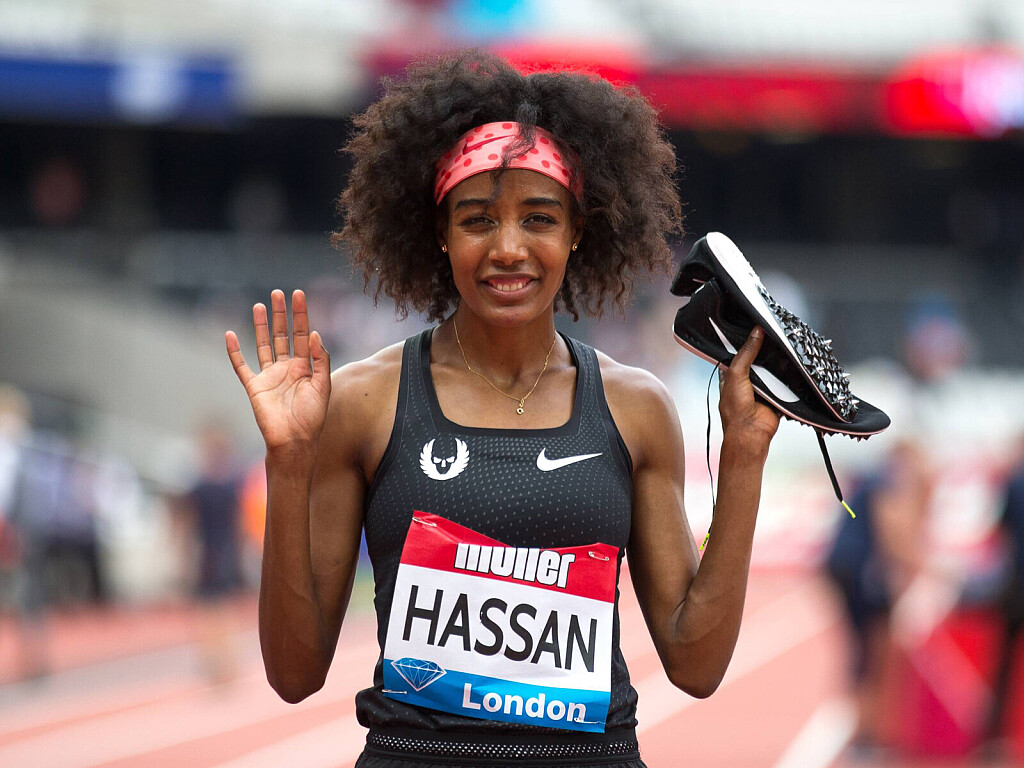
50 laps and then a marathon: Sifan Hassan chases the ‘impossible’ dream at Paris Olympics
The Olympics is a time to marvel at the incredible but the sheer size of the opportunity should ensure an element of caution among athletes.
Not so for Sifan Hassan, the Dutch middle and long distance runner, after she announced her bid to pull off a historic treble at the Paris Olympics when she will compete in the 5,000m, 10,000m and marathon events.
The Olympic champion in Tokyo over 5,000m and 10,000m, Hassan had entered the 1,500m, too, before dropping that event on Wednesday.
Hassan provoked excitement in the sport three years ago when she attempted an exhausting Tokyo treble.
She would add bronze to her two golds in Tokyo when she rallied in the 1,500m heats after falling over, before settling for bronze in the final after a fierce battle with Faith Kipyegon and Laura Muir.
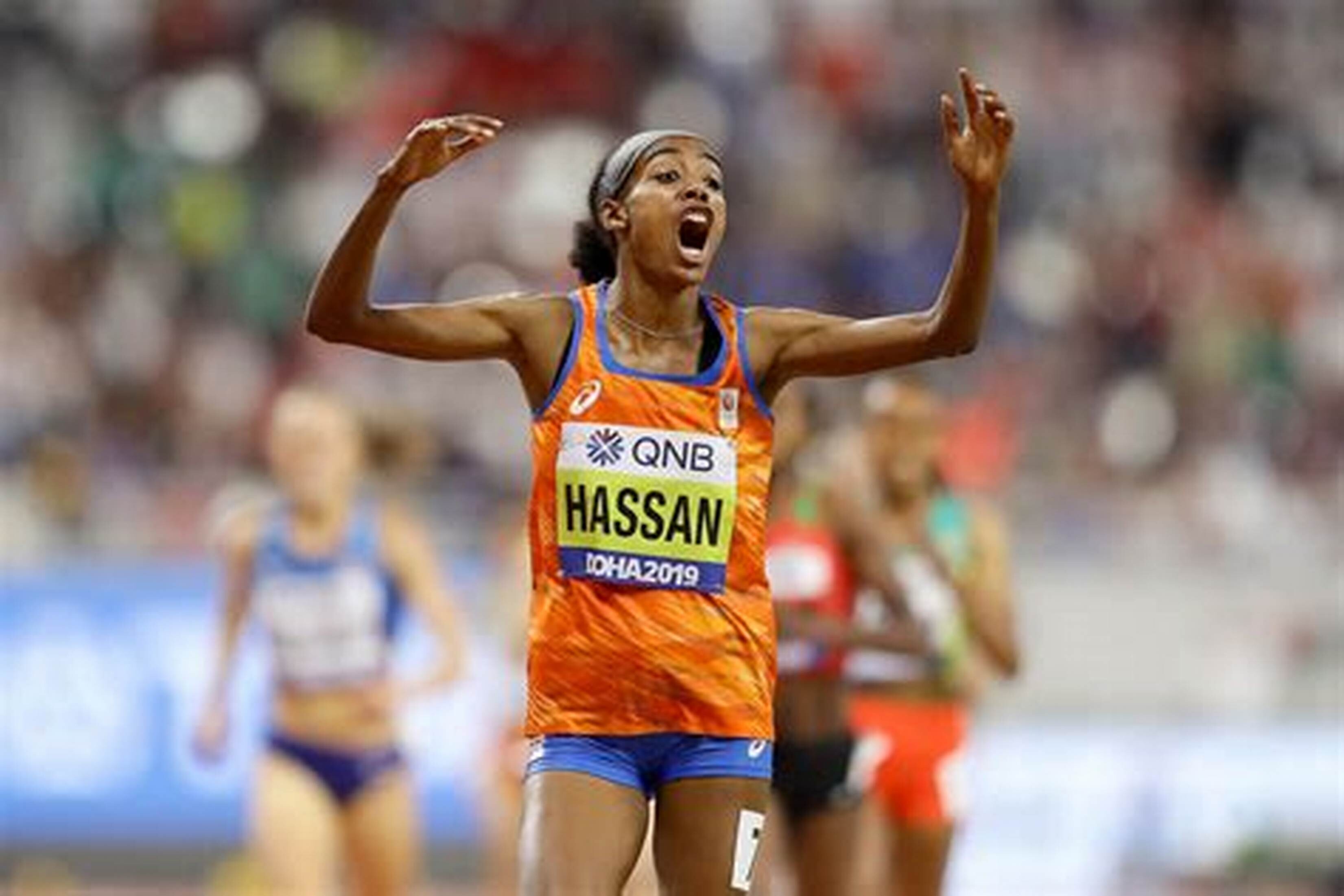
That bronze, while adding a dash of disappointment in the Tokyo rush for three golds, was a gift to the sport in hindsight. It delivered a shove, compelling Hassan to roll the dice and taste 26.2 miles on the roads.
The marathon and the roads bring acclaim and fortunes rarely afforded on the track and the hope was that Hassan, with her formidable track speed, would graduate in time. Yet her transition was seamless: She made her debut in London last year, pulling off one of the most staggering comebacks.
Hunched over and stationary in the middle of the race at 19km, Hassan desperately stretched to rid her aching body of lactic acid. Not only did it vanish, but she found a spring to outkick Alemu Megertu and win by a mere four seconds in two hours, 18 mins and 33secs.
More was to come, with victory and the second-fastest women's marathon of all time (2:13.44) in Chicago, before a respectable fourth in Tokyo this year. It begs the question as to why Hassan would risk scuppering hopes of marathon gold by subjecting her legs to 20km (the 5,000m has two rounds) on the track. Notably, the marathon course will present a number of hills, which could see each race unfold into a tactical affair with the opportunity for a sprint finish.
Even with 4mins 4.08secs in the 1,500m this year, Hassan would revel in the opportunity to test Ethiopian world record holder Tigst Assefa (2:11:53) and Kenyan trio Peres Jepchirchir, Helen Obiri and Sharon Lokedi over a late dash.
But the 31-year-old, whose face can be seen across many of the metro stations in Paris for an eye-catching Nike campaign, insists the attempt is nothing more than intrigue. And for that. she should be praised, in a sport where so many play it safe.
“I’m a very curious person,” she remarked. “Is life all about a gold medal? I'm very curious to do many events. I think it's impossible. So I want to see if it is, so I have to try. In Tokyo, it was successful after the three events. I discovered myself, also.
“Curiosity, when I try new things, is actually what keeps me going in my career. My journey is more important, the other things come after. I love the journey as much as the challenge.
“Did I balance speed on the track with enough endurance in the marathon? Let’s find out together. It’s not easy to face the unknown but my curiosity has driven all my training towards this goal. I will try my best to succeed.”
Hassan starts her campaign in Paris in the 5,000m opening round on Friday and will return on Monday for the final, should she qualify.
The 10,000m final is set for 9 August, meaning less than 48 hours of rest before lining up for the marathon.
“For anyone else this would be insane!” American track legend Michael Johnson wrote on social media. “I don't believe there's ever been an athlete who enjoys racing more than Sifan Hassan.”
And her attempt has left many of her fellow athletes in awe, with 1,500m world champion Josh Kerr impressed by her versatility.
“I don't think I could do that on the women’s side... to do a triple like that, the training is so gruelling for the marathon,” said Kerr. “She’s so well rounded that being able to have enough speed in the rank to do track races, it’s two rounds in the five, she’ll be out there having fun. Very impressive.”
“It's good sometimes when I'm nervous ... I do better,” Hassan laughed. Her rivals will hope she is not.
by Jack Rathborn
Login to leave a comment
Paris 2024 Olympic Games
For this historic event, the City of Light is thinking big! Visitors will be able to watch events at top sporting venues in Paris and the Paris region, as well as at emblematic monuments in the capital visited by several millions of tourists each year. The promise of exceptional moments to experience in an exceptional setting! A great way to...
more...
Paris 2024: Favorites and best value picks on the track
We are just four days away from the opening ceremony of the 2024 Paris Olympics and a little over a week from the start of the athletics events at the Stade de France. If you’re looking to place your bets for gold or want to know the favorites for each event (according to Vegas sportsbooks), we’ve got you covered with insights and odds to help you get the best value out of your picks.
Men’s 100m
Favorite: Kishane Thompson (JAM) -105 [world leader]
Best value: Oblique Seville (JAM) +900
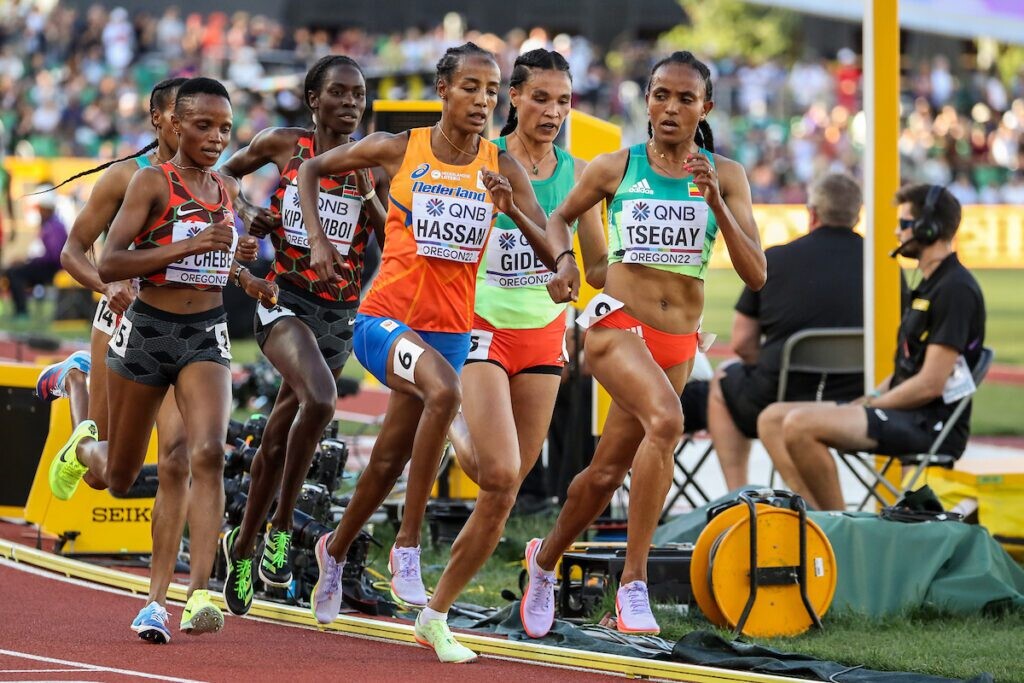
Men’s 200m
Favorite: Noah Lyles (USA) -290 [3x world champion]
Best value: Erriyon Knighton (USA) +1000 [2x world championship medallist]
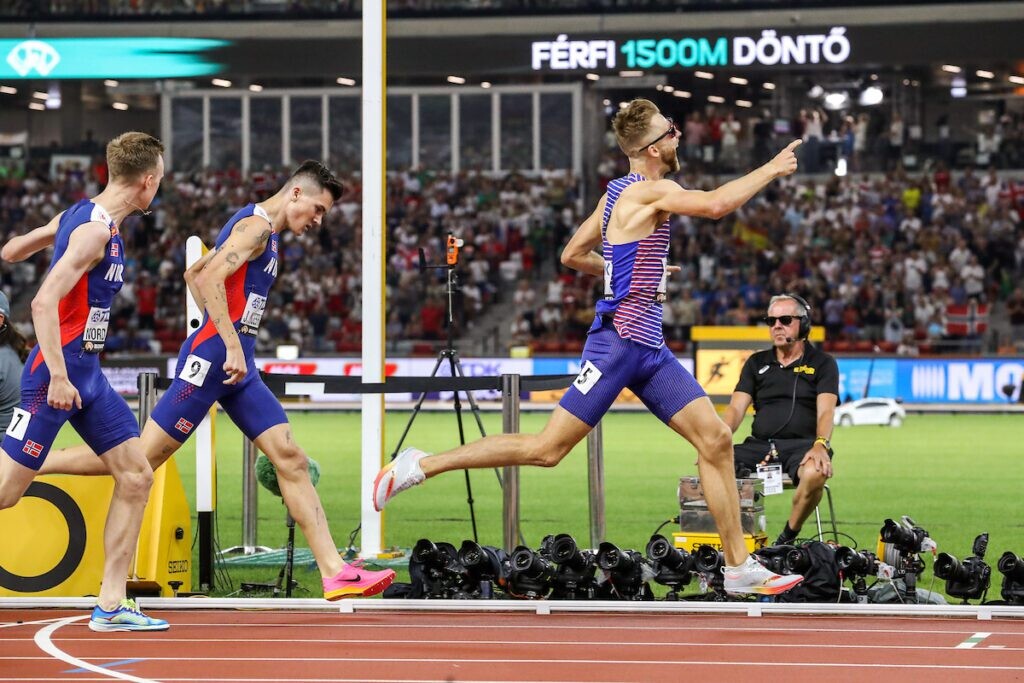
Men’s 400m
Favorite: Matthew Hudson-Smith (GBR) +120 [world silver medalist]
Best value: Steven Gardiner (BAH) +350 [reigning Olympic champion]
Men’s 800m
Favorite: Djamel Sedjati (ALG) -250 [world leader]
Best value: Marco Arop (CAN) +1500 [reigning world champion]
Men’s 1,500m
Favorite: Jakob Ingebrigtsen (NOR) -225 [reigning Olympic champion]
Best value: Josh Kerr (GBR) +175 [reigning world champion]
Men’s 5,000m
Favorite: Jakob Ingebrigtsen (NOR) -290 [reigning world champion]
Best value: George Mills (GBR) +4000
Men’s 10,000m
Favorite: Joshua Cheptegei (UGA) +120 [world record holder]
Best value: Berihu Aregawi (ETH) +600
Men’s 110m hurdles
Favorite: Grant Holloway (USA) -500 [world leader and world champion]
Best value: Hansle Parchment (JAM) +1000 [reigning Olympic champion]
Men’s 400m hurdles
Favorite: Rai Benjamin (USA) +100 [world leader]
Best value: Alison Dos Santos (BRA) +300 [2022 world champion]
Men’s 3,000m steeplechase
Favorite: Lamecha Girma (ETH) -120
Best value: Soufiane El Bakkali (MAR) +190
Men’s marathon
Favorite: Eliud Kipchoge (KEN) -190 [reigning Olympic champion]
Best value: Benson Kipruto (KEN) +900 [2024 Tokyo Marathon champion]
Women’s 100m
Favorite: Sha’Carri Richardson (USA) -225 [reigning world champion]
Best value: Julien Alfred (LCA) +700
Women’s 200m
Favorite: Gabby Thomas (USA) +105 [2020 Olympic bronze medalist]
Best value: Shericka Jackson (JAM) +180 [reigning world champion
Women’s 400m
Favorite: Marileidy Paulino (DOM) -135 [2020 Olympic silver medalist]
Best value: Rhasidat Adeleke (IRL) +700
Women’s 800m
Favorite: Keely Hodgkinson (GBR) -290 [Olympic silver medallist]
Best value: Nia Atkins (USA) +1500
Women’s 1,500m
Favorite: Faith Kipyegon (KEN) -285 [world record holder]
Best value: Jessica Hull (AUS) +1000
Women’s 5,000m
Favorite: Faith Kipyegon (KEN) -285 [world champion]
Best value: Beatrice Chebet (KEN) +750 [world XC champion]
Women’s 10,000m
Favorite: Sifan Hassan (NED) +120 [reigning Olympic champion]
Best value: Gudaf Tsegay (ETH) +250 [reigning world champion]
Women’s 100m hurdles
Favorite: Cyrena Samba-Mayela (FRA) +250 [European champion]
Best value: Tobi Amusan (NGR) +1500 [world record holder]
Women’s 400m hurdles
Favorite: Sydney McLaughlin-Levrone (USA) -700 [world record holder and reigning Olympic champion]
Best value: Femke Bol (NED) +300 [reigning world champion]
Women’s 3,000m steeplechase
Favorite: Beatrice Chepkoech (KEN) n/a [world record holder]
Best value: Sembo Almayew (ETH) n/a
Women’s marathon
Favorite: Tigst Assefa (ETH) +250 [world record holder]
Best value: Hellen Obiri (KEN) +400 [2023 & 2024 Boston Marathon champion]
by Marley Dickinson
Login to leave a comment
Paris 2024 Olympic Games
For this historic event, the City of Light is thinking big! Visitors will be able to watch events at top sporting venues in Paris and the Paris region, as well as at emblematic monuments in the capital visited by several millions of tourists each year. The promise of exceptional moments to experience in an exceptional setting! A great way to...
more...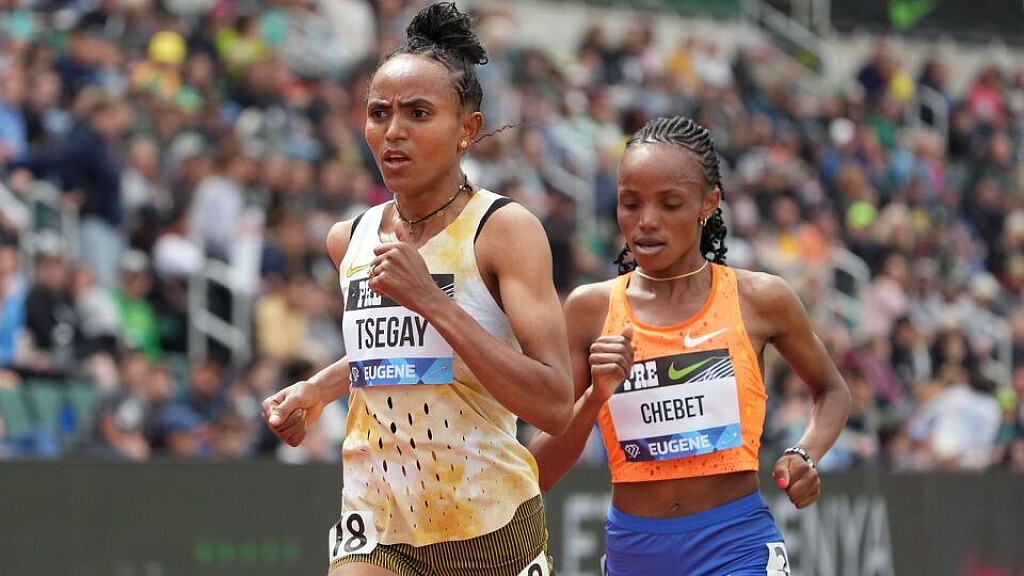
Gudaf Tsegay, Lamecha Girma head Ethiopia's 43-athlete squad to battle Kenya in Paris Olympics
In the 2021 Tokyo Olympics, Kenya bested Ethiopia as the top African nation, finishing 19th overall with 10 athletics medals.
World record-holders Gudaf Tsegay and Lamecha Girma are set to lead a formidable Ethiopian squad of 43 athletes at the upcoming Paris Olympic Games.
The robust team comprising top-tier talent across various track and field events promises to offer fierce competition to their long-time rivals Kenya in the race for Olympic medals.
Tsegay will be competing in the 10,000 meters, 5,000 meters, and 1,500 meters events.
The 27-year-old athlete's standout performance at the Prefontaine Classic, where she shattered the world record in the 5,000 meters with an astounding time of 14:00.21, means she will be challenging rival Kenya's Faith Kipyegon who will chase two gold medals after winning the 1500m and 5000m.
The women's team also boasts an impressive lineup in the 800 meters, featuring Tsige Duguma, Habitam Alemu, and Werknesh Mesele, with Nigist Getachew as the reserve.
In the 1,500 meters, Tsegay will be joined by Birke Haylom and Diribe Wolteji, with Hirut Meshesha on standby. Medina Eisa and Ejgayehu Taye will support Tsegay in the 5,000 meters, with Freweyni Hailu as reserve, while Fotyen Tesfay, Tsigie Gebreselama, and Aynadis Mebratu will compete in the 10,000 meters.
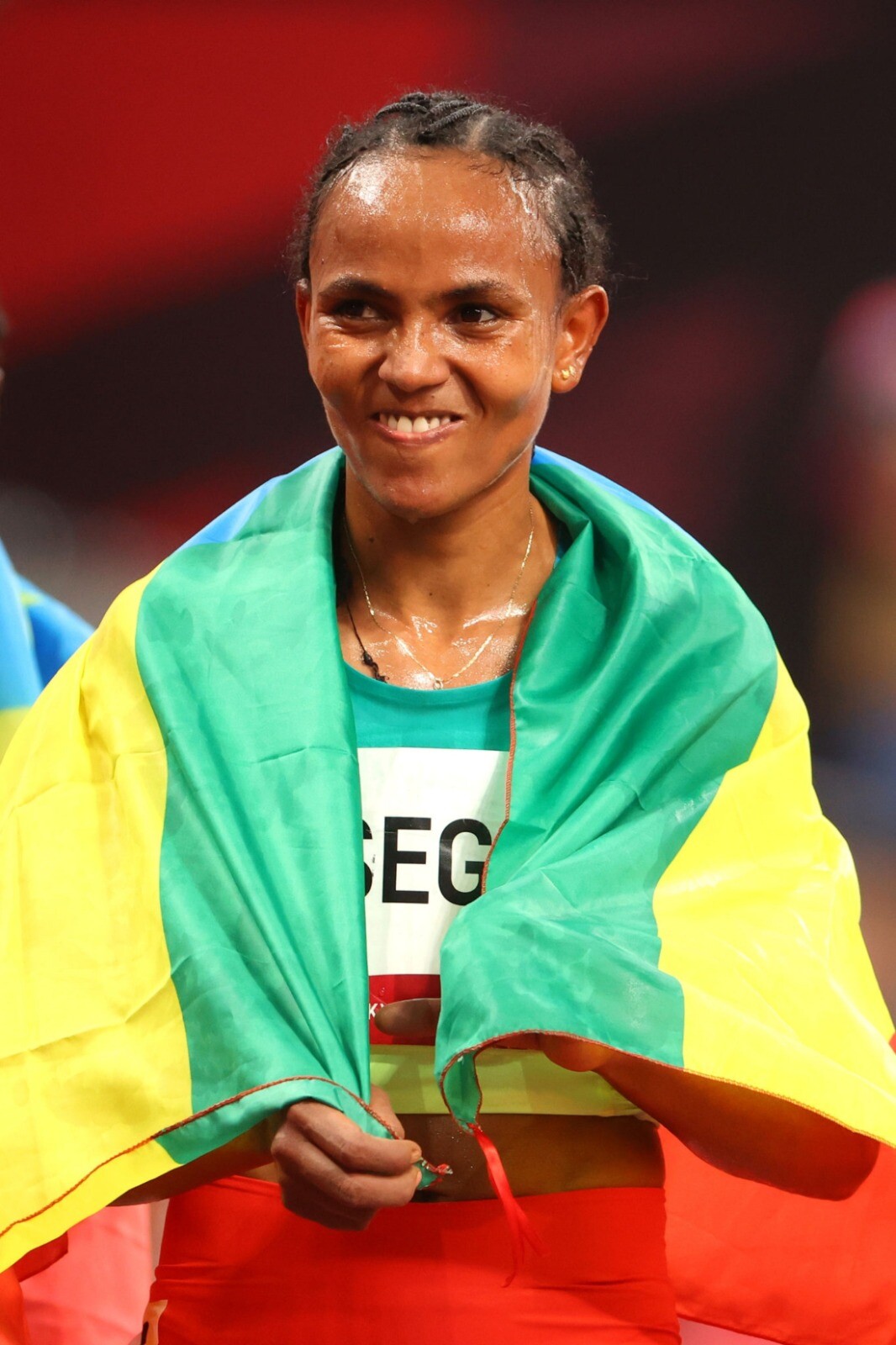
The 3,000 meters steeplechase will see Sembo Almayew and Lomi Muleta in action, and the marathon team includes Tigst Assefa, Amane Beriso, and Megertu Alemu, with Gotytom Gebreslase as reserve.
On the men's side, the team is equally impressive as Abdisa Fayisa, Samuel Tefera, and Ermias Girma will compete in the 1,500 meters.
The 5,000 meters team includes Hagos Gebrhiwet, Yomif Kejelcha, and Addisu Yihune, with Selemon Barega as reserve.
Kejelcha will also contest the 10,000 meters alongside Berihu Aregawi and Biniam Mehari, with Barega again as a reserve.
Lamecha Girma, alongside Samuel Firewu and Getnet Wale, will vie for victory in the men's 3,000 meters steeplechase, with Abrham Sime as reserve.
Ethiopia team to Paris
Women
800 meters: Tsige Duguma, Habitam Alemu, Werknesh Mesele, Nigist Getachew (Reserve)
1500 meters: Gudaf Tsegay, Birke Haylom, Diribe Wolteji, Hirut Meshesha (Reserve)
5000 meters: Gudaf Tsegay, Medina Eisa, Ejgayehu Taye, Freweyni Hailu (Reserve)
10,000 meters: Gudaf Tsegay, Fotyen Tesfay, Tsigie Gebreselama, Aynadis Mebratu (Reserve)
3000 meters Steeplechase: Sembo Almayew, Lomi Muleta
Marathon:Tigst Assefa, Amane Beriso, Megertu Alemu, Gotytom Gebreslase (Reserve)
Men
1500 meters: Abdisa Fayisa, Samuel Tefera, Ermias Girma, Teddese Lemi (Reserve)
5000 meters: Hagos Gebrhiwet, Yomif Kejelcha, Addisu Yihune, Selemon Barega (Reserve)
10,000 meters: Yomif Kejelcha, Berihu Aregawi, Selemon Barega, Biniam Mehari (Reserve)
Men's 3000 meters steeplechase: Lamecha Girma, Samuel Firewu, Getnet Wale, Abrham Sime (Reserve)
Marathon: Sisay Lemma, Deresa Geleta, Kenenisa Bekele, Tamirat Tola (Reserve)
20 km Race walk: Misgana Wakuma
by Festus Chuma
Login to leave a comment
Paris 2024 Olympic Games
For this historic event, the City of Light is thinking big! Visitors will be able to watch events at top sporting venues in Paris and the Paris region, as well as at emblematic monuments in the capital visited by several millions of tourists each year. The promise of exceptional moments to experience in an exceptional setting! A great way to...
more...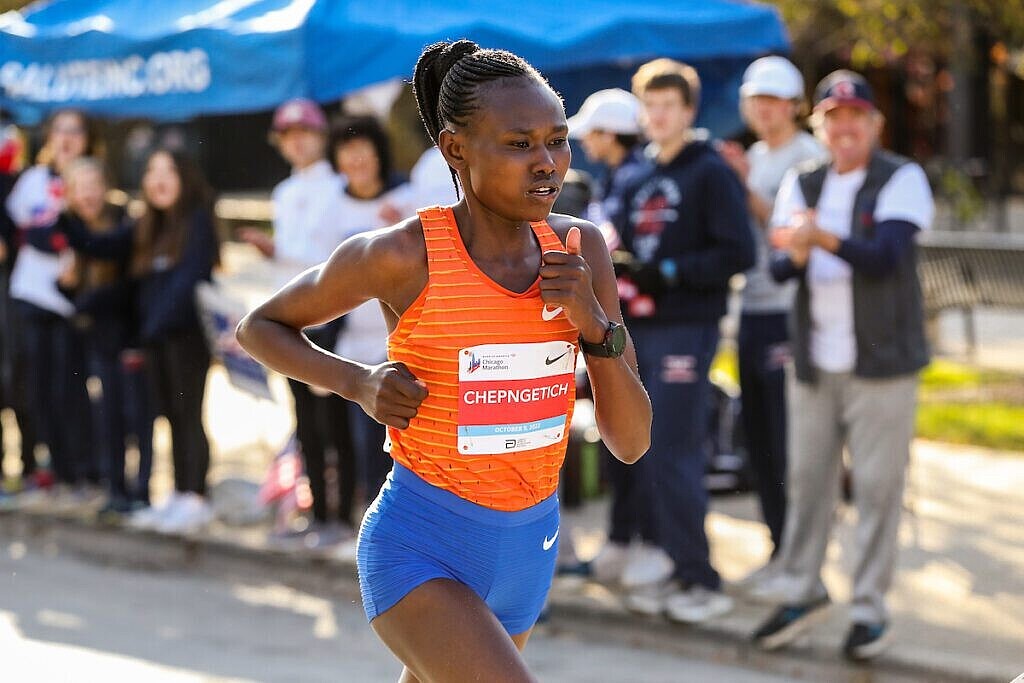
Ruth Chepngetich set to conquer 2024 London Marathon amidst elite competition
Ruth Chepngetich is targeting victory and a record at the London Marathon against a strong field as she eyes Olympic selection.
Two-time Chicago Marathon champion Ruth Chepng’etich is poised for a challenging race at the 2024 London Marathon this Sunday.
Chepng’etich, a formidable competitor who secured third place in the 2020 edition of the event, is aiming for a strong performance, although she has not discounted the possibility of setting a new record.
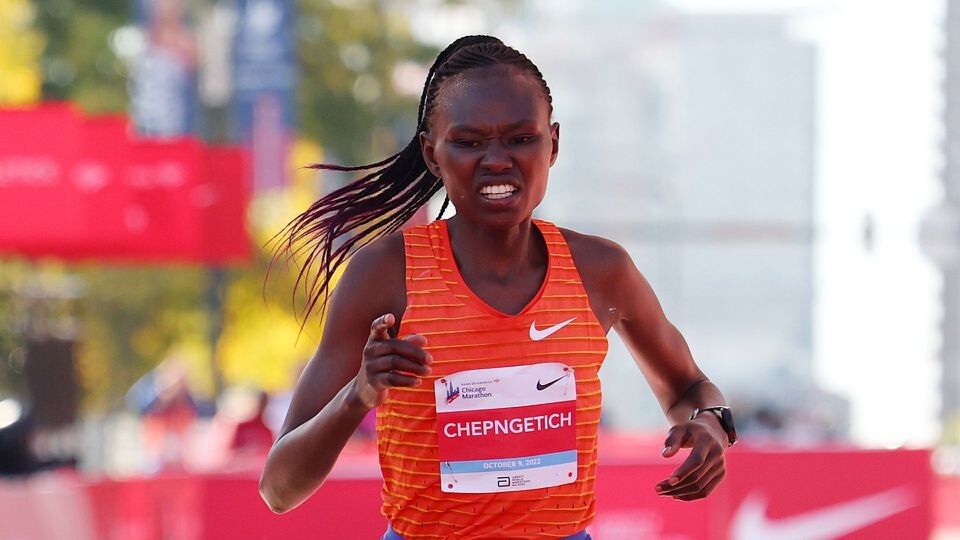
The pacemakers in the marathon will play a crucial role in maintaining the pace for the women's group, aiming to beat the women-only world record—a distinct possibility in London where the elite women compete in a separate event from the elite men and the larger mass of runners.
In a press conference ahead of the race, Chepng’etich expressed both enthusiasm and realism about her prospects against a competitive field.
"I’m happy to be back after that race in 2020. I’m ready to run well, but the field is so strong," she stated.
Her main rivals include Ethiopia's Tigst Assefa, Kenya's Brigid Kosgei, Olympic champion Peres Jepchirchir, and Yalemzerf Yehualaw from Ethiopia, who won the London Marathon in 2022.
"Everybody here is chasing something. For me it’s about winning first, then I’ll think about setting records," she added.
The London Marathon has been a stage for numerous world records since its inception, with seven records broken to date, including Paula Radcliffe's unmatched 2:15:25 in 2003.
The marathon’s route, largely unaltered since 1981, takes runners through some of London’s most scenic landmarks, such as the Tower of London and the Houses of Parliament, starting from Greenwich Park and concluding on The Mall in front of Buckingham Palace.
Chepng’etich also touched upon her Olympic aspirations, noting the importance of the upcoming race for her selection to the Kenyan national team for the Paris Olympics.
"The Federation will make its selection after Sunday so we’ll see. But winning in London will be harder than in Paris," she noted.
by Festus Chuma
Login to leave a comment
TCS London Marathon
Since its inaugural edition on March 29, 1981, the TCS London Marathon has grown into one of the world's most prestigious road races, blending elite competition with an extraordinary charitable legacy. Founded by former Olympic champion and journalist Chris Brasher alongside Welsh athlete John Disley, the event has been staged every year and has been held in the spring annually...
more...