

Running News Daily
Running News Daily is edited by Bob Anderson and team. Send your news items to bob@mybestruns.com Advertising opportunities available.
Index to Daily Posts · Sign Up For Updates · Run The World Feed
Articles tagged #United States
Today's Running News
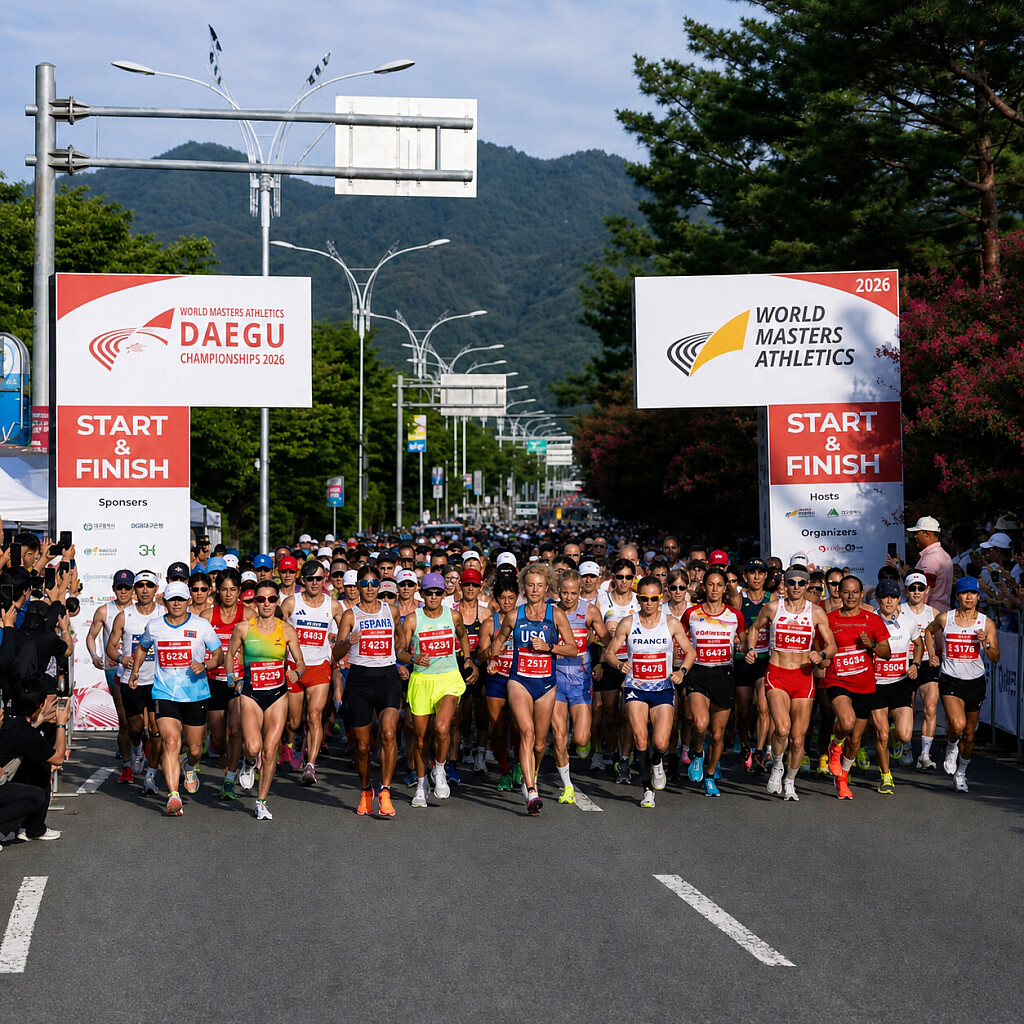


Four World Records Fall as Daegu Masters Championships Explode Into Life
The World Masters Athletics Championships in Daegu, South Korea, are only three days old, but the competition has already produced a remarkable display of speed, endurance and longevity, with four world records shattered and another 10 championship records rewritten.
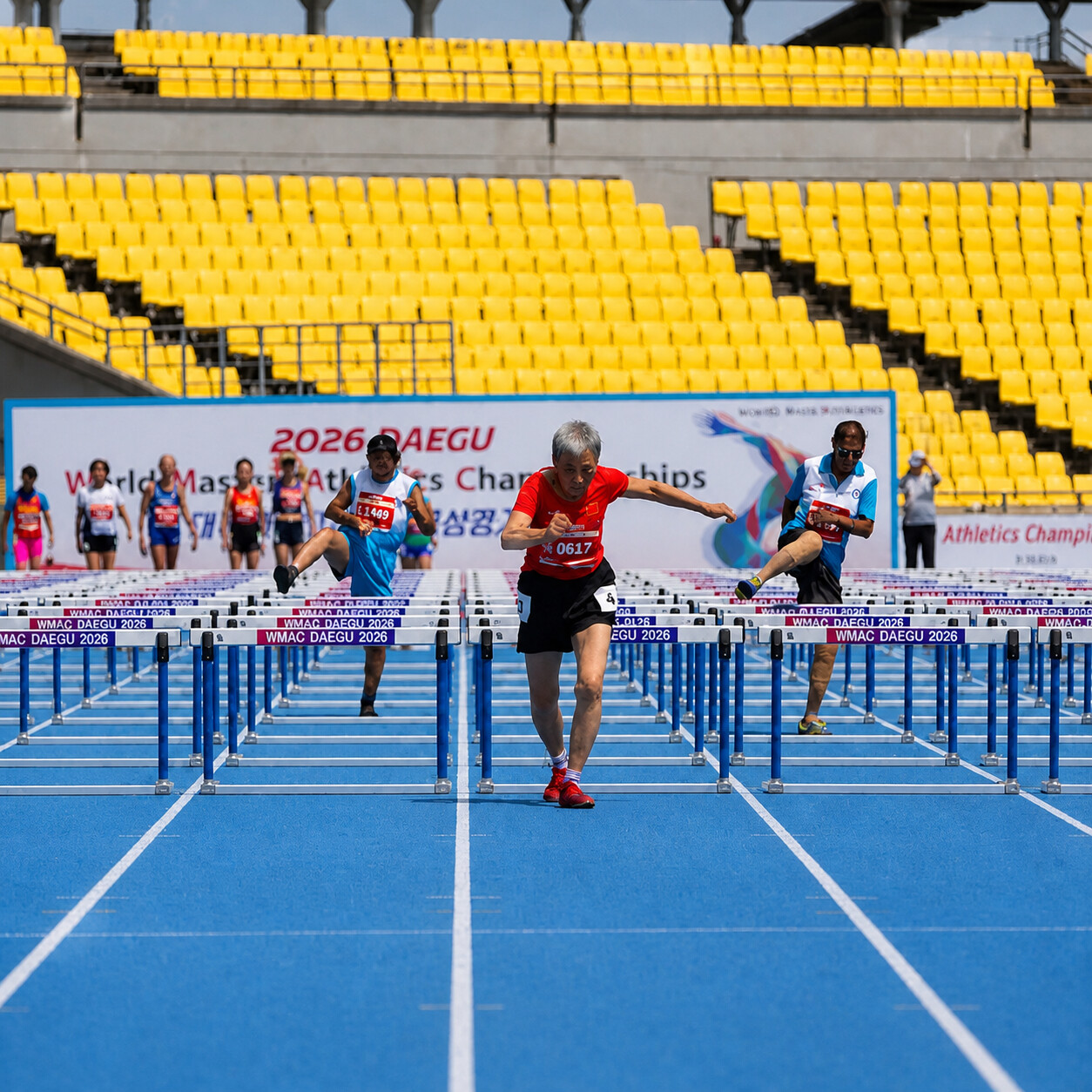
The record-breaking action began on the opening day when the United States’ Richard Lee produced a stunning performance in the M65 2,000m steeplechase. Lee stopped the clock at 7:09.29, winning gold while lowering the existing world record in the age group.
Day two proved even more dramatic, delivering three world records in quick succession.
Great Britain’s John Wright was first to strike, clocking 12.03 seconds to win the M65 100m. In doing so, the veteran sprinter improved his own world record of 12.15, set in 2024, underlining his remarkable consistency at the highest level of masters competition.
Only minutes later, the United States’ Kenton Brown produced another record-breaking run in the M80 100m. Brown crossed the line in 14.16, taking 0.05 seconds off his own previous world record of 14.21, which he established last year.
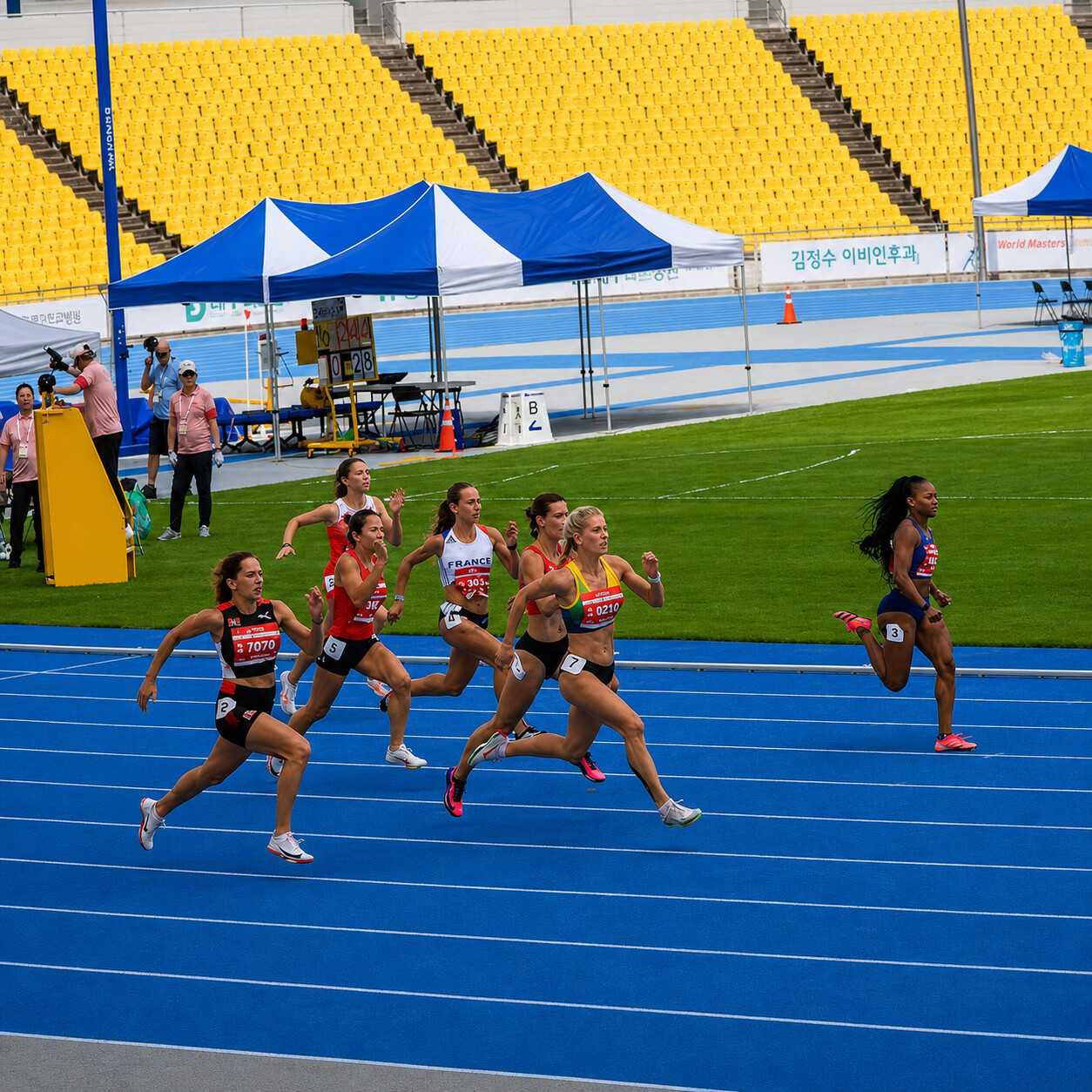
Thailand then added another name to the growing list of Daegu record-breakers. Somsanga Boonnok won the W70 80m hurdles in 15.61, breaking a world record that had belonged to Austria’s Marianne Maier since 2016.
Four world records in just three days tell only part of the story. Across the championships, 10 championship records have already fallen, highlighting the extraordinary standard being produced by athletes competing across the masters age groups.
Canada has also made its presence felt on the medal podium. Johana Flipsen captured W70 10K race walk gold in 1:04:18, while Vern Christensen won the M85 2,000m steeplechase in 14:48.25.
Canadian athletes have continued to add to the medal tally, with Lynne Wawryk Epp taking bronze in the W70 800m in 3:21.04, while Vanessa Johnson secured silver in the W40 race walk after finishing in 1:05:52.
But one of the most intriguing storylines to watch as the championships continue belongs to Canada’s Wendy Alexis.
At 71 years old, Alexis has arrived in Daegu with a world record firmly within reach. She is just 0.04 seconds away from the W70 100m world record of 14.37 seconds, and after targeting the championship throughout the season, she now has the opportunity to turn that ambition into history.
Alexis will contest her semifinal on Tuesday morning, with the final scheduled for later that evening.
With four world records already gone, 10 championship records broken and some of the world’s finest masters athletes still waiting to take to the track, Daegu is proving that age is no barrier to extraordinary performance.
And if the opening three days are anything to go by, the record books may have plenty more rewriting to come.
by Erick Cheruiyot for My Best Runs.
Login to leave a comment
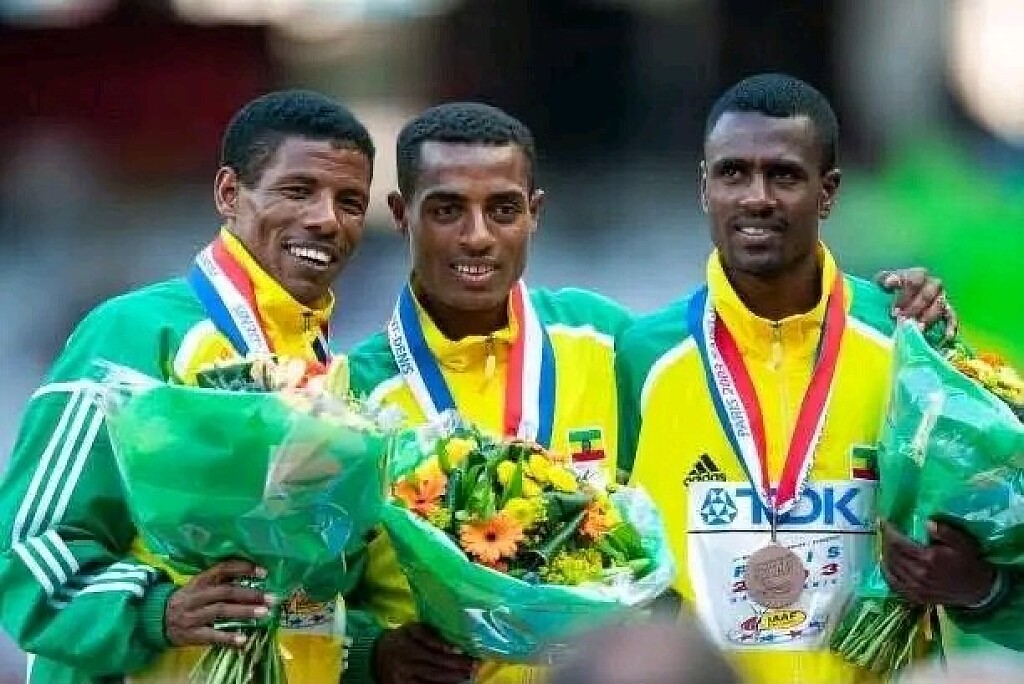
Kenenisa Bekele’s Paris Coronation: The Night Ethiopia’s Distance Running Dynasty Changed Forever
Paris, France — August 24, 2003.
The Stade de France witnessed far more than a World Championship 10,000m final that night. It witnessed the beginning of a new era.
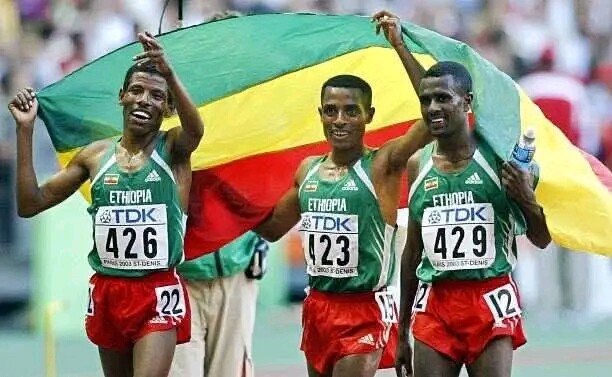
For years, Haile Gebrselassie of Ethiopia had stood virtually untouchable at the summit of world distance running. He arrived in Paris as a two-time Olympic champion and four-time World Champion over 10,000m, carrying the reputation of a man who had dominated the track for much of the previous decade.
But waiting in the same race was a 21-year-old Ethiopian whose running style looked remarkably familiar.
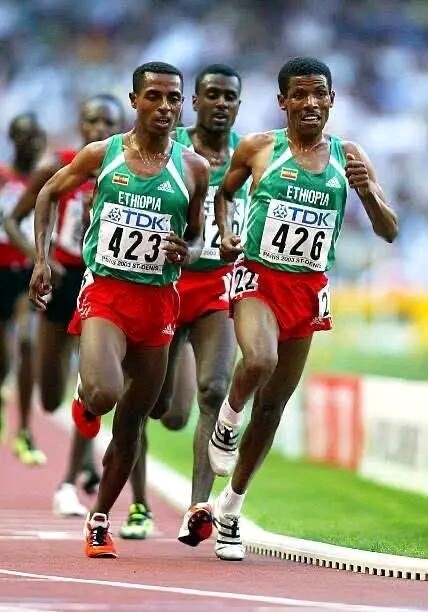
His name was Kenenisa Bekele.
The younger Ethiopian had already shown flashes of extraordinary potential, but Paris was where potential became reality.
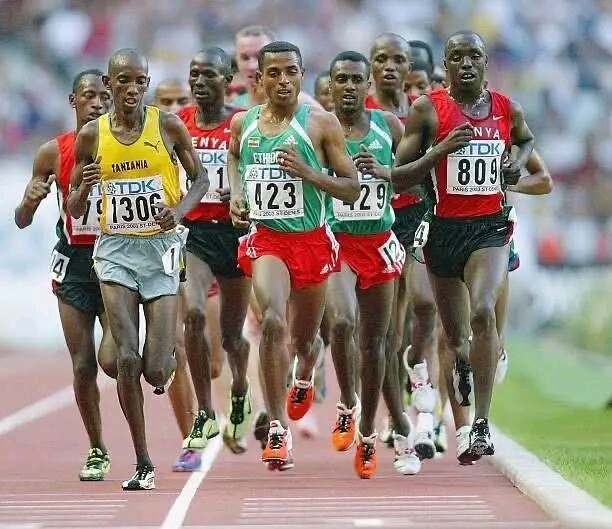
As the race unfolded, Gebrselassie ran aggressively, repeatedly applying pressure in an attempt to break the field and shake off his young compatriot. One by one, the world's best distance runners were dropped, including a strong Kenyan contingent.
Yet Bekele refused to disappear.
He stayed glued to Gebrselassie's shoulder, matching every surge and every change of pace. Behind them, Sileshi Sihine of Ethiopia remained in contention, setting the stage for what would ultimately become a historic Ethiopian sweep.
Then came the decisive moment.
With only 200 metres remaining, Bekele made his move.
Gebrselassie, famous for his devastating finishing speed, tried to respond. But this time, there was no answer. Bekele powered away down the final straight, creating daylight between himself and his legendary compatriot.
The changing of the guard had arrived.
Bekele crossed the finish line in 26:49.57, becoming the first athlete to break 27 minutes at these World Championships and setting a championship record.
Behind him, Gebrselassie finished second in 26:50.77, while Sihine completed an extraordinary Ethiopian clean sweep with 27:01.44.
It was not simply a victory for Bekele.
It was the moment the young star announced that he was ready to inherit the throne.
Paris 2003 — Men's 10,000m Final
1. Kenenisa Bekele — Ethiopia — 26:49.57 CR
2. Haile Gebrselassie — Ethiopia — 26:50.77
3. Sileshi Sihine — Ethiopia — 27:01.44
4. Ahmad Hassan Abdullah — Qatar — 27:18.28
5. John Cheruiyot Korir — Kenya — 27:19.94
6. Wilberforce Talel — Kenya — 27:33.60
7. Charles Kamathi — Kenya — 27:45.05
8. Kamiel Maase — Netherlands — 27:45.46
9. Karl Keska — Great Britain — 27:47.89
10. Ismail Sghyr — France — 27:54.87
11. David Galván — Mexico — 27:55.31
12. John Yuda Msuri — Tanzania — 27:56.21
13. Fabiano Joseph Naasi — Tanzania — 28:06.36
14. Alan Culpepper — United States — 28:14.92
15. Teodoro Vega — Mexico — 28:31.71
16. Mebrahtom Keflezighi — United States — 28:35.08
17. Cathal Lombard — Ireland — 28:36.43
18. Tomoo Tsubota — Japan — 28:37.10
19. Dan Browne — United States — 29:01.60
Bekele's Paris triumph proved to be the beginning of something much bigger. He went on to win Olympic 10,000m gold in Athens the following year and established himself as the dominant track distance runner of his generation.
At the 2008 Beijing Olympics, he completed the extraordinary 5,000m and 10,000m double, cementing his place among the greatest distance runners in history.
Gebrselassie, meanwhile, successfully reinvented himself beyond the track. He turned increasingly toward the 10km, half marathon and marathon, where he continued rewriting the record books and building another extraordinary chapter of his career.
But Paris remains special.
On August 24, 2003, one Ethiopian legend was still fighting to protect his kingdom while another was stepping forward to claim it.
Kenenisa Bekele didn't simply win a World Championship gold medal that night. He announced the arrival of a new era in distance running.
by Erick Cheruiyot for My Best Runs.
Login to leave a comment
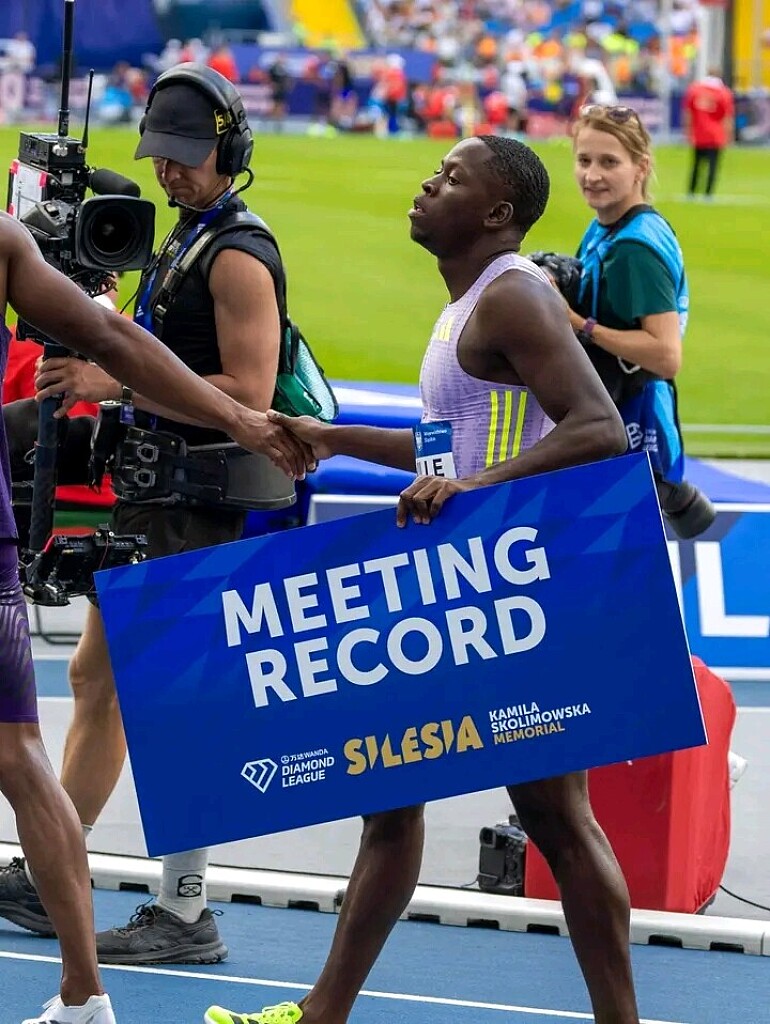
Oblique Seville Blazes to Meeting Record in Historic All Nine-Sub-10 Silesia Showdown
Jamaica’s Oblique Seville delivered another sensational statement at the Silesia Wanda Diamond League, storming to victory in a breathtaking men’s 100 metres and setting a new meeting record of 9.83 seconds that made sprinting history in Chorzów, Poland.
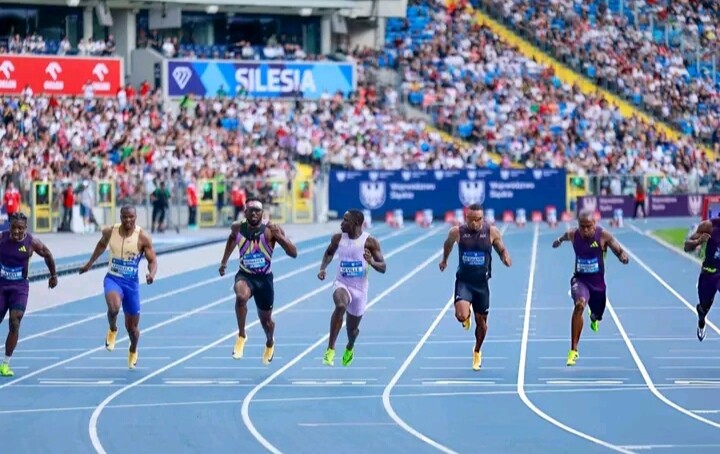
In one of the deepest and most extraordinary sprint races ever witnessed, Seville powered clear of a world-class field to take the win, with Kenneth Bednarek of the United States finishing second in 9.87 and fellow American Christian Coleman completing the podium in 9.93.
But Seville’s meeting-record victory was only one part of the remarkable story. For the first time in history, all nine athletes in a single men's 100m race broke the 10-second barrier, producing an unprecedented display of sprinting depth.
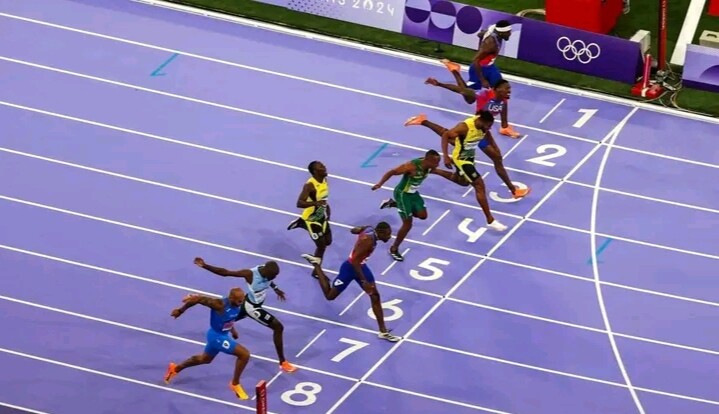
The historic race also marked only the second time that every athlete in a men's 100m final had broken 10 seconds, following the eight-man final at the Paris 2024 Olympic Games. In Silesia, however, the achievement went even further, with an entire nine-man field dipping below the iconic barrier.
Nigeria’s Kayinsola Ajayi produced another impressive performance to finish fourth in 9.94, while South Africa’s Gift Leotlela followed in fifth with 9.95. Canada’s Olympic champion Andre De Grasse clocked 9.96 in sixth, with South African star Akani Simbine recording the same time in seventh.
American Ronnie Baker added another sub-10-second performance with 9.97 for eighth place, while Cameroon’s Emmanuel Eseme ensured the historic sweep was complete by running 9.99 in ninth.
Men's 100m Results – Silesia Wanda Diamond League
1. Oblique Seville (Jamaica) — 9.83 Meeting Record
2. Kenneth Bednarek (United States) — 9.87
3. Christian Coleman (United States) — 9.93
4. Kayinsola Ajayi (Nigeria) — 9.94
5. Gift Leotlela (South Africa) — 9.95
6. Andre De Grasse (Canada) — 9.96
7. Akani Simbine (South Africa) — 9.96
8. Ronnie Baker (United States) — 9.97
9. Emmanuel Eseme (Cameroon) — 9.99
For Seville, the victory was another emphatic demonstration of his exceptional form and his ability to rise to the occasion against the strongest opposition. His 9.83 not only secured the Diamond League win but also lowered the Silesia meeting record, putting an exclamation mark on a performance of the highest quality.
Nine men went under 10 seconds. Seville went under 9.84. On an unforgettable day in Silesia, the Jamaican stood tallest in a race that pushed the boundaries of what men's sprinting has ever seen.
by Erick Cheruiyot for My Best Runs.
Login to leave a comment
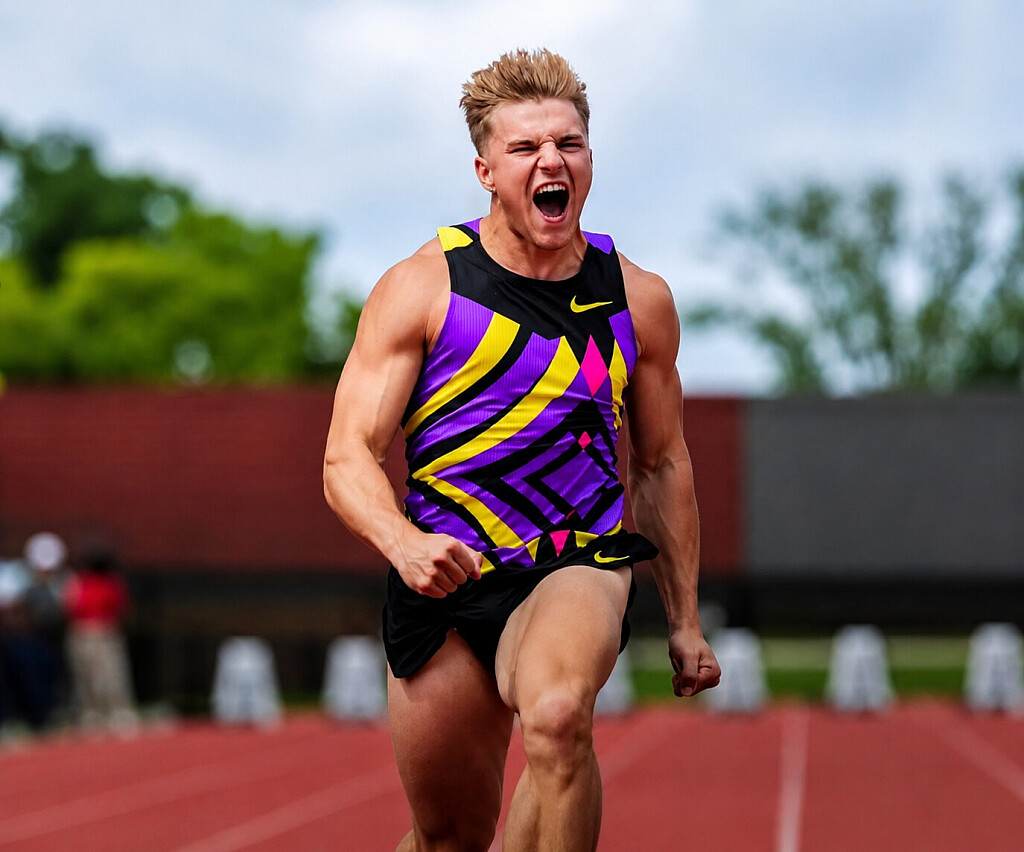
American Sprint Star Sam Blaskowski Begins Bid to Represent Poland After Discovering Family Roots
American sprint standout Sam Blaskowski is taking steps toward an international future with Poland after uncovering a powerful connection to his family's ancestral homeland.
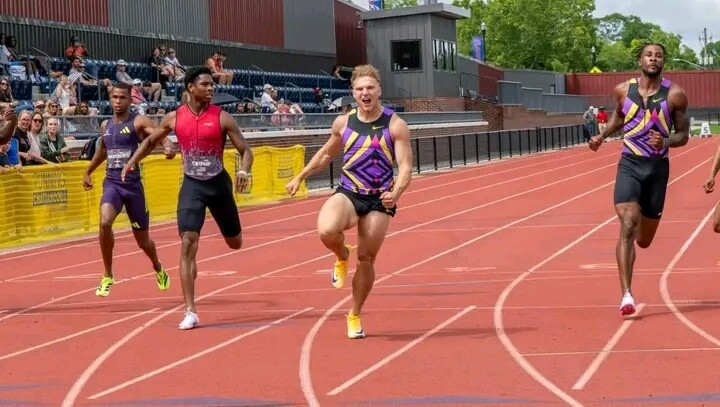
The 23-year-old sprinter, who has established himself as one of the fastest Americans of his generation with a personal best of 9.89 seconds in the 100 metres, has begun the process of obtaining Polish citizenship with the aim of eventually representing Poland in international competition.
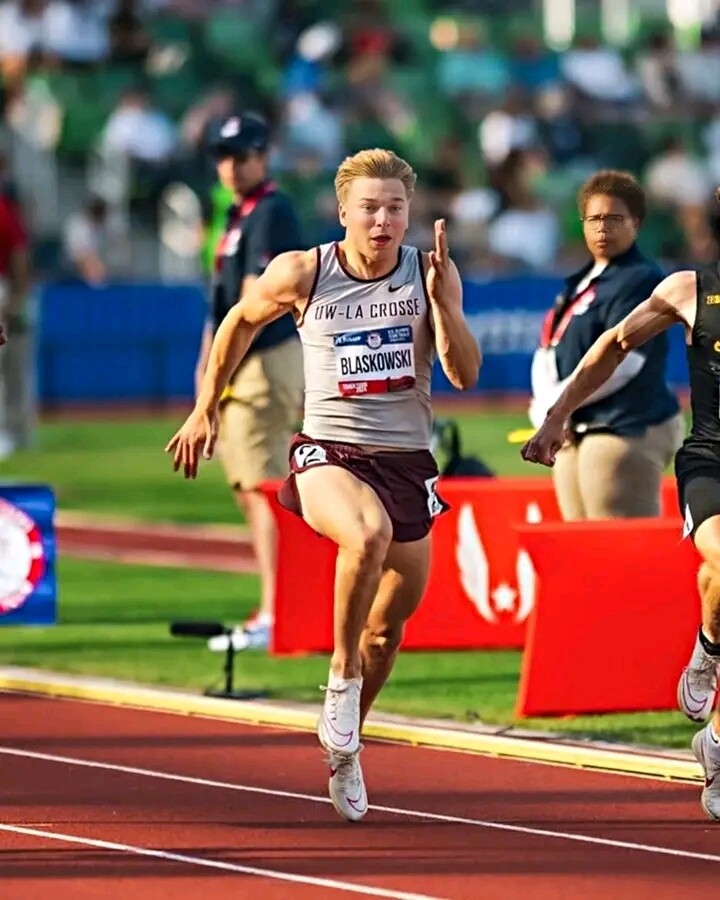
Blaskowski's connection to the country traces back through his great-grandparents, Franciszek and Julian Błaszkowski, who emigrated from Poland to the United States in 1905. Their journey more than a century ago has now opened an unexpected new chapter for their descendant, whose athletic ambitions could soon carry the Błaszkowski name back onto the international stage under Polish colours.
The sprinter has already received support from the Polish Athletics Association as he works through the citizenship and eligibility process. Should his transfer of allegiance be completed, Blaskowski could become a significant addition to Poland's sprint programme.
His credentials certainly make the prospect an exciting one. In addition to his sub-10-second speed over 100 metres, Blaskowski owns a personal best of 19.93 seconds in the 200 metres, demonstrating the kind of versatility that could prove valuable both individually and in Poland's 4x100m relay squad.
For Blaskowski, however, the move is about more than simply changing national colours. It represents an opportunity to reconnect with his family's heritage while pursuing his ambitions at the highest level of the sport.
With his sights set on becoming part of Poland's international sprint team and competing for relay medals, Blaskowski's journey from discovering his Polish roots to potentially representing the country of his ancestors could become one of the most fascinating allegiance stories in world athletics.
A century after Franciszek and Julian Błaszkowski left Poland for America, their family's story may now be coming full circle—this time at full sprint.
by Erick Cheruiyot for My Best Runs.
Login to leave a comment
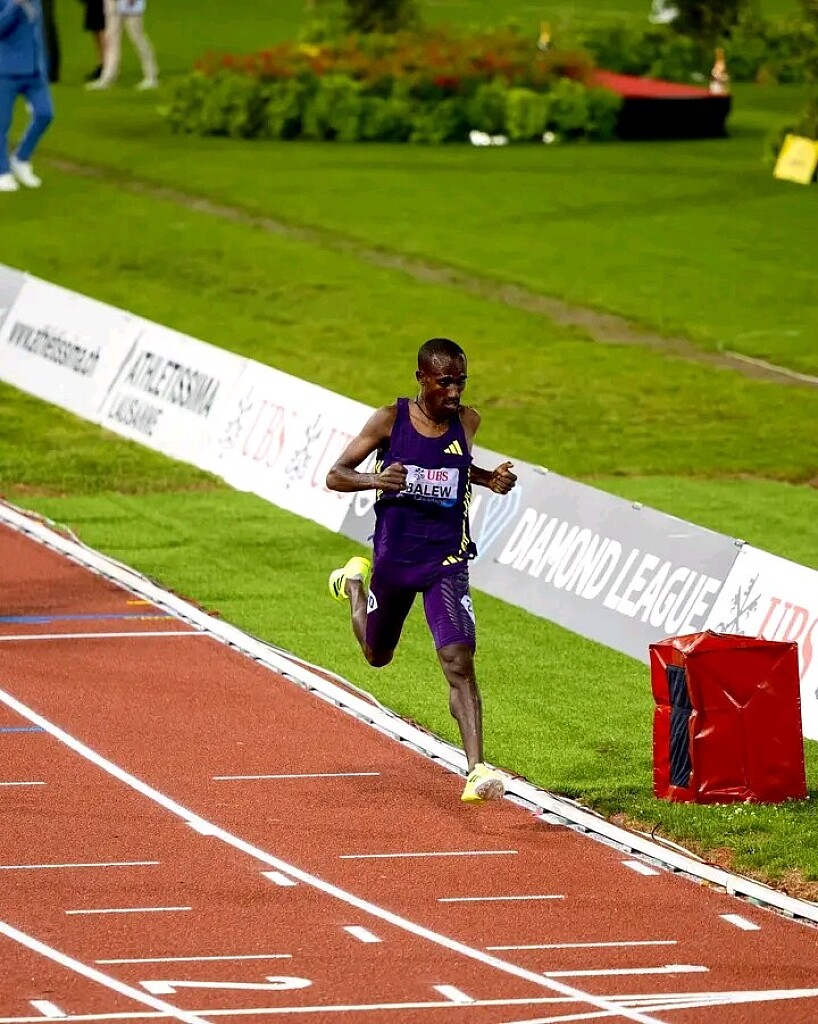
Six Men Smash the 13-Minute Barrier in a Stunning Lausanne 5000m Showdown
The men’s 5000m at the Lausanne Diamond League produced one of the most electrifying distance races of the season, as six athletes broke the coveted 13-minute barrier in a breathtaking display of speed and depth.
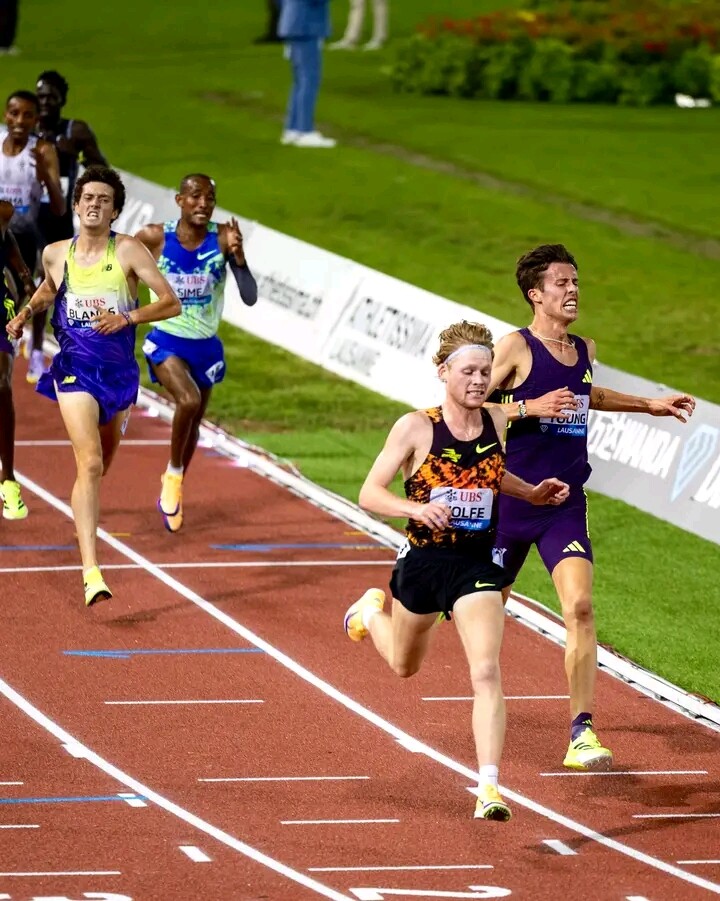
Bahrain’s Birhanu Balew emerged victorious in a fiercely contested race, clocking 12:57.55 to secure a brilliant win against a world-class field. Balew held off relentless pressure behind him to claim the victory as the race exploded into a spectacular battle over the closing stages.
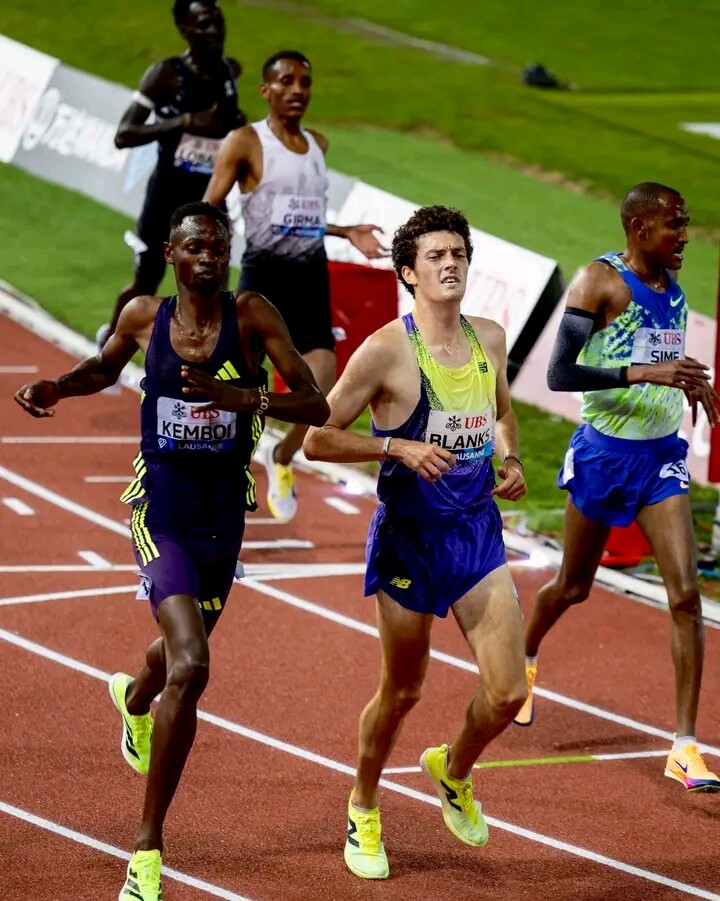
The United States produced an especially impressive performance, with Parker Wolfe leading a powerful American charge in second place. Wolfe crossed the line in a personal best of 12:58.20, while Nico Young followed closely in third with a season's best of 12:58.33. Graham Blanks made it three Americans in the top four, dipping under 13 minutes with 12:59.16.
Kenya’s Cornelius Kemboi added another sub-13-minute performance in fifth, clocking 12:59.33, while Ethiopia’s Mezgébu Sime completed the extraordinary group of six athletes under the historic barrier with 12:59.48 in sixth place.
The quality of the race was underlined by the fact that Ethiopia’s Kuma Girma, despite recording a season's best of 13:00.22, could finish only seventh. Switzerland’s Dominic Lobalu took eighth in 13:00.73, followed by Ethiopia’s Kahiri Bejiga, who ran a personal best of 13:03.27.
Grant Fisher, one of the biggest names in the field, finished 11th in 13:07.74 on a night when the remarkable depth and pace of the competition left no room for error.
Lausanne has once again delivered a memorable night of distance running, with the men’s 5000m becoming a showcase of the extraordinary standard currently being produced on the track. Six men under 13 minutes in a single race was a powerful statement, while Balew's victory and the exceptional performances from the American trio ensured this was one of the standout races of the 2026 Diamond League season.
Top 10 finishers:
1. Birhanu Balew (Bahrain) — 12:57.55
2. Parker Wolfe (United States) — 12:58.20 PB
3. Nico Young (United States) — 12:58.33 SB
4. Graham Blanks (United States) — 12:59.16
5. Cornelius Kemboi (Kenya) — 12:59.33
6. Mezgébu Sime (Ethiopia) — 12:59.48
7. Kuma Girma (Ethiopia) — 13:00.22 SB
8. Dominic Lobalu (Switzerland) — 13:00.73
9. Kahiri Bejiga (Ethiopia) — 13:03.27 PB
10. Egide Ntakarutimana (Burundi) — 13:07.21
In a race packed with exceptional talent, Balew ultimately had the decisive finishing strength—but Lausanne's biggest story was the sheer depth of the performance, with six men racing beneath 13 minutes and turning the 5000m into an unforgettable Diamond League showdown.
by Erick Cheruiyot for My Best Runs.
Login to leave a comment
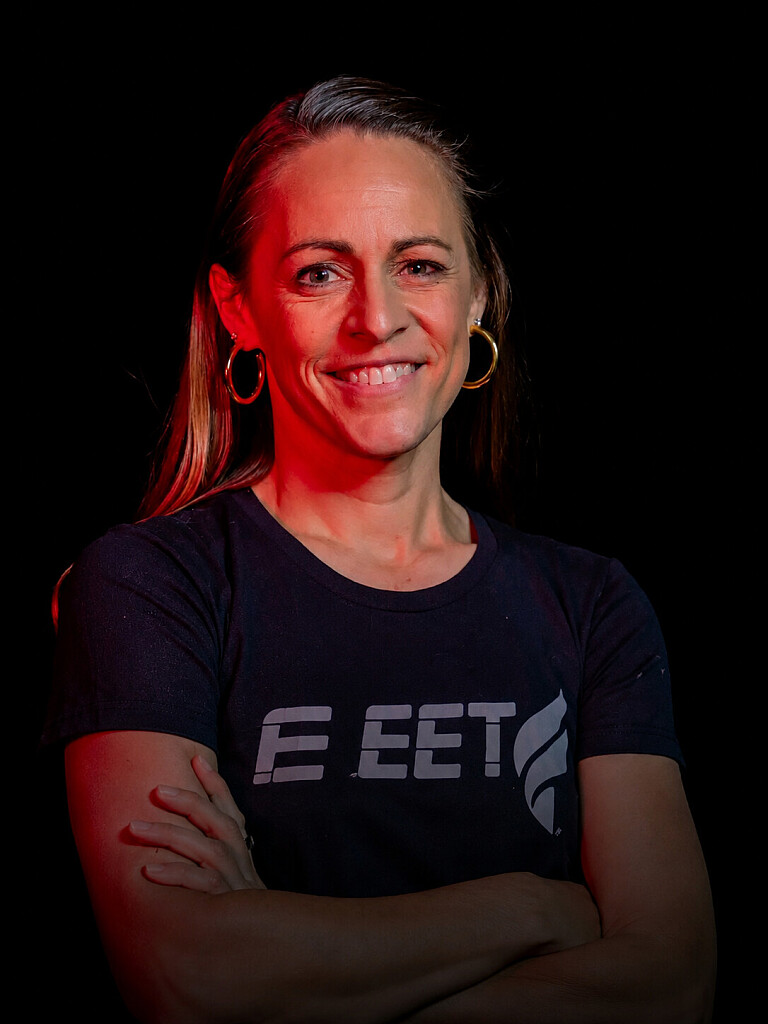
Jenny Simpson Reveals Rare Heart Condition After Surviving Two Cardiac Arrests: “My Story Hasn’t Ended”
Jenny Simpson has broken her silence about the medical emergency that dramatically altered her life, revealing that a sudden cardiac arrest on June 16 was followed by a second cardiac arrest in hospital and the discovery of a rare inherited heart condition.
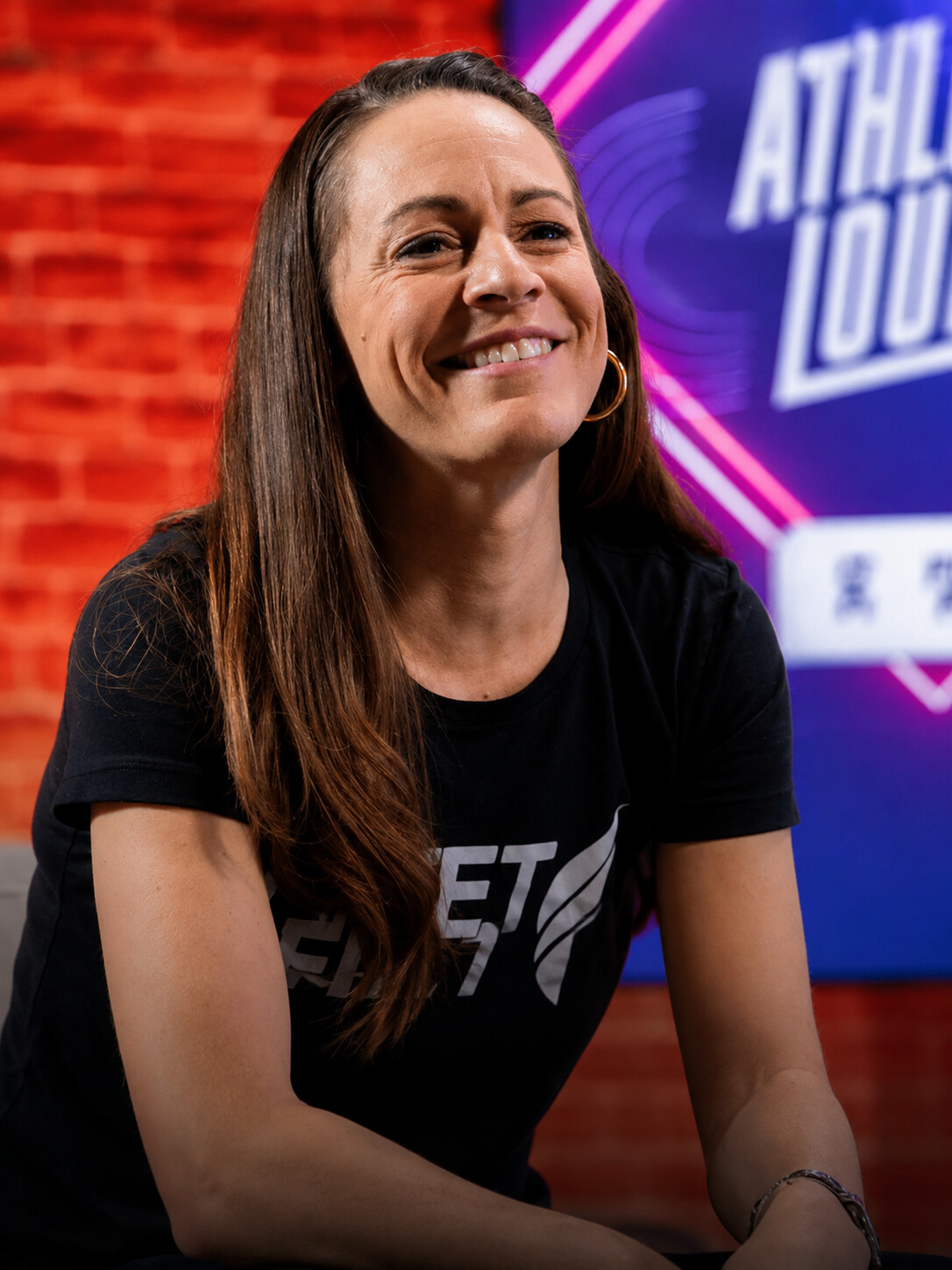
The former world champion and Olympic medallist said it took her time to find the right words before sharing her story publicly, expressing gratitude to everyone who has supported her with prayers, concern and encouragement throughout her recovery.
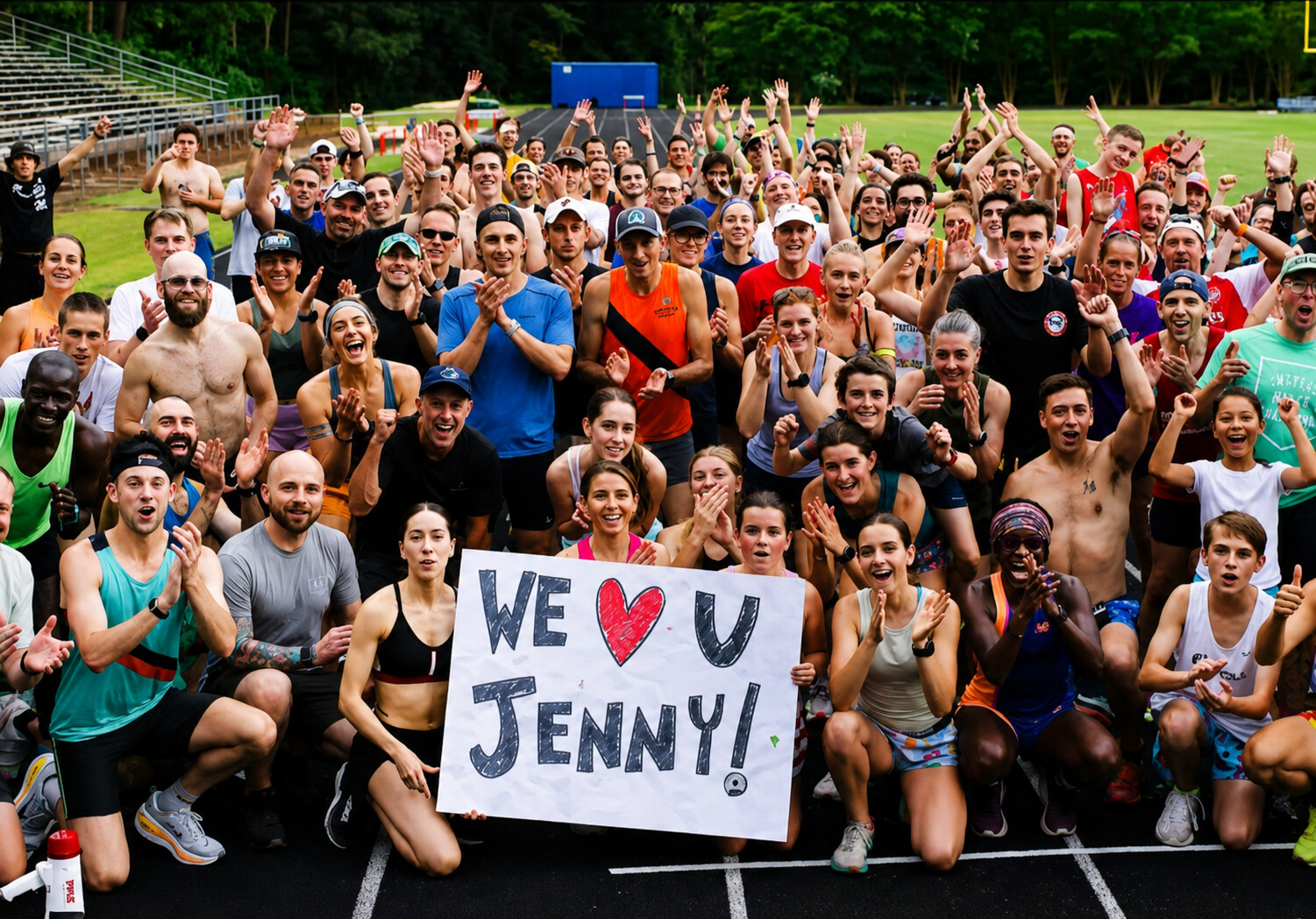
On the evening of June 16, Simpson went into sudden cardiac arrest shortly after running at the Sir Walter Running Pop-Up Mile. Bystanders immediately began CPR and used an automated external defibrillator, providing the lifesaving intervention that kept her alive until emergency medical personnel arrived. After reaching hospital, however, Simpson's heart stopped again. Her heart continued to struggle, and she was placed on life support before being transferred to Duke Hospital for more advanced heart-failure care.
Simpson has since revealed that doctors diagnosed her with arrhythmogenic right ventricular cardiomyopathy (ARVC), a rare inherited heart condition. According to Simpson, scar tissue within her heart disrupted its electrical system and ultimately caused her heart to stop.
“My body was dying, but my spirit wouldn’t give up. I fought for my life,” Simpson said, reflecting on the severity of the ordeal.
She also offered a heartfelt message to the enormous community that rallied around her during the crisis, acknowledging the prayers, messages and support that reached her and the people caring for her. Simpson said she felt the strength of that support when she needed it most, crediting the intervention, intercession and love of others with helping keep her going.
The diagnosis has fundamentally changed her relationship with the sport that has defined much of her life.
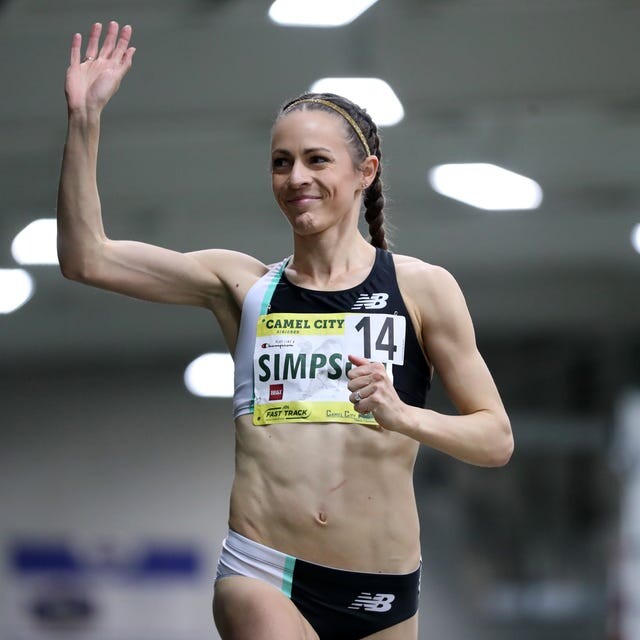
Simpson reflected on a career that allowed her to experience almost every dimension of distance running—from the relentless demands of training to standing on a championship podium as the American national anthem echoed around the stadium.
She raced distances ranging from the mile to the marathon across the world and built a career that established her among America's most accomplished middle-distance athletes.
Yet after everything running gave her, Simpson now faces the painful reality that she can no longer run in the way she once did.
“My relationship with running must change. My love for it is stronger than ever,” Simpson said.
While she will no longer be able to run alongside the athletes and recreational runners who have shared her passion, Simpson made it clear that she has no intention of walking away from the running community.
Instead, she plans to remain deeply involved in the sport through her work as Chief Running Officer at Fleet Feet, using her experience and platform to help others discover what running can offer beyond competition.
She described running as a source of confidence, connection, purpose and joy—and those values, she said, will remain central to her life.
Her message is particularly poignant because running was still at the heart of her life when the cardiac arrest occurred. Rather than ending her connection with the sport, the experience appears to have given her a new perspective on what that relationship can mean.
Simpson also expressed profound gratitude for the career she was fortunate enough to have, acknowledging that she experienced the full spectrum of elite athletics—from the difficult training days to the extraordinary moments on the world's biggest stages.
Her final competitive chapter had already been written before the cardiac arrest. Simpson retired from elite competition in 2024 after an extraordinary career that established her as one of the most accomplished American middle-distance runners of her generation.
She became the first American woman to win the 1,500m world title since Mary Slaney in 1983 to claim the world title in the event when she triumphed at the 2011 World Championships in Daegu. She later added world silver medals in 2013 and 2017 before claiming Olympic bronze in the 1,500m at the 2016 Rio Games.
But perhaps fittingly, Simpson's final run came not under the pressure of a major championship, but while pacing young runners in her local running community.
Her competitive career produced a world championship title, Olympic success and years of representing the United States at the highest level. But now, her greatest victory is no longer measured by medals, times or championship positions.
It is measured by survival, recovery and the opportunity to continue making a difference.
“My future is an incredible gift. It’s hopeful and it will continue to have great purpose.”
Her running career may have entered a profoundly different chapter, but the former champion's connection with the sport remains unbroken.
She may no longer be racing beside the running community—but she intends to remain right where she believes she belongs: supporting, encouraging and inspiring the next generation of runners.
For Jenny Simpson, the finish line has changed. But the journey continues.
by Erick Cheruiyot for My Best Runs.
Login to leave a comment
Three Rising Distance Stars Ready to Make Their Marathon Debuts at the 2026 New York City Marathon
The next generation of marathon talent will take centre stage on the streets of New York this November, with Weini Kelati of the United States, Andreas Almgren of Sweden and Kenya’s Patrick Kiprop all set to make their marathon debuts at the 2026 TCS New York City Marathon on November 1.
All three arrive in New York with impressive credentials built across track, cross country and shorter road races, creating one of the most intriguing groups of marathon debutants in this year’s field.
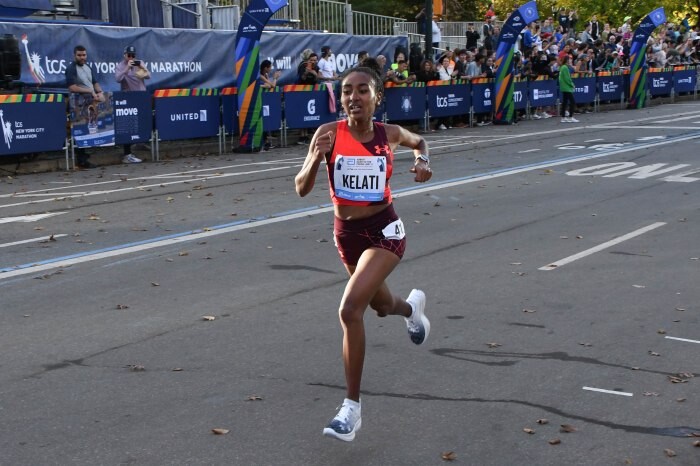
Kelati will enter the 26.2-mile challenge after establishing herself as one of America’s leading distance runners. The U.S. Olympian owns a 1:06:04 half-marathon personal best, an American record, and has already demonstrated the combination of endurance and speed required to compete at the highest level. Her transition to the marathon will be closely watched as she begins a new chapter in her career on one of the sport’s biggest stages.
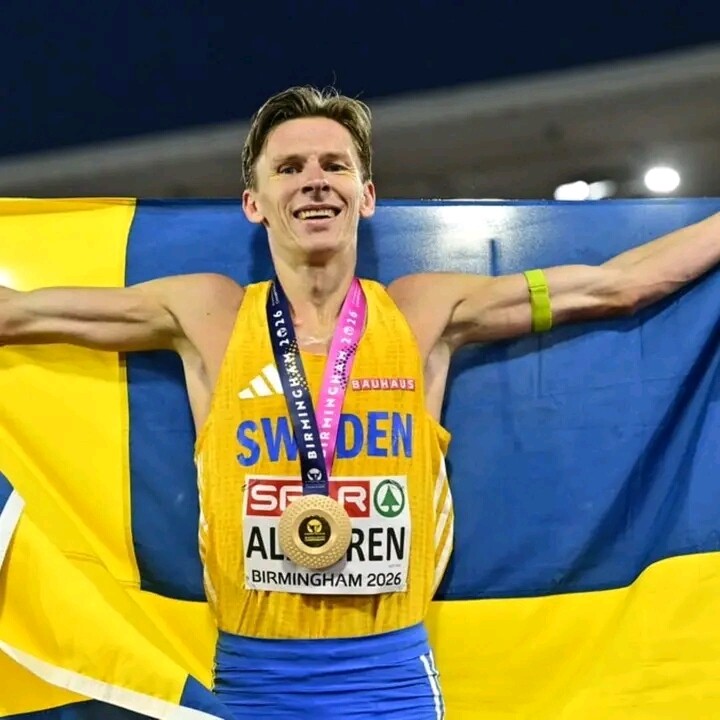
Almgren brings perhaps even more explosive speed to his first marathon. The Swedish star owns a remarkable 58:41 half-marathon personal best, a national and European record at the time it was achieved, while his track résumé includes world-class performances over 3,000m and 5,000m. His ability to sustain that extraordinary speed over 42.195 kilometres will be one of the central questions surrounding his New York debut.
Then there is Patrick Kiprop, who will carry Kenya’s hopes into his first marathon after building an impressive reputation during a decorated collegiate career in the United States.
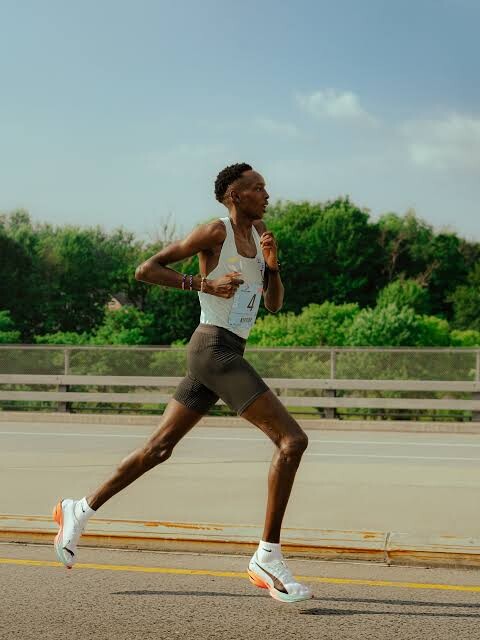
Kiprop enjoyed a standout spell with the Arkansas Razorbacks, collecting five First-Team NCAA All-America honours across cross country, indoor and outdoor track. He became a two-time NCAA South Central Region Cross Country champion in 2022 and 2023 before adding an SEC Outdoor 5,000m title in 2024 and a silver medal in the 10,000m.
He also etched his name into Arkansas history by breaking the university’s 5,000m school record. His American collegiate journey began at Fresno Pacific University, where he was named the Sunbird Male Newcomer of the Year in 2021 before transferring to Arkansas.
Following his collegiate success, Kiprop made the transition to professional running and joined the On Athletics Club Global, placing himself within one of the sport’s leading international training environments. His attention has increasingly shifted toward road racing, with the half marathon becoming an important bridge toward the marathon.
Kiprop has already shown that his speed can translate successfully to the roads, winning the professional division at the prestigious Bolder Boulder 10K. Now, New York presents a considerably bigger challenge and an opportunity to discover how his considerable distance-running ability translates to the full marathon.
For Kelati, Almgren and Kiprop, November 1 will represent more than simply another race. It will be the beginning of their marathon careers.
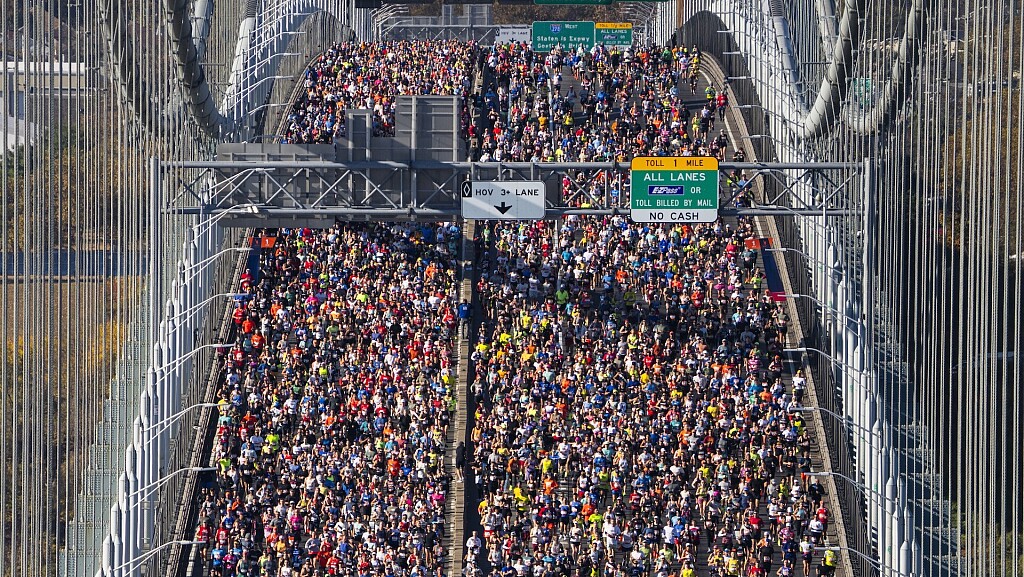
The New York City Marathon is notoriously demanding, combining multiple bridges, relentless changes in rhythm and a difficult closing stretch through Manhattan. Add enormous crowds and the pressure of a global audience, and the course provides an unforgiving introduction to 42.195 kilometres.
Yet that is precisely what makes these three debuts so fascinating.
Kelati arrives with American-record speed. Almgren brings European-record-level half-marathon credentials and extraordinary track ability. Kiprop brings a decorated NCAA background, Kenyan distance-running pedigree and growing experience on the roads.
None of them needs to prove that they possess speed. New York will determine whether they can transform that speed into marathon strength.
With an already star-studded 2026 field, the arrival of these three rising stars adds another compelling storyline to race day.
The future of marathon running is coming to New York—and on November 1, Kelati, Almgren and Kiprop will discover what they can do over 26.2 miles.
by Erick Cheruiyot for My Best Runs.
Login to leave a comment

TCS New York City Marathon
The first New York City Marathon, organized in 1970 by Fred Lebow and Vince Chiappetta, was held entirely in Central Park. Of 127 entrants, only 55 men finished; the sole female entrant dropped out due to illness. Winners were given inexpensive wristwatches and recycled baseball and bowling trophies. The entry fee was $1 and the total event budget...
more...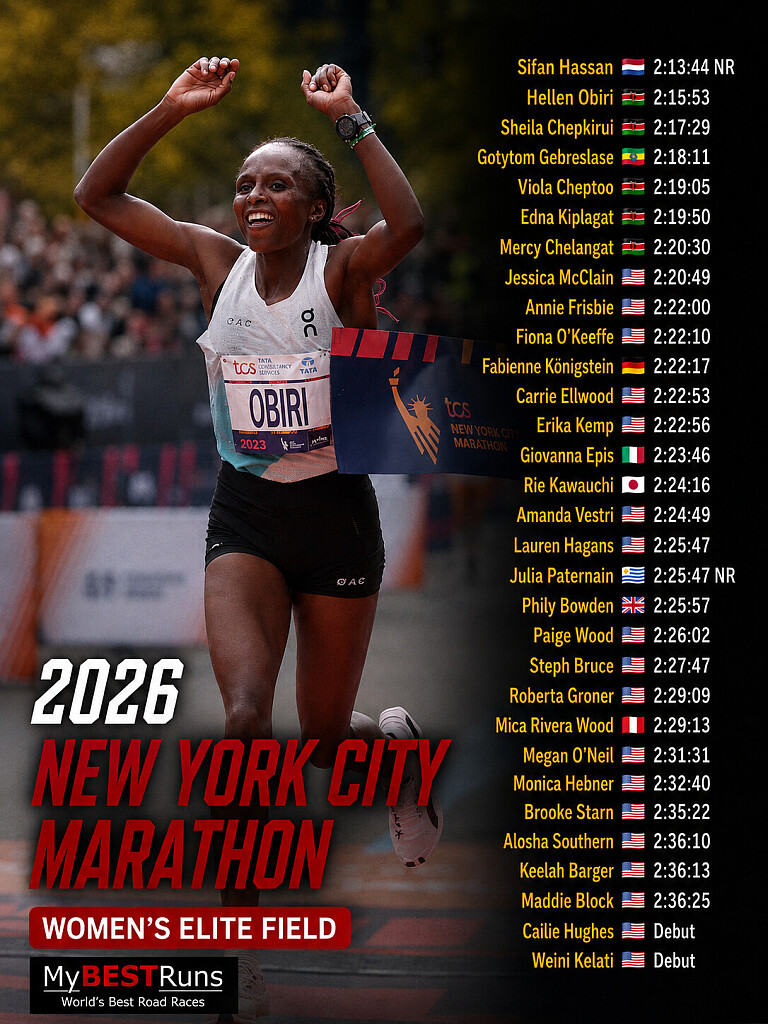
Sifan Hassan and Hellen Obiri Headline Star-Studded 2026 New York City Marathon Field
The 2026 TCS New York City Marathon is shaping up to be one of the most anticipated women’s marathon showdowns of the year, with Olympic champion Sifan Hassan of the Netherlands (2:13:44 NR) and defending champion Hellen Obiri of Kenya (2:15:53) leading a sensational field for November 1.
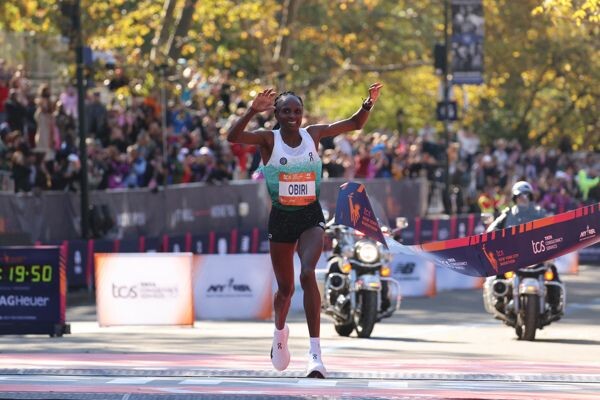
The pair headline a world-class lineup featuring Olympic and world champions, major-marathon winners, national record holders and some of the most exciting marathoners from around the globe.
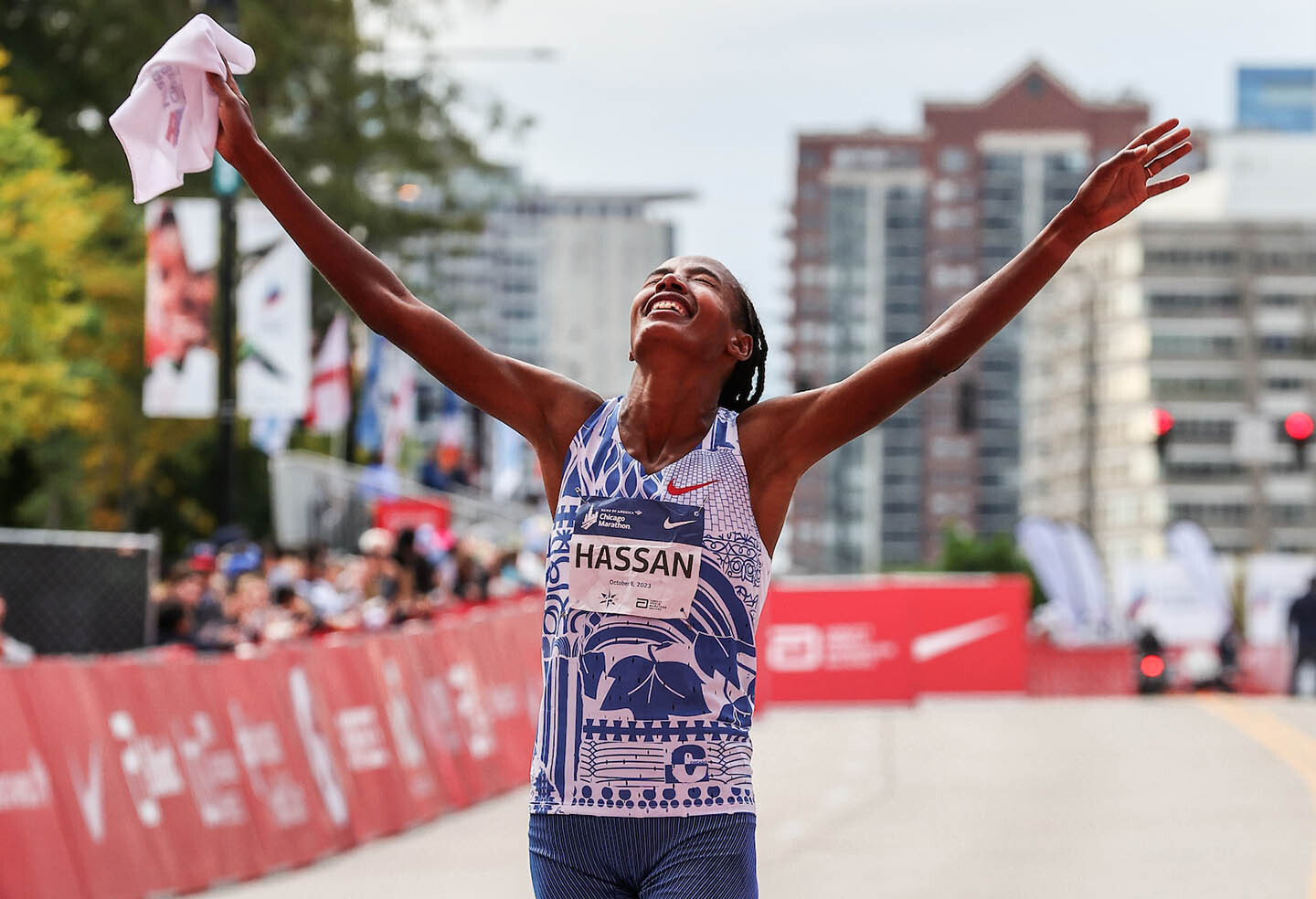
Hassan arrives with the fastest personal best in the field, while Obiri will return to New York seeking to defend the title she won last year in 2:19:51. The Kenyan star has established herself as one of the defining figures of the modern marathon, and another victory in New York would further strengthen her remarkable record over the distance.
“New York always brings out the best in me and I’m excited to return and feel the energy of each borough during such a historic year,” Obiri said.
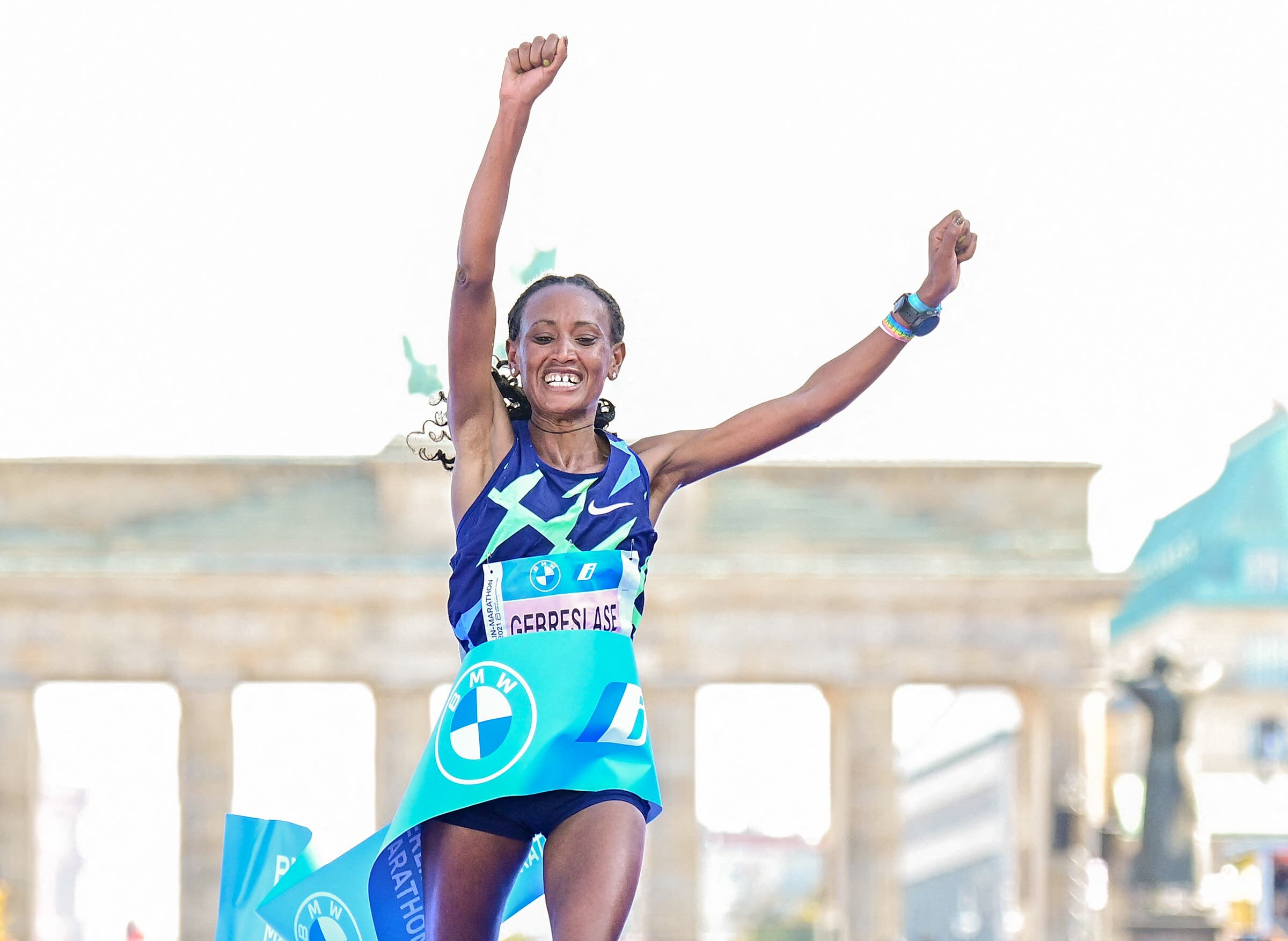
She will face a formidable Kenyan challenge led by Sheila Chepkirui (2:17:29), Viola Cheptoo (2:19:05), Edna Kiplagat (2:19:50) and Mercy Chelangat (2:20:30). Ethiopia will be represented by former world champion Gotytom Gebreslase (2:18:11), adding even more championship pedigree and experience to an already formidable front pack.
The strength of the field continues with Jessica McClain of the United States (2:20:49), Annie Frisbie of the United States (2:22:00), Fiona O’Keeffe of the United States (2:22:10) and Fabienne Königstein of Germany (2:22:17). They will be joined by fellow American contenders Carrie Ellwood (2:22:53), Erika Kemp (2:22:56), Amanda Vestri (2:24:49) and Lauren Hagans (2:25:47), while Giovanna Epis of Italy (2:23:46) and Rie Kawauchi of Japan (2:24:16) add further international quality.
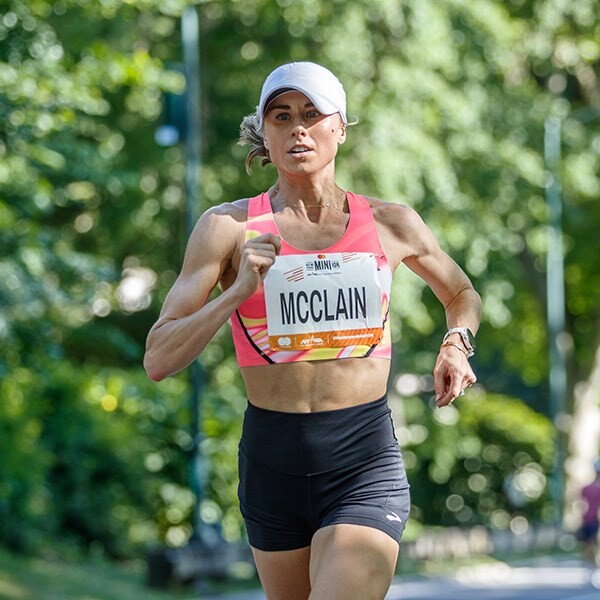
The lineup also features Julia Paternain of Uruguay (2:25:47 NR), Phily Bowden of Great Britain (2:25:57), Paige Wood of the United States (2:26:02) and Steph Bruce of the United States (2:27:47). The experience continues with Roberta Groner of the United States (2:29:09) and Mica Rivera Wood of Peru (2:29:13), while Megan O’Neil (2:31:31), Monica Hebner (2:32:40), Brooke Starn (2:35:22), Alosha Southern (2:36:10), Keetah Barger (2:36:13) and Maddie Block (2:36:25) add considerable depth to the American contingent.
Two particularly intriguing names will also be making their marathon debuts: Cailie Hughes and Weini Kelati of the United States. Kelati enters the new chapter of her career after lowering the American half-marathon record to 1:06:04 in February, giving her a strong foundation as she steps up to the classic 26.2-mile distance for the first time.
Her marathon debut adds another layer of intrigue to an already star-studded race. Kelati’s speed and endurance could make her a dangerous contender if she adapts quickly to the demands of the marathon, while Hughes will also bring the unpredictability that comes with tackling the distance for the first time.
With athletes representing the Netherlands, Kenya, Ethiopia, the United States, Germany, Italy, Japan, Uruguay, Great Britain and Peru, the 2026 women’s field boasts remarkable international depth. The leading contenders bring contrasting strengths, experiences and racing backgrounds, setting the stage for a fascinating battle across New York’s five boroughs before the famous finish in Central Park.
For Hassan, the race represents another opportunity to showcase her extraordinary range and marathon pedigree. For Obiri, it is a chance to defend her New York crown against one of the deepest fields assembled for the race. Behind them, Chepkirui, Gebreslase, Cheptoo, Kiplagat and a host of talented contenders will be waiting to challenge for the podium.
With Olympic pedigree, world championship experience, major-marathon success and two highly anticipated marathon debuts all converging on New York, the stage is set for a compelling battle on November 1.
The question is no longer whether the 2026 TCS New York City Marathon will deliver drama, but who will emerge victorious when the battle reaches Central Park.
Who is your favorite to take the crown in New York?
by Erick Cheruiyot for My Best Runs.
Login to leave a comment
TCS New York City Marathon
The first New York City Marathon, organized in 1970 by Fred Lebow and Vince Chiappetta, was held entirely in Central Park. Of 127 entrants, only 55 men finished; the sole female entrant dropped out due to illness. Winners were given inexpensive wristwatches and recycled baseball and bowling trophies. The entry fee was $1 and the total event budget...
more...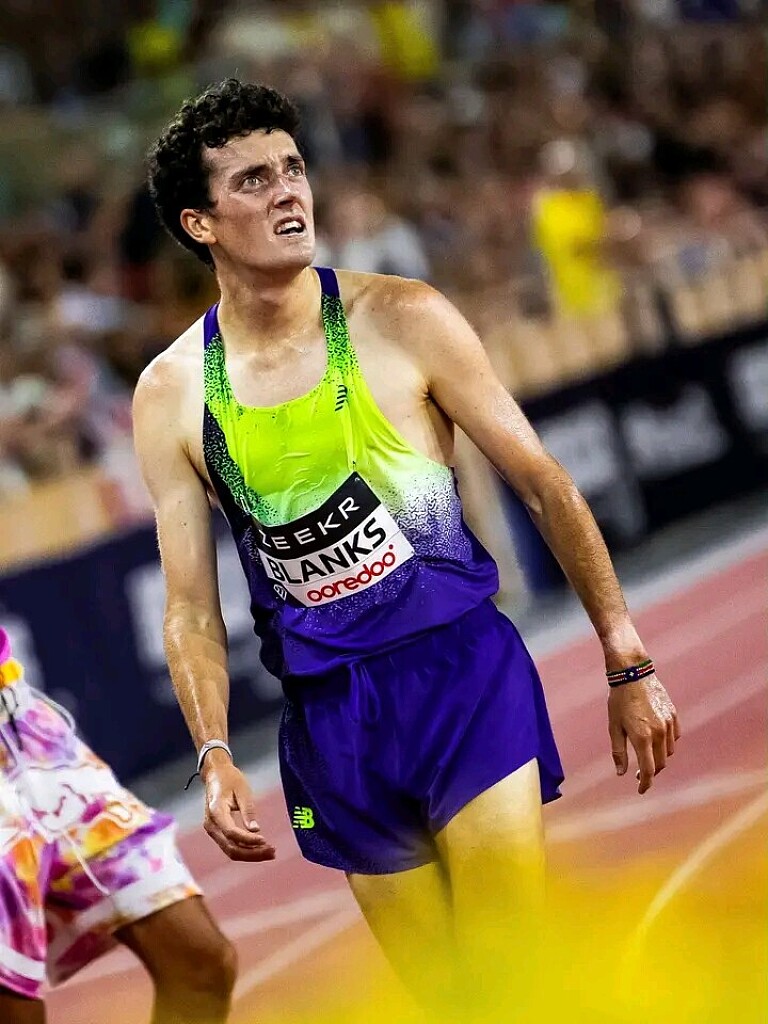
Americans Bring The Heat As Lausanne Diamond League Sets Up A Fierce 5000m Showdown
The Wanda Diamond League returns to action on Friday, August 21, and the men’s 5000m in Lausanne promises to be one of the evening’s most compelling distance races, with a strong American quartet ready to take on a deep international field.
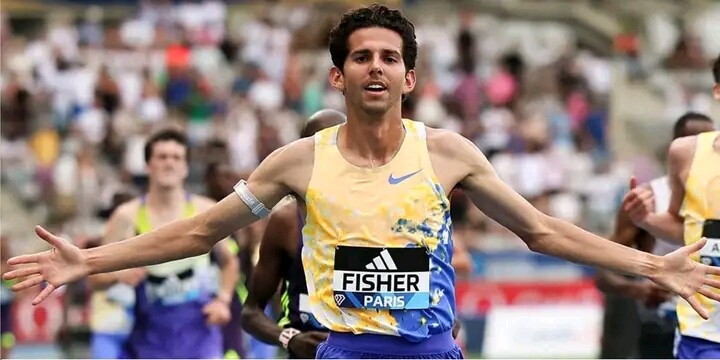
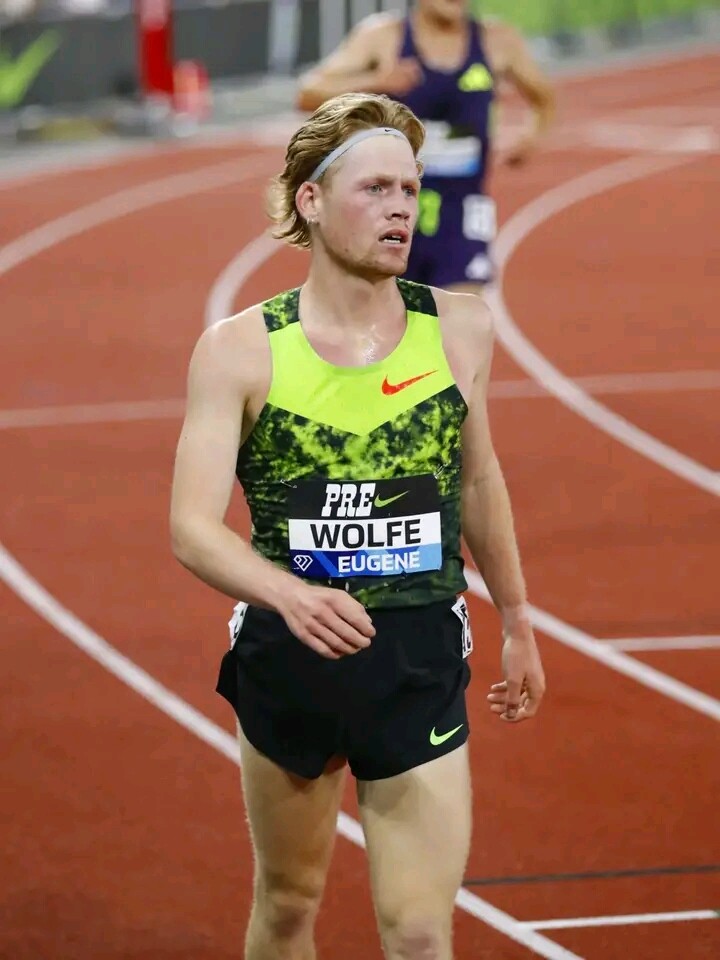
Graham Blanks, Grant Fisher, Parker Wolfe and Nico Young will carry the American challenge at Athletissima, where they will line up against a formidable group featuring athletes from Kenya, Ethiopia, Bahrain, Eritrea, Burundi, Switzerland, Uruguay, Slovenia and Mexico.
The Lausanne meeting marks an important point in the 2026 Diamond League campaign, with the Road to the Final entering its decisive stages ahead of the series finale in Brussels on September 4-5. Lausanne is followed just two days later by the Silesia meeting, before the series heads to Zurich for the final regular-season stop.
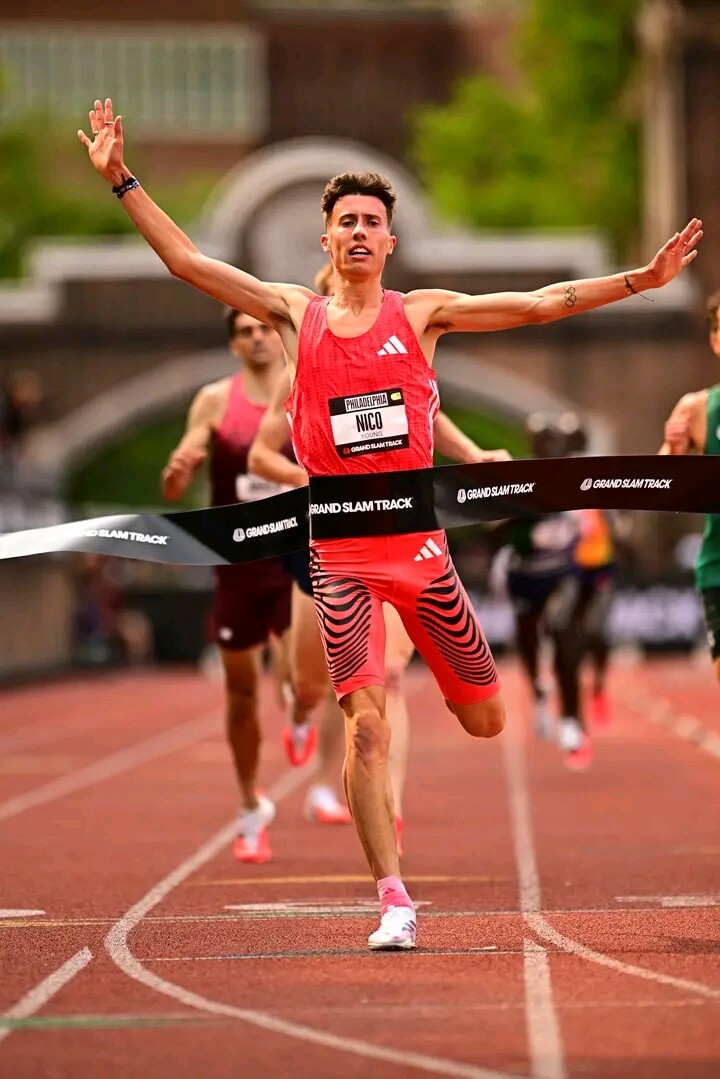
Fisher arrives as one of the most established names in the field. The American Olympic bronze medallist has already produced a 12:49.61 season best over 5000m in Oslo and also won the 3000m in Paris earlier this season. His experience at the highest level makes him a major contender when the pace accelerates over the closing laps.
Blanks is another American to watch closely. Ranked among the leading 5000m athletes in the world, he has continued to establish himself as one of the United States’ most exciting young distance runners. World Athletics’ rankings placed him eighth globally in the event as of July 26, with Fisher sixth.
Wolfe and Young add further depth to an American lineup that could make the race particularly tactical. With four athletes capable of competing at a high level, the United States will have several cards to play as the race develops.
But the Americans will have no easy path to victory.
Bahrain’s Birhanu Balew headlines the international opposition and entered the season among the world’s highest-ranked 5000m runners. Kenya will be represented by Jacob Krop, Edwin Kurgat, Cornelius Kemboi, Charles Kiboina, Mathew Kipchumba Kipsang and Laban Kiptoo Kosgei, giving the race a powerful Kenyan presence.
Ethiopia also brings considerable strength, with Khairi Bejiga, Kuma Girma, Shimelis Niguse, Mezgebu Sime and Getnet Wale all listed in the field. Eritrea’s Abderezak Suleman, Burundi’s Egide Ntakirutimana, Switzerland’s Dominic Lokinyomo Lobalu, Uruguay’s Santiago Catrofe, Slovenia’s Žan Rudolf and Mexico’s Eduardo Herrera complete a truly international lineup.
The Lausanne 5000m is therefore shaping up as much more than an American showcase. It is a meeting of contrasting strengths: American depth, Kenyan distance tradition, Ethiopian endurance and a collection of international contenders eager to make their mark on one of the sport’s biggest stages.
With the Diamond League season moving rapidly toward its final stretch, every position and every point carries added importance. The question now is whether the American quartet can convert its collective strength into a victory—or whether the international field will once again prove too deep to control.
One thing is certain: when the Lausanne 5000m gets underway, the pace is expected to be hot, the competition fierce and the final laps unforgettable.
by Erick Cheruiyot for My Best Runs.
Login to leave a comment
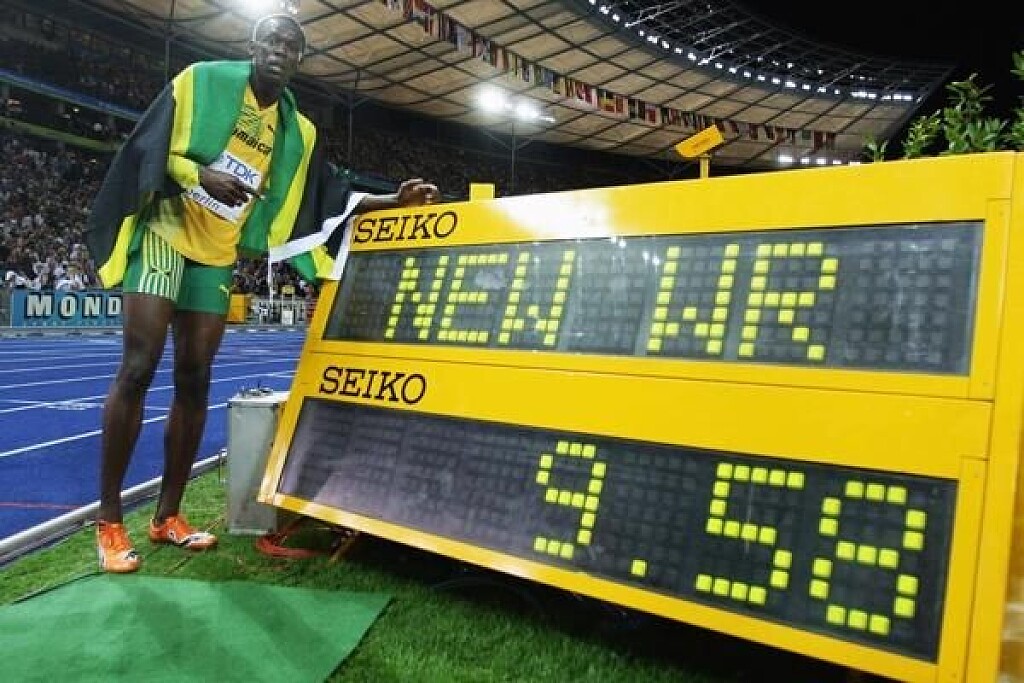
Seventeen Years On, Usain Bolt’s 9.58 Still Stands Alone
Seventeen years ago today, Jamaica’s Usain Bolt produced one of the most extraordinary performances in the history of athletics, sprinting into sporting immortality with a breathtaking 9.58 seconds in the men’s 100m final at the 2009 World Championships in Berlin.
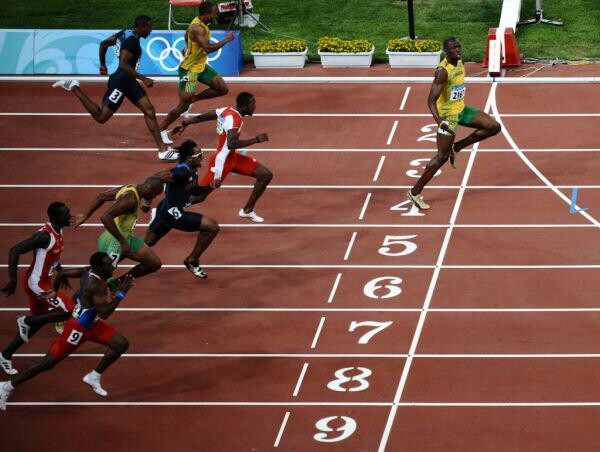
Under the lights of Berlin’s Olympic Stadium, the Jamaican superstar dismantled his own world record, slicing an astonishing 0.11 seconds from the 9.69 he had set at the Beijing Olympics exactly one year earlier. With a legal tailwind of +0.9 m/s, Bolt crossed the finish line in 9.58 — a mark that remains the fastest 100m ever recorded by a man.
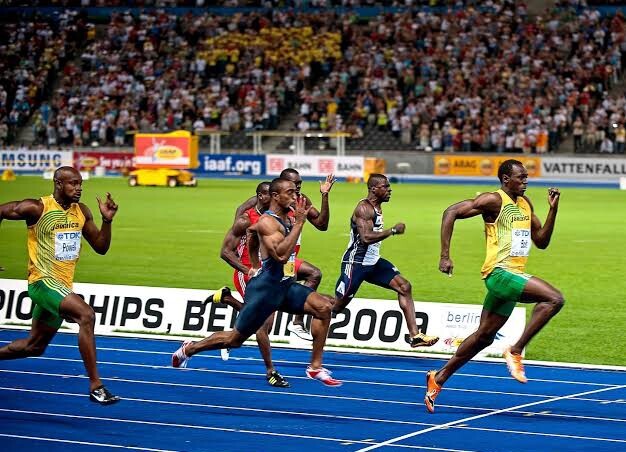
The race was billed as a heavyweight showdown between Bolt and American Tyson Gay, but once the Jamaican found his rhythm, the contest was effectively decided. Bolt surged away from the field with his trademark long, powerful strides, stopping the clock in a time that seemed almost beyond the limits of human speed.
Behind him, Gay produced a remarkable 9.71 for silver, setting a United States record, while Jamaica’s Asafa Powell claimed bronze in 9.84. Yet the night belonged entirely to Bolt, whose performance became the defining image of the Berlin championships.
What made the achievement even more remarkable was the scale of the improvement. Bolt had already rewritten the world record in Beijing with 9.69, but in Berlin he went to another level, becoming the first man to break the 9.6-second barrier. His 9.58 also represented the largest improvement to the men’s 100m world record since electronic timing was introduced.
Seventeen years later, the number still carries an almost mythical quality: 9.58 seconds. Generations of sprinters have chased faster times, but Bolt’s Berlin masterpiece remains untouched. The record has survived Olympic cycles, world championships and a new generation of elite sprinters, continuing to stand as one of the most enduring monuments to human speed.
On August 16, 2009, Usain Bolt did more than win a world title. He created a moment that transcended the race itself — a performance that continues to remind the world just how extraordinary the limits of speed can be.
Seventeen years on, 9.58 still belongs to Bolt. And the world is still waiting for someone to catch him.
by Erick Cheruiyot for My Best Runs.
Login to leave a comment
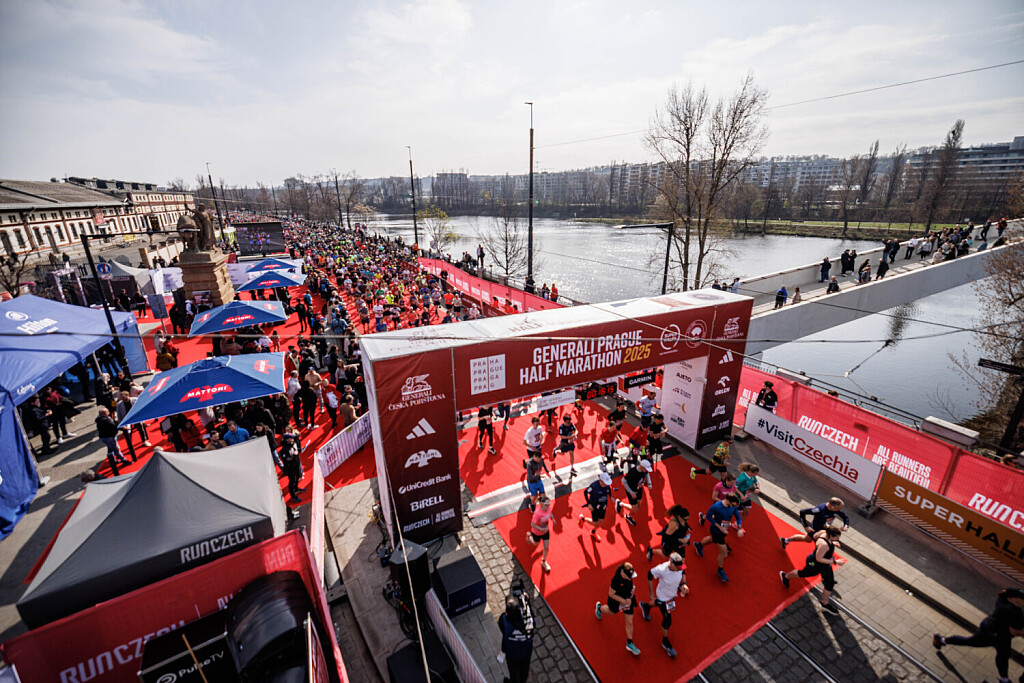
Prague Half Marathon’s First Ballot Draws More Than 70,000 Applications
The Generali Prague Half Marathon has entered a new era of unprecedented demand, with more than 70,000 runners reportedly applying for places in the race’s first-ever ballot for the 2027 edition.
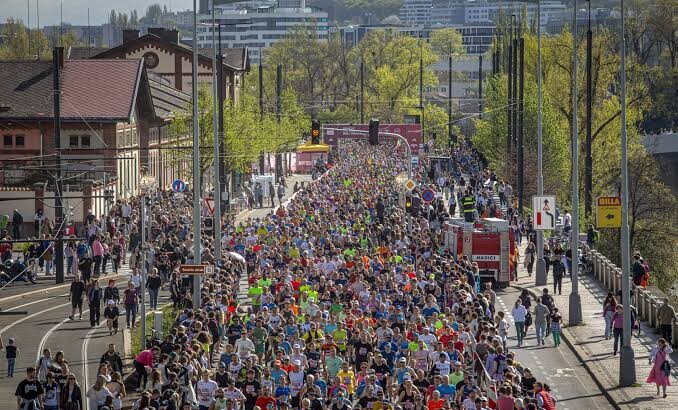
The remarkable response underlines the extraordinary international appeal of one of Europe’s most celebrated half marathons. With the race limited to 17,000 participants, the number of applications means demand exceeded available places by more than four times. RunCzech confirmed that the ballot attracted more than six times the race capacity in applications.
The move to a random draw marks a significant change from the previous registration system. In 2026, the 17,000-place field disappeared within just 2 hours and 23 minutes of registration opening, demonstrating how fiercely contested entry had become. Rather than rewarding those who happened to be quickest online, the new system gives applicants an equal opportunity through a random selection process.
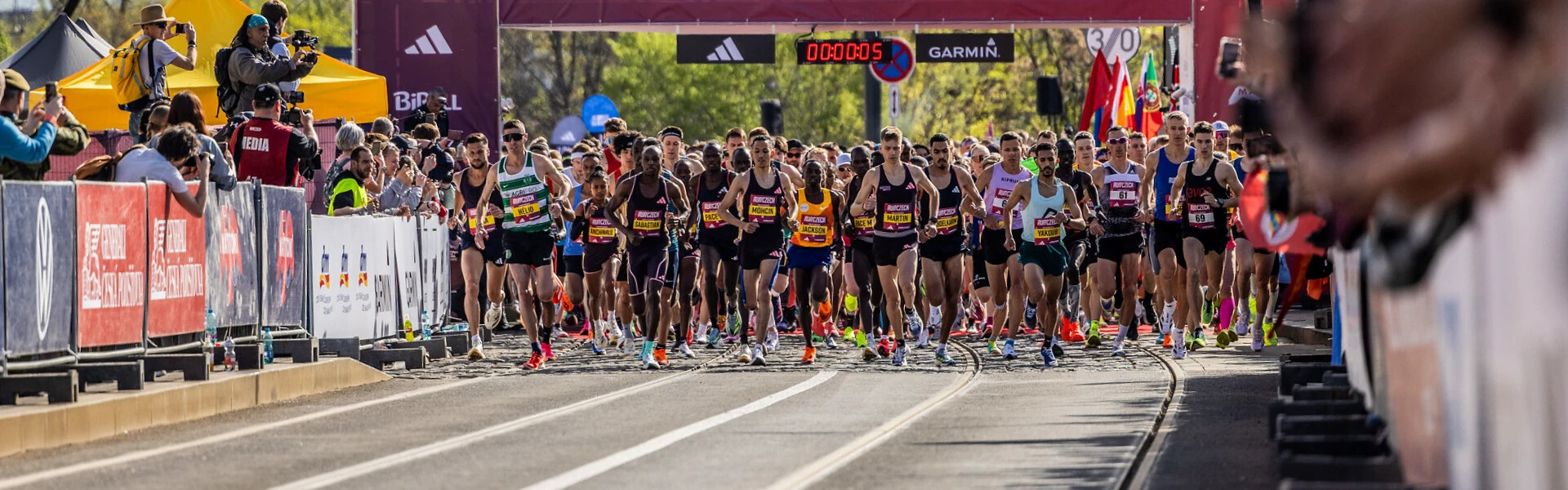
Applications opened on July 21 and closed at midnight heading into August 12, bringing three weeks of intense anticipation to an end. The draw is scheduled to take place this week, with every applicant due to receive the outcome by email no later than August 21. Those fortunate enough to secure a place will then have seven days to complete their registration before any unclaimed entries are returned to the pool.
The scale of the international interest is particularly striking. Applicants came from 161 countries, with 77 per cent of all applications submitted from outside the Czech Republic. The United Kingdom and Germany provided the largest overseas applicant groups, while Spain, Poland, Portugal, Italy and France were also strongly represented. Almost 1,300 applications came from Brazil and more than 700 from the United States.
For runners chasing the prestigious SuperHalfs series, Prague carries even greater significance. The race is one of the six founding members of the European half-marathon series, alongside Berlin, Copenhagen, Lisbon, Valencia and Cardiff, making a place on the start line highly coveted among runners pursuing the full collection. Around 45 per cent of ballot applicants already hold a SuperHalfs passport.
The 27th Generali Prague Half Marathon will take place on Saturday, April 3, 2027, taking runners through the historic heart of the Czech capital. The event also holds World Athletics Elite Label status, reinforcing its reputation not only as a mass-participation spectacular but also as a race capable of attracting world-class athletes and producing elite performances.
The huge ballot has transformed the meaning of simply getting to the start line in Prague. For thousands of runners, preparation has already begun, but their next step is not a training session or a race-plan decision—it is an email. This time, the fastest internet connection cannot guarantee a place; chance will decide who gets to experience the roar of the crowds, the historic streets and the unmistakable atmosphere of Prague at 21.1 kilometres.
The first ballot has therefore delivered a message that is impossible to ignore: Prague is no longer merely a race runners want to run—it is a race runners are competing to enter. With more than 70,000 applications chasing 17,000 places, the 2027 edition is already shaping up to be one of the most sought-after starts on the European road-racing calendar.
by Erick Cheruiyot for My Best Runs.
Login to leave a comment

Prague Half Marathon
Start the RunCzech season with one of the biggest running events in the Central Europe! Every year the Sportisimo Prague Half Marathon excites spectators with performances of elite athletes breaking records. Enjoy a course with incomparable scenery in the heart of historic Prague that follows along the Vltava river and crisscrosses five beautiful bridges. Take in majestic views of the...
more...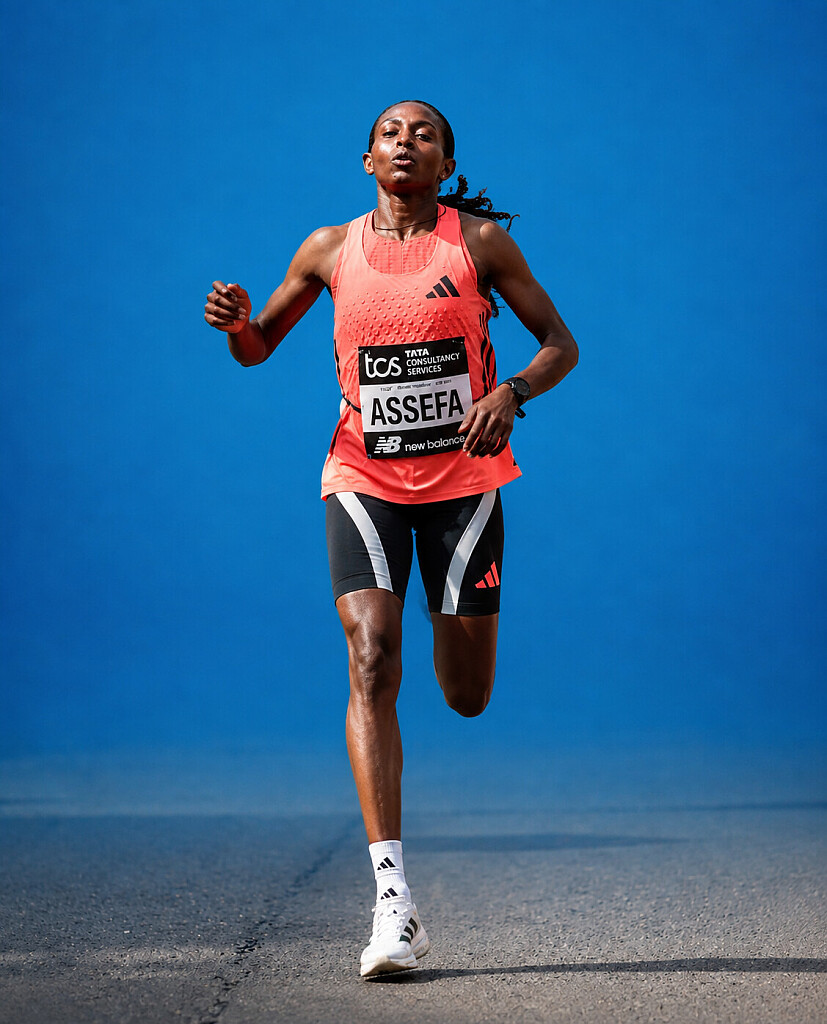
Berlin’s Women’s Marathon Field Brimming With Elite Talent as Star-Studded Line-Up Takes Shape
The women’s field for the 2026 BMW BERLIN-MARATHON is rapidly developing into one of the most intriguing marathon line-ups of the year, bringing together world-class champions, established contenders and an exciting collection of athletes determined to make their mark on one of the sport’s fastest stages.
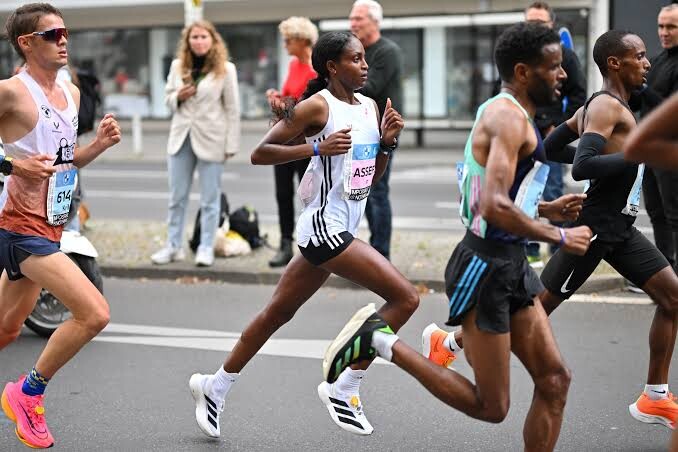
At the forefront is Ethiopia’s Tigst Assefa, whose extraordinary marathon career has already placed her among the all-time greats. Assefa is the current women-only marathon world-record holder, having improved her own mark to 2:15:41 at the 2026 TCS London Marathon, where she successfully defended her title.
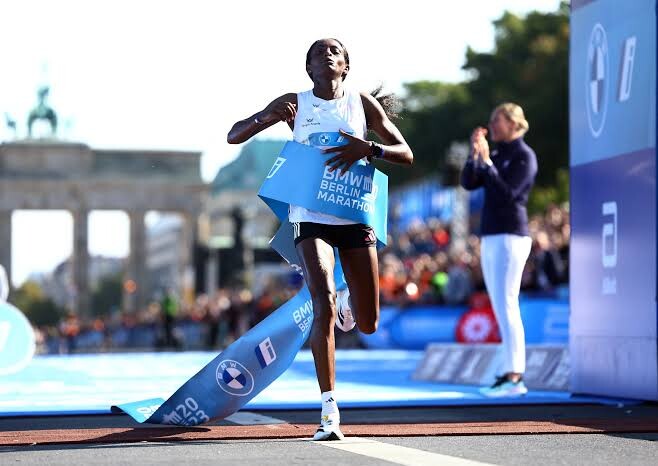
Her place in marathon history was secured even earlier in Berlin. At the 2023 BMW BERLIN-MARATHON, Assefa stormed to 2:11:53, smashing the then women’s world record by more than two minutes. The performance was subsequently ratified by World Athletics and remains among the fastest women’s marathon ever recorded in a mixed-gender race.
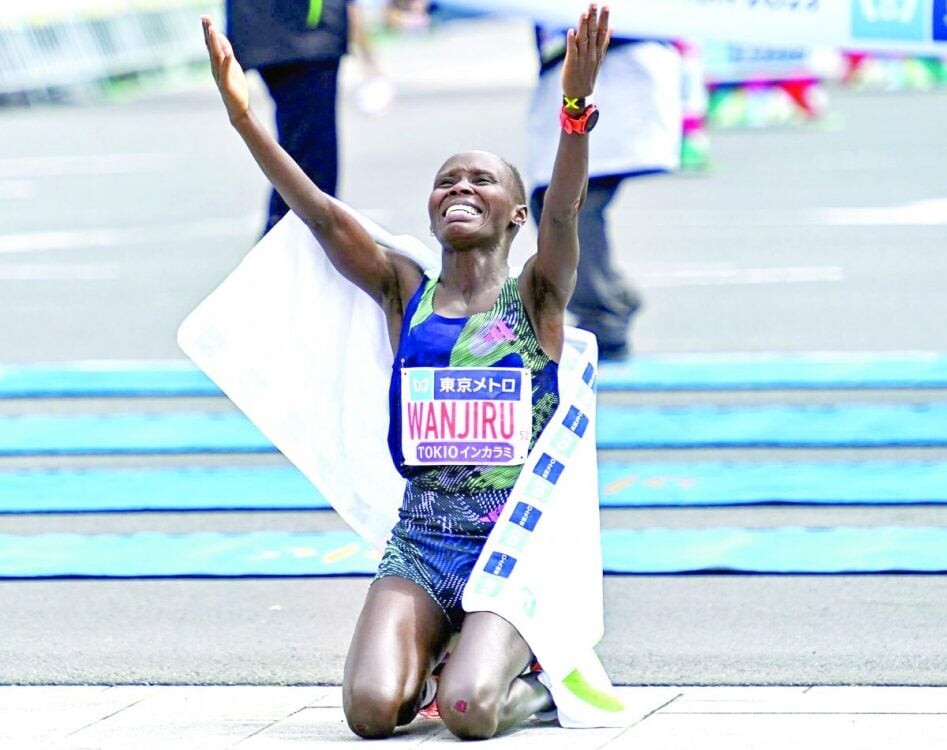
Kenya’s Rosemary Wanjiru, with a 2:16:14 personal best, provides another formidable presence at the sharp end of the race, while Ethiopia’s Bedatu Hirpa adds yet another major threat to an already exceptional field.
The 27-year-old Hirpa has built an impressive marathon résumé in a remarkably short period. She owns a 2:18:27 personal best, achieved when she won the Dubai Marathon, before continuing her winning momentum with victory at the Paris Marathon just months later. She also underlined her consistency this year with a second-place finish at the Osaka Marathon in 2:19:54. With her combination of speed, confidence and major-marathon experience, Hirpa could be one of the athletes capable of challenging the leading names in Berlin.
The Ethiopian challenge does not end there. Dera Dida (2:18:32), Zeineba Yimer (2:18:47), Bosena Mulatie (2:19:00), Misgane Alemayehu (2:19:08), Bekelech Gudeta (2:19:39), Gadise Mulu (2:20:59), Eebbisee Addunya (2:21:13) and Aminet Ahmed (2:21:24) give Ethiopia extraordinary depth, with every one of them boasting a personal best inside 2:22.
Kenya will also have strong representation through Evaline Chirchir (2:20:33) and Pascaline Jelagat (2:22:44), adding further firepower to a nation renowned for producing world-class marathon talent. China’s Deshun Zhang (2:20:53) also brings a sub-2:21 credential to the starting line.
Japan arrives with a deep group of proven marathoners. Rika Kaseda (2:21:55), Mao Uesugi (2:22:11), Natsuki Omori (2:23:45) and Rino Goshima (2:24:44) all possess impressive personal bests and could play an important role as the race develops. Morocco’s Fatima Gardadi (2:24:06) adds another strong international presence, while France’s Manon Trapp (2:23:38), the United States’ Jacqueline Gaughan (2:24:40) and Kodi Kleven (2:24:48), and Great Britain’s Lucy Reid (2:26:37) further strengthen the international depth.
Germany will have plenty to cheer for on home soil, with a sizeable contingent led by Kristina Hendel (2:27:29), who will be looking to rediscover the form that made her one of the country’s leading marathoners. After injury setbacks interrupted her progress, Hendel returns with the ambition of rebuilding her momentum on one of the biggest stages in the sport.
Anna Langerwisch is another German athlete attracting considerable interest. The 24-year-old has emerged rapidly among the country’s promising marathoners, winning the Hanover Half Marathon in 70:53 before improving her marathon personal best to 2:32:13 in Prague, remarkably in only her second marathon. Her recent 32:17 over 10 kilometres at the adidas Runners City Night in early August has added further intrigue around what she might produce over the full marathon distance.
Germany’s depth extends further, with Thea Heim (2:33:25), Cara Zollenkopf (2:36:05), Esther Pfeiffer (2:37:00), Katja Fischer (2:40:13), Sophia Wunsch (2:40:49) and Jule Vetter (2:42:18) also listed for the race. Their presence gives the home nation a broad representation across the field and adds another layer to an already fascinating international contest.
With Assefa’s extraordinary pedigree, Wanjiru’s proven class, Hirpa’s growing reputation and a supporting cast filled with athletes boasting sub-2:25 credentials, Berlin is shaping up for a women’s race packed with possibilities.
For Assefa, the return to Berlin carries an added historical dimension. It was on these very streets in 2023 that she produced the 2:11:53 performance that changed the landscape of women’s marathon running. Now, after lowering the women-only world record to 2:15:41 in London, she returns with another opportunity to write a new chapter in her remarkable career.
For the established stars, Berlin will be a chance to reaffirm their place among the marathon elite; for the emerging contenders, it could be the moment they announce themselves on one of the sport’s grandest stages.
The BMW BERLIN-MARATHON is renowned for fast racing and ambitious performances, and with such remarkable depth already assembled, the 2026 edition promises to deliver a captivating battle from the opening kilometres to the iconic finish on the Straße des 17. Juni.
by Erick Cheruiyot for My Best Runs.
Login to leave a comment

BMW Berlin Marathon
The story of the BERLIN-MARATHON is a story of the development of road running. When the first BERLIN-MARATHON was started on 13th October 1974 on a minor road next to the stadium of the organisers‘ club SC Charlottenburg Berlin 286 athletes had entered. The first winners were runners from Berlin: Günter Hallas (2:44:53), who still runs the BERLIN-MARATHON today, and...
more...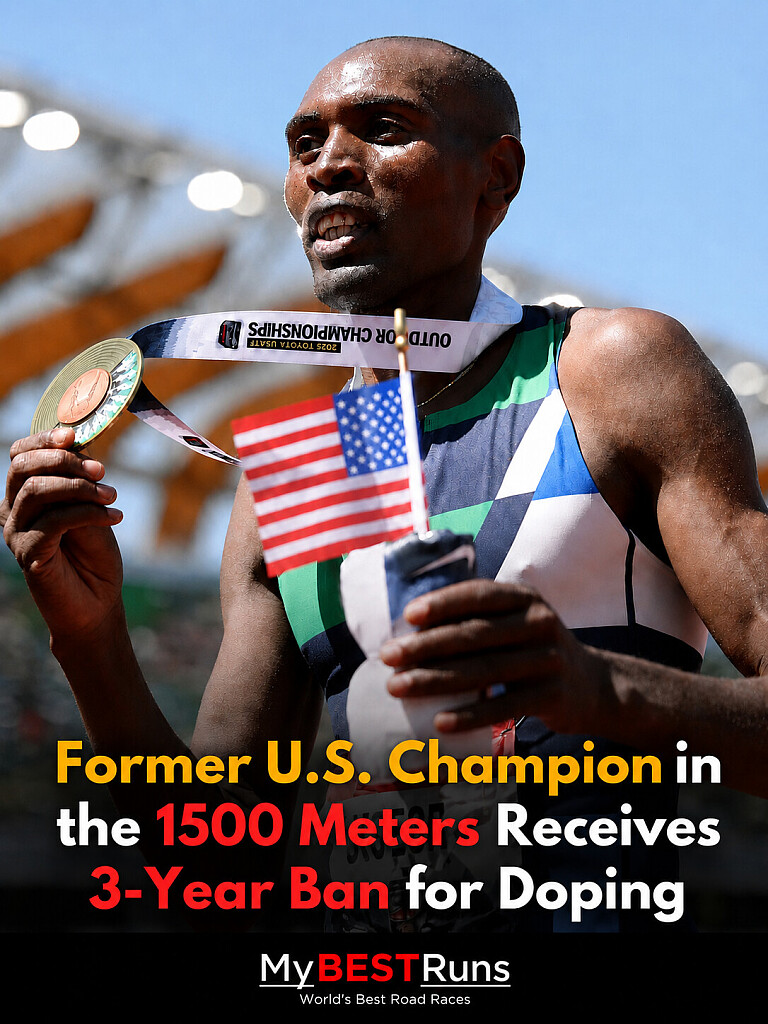
Jonah Koech Banned for Three Years After Blood-Doping Violation
Kenyan-born 1500m runner Jonah Koech has been handed a three-year ban following an anti-doping violation that has stripped him of his 2025 U.S. 1500m championship title and cast a shadow over what had been a breakthrough season.
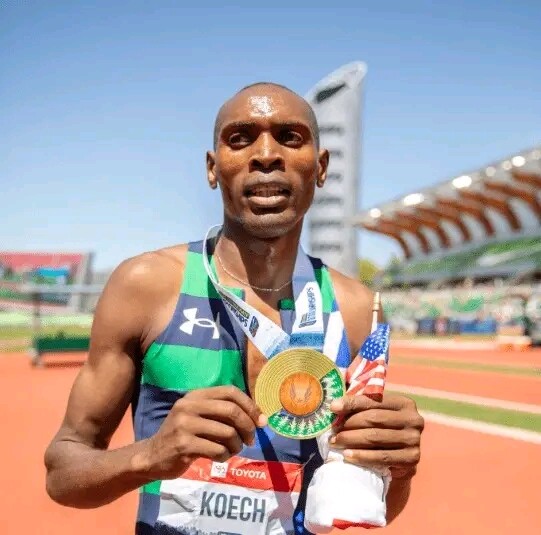
The United States Anti-Doping Agency (USADA) announced that Koech accepted the sanction after an investigation into highly atypical blood values recorded in his Athlete Biological Passport. An expert review of his biological profile determined that the abnormalities were consistent with the use of a prohibited blood-doping method.
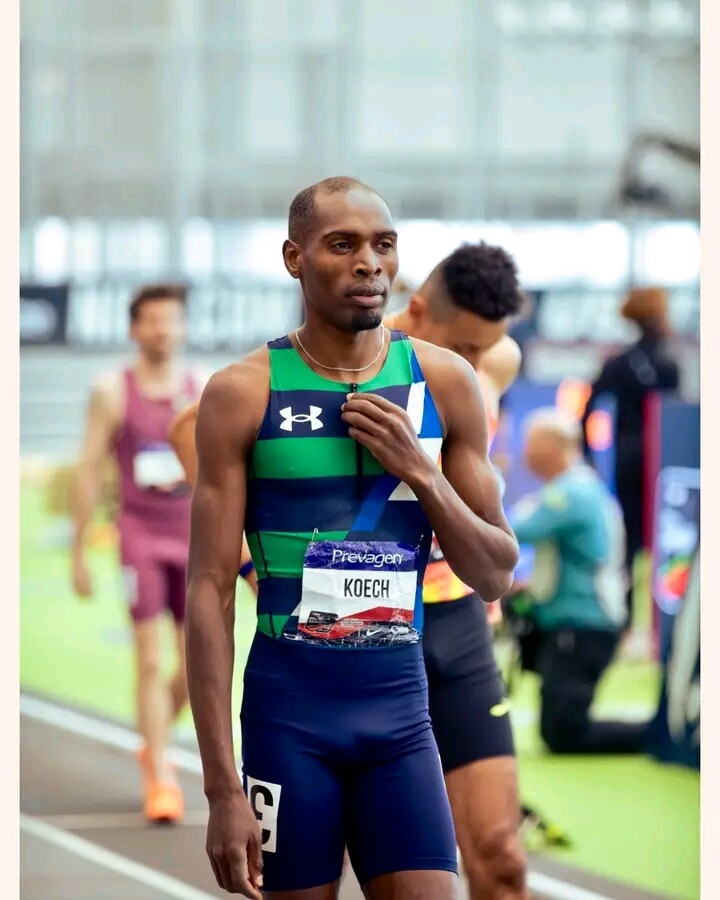
Koech’s sanction comes with a significant consequence: his victory in the men’s 1500m at the 2025 USATF Outdoor Championships in Eugene, Oregon, has been disqualified. The title, which represented one of the biggest achievements of his career, has therefore been removed from his official record.
The ruling marks a dramatic reversal for Koech, who produced a stunning breakthrough in 2025. After establishing himself as a serious force in the 1500m, he captured the U.S. national title and earned international recognition as one of the country’s leading middle-distance runners.
His three-year suspension is shorter than the standard four-year sanction that can apply to serious anti-doping violations. Koech’s acceptance of the violation and sanction resulted in a reduction of the period of ineligibility, allowing him to avoid the full four-year penalty.
Koech will remain ineligible to compete until July 2029, meaning he faces a lengthy absence from competitive athletics. His return will come after one of the most significant seasons of his career has now been rewritten by the anti-doping ruling.
The Athlete Biological Passport played a central role in the case. Rather than simply looking for a banned substance in an individual sample, the system monitors selected biological markers over time. Significant abnormalities in an athlete’s profile can trigger further examination and, where supported by expert evidence, an anti-doping case.
For Koech, the development represents a painful fall from a season that had appeared to signal the arrival of a major new name in American 1500m running. Born in Kenya before building his career in the United States, he had become a notable figure on the U.S. middle-distance scene.
The case also underlines the increasingly sophisticated approach to anti-doping in modern athletics, where an athlete's biological profile can be scrutinized long after a race has finished. For Koech, the consequences will extend far beyond the loss of one championship title, with three years away from competition now standing between him and a possible return to the track.
by Erick Cheruiyot for My Best Runs.
Login to leave a comment
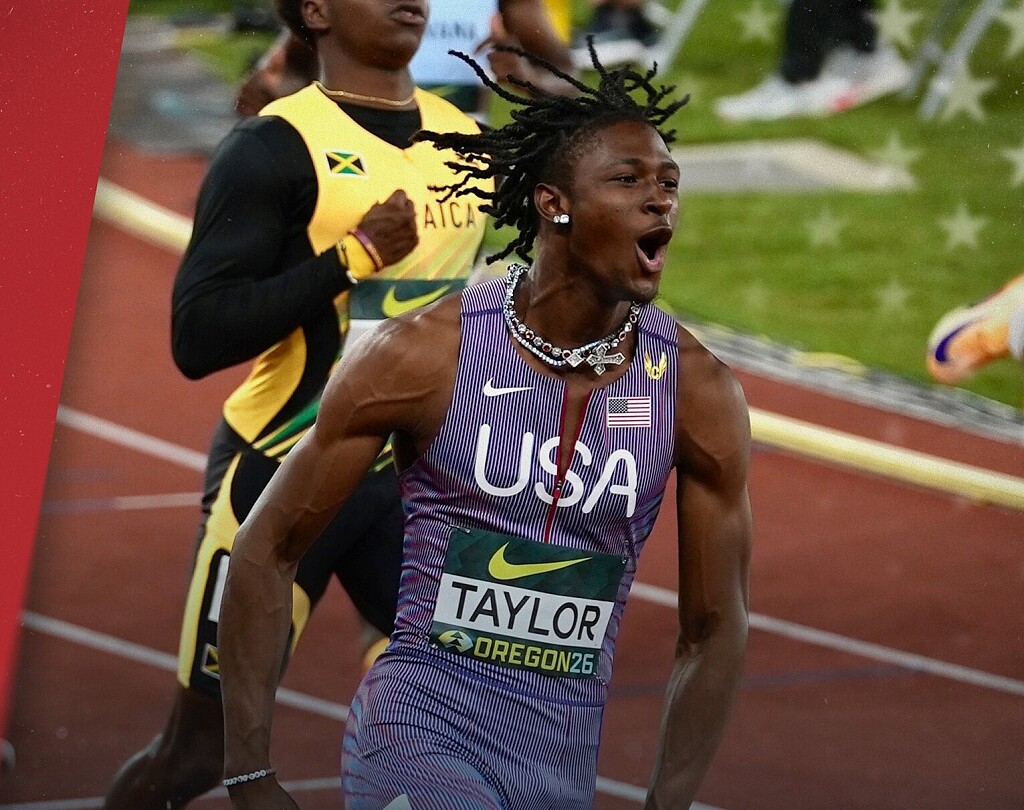
Tate Taylor Makes History With Three Gold Medals At World U20 Championships
At just 18 years old, Tate Taylor has transformed the World Athletics U20 Championships in Eugene into the stage for one of the most extraordinary sprint performances in the history of the competition.
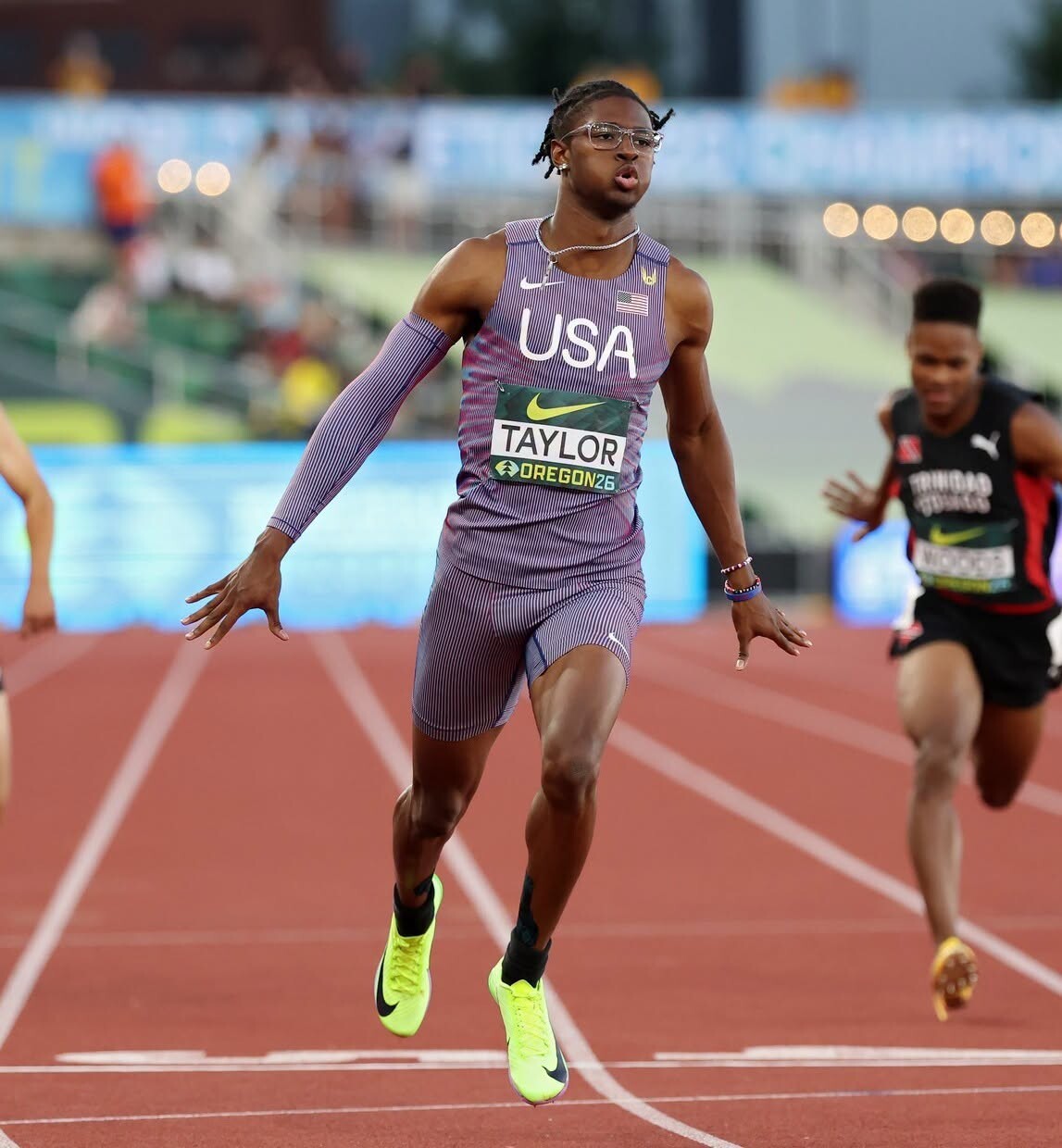
The American speedster completed a remarkable championship treble, winning gold in the men’s 100m, 200m and 4x100m relay as Team USA closed the championships in spectacular fashion.
Taylor began his assault on the sprint titles with victory in the 100m, producing a superb 9.94 seconds to establish himself as the fastest man in the field and add a World U20 title to his rapidly growing list of achievements.
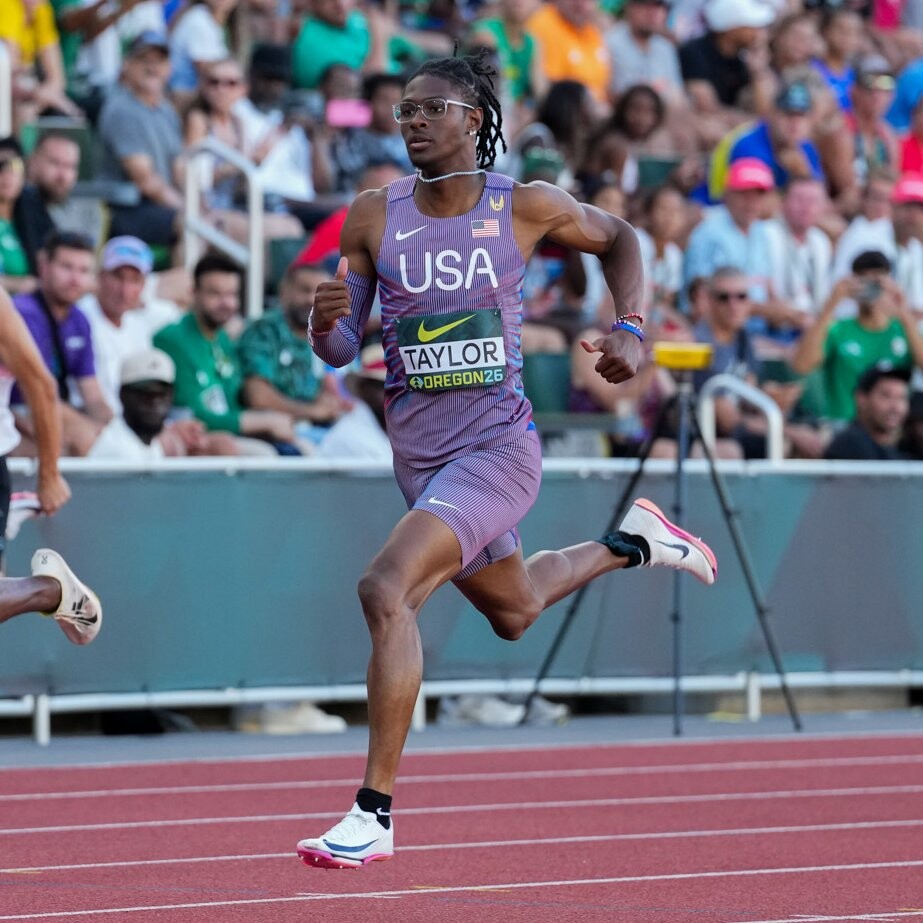
He then returned to Hayward Field for the 200m, where he delivered an even more emphatic statement. Taylor stormed to gold in 19.83 seconds, setting a new World Athletics U20 Championships record.
The performance placed him just 0.16 seconds behind the world U20 record of 19.67 set by Australia’s Gout Gout earlier this year. It also completed Taylor’s historic 100m-200m double, making him the first American man to achieve the feat at the World U20 Championships.
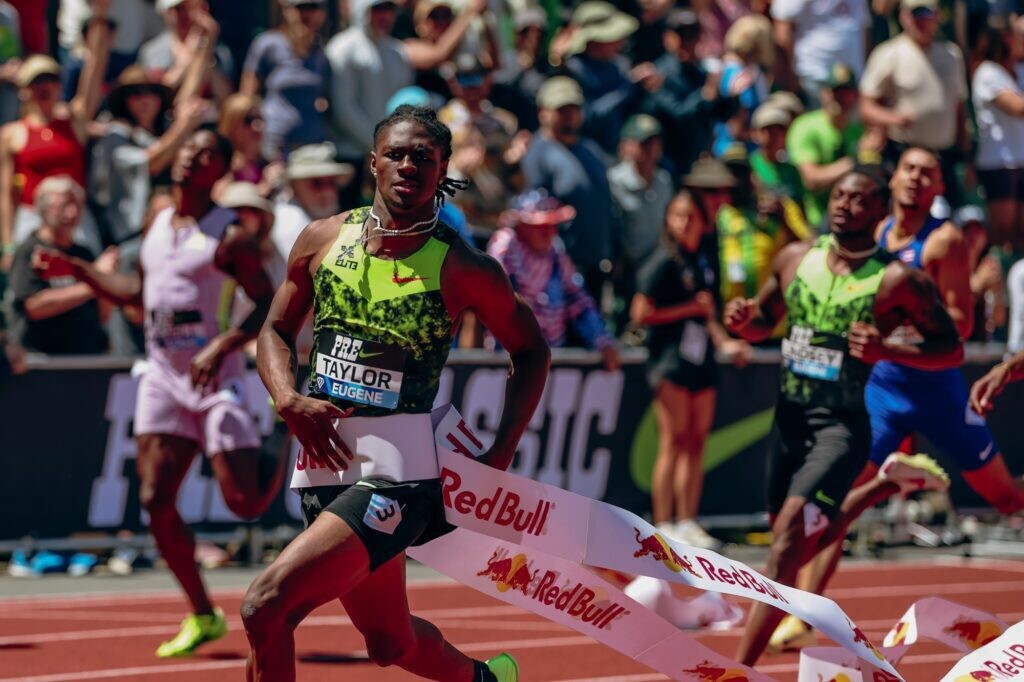
But Taylor was not finished.
In the men’s 4x100m relay, he was handed the baton for the anchor leg with another piece of history within reach. The American quartet delivered a sensational performance, crossing the finish line in 38.16 seconds to set a new world U20 record.
Taylor produced a powerful closing leg to bring the United States home, adding a third gold medal to his collection and helping cap a championship that had already established him as one of the brightest young sprinting talents in the world.
His three victories have now placed him in a rare category in World U20 Championships history. At only 18, Taylor leaves Eugene not simply as a triple champion, but as the central figure in one of the defining performances of the 2026 championships.
The significance of his achievement is even greater when viewed alongside the progression he has made throughout the season. Before arriving at the U20 championships, Taylor had already announced himself on the senior international stage by winning the 200m at the Prefontaine Classic in Eugene in a personal best of 19.75 seconds.
Now, after three races, three gold medals and two championship/world U20 records, Taylor has written his name into the history of the competition.
Eugene was supposed to be a championship for the next generation.
Tate Taylor made it his own.
by Erick Cheruiyot for My Best Runs.
Login to leave a comment
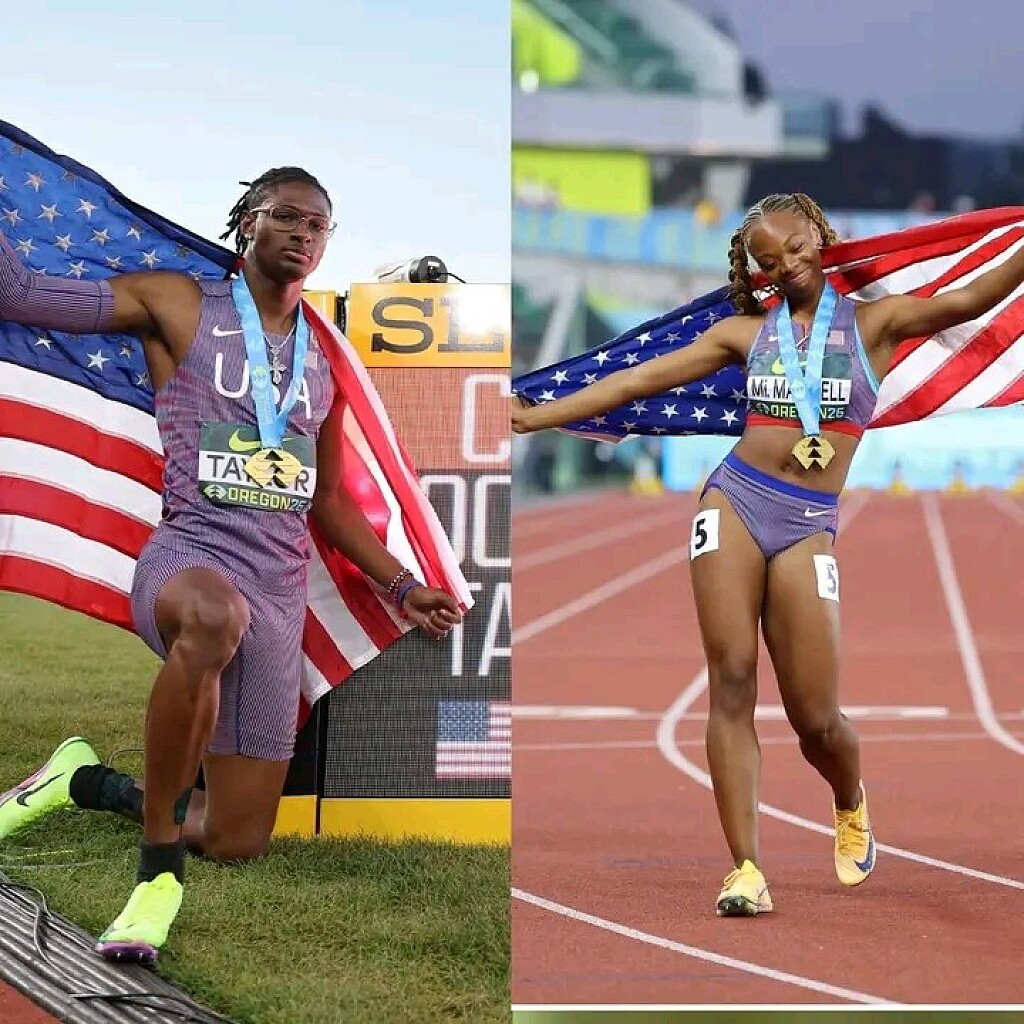
Tate Taylor And Mia Maxwell Make History With U20 Sprint Double Sweep
American sprinting has produced a remarkable moment at the World Athletics U20 Championships in Eugene, Oregon, with Tate Taylor and Mia Maxwell etching their names into the history books through an extraordinary clean sweep of the 100m and 200m titles.
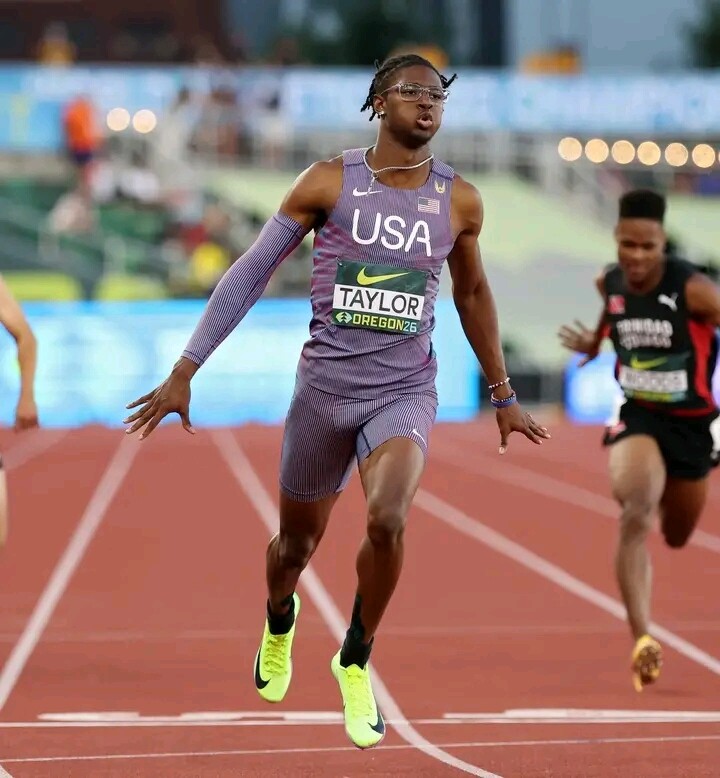
Taylor delivered a stunning display of speed in the men’s sprints, first claiming the 100m crown in 9.94 seconds before returning to the track to dominate the 200m, stopping the clock at an impressive 19.83 seconds.
The double underlines Taylor’s exceptional versatility over both sprint distances and establishes him as one of the most exciting young talents emerging from the United States.
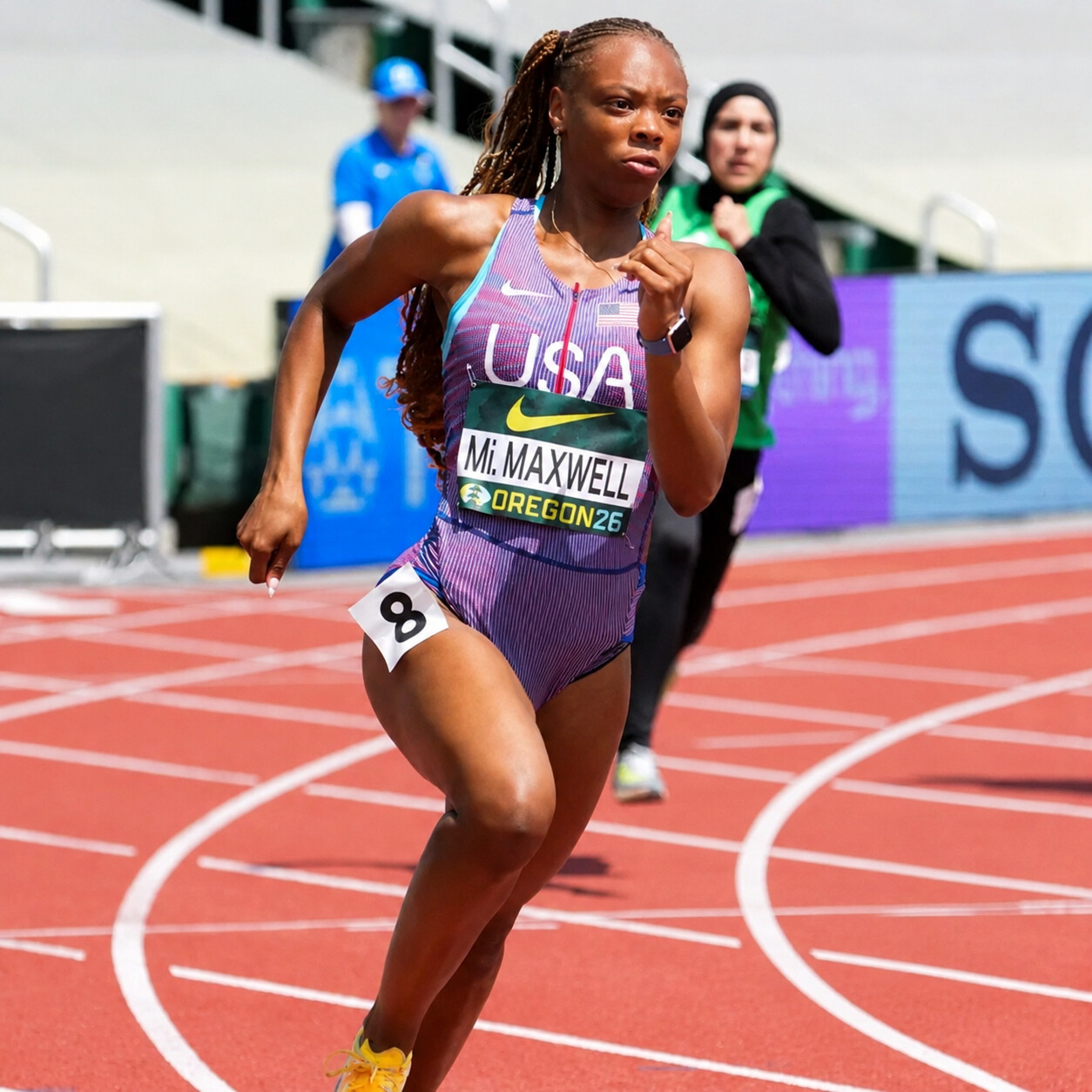
On the women’s side, Maxwell matched Taylor’s achievement with an equally impressive sprint double. She won the 100m title in 11.14 seconds before producing another commanding performance in the 200m, crossing the finish line in 22.37 seconds to secure her second gold medal of the championships.
Together, Taylor and Maxwell have created a rare piece of U20 history.
Their achievement marks the first time a United States male and female sprinter have simultaneously completed the 100m and 200m double at the under-20 global level, making their performances in Eugene particularly significant.
Winning either sprint title at a global championship requires exceptional speed, composure and consistency. Winning both demands something even greater: the ability to recover quickly, maintain peak performance across multiple rounds and deliver when the pressure is highest.
Taylor and Maxwell managed to do exactly that.
Their four victories have provided one of the standout stories of the championships and offered another powerful indication of the depth of sprinting talent developing in the United States.
For Taylor, the combination of 9.94 seconds in the 100m and 19.83 in the 200m represents a remarkable championship campaign. For Maxwell, her 11.14 and 22.37 secured an equally memorable double.
Eugene has therefore witnessed more than four individual sprint victories. It has witnessed the emergence of a historic American sprinting duo whose names will now be permanently linked to one of the most impressive achievements in the history of the World Athletics U20 Championships.
Taylor and Maxwell came to Eugene chasing gold.
They leave as history-makers.
by Erick Cheruiyot for My Best Runs.
Login to leave a comment
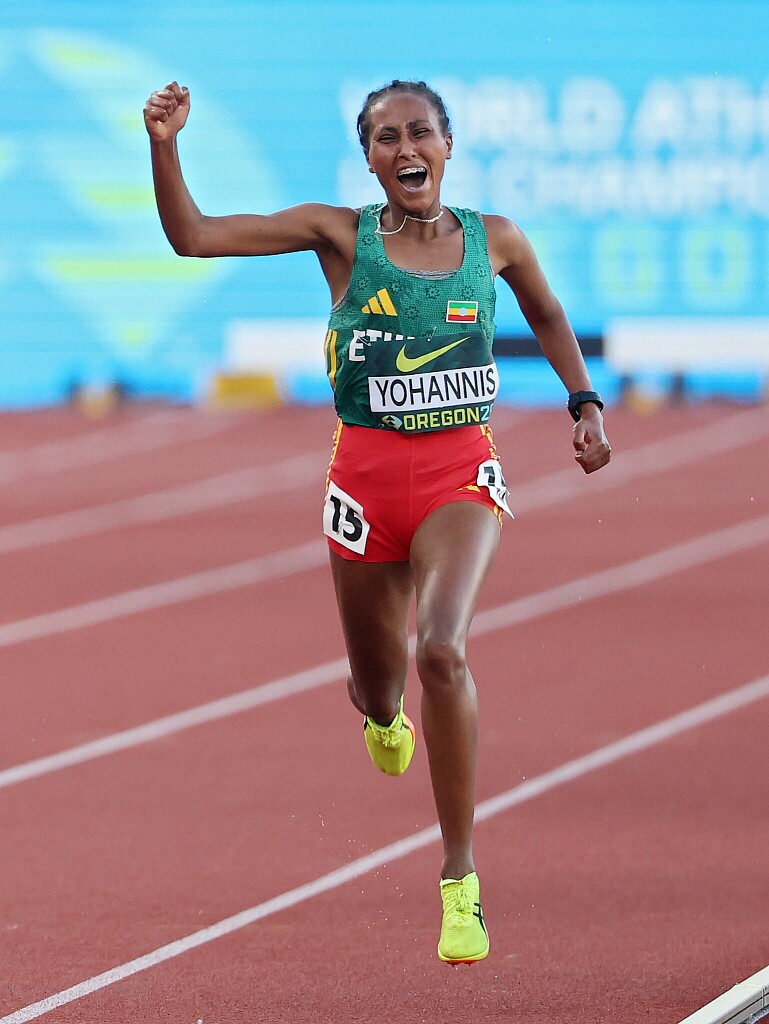
Almaz Yohannis Leads Ethiopian 1-2 in Spectacular World U20 Steeplechase Triumph
Ethiopia produced a spectacular display of emerging talent as Almaz Yohannis was crowned world champion in the women’s 3000m steeplechase at the 2026 World Athletics U20 Championships in Oregon, powering to a commanding victory in 9:15.81.
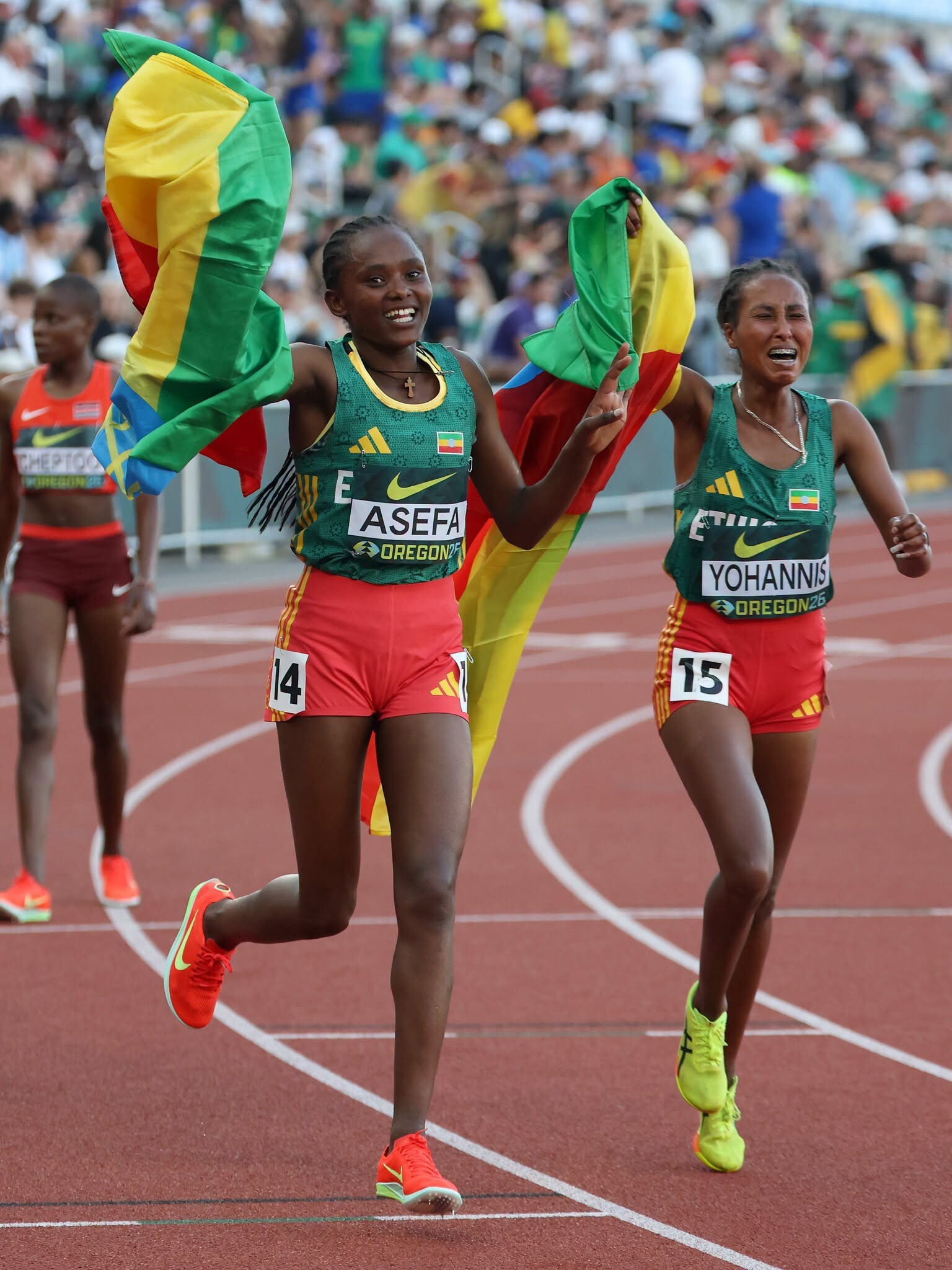
Yohannis delivered a superb performance to secure the gold medal and, in the process, recorded a World U20 Leading time (WU20L), underlining the strength of her performance on the global junior stage.
The young Ethiopian established herself as the athlete to beat, maintaining her composure and strength throughout the demanding eight-lap steeplechase before crossing the finish line well clear of the field. Her winning mark of 9:15.81 provided a fitting reward for a dominant championship performance.
Ethiopia’s celebrations were doubled when Wosane Asefa secured the silver medal in 9:30.50, producing a season’s best (SB) and completing an impressive Ethiopian one-two.
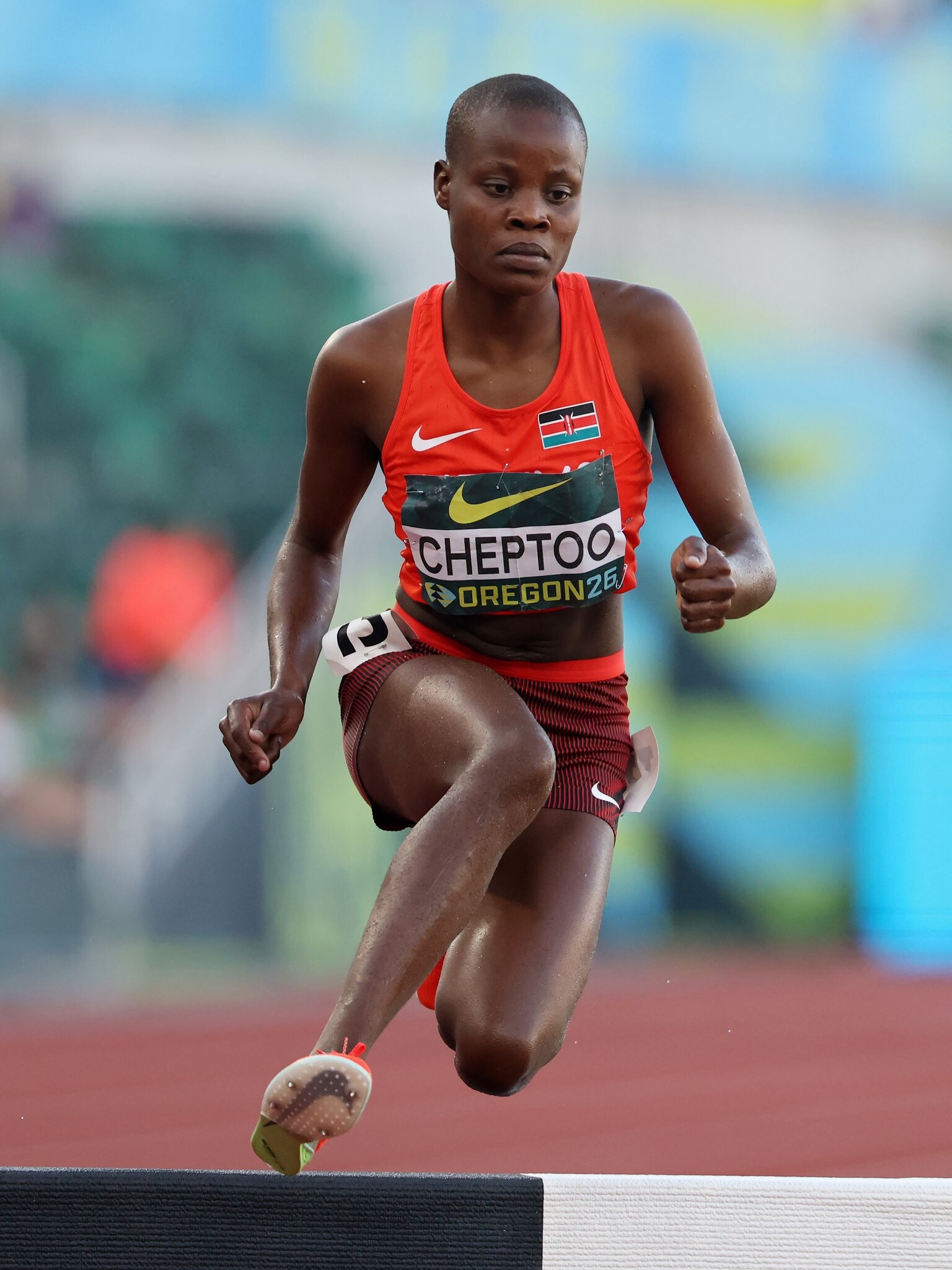
Kenya’s Anatasha Cheptoo ensured there was East African representation on all three steps of the podium, fighting her way to the bronze medal in 9:37.18.
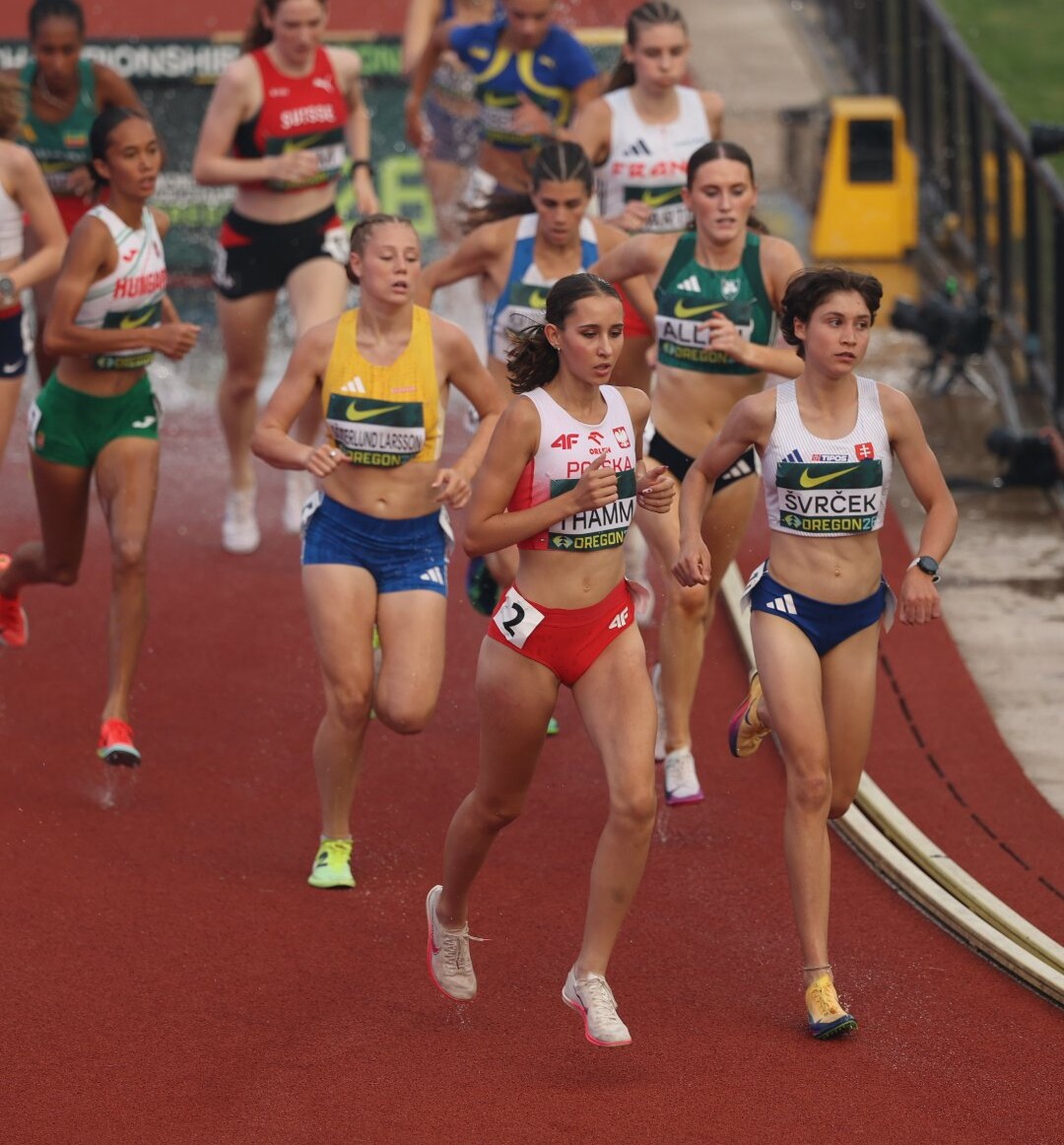
Behind the medalists, Sweden’s Majken Söderlund Larsson finished fourth in 9:48.01, setting a national U20 record (NU20R), while Czech Republic’s Ema Berková followed in fifth with 9:49.06, also recording a national U20 record.
Sweden’s Fanny Szalkai placed sixth in 9:55.06, a personal best, while Greece’s Anna Dafni Almyroudi Stroumpou finished seventh in 10:00.63, another national U20 record.
Egypt’s Malak Abdelghany Abdalla Ibrahim crossed eighth in 10:04.52, also establishing a national U20 record. Slovakia’s Anna Švrček was ninth in 10:05.91, followed by Japan’s Rei Taya in 10:12.37.
Portugal’s Lara Roque finished 11th in 10:15.69, setting a national U20 record, while Poland’s Zuzanna Szymańska took 12th in 10:15.94, a personal best. Great Britain’s Ava James was 13th in 10:18.96, followed by American Sierra Wall in 14th with 10:21.21.
Poland’s Michalina Thamm completed the finishers in 15th place in 10:39.01.
Kenya’s Mercy Chepngeno Koskey, who had also lined up as part of the Kenyan challenge, was unfortunately unable to finish the race.
The final podium therefore belonged to three of East Africa’s rising stars, with Yohannis and Asefa delivering a memorable Ethiopian one-two, while Cheptoo secured bronze for Kenya.
Women’s 3000m Steeplechase — Official Results
1. Almaz Yohannis (Ethiopia) — 9:15.81 (WU20L)
2. Wosane Asefa (Ethiopia) — 9:30.50 (SB)
3. Anatasha Cheptoo (Kenya) — 9:37.18
4. Majken Söderlund Larsson (Sweden) — 9:48.01 (NU20R)
5. Ema Berková (Czech Republic) — 9:49.06 (NU20R)
6. Fanny Szalkai (Sweden) — 9:55.06 (PB)
7. Anna Dafni Almyroudi Stroumpou (Greece) — 10:00.63 (NU20R)
8. Malak Abdelghany Abdalla Ibrahim (Egypt) — 10:04.52 (NU20R)
9. Anna Švrček (Slovakia) — 10:05.91
10. Rei Taya (Japan) — 10:12.37
11. Lara Roque (Portugal) — 10:15.69 (NU20R)
12. Zuzanna Szymańska (Poland) — 10:15.94 (PB)
13. Ava James (Great Britain) — 10:18.96
14. Sierra Wall (United States) — 10:21.21
15. Michalina Thamm (Poland) — 10:39.01
DNF: Mercy Chepngeno Koskey (Kenya)
Yohannis’ victory marked the highlight of a brilliant Ethiopian performance, with her 9:15.81 World U20-leading mark setting the tone for a memorable championship final and announcing another exciting young talent onto the international athletics scene.
by Erick Cheruiyot for My Best Runs.
Login to leave a comment
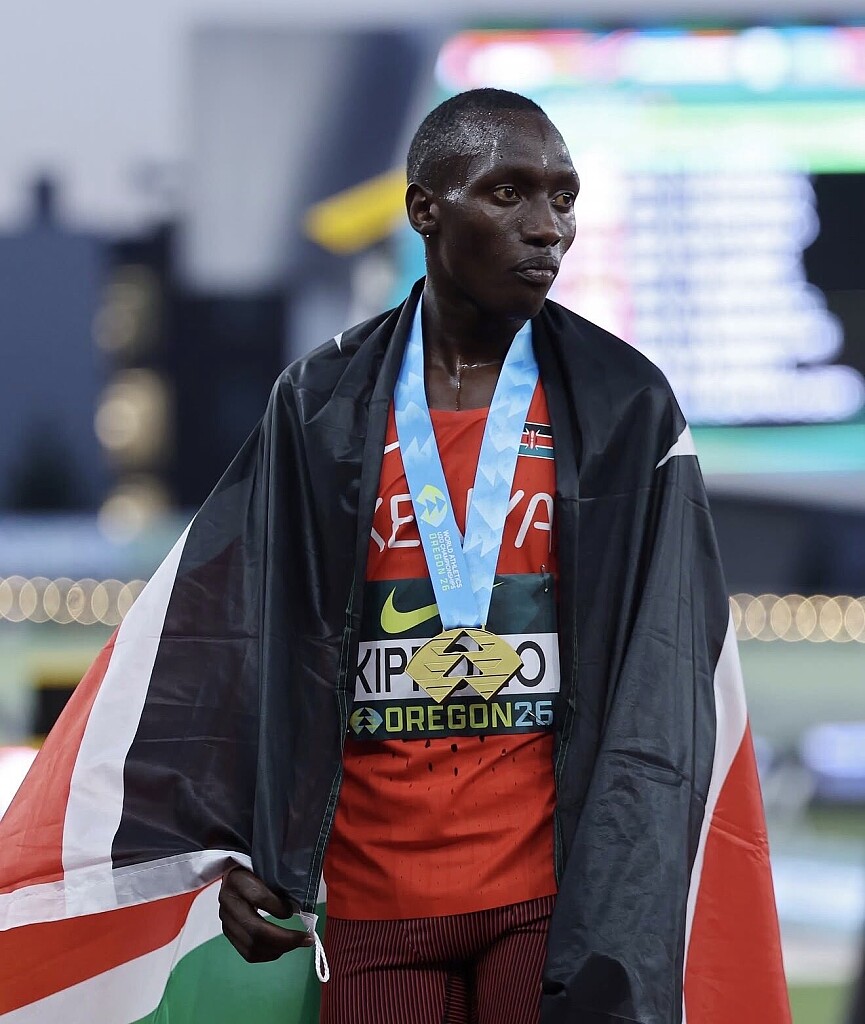
Emmanuel Kiprono Storms to World U20 3,000m Gold in Championship-Record 7:28.28
Kenya’s Emmanuel Kiprono has announced himself as one of the brightest young distance-running talents in the world after producing a sensational solo performance to win the men’s 3,000 metres gold medal at the World Athletics U20 Championships in a championship-record 7:28.28.
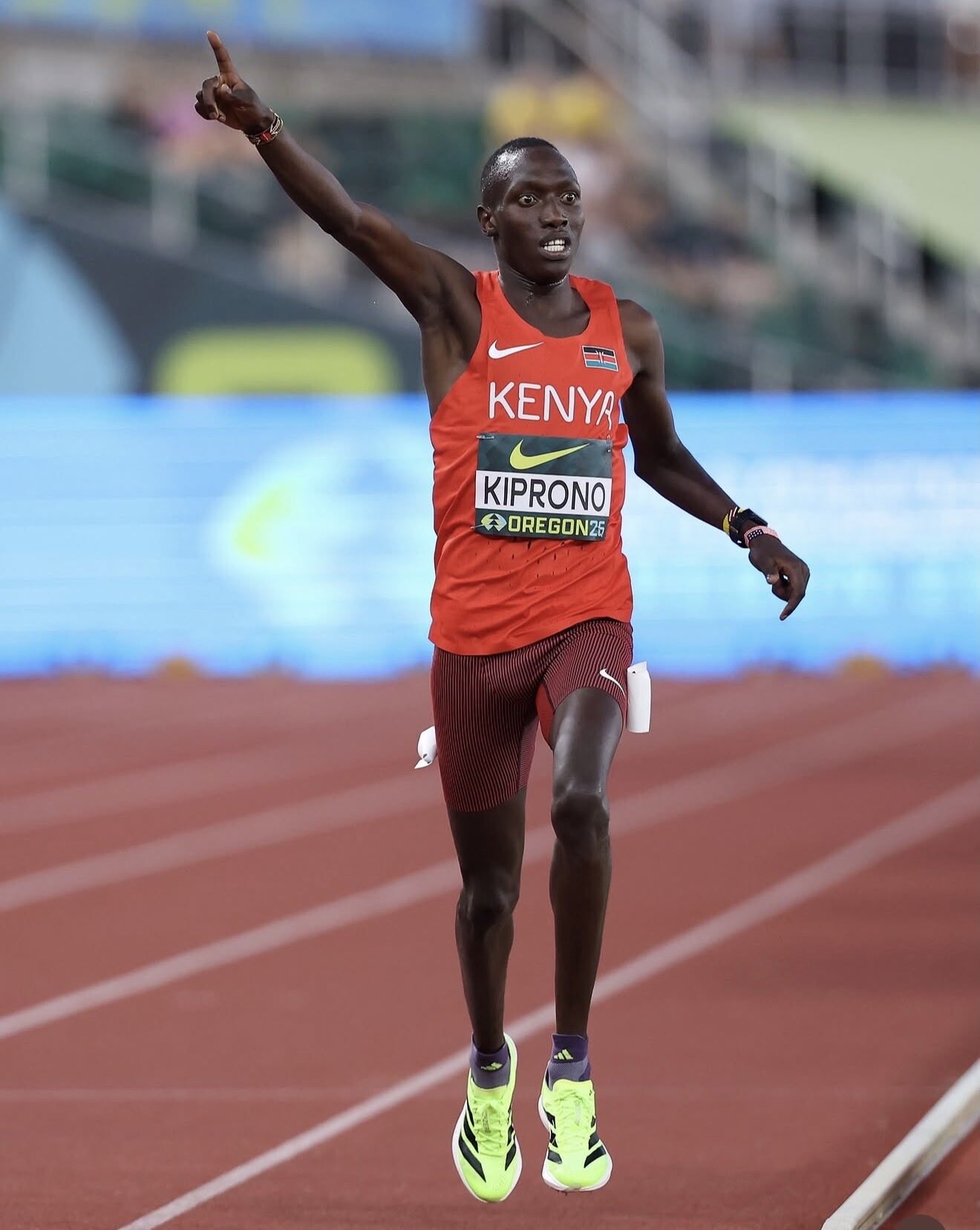
Just 17 years old, Kiprono took control from the opening metres and never looked back. Running completely alone for virtually the entire race, the Kenyan dictated the tempo with remarkable confidence and gradually transformed the final into a one-man race.
Kiprono passed 1,000 metres in 2:26.52, reached 1,600 metres in 3:54.58, and continued his relentless charge through 2,000 metres in 4:55.43. With every lap, the gap behind him grew larger as his rivals struggled to match his extraordinary pace.
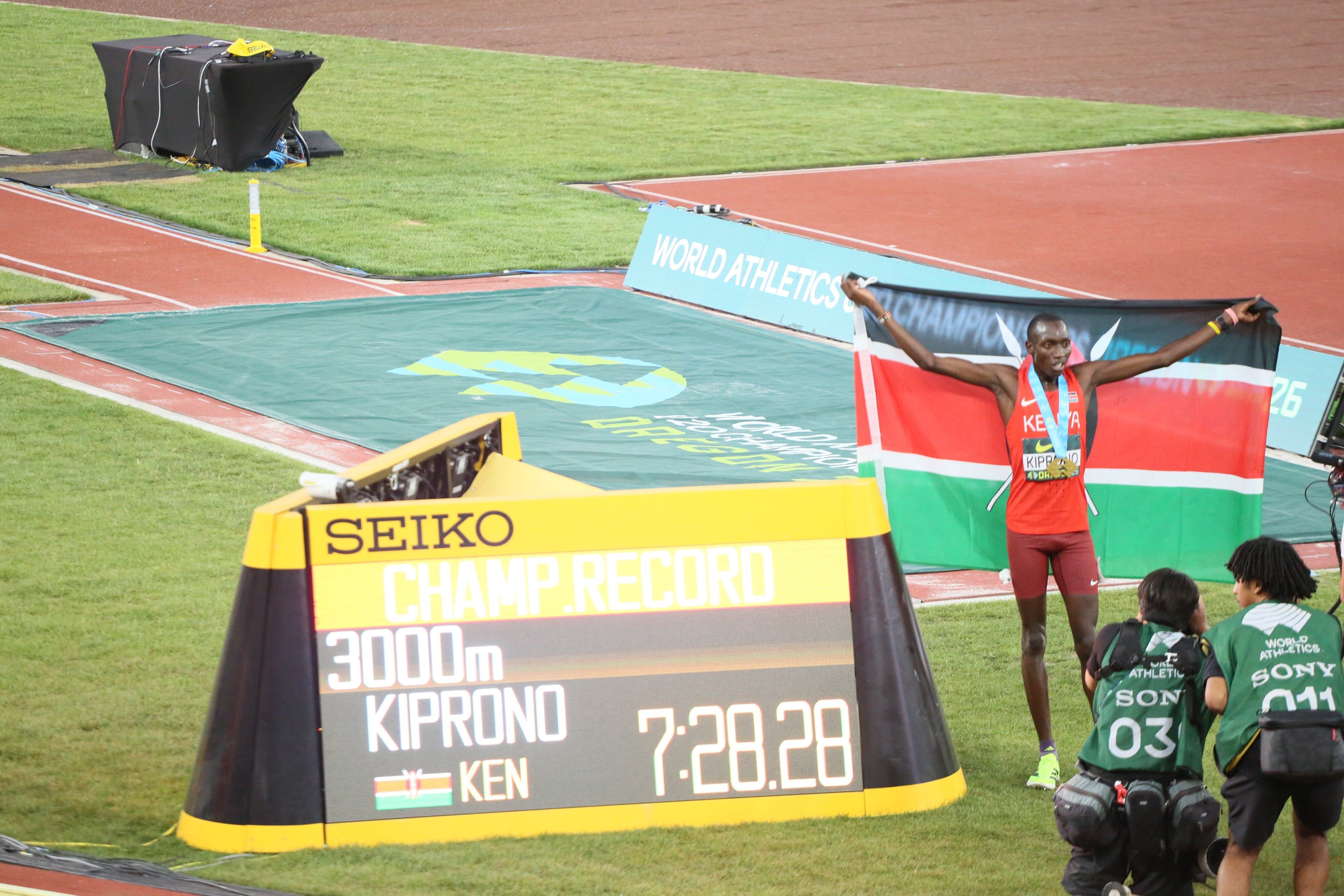
He eventually crossed the finish line in 7:28.28, smashing the championship record and coming agonisingly close to the world U20 record of 7:28.20, set by Ethiopia’s Yomif Kejelcha. Kiprono missed the global junior mark by just 0.08 seconds.
The margin of victory was equally spectacular. He finished 19 seconds ahead of France’s Alois Abraham, who took silver in 7:47.79, while Japan’s Ojiro Honda secured bronze in 7:48.49, setting a Japanese U20 record.
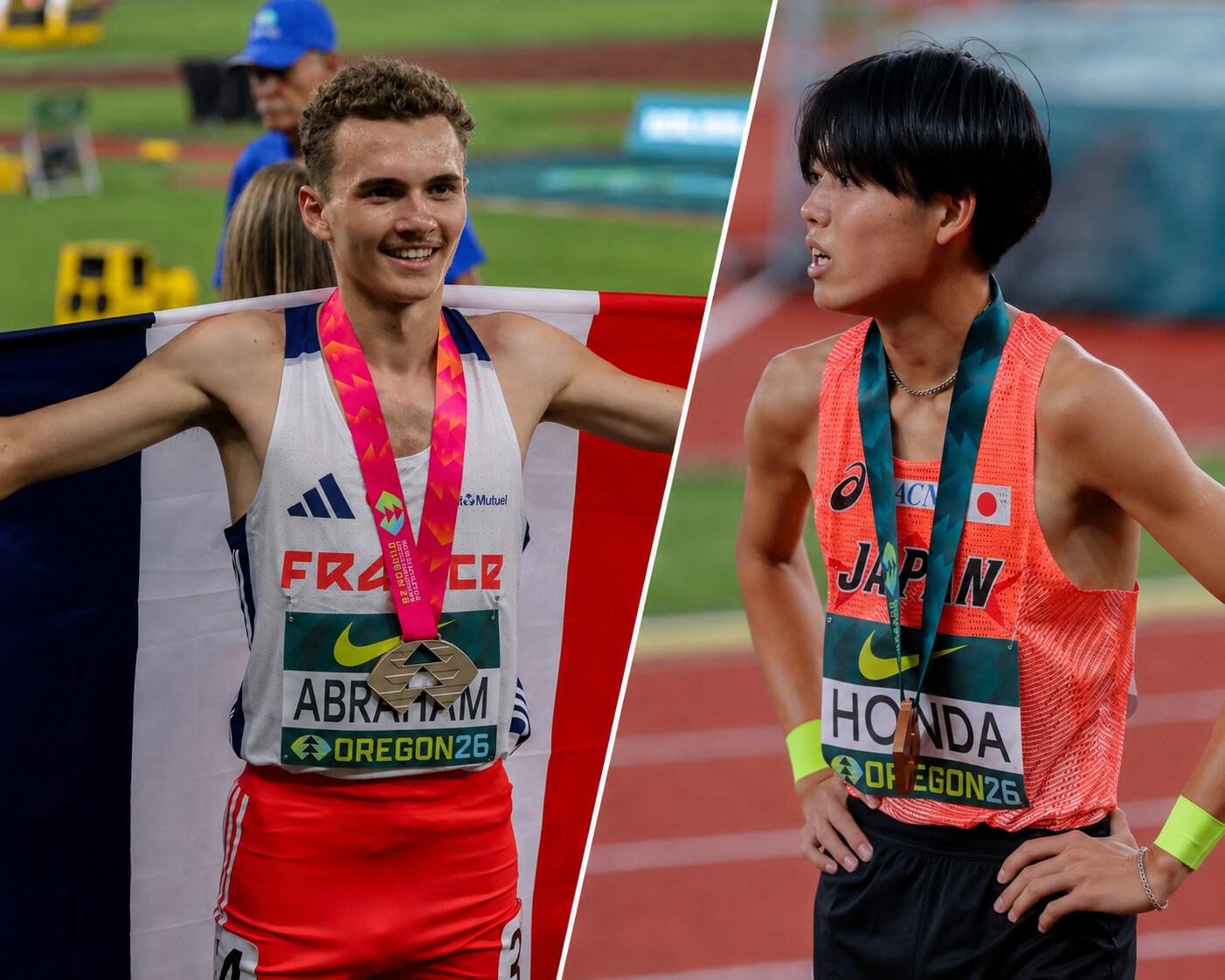
Men’s 3,000m Final
1. Emmanuel Kiprono — Kenya — 7:28.28 (Championship Record)
2. Alois Abraham — France — 7:47.79
3. Ojiro Honda — Japan — 7:48.49 (National U20 Record)
4. Liam Conway — Great Britain — 7:50.10 (Personal Best)
5. Aleksi Ahlfors — Finland — 7:50.56 (Personal Best)
6. Tzu-Chieh Chien — Chinese Taipei — 7:51.18 (National U20 Record)
7. Ilyes Druez — Belgium — 7:51.67 (Personal Best)
8. Sebastian Lörstad — Sweden — 7:51.94 (Personal Best)
9. Edwin Elkana — Kenya — 7:51.94 (Personal Best)
10. Owen Powell — United States — 7:53.35 (Personal Best)
Kiprono’s breakthrough is particularly significant given his performances earlier this year. The 17-year-old finished second in the U20 race at the World Cross Country Championships, establishing himself as one of the leading prospects in the new generation of Kenyan distance runners.
But on the track, he produced something even more extraordinary.
There was no tactical waiting game, no final-lap sprint and no group to shelter behind. Kiprono simply went to the front and challenged himself against the clock. His splits — 2:26.52 at 1,000m, 3:54.58 at 1,600m and 4:55.43 at 2,000m — demonstrate the remarkable consistency and courage behind the performance.
After the race, Kiprono celebrated with the Kenyan flag draped around him before posing beside the SEIKO championship-record display, which showed his historic 7:28.28.
His championship record also came with a tantalising glimpse of what might have been. Had he found even a fraction more in the closing metres, the world U20 record could have fallen as well. Nevertheless, coming within eight hundredths of the mark while running almost the entire race alone makes the achievement all the more remarkable.
Emmanuel Kiprono has not merely won a world junior title — he has made a statement. At only 17, his extraordinary front-running, championship record and near-world-record performance suggest that Kenyan distance running may have another major talent ready to emerge onto the global stage.
by Erick Cheruiyot for My Best Runs.
Login to leave a comment
World U20 Relay History Rewritten As Great Britain Breaks Fresh Record After Australia's Brief Reign
Records were rewritten twice within the space of a few unforgettable minutes as the inaugural World Athletics U20 Mixed 4x100m relay produced one of the most dramatic sessions of the World Athletics U20 Championships in Eugene, Oregon.
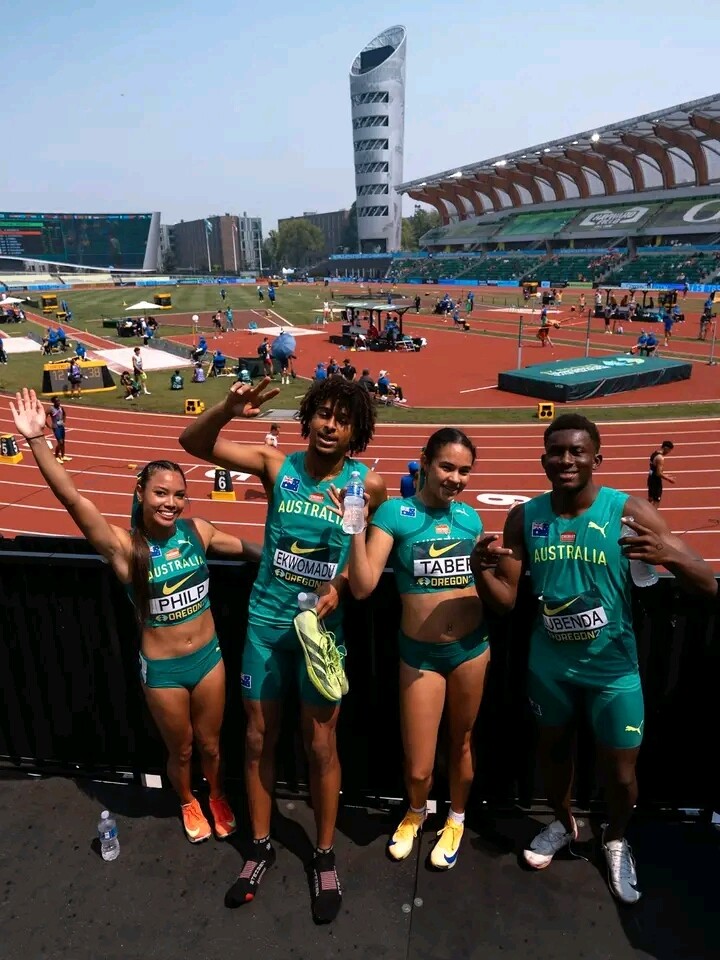
Australia ignited the excitement in the opening heat by storming to a world U20 record of 41.64 seconds, becoming the first team ever to reach that mark and briefly claiming a place in history. For five memorable minutes, the Australian quartet of Uwezo Lebenda, Maya Taber, Kelechi Ekwomadu and Thewbelle Philp stood as world record holders after a sensational performance that also secured their place in Saturday's final.
Their celebration, however, proved to be short-lived.
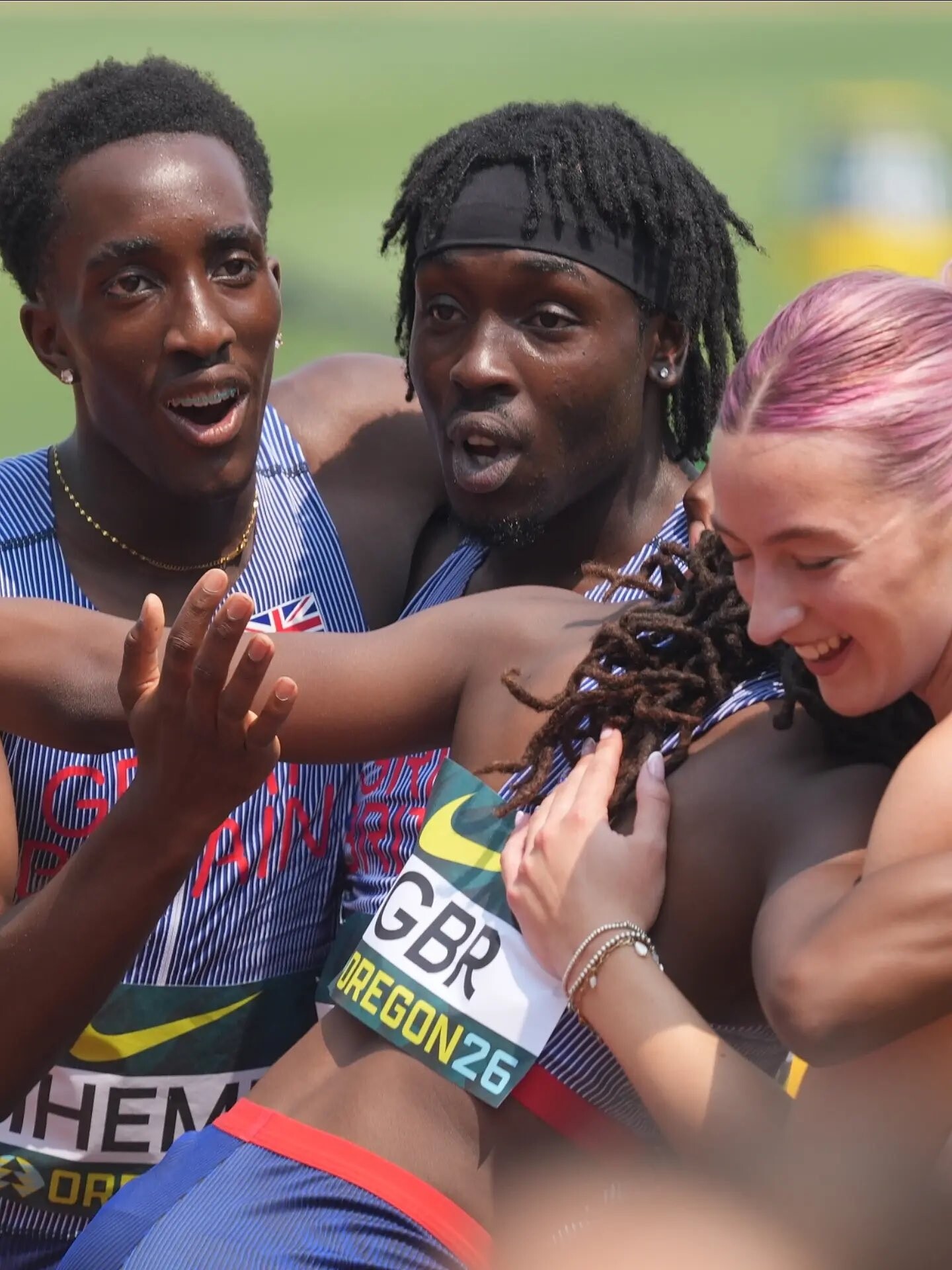
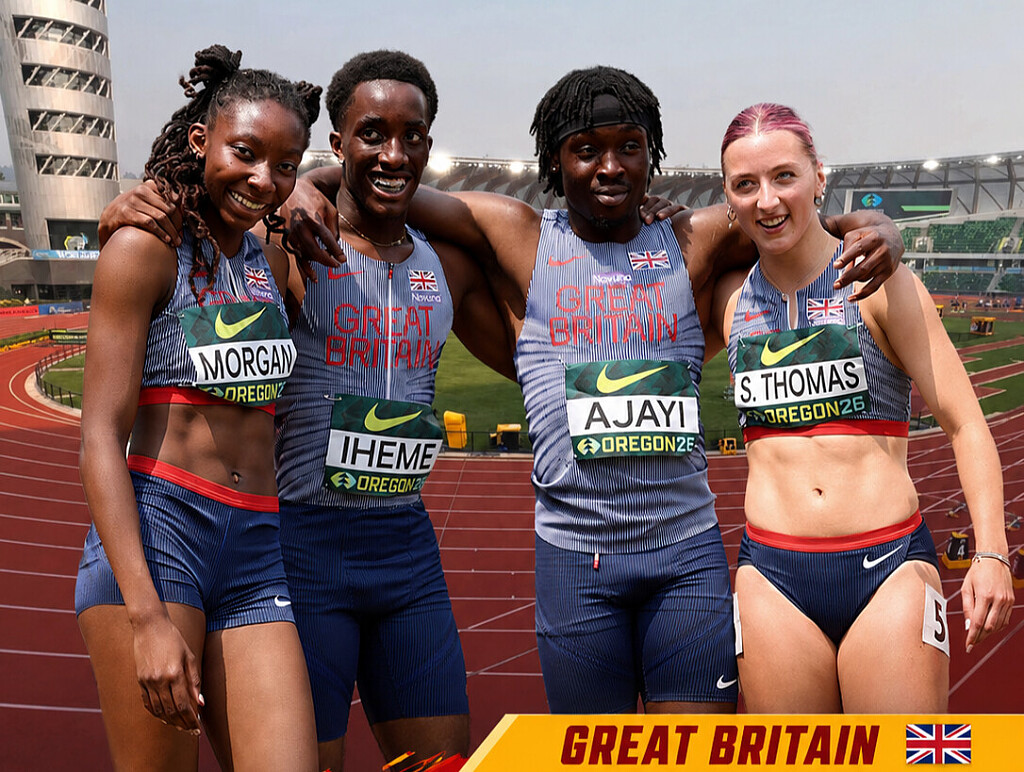
Moments later, Great Britain delivered an even more electrifying display in the second heat, clocking 41.60 to erase Australia's newly established mark and set a fresh World U20 record. It was a masterclass in speed, precision and flawless baton exchanges that propelled the British team into the history books.
The record-breaking quartet of Divine Iheme, Savannah McKenzie Morgan, Mathew Ajayi and Sophie Thomas combined brilliantly from start to finish to produce the fastest mixed U20 4x100m relay ever recorded. Sophie Thomas, who is set to compete for the University of Connecticut (UConn) this year, produced a composed anchor leg to seal the landmark performance.
The extraordinary back-to-back world records underlined the remarkable depth of sprint talent on display, with several other nations also producing outstanding performances to qualify for the final.
Italy impressed with a personal best of 41.74, while the United States advanced comfortably in 41.82. Nigeria also produced a personal best of 41.91 to secure qualification.
Jamaica (42.08 PB), Germany (42.12 PB), France (42.16 PB) and Poland (42.18 PB) completed the eight-team final after delivering strong performances in one of the fastest mixed relay qualifying rounds ever witnessed at the U20 Championships.
With two world records already falling in rapid succession, anticipation is now soaring ahead of Saturday's final. If the qualifying heats are any indication, the newly established global mark of 41.60 may once again come under serious threat as the world's best young sprinters chase another piece of athletics history.
by Erick Cheruiyot for My Best Runs.
Login to leave a comment

Taylor and Maxwell Deliver Golden U.S. Sprint Sweep at World U20 Championships
The United States produced a memorable night of sprinting at the World Athletics U20 Championships in Eugene, Oregon, as Tate Taylor and Mia Maxwell captured the men's and women's 100 metres titles to complete a remarkable American clean sweep in one of track and field's most prestigious junior competitions.
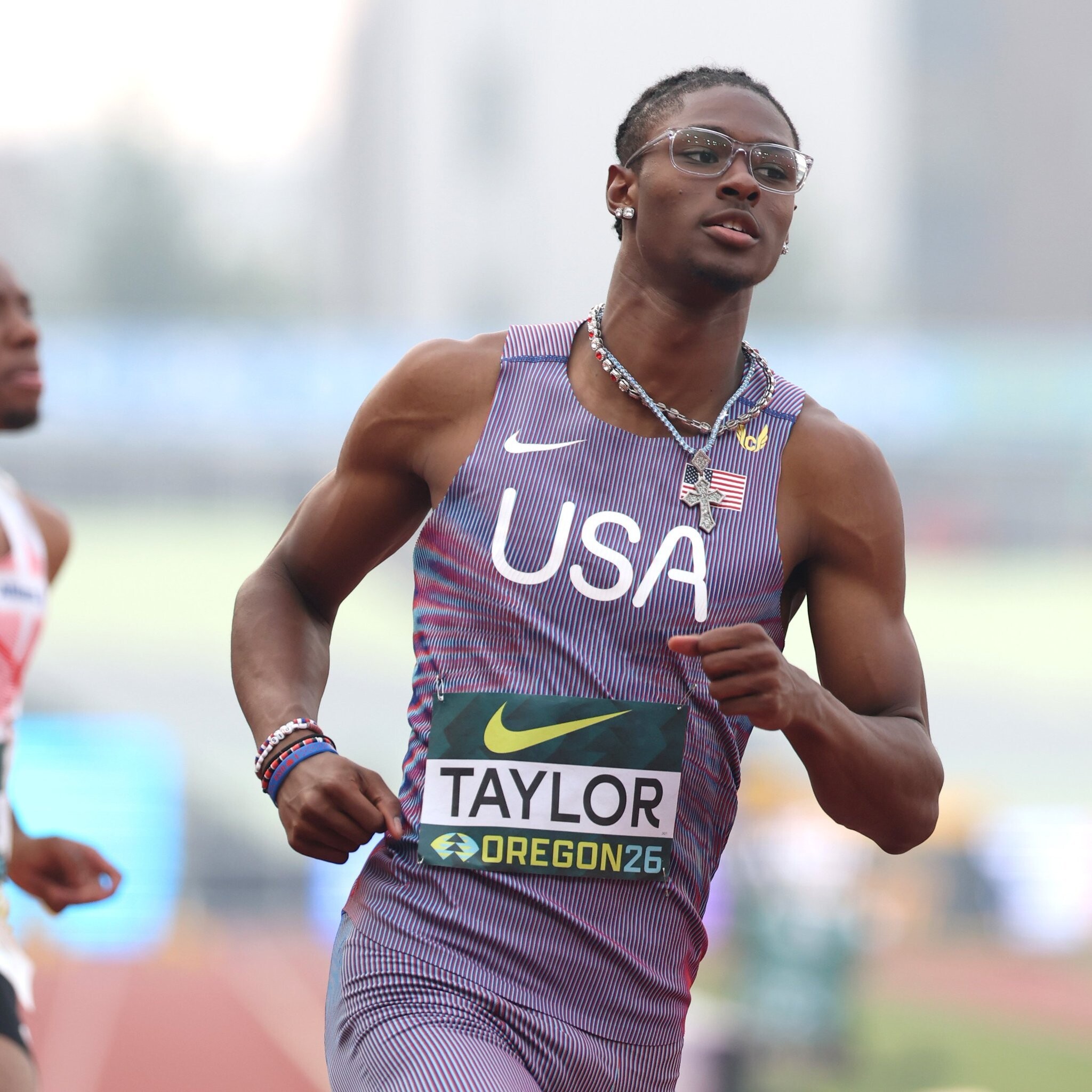
Taylor announced himself among the world's brightest young sprinters with a breathtaking performance in the men's final, powering away over the closing metres to clock a wind-legal personal best of 9.94 seconds. The outstanding run made him the only athlete in the field to break the 10-second barrier and confirmed his status as one of the fastest teenagers in history.
Jamaica's Gary Card claimed the silver medal in 10.05 seconds after a strong race, while South Africa's Marko Ferreira secured bronze in 10.16, completing a highly competitive podium. Despite a closely contested opening half of the race, Taylor's explosive finishing speed proved decisive as he surged clear to take the world junior crown in emphatic fashion.
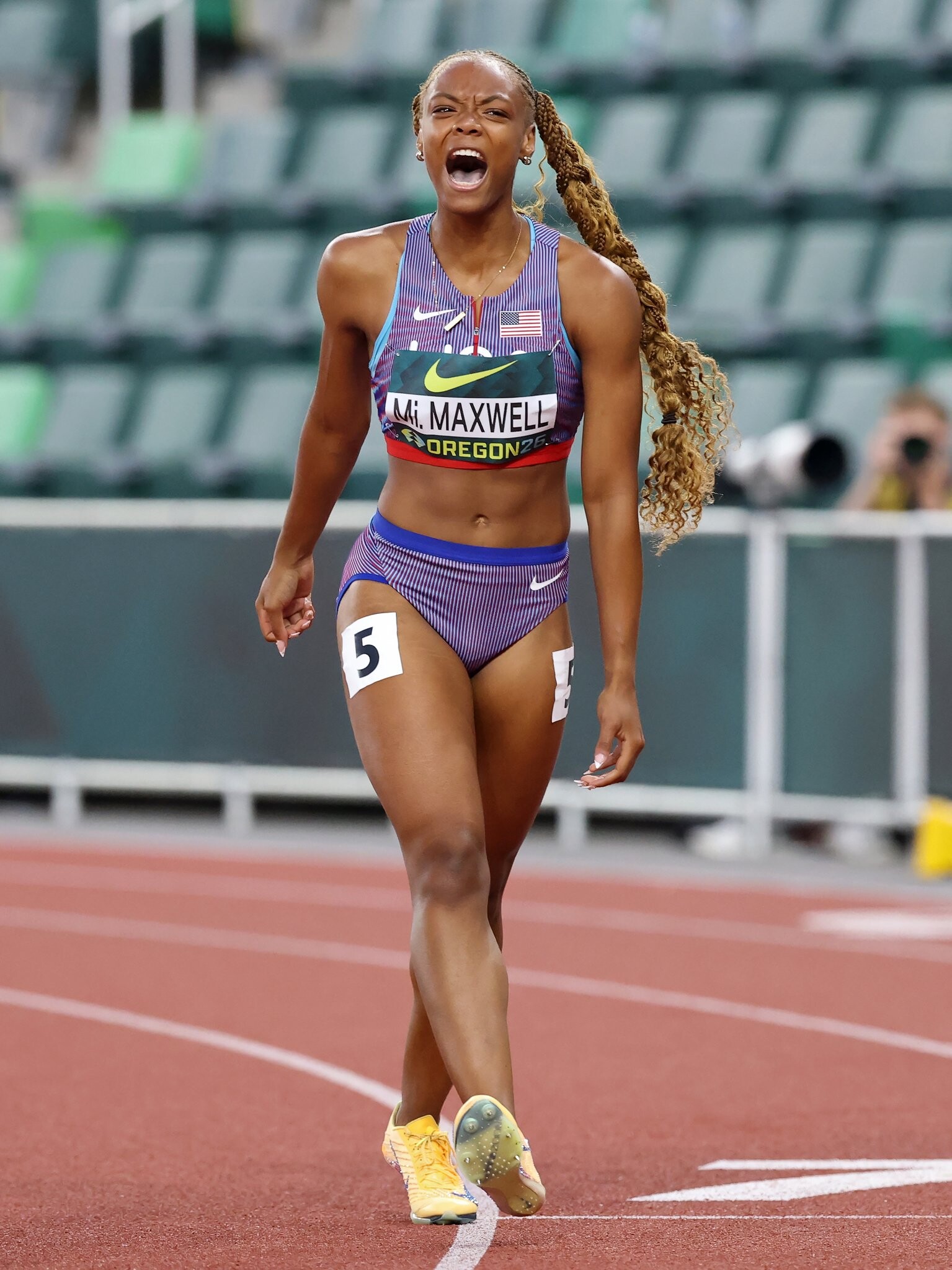
The women's final delivered another thrilling contest, with Mia Maxwell holding her composure under immense pressure to secure the title in 11.14 seconds. Jamaica's Shanoya Douglas mounted a determined late challenge but settled for silver in 11.17, while Italy's Kelly Ann Doualla Edimo earned bronze after crossing the line in 11.27.
The victory capped an unforgettable championship for the Maxwell family. After progressing impressively through the rounds, Mia delivered when it mattered most, while her twin sister, Mariah Maxwell, also reached the final and finished fifth, underlining the family's exceptional sprinting talent on the global stage.
The double triumph marked a dominant evening for Team USA, which swept both 100m gold medals before a home crowd in Eugene. With Taylor producing a historic sub-10-second breakthrough and Maxwell demonstrating remarkable composure in a world-class women's final, the pair provided another glimpse of the exciting future of American sprinting.
by Erick Cheruiyot for My Best Runs.
Login to leave a comment
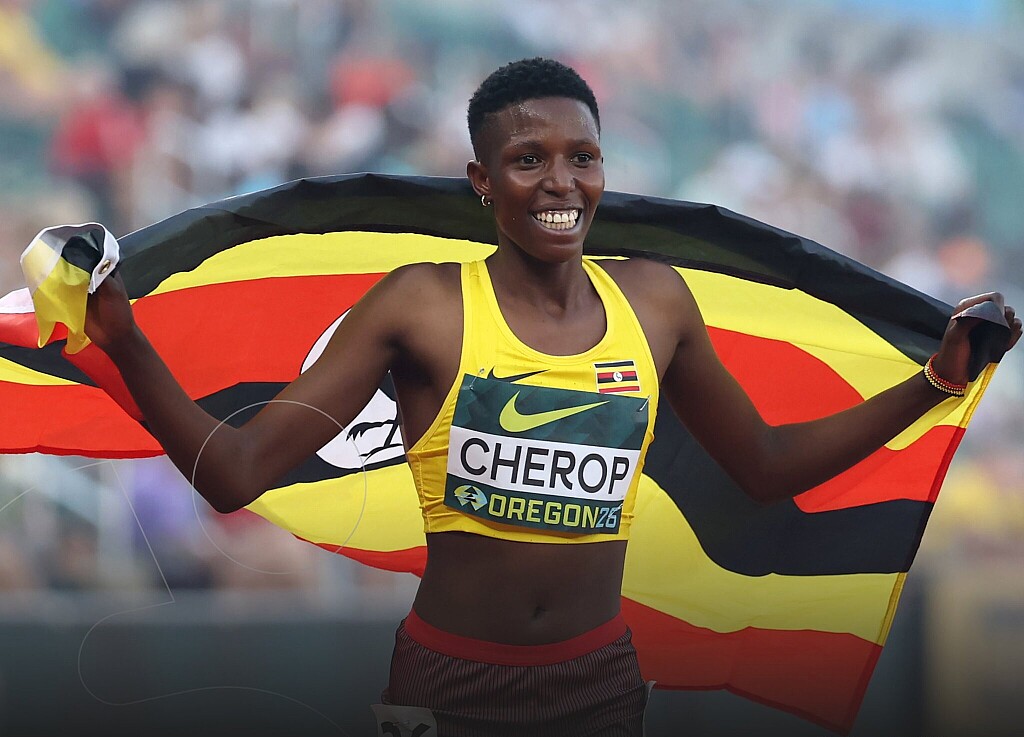
From Silver to Gold: Charity Cherop Storms to World U20 5000m Crown with Tactical Masterclass
Uganda's 19-year-old long-distance sensation Charity Cherop delivered the performance of her young career, producing a championship masterclass to capture the women's 5000m title at the 2026 World Athletics U20 Championships at Hayward Field in Eugene, Oregon.
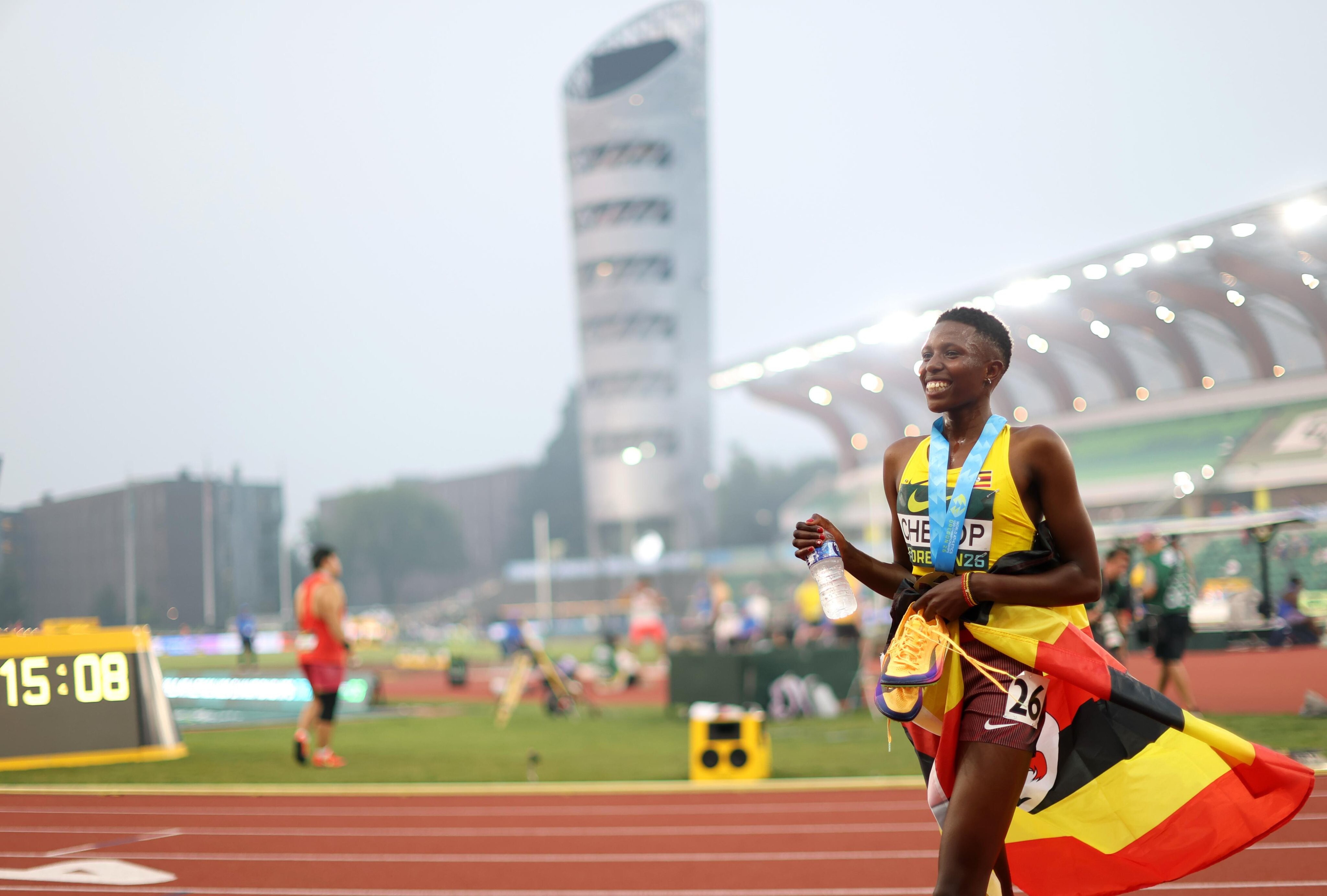
Born on July 4, 2007, Cherop executed a tactically brilliant race, remaining patient throughout the early stages before unleashing a devastating surge over the final kilometre. Her perfectly timed move proved decisive as she crossed the finish line in 15:03.88, becoming the new World U20 champion.
The victory was more than just a world title—it completed a remarkable journey from silver to gold. After finishing runner-up at the previous World Athletics U20 Championships in Lima, Cherop returned to the global stage stronger and more determined, upgrading her silver medal to gold and confirming herself as one of the brightest young stars in international distance running.
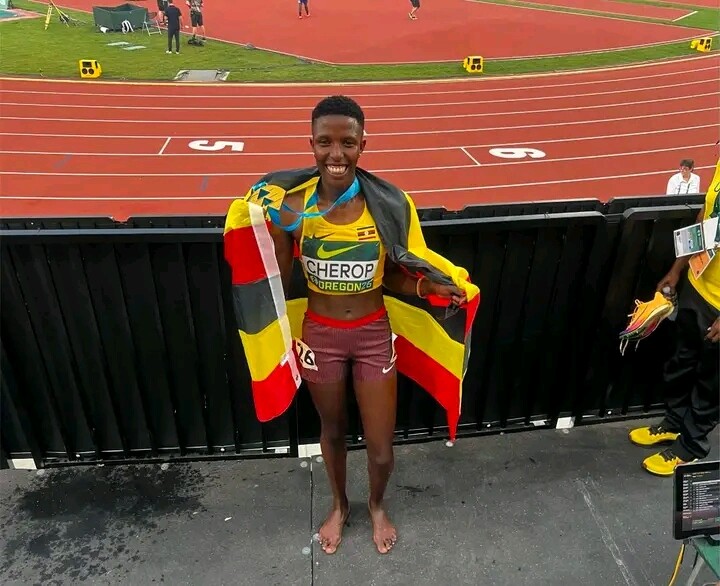
Behind the Ugandan star, Ethiopia's Shito Gumi fought bravely to secure the silver medal in 15:07.91, while Kenya's Joyline Chepkemoi delivered an outstanding performance to claim bronze in 15:09.08, setting a new personal best in the process. The battle for the podium remained fiercely contested until the closing stages, with every medal decided through courage, tactical awareness, and a powerful finishing kick.
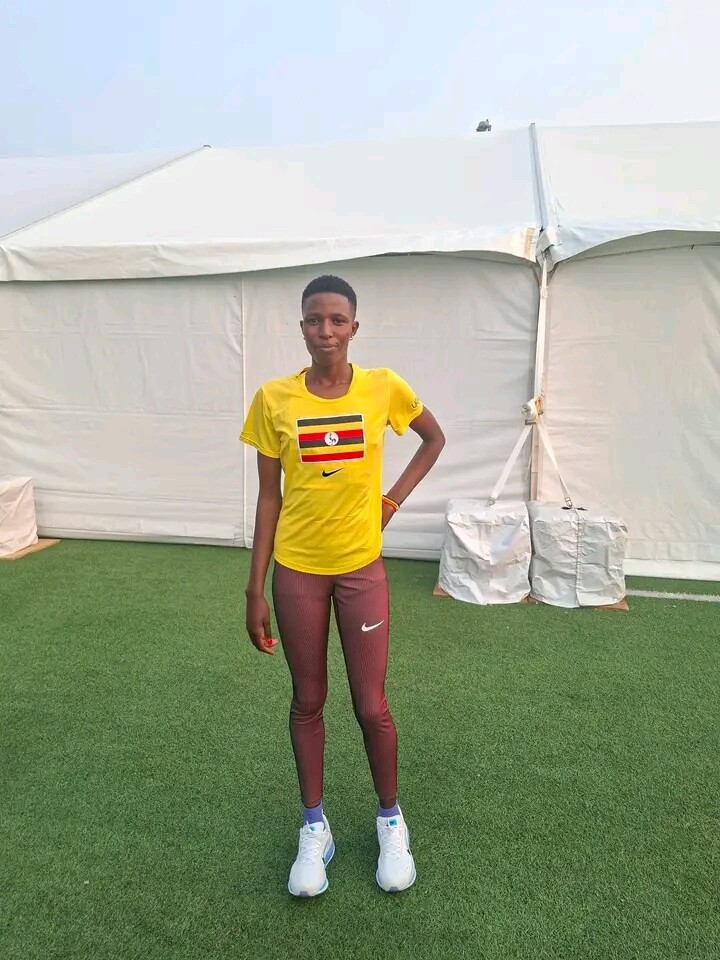
Kenya narrowly missed placing two athletes on the podium as Cynthia Chepkirui finished a strong fourth in 15:14.86, while Sweden's Carmen Cernjul rounded out the top five in 15:22.18.
Ethiopia's Emebet Tilahun placed sixth in 15:32.51, followed by Japan's Yui Onotora in seventh with 15:37.33. Uganda celebrated another top-10 finish through Bentalin Yeko, who finished eighth in 15:48.35, underlining the nation's impressive depth in women's distance running.
Germany's Julia Ehrle claimed ninth in 16:09.53, with France's Lamia Mourabit completing the top ten in 16:10.80.
Further down the field, Portugal's Carolina Correia impressed with an 11th-place finish in a personal best 16:11.47, while Norway's Venus Teffera also celebrated a lifetime best of 16:12.07 in 12th. Germany's Gloria Herold added another personal best, clocking 16:13.75 for 15th place.
France's Laly Porentru, Japan's Ayami Yoshida, the Netherlands' Rosalie Ten Bruggencate, Italy's Sofia Ferrari and Mimosa Miari Fulcis, Spain's Fatima Hernandez, Switzerland's Anina Hirzel, Great Britain's Eliza Nicholson, Canada's Airlie Downie-Back and Athena Andrecyk, Mexico's Kenya Cuahutle, and Australia's Libby Mantay and Imogen Baker all battled courageously to the finish, highlighting the exceptional depth and global talent assembled for the championship final.
The only athlete unable to start the race was the United States' Emily Wisniewski, who was listed as DNS.
The women's 5000m final showcased the very best of championship distance running—patience, tactical intelligence, and a thrilling finish. On the biggest stage of her junior career, Charity Cherop produced a race worthy of a world champion, transforming silver in Lima into gold in Eugene and writing another unforgettable chapter in Uganda's rich distance-running legacy.
by Erick Cheruiyot for My Best Runs.
Login to leave a comment

Maxwell Twins Storm into World U20 100m Final with Dominant Sprint Performances
The Maxwell twins, Mariah and Mia, continued their outstanding run at the World Athletics U20 Championships in Oregon by powering into the women's 100 metres final after commanding displays in both the heats and semi-finals.
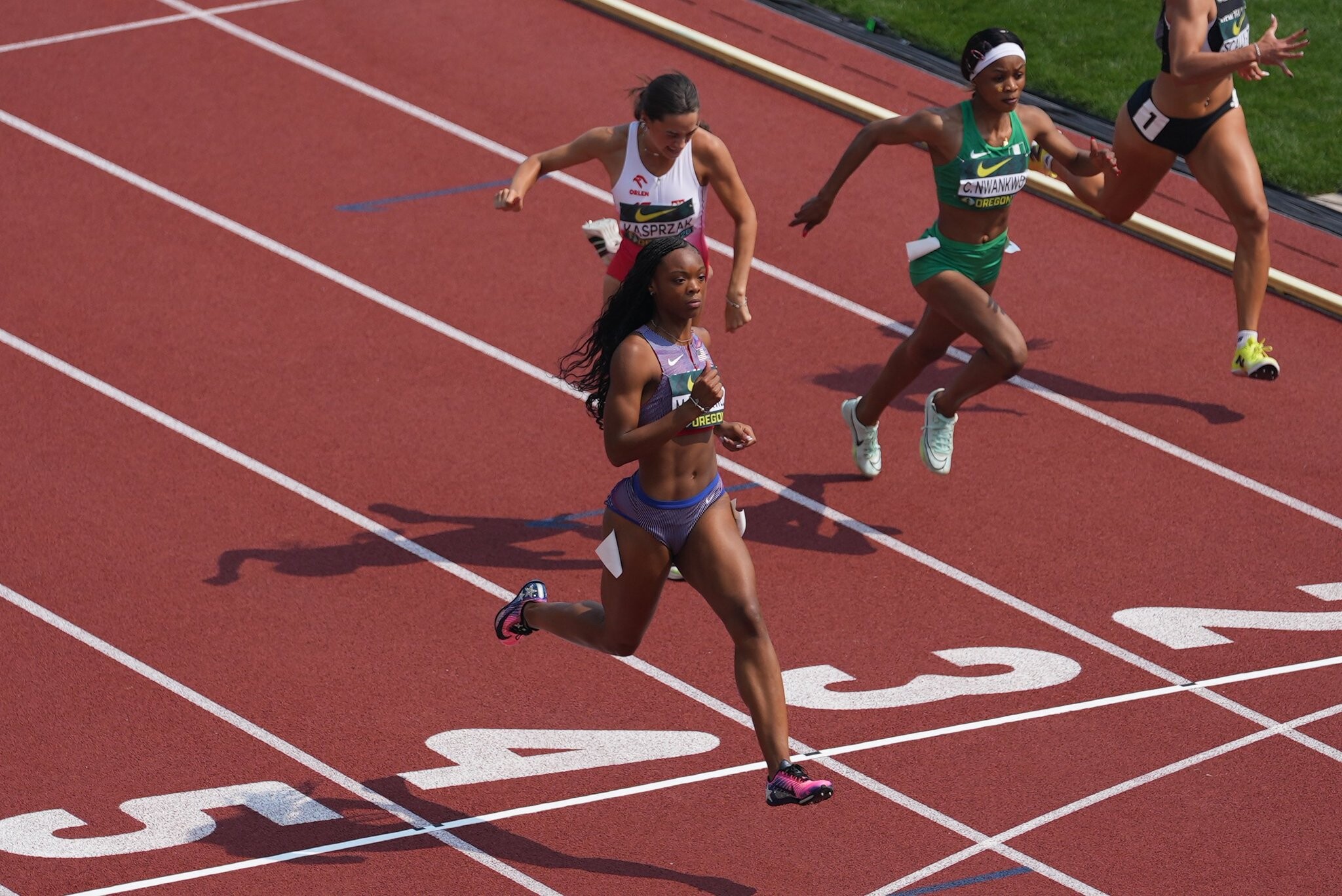
Mariah opened her campaign with an impressive victory in her opening heat, clocking 11.33 seconds to advance comfortably. Moments later, Mia matched her sister's performance by winning Heat 6 in 11.37 seconds, ensuring both Americans progressed safely to the semi-finals while looking well within themselves.
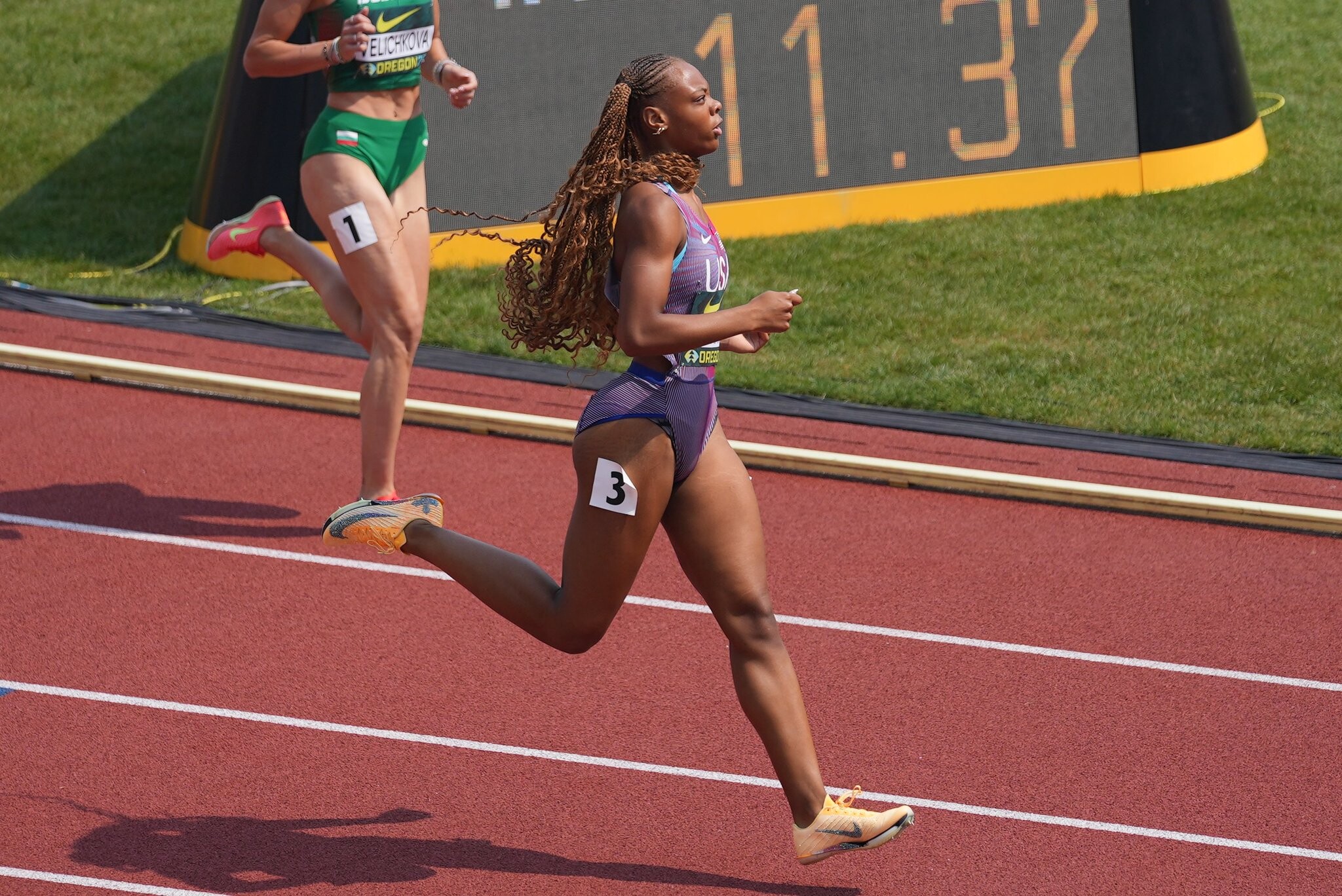
If their opening-round performances were convincing, the semi-finals were even more emphatic.
Mia Maxwell stamped her authority on the event by producing the fastest semi-final performance of the day, surging to victory in Heat 2 in a superb 11.13 seconds. Her sister, Mariah, also delivered when it mattered most, winning her place in the final with a composed run of 11.25 seconds in Heat 3.
The Maxwell sisters' remarkable performances ensured they both booked places in the championship final, strengthening their status as leading contenders for the world junior title. Their ability to deliver under pressure has made them one of the biggest stories of the championships, with the twins now just one race away from global glory.
Elsewhere in the semi-finals, Italy's Kelly Ann Maevane Doualla Edimo claimed victory in the opening semi-final, while Jamaica's Shanoya Mikalia Douglas emerged victorious in the third semi-final to complete an impressive lineup for the title showdown.
The women's 100m final will feature an exceptional field comprising Mia Maxwell (United States), Theianna-Lee Terrelonge (Jamaica), Shanoya Mikalia Douglas (Jamaica), Xenia Buri (Switzerland), Mariah Maxwell (United States), Kelly Ann Maevane Doualla Edimo (Italy), Emma Goretzka (Germany), Jady Emmanuel (Saint Lucia), and Lena Anochili (Germany).
With both Maxwell sisters in scintillating form and carrying the fastest performances into the final, anticipation is building for what promises to be one of the most exciting sprint races of the World Athletics U20 Championships.
by Erick Cheruiyot for My Best Runs.
Login to leave a comment

Eugene Welcomes the Future of Athletics as the 2026 World U20 Championships Get Underway
The global spotlight turns to Eugene, Oregon, today as the 2026 World Athletics U20 Championships officially get underway at the iconic Hayward Field, launching five days of elite competition that will showcase the sport's brightest young talents.
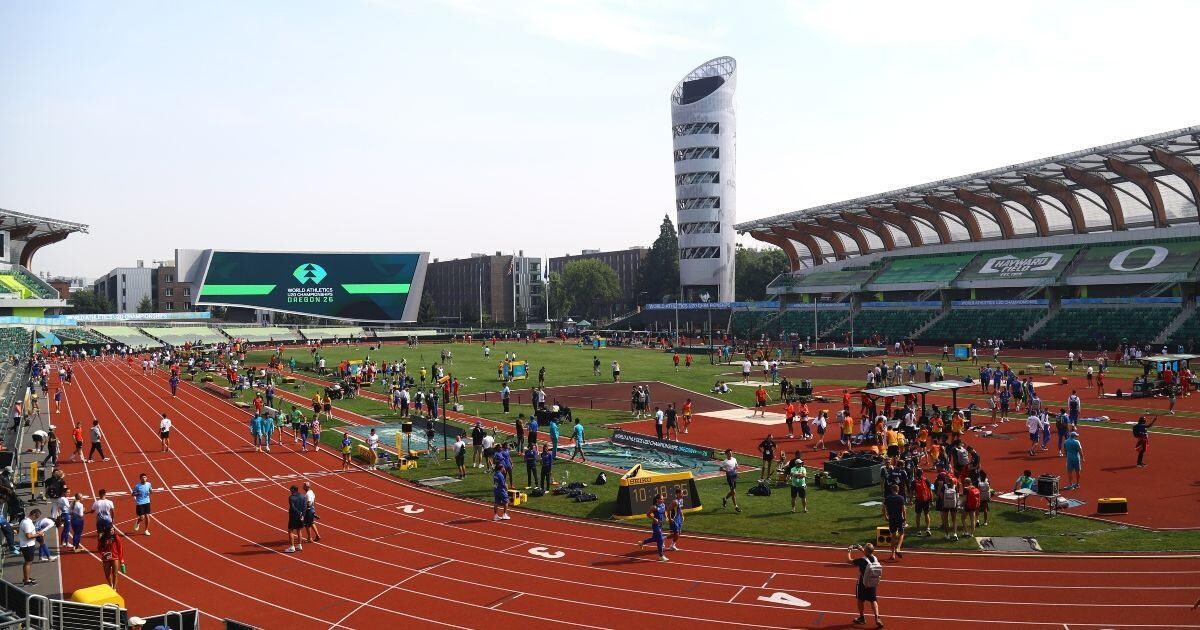
Running from August 5 to August 9, the 40th edition of the championships is the biggest in the event's history, bringing together more than 1,800 athletes representing 147 nations. For many of these rising stars, the championships mark the first major step toward future Olympic, World Championship, and Diamond League success.
The opening day immediately promises world-class action with three gold medals on the line. The women's 5,000m and men's 5,000m finals will test the endurance of the world's finest young distance runners, while the mixed 4×400m relay is expected to provide a thrilling conclusion to the day's competition as teams battle for the first relay title of the championships.
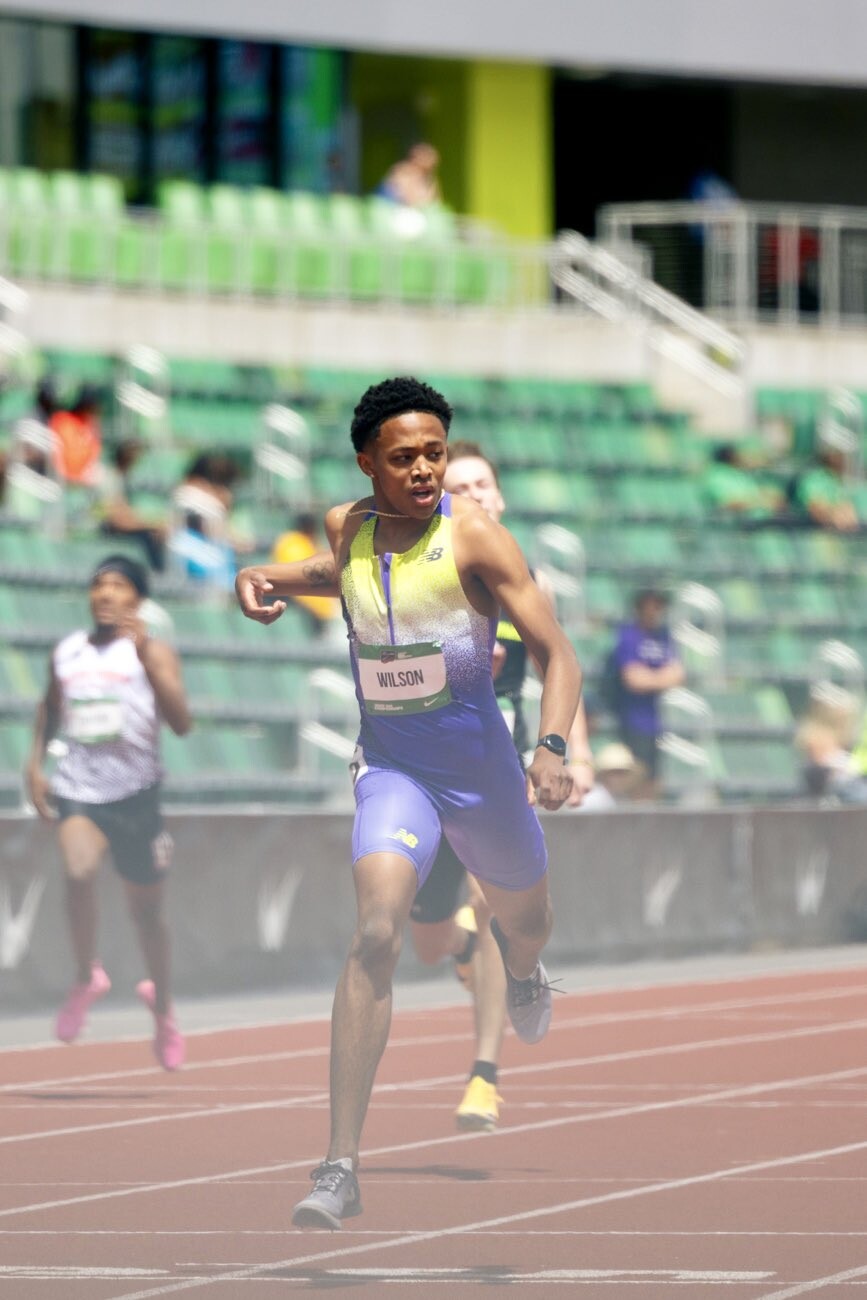
Several exciting athletes arrive in Eugene carrying high expectations. American sprint sensation Quincy Wilson will be one of the biggest attractions on home soil after establishing himself as one of the fastest young quarter-milers in the world. Fellow American Tate Taylor, the high school national record holder, will also be aiming to translate his remarkable speed into championship gold.
Jamaica's emerging sprint talent Shanoya Douglas enters the competition determined to challenge for the women's 200m title, while Kenya's Frankline Kibet will spearhead his country's pursuit of more distance-running success, continuing a tradition that has produced some of the greatest champions in athletics history.
Beyond the medals, the World U20 Championships have long served as the launching pad for future legends of the sport. Numerous Olympic and world champions first announced themselves on this very stage, making Eugene the perfect setting for another generation of athletes eager to leave their mark on the global scene.
Fans around the world will be able to follow every moment of the action through a range of broadcast partners, including Peacock in the United States, SuperSport across Sub-Saharan Africa, Eurovision Sport throughout Europe, CBC Gem in Canada, Seven Network in Australia, and World Athletics+ in eligible territories.
With national pride, championship titles, and the chance to announce themselves to the world at stake, the stage is set for five unforgettable days of athletics. As competition begins at the historic Hayward Field, the next generation of global stars is ready to write the opening chapter of what could become remarkable careers.
by Erick Cheruiyot for My Best Runs.
Login to leave a comment

Noah Lyles: A Decade of Sprinting Greatness from World U20 Star to Global Icon
Ten years ago, a fearless teenager stepped onto the track at the World U20 Championships in Bydgoszcz, Poland, and introduced himself to the athletics world with a performance that hinted at an extraordinary future. On that memorable stage, Noah Lyles captured the men's 100m title in 10.17 seconds before anchoring the United States to victory in the 4×100m relay, marking the beginning of one of the most remarkable sprinting careers of the modern era.
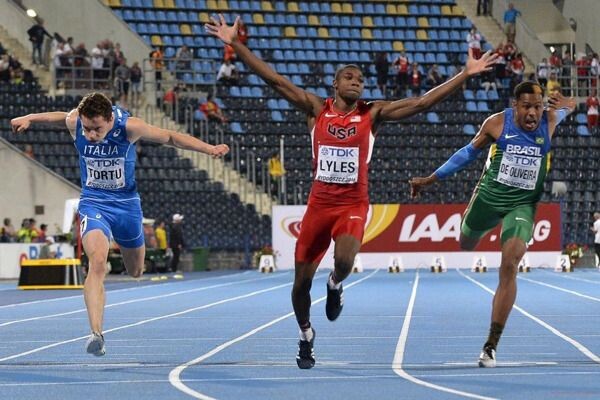
A decade later, that promising young talent has evolved into one of the greatest sprinters of his generation, building a legacy defined by championship success, consistency, and breathtaking speed.
Lyles has rewritten the American record books with a sensational 19.31 seconds over 200 metres, surpassing Michael Johnson's long-standing U.S. record and producing one of the fastest performances in history. The run firmly established him among the all-time greats in the event.
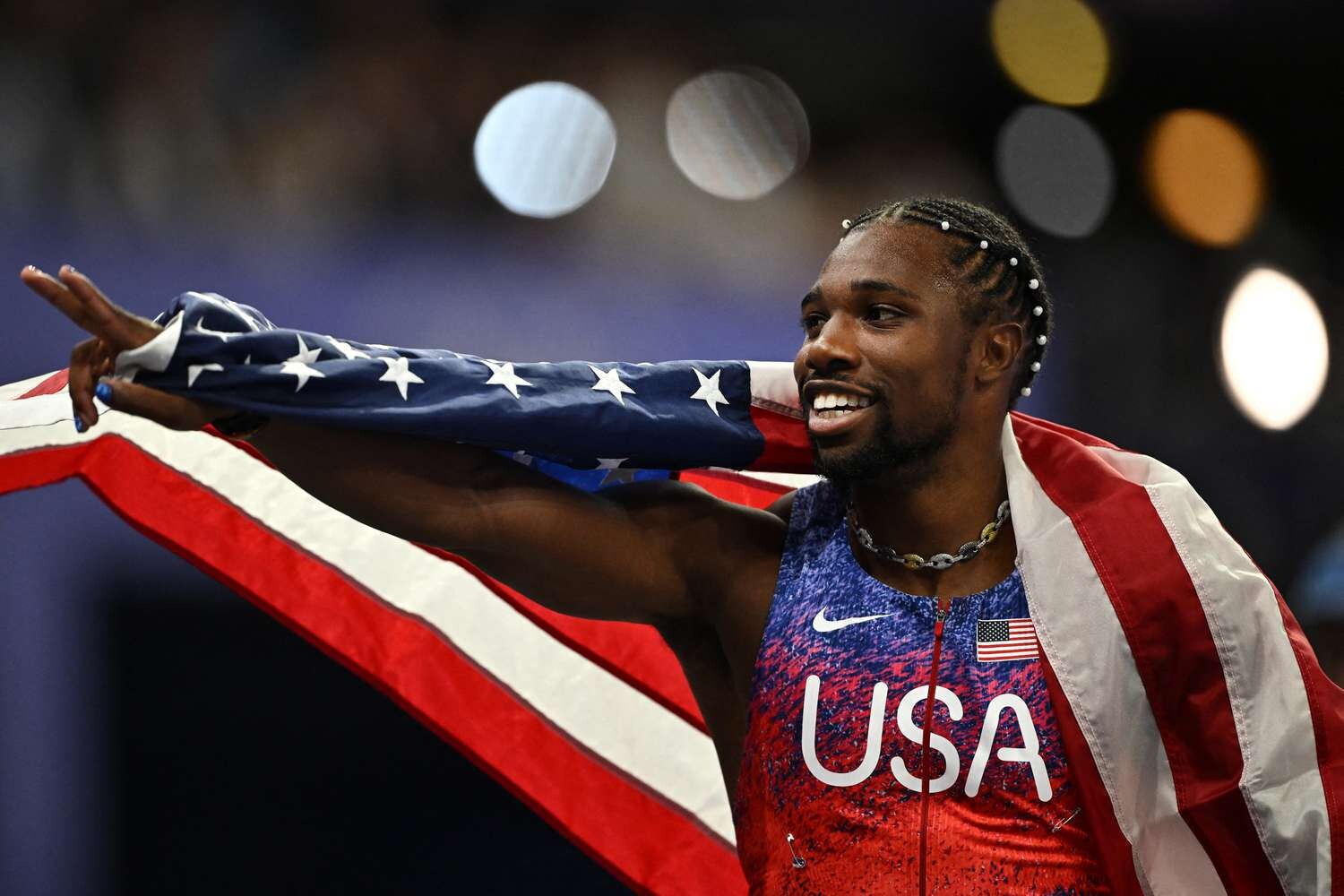
His greatest Olympic triumph came at the Paris 2024 Olympic Games, where he claimed the men's 100m gold medal in one of the closest finishes ever witnessed. Lyles crossed the line just 0.005 seconds ahead of the field, delivering one of the most dramatic victories in Olympic sprint history and cementing his place as the world's fastest man.
His dominance has extended across multiple World Athletics Championships, where he has amassed eight gold medals in the 100m, 200m, and 4×100m relay. Among those achievements, his remarkable streak of four consecutive world titles in the 200m stands as a testament to his sustained excellence and unrivalled consistency at the highest level.
Even after a decade at the top, Lyles continues to prove he remains the benchmark in global sprinting. Most recently, he successfully defended his U.S. men's 100m title, matching his lifetime best of 9.79 seconds to reaffirm that he is still one of the sport's most formidable competitors.
From a confident teenager announcing his arrival on the international stage in Poland to an Olympic champion, American record holder, and multiple-time world champion, Noah Lyles has transformed talent into an enduring legacy. His journey over the past ten years has inspired a new generation of athletes while redefining excellence in sprinting.
Ten years have passed since his breakthrough in Bydgoszcz, but for Noah Lyles, the pursuit of greatness is far from over. If anything, the next chapter promises to be just as compelling as the first.
by Erick Cheruiyot for My Best Runs.
Login to leave a comment
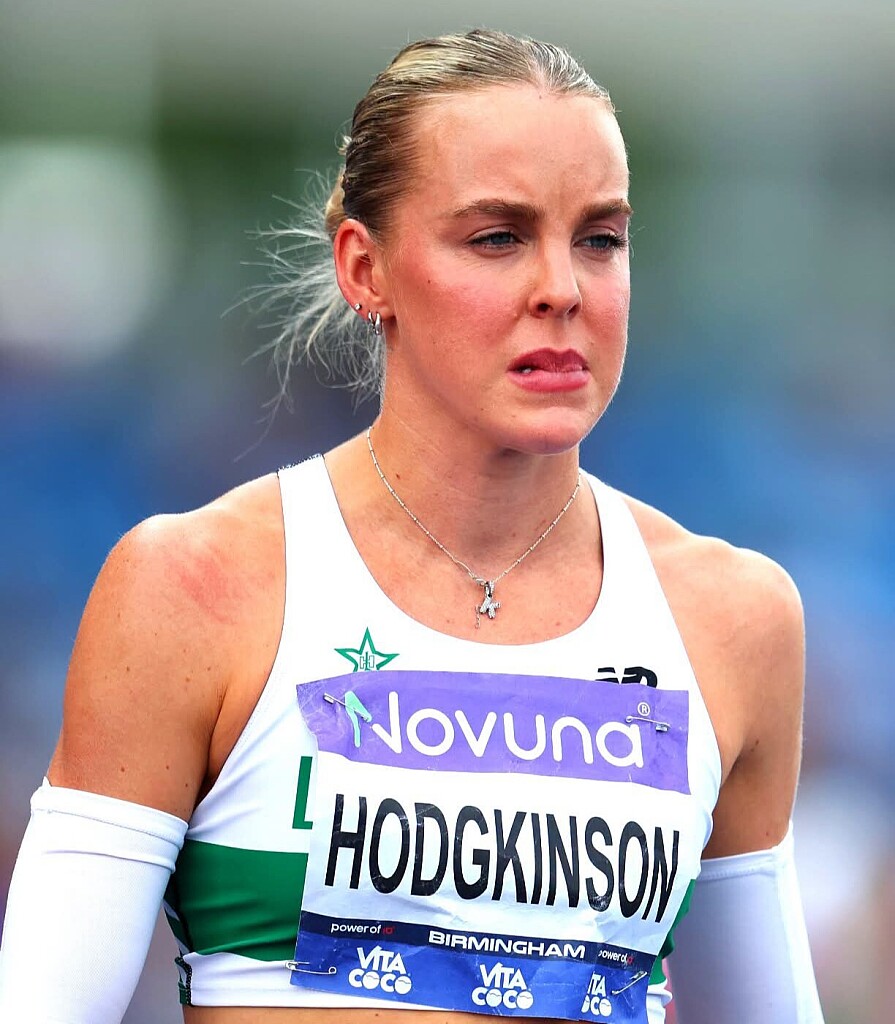
Keely Hodgkinson Maps Out Defining Three-Race Campaign as European Title Defence Takes Center Stage
Olympic champion Keely Hodgkinson is preparing for the most important phase of her 2026 season, with the British middle-distance star targeting success across three of the year's biggest competitions in what promises to be a defining championship campaign.
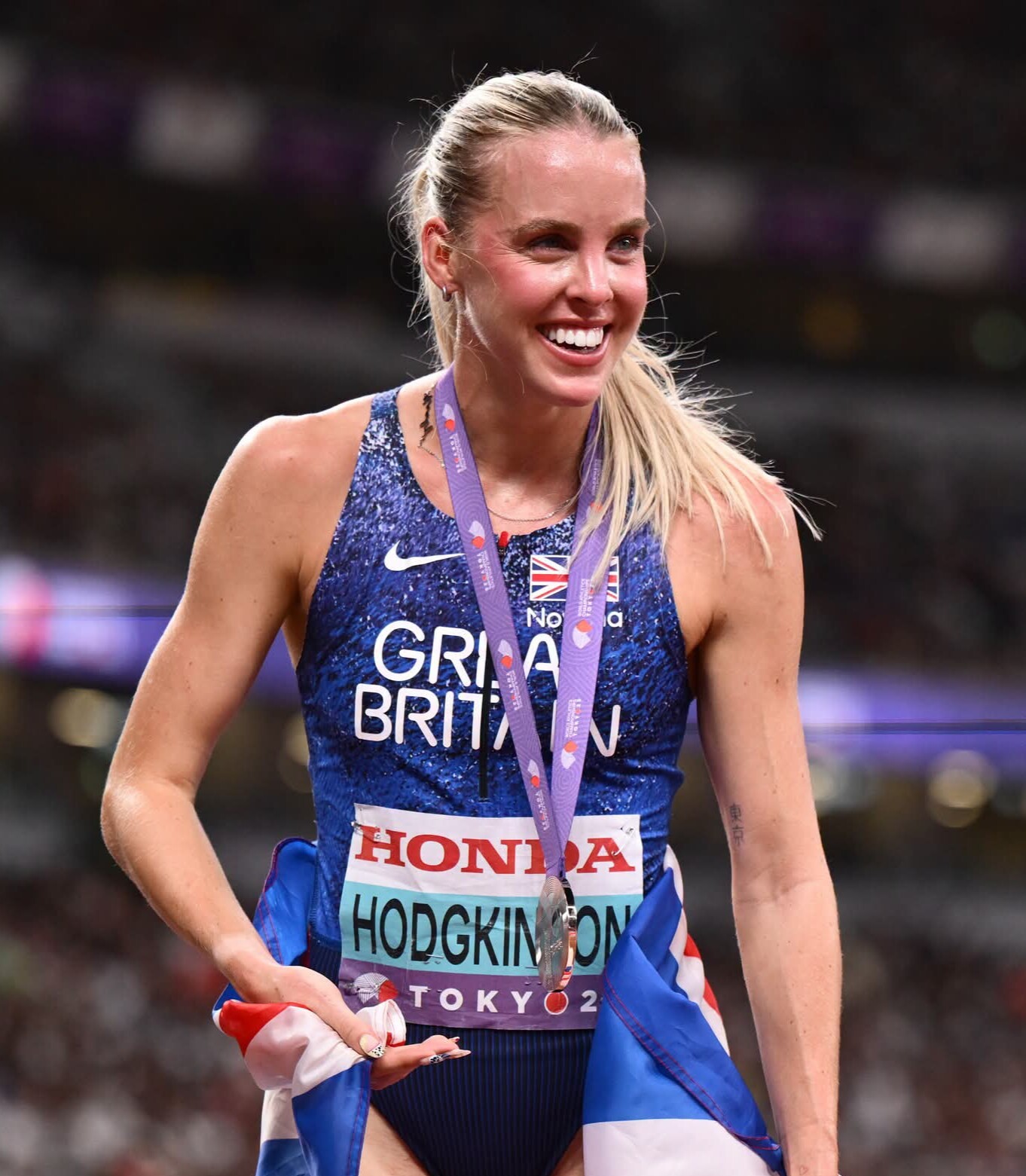
After making the strategic decision to skip the Glasgow 2026 Commonwealth Games, Hodgkinson has prioritized recovery and careful preparation to ensure she reaches peak form for the major championships that lie ahead. The move underlines her long-term ambition of adding more international titles to an already remarkable career.
Her first objective is the European Athletics Championships, which will be held from August 10–16 at Birmingham's Alexander Stadium. Competing in front of a home crowd, Hodgkinson will aim to successfully defend her women's 800 metres crown against one of the strongest fields assembled this season.
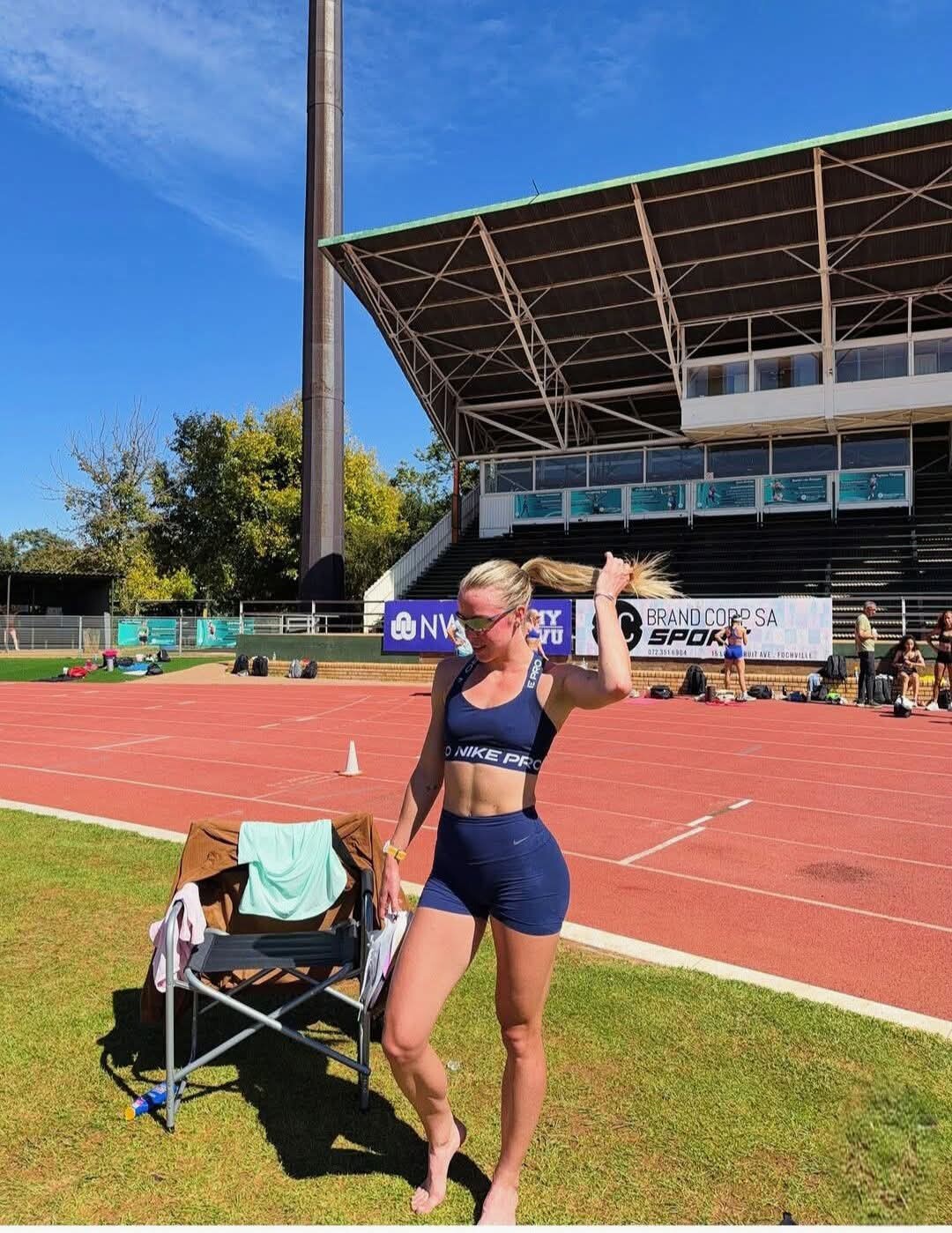
Among the leading challengers expected to contest the title are Switzerland's rising star Audrey Werro and Dutch world-class athlete Femke Bol, setting the stage for what could become one of the championship's most anticipated middle-distance races. With several of the world's elite lining up, the battle for European gold is expected to deliver a thrilling spectacle.
The focus will then shift to the Ultimate World Athletics Championships in Budapest, Hungary, from September 11–13. There, Hodgkinson will once again face the world's finest 800m specialists as she pursues another major international triumph on one of athletics' biggest stages. The championship represents another opportunity for the Olympic champion to reinforce her status as one of the dominant forces in women's middle-distance running.
Her season will conclude just days later at ATHLOS London on September 18, where she is set to headline the inaugural ATHLOS event outside the United States. The competition will bring together many of the world's top female athletes, with a lucrative $65,000 winner's prize adding further significance to an already prestigious meeting.
For Hodgkinson, the closing weeks of the season represent far more than a series of races. They are an opportunity to defend her European title, challenge for global glory in Budapest, and cap off an outstanding campaign with another memorable performance on home soil in London.
With three major events in little more than a month, all eyes will be on the British star as she embarks on a championship journey that could define her 2026 season and further cement her legacy among the world's greatest 800m runners.
by Erick Cheruiyot for My Best Runs.
Login to leave a comment

European Athletics Champioships
The27thEuropean Athletics Championshipswill be held from 10 to 16 August 2026 at theAlexander StadiuminBirmingham, United Kingdom.[1] This is the first time that a British city will have staged the European Athletics Championships although Birmingham has hosted many high-profile events, including the2007 European Athletics Indoor Championships, the2003and2018 IAAF World Indoor Championshipsand the2022 Commonwealth Games. Alexander Stadium was renovated between 2019 and...
more...
Golden Gate 10K/5K Double 8K Delivers Thrilling Competition and Spectacular Scenery in San Francisco
The iconic Golden Gate Bridge once again provided a breathtaking backdrop as runners gathered in San Francisco on August 2 for the 2026 Golden Gate 10K/5K Double 8K. Blessed with cool conditions and panoramic views from start to finish, the event attracted nearly 500 participants, producing a memorable day of competition across the Double 8K, Open 10K and Open 5K races.
According to race founder and director Bob Anderson, the event continued to grow in popularity, with nearly 500 athletes signing up for this year's edition. Anderson reported, "We had nearly 500 sign ups. People did really like it."

The featured Golden Gate Double 8K, a distinctive challenge that combines a 5K, a recovery break and a concluding 3K, once again delivered exciting racing. Anthony Cortes, 32, produced the standout performance of the day, storming to victory in a combined time of 26:31. Andy Vo, 25, secured second place in 28:37, while Tyler Jeppson, 47, completed the overall podium in 31:25. Ali Abdin, 44, crossed the line fourth in 35:20.
Caitlin Huang, 25, captured the women's title in 32:31, ahead of Stacy Chen, 27, who finished in 34:07. Veteran runner Betty G, 59, continued to demonstrate remarkable consistency by claiming third in 37:04, while 17-year-old Piper Sovik rounded out the top four in 40:53.
The age-group competition showcased impressive performances across every generation. Tyler Jeppson led the men's 40-49 division with 31:25, Heath Rickling, 52, won the men's 50-59 category in 1:02:46, David Boss, 63, topped the men's 60-69 division in 36:54, while Cheryl Charleson, 70, claimed the men's 70+ title in 1:16:50.

Among the women, Huyen Kreutzer, 45, won the 40-49 division in 47:32, Betty G added the women's 50-59 crown to her overall podium finish with 37:04, Diane Gifford, 62, captured the 60-69 title in 43:43, while Cheryl Charleson also secured the women's 70+ division in 1:16:50.
The Open 10K produced one of the closest finishes of the morning. Michel Arlinghaus, 24, edged the field in 42:20, narrowly defeating Mateusz Dembski, 35, who crossed the line just nine seconds later in 42:29. Sixty-three-year-old Keith Hedlund impressed with an outstanding 42:31 to finish third overall, while Ben Kubany, 43, placed fourth in 42:59.
Ashleigh Fehrenbach, 37, led the women's race with a winning time of 41:12, followed by Lan Clayton, 58, in 46:10, Nivy Kani, 25, in 48:30, and Alicia Robert, 32, in 50:21.
The age-group titles added further depth to the competition. Ben Kubany claimed the men's 40-49 category in 42:59, Carlos Arredondo, 51, won the men's 50-59 division in 48:05, Keith Hedlund completed a memorable double by taking the men's 60-69 title with 42:31, while Dennis Boyle, 72, won the men's 70+ category in 1:18:41.
On the women's side, Angeles Morales, 42, topped the 40-49 division in 53:37, Lan Clayton added the women's 50-59 title with 46:10, Sheila Lyzwa, 63, won the women's 60-69 category in 1:05:03, while Suzanne Koonce, 74, claimed the women's 70+ title in 54:02.
The Open 5K also delivered exciting racing. Barrett Wade, 49, claimed the men's title in 18:31, holding off Kris Croome, 45, who finished second in 18:46. Mark Eger, 54, completed the podium in 23:04, while Blake Jackson, 40, finished fourth in 25:28.
One of the day's most impressive performances came from 15-year-old Taylor Synnott, who surged to the women's title in 18:34, finishing just three seconds behind the overall men's winner. Seventeen-year-old Sofia Kiyama placed second in 21:48, fellow teenager Kiki Boukas, 15, finished third in 21:57, while 16-year-old Amina Zegar took fourth in 22:44, highlighting the strength of the next generation of distance runners.
The 5K age-group champions included Barrett Wade in the men's 40-49 division (18:31), Mark Eger in the men's 50-59 category (23:04), Shreekanth Karwande, 73, in the men's 70+ division (30:45), Kellie Ward, 49, in the women's 40-49 category (29:58), Katherine Swanson, 56, in the women's 50-59 division (25:06), and Marilee Diaz, 61, in the women's 60-69 category (28:43). There were no finishers recorded in the women's 70+ division.
Following another highly successful edition, the Golden Gate 10K/5K Double 8K will return on Sunday, August 1, 2027, in San Francisco. The event will once again feature the signature Double 8K, alongside the traditional 10K and 5K races. Starting from historic Crissy Field near the Presidio, the scenic course offers runners uninterrupted views of the Golden Gate Bridge for more than 80 percent of the route as it winds through the spectacular Golden Gate National Recreation Area.
The unique Double 8K format—5K, a recovery break, followed by a 3K—will once again headline the event. Every finisher will receive a commemorative medal, while participants will also take home an official event shirt and logo tote bag. The men's and women's Double 8K champions will each receive $100 in prize money, with trophies also awarded to the race winners.
Blending elite competition, inspiring masters performances, rising young talent and one of the most spectacular race settings in the United States, the Golden Gate 10K/5K Double 8K continues to strengthen its reputation as one of California's premier road running events, with another memorable edition already awaiting runners in 2027.
by Erick Cheruiyot for My Best Runs.
Login to leave a comment

Golden Gate 10k/5k DOUBLE 8K
The Golden Gate courses offers unparalleled views of the Golden Gate Bridge for more than 80% of the way! The course will begin at historic Crissy Field near the Presidio of San Francisco. Runners will enjoy the gorgeous vistas of the Golden Gate National Recreation Area. We are offering three races: Golden Gate 10K and 5K (run/walk) and Golden Gate...
more...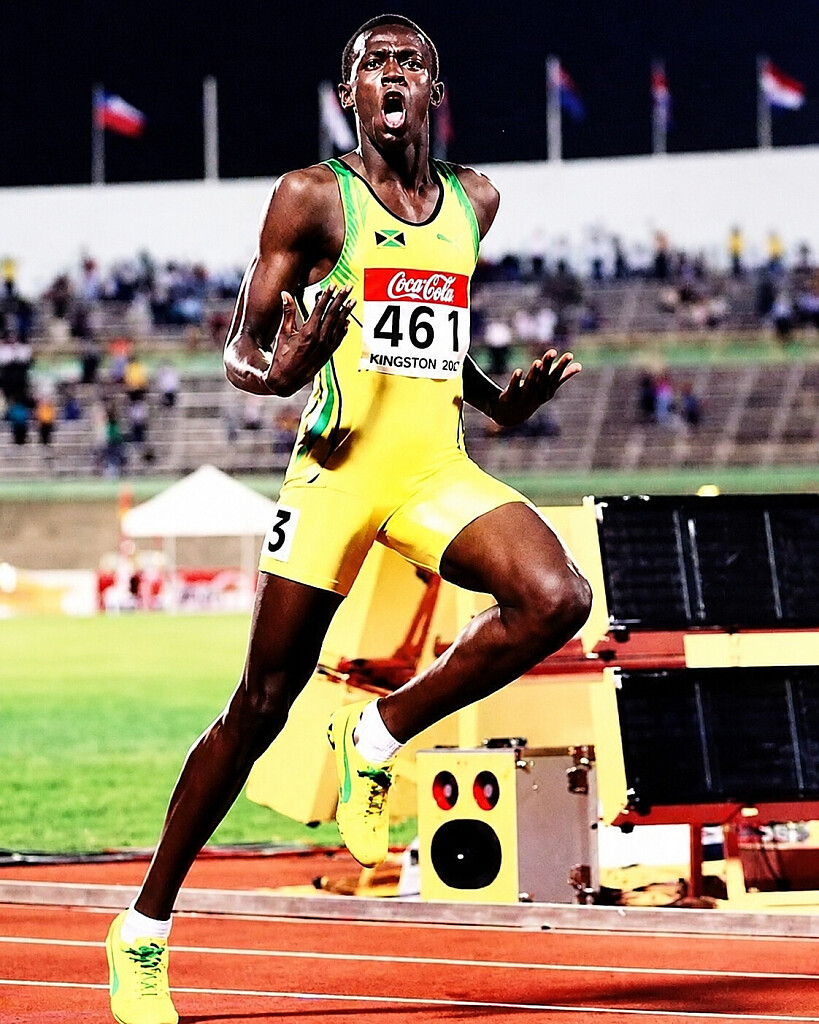
Where Greatness Begins: The Day a 15-Year-Old Usain Bolt Changed Sprinting Forever
Long before he became the fastest man in history, before the Olympic gold medals, world records, and global superstardom, Usain Bolt was simply a gifted teenager with extraordinary speed and limitless potential. In 2002, on the track at Kingston's National Stadium in Jamaica, the world witnessed the first chapter of a story that would forever change athletics.
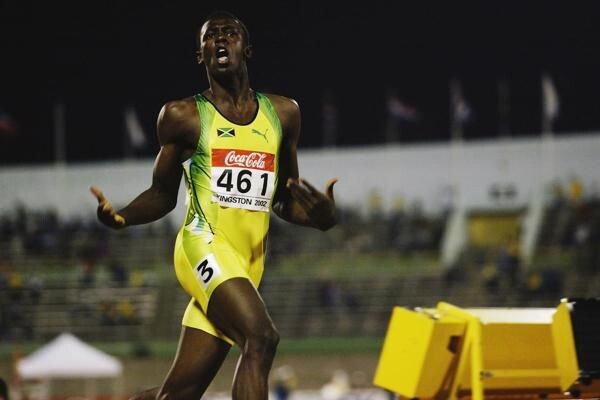
At just 15 years old, Bolt lined up for the men's 200 metres at the World Junior Championships with the weight of expectation resting on young shoulders. Competing before a passionate home crowd, the Jamaican prodigy produced a performance that instantly captivated the athletics world. Crossing the finish line in 20.61 seconds, he became the youngest athlete ever to win the men's 200m title at the championships.
It was far more than a gold medal. It was the moment the world realised that a once-in-a-generation talent had arrived.
Bolt's victory in Kingston marked the beginning of one of the greatest careers in sporting history. Over the years that followed, he rewrote the record books, dominated the Olympic Games and World Championships, and transformed sprinting into a global spectacle through his breathtaking speed, infectious personality, and unrivalled confidence. His legacy continues to inspire young athletes across the globe, many of whom dream of following the same path he once began as a teenager.

This week, that dream comes alive once again as the World Athletics U20 Championships take centre stage at the iconic Hayward Field in Eugene, Oregon. The venue has already witnessed the birth of future superstars. In 2014, it was where Britain's Dina Asher-Smith and Uganda's Joshua Cheptegei captured their first global titles, launching careers that would later produce world championships, Olympic medals, and lasting legacies in athletics.
Twelve years later, another generation arrives in Eugene hoping to create its own defining moment.
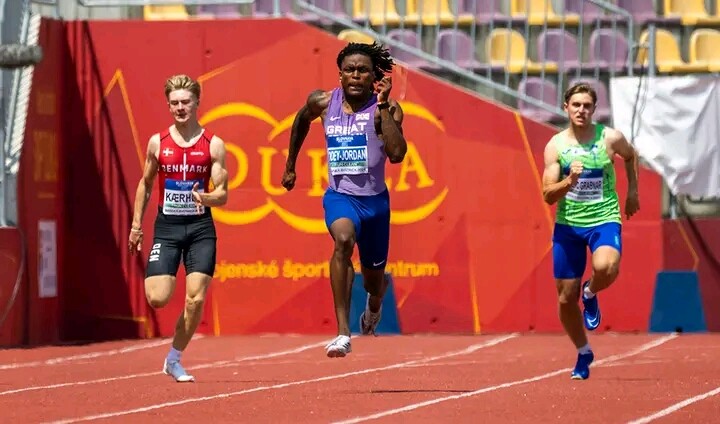
Among the brightest young talents is Great Britain's Jake Odey-Jordan, the 200m bronze medallist from Lima who now owns the European U20 100m record after an astonishing 10.01-second performance. He enters the championships eager to build on his growing reputation as one of Europe's most exciting young sprinters.
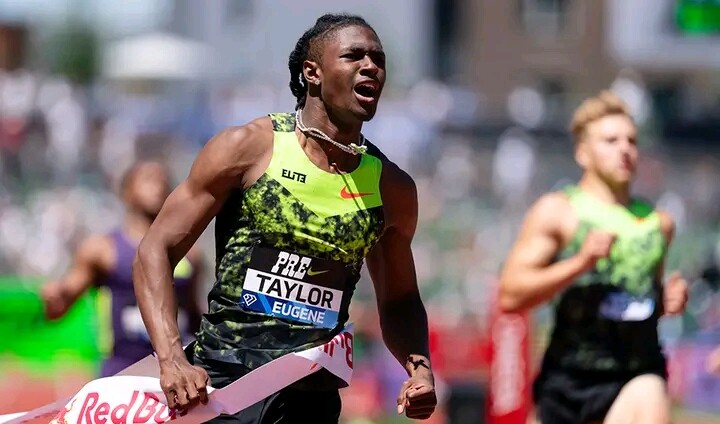
The United States will look to Tate Taylor, who has already made history as the first American high school athlete to break the 20-second barrier for the 200 metres. Fresh from a Diamond League victory in a sensational 19.75 seconds, he arrives in Eugene carrying the momentum of one of the most remarkable junior seasons ever recorded.
Jamaica, the nation that introduced the world to Usain Bolt, will once again have high hopes through Shanoya Douglas. The talented sprinter has established herself as one of the championship's leading contenders after producing lifetime bests of 10.98 seconds for the 100m and 22.11 for the 200m this season.
History has repeatedly shown that the World U20 Championships are far more than a junior competition. They are often the first chapter in the careers of future Olympic champions, world record holders, and global icons. Every generation arrives with ambitious dreams, but only a select few leave having announced themselves to the world.
No one can say with certainty whether the next Usain Bolt will emerge this week. Greatness cannot be predicted, and legends are never manufactured. Yet every legendary career begins with a single breakthrough performance.
For Bolt, that defining moment came in Kingston in 2002.
Now, under the famous lights of Hayward Field, another group of gifted teenagers stands ready to chase history. Somewhere among them could be the next athlete whose name will inspire the world for years to come.
by Erick Cheruiyot for My Best Runs.
Login to leave a comment
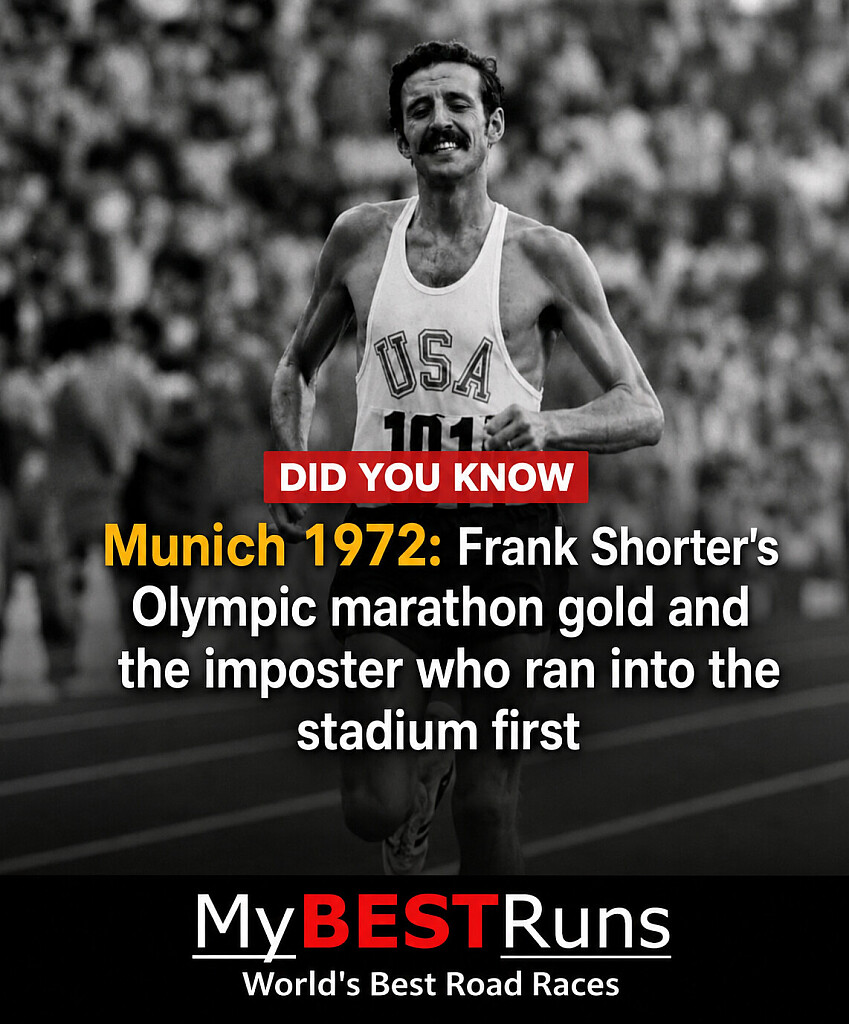
The Olympic Marathon's Most Bizarre Finish: When Frank Shorter's Greatest Triumph Was Almost Stolen
The men's marathon at the 1972 Munich Olympic Games produced one of the most extraordinary and misunderstood moments in Olympic history—a finish so surreal that even the man who won the gold medal was briefly denied the celebration he had earned.
American distance star Frank Shorter had produced a masterclass over the 42.195-kilometre course. Breaking away from the field, he built a commanding lead of more than a minute and, with just one kilometre remaining, victory was all but certain. As he approached the Olympic Stadium, he could already hear the roar of nearly 80,000 spectators awaiting the arrival of the marathon champion.
But inside the stadium, something astonishing had already happened.
A young man wearing a grey tracksuit burst onto the marathon course just before the entrance tunnel. His name was Norbert Sudhaus, a West German student with no connection to the race. Blending into the finish route, he sprinted into the stadium ahead of the real leader and completed what appeared to be the final lap of the Olympic marathon.
The unsuspecting crowd erupted.
Believing they were witnessing the arrival of the Olympic champion, tens of thousands rose to their feet, cheering wildly as the imposter crossed the track. For several chaotic moments, confusion reigned. Security officials and race organisers eventually realised the deception, removed Sudhaus from the track, and hurried to restore order.
Then, about a minute later, the true champion finally emerged.
Frank Shorter entered the stadium expecting the deafening ovation reserved for an Olympic marathon winner. Instead, he was met by puzzled silence before the spectators slowly realised their mistake and began applauding again. The emotional climax of one of the greatest victories in American distance running had been unintentionally stolen by an unexpected intruder.
Despite the bizarre interruption, nothing could erase what Shorter had accomplished on the roads of Munich.
He crossed the finish line to claim Olympic gold, becoming the first American to win the Olympic marathon since 1908. His triumph inspired millions across the United States, igniting a running boom that transformed the marathon from a niche endurance event into one of the world's most popular races. Countless recreational runners, road races, and marathon events that flourished during the 1970s can trace part of their inspiration back to Shorter's unforgettable victory.
Yet history remembers an extraordinary twist.
One of the greatest marathon performances ever seen concluded not with the uninterrupted roar of a grateful stadium, but with a moment of bewilderment. The final 400 metres of Frank Shorter's Olympic masterpiece were overshadowed by a prank that fooled an entire stadium and created one of the strangest finishes the Olympic Games have ever witnessed.
More than five decades later, the image remains unforgettable—a champion running toward immortality while the loudest applause had already been given to someone who was never part of the race at all.
by Erick Cheruiyot for My Best Runs.
Login to leave a comment
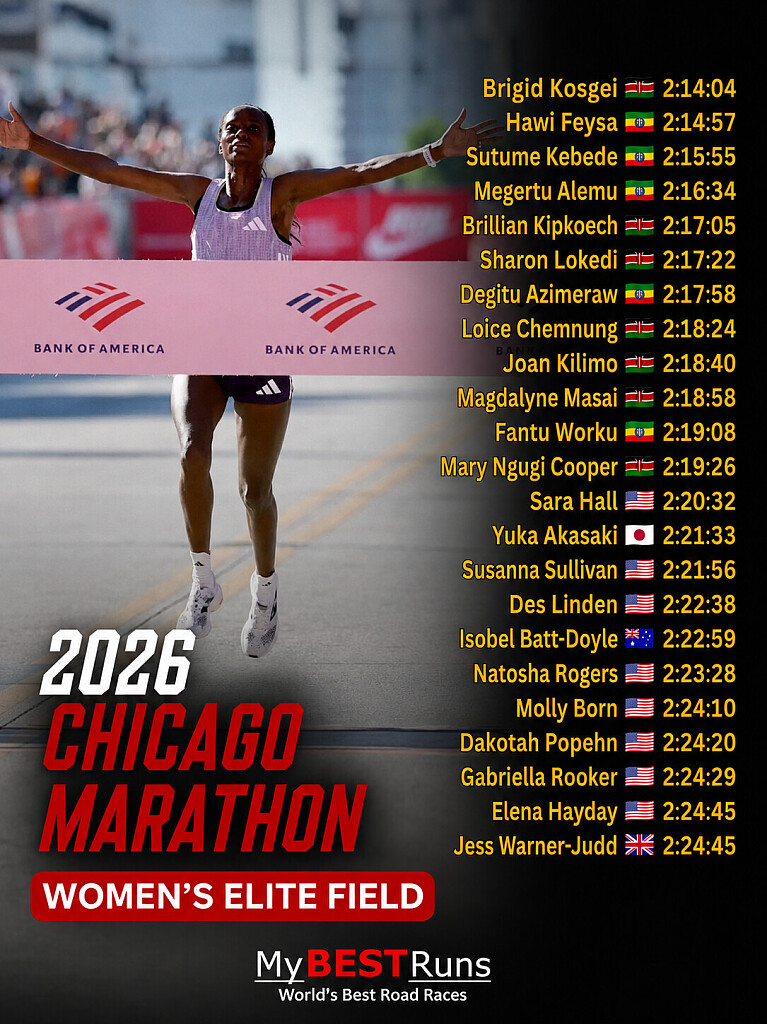
Chicago Marathon Unveils One of the Strongest Women's Elite Fields in Race History
The world's finest women marathoners will converge in Chicago, Illinois, on Sunday, October 11, for what promises to be one of the most competitive races in the history of the 2026 Bank of America Chicago Marathon. Returning to defend her Chicago Marathon title is Ethiopia's Hawi Feysa, who produced a breakthrough victory in last year's race. With a personal best of 2:14:57, Feysa returns carrying the confidence of a reigning champion and will be determined to become the first woman in several years to successfully defend the Chicago Marathon crown. Her title defense adds another compelling storyline to what is already one of the strongest women's marathon fields ever assembled in Chicago.
Adding even greater star power to the race is former world record holder Brigid Kosgei, whose outstanding personal best of 2:14:04 remains one of the fastest marathon performances in history. The Kenyan legend leads an exceptional field packed with proven champions, major marathon winners, and rising stars, ensuring every mile will be fiercely contested.
The depth of this year's lineup is nothing short of extraordinary. Twelve athletes boast personal bests under 2:20, highlighting the exceptional quality of the field. Rarely has Chicago welcomed such an impressive collection of elite marathon talent, making this one of the most competitive women's races in the event's history.
Ethiopia arrives with a formidable squad led by defending champion Hawi Feysa, alongside Sutume Kebede (2:15:55), Megertu Alemu (2:16:34), Degitu Azimeraw (2:17:58) and Fantu Worku (2:19:08). Together, they represent one of the strongest national teams in the race, with each athlete capable of challenging for victory.

Kenya counters with an equally impressive lineup headed by Brigid Kosgei, while Brillian Kipkoech, Sharon Lokedi, Loice Chemnung, Joan Kilimo, Magdalyne Masai, and Mary Ngugi Cooper add further strength to a nation renowned for producing world-class marathon champions.
The international challenge is equally compelling. The United States fields a strong contingent featuring Sara Hall, Susanna Sullivan, Des Linden, Natosha Rogers, Molly Born, Dakotah Popehn, Gabriella Rooker, and Elena Hayday, while Japan's Yuka Akasaki, Australia's Isobel Batt-Doyle, and Great Britain's Jess Warner-Judd complete a truly global field capable of producing surprises.
With defending champion Hawi Feysa seeking back-to-back victories, former world record holder Brigid Kosgei aiming to add another World Marathon Major title to her illustrious career, and 12 women with sub-2:20 personal bests on the start line, Chicago on October 11 is set to host one of the most anticipated women's marathon races of the year. Fans can expect a thrilling contest that could produce another unforgettable chapter in the rich history of the Chicago Marathon.
by Erick Cheruiyot for My Best Runs.
Login to leave a comment

Bank of America Chicago
Running the Bank of America Chicago Marathon is the pinnacle of achievement for elite athletes and everyday runners alike. On race day, runners from all 50 states and more than 100 countries will set out to accomplish a personal dream by reaching the finish line in Grant Park. The Bank of America Chicago Marathon is known for its flat and...
more...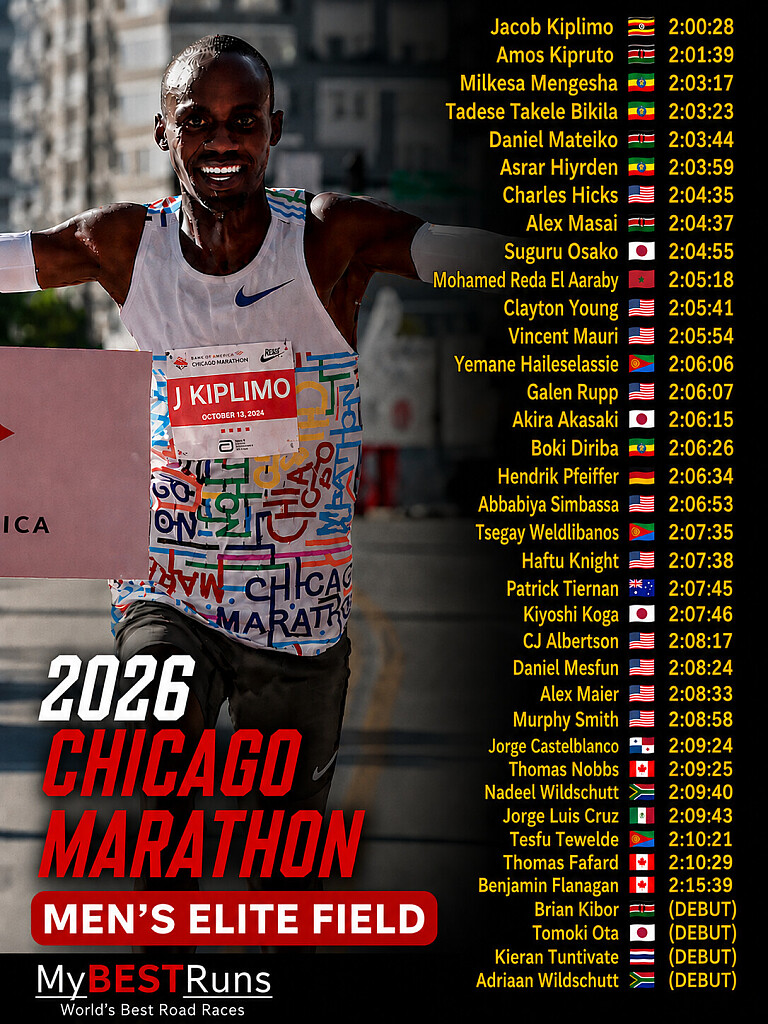
Jacob Kiplimo Leads Historic Men's Lineup as 2026 Chicago Marathon Unveils a World-Class Elite Field
The 2026 Bank of America Chicago Marathon has assembled one of the deepest and most competitive men's elite fields in the event's history, with Ugandan superstar Jacob Kiplimo returning to the Windy City to headline a remarkable international lineup capable of producing another unforgettable day of marathon racing.
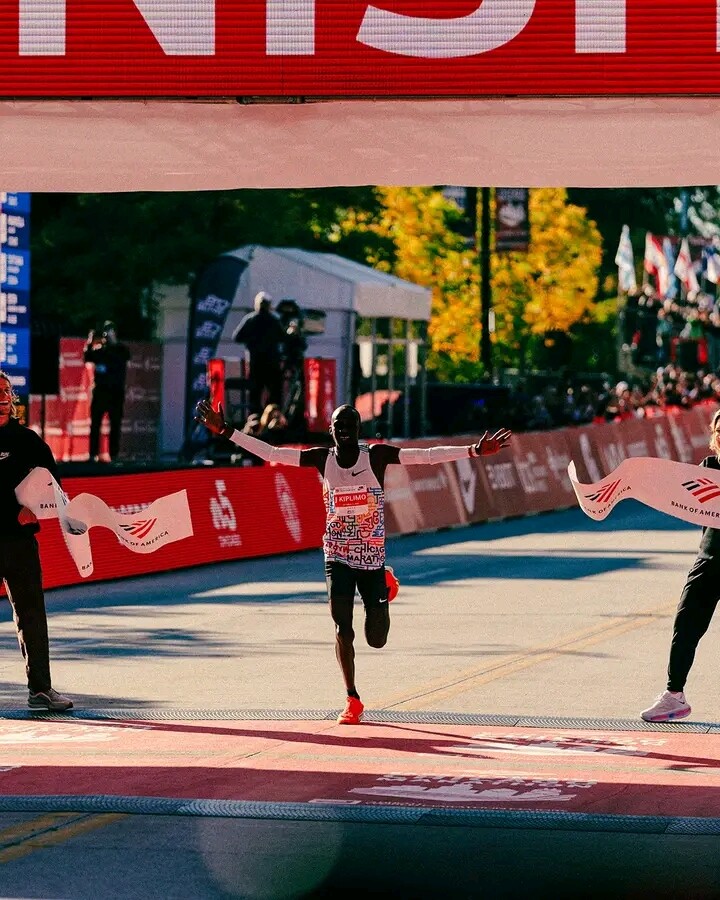
Kiplimo, who owns a sensational personal best of 2:00:28, enters as the fastest man in the field and one of the world's most exciting distance runners. After a spectacular marathon breakthrough, the Ugandan star returns to Chicago carrying the hopes of delivering another historic performance on one of the fastest marathon courses on the planet.
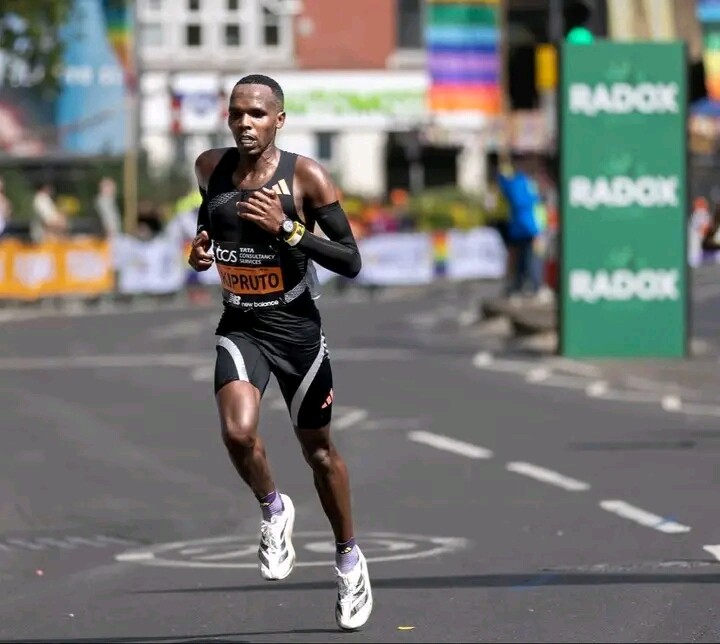
Standing between Kiplimo and victory is an exceptional collection of proven champions and rising stars. Kenya's Amos Kipruto (2:01:39) brings Olympic pedigree and world-class experience, while Ethiopia's Milkesa Mengesha (2:03:17), Tadese Takele Bikila (2:03:23), and Asrar Hiyrden (2:03:59) strengthen Ethiopia's challenge. Kenya will also be represented by the rapidly improving Daniel Mateiko (2:03:44) and Alex Masai (2:04:37), adding even more firepower to an already stacked front pack.
Japan fields an impressive trio of Suguru Osako (2:04:55), Akira Akasaki (2:06:15), and Kiyoshi Koga (2:07:46), while Morocco's Mohamed Reda El Aaraby, Eritrea's Yemane Haileselassie and Tsegay Weldlibanos, Germany's Hendrik Pfeiffer, Australia's Patrick Tiernan, Panama's Jorge Castelblanco, Canada's Thomas Nobbs, Thomas Fafard, and Benjamin Flanagan, South Africa's Nadeel Wildschutt, Mexico's Jorge Luis Cruz, and Ethiopia's Boki Diriba further underline the race's global quality.
Several highly anticipated marathon debuts will also add intrigue to this year's race. Kenya's Brian Kibor, Japan's Tomoki Ota, Thailand's Kieran Tuntivate, and South Africa's Adriaan Wildschutt are all set to tackle the classic 42.195-kilometre distance for the first time, bringing fresh excitement and unpredictability to an already loaded field.
The United States will also have a strong presence, led by Charles Hicks, Clayton Young, Vincent Mauri, Abbabiya Simbassa, Haftu Knight, CJ Albertson, Daniel Mesfun, Alex Maier, Murphy Smith, and marathon legend Galen Rupp, giving home fans plenty of athletes to cheer throughout the race.
With multiple athletes boasting personal bests under 2:04, an outstanding mix of established marathon champions and fearless debutants, and Chicago's reputation for producing exceptionally fast times, the ingredients are in place for one of the greatest marathon contests of 2026.
All eyes may be on Jacob Kiplimo, but with such extraordinary depth from across the globe, the battle for the Chicago Marathon crown promises to be one of the highlights of the international road racing season.
by Erick Cheruiyot for My Best Runs.
Login to leave a comment
Bank of America Chicago
Running the Bank of America Chicago Marathon is the pinnacle of achievement for elite athletes and everyday runners alike. On race day, runners from all 50 states and more than 100 countries will set out to accomplish a personal dream by reaching the finish line in Grant Park. The Bank of America Chicago Marathon is known for its flat and...
more...
From Shark Attack Survivor to New York City Marathon Finisher: Ali Truwit's Extraordinary Journey of Courage and Resilience
Some victories are measured by finish times. Others are defined by the obstacles overcome simply to reach the starting line.
For American Paralympic swimmer Ali Truwit, completing the New York City Marathon represented far more than covering 26.2 miles. It was the culmination of an extraordinary journey of survival, resilience, and unwavering determination that began with a life-altering shark attack just two years earlier.
On a crisp November morning in 2025, Truwit crossed the iconic finish line wearing a carbon-fibre running blade, fulfilling a promise she had made while recovering in a hospital bed after losing her lower left leg. The emotional milestone marked another remarkable chapter in one of the most inspiring comeback stories in modern sport.
The road to that unforgettable finish began only days after Truwit celebrated a major personal achievement. In May 2023, she completed her first marathon in Copenhagen alongside her mother. Just ten days later, while enjoying a graduation trip to Turks and Caicos with former Yale swimming teammate Sophie Pilkinton, tragedy struck.
While the pair were snorkelling, a shark attacked Truwit, severely injuring her left leg. Displaying remarkable courage, the two swam approximately 55 metres back to their boat, where Pilkinton—then a medical student—quickly applied a tourniquet that stopped the bleeding and ultimately saved Truwit's life.
Doctors were forced to amputate her lower left leg on her 23rd birthday.
Even in the darkest moments of recovery, Truwit's determination never disappeared. Reflecting on having recently completed her first marathon, she joked with one of the first responders that at least she had managed to run a marathon before the attack. The responder's simple but powerful reply would remain with her throughout rehabilitation: "You'll run another one."
Those words became a source of hope during the long and demanding road back.
Only weeks after surgery, Truwit began learning to walk on a prosthetic limb before gradually returning to the swimming pool. The process was anything but straightforward. The water that had once been her sanctuary became a source of painful memories, yet she refused to allow fear to define her future.
Her relentless work ethic soon produced extraordinary results.
Less than 16 months after the attack, Truwit represented the United States at the Paris 2024 Paralympic Games, producing a sensational performance to claim both silver and bronze medals. Standing on the Paralympic podium was a powerful reminder of how far she had come in such a short period, and she dedicated those achievements to everyone who had helped save her life.
Still, another dream remained unfinished.
The New York City Marathon carried deep personal significance. It was not merely another endurance event but a symbolic return to the city where her life had changed forever. On November 2, 2025, she lined up in Staten Island accompanied by 13 family members and close friends, all proudly representing her nonprofit foundation, Stronger Than You Think. Among them was Pilkinton, the friend whose quick thinking had preserved her life on that unforgettable day in the Caribbean.
Together, they covered every mile of the marathon before celebrating an emotional finish that Truwit later described as being "over the moon."
Completing a marathon on a carbon-fibre running blade presents challenges far beyond those faced by able-bodied runners. The prosthetic demands greater strength from the hips, core, and remaining leg while requiring exceptional balance, coordination, and endurance. Truwit's preparation combined months of disciplined training, patience, and mental resilience as she effectively taught herself how to run again.
Her story extends well beyond medals and marathon finishes.
Inspired by her own recovery, Truwit founded Stronger Than You Think, a nonprofit organisation dedicated to helping individuals overcome physical and financial barriers following limb loss. Recognising that sports prosthetics can cost tens of thousands of dollars and are often not covered by insurance, the foundation provides financial assistance for prosthetic devices, supports water-safety education, and promotes opportunities within Paralympic sport.
The organisation has already helped provide more than 11 prosthetic limbs, delivered nearly $200,000 in direct support, and funded over 4,000 hours of water-safety lessons benefiting more than 700 young people.
Throughout her journey, Truwit has remained refreshingly honest about the emotional challenges that continue to accompany recovery. She has openly acknowledged that healing is an ongoing process and that grief can still come in waves. Rather than portraying an effortless comeback, she has demonstrated that resilience is built through persistence, even on the hardest days.
Her remarkable transformation resonates far beyond elite sport. While few people will ever experience the trauma she endured, countless runners and athletes understand the frustration of injury, disappointment, or rebuilding after adversity. Truwit's journey serves as a powerful reminder that recovery is rarely linear and that courage is often measured by the willingness to keep moving forward despite uncertainty.
Now looking ahead to the Los Angeles 2028 Paralympic Games, Truwit continues to redefine what is possible. She is no longer known simply as the swimmer who survived a shark attack. She has become a Paralympic medallist, marathon finisher, advocate, and symbol of resilience whose story continues to inspire athletes around the world.
Her journey proves that while life can change in an instant, so too can the strength of the human spirit. Sometimes the greatest triumph is not returning to the person you once were, but discovering someone even stronger than you ever imagined possible.
by Erick Cheruiyot for My Best Runs.
Login to leave a comment
Tsige Gebreselama Rewrites Boilermaker 15K History with Stunning Course Record in Utica
Ethiopia's Tsige Gebreselama produced one of the standout road running performances of the season on Sunday, storming to victory at the prestigious Boilermaker Road Race 15K in Utica, New York, with a sensational course record of 47:29.
From the opening kilometers, Gebreselama controlled the race with remarkable composure and precision, maintaining a relentless pace that ultimately erased the previous course record and secured one of the fastest performances ever recorded on the historic course. Her commanding display further reinforced her reputation as one of the world's leading road and distance runners.
The Ethiopian celebration continued as Melknat Wudu crossed the finish line in second place in 47:44, completing a dominant one-two finish for her country. Kenya's Priscah Cherono claimed third in 48:14 after a determined effort, rounding out a world-class podium in a race featuring some of the finest distance runners on the international circuit.
The battle behind the podium remained fiercely competitive. Kenya's Everlyn Kemboi finished fourth in 48:28, narrowly ahead of compatriot Selah Busienei, who clocked 48:31 for fifth. Ethiopia's Netsanet Desta and Alem Nigus Tsadik followed in sixth and seventh respectively, while Kenya's Mercy Cherono secured eighth place.
American athletes also delivered encouraging performances on home roads. Veteran Stephanie Bruce finished ninth in 50:40, with Jackie Gaughan completing the top ten in 51:02 to cap a strong showing for the host nation.
Boilermaker Road Race 15K – Women's Top 10 Results
1. Tsige Gebreselama (Ethiopia) – 47:29 (Course Record)
2. Melknat Wudu (Ethiopia) – 47:44
3. Priscah Cherono (Kenya) – 48:14
4. Everlyn Kemboi (Kenya) – 48:28
5. Selah Busienei (Kenya) – 48:31
6. Netsanet Desta (Ethiopia) – 48:46
7. Alem Nigus Tsadik (Ethiopia) – 48:48
8. Mercy Cherono (Kenya) – 50:23
9. Stephanie Bruce (United States) – 50:40
10. Jackie Gaughan (United States) – 51:02
The women's race combined exceptional depth with remarkable speed, as several athletes broke the 49-minute barrier in a contest that showcased the global strength of elite road running. Gebreselama's record-breaking run now stands as a new benchmark in the rich history of the Boilermaker 15K, adding another memorable chapter to one of the United States' most celebrated road races.
by Erick Cheruiyot for My Best Runs.
Login to leave a comment

Boilermaker 15k
The Boilermaker 15K is the premier event of Boilermaker Weekend. This world krenowned race is often referred to as the country's best 15K. The Boilermaker 15K is recognized for its entertaining yet challenging course and racing's best post-race party, hosted by the F.X. Matt Brewing Company, featuring Saranac beer and a live concert! With 3 ice and water stops every...
more...
Elite Performances Highlight Boilermaker 15K as Alex Matata Takes Top Honors
Kenya's Alex Matata delivered a sensational performance to claim the men's title at the prestigious Boilermaker Road Race 15K in Utica, New York, producing a dominant run that underlined his growing reputation as one of the world's finest road racers.
Matata surged to victory in an outstanding time of 42:24, mastering the demanding course with a display of strength, speed, and tactical brilliance. His commanding performance secured a memorable triumph in one of the United States' most celebrated road races, adding another significant international victory to his career.
Kenya's success was further highlighted by Kiprono Sitonik, who produced an equally impressive run to finish second in 42:53, completing a remarkable one-two finish for the East African nation. South Africa's Adam Lipschitz rounded out the podium after clocking 43:14 to claim third place following a determined effort.
The race featured a highly competitive international field, with American athletes Reid Buchanan and Hillary Bor finishing fourth and fifth respectively, while another Kenyan, Victor Shitsama, added to his country's strong showing by taking sixth place.
Matata's victory once again showcased Kenya's enduring strength in global road racing, as its athletes continued to dominate major international competitions through exceptional endurance, tactical awareness, and relentless finishing speed. His performance in Utica not only thrilled the spectators lining the streets but also reinforced the depth of Kenyan distance running on the world stage.
Men's Top 10 Results – Boilermaker Road Race 15K
1. Alex Matata (Kenya) – 42:24
2. Kiprono Sitonik (Kenya) – 42:53
3. Adam Lipschitz (South Africa) – 43:14
4. Reid Buchanan (United States) – 43:38
5. Hillary Bor (United States) – 43:40
6. Victor Shitsama (Kenya) – 44:02
7. Futsum Zienasellassie (United States) – 44:32
8. Charlie Sweeney (United States) – 44:37
9. Sam Lawler (United States) – 44:54
10. Tyler Berg (United States) – 45:08
With another major road racing title added to his résumé, Alex Matata continued his impressive 2026 campaign while reinforcing his status as one of the leading names on the international road racing circuit. The Boilermaker 15K once again delivered a high-quality contest, with athletes from across the globe producing memorable performances in one of the United States' most prestigious road races.
by Erick Cheruiyot for My Best Runs.
Login to leave a comment
Boilermaker 15k
The Boilermaker 15K is the premier event of Boilermaker Weekend. This world krenowned race is often referred to as the country's best 15K. The Boilermaker 15K is recognized for its entertaining yet challenging course and racing's best post-race party, hosted by the F.X. Matt Brewing Company, featuring Saranac beer and a live concert! With 3 ice and water stops every...
more...
Tsigie Gebreselama Wins Thrilling Peachtree Road Race Showdown as Ethiopia Shines in Atlanta
Ethiopia's Tsigie Gebreselama produced a sensational finishing sprint to capture the women's title at the 57th Peachtree Road Race on Saturday, July 4, 2026, delivering one of the most dramatic finishes in the event's recent history.
Competing on the iconic streets of Atlanta during the United States' Independence Day celebrations, Gebreselama timed her decisive move to perfection, edging compatriot Melknat Wudu in the closing metres to secure victory in 31:02. Just one second separated the two Ethiopian stars, with Wudu crossing the line in 31:03 after an intense battle from start to finish.
Kenya's Irine Cheptai completed the podium with a strong run of 31:11, while fellow Kenyans Gladys Kwamboka Mong'are (31:36), Stacy Chepkemboi Ndiwa (31:55), Maurine Jepkoech Chebor (31:55), and Selah Jepleting Busienei (31:56) ensured a commanding East African presence among the leading finishers. Ethiopia's Gela Degefa placed eighth in 31:57, ahead of American Sydney Vaught (32:18) and South Africa's Glenrose Xaba (32:20), who rounded out the top ten.
The women's race lived up to its billing, featuring relentless pace, tactical positioning, and an electrifying sprint finish that had spectators on their feet. Gebreselama's composure in the final metres proved to be the difference, as she claimed one of the most prestigious road racing victories on the American calendar.
Held annually on Independence Day, the Peachtree Road Race once again transformed Atlanta into a celebration of endurance, community, and world-class athletics. Tens of thousands of runners took to the famous 10-kilometre course, while elite athletes battled for victory in front of enthusiastic crowds lining the streets from Buckhead to Piedmont Park.
Top 10 Women's Results
1. Tsigie Gebreselama (Ethiopia) – 31:02
2. Melknat Wudu (Ethiopia) – 31:03
3. Irine Cheptai (Kenya) – 31:11
4. Gladys Kwamboka Mong'are (Kenya) – 31:36
5. Stacy Chepkemboi Ndiwa (Kenya) – 31:55
6. Maurine Jepkoech Chebor (Kenya) – 31:55
7. Selah Jepleting Busienei (Kenya) – 31:56
8. Gela Degefa (Ethiopia) – 31:57
9. Sydney Vaught (United States) – 32:18
10. Glenrose Xaba (South Africa) – 32:20
Gebreselama's victory added another memorable chapter to the rich history of the Peachtree Road Race, capping off a spectacular Independence Day celebration with a performance defined by courage, patience, and a breathtaking finishing kick. It was a fitting finale to one of the world's most celebrated road races and a reminder of the exceptional depth of women's distance running on the global stage.
by Erick Cheruiyot for My Best Runs.
Login to leave a comment

AJC Peachtree Road Race
The AJC Peachtree Road Race, organized by the Atlanta Track Club, is the largest 10K in the world. In its 48th running, the AJC Peachtree Road Race has become a Fourth of July tradition for thousands of people throughout the metro Atlanta area and beyond. Come kick off your Fourth of July festivities with us! If you did not get...
more...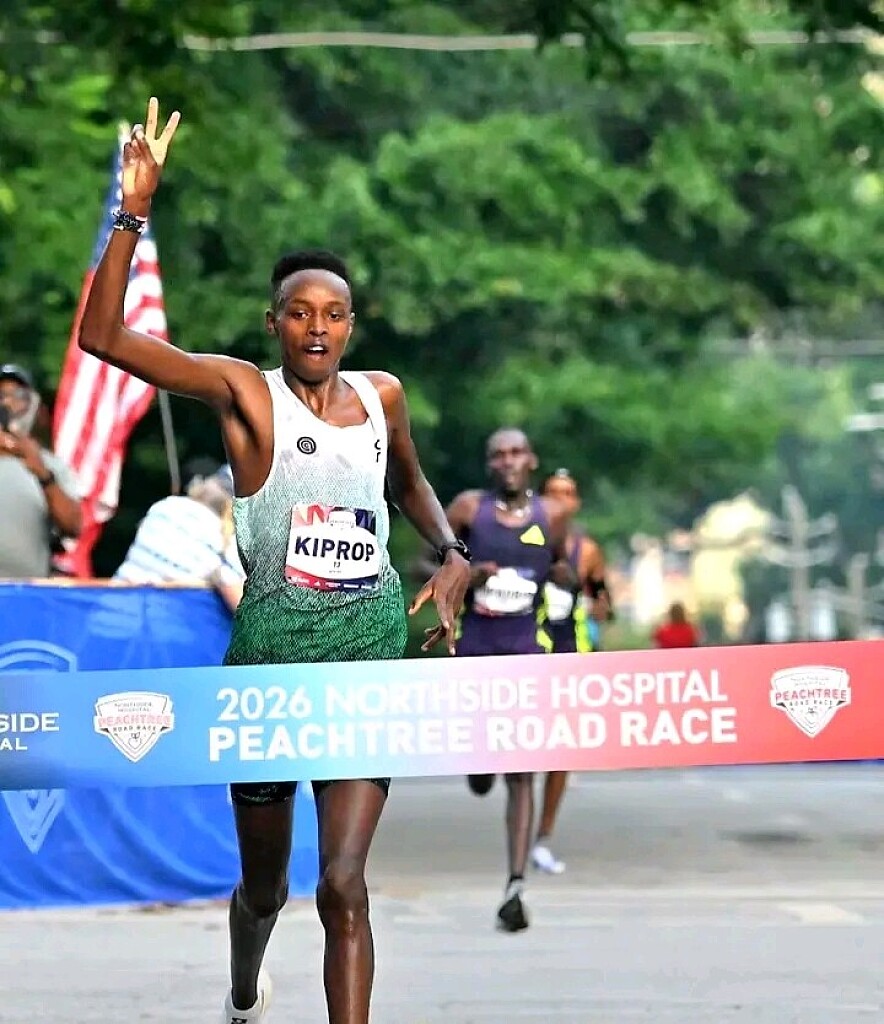
Patrick Kiptoo Kiprop Leads Kenyan Sweep to Capture 57th Peachtree Road Race Title on America's Independence Day
The streets of Atlanta once again came alive on Independence Day as thousands of runners celebrated one of road running's most iconic traditions, the Peachtree Road Race. In its 57th edition, the legendary 10-kilometre event delivered another thrilling chapter on Saturday, July 4, 2026, with Kenya's Patrick Kiptoo Kiprop producing a brilliant performance to claim victory in 27:37.
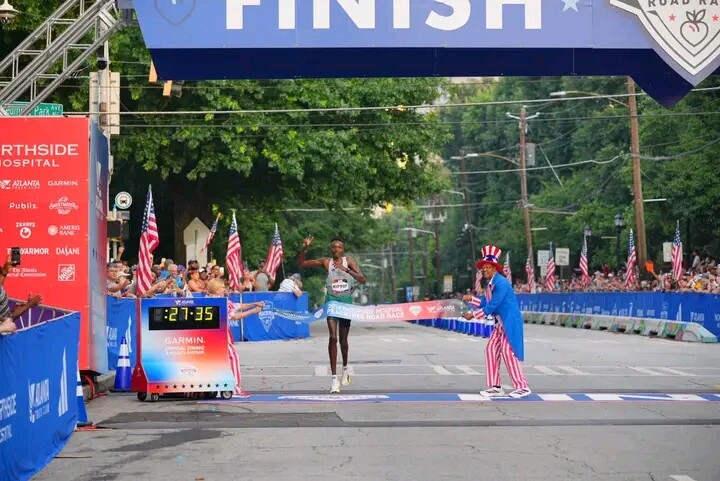
Competing against a world-class international field, Kiprop timed his race to perfection before surging to the finish, securing one of the most prestigious road racing titles in the United States. His victory highlighted Kenya's continued dominance on the global road racing circuit.
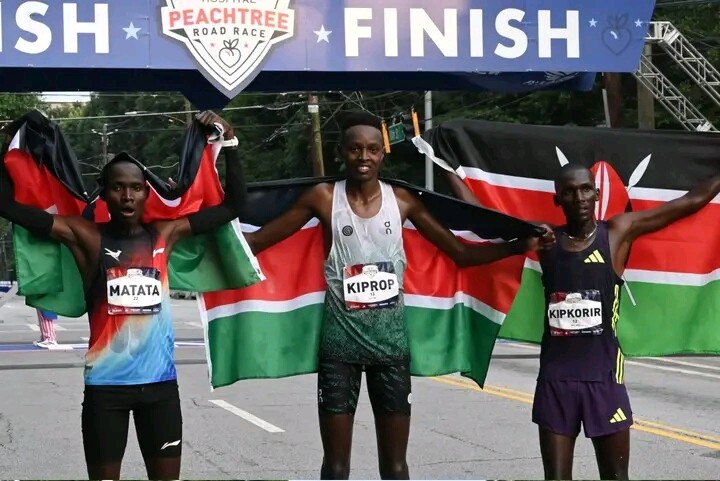
The men's race turned into a remarkable Kenyan showcase, with Nicholas Kipkorir finishing just four seconds behind the winner in 27:41 to complete a Kenyan one-two. Raphael Dapash crossed the line only two seconds later in 27:43, making it a clean sweep of the podium for Kenya. Alex Matata narrowly missed the top three after clocking 27:48, while Kiprono Sitonik completed an outstanding day for the East African nation with a fifth-place finish in 28:03.
Ethiopia's Tadese Worku was the highest-placed non-Kenyan in sixth, finishing in 28:10. Eritrea's Dawit Seare claimed seventh in 28:21, Ghana's William Amponsah impressed with eighth in 28:24, Kenya's Victor Shitsama finished ninth in 28:25, and South Africa's Adam Lipschitz rounded out the top ten in 28:27.
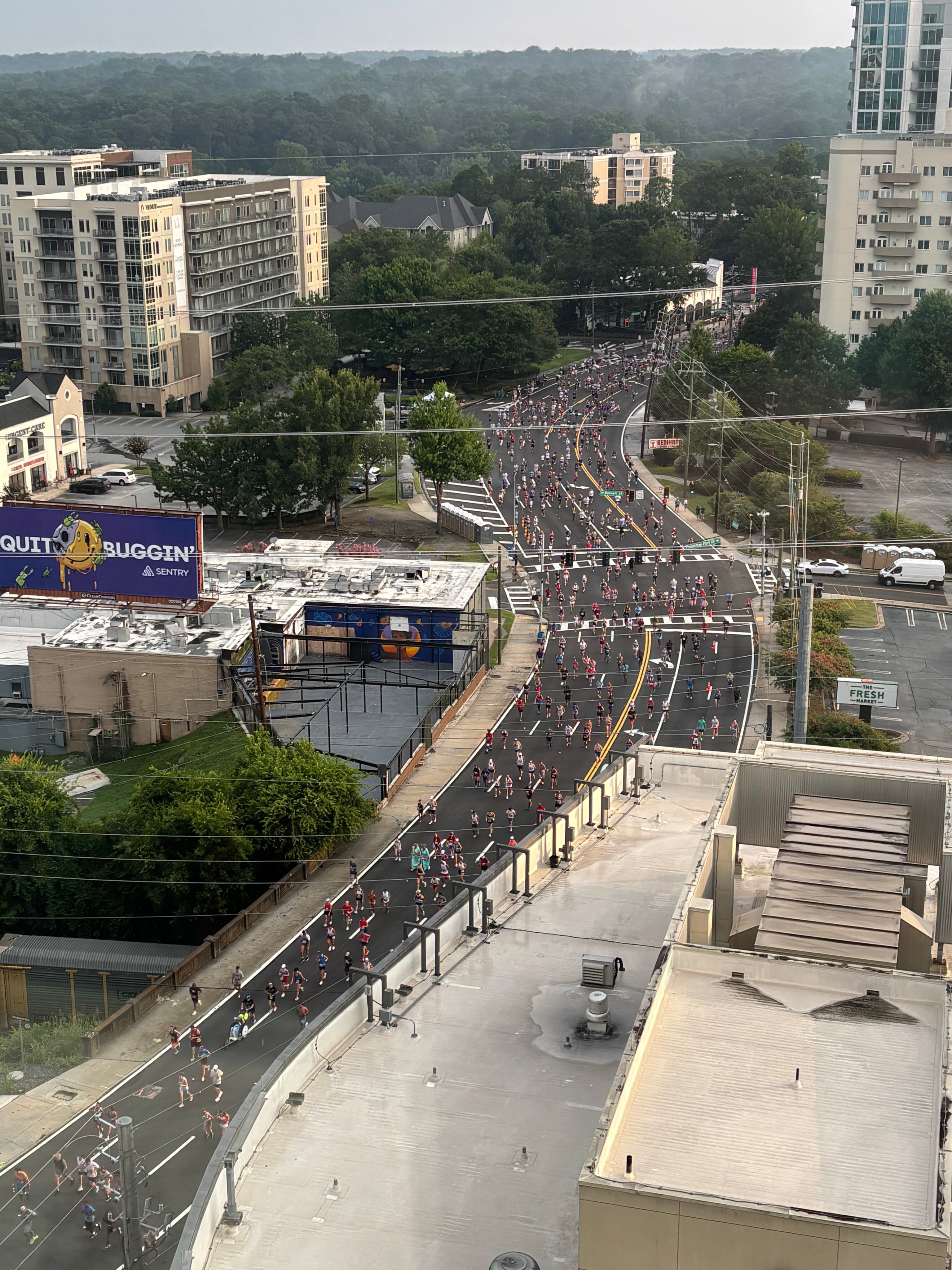
The Peachtree Road Race, staged annually on the Fourth of July, remains one of the world's largest and most celebrated 10-kilometre road races. Blending elite international competition with a vibrant community atmosphere, the event continues to attract tens of thousands of participants and enthusiastic spectators who line Atlanta's streets to celebrate both sport and America's Independence Day.
Top 10 Men's Results
1. Patrick Kiptoo Kiprop (Kenya) – 27:37
2. Nicholas Kipkorir (Kenya) – 27:41
3. Raphael Dapash (Kenya) – 27:43
4. Alex Matata (Kenya) – 27:48
5. Kiprono Sitonik (Kenya) – 28:03
6. Tadese Worku (Ethiopia) – 28:10
7. Dawit Seare (Eritrea) – 28:21
8. William Amponsah (Ghana) – 28:24
9. Victor Shitsama (Kenya) – 28:25
10. Adam Lipschitz (South Africa) – 28:27
Patrick Kiptoo Kiprop's commanding victory adds his name to the illustrious list of Peachtree Road Race champions, while Kenya's sweep of the top five positions underlined the country's extraordinary depth in distance running. On a day dedicated to celebration and tradition, the elite athletes once again delivered a memorable spectacle, ensuring the 2026 edition will be remembered as another outstanding chapter in the rich history of the Peachtree Road Race.
by Erick Cheruiyot for My Best Runs.
Login to leave a comment
AJC Peachtree Road Race
The AJC Peachtree Road Race, organized by the Atlanta Track Club, is the largest 10K in the world. In its 48th running, the AJC Peachtree Road Race has become a Fourth of July tradition for thousands of people throughout the metro Atlanta area and beyond. Come kick off your Fourth of July festivities with us! If you did not get...
more...
60,000 Runners, One Tradition: Atlanta's Peachtree Road Race Continues to Define America's Independence Day
Before fireworks light up the evening sky, the streets of Atlanta will already have witnessed one of the most remarkable Independence Day traditions in the world. At dawn on July 4, more than 60,000 runners will flood the city's iconic Peachtree Road, transforming the annual holiday into a celebration of endurance, community and history.
Now in its 57th edition, the Peachtree Road Race remains the world's largest 10-kilometre race, a title it has proudly carried for decades. Since its inaugural running in 1970, the event has never strayed from its identity, taking place every Fourth of July and becoming as much a part of the American holiday as parades and fireworks.

This year's race carries even greater significance as it coincides with the United States' 250th Independence Day celebrations. Beginning at 6:50 a.m., runners will set off in carefully staggered waves every five minutes, with the final participants leaving the start well after 8:30 a.m. The famous 6.2-mile (10km) course stretches from Buckhead to Piedmont Park, drawing elite athletes, seasoned competitors and first-time runners into the same unforgettable experience.
The challenge, however, will extend beyond the distance. Forecasts point to sweltering conditions, with a heat advisory expected throughout the morning and heat indices climbing into the mid-90s Fahrenheit before the final waves cross the finish line. Success will demand not only speed but also discipline, smart pacing and resilience against Atlanta's summer heat.
Among the thousands of participants is one competitor whose story perfectly reflects the race's enduring legacy. Zachary Doppel will toe the starting line for his 49th consecutive Peachtree Road Race, having completed every edition since his first. His collection of all 48 previous finisher's shirts has become a personal archive of one of road running's most cherished traditions, with the milestone 50th consecutive finish now within touching distance.
Yet for many participants, the race is about far more than personal records or finishing times. The coveted finisher's T-shirt has evolved into a badge of honour, proudly worn long after race day and instantly recognised by runners across the country. It represents not only completing 10 kilometres but also becoming part of a tradition that has united generations for more than half a century.
Few races in the world can claim such a powerful connection between sport, history and national identity. Fifty-seven editions, one iconic route and tens of thousands of runners returning year after year have cemented the Peachtree Road Race as more than just a competition—it is a living celebration of community, perseverance and the enduring spirit of American road running.
As Atlanta awakens on Independence Day, 60,000 runners will once again prove that before the celebrations begin, the nation's biggest holiday starts with a run.
by Erick Cheruiyot for My Best Runs.
Login to leave a comment
AJC Peachtree Road Race
The AJC Peachtree Road Race, organized by the Atlanta Track Club, is the largest 10K in the world. In its 48th running, the AJC Peachtree Road Race has become a Fourth of July tradition for thousands of people throughout the metro Atlanta area and beyond. Come kick off your Fourth of July festivities with us! If you did not get...
more...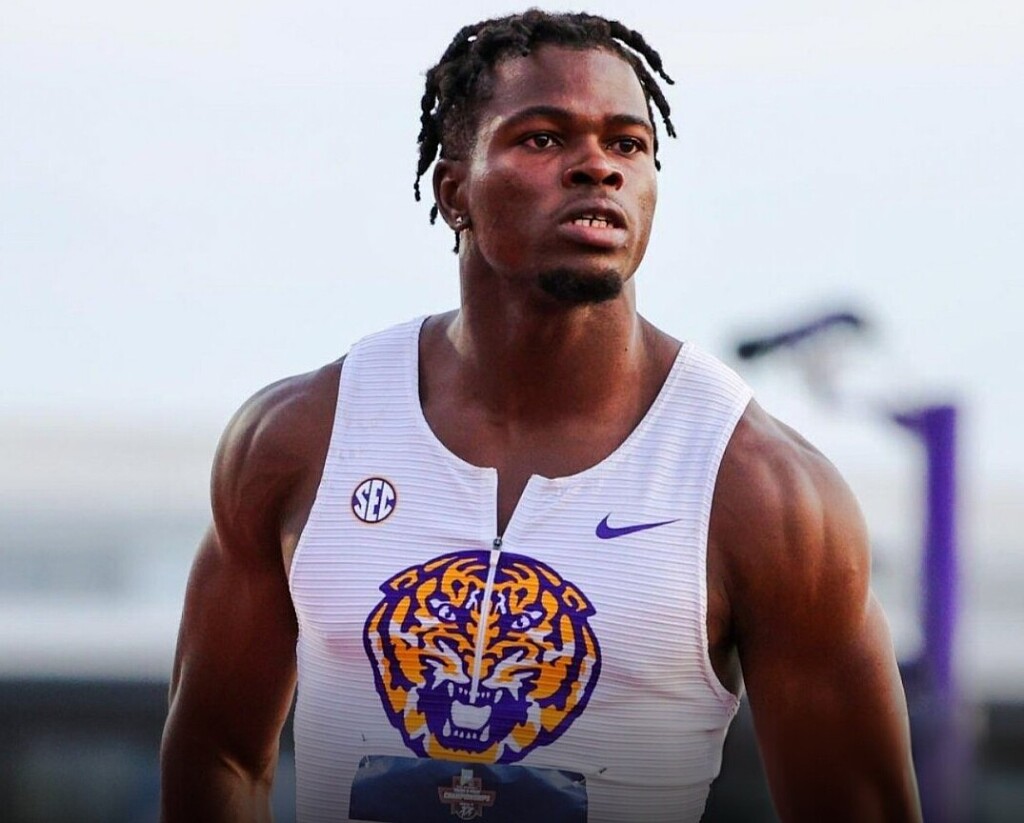
Former LSU Sprint Star Godson Oghenebrume Sentenced to 27 Months in U.S. Federal Prison
Nigerian sprint sensation and former LSU standout Godson Oghenebrume has been sentenced to 27 months in federal prison in the United States after being convicted of illegally possessing a firearm while in the country on an F-1 student visa.
The 23-year-old, one of Nigeria's fastest sprinters and the 2024 SEC men's 100m champion, was sentenced in Baton Rouge, Louisiana. Upon completing his prison term, he could also face deportation or removal proceedings under U.S. immigration law.
The conviction stems from an incident on February 7, 2025, when authorities say Oghenebrume possessed and discharged a Glock 43X 9mm pistol, despite federal law prohibiting non-immigrant visa holders from possessing firearms except under limited circumstances.
According to court records, the incident began when the mother of Oghenebrume's infant child arrived at his apartment with the baby while another woman was inside the residence. An argument reportedly erupted outside the apartment, during which Oghenebrume allegedly fired the weapon while the child was present.
Prosecutors stated that after returning inside, another confrontation broke out when the child's mother entered the apartment and encountered Oghenebrume and the other woman. The dispute spilled outside once again, and Oghenebrume allegedly discharged the firearm multiple more times as she fled the scene. Investigators later documented several bullet impacts in the walls of the apartment complex.
Although no fatalities were reported, the incident resulted in federal charges that ultimately led to his conviction and sentencing.
Before his legal troubles, Oghenebrume had established himself as one of the brightest emerging names in sprinting. Representing Louisiana State University (LSU), he captured the 2024 SEC 100m title and recorded a lifetime best of 9.90 seconds, placing him among the fastest Nigerian sprinters in history and marking him as a rising force on the international stage.
The sentence brings an abrupt halt to what had appeared to be a promising athletics career, with the former collegiate star now facing both a prison term and uncertainty over his future in the United States.
by Erick Cheruiyot for My Best Runs.
Login to leave a comment
Olympic Justice Delayed: Alysia Montaño Finally Earns London 2012 Bronze After 14-Year Wait
Justice has finally caught up with one of the most controversial Olympic races in modern history.
Fourteen years after crossing the finish line in fifth place at the London 2012 Olympic Games, American middle-distance star Alysia Montaño has officially been awarded the Olympic bronze medal following the International Olympic Committee's latest medal reallocation.
This week, the IOC Executive Board approved a revised set of results for the women's 800 metres, bringing another chapter of the event's long-running doping scandal to a close. South Africa's Caster Semenya remains the Olympic champion, while Kenya's Pamela Jelimo is elevated to the silver medal position. Montaño now claims the bronze medal she earned through clean competition.
The decision follows the disqualification of Yekaterina Guliyev, who represented Russia at the London Games under her maiden name, Yekaterina Poistogova. In 2024, the Court of Arbitration for Sport (CAS) ruled that Guliyev had committed anti-doping violations involving banned anabolic steroids. After her appeal was dismissed in May 2025, the IOC officially ratified the revised medal standings this week, making the changes final.
Guliyev's removal means three Russian athletes from the same Olympic women's 800m final have now been stripped of their results for doping offences. Mariya Savinova, the original gold medalist, was disqualified years earlier, while Elena Arzhakova also lost her result following anti-doping sanctions. The race has become one of the clearest examples of how widespread doping robbed clean athletes of their rightful Olympic moments.
For Montaño, the medal is the reward for a courageous race. She boldly led the field through the opening 400 metres in 56.31 seconds before eventually finishing fifth as four athletes crossed the line ahead of her. Today, only two of those performances still stand.
Her promotion is also historically significant. Montaño becomes the first American woman to win an Olympic medal in the 800 metres since Kim Gallagher claimed bronze at the 1988 Seoul Olympics, ending a wait of more than three decades for the United States in the event.
Although the medal is finally hers, the years that have passed cannot restore the emotions of standing on the Olympic podium before a packed stadium and millions watching around the world. Montaño has often described the delayed recognition as both gratifying and heartbreaking—a victory that arrives without the unforgettable Olympic celebration every athlete dreams of.
Following the IOC's announcement, Montaño shared an emotional message on social media, celebrating the victory while acknowledging the long journey that still lies ahead before she finally receives her medal.
"Integrity and Truth always wins out. The IOC approved the medal reallocation ceremony at LA2028. More work to be done to ensure it's done right, but for now we celebrate one victory at a time. Swipe to see me patiently waiting till LA2028 to get my medal!"
Her message also revealed that the IOC has approved the medal reallocation ceremony to take place during the Los Angeles 2028 Olympic Games, giving Montaño the opportunity to finally receive her Olympic medal on one of sport's biggest stages. While nothing can replace the moment that was taken from her in London, the ceremony will provide long-overdue recognition of her achievement in front of the Olympic community.
Montaño's story serves as another powerful reminder that while anti-doping efforts can eventually correct the record books, justice delayed can never fully replace the memories, opportunities and emotions stolen from clean athletes.
Fourteen years after London 2012, the official results have finally been rewritten. Alysia Montaño is an Olympic bronze medalist at last—not because history changed, but because the truth finally caught up with it.
by Erick Cheruiyot for My Best Runs.
Login to leave a comment
From an Unplanned Marathon to Immortality: The Incredible Story of Grete Waitz's Nine New York City Marathon Victories
When Grete Waitz boarded a flight to New York in October 1978 with her husband, Jack, becoming one of the greatest marathon runners in history was the last thing on her mind.
At just 25 years old, the Norwegian schoolteacher was an accomplished middle-distance athlete and a two-time Olympian over 1,500 metres. She had never raced a marathon, and the furthest she had ever run was only 10 miles in training. The journey to the United States was intended to be more of a holiday than a sporting mission.
New York City Marathon co-founder Fred Lebow had personally invited Waitz to compete. Privately, he believed her lack of endurance experience would eventually catch up with her and that she would likely fade in the second half of the race. Instead, he unknowingly invited a future legend.
The evening before the marathon reflected just how little pressure Waitz placed on the race. She and Jack enjoyed an elegant dinner in Manhattan, complete with shrimp cocktail, filet mignon, ice cream, and red wine. It was hardly the meal most would associate with preparing for a world-class marathon, but for the couple, the trip was simply another adventure.
Even on race morning, Waitz admitted she barely knew where Central Park was.
Wearing bib 1173, she settled into the race with no expectations. As the miles unfolded, however, the Norwegian newcomer grew stronger while others began to struggle. In the second half, she surged into the lead and never looked back.
When she crossed the finish line in 2:32:30, the athletics world was left in disbelief.
Not only had Waitz won her marathon debut by an astonishing nine minutes, but her performance was also recognized as a new world record at the time, lowering the previous mark by more than two minutes. A woman virtually unknown to marathon running had rewritten the sport's history in a single afternoon.
Yet the finish line brought anything but celebration.
Completely exhausted, battling severe cramps and overwhelmed by the pain of her first marathon, Waitz reportedly threw her running shoes toward her husband and coach, Jack, insisting she would never run another marathon.
Fortunately for the sport, she changed her mind.
Her remarkable victory transformed her career. Inspired by what she had achieved, Waitz left her teaching profession in Norway and dedicated herself fully to long-distance running. What began as a one-time experience evolved into one of the greatest careers the marathon has ever witnessed.
Between 1978 and 1988, she captured an unprecedented nine New York City Marathon titles—a record that still stands as the most victories by any athlete, male or female, in a World Marathon Major. She also became the first woman in history to run under 2 hours and 30 minutes in 1979 and established four marathon world records, helping redefine what women could accomplish over 42.195 kilometres.
Beyond the records and victories, Grete Waitz became a global icon whose humility, determination, and fearless approach inspired generations of runners. She proved that greatness sometimes arrives when opportunity meets courage—even when no one, including the athlete herself, expects it.
Grete Waitz passed away from cancer in 2011 at the age of 57, but her legacy continues to endure. A statue outside Bislett Stadium in Oslo stands as a permanent tribute to the woman who arrived in New York as a schoolteacher on holiday and left as the athlete who forever changed marathon history.
by Erick Cheruiyot for My Best Runs.
Login to leave a comment
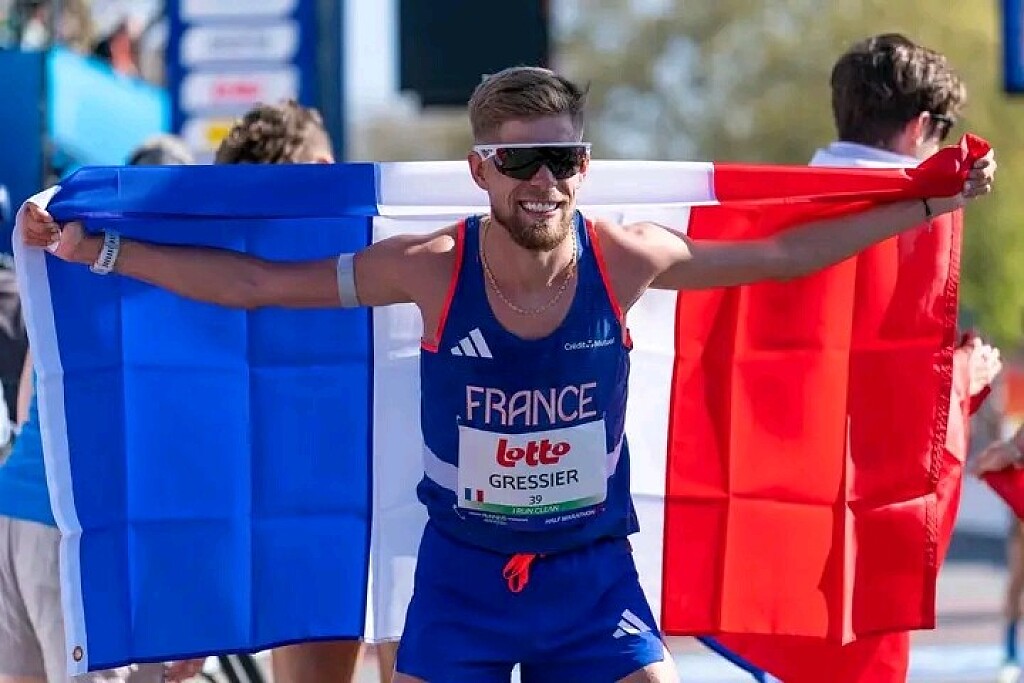
Paris Diamond League Men's 5000m: Global Distance Stars Set for a High-Stakes Clash in the French Capital
The countdown to the 2026 Paris Diamond League is almost over, and one of the most anticipated events on the programme is the men's 5000m. Scheduled for Sunday, June 28, the race has assembled an impressive international field featuring established champions, emerging talents, and national record holders, setting the stage for what could become one of the fastest 5000m races of the season.

France's Jimmy Gressier will carry the hopes of the home crowd as he headlines the event. Renowned for his fearless front-running style and relentless pace, Gressier will be eager to produce another memorable performance on home soil against one of the deepest fields assembled this year.
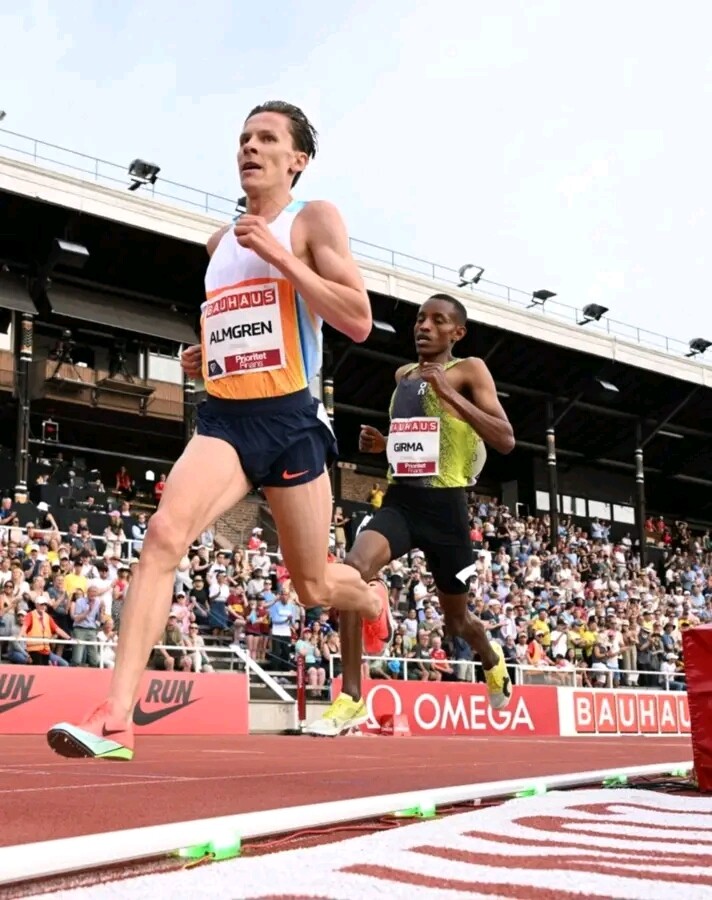
The race also features Sweden's Andreas Almgren, whose remarkable rise over the longer distances has made him one of Europe's strongest contenders. Eritrea's Saymon Amanuel, Ethiopia's Getnet Wale, Kuma Girma, Lamecha Girma, Khairi Bejiga, and Addisu Yihune further strengthen an already formidable lineup, bringing world-class credentials and proven championship experience.
Kenya enters the contest with a talented quartet comprising Cornelius Kemboi, Frankline Kibet, Mathew Kipchumba Kipsang, and Jacob Krop. With Kenya's rich tradition in distance running, the four athletes will be looking to assert themselves against a field packed with elite competitors and continue the country's dominance on the global stage.
The international flavour of the race extends even further with competitors from the United States, Germany, Spain, Mexico, Burundi, Uruguay, Bahrain, and the Netherlands, highlighting the Diamond League's status as the premier meeting point for the world's finest track athletes.
With so many athletes capable of producing sub-13-minute performances, fans can expect an aggressive pace from the opening laps. Whether the race develops into a tactical championship-style battle or an all-out assault on the clock, every indication points to a thrilling spectacle under the Paris lights.
As the Diamond League season gathers momentum, Sunday's men's 5000m promises more than just valuable points—it offers athletes a golden opportunity to test themselves against world-class opposition, build confidence ahead of major championships, and perhaps deliver one of the standout performances of the year.
The stage is set. The field is loaded. Paris is ready for another unforgettable moment of distance running.
by Erick Cheruiyot for My Best Runs.
Login to leave a comment
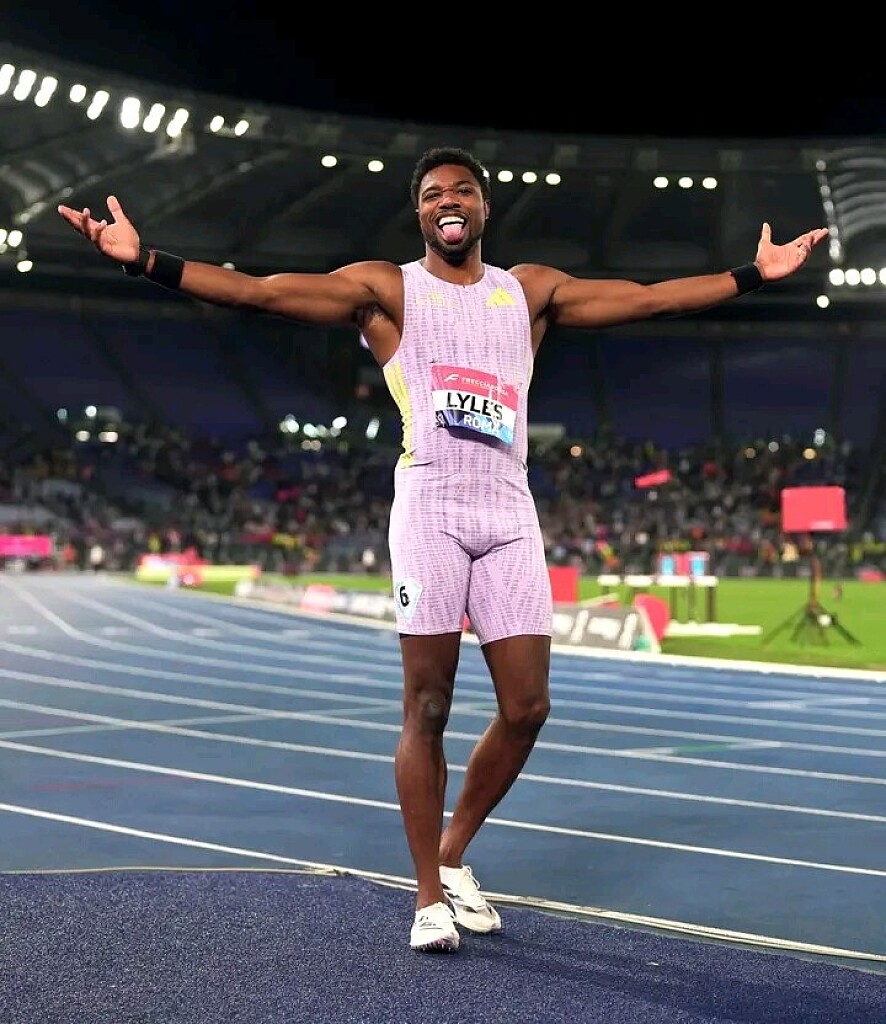
Sprint Titans Set for Paris Showdown as Noah Lyles Returns to Familiar Ground
Just one week after rewriting history with a sensational world-record performance over 150 metres, Noah Lyles is set to return to Paris, the city where some of his most memorable career moments were forged. The American sprint superstar will headline a blockbuster men's 100m field at the Paris Diamond League on June 28, promising one of the most captivating races of the season.
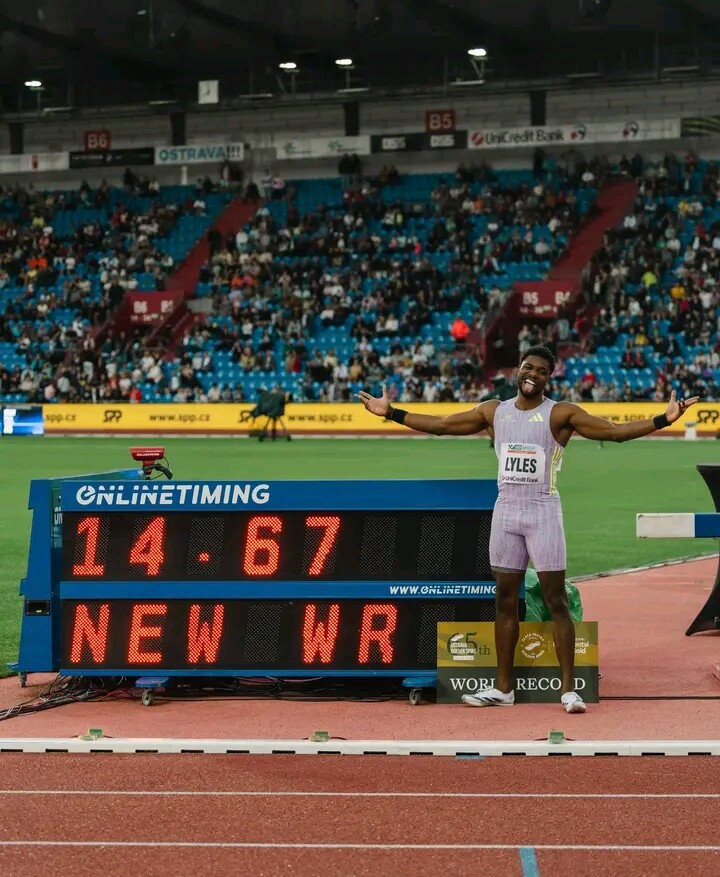
Paris has earned a reputation as one of the fastest tracks in world athletics, and Lyles will be hoping the magic returns once again as he steps back onto the same stage that witnessed his Olympic triumphs. Carrying the momentum of his recent world-record achievement, the reigning global sprint king arrives as the man everyone will be chasing.
Yet victory will be far from guaranteed.
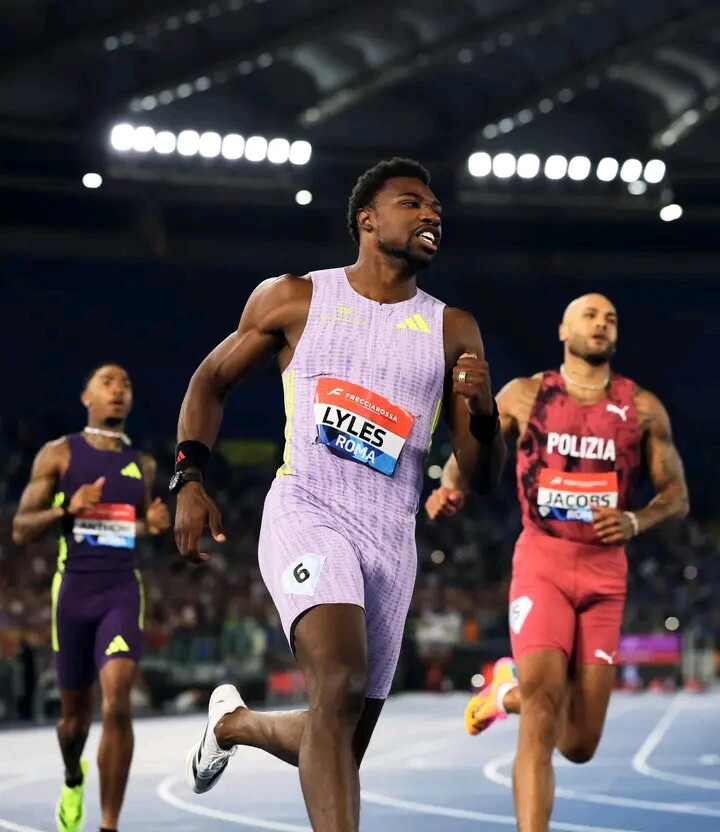
The men's 100m field is loaded with world-class talent, bringing together Olympic champions, Diamond League winners, continental record holders and emerging stars in what promises to be a battle from the gun to the finish line.
Kenya's Ferdinand Omanyala, Africa's fastest man, will be eager to use his trademark explosive start to challenge the favourite. South Africa's Akani Simbine, one of the most consistent performers on the international circuit, arrives in exceptional form and remains a serious contender for victory. Italy's Olympic champion Lamont Marcell Jacobs adds further championship pedigree, while American speedsters Trayvon Bromell and rising star Jordan Anthony strengthen an already formidable field.
Great Britain's Jeremiah Azu and Cameroon's Emmanuel Eseme complete a lineup capable of producing fireworks on one of athletics' quickest stages.
Official Men's 100m Start List – Paris Diamond League
1. Noah Lyles (United States)
2. Jordan Anthony (United States)
3. Emmanuel Eseme (Cameroon)
4. Trayvon Bromell (United States)
5. Akani Simbine (South Africa)
6. Lamont Marcell Jacobs (Italy)
7. Ferdinand Omanyala (Kenya)
8. Jeremiah Azu (Great Britain)
With the World Championships drawing closer, every race carries added significance. Paris offers athletes a chance not only to collect valuable Diamond League points but also to send a statement to their rivals ahead of the season's biggest tests.
For fans, the ingredients could hardly be better: a world-record holder at the peak of his powers, a lightning-fast track, and a field packed with elite sprinters capable of producing something special. The result is a race that has all the makings of one of the standout moments of the Diamond League campaign.
On June 28, the spotlight will once again shine on Noah Lyles. But against a field this strong, the road to victory will demand nothing less than brilliance.
by Erick Cheruiyot for My Best Runs.
Login to leave a comment
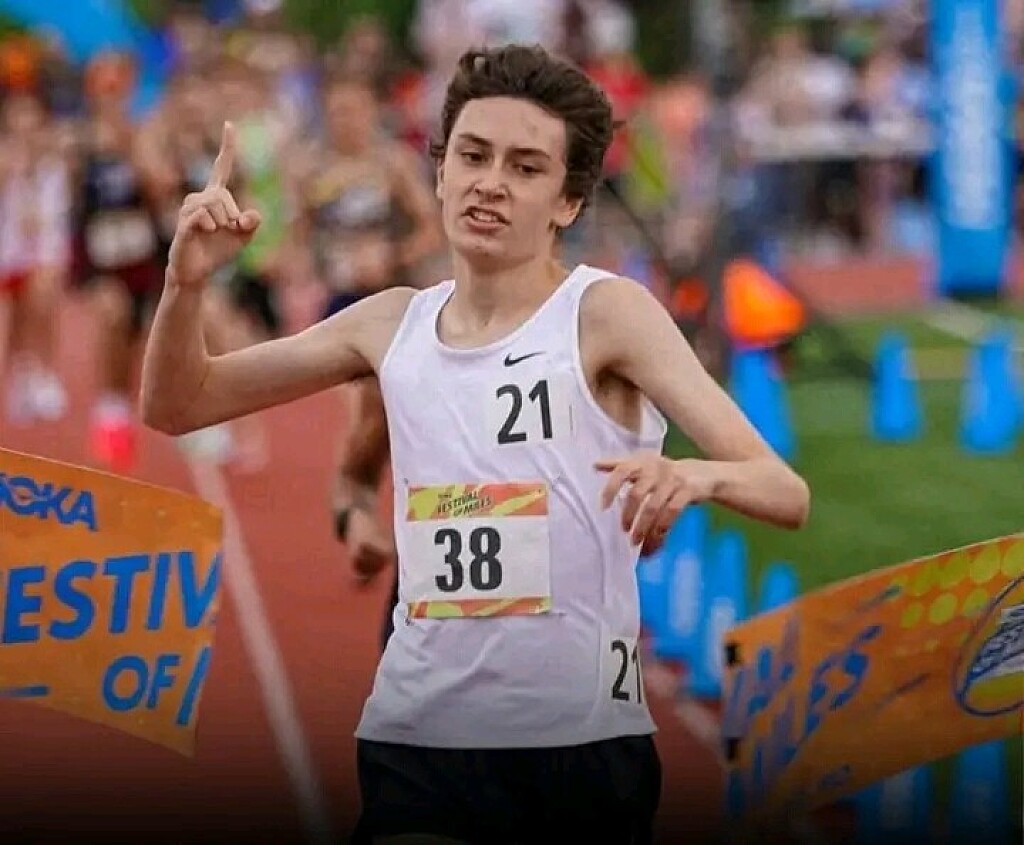
14-Year-Old Luke Surface Shocks the Running World With Historic Middle School Record
The future of American distance running may have just announced itself.
Luke Surface, an 8th-grade student-athlete from North Raleigh Christian Academy in Raleigh, North Carolina, delivered a performance that stunned the track and field community after taking on some of the nation’s best high school runners at Nike Outdoor Nationals.

Competing at the legendary Hayward Field in Eugene, Oregon — one of the most iconic venues in American distance running — Surface lined up in the boys championship 5,000 meters against a field dominated by high school seniors, including several athletes preparing to compete at the NCAA Division I level.
Despite being one of the youngest runners in the race, the 14-year-old held his own against the elite competition, finishing eighth in an incredible 14:25.88. The performance set a new national middle school record, averaging approximately 4:39 per mile for more than three miles.
That kind of time is fast enough to win many high school state championships across the United States and meets qualifying standards for several major NCAA Division I conference competitions — a remarkable achievement for a runner who has not yet entered high school.
But Surface’s historic 5,000m performance was only the latest chapter in a season filled with record-breaking moments.
Earlier in May, he clocked 8:52.03 for 3,200 meters at the NCISAA Division I State Championships in North Carolina, breaking another national middle school record. His converted two-mile time of 8:55.12 surpassed the previous world-best mark for a 14-year-old age group, previously held by Vincent Recupero.
During the previous cross-country season, Surface also made headlines when he ran 15:12 at the adidas XC Challenge, finishing second while competing against runners who were several years older.
Across cross country, two miles, and the 5,000 meters, Surface has continued to prove that his talent is far beyond his age group. While he still has four years of high school competition ahead before reaching the college level, his performances have already placed him among the most exciting young distance runners to watch.
The American high school 5,000-meter record currently stands at 13:32, set by Lex Young in 2023 — a mark Surface is not yet close to challenging. However, his remarkable progression at such a young age has caught the attention of the running world, with many eager to follow how far his extraordinary journey can go.
For now, Luke Surface remains an eighth grader rewriting the record books — and his story is only beginning.
by Erick Cheruiyot for My Best Runs.
Login to leave a comment
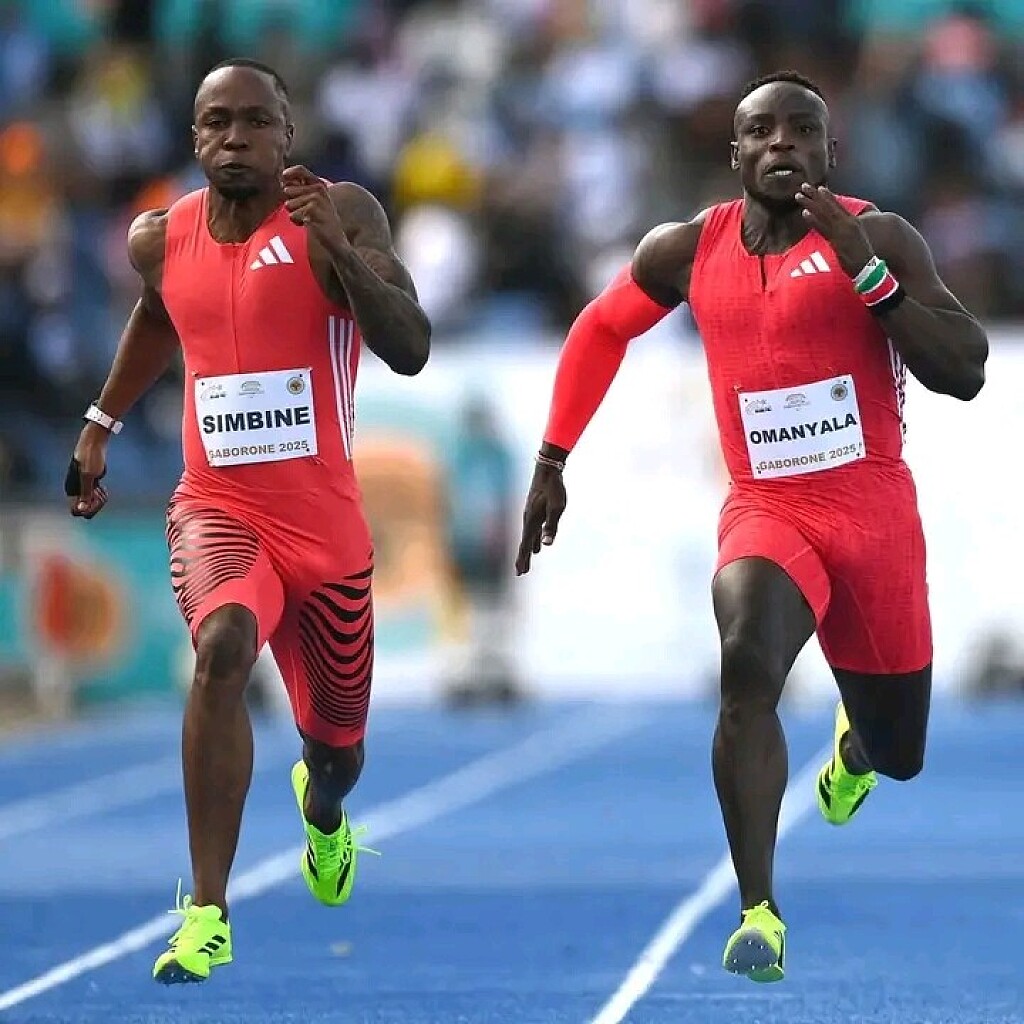
Omanyala and Simbine Set for Explosive Sprint Showdown at FBK Games in Hengelo
The stage is set for one of the most anticipated sprint battles of the season as Africa's fastest men, Ferdinand Omanyala of Kenya and Akani Simbine of South Africa, headline a stacked men's 100-meter field at the 2026 FBK Games in Hengelo Netherlands, on Sunday, June 21. The prestigious meeting is part of the World Athletics Continental Tour Gold circuit and regularly attracts some of the world's finest track and field stars.
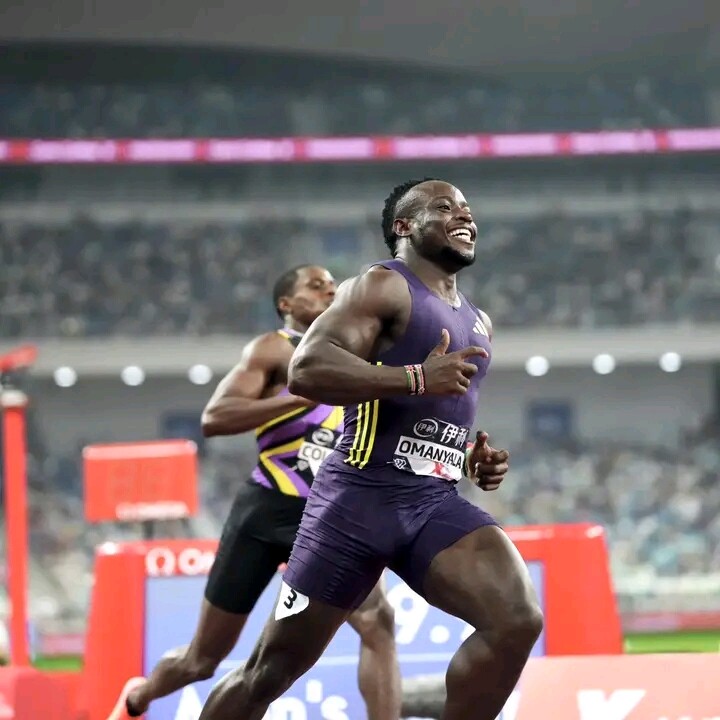
For sprint fans, the clash between Omanyala and Simbine is reason enough to tune in. Omanyala, the African record holder and Kenya's sprint trailblazer, has built a reputation for fearless front-running and explosive starts. Simbine, meanwhile, remains one of the most consistent sprinters of his generation, combining championship experience with remarkable top-end speed. Their rivalry has produced thrilling races over the years, and another chapter is about to be written on Dutch soil.
But this will be far more than a two-man contest.
South Africa's rising star Bradley Nkoana enters the race eager to challenge the established order, while Ireland's Benjamin Richardson continues to make strides on the international circuit. American veteran Ronnie Baker brings proven world-class credentials to the field, adding further depth and unpredictability to the race.
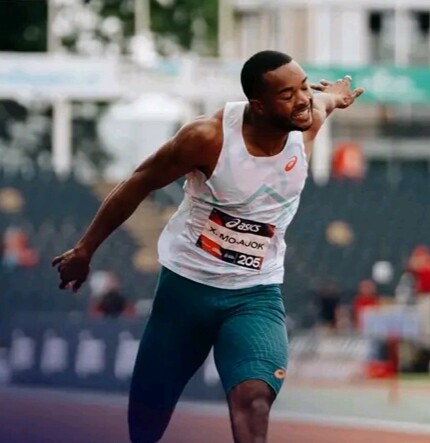
The home crowd will have plenty to cheer for as Dutch sprinters Elvis Afrifa, Taymir Burnet and Xavi Mo-Ajok line up in front of their supporters. All three have been key figures in the Netherlands' sprint resurgence and will be determined to make their mark against a world-class field.
With established stars, emerging talents and national pride all colliding in one race, the men's 100 meters promises to be one of the standout events of the meeting. Every athlete in the field has the speed to produce a surprise, ensuring that there will be no room for error once the starter's gun fires.
As Hengelo prepares to welcome another edition of the renowned FBK Games, all eyes will be fixed on the straightaway. When Omanyala and Simbine step into their blocks, fans can expect a race packed with intensity, speed and the kind of drama that only elite sprinting can deliver.
Men's 100m Entries – FBK Games 2026
1. Ferdinand Omanyala (Kenya)
2. Akani Simbine (South Africa)
3. Bradley Nkoana (South Africa)
4. Benjamin Richardson (Ireland)
5. Ronnie Baker (United States)
6. Elvis Afrifa (Netherlands)
7. Taymir Burnet (Netherlands)
8. Xavi Mo-Ajok (Netherlands)
On Sunday afternoon in Hengelo, the race may last less than ten seconds, but its impact could resonate throughout the remainder of the 2026 season.
by Erick Cheruiyot for My Best Runs.
Login to leave a comment
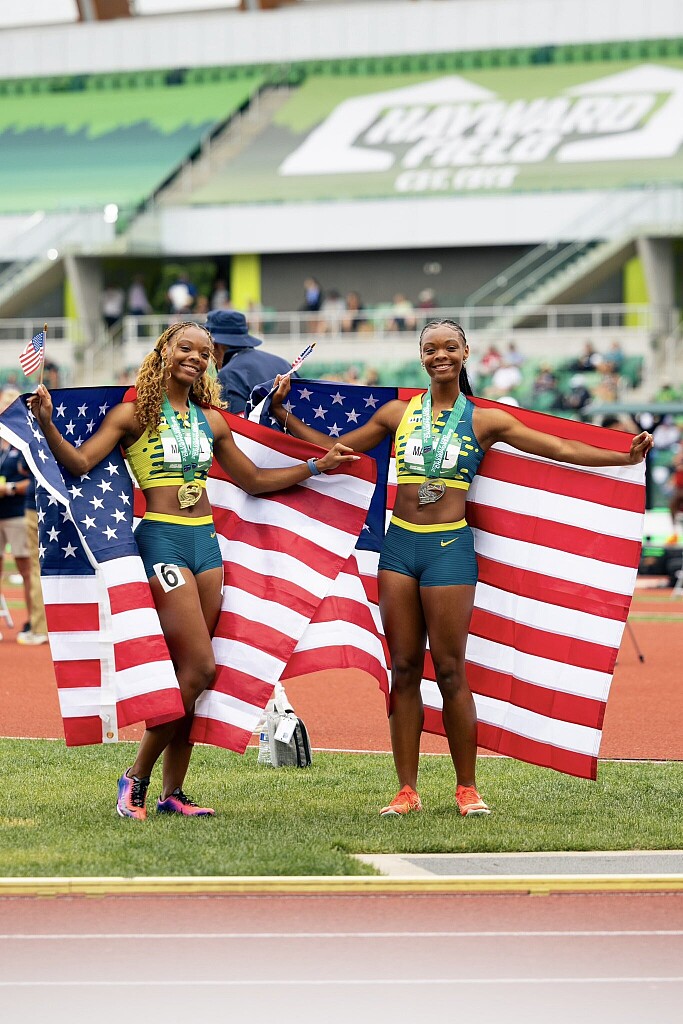
Maxwell Twins Deliver Historic 1-2 Finish in U20 Women's 100m Championship Showdown
The spotlight belonged to one family at the US U20 Championships in Eugene as twin sisters Mia and Mariah Maxwell produced a remarkable sprinting masterclass to secure a memorable one-two finish in the women's 100 metres.
Leading the charge was Mia Maxwell, who powered to victory in an impressive 11.08 seconds with a legal tailwind of 0.8 m/s, confirming her status as one of the brightest young sprint talents in the United States. Displaying exceptional composure and acceleration, Mia separated herself from the field in the closing stages to claim the national U20 title in convincing fashion.
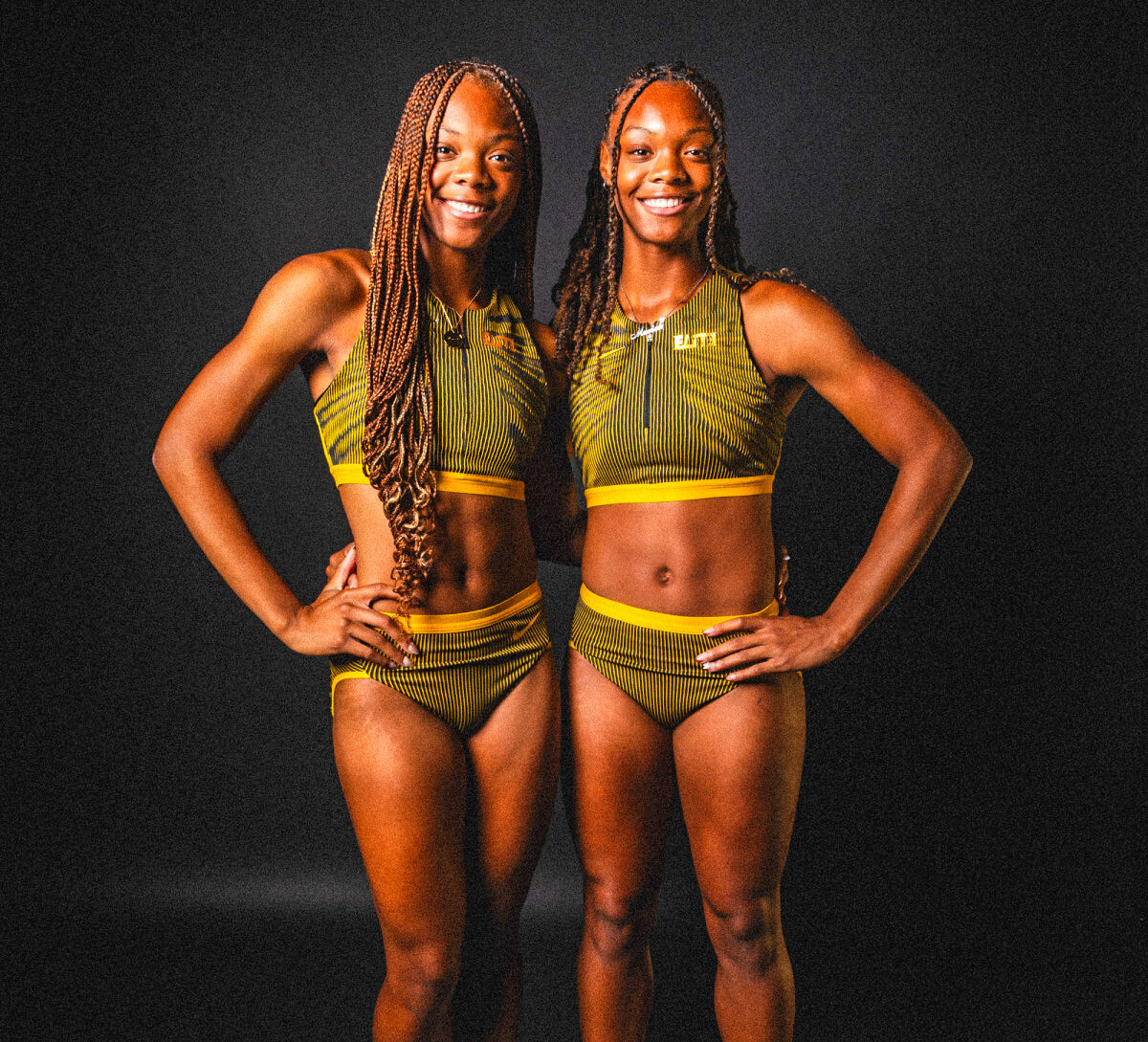
What made the moment even more special was the athlete who crossed the line behind her. Twin sister Mariah Maxwell completed a family sweep by racing to the silver medal in 11.33 seconds, turning the championship final into a celebration of sibling excellence. Their achievement marked one of the most memorable stories of the meet, as the sisters stood side by side atop the results sheet after dominating one of track and field's most prestigious junior competitions.
Rounding out the podium was Ava Kitchings, who delivered a strong performance to secure the bronze medal in 11.39 seconds, ensuring a highly competitive final in front of the Eugene crowd.
The Maxwell twins' extraordinary performance highlighted not only their individual talent but also the growing depth of American sprinting at the junior level. To witness sisters finish first and second in a national championship final is a rare occurrence, and their achievement added a unique chapter to the history of the US U20 Championships.
For Mia, the victory represents another significant milestone in a rapidly developing career, while Mariah's silver medal underscored the family's remarkable presence on the national stage. Together, they transformed the women's 100m final into one of the defining moments of the championships, proving that speed—and success—can truly run in the family.
by Erick Cheruiyot for My Best Runs.
Login to leave a comment
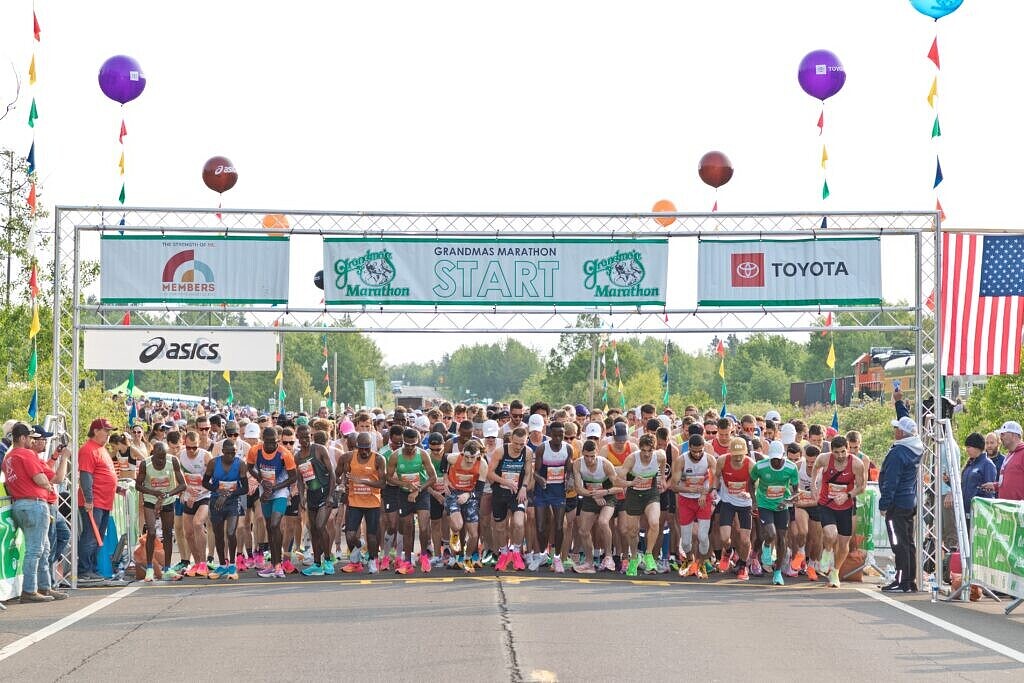
Elite Marathoners Set for High-Stakes Battle at 2026 Grandma’s Marathon
A deep and talented international field will headline the 2026 Grandma’s Marathon in Duluth, Minnesota, on Saturday, June 20. Elite athletes from across the globe are set to compete in one of America’s premier road races, creating the perfect recipe for a thrilling contest. With proven marathon performers and emerging talents all chasing victory, fans can expect a fiercely contested race from start to finish.
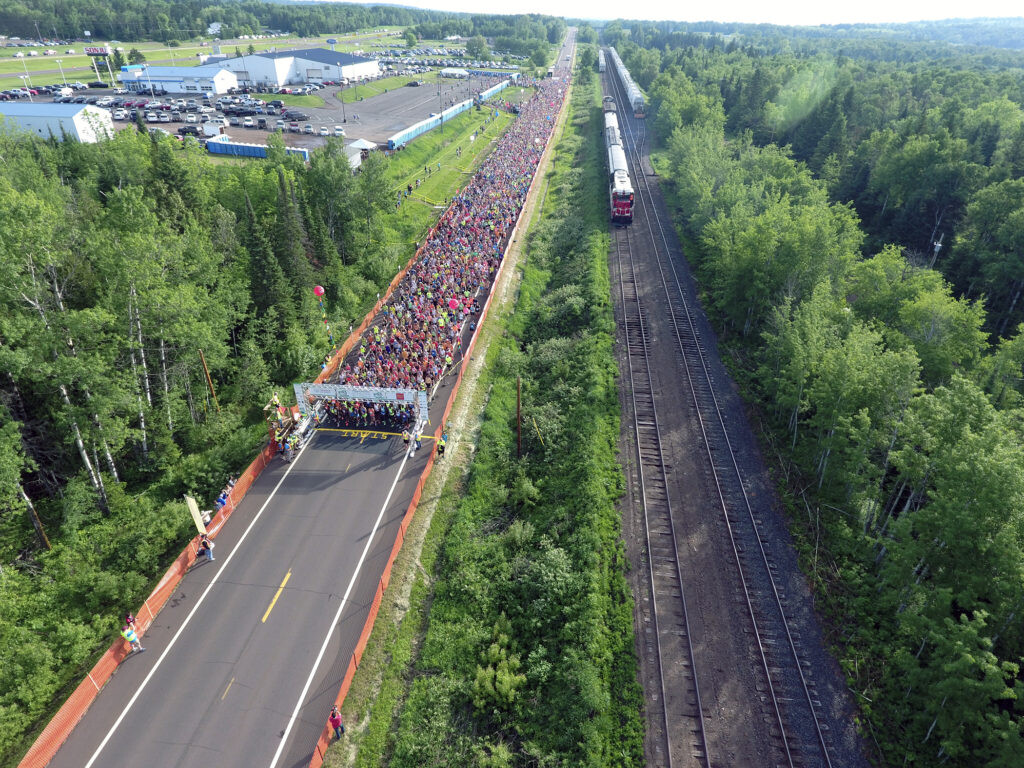
Leading the field on paper is Eritrea’s Amnuel Mesel, whose personal best of 2:08:17 makes him the fastest entrant in the race. The experienced marathoner will be aiming to translate his credentials into victory on one of the United States’ most celebrated marathon courses.
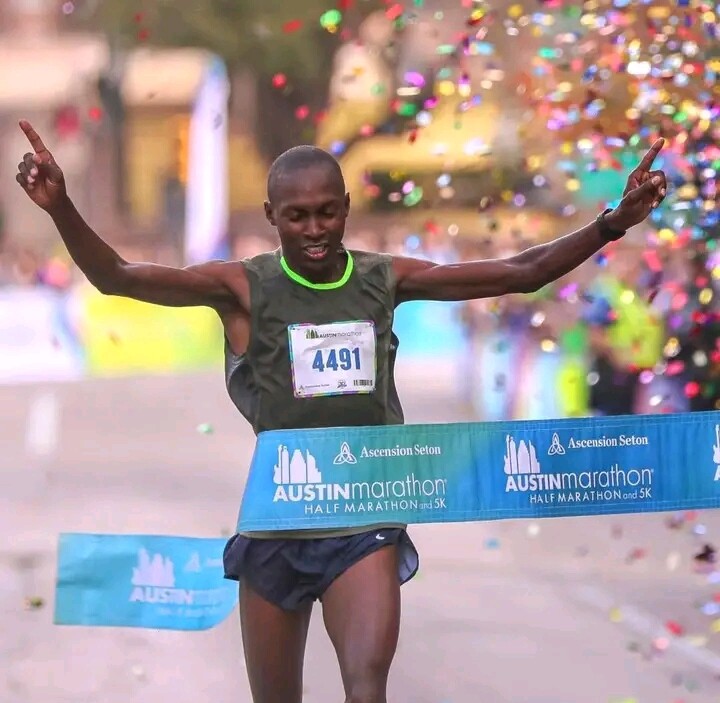
Close behind is Kenya’s Milton Rotich, who arrives with a personal best of 2:08:55 and the pedigree to challenge for top honors. Ethiopia’s Getnet Gedimu, boasting a best of 2:09:21, adds further depth to a field packed with quality and experience.
The American challenge will be led by Joseph Whelan, whose personal best of 2:09:42 places him firmly among the race favorites. Fellow American Brendan Cregg, owner of a 2:11:21 best, will also be looking to capitalize on home support as he takes on the international contenders.
Kenya will also be represented by Benard Rotich and Sammy Rotich, both carrying identical personal bests of 2:10:39. Their presence further strengthens a field where several athletes have demonstrated the ability to compete at a world-class level over the marathon distance.
With multiple runners entering the race with personal bests under 2:10 and many more capable of producing breakthrough performances, the men’s race promises to deliver excitement from the opening miles to the finish line. Experience, strategy, and endurance will all be tested as athletes battle for supremacy on the fast and historic route along the shores of Lake Superior.
As race day approaches, anticipation continues to build for what could be one of the most competitive editions of Grandma’s Marathon in recent years. With elite talent representing several nations and little separating the leading contenders, the stage is set for a memorable showdown in Duluth.
by Erick Cheruiyot for My Best Runs.
Login to leave a comment

Grandmas Marathon
Grandma's Marathon began in 1977 when a group of local runners planned a scenic road race from Two Harbors to Duluth, Minnesota. There were just 150 participants that year, but organizers knew they had discovered something special. The marathon received its name from the Duluth-based group of famous Grandma's restaurants, its first major sponsor. The level of sponsorship with the...
more...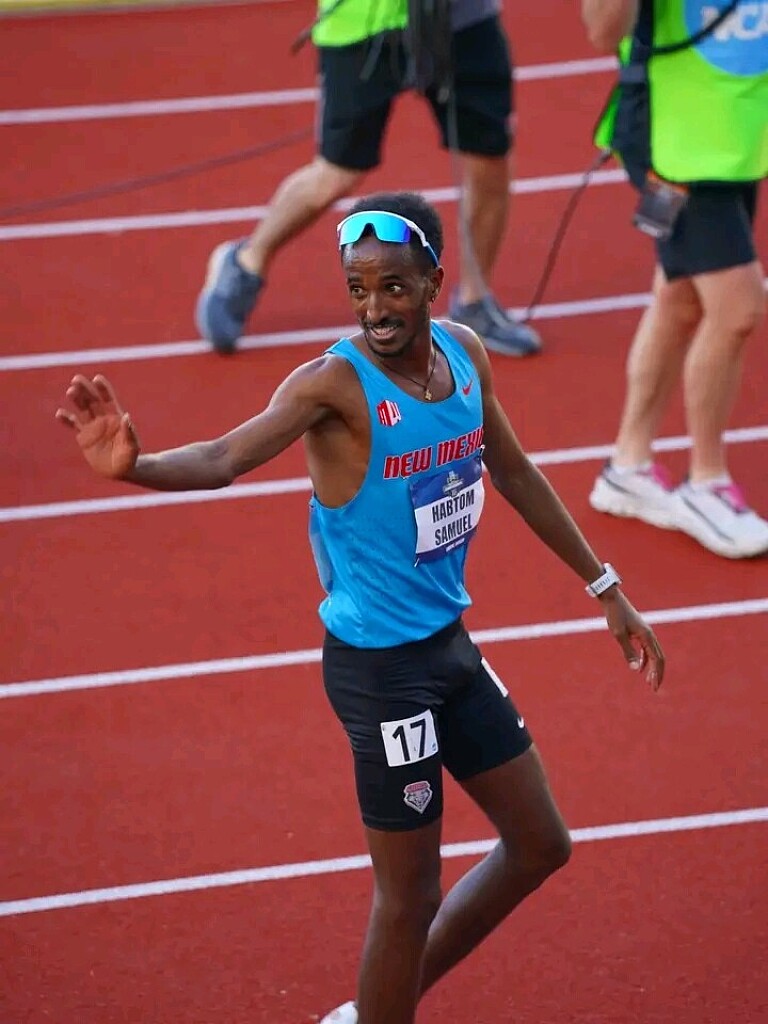
Habtom Samuel Delivers a Masterclass to Claim NCAA 5,000m Crown in Thrilling Championship Battle
The NCAA Men’s 5,000m final delivered everything fans love about distance racing — patience, tactical brilliance, relentless pressure, and a dramatic finish that came down to pure speed.
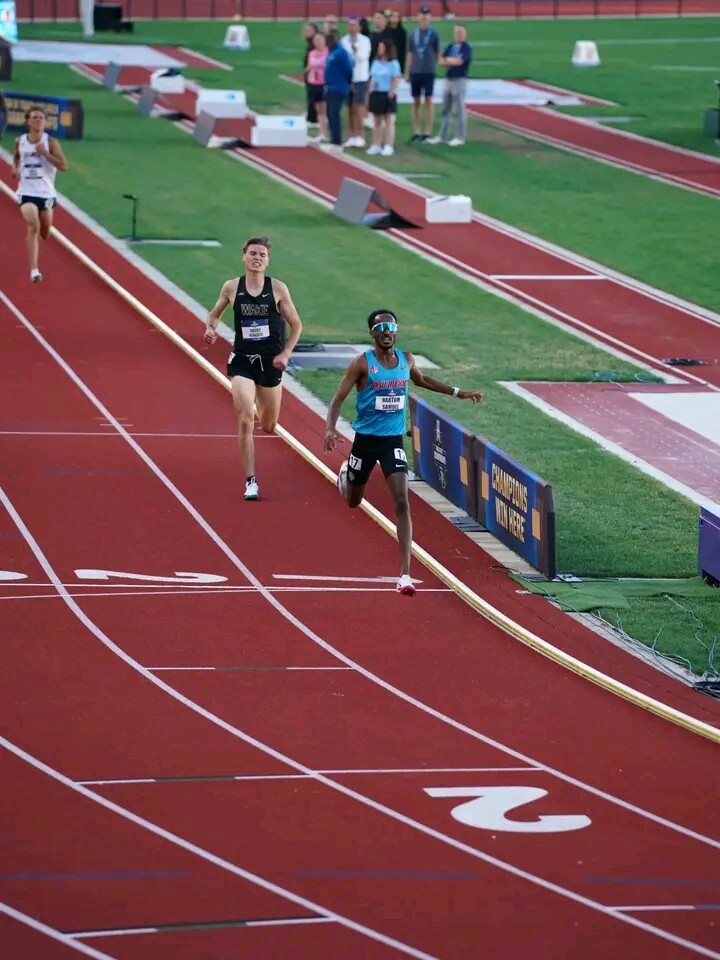
Eritrean sensation Habtom Samuel of New Mexico produced a memorable performance to capture the national title, crossing the finish line in 13:38.93 to claim the gold medal. His victory added another remarkable chapter to his collegiate career as he completed a historic championship double, proving once again that he belongs among the elite names in NCAA distance running.
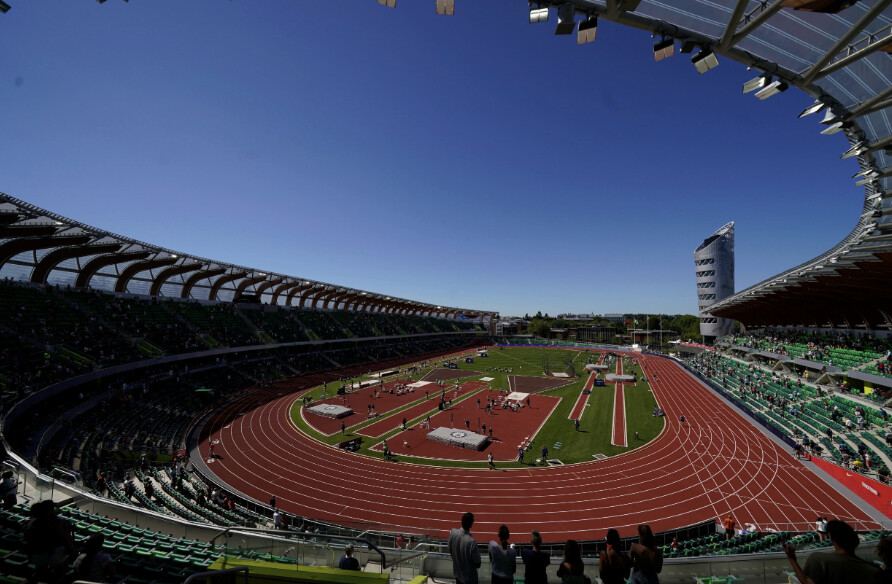
The race unfolded as a battle of endurance and strategy, with the leading pack staying tightly grouped before the decisive moments arrived. As the pace intensified and the final lap approached, Samuel showed incredible composure, saving his strongest move for the closing stages.
In the final 200 meters, Samuel unleashed a powerful finishing kick that separated him from the field and secured the championship victory. Rocky Hansen of Wake Forest fought bravely until the end, producing an impressive sprint finish to earn the silver medal in 13:39.91, just behind the champion.
Kenya’s Elsingi Kipruto of Louisville completed the podium with a strong performance, finishing third in 13:42.58 after staying among the contenders throughout the race.
The final also highlighted the strength of international talent in NCAA distance running, with several Kenyan athletes making their mark. Ernest Cheruiyot (Arkansas) finished fifth in 13:44.52, while Brian Musau (Oklahoma State) placed sixth in 13:47.18. Other Kenyan athletes, including Evans Kurui, Robin Kwemoi Bera, and Denis Kipngetich, also battled strongly against one of the deepest fields in collegiate athletics.
Top 10 Finishers — NCAA Men’s 5,000m Final
1. Habtom Samuel — New Mexico, Eritrea — 13:38.93
2. Rocky Hansen — Wake Forest, United States — 13:39.91
3. Elsingi Kipruto — Louisville, Kenya — 13:42.58
4. Marco Langon — Villanova, United States — 13:42.77
5. Ernest Cheruiyot — Arkansas, Kenya — 13:44.52
6. Brian Musau — Oklahoma State, Kenya — 13:47.18
7. Pierre Attiogbe — Cornell, United States — 13:47.43
8. Isaac Hedengren — BYU, United States — 13:48.84
9. Evans Kurui — Washington State, Kenya — 13:51.49
10 Robin Kwemoi Bera — Iowa State, Kenya — 13:51.83
From the opening strides to the explosive finish, the NCAA Men’s 5,000m final was a true showcase of championship racing — where every decision mattered and the final moments created a race to remember.
by Erick Cheruiyot for My Best Runs.
Login to leave a comment
Speed, Power and Pride: Tebogo Headlines Star-Studded Men's 100m at the LA Grand Prix
The countdown is on for one of the most anticipated sprint clashes of the season as the 2026 LA Grand Prix prepares to showcase a world-class men's 100m field on Sunday, June 14 in Los Angeles, USA.
With Olympic champions, world medalists, and some of the fastest men on the planet set to line up, fans can expect a race packed with speed, drama, and fierce competition from the moment the starter's gun fires.
Leading the field is Botswana's sprint sensation, Letsile Tebogo, whose rise to global stardom has transformed him into one of athletics' most exciting figures. Known for his composure, explosive finishing speed, and ability to deliver on the biggest stages, Tebogo arrives in Los Angeles carrying the expectations of a nation and the attention of the athletics world.
Standing in his way is a formidable American contingent led by Kenneth Bednarek, the versatile sprint star who continues to prove himself among the world's elite. While best known for his success over 200 metres, Bednarek has shown that he possesses the raw speed necessary to challenge the very best in the shorter sprint.
The United States will also field experienced speedsters Trayvon Bromell and Christian Coleman, two athletes whose careers have been defined by lightning-fast performances. Bromell remains one of the quickest starters in the sport, while Coleman has built a reputation as one of the greatest 100m specialists of his generation. Their presence guarantees that no margin for error will exist in this race.
Adding further intrigue is Ghana's rising talent Abdul-Rasheed Saminu, who continues to establish himself as a serious contender on the international circuit. Against such elite opposition, the Ghanaian sprinter will have an opportunity to measure himself against some of the sport's biggest names.
The depth of the field is strengthened by American athletes Courtney Lindsey, Brandon Hicklin, and Sam Blaskowski, all capable of producing breakthrough performances when the stakes are highest.
by Erick Cheruiyot for My Best Runs.
Login to leave a comment
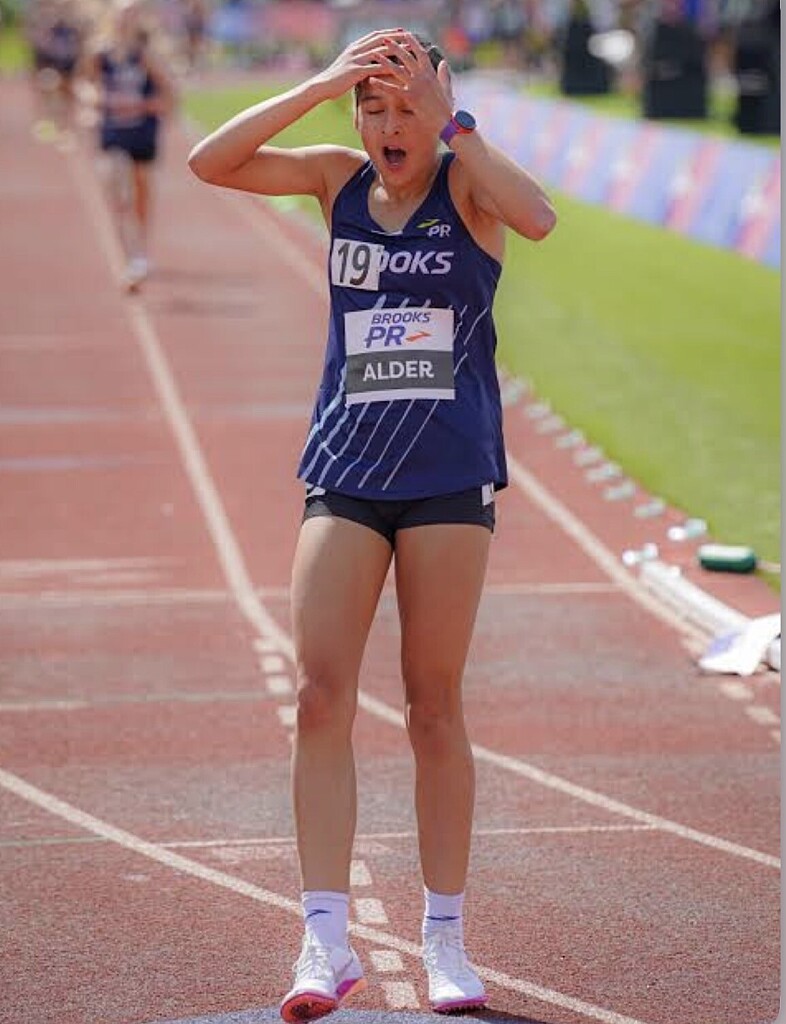
13-Year-Old Angelina Alder Runs 4:38.25 Mile World Age Record
Angelina Alder knew she had run fast. She just didn’t know she had made history.
As the 13-year-old crossed the finish line at the 2026 Brooks PR Invitational, she immediately put both hands on her head in disbelief. Moments later, she learned what had happened: a stunning 4:38.25 mile, recognized as a world age record for 13-year-old girls.
The image of Alder standing on the track, overwhelmed by the magnitude of her performance, may become one of the defining moments of this year’s track season.
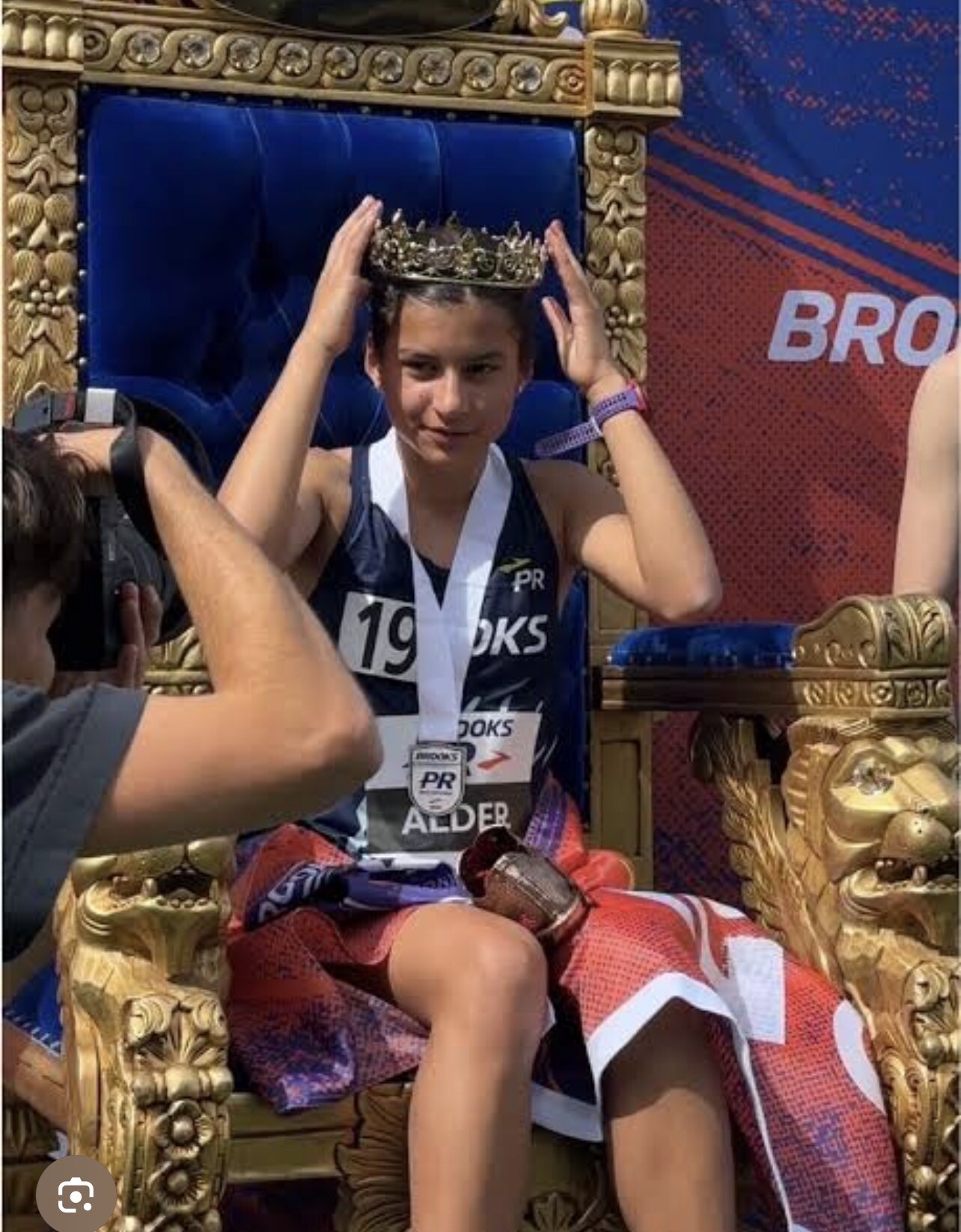
Alder is no stranger to record-breaking performances. She now holds the world age-group mile records for both 12-year-olds and 13-year-olds, an extraordinary accomplishment for an athlete who has not yet entered high school.
To appreciate the significance of her latest mark, consider that many accomplished high school runners never break five minutes for the mile. Alder not only shattered that barrier but averaged just under 70 seconds per lap while competing against some of the nation’s best young athletes.
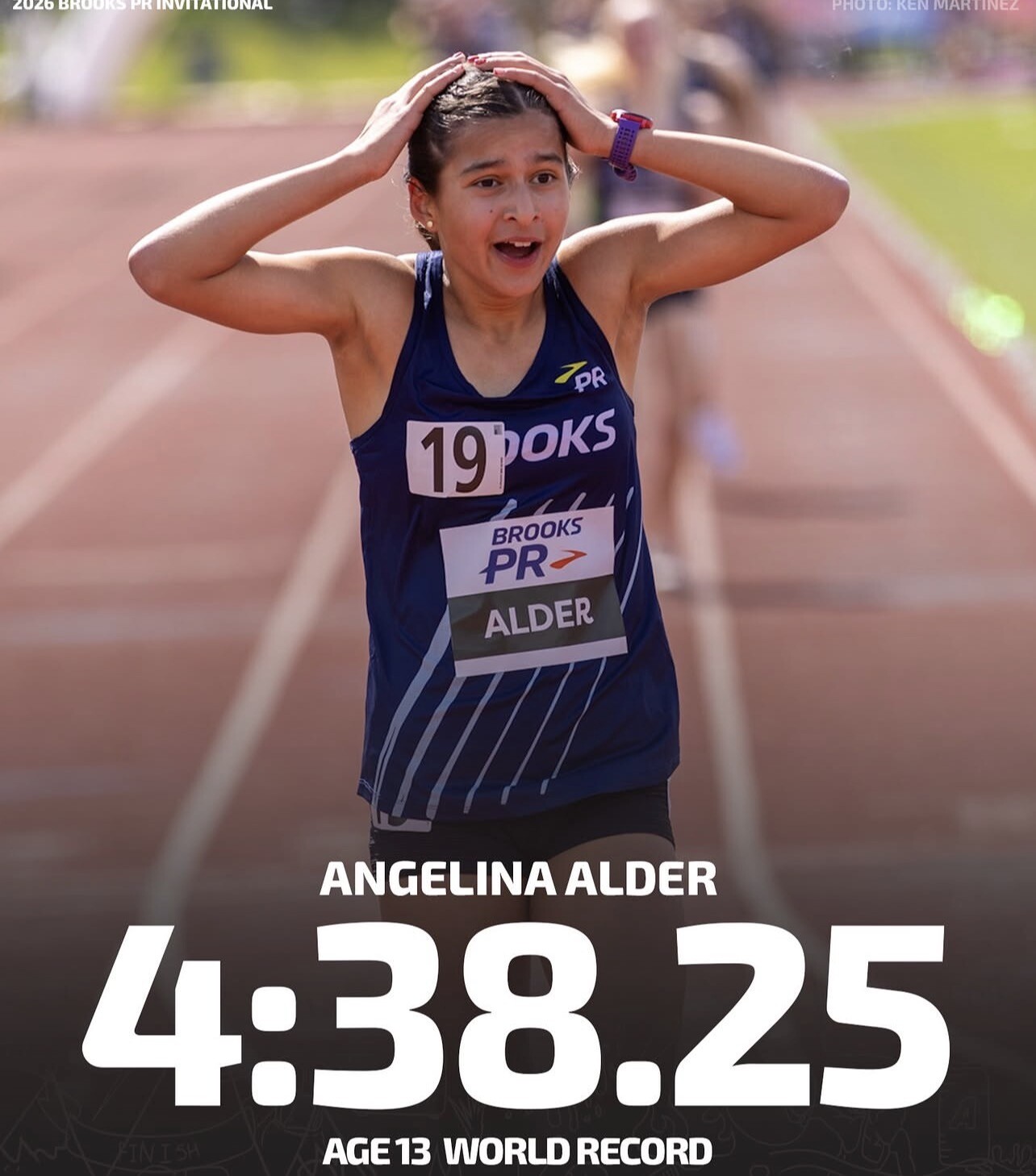
Running excellence is deeply rooted in the Alder family. Her mother, Janeth Alder, represented Ecuador as an Olympic distance runner. Her older sisters, Carmen and Vanessa Alder, have continued the family tradition as standout runners at Brigham Young University, one of the premier distance running programs in the United States.
The Brooks PR Invitational has become one of the nation’s premier showcases for emerging talent, and Alder delivered one of the most memorable performances in the meet’s history. Her 4:38.25 places her among the fastest young female milers ever recorded and raises the bar for what is possible at age 13.
What makes the performance especially remarkable is that Alder is still years away from reaching her full physical potential. Most elite female milers do not approach their peak until late high school, college, or beyond. Yet she has already produced a time that would be competitive at major high school championships across the country.
Records at a young age never guarantee future success, but they do reveal extraordinary promise. The challenge moving forward will be patient development, smart coaching, staying healthy, and continuing to enjoy the sport.
For now, the running world can simply celebrate a remarkable achievement. Angelina Alder’s 4:38.25 mile is more than an age-group world record. It is one of those rare performances that reminds us why we love this sport. A young athlete stepped onto the track, ran beyond what seemed possible for her age, and left with a place in the record books.
Sometimes history arrives unexpectedly. At the 2026 Brooks PR Invitational, it arrived in 4 minutes, 38.25 seconds.
by Boris Baron
Login to leave a comment
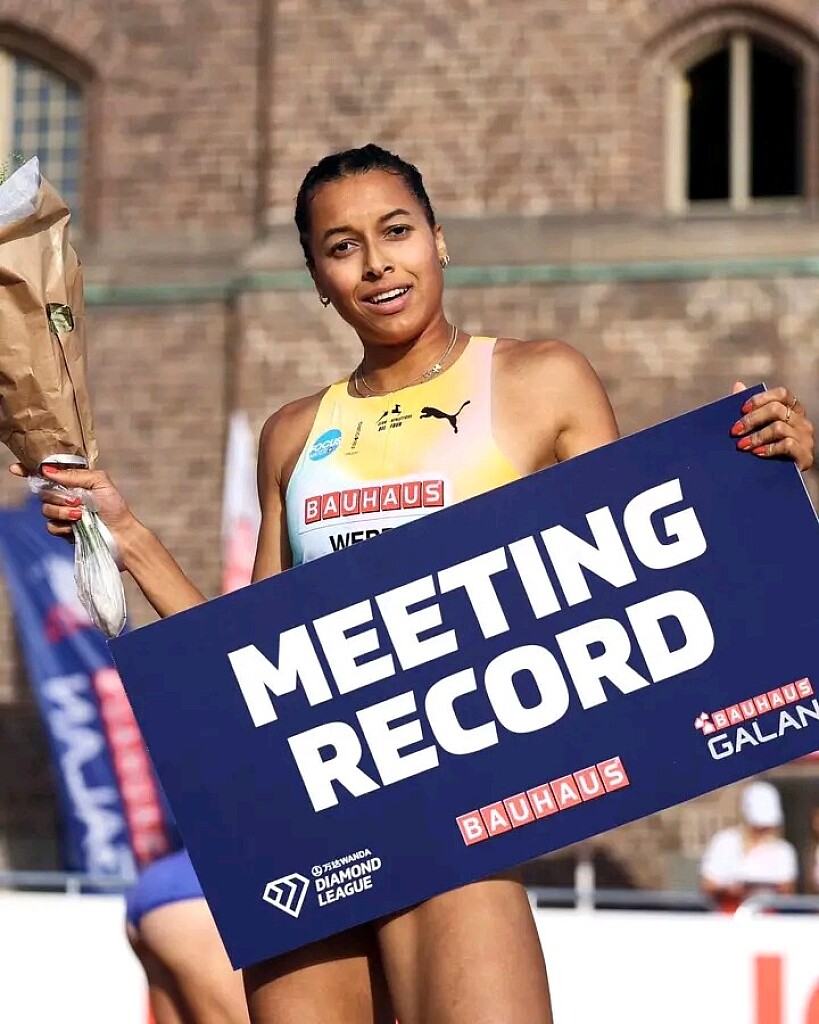
STOCKHOLM SHOCKWAVE: AUDREY WERRO BLASTS 1:53.98 IN ONE OF THE FASTEST 800M RACES EVER RUN
Stockholm delivered pure middle-distance history as the Wanda Diamond League witnessed a truly extraordinary women’s 800m—one that will be remembered as one of the fastest races in the event’s modern era.
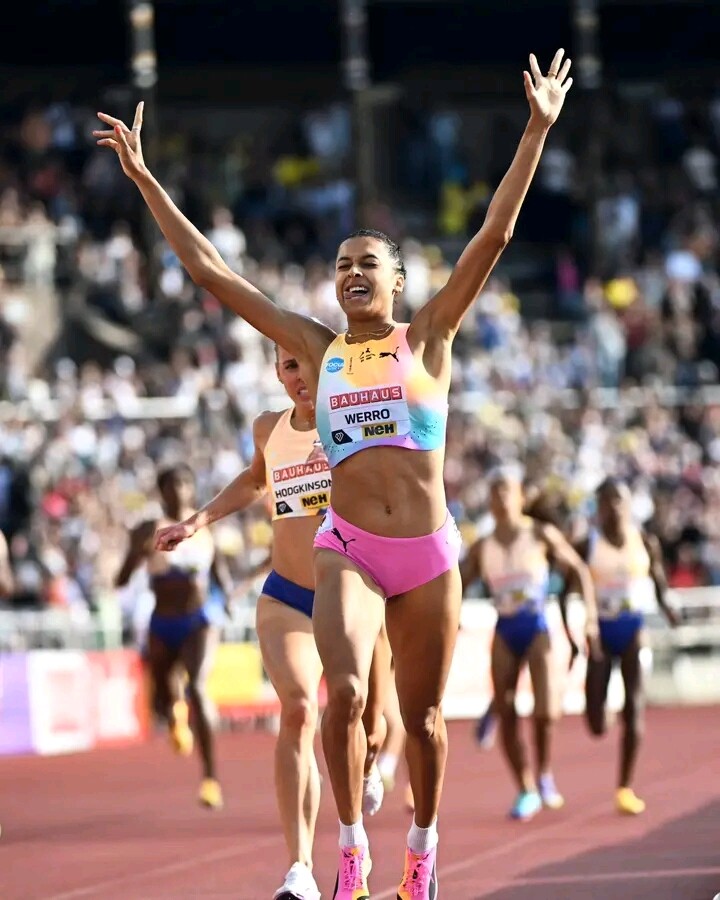
Switzerland’s rising star Audrey Werro produced the performance of her life, storming to victory in a breathtaking 1:53.98, a world-leading mark and a national record. In doing so, she became the third-fastest woman in history over 800m, coming within just 0.70 seconds of the legendary world record of 1:53.28 set by Jarmila Kratochvílová in 1983.
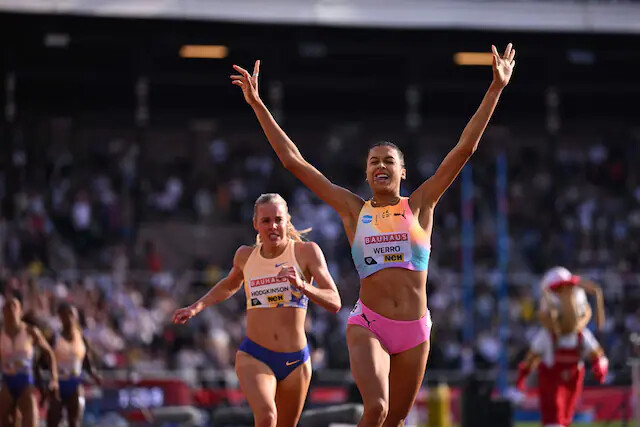
It was a fearless, perfectly timed run—controlled early, explosive down the back straight, and devastating in the final 200 metres as Werro pulled away in a finish of historic quality.
Right behind her, Keely Hodgkinson from Great Britain once again proved her consistency at the very highest level. The British star delivered a sensational 1:54.33, setting a new British national record and securing her place as the third-fastest woman in history. Despite finishing second, her performance was another statement of world-class dominance in a golden era for women’s 800m running.
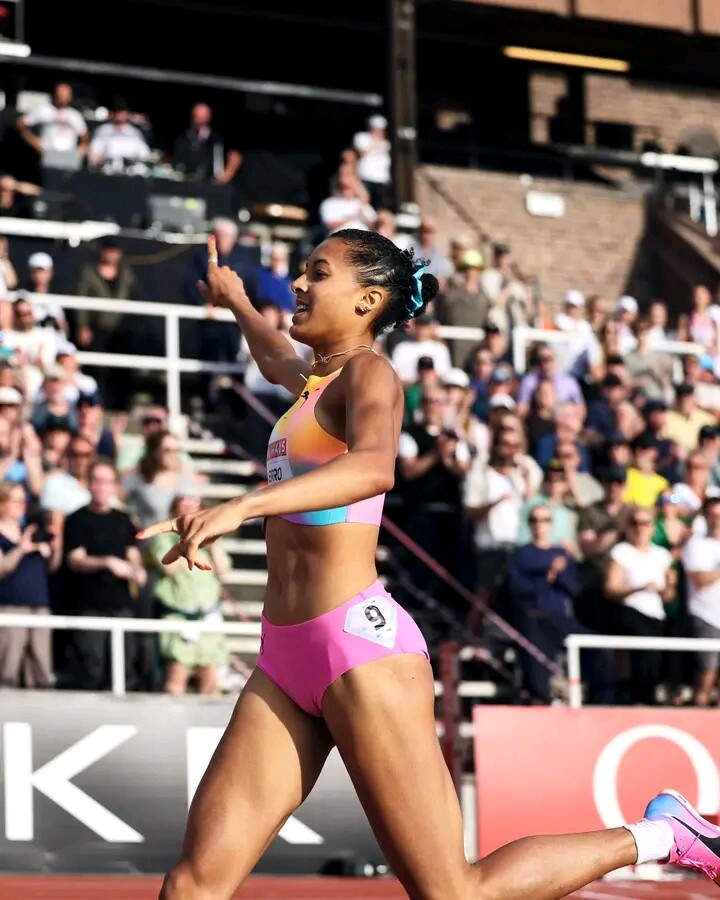
Behind the leading duo, the rest of the field produced high-quality performances in a race where almost every athlete was pushed to season’s or personal best levels.
Official Results – Women’s 800m (Stockholm DL)
1. Audrey Werro — Switzerland — 1:53.98 (WL, NR)
2. Keely Hodgkinson — Great Britain — 1:54.33 (NR)
3. Roisin Willis — United States — 1:57.56 (PB)
4. Anaïs Bourgoin — France — 1:57.68
5. Prudence Sekgodiso — South Africa — 1:57.70
6. Anna Wielgosz — Poland — 1:57.92 (PB)
7. Raevyn Rogers — United States — 1:57.94 (SB)
8. Sage Hurta-Klecker — United States — 1:58.26
9. Nigist Getachew — Ethiopia — 1:58.59
10. Pernille Karlsen Antonsen — Norway — 1:58.82 (PB)
11. Gabriela Gajanová — Slovakia — 2:02.88
DNF. Rachel Klopfenstein (Pacer)
From start to finish, the race unfolded at an unforgiving pace, with the front pack shredding expectations and rewriting the limits of women’s 800m running. Multiple athletes dipped under 1:58, highlighting just how exceptional the conditions and competition were.
As the dust settles in Stockholm, one question now rises above the rest: are we witnessing the beginning of a new era where the long-standing world record from 1983 finally comes under serious threat?
If this race is any indication, history may not only be under pressure—it may already be closing in.
by Erick Cheruiyot for My Best Runs.
Login to leave a comment
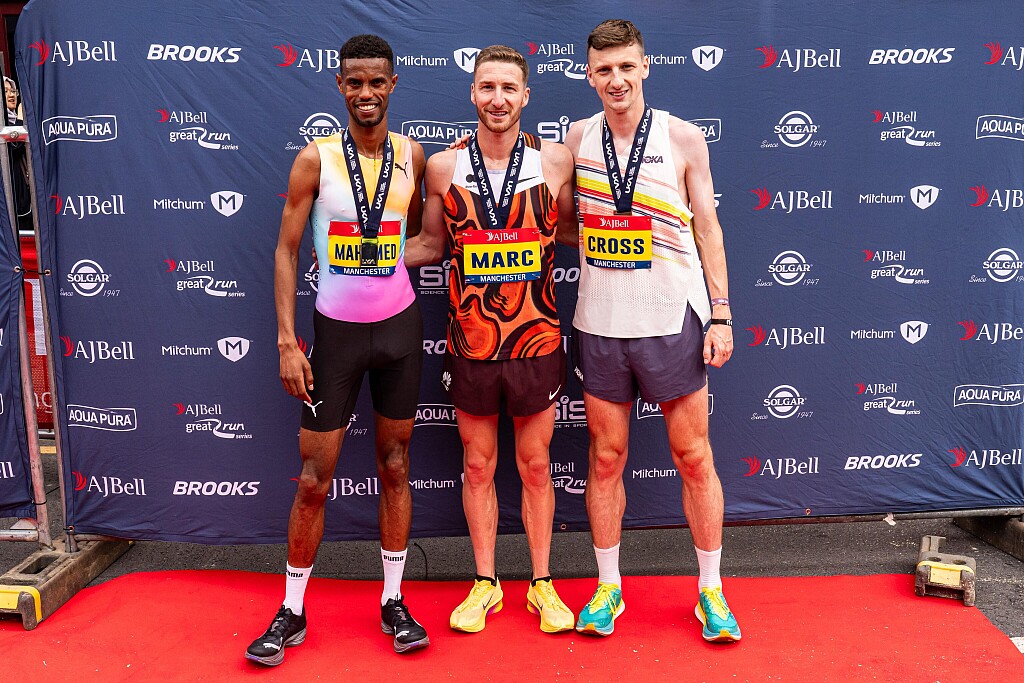
Neale and Scott Capture British 10K Crowns in Thrilling Manchester Showdown
The streets of Manchester delivered another memorable chapter in British road running as Amy-Eloise Neale and Marc Scott emerged as the UK Athletics 10K Road Race Champions during the 2026 AJ Bell Great Manchester Run.
Against a backdrop of world-class competition and passionate crowds lining the course, both athletes produced composed and determined performances to secure the national titles in races packed with international talent.
For Neale, the victory marked another significant milestone in her return to top-level competition after a challenging period disrupted by injuries. The former European Indoor 3000m champion crossed the finish line in 32:16, finishing as the leading British woman and third overall in a highly competitive field.
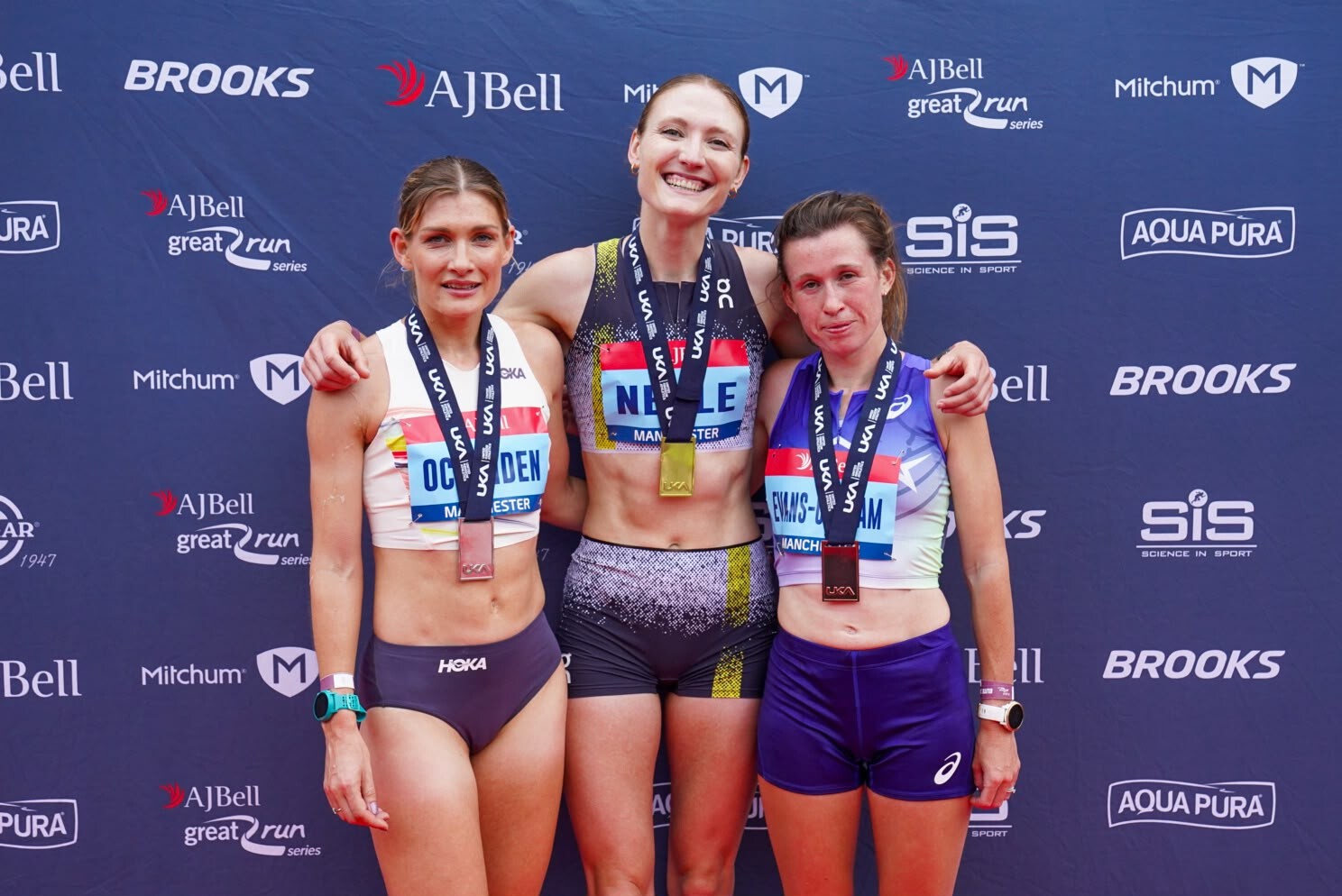
The women's race quickly developed into a two-athlete battle at the front as Klara Lukan of Slovenia and Weini Kelati of the United States broke away from the field early. European 10km record holder Lukan displayed her finishing strength over the closing stages, pulling clear to claim victory in 30:58 after an intense duel with Kelati.
Behind the leading pair, the battle for positions remained fiercely contested. Clara Evans-Gray led the chase group for much of the race before Germany's Konstanze Klosterhalfen surged forward. However, Neale produced an impressive late-race charge, gradually closing the gap before overtaking Klosterhalfen in the final stages to secure third place overall and the British title. Verity Ockenden finished as the second British athlete home in 32:21.
Reflecting on her performance, Neale expressed satisfaction not only with the result but also with her continued progress back to full fitness. Her measured approach paid dividends as she balanced competitive ambitions with the simple enjoyment of racing once again.
The men's contest was equally compelling, with Scott demonstrating both tactical awareness and resilience to secure the British crown. The Richmond & Zetland athlete clocked 28:33, finishing ahead of fellow Britons Mahamed Mahamed and Ellis Cross in a tightly fought domestic battle.
Scott positioned himself with the lead group during the early stages as strong headwinds influenced race tactics. While the demanding pace took its toll through the middle section of the course, he maintained enough strength to hold off his British rivals and claim the national title by five seconds over Mahamed, with Cross a further seven seconds behind.
At the front of the race, Olympic champion Selemon Barega showcased his class to take the overall victory, finishing comfortably ahead of the field.
Meanwhile, one of Britain's most decorated Paralympians added another achievement to an already remarkable legacy. Six-time Paralympic champion David Weir powered to his tenth Great Manchester Run wheelchair victory, stopping the clock at 21:19 after a dominant display.
In the women's wheelchair race, Melanie Woods delivered a standout performance of her own, setting a new course record of 24:09 to claim victory.
With elite international winners, dramatic battles for national honours, and record-breaking performances, Manchester once again proved why it remains one of the premier road-running events on the athletics calendar. For Neale and Scott, however, the day belonged to them as they left the city crowned Britain's 10K champions.
by Erick Cheruiyot for My Best Runs.
Login to leave a comment

Great Manchester Run
The Great Manchester Run, established in 2003, is an annual 10 kilometer run through Greater Manchester and is the largest 10K in Europe. Usually held in mid-May, it is the third-largest mass participation running event in the United Kingdom behind the Great North Run and the London Marathon. It is part of the Great Runs series of road races in...
more...
Elite Showdown Awaits: Ebenyo, Rodriguez Among Top Names Confirmed for Chicago 13.1
A thrilling international battle is shaping up on the streets of Chicago as organizers have unveiled a strong men's elite field for the 2026 Chicago 13.1, scheduled for June 7.
Leading the lineup is Kenyan distance-running star Daniel Ebenyo, whose outstanding personal best of 59:04 makes him one of the fastest athletes ever entered in the event. Renowned for his aggressive racing style and remarkable strength over the half marathon distance, Ebenyo arrives as one of the leading contenders for victory.
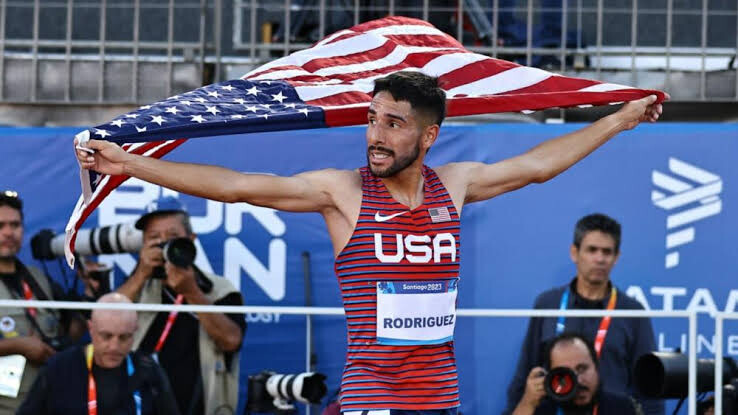
However, the Kenyan will face a formidable challenge from American standout Isai Rodriguez. The United States star owns an impressive personal best of 59:57 and will be eager to deliver a memorable performance on home soil. With Rodriguez and Ebenyo both having broken the prestigious 60-minute barrier, their clash is expected to be one of the highlights of the race.
The Kenyan contingent is further strengthened by the inclusion of Kipchirchir Sosten, Sam Chelanga, and Peter Njeru, adding considerable depth to an already competitive field. Njeru enters the race with a personal best of 1:00:29 and will be looking to challenge the front-runners in what promises to be a fast-paced contest.
As the Chicago 13.1 continues to establish itself as one of the premier road racing events in the United States, this year's edition has attracted an exciting blend of international talent and local stars. The flat and fast course is known for producing quick times, setting the stage for a potentially spectacular race.
With elite athletes from Kenya and the United States set to go head-to-head, fans can expect a captivating battle for supremacy when the starting gun sounds on June 7 in Chicago.
by Erick Cheruiyot for My Best Runs.
Login to leave a comment
