

Running News Daily
Running News Daily is edited by Bob Anderson and team. Send your news items to bob@mybestruns.com Advertising opportunities available.
Index to Daily Posts · Sign Up For Updates · Run The World Feed
Articles tagged #Berlin Marathon
Today's Running News



At 44, Kenenisa Bekele Refuses To Let Time Have The Final Word
At an age when most elite distance runners have long stepped away from the highest level of competition, Kenenisa Bekele continues to challenge the limits of longevity. At 44, the Ethiopian distance-running icon remains willing to line up against a new generation of younger athletes, even as injuries and difficult races have made the latest chapter of his remarkable career increasingly demanding.
Bekele’s recent journey has been a mixture of extraordinary resilience and frustrating setbacks. His 2024 campaign demonstrated both sides of that story. At the London Marathon in April, he produced one of the greatest performances ever recorded by a masters athlete, running 2:04:15 for second place behind Alexander Mutiso Munyao. The performance established a world record for the M40 age category and showed that, even beyond his 40th birthday, Bekele could still operate at a breathtaking level.
A few months later, however, the Olympic marathon in Paris offered a very different challenge. Bekele finished 39th in 2:12:24 after struggling with a hamstring problem during the race. He later explained that he felt the hamstring stretch around 15 kilometres, yet he continued to the finish rather than joining the growing list of athletes who abandoned the brutal Olympic course.
The setbacks continued into 2025, when Bekele recorded a DNF at the TCS New York City Marathon. Then came another obstacle in 2026. His highly anticipated return to the Berlin Marathon was halted after he suffered a left Achilles tendon injury in training only days before the race, forcing him to withdraw.

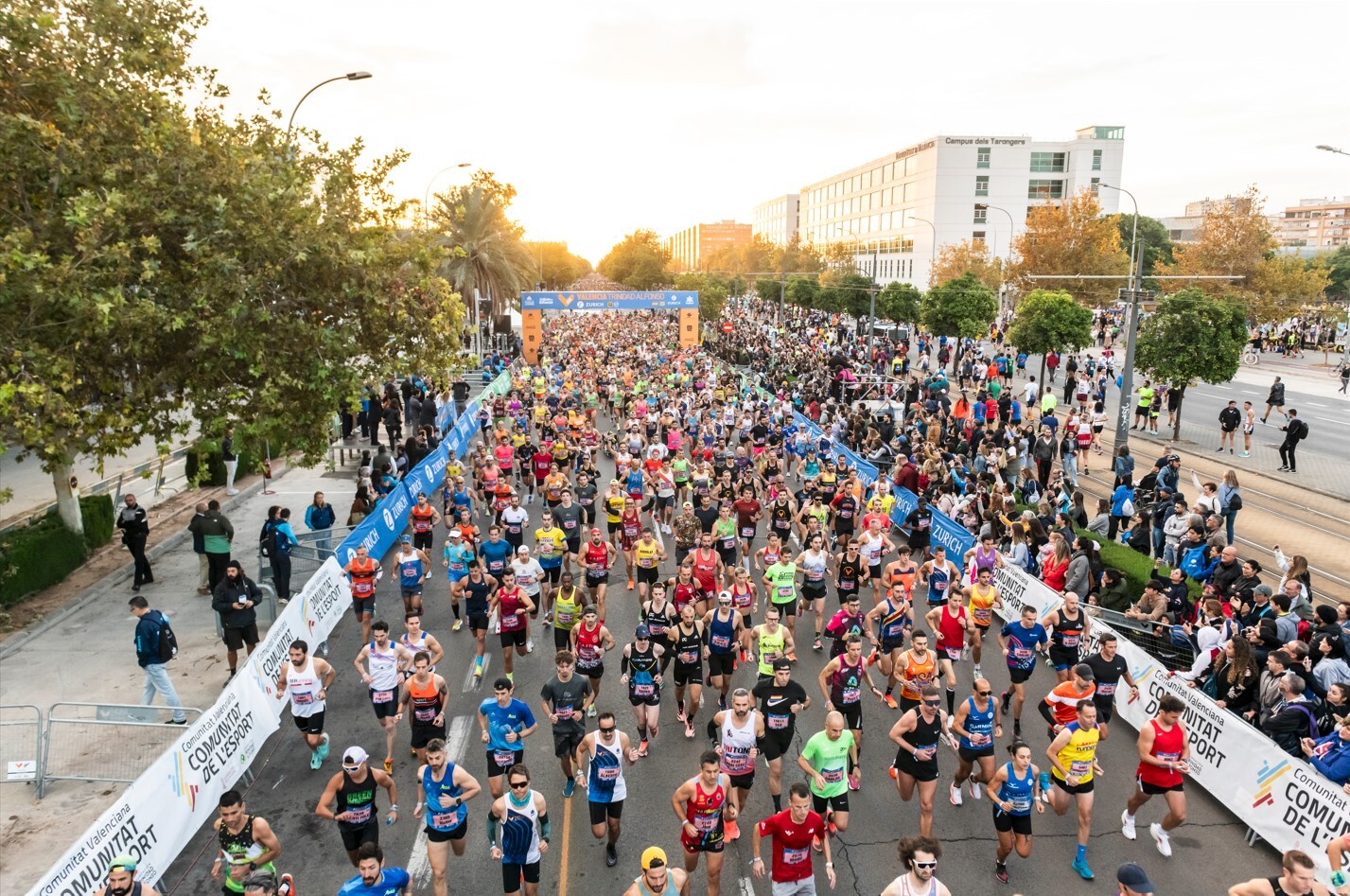
Rather than allowing another setback to end the conversation, Bekele returned to competition at the Valencia Half Marathon on October 25, 2026. The target was ambitious: breaking the 60-minute barrier for the first time in his career while pursuing the M40 world record of 59:53.
But the clock proved unforgiving. Bekele recorded 14:38 through the opening 5 kilometres before eventually dropping out of the race.
For an athlete whose career has been defined by extraordinary victories, records and comebacks, another DNF may look like a painful statistic. But judging Bekele solely by his most recent results would overlook the extraordinary body of work that has made him one of the greatest distance runners in history.
In December 2023, at 41, he ran 2:04:19 to finish fourth at the Valencia Marathon, setting a world masters record at the time. Four months later, he went even faster in London, producing the remarkable 2:04:15 that remains his M40 world record.
And his legacy extends far beyond the marathon. Bekele is a three-time Olympic champion, winning the 10,000 metres at Athens 2004 before completing the 5,000m and 10,000m double at Beijing 2008. He also collected five World Championship gold medals and 11 World Cross Country Championship titles.
His 2:01:41 victory at the 2019 Berlin Marathon remains one of the most extraordinary marathon performances ever produced. Although it is no longer the second-fastest marathon in history—as faster performances have since been recorded—it remains among the all-time great marks and currently sits seventh on the World Athletics all-time list.
That is what makes Bekele’s current journey so compelling. The 44-year-old is no longer competing simply to add another ordinary result to his résumé. Every appearance represents another test of how far experience, determination and an extraordinary athletic foundation can carry an athlete against the relentless passage of time.
Valencia did not deliver the sub-60 performance he was chasing. The Achilles injury disrupted his Berlin comeback. New York ended without a finish. Yet none of those moments can erase what Bekele has already achieved—or the remarkable fact that he continues to stand on start lines against athletes who are sometimes more than a decade younger.
Perhaps that is the most enduring part of Kenenisa Bekele’s story. Records eventually fall, races eventually become difficult, and the body eventually demands a price. But the competitive spirit that carried him from Olympic glory to world records has never disappeared.
At 44, Bekele may no longer be chasing the same version of himself who dominated the track and conquered Berlin. Instead, he is fighting a different battle—the battle to discover just how much of that greatness still remains.
And as long as Kenenisa Bekele keeps answering the starting gun, the running world will keep watching.
by Erick Cheruiyot for My Best Runs.
Login to leave a comment
Records in Sight as Frankfurt Assembles Its Fastest Men’s Field
Petros leads Germany’s top marathoners, Zeineba Yimer targets the women’s course record, and Kenya’s Mark Kiptoo chases an age-group milestone at Sunday’s Mainova Frankfurt Marathon.
The Mainova Frankfurt Marathon could deliver a series of record performances on Sunday, October 25—if the weather cooperates.
The 43rd edition brings together the fastest men’s field in the event’s history, with German and European records potentially within reach. Both course records—2:03:42 for men and 2:17:25 for women—could come under pressure, while a promising German debut and an M50 world-best attempt add further interest.
Conditions will play a decisive role. Rain, cold and strong winds could derail ambitious pacing plans. If the weather settles, Frankfurt’s flat course could provide the setting for an exceptional day.
Organizers have reported a record 19,720 entries from 128 nations. The occasion also marks the final race for Jo Schindler as race director.
“We are absolutely delighted with this record number of entries. Over the past 25 years, we have taken the Mainova Frankfurt Marathon to a whole new level in every aspect,” Schindler said.
Germany’s Best Take Center Stage
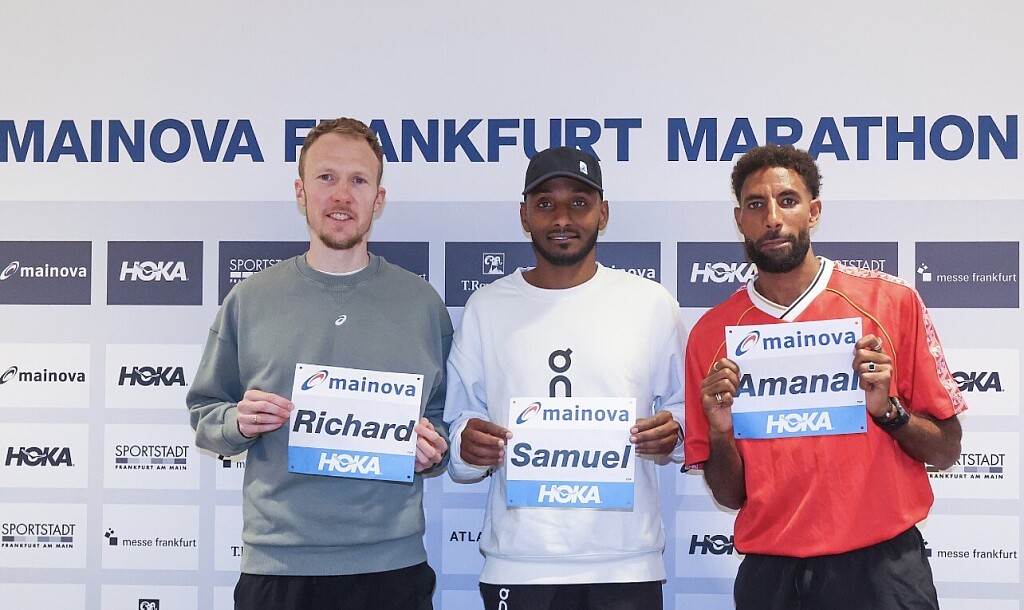
Leading the men’s field is Amanal Petros, the German record-holder at 2:04:03, who won the European marathon title in Birmingham in August. He arrives with ambitions that could extend beyond his own national mark to the European record of 2:03:36.
“My training in Kenya went very well. If the weather is on my side, it could happen,” Petros said. “I have been dreaming of breaking the European record for several years now.”
A European record would also take him under Wilson Kipsang’s Frankfurt course record of 2:03:42, set in 2011.
Petros will face a strong domestic challenge from Samuel Fitwi, whose 2:04:45 runner-up finish in Hamburg in April is the fastest German performance this year.
“If the weather is good, the German record is within reach on the flat course in Frankfurt. I am well prepared and definitely want to beat my personal best,” Fitwi said.
Richard Ringer, the 2022 European marathon champion, completes the leading German trio. His record-eligible personal best is 2:05:46, although he ran 2:04:47 at Boston this spring on its non-record-eligible course.
Ringer plans a more measured approach after overcoming a muscle problem following the European Championships.
“I do not expect to be running right at the front on Sunday and will probably go with a second group,” he said.
Biwott Returns With Winning Ambition
The German contenders will have plenty of international competition.
Ethiopia’s Andualem Belay brings a personal best of 2:04:44, while Kenya’s Benard Biwottreturns to the scene of his breakthrough. Biwott won his marathon debut in Frankfurt in 2024 in 2:05:54, then improved to 2:05:25 while winning the 2025 Paris Marathon.
“My aim is to win on Sunday. I think I can achieve a time of around 2:04:00,” Biwott said.
Another Kenyan, Mark Kiptoo, could deliver one of the day’s most compelling performances. Now 50, the 2014 Frankfurt champion is targeting the M50 world best of 2:19:29, set by South Africa’s Titus Mamabolo in Durban in 1991.
Kiptoo has already made masters history in Frankfurt, running 2:07:50 here in 2018.
Yimer Targets the Women’s Course Record
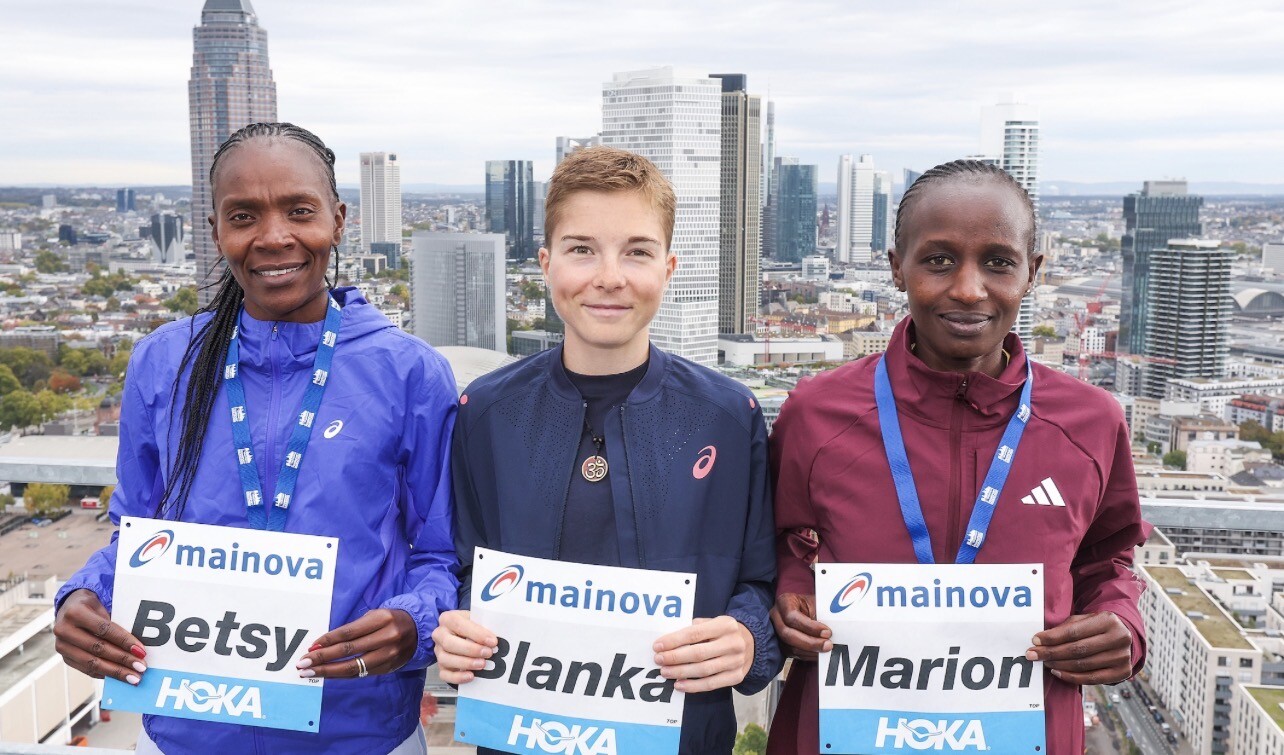
Ethiopia’s Zeineba Yimer leads the women’s field with a personal best of 2:18:47, set while finishing third in Barcelona this spring
The 28-year-old is seeking a turnaround after stomach problems forced her out of the Berlin Marathon four weeks ago. Her ambitions include challenging the Frankfurt course record of 2:17:25, set by Hawi Feysa in 2024.
“Now I want to make the most of the flat course in Frankfurt and set a personal best. I have also got my sights set on the course record and want to break that mark as well,” Yimer said.
American Betsy Saina, who has run 2:19:17, returns from a maternity break and is targeting a halfway split of 70:00.
Kenya’s Marion Kibor, who improved to 2:21:12 in Hamburg this spring, also hopes to break 2:20. Ethiopia’s Meskerem Assefa, the 2018 Frankfurt champion, returns with the 2:20:36 personal best she set during that victory.
Dörfel Runs on Instinct in Marathon Debut
Germany’s Blanka Dörfel adds an intriguing debut to the women’s race.
The 24-year-old ran a half-marathon personal best of 68:08 in Mainz this spring and intends to trust her feel for the pace as she moves up to the marathon.
“I will be running without a watch and will trust my instincts,” Dörfel said.
Her half-marathon performance suggests the potential for a strong debut. The German women’s debut benchmark is 2:23:57, set by Melat Kejeta in Berlin in 2019.
Elite Runners with Personal Bests
MEN
Amanal Petros GER 2:04:03
Andualem Belay ETH 2:04:44
Samuel Fitwi GER 2:04:45
Richard Ringer GER 2:04:47
Benard Biwott KEN 2:05:25
Haimro Alame ISR 2:06:04
Antenayehu Dagnachew ETH 2:06:55
Jiregna Geleta ETH 2:06:57
Derara Hurisa ETH 2:08:09
Jirata Dinki ETH 2:08:18
Abe Gashahun ETH 2:08:35
Lemawork Ketema AUT 2:10:44
WOMEN
Zeineba Yimer ETH 2:18:47
Betsy Saina USA 2:19:17
Meskerem Assefa ETH 2:20:36
Siranesh Yirga ETH 2:21:08
Marion Kibor KEN 2:21:12
Janet Ruguru KEN 2:23:00
Mehret Gemeda ETH 2:23:29
Milicent Jelimo KEN 2:24:19
Obse Abdeta ETH 2:27:14
Martina Strähl SUI 2:28:07
Selam Fente ETH 2:28:22
Aselef Amare ETH 2:28:47
Blanka Dörfel GER Debut
by Race News Service
Login to leave a comment

Mainova Frankfurt Marathon
Frankfurt is an unexpectedly traditional and charming city, with half-timbered buildings huddled in its quaint medieval Altstadt (old city), cosy apple wine taverns serving hearty regional food, village-like neighbourhoods filled with outdoor cafes, boutiques and street art, and beautiful parks, gardens and riverside paths. The city's cache of museums is second in Germany only to Berlin’s, and its nightlife...
more...
Tigst Assefa Set A Berlin Record Through Pain — Now The Real Fight Begins
Ethiopian marathon superstar Tigst Assefa has begun the long road to recovery after undergoing successful surgery to repair a ruptured right Achilles tendon sustained during the closing stages of the 2026 Berlin Marathon.
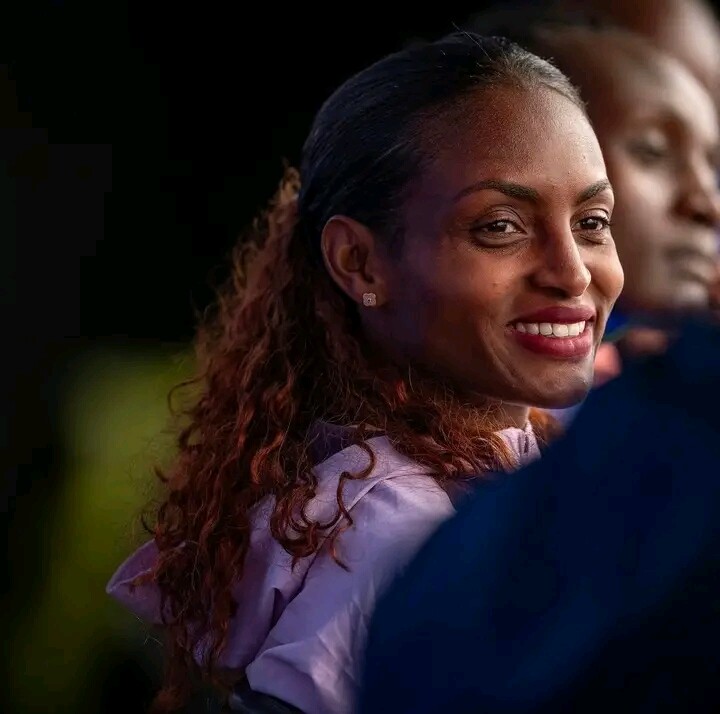
What made her performance in Berlin even more remarkable was not simply the record she broke, but the extraordinary circumstances under which she achieved it.
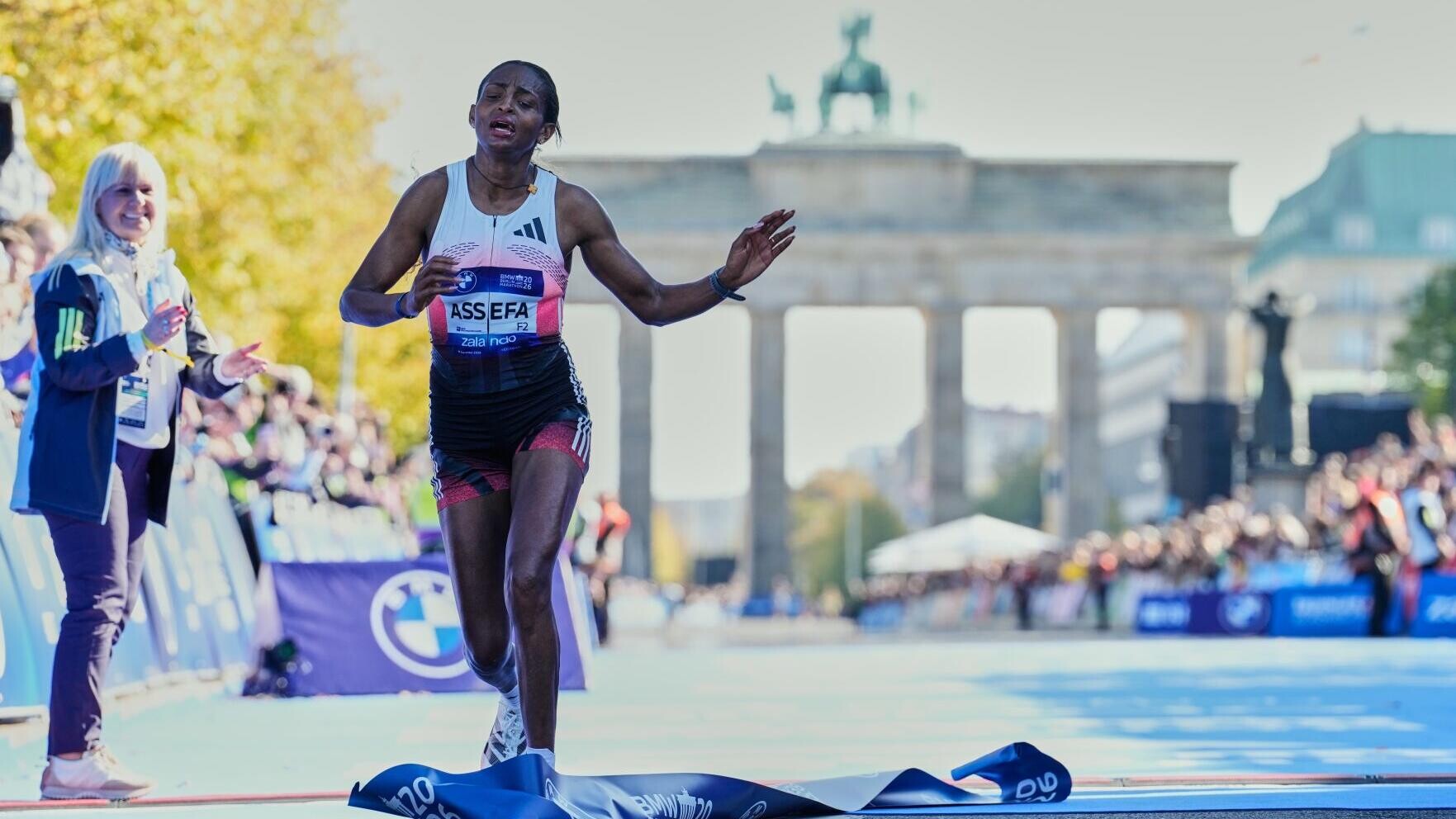
With just a few kilometres remaining, Assefa suffered the serious Achilles injury. Yet instead of stopping, the Ethiopian fought through the pain, hopping and running on her injured leg as she battled her way toward the finish.
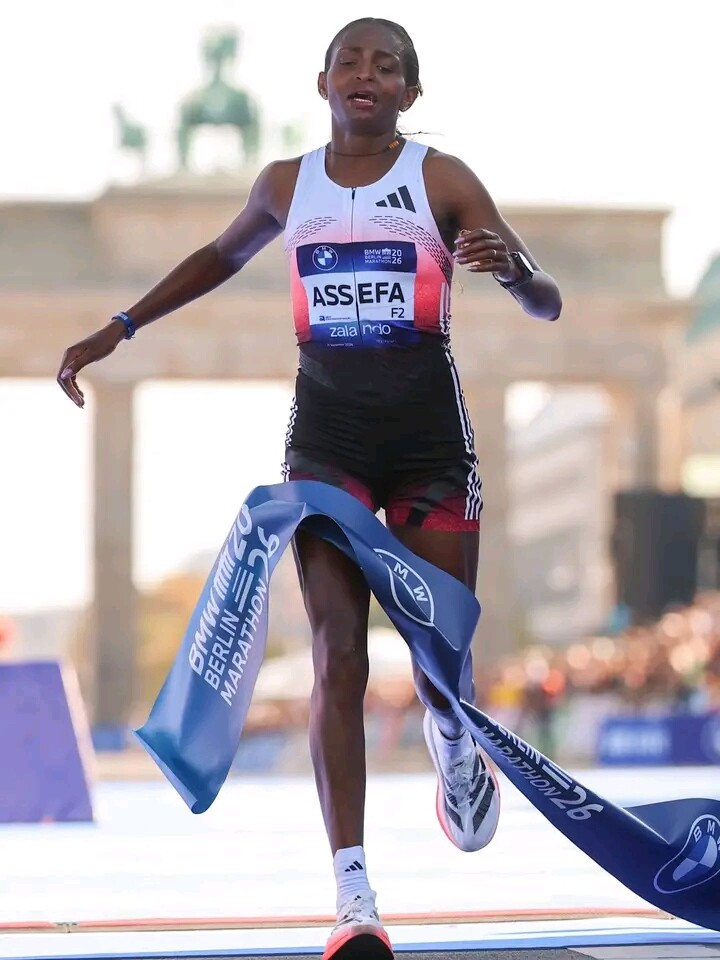
She eventually crossed the line in 2:11:04, producing a remarkable performance that secured a new Berlin Marathon course record despite the devastating injury.
It was a finish that revealed another side of a champion — one defined not only by speed and world-class talent, but also by extraordinary determination and an unwillingness to give up when the odds were suddenly stacked against her.
Following the race, Assefa underwent successful surgery in Munich, Germany, to repair the ruptured Achilles tendon. Her rehabilitation is now expected to keep her away from competitive running for at least six months as she begins the demanding process of healing, rebuilding strength and gradually working her way back toward full fitness.
Her medical care and recovery are being coordinated with the support of Demadonna Athletic Promotions.
For an athlete who has spent recent years redefining the limits of women’s marathon running, the coming months will require a very different kind of patience. There will be no starting lines, record attempts or final-kilometre battles. Instead, her progress will be measured through the quieter victories of rehabilitation — restoring strength, regaining confidence, rebuilding fitness and eventually returning to the training environment.
Assefa’s Berlin performance will forever be remembered for the course record, but the manner in which she reached the finish may prove just as unforgettable. She did not simply run through adversity; she fought her way through it.
Now, however, the record can wait.
The race has changed. The goal is no longer to chase seconds on the clock, but to give her body the time and care it needs to heal.
The road back may be long and challenging, but the athletics world will be watching, supporting and waiting for the day one of marathon running’s biggest stars is ready to lace up again.
by Erick Cheruiyot for My Best Runs.
Login to leave a comment
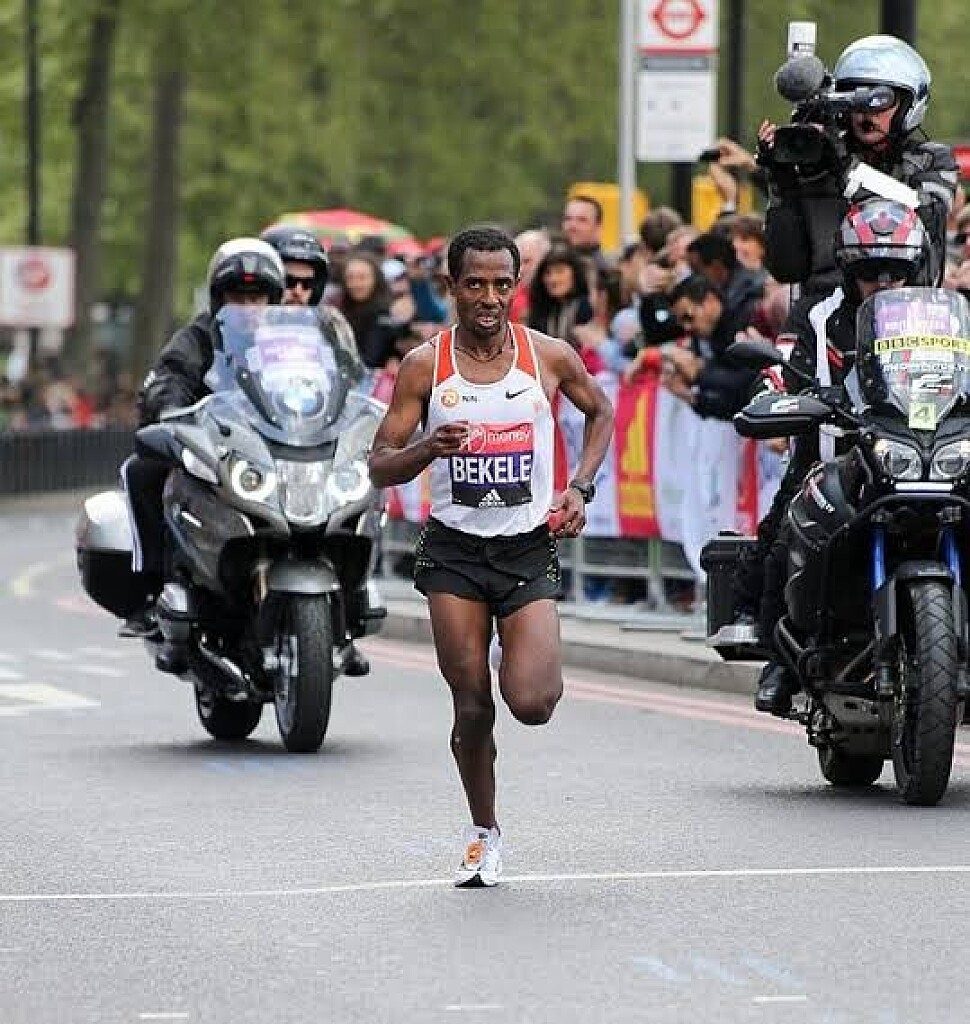
Kenenisa Bekele Targets Masters History In Valencia After Achilles Injury
Can The Legend Defy The Years? Kenenisa Bekele Is Chasing Another Piece Of History.
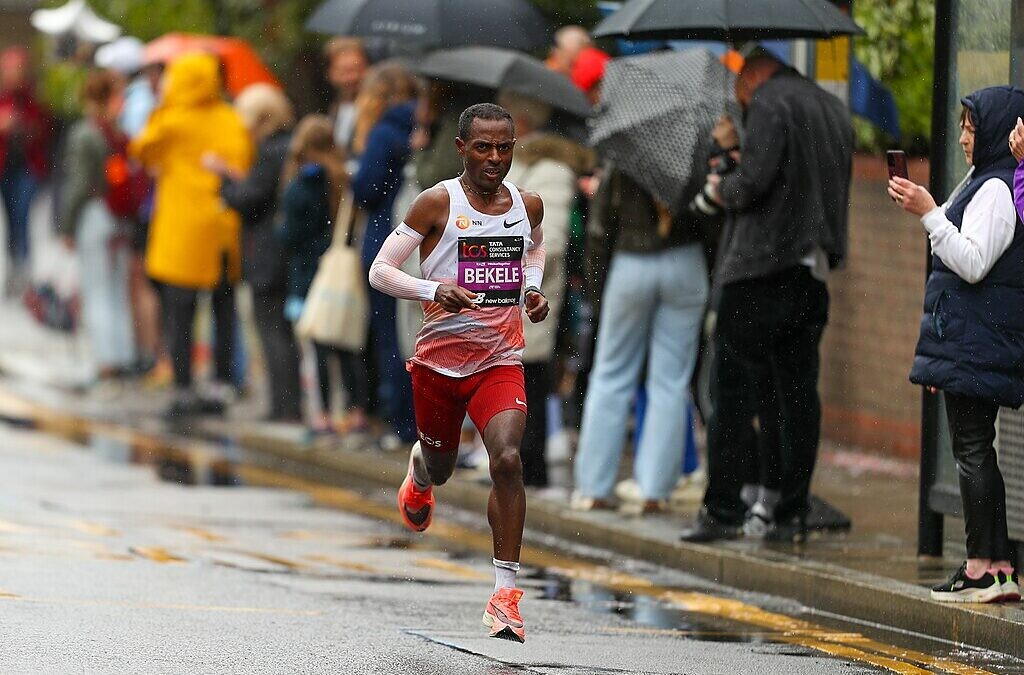
At 44, Ethiopian distance-running legend Kenenisa Bekele is preparing for another remarkable challenge as he returns to competition at the Valencia Half Marathon on October 25, 2026, only weeks after withdrawing from the Berlin Marathon because of a left Achilles tendon injury.
Rather than simply making a comeback, Bekele is targeting another piece of history. The three-time Olympic champion will have his sights set on the M40 world record of 59:53, held by Switzerland’s Tadesse Abraham.
Bekele’s personal best stands at 1:00:22, set at the Big Half in London in 2020. To break Abraham’s mark, the Ethiopian will need to take almost 30 seconds off his best — a formidable challenge, particularly after an injury and a disrupted season.
But Bekele has never been a stranger to defying expectations. His return to Valencia comes at an age when most elite distance runners have long since retired, yet he continues to test himself against the best of a younger generation.
And the challenge awaiting him will be formidable. The men’s field includes Rodrigue Kwizera (58:16), Jemal Yimer (58:33), Tadese Worku (58:47) and Daniel Ebenyo (59:04), giving Bekele a formidable group of sub-one-hour performers to race alongside.
Bekele will wear bib number 18, adding another intriguing detail to a comeback that has already generated huge interest across the running world. Valencia’s famously fast course could provide the perfect setting for the Ethiopian to attack the clock if his body responds well on race day.
For Bekele, however, this is about more than a number on the clock. From his extraordinary track dominance to his longevity on the marathon and road-racing scene, he has repeatedly shown an ability to compete long after many expected his career to wind down.
Now, another chapter awaits in Valencia. Can the 44-year-old Ethiopian legend turn back the clock, overcome the effects of his Achilles injury and rewrite the masters record books? The answer will come on October 25.
by Erick Cheruiyot for My Best Runs.
Login to leave a comment

Valencia Half Marathon
The Trinidad Alfonso Valencia Half Marathon has become one of the top running events in the world. Valencia is one of the fastest half marathon in the world. The race, organized by SD Correcaminos Athletics Club, celebrated its silver anniversary in style with record participation, record crowd numbers, Silver label IAAF accreditation and an atmosphere that you will not find...
more...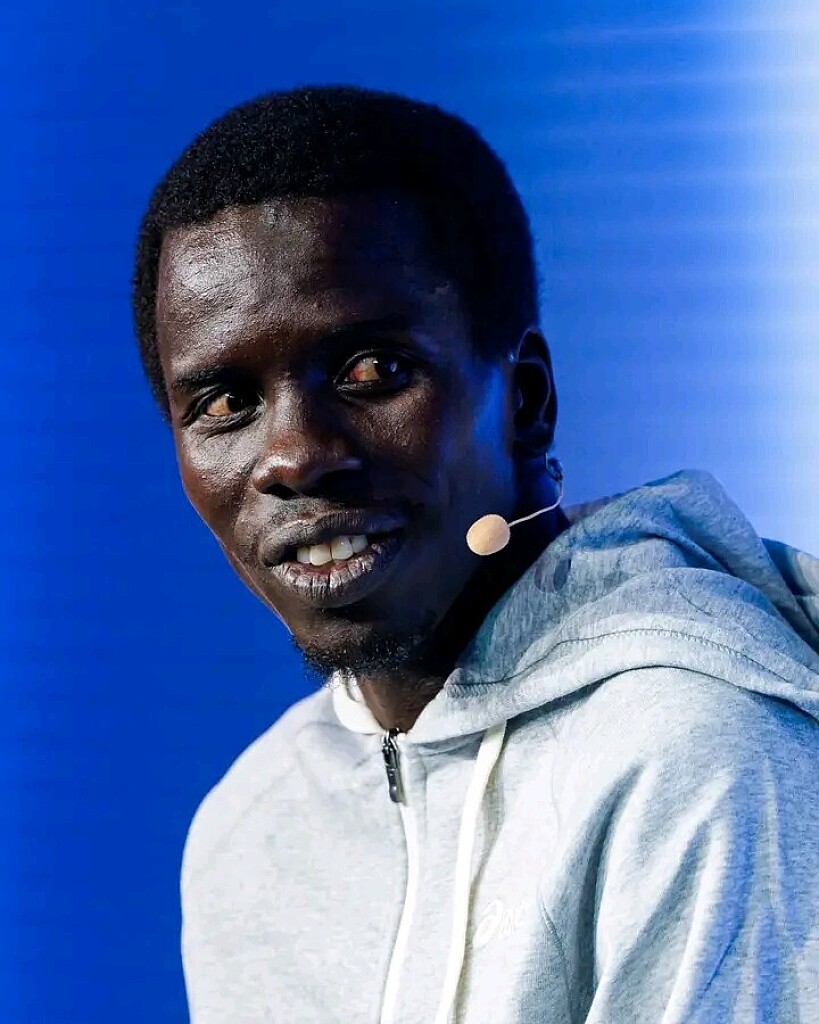
Geofry Kipchumba Returns To Defend Amsterdam Crown As World-Class Men’s And Women’s Fields Target History
The TCS Amsterdam Marathon is set for an exciting showdown on Sunday, 18 October, with an outstanding international field preparing to challenge the course records, pursue personal bests and compete for victory on one of Europe’s most prestigious marathon stages.
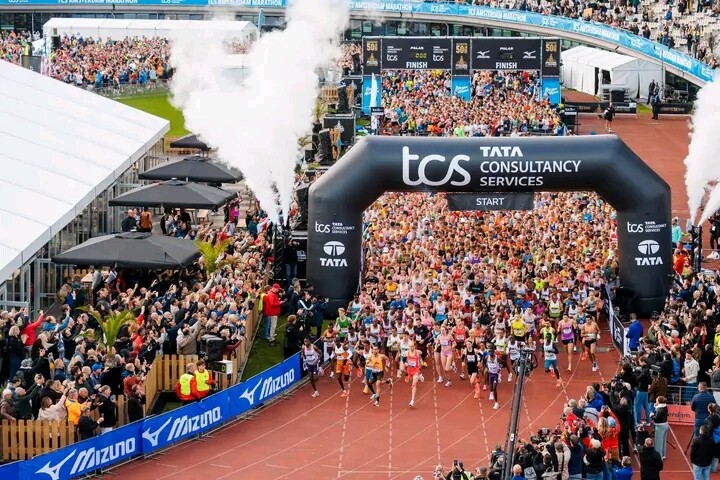
The 2026 edition promises compelling competition in both the men’s and women’s races. Kenya and Ethiopia will feature prominently among the leading contenders, with experienced champions, emerging talents and athletes making their marathon debuts all bringing ambitious targets to Amsterdam.
In the men’s race, defending champion Geofry Toroitich Kipchumba returns with the course record firmly in his sights after producing a remarkable performance last year.
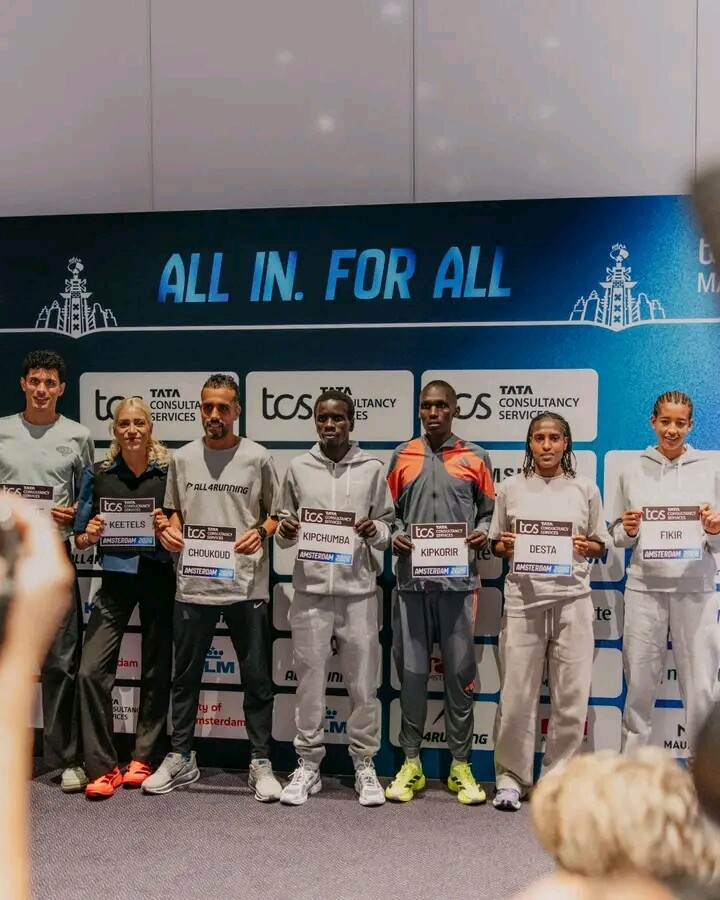
Kipchumba stormed to victory in 2:03:30 at the 50th edition of the race, establishing a new Amsterdam course record and the fastest marathon time ever recorded on Dutch soil. His return offers an opportunity to improve on that achievement, although a formidable field stands between him and another memorable victory.
The Kenyan is not the only athlete arriving with the potential to challenge the record. Ethiopia’s Haymanot Alew has a marathon personal best of 2:03:31, recorded in Berlin, leaving him just one second outside the existing course record. The 2026 Egmond Half Marathon winner will be among the athletes hoping to turn that narrow gap into history on Amsterdam’s streets.
Another major contender is Ethiopia’s Tsegaye Getachew, a two-time Amsterdam champion who won the race in 2022 and 2024 before finishing second in 2025 with a personal best of 2:04:18. His familiarity with the course and previous success make him an important presence in a race expected to feature an intense battle among the leading men.
The depth of the field is underlined by the presence of 10 athletes who have recorded marathon times below 2:05, according to the race organisers. With several runners capable of sustaining an exceptional pace, the contest could develop into a demanding tactical battle in which positioning, endurance and the ability to respond to late-race attacks will prove decisive.
Kenya’s Isaia Kipkoech Lasoi is another athlete attracting attention ahead of the race, although his challenge comes with a different question. The half-marathon specialist will make his marathon debut after establishing an impressive personal best of 58:10 over 21.0975 kilometres.
His speed over the half-marathon distance provides an intriguing indication of his potential, but the full marathon presents an entirely different test. How effectively he manages his energy beyond the halfway point and adapts to the demands of 42.195 kilometres will be among the most interesting aspects of his first appearance at the distance.
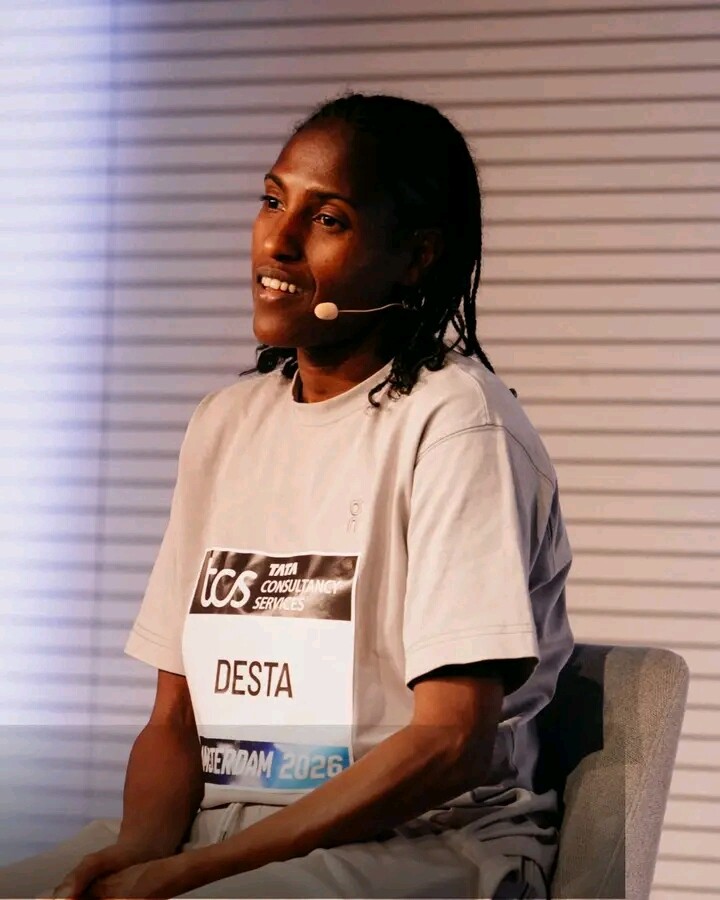
While the men prepare to attack the 2:03:30 course record, the women’s race has its own compelling storyline, with four Ethiopian athletes arriving with personal bests faster than 2:20.
Aynalem Desta, the defending champion, returns after winning last year’s 50th edition in a personal best of 2:17:37. Her familiarity with the course and experience of winning in Amsterdam place her among the leading contenders as she seeks to defend her title.
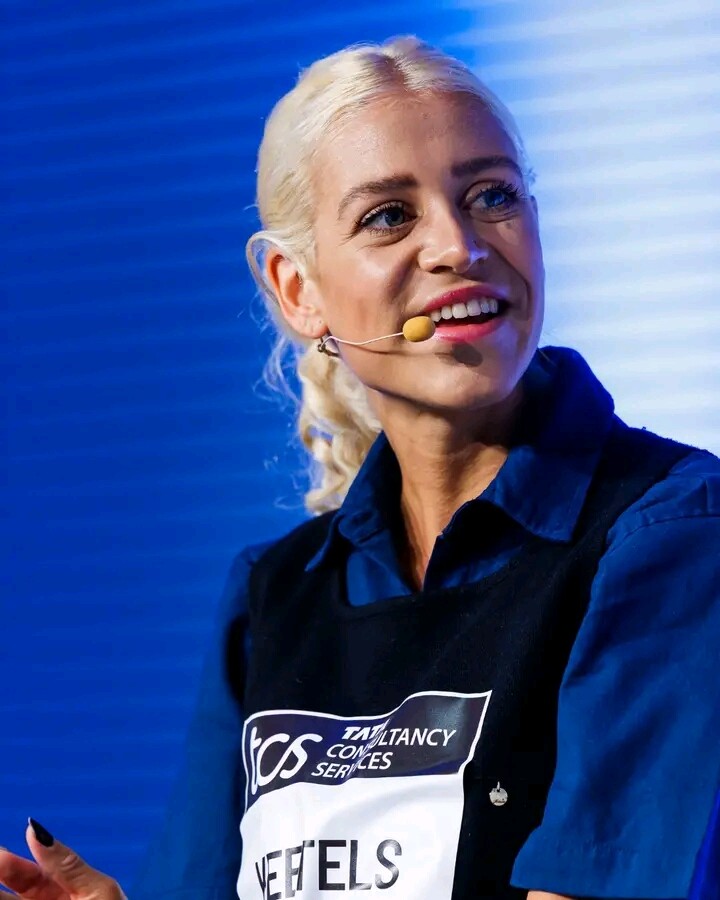
However, Desta faces a formidable challenge from compatriot Meseret Belete Tola, the 2023 Amsterdam champion, whose personal best stands at 2:18:21. Belete’s previous success in the Dutch capital adds another layer of intrigue to a race featuring multiple athletes with the credentials to contend for victory.
Ethiopia’s Mestawut Fikir Truneh also brings considerable experience and a strong personal best of 2:18:48, recorded when she finished second at the 2024 Berlin Marathon. Meanwhile, compatriot Buze Diriba arrives with a best of 2:19:34, ensuring that the Ethiopian challenge extends well beyond the two former Amsterdam champions.
The international depth continues with Bahrain’s Desi Jisa Mokonin, Ethiopia’s Yeshi Kalayu Chekole and Eritrea’s Nazret Weldu Gebrehiwet, all of whom have recorded performances close to the two-hour-and-20-minute barrier.
Sweden’s Abeba Aregawi, a former world champion over 1,500 metres, adds another fascinating dimension to the contest. Aregawi set a Swedish marathon record of 2:23:12 on her debut earlier this year and will now face another major test as she continues her transition from track running to the marathon.
With the women’s course record standing at 2:16:52, the question is whether the leading contenders can produce the performance required to challenge it. Desta’s personal best of 2:17:37 already places her within striking distance, while Belete, Fikir and Diriba will be looking to turn their own ambitions into competitive results.
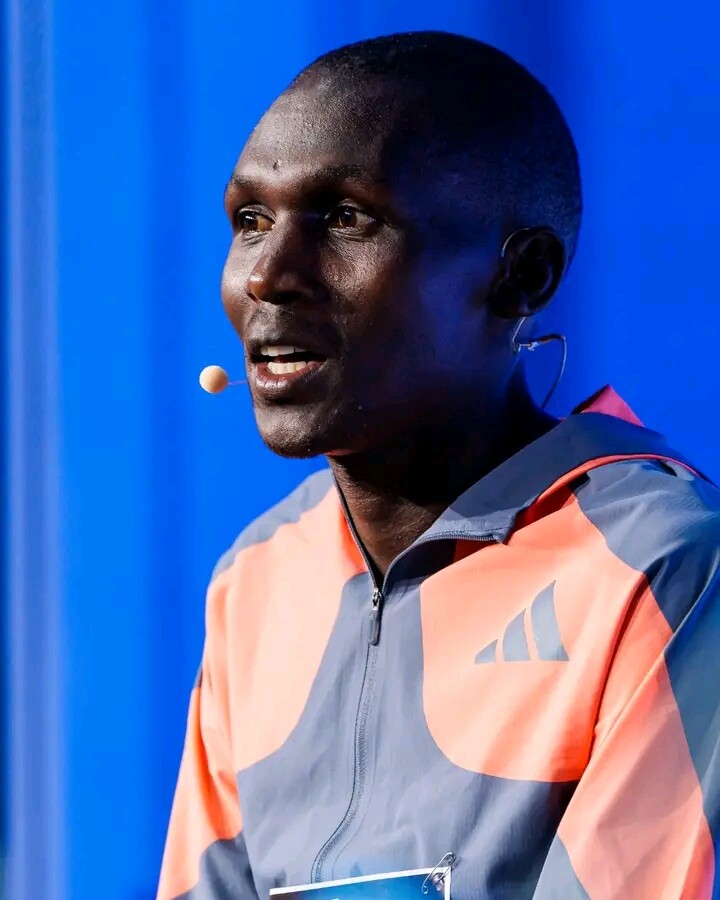
Beyond the elite fields, the athletes’ comments at the pre-race press conference have provided a glimpse into the different approaches they will bring to Sunday’s contest.
Kenya’s Nicholas Kipkorir expressed confidence in his return to Amsterdam, describing the city as a second home and believing that his familiarity with the environment could help him deliver his best performance.
“I love Amsterdam. It feels like my second home, and I know that will help me run my best time,” Kipkorir said.
His compatriot Geofry Kipchumba has set his sights on achieving another personal best while also fighting for victory. His ambition reflects the competitive spirit surrounding the men’s race, where the defending champion and several challengers are expected to target fast times.
“I’m going for another personal best and the win,” Kipchumba said.
Ethiopia’s Aynalem Desta is equally determined to build on her previous success in Amsterdam. Having won last year’s race in a personal best of 2:17:37, she will be aiming to deliver another strong performance against a deep women’s field.
“I love the TCS Amsterdam Marathon. I’m happy with the race I ran here last year, and I want to perform even better this year,” Desta explained.
Fellow Ethiopian Mestawut Fikir Truneh emphasised the importance of patience and perseverance, qualities that often determine the outcome of a marathon when fatigue begins to affect even the strongest runners.
“A marathon requires patience. You must not give up hope until the very last moment. Keep going and never give up,” Fikir said.
Among the Dutch athletes, Mikky Keetels has established a clear objective: breaking the two-hour-and-30-minute barrier, with hopes of going even faster if conditions allow.
“I really want to run under 2:30, and secretly maybe even a little faster,” Keetels revealed.
Fellow Dutch runner Noah Schutte is concentrating on the closing stages of the race, when maintaining pace and fighting through fatigue can make the difference between achieving a target and falling short.
“I especially want to give everything in the final kilometres and keep fighting,” Schutte said.
For Khalid Choukoud, the race presents an opportunity to improve his personal best while continuing to demonstrate his competitiveness at the age of 40. Breaking 2:10 would represent a particularly significant achievement for the experienced Dutch marathoner.
“It would be great to improve my personal best. But if I run under 2:10 at the age of 40, that would be a great achievement too,” Choukoud said.
All these ambitions will converge on Sunday, when the athletes take on the streets of Amsterdam before finishing inside the iconic Olympic Stadium.
The defending champions will be under pressure to retain their titles, record holders will be challenged by determined rivals, and debutants will have the opportunity to discover what they can achieve over the full marathon distance.
For Kipchumba, the immediate target is to defend his crown and potentially lower the 2:03:30 course record. For Alew, it is an opportunity to bridge the one-second gap separating his personal best from the mark. Getachew will be seeking another victory, while Lasoi faces the challenge of translating his exceptional half-marathon speed into marathon success.
In the women’s race, Desta will attempt to defend her title against a field featuring former champions, major-marathon performers and several athletes capable of producing personal bests. With the 2:16:52 course record in sight, the leading women could also make a serious attempt to rewrite the record books.
One start line will unite these athletes, but their objectives are different. Some are pursuing victory, others are targeting personal records, and a select few have their sights set on history.
When the gun fires on 18 October, the preparation will be over and the real test will begin. Amsterdam is ready for a day of world-class marathon racing, with the possibility of new records adding even greater anticipation to an already compelling contest.
by Erick Cheruiyot for My Best Runs.
Login to leave a comment
TCS Amsterdam Marathon
Do you want to enjoy Amsterdam in October and all that the city has to offer you? Want to feel a real athlete and start and finish in the historic Olympic stadium? Or run across the widely discussed passage under the beautiful National Museum? Then come to Amsterdam for the annual TCS Amsterdam Marathon in October! The TCS Amsterdam Marathon...
more...
Amos Kipruto Clocks Fifth-Fastest Marathon Major Time In History With Sensational Chicago Victory
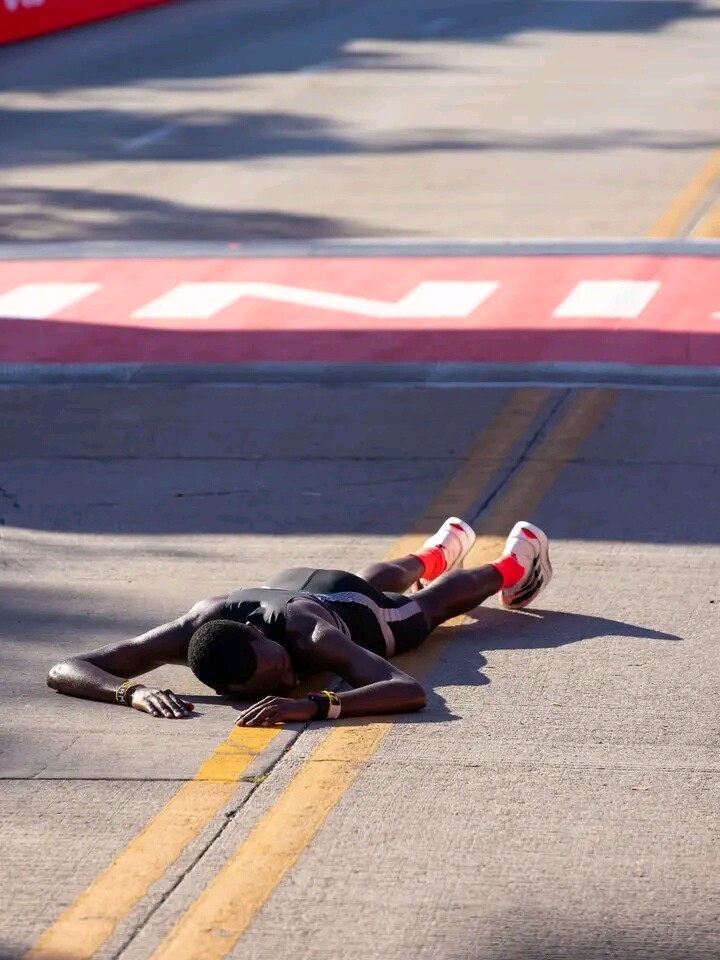
Amos Kipruto delivered a sensational performance at the 2026 Bank of America Chicago Marathon, storming to victory in 2:01:09 and securing his place among the fastest marathon runners in history.

The Kenyan distance star produced a remarkable display of endurance, speed and determination to conquer the streets of Chicago, adding another prestigious title to his impressive career. His winning time ranks joint fifth on the all-time list of the fastest performances recorded at the Abbott World Marathon Majors, matching the 2:01:09 achieved by fellow Kenyan Eliud Kipchoge at the 2022 Berlin Marathon.
Kipruto's performance was particularly significant because it came in an era when the men's marathon world record has entered previously unimaginable territory. Kenya's Sabastian Sawe currently holds the official world record of 1:59:30, set at the 2026 London Marathon, where he became the first man to complete a record-eligible marathon in under two hours.
Sawe's historic achievement surpassed the previous world record of 2:00:35, set by the late Kelvin Kiptum at the 2023 Chicago Marathon. Kiptum's performance had represented a major breakthrough for marathon running before Sawe pushed the boundaries even further with his extraordinary sub-two-hour performance in London.
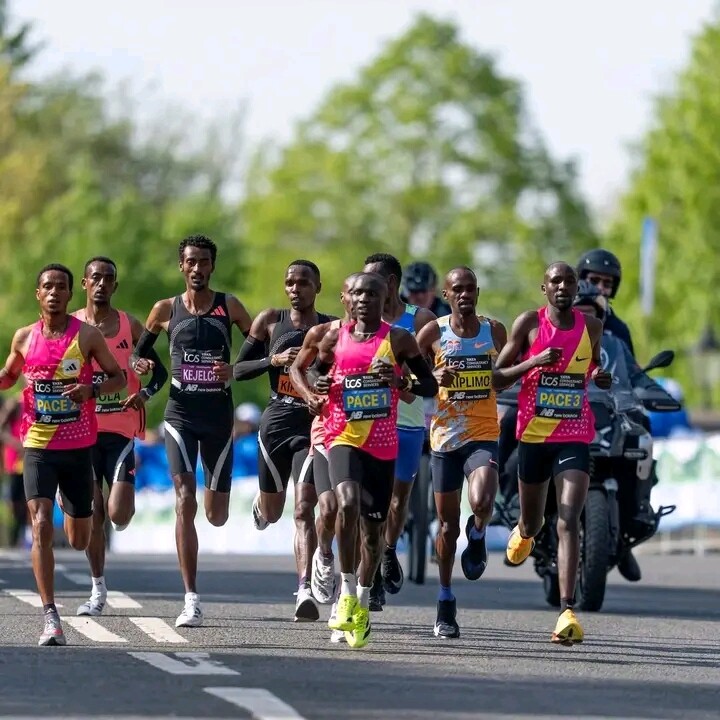
Behind Sawe on the updated all-time list are Ethiopia's Yomif Kejelcha, who ran 1:59:41 in London, and Uganda's Jacob Kiplimo, who clocked 2:00:28 at the same race. Kiptum's 2:00:35 remains one of the greatest performances in marathon history, while Kipruto's 2:01:09 now places him alongside Kipchoge's former world-record mark.
Kipruto's Chicago victory was the culmination of three consecutive years of progress at the prestigious race. He finished third in 2024, improved to second in 2025 and finally climbed to the top of the podium in 2026. After coming close on his previous two appearances, he turned his persistence into a memorable triumph.
The experienced Kenyan had already established himself as a formidable competitor on the international marathon circuit, winning the London Marathon in 2022. His Chicago triumph marked another major achievement in a career built on consistency, resilience and the ability to compete against the world's strongest distance runners.
His winning time also improved on the 2:01:39 he recorded at the 2026 London Marathon, representing a 30-second personal-best improvement. That progress underlined his continued development at the highest level and demonstrated his ability to deliver outstanding performances on the sport's biggest stages.
Kipruto's achievement further highlighted Kenya's enduring influence on international marathon running. From Kipchoge's historic world-record performances to Kiptum's extraordinary speed and Sawe's groundbreaking sub-two-hour run, Kenyan athletes have repeatedly redefined the limits of what is possible over 42.195 kilometres.
For Kipruto, however, the spotlight belonged to a runner whose determination finally brought him the Chicago crown after two consecutive podium finishes. His 2:01:09 victory not only secured a prestigious title but also placed him among the elite performers who have helped shape the modern marathon era.
With a new personal best, a long-awaited Chicago victory and a place among the fastest marathon major performances ever recorded, Kipruto has delivered a landmark performance in his career. His triumph adds another memorable chapter to Kenya's rich marathon history, while the world-record progression led by Sawe continues to push the sport into a remarkable new era.
by Erick Cheruiyot for My Best Runs.
Login to leave a comment
Getting Into a World Marathon Major May Be Harder Than Running One
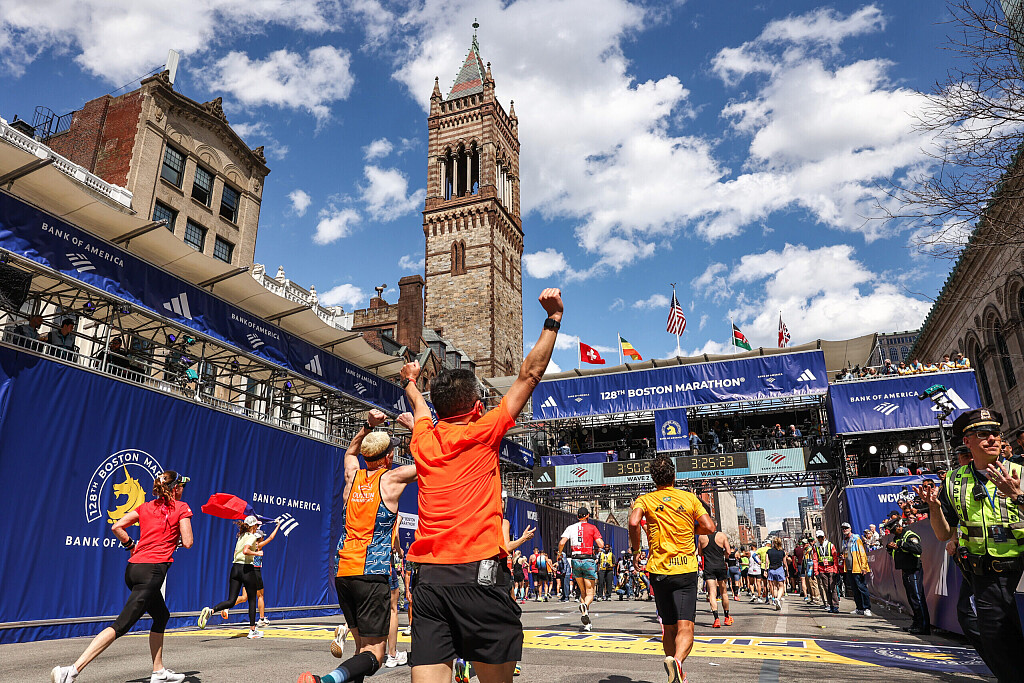
For many marathoners, crossing the finish line of a World Marathon Major is the ultimate dream. But before you can worry about surviving 42.195 kilometres, there is another challenge: actually getting onto the starting line.

The six Abbott World Marathon Majors — Boston, London, Berlin, Chicago, New York and Tokyo — do not use the same entry system, and some are considerably more difficult to access than others.
Boston is arguably the clearest example of how running fast does not always guarantee a place. Unlike the other majors, the Boston Marathon is built around qualifying standards. However, meeting the published standard only gives a runner the opportunity to apply. Because demand is so high, the fastest qualifiers are accepted first. This means a runner can achieve the official qualifying time and still miss out when the cut-off moves faster than expected.
London presents a completely different challenge. Its famous ballot is a random draw, making luck a major part of the process. However, runners have other avenues, including Good for Age, charity places and international tour operators. Even the Good for Age route can be highly competitive, with places allocated according to performance when demand exceeds the number of available spots.
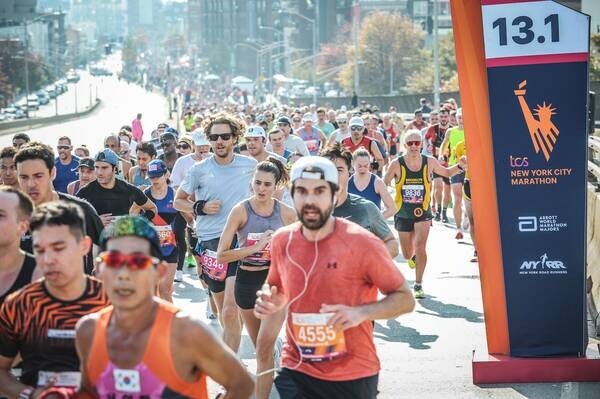
New York City is another race where demand is enormous. The TCS New York City Marathon offers a general drawing alongside several guaranteed-entry routes, including qualifying times, charity places, international tour operators and other eligibility programmes. For serious runners, achieving the appropriate qualifying standard can be one of the most dependable ways to secure a place.
Chicago gives runners several ways to avoid relying entirely on the lottery. The Bank of America Chicago Marathon has a non-guaranteed drawing, but runners can also gain guaranteed entry through qualifying times, charity, tour operators and other eligible routes. For fast runners, meeting the published standard can provide a much more certain path to the start line.
Berlin is also heavily sought after. The BMW Berlin Marathon uses a lottery for the majority of runners, while qualifying performances can provide another route into the race. With its fast course and reputation for producing world-class times, demand remains enormous every year.
Tokyo adds another layer of difficulty, particularly for international runners. The race has a lottery as well as several other entry routes, including charity and performance-based options. International runners can also use official tour operators, although these packages generally cost more because they are tied to travel arrangements.
For runners chasing the Six Star Medal, the biggest lesson is simple: do not depend on the lottery alone.
Look closely at every possible route. Good-for-age standards, qualifying performances, charity programmes and official tour operators can all provide alternatives when the ballot does not go your way.
And then there is the reality every marathoner eventually discovers: sometimes getting rejected from a major marathon hurts almost as much as the race itself.
When that rejection email arrives, remember that parkrun is still free, happens every Saturday and does not require a lottery.
So, which World Marathon Major have you already completed — and which one is still at the top of your bucket list?
by Erick Cheruiyot for My Best Runs.
Login to leave a comment

Berlin Marathon Controversy Erupts After Chinese Influencer Admits Bicycle Ride
A controversy has emerged from the 2026 Berlin Marathon after Chinese fitness influencer Yuanyuan Sun, better known online as Abeeeer, admitted that she rode on the back of a bicycle during the closing stages of the race.
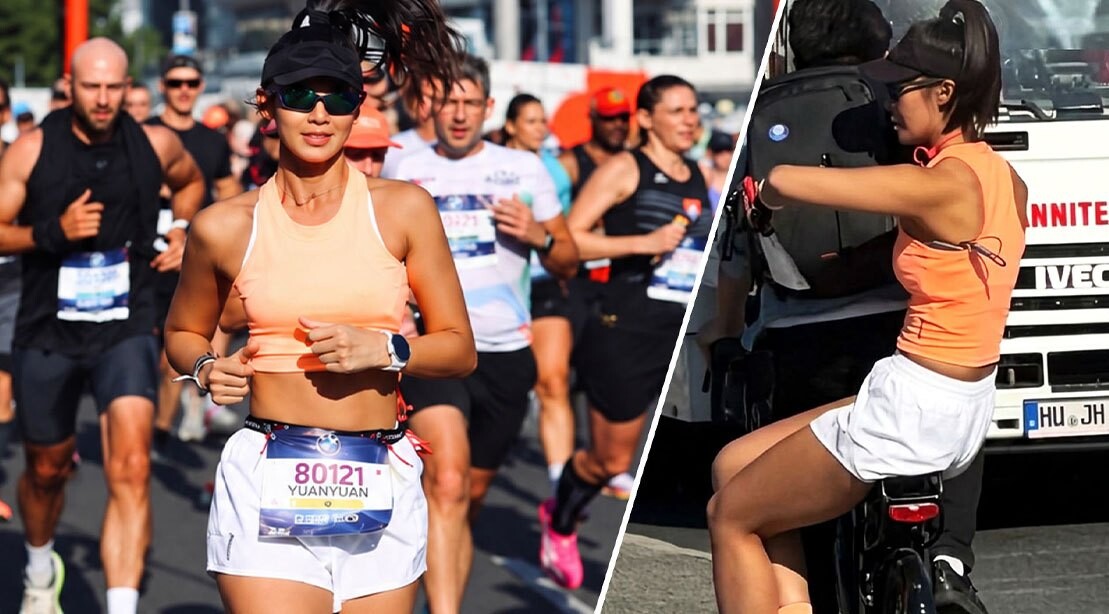
The 30-year-old initially crossed the finish line in 4:53:46, presenting the performance as a personal best. However, questions were later raised about her split times, particularly a significant improvement in her pace between the 35km and 40km marks.
According to the split data that circulated online, Sun’s final kilometres appeared considerably faster than the preceding section, prompting scrutiny from fellow runners and followers.
Sun subsequently acknowledged that she had accepted a ride on a bicycle during the race. She admitted that doing so was against the marathon’s rules and apologised for failing to disclose what had happened when she shared photographs following the event.

In her apology, Sun said she should not have used feeling unwell as a justification for breaking the rules. She also acknowledged that concealing the incident after the race was wrong.
The controversy quickly moved beyond social media, with Brooks China ending its relationship with Sun following the incident. The brand said the decision reflected its commitment to integrity, fairness and the spirit of running.
The episode has reignited a familiar debate within distance running: where should the line be drawn between simply finishing a race and genuinely completing it according to the rules?
For thousands of marathoners, the attraction of the sport is not only the number displayed on the finishing clock. It is the countless kilometres of training, the physical and mental struggle during the race, and the knowledge that every step toward the finish line was earned.
A marathon medal carries significance because of that journey.
Sun’s case is therefore likely to remain a talking point among runners, particularly because the controversy did not centre on an elite athlete chasing a world-class time, but on the importance of honesty and fair competition at every level of the sport.
Ultimately, a marathon is more than simply reaching the finish line. It is about earning your way there.
by Erick Cheruiyot for My Best Runs.
Login to leave a comment

BMW Berlin Marathon
The story of the BERLIN-MARATHON is a story of the development of road running. When the first BERLIN-MARATHON was started on 13th October 1974 on a minor road next to the stadium of the organisers‘ club SC Charlottenburg Berlin 286 athletes had entered. The first winners were runners from Berlin: Günter Hallas (2:44:53), who still runs the BERLIN-MARATHON today, and...
more...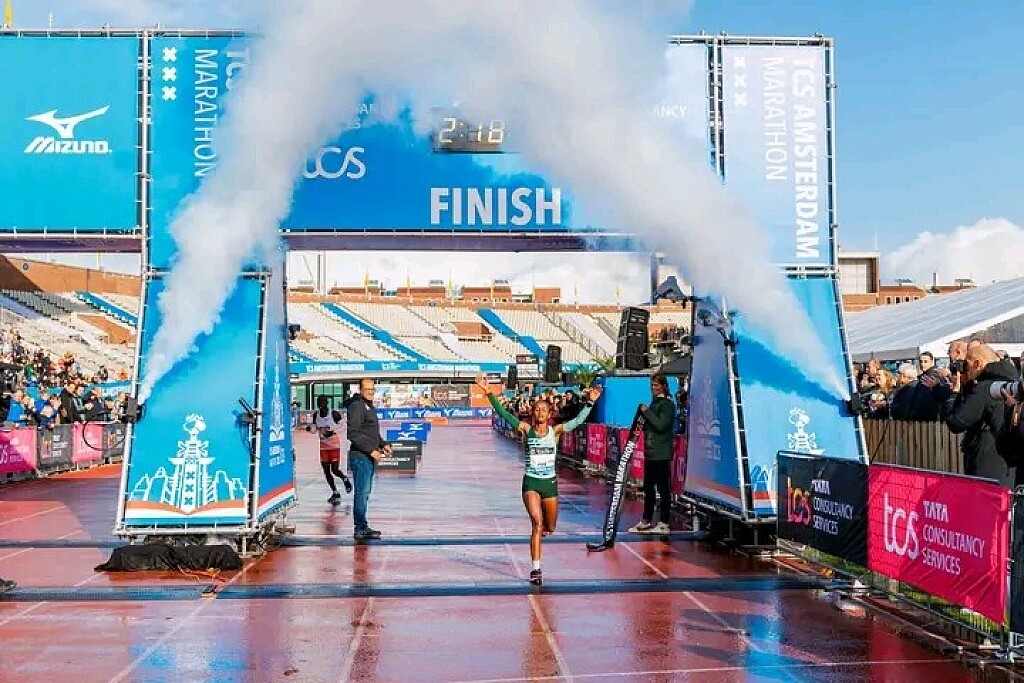
Amsterdam Marathon Women’s Field Set for High-Class Showdown as Four Ethiopians Target 2:20 Barrier
The women’s race at the 2026 TCS Amsterdam Marathon is shaping up to be one of the most competitive editions in recent years, with a deep international field set to take on the fast Dutch course on Sunday, October 18.
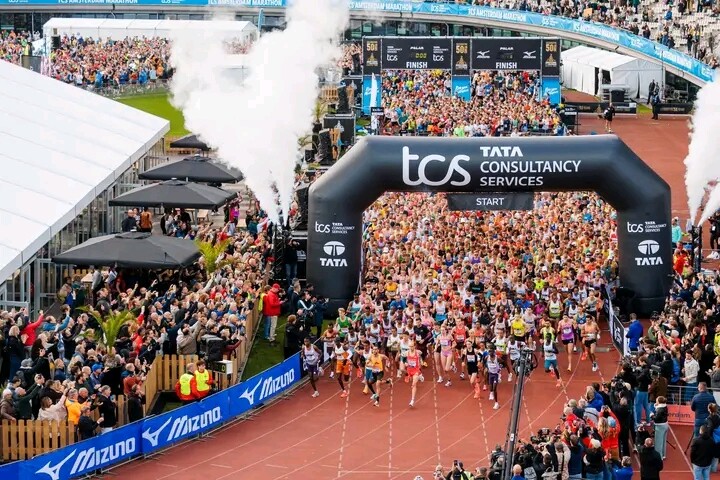
At the centre of the contest will be four Ethiopian athletes who have already broken the 2:20 barrier, creating the prospect of a fascinating battle for victory and a possible assault on the course record of 2:16:52.
Defending champion Aynalem Desta will return to Amsterdam looking to retain her title after producing the biggest performance of her career at last year’s 50th edition. Desta won in a personal best of 2:17:37, establishing herself among the leading marathoners in the field and setting the benchmark for this year’s contenders.
Standing in her way will be fellow Ethiopian Meseret Belete Tola, a former Amsterdam champion who knows exactly what it takes to succeed on the course. Belete Tola captured the 2023 edition in 2:18:21, and her return adds another layer of experience and proven quality to an already formidable lineup.
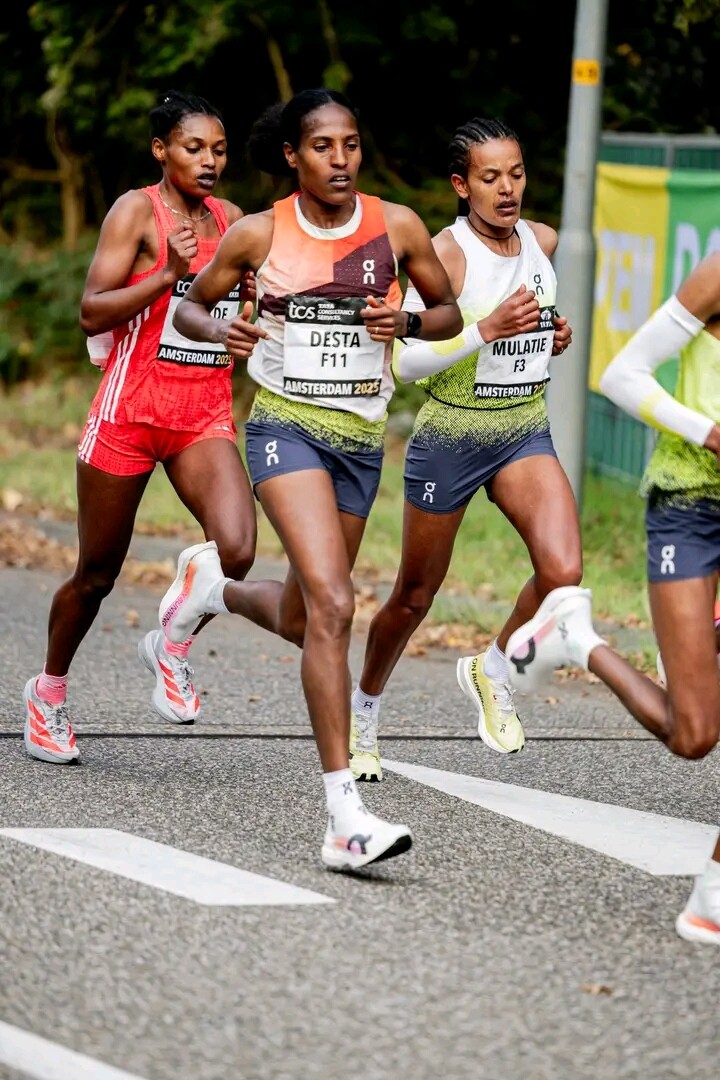
The field also includes Mestawut Fikir Truneh, who arrives with an impressive marathon pedigree. Truneh finished runner-up at the 2024 Berlin Marathon in 2:18:48, demonstrating her ability to compete at the highest level on one of the world's major marathon stages.
Completing the quartet of sub-2:20 Ethiopians is Buze Diriba, whose personal best of 2:19:34 places her firmly among the leading contenders. With four athletes possessing credentials below 2:20, the race is likely to develop into a tightly contested battle from the opening kilometres.
The depth extends well beyond the leading quartet. Desi Jisa Mokonin, representing Bahrain, Yeshi Kalayu Chekole of Ethiopia and Nazret Weldu Gebrehiwet of Eritrea have all established themselves as serious marathon competitors with performances approaching the 2:20 mark.
Another major name to watch is Abeba Aregawi, the former 1500m world champion representing Sweden. Aregawi has successfully transferred her talents to the marathon and made headlines earlier this year by setting a Swedish national record of 2:23:12 on her debut. Her presence adds another intriguing dimension to an already high-quality field.
Amsterdam’s marathon course has consistently provided an opportunity for elite athletes to produce fast times, and this year’s women’s lineup has the depth to turn the race into a genuine test of both championship racing and outright speed.
With four athletes already inside 2:20, two former Amsterdam champions returning to the start line and several other accomplished marathoners ready to challenge them, the battle is expected to remain open deep into the race.
The ultimate target will be the Amsterdam women’s course record of 2:16:52. Whether the leading contenders can threaten that mark remains to be seen, but the quality assembled for October 18 ensures that the record will be firmly in the spotlight when the race reaches its spectacular finish inside the Olympic Stadium.
by Erick Cheruiyot for My Best Runs.
Login to leave a comment
TCS Amsterdam Marathon
Do you want to enjoy Amsterdam in October and all that the city has to offer you? Want to feel a real athlete and start and finish in the historic Olympic stadium? Or run across the widely discussed passage under the beautiful National Museum? Then come to Amsterdam for the annual TCS Amsterdam Marathon in October! The TCS Amsterdam Marathon...
more...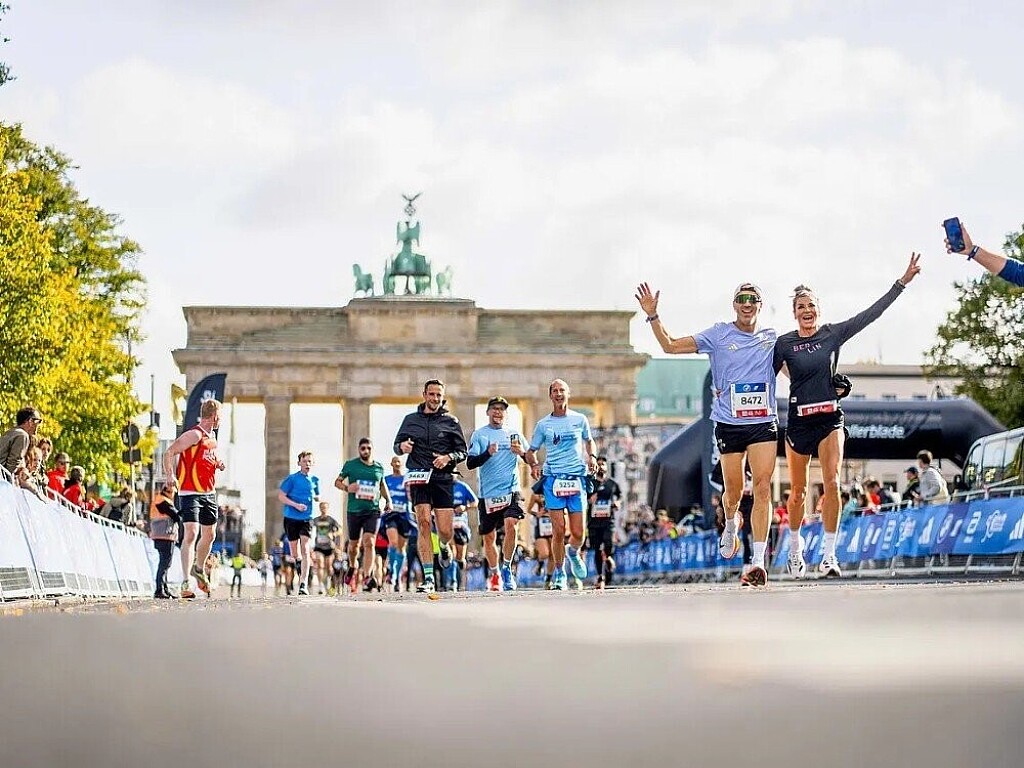
Berlin Marathon 2027 Lottery Is Officially Open As Runners Race For A Place On The World’s Fastest Stage
The wait is over for thousands of marathon hopefuls dreaming of running through the streets of Berlin next year, with registration for the 2027 Berlin Marathon officially opening on Thursday, October 1.
Runners now have until November 12, 2026, to enter the lottery, with the results scheduled to be sent by email on December 3. The entry fee of €215, around $244, will only be charged to athletes who successfully secure a starting place.
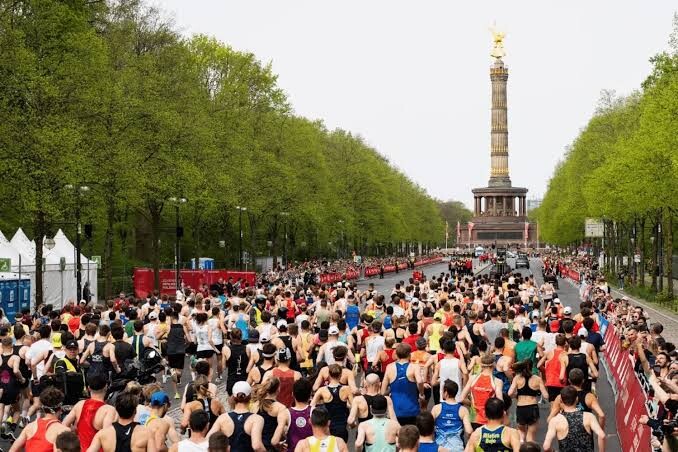
The 2027 race is scheduled for Sunday, September 26, once again bringing thousands of runners onto one of the most famous and fastest marathon courses in the world. Berlin has become synonymous with record-breaking performances, with 13 world records having been set on the course over the years.
That remarkable history continues to give the Berlin Marathon a unique place on the international marathon calendar. From elite athletes chasing world records to recreational runners attempting their first major marathon, the race attracts competitors from across the globe, all sharing the same iconic finish beneath the Brandenburg Gate.
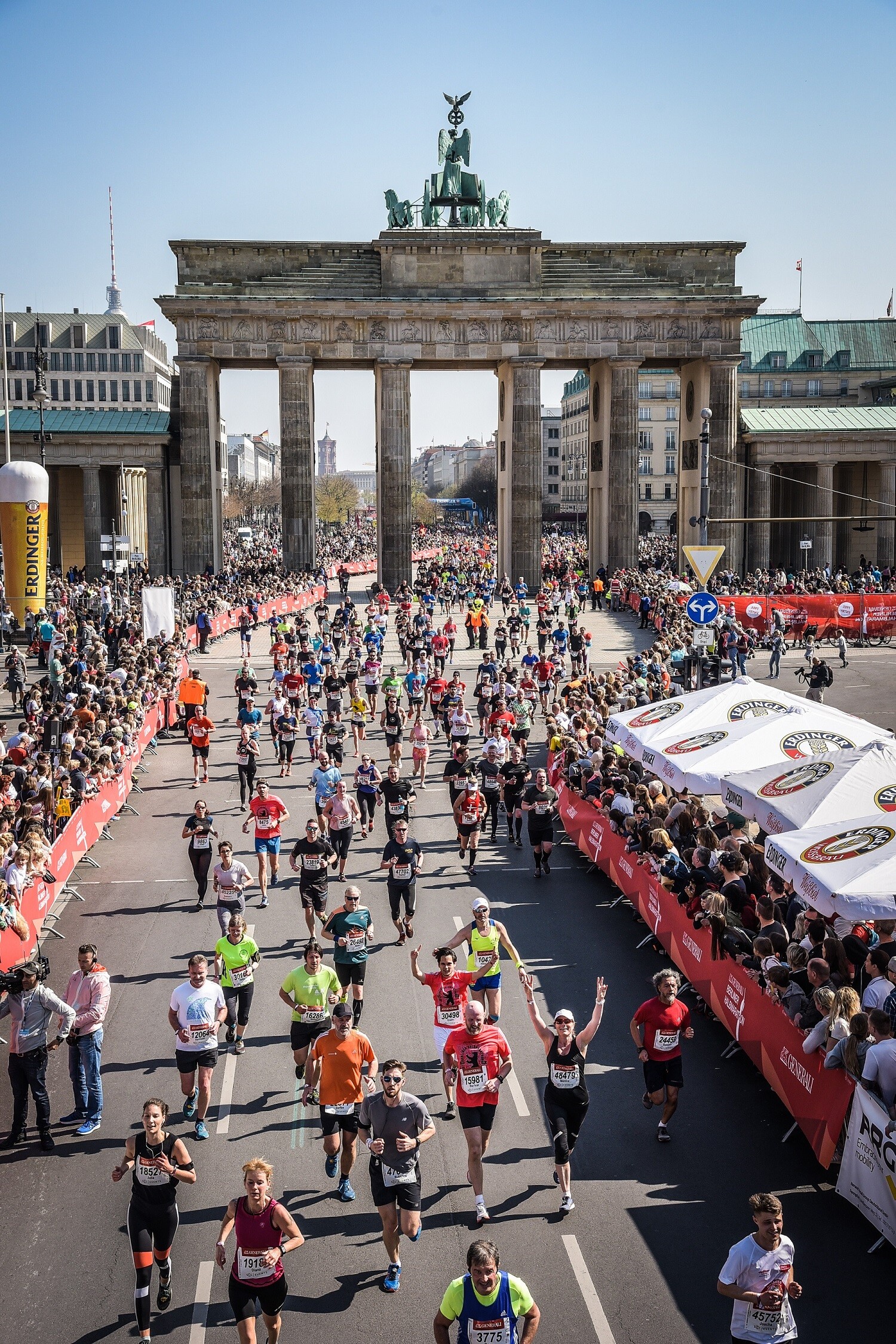
For runners who have already built a special relationship with the event, however, there are ways to bypass the public lottery. Members of the Jubilee Club, which is open to runners who have completed the Berlin Marathon 10 or more times, receive a guaranteed starting place.
There is also a special route for runners who were unable to compete in the 2026 edition after accepting the organisers’ goodwill offer. Those athletes will receive a registration code for the 2027 race by email, with the code required to be redeemed before the ballot closes on November 12.
Runners do not necessarily have to enter alone, either. Groups of two or three athletes can apply together as a team. One runner registers the group and receives a team code, which is then shared with the other members. Each athlete completes their own registration using that code, and if the team is selected, everyone in the group receives a place together.
The lottery system means that demand will once again be high, with aspiring Berlin Marathon runners now facing a nervous wait after submitting their applications. For many, the December 3 email will determine whether their plans for one of the world's most prestigious marathons can become reality.
For those dreaming of lining up in Berlin, the important dates are clear: registration opened on October 1, the ballot closes on November 12, results will be announced on December 3, and the 2027 Berlin Marathon will be held on September 26.
The road to Berlin 2027 has officially begun — and for thousands of runners, the countdown to finding out whether they have secured their place is now underway.
by Erick Cheruiyot for My Best Runs.
Login to leave a comment
BMW Berlin Marathon
The story of the BERLIN-MARATHON is a story of the development of road running. When the first BERLIN-MARATHON was started on 13th October 1974 on a minor road next to the stadium of the organisers‘ club SC Charlottenburg Berlin 286 athletes had entered. The first winners were runners from Berlin: Günter Hallas (2:44:53), who still runs the BERLIN-MARATHON today, and...
more...
Tigst Assefa Vows To Return To Berlin And Chase The Marathon World Record After Achilles Surgery
Ethiopian marathon star Tigst Assefa has delivered a powerful message from her hospital bed after undergoing successful surgery on a completely ruptured right Achilles tendon suffered during her extraordinary victory at the 2026 BMW Berlin Marathon.

The 29-year-old produced one of the most remarkable performances of her career, winning the women’s race in 2:11:04 and setting a new Berlin Marathon course record. Her performance became even more extraordinary after it emerged that she suffered the serious injury during the closing stages of the race.
At around the 40-kilometre mark, Assefa developed a problem with her right leg, with her stride visibly affected as she approached the finish. Despite the severe discomfort, the Ethiopian refused to abandon the race.
She fought through the final kilometres and crossed the finish line to secure another memorable Berlin victory, before receiving immediate medical attention. Medical examinations later confirmed a complete rupture of her right Achilles tendon.
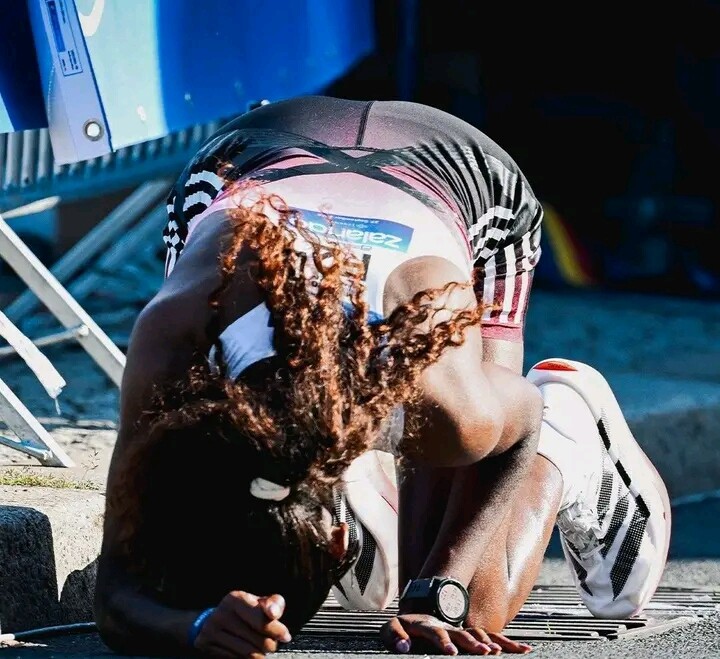
Assefa was subsequently taken for treatment in Germany and underwent successful surgery at a hospital south of Munich. She now faces the challenging rehabilitation process required to return to elite competition.
In her first message since the operation, Assefa expressed her heartfelt gratitude to supporters around the world who have sent messages of encouragement and concern.
She thanked the global running community for standing beside her during the difficult period, saying she was deeply moved by the tremendous support she had received.
But the most striking part of her message was her determination to look beyond the injury and towards the future.
“I will definitely return to Berlin, and then I will break the world record,” Assefa said.
The declaration underlines the extraordinary ambition that has defined her marathon career. Berlin has played a particularly important role in her rise to the top of the sport.
Assefa first won the Berlin Marathon in 2022 before producing a historic performance the following year, when she ran 2:11:53 to establish a then-world record.
Although the women's marathon world record has since been lowered to 2:09:56, Assefa remains one of the most formidable marathoners in history. Her latest 2:11:04 victory also stands as the fastest women's performance ever recorded on the Berlin Marathon course.
Her latest triumph therefore carries a remarkable mixture of achievement and adversity. She not only secured the victory and course record but did so while suffering an injury that ultimately required surgery.
Now, a different race begins for the Ethiopian superstar — one that will demand patience, rehabilitation and resilience rather than simply speed and endurance.
Whether she can return to her best remains a question for the future, but Assefa's message has already made her intentions unmistakably clear.
Berlin may have witnessed her latest triumph, but Tigst Assefa believes her unfinished business with the German capital has only just begun.
by Erick Cheruiyot for My Best Runs.
Login to leave a comment

Tigst Assefa’s Achilles Surgery A Success As Marathon Star Begins Road To Recovery
Tigst Assefa has received encouraging news following the dramatic injury that overshadowed her remarkable victory at the 2026 Berlin Marathon.

The Ethiopian marathon star has successfully undergone surgery to repair a completely ruptured Achilles tendon, with her management team, Demadonna Athletic Promotions, confirming that the operation went well. The agency also shared photographs of Assefa recovering in hospital, offering fans a reassuring first glimpse of the marathon star after the procedure.
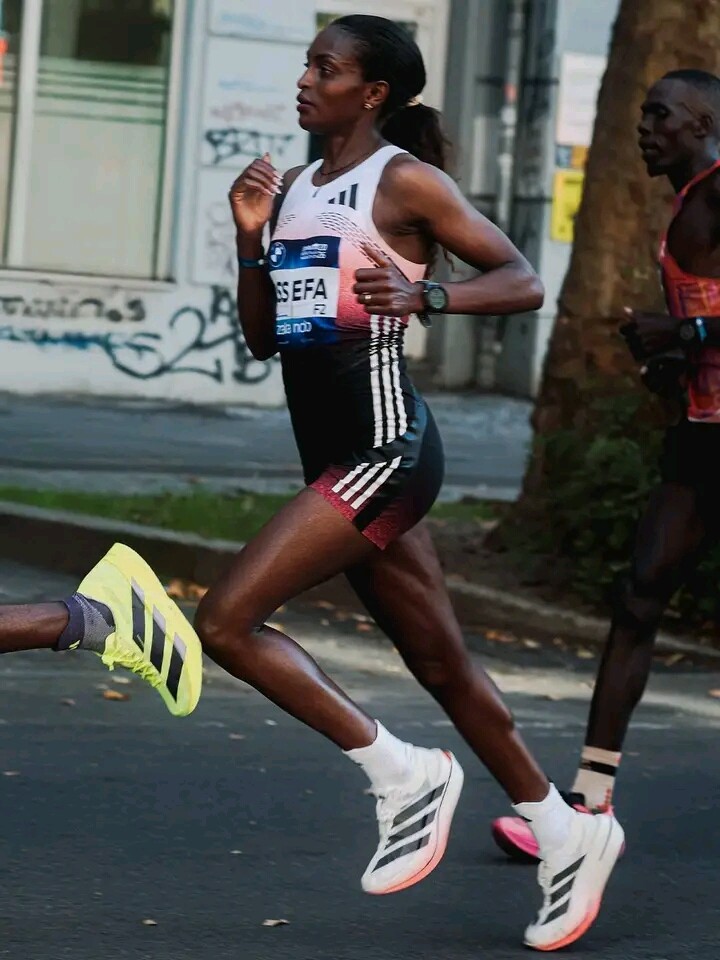
The successful operation comes just one day after Assefa produced one of the most extraordinary finishes in recent marathon history. She crossed the line in 2:11:04 to claim victory in Berlin despite suffering the serious Achilles injury during the closing stages of the race.
Assefa had been charging towards the world record of 2:09:56 and reached 40 kilometres in 2:03:00, remaining firmly on course for a historic performance. However, her stride suddenly deteriorated as the injury took hold, forcing her to limp through the final stages.
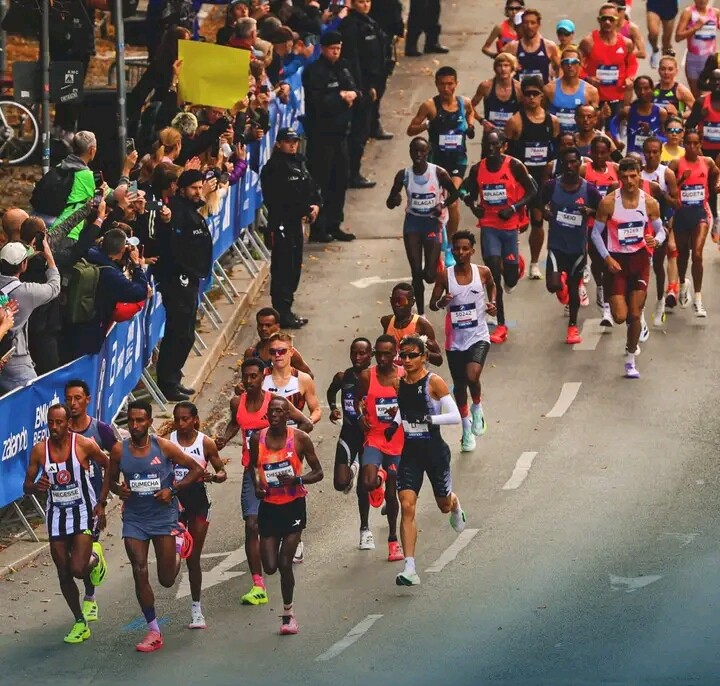
Despite the immense pain, Assefa refused to give up. She completed the final 2.195 kilometres in 8:04, displaying remarkable determination to reach the finish line and secure one of the most memorable victories of her career.
Her final time of 2:11:04 ranks among the fastest women's marathon performances ever recorded and also represents a new Berlin Marathon course record.
Demadonna Athletic Promotions praised Assefa's courage and resilience, expressing hope that she will be able to gradually return to training in the coming months. However, the exact timeline for her return to competition remains uncertain, with her recovery now taking priority.
For now, the focus is firmly on healing. Assefa's Berlin triumph ended under heartbreaking circumstances, but the successful surgery represents an important first step in her rehabilitation.
The running world will now wait patiently for the return of one of Ethiopia's greatest marathon stars. After showing extraordinary courage in Berlin, Assefa faces a very different challenge — rebuilding her strength, regaining full fitness and eventually finding her way back to the marathon start line.
by Erick Cheruiyot for My Best Runs.
Login to leave a comment
BMW Berlin Marathon
The story of the BERLIN-MARATHON is a story of the development of road running. When the first BERLIN-MARATHON was started on 13th October 1974 on a minor road next to the stadium of the organisers‘ club SC Charlottenburg Berlin 286 athletes had entered. The first winners were runners from Berlin: Günter Hallas (2:44:53), who still runs the BERLIN-MARATHON today, and...
more...
Two Kenyan Giants Rewriting The Record Books: Sabastian Sawe And Agnes Ngetich Lead A New Distance Running Era
Kenya continues to produce athletes capable of redefining the limits of distance running, and in 2026, two names have stood out above the rest: Sabastian Sawe and Agnes Ngetich.
Both Adidas-sponsored Kenyan stars have produced performances that have reshaped the global distance-running landscape, with Sawe conquering the marathon and Ngetich dominating across cross country, the half marathon and 10km.
Their paths are different, but the scale of their achievements is remarkably similar.
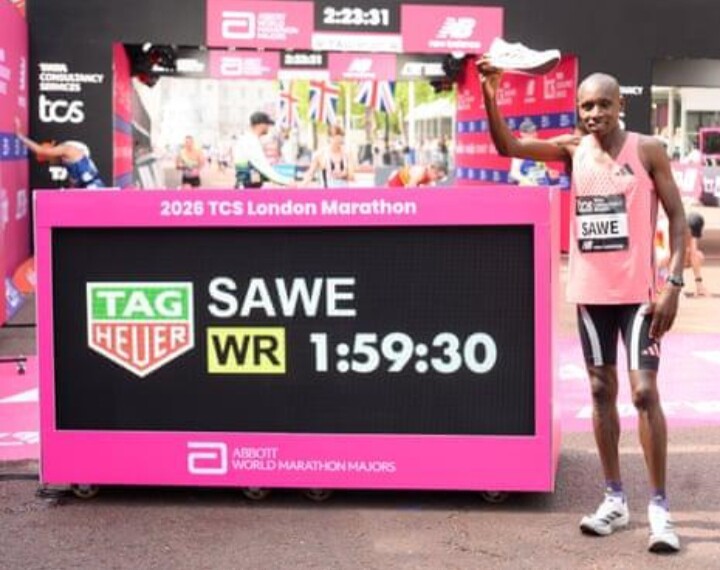
Sabastian Sawe: The Man Who Finally Broke Two Hours
Few performances in the history of marathon running can compare with what Sawe produced at the 2026 London Marathon on April 26.
The Kenyan stormed to 1:59:30, becoming the first athlete to officially break the two-hour barrier in a record-eligible marathon.
It was not merely a victory. It was a landmark moment for the event itself.
Sawe averaged approximately 2:50 per kilometre for the full 42.195km, sustaining a pace that had previously existed only as a theoretical boundary in competitive marathon running.
Remarkably, his historic London triumph was another chapter in an extraordinary marathon career.
Sawe first announced himself over the distance with a sensational 2:02:05 victory in Valencia in December 2024, establishing himself among the world's elite marathoners.
He followed that with a dominant 2:02:27 victory at the 2025 London Marathon, before returning five months later to win the 2025 Berlin Marathon in 2:02:16.
Those victories established Sawe as one of the most formidable marathoners of his generation.
His 2026 season then took another extraordinary turn.
In London, Yomif Kejelcha finished second in 1:59:41, becoming the second man under two hours in an official marathon, while Jacob Kiplimo completed the podium in 2:00:28.
Sawe had been scheduled to return to Berlin in September to defend his title, but an injury forced him to withdraw from the race.
Even without another appearance, his 1:59:30 has already secured its place among the defining performances in the history of the marathon.
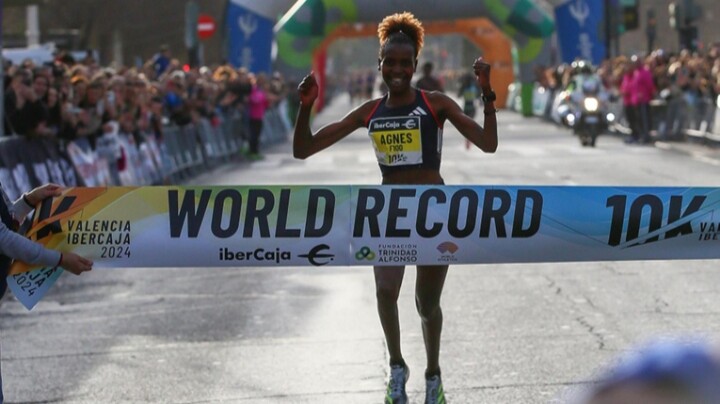
Agnes Ngetich: From Cross Country To World Records
If Sawe has rewritten the marathon script, Ngetich has been doing something similar across several disciplines.
Her 2026 campaign began in spectacular fashion at the World Athletics Cross Country Championships in Tallahassee, United States, on January 10.
Ngetich dominated the senior women's 10km race, crossing the line in 31:28 to win her first individual global title.
That victory was only the beginning.
Later in the year, Ngetich added another global title at the World Athletics Road Running Championships in Copenhagen, producing another masterclass over the half marathon.
The Kenyan ran 1:05:15 to win the women's half marathon and break the women-only world record by one second.
The performance underlined her extraordinary consistency at the highest level and added another global title to a season already highlighted by her World Cross Country triumph.
But Ngetich's record-breaking credentials stretch far beyond the half marathon.
She owns the women's 10km world record in a mixed race at 28:46, set in Valencia in January 2024. That performance made her the first woman to break 29 minutes over the distance.
She also holds the women-only 10km world record of 29:27, set in Herzogenaurach in April 2025. She became the first woman to break 30 minutes in a women-only 10km race.
Ngetich's achievements therefore span the full spectrum of modern distance running — from the grass of cross country to the roads of the world's biggest championships and record-setting races.
Two Stars, One Kenyan Running Revolution
Sawe and Ngetich represent two different sides of modern distance running.
Sawe has pushed the marathon beyond a barrier that once seemed almost untouchable, while Ngetich has demonstrated extraordinary versatility, winning on the grass at World Cross Country and then moving onto the roads to rewrite the record books over 10km and the half marathon.
Their achievements also underline the remarkable depth of Kenyan distance running.
Sawe has established himself as one of the defining marathoners of his generation, while Ngetich has built an extraordinary collection of global titles and world records across several distances.
Two athletes.
Different distances.
Different challenges.
But the same Kenyan flag at the centre of some of the most extraordinary performances the sport has witnessed.
Sabastian Sawe and Agnes Ngetich are not simply winning races — they are expanding the boundaries of what Kenyan distance runners, and distance runners everywhere, can achieve.
by Erick Cheruiyot for My Best Runs.
Login to leave a comment
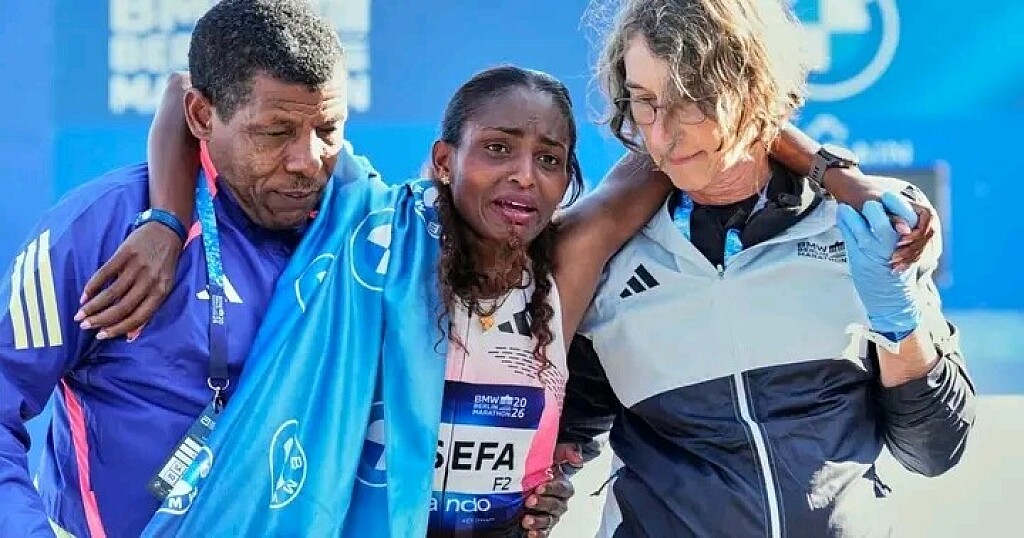
Tigist Assefa Undergoes Emergency Achilles Surgery After Record-Breaking Berlin Marathon Performance
Ethiopian marathon star Tigist Assefa is undergoing emergency surgery in Munich, Germany, after suffering a ruptured right Achilles tendon during the closing stages of the BMW Berlin Marathon, bringing an abrupt end to what had been a remarkable world-record attempt.

The 29-year-old delivered a spectacular performance on Sunday, September 27, 2026, to win the women's race in a stunning 2:11:04, setting a new course record and recording the third-fastest women's marathon time in history.
Assefa had been on course to challenge the women's marathon world record for much of the race before disaster struck in the final two kilometres. Despite the severe injury, the Ethiopian star summoned the strength to push through the pain and cross the finish line in first place, capping a performance that will be remembered for both its extraordinary speed and the circumstances surrounding its conclusion.
Her manager, Gianni Demadonna, confirmed that Assefa had suffered a rupture of her right Achilles tendon, an injury that requires immediate medical attention and a lengthy recovery period.
The emergency operation is being performed by Dr. Johannes Gabel, Chief Physician of Foot and Ankle Surgery at BG Unfallklinik Murnau in Germany, with support from Adidas.
Assefa is expected to spend at least six months away from competitive running as she undergoes surgery and rehabilitation. The recovery process will be crucial in determining when she can return to training and eventually resume competition.
The injury is a significant setback for the Ethiopian athlete, who has established herself among the leading figures in women's marathon running through a series of outstanding performances on the international stage. Her latest triumph in Berlin further underlined her exceptional ability, even as the circumstances surrounding her finish cast a shadow over the achievement.
Assefa's 2:11:04 performance adds another historic chapter to her career, but attention now shifts from the finish line to her recovery. The coming months will be focused on healing, rehabilitation and gradually rebuilding the strength needed to return to elite competition.
From a remarkable record-breaking victory to an unexpected medical emergency, Assefa's Berlin Marathon has become a story of extraordinary determination and an uncertain road ahead. Her supporters will now be hoping for a successful operation and a full recovery as she begins the long journey back to competitive running.
by Erick Cheruiyot for My Best Runs.
Login to leave a comment
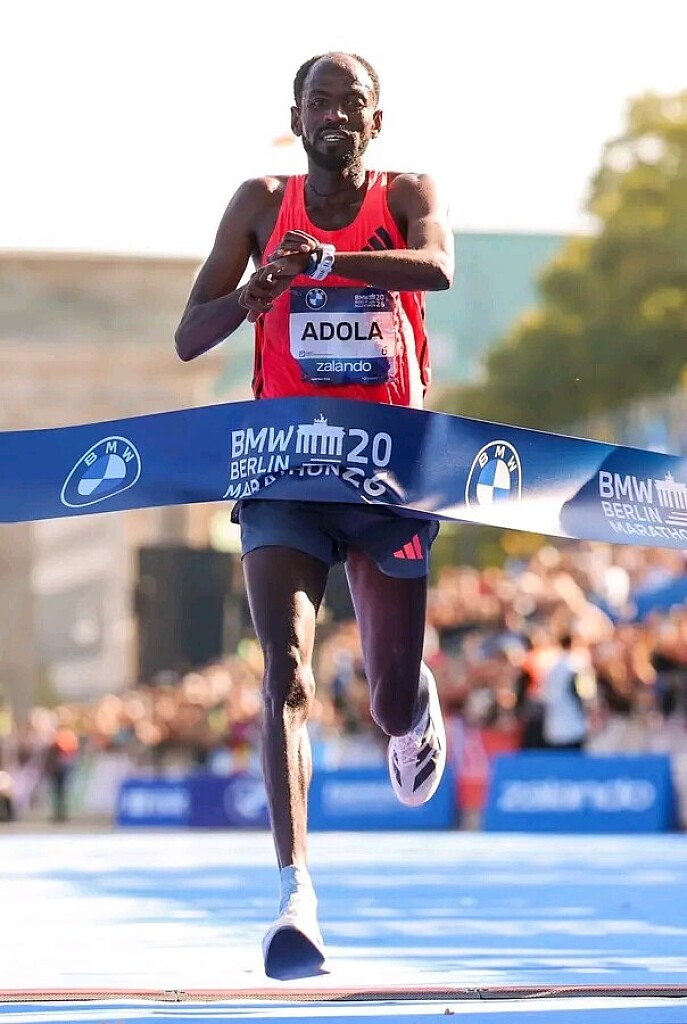
Guye Adola Rewrites His Berlin Story With Stunning 2:02:50 Victory
Ethiopia’s Guye Adola has produced a perfectly judged performance to win the 2026 BMW Berlin Marathon, returning to the streets where his marathon career began to claim his second Berlin title in a sensational 2:02:50.
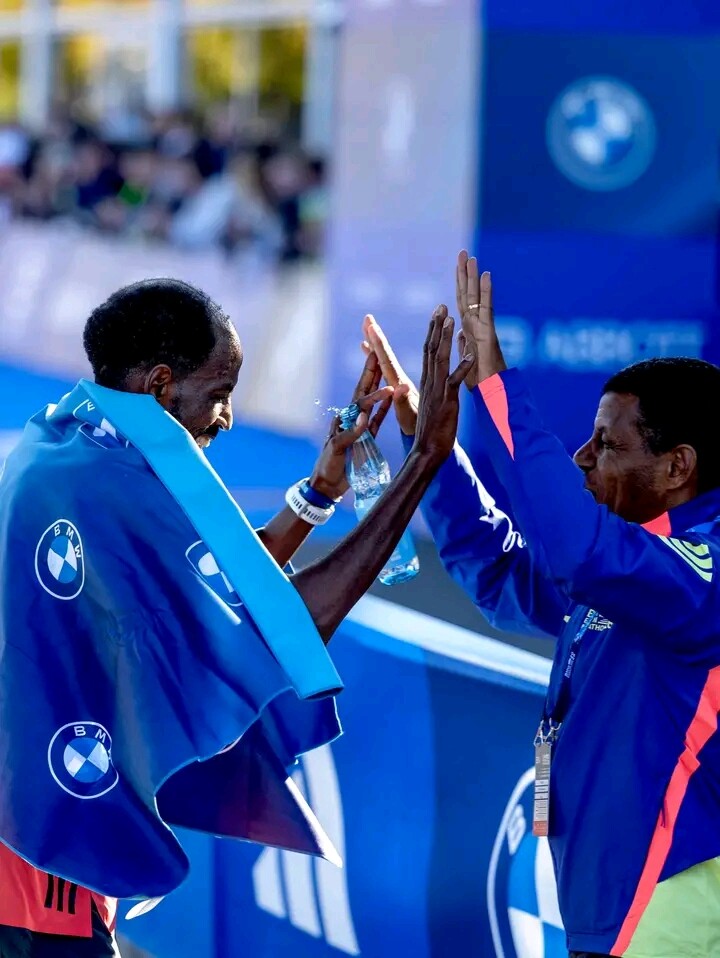
The 35-year-old Ethiopian controlled the race brilliantly before making his decisive move in the closing stages, crossing the finish line clear of compatriot Gemechu Dida Diriba, who finished second in 2:03:19. Adola’s winning margin was 29 seconds, underlining just how strongly he finished.
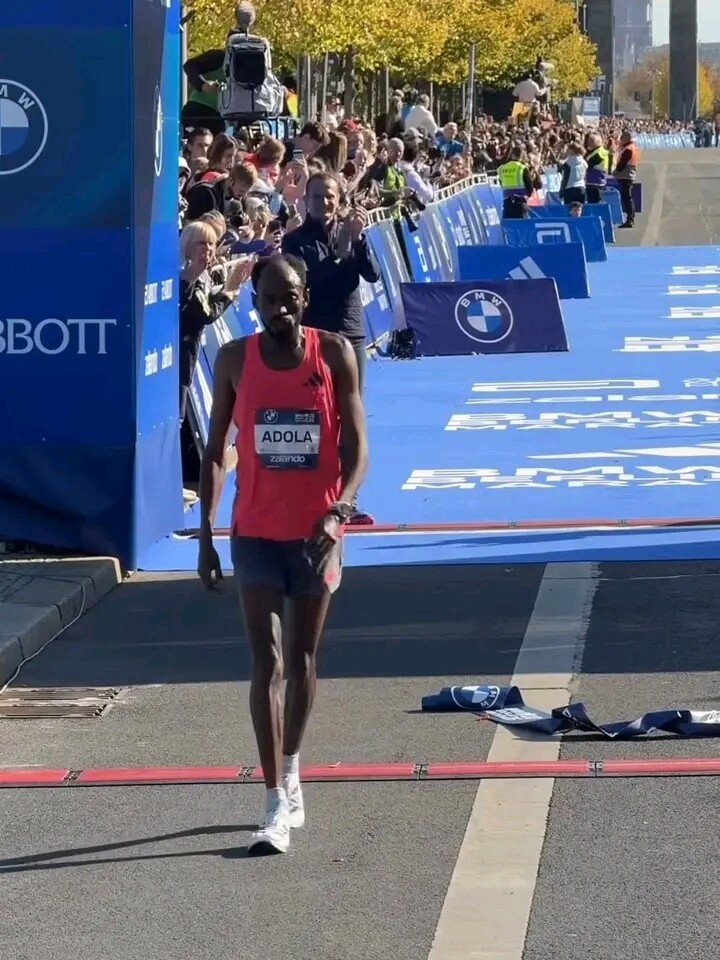
The victory adds another memorable chapter to Adola’s long association with Berlin. He first won the prestigious race in 2021, and five years later he returned to the German capital to produce the fastest marathon of his career.
Adola arrived in Berlin in excellent form after winning the Rotterdam Marathon in April in 2:03:54. That performance had placed him just eight seconds outside the personal best of 2:03:46 he had carried since his remarkable marathon debut in Berlin in 2017.

That debut remains one of the most memorable first appearances over the marathon distance. Adola stayed ahead of Eliud Kipchoge deep into the race before the Kenyan eventually overtook him. Adola finished second in 2:03:46, just 14 seconds behind Kipchoge, producing the fastest marathon debut at the time.
For years, that performance remained the benchmark of his career.
Even when Adola returned to Berlin in 2021 and won the race, he could not improve his debut mark. His breakthrough finally came in Rotterdam this April, when he clocked 2:03:54 — a sign that another major performance could be approaching.
On Sunday, he delivered it.
With world record holder Sabastian Sawe and legendary Ethiopian Kenenisa Bekele both missing the race through injury, the men’s contest was wide open. The pacemakers were set up for an attempt at Eliud Kipchoge’s 2:01:09 course record, but the leading group reached halfway in 1:01:01, already outside record pace.
The race gradually began to break apart as the kilometres passed.
By 30 kilometres, three Ethiopians had established themselves at the front — Adola, Olympic 10,000m champion Selemon Barega and Gemechu Dida.
Then came the decisive move.
After 35 kilometres, Adola increased the pace and began creating daylight between himself and the chasing group. Nobody could respond as the experienced Ethiopian steadily extended his advantage.
This time, there would be no late comeback.
Adola remained composed through the final kilometres before powering toward the finish in 2:02:50, taking an extraordinary 56 seconds off his previous personal best.
Gemechu Dida followed in 2:03:19 to secure an Ethiopian one-two, while Tanzania’s Gabriel Gerald Geay, the fastest athlete on the start list with a 2:03:00 personal best, completed the podium in 2:03:59.
Although Kipchoge’s course record survived for another year, Adola had achieved something equally significant for his own career — he had transformed his long-standing Berlin story into a new chapter.
From finishing second to Kipchoge on his marathon debut in 2017, to winning the race in 2021, and now returning five years later to run 2:02:50, Adola has repeatedly found his best moments on the streets of Berlin.
At 35, the Ethiopian has shown that experience, patience and perfectly timed aggression can still produce extraordinary results at the highest level of marathon running.
Top 10 — 2026 Berlin Marathon Men’s Results
1. Guye Adola (Ethiopia) — 2:02:50
2. Gemechu Dida Diriba (Ethiopia) — 2:03:19
3. Gabriel Gerald Geay (Tanzania) — 2:03:59
4. Getaneh Molla (Ethiopia) — 2:04:55
5. Selemon Barega (Ethiopia) — 2:04:58
6. Asefa Boki (Ethiopia) — 2:05:32
7. Andamlak Belihu (Ethiopia) — 2:05:55
8. Shura Kitata (Ethiopia) — 2:06:04
9. Yuhei Urano (Japan) — 2:06:09
10. Tadu Abate (Ethiopia) — 2:07:16
For Guye Adola, this was more than another marathon victory. Berlin is where his marathon story began, where he once pushed Kipchoge to the limit, and where he has now returned to produce the biggest performance of his career. His 2:02:50 victory not only gives him a second Berlin crown but also proves that, nine years after his stunning debut, his story at the Brandenburg Gate is still being written.
by Erick Cheruiyot for My Best Runs.
Login to leave a comment
BMW Berlin Marathon
The story of the BERLIN-MARATHON is a story of the development of road running. When the first BERLIN-MARATHON was started on 13th October 1974 on a minor road next to the stadium of the organisers‘ club SC Charlottenburg Berlin 286 athletes had entered. The first winners were runners from Berlin: Günter Hallas (2:44:53), who still runs the BERLIN-MARATHON today, and...
more...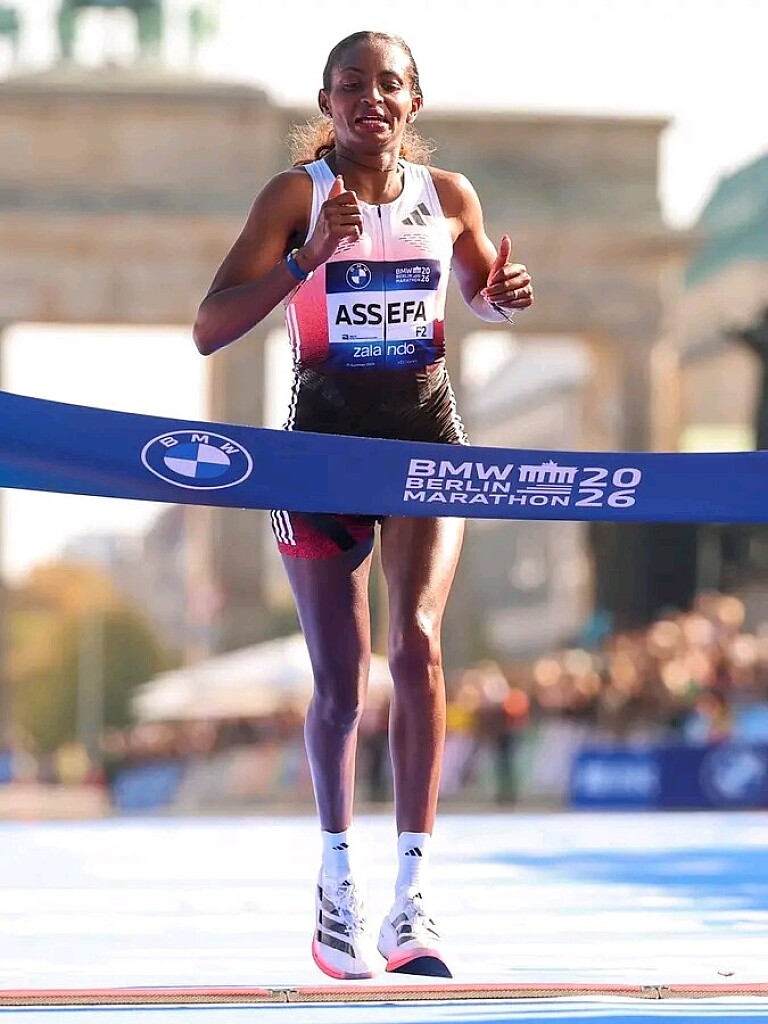
Agony In Victory: Tigst Assefa Fights Through Final-Kilometre Struggles To Win Berlin Marathon
Ethiopia’s Tigst Assefa produced one of the most dramatic performances of the 2026 BMW Berlin Marathon, winning the women’s race in a stunning 2:11:04 after seeing a potential world-record run unravel in the closing stages.
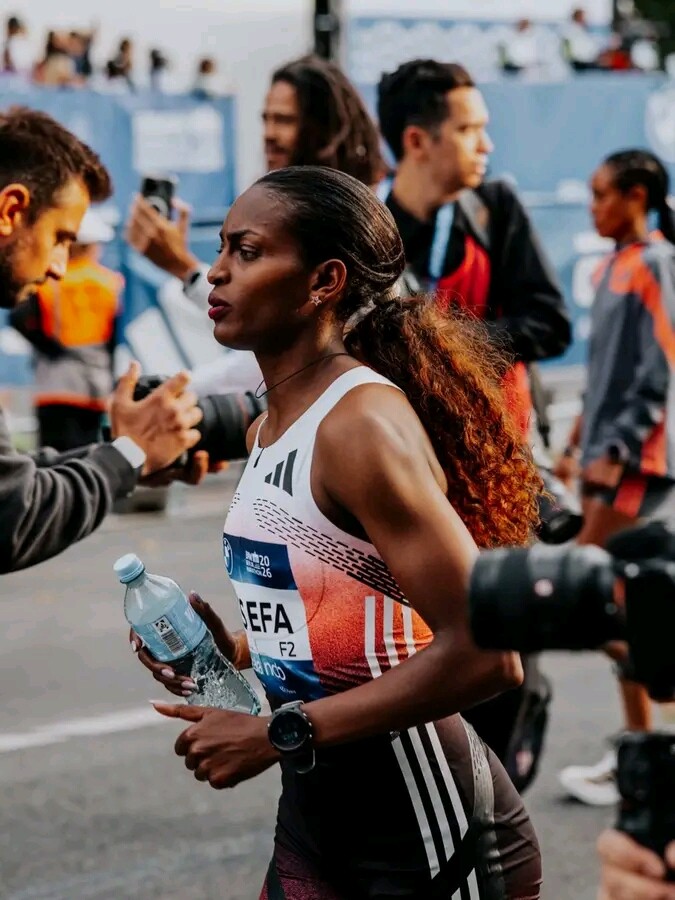
The 29-year-old Ethiopian arrived in Berlin with one enormous target in mind—the 2:09:56 world record set by Kenya’s Ruth Chepngetich in Chicago in 2024. For much of the morning, Assefa looked perfectly positioned to attack the mark.
Running patiently behind her pacers, she remained on world-record schedule through halfway. At 35 kilometres, the Ethiopian was still moving at a pace that put the global record within reach, and even with only seven kilometres remaining, the possibility of history remained very much alive.
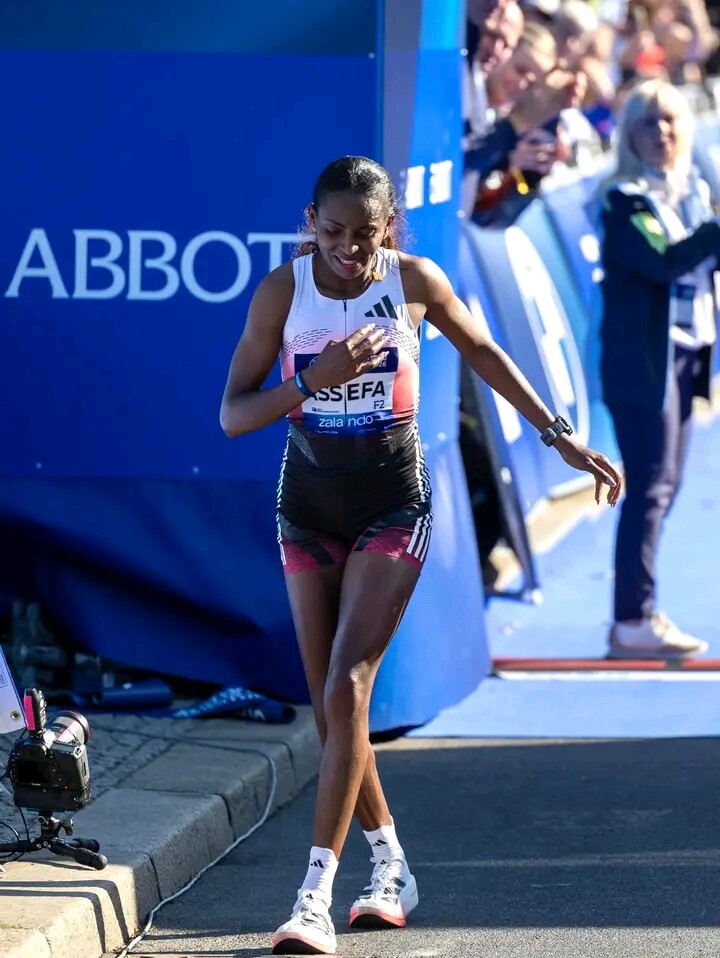
Then the race changed dramatically.
As the kilometres ticked down, Assefa’s pace began to slip. In the closing kilometre, she appeared to be struggling badly and started to limp, turning what had been a world-record assault into a desperate battle to reach the finish line.
The record was gone—but Assefa refused to surrender the race.
Despite the apparent physical setback and the immense fatigue of the final stages, she kept moving forward and crossed the line in 2:11:04, securing her third Berlin Marathon victory.
The final time was 1 minute and 8 seconds outside Chepngetich’s world record, but Assefa still walked away with an extraordinary collection of achievements: a new personal best and a new Berlin course record.
And the course record she broke was her own.
Assefa previously ran 2:11:53 in Berlin in 2023, a performance that established a world record at the time. Three years later, she returned to the same course and took an astonishing 49 seconds off that mark.
The performance also places Assefa among the fastest women ever to run the marathon, with only two women having recorded faster times.
Her Berlin story has now entered another remarkable chapter. Assefa has won the prestigious race three times—2022, 2023 and 2026—and each victory has come with a course record.
Her relationship with the German capital has therefore become extraordinary. Berlin has repeatedly been the place where Assefa has transformed ambition into historic performances, and Sunday was no different, even though the world record ultimately remained beyond her reach.
Her remarkable season had already included another major achievement. Five months ago in London, Assefa lowered her own women-only marathon world record to 2:15:41, further establishing herself as one of the defining marathoners of her generation.
But Berlin demanded something different from her.
This was no longer simply about speed. It became a test of resilience as the world-record dream disappeared and the final kilometre became a fight against exhaustion and apparent physical discomfort.
Assefa kept going.
She pushed through the pain, reached the finish line and secured another historic victory on the streets that have played such a defining role in her career.
Behind Assefa, Ethiopia dominated the front of the field, with Bratu Hirpa and Dera Dida completing an Ethiopian 1-2-3. Bekelech Gudeta and Alemitu Tariku also finished inside the top five, underlining the depth of the Ethiopian challenge. Kenya’s Pascaline Jelagat led the Kenyan contingent in sixth, followed by Ethiopia’s Misgane Alemayehu, while Ludwina Chepngetich and Evaline Chirchir finished eighth and ninth respectively.
Top 10 Women’s Results – 2026 BMW Berlin Marathon
1. Tigst Assefa (Ethiopia) — 2:11:04
2. Bratu Hirpa (Ethiopia) — 2:16:53
3. Dera Dida (Ethiopia) — 2:16:55
4. Bekelech Gudeta (Ethiopia) — 2:18:58
5. Alemitu Tariku (Ethiopia) — 2:19:01
6. Pascaline Jelagat (Kenya) — 2:20:23
7. Misgane Alemayehu (Ethiopia) — 2:20:27
8. Ludwina Chepngetich (Kenya) — 2:21:25
9. Evaline Chirchir (Kenya) — 2:21:32
10. Aminet Ahmed (Ethiopia) — 2:21:45
The world record survived in Berlin. Her own course record did not.
And perhaps that is what makes the 2026 edition of the BMW Berlin Marathon another unforgettable chapter in the remarkable story of Tigst Assefa.
by Erick Cheruiyot for My Best Runs.
Login to leave a comment
BMW Berlin Marathon
The story of the BERLIN-MARATHON is a story of the development of road running. When the first BERLIN-MARATHON was started on 13th October 1974 on a minor road next to the stadium of the organisers‘ club SC Charlottenburg Berlin 286 athletes had entered. The first winners were runners from Berlin: Günter Hallas (2:44:53), who still runs the BERLIN-MARATHON today, and...
more...
Sawe And Kejelcha Honoured At adidas Headquarters After Historic Sub-Two Marathons
Kenyan marathon star Sabastian Sawe and Ethiopian distance-running sensation Yomif Kejelcha have been honoured at the Adidas Group Headquarters in Herzogenaurach, Germany, following their historic sub-two-hour marathon performances in London.

The adidas celebration brought together the only two men to have officially broken the two-hour barrier in record-eligible marathon races, marking a remarkable moment in the history of the sport.
Sawe etched his name into the record books at the 2026 London Marathon, producing an extraordinary 1:59:30 to become the first athlete to officially complete a record-eligible marathon inside two hours. His performance also lowered the previous world record by more than a minute.
Kejelcha followed closely behind with a stunning 1:59:41, making him the second-fastest marathoner in history and the second man to officially break the elusive two-hour barrier.
Together, Sawe and Kejelcha have achieved something that had remained beyond the reach of every marathoner before them. Their performances in London represented a defining moment for a discipline that has spent decades chasing the symbolic two-hour mark.
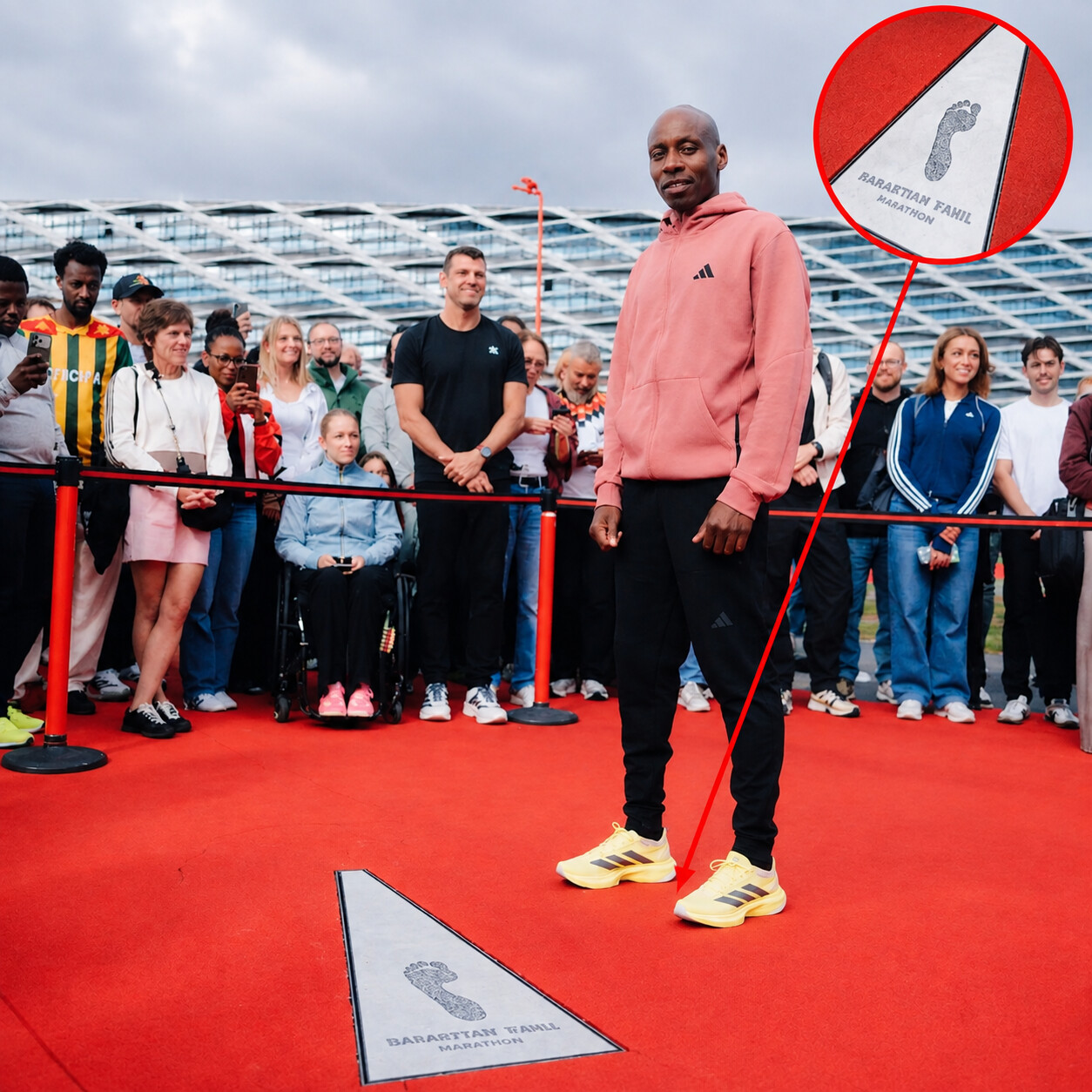
As part of the celebration at adidas headquarters, Sawe and Kejelcha were honoured for their groundbreaking achievements, with both Sawe and Kejelcha also leaving their footprints at the company's headquarters as a lasting physical reminder of their historic 1:59:30 and 1:59:41.

For Sawe, the visit provided another opportunity to commemorate the performance that transformed his career and pushed the limits of marathon running. His record-breaking run was achieved in adidas' Adizero Adios Pro Evo 3, further connecting the historic performance with the brand's technological development.
Kejelcha's achievement was equally significant. His 1:59:41 made him the second man to cross the two-hour threshold in an official marathon, placing him just 11 seconds behind Sawe and firmly establishing the Ethiopian among the greatest marathoners of the modern era.
Interestingly, neither of the two historic athletes will line up at this Sunday's BMW Berlin Marathon.
Sawe was scheduled to defend the title he won in Berlin in 2025, but an injury forced him to withdraw from this year's race. Kejelcha, meanwhile, will also be absent from the prestigious German marathon as he prepares for Valencia marathon in December, meaning the two men who recently rewrote the boundaries of the marathon will not be part of Sunday's elite field.
Their absence will nevertheless do little to diminish the significance of what they accomplished in London.
Two athletes. Two nations. One historic barrier.
Sawe's 1:59:30 and Kejelcha's 1:59:41 have created a new chapter in marathon history, and their performances are likely to remain a source of inspiration for generations of distance runners who will continue chasing the limits of human endurance.
by Erick Cheruiyot for My Best Runs.
Login to leave a comment
Kenenisa Bekele Withdraws From Berlin Marathon After Achilles Injury
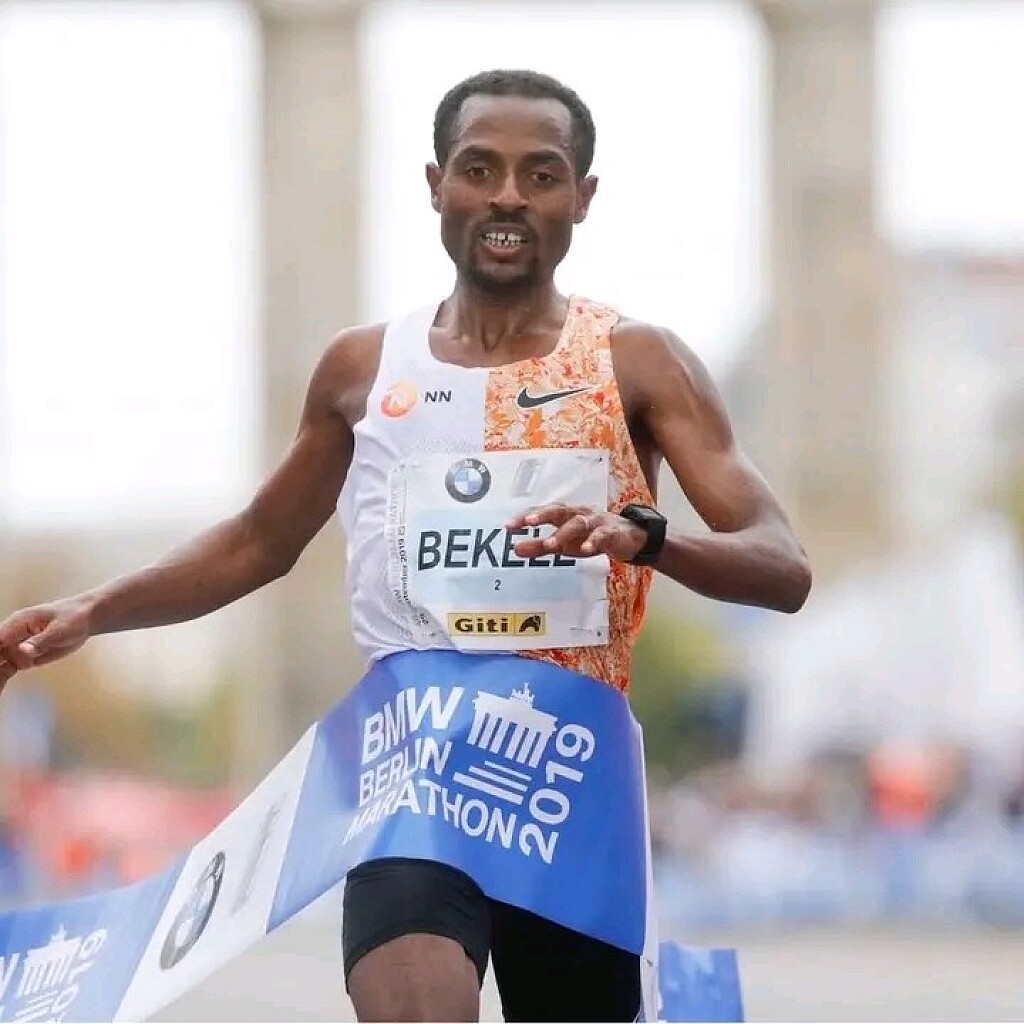
Kenenisa Bekele’s much-anticipated return to the BMW Berlin Marathon has been abruptly cancelled after the Ethiopian distance-running legend suffered an injury to his left Achilles tendon during one of his final training sessions.
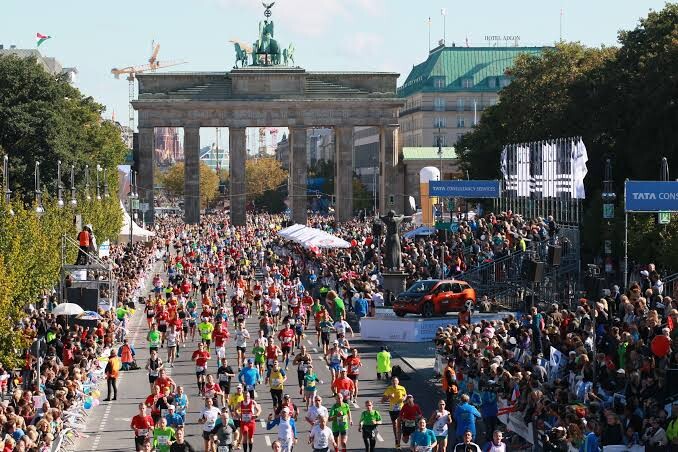
The 44-year-old Bekele was due to return to competitive action on Sunday, September 27, after being added to the elite field only last week. His late inclusion had generated enormous excitement, with fans looking forward to seeing one of the greatest distance runners in history back on one of the courses where he has produced some of his most memorable performances.
However, the injury has forced Bekele to withdraw just days before the race.
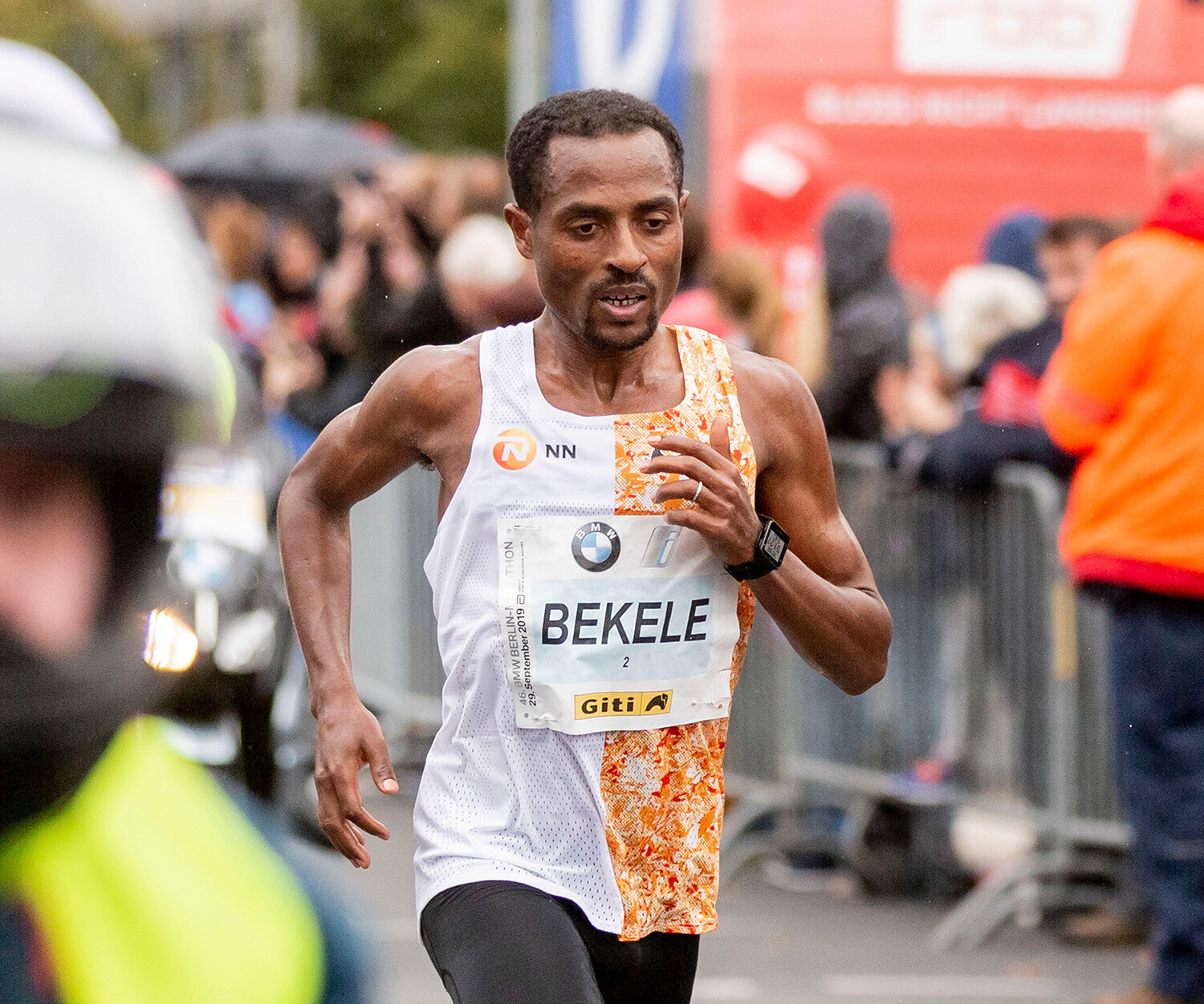
Bekele has a remarkable history in Berlin, having won the marathon twice. In 2016, he stormed to victory in 2:03:03 before returning three years later to produce one of the greatest marathon performances of his career, clocking 2:01:41 in 2019. That performance left him just two seconds short of Eliud Kipchoge’s then-world record of 2:01:39.
His 2:01:41 remains one of the fastest marathon performances ever recorded, and Berlin has long been a special stage in Bekele’s extraordinary career.
This year’s appearance was also expected to mark another chapter in his remarkable longevity. Bekele entered the race as a 44-year-old and had been targeting another strong performance after previously setting a masters marathon world record of 2:04:15 at the 2024 London Marathon, a mark he established at the age of 41.
Instead, his preparations have ended in disappointment.
Bekele has not completed a marathon since the Paris 2024 Olympic Marathon, where he finished 39th in 2:12:24. He subsequently entered the 2025 New York City Marathon but did not finish.
His withdrawal is another frustrating setback for a legendary athlete whose career has repeatedly been interrupted by injuries but who has continued to produce extraordinary performances well beyond the age at which many elite distance runners have retired.
For now, Berlin will have to wait for another Bekele appearance.
The Ethiopian legend will not be on the start line this Sunday, but his legacy on the Berlin streets remains firmly etched in marathon history.
by Erick Cheruiyot for My Best Runs.
Login to leave a comment
BMW Berlin Marathon
The story of the BERLIN-MARATHON is a story of the development of road running. When the first BERLIN-MARATHON was started on 13th October 1974 on a minor road next to the stadium of the organisers‘ club SC Charlottenburg Berlin 286 athletes had entered. The first winners were runners from Berlin: Günter Hallas (2:44:53), who still runs the BERLIN-MARATHON today, and...
more...
Tigst Assefa, Rosemary Wanjiru And Gabriel Geay Headline A Star-Studded Berlin Marathon
With just three days remaining until the BMW Berlin Marathon, anticipation is building for another spectacular edition of one of the world’s fastest marathon races.
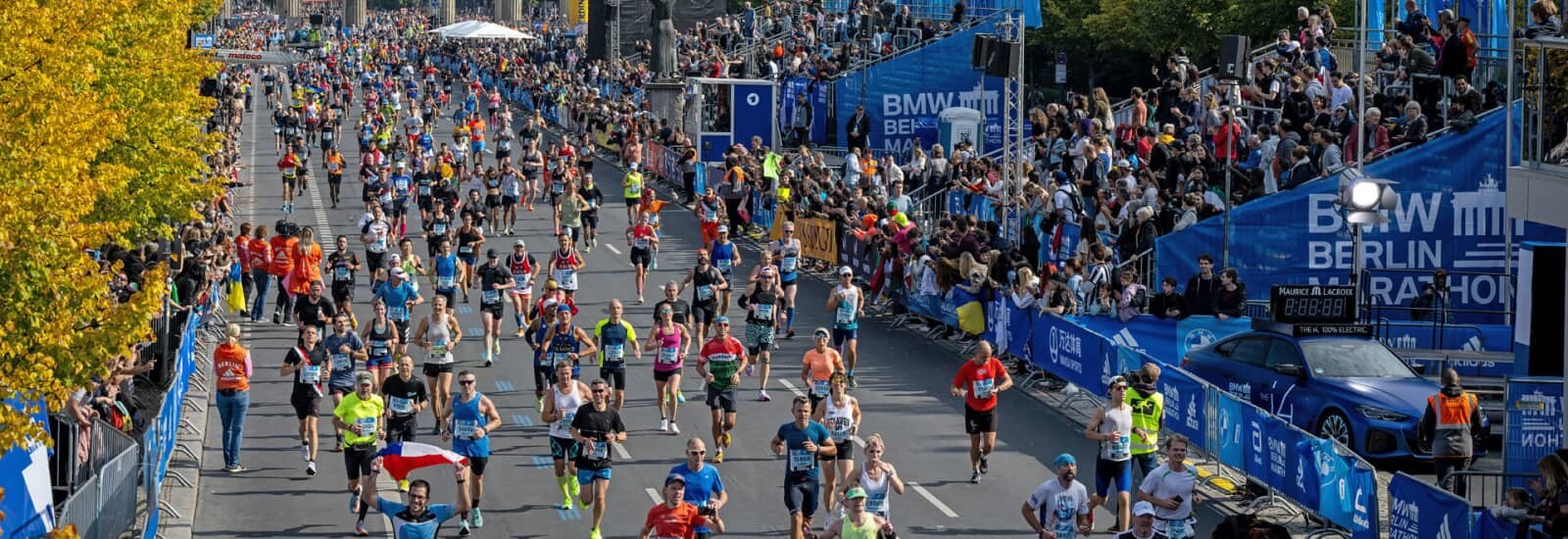
The 52nd edition of the race will take place on Sunday, September 27, with a deep international field set to take on the famously fast streets of the German capital.
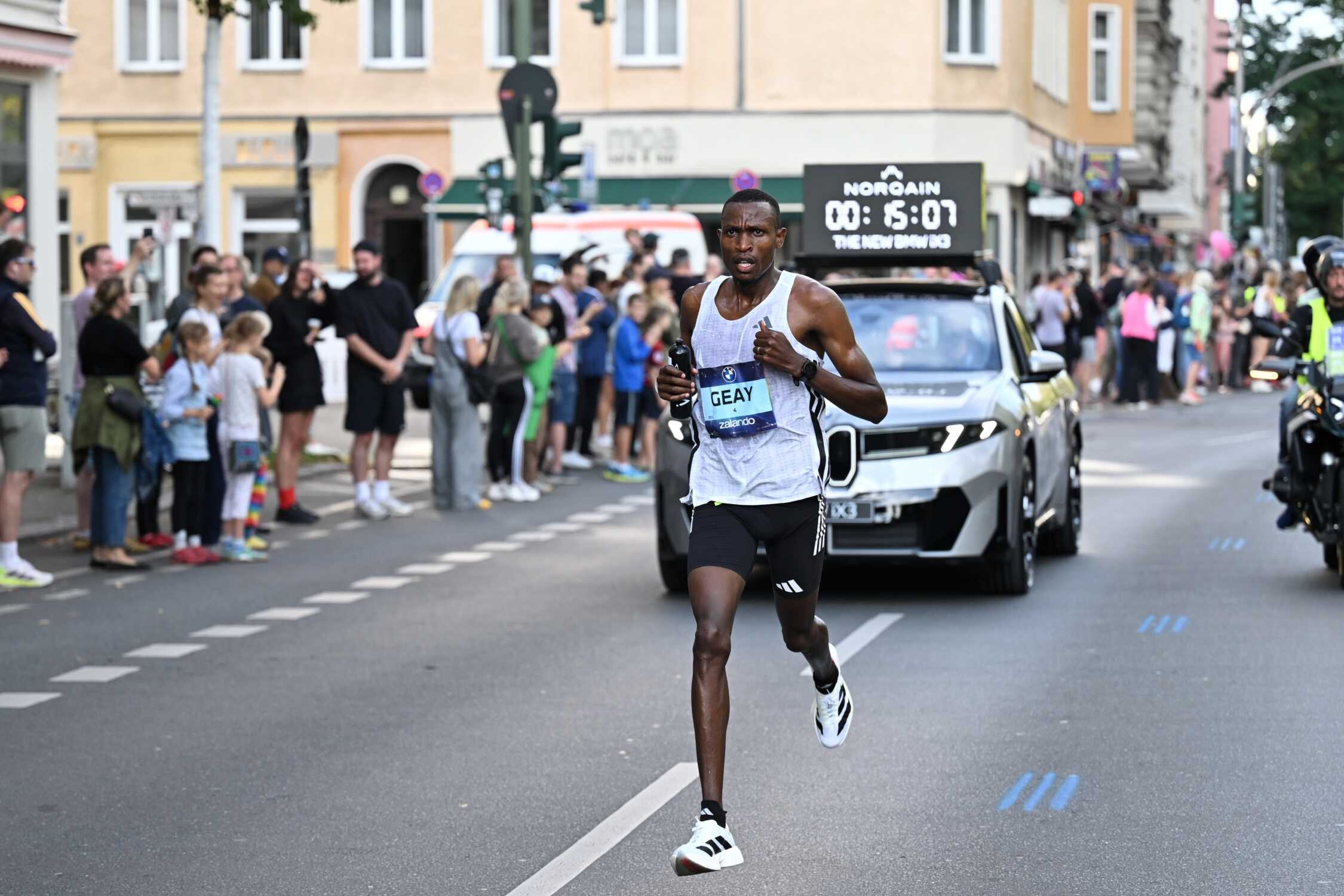
Tanzania’s Gabriel Geay is among the leading names in the men’s race, bringing a personal best of 2:03:00 to Berlin. His mark, set in Valencia in 2022, places him among the fastest marathoners in the elite field. However, Ethiopia’s legendary Kenenisa Bekele has since been added to the field with a 2:01:41 personal best, meaning Geay is not the fastest entrant on paper.
The men’s field also features Getaneh Molla (2:03:34), Guye Adola (2:03:46), Shura Kitata (2:03:59), Kenya’s Erick Sang (2:04:30) and Olympic 10,000m champion Selemon Barega (2:05:00), setting the stage for an exceptionally deep contest.
For Bekele, however, this return to Berlin carries a significance that goes far beyond the start list. The last time the Ethiopian legend stood on the Berlin start line was in 2019, when he ran 2:01:41—just two seconds outside the then-world record of 2:01:39. Had he gone two seconds faster, Bekele would have become the only athlete in history to simultaneously hold the world records for the 5,000 metres, 10,000 metres and marathon.
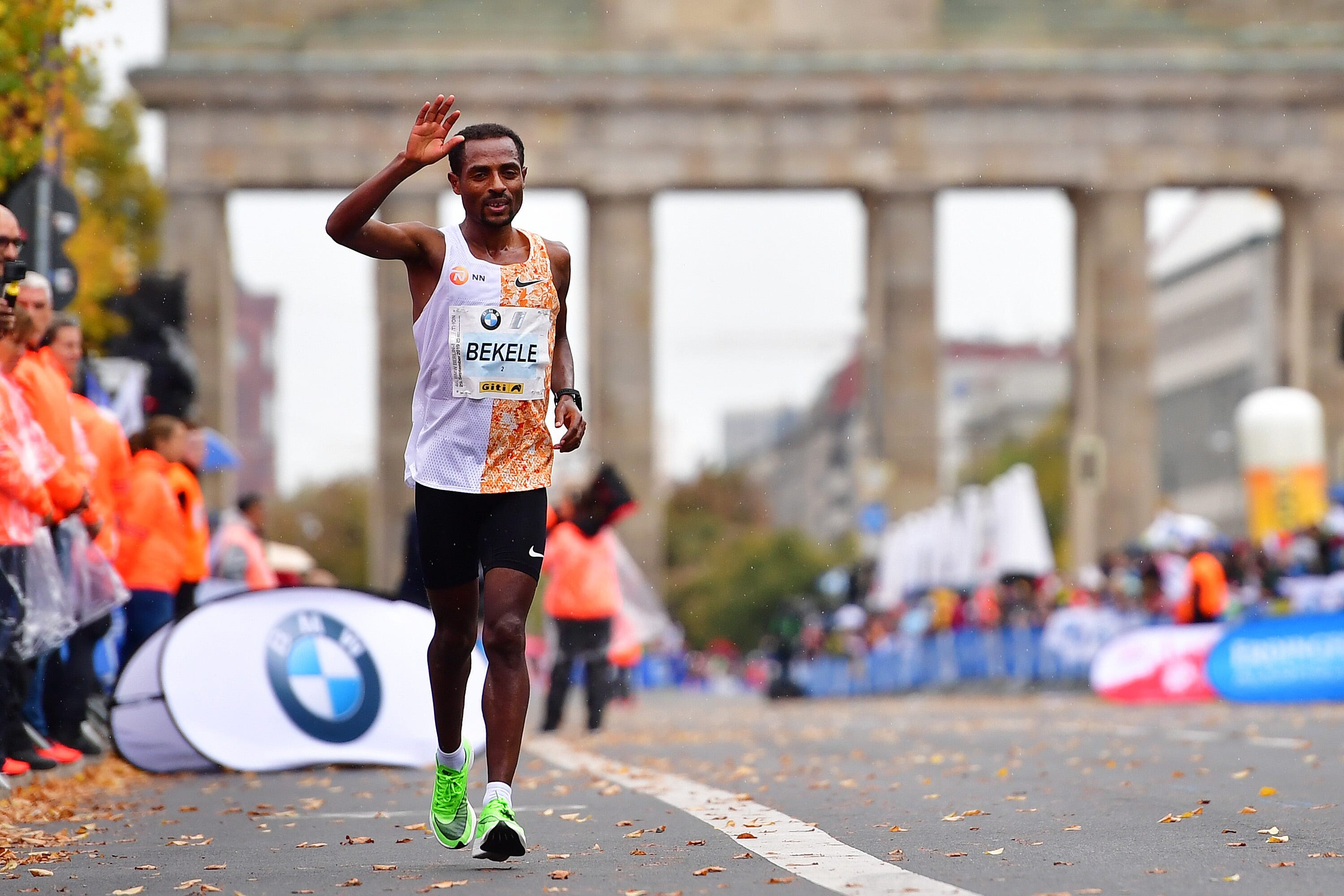
Bekele returns to Berlin on Sunday at the age of 44. His most recent race was the New York City Marathon in November, where he did not finish. Berlin, however, holds a special place in his marathon career. He claimed his first Berlin Marathon victory in 2016 and has won the race twice. He also owns the masters world record of 2:04:15, set in London last year.
He will not be the favourite in this year’s race, particularly after Sabastian Sawe was ruled out with a stress fracture. Adola, Molla, Kitata and Geay lead the field on paper, but Bekele’s presence adds another layer of intrigue to a race already packed with established marathon talent.
For Bekele, Berlin is more than another marathon. It is the course where he came closer than anyone to achieving a piece of distance-running history that remains untouched. Some athletes retire from the sport. Some retire toward one course. Bekele is running the second kind of retirement.
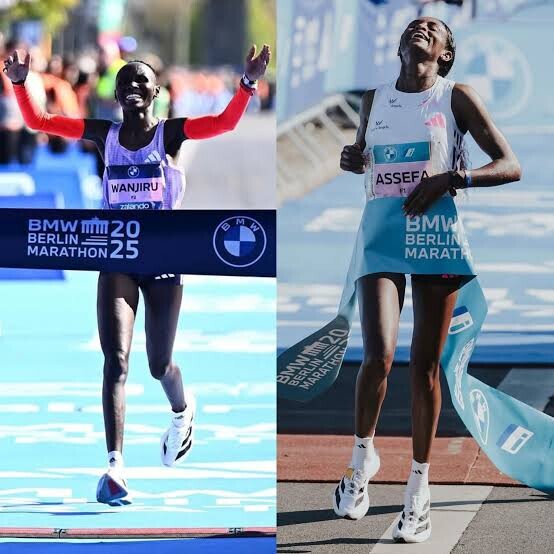
In the women’s race, all eyes will be on Tigst Assefa as the Ethiopian superstar returns to the course where she produced one of the most remarkable marathon performances in history. Assefa clocked 2:11:53 in Berlin in 2023, setting a world record at the time and establishing a course record that still stands.
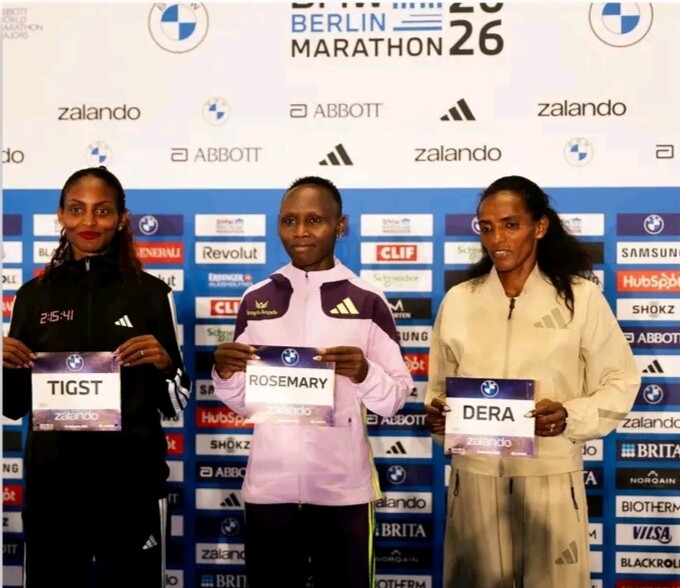
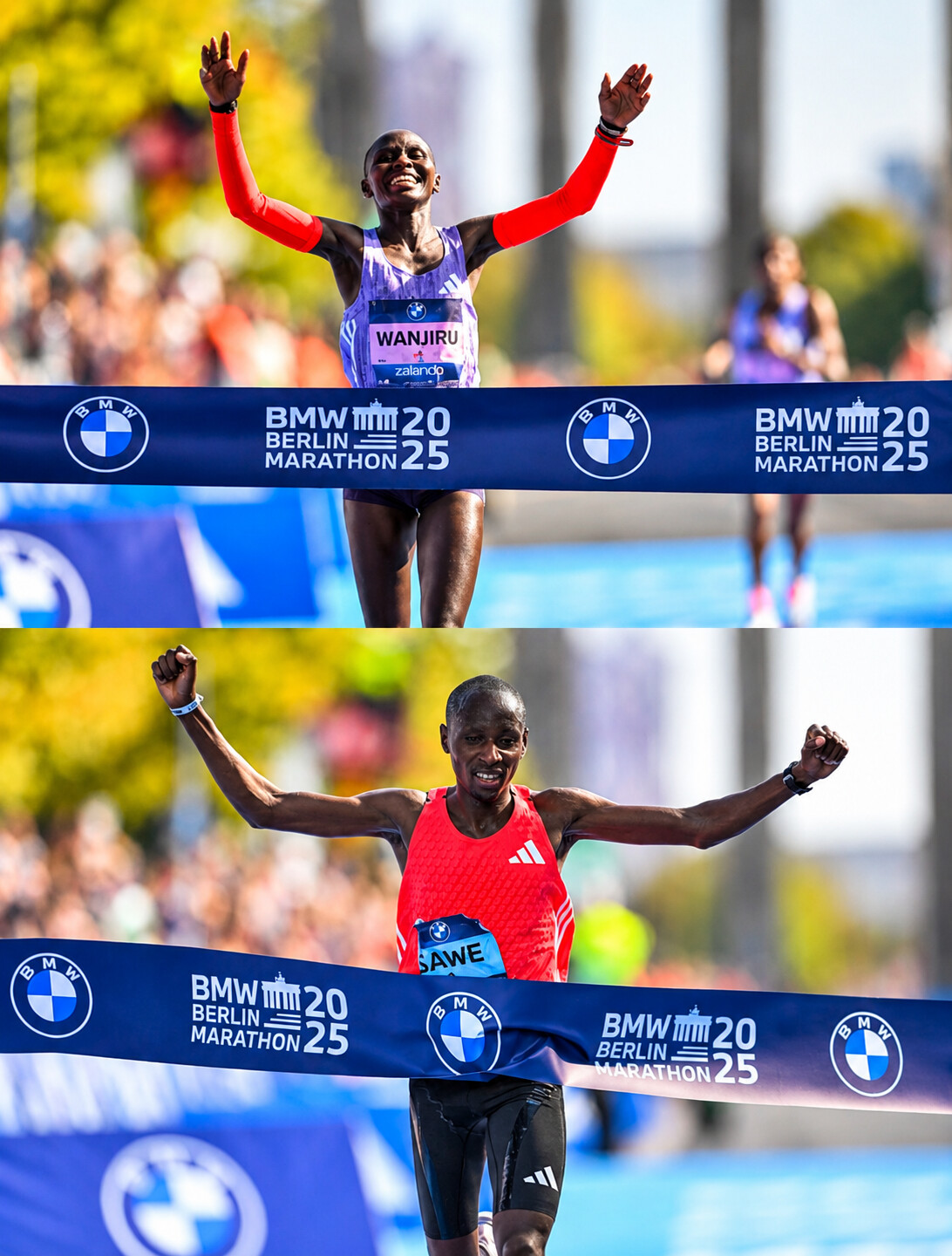
Assefa, a two-time Berlin Marathon champion, will face defending champion Rosemary Wanjiru, who returns to the German capital looking to retain her title. Wanjiru won the 2025 edition in 2:21:05 after previously finishing second in Berlin in 2022 in 2:18:00. Her personal best of 2:16:14 came at the 2023 Tokyo Marathon.
Wanjiru’s challenge will be particularly intriguing given the depth of the Ethiopian contingent. Bedatu Hirpa enters with a 2:18:27 personal best, followed by Dera Dida at 2:18:32, Zeineba Yimer at 2:18:47, Bosena Mulatie at 2:19:00, Misgane Alemayehu at 2:19:08 and Bekelech Gudeta at 2:19:39.
Kenya will also have another strong presence through Evaline Chirchir, whose 2:20:33 personal best places her among the leading women on the start list.
The Berlin Marathon’s reputation for producing fast times adds another layer of intrigue to an already stacked field. With a flat course, long stretches of uninterrupted running and a history of world records, the German capital has consistently provided elite athletes with the ideal conditions to test the limits of marathon performance.
Beyond the headline names, the race will also offer an opportunity for several contenders to make their mark on one of the biggest stages in road running. With experienced marathoners and ambitious challengers sharing the start line, the battle for the podium is expected to unfold at a demanding pace from the opening kilometres through the final stages of the race.
With Assefa returning to the scene of her historic 2023 run, Wanjiru arriving as the defending champion and a deep international cast lining up across both races, Berlin is once again set for a weekend of world-class marathon racing.
Three days out, the stage is set. The fast Berlin streets are waiting.
by Erick Cheruiyot for My Best Runs.
Login to leave a comment
BMW Berlin Marathon
The story of the BERLIN-MARATHON is a story of the development of road running. When the first BERLIN-MARATHON was started on 13th October 1974 on a minor road next to the stadium of the organisers‘ club SC Charlottenburg Berlin 286 athletes had entered. The first winners were runners from Berlin: Günter Hallas (2:44:53), who still runs the BERLIN-MARATHON today, and...
more...
BMW Berlin Marathon Unveils 2026 Finisher Medal As Runners Prepare For September Showdown
The BMW Berlin Marathon has unveiled its official finisher medal for the 2026 edition, giving thousands of runners another exciting reminder of what awaits them when they cross the finish line in the German capital on September 27.
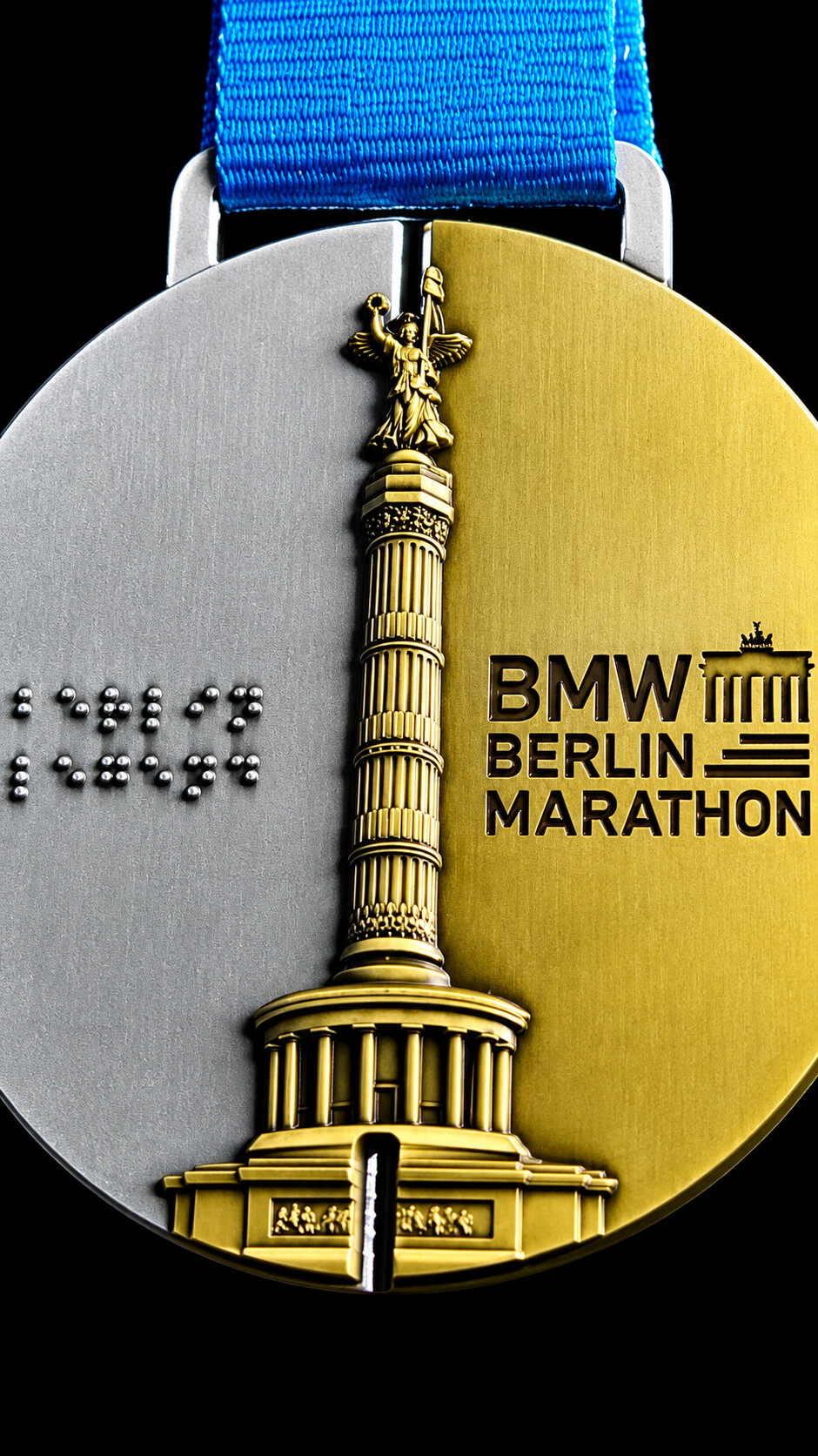
The striking medal celebrates Berlin through a distinctive combination of gold and silver tones. On the front, the city’s iconic Victory Column takes centre stage, creating a powerful symbol of the historic marathon and the unforgettable journey runners will make through the streets of Berlin.
The reverse side continues the city-inspired theme, featuring a detailed map of Berlin with the marathon course highlighted across it. The design also carries the words “Berlin Legend” and the race date, 27 September 2026, making the medal a lasting reminder of the occasion.
But while the medal offers a glimpse of the reward waiting at the finish, organisers are also making preparations to help runners manage one of the biggest challenges of marathon racing: staying cool during the closing stages of the 42.195-kilometre journey.
For the 2026 race, dedicated Cooling Stations will be available at kilometres 30 and 38, integrated into the aid-station areas. These locations are strategically positioned to provide runners with an opportunity to cool themselves during the demanding final stretch of the marathon.
The cooling facilities will be located before the respective aid stations in the direction of running, close to the showers. They will be clearly identifiable by an official sign attached to the wash trough, making them easy for participants to spot while racing.

The wash troughs will be filled with water, allowing runners to dip their own sponges, towels, caps and other cooling items into the water before continuing their journey. Importantly, participants must bring these items themselves, as they will not be supplied or handed out at the cooling stations.
The reminder could prove particularly valuable for runners planning their race strategy. By preparing cooling equipment in advance and knowing exactly where the stations are located, participants can make the most of the facilities when fatigue begins to set in during the final 12 kilometres.
The BMW Berlin Marathon is one of the world's most prestigious marathon races and forms part of the Abbott World Marathon Majors, attracting elite athletes and recreational runners from across the globe. For many participants, finishing in Berlin represents the culmination of months of training, sacrifice and anticipation.
Now, with the 2026 finisher medal revealed and practical race-day details being released, the excitement is building. The goal for thousands of runners will soon become very real: navigate the streets of Berlin, manage the demanding final kilometres, cross the finish line and earn the coveted “Berlin Legend” medal.
For those lining up on September 27, the countdown is officially on.
by Erick Cheruiyot for My Best Runs.
Login to leave a comment
BMW Berlin Marathon
The story of the BERLIN-MARATHON is a story of the development of road running. When the first BERLIN-MARATHON was started on 13th October 1974 on a minor road next to the stadium of the organisers‘ club SC Charlottenburg Berlin 286 athletes had entered. The first winners were runners from Berlin: Günter Hallas (2:44:53), who still runs the BERLIN-MARATHON today, and...
more...
Sabastian Sawe Withdraws from Berlin Marathon After Injury, Ending Title Defence Hopes
Kenyan marathon sensation Sabastian Sawe has been forced to withdraw from the 2026 BMW Berlin Marathon because of injury, delivering a major blow to one of the most eagerly anticipated races of the year.
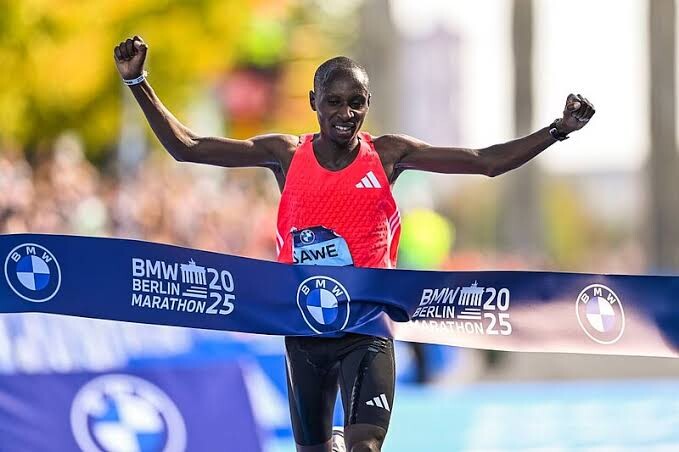
The 31-year-old Sawe, the reigning Berlin Marathon champion and marathon world-record holder, was scheduled to return to the German capital on September 27 with hopes of defending the title he won in 2025. However, injury has now ruled him out, bringing an abrupt end to his highly anticipated appearance.
The Berlin Marathon organisers officially confirmed Sawe’s withdrawal through their social media channels, expressing their disappointment at the Kenyan star’s absence and wishing him a full and speedy recovery.
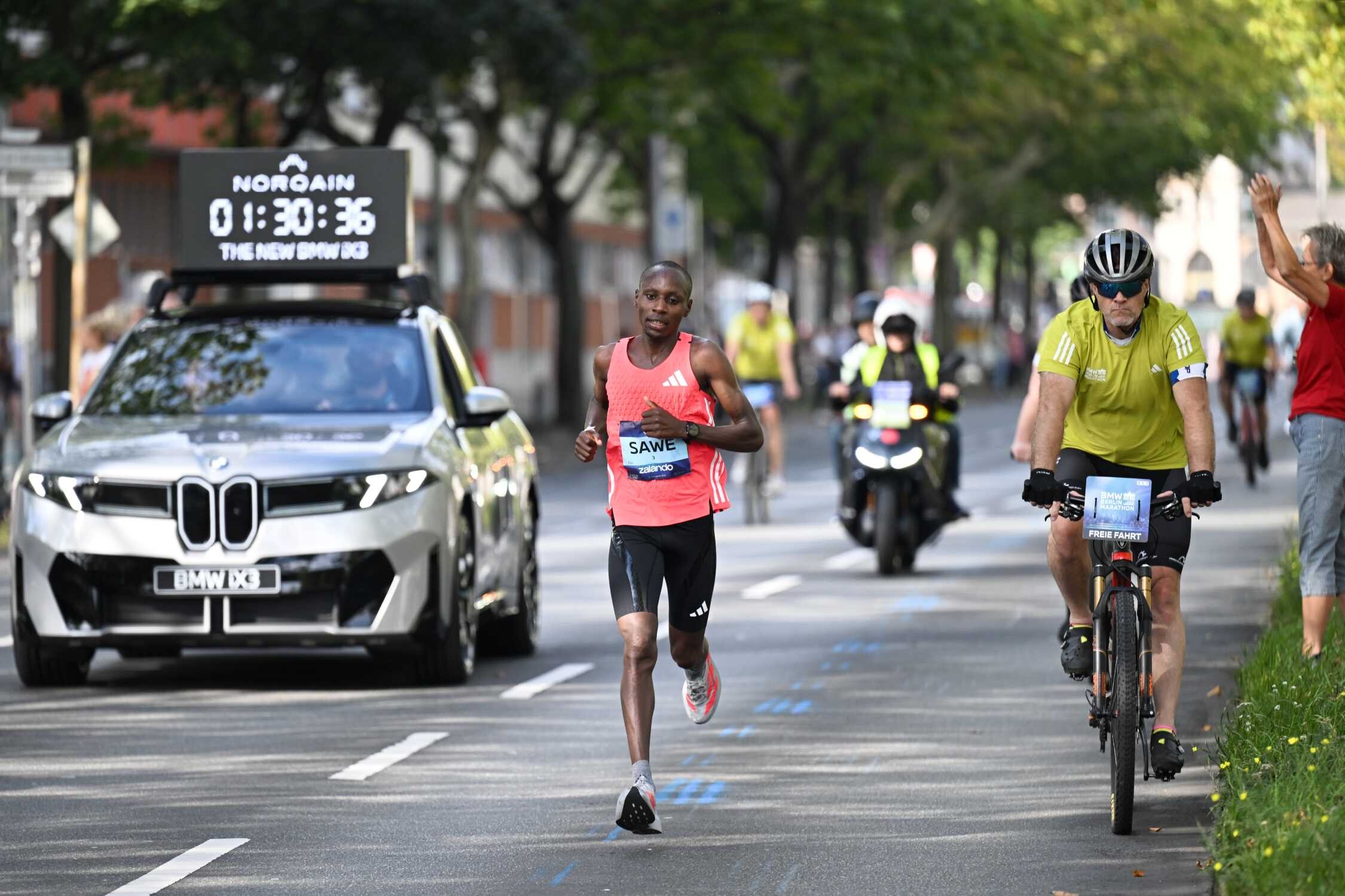
Sawe’s withdrawal is particularly significant because the Berlin Marathon was expected to mark his first official marathon appearance since his historic triumph in London earlier this year. The Kenyan made history at the London Marathon in April by becoming the first man to officially break the two-hour barrier in a marathon, stopping the clock at an astonishing 1:59:30.
That extraordinary performance elevated Sawe to another level in the sport and made his planned return to Berlin even more eagerly anticipated. Having already conquered the German capital in 2025, he was expected to arrive as both the defending champion and the man at the centre of the marathon world’s attention.
Last year, Sawe produced a superb performance to claim the Berlin Marathon title in 2:02:16, establishing himself as one of the dominant figures on one of the fastest marathon courses in the world. He had hoped to build on that victory this year, but his injury has forced him to abandon those plans.
Sawe expressed his deep disappointment at the withdrawal, revealing that he was leaving the race with a “heavy heart” after hoping to achieve something special on the streets of Berlin. His words reflect just how much the opportunity meant to him as he looked forward to returning to the scene of his previous triumph.
His absence will be a significant blow to the 2026 Berlin Marathon, removing one of the biggest stars from an elite field expected to deliver another memorable race. Sawe’s remarkable speed, endurance and record-breaking credentials had made him one of the main attractions of the event.
For now, the marathon king’s priority will be a full recovery. The athletics world will hope to see the Kenyan star back on the starting line soon, healthy, stronger and ready to add another chapter to an already extraordinary career.
Berlin will have to wait for its champion. But when Sawe returns, the marathon world will be watching.
by Erick Cheruiyot for My Best Runs.
Login to leave a comment
BMW Berlin Marathon
The story of the BERLIN-MARATHON is a story of the development of road running. When the first BERLIN-MARATHON was started on 13th October 1974 on a minor road next to the stadium of the organisers‘ club SC Charlottenburg Berlin 286 athletes had entered. The first winners were runners from Berlin: Günter Hallas (2:44:53), who still runs the BERLIN-MARATHON today, and...
more...
Kejelcha and Sawe: Two Men Driving Road Running Into a New Era
Men's road running is moving into extraordinary territory, and two athletes are increasingly at the heart of its breathtaking evolution: Yomif Kejelcha of Ethiopia and Sabastian Sawe of Kenya.
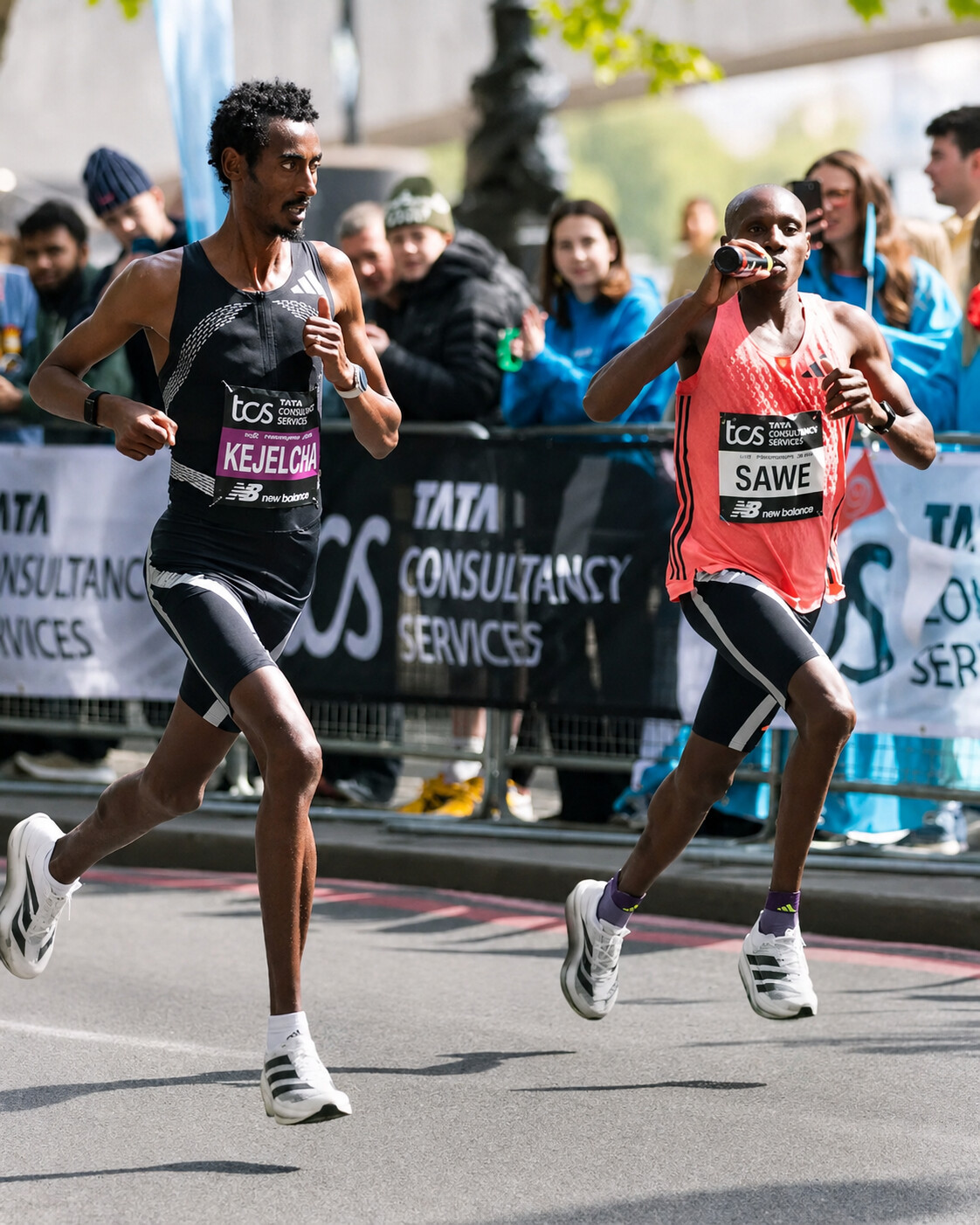
The pair represent the remarkable depth of modern East African distance running, but they are also doing something even more significant: pushing the boundaries of marathon and half-marathon performance to levels that once seemed almost unimaginable. Through their exceptional speed, endurance and ability to perform at the highest level, Kejelcha and Sawe are helping to redefine what is possible on the roads.
Sawe has established himself as one of the most formidable marathon runners in the world. His astonishing 1:59:30 marathon performance at TCS London Marathon on April 26, 2026, marked as a world record, African record and Kenyan record, demonstrated the extraordinary level the marathon has now reached. It also underlined his position at the very top of the men's marathon world rankings.
Kejelcha has been equally sensational, although his journey has highlighted a different kind of versatility. The Ethiopian, whose background includes world-class performances on the track and across shorter road distances, ran 1:59:41 for the marathon debut also at the TCS London Marathon on April 26, 2026, a performance marked as a national record. Just four months later, he delivered another stunning display by clocking 56:51 for the half marathon at the Argentina's capital, Buenos Aires on August 23, 2026, with the performance marked as a pending world record, African record and Ethiopian national record.
That combination of performances illustrates just how exceptional this new generation has become. Kejelcha's ability to threaten the absolute limits over the half marathon while also producing a sub-two-hour marathon performance speaks to his extraordinary range. Sawe, meanwhile, has continued to establish himself as a dominant force over the classic 42.195km distance, combining remarkable efficiency with the strength and speed required to compete at the very highest level.

The two stars are now preparing to take their talents to different stages of the road-running calendar. Kejelcha's next focus is the Valencia Marathon on December 6, where he will once again turn his attention to the marathon distance and look to build on his remarkable breakthrough over 42.195km. Sawe, meanwhile, is set to race the BMW Berlin Marathon on September 27, giving the Kenyan another major opportunity to showcase his extraordinary marathon strength on one of the world's fastest and most prestigious courses.
Those upcoming races add another fascinating dimension to their respective journeys. While Kejelcha heads to Valencia carrying exceptional speed and versatility into another marathon challenge, Sawe will arrive in Berlin with his sights firmly fixed on maintaining his dominance at the highest level of the sport.
What makes their rise particularly exciting is the wider message it sends to athletics. The marathon is no longer progressing only through small margins. The standards at the top are being pushed relentlessly forward, and performances that once appeared impossible are becoming increasingly realistic.
The official sub-two-hour marathon remains one of athletics' ultimate frontiers. Achieving it under standard race conditions would represent one of the greatest endurance breakthroughs in sporting history. Yet with athletes such as Sawe already breaking the two-hour barrier and Kejelcha running only seconds above it while also producing unprecedented half-marathon speed, that frontier appears closer than ever.
Their careers are different, and their strengths are not identical. Sawe has rapidly become a dominant marathon specialist, while Kejelcha brings exceptional versatility from the track to the roads and across multiple distances. But together, they symbolize the relentless progression of men's road running.
Yomif Kejelcha and Sabastian Sawe are not merely among the fastest men of their generation. They are helping to drive the sport toward a future that once seemed unthinkable. With Valencia and Berlin now on their horizons, the next chapter of this remarkable road-running revolution is already waiting to be written.
by Erick Cheruiyot for My Best Runs.
Login to leave a comment
Daddy Pig Faces Berlin’s Unforgiving Marathon Rules After Narrowly Beating Joe Wicks in London
Daddy Pig may have won one of the most entertaining battles of the 2026 London Marathon, but his next appearance at the BMW Berlin Marathon could come with a very different kind of pressure.

The beloved Peppa Pig character completed the London Marathon in 5:51:53, edging fitness coach Joe Wicks by the smallest possible margin after Wicks crossed the line in 5:51:54. One second separated the two after more than 42 kilometres of running, creating one of the most memorable celebrity moments of the marathon.

Now Daddy Pig is heading to Berlin on September 27, where the rules leave considerably less room for sentiment.
The BMW Berlin Marathon operates under a strict 6-hour-15-minute limit from the moment each runner crosses the start line. Falling outside that limit means leaving the official course. The race also enforces intermediate cutoffs, with runners required to reach 33km by 3:50 p.m. and 38km by 4:35 p.m. Those who miss the deadlines can be taken to the finish in the race's famous broom bus and will not receive an official finishing time, a medal or post-finish services.

Against his London performance, that would leave Daddy Pig just 23 minutes and seven seconds to spare.
For an ordinary marathon runner, that margin would already demand respect. For someone competing inside a large and physically demanding character costume, it could make the challenge even more formidable.
London was a celebration. The crowds embraced Daddy Pig as he battled his way around the capital alongside Wicks, turning a charity campaign into one of the day's most talked-about stories. Berlin, however, is a race governed by the clock. Popularity, celebrity status and cartoon fame do not alter the timing mats or extend the official road closures.
Daddy Pig's London appearance also carried a purpose beyond entertainment. He ran in support of the National Deaf Children's Society, following the storyline involving his son, George Pig, who is deaf and wears a hearing aid. The campaign used one of children's television's most recognisable families to raise awareness and funds for deaf children and their families.
The identity of the person inside the Daddy Pig costume has remained part of the fun, with the character famously refusing to reveal more than the fact that “Daddy Pig is a Pig.”
Berlin will continue that charitable mission, although current campaign information describes Daddy Pig's September appearance as part of a celebrity relay initiative supporting children with hearing impairments. That means the prospect of a second complete World Marathon Major finish in the same calendar year should not yet be presented as confirmed.
But the larger appeal of the story remains unchanged.
Daddy Pig has already proved that a cartoon character can become a genuine part of marathon culture, complete with a real bib number, an official finishing time and a one-second victory over one of Britain's best-known fitness personalities.
Whether Berlin brings another full-distance adventure or a relay appearance, the message is the same: once the starting gun goes off at a World Marathon Major, even the most famous pig on television has to respect the clock.
by Erick Cheruiyot for My Best Runs.
Login to leave a comment
BMW Berlin Marathon
The story of the BERLIN-MARATHON is a story of the development of road running. When the first BERLIN-MARATHON was started on 13th October 1974 on a minor road next to the stadium of the organisers‘ club SC Charlottenburg Berlin 286 athletes had entered. The first winners were runners from Berlin: Günter Hallas (2:44:53), who still runs the BERLIN-MARATHON today, and...
more...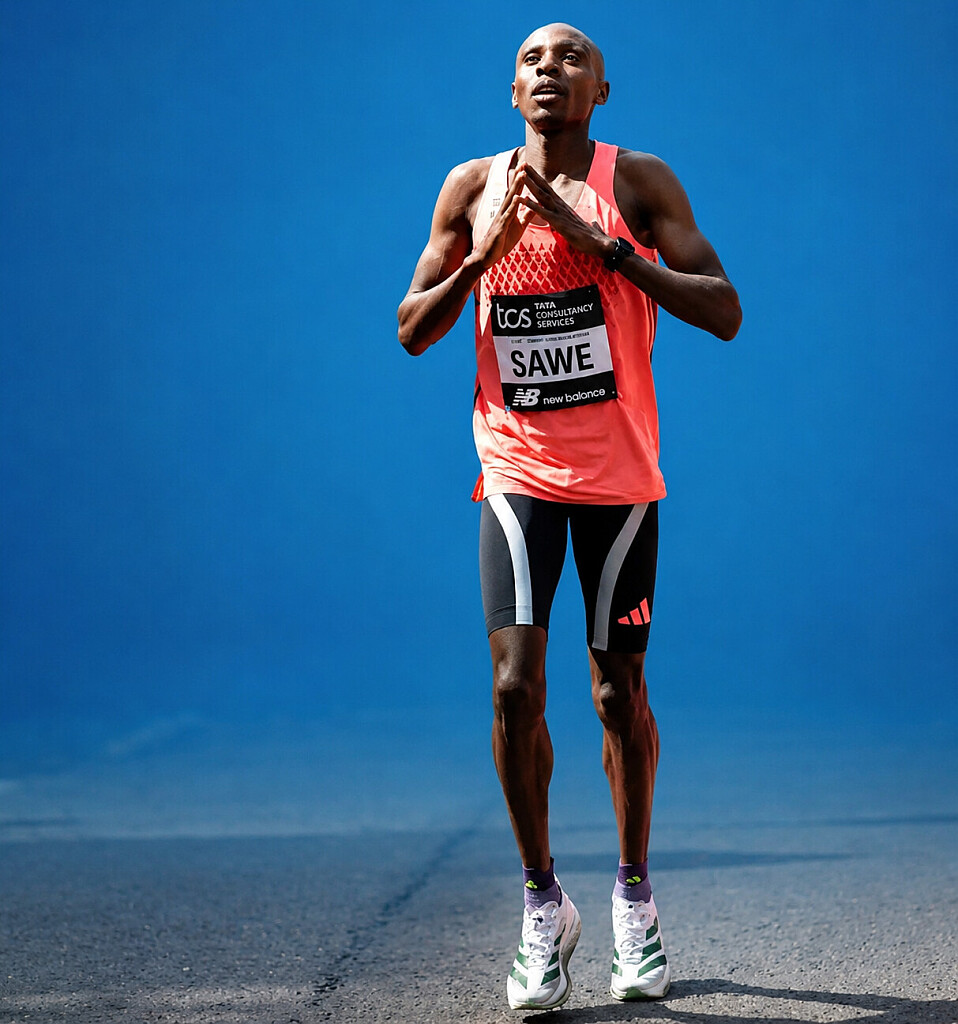
Sabastian Sawe Set for Another Historic Berlin Marathon as Elite Field Takes Shape
World record holder Sabastian Sawe is set to return to the BMW Berlin Marathon on September 27, where the Kenyan superstar will defend his title and attempt to add another remarkable chapter to his already extraordinary marathon career.
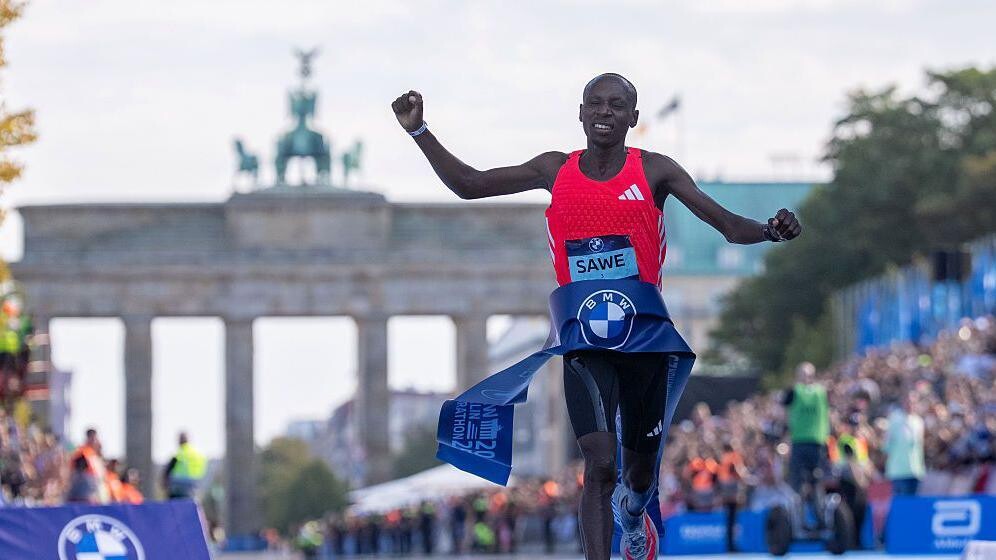
Sawe arrives in Berlin with unprecedented confidence after his sensational 1:59:30 performance in London, which made him the first athlete to officially break the two-hour barrier in the marathon. That landmark achievement has elevated expectations for his return to the German capital, where he will once again line up on one of the fastest marathon courses in the world.
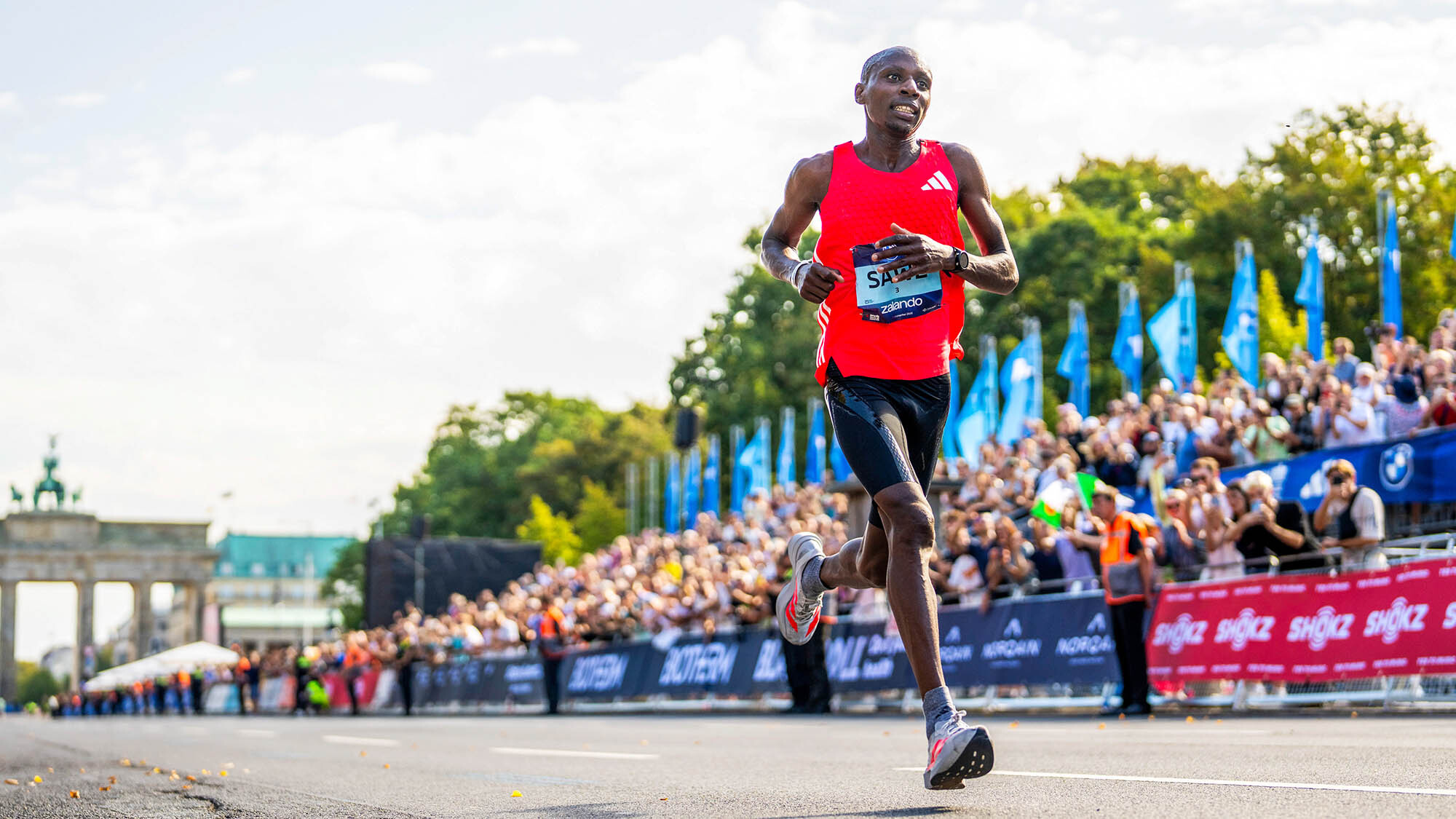
The Kenyan won the 2025 Berlin Marathon in 2:02:16 despite warm conditions, demonstrating his ability to produce a world-class performance even when circumstances are far from ideal. This time, he returns as the defending champion and world-record holder, with the famously flat Berlin course providing another opportunity to test the limits of what is possible over 42.195km.
Berlin has a remarkable history of producing record-breaking performances, and Sawe's presence immediately raises the possibility of another extraordinary race. The question now is whether the 31-year-old can go beyond his own 1:59:30 world record and take the marathon to an even higher level.
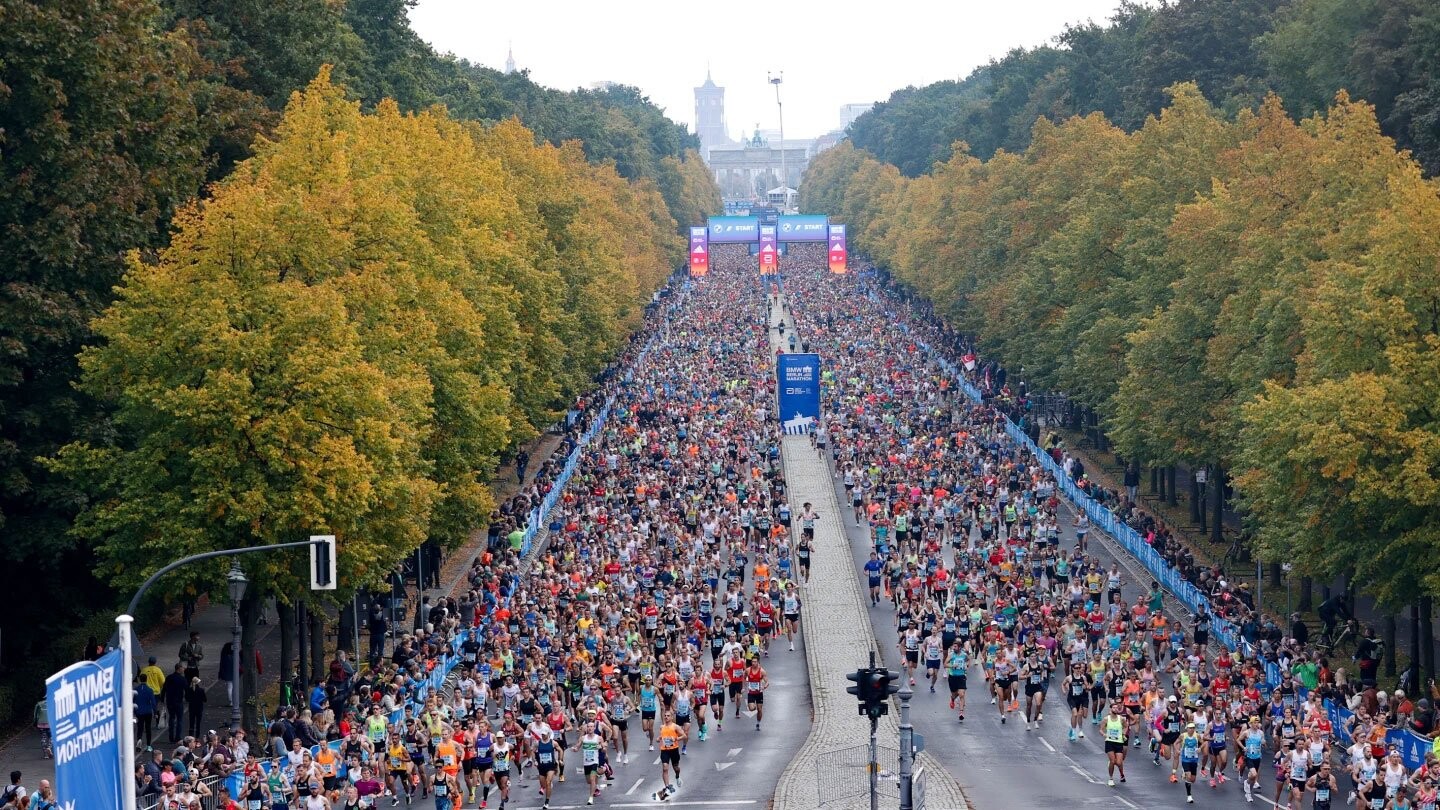
However, Sawe will face formidable opposition.
Tanzania’s Gabriel Geay has joined the elite field, bringing a personal best of 2:03:00 set in Valencia in 2022. The 29-year-old Tanzanian record holder established himself among the world’s leading marathoners with that performance and further underlined his credentials by finishing runner-up at the 2023 Boston Marathon.
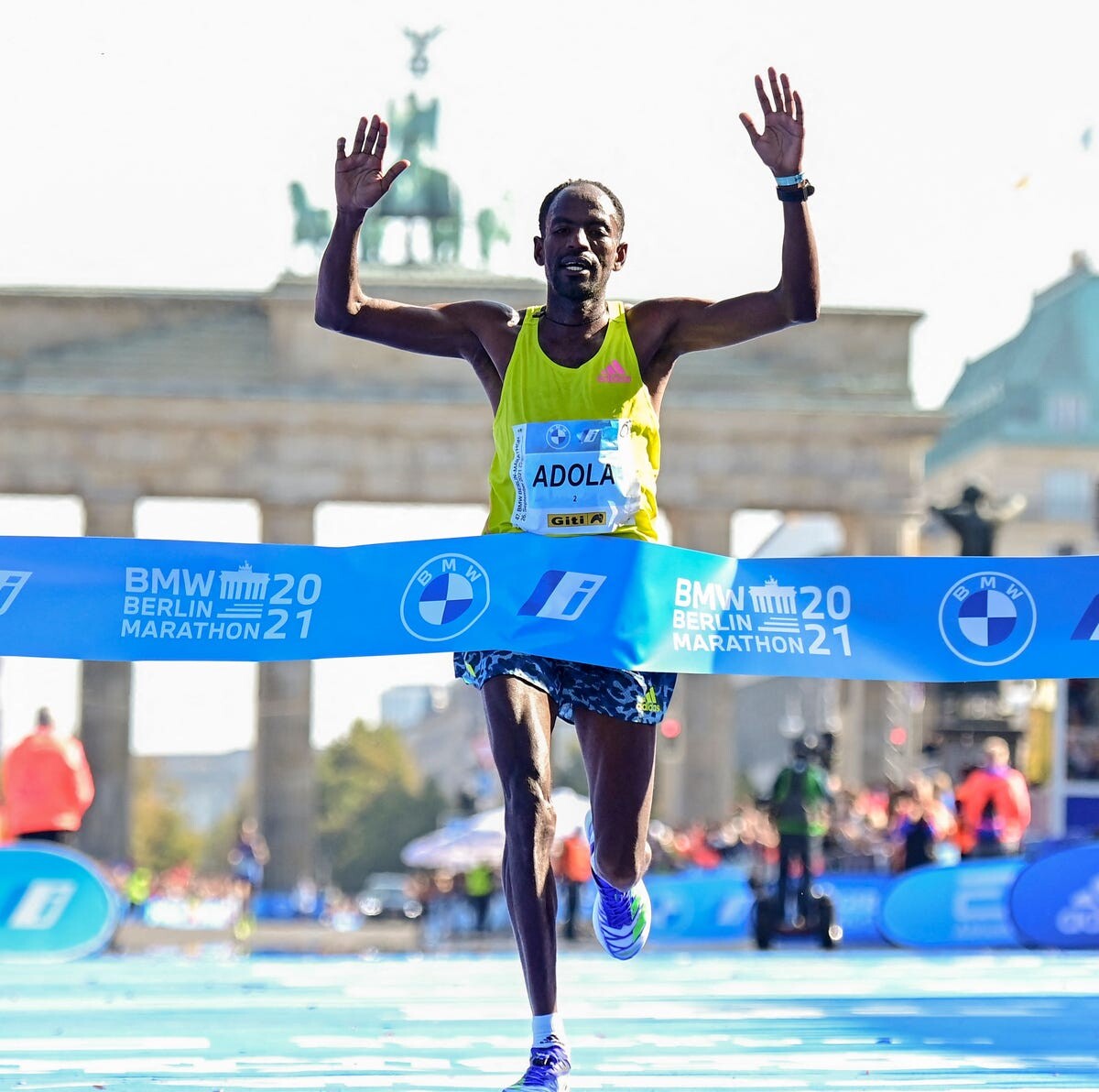
Ethiopia’s Guye Adola will also return to Berlin, the scene of some of the most memorable moments of his marathon career. In 2017, Adola stunned the athletics world on his marathon debut, pushing Eliud Kipchoge deep into the race before finishing second in a remarkable 2:03:46. Four years later, on September 26, 2021, Adola returned to Berlin and claimed victory in 2:05:45, adding another significant chapter to his association with the iconic German marathon. Now, after his recent return to top form, he will once again line up on the streets where he has already made history.
Now 35, Adola has endured injury setbacks in recent years, but his victory at the Rotterdam Marathon in 2:03:54 this spring proved that he remains a major force on the international marathon circuit.
The addition of Geay and Adola adds further quality to a field already packed with athletes capable of running at an extraordinary pace. With Sawe leading the charge, Berlin is shaping up to deliver another thrilling battle among some of the world's finest marathoners.
The depth of the field extends well beyond the leading contenders, with Ethiopia boasting an imposing group of marathoners. Getaneh Molla (2:03:34), Shura Kitata (2:03:59), Dejene Hailu (2:04:15), Selemon Barega (2:05:00), Taresa Tolosa (2:05:17), Tadu Abate (2:05:38), Asefa Boki (2:05:40) and Andamlak Belihu (2:06:40) will all bring proven credentials and the ambition to challenge for fast times in Berlin.
Japan, meanwhile, has assembled a particularly deep contingent, led by Kenya Sonota (2:05:59), Tsubasa Ichiyama (2:06:00), Kyoto Hirabayashi (2:06:14), Yuhei Urano (2:06:23), Hidekazu Hijikata (2:06:26), Yusuke Nishiyama (2:06:31), Naoki Koyama (2:06:33), Kazuya Nishiyama (2:06:45), Daisuke Uekado (2:06:54) and Shin Kimura (2:07:34). China’s Jie He (2:06:57) and Kenya’s Richard Yator (2:07:36) complete a remarkably deep field, setting the stage for a race where the battle for victory could be accompanied by a long list of outstanding personal performances.
For Sawe, though, the challenge goes beyond defending his Berlin crown. Having already broken the two-hour barrier, he now has an opportunity to chase an even more remarkable achievement on a course renowned for producing marathon history.
Can Sabastian Sawe lower his own 1:59:30 world record in Berlin on September 27?
The countdown is on, and if the conditions are right, the defending champion could once again have the marathon world watching every step.
by Erick Cheruiyot for My Best Runs.
Login to leave a comment
BMW Berlin Marathon
The story of the BERLIN-MARATHON is a story of the development of road running. When the first BERLIN-MARATHON was started on 13th October 1974 on a minor road next to the stadium of the organisers‘ club SC Charlottenburg Berlin 286 athletes had entered. The first winners were runners from Berlin: Günter Hallas (2:44:53), who still runs the BERLIN-MARATHON today, and...
more...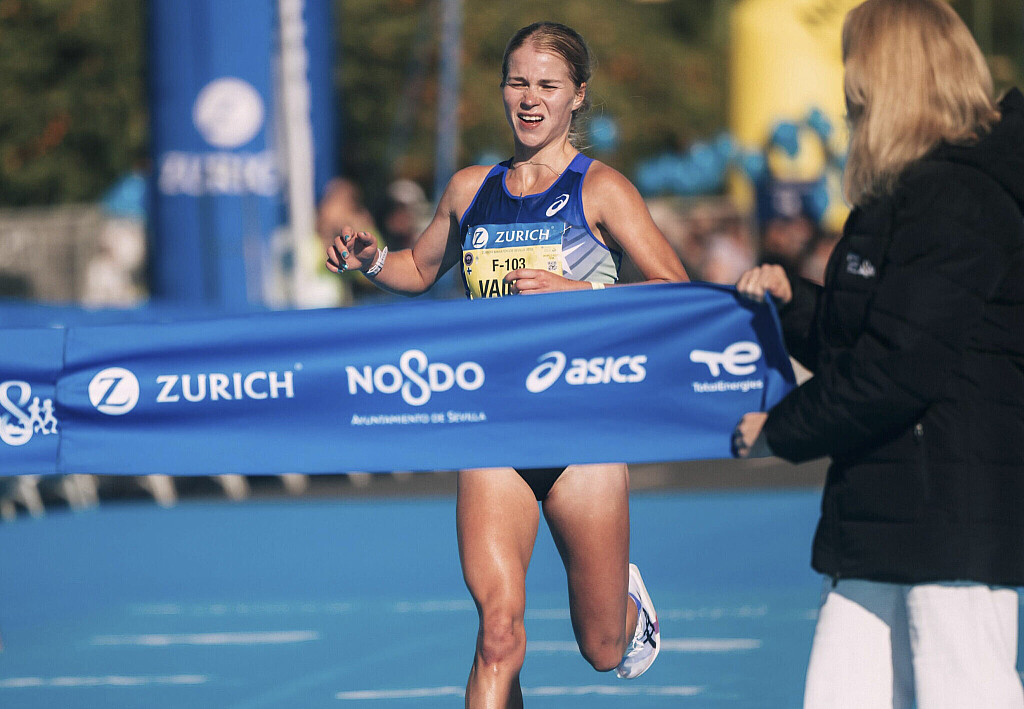
Europe's Elite Women Marathoners Ready for Thrilling Championship Battle in Birmingham
The women's marathon at the 2026 European Athletics Championships is set to be one of the most eagerly anticipated races of the championships, bringing together an exceptional field of experienced championship performers, rising stars, and defending medalists in what promises to be a fascinating battle for European glory.
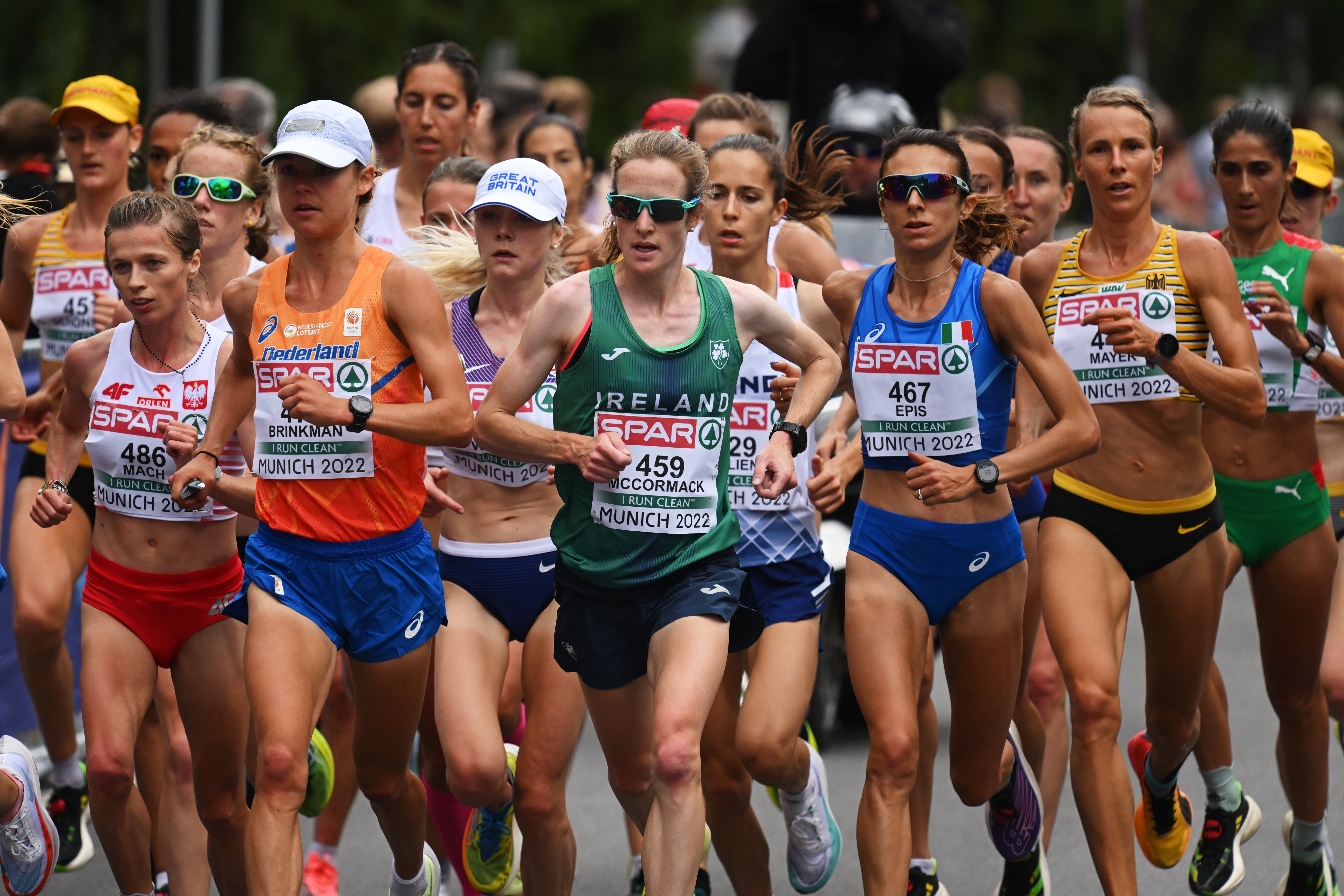
While Finland's Alisa Vainio enters Birmingham as the fastest European woman this season after clocking a brilliant 2:20:39 at the Seville Marathon, she faces stiff competition from some of the continent's strongest marathon nations, including Germany, Spain, Poland, Ireland, and host nation Great Britain.
Vainio's journey to the top has been years in the making. Widely regarded as one of Europe's brightest teenage distance-running prospects, she qualified for the marathon for the Rio 2016 Olympic Games at just 18 years old but was unable to compete because she did not meet the minimum age requirement. Instead of fading from the spotlight, she steadily rebuilt her career and has now matured into one of Europe's premier marathon runners.
Her breakthrough came at the 2025 World Athletics Championships in Tokyo, where she produced a composed and intelligent race in oppressive heat and humidity to finish fifth overall as the first European athlete across the finish line. Just three weeks later, she shattered the Finnish marathon record with a solo 2:23:06 performance at the national championships in Vantaa.

Vainio has continued her remarkable momentum ever since. She completed three additional marathons, highlighted by a commanding victory at the Seville Marathon, where she lowered the Finnish record once again while setting the European-leading mark of 2:20:39, establishing herself as the athlete to beat heading into Birmingham.
Germany arrives with one of the deepest squads in the championship and will be aiming to defend the women's team title won in Munich four years ago. Fabienne Königstein leads the German challenge after setting a personal best of 2:22:17 with a sixth-place finish at the Berlin Marathon. She is joined by the versatile Laura Hottenrott, who added another major achievement to her career earlier this year by winning silver in the uphill race at the European Athletics Off-Road Running Championships.
Spain also boasts an exceptionally strong lineup and is expected to challenge for both the individual and team honors. Fatima Azzahraa Ouhaddou Nafie demonstrated her championship resilience by recovering from a mid-race fall to win the marathon at the 2025 European Running Championships. Laura Luengo brings a personal best of 2:22:31, while Meritxell Soler, Ester Navarrete, and Carolina Robles complete a formidable squad. Impressively, every Spanish athlete in the team owns a lifetime best under 2:25, highlighting the country's remarkable marathon depth.
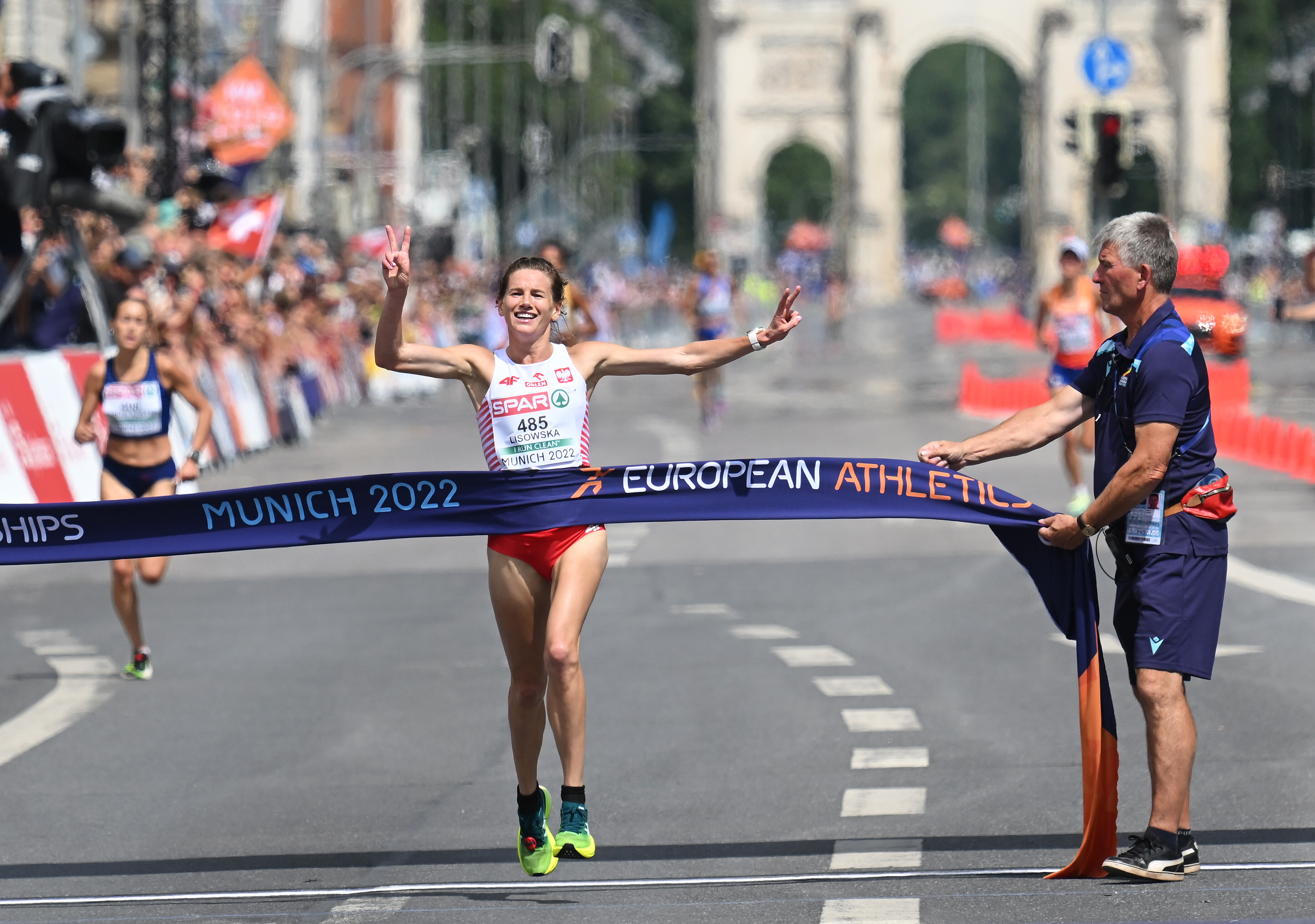
Defending champion Aleksandra Lisowska of Poland cannot be overlooked despite not being among the pre-race favorites. Her surprise victory in Munich four years ago proved that championship marathons often reward tactical brilliance, patience, and resilience rather than raw speed alone. Having already demonstrated her ability to thrive under championship pressure, the Polish star remains a genuine threat in Birmingham.
Ireland's Fionnuala McCormack will also be one of the most compelling athletes to watch. Just weeks before her 42nd birthday, the experienced marathoner continues her pursuit of a first European Championships medal after several near misses during her distinguished career. She finished fourth twice in the 10,000m at previous championships and was seventh in the marathon in Munich before producing another impressive performance with ninth place at the 2025 World Athletics Championships, finishing second among the European athletes behind Vainio.
Host nation Great Britain will be eager to make history on home roads. British women have never won an individual medal in the European Athletics Championships marathon since the event was introduced in 1982. Their hopes rest with Paris Olympians Rose Harvey and Clara Evans, alongside 2023 European cross-country bronze medallist Abbie Donnelly, who made an impressive marathon debut with a time of 2:24:11 in Frankfurt last year.
With proven champions, emerging contenders, experienced veterans, and deep national teams all chasing medals, the women's marathon is expected to deliver one of the most competitive races of the championships. Whether the title is decided by relentless pace, tactical patience, or a decisive late surge, Birmingham is set to provide a memorable contest worthy of the European crown.
by Erick Cheruiyot for My Best Runs.
Login to leave a comment

European Athletics Champioships
The27thEuropean Athletics Championshipswill be held from 10 to 16 August 2026 at theAlexander StadiuminBirmingham, United Kingdom.[1] This is the first time that a British city will have staged the European Athletics Championships although Birmingham has hosted many high-profile events, including the2007 European Athletics Indoor Championships, the2003and2018 IAAF World Indoor Championshipsand the2022 Commonwealth Games. Alexander Stadium was renovated between 2019 and...
more...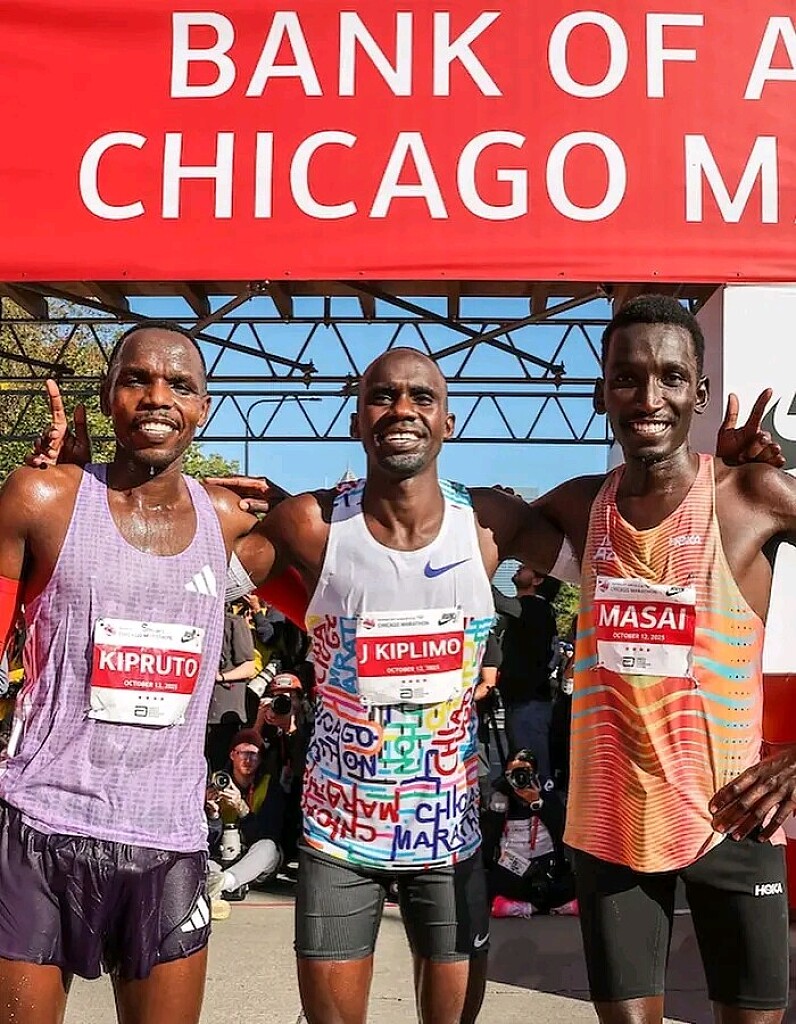
The Rematch Is On: Kiplimo, Kipruto and Masai Lead Star-Studded Chicago Marathon Field
The Bank of America Chicago Marathon is preparing for one of the most anticipated men's races in its history after unveiling an extraordinary elite field for the 48th edition of the event, scheduled for Sunday, October 11, 2026.
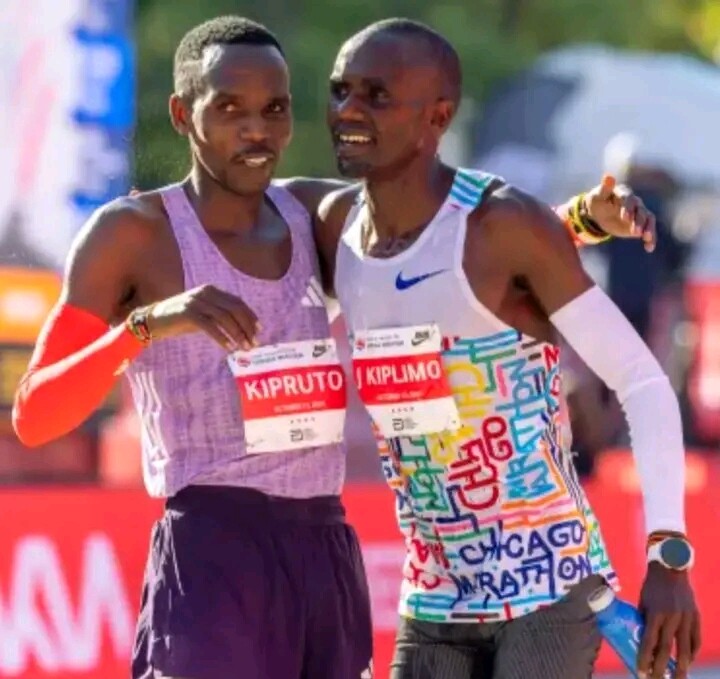
At the heart of the excitement is a compelling rematch featuring the entire podium from the 2025 Chicago Marathon, with defending champion Jacob Kiplimo, runner-up Amos Kipruto, and third-place finisher Alex Masai all returning to battle once again on the fast streets of the Windy City.
The reunion of last year's top three finishers already guarantees an intense contest, but the depth of the field suggests this could develop into one of the greatest marathon races Chicago has ever witnessed.
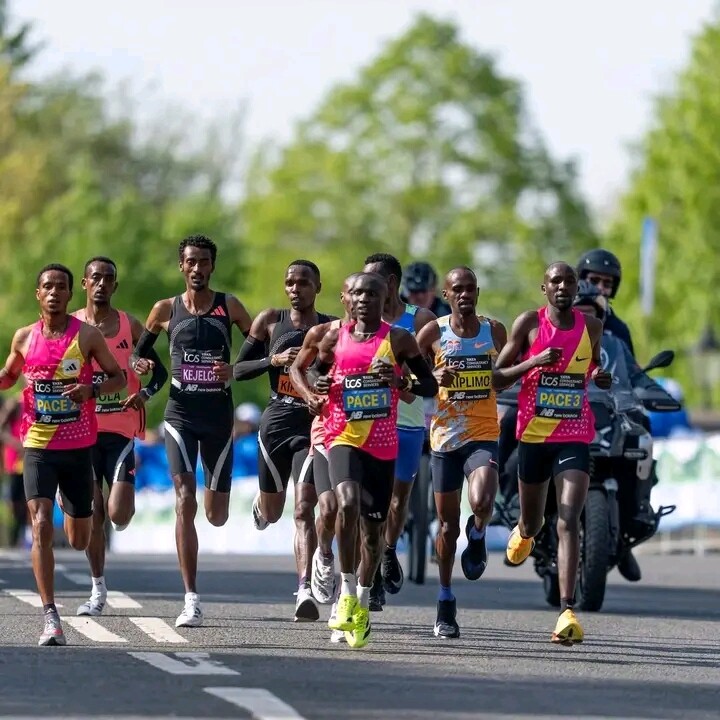
Uganda's Jacob Kiplimo returns wearing the champion's crown after producing a brilliant 2:02:23 performance to capture the 2025 Chicago Marathon title. Since that victory, the distance-running sensation has strengthened his reputation as one of the world's premier marathoners, delivering an astonishing 2:00:28 at the 2026 London Marathon—a performance that firmly established him among the fastest marathon runners in history.
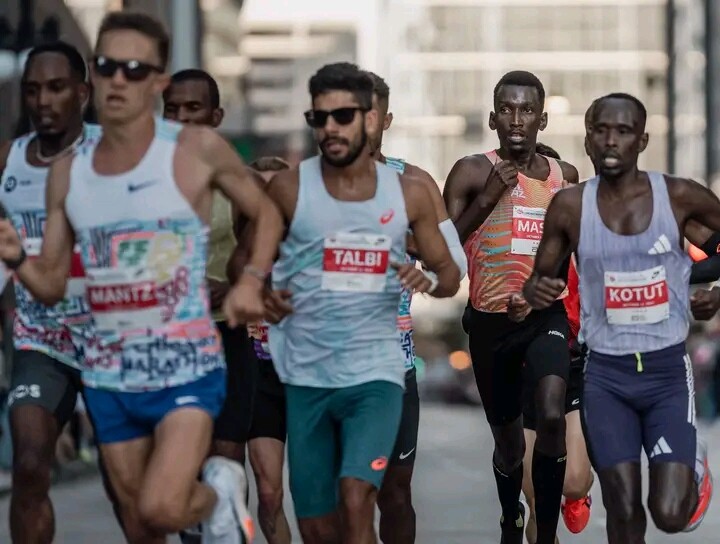
Standing in his way once again will be Kenya's Amos Kipruto, who finished second in Chicago last year in 2:03:54. Kipruto arrives in exceptional form after rewriting his personal best with a stunning 2:01:39 at the 2026 London Marathon, proving he possesses both the speed and experience to challenge for the Chicago crown.
Completing the returning podium is fellow Kenyan Alex Masai, whose impressive 2:04:37 earned him third place in 2025. Now returning with valuable experience and growing confidence, Masai will be aiming to transform last year's podium finish into his first-ever World Marathon Major victory.
Yet the battle for victory extends far beyond the returning podium.
The 2026 Chicago Marathon has assembled one of the deepest elite men's fields ever seen, featuring six athletes with personal bests under 2:04. Among them are Milkesa Mengesha of Ethiopia, the reigning 2024 Berlin Marathon champion, and compatriot Tadese Takele Bikila, who arrives as the Tokyo Marathon champion. Their presence adds even greater quality to a field already packed with proven championship performers and world-class speed.
With Olympic-caliber talent, major marathon champions, and some of the fastest men ever to cover the 42.195-kilometre distance lining up together, all the ingredients are in place for a memorable contest. Whether the race develops into a tactical championship battle or a relentless pursuit of another sub-2:02 performance, fans can expect fireworks from the opening miles to the finish on Columbus Drive.
As Chicago prepares to welcome the world's finest marathoners, one question now dominates the conversation:
Can Jacob Kiplimo successfully defend his title, or will Amos Kipruto, Alex Masai, or another world-class challenger rise to claim one of the sport's most prestigious crowns? The answer will unfold on October 11, when another chapter in Chicago Marathon history is written.
by Erick Cheruiyot for My Best Runs.
Login to leave a comment

Kenenisa Bekele: The Legend Who Never Stopped Learning
In an era where athletic careers often fade long before the fourth decade of life, Kenenisa Bekele continues to challenge expectations. The Ethiopian icon has spent more than two decades redefining excellence, proving that greatness is not measured solely by records but by the relentless desire to keep evolving.
The 2024 season marked Bekele's fifteenth year as a professional marathon runner, another remarkable chapter in a career that has already secured its place among the greatest in athletics history. Long before conquering the roads, Bekele ruled the track with unmatched authority. He held the world record over 5,000 metres from 2004 until 2020 and the 10,000 metres world record from 2005 to 2020, dominating an era with a combination of tactical brilliance, devastating finishing speed, and extraordinary endurance.
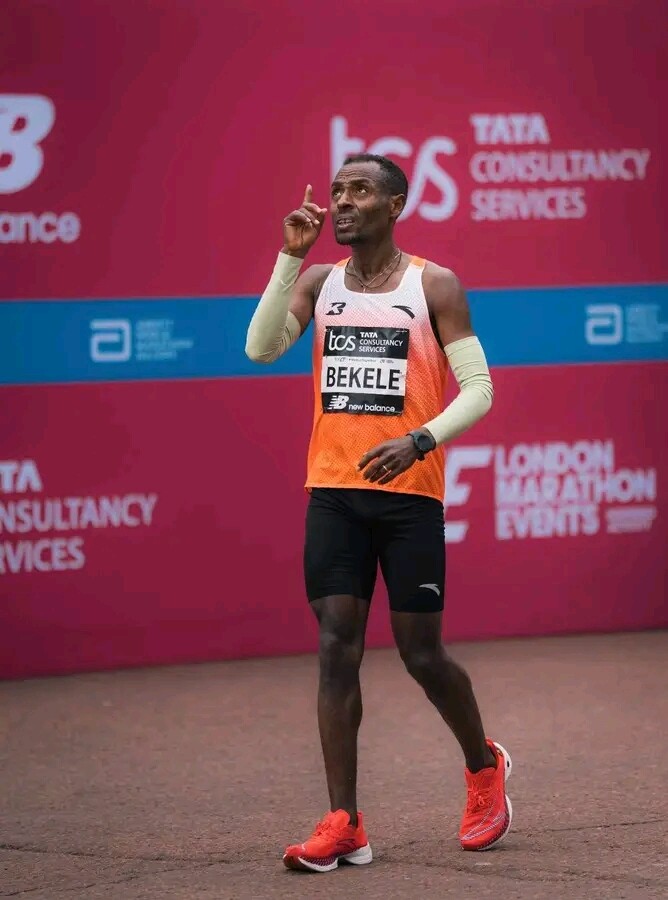
When he made the transition to the marathon in 2014, many wondered whether his brilliance on the track would translate to the roads. Bekele answered those doubts in spectacular fashion. His unforgettable 2:01:41 performance at the 2019 Berlin Marathon remains one of the fastest marathons ever run, cementing his status among the greatest marathoners the sport has ever witnessed.
By 2024, the mission had naturally evolved. Rather than chasing world records, Bekele focused on competing for podium finishes at the sport's biggest races. Even as younger athletes emerged with fresh legs and growing reputations, the Ethiopian veteran continued to demonstrate that experience, discipline, and intelligence can still compete with youth at the highest level.
What makes Bekele's longevity even more extraordinary is how rare it is in elite distance running. Most world-class runners reach their peak in their late twenties before gradually slowing in their thirties. Yet Bekele has continued to produce world-class performances well into his forties, still capable of running marathons in the low 2:03 range at an age when many former champions have long since retired.
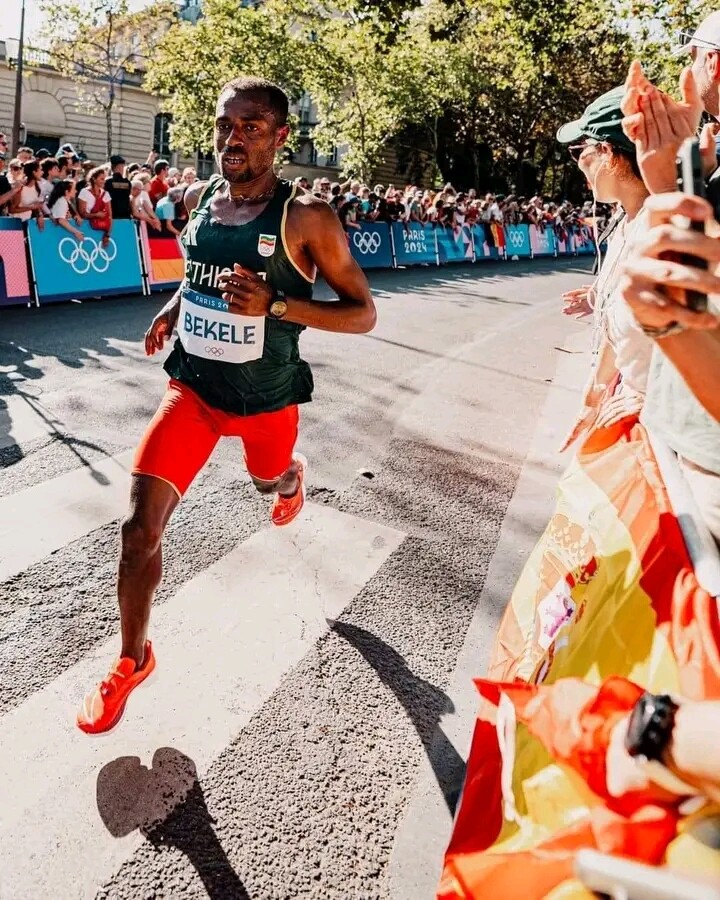
His remarkable durability has not come by accident. Over recent years, Bekele has reshaped his preparation with a greater emphasis on recovery, smarter workload management, and highly targeted marathon-specific training. Instead of relying on overwhelming mileage, his approach has become increasingly strategic, carefully building each season around the demands of the World Marathon Majors while allowing his body the recovery required to remain competitive.
Perhaps the greatest lesson from Bekele's career is not found in the medals or the records but in his mindset.
Despite achieving virtually everything the sport has to offer, Bekele has never believed he has mastered distance running completely. He continues to study training methods, exchange ideas with coaches and fellow athletes, and search for the smallest improvements that could make the difference on race day. His willingness to remain a student of the sport, even after becoming one of its greatest teachers through example, has become one of the defining characteristics of his enduring success.
That humility is what separates legends from champions. Records may eventually fall, rivals may come and go, and generations may change, but an athlete who never stops learning always finds new ways to remain relevant.
Kenenisa Bekele's story is no longer simply about speed. It is about resilience, adaptation, and an unwavering commitment to excellence. Every season serves as another reminder that true greatness is not built on past achievements alone, but on the courage to keep improving, regardless of age or accomplishment.
As athletics continues to evolve, Bekele remains a living testament that the pursuit of excellence has no finish line. For one of the greatest distance runners the world has ever known, every race is still another lesson, every season another opportunity to grow, and every step another chapter in a legacy that continues to inspire generations across the globe.
by Erick Cheruiyot for My Best Runs.
Login to leave a comment
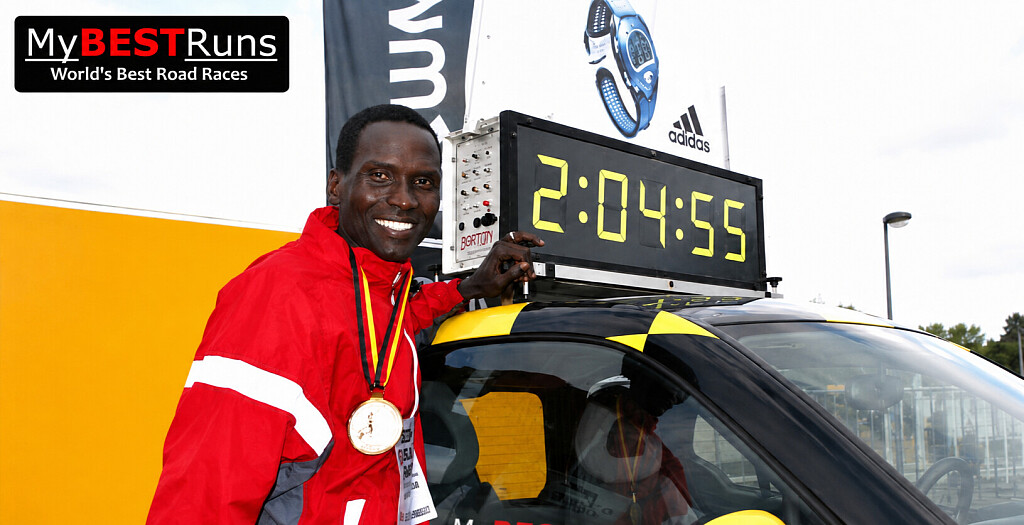
Paul Tergat: The Kenyan Legend Who Redefined Distance Running
On June 17, the athletics world celebrated the birthday of one of the greatest distance runners ever to grace the sport—Kenya’s Paul Kibii Tergat. Born in Baringo County, Kenya, on June 17, 1969, Tergat built a career that transcended generations, leaving an enduring legacy on the track, the roads, and the cross-country circuit.
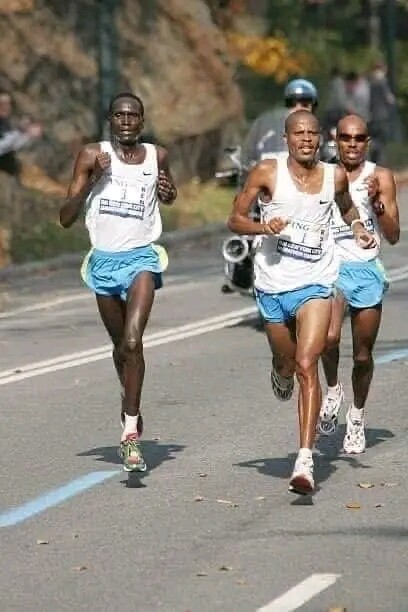
Few athletes in history have demonstrated such remarkable versatility and consistency across multiple disciplines. Whether battling through muddy cross-country courses, chasing medals on the track, or rewriting records on the marathon stage, Tergat established himself as one of the most complete distance runners the world has ever seen.
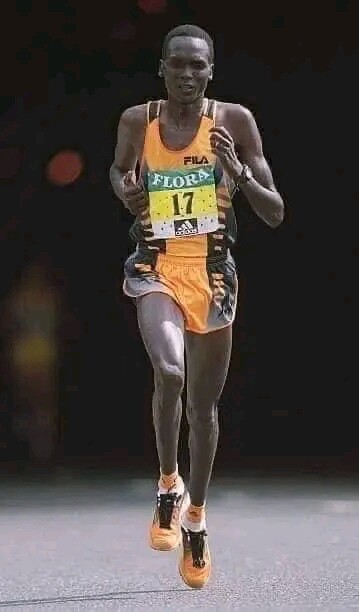
His dominance in cross-country remains one of the sport’s most extraordinary achievements. Between 1995 and 1999, Tergat captured an unprecedented five consecutive World Cross Country Championship titles, a feat that showcased not only his endurance but also his unmatched competitive spirit. From Durham to Cape Town, Turin, Marrakech, and Belfast, he conquered every challenge placed before him, cementing his status as the undisputed king of cross-country running.
Tergat’s brilliance extended to the half marathon, where he claimed back-to-back World Half Marathon Championship titles in Palermo, Italy, in 1999 and Veracruz, Mexico, in 2000. His ability to excel over varying distances highlighted the exceptional range that made him a global icon.
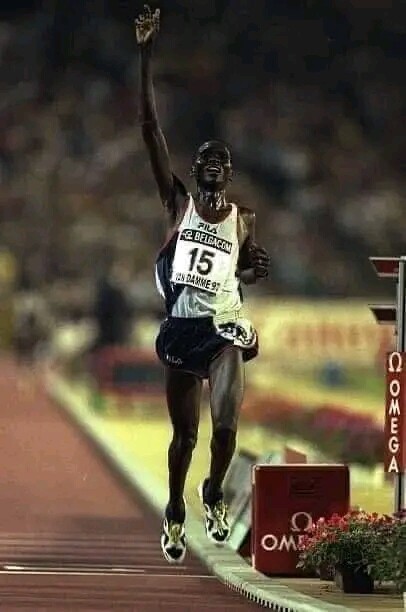
On the track, Tergat was a fierce competitor who regularly challenged the greatest runners of his era. He earned Olympic silver medals in the 10,000 meters at the Atlanta 1996 and Sydney 2000 Games, narrowly missing gold on both occasions. He also collected three World Championship medals over 10,000 meters, proving his consistency at the highest level of international competition.
Yet perhaps Tergat’s most historic contribution came on the roads. In 2003, at the Berlin Marathon, he became the first man in history to run the marathon in under 2 hours and 5 minutes, clocking a groundbreaking world record of 2:04:55. The performance marked a defining moment in distance running and opened a new chapter in the pursuit of marathon excellence.
His personal bests remain a testament to his extraordinary talent:
• 3,000m – 7:28.70
• 5,000m – 12:49.87
• 10,000m – 26:27.85
• Half Marathon – 59:17
• Marathon – 2:04:55
Beyond the medals and records, Tergat inspired a generation of athletes across Kenya and the world. His relentless determination, humility, and commitment to excellence transformed him into far more than a champion runner—he became a symbol of what is possible through hard work and perseverance.
Today, Paul Tergat’s name remains woven into the fabric of athletics history. From his reign as the king of cross-country to his revolutionary marathon achievements, his legacy continues to inspire runners pursuing greatness on every surface and over every distance.
by Erick Cheruiyot for My Best Runs.
Login to leave a comment
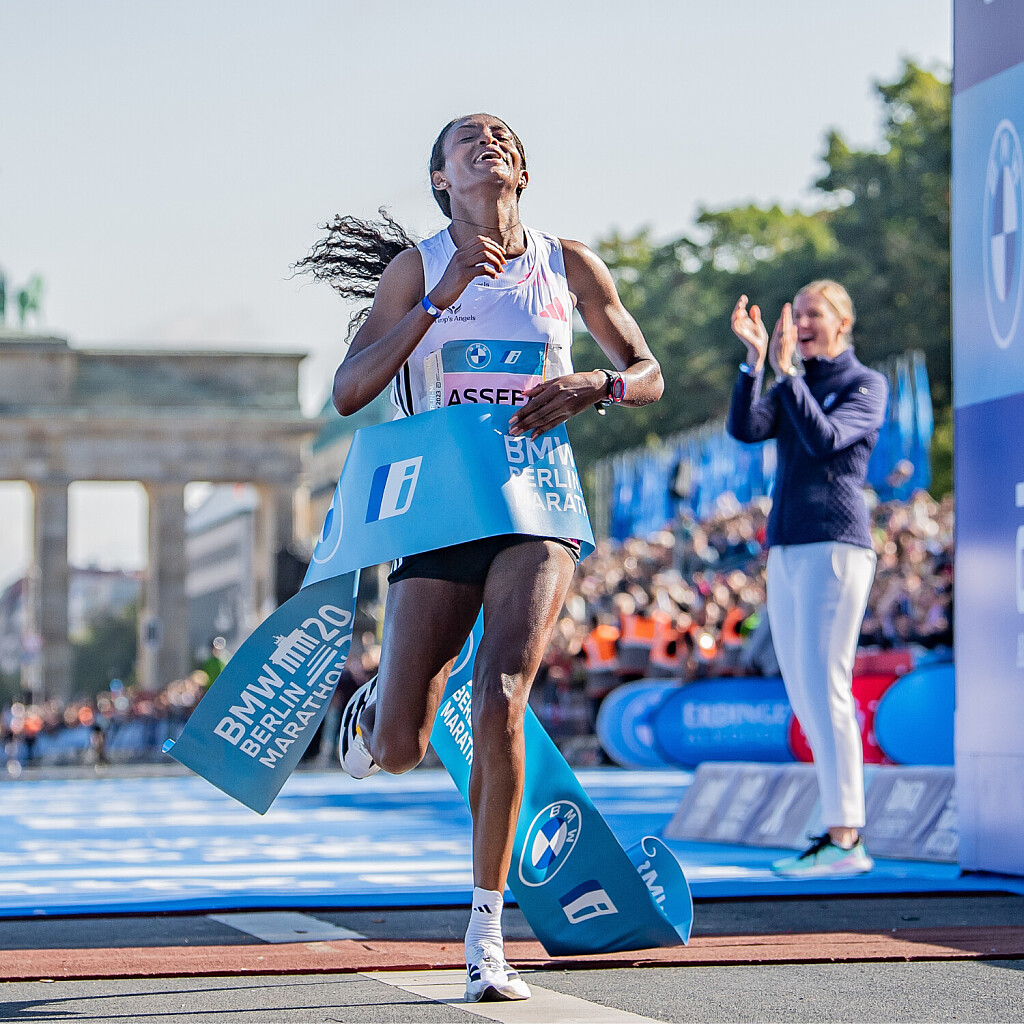
Tigst Assefa Targets History Again as Berlin Awaits Another World Record Assault
Three years after rewriting marathon history on the streets of Berlin, Ethiopia's Tigst Assefa is returning to the German capital with one goal firmly in sight — the world record.
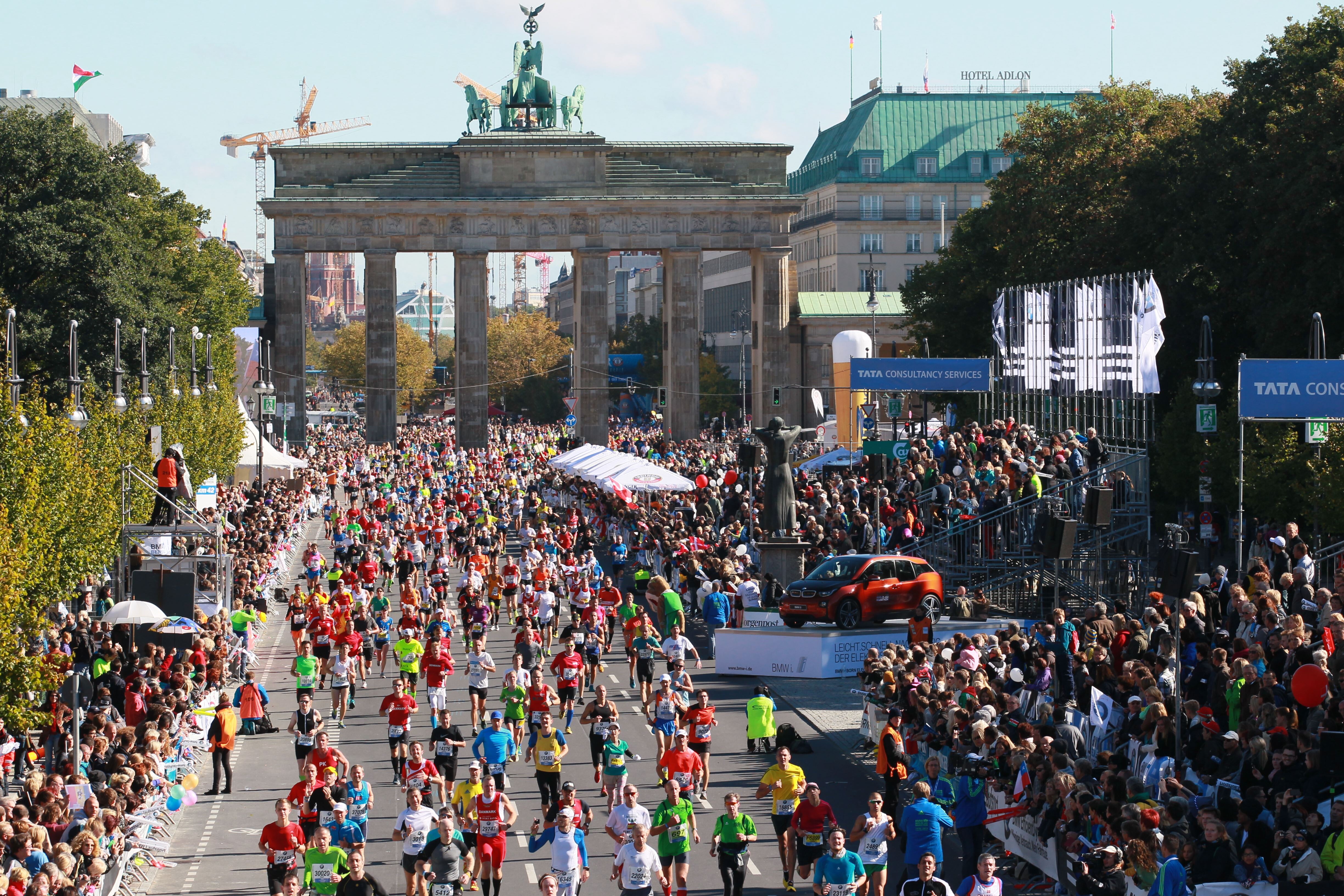
The former world record holder has been confirmed for the 2026 Berlin Marathon, scheduled for September 27, and has already made her intentions clear. Assefa wants to produce another historic performance on the course where she delivered one of the greatest marathon runs ever seen.
"It is a great pleasure for me to return to the streets of Berlin three years after setting my world record here in 2023. I am excited to once again try to break the world record," Assefa said after her participation was announced.
Berlin has long been regarded as the world's fastest marathon course, and few athletes understand that better than Assefa. It was there in 2023 that she stunned the athletics world by clocking a then-world record, cementing her place among the greatest marathon runners of her generation.
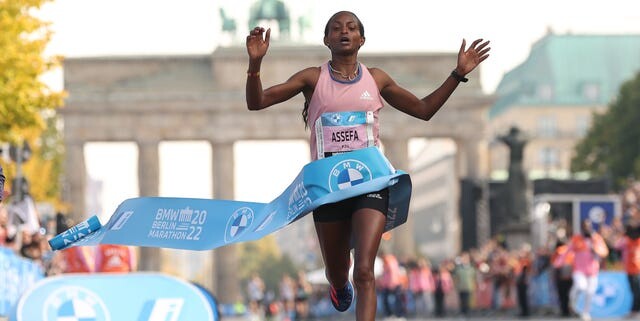
Now, the Ethiopian star is preparing for another assault on history.
Armed with a remarkable personal best of 2:11:53, Assefa will attempt to lower the current women's world record of 2:09:56, set by Kenya's Ruth Chepngetich. Achieving such a feat would require one of the fastest marathon performances ever produced, but Assefa has already shown she possesses the talent, courage and speed to challenge seemingly impossible barriers.
Her quest, however, will be far from straightforward.
The Berlin field is shaping up to be one of the strongest women's marathon line-ups of the year. Joining Assefa on the start line will be fellow Ethiopian and training partner Amane Beriso, a world-class performer capable of matching any pace on her day. Also in the race will be Kenya's Rosemary Wanjiru, the defending champion, who returns determined to protect her crown after a commanding victory in Berlin last year.
With three of the world's elite marathoners set to clash, the race promises a fascinating battle between championship experience, tactical intelligence and raw speed.
For Assefa, though, the challenge extends beyond defeating her rivals. The bigger target is the clock.
The Ethiopian has repeatedly demonstrated her ability to thrive on Berlin's flat and fast roads, and her return instantly raises expectations of another historic performance. Marathon fans around the world will be watching closely to see whether she can once again produce a run for the ages.
As the world's best distance runners converge on Berlin this September, the stage is set for another potentially historic afternoon. With a proven record on the course, unmatched ambition, and a world record firmly in her sights, Tigst Assefa arrives not merely to compete, but to challenge the limits of what is possible in women's marathon running. Whether history falls once again remains to be seen, but one thing is certain: all eyes will be on Berlin when the gun goes off on September 27.
by Erick Cheruiyot for My Best Runs.
Login to leave a comment
BMW Berlin Marathon
The story of the BERLIN-MARATHON is a story of the development of road running. When the first BERLIN-MARATHON was started on 13th October 1974 on a minor road next to the stadium of the organisers‘ club SC Charlottenburg Berlin 286 athletes had entered. The first winners were runners from Berlin: Günter Hallas (2:44:53), who still runs the BERLIN-MARATHON today, and...
more...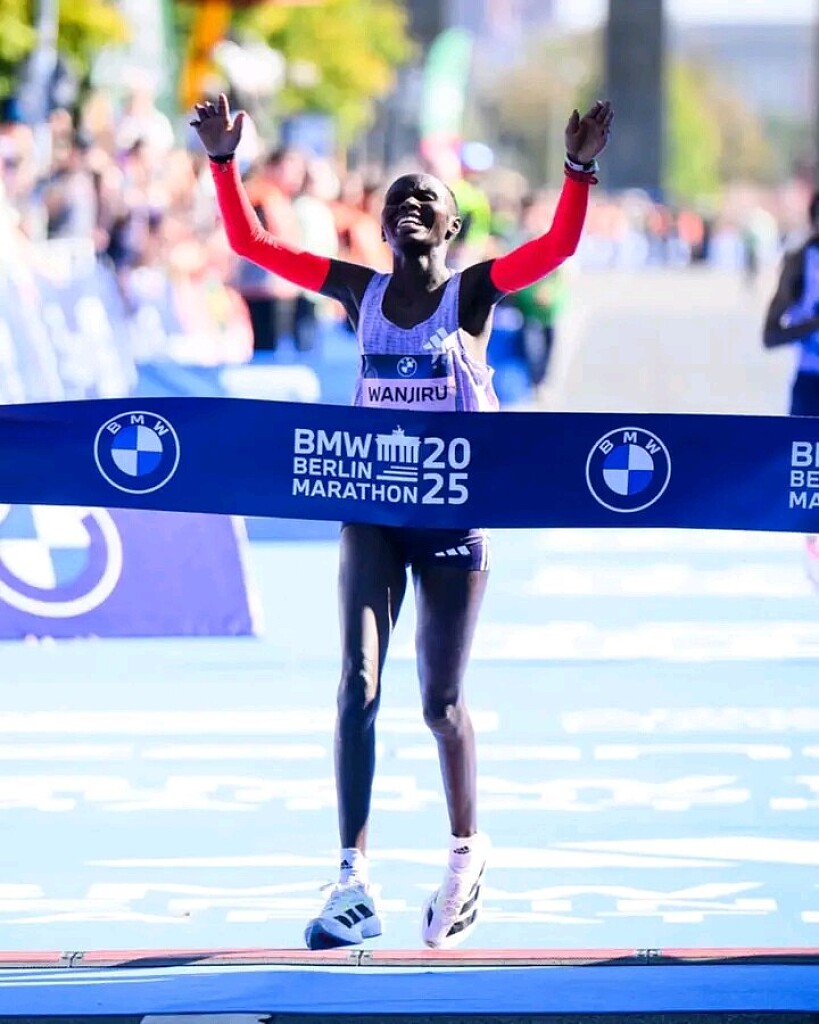
Berlin Braces for a Marathon Masterpiece as Assefa, Wanjiru and Beriso Collide
The stage is set for one of the greatest women's marathon races ever assembled.
When the BMW Berlin Marathon returns on September 27, 2026, the streets of the German capital will welcome an extraordinary cast of distance-running royalty led by Ethiopia's Tigst Assefa, Kenya's Rosemary Wanjiru and fellow Ethiopian star Amane Beriso. With three of the fastest women in marathon history confirmed for the race, anticipation is already building around what could become another landmark chapter in Berlin's rich marathon legacy.
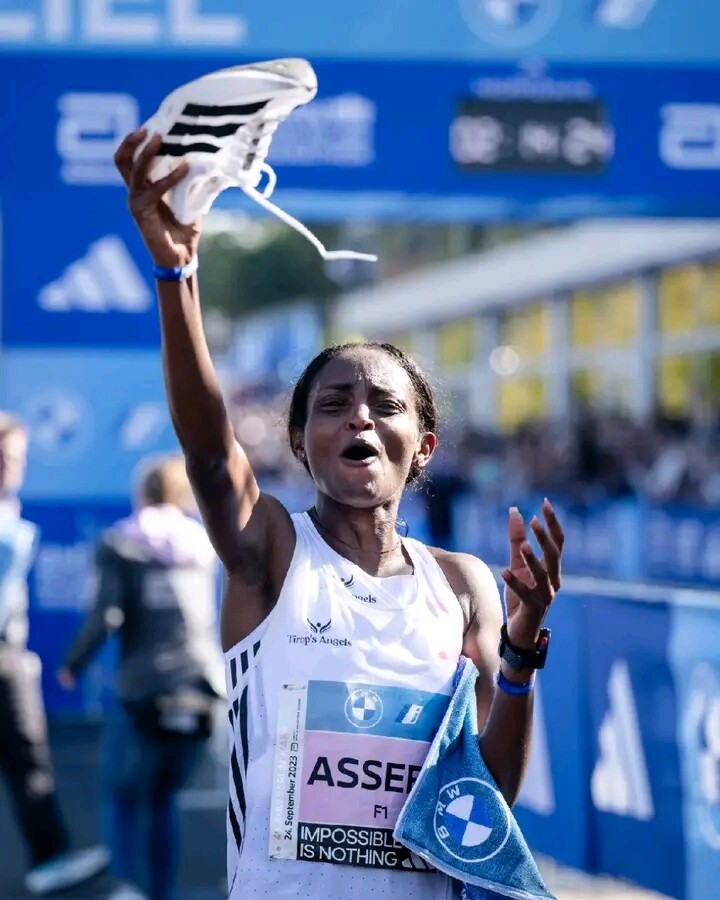
Adding even greater intrigue to the occasion is the return of Tigst Assefa, who will be chasing a remarkable hat-trick of victories in Berlin. Having already established herself as one of the course's most dominant champions, the Ethiopian star returns to a venue where she has repeatedly showcased her extraordinary talent. Few athletes in the modern era have forged such a powerful connection with the Berlin Marathon, and another victory would further cement her place among the event's all-time greats.
Standing in her path is defending champion Rosemary Wanjiru, the Kenyan star who captured the Berlin crown with a display of strength, patience and tactical brilliance. Wanjiru has consistently proven she belongs among the world's elite marathoners, and her return as defending champion adds another compelling storyline to what is already shaping up to be an unforgettable contest.
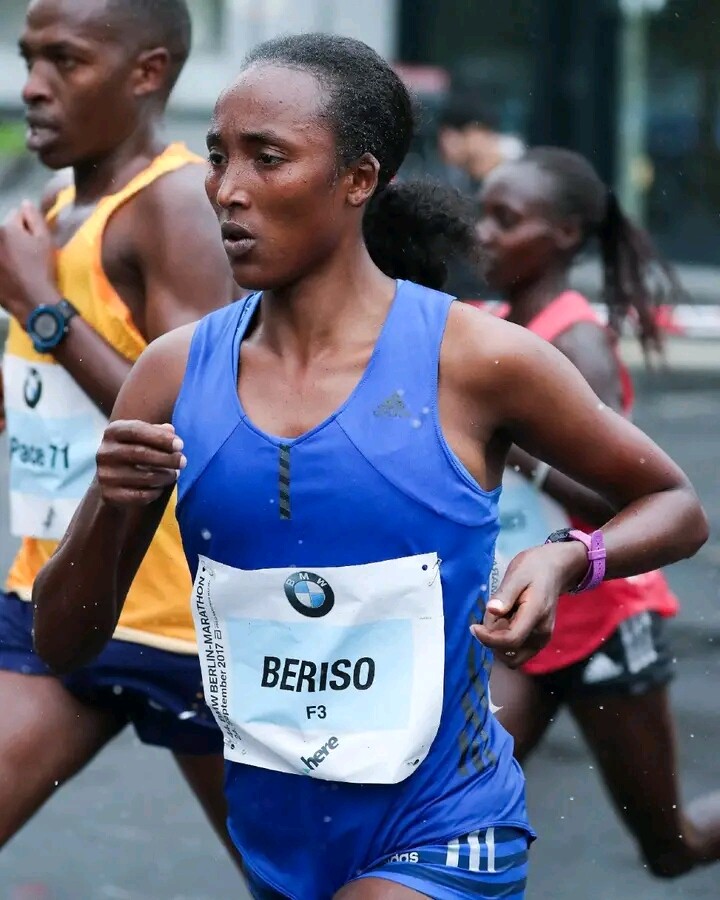
Completing the star-studded trio is Amane Beriso, one of the most accomplished marathon runners of her generation. With a personal best of 2:14:58 and a reputation for thriving under pressure, Beriso possesses all the credentials required to challenge for victory on one of the sport's biggest stages.
The numbers alone highlight the quality of the field. Assefa's astonishing personal best of 2:11:53 remains one of the fastest performances ever recorded by a woman, while Wanjiru's 2:16:14 and Beriso's 2:14:58 underline the exceptional depth assembled for this year's race.
Yet this race is about more than personal bests. It is about the collision of champions, the pursuit of greatness and the possibility of witnessing history unfold on Berlin's famously fast roads. The German capital has become synonymous with marathon excellence, producing countless record-breaking performances over the years. Whenever the world's finest athletes gather there, expectations naturally rise.
With Assefa seeking a third consecutive Berlin title, Wanjiru defending her crown and Beriso determined to add another major triumph to her résumé, the ingredients are in place for a spectacular battle from the opening kilometres to the finish line.
The marathon world has already begun counting down the days. Fans, analysts and athletes alike recognize that opportunities to witness a field of this calibre are rare. Three champions, three distinct stories and one iconic course create the perfect formula for a race that could redefine what is possible in women's marathon running.
On September 27, all roads will lead to Berlin. And if these three superstars push one another to their limits, the clock may once again become the biggest casualty of all.
by Erick Cheruiyot for My Best Runs.
Login to leave a comment
BMW Berlin Marathon
The story of the BERLIN-MARATHON is a story of the development of road running. When the first BERLIN-MARATHON was started on 13th October 1974 on a minor road next to the stadium of the organisers‘ club SC Charlottenburg Berlin 286 athletes had entered. The first winners were runners from Berlin: Günter Hallas (2:44:53), who still runs the BERLIN-MARATHON today, and...
more...
Paul Tergat Backs Kenya’s Ambitious Bid to Host World Athletics Championships
Kenyan athletics icon Paul Tergat has thrown his weight behind Kenya’s ambitious campaign to host the World Athletics Championships in 2029 describing the nation as the true heartbeat of global distance running.
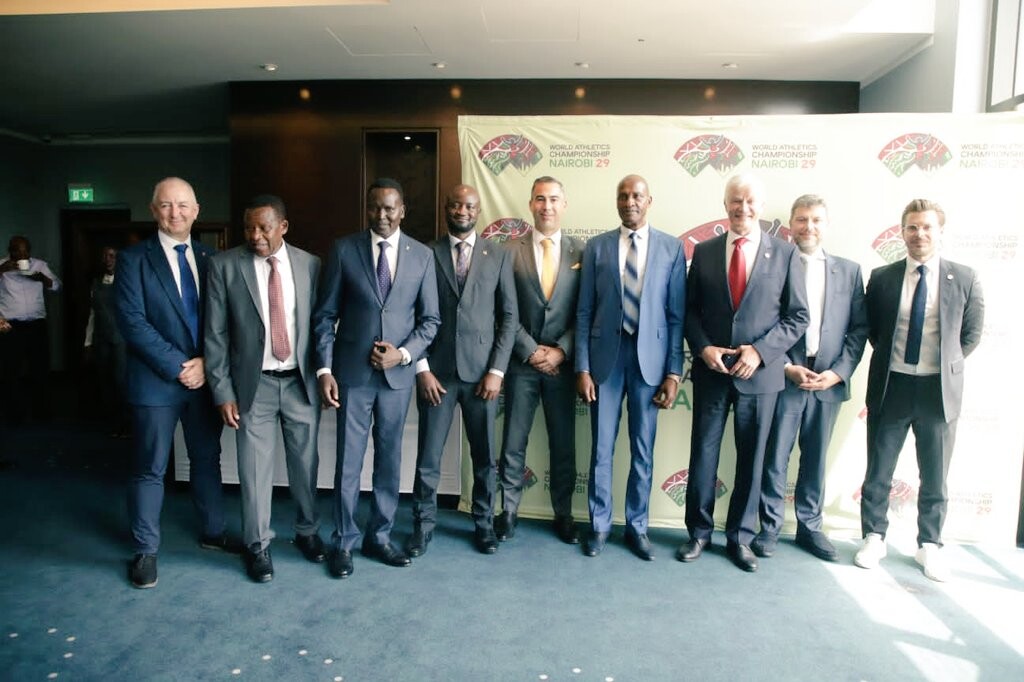
In a passionate message shared on X Space, the former marathon world record holder called on the international athletics community to experience the culture, heritage, and unmatched talent that have made Kenya one of the most dominant forces in the history of the sport.
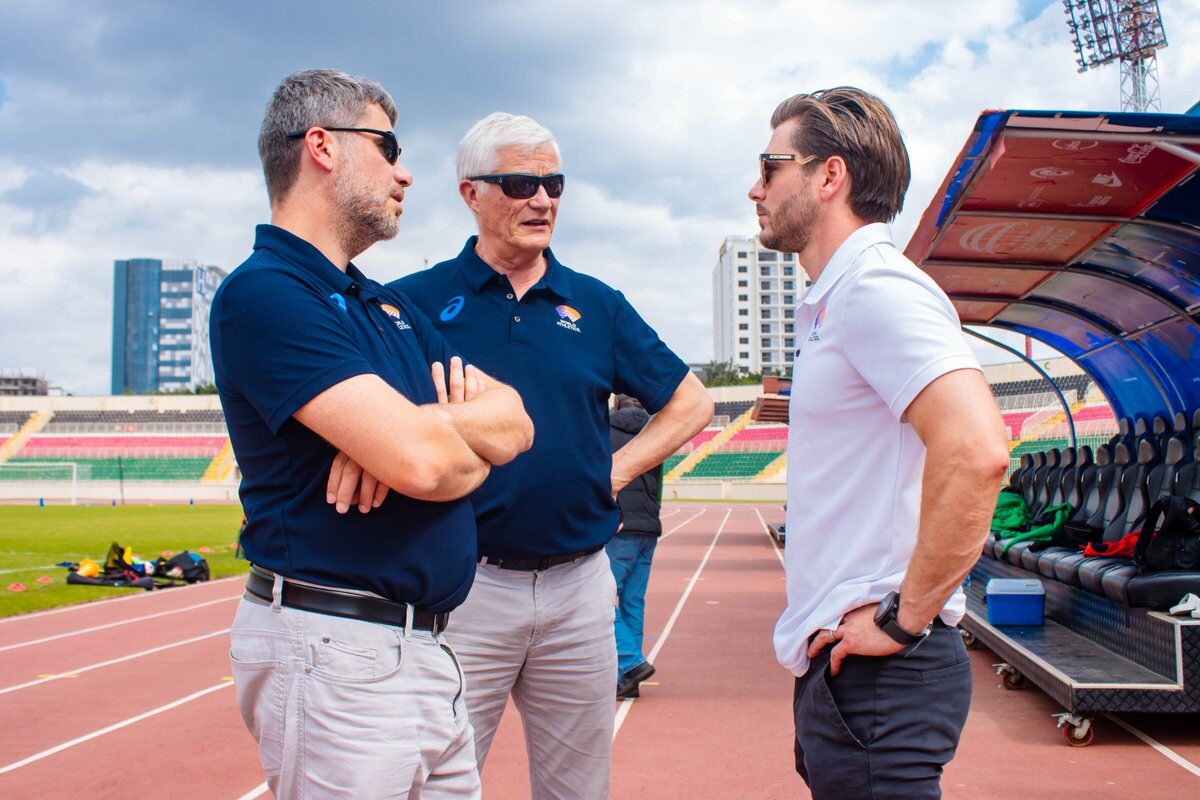
“Kenya is inviting the world to experience running at its source,” Tergat said. “From the soil that produces legends, from communities where athletics is lived, breathed, and passed through generations.”
His remarks arrive at a time when Kenya is intensifying efforts to secure hosting rights for one of athletics’ most prestigious global events — a move that would mark a historic milestone for both the country and the African continent.
Few figures embody Kenya’s running excellence more than Tergat himself. The legendary distance runner became the first Kenyan man to set a marathon world record after producing a groundbreaking performance of 2:04:55 at the Berlin Marathon 2003. His record stood until 2007 and cemented his place among the greatest marathoners in history.
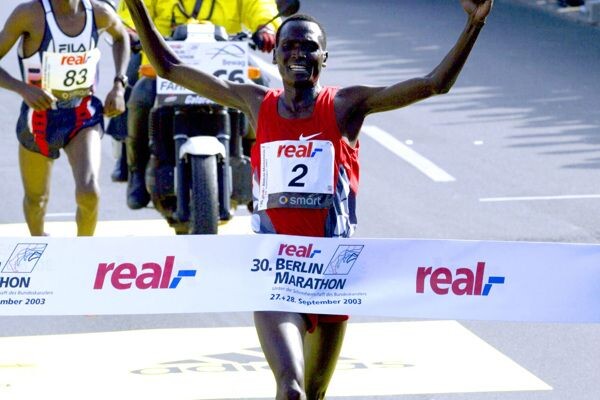
Before conquering the roads, Tergat had already established an extraordinary legacy in cross country running. Between 1995 and 1999, he achieved one of the sport’s rarest feats by winning five consecutive World Cross Country long-race titles, dominating an era filled with elite competition.
On the track, Tergat was renowned for his unforgettable rivalry with Ethiopian great Haile Gebrselassie. The Kenyan star captured Olympic silver medals in the 10,000m at both the 1996 Atlanta Games and the 2000 Sydney Olympics, while also earning silver medals at the 1997 and 1999 World Championships. Many of those races were decided in dramatic final laps, with Tergat and Gebrselassie pushing each other to historic performances.
His success extended beyond the track and marathon scene. Tergat claimed back-to-back IAAF World Half Marathon titles in 1999 and 2000 before later winning the prestigious 2005 New York City Marathon, further solidifying his reputation as one of the most versatile distance runners of his generation.
Away from competition, Tergat has remained deeply influential in Kenyan sport and athletics administration. He previously served as President of the National Olympic Committee of Kenya (NOC-K) and founded the Sports Personality of the Year Awards (SOYA), an initiative that continues to celebrate and recognize sporting excellence across the country.

For decades, Kenya has remained synonymous with excellence in middle- and long-distance running, producing generations of champions who have rewritten world records, conquered Olympic podiums, and elevated the nation’s reputation on the global sporting stage. From the high-altitude training camps of the Rift Valley to packed road races across the world, Kenyan athletics has evolved into more than just sport — it is part of the country’s identity.
Tergat believes hosting the championships would offer the world an opportunity to witness firsthand the environment that shapes elite athletes. Beyond the competition itself, he emphasized the cultural significance of Kenyan running communities, where young athletes grow up inspired by local heroes and where endurance running is deeply woven into everyday life.
The bid also represents Africa’s growing desire to host more major international sporting events. While African athletes have consistently dominated global athletics for generations, the continent has rarely been given the opportunity to stage the sport’s biggest championships. Kenya’s proposal is therefore seen as both symbolic and transformative for athletics worldwide.
Tergat’s endorsement adds significant weight to the campaign. Widely regarded as one of the greatest distance runners in history, the Kenyan legend remains a respected voice within international athletics circles. His support reflects the confidence many within the sport have in Kenya’s ability to deliver a memorable and globally impactful championship.
If successful, the championships would not only showcase elite competition but also spotlight Kenya’s rich sporting heritage, passionate fans, and deep-rooted connection to athletics — offering the world a chance to experience the birthplace of countless running legends.
by Erick Cheruiyot for My Best Runs.
Login to leave a comment
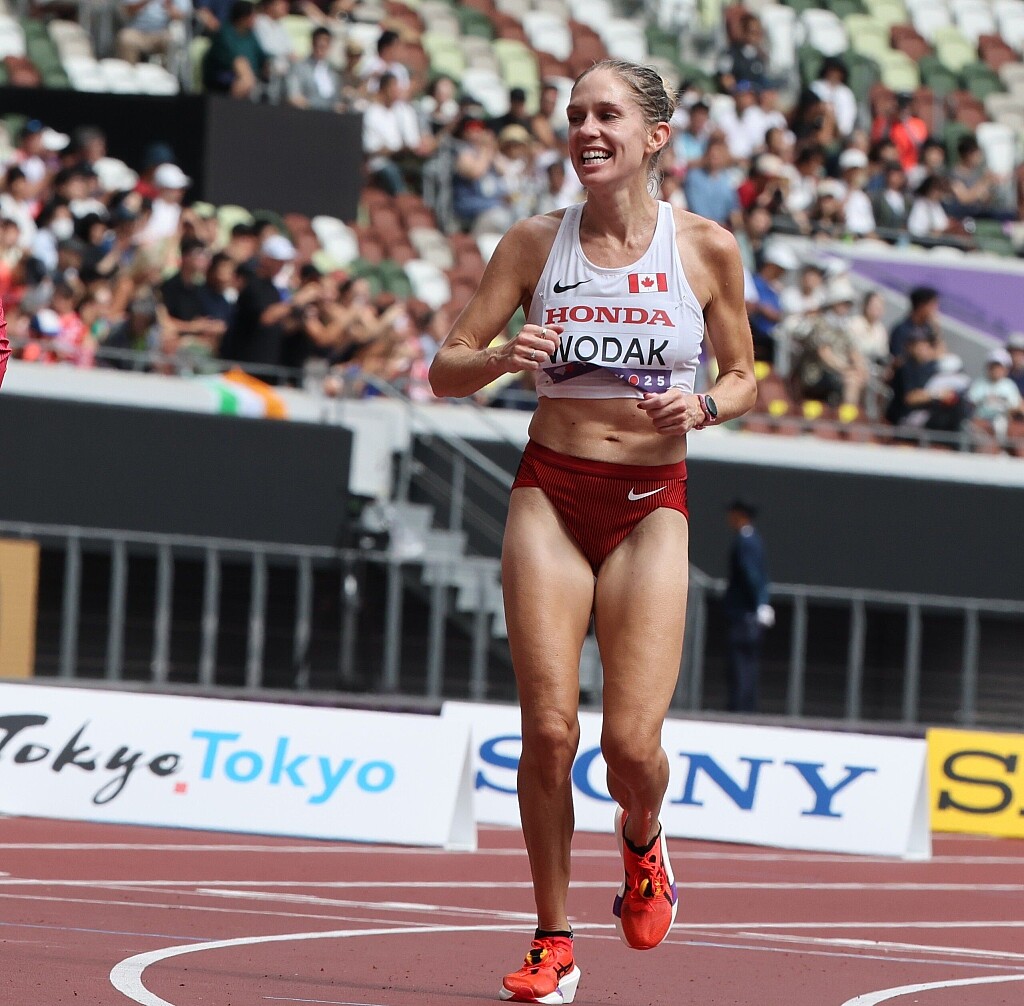
Home Soil, Historic Credentials: Natasha Wodak Ready for Ottawa Marathon Debut
Canadian distance running star Natasha Wodak is set to add another important chapter to her decorated career this Sunday as the national record holder prepares for her highly anticipated Ottawa Marathon debut.
Wodak arrives in the Canadian capital carrying the credentials of one of the greatest female distance runners in the country’s history. The veteran athlete currently holds the Canadian national marathon record after producing a brilliant 2:23:12 performance at the Berlin Marathon — a run that firmly established her among the elite names in global road racing. She is also the Canadian record holder over 8 kilometres on the road, further highlighting her range and consistency across long-distance events.
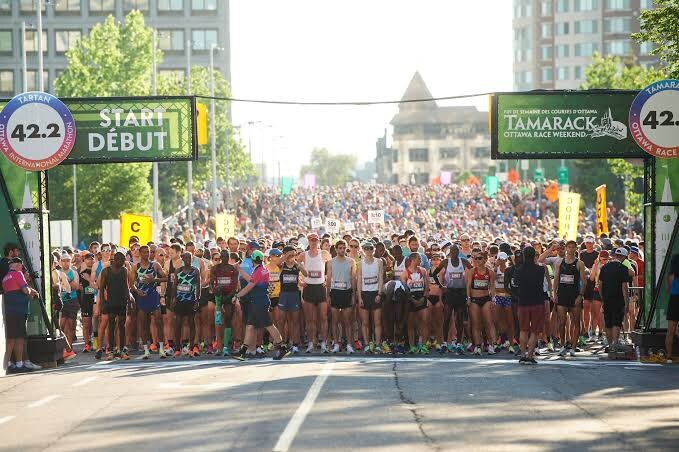
For years, Wodak has remained a symbol of endurance, professionalism, and longevity within Canadian athletics. Whether competing on the track, cross-country circuits, or road races, she has repeatedly delivered performances that elevated the national standard and inspired a new generation of runners.
Now, Ottawa presents a fresh challenge.
While she already owns the country’s marathon record, this weekend will mark her first appearance at one of Canada’s most celebrated marathon events. The debut has instantly become one of the race’s biggest talking points, with fans eager to witness how the experienced distance specialist performs on home soil.

Unlike the rhythm of championship track racing, the marathon demands patience, strategy, and near-perfect energy management across 42.195 kilometres. It is a discipline where experience often proves decisive — an area where Wodak holds a clear advantage after years of competing against the world’s best.
Her presence also brings additional prestige to the Ottawa Marathon, a race that continues to grow in stature on the North American road racing calendar. With one of Canada’s most accomplished runners leading the headlines, anticipation surrounding this year’s edition has risen significantly.
Beyond times and results, Wodak’s continued success represents something deeper for Canadian athletics. At a stage in her career when many athletes begin to fade from the spotlight, she continues to push boundaries and redefine expectations through discipline and resilience.
On Sunday, attention will once again follow every stride she takes through the streets of Ottawa. And for Natasha Wodak, another opportunity awaits — not simply to race, but to further cement a legacy already written among Canada’s distance running greats.
by Erick Cheruiyot for My Best Runs.
Login to leave a comment

Ottawa Marathon
As one of two IAAF Gold Label marathon events in Canada, the race attracts Canada’s largest marathon field (7,000 participants) as well as a world-class contingent of elite athletes every year. Featuring the beautiful scenery of Canada’s capital, the top-notch organization of an IAAF event, the atmosphere of hundreds of thousands of spectators, and a fast course perfect both...
more...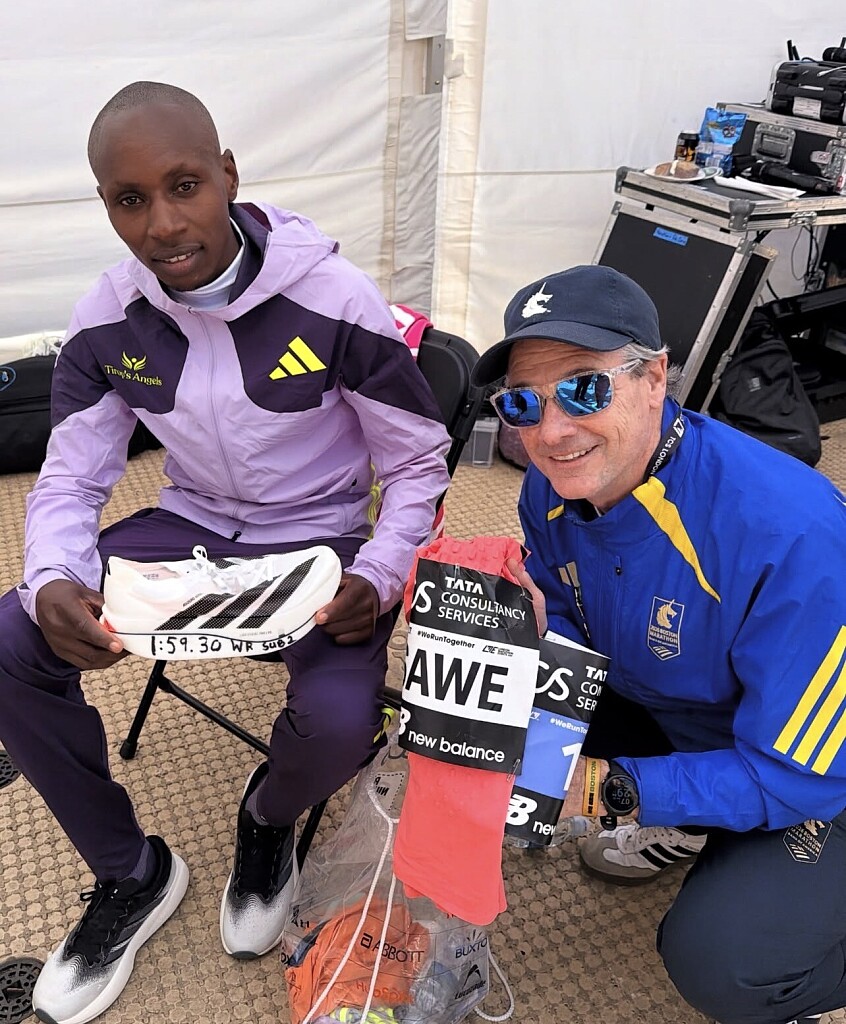
Berlin Marathon Lands the Fastest Marathoner in History as Sabastian Sawe Returns September 27
The 2026 Berlin Marathon already has its biggest headline. World record holder Sabastian Sawe has officially announced he will return to Berlin on September 27, setting the stage for another possible assault on marathon history.
Sawe stunned the running world in April when he won the London Marathon in a breathtaking 1:59:30, becoming the first athlete in history to officially run a marathon under two hours. Ethiopia’s Yomif Kejelcha followed closely behind in 1:59:41, making London the first marathon in history where two men officially broke the two-hour barrier. To date, Sawe and Kejelcha remain the only athletes ever to achieve the feat in official competition.
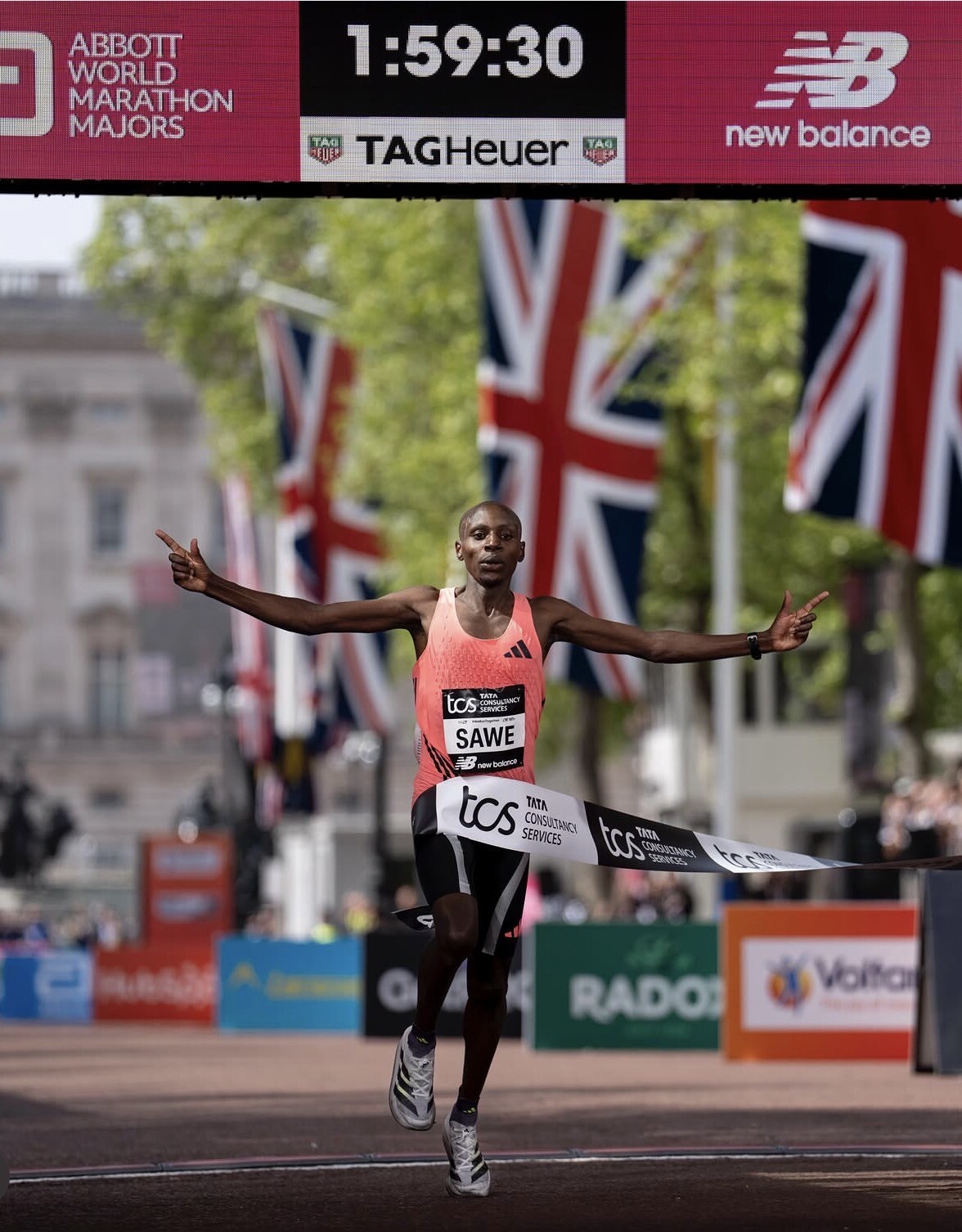
Now Sawe heads back to Berlin, widely regarded as the fastest marathon course in the world. The flat layout, cool September temperatures, and precision pacing have helped produce nine men’s marathon world records over the past quarter century. Legends including Eliud Kipchoge used Berlin as the stage for some of the greatest performances in distance running history.

“Berlin is a fast course with several world records set there. With perfect weather we could again see a sub-two-hour marathon,” says Bob Anderson, lifetime runner and editor of My Best RunsSawe is no stranger to success in Berlin. He captured the 2025 title in 2:02:16 despite unusually warm temperatures approaching 25C, a performance many viewed as one of the finest warm-weather marathons ever run. But after what happened in London, expectations are now on an entirely different level.

So far, Sawe is the only major elite men’s athlete officially confirmed for Berlin, though organizers are expected to announce additional top contenders in the coming weeks. The possibility of another historic showdown has already created enormous anticipation within the running world.
At the beginning of what could become one of the most remarkable marathon careers ever seen, Sawe has already changed the sport. Berlin may now offer the perfect stage for the next breakthrough.
by Boris Baron for My Best Runs
376
Login to leave a comment
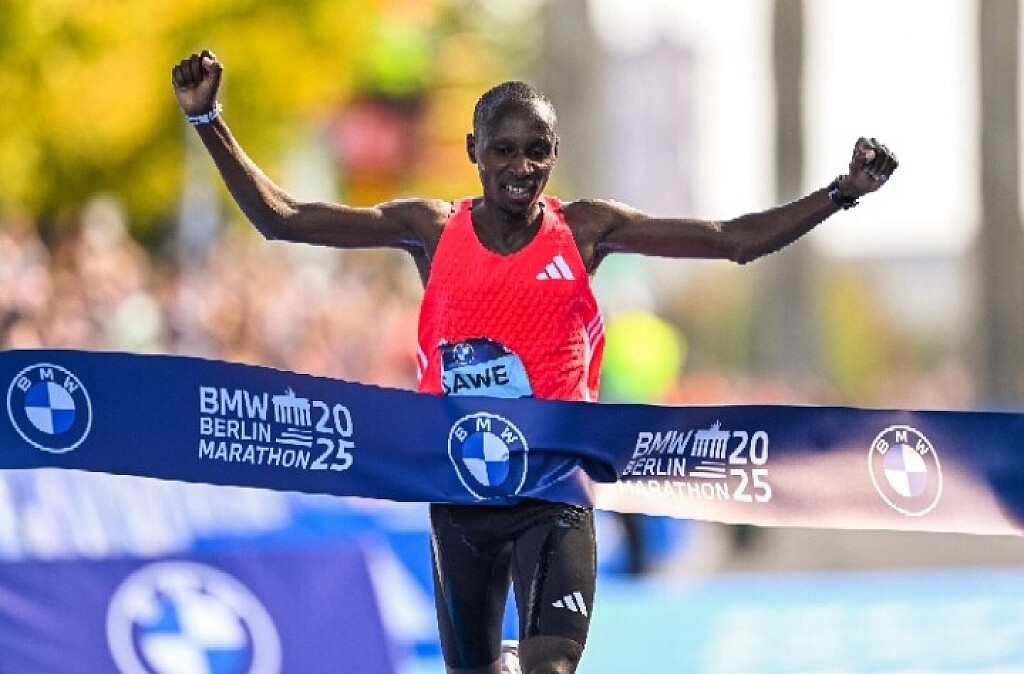
Sebastian Sawe Set for Berlin: The Marathon Revolution Continues
The marathon world is preparing for another historic chapter after Kenya’s sensation, Sebastian Sawe, officially confirmed his participation in the 2026 Berlin Marathon on 27 September.
The announcement has instantly elevated anticipation for this year’s race, with Berlin once again becoming the centre of global distance running. Widely regarded as one of the fastest marathon courses ever designed, the German capital has witnessed numerous world records over the years — and now the man who shattered the sport’s final barrier is heading there.
Sawe arrives in Berlin carrying the weight of history and the momentum of a career-defining breakthrough. Last month in London, the Kenyan star stunned the athletics world by clocking an astonishing 1:59:30 marathon world record, becoming the first human being ever to run under two hours in an official competitive marathon. It was a performance that completely redefined what was thought possible over 42.195 kilometres. He is determined to defend his title while launching another attack on the marathon world record on Berlin’s famously fast course. The Kenyan superstar is expected to headline one of the most anticipated marathon races in recent memory, with fans and analysts anticipating yet another historic performance as he continues to push the boundaries of human endurance and strengthen his growing legacy in global distance running.
What made the achievement even more extraordinary was the manner in which he delivered it. Sawe did not merely break the previous world record — he demolished psychological boundaries that had stood untouched for generations. His run in London combined ruthless pace, tactical brilliance, and unmatched endurance, transforming the marathon into a new era of possibility.
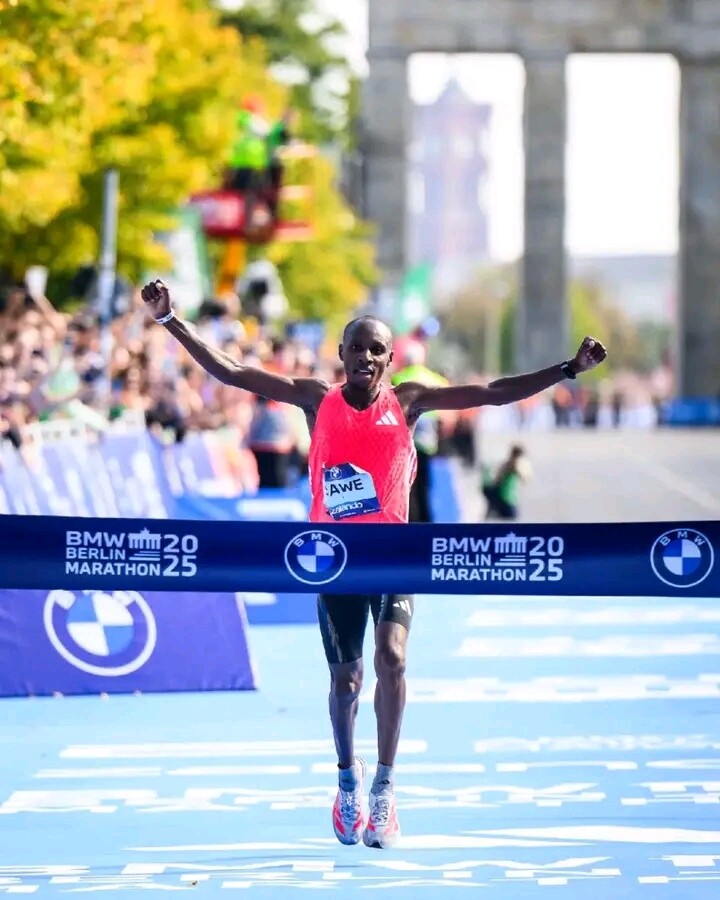
Now, attention shifts to Berlin.
For decades, the Berlin Marathon has been synonymous with speed. Its flat roads, cool weather, and perfectly engineered course have produced some of the greatest performances in distance-running history. Legends have built their reputations there, records have fallen there, and now Sawe has the opportunity to further cement his legacy on the same streets where marathon greatness has repeatedly been rewritten.
The prospect of the world’s fastest marathoner attacking Berlin’s rapid course is already sending excitement throughout the athletics community. Fans, analysts, and former champions are beginning to ask the same question: can Sebastian Sawe push the marathon even deeper into uncharted territory?
At just the right moment in his career, Sawe appears unstoppable. His rise has been built on discipline, fearless racing, and remarkable consistency, qualities that continue to position Kenya at the summit of global long-distance running. Every appearance now carries historic significance because each race feels capable of producing something never seen before.
Berlin 2026 is no longer just another marathon.
It is shaping into a global sporting spectacle — a collision between the fastest marathon course on earth and the fastest marathon runner in history.
by Erick Cheruiyot for My Best Runs.
Login to leave a comment
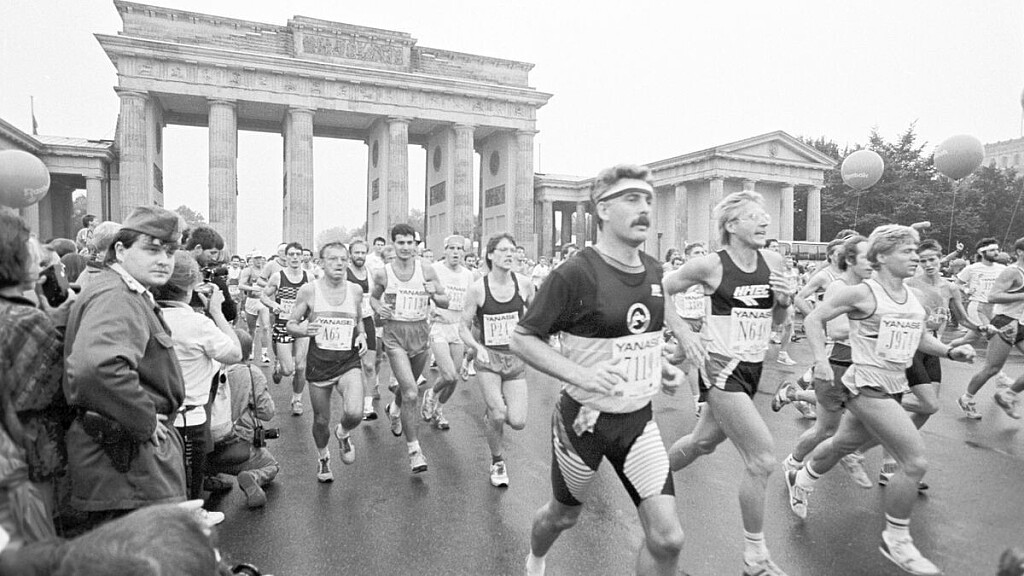
From Moneghetti to the Sub-2 Era: How Marathon Running Entered Another Dimension
The marathon has always been a race against human limits, but the distance between generations has never felt wider than it does today.
In 1990, Australian distance legend Steve Moneghetti produced one of the defining performances of his era when he stormed to victory at the Berlin Marathon in 2:08:16. At the time, the mark stood less than two minutes outside the world record — a remarkable achievement in an age when marathon running still seemed bound by barriers many believed could never be broken.
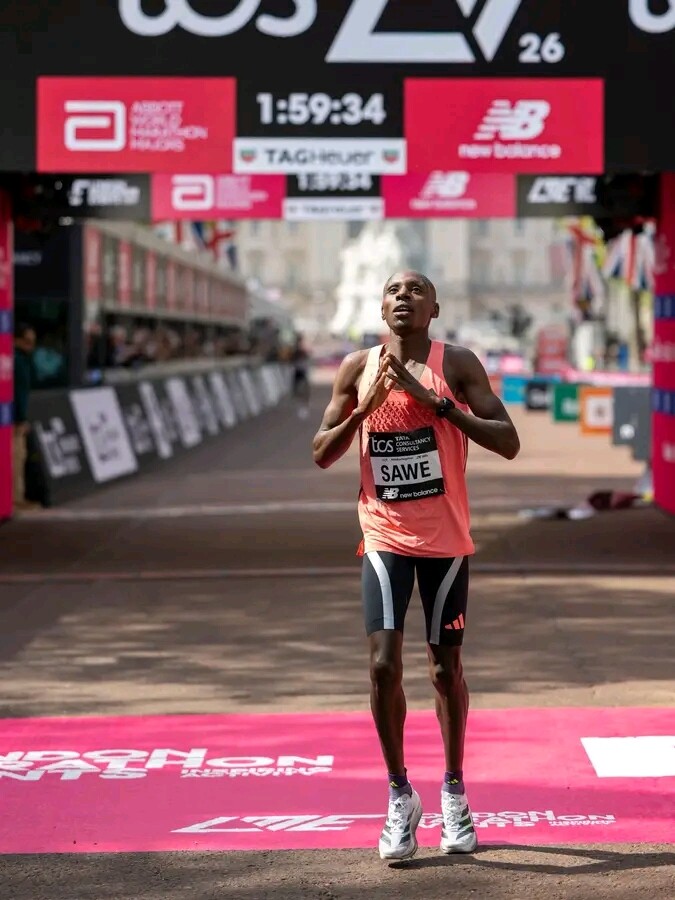
That performance elevated Moneghetti to the status of the 16th fastest marathoner in history, placing him among the sport’s global elite. His name carried weight in an era where every second shaved from the clock represented years of progress in training, nutrition, racing tactics, and endurance science.
Fast forward to today, and the landscape of marathon running has transformed almost beyond recognition.
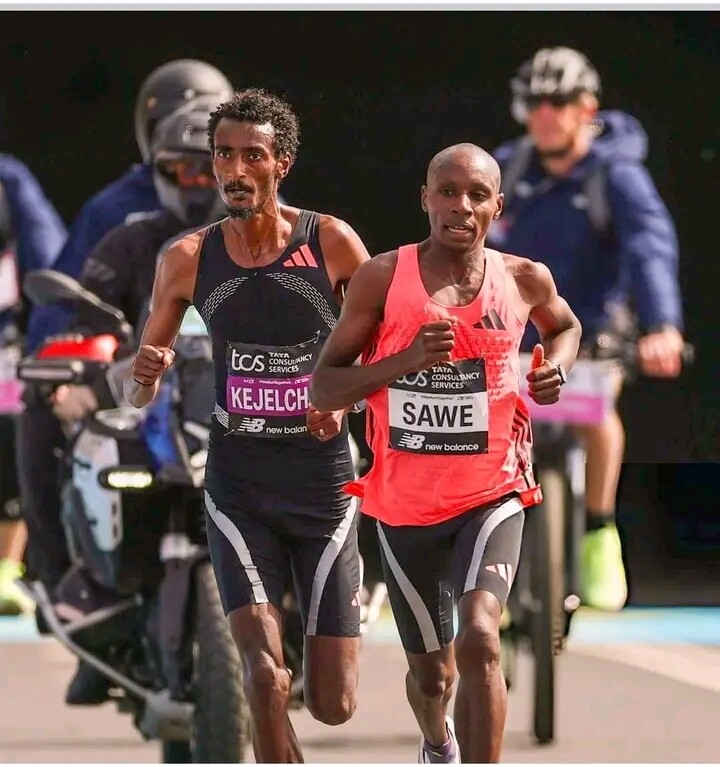
At the recent London Marathon, both Sabastian Sawe and Yomif Kejelcha delivered astonishing sub-2:00 performances, a feat that underlines the breathtaking evolution of the event. Times once considered untouchable are now being attacked with fearless ambition, as a new generation continues to redefine what the human body can endure over 42.195 kilometres.
The contrast perfectly captures the sport’s relentless progression. What once established an athlete among history’s greatest would no longer guarantee a place near the top of the modern rankings. Moneghetti himself reflected on that reality with remarkable honesty, noting that a performance which once made him the 16th fastest man ever would not even place him inside the top 100 today.
Yet that comparison does not diminish the greatness of past champions. Instead, it highlights how pioneers like Moneghetti helped lay the foundation for the marathon revolution unfolding today. Every generation pushes the boundaries further, inspiring the next to dream beyond what once appeared possible.
From Berlin in 1990 to London in the sub-2 era, marathon running has evolved from a test of endurance into a showcase of extraordinary human advancement. And judging by the speed of today’s athletes, the sport may still be far from reaching its final frontier.
by Erick Cheruiyot for My Best Runs.
Login to leave a comment
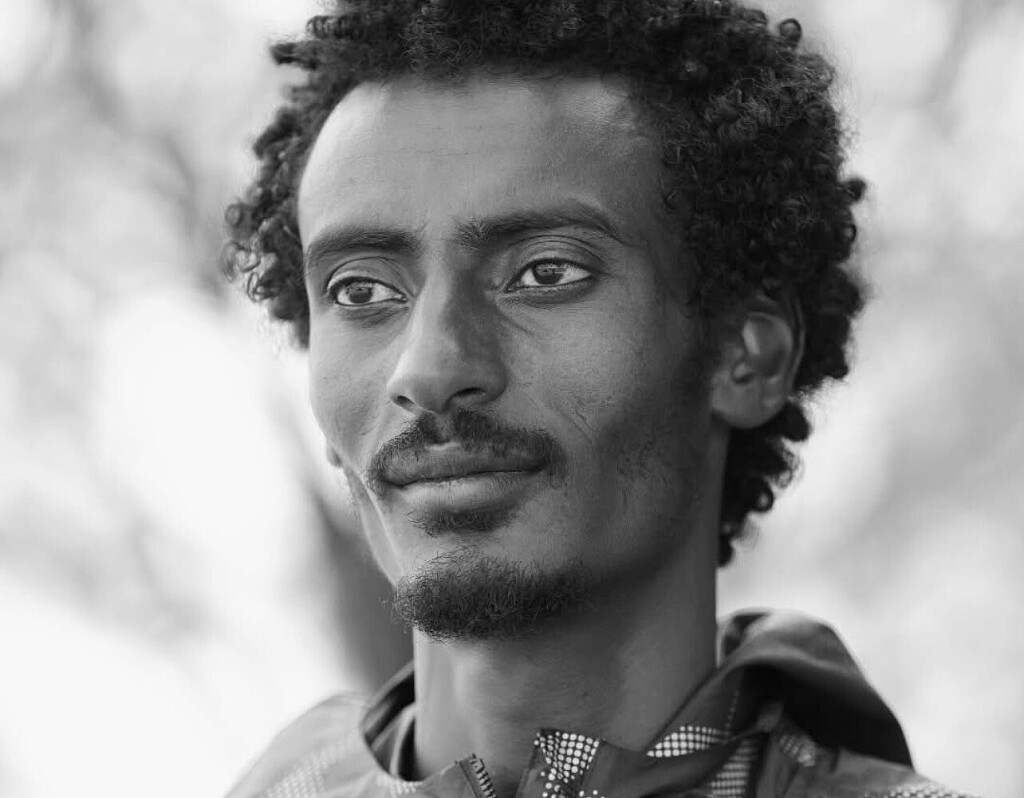
Where Should Yomif Kejelcha Run His Second Marathon — And Can He Break 1:59?
London changed marathon history forever as Sabastian Sawe and Yomif Kejelcha became the first two men ever to officially break the two-hour barrier for the marathon. Sawe won in 1:59:30, while Kejelcha stunned the world by running 1:59:41 in his marathon debut.
Now the focus shifts to the next question:
Where should Kejelcha run his second marathon?
And perhaps even more intriguing:
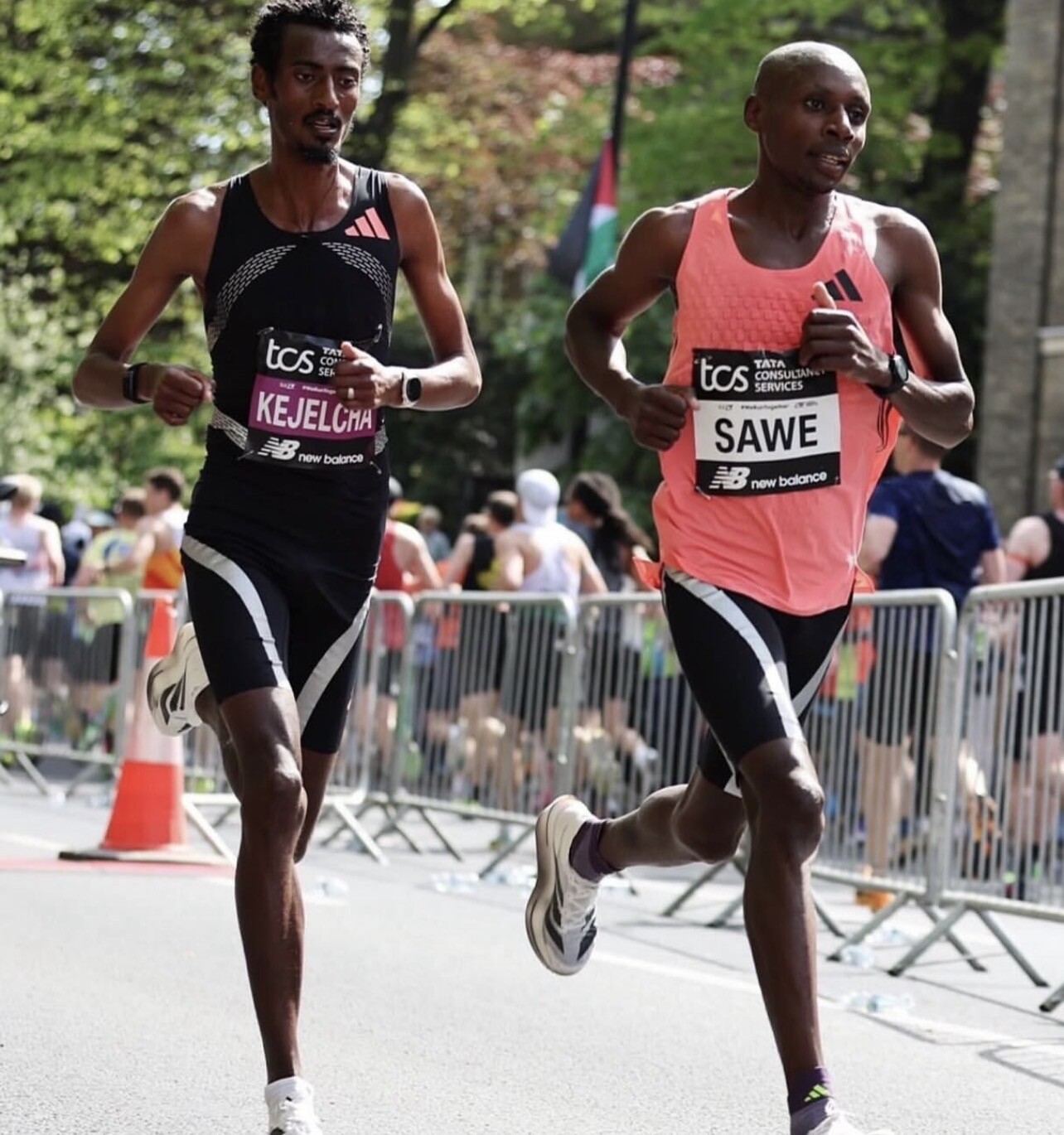
Can he become the first man to officially run under 1:59?
“Not to take away from Sawe’s amazing 1:59:30 marathon in winning London, but Kejelcha in second place clocked 1:59:41 in his first marathon ever. I think Yomif under perfect conditions can run under 1:59,” says Bob Anderson, lifetime runner and My Best Runs editor.
That possibility suddenly feels very real.

Kejelcha has long been considered one of the most naturally gifted distance runners in the sport. Before moving to the marathon, the Ethiopian star built a remarkable résumé that included world-class performances from 1500 meters through the half marathon. His 57:30 half marathon performance in Valencia confirmed that he possessed a rare combination of speed, efficiency, and endurance.
Those qualities are essential for what may become the next great frontier in distance running.
Breaking 1:59 would require sustaining approximately 4:32 per mile for the entire marathon distance. That demands not only endurance, but extraordinary efficiency and the ability to remain relaxed while running at near-impossible speeds.
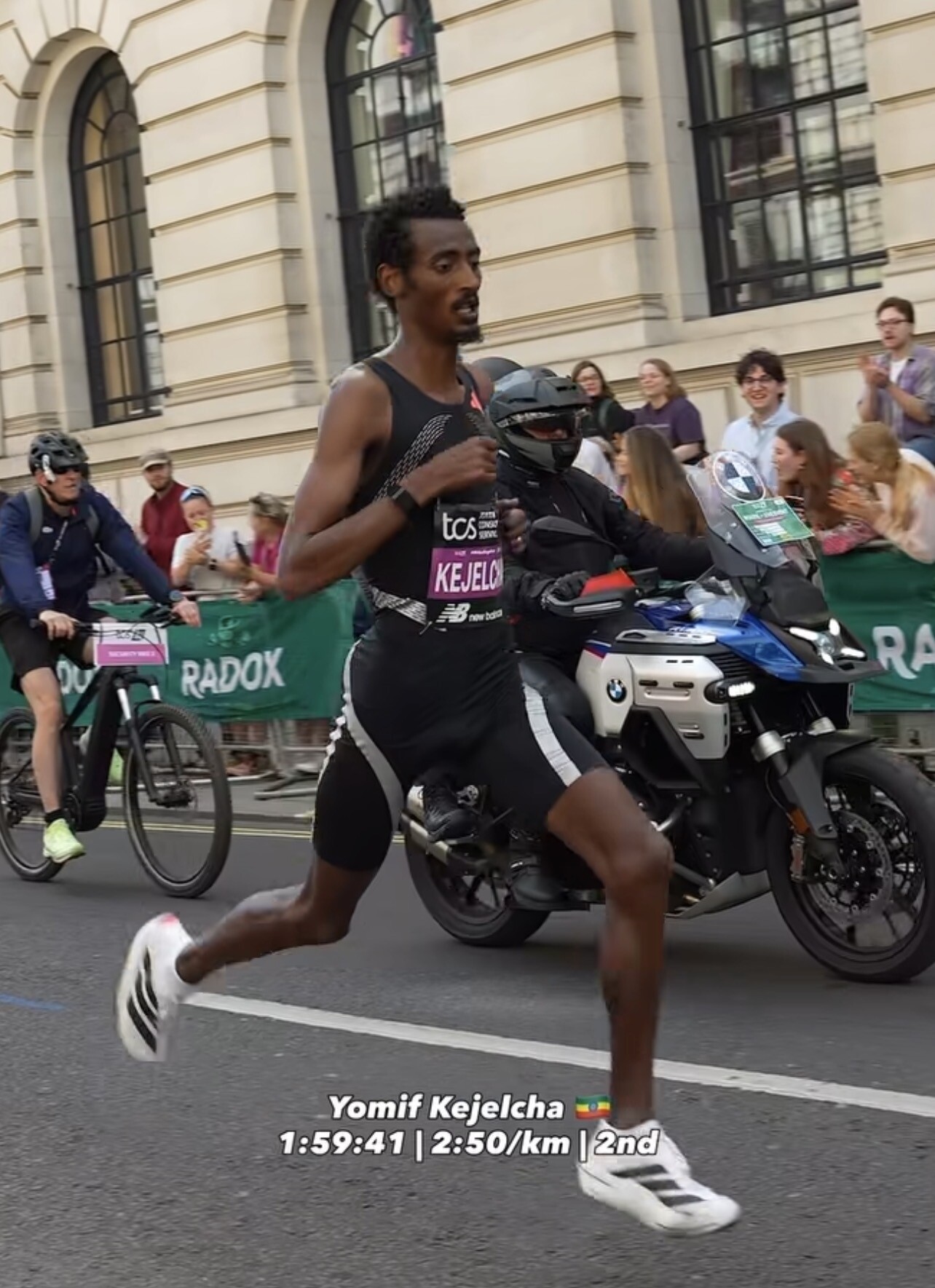
Very few athletes in history have appeared capable of that challenge.
Kejelcha now looks like one of them.
What makes his London performance even more extraordinary is that it came in his first attempt at the distance. Most elite marathoners require several races to learn the rhythm of fueling, pacing, and surviving the final 10 kilometers. Kejelcha immediately looked comfortable at a pace no one had ever officially sustained before.
That suggests there may still be room for improvement.
The question now becomes strategy.
Berlin immediately stands out as a logical option for his second marathon. No course in history has produced more marathon world records. Flat roads, cool temperatures, elite pacing, and ideal racing conditions have made Berlin the gold standard for fast marathoning.
If Kejelcha wants to make an immediate attack on history, Berlin would seem the obvious choice.
But there may be reasons to wait.
The Berlin Marathon comes only five months after London, and Kejelcha’s team may decide that patience is the smarter path. A debut marathon at world-record pace places enormous stress on the body, and carefully managing recovery could be critical to his long-term development.
Valencia may ultimately be the most intriguing possibility.
The Spanish race has rapidly become one of the fastest marathons in the world, producing countless personal bests and breakthrough performances. Kejelcha already has history there after running his half marathon world record, and the course appears perfectly suited to his smooth, efficient running style.
Chicago could also enter the conversation, though weather and wind conditions there can be less predictable.
Another option is Sevilla in early 2027, a race increasingly recognized for its fast course and ideal winter conditions.
Tokyo would provide prestige and global attention, but Berlin and Valencia are still generally viewed as superior venues for historic time attempts.
If Kejelcha’s goal is simply to win major marathons, he already has the ability to compete anywhere in the world.
But if the goal is to break 1:59, every detail matters:
weather,
pacing,
wind,
temperature,
fueling,
race timing,
and course design.
The difference between 1:59:41 and 1:58:59 may ultimately come down to only a few seconds per mile.
Still, London fundamentally changed how the running world views the limits of the marathon.
For years, an official sub-two-hour marathon felt impossible. Now the sport is already looking beyond that barrier.
At just 27 years old, Yomif Kejelcha may only be beginning his marathon career.
And after what happened in London, the possibility of a sub-1:59 marathon no longer feels unrealistic.
It feels possible.
by Boris Baron for My Best Runs
Login to leave a comment
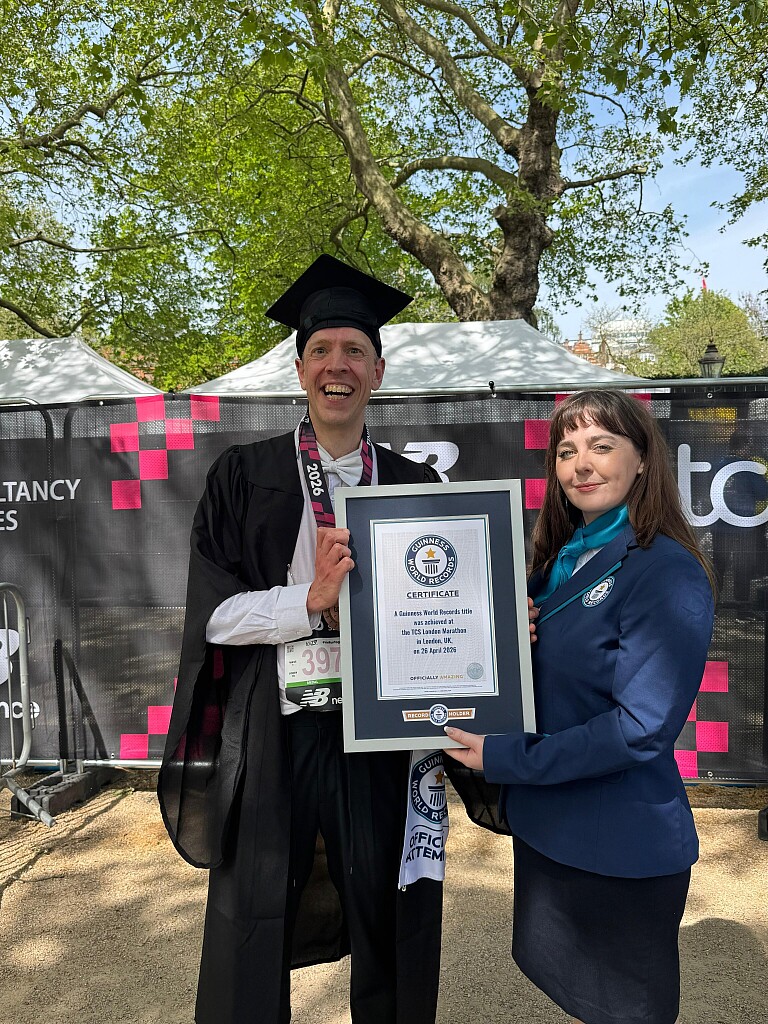
Scholar on the Run: How Alexander Betts Turned the London Marathon into a Record-Breaking Mission
At the 2026 London Marathon 2026, spectators witnessed a performance that went far beyond athletic excellence — it was a fusion of intellect, endurance, and purpose. Among the thousands of runners was Alexander Betts, a respected professor at University of Oxford, who lined up for his 23rd marathon with an ambition as bold as it was unconventional.
Unlike the typical elite athlete, Betts chose to take on the 42.195-kilometre challenge dressed not in lightweight racing gear, but in full academic regalia — a flowing gown, white bow tie, and mortarboard. His goal was clear: to break the Guinness World Record for the fastest marathon run in academic dress, a mark that previously stood at 3 hours and 31 minutes, set at the Berlin Marathon the year before.
What unfolded on the streets of London was nothing short of extraordinary. Battling heat, discomfort, and the constant struggle to keep his mortarboard in place, Betts pushed forward with determination and composure. He crossed the finish line in an astonishing 2 hours, 55 minutes and 26 seconds shattering the previous record and etching his name into the record books in emphatic fashion.
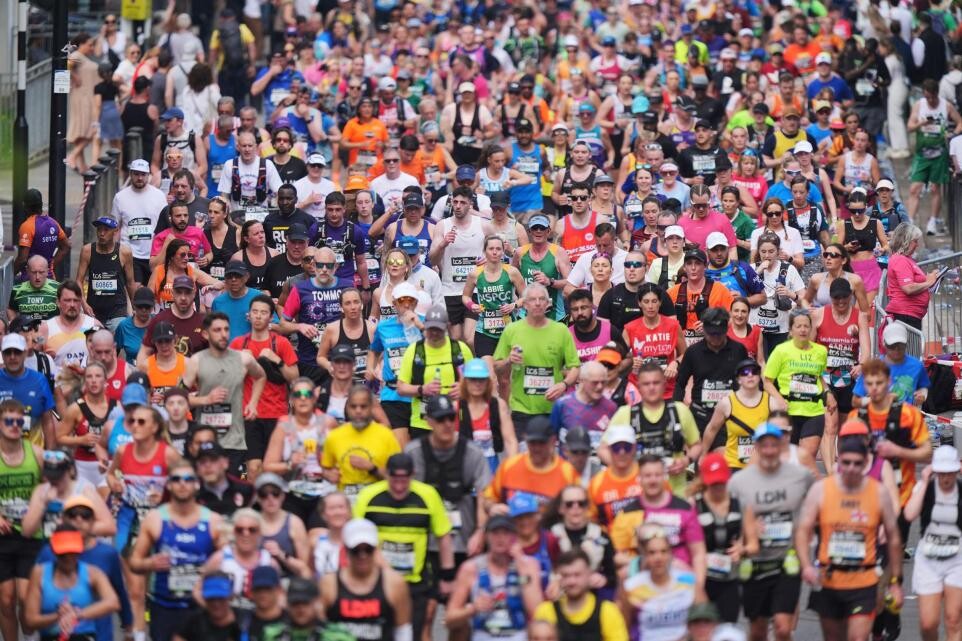
Yet, this achievement was never solely about time or titles. Behind every stride lay a deeper motivation. Betts is a passionate advocate for the transformative power of university sport within local communities. Through this remarkable effort, he sought to raise funds and awareness for Helen & Douglas House, a charity dedicated to supporting terminally ill children and their families.
Reflecting on his mission, Betts spoke with heartfelt conviction about the cause. He highlighted the profound impact hospice care has on families, while also drawing attention to the chronic underfunding such vital services often face. For him, this marathon was a way to give back — to channel personal endurance into collective hope.
His efforts have already inspired generosity, raising over £1,700 through his campaign, with support continuing to grow. But perhaps even more powerful than the funds raised is the message carried by his run: that excellence is not confined to a single field, and that true achievement often lies in using one’s platform to uplift others.
In blending academia with athleticism, Betts delivered more than a record-breaking performance — he offered a compelling reminder that knowledge and action, intellect and compassion, can move in perfect stride.
by Erick Cheruiyot for My Best Runs.
Login to leave a comment

Guye Adola Turns Back the Clock as Rotterdam Marathon Delivers a Day of Brilliance
The 2026 Rotterdam Marathon produced a spectacular showcase of world-class distance running, headlined by a vintage performance from Guye Adola and a record-breaking run from Mekides Shimeles. On the fast streets of Rotterdam, elite athletes lit up one of the sport’s most respected stages with speed, drama, and unforgettable performances.
In the men’s race, Guye Adola reminded the world of his enduring quality by surging to victory in an outstanding 2:03:54. The Ethiopian star, who first rose to global prominence with his fearless battle against Eliud Kipchoge at the 2017 Berlin Marathon, returned to the spotlight with one of the finest victories of his career. It was his first performance under 2:04 since that famous breakthrough, making the triumph even more significant.
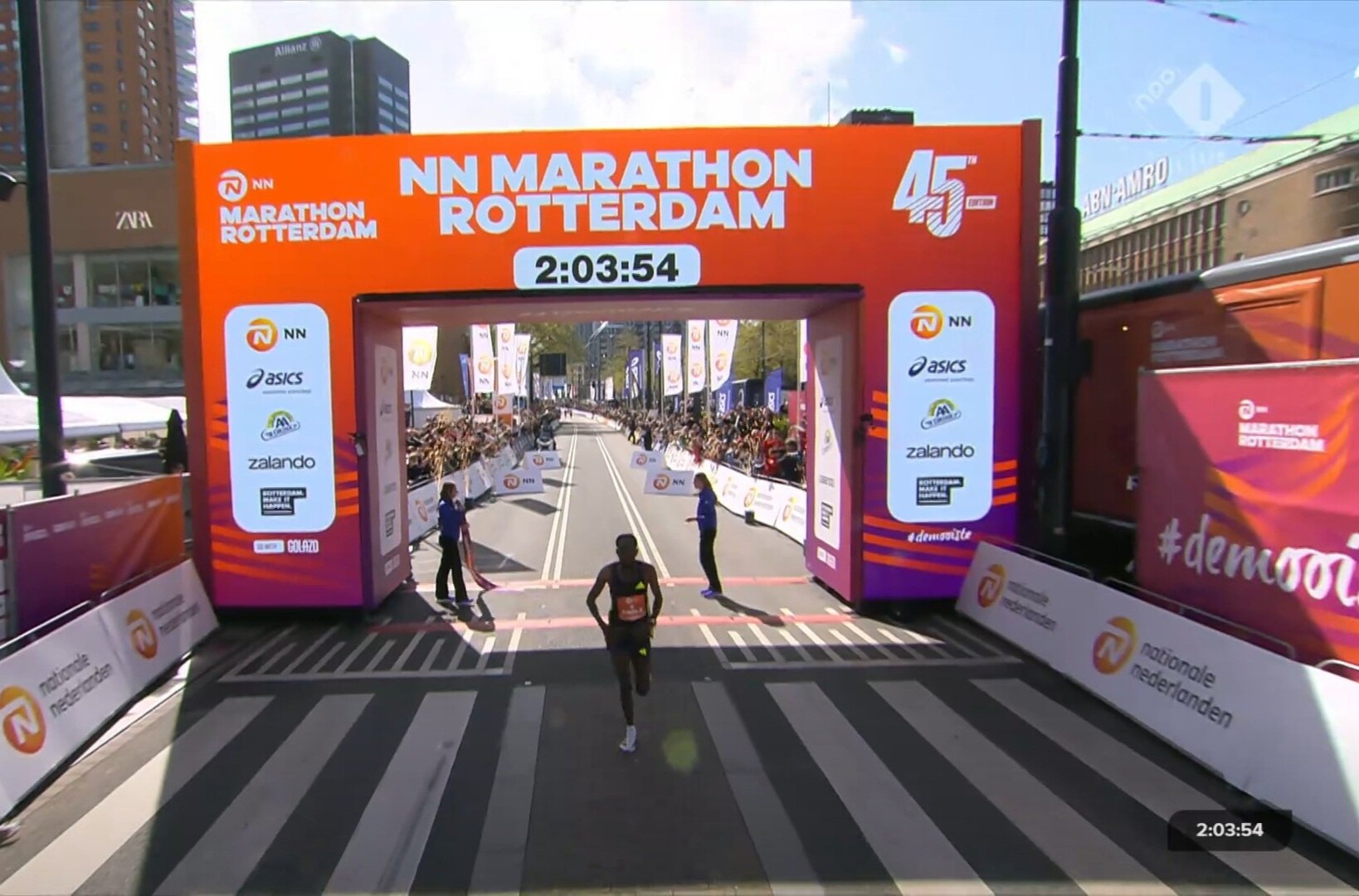
Adola ran with poise and intelligence, conserving energy before striking decisively in the closing stages to separate himself from a stacked field. His victory was not only fast, but symbolic a return to the very highest level of marathon racing.
The chase behind him was equally fierce. Fellow Ethiopian Tesfaye Deriba secured second place in 2:04:15, while Belgium’s Bashir Abdi finished a close third in 2:04:18. Kenya’s Kenneth Kemboi capped a remarkable men’s contest with fourth place in 2:04:21, underlining the depth of quality on display.
The women’s race brought its own moment of history as Mekides Shimeles produced a magnificent run to claim victory in 2:18:56, setting a new championship record. Her commanding performance placed her among the standout stars of the day and added another proud chapter to Ethiopia’s marathon legacy.
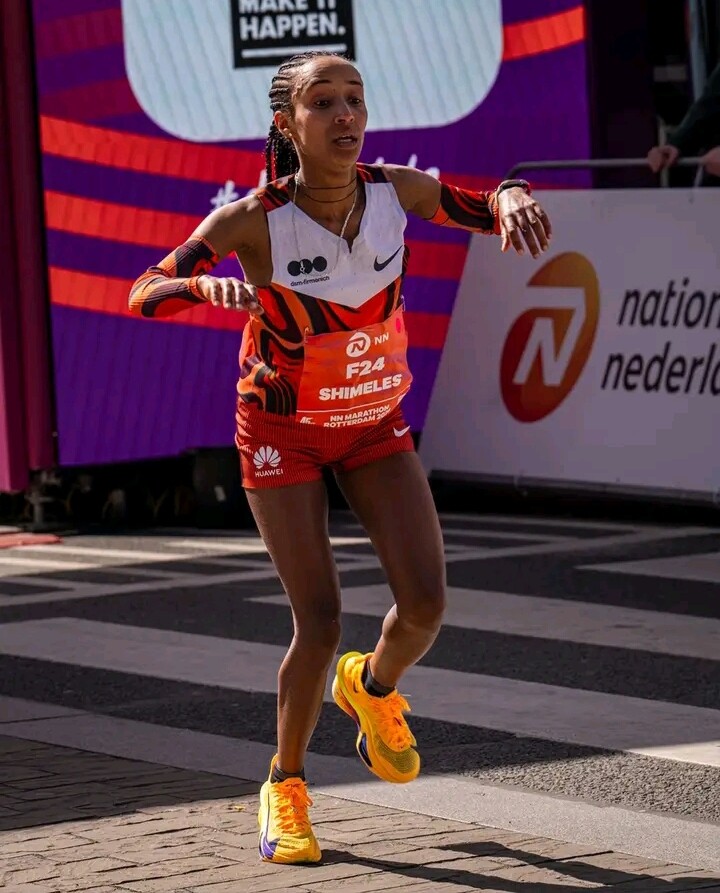
She was followed home by compatriot Aminet Ahmed, who ran 2:21:25 for second place. Bahrain’s Shitaye Eshete finished third in 2:23:22, while Pascalia Jepkogei made it two Bahraini athletes in the top four with a solid 2:24:34 for fourth.
2026 Rotterdam Marathon Results
Men – Top 4
1. Guye Adola (Ethiopia) – 2:03:54
2. Tesfaye Deriba (Ethiopia) – 2:04:15
3. Bashir Abdi (Belgium) – 2:04:18
4. Kenneth Kemboi (Kenya) – 2:04:21
Women – Top 4
1. Mekides Shimeles (Ethiopia) – 2:18:56 (CR)
2. Aminet Ahmed (Ethiopia) – 2:21:25
3. Shitaye Eshete (Bahrain) – 2:23:22
4. Pascalia Jepkogei (Bahrain) – 2:24:34
From Adola’s long-awaited return to major glory to Shimeles’ record-breaking masterclass, Rotterdam once again proved why it remains one of the premier marathon stages in the
by Erick Cheruiyot for My Best Runs.
Login to leave a comment

NN Rotterdam Marathon
The marathon has been the biggest one-day sporting event in the Netherlands for many years in a row with over 35000 athletes professionals inclusive. The world's top athletes will at the start on the bustling coolsingel, alongside thousands of other runners who will also triumph,each in their own way.The marathon weekend is a wonderful blend of top sport and festival. ...
more...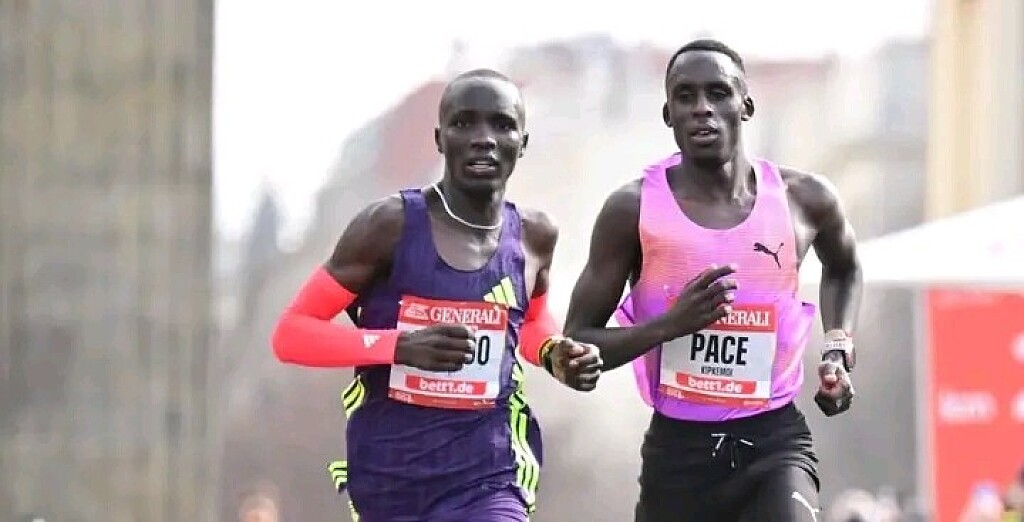
When the Pacemaker Becomes the Contender: Rethinking Roles in Elite Road Racing
In the finely tuned world of elite distance running, pacemakers are often cast as invisible architects—tasked with dictating rhythm, shielding athletes from the wind, and guiding races toward fast times before quietly stepping aside. But every so often, the script is rewritten. At the recent Berlin Half Marathon, Kenyan pacer Dennis Kipkemoi ignited fresh debate after surging beyond his assigned role to finish second, raising a familiar yet fascinating question: are pacers truly allowed to compete?
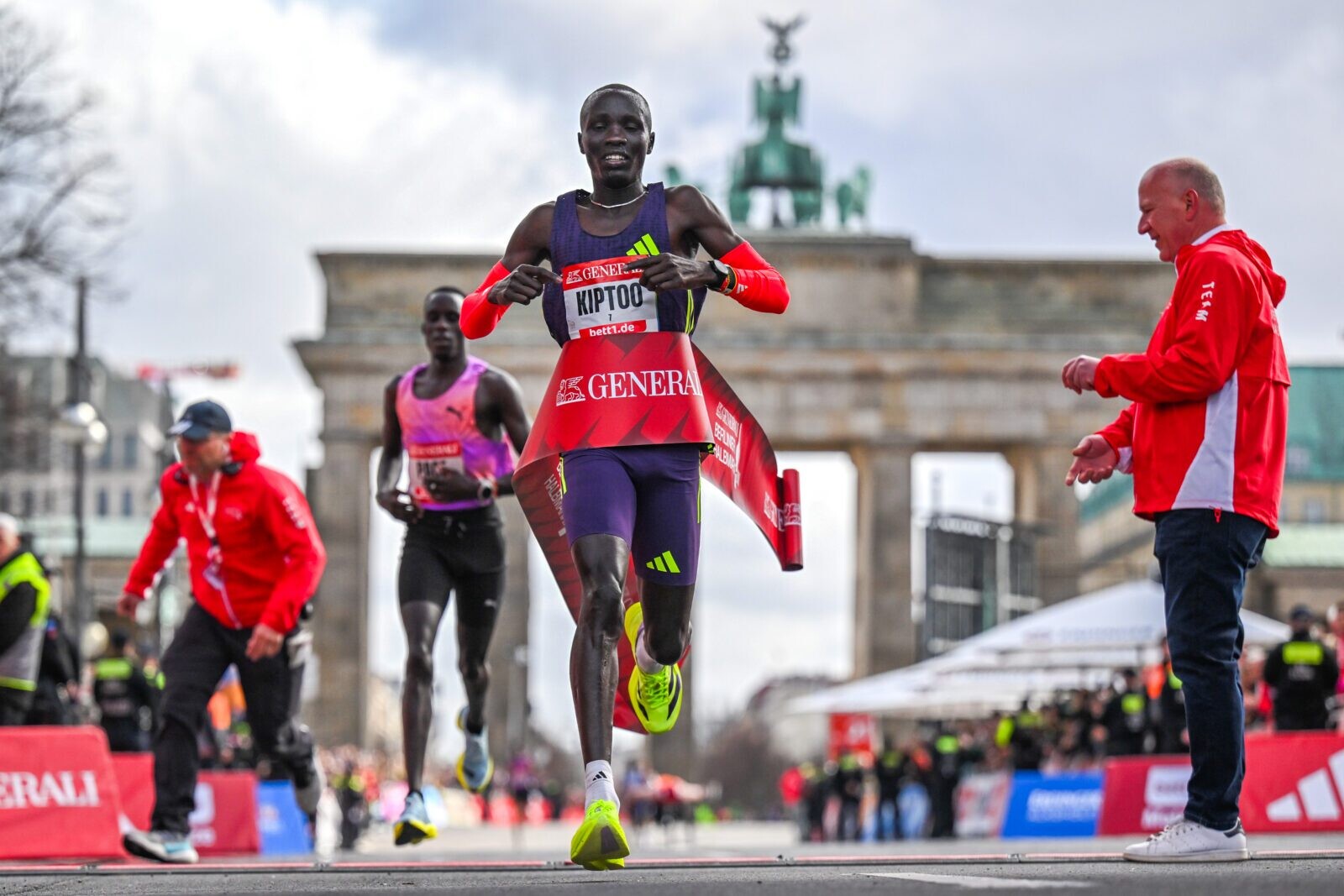
The answer, grounded in the regulations of World Athletics, is unequivocal. Pacemakers are not outsiders; they are registered athletes, official participants in the race with every right to continue beyond their pacing duties. If they possess the strength, strategy, and ambition to push past the finish line ahead of the field, the rulebook does not stand in their way.
Kipkemoi’s performance may have stirred conversation, but it is far from unprecedented. History offers compelling precedents where pacemakers have stepped out of the shadows and into the spotlight. At the 2000 Berlin Marathon, Simon Biwott famously transitioned from hired pacer to race winner, crafting one of the most remarkable narratives in marathon lore. More recently, Sebastian Sawe delivered a similar twist at the 2022 Seville Half Marathon, proving that the line between support act and star performer is often thinner than it appears.
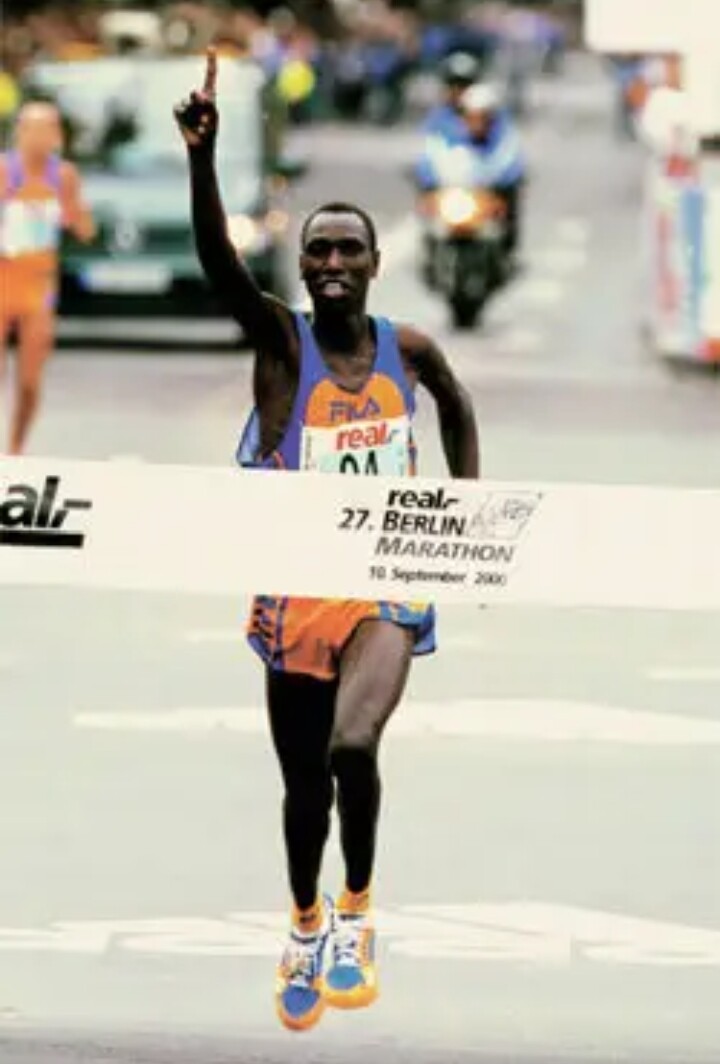
What makes these moments so compelling is the tension they introduce into the race dynamic. Pacemakers are typically expected to sacrifice their own ambitions for the benefit of others, operating with precision and discipline. Yet when one chooses to continue, it challenges traditional expectations and injects an element of unpredictability that enriches the sport. It is not a breach of ethics, but rather a demonstration of competitive instinct—an athlete recognizing opportunity and seizing it.
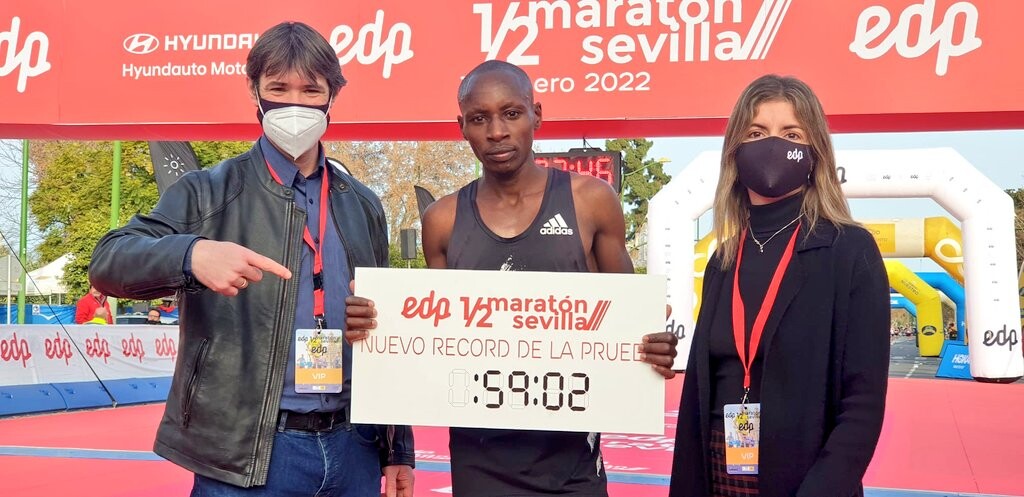
Critics argue that pacers stepping into contention may disrupt the competitive balance, particularly for athletes who rely on them purely as facilitators. But this perspective overlooks a fundamental truth: every athlete on the start line shares the same course, the same conditions, and ultimately, the same right to compete. Once the race unfolds, it belongs to those strong enough to endure it.
Dennis Kipkemoi’s bold finish in Berlin is a reminder that roles in athletics are not always fixed. The pacemaker, often unseen and underappreciated, can become a protagonist in their own right. And as long as the rules remain as they are, such moments will continue to surface—blurring boundaries, sparking debate, and adding yet another layer of intrigue to the ever-evolving theatre of distance running.
by Erick Cheruiyot for My Best Runs.
Login to leave a comment
Oqbe Kibrom Returns to Vienna Chasing Historic First Eritrean Victory
The 43rd Vienna City Marathon will take place on April 19, and one runner arriving with unfinished business is Oqbe Kibrom of Eritrea. Kibrom will return to the Austrian capital hoping to become the first Eritrean athlete to win the men’s race at this prestigious event.
Kibrom finished third in Vienna in 2022, and he enters this year’s race as the fastest man on the current start list with a personal best of 2:05:37.

Organizers report strong participation for this year’s race. More than 13,000 runners are registered for the marathon distance alone, and when shorter races over the two-day weekend are included, the total number of participants climbs to over 46,000, a record for the event.
A Second Chance at Victory
When Kibrom raced in Vienna four years ago, it briefly appeared he might make history.
After the final pacemaker stepped aside just past 30 kilometers, Kibrom surged into the lead and looked poised to become the first Eritrean man to win the race. However, the effort proved costly.
Kenya’s Cosmas Muteti closed the gap late in the race and passed Kibrom with five kilometers remaining, eventually taking the win. Kibrom finished third in 2:07:25.
While Eritrea has celebrated a women’s champion in Vienna, the men’s race has yet to be won by an Eritrean athlete.
Kibrom, whose manager is Swiss marathon record holder Tadesse Abraham, has remained consistently competitive on the global marathon stage. The 28-year-old set his personal best of 2:05:37 when finishing eighth at the Berlin Marathon two years ago.
More recently, he finished fourth at the Daegu Marathon in South Korea in 2025, running 2:06:04. With three sub-2:06 performances to his name, Kibrom may now be poised for his first major marathon victory.
Strong African Contenders
Kibrom will face strong competition from fellow African runners.
Ethiopia’s Tafese Delegen owns a personal best of 2:06:11, set at the Seville Marathon two years ago.
Kenya’s Stanley Kurgat ran 2:07:05 at the Berlin Marathon, finishing seven places behind Kibrom in that race.
Another Kenyan to watch is Albert Kangogo, who ran 2:07:26 while finishing second at the Mersin Marathon in Turkey last December. Kangogo has already proven he can perform well in Vienna—he placed third in the 2023 race in 2:10:44.
Austrian Hope: Aaron Gruen
Local fans will also be watching Aaron Gruen, who made headlines last spring by becoming the first Austrian runner to break 2:10 in the marathon.
The 27-year-old ran 2:09:53 in Congers, New York, improving his personal best by nearly five minutes.
Gruen has continued his strong form in 2026, setting a half marathon personal best of 61:14 in Houston earlier this year. Balancing elite training with his studies, he is currently attending Harvard Medical School in Boston, making his preparation even more impressive.
European Marathon Classics Series Launched
The Vienna City Marathon is also playing a central role in a newly created marathon series called European Marathon Classics (EMC).
Alongside Vienna, the series includes major European marathons in:
• London Marathon
• Rome Marathon
• Madrid Marathon
• Lisbon Marathon
• Warsaw Marathon
• Copenhagen Marathon
• Frankfurt Marathon
Runners who complete at least five of these marathons in different cities will receive a specially designed medal recognizing the achievement.
“European Marathon Classics embodies our ambition to explore Europe together while pushing boundaries—both geographically and philosophically,” said Hugh Brasher, Event Director of the London Marathon. “I hope it will inspire runners from around the world to experience Europe’s great marathons, cities, and communities.”
Kathrin Widu, joint managing director of the Vienna City Marathon along with Dominik Konrad, added:
“The European Marathon Classics are an inspiring challenge. By bringing together leading European marathons, we aim to inspire even more people to embrace marathon running. We are united by shared values such as a passion for the sport, community, health, and sustainability.”
by Race News Service
Login to leave a comment

Vienna City Marathon
More than 41,000 runners from over 110 nations take part in the Vienna City Marathon, cheered on by hundreds of thousands of spectators. From the start at UN City to the magnificent finish on the Heldenplatz, the excitement will never miss a beat. In recent years the Vienna City Marathon has succeeded in creating a unique position as a marathon...
more...
Shanghai Marathon Moves Closer to World Marathon Major Status as Global Series Eyes Historic Expansion
The landscape of global marathon racing could soon undergo a significant transformation after the Abbott World Marathon Majors confirmed that the Shanghai Marathon has successfully passed the first stage of evaluation in its quest to join the prestigious marathon series.
The Chinese race is now one step closer to becoming part of one of the most exclusive clubs in road running. If the event fulfills all remaining criteria during its December 2026 edition, Shanghai could officially be welcomed into the Majors calendar as early as 2027.
Such a development would mark a major milestone not only for the race itself but also for marathon running in Asia. In recent years, the Shanghai Marathon has steadily grown in stature, attracting elite athletes and producing performances that signal its readiness for the sport’s highest tier.
Evidence of that progress was on full display at the latest edition when former world record holder Brigid Kosgei delivered a historic run, clocking the fastest marathon ever recorded on Chinese soil. Her performance underscored the race’s rising reputation as a venue capable of hosting world-class competition and record-breaking moments.
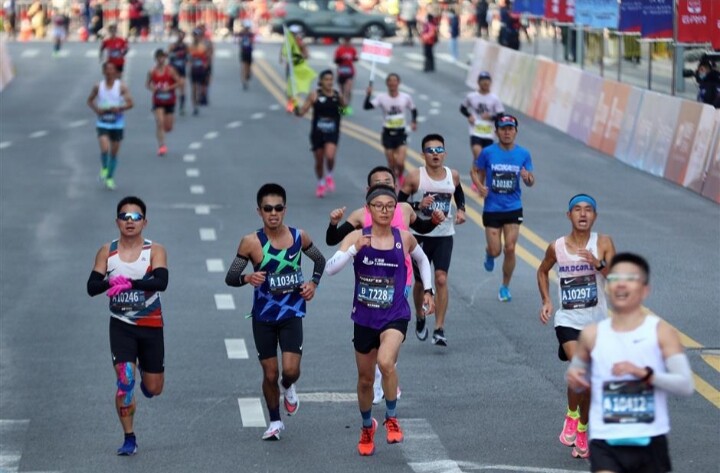
At the same time, another race is nearing a decisive moment in its own bid for inclusion. The Cape Town Marathon is currently undergoing its final evaluation phase, with hopes of becoming the first African event to join the celebrated marathon series. Should it succeed, it would represent a landmark achievement for distance running across the continent and further highlight Africa’s profound influence on the sport.
If both Shanghai and Cape Town ultimately secure approval, the Abbott World Marathon Majors would expand from seven races to nine, reflecting the sport’s growing global reach.
At present, the Majors circuit consists of the world’s most iconic marathons: the Tokyo Marathon, Boston Marathon, London Marathon, Berlin Marathon, Chicago Marathon, the New York City Marathon, and the recently added Sydney Marathon.
The possible addition of Shanghai and Cape Town would represent more than just numerical growth. It would signal a new era for marathon running — one that reflects the sport’s expanding global footprint, bringing the Majors closer to runners and fans across Asia and Africa while strengthening the truly worldwide identity of the marathon.
by Erick Cheruiyot for My Best Runs.
Login to leave a comment

Shanghai International Marathon
Shanghai International Marathon has established itself as the marquee running event on China’s Marathon calendar. Every November, tens of thousand participants run passing the many historical places of this city such as Bund Bull, Customs House, Shanghai Museum, Shanghai Grand Theater, Shanghai Exhibition center, Jing’an Temple, Nan Pu Bridge, Lu Pu Bridge, Long Hua Temple, Shanghai Stadium. The course records...
more...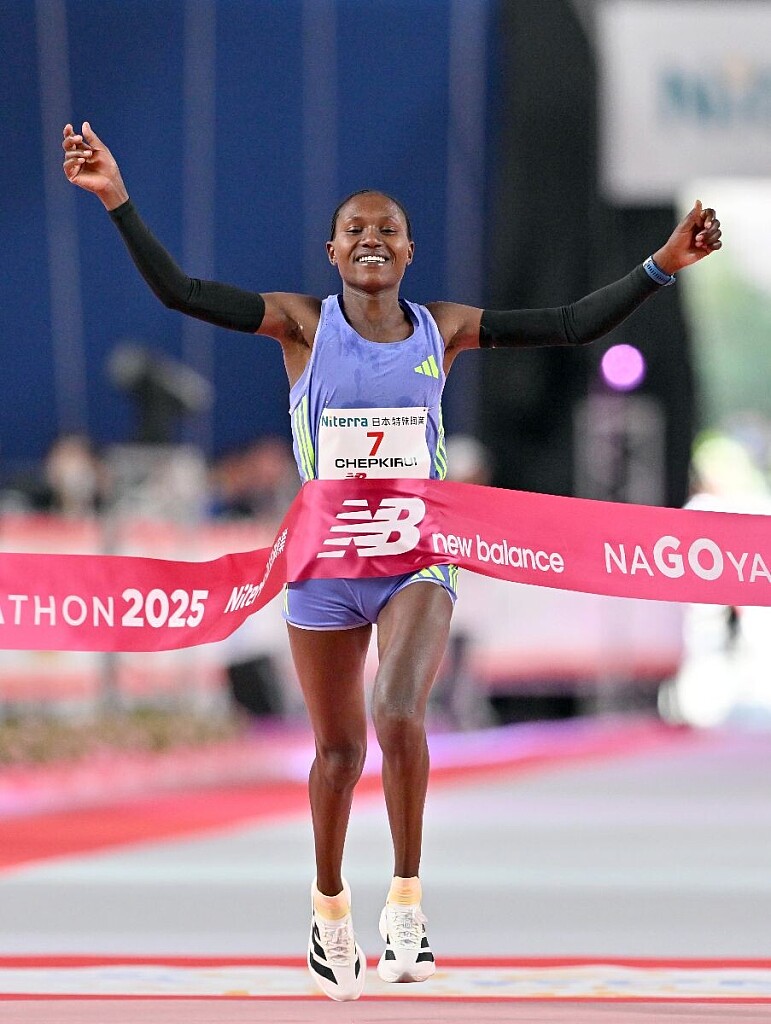
Nagoya Awaits a Marathon Showdown as Sheila Chepkirui Returns to Defend Her Crown
The world’s finest women marathoners are preparing for another thrilling chapter of the Nagoya Women’s Marathon as the 2026 edition unfolds in Nagoya, Japan on Sunday, March 8. Widely regarded as one of the most prestigious women-only marathons on the global calendar, the race once again brings together an impressive international field ready to battle over the classic 42.195-kilometer distance.
For fans across the world, the race will begin at 9:10 AM Japan Standard Time, which corresponds to 3:10 AM in East Africa (Nairobi time), 1:10 AM in West Africa, and 4:10 PM on Saturday evening on the U.S. Pacific Coast. Despite the early hours in many parts of the world, the event is expected to capture global attention as elite athletes chase victory on the streets of Nagoya.
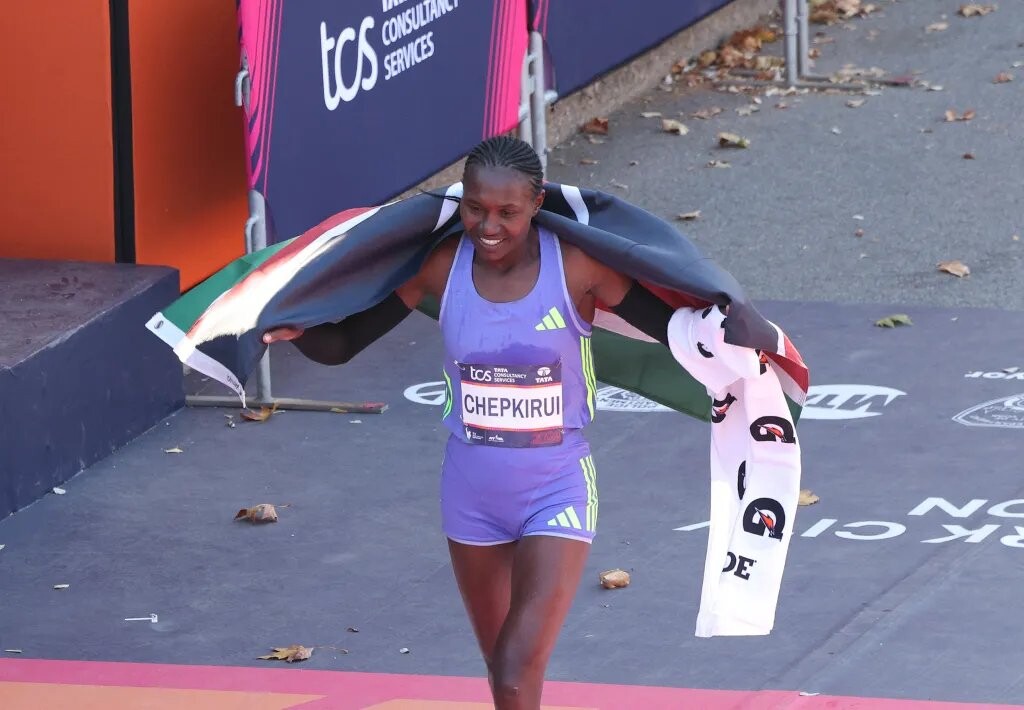
At the center of the spotlight is Kenya’s Sheila Chepkirui, who returns as the defending champion after a brilliant victory in 2025. Chepkirui arrives in Japan carrying a formidable personal best of 2:17:29, a time that places her among the fastest women in the field. Known for her strength in the latter stages of the marathon, the Kenyan star will be determined to prove that last year’s triumph was no accident.
However, the road to a successful title defense will be anything but easy.

Ethiopia’s Aynalem Desta enters the race as one of the strongest challengers. With a personal best of 2:17:37, Desta possesses both the speed and endurance needed to threaten Chepkirui’s reign. Ethiopian athletes have long been dominant forces in global distance running, and Desta will be eager to add another major marathon title to her nation’s proud legacy.
The home crowd, meanwhile, will place their hopes on Japan’s marathon star Honami Maeda. The national record holder with 2:18:59, Maeda remains one of the most respected long-distance runners in the country. Her recent journey has been one of determination and resilience. After an injury disrupted her plans during the Paris 2024 Olympic Games season, she has gradually rebuilt her fitness and confidence.
Maeda showed encouraging signs earlier this year when she ran 1:10:07 at the Houston Half Marathon, a performance that signaled her return to competitive form. She also competed at the Berlin Marathon last year, finishing in 2:24:36, and will now look to deliver a stronger performance in front of her home supporters.
Beyond the leading trio, the race features remarkable depth. Athletes such as Eunice Chebichii Chumba of Bahrain, Selly Chepyego Kaptich of Kenya, Spain’s Majida Maayouf, and Australia’s Genevieve Gregson add further strength to a field packed with international experience.
Japan will also be strongly represented by elite contenders including Sayaka Sato, Yuka Ando, Ayuko Suzuki, and Rika Kaseda, each capable of producing a breakthrough performance in front of passionate local fans.
With such a powerful lineup, the 2026 Nagoya Women’s Marathon promises a captivating clash of endurance, strategy, and national pride. Whether it is Chepkirui defending her crown, Ethiopia launching a successful challenge, or Japan celebrating a home victory, the streets of Nagoya are set to witness another unforgettable day in women’s marathon history.
All eyes now turn to the starting line — where champions will rise and a new chapter of the Nagoya marathon legacy will be written.
by Erick Cheruiyot for My Best Runs.
Login to leave a comment

Nagoya Women's Marathon
The Nagoya Women's Marathon named Nagoya International Women's Marathon until the 2010 race, is an annual marathon race for female runners over the classic distance of 42 km and 195 metres, held in Nagoya, Japan in early March every year. It holds IAAF Gold Label road race status. It began in 1980 as an annual 20-kilometre road race held in...
more...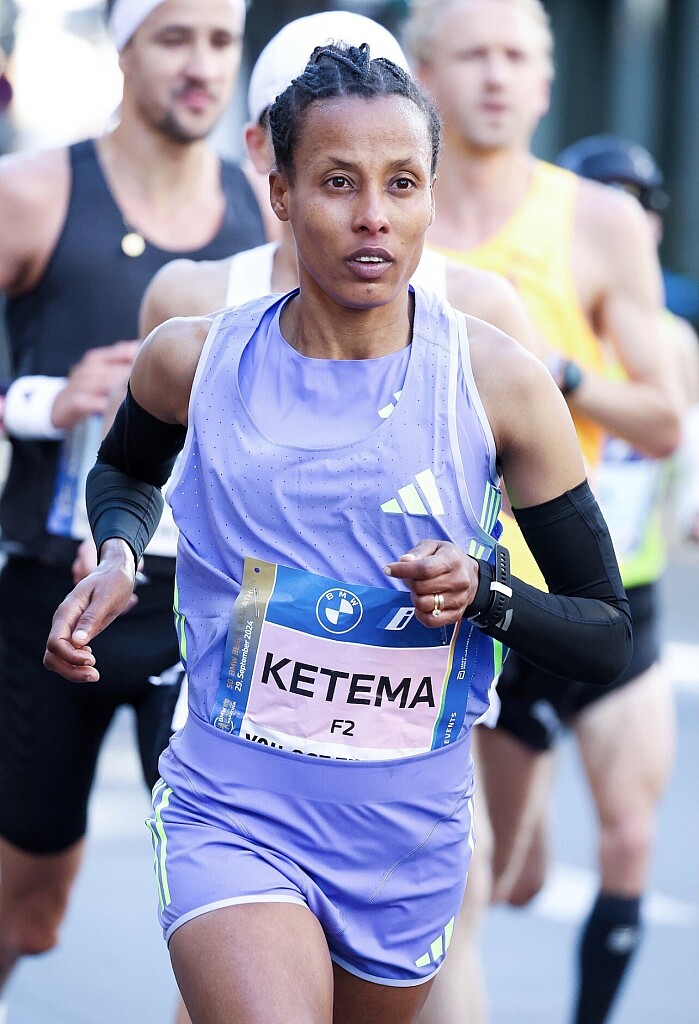
Fast Women Ready to Light Up Hamburg Marathon as Ethiopian Stars Headline 40th Edition
The women’s race at the 40th edition of the Haspa Marathon Hamburg, set for April 26, is shaping up to be a fast one. A powerful Ethiopian trio—Tigist Ketema, Degitu Azimeraw, and Sichala Kumeshi—headline the elite field for Germany’s biggest spring marathon.
Organizers expect a massive turnout for the anniversary edition. 20,000 runners are entered in the marathon, and when the shorter distance races held during the same weekend are included, a record total of 46,000 athletes will take part in the Hamburg running festival.
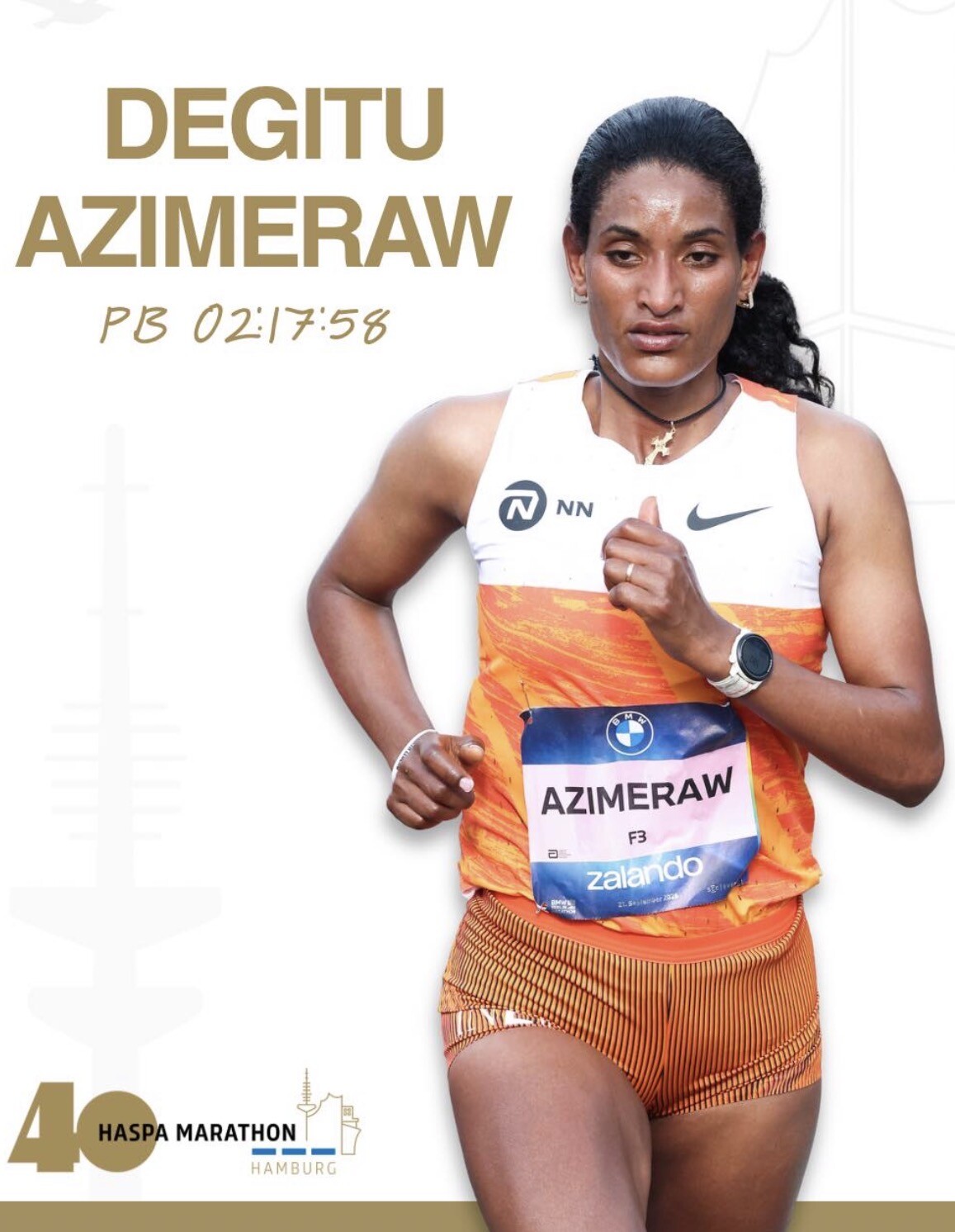
Ethiopia’s Strong History in Hamburg
Ethiopian runners have dominated the women’s race in recent years. In 2022, Yalemzerf Yehualaw set the course record with a stunning 2:17:23. That mark nearly fell again last year when Workenesh Edesa won in 2:17:55, the second-fastest time in race history.

With Ketema, Azimeraw, and Kumeshi on the start line this year, another Ethiopian victory—and perhaps another run at the course record—appears likely.
Tigist Ketema Returns After Breakthrough Seasons
At just 27 years old, Tigist Ketema has already established herself among the fastest marathoners in the world.
She made a sensational debut at the Dubai Marathon in January 2024, winning with a course record of 2:16:07—an unofficial world record for a debut marathon and, at the time, the eighth-fastest performance ever.
Later that year she confirmed her status by winning the Berlin Marathon in 2:16:42.
Ketema competed at the 2025 World Championships marathon in Tokyo, but difficult hot and humid conditions forced her to drop out. After that disappointment, Hamburg presents a perfect opportunity for the Ethiopian star to return to top form.
Degitu Azimeraw’s Consistent Excellence
Another major contender is Degitu Azimeraw, who has built one of the most consistent marathon careers in recent years.
Azimeraw won her debut at the 2019 Amsterdam Marathon in 2:19:26, immediately establishing herself as a world-class performer. Since then she has run under 2:20 four times.
Her best performance came at the 2021 London Marathon, where she finished runner-up with a personal best of 2:17:58.
After taking time away from competition to give birth, the 27-year-old returned impressively in 2024, winning the Barcelona Marathon in 2:19:52.
Kumeshi Returns to Familiar Roads
Sichala Kumeshi may have the advantage of experience on the Hamburg course.
The 30-year-old first ran the race in 2023, finishing in 2:26:53. But it was in 2025 when she truly made her mark in Hamburg, placing third with a personal best of 2:19:53, her first time breaking the 2:20 barrier.
Kumeshi has already shown strong form this season, running a half marathon personal best of 1:06:53 in Houston in January.
With confidence from that performance and familiarity with the course, she returns to Hamburg aiming for an even bigger result.
A Historic Edition
The 40th Haspa Marathon Hamburg promises to be one of the most exciting editions in the race’s history. With record participation numbers and a world-class women’s field led by three of Ethiopia’s top marathoners, the stage is set for another memorable race through the streets of one of Europe’s great running cities.
by Race News Service
Login to leave a comment

Haspa Marathon Hamburg
The HASPA MARATHON HAMBURG is Germany’s biggest spring marathon and since 1986 the first one to paint the blue line on the roads. Hamburcourse record is fast (2:05:30), the metropolitan city (1.8 million residents) lets the euphoric atmosphere spill over and carry you to the finish. Make this experience first hand and follow the Blue Line....
more...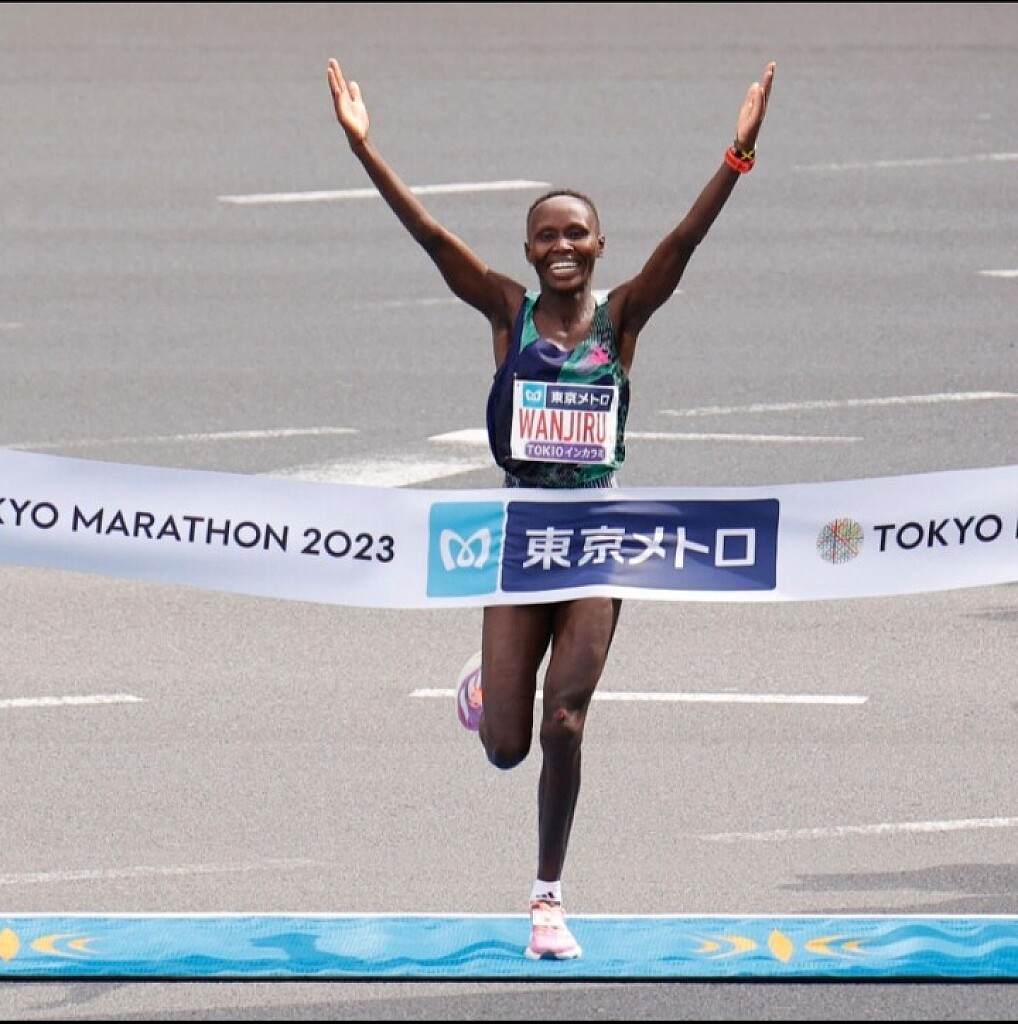
Wanjiru Returns to Tokyo: Kenya’s Marathon Queen Ready for Another Golden Chapter
She is back where memories were made and history was written.
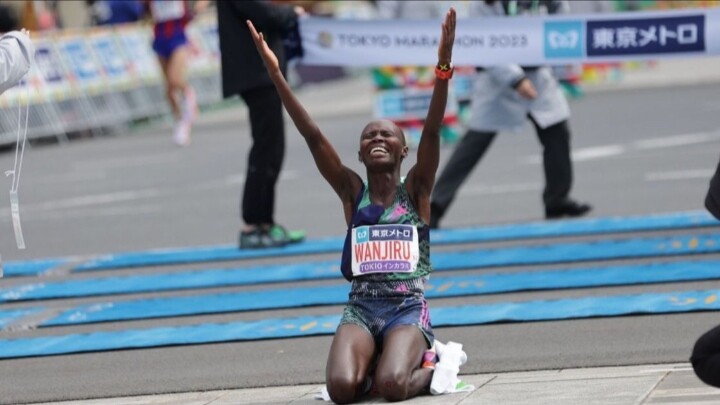
When the women’s elite field gathers in Tokyo for the Tokyo Marathon on Sunday, March 1, 2026, much of the attention will naturally settle on Rosemary Wanjiru — an athlete whose journey on these streets has already been remarkable.
Tokyo is more than just another stop on the marathon circuit for Wanjiru. In 2023, she produced a commanding performance to claim the title, controlling the race with confidence and finishing with authority. It was a breakthrough moment that elevated her standing among the world’s elite.
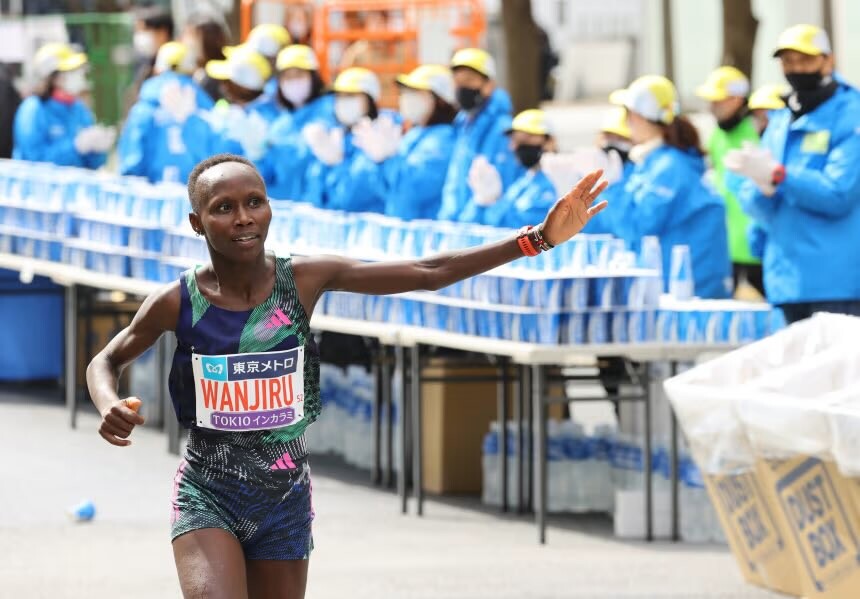
She returned to the same course and delivered even greater evidence of her progress, clocking a personal best of 2:16:14 — a time that underscored her ability to blend strength with precision pacing. On Tokyo’s fast layout, Wanjiru has consistently shown composure, patience in the early stages, and decisive strength when the race reaches its critical moments.
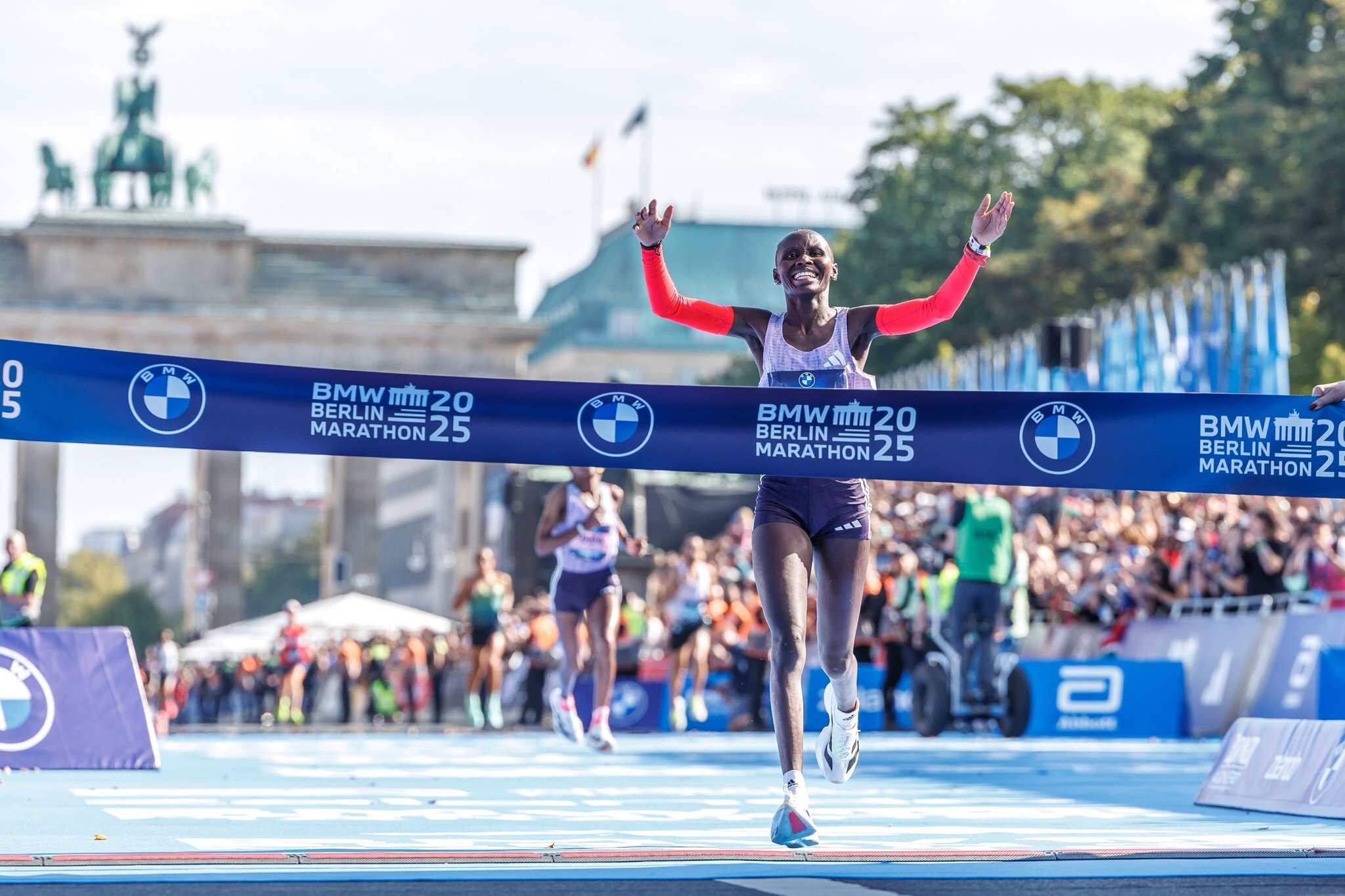
Her victory at the Berlin Marathon in 2025 added another dimension to her profile. Berlin, widely respected for its speed and depth of competition, demanded both tactical awareness and sustained aggression. Wanjiru met that challenge with maturity, reinforcing her reputation as one of the most reliable performers on the global stage.
Yet this year’s return comes within a broader competitive context. Defending champion Sutume Asefa Kebede will seek to protect her crown, while former world record holder Brigid Kosgei brings invaluable experience to the contest. The presence of such accomplished rivals ensures that Tokyo 2026 will be shaped by collective excellence rather than individual expectation.
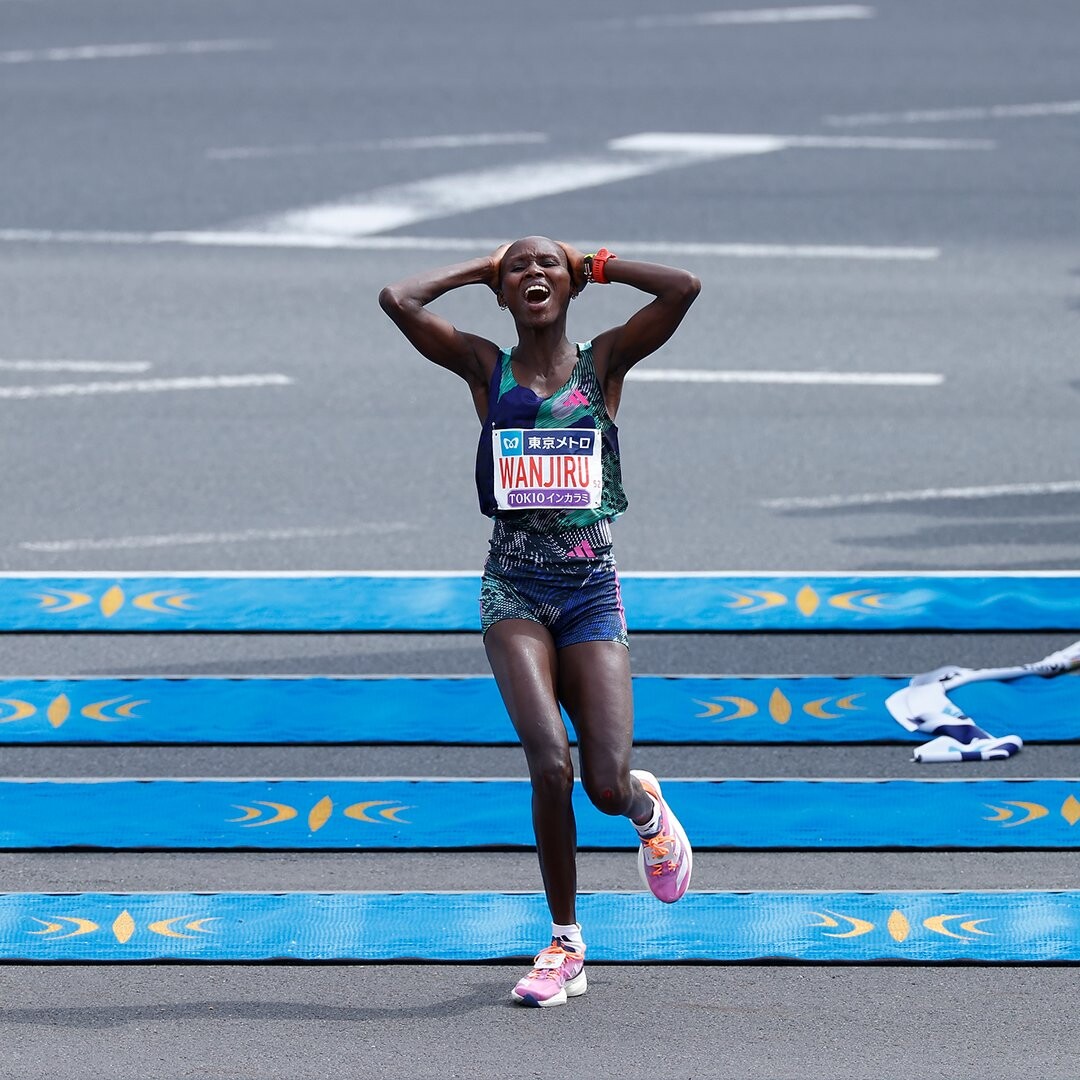
For Wanjiru, the objective is clear but measured: execute her race plan, respond to the rhythm of the field, and compete with the calm authority that has defined her recent seasons. The elite Men's and Women’s race in Tokyo will set off at 9:10 AM local time (JST). For fans following from across the world, this corresponds to earlier or later local times.
Local Time
Tokyo, Japan (JST)
9:10 AM
Sunday, Mar 1
Nairobi, Kenya (EAT)
3:10 AM
Sunday, Mar 1
As dawn breaks over Tokyo, Wanjiru will line up among the world’s best, representing Kenya’s depth in marathon running. While she is a leading contender, the race promises to be highly competitive, with multiple athletes capable of challenging for podium positions.
Tokyo 2026 is a global stage where strategy, endurance, and resilience define the winners. Rosemary Wanjiru’s return adds star power, but the race is open — and every competitor has a chance to make history.
by Erick Cheruiyot for My Best Runs.
Login to leave a comment
Queens of the Marathon: A Loaded Women’s Field Set to Ignite Tokyo 2026
The women’s race at the 2026 Tokyo Marathon to be staged on 1st March in Tokyo, Japan is shaping up to be one of the deepest and most compelling contests in recent marathon history, blending reigning champions, global major winners, national icons, and seasoned veterans into a single high-stakes showdown. At the center of the narrative stands Ethiopia’s formidable title defender Sutume Asefa Kebede, who returns to Tokyo chasing a third consecutive victory after dominating the previous two editions and establishing herself as the course record holder.
Kebede’s authority in Tokyo has been built on tactical intelligence and relentless pace control, but her path to another triumph will be far from straightforward. Among the most dangerous challengers is compatriot Hawi Feysa, who finished third in Tokyo last year before ascending to global prominence with victory at the 2025 Chicago Marathon. Her breakthrough confirmed what many suspected — that she possesses the finishing speed and endurance to win on any major stage.
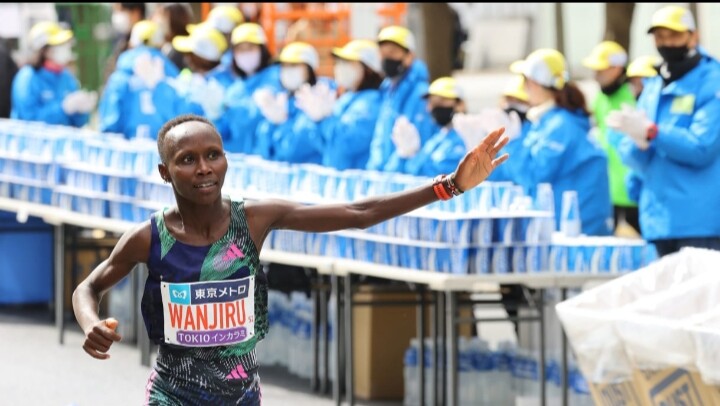
Another major threat comes from Kenya’s Rosemary Wanjiru, the 2025 Berlin Marathon champion, whose consistency at the highest level continues to make her one of the most dependable performers in elite women’s marathoning. With proven championship composure and a powerful late-race surge, Wanjiru enters Tokyo as a genuine title contender capable of disrupting Ethiopian dominance.
The depth extends even further with a wave of major champions from the past two seasons. Ethiopia’s Megertu Alemu, winner in Valencia in 2024, arrives with one of the fastest personal bests in the field, while Bertukan Welde brings confidence from her victory in Prague in 2025. Adding to the Ethiopian strength is Mestawut Fikir, who captured the Paris Marathon crown in 2024, and Waganesh Mekasha, winner of Osaka the same year — further proof of the nation’s extraordinary marathon pipeline.
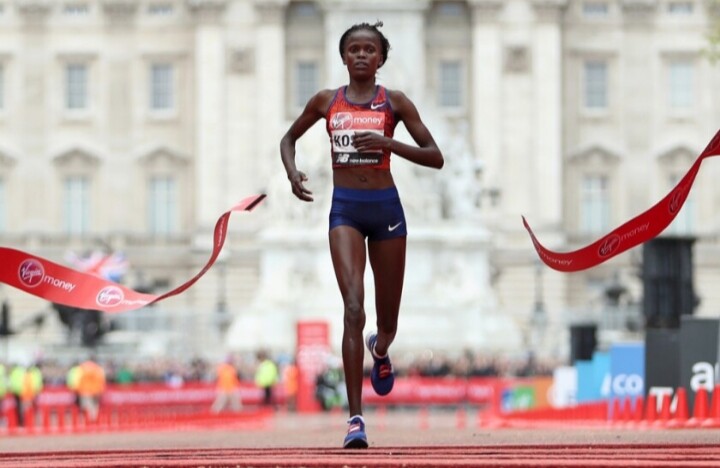
Yet perhaps the most recognizable name in the field remains Kenya’s Brigid Kosgei, the former world record holder whose 2:14:04 still ranks among the fastest performances ever recorded by a woman. Kosgei’s experience, championship pedigree, and proven ability to handle aggressive pacing make her presence alone a psychological factor for the entire field.
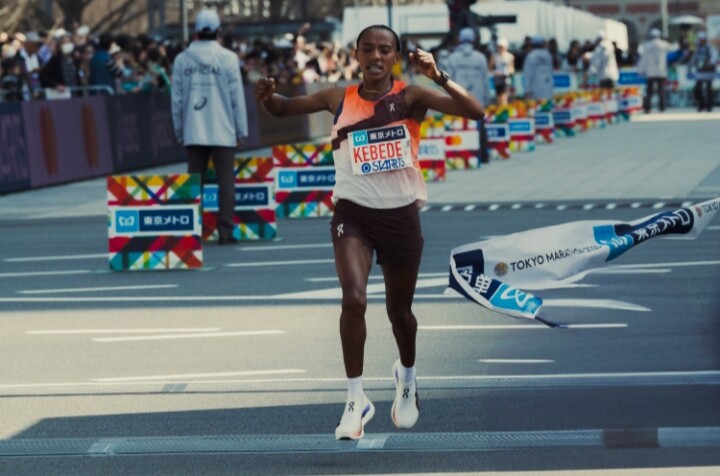
Japan’s hopes will largely rest on Ai Hosoda, currently the nation’s seventh-fastest woman in history. Hosoda produced a career-best 2:20:31 in Berlin in 2024 and recently announced that Tokyo will serve as her farewell race. The emotional weight of competing at home in her final marathon could provide an added dimension of motivation, especially after she secured qualification for the 2028 Olympic Trials with a strong performance in Sydney last year.
Beyond the headline names, the international depth remains impressive. Canada’s Malindi Elmore brings championship experience and resilience, while American veteran Sara Hall continues to defy expectations deep into her career. China fields a strong contingent led by Yuyu Xia, joined by Poland’s Aleksandra Brzezińska and Australia’s Vanessa Wilson, all capable of influencing the race dynamics if conditions or tactics shift.
What makes Tokyo particularly fascinating is the blend of proven speed and competitive hunger. Several athletes own personal bests under 2:18, creating the possibility of a historically fast race if pacing conditions align. But Tokyo is rarely predictable. Weather, pack strategy, and the psychological battle after 35 kilometers often determine the final outcome more than raw times on paper.
As the world turns its attention to Japan’s capital, one question dominates: can Kebede secure a historic three-peat, or will a new champion emerge from one of the strongest women’s marathon fields assembled this season?
by Erick Cheruiyot for My Best Runs.
Login to leave a comment

Tokyo Marathon
The Tokyo Marathon is a world-renowned annual marathon held in Tokyo, Japan. As one of the prestigious Abbott World Marathon Majors, it attracts elite and amateur runners from around the globe. The race holds World Athletics Platinum Label status, recognizing its high competitive standards, top-tier organization, and international appeal. Sponsored by Tokyo Metro, the Tokyo Marathon has grown into one...
more...
The 2026 World Marathon Majors Calendar Is Set
The global marathon spotlight will once again circle the world in 2026 as the Abbott World Marathon Majors return with a powerful seven-race series that stretches from Asia to Europe, Australia to North America. Each stop carries its own personality, history, and racing rhythm — but together they represent the highest level of marathon competition on the planet.
Here is the confirmed 2026 World Marathon Majors calendar:
Tokyo Marathon – March 1, 2026
Boston Marathon – April 20, 2026
London Marathon – April 26, 2026
Sydney Marathon – August 30, 2026
Berlin Marathon – September 27, 2026
Chicago Marathon – October 11, 2026
New York City Marathon – November 1, 2026
Seven races. Seven cities. One global championship narrative.
Season Opener in Asia
The series begins with the Tokyo Marathon on March 1. Known for its flat layout and disciplined organization, Tokyo has become a consistent stage for fast times and tactical early-season showdowns. Elite athletes often use Tokyo to set the tone for the year — and occasionally to chase course records.
April: Marathon Royalty Month
April remains the heart of the marathon calendar.
The Boston Marathon on April 20 returns to Patriots’ Day tradition. With its point-to-point course from Hopkinton to Boylston Street, Boston remains the ultimate test of racing intelligence, strength, and patience. You don’t just run Boston — you compete Boston.
Six days later, the London Marathon on April 26 brings a different dynamic: deep elite fields, aggressive pacing, and often the fastest head-to-head racing of the spring season. London has become a proving ground for Olympic champions, world record holders, and breakout stars alike.
The April double — Boston and London — continues to define legacies.
Sydney’s Growing Influence
The Sydney Marathon on August 30 strengthens the Majors’ global footprint. As the newest addition to the series, Sydney represents the expansion of the championship to Oceania and adds a late-summer championship feel before the traditional fall European and American races.
Its presence reshapes how athletes build their seasons. With Sydney now in the mix, the Majors truly span the globe.
Fall Speed Season
The Berlin Marathon on September 27 remains synonymous with world records. Its flat, fast course has witnessed some of the greatest performances in distance running history. If athletes are chasing the clock, Berlin is often the chosen battlefield.
Two weeks later, the Chicago Marathon on October 11 continues the speed theme. Chicago’s downtown course has produced extraordinary times and dramatic finishes. It blends American racing culture with global elite competition in one of the sport’s most electric settings.
The Grand Finale in New York
The New York City Marathon closes the 2026 series on November 1. Five boroughs, 26.2 miles, and more than two million spectators lining the course. New York is rarely about world records — it’s about resilience, atmosphere, and championship racing. It’s the ultimate test of strength over speed.
The hills of the Verrazzano-Narrows Bridge and the roar in Central Park ensure that the season ends with drama.
The Bigger Picture
The 2026 calendar highlights the evolution of the World Marathon Majors into a truly global championship. With seven events spanning three continents, the series now demands strategic planning from elite athletes and offers recreational runners the opportunity to pursue the coveted Six (now Seven) Star journey.
For professionals, the Majors series often determines annual rankings, sponsorship leverage, and historical standing. For age-groupers, it represents bucket-list achievement. For fans, it offers nearly nine months of high-level marathon drama.
From Tokyo’s precision to Boston’s grit, London’s speed, Sydney’s emergence, Berlin’s records, Chicago’s rhythm, and New York’s spectacle — the 2026 World Marathon Majors promise another unforgettable season.
The road to greatness is mapped out.
Now it’s time to run it.
by Bob Anderson for My Best Runs
Login to leave a comment
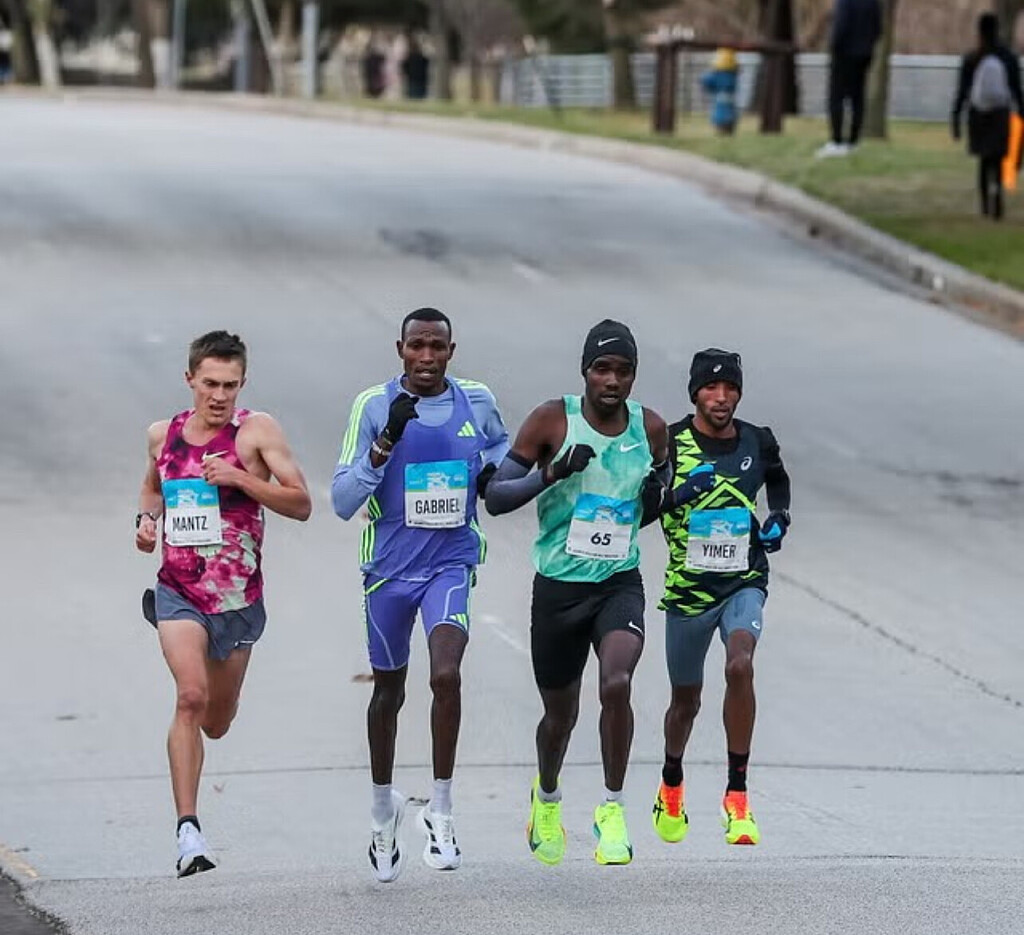
Houston Reloaded: Star-Studded Men’s Field Sets the Stage for a Wide-Open 2026 Half Marathon
With no defending champion, no American record holder, and a reshuffled elite lineup, the January 11, 2026, Houston Half Marathon is shaping up as one of the most open and unpredictable men’s races the event has seen in years.
A Reset Year in Houston
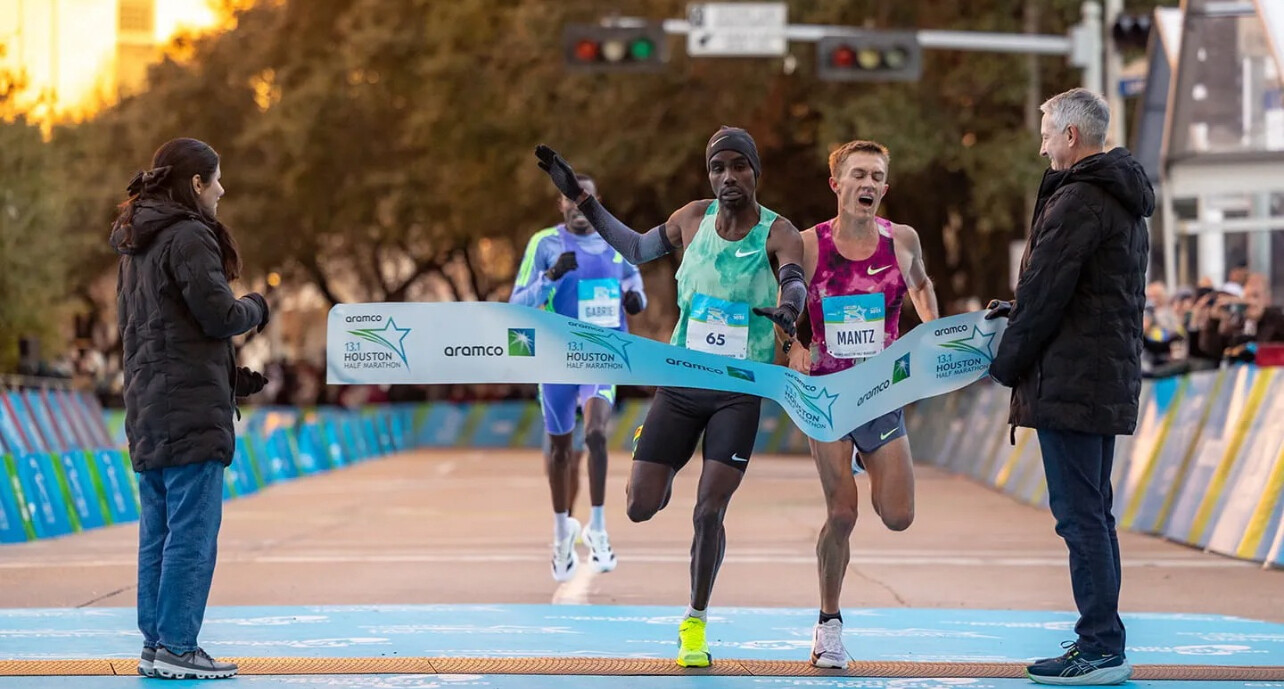
When the gun goes off on Sunday, Houston will once again showcase one of the fastest half-marathon courses in the world—but without the familiar faces that dominated the podium last year. None of the top five finishers from 2025 return, creating a rare reset for a race long associated with records, breakthroughs, and Olympic-cycle statements.
What remains is depth, intrigue, and a compelling blend of proven performers and ambitious newcomers ready to write a new chapter.
Vincent Ngetich: Speed Meets Staying Power
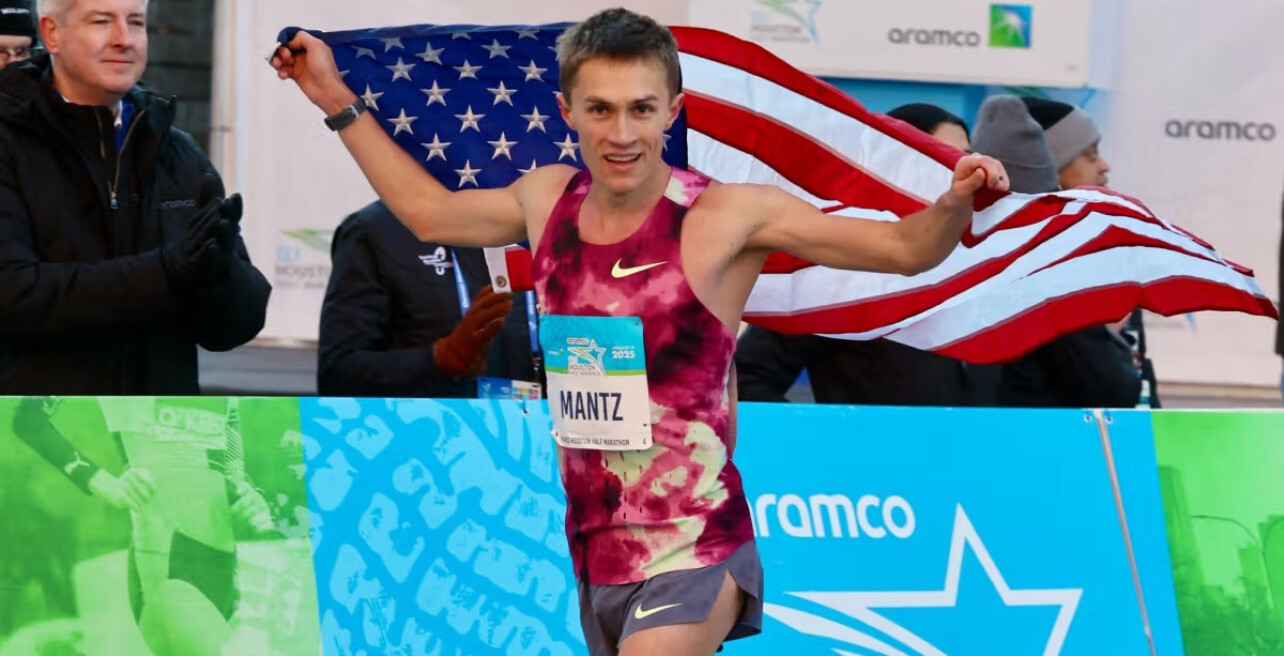
Kenya’s Vincent Ngetich enters as the fastest man in the field on paper, owning a 59:09 personal best from 2022. His half-marathon credentials are formidable, but his reputation soared after a stunning 2:03:13 runner-up finish at the 2023 Berlin Marathon, behind Eliud Kipchoge.
Houston offers Ngetich the opportunity to reassert himself over 21.1 km and test his speed against a deep American contingent on a course that rewards bold, aggressive racing.
Hillary Bor Leads the Returners
Kenyan-born American Hillary Bor is the top returner from last year’s race after finishing sixth in 1:00:20. His 59:55 personal best, set at the NYC Half Marathon, underscores his sub-60 capability—even if that performance came on a non-record-eligible course.
Bor arrives with consistency and experience on his side and will be keen to capitalize on a field without a clear dominant force.
Galen Rupp Back in the MiX
Few names carry the weight of Galen Rupp in American distance running. The two-time Olympian owns a 59:47 personal best from 2018 and returns to Houston after finishing 12th in 1:02:37 in 2024.
While Rupp is no longer chasing records, his race intelligence, experience, and ability to manage fast early pace could prove influential in a race likely to unfold aggressively from the start.
Rising Americans and International Depth
The American contingent is deep, with several sub-61 runners including Sam Chelanga, Biya Simbassa, Andrew Colley, Alex Maier, and Reed Fischer, all bringing strong recent road or cross-country form into the season.
International depth adds further intrigue, with athletes such as Cam Levins, Alex Masai, Patrick Kiprop, and Mohamed El Yousfi all capable of factoring into a fast-moving lead pack.
The Debutant to Watch: Habtom Samuel
One of the most compelling storylines belongs to Habtom Samuel, the 2025 NCAA cross country champion, who is set to make his half-marathon and road-racing debut. Samuel recently clocked 13:05.2 for 5000 meters at Boston University, signaling sharp fitness as he transitions from the track and cross country to the roads.
Houston has a long history of rewarding fearless debutants, and the University of New Mexico standout fits that mold perfectly.
A Race Built for Breakthroughs
With no defending champion, no American record holder, and a deep field eager to make a statement, the 2026 Houston Half Marathon promises fast early splits, tactical uncertainty, and genuine breakthrough potential.
On one of the world’s most trusted fast courses, opportunity—not reputation—may prove to be the real favorite.
2026 Houston Half Marathon – Men’s Elite Entrants (with Country)
1. Vincent Ngetich — Kenya (KEN)
2. Galen Rupp — United States (USA)
3. Hillary Bor — United States (USA)
4. Cam Levins — Canada (CAN)
5. Biya Simbassa — United States (USA)
6. Sam Chelanga — United States (USA)
7. Andrew Colley — United States (USA)
8. Alex Maier — United States (USA)
9. Marcelo Laguera — Mexico (MEX)
10. Reed Fischer — United States (USA)
11. Rory Linkletter — Canada (CAN)
12. Ryan Ford — United States (USA)
13. Alberto Mendez — Guatemala (GUA)
14. Alex Masai — Kenya (KEN)
15. Peter Lynch — Ireland (IRL)
16. Patrick Kiprop — Kenya (KEN)
17. Aaron Bienenfeld — Germany (GER)
18. Mohamed El Yousfi — Morocco (MAR)
19. Kengo Suzuki — Japan (JPN)
20. Haimro Alame — Israel (ISR)
21. William Amponsah — Ghana (GHA)
22. Daniel Michalski — United States (USA)
23. Bran Barraza — United States (USA)
24. Aaron Gruen — Austria (AUT)
25. Robert Warner-Judd — Great Britain (GBR)
26. Habtom Samuel — Eritrea (ERI) (half-marathon debut)
27. Casey Clinger — United States (USA) (debut)
28. Isai Rodriguez — United States (USA) (debut)
29. Graydon Morris — United States (USA) (debut)
30. Dylan Schubert — United States (USA) (debut)
31. Merga Gemeda — United States (USA) (debut)
32. Hunter Christopher — United States (USA) (debut)
by Robert Kibet
Login to leave a comment

Chevron Houston Marathon
The Chevron Houston Marathon offers participants a unique running experience in America's fourth largest city. The fast, flat, scenic single-loop course has been ranked as the "fastest winter marathon" and "second fastest marathon overall" by Ultimate Guide To Marathons. Additionally, with more than 200,000 spectators annually, the Chevron Houston Marathon enjoys tremendous crowd support. Established in 1972, the Houston Marathon...
more...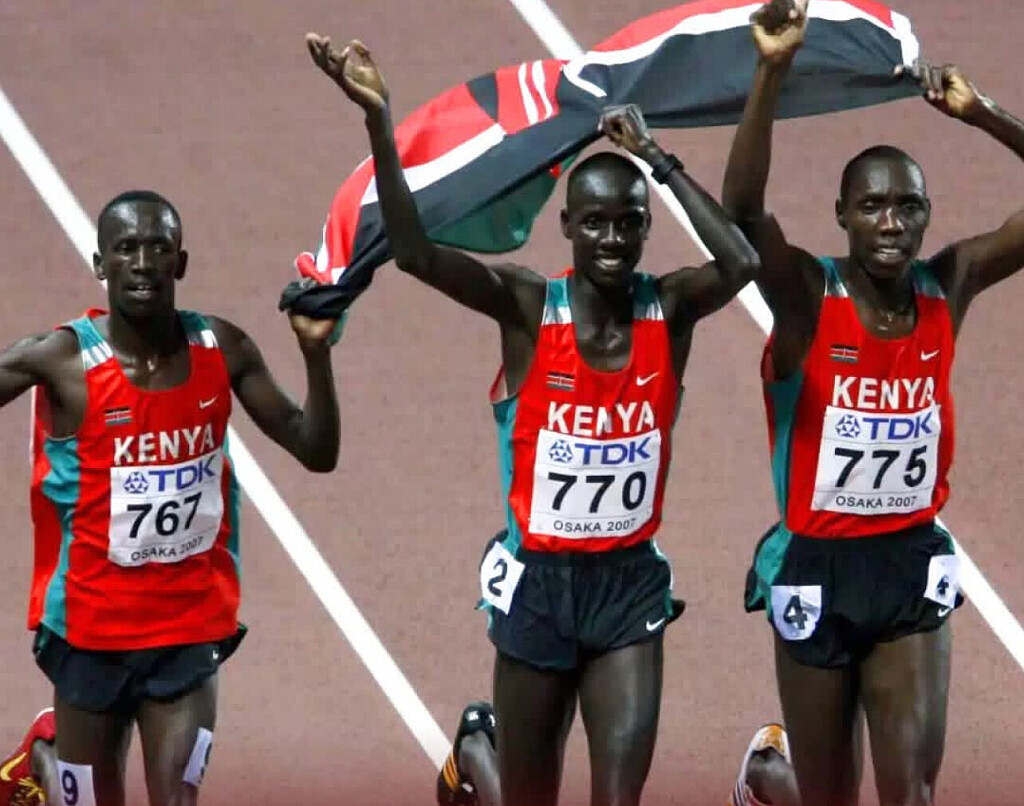
How One Tribe in Kenya Came to Dominate Global Distance Running
There may be no statistic in all of sports more astonishing than this one.
The Kalenjin, an ethnic group—often referred to as a tribe—in Kenya, make up about 13.4% of the country’s population, roughly 6.3 million people. On a global scale, they represent about one out of every 1,000 people worldwide.

Yet this small community has produced an overwhelming share of the world’s greatest distance runners.

Their dominance has been so complete, and so sustained, that it has been described as “the greatest geographical concentration of achievement in the annals of sport.” And it is hard to argue otherwise.
From the Rift Valley to the World Stage
Most elite Kalenjin runners come from Kenya’s Rift Valley region, particularly areas such as Nandi, Elgeyo-Marakwet, Uasin Gishu, and Baringo, where elevations range from 2,000 to 2,400 meters (6,500–8,000 feet) above sea level.
Here, running is not a hobby—it is part of daily life.
Children grow up walking and running long distances, often on dirt roads. Training at altitude is the norm, not a strategy. And success stories are local and visible, creating a powerful cycle of belief and opportunity.
Champions Across Eras
The Kalenjin impact on global athletics stretches back more than half a century.
Kipchoge Keino, one of the pioneers of Kenyan distance running, won Olympic gold in the 1500 meters at the 1968 Mexico City Games and the 3000-meter steeplechase in 1972, helping place Kenyan runners on the world map.
Since then, Kenyan athletes—many of them Kalenjin—have dominated:
• The 3000-meter steeplechase, winning Olympic gold in nearly every Games since 1968
• The 5,000 meters and 10,000 meters at World Championships
• The marathon, particularly at the World Marathon Majors
Masters of the Marathon
Perhaps nowhere is this dominance more visible than in the marathon.
Kalenjin runners have repeatedly won and controlled races such as:
• Berlin Marathon
• London Marathon
• Chicago Marathon
• Boston Marathon
• New York City Marathon
These victories are not isolated moments—they are part of a long, uninterrupted pattern.
At the center of it all stands Eliud Kipchoge, widely regarded as the greatest marathon runner in history. A member of the Kalenjin community, Kipchoge has:
• Won two Olympic marathon gold medals (2016, 2021)
• Set a world record of 2:01:09 at the Berlin Marathon
• Become the first human to run 26.2 miles in under two hours
He is not an exception. He is the most refined expression of a system that has been producing champions for generations.
Why This One Tribe?
No single explanation tells the whole story, but several factors come together in the Rift Valley:
• Geography: High altitude, rolling terrain, and ideal training conditions
• Physiology: Exceptional running economy and efficient biomechanics
• Culture: Running as a respected path to success and opportunity
• Environment: Group training, competition, and long-term development from a young age
Together, these elements have created something unmatched in sport.
A Phenomenon Without Parallel
Great athletes come from everywhere. But nowhere else has such a small, specific populationproduced such sustained global dominance across events, generations, and decades.
Not sprinting.
Not swimming.
Not cycling.
Not soccer.
Only distance running.
From the highland paths of the Rift Valley to Olympic podiums and marathon finish lines around the world, the story of the Kalenjin remains one of the most extraordinary achievements in human performance.
And it is still being written.
by Boris Baron
Login to leave a comment

Alisa Vainio Smashes Finnish Marathon Record Just Three Weeks After World Championships
Just three weeks after placing an impressive fifth in the marathon at the World Athletics Championships in Tokyo, Finland’s Alisa Vainio has once again made headlines—this time rewriting the national record books.
Competing at the Finnish Championships in Vantaa on Saturday (Oct 4), Vainio claimed the national marathon title in 2:23:06, breaking the previous Finnish record by 92 seconds. The old mark of 2:24:38 was set by Camilla Richardsson at the 2023 Valencia Marathon.
In contrast to Tokyo’s hot and humid conditions, Vantaa offered cool but blustery weather, which suited Vainio’s strong and efficient running style. She finished second overall, just 33 seconds behind men’s winner Kari Heikura, who clocked 2:22:33.
“I felt pretty good, pretty strong the whole time. The stride felt good and I was able to tighten my stride uphill and then relax downhill. Sometimes I got some help from the guys,” said Vainio.

“I wanted to run hard. In Tokyo, I couldn’t run hard in the heat and that was annoying. After Tokyo, the recovery went incredibly well and I wanted to be brave today.”
Remarkably, Vainio took just one week off following Tokyo before resuming training, showing her trademark resilience and determination. Her 2:23:06 performance now places her third on the 2025 European list, trailing only Olympic champion and European record-holder Sifan Hassan (2:19:00) and Germany’s Fabienne Königstein (2:22:17), who placed sixth at last month’s Berlin Marathon.
Despite having raced two marathons in three weeks, Vainio hasn’t ruled out another major test this year.
“I possibly have a place in Valencia. It’s not completely confirmed yet. There should be good conditions to run hard, but everything has to go well until then,” she said.
by Boris Baron
Login to leave a comment

Harry Styles Runs Sub-3 in Berlin, Becomes Fastest Major Singer to Tackle the Marathon
Berlin, Germany – September 2025: Harry Styles has made history on the roads, trading concert stages for marathon streets. The global music icon stormed through the 2025 Berlin Marathon in 2:59:13, becoming the fastest major singer ever to run the 26.2-mile distance.
From Tokyo to Berlin: A Remarkable Leap

Earlier in March, Styles completed the Tokyo Marathon in 3:24:07. That debut alone was a respectable effort, but few expected the pop star to chop off nearly 25 minutes in just six months. His Berlin run showed not only improved conditioning but also a deep commitment to the craft of marathon training.
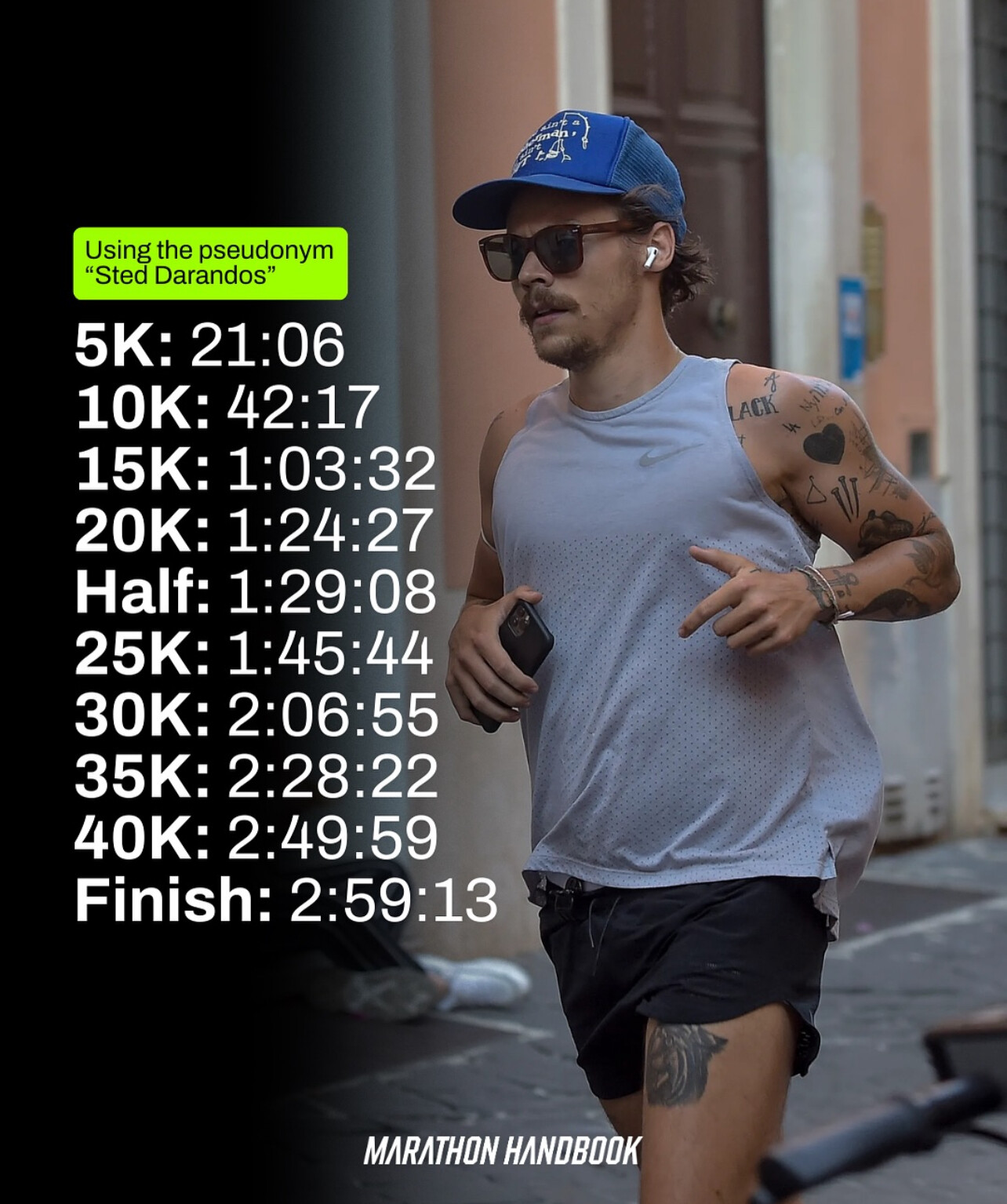
Breaking the Sub-3 Barrier

Crossing the finish line under three hours is an achievement that sets serious marathoners apart. Fewer than 5% of all marathoners reach this benchmark, placing Styles in the top tier of amateur competitors. His average pace of 6:50 per mile (4:15 per kilometer) required discipline and precision from start to finish.
Although he missed the Boston Marathon qualifying standard of 2:55:00 by just over four minutes, his Berlin time makes it clear he is edging closer to that goal.

Racing Under the Radar
To stay focused, Styles ran Berlin under the alias “Sted Sarandos.” While the disguise may have hidden him from the spotlight, it couldn’t mask his performance. Compared to Tokyo, he ran almost one minute faster per mile, maintaining an average speed of 8.77 mph (14.13 km/h) with consistent 21:14 5K splits.
A True Outlier
The contrast is striking: while the average male marathoner crossed the line in 4:21:03, Styles was already cooling down after achieving a personal milestone. His effort highlights what is possible when talent, dedication, and smart training align.
What’s Next?
With a sub-three-hour finish in his second marathon, Styles has firmly established himself as more than a hobby jogger. The question now is how far he can go—whether that means chasing a Boston qualifier, returning to Tokyo for redemption, or taking on another World Marathon Major.
For now, Harry Styles has earned a place not only in music history but also in the story of amateur marathoning: a performer who turned his passion into a performance of an entirely different kind.
by Boris Baron
Login to leave a comment
